NSA collecting millions of contact lists
Press TV – October 15, 2013
The US National Security Agency is collecting hundreds of millions of contact lists from personal email and instant messaging accounts around the world, according to a new report.
Many of the contacts belong to American citizens, The Washington Post reports, citing senior intelligence officials and documents provided by former NSA contractor Edward Snowden.
According to the report, the super spy agency intercepts millions of email address books every day from private accounts on Yahoo, Gmail, Facebook, and Hotmail that move through global data links. The agency also collects a half million buddy lists from live chat services and email accounts.
It is the latest revelation of the NSA’s practices to be disclosed by Snowden, who lives in Russia, where he has been granted temporary asylum. The leaker is wanted in the US for espionage charges.
NSA’s analysts of the collected data can search for hidden connections and map relationships within a much smaller universe of foreign intelligence targets, according to the report.
“The collection depends on secret arrangements with foreign telecommunications companies or allied intelligence services in control of facilities that direct traffic along the Internet’s main data routes,” it says.
Although the collection takes place overseas, the NSA sweeps in the contacts of many Americans too. The agency collects as many as 250 million contacts per year, many them US citizens.
The NSA’s collection of all US call records has already generated controversy in the country since the agency’s program was first revealed in June. NSA officials have defended bulk collection as an essential tool to counter terrorism.
Not one byte! German telecom giant plans to rout foreign spooks
RT | October 14, 2013
Germany’s largest telecom provider, Deutsche Telekom, is looking to introduce a “national routing” service which would keep German internet traffic out of the hands of foreign spies.
The former state-owned communications giant outlined the plans at a secret meeting in the Economy Ministry, business weekly Wirtschaftswoche reported.
Currently, email data is exchanged between users worldwide via international Internet exchange points; physical structures through which Internet service providers (ISPs) exchange Internet traffic between their networks.
The company hopes to hammer out an agreement with other national Internet providers which would guarantee that “while being transported from the sender to the receiver in Germany… no single byte leaves Germany,” Thomas Kremer, a board member of Telekom’s data privacy, legal affairs and compliance, told the magazine.
To put the plan into effect, Deutsche Telekom must secure the support of all its competitors, including Telefonica and Vodafone.
While Vodafone and Telefonica are currently mulling the initiative, another competitor – Internet service provider QSC – has questioned the efficacy of the plan, saying it was not possible to determine with certainty whether data is being routed nationally or internationally.
“In a next step, this initiative could be expanded to the Schengen area,” the spokesman said, referring to the group of 26 European countries – excluding Britain – that have removed border controls for participating countries.
Deutsche Telekom first began leading the charge for to protect its users’ privacy from foreign intelligence agencies in August when they rolled out ‘Email Made in Germany’, an encrypted email service that only uses German servers to process and store all domestic email traffic.
The move followed revelations that the US National Security Agency (NSA) collects 500 million pieces of phone and email metadata from Germany each month — more than in any other EU country.
“Germans are deeply unsettled by the latest reports on the potential interception of communication data,” said Rene Obermann, head of Deutsche Telekom.
“Now, they can bank on the fact that their personal data online is as secure as it possibly can be.”
Experts do not believe the move will stop governments from getting their hands on information, although it might complicate efforts to do so.
“Of course the NSA could still break in if they wanted to, but the mass encryption of emails would make it harder and more expensive for them to do so,” Sandro Gaycken, a professor of cyber security at Berlin’s Free University, said when the idea was first proposed.
Related article
- To Dodge US Spies, Germany Might Keep All Its Internet Traffic on Local Servers (motherboard.vice.com)
Oakland dedicating anti-terrorism funding to surveillance supercenter
RT | October 14, 2013
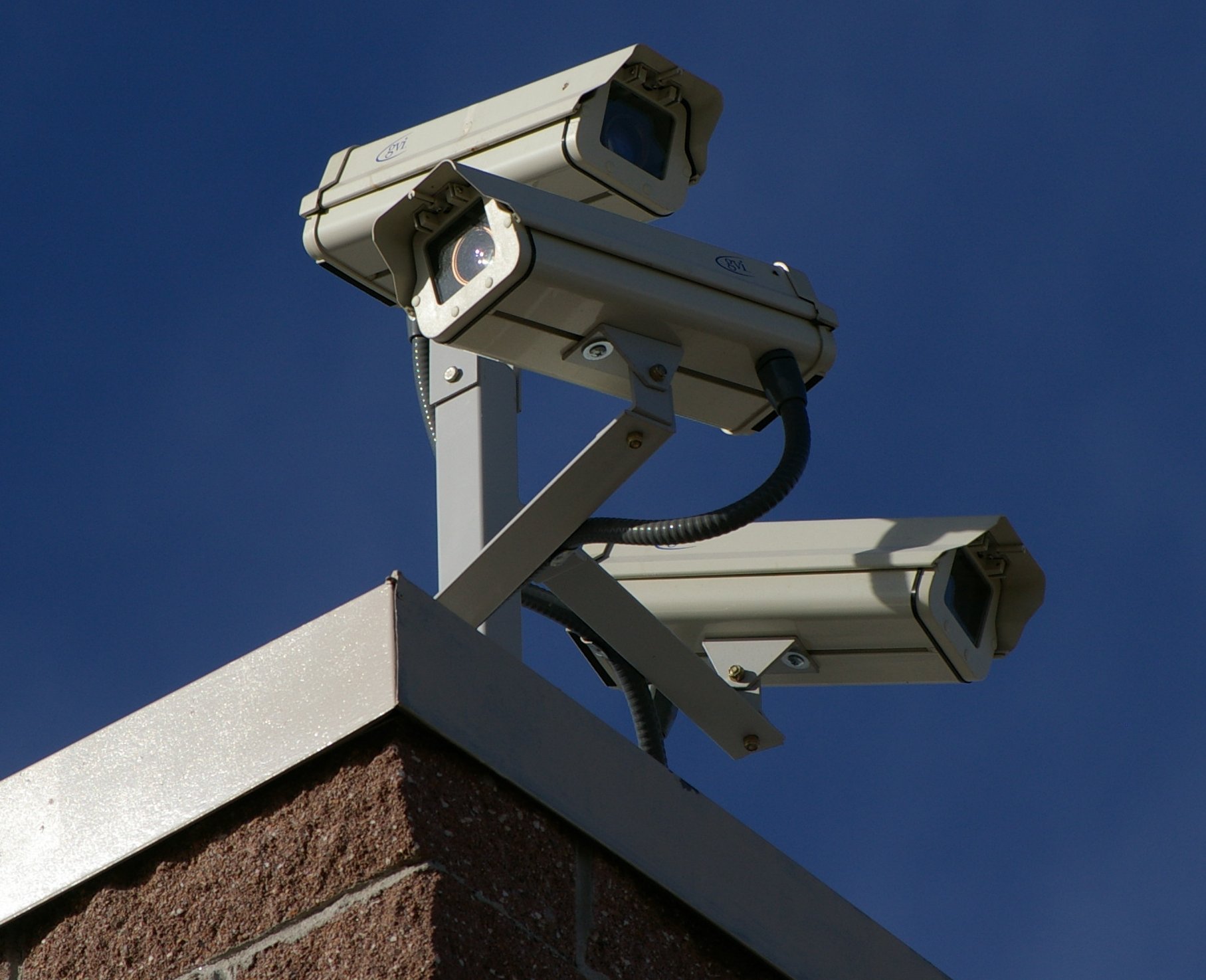 Lawmakers in Oakland intend to spend millions of dollars awarded to the California city in a federal grant to a police dragnet that promises to examine surveillance footage, riling critics who assert the intention of the grant was to stop terrorism.
When the new program debuts in approximately one year police will be able to track drivers as they travel through tolls, scan license plates with the roughly 3,000 surveillance cameras placed throughout the city, and monitor social media platforms to learn about crimes before they occur.
The Oakland program, officially referred to as the Domain Awareness Center, according to the New York Times, comes at a time when police departments across the US are using federal money to launch similar surveillance efforts modeled after the New York Police Department. The NYPD, which operates within New York City as well as far outside, has used federal grants to build a massive surveillance network capable of linking cameras and license plate readers to criminal and suspected terrorist databases.
The Domain Awareness Center also plans to plant gunshot detection sensors through Oakland, which is consistently ranked among the most dangerous cities in the US. Forbes magazine reported that violent crime affects 1,683 of every 100,000 residents in the city, making it the third most dangerous city in America with a population between 100,000 and 499,000 in 2013.
The Oakland City Council voted unanimously on July 31 to adopt the plan to build the surveillance center, which officials have said will be staffed 24 hours a day. Lawmakers voted at the same meeting to ban hammers and spray paint cans at protests in fear that the items will be used as weapons. Waiting outside, protesters admonished council members with chants of “Shame! Shame! Shame!”
“The Domain Awareness Center is the guard tower which will watch over every person in the city of Oakland,” shouted demonstrator Mark Raymond, as quoted by the San Francisco Chronicle. “This program is an attempt to criminalize and imprison all people who live and pass through Oakland.”
All told, the surveillance center’s costs are expected to total $10.2 million in federal grants, and while legislators said they were cognizant of residents’ security while drafting the bill some representatives were shouted down.
“We have tried our best to find the sweet spot where are going to take advantage of the tools that we have at hand to make our city safe… We have done everything we can to safeguard privacy,” said councilwoman Libby Schaaf before she was cut off by jeers and one protester who suggested she “go home to your mansion and kill yourself.”
Schaaf did admit that, while police have traditionally needed just a small evidence sample to arrest a suspect, the new center will have the capability to “paint a pretty detailed picture of someone’s personal life, someone who may be innocent.”
Oakland was awarded a federal grant to ramp up security near the Port of Oakland, a thriving cargo center that is one of the busiest in the US. The 19-mile waterfront is the fifth-busiest container port in the US, with 1,800 ships arriving every year, according to the San Francisco Chronicle. Over $14 billion in goods were exported from the bustling hub in 2012.
To protect the port, and watch civilians throughout the region, Oakland signed a contract with Science Applications International Corporation (SAIC) to build the Domain Awareness Center. The company, which earns most of its $12 million in annual revenue from military contracts, also worked with the NYPD but later paid $500 million to avoid a federal prosecution for receiving illegal kickbacks.
The Times reported that this project is not the first time Oakland has sought to develop such technology. A city audit viewed by the paper revealed that lawmakers spent nearly $2 million in 2012 alone on police tools that did not work or could not be used for a variety of reasons.
Linda Lye, an attorney with the American Civil Liberties Union, said this project might work as intended, but that mere intention already creates a scary problem.
“What they did is approve a vast surveillance center without understanding the implications,” she said earlier this year. “The privacy policies would be drafted only after the center is built. At that point, what opportunity will there be for to determine if the safeguards are sufficient?”
Related article
Apple Makes Questionable Copyright Claim To Pull Down iTunes Contract
By Mike Masnick | Techdirt | October 14, 2013
There had been some buzz a while back when Digital Music News published an entire iTunes Radio contract, which was targeted at smaller indie labels, showing how Apple got to throw its weight around, presenting terms that were very much in Apple’s favor over the labels if they wanted to participate in iTunes Radio. However, while it took a few months, Apple’s lawyers finally spotted this and they have apparently made a copyright claim to get the contract taken down. I wonder how the small group of indie musicians who always fight for stronger copyrights feel about Apple using copyright to take down rather important information that they should know concerning the sort of deal Apple offers them….
While this may be possibly legal under the law, it demonstrates how the law can be used in ways that really have absolutely nothing to do with copyright’s purpose. Apple didn’t need copyright’s incentives to create this contract. There is no market for the contract itself. The purpose in flexing the copyright claim here is one thing and one thing only: censorship. As law professor Eric Goldman explained:
“It’s not out of legal bounds to do this. It’s just kind of a jerk move. We all know what’s happening here. Apple doesn’t care about protecting the copyright of contracts. It’s using copyright to try and suppress information that it doesn’t want made public.”
That said, I question whether or not this really is a legit takedown. While Apple can claim a copyright on the contract, it seems that DMN has a really strong fair use claim. The purpose was for reporting (a key purpose that supports fair use). The publication was in the public interest. The type of work is a “contract” for which copyright tends to mean very little. Finally, there’s no “market” for the contract itself, and thus the impact on the market or the value of the copyright in the item is nothing. The only factor that weighs against it is the fact that the entire contract was used — but as we’ve pointed out many times in the past, plenty of cases have been deemed fair use where the “entire work” has been used. This seems like a perfectly strong fair use case, though it might not be worth the legal cost to fight Apple over this, given the company’s historical willingness to go absolutely bonkers against publications it doesn’t like.
NSA Claims It Doesn’t Do Online Attacks; That’s A Different Organization… Run By The NSA
By Mike Masnick | Techdirt | October 14, 2013
There are times you just shake your head and wonder who the NSA top officials think they’re kidding with their statements. Take, for example, some recent comments from the NSA’s number two guy in charge, Chris Inglis, the Deputy Director, who gave an interview to the BBC where he tried to paint the NSA as not being quite as bad as everyone says, but admitted that there could be more transparency. That’s all the usual stuff, but the following tidbit caught my eye:
The job of the NSA, Mr Inglis said, was to exploit networks to collect intelligence in cyberspace and to defend certain networks – but not carry out destructive acts.
“NSA had a responsibility from way back, from our earliest days, to both break codes and make codes,” he said. “We have a responsibility to do intelligence in a space we once called the telecommunications arena – now cyberspace – and the responsibility to make codes or to defend signals communications of interest.
“That’s different than what most people conceive as offence or attack in this space.”
That task of destructive cyber attack, if ordered, lies with the US military’s rapidly expanding Cyber Command.
Except, as we’ve noted more than a few times, US Cyber Command is the NSA. It’s run by Keith Alexander, the director of the NSA, and it’s housed in the same place as the NSA. For all intents and purposes, US Cyber Command is the NSA, and Alexander has no problem at all swapping hats depending on what’s most convenient. He regularly tries to talk about “protecting the network” when it suits him, ignoring that the same efforts he’s looking at (greater access to corporate networks) would also make it much easier for the NSA and US Cyber Command to launch offensive attacks — which Snowden’s leaks proved the NSA did hundreds of times.
Pretending the two are different, and that the NSA only focuses on “breaking codes and making codes” is yet another bogus claim from an NSA official, adding to a very long list.
Related articles
- US Cyber Command: Documents Reveal Pentagon Launching Covert Cyber Attacks (dissidentvoice.org)
Luxembourg NSA dragnet hauls in Skype for investigation – report
RT | October 12, 2013
Once heralded as a communication tool free from eavesdropping, Skype is now reportedly under scrutiny for secretly and voluntarily handing over personal data on users to government agencies.
The Microsoft-owned instant-messaging site, used by some 600 million people worldwide, is being probed by Luxembourg’s data protection commissioner over concerns about its secret cooperation with the US National Security Agency’s Prism spying program, according to a report in the Guardian, the UK newspaper that first broke the story on NSA whistleblower Edward Snowden.
Skype, believed to be the first Internet company among many to be brought within the NSA program, could potentially face criminal and administrative charges, as well as hefty fines if it is found to be in violation of Luxembourg’s data protection laws.
If found guilty, Skype [could] be banned from passing along user data to the US spy agency, the newspaper reported.
The Luxembourg commissioner initiated an investigation into Skype’s privacy policies following revelations in June about its ties to the NSA, the Guardian said. No additional comments were immediately available.
Microsoft’s purchase of Skype for $8.5 billion in 2011 “tripled some types of data flow to the NSA,” the Guardian said, citing secret documents in its possession.
But even before the Microsoft buyout, Skype had initiated its own secret program, dubbed Project Chess, which sought ways of making customer communications “readily available to intelligence agencies and law enforcement officials,” The New York Times reported.
According to the NSA files shown by Snowden to the Guardian, Skype was served with a directive to comply with an NSA surveillance request signed by US Attorney General Eric Holder in February 2011. Several days later, the NSA had successfully monitored its first Skype transmission.
Skype, founded in Estonia in 2003 and now headquartered in Luxembourg, is facing a public backlash in the wake of the Prism disclosures.
“The only people who lose are users,” Eric King, head of research at human rights group Privacy International, said in comments to the Guardian. “Skype promoted itself as a fantastic tool for secure communications around the world, but quickly caved to government pressure and can no longer be trusted to protect user privacy.”
Beware of Poison Pill Spying Reform
By Robyn Greene | ACLU | October 10, 2013
In the wake of revelations over the last few months about massive NSA surveillance programs that violate the privacy of millions of innocent Americans, members of the congressional Intelligence Committees have begun to draft legislation that they say will reform these authorities. There’s just one problem – unlike reform bills proposed by other members of Congress, the Intelligence Committees’ bills might do more to entrench domestic surveillance programs than rein them in.
At a Senate Intelligence Committee hearing last month, Sen. Dianne Feinstein (D-Calif.) described her proposals, and one thing is clear: they won’t fix anything. In fact, they may even make government surveillance worse. They include:
- Legalizing the warrantless wiretapping of people known to be located in the U.S. for 7 days where that surveillance began abroad; and
- Legalizing queries of U.S. persons’ names or e-mail addresses without probable cause, so long as it is for “articulable foreign intelligence purposes.”
These changes would represent significant expansions of the NSA’s domestic surveillance authorities under Section 702 of the FISA Amendments Act, an already overly broad law that authorizes the suspicionless surveillance and collection of millions of Americans’ communications, including the contents of their emails.
Sen. Feinstein’s proposal also wouldn’t reform the bulk collection of Americans’ call records but actually put Congress’s stamp of approval on the unconstitutional and indiscriminate surveillance program. Her tweak to the program includes:
- Changing how the NSA accesses Americans’ phone records but NOT limiting whose records are swept up in the NSA’s bulk telelphony metadata program, under Section 215 of the Patriot Act.
The purpose of this reform, according to Sen. Feinstein, is “to change but preserve [the] program.” She is clear that she has no intention to fix the law or to rein in the dragnet collection of Americans’ call records. These changes would merely limit who can access the records and would codify the requirement that there be a “reasonable articulable suspicion that a phone number is associated with terrorism in order to query it.” This does not limit the current “3 hops” rule that may be sweeping up millions of additional Americans’ numbers into NSA databases or add any additional privacy protections.
To be fair, Sen. Feinstein’s proposals do include reporting requirements, such as making public the number of phone numbers queried by the NSA each year, and accountability measures, such as Senate confirmation of the director of the NSA. While these proposals for increased transparency and oversight would be important additions to these surveillance programs, they do not fix them. They do not stop the NSA’s mass surveillance of millions of innocent Americans.
As Congress considers the two dozen bills that have been introduced so far, it should ensure that, at a minimum, reforms include:
- Ending bulk collection of Americans’ information under Section 215 of the Patriot Act;
- Prohibiting suspicionless, dragnet collection of Americans’ communications under Section 702 of the FISA Amendments Act;
- Increasing transparency of domestic surveillance programs with public reporting by the government and private sector, and limiting the issuance of gag orders associated with national security informational requests; and
- Allowing public judicial review of the NSA’s sweeping surveillance programs.
The good news is that dozens of members of Congress – like Sen. Patrick Leahy (D-Vt.), Sen. Ron Wyden (D-Ore.), and Rep. Jim Sensenbrenner (R-Wis.) – are already hard at work to pass fixes that would take big steps toward reining in the NSA’s domestic surveillance programs. And don’t forget that Rep. Justin Amash (R-Mich.) got the House within 7 votes of defunding the bulk call records collection program altogether this summer. The momentum for reform is strong.
Despite this, Feinstein and some of her colleagues in the Senate and House Intelligence Committees are working on a proposal that would expand the NSA’s domestic surveillance authorities. In just a few short hours, the Senate Intelligence Committee will mark it up in secret, without even publicly releasing the initial draft language.
Americans are tired of excessive surveillance and secrecy. It’s time for Congress to legislate on these programs in the daylight and to pass real reforms.
Related articles
- Political Moves: How Dianne Feinstein Cut Off One Of The Few Attempts At Actual Oversight By Senate Intelligence Committee (alethonews.wordpress.com)
- Feinstein’s Senate Committee Defends NSA Phone Surveillance, Pushes Bill to Retain It (alethonews.wordpress.com)
- Feinstein’s NSA ‘reform’ bill would expand snooping powers (EndtheLie.com)
US opens drone facility in Germany, insists ‘not for spying purposes’
RT | October 9, 2013
As two new US ‘Hunter’ drones are set to start traversing German airspace next Monday, the army remains firm that they will be used solely for training drone operators rather than spying purposes, and will not be carrying weapons.
The Unmanned Aerial System (UAS) facility was officially opened at Vilseck Army Airfield on Monday by 7th Army Joint Multinational Training Command (JMTC). A letter of agreement between US and German authorities allows them the use of two ‘air bridges’ in the east of the country to train operators, it will be the first time a US unmanned aerial vehicle will fly beyond the limits of military training areas.
Hunter MQ-5B systems will span the distance between Hohenfels and Grafenwoehr, in the south east of the country, about 100km east from Nuremberg. Hohenfels is approximately 100km further south from Grafenwoehr.
The project has sparked concern after news began to leak out this summer. The US army has been channeling its efforts into gaining approval for the mission since 2007. “Some reports came out before we even knew we had approval,” Brig. Gen. Walter E. Piatt, JMTC Commander told Stars and Stripes.
Local communities have expressed apprehension about US drones being in German airspace. Germans are concerned about potential violation of their freedoms after the drones come into operation. The recent scandal surrounding NSA spying activities in Germany and the protests that followed, has heightened public skepticism.
“It’s a big issue here in general, and it’s a very German topic,” Constanze Schulze, a reporter for ARD Bavaria stated. “There are many discussions going on about unmanned units, and of course there is some concern. I think that’s why you see so many reporters here [in Vilseck]. Everyone is talking about it.”
Politicians have also expressed concerns. Reinhold Strobl of the Social Democratic Party of Germany (SDP) said that the public was informed “too late” and that there was “inadequate” information provided by the German authorities and US military ahead of the deployment. If it was not for test flights conducted in July, the politician says, Germans would have been left completely in the dark.
Other politicians complained about the noise, saying that drones that reach 175kph “have the volume of a lawn mower,” according to Peter Braun, the mayor of Schmidmühlen.
Richard Reisinger from the Christian Social Union Party (CSU) also said that the way the public was informed about the issue lacked transparency. “What happens to the collected data?” he asks, expressing concern of potential risk of information misuse that would violate privacy.
When Snowden’s leaks were first revealed, German Chancellor Angela Merkel claimed that she learned of the US surveillance programs through press reports. However, it later came to light that Germany’s BND intelligence service sends “massive amounts” of intercepts to the US and UK daily. Such revelations sparked a wave of protests across Germany calling on the government to provide more privacy and stop US spying activities.
Hunter MQ-5B are currently the largest and most advanced of their type, and will not be armed, and will be controlled from the ground. The distance apparently reflects that which soldiers would have to navigate in Afghanistan, operators said. The vehicle will travel between approximately 11,000 and 14,000 feet in the sky.
“The air bridge will only be used for transit between the two training areas,” according to Col. John Norris, Commander of the Joint Multinational Readiness Center in Hohenfels. He added that “no UAS will carry weapons through the air bridge.”
Drone operator Sgt. Carson Wilson reiterated that Germans had no need for concern. “We’re here to let people know the camera is only to avoid obstacles, not to watch what people are doing,” he said.
“Although we only use UASs at JMTC to train Soldiers — they are not armed, nor do they record data when in flight,” said Piatt. “We understand that our German neighbors have concerns and we want to make sure we address those concerns.”
On Tuesday, an open house was hosted that was aimed at alleviating any worries the German population may have over the presence of US drones. On Wednesday, local media were invited to explore the new facility.
“I wanted to invite our German neighbors and members of the press to come in and see the facility, see and handle the UAS aircraft that are flying at the Grafenwoehr and Hohenfels training areas and speak directly with the soldiers who maintain and fly them,” Piatt said.
During the event, two other types of UAS were displayed alongside the Hunter: the Raven and the Shadow. The vehicles were accompanied by their respective operators, maintenance crews and translators for each one. So attendees would be informed about what the training would entail, maps of the air corridors were on display alongside the vehicles that would navigate the routes.
JMTC officials said that the training with UAS is just one of many US army tools in the area, alongside fire ranges and simulation resources to prepare forces for conflict and battlefield strategy.
“Hopefully, this shows that we aren’t keeping any secrets here,” Piatt said.
Featured Video

or go to
Aletho News Archives – Video-Images
Book Review
The Maidan Killings and the False-Flag Case
By Freddie Ponton | 21st Century Wire | September 5, 2026
Before the killings that helped bring down Ukraine’s president in February 2014, American diplomats were discussing who should enter its government. In a leaked telephone call, senior State Department official Victoria Nuland told US ambassador Geoffrey Pyatt, “I think Yats is the guy,” referring to opposition leader Arseniy Yatseniuk. Washington had clear preferences and was working to advance them. Later that month, Yatseniuk became prime minister.
Ivan Katchanovski’s The Maidan Massacre in Ukraine examines the violence that preceded that transfer of power. Drawing on television footage, witness testimony, forensic examinations and Ukrainian court proceedings, he argues that elements of the opposition shot protesters and police in a false-flag operation. His case centres on evidence of protesters being shot from opposition-controlled locations, including Hotel Ukraina, overlooking the killing ground. … continue
Blog Roll
 Aletho News
- France projects nuclear power as Macron pushes arsenal expansion
- The fallacy of US delusions about Iran’s economic collapse
- What changes with Lula or Flávio?
- Britain leads Western media’s demise through ‘fear porn’ narrative
- The Maidan Killings and the False-Flag Case
- Georgia’s Largest Healthcare System Will Fire Employees Who Refuse Flu Vaccine
- The Five-Year Fuel Crisis: Why the World Economy Is Paying for a War It Thinks Is Ending
- Trump’s Big Bluff on Iran
- Swiss scammed out of millions by Ukraine-linked call centers – media
- Germany facing potential ‘violent conflict’ with Russia – spy chief
- If Americans Knew
- Israeli Attacks Kill Two Palestinians in Gaza
- Gaza genocide at 3: Israeli-U.S. cruelty and the smart, deep resistance to it are changing the world
- As genocide is about to enter 3rd year, little of Gaza remains– Daily Update
- “We See Our Homes Now From A Satellite, Like Strangers”
- Watch “Gaza: Doctors Under Attack”, originally censored by BBC
- NAZA: Israeli embassies in UK and US promote rival documentary to challenge Gaza genocide allegations
- David Ellison appoints Israeli to lead merged Paramount-Warner studios
- Turkish Red Crescent helps elderly Gaza man walk again after Israel confiscates his prosthetic limb
- Four Palestinians Killed in Israeli Attacks in Gaza
- Two Palestinian youths killed and village razed as Israeli attacks on West Bank continue
- No Tricks Zone
- Latest European Green Energy Debacle; Portugal’s Largest Flagship Solar Park Insolvent!
- Green Energy Debacle: German Expert Professor Fritz Vahrenholt Warns Of Severe Economic And Social Consequences
- Two More Paleo Reconstructions Affirm Meters-Higher Sea Levels Across Ireland, Brazil 7000-6000 Years Ago
- New Study: Earth And Venus Surface Warmth Largely Explained By Convection And Lapse Rate, Not CO2 Or Radiation
- 2025 Nature Paper Claiming Worsening Global Drought Gets RETRACTED …Heavily Flawed
- New Study: ‘Global Drought Shows No Detectable Recent Acceleration Under Climate Warming’
- Economic Masterminds: German Socialists Suggest Taxing Productivity Gains Stemming From Using AI
- The South China Sea Has Not Been Cooperating With The Climate Change Narrative
- Energy Crisis: Germany Enters Heating Season With Historically Low Gas Reserve Fill Levels
- New Study: The Antarctic Ice Sheet Gained Mass From 2020-2024 Due To Staggering Snow And Ice Accumulation

