Northern Ireland all set for G8 police state

Press TV – June 14, 2013
British police are preparing one of their most unprecedented security operations, involving water cannons and summary hearings, for next week’s G8 summit in Northern Ireland.
Police Service of Northern Ireland district commander Chief Superintendent Pauline Shields said more than 8,000 officers are being dispatched to Northern Ireland to help local police in the security operations.
The arrangements include a daunting four-mile security fence around the Lough Erne Golf Resort that will host the summit on Monday and Tuesday next week, while another barbed wire barrier is being set up outside the area.
The police have also deployed several mobile water cannons to frighten off potential protesters with a seven-mile area of the Lough Erne lake itself being closed down and patrolled by police boats.
“I would say the scale of the G8 in Northern Ireland is the biggest operation that the Police Service of Northern Ireland has ever had to deal with and probably as big as any police service throughout the UK would have dealt with,” Shields said.
This comes as she dismissed concerns that the police are gearing up a heavy-handed response to any protests outside the summit venue.
Police say they have made 260 extra prison cells available in nearby Omagh, Country Tyrone, and in the Northern Irish capital of Belfast, while sixteen judges will be on standby to hold summary hearings for arrested demonstrators.
But Shields claimed the measures are only meant to “facilitate” peaceful protests.
“We will have a policing operation in place that will facilitate peaceful protest…. We believe there may be a small minority of people who may be intent on causing disorder – we would ask people to abide by the law and if they break the law, then we will be in a position to deal robustly with them,” she said.
Related articles
- The NWO fears the people (the-tap.blogspot.com)
- G8 ‘ring of steel’ cost may not be known for months (newsletter.co.uk)
Obama Speaks with Forked Tongue on Surveillance
By Sheldon Richman | FFF | June 11, 2013
It’s bad enough the federal government spies on us. Must it insult our intelligence too?
The government’s response to Edward Snowden’s leaks about the National Security Agency’s secret monitoring of the Internet and collection of our telephone logs is a mass of contradictions. Officials have said the disclosures are (1) old news, (2) grossly inaccurate, and (3) a blow to national security. It’s hard to see how any two of these can be true, much less all three.
Can’t they at least get their story straight? If they can’t do better than that, why should we have confidence in anything else that they do?
Snowden exposed the government’s indiscriminate snooping because, among other things, it violates the Fourth Amendment protection against unreasonable searches and he had no other recourse.
Director of National Intelligence James Clapper says Snowden should have used established channels to raise his concerns, but there are no effective channels. Members of the congressional intelligence committees are prohibited from telling the public what they learn from their briefings. Two members of the Senate committee, Ron Wyden and Mark Udall, for years have warned — without disclosing secrets — that the Obama administration is interpreting the Patriot Act and related laws far more broadly than was ever intended by those who voted for those pieces of legislation. Their warnings have made no difference.
A court challenge wasn’t open to Snowden either. Glenn Greenwald, who published Snowden’s leaks in the Guardian, notes that for years the ACLU has tried to challenge the surveillance programs in court on Fourth Amendment grounds, but the Obama administration has blocked the effort by arguing that the ACLU has no standing to bring the suit. It’s a classic Catch-22. Since the surveillance is secret, no one can know if he has been spied on. But if no one knows, no one can go into court claiming to be a victim, and the government will argue that therefore the plaintiff has no standing to challenge the surveillance. Well played, Obama administration.
The administration should not be allowed to get away with the specious claim that telling its secrets to a few privileged members of Congress is equivalent to informing the people. It is not. It’s merely one branch of government telling some people in another branch. Calling those politicians “our representatives” is highly misleading. In what sense do they actually represent us?
Equally specious is the assertion that the NSA can’t monitor particular people without court authorization. The secret FISA court is a rubber stamp.
When Obama ran for president in 2008, he said Americans shouldn’t have to choose between privacy and security. Now he says that “one of the things that we’re going to have to discuss and debate is how are we striking this balance between the need to keep the American people safe and our concerns about privacy? Because there are some tradeoffs involved.”
What do you take us for, Mr. President? Do you say whatever serves your momentary interest?
It’s outrageous for Obama to say he welcomes this debate — when his regime is plotting to capture and prosecute the heroic whistleblower who made it possible.
The debate would be bogus anyway. No one has a right to make a security/privacy tradeoff for you. Our rights should not be subject to vote, particularly when a ruling elite ultimately will make the decision — out of public view!
Americans have learned nothing from the last 40 years if they have not learned that the executive branch — regardless of party — will interpret any power as broadly as it wishes. Congressional oversight is worse than useless; it’s a myth, especially when one chamber is controlled by the president’s party and the other chamber’s majority embraces big government as long as it carries a “national security” label.
Obama says, “If people can’t trust not only the executive branch but also don’t trust Congress and don’t trust federal judges to make sure that we’re abiding by the Constitution, due process and rule of law, then we’re going to have some problems here.”
That’s wrong. If the politicians’ only response to revelations that they’re violating our privacy is to ask for trust, then we already have problems.
Related articles
- US lawmakers call for review of Patriot Act after NSA surveillance revelations (guardian.co.uk)
- Information chiefs worldwide sound alarm… (guardian.co.uk)
Germany slams US for ‘Stasi methods’ ahead of Obama visit
RT | June 12, 2013
Germans are expressing outrage as details of a US internet spy program – revealed by a former CIA employee-turned-whistleblower – are prompting comparisons with that of former communist East Germany’s Ministry for State Security.
Unfortunately for Obama’s upcoming trip to Berlin, it was revealed that Germany ranks as the most-spied-on EU country by the US, a map of secret surveillance activities by the National Security Agency (NSA) shows.
German ministers are expressing their outrage over America’s sweeping intelligence-gathering leviathan, with one parliamentarian comparing US spying methods to that of the communist East Germany’s much-dreaded Ministry for State Security (Stasi).
Washington is using “American-style Stasi methods,” said Markus Ferber, a member of Chancellor Angela Merkel’s Bavarian sister party and member of the European Parliament.
“I thought this era had ended when the DDR fell,” he said, using the German acronym for the disposed German Democratic Republic.
Clearly, enthusiasm for the American leader’s upcoming visit will be much more tempered than it was in 2008 when 200,000 people packed around the Victory Column in central Berlin to hear Obama speak of a world that would be dramatically different from that of his hawkish Republican predecessor, George W. Bush.
Merkel will question Obama about the NSA program when he visits in Berlin on June 18, government spokesman Steffen Seibert told reporters on Monday. Some political analysts fear the issue will dampen a visit that was intended to commemorate US-German relations on the 50th anniversary of John F. Kennedy’s famous “Ich bin ein Berliner” speech.
Bush excesses, Obama digresses
One year into his second term, Barack Obama seems powerless to roll back the military and security apparatus bolted down by the Bush administration in the ‘War on Terror.’
One consequence of this failure of the Obama administration to reign in Bush-era excesses emerged last week when former National Security Agency employee Edward Snowden, 29, blew the whistle on a top-secret intelligence system named Prism, which collects data on individuals directly from the servers of the largest US telecommunications companies.
According to documents leaked to the Washington Post and Guardian newspapers, PRISM gave US intelligence agencies access to emails, internet chats and photographs from companies like Google, Facebook, Twitter, Verizon and Skype.
Justice Minister Sabine Leutheusser-Schnarrenberger said leaked reports that US intelligence services are able to track virtually all forms of Internet communication demanded an explanation.
“The more a society monitors, controls and observes its citizens, the less free it is,” she wrote in a guest editorial for Spiegel Online on Tuesday. “The suspicion of excessive surveillance of communication is so alarming that it cannot be ignored. For that reason, openness and clarification by the US administration itself is paramount at this point.”
All of the facts must be put on the table, the minister added.
Obama has defended the intelligence-gathering system as a “modest encroachment” that Americans should be willing to accept on behalf of security.
“You can’t have 100 per cent security and also then have 100 per cent privacy and zero inconvenience,” he said. “We’re going to have to make some choices as a society. There are trade-offs involved.”
The United States, however, is not legally restricted from eavesdropping on the communications of foreigners, meaning in theory that Washington could be listening to and collecting the private communications of individuals anywhere in the world.
Peter Schaar, Germany’s federal data protection commissioner, said the leaked intelligence was grounds for “massive concern” in Europe.
“The problem is that we Europeans are not protected from what appears to be a very comprehensive surveillance program,” he told the Handelsblatt newspaper. “Neither European nor German rules apply here, and American laws only protect Americans.”
Meanwhile, German opposition parties hope to gain from the scandal, especially with parliamentary elections approaching in September, and Merkel looking to win a third term.
“This looks to me like it could become one of the biggest data privacy scandals ever,” Greens leader Renate Kuenast told Reuters.
Obama is scheduled to hold talks and a news conference with Merkel on Wednesday followed by a speech in front of the Brandenburg Gate, the 18th triumphal arch that is one of Germany’s most recognizable landmarks.
Related articles
- Why Did Edward Snowden Go to Hong Kong?
- The NSA Black Hole: 5 Basic Things We Still Don’t Know About the Agency’s Snooping
- NSA Document Leak Proves Conspiracy To Create Big Brother Style World Control System
- DOJ launches criminal probe of NSA leaker
- US security officials said NSA leaker, journalist should be ‘disappeared’ – report
- Government Spying: Should We Be Shocked?
- Boundless Informant: NSA’s complex tool for classifying global intelligence
- The NSA’s Favorite Weasel Word To Pretend It’s Claiming It Doesn’t Spy On Americans
- The “Congress knew” defense
- NSA memo pushed to ‘rethink’ 4th Amendment
No Canadian NSA connection, but very own data snooping program
RT | June 11, 2013
Canada does not use the US NSA’s top secret surveillance PRISM program, officials revealed. Instead, it has a spying platform of its own that it claims manages to distinguish between domestic and international telephone and internet data collected.
The Communication Security Establishment (CSE) spokesman separated the National Security Agency and the Canadian surveillance program.
“The Communications Security Establishment does not have access to data in PRISM”, Ryan Foreman told Reuters, confirming that the “CSE uses metadata to isolate and identify foreign communications,” as CSEC is prohibited by law from directing its activities at Canadians.
Officials admitted that CSEC “incidentally” intercepts Canadian communications, but removes such data after it is obtained, according to the Globe and Mail.
Secret spying programs have come under scrutiny this week as whistleblower and former technical assistant for the CIA Edward Snowden leaked information about the NSA’s PRISM project, describing it as a massive data mining surveillance program which gave the agency backdoor access to emails, videos, chats, photos and search queries from nine worldwide tech giants, including Google and Facebook.
A secret electronic spying program was approved in 2011 by Canada’s Defense Minister Peter MacKay. It searches through international and domestic telephone records and internet data for suspicious activity, Canada’s newspaper Globe and Mail revealed.
Despite the reports, the government’s metadata surveillance program remains a mystery with little information available publicly. The records obtained from the Access to Information requests by the Globe had many pages blacked out, citing national security.
The program was first passed in a secret decree signed in 2005 by Bill Graham, the defense minister at the time then put on hold in 2008 for more than a year due to privacy concerns. On November 21, 2011, it was once again renewed, along with other top-secret espionage programs. And currently it is headed by the Communications Security Establishment Canada (CSEC), part of the Department of National Defense.
It is still not known how the data is being collected. Mining metadata can reveal who knows who and help the authorities to map out social networks and even terrorist cells.
“Metadata is information associated with a telecommunication … And not a communication,” according to a PowerPoint briefing sent to MacKay in 2011.
The Canadian surveillance program has been authorized by ministerial decrees, bypassing the parliament, and is under the sole oversight of the Office of the CSE Commissioner.
Opposition MPs have questioned MacKay about the surveillance reports, to which he replied that Canada’s surveillance initiative “is specifically prohibited from looking at the information of Canadians” and that “this program is very much directed at activities outside the country, foreign threats, in fact. There is rigorous oversight, there is legislation in place that specifically dictates what can and cannot be examined.”
Canada’s privacy commissioner admitted a lack of clarity on the subject.
“When it comes to the metadata program, we know very little specific information at this point – but we want to find out more”, Scott Hutchinson, of the Office of the Privacy Commissioner of Canada, told the Globe and Mail.
The Canadian program was criticized 2008 by a retired Supreme Court judge Charles Gonthier, who questioned whether CSEC could be passing any data collected to other partner agencies such as Royal Canadian Mounted Police (RCMP) and Canadian Security Intelligence Service (CSIS).
Gonthier’s biggest fear was that the data collection would lead to unlawful surveillance.
NSA Document Leak Proves Conspiracy To Create Big Brother Style World Control System
By Lee Rogers | Blacklisted News | June 10, 2013
The Obama regime which was already in the midst of three high profile scandals now has a fourth one to deal with. Top secret documents were recently leaked to the Washington Post and the London Guardian detailing a vast government surveillance program code named PRISM. According to the leaked documents, the program allows the National Security Agency (NSA) back door access to data from the servers of several leading U.S. based Internet and software companies. The documents list companies such as Google, Facebook, Yahoo, Microsoft, AOL and Apple as some of the participants in the program. There have also been other reports indicating that the NSA is able to access real-time user data from as many as 50 separate American companies. Under the program, the NSA is able to collect information ranging from e-mails, chats, videos, photographs, VoIP calls and more. Most importantly is the fact that PRISM allows the NSA to obtain this data without having to make individual requests from the service providers or without having to obtain a court order. To say that this is a violation of the Fourth Amendment which forbids unreasonable searches and seizures would be a gross understatement. This is actually much more than that. This is a program designed specifically to serve as a Big Brother like control grid and to end privacy as we know it.
In some ways this is not really a new story. This is just confirmation of what many people involved in the alternative research community have known for years. Going as far back as the 1990s there were reports revealing how Microsoft provided the NSA with back door access to their Windows operating system. Google’s cozy relationship with the NSA has also been discussed off and on over the past decade. There have even been other whistleblowers that have come forward previously detailing a number of unconstitutional and unlawful abuses conducted by the agency. This includes revelations of how the NSA was spying on American service members stationed overseas. The only difference with this is that these newly leaked documents provide definitive details on just how wide reaching the NSA’s activities have become.
It is now painfully obvious that James Clapper the Director of National Intelligence when testifying before the Senate this past March blatantly lied when asked by Senator Ron Wyden if the NSA was involved in collecting data from the American people. Clapper flatly denied that the NSA was engaged in these types of domestic surveillance activities. What makes the situation such a joke is that the Obama regime is not focused on the fact that Clapper lied to the Senate which in of itself is unlawful. Instead they have been more focused on determining the source of the leak that exposed these broad abuses of power. This is probably not surprising considering that this is a regime that rewards corruption by promoting people involved in all sorts of questionable activity. The promotion of Susan Rice as Obama’s new National Security Advisor is a perfect example of this considering her involvement in spreading bogus Benghazi related talking points. On the other hand, the Obama regime has severely punished a variety of whistleblowers who have dared to expose any wrong doing.
At least the Obama regime won’t have to spend much time and energy trying to identify the whistleblower as this person who leaked these documents has already come forward publically. At his own request the Guardian revealed his identity as Edward Snowden a 29-year old Information Technology specialist who has been working at the NSA for different contractors including Booz Allen Hamilton and Dell. Snowden had previously worked at an NSA office in Hawaii but boarded a flight to Hong Kong a few weeks ago where he has stayed since turning over these documents to the media. He expects that he will never set foot on U.S. soil again and may possibly seek political asylum in a country like Iceland. The Guardian interviewed Snowden over several days and has recently posted an interview transcript that provides more detail on the abuses he became aware of and why he decided to come forward as a whistleblower. In the interview Snowden confirms that the NSA has the infrastructure that allows them to intercept almost any type of data that you can imagine from phone records, e-mails to credit cards. He also reveals how the U.S. government is engaged in hacking systems everywhere around the world and how the NSA has consistently lied to Congress about their activities. There is little doubt that Snowden is thus far one of the most important whistleblowers to come along in the 21st century and he will likely face retaliation considering the vast reach and capabilities of the U.S. intelligence community.
Many individuals within the Obama regime including Obama himself have claimed that this type of widespread data collection is needed to fight terrorism and is used for national security purposes. Even if we were to assume that the war on terror is real, this claim is ridiculous and absurd on its face. It would be one thing if they were collecting information based upon a specific criteria identified by legitimate human intelligence. Instead they are collecting indiscriminate amounts of information which makes it much more difficult to analyze and target anything that might indicate a potential threat. If the NSA’s goal is really to detect and target terrorism then all they are doing is making their job more difficult by vastly increasing the noise they have to filter through. Either the people running the NSA are incredibly stupid or the goal of this program is to establish the infrastructure necessary to centrally collect data from communications everywhere around the world.
Other evidence to support this notion is the fact that the NSA is building a huge new facility in Utah that is being designed to store an enormous amount of data. A Fox News report indicates that, when completed, the facility will be able to store billions of terabytes worth of information. It is hard to fathom how the NSA would need this much storage space unless it was being used to collect and store any and all communications.
The Obama regime has tried to justify all of this by saying that PRISM helped stop an alleged New York City subway bomb plot back in 2009. This has been proven to be factually incorrect as regular police work and help from the British were larger factors in stopping the plot. This is assuming you even believe the official story of this terror plot to begin with. The government and more specifically the FBI have manufactured so many fake terror plots that it is difficult to determine fact from fiction at this point. So with this said, there is really no proof that PRISM has even helped to stop any so-called terror plot. They are collecting information simply for the sake of collecting information with no probable cause or reasonable justification.
At this point it is an undeniable fact that the NSA has been illegally collecting information on the American people. For years what has been dismissed as conspiracy theory is now without question a conspiracy fact. It is laughable that Obama and his assorted cronies are even trying to defend this program as a useful tool to fight terrorists. It is more likely that this program is being used to help find people domestically who dislike the government and would potentially fight back against it. A striking similarity to what is depicted in George Orwell’s dystopic novel 1984 where political dissidents are identified as thought criminals. A tool the NSA uses called Boundless Informant which counts and categorizes the information they collect shows that more data is actually gathered from domestic sources in the U.S. than from Russia. So based on this one could argue that the NSA almost seems to view the American people as more of a threat to national security than the Russians.
The three scandals the Obama regime was dealing with prior to this new scandal are all grounds for impeachment and one could easily argue that this one is many times worse than the previous three. Obama should resign in disgrace but being that he’s a narcissist who seems unwilling to admit making any mistakes it is highly doubtful he will do this. Obama and the rest of the useful idiots in his regime who have tried to defend and justify this and other criminal programs need to be … removed from office and put on trial. The criminal activity from the Obama regime is so vastly transparent it has become a complete and total joke to anyone who is even remotely paying attention.
Related articles
- The NSA Black Hole: 5 Basic Things We Still Don’t Know About the Agency’s Snooping
- Why Did Edward Snowden Go to Hong Kong?
- DOJ launches criminal probe of NSA leaker
- US security officials said NSA leaker, journalist should be ‘disappeared’ – report
- Government Spying: Should We Be Shocked?
- Boundless Informant: NSA’s complex tool for classifying global intelligence
- The NSA’s Favorite Weasel Word To Pretend It’s Claiming It Doesn’t Spy On Americans
- The “Congress knew” defense
- NSA memo pushed to ‘rethink’ 4th Amendment
Israeli “Anti-Terror Bill” to Legalize Administrative Detention
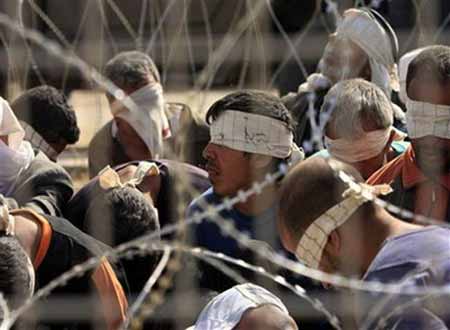
File – moheet.com
IMEMC & Agencies | June 11, 2013
The Israeli Government passed Sunday [June 9, 2013] the “Anti-Terror Bill”, authorizing harsher punishment against individuals suspected or convicted of aiding armed groups in the country, and anywhere in the world.
Several human rights groups in Israel and around the world voiced serious concerns regarding direct human rights violations, especially since this law strengthens and “legalizes” Administrative Detention orders confining hundreds, and even thousands, behind bars for extended periods without charges or trial.
The bill passed during a vote at the Israeli Ministerial Committee for Legislation, headed by Israeli Justice Minister, Tzipi Livni.
It not only targets those “convicted of terror attacks”, but also those who express support, emphasize and “incite terror activities” in addition to those believed to be engaged in preparations to carrying out violent acts.
Part of the penalties that this bill proposed include sentencing individuals for a life term without the possibility of parole, and allows the Police, the Security Services and all related agencies to confine “suspects” up to 30 days without granting them the right to any legal representation.
The passed bill also allows Israel to seize property of armed groups and individuals, in addition to preventing them from traveling abroad when there are no arrest warrants against them.
Israeli daily Haaretz has reported that the new legislation, would replace the “national state of emergency regulations” that Israel enforced after its establishment in the historic land of Palestine in 1948. Those regulations affect civil, security and economic issues.
The law particularly targets Palestinians and the indigenous Arab population in Israel, as those facing charges of “security or criminal violations”, whether in civil or military courts, would be facing very harsh sentences.
Head of the Meretz opposition party, Zahava Gal-On, said that Israel is denying human rights under the guise of combating terror.
She said that the emergency law applied in the country since the British occupation of Palestine, “cannot just be replaced with legislation that is anti-democratic”.
Also, the Association for Civil Rights in Israel (ACRI) slammed the bill, described it as anti-democratic, and warned that its provisions could turn legal organizations and law-abiding persons into terrorists just because they are suspected of aiding or practicing terror.
The Arabs48 news website reported that, under the new law, persons who even express support for groups labeled by Israel as “hostile” or “terrorist” could be imprisoned up to three years. It also considers financial support to these organizations as an “act of terror”.
Arabs48 added that the new bill increases the years of life-terms from 30 to 40 years.
It stated that the Israeli Prosecutors Office said that Price Tag attacks have not been labeled as acts of terror, as the Office believes that boosting intelligence activity and adequate training to police officers dealing with those attacks could put an end to those attacks.
The Israeli Government Legal Advisor stated that, legally, there is nothing stopping the government from describing and declaring Price Tag attacks as acts of terror.
In an Editorial Published on June 9, Haaretz said that the core of this bill has serious and extremely wide definitions for a terrorist organization, or terrorist acts, and added that once an organization, including a charity group, is labeled as a terrorist group, the moral base and all legal measures are destroyed.
US Gulf allies crack down on Internet freedoms
RT | June 10, 2013
Gulf Arab allies of the US have come under fire for introducing a series of draconian measures that limit Internet freedoms. The measures restrict content on social media sites, making “offending” posts punishable by extensive jail sentences.
Saudi Arabia, Qatar, the United Arab Emirates, Kuwait and Bahrain have tightened controls on Internet freedoms recently, targeting social media and phone applications alike in their communications crackdown.
Across the Gulf, dozens of journalists and social media users have been arrested since the beginning of the year for being in violation of the uncompromising national laws.
Punishments include deportation and lengthy prison sentences for crimes such as making derogatory comments about the government “in bad faith,” and offending religion and family values. In Saudi Arabia last month, top cleric Sheikh Abdul Latif Abdul Aziz al-Sheikh warned citizens against using Twitter, stating that those who use social media sites “have lost this world and the afterlife.”
Saudi Arabia
After threatening to ban messaging applications like Skype and WhatsApp, Saudi Arabia’s telecom regulator has chosen a new target: The web-based communication app Viber. The instant messaging application has been blocked since June 5.
“The Viber application has been suspended… and the [regulator] affirms it will take appropriate action against any other applications or services if they fail to comply with regulatory requirements and rules in force in the kingdom,” the Communications and Information Technology Commission (CITC) said in a statement.
Viber allows its users to text, call and send photos and video messages worldwide using a 3G or Wifi connection, and boasts over 200 million subscribers worldwide.
In March, the CITC warned mobile providers in the Kingdom that if they could not find ways to monitor encrypted messaging and VOIP applications, then they would be blocked, according to local media. The commission then issued a statement saying that “it would take suitable measures against these apps and services,” in its push for greater control over the Internet.
The Saudi government has also begun arresting Twitter users for posts to their accounts. Local media reports that the government is looking into ending anonymity for Twitter users in the country by making users register their identification documents.
Qatar
Despite its status as a regional media hub, the emirate state is considering a new cybercrime law that would widen government control over news websites and online commentaries.
If passed, the law would enable the government to punish websites or social media users for violating “the social principles or values,” or for publishing “news, photos, audio or visual recordings related to the sanctity of the private and familial life of persons, even if they were true, or infringes on others by libel or slander via the Internet or other information technology means,” Qatar News agency reported.
United Arab Emirates
At the end of 2012, the UAE passed a sweeping new cybercrime law: Anyone found guilty of criticizing the country’s rulers or institutions online may be jailed or deported. The law attracted widespread opposition, with legal consultants warning it is broad enough to penalize anyone caught posting allegedly offensive comments against the state.
This law has been used to jail citizens for Twitter posts over the past few months. In May, the UAE appeals court sentenced Abdullah Al-Hadidi to 10 months in jail for tweeting details of the trial of his father.
He was arrested on March 22 on charges of disseminating information on Twitter “in bad faith.” The court ruled that he wrote false details of a public hearing that, along with his father, involved 93 other people accused of plotting to seize power in the Gulf Arab state.
Kuwait
The government has arrested dozens of activists and at least six journalists in 2013 in the constitutional emirate, often described as the most liberal country in the region.
In March, Twitter user Hamed Al-Khaledi was sentenced to two years in prison for allegedly insulting the ruler of the Gulf nation. Others have been accused of “threatening state security” or “offending religion.”
In April, a Kuwaiti court sentenced former parliamentarian and opposition leader Mussallam al-Barrak to five years in prison for remarks deemed critical of the ruler of the state, which he made last year at a public rally.
Kuwait has been a member of the International Covenant on Civil and Political Rights (ICCPR) since 1996, which protects the right to freedom of expression, including peaceful criticism of public officials.
Bahrain
The Bahraini government has been trying to suppress an ongoing uprising by introducing stricter penalties. In April, the government passed a law making it illegal to insult the Gulf state’s King Hamad bin Issa al Khalifa, or its national symbols.
Recently, Bahraini blogger and activist Ali Abduleman was granted asylum in the UK after two years in hiding. Adbuleman claims he was persecuted by the government “for exercising the right to express his opinions” on his website. The Bahraini government claims he was tried for “inciting and encouraging continuous violent attacks against police officers” and conspired to spread “false and inflammatory rumors.”
In May, 62-year-old Bahraini protester Abdulla Sayegh was sentenced to three months in prison for hanging a national flag from his truck during a 2011 rally. The same month, six Twitter users were jailed for allegedly offensive comments about the country’s ruler deemed to be ‘abusing freedom of expression.’ According to prosecutors, they posted comments that undermined “the values and traditions of Bahrain’s society towards the king.”
One of the best-known human rights abuse cases in Bahrain is that of activist Nabeel Rajab, who was sentenced to three years in jail in August 2012 on charges of ‘participating in an illegal assembly’ and ‘calling for a march without prior notification.’ He openly criticized the country’s regime on RT for Julian Assange’s show The World Tomorrow.
The country has witnessed mass protests led by the kingdom’s majority Shiites against the minority Sunni-led government for two years. The Shiite demonstrators call for a transfer to a democratic system, and complain of discrimination in jobs and government. Their loyalty is in turn questioned by the ruling Al Khalifa monarchy, which has been in power for decades.
Related articles
Featured Video

Houthis Don’t Have to Conquer Saudi Arabia to Make It Pay
or go to
Aletho News Archives – Video-Images
From the Archives
A Lesser “Grade” of Human
By Michael Hoffman | Revelation of the Method | January 3, 2024
Will the more than 100 Iranians killed by terrorist bombs today be mourned in the West as victims of terrorism? Certainly not. Allied doctrine has it that the killing of Israeli or American civilians is a crime of cosmic proportions, while shedding the blood of “enemy” women and children is perfectly acceptable; indeed commendable.
The West does not memorialize the hundreds of thousands of civilians bombed by the U.S. in Serbia, Iraq, Afghanistan and every major German city 1943-1945. America’s fire-bombing of the city of Tokyo by General Curtis LeMay in March 1945 was followed by Harry Truman’s atomic incineration of Hiroshima and Nagasaki in August of that year. Truman never had a moment of doubt or regret over the murder of more than a 100,000 Asian children, mothers and non-combatant boys and men. It was business as usual for the “noble” Allies during the “Good War.”
In the West human rights signifies passionate concern only for civilians designated as truly human: Israelis first, then Americans and British, followed by their satraps.
This inhumanity is the legacy of Talmudic ideology, beginning with tractate Sanhedrin 57a from 400 A.D., concerning liability for capital punishment: “If a Jew murders a gentile, he is exempt.”
This teaching of contempt was reiterated in the dogma of Chabad Lubavitch founder Rabbi Shneur Zalman in the 18th century. … continue
Blog Roll
 Aletho News
- Houthis Don’t Have to Conquer Saudi Arabia to Make It Pay
- MOE: Nearly 22,000 Students and Education Workers Killed
- Guterres in Islamabad: Genocide, cowardice, and the cage of Imran Khan
- Johnson, Marandi say Yemen holds upper hand over Saudi Arabia
- False flags won’t save aggressors, Iran FM spokesman says
- The Makkah Pact Enters Into Force: The End of American Dominance or Its New Form?
- NATO’s top generals gather in Kiev
- EU’s continuing expansion – greater threat to Russia
- US Senator Murphy says Pentagon denied him entry to US base in Qatar
- Israel expands “incitement” charge to target Palestinian education and memory
- If Americans Knew
- Three Years of Genocide: How America’s Israel-First Media Filtered Out the Truth
- Israeli war chief briefs ministers on potential war against Palestinian Authority
- New Report: Israel Killed nearly 21,000 Palestinian Students and Education Workers in Past Three Years
- Israel’s flailing chatbot army
- Five Palestinians Killed, Others Injured by Israeli Fire in Gaza
- Israel is rewriting the Palestinian curriculum in East Jerusalem to erase Palestinian identity
- Three years of genocide: Israel turned prisons into killing grounds and torture sites
- Three years of genocide. Words fail. Daily Update
- ‘I’d rather die than go back’: A Palestinian teen’s 10-month nightmare in Israeli jail
- How Jared Kushner’s firm’s investment in an Israeli company could be a major conflict of interest
- No Tricks Zone
- US September “Heat” Was No Record…Many Records Set Decades Ago
- Latest European Green Energy Debacle; Portugal’s Largest Flagship Solar Park Insolvent!
- Green Energy Debacle: German Expert Professor Fritz Vahrenholt Warns Of Severe Economic And Social Consequences
- Two More Paleo Reconstructions Affirm Meters-Higher Sea Levels Across Ireland, Brazil 7000-6000 Years Ago
- New Study: Earth And Venus Surface Warmth Largely Explained By Convection And Lapse Rate, Not CO2 Or Radiation
- 2025 Nature Paper Claiming Worsening Global Drought Gets RETRACTED …Heavily Flawed
- New Study: ‘Global Drought Shows No Detectable Recent Acceleration Under Climate Warming’
- Economic Masterminds: German Socialists Suggest Taxing Productivity Gains Stemming From Using AI
- The South China Sea Has Not Been Cooperating With The Climate Change Narrative
- Energy Crisis: Germany Enters Heating Season With Historically Low Gas Reserve Fill Levels

