Illegal Israeli PR in America: Declassified
By Grant Smith | Pulse Media | August 18, 2010
A huge trove of newly declassified documents subpoenaed during a 1962-1964 Senate investigation reveals how Israel’s lobby pitched, promoted, and paid to have content placed in America’s top news magazines with overseas funding. The Atlantic (and many others others) received hefty rewards for trumpeting Israel’s most vital – but damaging – PR initiatives across America.
The relevant documents are now online
Media strategies on display include:
Cover-ups: “The [Dimona] nuclear reactor story inspired comment from many sources; editorial writers, columnists, science writers and cartoonists. Most of the press seemed finally to accept the thesis that the reactor was being built for peaceful purposes and not for bombs.”
Payola: “The Atlantic Monthly in its October issue carried the outstanding Martha Gellhorn piece on the Arab refugees, which made quite an impact around the country. We arranged for the distribution of 10,000 reprints to public opinion molders in all categories… Interested friends are making arrangements with the Atlantic for another reprint of the Gellhorn article to be sent to all 53,000 persons whose names appear in Who’s Who in America…Our Committee is now planning articles for the women’s magazines for the trade and business publications.”
Pressure: “It can be said that the press of the nation…has by and large shown sympathy and understanding of Israel’s position. There are, of course, exceptions, notably the Scripps-Howard chain where we still need to achieve a ‘break-through,’ the Pulliam chain (where some progress has been made) and some locally-owned papers.”
Ghost Writing: “We cannot pinpoint all that has already been accomplished by this Committee except to say that it has been responsible for the writing and placement of articles on Israel in some of America’s leading magazines….”
A defunct Dow Jones report noted “The Senate investigation closed down the conduit, but the extensive propaganda activities still go on…”
How Israel helps eavesdrop on US citizens
Ali Abunimah, The Electronic Intifada, 3 November 2008
 |
After the 11 September 2001 attacks, the United States government launched a massive program to spy on millions of its own citizens. Through the top secret National Security Agency (NSA), it has pursued “access to billions of private hard-line, cell, and wireless telephone conversations; text, e-mail and instant Internet messages; Web-page histories, faxes, and computer hard drives.” In his new book, The Shadow Factory: The Ultra-Secret NSA from 9/11 to the Eavesdropping on America author James Bamford casts light on this effort, including a detailed account of how spying on American citizens has been outsourced to several companies closely linked to Israel’s intelligence services.
It is well-known that the two largest American telecom companies AT&T and Verizon collaborated with the US government to allow illegal eavesdropping on their customers. The known uses to which information obtained this way has been put include building the government’s massive secret “watch lists,” and “no-fly lists” and even, Bamford suggests, to deny Small Business Administration loans to citizens or reject their children’s applications to military colleges.
What is less well-known is that AT&T and Verizon handed “the bugging of their entire networks — carrying billions of American communications every day” to two companies founded in Israel. Verint and Narus, as they are called, are “superintrusive — conducting mass surveillance on both international and domestic communications 24/7,” and sifting traffic at “key Internet gateways” around the US.
Virtually all US voice and data communications and much from the rest of the world can be remotely accessed by these companies in Israel, which Bamford describes as “the eavesdropping capital of the world.” Although there is no way to prove cooperation, Bamford writes that “the greatest potential beneficiaries of this marriage between the Israeli eavesdroppers and America’s increasingly centralized telecom grid are Israel’s intelligence agencies.”
Israel’s spy agencies have long had a revolving-door relationship with Verint and Narus and other Israeli military-security firms. The relationship is particularly close between the firms and Israel’s own version of the NSA, called “Unit 8200.” After the 11 September attacks, Israeli companies seeking a share of massively expanded US intelligence budgets formed similarly incestuous relationships with some in the American intelligence establishment: Ken Minihan, a former director of the NSA, served on Verint’s “security committee” and the former Federal Bureau of Investigation (FBI) official responsible for liaison with the telecom industry became head of the Verint unit that sold eavesdropping equipment to the FBI and NSA.
Bamford writes that “concern over the cozy relationship between the [FBI] and Verint greatly increased following disclosure of the Bush administration’s warrantless eavesdropping operations. At the same time that the tappers and the agents have grown uncomfortably close, the previous checks and balances, such as the need for a FISA warrant, have been eliminated.”
FISA — the Foreign Intelligence Surveillance Act of 1978 — required the government to seek court warrants for wiretaps where at least one target was in the US. In 2005, it was revealed that the Bush administration had been flagrantly violating this law. Last July, Congress passed a bill legalizing this activity and giving retroactive immunity to the telecom companies that had assisted.
Although there has never been any congressional oversight of the Israeli intelligence-linked firms operating in the heart of the US security establishment, American lawmakers and officials are not always so relaxed when it comes to foreign intrusion in the “national security” sphere. In early 2006, there was a national uproar when Dubai Ports World, a global company based in the United Arab Emirates (UAE), attempted to buy the business that manages six major American seaports.
Democratic and Republican lawmakers united against the Bush administration’s approval of the sale, claiming it would harm national security. Senator Barack Obama echoed many in both parties when he said at the time, “Over four years after the worst terrorist attack in our history, not only are we failing to inspect 95 percent of the cargo that arrives at US ports, but now we’re allowing our port security to be outsourced to foreign governments.”
A New York Times editorial justified such alarmism on grounds that “money to finance the 9/11 attacks flowed through” the UAE, although there was never an allegation that the country’s government or Dubai Ports World were involved in that. The newspaper also cited claims that “Abdul Qadeer Khan, the rogue Pakistani nuclear scientist, sent equipment to Libya and Iran through Dubai,” even though it also acknowledged that “port managers have little if anything to do with inspecting cargo or checking manifests” (“Reaping What You Sow,” Editorial, 24 February 2006).
Unlike the UAE, however, Israel has a well-established record of compromising American national security. The most notorious case was that of convicted spy Jonathan Pollard. Although the full details of his crimes are still secret, he is thought to have passed critical information about US intelligence-gathering methods to Israel, which then traded those secrets to US adversaries. In 2005, Larry Franklin, a Defense Department analyst, pleaded guilty to spying for Israel. Most recently, Ben-Ami Kadish, a retired US army engineer, was indicted in April for allegedly passing classified documents about US nuclear weapons to Israel from 1979 to 1985. Two former officials of AIPAC, the pro-Israel lobbying group, are still awaiting trial on charges that they passed classified information between Franklin and the Israeli government.
Nor have particular Israeli firms established a record of trustworthiness that would justify such complacency. Jacob “Kobi” Alexander, the former Israeli intelligence officer who founded Verint, fled the US to Israel in 2006 just before he and other top executives of a subsidiary were indicted for fraud that allegedly cost US taxpayers and company shareholders $138 million. Alexander eventually adopted a fake identity and hid in the southern African country of Namibia where he is now fighting extradition. In only once case did US officials block an Israeli high-tech firm from taking over an American company for security concerns.
Israeli companies do not assist the US only to spy on its own citizens, of course. Another Israeli firm, Natural Speech Communication (NSC), among whose directors is former Mossad chief Shabtai Shavit, makes software that the US uses to electronically analyze and key-word search recorded conversations in “Levantine Arabic,” the dialects “spoken by Israeli Arabs, Jordanians, Lebanese and Palestinians.” Mexico and Australia are among other countries known to use Israeli technologies and firms to eavesdrop on their citizens.
Not surprisingly, some of Bamford’s claims have been criticized by pro-Israel activists for lacking evidence. Writing about a subject shrouded in secrecy is inherently difficult. But even what is solidly known ought to make Americans demand that Israeli intelligence activities (not less than their own government’s) be sharply curtailed. In his 2001 book Body of Secrets, Bamford contended that Israel’s attack on the US Navy signals ship USS Liberty during the June 1967 war was deliberately intended to prevent the Americans from learning about Israeli massacres of Egyptian prisoners of war. Thirty-four sailors were killed in the attack on the ship off the Sinai coast. Despite decades of demands by USS Liberty survivors, the US has never reopened the investigation.
So far Bamford’s latest revelations involving Israel have had scarcely more impact. Former Democratic Senator Bob Kerrey gave The Shadow Factory a mostly glowing review in The Washington Post. But Kerrey, who was a member of the 9/11 Commission and is president of The New School University in New York, anxiously discounts Bamford’s contentions that the 11 September hijackers in any way “were motivated by anger over an Israeli bombing of Lebanese civilians in 1996” and reassures us their only motive was “radical Islamic fervor.” Kerrey concludes that Bamford’s “apparent negativity toward Israel is a significant distraction from the content of his book” (Bob Kerrey, “Big Brother’s Big Failure,” 12 October 2008).
When any material that raises legitimate questions about Israeli actions is automatically discounted by US elites, and the motives of critics immediately cast under suspicion, it is no wonder Israel gets away with so much.
Media gag in occupied Kashmir
By Khalid Awan | The News | August 08, 2010
In Occupied Kashmir, working on a two-pronged strategy, India has been trying to suppress the freedom movement by unleashing death and destruction and at the same time making every effort to hide the truth from the world.
For the latter, it has been muzzling the right to expression and freedom of the press by subjecting the media to stringent curbs. Presently, there is a new surge in the uprising and the Kashmiri people are coming to the streets, thousands in number, to demand their right to self determination. Forceful demonstrations all across the occupied territory have become a routine. The occupation authorities are responding by resorting to brute force, randomly killing the innocent people.
Over 18 youth, most of them teenagers have been killed by Indian troops during the last five weeks while firing on peaceful demonstrations. The All Parties Hurriyet Conference Chairman, Mirwaiz Umar Farooq, has been confined to his residence in Srinagar by placing him under house arrest.
The octogenarian leader, Syed Ali Gilani, senior pro-movement leader Shabbir Ahmad Shah, President High Court Bar Association (HCBA) Mian Abdul Qayoom and almost all other Hurriyet leaders have been sent to jails, booking them under the draconian Public Safety Act (PSA). Curfew and other restrictions are in place to prevent people from holding demonstrations.
To keep the international community blind to all these happenings, the occupation authorities have imposed more curbs on the media and are engaged in terrorising the Kashmiri journalists. On many occasions, they were fired upon, subjected to humiliation, thrashing and beating besides prevented from covering events. After the imposition of curfew in the occupied territory, the authorities banned the movement of media-persons and cancelled all the curfew passes issued to them.
At least, 12 media persons were critically injured, including President of Kashmir Photojournalists Association, Tauseef Mustafa, when Indian paramilitary forces and police attacked them with batons at Tengpora-bypass in Srinagar on the morning of 6th July 2010. The incident took place when the media persons were covering protests that had erupted after the killing of two youth by the police in the area. While giving details of the incident, Bilal Bhadur, a photojournalist of Times of India said: “We were taking picture of the dead bodies, when suddenly seven of us were surrounded by CRPF and police personnel and we were beaten up mercilessly.”
The restrictions on the movement of media persons resulted in the non-publication of newspapers in the Valley, the total number of which is around 60, both in Urdu and English languages. Jammu and Kashmir remained a territory without newspapers for four days.
Amidst all this state of muzzling of the media, the authorities banned the beaming of Pakistani channels and the cable operators were directed to block PTV, Geo TV, Dawn News and others, instituting a total blackout of information. Banning of Pakistani channels, which are widely viewed in IOK, was a shameful attempt by the Indian authorities to give an impression to the world community that Pakistan is instigating the local youth to come on the streets. It speaks of the Indian negative mindset to level the blame on Pakistan for its every wrongdoing as ever before.
Since 1989, it has become commonplace that Kashmiri journalists are being beaten up and injured by Indian troops and are subjected to abductions, murder attempts and death threats.
They are also being detained on fake charges and subjected to humiliating interrogation. Nine Kashmiri journalists have so far been killed in the occupied territory while carrying out their professional duties eversince the freedom struggle has started off.
Restricting freedom of movement: an Israeli attempt to silence leaders of the popular struggle
International Solidarity Movement | August 5, 2010

Khatib during a speaking his speaking tour in Canada. Photo: Tadamon!
On August 4, 2010 about 1 PM, Mohammed Khatib from Bil’in was denied exit to Jordan via King Hussein Bridge. Khatib was on his way to Spain via Amman when Israeli border officials prevented him from crossing the border to Jordan. Denying the leaders of the non-violent Popular Struggle to go abroad is clearly an attempt to silence Palestinians who speak about human rights violations committed by Israel.
This is not the first time Israel has prevented leaders of the Popular Struggle from going abroad. Earlier this year Iyad Burnat, the leader of the Popular Committee in Bil’in was denied exit via King Hussein’s Bridge when on his way to Europe via Amman. Burnat and his 5 year old daughter were detained at the border, and after hours of waiting they were sent back to Bil’in. Later Burnat was given permission to travel abroad, on condition he did not speak about the situation in Bil’in. He is now threatened with arrest if he chooses to do so.
Both Khatib and Burnat had valid visas for their destinations, and had been planning their departure months in advance. Since Israel denies the vast majority of Palestinians entry to Jerusalem where the consulates are located, obtaining a visa is a time consuming process.
Crossing the border back to Israel after travelling abroad is also a complicated and potentially dangerous process. In 2009 Mohammed Othman was arrested at the Jordan border when returning from a speaking tour in Norway. Othman was held under administrative detention for months, without trial, allegedly considered a “security threat”.
Mohammed Khatib and other activists for the Popular Struggle can tell of frequent human rights violations: arrests and night raids carried out by the army, and theft of Palestinian land that makes life extremely difficult in their villages. As more and more people become aware of the situation in Palestine, Israel needs to find new strategies to silence those Palestinian voices speaking out – and denying Palestinians freedom of movement and freedom of speech is one tactic.
At 10 PM last night Mohammed Khatib returned to Bil’in. He reports that the reason Israeli border police gave for refusing to let him pass to Jordan was that the Israeli intelligence, Shebak, had given them instructions. The refusal came despite Khatib’s possession of a valid ruling by an Israeli court – issued on Tuesday – which allowed him to travel. This legal ruling was ignored by the border officials and proves once again that Israeli officials do not even follow their own legal system.
NYT: Pervasive surveillance is a serious threat — in China
By Glenn Greenwald| August 3, 2010
Yesterday, I wrote about the proliferation of the private online surveillance industry, how it furnishes ever more thorough and invasive information to the U.S. Government about citizens’ online activities, and why that destruction of privacy is so dangerous My Salon colleague, Dan Gillmor, yesterday detailed just how comprehensive are the online surveillance capabilities which enable all of this. Today, The New York Times confronts the same problem of privacy destruction at the hands of a pervasive Surveillance State . . . in China. In a perfectly interesting article, Michael Wines describes how the Chinese Government has placed surveillance cameras covering virtually every public space in two of its more “restive” provinces, which last year saw deadly fighting between ethnic minorities and the Government. He describes the dangers as follows:
Much of the proliferation is driven by the same rationales as in Western nations: police forces stretched thin, rising crime, mushrooming traffic jams and the bureaucratic overkill that attends any mention of terrorism.
But China also has another overriding concern — controlling social order and monitoring dissent. And some human rights advocates say they fear that the melding of ever improving digital technologies and the absence of legal restraints on surveillance raise the specter of genuinely Orwellian control over society. . . .
Officials say the cameras leverage the latest technology to battle crime and terrorism Guangdong provincial officials told Chinese news services last year that their new cameras had deterred more than 18,000 street crimes even before the one million cameras had been fully deployed. In Kunming, in south-central China, crime dropped 10 percent after the police installed new cameras, the city’s deputy police chief told a security forum last spring.
That said — and some Western skeptics dispute claims of the cameras’ crime-fighting success — China’s video surveillance clearly has a darker side. . . . The longer-term concern . . . is that video surveillance will become a pervasive tool for controlling not only China’s comparative handful of dissidents, but the masses of people who ordinarily would not run afoul of the state.
So government surveillance “clearly has a darker side” and could become “a pervasive tool for controlling not only dissidents, but the masses of people who ordinarily would not run afoul of the state”? You don’t say. Thank God we don’t live in a place like China where that happens, but instead in the U.S., where surveillance is only motivated by a desire to stop Terrorism and other crimes.
It’s certainly true that China deploys surveillance cameras far more aggressively, at least in these two provinces, than the U.S. does. But the level of other types of at least equally invasive surveillance by the U.S. Government — including warrantless monitoring of telephone and Internet communications records, as well as Internet browsing activities — is approaching the level of absoluteness. As the ACLU’s privacy expert Chris Calabrese told me yesterday: “if the Government can monitor your Internet searches and store your broswing history, the list of websites you visit, that’s close to being able to read your mind.” And, of course, the 2008 FISA Amendments Act dramatically expanded the Government’s ability to read the content of Americans’ emails and eavesdrop on their calls without warrants.
It isn’t as though the U.S. has no history of severe surveillance abuses by the Government against its citizens. The opposite is true. It’s not really hyperbole to say that every decade of the last century has seen such abuses, with a fairly unbroken trend toward more ever-invasive measures, including many in the last decade. The only episode that imposed some mild restraints — the mid-1970s reforms brought about by the Church Committee’s exposure of decades of severe abuses — has been drowned by the post-9/11 explosion of the Surveillance State. And then there was that instantly forgotten Washington Post series from a couple weeks ago documenting how our Surveillance State is so vast and secretive that nobody even knows what it does, let alone restrains it.
But anyway: let’s fret about the dark side of China’s surveillance activities. It’s always bizarre how eager we are to focus on the threatening acts of other countries’ Governments and how finely attuned we’re willing to be to the likelihood for abuse — over there — while blissfully averting our eyes from similar threats from our own Government and remaining happily faithful that our own government officials would never do such things no matter how many times they do.
Israel declares village closed to foreigners
Ma’an – 31/07/2010
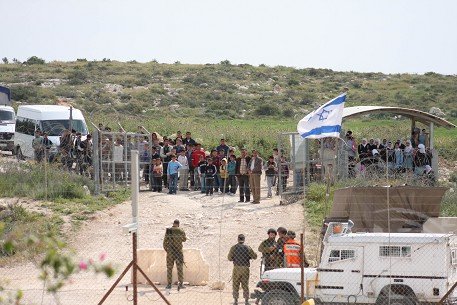
Nablus – Israeli forces turned away Palestinian medical teams at a checkpoint erected at Iraq Burin on Saturday morning, telling international medical volunteers that the area was a “closed military zone.”
Head of the Palestinian Medical Relief Society in Nablus Ghassan Hamdan said the volunteers tried to enter the Nablus-area village where the society had prepared to offer a free treatment day at a local clinic.
Hamdan said the team was told by Israeli soldiers at the village entrance that they must turn back because the village was a closed zone. He said that medics and society officials had made several attempts to explain the humanitarian nature of the mission, but soldiers responded saying their orders were to restrict all entry into the area.
An Israeli military spokeswoman confirmed that the area was declared a “closed military zone for all non-Palestinians,” but said that an exception was made for the doctors at 11a.m., hours after the group arrived at the checkpoint.
Officials from the society confirmed that the Palestinian and international medical workers were permitted into the area, and condemned the delay, saying it would cause a serious reduction in available medical services for villagers.
The society regularly organizes volunteer programs for doctors, nurses and medics from around the world who donate their time and perform free checkups and treatment to Palestinians without regular access to medical services.
The declaration follows one week after the detention of two young men at a checkpoint installed in the same location the previous Saturday.
Iraq Burin, cut off from Nablus by several checkpoints and roadblocks preventing access to the nearby settlement of Yizhar and Bracha, has held regular protests against continued land confiscations by the settlements and settler-only roads. The two detained were accused of having participated in protests in previous weeks.
According to a report by the Israeli human rights group B’Tselem, a new Israeli military order passed in January 2010 made gatherings of more than ten people illegal, by reenacting a 1967 law. The group said the law violated the right of assembly for Palestinians, guaranteed by the fourth Geneva Convention.
Facebook: “No Palestinian Pages”
By Jilian C. York | July 25, 2010
I was surprised, but a little skeptical, this morning when I read a blog post stating that Facebook is blocking the word “Palestinian” from its Pages. After all, a search for “Palestinian” brings back a number of already created Pages. Here’s what the blogger wrote:
I thought it might be a good idea to make a Facebook page for Palestinian Refugee ResearchNet—a straight-forward thing to do, right? Apparently not, since it seems the very word Palestinian may “violate or page guidelines or contain a word or phrase that is blocked”……A mistake, perhaps? Well, Afghan Refugee ResearchNet is OK. So too is DR Congo RefugeeResearchNet. No threats to innocent Facebook users lurking in those terms, it seems…
…Are Palestinians the only group so banned? Well, not really… after a little fiddling around, I discovered that al-Qaida Refugee ResearchNet and Nazi Refugee ResearchNet are banned too.
It does seem a bit odd, however, that a population of up to 12 million people, receiving more than a billion dollars in international aid, recognized by the UN, and enjoying a degree of formal diplomatic recognition from the United States—is placed in the same banned category as Nazis and al-Qaida.
Odd, indeed. I decided to try it for myself, with the terms “Palestinian Refugee ResearchNet,” “Palestinian Folklore,” and “Palestinian Music”. Nada.
Of course, “Israeli Music,” “Israeli Folklore” and “Israeli Refugee ResearchNet” all created no problems.
What is Facebook trying to accomplish by eliminating page creation for a marginalized population? I would guess that they were trying to prevent abuse of some kind (e.g., pages set up to demean a certain group), but I can’t imagine what kind of abuse would affect Palestinians and not, for example, Israelis.
In any case, as usual, Facebook does not have a strong customer support team to handle complaints about this, nor do they seem to care. After all, this was their response to the blogger who first documented this:
Unfortunately, we cannot process this request. Your Page name must comply with the following standards:
- Accurately and concisely represent a musician, public figure, business or other organization
- Not contain terms or phrases that may be abusive
- Not be excessively long
- Not contain variations of “Facebook”
If you believe your Page name fits within these guidelines, please respond to this email and we will re-evaluate your request.
Again, activists, I would advise you to stop using Facebook.
Israel Gets Brutal With Media
By Mel Frykberg | IPS | July 23, 2010
NABI SALAH, Occupied West Bank: Palestinian activists are being jailed, Israeli activists are under surveillance, and the Israeli military is increasingly targeting journalists who cover West Bank protests.
The Foreign Press Association (FPA) in Israel issued a statement recently condemning what it sees as a change in Israel Defence Forces (IDF) policy in their treatment of journalists covering the growing number of West Bank protests against Israel’s separation barrier, illegal settlements and land expropriation.
“We would appreciate it were the authorities to remind the various forces involved, that open, unhindered coverage of news events is a widely acknowledged part of the essence of democracy.
“Generally speaking this would not include smashing the face of a clearly marked photographer working for a known and accredited news organisation with a stick, or for that matter aiming a stun grenade at the head of a clearly marked news photographer or summarily arresting cameramen, photographers and/or journalists,” said the FPA.
The release of the statement followed an attack on three journalists as they covered a protest march near an Israeli settlement built illegally on land belonging to the Palestinian village Beir Ummar in the southern West Bank.
Several weeks ago in the village Nabi Salah, north of Ramallah, two Israeli activists were roughed up and arrested after criticising Israeli soldiers for shooting at Palestinian boys throwing stones.
One of the Israelis, Yonatan Shapira, 38, an ex-Israeli Air Force (AIF) pilot and member of Combatants for Peace, (a group comprising former Palestinian and Israeli fighters) earned the wrath of the Israeli authorities when he authored a “pilot’s letter” in 2003 signed by 27 AIF pilots.
The pilots refused to fly over the Palestinian occupied territories and take part in the deliberate targeting of Palestinian civilians, particularly in Gaza.
Shapira was recently interrogated by Israel’s domestic intelligence agency Shin Bet over his participation in anti-occupation protests and his support for the BDS movement.
In what appeared to be a veiled threat the Israeli activist was warned that his presence at anti-wall demonstrations was in defiance of the areas being declared closed military-zones on Fridays.
Shapira believes his phone has been tapped. “Nothing we are doing is illegal and I’m not afraid, but I’m uncomfortable about my country turning into a fascist state,” said Shapira.
“The Israeli authorities are trying to intimidate Israelis who engage in political dissent. We present no security threat. But the line between political activism and security is becoming increasingly blurred by the authorities who are trying to criminalise dissent,” Shapira told IPS.
“Sometimes when we come to demonstrations we have been stopped en route by the IDF who have taken down our details and appear to have prior knowledge of our movements,” Israeli activist Shy Halatzi, 23, a physics and astronomy student at Tel Aviv University who served in the Israeli military told IPS.
Israel has become alarmed at growing international support for a boycott campaign against the country as its right-wing government increasingly tramples on civil liberties. Hundreds of Israeli college professors signed a petition recently denouncing the threat by Israeli education minister Gideon Saar (a member of Israeli Prime Minister Benjamin Netanyahu’s Likud party) to punish any lecturer or institution which supports a boycott of Israel.
Saar supports Im Tirtzu, a right-wing nationalist movement, which demands that Israeli education professionals be required to prove their commitment to Zionism.
Neve Gordon, professor of politics at Ben Gurion University in Beersheva, received death threats after he wrote an editorial last year in the Los Angeles Times explaining why he supported a boycott on Israel.
Meanwhile, Palestinian grassroots activists involved in non-military popular committees, which organise non-violent activity against the occupation, continue to be arrested and jailed on what they say are trumped-up charges involving forced confessions under duress.
The IDF carries out nightly raids in West Bank villages where demonstrations take place regularly on a Friday and where villagers have been particularly active.
Wael Al-Faqia from Nablus in the northern West Bank was recently sentenced to a year’s prison for “belonging to an illegal organization.” Al-Faqia was arrested with eight other activists in December last year.
Musa Salama, an activist with the Labour Committee of Medical Relief Workers and associate of Al-Faqia, was sentenced last December to a year’s imprisonment on identical charges.
Abdullah Abu Rahme from the head of the Popular Committee Against the Wall in Bili’in village near Ramallah continues to languish in detention following his arrest in December last year.
Some of the allegations against him include incitement for planning the peaceful protests and “being in possession of arms.” The latter referred to his collection of used teargas canisters and spent bullet cartridges, fired by Israeli troops at unarmed protestors, [which had been arranged] into a peace sign.
“What we as Israeli activists endure is a fraction of what Palestinians are subjected to. They are subjected to harsher and much more brutal treatment than we are,” Shapira told IPS.
Israel releases British rapper detained at airport
Ma’an – 21/07/2010
 Bethlehem – Israeli airport authorities have released a British-Iraqi rapper who was held for half a day at Ben Gurion International Airport, the musician’s fan page reported Wednesday.
Lowkey was detained Tuesday upon arrival in Tel Aviv en route to play a number of concerts and hold a series of musical workshops in refugee camps in the West Bank as part of the Hip Hop Bus Tour, composed of members from the Existence is Resistance, The South West Youth Collaborative, and the University of Hip Hop Chicago.
Fans started an online petition shortly after Lowkey’s detention calling on the Israeli government to release the musician and allow him to play in Palestine.
A spokeswoman for Israel’s Interior Ministry immigration department did not immediately return a phone call seeking comment. An email to Lowkey’s booking representative was not immediately returned.
In February 2009, Lowkey was detained at the airport en route to several Palestinian charity concerts to help raise funds to rebuild Gaza following the war.
Born Kareem Dennis to an Iraqi mother and English father in Tooting, London, Lowkey’s Gaza anti-war song reached number 1 in the UK charts in January.
Democrats: Guantanamo Closure ‘Not a Priority’
Steny Hoyer: Then and now
By Glenn Greenwald | July 21, 2010
Letter signed by Steny Hoyer to George Bush, June 29, 2007, demanding closing of Guantanamo:
Holding prisoners for an indefinite period of time, without charging them with a crime goes against our values, ideals and principles as a nation governed by the rule of law. Further, Guantanamo Bay has a become a liability in the broader global war on terror, as allegations of torture, the indefinite detention of innocent men, and international objections to the treatment of enemy combatants has hurt our credibility as the beacon for freedom and justice. Its continued operation also threatens the safety of U.S. citizens and military personnel detained abroad. . . . A liability of our own creation, the existence of the detention facilities at Guantanamo Bay is defeating our effort to ensure that the principles of freedom, justice and human rights are spread throughout the world.
House Majority Leader Steny Hoyer, today:
Gitmo shut-down not a priority, top Dem says
House Majority Leader Steny Hoyer acknowledged Tuesday that closing down the Guantanamo Bay prison is not a top priority for congressional Democrats.
In response to a question from a reporter about where shutting down Gitmo stands, Hoyer said, “I think that’s not an item, as you point out, of real current discussion. There’s some very big issues confronting us – dealing with growing the economy and Iraq and Afghanistan.”
Hoyer added, “I think you’re not going to see it discussed very broadly in the near term.”
How can it be that it’s not a priority to end something which — as Hoyer put it in 2007 — “threatens the safety of U.S. citizens and military personnel detained abroad”? Why would Democrats like Hoyer be so willing to jeopardize the safety of American citizens and the lives of Our Troops abroad by de-prioritizing something which (at least if the 2007 Hoyer was to be believed) directly threatens them? Also, we had wars in Afghanistan and Iraq in 2007 along with a whole variety of other problems — if those issues now justify de-prioritizing the closing of Guantanamo, why wasn’t that also true in 2007 when Hoyer (and most other Democrats ) were vocally demanding that Bush close the camp?
This, needless to say, is par for the course: policies which establishment Democrats pretended to vehemently oppose when out of power magically transformed into policies they embrace when in power. Ironically, in response to the 2007 Hoyer letter, a Bush spokesperson “said the letter was received and noted that Bush has said he wants to close Guantanamo. ‘A number of steps need to take place before that can happen, and we’re continuing to work on those,’ she said.” Sound familiar? Recall, too, that even the Obama plan to move the camp to Illinois would have entailed preserving one of the core factors condemned by Hoyer (“Holding prisoners for an indefinite period of time, without charging them with a crime goes against our values, ideals and principles as a nation governed by the rule of law”).
Along these same lines, a provision in the new Intelligence Authorization Act which would provide for substantially greater oversight of the intelligence community has now disappeared from the bill in the face of a threat from the Obama White House to veto any bill containing it. I wrote before about the Obama administration’s efforts to prevent greater oversight of covert intelligence programs — greater oversight also used to be an advocated Democratic policy — but it’s particularly ironic that Obama succeeded in quashing further oversight on the exact day that The Washington Post documents the completely out-of-control, unaccountable, secret world of the National Security and Surveillance State. Allowing an audit of these intelligence programs by the General Accounting Office to ensure compliance with the law — something Nancy Pelosi was pushing — would have been one mild means of ensuring at least a marginal degree of accountability over Top Secret America. Yet it looks likely even that will not happen because Obama is threatening a veto to prevent it. I wonder why he would do that?
Featured Video

When Israel Is Mighty
or go to
Aletho News Archives – Video-Images
From the Archives
US murdering 1 million Iraqis is democracy, Iran giving yogurt to Iraq is “domination”
By Ali Salaam | American Herald Tribune | July 31, 2017
The New York Times, owned by the Zionist Jewish supremacist Ochs-Sulzberger family, has no problem with Iraqi suffering as long as Iran is not the one behind it.
The Iraq War was a genocide of the Iraqi people by Zionist supremacists in the Bush administration. Over 1 million innocent people were killed based on a lie. American soldiers died in an Israeli war and now an average of 22 soldiers commit suicide every day because their consciences cannot cope with the fact they committed crimes in an illegal war that served no purpose other than to benefit Israel, not America.
Benjamin Netanyahu, Prime Minister of the Zionist regime, once said “We are benefiting from one thing, and that is the attack on the Twin Towers and Pentagon, and the American struggle in Iraq.”
Paul Wolfowitz had his sights on Iraq since his time in the first Bush administration. Former Israeli official and Bush administration official Richard Perle had his eyes on Iraq since at least his authorship of the Clean Break white paper. The Zionist regime had their eyes on Iraq since the 1980s when strategist Oded Yinon wrote his white paper in support of dividing the Arab-Muslim world along ethnic and sectarian lines. The global Zionist lobby has had their eyes on Iraq since Theodor Herzl stated that Eretz Israel’s true borders go from the Nile River in Egypt to the Euphrates River in Iraq. … continue
Blog Roll
 Aletho News
- MEP blasts ‘Euro-Gestapo’ for lecturing Russia on democracy
- Syria May Send Troops to Saudi Arabia Amid War with Ansar Allah
- UK whines about losing billions to ‘Putin tax’
- Baghaei to Rubio: Distorted narratives cannot erase US record of broken commitments
- Houthis Don’t Have to Conquer Saudi Arabia to Make It Pay
- MOE: Nearly 22,000 Students and Education Workers Killed
- Guterres in Islamabad: Genocide, cowardice, and the cage of Imran Khan
- Johnson, Marandi say Yemen holds upper hand over Saudi Arabia
- False flags won’t save aggressors, Iran FM spokesman says
- The Makkah Pact Enters Into Force: The End of American Dominance or Its New Form?
- If Americans Knew
- Israel puts Gaza’s sick, injured, newborn in peril – Daily Update
- Report claimed Mark Levin used by Israeli government to influence Trump
- Over 2,000 Gazans have died awaiting medical evacuation amid Israel’s continued siege
- How a U.S. Diplomat Suppressed and Altered Reports Critical of Israel
- 5 Palestinians Die from Israeli Strikes in Gaza as Relentless Attacks Continue
- Report: Ceasefire Slows Killing but Leaves Devastation Intact
- Country Music Singer Zach Bryan Breaks Attendance Record at Robert Kraft’s Gillette Stadium While Wearing ‘Free Palestine’ Shirt for Second Night in a Row
- Three years of death and devastation: Israel’s war on Gaza in pictures
- Why Hamas believed the status quo was more dangerous than its 7 October gamble
- Debunking Israel’s latest list of ‘terrorist’ journalists in Gaza
- No Tricks Zone
- New Study: 50 Years Of The Most Aggressive ‘Net Zero’ Policies Can Only Affect The Global Climate By 0.03°C
- US September “Heat” Was No Record…Many Records Set Decades Ago
- Latest European Green Energy Debacle; Portugal’s Largest Flagship Solar Park Insolvent!
- Green Energy Debacle: German Expert Professor Fritz Vahrenholt Warns Of Severe Economic And Social Consequences
- Two More Paleo Reconstructions Affirm Meters-Higher Sea Levels Across Ireland, Brazil 7000-6000 Years Ago
- New Study: Earth And Venus Surface Warmth Largely Explained By Convection And Lapse Rate, Not CO2 Or Radiation
- 2025 Nature Paper Claiming Worsening Global Drought Gets RETRACTED …Heavily Flawed
- New Study: ‘Global Drought Shows No Detectable Recent Acceleration Under Climate Warming’
- Economic Masterminds: German Socialists Suggest Taxing Productivity Gains Stemming From Using AI
- The South China Sea Has Not Been Cooperating With The Climate Change Narrative

