Resist This: The United States Is At War With Syria
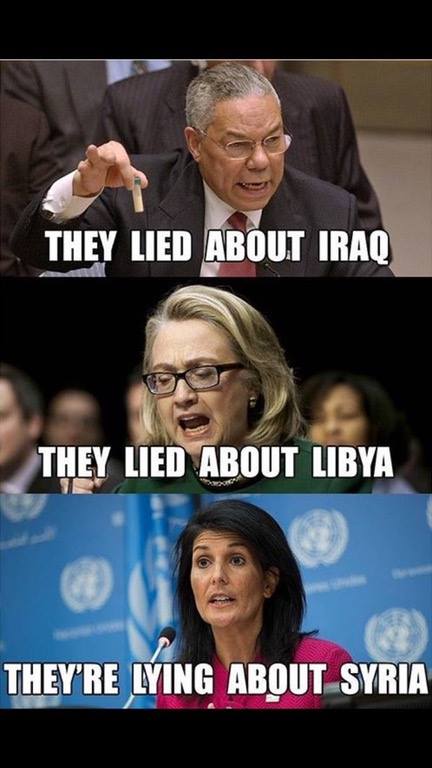
By Jim Kavanaugh | The Polemicist |June 20, 2017
The United States is at war with Syria. Though few Americans wanted to face it, this has been the case implicitly since the Obama administration began building bases and sending Special Ops, really-not-there, American troops, and it has been the case explicitly since August 3, 2015, when the Obama administration announced that it would “allow airstrikes to defend Syrian rebels trained by the U.S. military from any attackers, even if the enemies hail from forces loyal to Syrian President Bashar al-Assad.” With the U.S. Air Force—under Trump, following Obama’s declared policy—shooting down a Syrian plane in Syrian airspace, this is now undeniable. The United States is overtly engaged in another aggression against a sovereign country that poses no conceivable, let alone actual or imminent, threat to the nation. This is an act of war.
As an act of war, this is unconstitutional, and would demand a congressional declaration. The claim, touted by Joint Chiefs’ Chairman, Gen. Dunford, that the 2001 Authorization for the Use of Military Force (AUMF) against al-Qaeda provides constitutional justification for attacking the Syrian government is patently false and particularly precious. In the Syrian conflict, it’s the Syrian government that is the enemy and target of al-Qaeda affiliates; it’s the U.S. and its allies who are supporting al Qaeda. The authorization to fight al-Qaeda has been turned into an authorization to help al-Qaeda by attacking and weakening its prime target!
Will President Trump ask for a relevant congressional authorization? Will any Democratic or Republican congresscritter demand it? Is the Pope a Hindu?
Would it make any difference? Why should Trump bother? Obama set the stage when he completely ignored the War Powers Act, the Constitution, Congress, and his own Attorney General and legal advisers, and went right ahead with a war on Libya, under the theory that, if we pretend no American troops are on the ground, it isn’t really a war or “hostilities” at all. Which I guess means if the Chinese Air Force starts shooting down American planes in American airspace in defense of Black Lives Matter’s assault on the White House, it wouldn’t really be engaging in an act of war.
It’s impossible to overstate the danger in these executive war-making prerogatives that Obama normalized—with the irresponsible connivance of his progressive groupies, who pretend not to know where this would lead. In 2012, referring to the precedent of Obama’s policies, Mitt Romney said: “I don’t believe at this stage, therefore, if I’m president that we need to have a war powers approval or special authorization for military force. The president has that capacity now.” Following Obama, for Trump, and every Republican and Democratic president, it now goes without saying.
In terms of international law, as an aggressive, unprovoked aggression against a country that makes no threat of attack on the U.S., it is also patently illegal, and all the political and military authorities undertaking it are war criminals, who would be prosecuted as such, if there were an international legal regime that had not already been undermined by the United States.
Syria is now under explicit attack by the armed forces of the U.S., Turkey, and other NATO states. Sixteen countries have combat aircraft buzzing around Syrian airspace under the effective command of the United States, and a number of them have attacked Syria’s army.
Americans, and certainly self-identified “progressives,” have to be crystal clear about this: American armed forces have no right to be in Syria, have no right to restrict the Syrian government from using any of its airspace, or to prevent it from regaining control of any of its own territory from foreign-backed jihadi armies.
The Syrian state and its allies (Iran and Russia), on the other hand, are engaged in the legitimate self-defense of a sovereign state, and have the right to respond with full military force to any attack on Syrian forces or any attempt by the United States to balkanize or occupy Syrian territory, or to overthrow the Syrian government. Whether and how they do respond will depend on their own military/political calculus, about which they have so far been quite careful and restrained. It would be the height of foolishness, as well as arrogance, for Americans to presume they can bully these actors into submission with an infinite series of discrete aggressions, with no sharp counterattack. Unfortunately, the world has not yet seen the limits of American arrogance.
So please, do not pretend to be shocked, shocked, if Syria and its allies fight back, inflicting American casualties. Don’t pose as the morally superior victim when Americans are killed by the people they are attacking. And don’t be preaching about how everyone has to support our troops in a criminal, unconstitutional, aggressive attack on a country that has not threatened ours in any way. American soldiers and pilots executing this policy are not heroes, and are not fighting to protect America or advance democracy; they are the international equivalent of home invaders, and as such are legitimate targets with no claim to “self-defense.” The only heroic act they could do is refuse their superiors’ illegitimate orders to engage in this aggression.
In response to American attacks, the Syrian Army has every right to strike back at the American military apparatus, everywhere. Every casualty of this war, however big it gets, is the ethico-political responsibility of the attacking party – US. The first responsibility of every American is not to “support our troops,” but to stop this war. Right now. Before it gets worse.
It’s quite obvious, in fact, that the United States regime is deliberately making targets of its military personnel, in the hopes of provoking a response from Syrian or allied armed forces that will kill some Americans, and be used to gin up popular support for exactly the kind of major military attack on Syria and/or Russia and/or Iran that the American people would otherwise reject with disgust. Anyone who professes concern for “our troops” should be screaming to stop that.
It’s also quite clear now that the War on ISIS is a sham, that ISIS was always just a pretext to get the American military directly involved in attacking the Syrian army and destroying the coherence of the Syrian state. If the U.S. wanted to defeat ISIS, it could do so easily by coordinating their actions with, and not against, the forces who have been most effectively fighting it: the Syrian Arab Army, Russia, Iran, and Hezbollah.
Instead, it’s attacking the Syrian army precisely because it has been defeating ISIS and other jihadi forces, and regaining its own territory and control of its own border with Iraq. The U.S. does not want that to happen. At the very least—if it cannot immediately engender that massive offensive to overthrow the Baathist government—the U.S. wants to control part of the border with Iraq and to occupy a swath of eastern Syria. It wants to establish permanent bases from which to provision and protect jihadi armies, achieving a de facto partitioning of the Syrian state, maintaining a constant state of armed attack against the Damascus government, and reducing Syria to a weakened, rump state that can never present any effective resistance to American, Israeli, or Saudi designs on the region.
This is extremely dangerous, since the Syrians, Russians, and Iranians seem determined not to let this happen. Consistent with his own incompetence and his admiration for tough guys, Trump seems to have abrogated authority to his generals to make decisions of enormous political consequence. Perhaps that’s why aggressive actions like the shoot-down of the Syrian plane have been occurring more frequently, and why it’s not likely they’ll abate. There’s a dynamic in motion that will inevitably lead each side to confront a choice of whether to back down, in a way that’s obvious, or escalate. Generals aren’t good at backing down. A regional or global war is a real possibility and becomes more likely with every such incident.
Though most American politicians and media outlets do not want to say it (and therefore, most citizens cannot see it clearly enough), such a war is the objective of a powerful faction of the Deep State which has been persistent and determined in seeking it. If the generals are loath to back down in a battle, the neocons are adamant about not backing down on their plans for the Middle East. They will not be stopped by anything less than overwhelming popular resistance and international pushback.
The upside of these attacks on Syrian forces is that they wipe the lipstick off the pig of the American project in Syria. It’s a regime-change, nation-destroying war that has nothing to do with democracy or human rights, and everything to do with the anti-democratic, chaos-creating designs of the most nefarious regimes in the region and the world. Everyone—European countries who profess concern for international law and stability, and the American people who are fed up with constant wars that have no benefit for them—can see exactly what kind of blatant aggression is unfolding, and decide whether they want to go along with it.
In that regard, any self-identified “liberal” or “progressive” American—and particularly any such American politician—who spent (and may still spend) their political energy attacking Bush, et. al., for that crazy war in Iraq, and who goes along with, or hesitates to immediately and energetically denounce this war, which is already underway, is a political hypocrite, resisting nothing but the obvious.
Spoiling for a Wider War in Syria
By Robert Parry | Consortium News | June 20, 2017
The U.S. mainstream media’s near universal demonization of Syrian President Bashar al-Assad and Russian President Vladimir Putin – along with similar hatred directed toward Iran and Hezbollah – has put the world on a path toward World War III.
Ironically, the best hope for averting a dangerous escalation into a global conflict is to rely on Assad, Putin, Iran and Hezbollah to show restraint in the face of illegal military attacks by the United States and its Mideast allies inside Syria.
In other words, after the U.S. military has bombed Syrian government forces on their own territory and shot down a Syrian warplane on Sunday – and after Israel has launched its own strikes inside Syria and after Saudi Arabia and its Gulf allies have financed and armed jihadists to overthrow Assad – it is now up to the Syrian government and its allies to turn the other cheek.
Of course, there is also a danger that comes from such self-control, in that it may encourage the aggressors to test the limits even further, seeing restraint as an acceptance of their impunity and a reason to ignore whatever warnings are issued and red lines drawn.
Indeed, if you follow The New York Times, The Washington Post, The Wall Street Journal and other big U.S. news outlets, perhaps the most striking groupthink that they all share is that the U.S. government and its allies have the right to intervene militarily anywhere in the world. Their slogan could be summed up as: “International law – that’s for the other guy!”
In this upside-down world of American hegemony, Assad becomes the “aggressor” when he seeks to regain control of Syrian territory against armed insurgents, dominated by Al Qaeda and Islamic State (ISIS), or when he protests the invasion of Syrian territory by foreign forces.
When Assad legally seeks help from Russia and Iran to defeat these foreign-armed and foreign-backed jihadists, the U.S. mainstream media and politicians treat his alliances as improper and troublemaking. Yet, the uninvited interventions into Syria by the United States and its various allies, including Turkey and Israel, are treated as normal and expected.
Demanding Escalation
The preponderance of U.S. media criticism about U.S. policy in Syria comes from neoconservatives and liberal interventionists who have favored a much more ambitious and vigorous “regime change” war, albeit cloaked in prettier phrases such as “safe zones” and “no-fly zones.”
So, you have Tuesday’s Wall Street Journal editorial, which praises Sunday’s U.S. shoot-down of a Syrian military plane because it allegedly was dropping bombs “near” one of the U.S.-backed rebel groups – though the Syrians say they were targeting an Islamic State position.
Although it was the U.S. that shot down the Syrian plane over Syria, the Journal’s editorial portrays the Russians and Syrians as the hotheads for denouncing the U.S. attack as a provocation and warning that similar air strikes will not be tolerated.
In response, the Journal’s neocon editors called for more U.S. military might hurled against Syria and Russia:
“The risk of escalation is real, but this isn’t a skirmish the U.S. can easily avoid. Mr. Assad and his allies in Moscow and Tehran know that ISIS’s days are numbered. They want to assert control over as much territory as possible in the interim, and that means crushing the SDF [the U.S.-backed Syrian Democratic Forces].
“The Russian threat on Monday to target with anti-aircraft missiles any U.S. aircraft flying west of the Euphrates River in Syria is part of the same intimidation strategy. Russia also suspended a hotline between the two armed forces designed to reduce the risk of a military mistake. Iran, which arms and assists Mr. Assad on the ground, vowed further Syrian regime attacks against SDF, all but daring U.S. planes to respond amid the Russian threat.
“The White House and Pentagon reacted with restraint on Monday, calling for a de-escalation and open lines of communication. But if Syria and its allies are determined to escalate, the U.S. will either have to back down or prepare a more concerted effort to protect its allies and now U.S. aircraft.
“This is a predicament President Obama put the U.S. in when his Syrian abdication created an opening for Vladimir Putin to intervene. Had the U.S. established a no-fly or other safe zone to protect refugees, the Kremlin might have been more cautious.”
As senior U.S. commanders have explained, however, the notion of a sweet-sounding “no-fly or other safe zone” would require a massive U.S. military campaign inside Syria that would devastate government forces and result in thousands of civilian deaths because many air defenses are located in urban areas. It also could lead to a victory for Al Qaeda and/or its spinoff, Islamic State, a grisly fate for most Syrians.
Propaganda Value
But the “safe zone” illusion has great propaganda value, essentially a new packaging for another “regime change” war, which the neocons lusted for in Syria as the follow-on to the Iraq invasion in 2003 but couldn’t achieve immediately because the Iraq War turned into a bloody disaster.
Instead, the neocons had to settle for a proxy war on Syria, funded and armed by the U.S. government and its regional allies, relying on violent jihadists to carry out the brunt of the fighting and killing. When Assad’s government reacted clumsily to this challenge, the U.S. mainstream media depicted Assad as the villain and the “rebels” as the heroes.
In 2012, the Defense Intelligence Agency, then under the direction of Lt. Gen. Michael Flynn, warned that the U.S. strategy would give rise to “a declared or undeclared Salafist principality in eastern Syria.”
Flynn went further in a 2015 interview when he said the intelligence was “very clear” that the Obama administration made a “willful decision” to back these jihadists in league with Middle East allies. (Flynn briefly served as President Trump’s national security adviser but was ousted amid the growing Russia-gate “scandal.”)
Only in 2014, when Islamic State militants began decapitating American hostages and capturing cities in Iraq, did the Obama administration reverse course and begin attacking ISIS while continuing to turn a blind-eye to the havoc caused by other rebel groups allied with Al Qaeda’s Nusra Front, including many outfits deemed “moderate” in the U.S. lexicon.
But the problem is that almost none of this history exists within the U.S. mainstream narrative, which – as the Journal’s neocon editors did on Tuesday – simply depicts Obama as weak and then baits President Trump to show more military muscle.
What U.S. National Interests?
The Journal editorial criticized Trump for having no strategy beyond eradicating ISIS and adding: “Now is the time for thinking through such a strategy because Syria, Russia and Iran know what they want. Mr. Assad wants to reassert control over all of Syria, not a country divided into Alawite, Sunni and Kurdish parts. Iran wants a Shiite arc of influence from Tehran to Beirut. Mr. Putin will settle for a Mediterranean port and a demonstration that Russia can be trusted to stand by its allies, while America is unreliable. None of this is in the U.S. national interests.”
But why isn’t this in U.S. national interests? What’s wrong with a unified secular Syria that can begin to rebuild its shattered infrastructure and repatriate refugees who have fled into Europe, destabilizing the Continent?
What’s the big problem with “a Shiite arc of influence”? The Shiites aren’t a threat to the United States or the West. The principal terror groups – Al Qaeda and ISIS – spring from the extremist Saudi version of Sunni Islam, known as Wahhabism. I realize that Israel and Saudi Arabia took aim at Syria in part to shatter “the Shiite arc,” but we have seen the horrific consequences of that strategy. How has the chaos that the Syrian war has unleashed benefited U.S. national interests?
And so what that Russia has a naval base on the Mediterranean Sea? That is no threat to the United States, either.
But what is the alternative prescription from the Journal’s neocon editors? The editorial concludes: “The alternative would be to demonstrate that Mr. Assad, Iran and Russia will pay a higher price for their ambitions. This means refusing to back down from defending U.S. allies on the ground and responding if Russia aircraft or missiles attempt to take down U.S. planes. Our guess is that Russia doesn’t want a military engagement with the U.S. any more than the U.S. wants one with Russia, but Russia will keep pressing for advantage unless President Trump shows more firmness than his predecessor.”
So, rather than allow the Syrian government to restore some form of order across Syria, the neocons want the Trump administration to continue violating international law, which forbids military invasions of sovereign countries, and keep the bloodshed flowing. Beyond that, the neocons want the U.S. military to play chicken with the other nuclear-armed superpower on the assumption that Russia will back down.
As usual, the neocon armchair warriors don’t reflect much on what could happen if U.S. warplanes attacking inside Syria are shot down. One supposes that would require President Trump to authorize a powerful counterstrike against Russian targets with the possibility of these escalations spinning out of control. But such craziness is where a steady diet of neocon/liberal-hawk propaganda has taken America.
We are ready to risk nuclear war and end all life on the planet, so Israel and Saudi Arabia can shatter a “Shiite arc of influence” and so American politicians don’t have to feel the rhetorical lash of the neocons and their liberal-hawk sidekicks.
Investigative reporter Robert Parry broke many of the Iran-Contra stories for The Associated Press and Newsweek in the 1980s.
US backs down as Russia targets US aircraft in Syria
By Alexander Mercouris | The Duran | June 20, 2017
Back in April, in the immediate aftermath of the US cruise missile attack on Syria’s Al-Shayrat air base, Russia retaliated by switching off the ‘de-confliction’ hotline between the US and Russian militaries in Syria, which enables these militaries to avoid accidental clashes with each other.
The immediate response to this Russian switching off of the ‘de-confliction’ hotline was a dramatic reduction in US air operations in Syria, as the US air force was forced to scale down its air operations rather than risk a confrontation with the powerful air defence system the Russians have established in Syria.
That this was the case was confirmed by an article in The New York Times dated 8th April 2017, which said the following
The American-led task force that is battling the Islamic State has sharply reduced airstrikes against the militants in Syria as commanders assess whether Syrian government forces or their Russian allies plan to respond to the United States’ cruise missile strike on a Syrian airfield this past week, American officials said.
So far, the Russian military does not appear to have taken any threatening actions, such as directing its battlefield radar or air defense systems to confront the Americans, or carrying out aggressive actions in the skies, United States officials said.
But officials who spoke on the condition of anonymity to discuss internal planning said the commanders needed time to determine whether the Syrian president, Bashar al-Assad, and the Russian military would treat the American cruise missile strike as a one-time operation that they would not respond to militarily. As a precaution, the Pentagon is flying patrols in Syrian skies with F-22 jets, the Air Force’s most advanced air-to-air fighter……
Some American and other Western counterterrorism officials have said the missile strike could……… make the fight against the Islamic State in Syria more difficult.
“It seems clear that the strikes will complicate our efforts to pursue our counter-ISIS campaign in Syria,” said Matthew Olsen, a former director of the National Counterterrorism Center. “In particular, the ability to carry out U.S. airstrikes in Syria in support of the coalition against ISIS requires some degree of cooperation with Russia, which is now in serious jeopardy.”
Other security experts said that much depended on the Trump administration’s next steps, and how the Assad government and its Russian patrons responded.
“U.S. aircraft operating over Al-Tabqah are already ostensibly in range of the Russian S-400 system at the Humaymin Air Base, and we might see Russia deploy more air defense assets to Syria,” Jeremy Binnie, the Middle East editor of Jane’s Defense Weekly, said in an email. “But if the U.S. makes no moves to threaten Assad’s position, then they may well accept the punishment and move on.”
William McCants, a senior fellow at the Brookings Institution and the author of “The ISIS Apocalypse,” offered a similar assessment. (bold italics added)
The words I have highlighted in this article from 8th April 2017 make clear the difference with the situation today.
After weeks of frantic diplomatic activity the US finally managed to persuade the Russians a few weeks ago to switch the ‘de-confliction’ hotline back on. In response to yesterday’s US shooting down of the SU-22 the Russians have however now once again switched it off.
However this time the Russians have not only once more switched off the ‘de-confliction’ hotline. They have also done what they did not do in April by saying that this time they will take “threatening action by directing their battlefield radar or air defense systems to confront the Americans”.
That this is so is explicitly confirmed in the statement made public yesterday by the Russian Defence Ministry
As of June 19 this year, the Defense Ministry of the Russian Federation has ended its interaction with the US side under a memorandum for preventing incidents and providing for safe flights during operations in Syria and demands that the US command carry out a careful investigation and report about its results and the measures taken.
The shooting down of a Syrian Air Force jet in Syria’s airspace is a cynical violation of Syria’s sovereignty. The US’ repeated combat operations under the guise of ‘combating terrorism’ against the legitimate armed forces of a UN member-state are a flagrant violation of international law, in addition to being actual military aggression against the Syrian Arab Republic,” the ministry said.
Russia will regard any flights within the area of its air force group’s operation in Syria as legitimate targets, the ministry stressed.
Any aircraft, including planes and drones of the international coalition, detected in the operation areas west of the Euphrates River by the Russian air forces will be followed by Russian ground-based air defense and air defense aircraft as air targets.……. the coalition command did not use the existing communication line between the air commands of Al Udeid Air Base (Qatar) and Khmeimim Air Base to prevent incidents in Syria’s airspace. We consider the actions of the US command as a deliberate default on their obligations under the memorandum on on preventing incidents and providing for safe flights during operations in Syria signed on October 20, 2015. (bold italics added)
In other words, the Russian response to the shooting down of the Syrian SU-22 fighter near Taqbah has been much stronger than was the Russian response to the US cruise missile attack on Syria’s Al-Shayrat air base.
This is so even though the attack on Al-Shayrat air base attracted massive international media attention, whilst the US shooting down of the SU-22 has attracted very little.
This time however the Russians have announced that they will do precisely the thing which they did not do in April following the US attack on Al-Shayrat air base – and which the New York Times says is very threatening – which is track US aircraft, treating them as targets if they fly west of the Euphrates.
Why have the Russians taken this extraordinary step?
The US claims yesterday justifying the shooting down of the SU-22 aircraft have unravelled. Even the strongly anti-Assad British based Syrian Observatory of Human Rights has confirmed that the SU-22 was not bombing Kurdish forces as the US claims but was bombing ISIS fighters as the Syrians say.
A regime warplane was targeted and dropped in the skies of the al-Resafa area […] the warplane was shot down over Al-Resafa area of which the regime forces have reached to its frontiers today, and sources suggested to the Syrian Observatory for Human Rights that warplanes of the International Coalition targeted it during its flight in close proximity to the airspace of the International Coalition’s warplanes, which caused its debris to fall over Resafa city amid an unknown fate of its pilot, the sources confirmed that the warplane did not target the Syria Democratic Forces in their controlled areas located at the contact line with regime forces’ controlled areas in the western countryside of Al-Tabaqa to the road of Al-Raqqah – Resafa.
(bold italics added)
Another thing that may have provoked the Russians is that the US has tried to pass off the downing of the SU-22 as caused by Syrian encroachment of an agreed ‘de-confliction area’.
Ja’Din sits approximately two kilometers north of an established East-West SDF-Syrian Regime de-confliction area.
This uses a term – ‘de-confliction area’ – used to describe certain regions of Syria covered by an international agreement reached by Russia, Iran and Turkey in May.
The area where the SU-22 was shot down is not within any of these regions. Al-Jazeera has provided details of where these four ‘de-confliction areas’, and none of them is close to the territory where the SU-22 was shot down
Zone 1 : Idlib province, as well as northeastern areas of Latakia province, western areas of Aleppo province and northern areas of Hama province. There are more than one million civilians in this zone and its rebel factions are dominated by an al-Qaeda -linked alliance.
– Zone 2: The Rastan and Talbiseh enclave in northern Homs province. There are approximately 180,000 civilians in this zone and its network of rebel groups includes al-Qaeda-linked fighters.
– Zone 3 : Eastern Ghouta in the northern Damascus countryside. Controlled by Jaish al-Islam, a powerful rebel faction that is participating in the Astana talks. It is home to about 690,000 civilians. This zone does not include the adjacent, government-besieged area of Qaboun.
– Zone 4 : The rebel-controlled south along the border with Jordan that includes parts of Deraa and Quneitra provinces. Up to 800,000 civilians live there.Wh
Whilst it is possible that the term “established East-West SDF-Syrian Regime de-confliction area” refers to a term used in some informal agreement between the US and Russia, it seems more likely that the US is trying to unilaterally establish ‘no-go’ areas for the Syrian army, and is using the term ‘de-escalation areas’ to conceal the fact.
If so the Russians will want to put a stop to this practice and this may partly explain the strength of the Russian reaction.
However the single most important reason for the strong Russian reaction is what caused the US to shoot down the SU-22 down in the first place.
As the report from the Syrian Observatory of Human Rights shows, the real reason the SU-22 was shot down was because it was supporting a Syrian army offensive to capture the strategically important town of Rusafa from ISIS.
Rusafa lies south east of Tabqah – the main base of the US backed Kurdish militia in this area – and within striking distance of the main highway between Raqqa and Deir Ezzor, the eastern desert city currently besieged by ISIS.
By capturing Rusafa the Syrian army is now in a position to intercept columns of ISIS fighters who might try to flee Raqqa for Deir Ezzor.
The Syrians and the Russians have in recent weeks complained that the US and the Kurds have been doing nothing to prevent ISIS fighters fleeing Raqqa for Deir Ezzor, and in recent days there have even been reports of movements by Kurdish militia to try to block the Syrian army’s offensive to relieve Deir Ezzor.
The shooting down of the Syrian SU-22 fighter appears to have been intended as a warning to stop the Syrian army from capturing Rusafa, so as to block the Syrian army’s attempt to relieve the pressure on Deir Ezzor.
The Russian warning to the US looks in turn to have been intended to make clear to the US that this sort of interference in the Syrian army’s operations to relieve Deir Ezzor is unacceptable and will not be tolerated.
The US has heeded the Russian warning. The various statements made by the US and by various US officials today, though full of the usual bluster about the US defending itself and its allies anywhere and everywhere, in fact clearly signal that the US is backing off.
The key words – as my colleague Adam Garrie has said – are those of Colonel Ryan Dillon, chief U.S. military spokesman in Baghdad.
As a result of recent encounters involving pro-Syrian regime and Russian forces, we have taken prudent measures to reposition aircraft over Syria so as to continue targeting ISIS forces while ensuring the safety of our aircrews given known threats in the battle space. (bold italics added)
“Prudent measures to reposition aircraft over Syria to ensure the safety of aircrews given known threats in the battle space” is code for withdrawal of aircraft from air space where they are at risk of being shot down.
That is what is taking place. Note that Colonel Dillon is careful not to say where the “known threats in the battle space” that are forcing the redeployment of the aircraft are coming from.
The US has no choice. If the Russian decision to switch off the ‘de-confliction’ hotline in April was enough to force the US to reduce sharply its air activity in Syria, the Russian decision to switch off the ‘de-confliction’ hotline and to threaten to treat as aerial targets US aircraft flying west of the Euphrates is a threat the US cannot afford to disregard.
Not surprisingly, shortly before the Russian warning was made public, but probably after it was communicated to the US, the Syrian army captured Rusafa with no further hindrance from the US. Latest reports speak of Syrian army reinforcements flooding into the area.
In the meantime the US is frantically signalling to the Russians its urgent wish to de-escalate the situation. Note for example the markedly conciliatory language of White House spokesman Sean Spicer, and how he repeatedly passed up opportunities to utter words of defiance against Russia or to threaten the Russians with counter-measures during the latest White House press briefing
Q Thanks, Sean. How are you responding to this Russian threat to shoot down American planes over Syria?
MR. SPICER: Well, obviously, we’re going to do what we can to protect our interests. And this is something that we’re going to continue to work with — keep the lines of communication open. And ISIS represents a threat to all nations, and so we’ve got to do what we can to work with partners. And we’re going to continue to keep an open mind of communication with the Russians.
Q So will the U.S. change its flight patterns or behavior in Syria?
MR. SPICER: I’m going to refer — I mean, I think this is a question more for DOD to answer. But I think, obviously, it’s important and crucial that we keep lines of communication open to de-conflict potential issues.
Zeke.
Q Thanks, Sean. Following up on that — and a second one for you, as well — what would the U.S. government’s response be? Is the White House going to issue a warning to the Russian government if they were to follow through on this threat? It seems that your statement — would that be a provocation or something worse, potentially?
MR. SPICER: I mean, I think that the escalation of hostilities among the many factions that are operating in this region doesn’t help anybody. And the Syrian regime and others in the regime need to understand that we will retain the right of self-defense, of coalition forces aligned against ISIS.
Ultimately the situation in Syria is the same as it has been since the US-Russian confrontation in October.
The fact that the Russians have installed a powerful air defence system in Syria incorporating advanced S-400 and S-300VM Antey 2500 missiles means that the US is unable to confront the Russians directly unless it is prepared to risk possibly very serious casualties.
That is an option neither the US military nor the civilian officials of the Obama and Trump administrations are prepared to face. This is because they know the extraordinary dangers such a clash with the armed forces of a nuclear superpower would risk. They also know US public opinion is strongly opposed to the US becoming drawn into such a clash.
What that means is that though the Russians must act carefully so as not to provoke the US into an unnecessary confrontation which would serve no-one’s interests, ultimately it is the Russians who in Syria have the whip hand.
The chess game in Syria is far from over. The game of move and counter-move continues. With the capture of Rusafa the Syrians and the Russians have however just won another important piece. In the meantime Russia’s warning limits the range of US moves across the Syrian chessboard.
The net result of all these recent moves is that end of the Syrian war may have drawn a little closer.
US Risks Wider War by Downing Syrian Plane
By Gilbert Doctorow | Consortium News | June 19, 2017
The Pentagon’s announcement that the U.S. military had shot down a Syrian warplane inside Syrian territory merited only inside-the-paper treatment at The New York Times and The Washington Post on Monday, but it became the featured article on the Russian version of Google News citing a Moscow newspaper reporting a warning from Russia’s Federation Council that “the USA can receive a return blow in Syria.”
The article in Moskovsky Komsomolets and several similar accounts in other leading Russian print media recounted the warning issued by the Deputy Chairman of the Committee on International Affairs in Russia’s upper house, Vladimir Jabarov, that the shoot-down of the Syrian SU-22 bomber on Sunday by the U.S.-led coalition can lead to “a major conflict.” The Senator noted that Syrian air space is protected both by a Syrian operated S-300 ground to air defense system and by Russian-operated state-of-the-art S-400 missiles.
Jabarov called for diplomats of the interested parties to meet as soon as possible to discuss the incident. And he warned, in dark tones, that the plane’s destruction could lead to a return attack from the Syrian armed forces. The article also quotes the first deputy chairman of Russia’s Committee on Defense and Security in the upper chamber, Frants Klintsevich, describing the shoot-down as “a provocation directed against Russia.”
The Syrian government said its bomber was operating against Islamic State forces near Raqqa, though the U.S. coalition claimed Syrian forces and the plane had attacked rebels, called the Syrian Democratic Forces and operating under the guidance of U.S. Special Forces.
It perhaps should go without saying that under international law the Syrian government has the right to operate inside Syrian airspace and that the U.S. military has no legal right to have personnel inside Syria (since they lack the Syrian government’s permission) let alone to attack the Syrian military or its allied forces. Another curious feature about this situation is that the U.S. mainstream media sees nothing illegal or unusual about the U.S. military operating inside another country uninvited and shooting down government aircraft.
That assumption that the U.S. military has the right to intervene in any conflict of its choosing was reflected in the decision by the Times and Post to minimize coverage of the shoot-down of the Syrian bomber and accept uncritically the Pentagon’s explanation that the shoot-down was in response to Syrian government attacks on U.S.-backed forces. (The Wall Street Journal did lead its Monday print edition with a story about the shoot-down of the Syrian plane, but also acted as if the U.S. military was within its rights in doing so.)
Given the potential for a dangerous U.S. military showdown with Russia, whose forces have been invited into Syria by the internationally recognized government, the Kremlin initially tamped down concern about the clash. Russian state television on Sunday night and into Monday paid almost no attention to the shoot-down, apparently awaiting a decision on a suitable response to the American “provocation.”
That response came on Monday when the Russian military command once again declared that the deconflicting hotline between U.S.-allied and Russian forces on air movements over Syria has been severed. That is to say the Russians reinstated the response they made following Donald Trump’s Tomahawk missile attack on a Syrian air base in April. In effect, this Russian action halts all flights into the area from the U.S. aircraft carrier that launched the plane that shot down the Syrian bomber. In line with that decision, the Kremlin warned that all allied air operations near where the Russian air force is flying will be targeted and destroyed.
U.S. Reactions
Only then did The New York Times and The Washington Post begin to react to the seriousness of the confrontation. The former produced an analytical article entitled “Russia Warns U.S. After Downing of Syrian Warplane,” published Monday at its Web site. The Post did the same under the heading “Russia threatens to treat U.S. coalition aircraft as targets over Syria.”
These articles are unusual in one respect: they quote extensively from official Russian sources, including the accusation that the U.S. actions in Syria are in violation of international law. They also mention the dynamism of the Syrian armed forces in bringing the fight to the east of the country even if this means pushing against U.S.-assisted rebels.
What these newspapers do not explain is how and why the Syrian army has been energized to pursue national unification: namely it is the direct result of freeing up Syrian forces, which had been tied down in the west, through the implementation of “deconfliction” settlements that Iran, Turkey and Russia hammered out in the so-called Astana talks earlier this spring. Those settlements never received U.S. approval, though Moscow hoped they would become a platform for a broader U.S.-Russian understanding regarding possible areas of cooperation before the first meeting between Presidents Putin and Trump.
Instead, the U.S. shoot-down of the Syrian bomber, the first direct U.S. attack on a Syrian aircraft in the six-year conflict, signals a return to the Pentagon’s actions undermining the accommodating policies of a U.S. president in Syria. Last September, when Secretary of State John Kerry and Russian Foreign Minister Sergei Lavrov reached agreement on a partial cease-fire in Syria with the support of President Obama, a U.S. air attack killing Syrian troops in the besieged eastern outpost of Deir Ezzor scuttled the arrangement.
Now it appears that the Pentagon may be sabotaging another possibility of accommodation between Putin and Trump by escalating the U.S. military intervention in Syria at a time when the Syrian government has been consolidating its control over large swaths of Syria. The latest clash also heightens the possibility that Russian air defenses may shoot down a U.S. warplane and push tensions to even a higher level.
Gilbert Doctorow is an independent political analyst based in Brussels. His latest book Does Russia Have a Future? was published in August 2015. His forthcoming book Does the United States Have a Future? will be published on 1 September 2017.
US seeks to keep communication with Russia over Syria ongoing – White House
RT | June 19, 2017
The US seeks to keep open the communication channels with Russia over Syria but says it retains the right to self defense, according to the White House spokesman. Moscow suspended military cooperation following the US-led coalition’s downing of a Syrian warplane.
“It’s important and crucial that we keep lines of communication open to deconflict potential issues,” Sean Spicer told reporters on Monday.
While seeking to keep contacts between the US and Russian military ongoing, the US-led coalition emphasized that it retains the right to “self-defense” amid the news and added tensions, the spokesman added.
Spicer’s statement echoed the comments made earlier on Monday by the chairman of the Joint Chiefs of Staff, US Marine General Joseph Dunford, who said the US is working to reestablish communications with Russia in Syria, aimed at preventing possible incidents between the two countries’ troops.
“We’ll work diplomatically and military in the coming hours to reestablish deconfliction,” Dunford said at a news conference, adding, that the contacts between Russian forces in Syria and a US air operations center in Qatar were still open as of Monday morning.
Moscow announced on Monday afternoon the decision to pause cooperation with its American counterparts in the framework of the Memorandum on the Prevention of Incidents and Ensuring Air Safety in Syria following the coalition’s downing of a Syrian Su-22 warplane on Sunday.
“In the areas of combat missions of Russian air fleet in Syrian skies, any airborne objects, including aircraft and unmanned vehicles of the [US-led] international coalition, located to the west of the Euphrates River, will be tracked by Russian ground and air defense forces as air targets,” the Russian Ministry of Defense stated, condemning the downing of the Su-22 jet as a “cynical” violation of Syria’s sovereignty.
The US military did not use the communication line with Russia during the attack on the Syrian Su-22, despite the fact that Russian warplanes were in the area during the US strike, the ministry underlined.
Earlier, Russian Deputy Foreign Minister Sergey Ryabkov branded the attack on the Syrian jet as an act of aggression which in fact helped the terrorists the US says its trying to destroy.
The US-led coalition shot-down the Syrian Su-22 warplane on Sunday, when it was carrying out operations against Islamic State (IS, formerly ISIS/ISIL) some 40km from Raqqa, the Russian Defense Ministry said. The US military, however, claimed that the jet “dropped bombs near” US-backed Kurdish SDF militants. The pilot ejected from the plane above IS-controlled territory and is still missing.
READ MORE:
US-led coalition’s downing of Syrian plane ‘act of aggression’ & ‘support for terrorists’ – Moscow
Israel secretly aiding Syria militants: Wall Street Journal
Press TV – June 19, 2017
Israel has been providing Takfiri terrorists in Syria’s Golan Heights with a steady flow of funds and medical supplies as part of Tel Aviv’s involvement in the bloody conflict, the Wall Street Journal reports.
The paper, citing half a dozen militant commanders and three persons familiar with Israel’s thinking, said Israel’s “secret engagement” in the war aims to install a buffer zone on the Syrian border with elements friendly to Tel Aviv.
The report quoted prominent Israeli journalist and analyst Ehud Ya’ari as saying that Israel’s operation in the occupied Golan Heights started under former minister of military affairs Moshe Ya’alon.
Israel, the Journal said, established a special military unit in 2016 to oversee and coordinate the transfer of aid to militants. According to the report, the aid helps pay salaries of the terrorists and buy weapons and ammunition.
“Israel stood by our side in a heroic way,” a spokesman for the militant group Fursan al-Joulan, Moatasem al-Golani, said, adding “We wouldn’t have survived without Israel’s assistance.”
The commander identified by the nom de guerre Abu Suhayb who leads the terrorist group told the Journal that he receives about $5,000 a month from Israel.
Fursan al-Joulan which has approximately 400 militants in Quneitra province situated in the Golan Heights said at least four allied militant groups also receive Israeli aid.
Israel seized the Golan Heights from Syria after the 1967 Six-Day War and later occupied it in a move that has never been recognized by the international community.
Syria has been gripped by foreign-backed militancy since March 2011. The Syrian government says the Tel Aviv regime and its Western and regional allies are aiding Takfiri militant groups wreaking havoc in Syria.
Last April, Syrian officials and locals confiscated a vehicle loaded with Israeli-manufactured weapons bound for Daesh terrorists in the Arab country’s southern province of Suwayda. The vehicle was heading to the eastern Badiya desert from eastern Dara’a Province.
Israel has been treating the wounded militants from Syria in its medical centers and hospitals since the outbreak of the conflict in March 2011. Syrian sources have frequently reported that after receiving treatment at the Israeli hospitals, the militants return to Syria to continue their acts of sabotage and terror.
Israel has spent millions of dollars for the treatment of militants injured in fighting with Syrian government forces, documents from Israeli hospitals have shown.
The regime has also carried out multiple attacks on Syrian government positions since the militancy erupted in 2011. Damascus says the raids aim to help Takfiri militants fighting against government forces.
US-led coalition’s downing of Syrian plane ‘act of aggression’ & ‘support for terrorists’ – Moscow
RT | June 19, 2017
Moscow views the US-led coalition’s attack on the Syrian government military jet as an act of aggression and assistance for the terrorists that the US is fighting against, according to Russian Deputy Foreign Minister Sergey Ryabkov.
“What is it then, if not an act of aggression, an act directly in breach of international law,” Ryabkov told journalists in Moscow.
“If you want, it’s actually help for the terrorists the US is fighting, declaring that they are conducting a counterterrorism policy,” the official added.
Ryabkov added that he believed the strike “should be first of all regarded as the continuation of the US agenda of neglecting the norms of international law. Regardless of who has power in Washington, people there are used to the fact that there are circumstances allowing them to arrogantly look down on – and in some situations, to openly ignore – the basics of international relations.”
A Syrian SU-22 warplane was shot down by a US F/A-18E Super Hornet on Sunday while it was on a mission in the countryside around Raqqa.
Damascus stated that the plane was carrying out operations against Islamic State (IS, formerly ISIS/ISIL) terrorists when it was downed.
Washington says that the Syrian warplane “dropped bombs near SDF fighters south of Tabqah” and was shot down in accordance with “rules of engagement” of Coalition partnered forces.
Earlier, Russia’s Foreign Minister Sergey Lavrov urged US forces in Syria and those of any other country to refrain from unilateral, uncoordinated action.
“We call on the US and all others who have their forces or advisers on the ground in Syria to ensure the coordination of our work,” he said.
De-escalation zones are one of the possible options to move forward jointly, he said.
“We call on everyone to avoid unilateral moves, respect Syrian sovereignty and join our common work, which is agreed with the Syrian government,” Lavrov said.
He also called on everyone on the ground to “respect Syria’s sovereignty and territorial integrity.”
In June, the US deployed HIMARS long-range rocket launchers from Jordan to its base in At Tanf in southern Syria. The move may be intended to cut off Syrian government troops from allies in Iraq, since there are no Islamic State militants in the region to target with the weapons, Lavrov said following the deployment.
In April, US President Donald Trump ordered a Tomahawk missile strike on Syria’s Shayrat Airbase, claiming this was in response to alleged chemical weapons use by President Bashar Assad’s forces, before anyone had the chance to verify this via an investigation.
Last September, a coalition airstrike on Syrian government forces’ positions near the eastern city of Deir ez-Zor left more than 60 Syrian soldiers dead.
READ MORE:
US-led coalition downs Syrian army plane in southern Raqqa
Lavrov: No ISIS troops in southern Syria where US deployed multiple rocket launchers
Russian military halts Syria sky incident prevention interactions with US as of June 19 – Moscow
CONFIRMED: Kurdish forces are now the enemy of Syria
By Adam Garrie | The Duran | June 19, 2017
Those who said that Kurdish forces did not mean Syria harm have been proved manifestly incorrect.
Many have long suspected that Kurdish forces fighting ISIS in Syria are doing so in pursuit of a uniquely self-interested goal, that of carving out a large autonomous region from legal Syrian territory or otherwise unilaterally proclaiming an independent state on sovereign Syrian soil.
Now, the Kurdish dominated and strongly US backed SDF has confirmed that it will “retaliate” against any incursions of the Syrian Arab Army into what it now considers its territory.
This is proto-annexation in all but name. The only troops who have the ultimate right to move anywhere they want within Syria and attack any and all targets that the government feels are a threat to Syrian security and sovereignty are the forces of the Syrian Arab Army and their allies.
Any ally who acts unilaterally is de-facto no longer an ally but an aggressor and a security risk.
According to SDF spokesperson Talal Selowas,
“Since June 17, 2017, the regime’s forces…have mounted large-scale attacks using planes, artillery, and tanks in regions liberated by our fighters during battles for the city of Tabqa and the Euphrates Dam three months ago”.
Selowas furthermore promised “retaliation” for Syrian troops moving as they see fit In Syria.
The statement from the SDF makes it abundantly clear that they intend to keep the territory they have “liberated”. From the Syrian perspective, an occupational force of Syrian territory which refuses to allow Syria free movement of its forces on its own territory is acting as an aggressor. Any state in the world would view this in the same manner, just ask any US historian of the American Civil War.
As Kurdish forces are now unambiguously American proxies, this development has confirmed once and for all that American mission creep has led to attempts by US proxies to do what ISIS have been doing for years: illegally occupying Syrian territory with the goal of annexation.
A US-Iran confrontation is just what Israel seeks – and it may get
By M K Bhadrakumar | Indian Punchline | June 18, 2017
The move by the US military to shift for the first time the High Mobility Artillery Rocket System (HIMARS) into Syrian territory from Jordan signifies that the Pentagon has created a new fact on the ground. According to the CNN, the deployment will be in the military base in Al-Tanf near Syria’s border with Iraq in the south-eastern region, which is currently an area of contestation between US-backed rebel groups and Syrian government forces.
A Russian Defence Ministry statement in Moscow on Thursday noted that the deployment might suggest a US intention to attack the Iran-backed Syrian government forces. The Russian statement said:
- The range of the High Mobility Artillery Rocket System is not enough to support the US-backed units… in Raqqa. At the same time, the US-led anti-terrorist coalition has several times attacked the Syrian government forces near the Jordanian border, so it can be assumed that such attacks will continue, but this time involving the High Mobility Artillery Rocket Systems.
Indeed, such authoritative Russian statements, even while speculative, must be relying on intelligence inputs. Clearly, the US intentions need to be interpreted. One possibility could be that it might actually be a defensive move. The US has so far counted on other protagonists – government forces, Hezbollah, Iran, Turkey and Russia – to exercise absolute self-restraint in not confronting the American forces. This tacit understanding (or pragmatism on both sides) largely worked well so far. Although, US-Russia relations continue to deteriorate, the ‘de-confliction’ arrangement in Syria has worked well so far.
However, war is war and there is nothing like a bit of self-help in such uncertain times. The point is the HIMARS provides an alternate means to hit the adversary if air operations are not feasible for some reason – or is simply a preferable option. From all appearances, the US reportedly has plans to create military bases in southern Syria (similar to what it has done in the northern regions bordering Turkey and Iraq) and, if so, the deployment of HIMARS fits into the plan.
Suffice to say, it all boils down to the big question: What are, going ahead, the Trump administration’s politico-military intentions in Syria? At a press briefing in Baghdad on June 7, Brett McGurk, US Special Presidential Envoy for the Global Coalition to Counter ISIS, maintained that the US military presence in and around Al-Tanf (near Syrian-Iraqi border) is purely temporary. While explaining the rationale for the recent US attacks on the Syrian government forces in that area, McGurk claimed that the US mission is to fight the ISIS in Syria and “when the fight against Daesh is over, we won’t be there.” But then, one thing that the Qatar crisis has shown is that the Trump administration can be diabolical.
On the other hand, Syrian government forces are interested in regaining control of their country’s border with Iraq. President Bashar Al-Assad has repeatedly insisted that he intends to regain control of the whole of Syria. And there are sufficient indications that the Syrian government forces are being deployed to regain the vast, vacant, lawless spaces in eastern Syria bordering Iraq. This Syrian military thrust has been interpreted by some commentators as aimed at opening a land route across Iraq all the way to Iran through which Tehran can beef up Hezbollah. The assumption here is that a 1000-kilometre long land bridge connecting Damascus with Tehran (via al-Tanf and Baghdad) serves the purpose.
A commentary by the Brussels-based think tank European Council on Foreign Relations – US must avoid a war with Iran in eastern Syria – cautions the Trump administration that it is bound to lose in any rivalry with Iran over control of the Syrian-Iraqi border. However, Israel is betting on a US-Iranian conflagration and it remains to be seen how far the Trump administration can withstand the pressure from the Jewish lobby.
Meanwhile, latest reports suggest that Iraqi government forces and Sunni fighters have taken control of the border crossing near Al-Tanf inside Iraq (known as al-Waleed border crossing). A Reuters report has interpreted this development as in effect “preventing Iranian-backed forces supporting Syrian President Bashar al-Assad from receiving heavy weaponry from Iran by using the main highway between Iraq and Syria.” Quite obviously, a US-Iranian contestation is building up in southern Syria.
In sum, Israel might be getting what it seeks, but it is another matter altogether whether it is going to like the final outcome of the struggle between the US and Iran over control of southern Syria near Golan Heights. It is improbable that Iran will give up the ‘axis of resistance’ because it is ultimately about Iran’s own defence. Read an incisive analysis by the Middle East Eye on the joint Israeli-US game plan to work in tandem with ISIS to pile pressure on Iran to pull back from the Syrian and Iraqi theatres — The CIA and Islamic State: Iran’s twin threats.
Featured Video

The Truth About the Trump Shootings with Ken Silva
or go to
Aletho News Archives – Video-Images
From the Archives
Trans ‘milk’ as good as the real thing – NHS
RT | February 18, 2024
The drug-induced nipple secretions of trans women are as good as mothers’ breast milk for babies, the University of Sussex Hospitals NHS Trust claimed in a letter to campaigners made public in a report by British think tank the Policy Exchange on Sunday.
The healthcare trust’s medical director, Rachel James, argued that the off-label prescription drug cocktail men transitioning to female take in order to produce milk was “similar to the natural hormones which encourage lactation to develop when the baby is newly born.”
“The evidence which is available demonstrates that the milk is comparable to that produced following the birth of a baby,” James wrote in the letter, sent to Children of Transitioners last August.
Biological men who wish to lactate must first take hormones to grow milk glands and then take high doses of either domperidone or metoclopramide to stimulate milk production. Neither drug is approved for this use, though they are occasionally prescribed off-label to biological women who have trouble lactating.
However, domperidone’s own manufacturer, Janssen, warns patients the drug “may cause unwanted side effects affecting the heart in a breastfed baby” and “should be used during breastfeeding only if your physician considers this clearly necessary.” … continue
Blog Roll
 Aletho News
- Seyed M. Marandi: U.S. Strike Imminent – Toward Total War in the Middle East
- Russia Voted Under Fire. Washington Is Loading the Tankers.
- 12 Things Your Oncologist Was Trained Not to Tell You
- Anthrax Attacks Paved Way for COVID-Era ‘Junk Drugs and Vaccines’
- How Real Is the Impact of Western Sanctions on Israel?
- France, You Are Guilty: How Paris Turned Western Sahara into the Maghreb’s Powder Keg
- 2025 Nature Paper Claiming Worsening Global Drought Gets RETRACTED …Heavily Flawed
- Your Milk Is Not the Problem
- The Truth About the Trump Shootings with Ken Silva
- ARE PATIENTS BEING PROPERLY INFORMED ABOUT OZEMPIC?
- If Americans Knew
- Salah Sarsour’s Legal Team Says DHS Has Not Met Its Burden to Prove He Is Deportable
- An analysis of tax forms by The Intercept show Kraft’s charity and LLC have donated to Friends of the IDF and AIPAC’s super PAC.
- Israeli attacks kill four Palestinians in Gaza – Daily Update
- Inside Gaza’s death trap of collapsing, bombed-out buildings
- The everyday items Israel bans from Gaza every day
- Inside the siege, the ruined buildings of Gaza – Daily Update
- Debunking The Claim That Macklemore Has A “History Of Antisemitism”
- CPJ demands release of arrested Palestinian-US journalist near Bethlehem
- Robert Kraft: The Billionaire Friend of Netanyahu Pulling The Strings Behind the Macklemore/Ed Sheeran Blow Up
- Columbia Administered Fund Gives Big Money to Pro-Israel Groups
- No Tricks Zone
- 2025 Nature Paper Claiming Worsening Global Drought Gets RETRACTED …Heavily Flawed
- New Study: ‘Global Drought Shows No Detectable Recent Acceleration Under Climate Warming’
- Economic Masterminds: German Socialists Suggest Taxing Productivity Gains Stemming From Using AI
- The South China Sea Has Not Been Cooperating With The Climate Change Narrative
- Energy Crisis: Germany Enters Heating Season With Historically Low Gas Reserve Fill Levels
- New Study: The Antarctic Ice Sheet Gained Mass From 2020-2024 Due To Staggering Snow And Ice Accumulation
- Study: Ocean Heating Rates From Thousands Of Years Ago ‘Dwarf’ Modern Ocean Heating Rates
- Climate Extremists Target, Attack Large-Scale Power Grid Infrastructure In Germany!
- New Study: Antarctic Ice Melt Has Contributed Less Than 1 Centimeter To Sea Level Rise In The Last 30 Years
- Fear Of Debate: Alarmist German Climate Scientist Calls On Mainstream Media To Discredit Skeptic Voices
 Aletho News