Haneyya delivers first speech as Hamas’s leader

Palestine Information Center – July 5, 2017
GAZA – The newly-elected head of Hamas’s political bureau, Ismail Haneyya, delivered on Wednesday his first speech since taking office in which he addressed all Palestinian issues.
Held in Gaza city, the speech was attended by a large number of officials from different Palestinian factions as well as other political, media and religious figures.
Haneyya stressed that the escalation waged against the Palestinian prisoners in Israeli jails must stop, describing the administrative detention policy targeting both Palestinian citizens and MPs in the occupied West Bank as “terrorism”.
He expressed his pride of the Palestinian resistance, especially the Qassam Brigades, the armed wing of Hamas Movement, and denounced labeling it as a form of terrorism, explaining that the real terrorism is embodied in the Israeli occupation.
Haneyya pointed to a US-Israeli project that is aimed at liquidating the Palestinian cause, stressing that the Palestinian people will never accept any settlements that contradict their rights of return and establishing a Palestinian state.
As for Jerusalem and al-Aqsa Mosque, Hamas’s leader asserted that the attempts exerted by the Israeli occupation to obliterate the Islamic identity of al-Aqsa Mosque through the repeated settlers’ incursions and the temporal and spatial division of the mosque will fail.
Haneyya praised in his speech the steadfastness of the Palestinians in the occupied West Bank, “the center of conflict”, as he put it, and those in the 1948 occupied territories who are constantly subjected to Israeli terrorism and racial discrimination.
On the issue of the Palestinian refugees in the diaspora, he underlined that the right of return is sacred and inalienable, appealing to the Arab countries hosting Palestinian refugees to provide them decent living conditions.
Speaking about the situation in Gaza, he strongly condemned the latest decisions imposed by the Palestinian Authority on the Gaza Strip which led to furthering the suffering of the Gazan citizens living under an 11-year blockade.
Haneyya pointed out that efforts are ongoing with the Egyptian authorities to reach solutions for Gaza’s crises, appreciating at the same time the role Qatar has played in the past years in supporting Gaza by all means.
He proposed a political initiative that stipulates the formulation of a unified political program and the formation of a national unity government that assumes its obligations toward the Palestinian people in both the West Bank and the Gaza Strip.
The initiative also includes preparing for free and fair legislative and presidential elections with the participation of all parties, ending security coordination between the Palestinian Authority and Israel, and removing all obstacles to achieving the initiative, the foremost of which is reversing all punitive measures taken against Gaza.
Haneyya stated that Hamas seeks to maintain good relations with all Arab countries without interfering in their internal conflicts.
At the international level, Hamas’s leader asked the international community not to believe the “black propaganda” waged by Israel against his movement, emphasizing that Hamas is a national liberation movement and a genuine part of the Palestinian people.
‘US should end Korean War, sign a peace treaty with North Korea’
RT | July 5, 2017
The most sensible path, at this point, is for the US to end the Korean War, sign a peace treaty with North Korea, and withdraw its troops from the Korean peninsula, Hyun Lee, a member of the National Campaign to End the Korean War, told RT.
South Korean and US forces fired missiles into the Sea of Japan in a display of resolve toward North Korea as a part of a joint ballistic missile exercise between Washington and Seoul.
According to officials, the exercise used missiles that can be “easily deployed”.
It all came in response to North Korea’s latest missile test on Tuesday, which the Pentagon said was an intercontinental ballistic missile.
RT: North Korea is clearly aware the US and South Korea possess a wide range of missiles. Was this show of force really necessary?
Hyun Lee: North Korea has been saying from the beginning of this year, from the beginning of the Trump administration, that it will test launch an intercontinental ballistic missile and it has always said it is a form of deterrence against US threats against North Korea. The US and South Korea conduct annual military exercises, including the collapse of the North Korean regime and the simulation of the decapitation of the North Korean leadership. North Korea has always said these are threats to its sovereignty and that is why it is developing an ICBM as a form of deterrence.
RT: China and Russia have been calling on the international community to try and talk to North Korea to avoid provocation. Why did the US and South Korea decide to stage these exercises anyway?
HL: I think what the US and South Korea are doing is basically flexing their muscles to show ‘We are not afraid of North Korea. We also have big bad weapons.’ But what they are doing is answering fire with fire in a region that is a powder keg. We know that the world’s greatest military powers face off in this region: that is the US, China, Japan, South Korea. Former US army generals have warned that even the slightest miscalculation on the Korean peninsula can trigger a conflict that basically mires the entire region in a protracted war that could have catastrophic consequences not only for the region but also for the global economy. And that is not in anyone’s interest.
RT: US Secretary of State Rex Tillerson said North Korea launching an intercontinental ballistic missile is a new escalation of the threat against the US. Is Pyongyang’s new launch a game changer?
HL: Yes, but not because it will attack the US; Washington doesn’t truly believe that. But more because this changes the US strategic calculus in the region. North Korea now has the capacity to target the heart of the US Pacific Command, which is located in Hawaii, as well as the West Coast of the US continent. This means US policy of basically intimidating countries through military might and collapsing uncooperative regimes as it has done in the Middle East for decades: this is not going to work vis-à-vis North Korea.
And if this encourages other countries around the world to follow the example of North Korea, it threatens the nuclear non-proliferation regime, which is essentially intended to ensure that only the prominent five countries of the UN Security Council, and its allies, like Israel, can have nuclear weapons and no one else. North Korea is obviously not a party to the NPT; it is not a US ally but now appears to have the capability to threaten a nuclear attack on the US. This is why this missile test is a big deal and it makes Washington very nervous. If the US wants North Korea to stop, then the path is very clear – it has to stop its provocations and its military exercises and then resolve the conflict fundamentally by signing a peace treaty to end the ongoing state of war between the US and North Korea.
RT: Is there an end to this vicious circle where opposite sides just fire missiles trying to up the ante on each other?
HL: I think there is a clear path: North Korea, we should note, has repeatedly offered to freeze its own nuclear and missile program in exchange for a freeze of US provocation, including the very provocative military exercises. I think the most sensible path at this point is for the US to end the Korean War, sign a peace treaty with North Korea, finally withdraw its troops from the Korean peninsula. That is the only way to put the nuclear crisis to rest. Washington knows that this is the answer. The only thing that is standing in the way is, not surprisingly, the interest of the military-industrial complex, which feeds off of perpetual war.
Grim Lessons from a Faraway War
By Don North | Consortium News | July 4, 2017
The Battle of Hue in 1968 – the climactic clash of the Tet Offensive, which itself was the turning point of the Vietnam War – exploded the official lies from U.S. commanders about progress toward victory but also delivered a warning about the future costs if the conflict were continued indefinitely.
In that sense, the Battle of Hue has resonance to America’s current “endless war” in Afghanistan and other military interventions in the nearly 16 years since 9/11, conflicts marked by bravery of soldiers on opposite sides as well as the arrogance and careerism of the top brass and feckless politicians.
As author Mark Bowden writes in his epilogue to his new book, Hue 1968, “Alternative history enthusiasts promote the preposterous idea that the U.S. might have won the war if it had thrown itself more heartily into the conflict. As some of the nation’s more recent wars have helped illustrate, ‘victory’ in Vietnam would have been neither possible nor desirable. It would have required a massive and sustained military presence, and a state of permanent war. Hue illustrates just how bitter that war would have been.”
Bowden, author of Blackhawk Down and 12 other books, was a 16-year-old high school student in Philadelphia on Jan. 3l, 1968, when the battle of Hue began. The attack was part of the Viet Cong and North Vietnamese Army (NVA) assault across South Vietnam at the start of the Tet holiday by an estimated 80,000 fighters. They achieved nearly total surprise in most areas, as they did in Hue, one of the most venerated places in Vietnam.
Hue’s population of 140,000 made it South Vietnam’s third largest city, with two-thirds of the population living within the walls of the old city known as the Citadel, three-square-miles surrounded by walls 20 feet high and 30 feet thick. Within the walls was yet another fortified enclave, the historic Imperial Palace, home of the Vietnamese emperors before the French took control in 1883.
A giant Viet Cong flag was raised over Hue’s Citadel and flew for 25 days while battalions of NVA occupied the Emperors Palace and other positions in the Citadel. Yet, this reality was denied and obscured by the top U.S. commander, General William Westmoreland, whom Bowden describes as inept and dishonest:
“General Westmoreland continually and falsely assured political leaders in Washington and the American public that the city had not fallen into enemy hands. This refusal to face facts had tragic consequences for many of the marines and soldiers who fought there. ‘Westy’ denied that his official casualty estimates [of enemy troops] were inflated and said the enemy’s offensive was a sign of desperation.
“He also wrote that many NVA and VC had fought ‘halfheartedly.’ To a man, American veterans I interviewed told me they had faced a disciplined, highly motivated, skilled and determined enemy. To characterize them otherwise is to diminish the accomplishment of those who drove them out of Hue.”
First-Person Account
As an ABC News correspondent in Vietnam, I was personally aware of General Westmoreland’s fabrications starting with his announcement at a Saigon news conference on Jan. 31, that Hue had been recaptured and NVA soldiers forced out.
Later in February, I joined the U.S. Marines of 1st of the 5th battalion as they fought for ten days to advance the last 1,000 yards along the south wall of the Citadel. Bowden’s clear and vivid descriptions of the desperate daily combat brought back painful memories for me.
“The Battle of Hue is a microcosm of the entire conflict,” writes Bowden. “With nearly half a century of hindsight, Hue deserves to be widely remembered as the single bloodiest battle of the war, one of its defining events, and one of the most intense urban battles in American history.”
Despite Westmoreland’s spin, the Battle of Hue and the broader Tet Offensive had a powerful impact on President Lyndon Johnson and some of his top advisers. The intensity of the fighting exposed Westmoreland as an untrustworthy source of information, not just to the press and public but even in his secret communications with the White House.
Westmoreland’s analysis that the enemy attack on Hue was simply a feint to deflect from the fighting at Khe Sahn destroyed his reputation for accurate foresight. Washington lawyer Clark Clifford, replacing Robert McNamara as Secretary of Defense, was ready to reject Westmoreland’s unfailingly upbeat view of the war.
After the first two weeks of Hue fighting Clifford told President Johnson, “On one hand the military has said we had quite a victory out there … on the other hand, they now say it was such a big victory that we need one hundred and twenty thousand more men.”
Shortly after Clifford’s assignment to be Secretary of Defense, Westmoreland’s request for over 100,000 more troops was denied and the General was relieved of command.
“Both sides miscalculated,” writes Bowden. “Hanoi counted on a popular uprising that didn’t come, while Washington, blindsided, refused to believe the truth. The armies on both sides played their roles courageously and to terrible effect. The battle’s clearest losers were the citizens of Hue. The systematic executions of Hue citizens suspected of Saigon sympathies are today denied and are an inconvenient memory for the ruling Communist party of Vietnam.”
Bowden quotes civilian casualty estimates of 4,856 by the Saigon government. He cites the American scholar Douglas Pike who studied the mass graves immediately after the fighting, as being likely closest to the truth with a count of 2,800. Total number of Hue civilians killed by U.S. bombing, crossfire between the two forces, and the executions is recognized as 5,800.
An estimated 80 percent of Hue structures were either destroyed or heavily damaged. A total of 250 American soldiers and Marines were killed and 1,554 wounded. South Vietnamese government troop casualties were put at 458 killed and 2,700 wounded. The Vietcong losses were estimated at between 2,400 and 5,000. The final toll of 25 days of fighting numbers well over 10,000 making it the bloodiest battle of the Vietnam War.
Pro-War Propaganda
Another consequence of the Tet Offensive was the growing hostility among pro-war Americans toward on-scene journalists who described the U.S. military setbacks and contradicted the upbeat assessments from Westmoreland and the military brass, leading to a narrative blaming the press corps for losing Vietnam.
But Bowden disagrees with this complaint, writing: “Journalism has long been blamed for losing the war, but the American reporting from Hue was more accurate than official accounts, deeply respectful, and uniformly sympathetic to US fighting men.”
Instead, Bowden is critical of U.S. military leadership in Hue and documents many examples of bad tactics and particularly misjudging the efficiency of the NVA by sending under-strength units to engage large and entrenched enemy forces.
Bowden’s disdain for senior officers in the battle is at odds with his admiration for the “grunts” on both sides.
“I was moved by the heroism and dedication of those who fought on both sides of the battle,” writes Bowden. “In the worst days of this fight, facing the near certainty of death or severe bodily harm, those caught up in the Battle of Hue repeatedly advanced. Many of those who survived are still paying for it. To me the way they were used, particularly the way their idealism and loyalty was exploited by leaders who themselves had lost faith in the effort, is a stunning betrayal. It is a lasting American tragedy and disgrace.”
Many other books and analyses of the battle have celebrated the valor of U.S. troops while showing little interest in how they were used.
“The conspiracy of denial also explains why this terrible battle has remained, for most Americans, so little known,” writes Bowden. “It has been conscientiously remembered by the US Marine Corps, albeit with more emphasis on the glory than on the leadership blunders that cost so many lives.”
Bowden’s book also may have put to rest fears that history must be written by those who experienced it. In five years of diligent in-depth research, thousands of interviews on both sides of the battle and an ability to analyze his research in terms of what each day’s events meant for the entire war, Bowden has produced a book critics say is the best understanding of the Battle of Hue and its effect on the war.
Some historians say the sweet spot for understanding an historical event is about 50 years – enough time for a measure of perspective, yet while there are still living eyewitnesses. Since the now-unified Vietnam is welcoming Americans, it also was possible for Bowden for the first time to report the battle from both sides.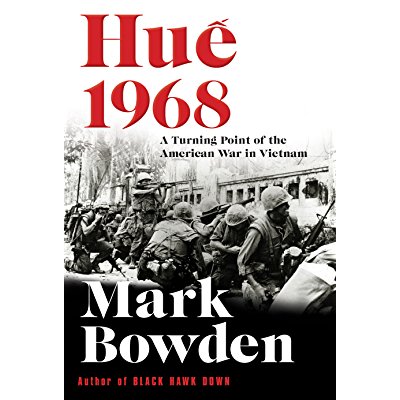
“Most American veterans were pleased to share their experiences with me,” says Bowden. “The sheer number of interviews gave me multiple perspectives on nearly every event described. I am indebted to previous accounts, Battle for Hue by Keith Nolan; Fire in the Streets by Eric Hammel; The Lost Battalion by Charles Krohn; The Siege of Hue by George Smith; and The Cat from Hue by Jack Lawrence.”
Bowden says he learned a great deal from journalist’s reports written at the time and even more from talking to reporters and photographers who produced them, particularly Gene Roberts, John Olson, and Mike Morrow.
Bowden lists several viewpoints shared by the hundreds of American veterans he interviewed: most were proud of having served; nearly all were angry over the betrayal of their youthful idealism, mostly at American leaders who sent them to fight a war that was judged unwinnable from the start; all felt sorrow for the friends they lost and the horror the war inflicted on everyone involved; many described their difficulties in adjusting to normal life after returning home.
There are also lessons for the present and the future. Urban warfare has become more common since the Battle of Hue as more of the world’s population leaves rural areas. Although untrained in urban warfare, the U.S. Marines — dispatched to reclaim Hue — soon adapted from the jungles and paddies they were used to in Vietnam.
Bowden describes in graphic detail the tactics of avoiding booby-trapped doors and instead smashing through the sides of buildings, clearing room to room, staying off the streets and open areas, hard lessons of the fighting in Hue that the U.S. Marines brought to Iraq in 2004 when they assaulted the city of Fallujah twice.
Today, with U.S.-backed forces battling ISIS militants in Mosul, Iraq, and Raqqah, Syria, the bloody lessons of Hue — and memories of the severe civilian casualties — are relevant again.
Don North is a veteran war correspondent who covered the Vietnam War and many other conflicts around the world. He is the author of Inappropriate Conduct, the story of a World War II correspondent whose career was crushed by the intrigue he uncovered.
What I Hear in Every European Country I Visit: The Politicians Are All in Bed with the Israeli Government
By Miko Peled | American Herald Tribune | July 3, 2017
I recently returned from a ten – day speaking tour in Europe, to launch the German language translation of “The General’s Son, Journey of an Israeli in Palestine.” I had lectures to German speaking audiences and even and interviews with main stream media outlets. The tour also included two lectures in Italy, one in Milan and one in the small town of Biella, which of course were not related to the German edition. All the lectures were well attended and people did not mind sitting through the extreme hot weather plaguing Europe this summer or the lengthy process of translation – indeed the audiences sat for hours and listened and then remained for lengthy discussions and Q&A sessions.
This was the latest of many speaking tours I have had in Europe and there is a line that I hear and that is repeated in every European country I visit: “Here in (fill in the blank) the Zionist lobby is very strong, the politicians are all in bed with the Israeli government and media will not report on Palestine.” This stands in contrast to the prevailing opinion which is, that in Europe there is a strong Palestine solidarity movement. That people in general are sympathetic to the cause of justice for Palestine and the BDS movement has recorded serious accomplishments in Europe. And yet, it is true that European governments and mainstream media and the EU as a body are fully supportive of Israel and collaborate with Israel on every level which means that there is an enormous gap between the politicians and their constituents on this issue.
One example of the official and perhaps true attitude of the European Union to Israel and the issue of “illegal settlements” is the following: In the spring of 2016 a conference was held in Jerusalem under the title of “How to Fight the BDS.” I was in Jerusalem at the time and decided to attend. After all, Israeli television news channel 10 described me as a leader of the BDS movement and “the nightmare of the Israeli Hasbara,” two claims in which there is very little truth. The event was very well attended and among the many panels there was one that included the European Union ambassador to Tel Aviv, his Excellency, Lars Faaborg-Andersen. The ambassador was asked about the EU law demanding that products made in the Israeli settlements in the West Bank be labeled indicating that they are not made in Israel but in the West Bank. “We welcome the products from the Settlements” the ambassador responded, “the labeling is merely for accuracy.”
There have been several attempts by the European states and the EU to pacify the pro-Palestinian sentiment and surprisingly, they seem to have worked. One such attempt is the recognition by several European governments and parliaments of a Palestinian state. This recognition is received by many supporters of the Palestinian cause as a reason to rejoice, a reason to feel that justice is being served. But the recognition of a state that does not exist does nothing to promote justice for Palestinians or change the reality in Palestine. The recognition of a fictional Palestinian state does not change the fact that for seven decades Palestine is occupied, Palestinians are subjected to genocide, ethnic cleansing and are forced to live in an apartheid regime. In fact, even the name Palestine has all but been erased off the map and the area recognized as what may one day be a Palestinian state, i.e., the West Bank, is now Judea and Samaria and has – much like all other parts of Palestine – been settled by Jews and, with the exception of some three million Palestinians living there, has been fully integrated into the state of Israel.
So what has this recognition done? Nothing but placate, sedate and allow the Zionist regime to go on with its policies of extermination and dispossession. Instead of recognizing and declaring that Palestine is occupied and should be freed from the regime that has been on a mission to destroy it and its people, the Europeans have recognized a state that has no defined boundaries, no capital, no citizenry and certainly no sovereignty. But as former colonizers themselves, the European states are quite accustomed to the practice of imposing puppet regimes that have no authority or real legitimacy, recognizing a so called state and then doing with it as they will. This is what they are now allowing Israel – a settler colonial project – to do.
The other placating measure was the law that prohibits the labeling of products made in Jewish settlements in the West Bank as made in Israel. This law, as it happens exists in the US as well since the Clinton Administration. It was reiterated by the Obama administration in 2016, and as JPost reported, “The move signals the Obama administration’s continued resistance to folding recognition of settlement products into goods made within Israel’s pre-1967 borders.” but US government officials claimed this was only for providing guidance and is in no way a boycott “or anything like that.”
This ridiculous demand for labeling forces all involved to put forward enormous efforts to define what is “Israeli proper,” or “Legal Israel” as opposed to the expanded or “greater” Israel which includes the West Bank and the Gaza strip. Where do the occupied territories begin and which of the illegal settlements are to be labeled? Are the settlements that are attached to East Jerusalem legal or illegal? What about products that are grown in other areas but get their water from the West Bank which has an enormous water reservoir from which Israel gets much of its water? But in reality there is no West Bank and there is no “Israel proper.” Whichever way we choose to look at it, all of Israel is occupied Palestine, and all of Palestine is occupied. There is no more a line that defines any single area within Palestine that is not part of the State of Israel. So, its either all legal and acceptable or all illegal and unacceptable.
If we take a moment to discuss the US, in what is a bizarre chain of events, we should thank Donald Trump’s ignorance and his close advisors’ hawkish stance on Israel for changing the conversation on Israel and bringing its apartheid nature of the state into the forefront. In his ignorance Trump suggested that any solution is fine with him, one state, two state – whatever. His advisors, the son-in-law Jared Kushner and his ambassador to Israel David Friedman who have funded and supported settlements and even the notorious IDF, have allowed the conversation to move far away from a two-state solution. This can only mean one thing: Is it going to be a democracy which will require equal rights for Palestinians or an apartheid state with a US stamp of approval? Arguably Kushner and Friedman have no problem with the latter, but now the truth is out and clearly there is no third option.
But the European approach is a more subtle one. Labeling the products of Jewish settlements and pretending that there is such a place as the West Bank, and that Israel must not settle Jews in that West Bank while pretending there is a Palestinian state and at the same time arming and funding Israel as it continues to execute its policies of genocide, ethnic cleansing and apartheid. It is what you might call win-win except that Israel is always winning and the Palestinians keep losing. The US – for comparison sake – wouldn’t dream of recognizing a Palestinian state and blatantly and unapologetically arms and supports Israel even though this violates US law.
The spineless attitude towards Israel and the lack of regard for human rights and human lives that are expressed both by the US and the EU create a reality in which anyone who does not stand clearly in opposition to Israel is in fact complicit with Israeli crimes. And while the European approach is somewhat different than that of the US, the result is the same – in both cases the governments work closely with Israel and ignore the plight of the Palestinian people. This places greater demands on people of conscience who need to act, to organize until the political climate is such that supporting Israel is political suicide.
Israel’s attorney general okays controversial 1967 settlement order
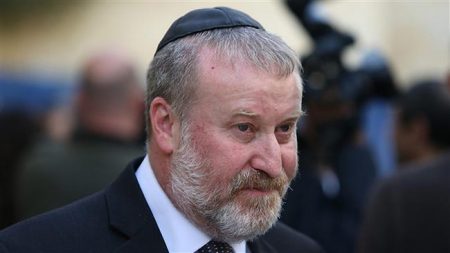
Israeli Attorney General Avichai Mendelblit
Press TV – July 2, 2017
A newly released report says Israeli attorney general Avichai Mendelblit approved last year the use of a controversial 1967 order to legalize settler units built on private Palestinian land.
During a meeting attended by several Israeli judicial officials, Mendelblit said the “Order Concerning Government Property,” which was issued in July 1967, could be invoked to expropriate Palestinian land, the Israeli newspaper Haaretz reported on Sunday.
Clause 5 of the order states that “any transaction concluded in good faith between the authorities and another person … will not be struck down and is valid, even if it is proven that the asset was not government property at the time of its purchase.”
Mendelblit’s office said in a document that the clause had rarely been used in almost five decades, but “the need to make use of it has arisen now.”
It further set out a number of conditions for invoking the clause, such as purchase in good faith, the existence of a contract and payment having been made for the land.
“The use of Clause 5 should be limited as a rule to the built residential boundaries of the community, and to actual construction done before the parties to the transaction became aware that this was in fact not government property,” the document added.
Back in February, the Israeli parliament, known as the Knesset, passed a law on the expropriation of privately-owned Palestinian land in the West Bank, where Israeli settlements or outposts have been constructed.
However, Palestinians filed petitions to the Israeli High Court against the law.
Mendelblit proposed that the Israeli parliament suspend the land garb law until the court rules on the petitions and the Knesset accepted the bid.
Dror Etkes, Israeli anti-settlement activist, said the document by Mendelblit’s office seems to be “a parallel path being prepared … for the day after the High Court tosses the [expropriation] law into the garbage.”
“The purpose of this legal construction, rotten from the foundation, is to raise the claim of ‘good faith’ wherever Israel has stolen private Palestinian land and given it to settlers,” he said. “This is a situation in which lies, denial, violence and manipulation prevail – that is, everything except good faith.”
About 600,000 Israelis live in over 230 settlements built illegally since the 1967 occupation of the Palestinian territories.
The continued expansion of Israeli settlements is one of the major obstacles to the establishment of peace in the Middle East.
In recent months, Tel Aviv has stepped up its settlement construction activities in the occupied Palestinian territories in a blatant violation of international law and in defiance of United Nations Security Council Resolution 2334.
The resolution, which was passed last December, states that Israel’s establishment of settlements in the occupied territories, including East Jerusalem al-Quds, “had no legal validity” and urges the regime to immediately and completely cease all its settlement activities.
Moscow warns Washington against ‘incendiary, provocative action’ in Syria
RT | June 28, 2017
Moscow has warned the US against taking unilateral action in Syria, as there is no threat from the Syrian military, Russia’s Foreign Ministry said. The statement comes after the US accused Syria of preparing for a chemical attack, without giving any evidence.
Asked if Russia had warned the US administration against any unilateral action in Syria, Russia’s deputy foreign minister, Gennady Gatilov, replied that Russian officials have “always spoken about that, including in relation to their [US] latest strikes on Syrian armed forces.”
“We believe that it’s unacceptable and breaches Syria’s sovereignty, isn’t caused by any military need, and there is no threat to the US specialists from the Syrian Army. So it’s incendiary, provocative action,” Gatilov said, as cited by RIA Novosti.
On Monday evening, the White House claimed that Syrian President Bashar Assad was preparing a chemical attack and warned that the Syrian government would “pay a heavy price” if the attack was carried out, as cited by AP.
Hours later, the Pentagon said it had detected activity by the Syrian authorities in preparation for the attack. Pentagon spokesman Navy Captain Jeff Davis said that the US had seen “activity” at Shayrat airfield that showed “active preparations for chemical weapons use.”
The US government failed to provide any further details or proof of such claims, while the State Department’s spokesperson, Heather Nauert, said it was “an intelligence matter.”
When confronted by a journalist that Washington uses the phrase to justify anything that suits it, Nauert answered: “I’m not going to get into that one with you, but this is a very serious and great matter.”
On Wednesday, though, the US suggested that the Syrian leadership had swiftly changed its mind about planning an alleged attack. Defense Secretary Jim Mattis, as cited by Reuters, said: “it appears that they [Syria’s authorities] took the warning seriously. They didn’t do it.”
The Syrian government, as well as Russian authorities, have denied any allegations against them, with Russian President Vladimir Putin’s spokesman Dmitry Peskov saying that “such threats to Syria’s legitimate leaders are unacceptable.”
In the latest statement, Deputy Foreign Minister Gatilov said that Russia doesn’t rule out that “there may be provocations” following the announcement from Washington.
The statements by the US administration complicate the [peace] negotiations in Astana and Geneva, and Moscow believes such attempts to boost the tensions around Syria are unacceptable.
“The statements on Syrian armed forces getting ready to use chemical weapons is complete nonsense… These assumptions aren’t based on anything, no one provides any facts,” the Russian diplomat said.
“If the aim is to ramp up the spiral of tension, we think it’s unacceptable. It complicates the process of negotiations undertaken in Astana and Geneva,” Gatilov underlined.
“We’ve seen this in the past. Of course there are many ill-wishers, who want to undermine the process [of negotiations]. So any provocations are possible,” the deputy foreign minister added.
Earlier, Russia’s Foreign Ministry issued another official statement, saying: “We consider all these insinuations about chemical weapons which are being carried out in the worst traditions of the 2003 NATO intervention in Iraq as an ‘invitation’ for terrorists, extremists, and the armed opposition in Syria to carry out another large-scale provocation, which will result in the ‘unavoidable punishment’ of President Assad, according to Washington’s plans.”
In April, US President Donald Trump launched an attack on Syria with 59 Tomahawk missiles, which targeted Shayrat Airbase near the city of Homs. The strike was in response to what the US claimed was a chemical weapons attack in Khan Shaykhun, orchestrated by Syria’s government – something Damascus repeatedly denied.
Israeli authorities approve budget for controversial ‘Apartheid road’ in West Bank
Ma’an – June 27, 2017
BETHLEHEM – Israel has reportedly approved a budget for the construction of the so-called Eastern Ring Road in the occupied West Bank, known by activists and rights groups as the “Apartheid road.”
The road, part of Israel’s plans of developing the controversial E1 corridor, has been denounced as an attempt to further expand illegal Israeli settlement construction in the occupied Palestinian territory, while deepening the separation between Palestinian communities on opposite sides of Israel’s separation wall.
According to a statement released by Israeli rights group Ir Amim on Monday, the development of the road is “one of several developments necessary for preparing the ground for E1.”
The reports emerged from Israeli media outlet Israel Hayom, which stated that the road is expected to be opened to Israeli traffic in the next 10 months.
According to rights groups, settlement construction in E1 would effectively divide the West Bank and make the creation of a contiguous Palestinian state — as envisaged by the internationally backed two-state solution to the Palestinian-Israeli conflict — almost impossible.
Israeli activity in E1 has attracted widespread international condemnation, and Palestinian President Mahmoud Abbas has in the past said that “E1 is a red line that cannot be crossed.”
However, the Eastern Ring Road was proposed by former Israeli Prime Minister Ariel Sharon as a plan to apparently solve the issue of bifurcating the West Bank, by facilitating “navigation from Ramallah to Bethlehem for Palestinians but without any access to Jerusalem.”
Following the second Palestinian intifada and Israel’s construction of the separation wall that has disjointed Palestinian territory, Palestinians from the “West Bank side” of the separation barrier have been forced to obtain Israeli-issued permits in order to access occupied East Jerusalem, which some Palestinians and the international community still consider to be the future capital of an independent Palestinian state.
A map released by Ir Amim shows the expected route of the road. According to the group, the road would “ease access” for Israeli settlers residing around Ramallah in contravention of international law, as settlers have “long exerted pressure to open the road, complaining about traffic jams and delays.”
Ir Amim pointed out that Israel’s plan would enable further expansions of Israel’s illegal settlements around Ramallah.
The road is also planned to connect with Road 1 that connects the mega settlement Maale Adumim with Jerusalem, and would also link to the Mount Scopus Tunnel Road through the Zeitim interchange, another controversial E1 related project that Israeli authorities had begun construction on several months ago, according to Ir Amim.
According to an earlier report released by Ir Amim, the Zeitim interchange is located between Jerusalem and Maale Adumim, and would connect the Eastern Ring Road in the northern West Bank to road 417, leading to the south.
The group highlighted in the report that connecting these roads is “a crucial part in realizing the E1 plans,” as Israeli settlement construction in the E1 corridor would prevent Palestinians in the West Bank from using road 437, which “connects to road 417 and enables Palestinian traffic between the northern and southern West Bank.”
The plans aim to replace road 437 with the northern section of the Eastern Ring Road, which would divert Palestinian traffic away from road 437 and the E1 area” and would establish separate lanes for Israeli and Palestinian traffic, thus its label as an “apartheid road.”
Israel’s plans in E1 have long been denounced by rights groups and the international community since its approval in 1999, in the wake of the Oslo Accords which expected the area of E1 to be transferred to the Palestinian Authority (PA) within an interim period of five years.
Another central aspect of Israel’s development plans in the area includes the full eviction and relocation of Bedouin communities residing in E1, near Maale Adumim.
This plan was furthered earlier this year when Israeli authorities delivered demolition notices to every single home in the Bedouin village of Khan al-Ahmar, including the village’s elementary school. The village is located on the site of planned Israeli settlement development and on the Israeli side of the planned route of Israel’s separation barrier.
Rights groups and Bedouin community members have sharply criticized Israel’s relocation plans for the Bedouin residing near Maale Adumim, claiming that the removal would displace indigenous Palestinians for the sake of expanding Israeli settlements.
Bedouin villages in the area also face routine demolitions by Israeli forces.
Since the E1 corridor is part of Area C — the more than 60 percent of the West Bank under full Israeli military control and where Israel’s settlements are planned, the Palestinians living there face routine attempts by Israeli authorities to push them off the land.
Khan al-Ahmar is one of 46 villages comprising of a population of 7,000 — 70 percent of whom are Palestinian refugees — in the central West Bank that are considered by the UN as being at risk of forcible transfer by Israeli authorities to alternative sites, in violation of international law.
In addition, Israeli rights group B’Tselem has noted in the past that plans to develop the E1 corridor would also further isolate Palestinians straddled between the “West Bank side” of the separation barrier and those in occupied East Jerusalem, by “enclosing East Jerusalem from the East and linking it up with Israeli neighborhoods built north of the Old City.”
As East Jerusalem used to be the primary urban center for Palestinians in the West Bank, the E1 plans would further exacerbate a Palestinian-Palestinian separation that has wreaked havoc on Palestinian economic, social, and political life.
Whither Japan’s democracy?
By Daniel Hurst | Asia Times | June 27, 2017
To some observers, protester Hiroji Yamashiro, 65, has become a symbol of modern Japan’s uneasy attitude towards dissent.
The retired civil servant, a long-standing campaigner against the US military presence in the southern prefecture of Okinawa, was detained for five months from October last year before he was released on bail in March.
Yamashiro admitted cutting a barbed wire fence, but pleaded not guilty to subsequent charges of injuring a defense official and obstructing relocation work by placing blocks in front of a gate.
According to his supporters, Yamashiro is a tireless peace advocate whose continued detention was disproportionate to his alleged behavior.
To the authorities who arrested him, his actions went beyond those of peaceful protest and transgressed criminal laws.
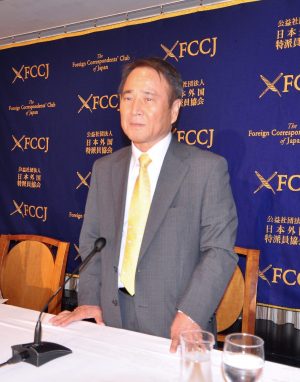
Hiroji Yamashiro, 65, a campaigner against the US military presence in Okinawa prefecture, addresses the Foreign Correspondents’ Club of Japan. Photo: Daniel Hurst
Either way, his yet-to-be-finalized case has attracted so much international attention that he was invited to travel to Geneva earlier this month to address the UN Human Rights Council.
Now Yamashiro is seeking to shine a spotlight on Japan’s new anti-conspiracy law, which according to human rights groups and lawyers risks increased government surveillance and arbitrary arrest.
“The fact that a country like Japan has passed such a terrible law indicates the extent to which democracy is in retreat in this country,” the head of the Okinawa Peace Movement Center said during a press conference in Tokyo late last week.
“It’s something that I feel very sad about and very angry about and I would like the international community to focus upon it.”
Terror justification
Japan’s postwar constitution guarantees freedom of thought, conscience, assembly, association, speech, press “and all other forms of expression” – yet critics say they see a gradual erosion of those rights.
Such concerns grew when Japan’s ruling bloc pushed the anti-conspiracy bill through the upper house in mid-June.
Prime Minister Shinzo Abe and his government argued the legislation would help prevent terrorism ahead of large-scale events like the Tokyo 2020 Olympic and Paralympic Games.
The law targets two or more persons who, “as part of activities of terrorist groups or other organized criminal groups,” plan to carry out certain criminal acts.
The 277 crimes covered by the law also include planning to steal forestry products or to breach copyright. Jail terms of up to five years are possible depending on the crime.
When a UN special rapporteur warned Japan’s government in an open letter that the vague legislation could usher in “undue restrictions” on freedom of expression and privacy, the authorities reacted angrily.
The criticism was called “one-sided” and “obviously inappropriate,” with government officials saying they had not been given a chance to provide information before the letter was published.
Abe, whose popularity has slipped in recent opinion polls, moved to assure the country that “ordinary people” would not face investigation.
“Although we feel [the law] is essential for strengthening international coordination in dealing with terrorism, we’re aware that some members of the public remain uneasy and concerned about it,” the prime minister said at a press conference last week.
International backlash
The UN special rapporteur for privacy, Professor Joseph Cannataci, highlighted the vague definition of planning and preparatory actions and the “over-broad range of crimes” covered.
He told Asia Times he had felt compelled to write the open letter because of the extremely short legislative deadline that the government had set itself.
Cannataci, an independent expert appointed by the UN Human Rights Council, described the official response as “disappointing but not surprising.” He said he was “the third UN special rapporteur in a row whom the Japanese government has decided to be confrontational with.”
“I stand by every single word, full-stop and comma in my letter of the 18th May,” Cannataci said in an email this week.
“If anything, the way the Japanese government has behaved in response to my letter has convinced me even further of the validity of its content and the appropriateness of its timing and form.”
He added: “There has been a deafening silence on the part of the Abe government on the privacy safeguards which I have alleged are missing in Japanese law and the Japanese government has failed to explain, in public or in private, how the new law provides new remedies for privacy protection in a situation where it creates the legal basis where more surveillance could be carried out.”
Japan’s chief cabinet secretary, Yoshihide Suga, said last month: “It is not at all the case that the legislation would be implemented arbitrarily so as to inappropriately restrict the right to privacy and freedom of speech.”
‘Chilling effect’
Cannataci’s concerns are shared by a number of non-government organizations.
Hiroka Shoji, an East Asia researcher at Amnesty International, said the definition of an organized crime group was not limited to terrorist cells.
“Civil society organizations working on areas around national security can be subjected to this category,” Shoji said in an email.
Kazuko Ito, secretary general of the advocacy group Human Rights Now, said in an email: “Even if the judiciary narrowly determine and exonerate the targeted people in the end of the day, they are already targeted for arbitrary surveillance, wiretapping, arrest or detention – these are enough to smash civil society activities and will cause a significant chilling effect.”
Justice minister, Katsutoshi Kaneda, denies that the legislation is vague, arguing it is “expressly limited to organized criminal groups, the applicable crimes are listed and clearly defined and it applies only once actual preparatory actions have taken place.”
Anti-base protester Yamashiro, who was charged under pre-existing laws, views the new legislation as “a great threat”.
“I was arrested for obstruction of a public official, but under the new legislation even if you don’t do what it is that is against the law – if you’re just planning it or discussing it with other people – that is enough basis for an arrest to be made,” he said.
Press freedom concerns
The concerns come against a backdrop of claims that press freedom is deteriorating in Japan. The country declined in the global press freedom rankings issued by Reporters Without Borders, from 11th in 2010 to 72nd in the most recent review.
However, the reliability of that ranking is questioned by some observers.
The academic and consultant Michael Thomas Cucek, for example, has previously pointed to the “astonishing” volatility in Japan’s ranking and raised the possibility of the surveyed experts exaggerating the extent of repression in their own country.
Methodology questions aside, the UN special rapporteur for freedom of expression, David Kaye, has identified what he called “significant worrying signals” in Japan.
“The direct and indirect pressure of government officials over media, the limited space for debating some historical events and the increased restrictions on information access based on national security grounds require attention lest they undermine Japan’s democratic foundations,” Kaye wrote in a report published in May.
Kaye called for safeguards to be added to the state secrets law enacted in late 2013, which allows bureaucrats to be jailed for up to 10 years for revealing specially designated information.
Under Article 25 of the state secrets law, journalists could potentially face a prison term of up to five years under a provision targeting “a person who conspires with, induces or incites another person” to release such secrets.
However, the law offers protection to news reporting “as long as it has the sole aim of furthering the public interest and is not found to have been done in violation of laws or regulations or through the use of extremely unjustifiable means.”
The Japanese government has said it “does not intend to apply Article 25’s harsh penalties to journalists.” And in a broader rebuke to Kaye, it said most of his arguments were based on hearsay or assumptions.
“It is hard for the government of Japan to avoid expressing sincere regret concerning those biased recommendations,” the government said in a formal response.
It cited the constitutional guarantee of freedom of expression and added that “there is no such fact that government of Japan officials and members of the Japanese ruling party have put pressure on journalists illegally and wrongfully.”
Jeff Kingston, director of Asian studies at Temple University Japan, said officials were unlikely to act on previous comments by some lawmakers about the possibility of suspending broadcasting licenses for bias.
“But just making noises about doing so sends a chilling message, a shot across the bow of an already cowering media that may constrain coverage,” Kingston wrote in the book Press Freedom in Contemporary Japan, published earlier this year.
A spook comes out of the woodwork to attack Brad Pitt’s ‘War Machine’
Netflix drama strikes a nerve …
By David Walsh | WSWS | June 21, 2017
Does art have social consequences? Does it matter which attitude filmmakers or novelists, for example, adopt toward the big events of the day?
Here’s a case that may help settle the argument or at least provides strong circumstantial evidence.
Three weeks ago we reviewed War Machine, the Netflix satire about Gen. Stanley McChrystal and the bloody, neo-colonial American war effort in Afghanistan.
We noted its unusually biting character. This is not a film that makes obeisance to the greatness of the US military. It presents the war in Afghanistan as “a debacle, presided over by lunatics and egomaniacs,” the WSWS review noted.
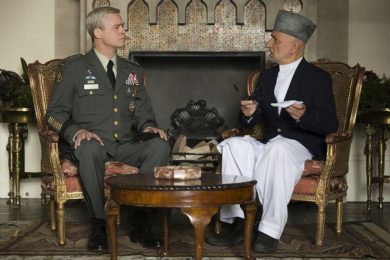
Brad Pitt and Ben Kingsley in War Machine
Written and directed by Australian David Michôd, and based on the 2012 non-fiction book, The Operators: The Wild and Terrifying Inside Story of America’s War in Afghanistan, by the late American journalist Michael Hastings, War Machine sarcastically hails the US in its opening moments, “Ah, America. You beacon of composure and proportionate response. You bringer of calm and goodness to the world.”
The WSWS noted that for once a film reflected some of the widespread hostility toward a quarter century of brutal war and toward the politicians and generals who have conducted it.
It was only fitting that a spokesperson for those war criminals would respond.
Whitney Kassel, late of the Defense Department, Special Operations in Afghanistan and Pakistan, a former member of McChrystal’s “team,” and an associate in private business of a long-time leading figure in the CIA, has written a denunciation of War Machine in Foreign Policy magazine, “Screw Brad Pitt and the ‘War Machine’ he rode in on.”
The unusually frank language of the headline presumably provides some sense of Kassel’s disapproval. Indeed, she acknowledges that her initial “eye-rolling quickly gave way to expletives.”
The character of Kassel’s objectivity in regard to Gen. McChrystal makes itself evident early on when she notes that Hastings (whose Rolling Stone article, later expanded into the book on which War Machine is based, essentially ended the general’s career) “took down a man I worked with during the time in question and deeply respected—one near-universally viewed as an American hero of integrity and intelligence.”
McChrystal was a ruthless practitioner of counterinsurgency warfare, responsible for the killing of thousands of Iraqis. His entourage in Afghanistan, according to Hastings, was “a handpicked collection of killers, spies, geniuses, patriots, political operators and outright maniacs.” A staffer neatly describes in Hasting’s book the now infamous Gen. Michael Flynn, one of McChrystal’s toadies, as a “rat on acid.”
Kassel presents the 16-year US-led intervention in Afghanistan as “a war effort that, while certainly replete with absurdities and mistakes, was and continues to be fought by men and women who are dedicated to improving the security of the United States and its allies by helping to build an Afghanistan that will not provide safe haven for al Qaeda or, more recently, the Islamic State.”

War Machine
This is a pack of lies. The US is not in Afghanistan to protect American lives, but to advance its interests in a geopolitically strategic area. The war has led to nothing but death, destruction and misery on a vast scale.
Kassel is particularly concerned that War Machine casts doubt on the legitimacy of the entire “war on terror,” the code phrase with which American imperialism has justified its drive for global hegemony since 2001.
She goes on: “Likewise—and this is the part that matters today—the portrayal of the U.S. and NATO’s very presence in the country since 2001 as rooted in fantasy and an inflated sense of American prowess is disingenuous and dangerous in its mischaracterization of a war that remains, particularly in the face of escalating violence and instability, an important part of reducing global terrorism.”
Kassel seems unaware that this last sentence contains an obvious contradiction. The longest war in US history has ostensibly been carried out in the name of “reducing global terrorism,” yet there is “escalating violence and instability.”
War Machine is not a primer in anti-imperialist politics, but it does make clear that the war in Afghanistan is a doomed project. The film’s narrator asks in the opening moments, “What do you do when the war you’re fighting just can’t possibly be won in any meaningful sense?”
The narrator further explains that the US military’s “counterinsurgency” strategy runs up against basic political realities: “When … you’ve just gone and invaded a place that you probably shouldn’t have, you end up fighting against just regular people in regular-people clothes. These guys are what are called insurgents. Basically, they’re just guys who picked up weapons ’cause … so would you, if someone invaded your country. Funnily enough … insurgencies are next to impossible to defeat.”
But Kassel inhabits a different political and moral universe. Her writing has the ghastly quality of the “democratic” military bureaucrat or intelligence agent, the muffled, perpetually disingenuous tone of the individual who plots bombings and murders and mass repression, but refers to such activities as “strategic options” and “the tools available for trying to turn around what was considered an urgent national security priority,” and half-believes her own obscurantism.
She presents a glowing picture of the same crowd among whom Hastings placed “killers … and outright maniacs.” Kassel writes: “I found McChrystal and his team to be respectful, thoughtful … McChrystal spent endless hours with the members of the assessment team [which included Kassel]—very few of whom had direct military experience—exploring the strategic options available to the United States and NATO.”
Toward the end of her tirade, Kassel once again expresses anxiety about the impact of War Machine and points to “a particular hazard,” that the film will reinforce “a view of the war in Afghanistan as this generation’s Vietnam, led by men … who care only about protecting their own egos and reputations, with no sense of the sacrifices inherent in war and no strategic vision or logic behind their decisions.”
She expresses nervousness about the “reworking” of the US approach to Afghanistan that Trump administration officials may be considering and asserts that “it is critical that they, and the American public to whom they report, understand how we got here, and the reasons why some elements of a counterinsurgency strategy may remain valid moving forward.”
Kassel, according to the Huffington Post, for whom she writes occasionally, “spent four years at the Office of the Secretary of Defense where she focused on Special Operations, Counterterrorism, and Pakistan policy. During this time she spent a year in Pakistan working for the Office of the Defense Representative and Special Operations Command Forward. She also served as the representative of the Secretary of Defense to General Stanley McChrystal’s Strategic Assessment Team in Afghanistan in 2009.”
This is someone up to her neck in imperialist violence and intrigue. At one point, Kassel served “as Assistant for Counterterrorism Policy in the Office of the Assistant Secretary of Defense for Special Operations, Low Intensity Conflict, and Interdependent Capabilities (ASD SO/LIC&IC) within the Office of the Under Secretary of Defense for Policy (OSD-Policy).”
Kassel, a Democratic Party supporter apparently, often tweets about women’s rights and racism—and Russian aggression! Of course, how could it be otherwise?
A special mention must be made of her association with the Arkin Group, the private intelligence firm, where she “served as a senior director focused on strategic analysis and risk management.”
A founding partner of the Arkin Group is Jack Devine, according to the company’s website, “a 32-year veteran of the Central Intelligence Agency (‘CIA’). Mr. Devine served as both Acting Director and Associate Director of CIA’s operations outside the United States from 1993-1995, where he had supervisory authority over thousands of CIA employees involved in sensitive missions throughout the world. In addition, he served as Chief of the Latin American Division from 1992-1993 and was the principal manager of the CIA’s sensitive projects in Latin America.”
In fact, Devine’s first foreign assignment was in Chile, where he arrived in August 1970. Even before being physically assigned there, he writes in his autobiography, Good Hunting: An American Spymaster’s Story, “I had worked the night shift for the Chile Task Force in Langley, synthesizing cables from Santiago into a morning intelligence report for the bosses.” Devine was present in Santiago in September 1973 when the Nixon administration and the CIA organized a coup, along with the Chilean military, that brought the brutal Pinochet dictatorship to power, which tortured and murdered tens of thousands of political opponents, trade unionists and young people.
The Arkin website also notes, “From 1985-1987, Mr. Devine headed the CIA’s Afghan Task Force, which successfully countered Soviet aggression in the region. In 1987, he was awarded the CIA’s Meritorious Officer Award for this accomplishment.”
In other words, Devine is one of the figures criminally responsible for arming and fomenting Islamic fundamentalism in Afghanistan as part of the effort to undermine the Soviet Union. In his own words, Devine moved “guns and ammunition across the border into Afghanistan,” aiding “the Afghan mujahideen and their determined opposition to the Soviet Union’s occupation of their country in the 1980s. I ran the last, and largest, cover operation of the Cold War.” The career of Osama bin Laden, Al Qaeda, the 9/11 terrorist attacks and ISIS itself all emerge, directly or indirectly, from this operation.
Devine and Kassel have co-authored numerous articles, including “Afghanistan: Withdrawal Lessons,” in the World Policy Journal, 2013. This cynical morsel of realpolitik offered advice to the Obama administration on the best policy to pursue “in protecting U.S. interests” in the region. “Robust covert action” remained high on the list. Should the Pakistani government, for example, turn down US aid, “we should respond with appropriate covert action. This would include paramilitary activities as well as psychological operations, propaganda, and political and economic influence.”
Devine also acknowledges Kassel’s assistance in the preparation of his autobiography.
Devine and Kassel continued to do at Arkin what they did at the CIA and the Defense Department, respectively, defend the interests of American corporate and financial interests.
The Arkin website, in its “Case Studies” section, offers the example of the work it did for an investor, “concerned about instability and uncertain about prospects for South African agriculture.” The firm “initiated a political risk analysis and market intelligence project, and also completed an investigation of political, legal, and regulatory events that could impact foreign investors, agriculture operations, and the industry of interest.” Arkin “uncovered no evidence indicating that South Africa’s leaders would reverse foreign investment-friendly policies.”
In Vietnam, Arkin assessed “the future of pro-privatization initiatives” and also laid out “incentives and road blocks associated with privatization and elucidated the process by which entities become eligible for consideration.”
This background has provided Ms. Kassel with the moral and intellectual high ground from which to criticize the anti-war satire, War Machine, which lifts the lid on the lethal madness of the US military and dares to call into question American foreign policy.
It is entirely to the film’s credit that it has provoked an angry response from this trusted agent of American imperialism.
Roll of Shame
By Craig Murray | June 24, 2017
These are the 15 countries which shamefully voted against a UN General Assembly Resolution on Thursday which proposed to seek an opinion from the International Court of Justice on Britain’s continued colonial possession of the Chagos Islands. In the most absolute example of ethnic cleansing in modern history, less than 50 years ago the UK deported by force the entire population of the Chagos Islands to make way for the US military base on Diego Garcia, and to this day refuses to allow them to return.
The Dirty 15
USA
UK
Israel
Australia
New Zealand
The above are of course arguably the five countries in the world most profoundly implicated in the usurpation and destruction of native populations
Afghanistan
Albania
Bulgaria
Croatia
Hungary
Japan
Lithuania
Maldives
Montenegro
South Korea
This second small group is dominated by countries with a particularly close security relationship with the United States on which they place particular reliance in relation to a perceived threat.
It must however be heartening that the US and UK could round up so very few supporters for their utterly immoral stance. It is particularly worth noting that none of the major players within the EU backed the UK.
The US and UK are also remarkably silent on the blockade of Qatar by their ally Saudi Arabia. The release of Saudi demands including the closing down of Al Jazeera TV and other media outlets including the excellent Middleeasteye.net show the Saudis’ true motives. Frankly I am shocked by the failure of the mainstream media in the West seriously to question the ludicrous Saudi claim that this attack on Qatar is over support for terrorism.
Mohammed Bin Salman was appointed by his father the King as Crown Prince in Saudi Arabia on 21 June. Bin Salman has been directing the major affairs of the state for the last three years. The ferocity of the prosecution of the war in Yemen is very much his baby. Bin Salman’s master plan, which he has driven through with much skill, is for a far more aggressive Saudi Arabia leading the conservative forces in the Middle East, above all in fierce opposition to Iran and Shia interests. To this end he has forged a conservative alliance incorporating Saudi Arabia, Israel, Egypt and the United States.
US and UK involvement in the war in Yemen goes beyond the enthusiastic supply of the bombs and aircraft which have killed thousands of children. Both have had special forces on the ground, and the CIA has yet again been deeply implicated in the detention, extreme torture and murder of opponents.
The Bin Salman plan is dressed up as “pro-Western” and media hacks paint him as a “reformer” because he wishes to expand a network of McDonalds in the Kingdom. But as Iran slowly does reform, and sticks meticulously to the terms of the internationally guaranteed nuclear agreement, Saudi paranoia towards its regional “rival” becomes ever more dangerous. The Iranians deserve respect for the moderation with which they reacted to the Saudi sponsored terror attack on their parliament itself. But such provocations will increase.
Saudi support for ISIL, Al Qaeda, Al Nusra and the numerous other jihadist groups will only increase as Saudi Arabia seeks to deploy them in its sectarian war against the Shia and their allies. For that reason there is no prospect of terrorist violence in Syria declining. Indeed the United States shooting down of a Syrian jet in “self-defence” was almost certainly an indication that the Syrians were at the time targeting jihadist forces reinforced by US special forces. Israeli bombing and missile sorties against Syrian regime targets in support of jihadist rebels are finally being regularly reported in mainstream media.
I do not hold up Qatar or its ruling aristocracy as a paragon of virtue. But it seeks a more pacific relationship with Iran, and has more developed economic relationships including on shared offshore fields. Qatar has also consistently shown greater interest in the plight of the Palestinians, and more scepticism towards Israel, than Bin Salman is happy with. Qatar also has problems with the brutal military dictatorship of Egypt.
Most worryingly to Saudi Arabia, these slightly more liberal attitudes are closer to the views of the “arab street”, where there is disquiet at Saudi Arabia’s obvious but officially denied relationship with Israel. Qatar also has a media which can reflect these views to a wider Arab audience. Even though, following previous Saudi threats, al Jazeera’s content has been toned down, the Saudis see the station as an intolerable direct threat.
There is public fatigue in the West with regard to the affairs of the Middle East. This is a mistake as the situation is more dangerous than ever. The UK and USA both look likely to support the Saudis and Israel in their determination for conflict with Iran. The EU and Russia – and anybody not harbouring a death wish – will be working to keep the Iranian nuclear deal together. Bin Salman has chosen his time well, with slightly crazed right wing regimes in Washington, London and Tel Aviv willing to back his adventurism. The blockade of Qatar is but a symptom of something much more dangerous.
Taliban says foreign troops must go before peace talks as US plans 4,000-strong surge
RT | June 23, 2017
In an annual address to followers, the Taliban’s leader warned against sending additional foreign troops to Afghanistan, saying that only after all foreign soldiers leave can peace be negotiated.
Maulvi Haibatullah Akhunzadah spoke on Friday on the occasion of the Eid al-Fitr festival, which ends the holy Muslim month of Ramadan. He reiterated that Afghanistan must be free of foreign occupation.
“The occupation is the main obstacle in the way of peace,” he said, referring to the presence of NATO troops in the country.
“The more they insist on maintaining the presence of their forces here or want a surge of their forces, the more regional sensitivity against them will intensify,” he added.
The remark apparently refers to reported US plans to deploy 4,000 additional troops to Afghanistan to support its crumbling national army. The majority of the force would be used in train and assist missions, but some would be involved in counterinsurgency operations, according to AP.
Akhunzadah insisted that peace negotiations with the government in Kabul would only be possible after “the occupation comes to an end,” adding that a “completely independent” Afghanistan would live under an Islamic law and distance itself from foreign players, neither supporting them nor allowing their interference.
“We don’t permit others to use the soil of Afghanistan against anyone,” he said.
He also urged Taliban fighters to avoid civilian casualties in their attacks on government forces.
The call comes a day after a truck bomb attack on a bank in Helmand province in which 34 people were killed, according to Afghan officials.
On one of its Twitter accounts, the Taliban claimed credit for the suicide bombing in the provincial capital Lashkar Gah, saying it had killed 73 members of the security forces, a figure that conflicts with the official report. Omar Zwak, spokesman for the provincial governor, acknowledged that there were police officers and national army soldiers among the victims, but insisted the majority of them were civilians, who wanted to withdraw money for Eid al-Fitr celebration.
The Taliban leader also boasted that the movement is winning more respect from “mainstream entities of the world.” The apparent attempt to bolster Taliban credibility came amid competition from rival extremist group Islamic State (IS, formerly ISIS/ISIL), which has been winning allegiance of some armed groups previously loyal to the Taliban.
Some nations, including Russia and China, voiced concern with IS gaining a foothold in Afghanistan.
Featured Video

The Truth About the Trump Shootings with Ken Silva
or go to
Aletho News Archives – Video-Images
From the Archives
Trans ‘milk’ as good as the real thing – NHS
RT | February 18, 2024
The drug-induced nipple secretions of trans women are as good as mothers’ breast milk for babies, the University of Sussex Hospitals NHS Trust claimed in a letter to campaigners made public in a report by British think tank the Policy Exchange on Sunday.
The healthcare trust’s medical director, Rachel James, argued that the off-label prescription drug cocktail men transitioning to female take in order to produce milk was “similar to the natural hormones which encourage lactation to develop when the baby is newly born.”
“The evidence which is available demonstrates that the milk is comparable to that produced following the birth of a baby,” James wrote in the letter, sent to Children of Transitioners last August.
Biological men who wish to lactate must first take hormones to grow milk glands and then take high doses of either domperidone or metoclopramide to stimulate milk production. Neither drug is approved for this use, though they are occasionally prescribed off-label to biological women who have trouble lactating.
However, domperidone’s own manufacturer, Janssen, warns patients the drug “may cause unwanted side effects affecting the heart in a breastfed baby” and “should be used during breastfeeding only if your physician considers this clearly necessary.” … continue
Blog Roll
 Aletho News
- Seyed M. Marandi: U.S. Strike Imminent – Toward Total War in the Middle East
- Russia Voted Under Fire. Washington Is Loading the Tankers.
- 12 Things Your Oncologist Was Trained Not to Tell You
- Anthrax Attacks Paved Way for COVID-Era ‘Junk Drugs and Vaccines’
- How Real Is the Impact of Western Sanctions on Israel?
- France, You Are Guilty: How Paris Turned Western Sahara into the Maghreb’s Powder Keg
- 2025 Nature Paper Claiming Worsening Global Drought Gets RETRACTED …Heavily Flawed
- Your Milk Is Not the Problem
- The Truth About the Trump Shootings with Ken Silva
- ARE PATIENTS BEING PROPERLY INFORMED ABOUT OZEMPIC?
- If Americans Knew
- Salah Sarsour’s Legal Team Says DHS Has Not Met Its Burden to Prove He Is Deportable
- An analysis of tax forms by The Intercept show Kraft’s charity and LLC have donated to Friends of the IDF and AIPAC’s super PAC.
- Israeli attacks kill four Palestinians in Gaza – Daily Update
- Inside Gaza’s death trap of collapsing, bombed-out buildings
- The everyday items Israel bans from Gaza every day
- Inside the siege, the ruined buildings of Gaza – Daily Update
- Debunking The Claim That Macklemore Has A “History Of Antisemitism”
- CPJ demands release of arrested Palestinian-US journalist near Bethlehem
- Robert Kraft: The Billionaire Friend of Netanyahu Pulling The Strings Behind the Macklemore/Ed Sheeran Blow Up
- Columbia Administered Fund Gives Big Money to Pro-Israel Groups
- No Tricks Zone
- 2025 Nature Paper Claiming Worsening Global Drought Gets RETRACTED …Heavily Flawed
- New Study: ‘Global Drought Shows No Detectable Recent Acceleration Under Climate Warming’
- Economic Masterminds: German Socialists Suggest Taxing Productivity Gains Stemming From Using AI
- The South China Sea Has Not Been Cooperating With The Climate Change Narrative
- Energy Crisis: Germany Enters Heating Season With Historically Low Gas Reserve Fill Levels
- New Study: The Antarctic Ice Sheet Gained Mass From 2020-2024 Due To Staggering Snow And Ice Accumulation
- Study: Ocean Heating Rates From Thousands Of Years Ago ‘Dwarf’ Modern Ocean Heating Rates
- Climate Extremists Target, Attack Large-Scale Power Grid Infrastructure In Germany!
- New Study: Antarctic Ice Melt Has Contributed Less Than 1 Centimeter To Sea Level Rise In The Last 30 Years
- Fear Of Debate: Alarmist German Climate Scientist Calls On Mainstream Media To Discredit Skeptic Voices
 Aletho News