Yemen: The Anguish, Bloodshed and Forgotten Heroes in a Forgotten War
By Vanessa Beeley | 21st Century Wire | October 13, 2016
It should be personal to all of us. Yemen, regularly portrayed as the poorest nation in the Arab world, is proving itself to be the richest in courage, resourcefulness and resilience.
Ever since March 2015, some of you may have noticed how oil-rich Saudi Arabia, with the United States at its side, have been waging genocidal war against the Yemeni people.
Yemen are a people under attack by an undeclared super-power coalition comprised of the Kingdom of Saudi Arabia, US, UK, EU, UAE and Israel. As in Iraq, while the Yemeni people are under attack from super-powers, they are simultaneously being collectively punished by the illegal sanctions imposed by a corrupt United Nations body.
Sanctions imposed by resolution 2216, against 5 named individuals, on the pretext of legitimizing an illegitimate fugitive ex-president, Saudi Arabia and Washington’s hand-picked puppet leader, Mansour Hadi, who demanded that neighbouring Saudi Arabia bomb his own people – even after Hadi had resigned twice from an already over-extended presidential term, before fleeing to his alma mater in Riyadh.
UN sanctions imposed upon 5 named individuals yet being exploited by the US/UK/EU backed Saudi coalition to collectively starve and punish 27 million Yemeni people.
This fact has been consistently omitted and waxed over by western political appeasers and ethically challenged mainstream media apologists – and their ignorant and conceded omission is one of the primary reasons why this conflict has been allowed to go from bad to worse.

To compare Saudi Arabia’s belligerent actions in Yemen to Nazi Germany’s undeclared wars of aggression prior to WWII is no exaggeration. In fact, one could make the argument that this Saudi-US joint venture is much worse, and a far more dangerous precedent. Likewise, the failure of a corrupt UN (who effectively sold Saudi Arabia its seat on at the head of the UN Human Rights Council ), led by an impotent Secretary General in Ban-ki Moon, to censure Saudi Arabia for its flagrant violation of international law, the Nuremberg Principles and the entire Geneva Convention content and implied framework – leaves the UN in the exact same position as the League of Nations in 1938.
This is most certainly the case on paper, and with each passing moment we are nudging ever closer to geopolitical déjà vu.
The Anguish
This is one of the most egregious war crimes we’ve seen so far in Yemen, and considering what Saudi Arabia has already done to date, this is off the scale. On the 9th October 2016, the Saudi ‘coalition’ targeted one of the biggest public halls in Yemen’s capital Sanaa.
Officials said two air strikes hit the grand hall of ceremonies, where a post funeral gathering was held to receive condolences for the late Ali bin Ali al-Ruwaishan, the father of Interior Minister, Jalal al-Ruwaishan.
A total of 4 missiles were launched into crowds of civilians. The first strike, two missiles tore into the hall and surrounding areas leaving dozens dead and dying. Then, as funeral-goers clambered over the smouldering rubble to rescue the injured, Saudi coalition planes returned for the double tap air-strike, targeting the civilian rescuers.
Yesterday, the under secretary of the Public Health Ministry in Yemen told journalist and Middle East commentator, Marwa Osman, the death toll had risen to 458 and hundreds more injured. In an interview with RT, Osman went on to describe, 213 bodies were reported as charred, burned beyond recognition, 67 bodies were completely dismembered and 187 bodies torn apart by shrapnel. The brutality of this attack is evident from the horrific photos that appeared on social media very quickly after the event, as Yemenis were reeling from the scale of the massacre.
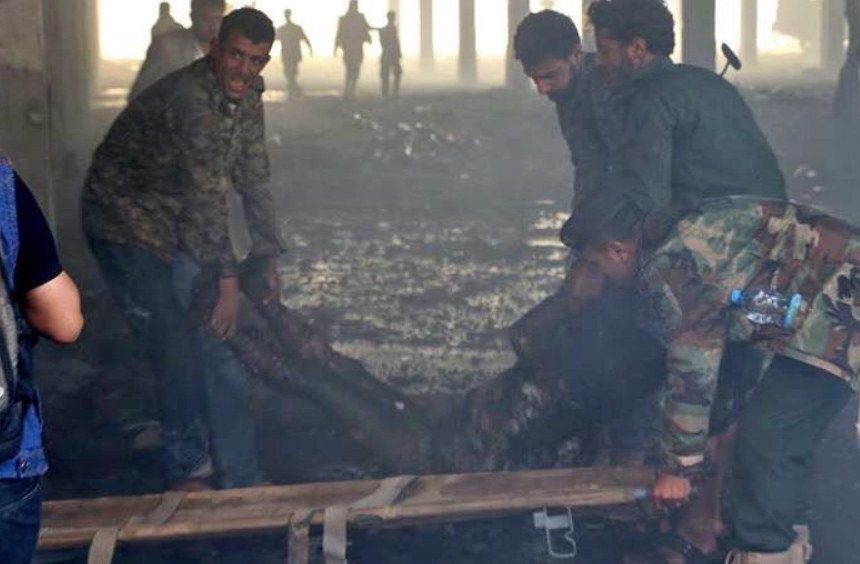
Yemen civil defence and army recovering bodies from the Saudi coalition bombed ceremony hall in Sanaa (Photo: Yemen the Forgotten War)
The hundreds more injured have been described as “bleeding to death in the streets“. The following report came in from Sanaa hours after the attack:
“Saudi-American airstrikes targeted the biggest hall in Sanaa. The hall was hit by 4 missiles, 2 air-strikes. When rescuers went to the aid of the dying and injured Saudi jets attacked for the second time in their double tap operation. It’s impossible to count the deaths. Officially they are saying less than 500 but many more are dying because they can’t be treated due to the absence of medical supplies and hospital facilities. This is entirely due to the UN sanctions and effective land, air and sea blockades. The hall is 2km from our home and 150m from my university but luckily, today I was not there.
Yesterday we killed several mercenary leaders in Mareb and Saudi commanders so today they are taking their revenge on the innocent people” ~ information supplied to Vanessa Beeley of 21st Century Wire.
[…]
According to Hassan Al Haifi, writer, academic and political commentator, living in Sanaa, the Saudi attack was deliberate:
“The mourners were paying tribute to General Jalal Al-Rouishan, Min of Int, who hails from a leading family of Khowlan Al-Tayyal Tribe, a leading and powerful Yemeni tribe.”
Al Haifi commented that this was a cynical and brutal attack by the Saudi coalition, intending to kill as many Ansarullah and Ali Abdullah Saleh officials and supporters as possible. A number of Saleh’s closest friends and allies were killed by the strikes along with a smaller number of Ansarullah members. Al Haifi, himself should have been at the ceremony but had been delayed and fortunately was not there when the Saudi jets launched their missiles into the throngs of mourners.
The Bloodshed
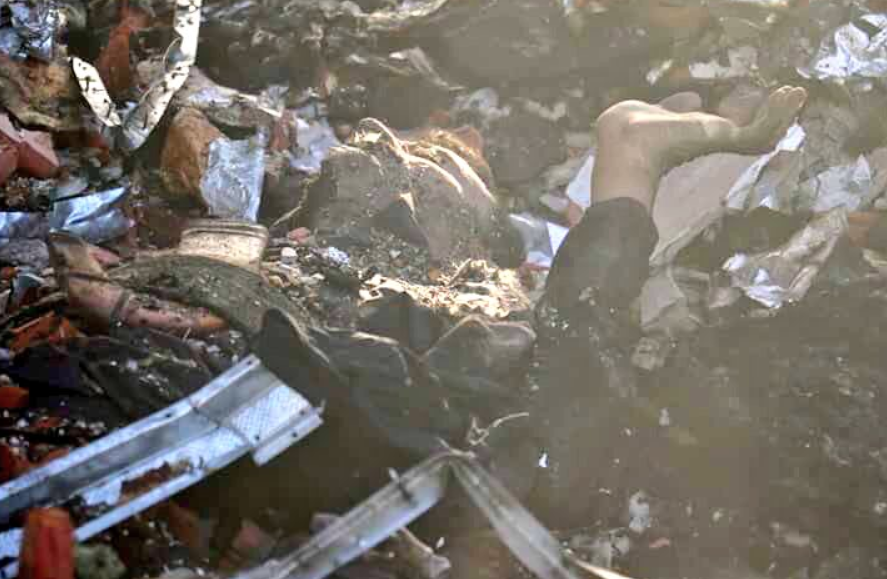
Saudi air-strike on Sanaa (Photo supplied to 21st Century Wire from Yemen)
The US State Department immediately swung into damage limitation mode and cranked up their hypocrisy to protect their Saudi coalition military industrial complex clients. John Kirby even deployed the “self-defence” terminology usually reserved for their other regional, arms guzzling ally with close links to Al Qaeda, Israel.
The bloodshed and suffering of the Yemeni people was reduced to an obscene game of semantics by a cold and calculating US State Department, as their multi billion dollar arms industry registered obscene trading levels with the Saudi coalition in 2015. In the first 21 months of Saudi-US illegal war on Yemen, US arms sales worth $33 Billion were closed Saudi and Gulf Cooperation Council (GCC) entities according to Defense News. In total, America’s Nobel Peace Chief Barack Hussein Obama has offered to sell $115 billion in weapons to Saudi Arabia since taking office in 2009 – more than any previous US administration, according to a recent report.
Not to be left out of the party, Britain has also sold more than £3.7 billion in arms to Saudi Arabia since Saudi’s illegal war of aggression began.
In truth, many of these estimates are conservative and do not include many more hundreds of millions in ancillary costs, staffing, support contracting and engineering.
Forgotten Heroes
Even though they’ve been completely redacted by the western media, and also by the myriad of Gulf monarchy media outlets, the real heroes of this conflict are the Yemeni people.
In their reductionist way of thinking and categorizing the world outside of their shores, Americans refer to Middle East populations in sectarian terms – because this is they way they would like to see the world, but it couldn’t be any further from reality. To Americans, the Yemeni war is all because of “Iranian-backed Shia Houthi Rebels.” The first US Congressman ever to say that in public probably read it directly off an AIPAC policy briefing sheet. That’s the sad reality still in Washington – information-poor (and lobby cash-rich) elected representatives are only able to see the world through the Israeli lens.
The reality is much more complex than just “the Houthis.” A genuine Arab Spring has taken place in Yemen and the US and Saudi response was simply to try and crush the people. But the people have resisted fiercely, and together. Unlike other neo-colonial ventures like Iraq and Afghanistan – the people of Yemen have united to a large degree and are determined to realize their own vision of self government. This is something that has been written off by everyone in the US establishment – from the President all the way down the political food chain.
Damning Indictment
The UK/US built, House of Saud, is waging a genocidal war of aggression that has already destroyed entire swathes of Yemeni cultural heritage and decimated entire communities, particularly in the northern, traditionally Ansarullah (Houthi) held areas such as Saada and Hajjah. This was by design. By now, we can see clearly how this was yet another ethnic cleansing programme being endorsed, fuelled and defended by the United States and her allies in the UK, EU, Israel, and of course the neighbouring Gulf States, the majority of whom participated in this dirty war. Oman, a lone, moderate, and independent thinking gulf state, has remained neutral, providing a degree of support to the Yemeni people. […]
The height of US hypocrisy was on full display during a US State Department press briefing where the already discredited US spokesman John Kirby shameless danced around a mass-murder by Saudi Arabia – whose airstrikes are supported logistically by the United States. This is the definition of criminality unchecked. Watch:
Author Vanessa Beeley is a special contributor to 21WIRE, and since 2011, she has spent most of her time in the Middle East reporting on events there – as a independent researcher, writer, photographer and peace activist. She is also a volunteer with the Global Campaign to Return to Palestine. See more of her work at her blog The Wall Will Fall.
For further background on Saudi ‘s war of aggression please read 21WIRE article: UN Whitewashing Saudi Coalition War Crimes and International Human Rights Violations
Only In The World Of American Media Is Syria A Civil War
By Brandon Turbeville | Activist Post | October 13, 2016
To the vast majority of Americans, the Syrian crisis (as well as the state of affairs in Iraq, Libya, Yemen, etc.) is merely a distant blip on a cluttered radar screen. Competing with issues affecting an individual’s daily life like wages, taxes, and free trade, that small portion of the American population who hasn’t completely zoned out of the political and current-events sphere is increasingly overtaken with the necessities of survival. Those who are able to devote enough time to the Syrian crisis are confronted with an unprecedented onslaught of propaganda demonizing the Syrian government and the Syrian president as “killing his own people,” “brutal,” and “genocidal.” The Syrian people are also victims of the propaganda war as being obsessed with religion, divided, and opposed to their government.
As they are presented by the U.S. media, the Syrian people, like most other people across the world are completely dehumanized. In American media, Syrians are not human. They are numbers. 100 died today. 86 died the day before. Syrians are not mothers or sons. They are not fathers or little children, grandparents. They are blips on a screen and data in a spreadsheet. At least, this is how they are presented to an increasingly hardened American public, a nation that is becoming more and more desensitized to death, destruction, and degradation both at home and abroad.
Having recently concluded a trip to the Middle East, I can safely say that the claims made by Western media are the opposite of the truth.
While my visit centered in Lebanon, we had frequent opportunities to talk with ordinary Syrian citizens either visiting Lebanon or fleeing the ravages of the war in their home country. Indeed, Syrians and Syrian refugees were plentiful in Beirut and many would openly speak about the horrors visited upon them by the West’s proxy war and their trials outside Syria.
What is so important about the fact that these Syrians were being interviewed in Lebanon is the unique benefit of talking with someone not living in their home country because one knows with relative certainty that the person speaking has nothing to lose or gain by giving a false perception of the government. After all, one of the frequent accusations leveled by the Western media is that, whenever one speaks to a Syrian actually living in Syria is that they are handicapped by that person’s fear of retribution from the Syrian government. According to this train of thought, if a man criticized Assad in Syria, he might be subject to arrest and then, of course, torture, execution, and “barrel bombs.”
But that is not the case in Lebanon. In Lebanon, even the most vocal anti-Assad Syrian can speak his mind and be safely out of Assad’s reach. Indeed, even out of ear shot by the Syrian government. A Syrian in Lebanon can speak his piece and do so safely in the knowledge that the alleged “brutal dictator” cannot reach him.
That being said, out of all the Syrians I met and spoke to – refugees and visitors, Muslim and Christian, male and female – not one of them supported the “rebels” and all of them – 100% – fully supported their government and Bashar al-Assad. These individuals had nothing but hate for the terrorists and nothing but love for Assad and the Syrian government.
This point needs to be stressed. These individuals were not under threat of a tyrant ready to arrest them if they spoke out against him. They were free of Assad. They could spit on his portrait if they wanted and there is nothing the Syrian government can do to them. Instead, they expressed an incredible amount of pride in their country, their government, and their President.
So, with that in mind, if Assad and the Syrian government are “barrel bombing” their own citizens, committing genocide against the Syrian people, and killing civilians indiscriminately, and if Syrians are free to speak their mind about Assad in Lebanon, why couldn’t I find one Syrian who wanted Assad to “step down” or for terrorists to bring them the “freedom and democracy” the West keeps yapping on about? Perhaps I was looking in the wrong places or perhaps the information coming from Western governments and their media mouthpieces are simply propaganda. Personally, I’ll put my money on the latter.
One striking aspect of Beirut in the context of the Syrian crisis is that one does not necessarily have to seek out the Syrians in order to speak to them. If one only wears a necklace, t-shirt, or bracelet with the Syrian flag, they will come to you. Any indication of solidarity with their country, especially exhibited by a Westerner (even better, an American) and a man who speaks only one word of English will stop whatever he is doing so that he can have a conversation with the foreigner, even if that conversation is done by body language, hand gestures, broken English, interpreters, or Google Translate alone.
Others more skilled in the English language are willing to have long discussions about their experiences, their support for the government, and their hatred for the terrorists infecting their country. They would tell tales of watching people they knew killed in front of them and having lost family or very close friends at the hands of America’s “moderates.” Indeed, in Syria, as well as in the diaspora of the last 5 years, it seems impossible to speak with a single Syrian who has not lost someone close to them.
The sheer magnitude of the crisis is unimaginable in scale, much in the way that the horrors inflicted upon the Syrian people by America’s democracy loving cannibals are beyond the comprehension of most Western audiences. But despite all the bloodshed, loss, and terror perpetrated on Syria by the United States, the Syrian spirit remains and the Syrian people remain some of the kindest, friendliest, and most hospitable people on the face of the earth.
In addition, Syrians remain a seemingly highly informed audience despite the fact that their country has been crippled by warfare for the past five years and that they themselves have been turned into refugees. Knowledge not only of their own situation, but about the players behind it and the developments taking place in Europe and America is common and, while American audiences watch the 24 hours news cycle in utter befuddlement as to the events taking place in Syria, Syrians are profoundly aware of just who is responsible for the crisis their country is facing.
While Americans chalk the crisis up to the “they have been fighting for thousands of years” line or accept the propaganda that Syria is facing a civil war, Syrians know that what they are facing is a proxy war against their government, against their very way of life, and against Russia. Syrians are fully aware of the fact that the terrorists beheading their way across the country are funded by Saudi Arabia, facilitated by Turkey and Israel, and trained by the United States. They are fully aware that there are no “moderates” fighting against the Syrian government and that the United States is responsible for creating the ISIS terror organization it is claiming to fight.
All of this may come as a surprise to Americans but, in Syria, it is well known.
With that in mind, it is an extraordinary thing that Syrians can welcome foreigners visiting their country with such patience and forgiveness. It is truly amazing that Syrian refugees struggling to survive in a foreign country is willing to sit with a citizen of the very country that destroyed his home and killed his family members, smoke hookah with him, and discuss his homeland. It is an unbelievable act of understanding and forgiveness for a man not to judge an American as the enemy and to separate the American people from their government. I was personally struck by the genuine kindness shown to me by people who have been given every legitimate reason to do otherwise.
What the United States is doing to Syria is truly shameful and immoral but, despite the horrors the U.S. and NATO countries have visited upon Syria, the people have refused to give in.
As Mark Twain said,
Damascus has seen all that has ever occurred on earth, and still she lives. She has looked upon the dry bones of a thousand empires, and will see the tombs of a thousand more before she dies.
Judging by the people I met, I am inclined to agree with him.
Brandon Turbeville – article archive here – is the author of seven books, Codex Alimentarius — The End of Health Freedom, 7 Real Conspiracies, Five Sense Solutions and Dispatches From a Dissident, volume 1 and volume 2, The Road to Damascus: The Anglo-American Assault on Syria, and The Difference it Makes: 36 Reasons Why Hillary Clinton Should Never Be President.
This only happens in occupied Palestine
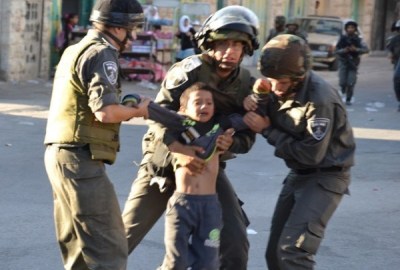
Dr Daud Abdullah | MEMO | October 7, 2016
After a visit to Hebron in 1996, the late Palestinian scholar Edward Said wrote, “The present situation cannot last, there are too many inequities and injustices at the heart of Palestinian life.” Two decades on, there is no end in sight to the wretched conditions he deplored back then. On the contrary, they have grown worse.
Not even Palestinian Authority President Mahmoud Abbas’s controversial decision to attend the funeral of former Israeli President Shimon Peres was enough to bring about a token suspension of the daily torment of Palestinians in the occupied territories. Immediately after his return to Ramallah, Israel declared Tel Rumeida, a neighbourhood in the Governorate of Hebron, to be a closed military area.
As is always the case when such closures are imposed, Palestinian students and residents who attempted to attend classes or go about their daily affairs were told to return to their homes until the 600 illegal Jewish settlers living in Hebron had observed their religious festivities. These celebrations are expected to last several days and so the ancient Ibrahimi Mosque was also closed to Muslim worshippers for six days.
Like their Muslim compatriots who are routinely denied access to their mosques, Christian Palestinians in Bethlehem and Jerusalem must also have permits to worship in their churches from which they are separated by the eight-metre high “security” wall. Before the creation of the state of Israel in 1948, Christians made up 18 per cent of Palestine’s population. Today, they account for less than 1.5 per cent. For reasons of political correctness, western politicians and church leaders have turned a blind eye to the real causes of this exodus; they have chosen instead to look for a scapegoat in alleged “persecution by Muslims”. That is palpable nonsense and plays into Israel’s nefarious hands.
In Hebron, life is far from normal for its 200,000 Palestinian inhabitants at the best of times. Every aspect of their lives is overshadowed by the activities of the settlers who now live illegally among them, with full military protection courtesy of the Israel Defence Forces. Palestinians must contend with the hideous road blocks and military checkpoints that swamp the old city and its environs. Recent reports confirm that more than 1,000 residential apartments have been vacated because of the harassment affecting the local Palestinian population. This was entirely predictable; Israel’s closure of more than 800 commercial businesses was meant to do exactly that — make life so intolerable for the locals that they will leave “of their own accord”. In Zionist terminology this is known rather sinisterly as “silent transfer.”
Elsewhere in the occupied West Bank, the system of inequity and injustice described by Edward Said is no less punitive. The predominantly farming community in Qalqiliya has been virtually encircled by Israel’s apartheid wall, with farmers separated from their land. More than 170,000 men, women and children are similarly locked in by the wall in Bethlehem. Former US President Jimmy Carter found it appalling that they had to obtain “permanent resident” permits from the occupation authorities in order to continue living in their own homes.
It does not take much to recognise the similarities between the Israeli permit system and the hated South African Pass Laws. Just as it was illegal for black Africans to enter designated “white areas” in South Africa so too is it illegal for Palestinians from the West Bank or Gaza Strip to visit Jerusalem, for example, without military permission. At present, the general rule is that only those aged 45 years or over are considered for a permit. While there are, of course, subtle differences, the South African jurist John Dugard has pointed out that the common features between South African apartheid and Israel’s version are discrimination, repression and territorial fragmentation.
Under these repressive and degrading conditions it was only a matter of time before a third intifada erupted in the occupied territories. Israel’s determination to seize Palestinian land for its settlements; its closure and desecration of religious sites; and its extrajudicial killings have all provided the combustible mix that has fuelled the intifada for the past year. The sheer number of settlers (more than half-a-million) and military checkpoints scattered across the West Bank (more than 500) also make the conditions ripe for anger and disaffection to fester.
Throughout their long struggle against Zionist colonisation, Palestinians have staged several uprisings. Once in motion these have never been easy to suppress. Being the weaker of the two parties militarily and politically, the Palestinians have on every occasion suffered untold human and material losses. Yet, for every successive generation, it has been considered to be a price worth paying for their freedom from Israel’s brutal military occupation.
The nature and course of the uprisings have always been unpredictable. This is especially the case today since there is no single political faction that has emerged clearly to lead or coordinate events on the ground. In the absence of any serious political initiative, and given Israel’s determination to maintain its occupation and dominance over the Palestinians, it is only reasonable to expect the current intifada to continue well into the future. In this regard, Edward Said was right: there will be no end to Palestinian efforts to end the prevailing system of inequity and injustice of a kind which only happens in occupied Palestine.
Israeli navy seizes Gaza-bound aid ship
MEMO | October 5, 2016
The Israeli navy has seized the Zaytouna-Oliva, a Gaza-bound aid ship, and is currently towing it towards the Israeli port city of Ashdod, according to the initiative’s organizers and reports in the Israeli media.
Sondos Ferwana, a media spokeswoman for the International Coalition for the Fourth Freedom Flotilla, told reporters on Wednesday evening that Israeli naval forces had “captured the ship”.
The Israeli military, for its part, confirmed the ship’s seizure in a statement.
“The Israeli Defense Forces managed to quickly seize the ship without causing any injuries among passengers,” the statement read.
According to the military, the crew of the Gaza-bound vessel had initially refused the navy’s orders to change course.
“This forced us to intervene and seize the ship before it violated the legal maritime closure imposed on the Gaza Strip,” the statement read.
According to reports on Israel’s Channel Two television station, the aid ship was intercepted — without resistance — some 80 kilometers off Gaza’s coast.
Ferwana, for her part, described the incident as “another act of Israeli piracy”, adding that all contact with the ship — which is carrying humanitarian aid and several female activists — had been lost.
“We don’t know the fate of the activists aboard,” she said.
Passengers on the Zaytouna-Oliva, which set sail from the Spanish city of Barcelona last month, include Irish Nobel Peace Prize laureate Mairead Maguire, Swedish and Algerian lawmakers, a South African Olympic athlete and a Malaysian doctor.
The all-female initiative seeks to break Israel’s decade-long blockade of the Gaza Strip and show solidarity with the women of Gaza.
Palestinian resistance movement Hamas, for its part, which has governed the Gaza Strip since 2007, condemned what it described “the Israeli occupation’s assault on the aid ship and its intimidation of the activists on board”.
In a statement, Hamas spokesman Fawzi Barhoum said the incident amounted to “an act of state terrorism” and another example of Israeli “aggression against the Palestinian people and those who show solidarity with the Palestinian cause”.
Barhoum went on to urge the international community to “put an end to Israel’s crimes”, stressing the need for immediate action “to lift the blockade and rescue the people of Gaza”.
In June of last year, Israeli forces intercepted the “Marianne” — which had been taking part in a similar initiative — and arrested all activists on board.
A similar Gaza-bound aid flotilla ended in tragedy in 2010 when the Mavi Marmara, a Turkish aid ship, was raided by Israeli commandos who killed 10 Turkish activists.
Since 2007, the Hamas-run Gaza Strip has groaned under a crippling Israeli/Egyptian blockade that has deprived its almost two million inhabitants of most basic commodities, including food, fuel, medicine and desperately-needed building materials.
In June, UN Secretary-General Ban Ki-moon described the blockade of Gaza as “collective punishment”, which, he asserted, “suffocates its people, stifles its economy and impedes reconstruction efforts”.
Israel to build large new synagogue in Old City of Jerusalem
Palestinian Information Center – October 4, 2016
 OCCUPIED JERUSALEM – The Israeli occupation authority (IOA) has finished all preparations, in cooperation with unnamed Jewish groups, to build a big synagogue called the Jewel of Israel in the heart of the Old City of Jerusalem.
It will be located about 200 meters away from the western side of the Aqsa Mosque.
According to the Palestinian news website Qpress, the new synagogue project will cost around 48 million shekels, mostly from the Israeli government and the rest from wealthy Jews.
The synagogue will be composed of six floors, two underground, and will be built on the ruins of an Islamic historical site dating back to the Ottoman and Mamluk eras.
The project is part of a large-scale Israeli plan aimed at planting religious Jewish structures in the heart of Old Jerusalem to change the Islamic and Arab identity of the holy city.
It will be the second massive Jewish edifice in the Old City after the Hurva synagogue, which was built in 2010.
Israel closes Ibrahimi Mosque to Palestinian worshippers
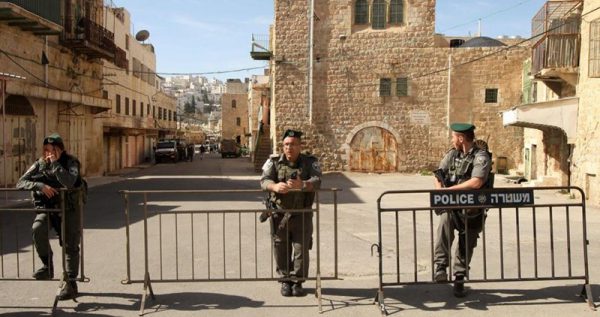
Press TV – October 3, 2016
Israeli authorities have decided to close the Ibrahimi Mosque, in the heart of the occupied West Bank city of al-Khalil (Hebron), to Palestinians, Muslim worshipers and non-Jewish visitors for seven non-consecutive days.
Yousif Ideis, the Palestinian minister of endowment and religious affairs, said on Sunday that the sacred site will be closed to Palestinians and non-Jews on October 3, 4, 9, 12, 18, 19 and 26.
Israeli officials have said the shutdown is aimed at maintaining security in the wake of Rosh Hashanah (the Jewish New Year), Yom Kippur (The Day of Atonement), Sukkot (Feast of Booths) and Simchat Torah holidays.
Ideis added that dozens of illegal Israeli settlers broke into the mosque courtyard on Saturday night amid protection by Israeli troopers.
In the meantime, Israeli authorities are closing all passageways between the blockaded Gaza Strip and Israel, as well as between the occupied West Bank and Israel for Rosh Hashanah.
Israeli officials regularly impose stringent restrictions for Palestinians during Jewish holidays for alleged security purposes.
The constraints include denied access to the Ibrahimi Mosque, which is revered by Jews, Christians and Muslims and has been the site of violent tensions between Israelis and Palestinians for decades.
On February 25, 1994, at least 29 Palestinians were killed and 125 others wounded when American-Israeli Baruch Goldstein opened fire on a large number of Palestinian Muslims, who had gathered inside the Ibrahimi Mosque to say prayers during the holy fasting month of Ramadan.
The occupied territories have already been the scene of increased tensions ever since Israeli forces imposed restrictions on the entry of Palestinian worshipers into the al-Aqsa Mosque compound in East Jerusalem al-Quds in August 2015.
Nearly 250 Palestinians have lost their lives at the hands of Israeli forces since the beginning of last October.
CrossTalk on Russia-US relations: Increased Tensions
RT | September 30, 2016
Going from bad to even worse: The very strident and harsh rhetoric coming out of Washington and directed towards Russia is unprecedented. Bilateral relations have reached a dangerous low. What happens now?
CrossTalking with Gilbert Doctorow, Brian Becker, and Daniel McAdams.
Top US General: Hillary’s No Fly Zone Strategy Would ‘Require’ War With Russia
Sputnik – 01.10.2016
Chairman of the Joint Chiefs of Staff Joseph Dunford warned Congress that the implementation of a No Fly Zone, a centerpiece of Hillary’s foreign policy strategy, would result in World War III.
During testimony before the Senate Committee on Armed Services last week General Joseph Dunford rang the alarm over a policy shift that is gaining more traction within the halls of Washington following the collapse of the ceasefire brokered by the United States and Russia in Syria saying that it could result in a major international war which he was not prepared to advocate on behalf of.
Senator Roger Wicker (R-MS) asked about Hillary Clinton’s proposal for a no fly zone in Syria in response to allegations that Russia and Syria have intensified their aerial bombardment of rebel-held East Aleppo since the collapse of the ceasefire.
“What about the option of controlling the airspace so that barrel bombs cannot be dropped? What do you think of that option?” asked Wicker.
“Right now, Senator, for us to control all of the airspace in Syria would require us to go to war against Syria and Russia. That is a pretty fundamental decision that certainly I’m not going to make,” said the Chairman of the Joint Chiefs of Staff suggesting the policy was too hawkish even for military leaders.
Despite the ramifications of the policy, Hillary Clinton has argued in favor of a no fly zone throughout her presidency starting in October 2015 just days after Russia began a bombing campaign aimed at maintaining the stability of the Syrian government.
“I personally would be advocating now for a no fly zone and humanitarian corridors to try to stop the carnage on the ground and from the air, to try to provide some way to take stock of what’s happening, to try to stem the flow of refugees,” said Clinton in an interview with NBC’s Boston affiliate at the time.
The former Secretary of State, who has a well-known hawkish position towards regime change and matters related to Russia, has continued to advocate this position which has gained traction in recent weeks among top US diplomats.
More than 50 US diplomats demanded in June, in a notorious dissent memo, that the Obama administration employ military options against Assad, such as the implementation of a no fly zone if not a direct attack against the Syrian regime.
The argument from the diplomats is that the situation in Syria will continue to devolve without direct action by the US military, an argument of dubious legality if undertaken unilaterally without a UN Security Council resolution but which the US Ambassador to the UN Samantha Power has been laying the groundwork for under the controversial “right to protect” theory of international law arguing that Russia’s opposition to a resolution should be ignored because they are a party to the conflict.
Russia counters that if the Assad regime falls then terrorist groups including Daesh (or ISIS) and al-Nusra Front (the Syrian affiliate of al-Qaeda) will likely fill the resulting power vacuum descending the country into an even greater harbor for international terrorism.
Syria’s Heroic Fight Against Western Imperialism
By Andre Vltchek – New Eastern Outlook – 01.10.2016
It is hard to imagine a more resilient, more heroic nation than Syria!
With only 17 million inhabitants (according to the 2014 estimate), Syria is now facing the mightiest coalition on Earth – a coalition that consists of virtually all traditional Western colonialist and neo-colonialist nations.
It is also facing some of the cruelest and deadliest inventions of the West – the extremist and murderous post- and pseudo-Islamic groupings, similar to those that were already unleashed against the Soviet Union during the war in Afghanistan.
Because of the tremendous determination of its people, Syria is still standing! But it is standing against all odds. Its Golan Heights are illegally occupied by Israel, its borders constantly violated by the Turkish military, and by the West’s ‘special forces’ and air force.
Syria’s “political opposition” was created, then groomed and financed by the United States and Europe, in the style of “Color Revolutions”, as has happened in all other socialist countries that the West has been trying to destabilize and return under its deadly rule. Millions of Syrian people have been, during the last six deadly years, terrorized, slaughtered and intimidated by jihadi cadres, implanted by the West and its regional allies: Saudi Arabia, Turkey, Qatar, Israel and others.
It is a terrible and uneven fight! Some of the greatest historical cities on Earth, like Aleppo and Palmira, now lie in ruins and ashes. What the European Christian crusaders failed to fully destroy, is now collapsing under the imperialist onslaught. Like everywhere else on Earth, everything that dares to struggle against Western colonialism is being consistently devastated and burned. Almost everyone who resists is mercilessly slaughtered. Hundreds of thousands of Syrian people have already lost their lives. And with each new day, the awful count is rising.
But Syria is standing!
5 million Syrian people have already been forced to leave their country. Now they are being scattered all over the Middle East: throughout Lebanon, Jordan, Iraq, Egypt, and Turkey. Some have even gone as far as Europe, Canada and Chile.
How much more can one country endure?
And how can the rest of the world just stand by and watch as it is put through hell?
The answer is obvious: the rest of the world does not know; it does not understand! The propaganda coming out of the Western mass media outlets and indoctrination-spreading institutions is so thorough, so professional, that to most people all over the world everything related to Syria appears to be blurry, murky, and incredibly complex. President al-Assad is demonized on a daily basis. Heroic resistance is called the “regime’s brutal actions”, pro-western terror groups are described as “moderate opposition.”
In reality, Syria is suffering because it is refusing to kneel; because it is unwilling to prostitute itself; because it will never beg its torturers to stop, allowing them to grab everything above and under the surface.
The Empire never forgives disobedience. Its fundamentalist terror methods are the most brutal ever invented and implemented on Earth.
All around Syria, countries already lie in ashes. The Middle East hardly exists, anymore. And most of the Syrian people understand: it is perhaps better to die standing, than to live in shackles, on one’s knees, controlled by the kleptomaniacal Western colonialist states!
*
The more terrible the terror that the West is spreading worldwide in general and in this part of the world in particular, the more vicious its vitriolic propaganda is, the brainwashing indoctrination that flows incessantly from London, New York and Paris.
If one watches the BBC, there is no hint of objectivity left, anymore. The ranks are closed and the West is united in its final drive to discredit absolutely everything that is still fighting for survival, against its global terrorist exploits.
President al-Assad of Syria, the heroic Syrian army and the closest Syria’s allies – Russia and Iran – are being relentlessly demonized, as if it were them who began that monstrous war! And Hezbollah, which is fighting countless epic battles against the ISIS, sits firmly on the West’s terrorist list.
Everything seems to be twisted and perverted, upside down.
But what really should one expect from the expansionist hordes, from the bastions of imperialism? Or has the British (or French) propaganda been any different, when their colonialist countries have for centuries been grabbing and devastating countless foreign states and territories, slaughtering hundreds of millions of innocent people? Wasn’t anyone who resisted Western conquest always thoroughly ridiculed and demonized?
Countries like UK, France, Germany, Belgium, Holland, Spain, Portugal and others, have centuries of experience in how to humiliate victims, how to justify their own heinous acts, how to brainwash their own populations and even some of their victims! And the United States, the direct product of Europe, its muscular offspring, is just using the same, only a bit more vulgar, propaganda tactics.
Nothing rational and objective can be expected from the people of Europe or North America, anymore. Except for a few of those insignificant protests and rebellious acts, the Western population is in a total slumber, indifferent towards the horrors that are being administered by its regime all over the globe. There is hardly any pressure to stop acts of terror against Syria. The only thing that seems to matter to Europeans is how to stop the flow of refugees from the devastated countries.
What a shame! What a thorough shame, people of Europe and North America! Your regime is murdering millions, in one country after another, and you are not even capable of recognizing what goes on… instead you are blaming the victims and those rushing to their rescue!
Now your biggest enemy is Russia. Because Russia (same as China) is clearly unwilling to dance to your fatal tune! Because Russia, for many decades, stood by almost all oppressed countries, and supported the de-colonization of the world, in all of its corners. Like China, Cuba and North Korea have always done.
Russia is now defending Syria. Not because it needs natural resources, not because it wants to plunder. It is doing so simply because it is right thing to do. It does it because if the world is abandoned fully to Western imperialism, there will actually soon be no world at all, or at least there will be no world worth inhabiting!
*
“Our country is a socialist country. For us it’s more important to consider the benefits to the entire nation than to particular individuals. I have spent more than 50 years dedicating my life to education, which is the backbone of our country, especially now… Sometimes I feel like quitting my job and returning to teaching at Damascus University, but I know that I am still needed where I am now,” I was told by Dr. Farah Motlak, Deputy Minister of Education of the Syrian Arab Republic.
We met in Cairo, Egypt, at a regional conference. I asked him about the Western propaganda against his country. He replied, shaking his head:
“I am not even angry… I am just endlessly sad. The media attacks; the propaganda that is pouring from the West is clearly designed to destroy our country. But we have hope, and we will continue our struggle.”
The international meetings and conferences clearly show how divided even the Arab world is itself. Syria is a symbol. To some, it is a symbol of resilience, of heroism. To others, mainly to those who are funded and consequently conditioned by the West, it represents everything that is evil.
*
But Egypt itself (where I’m writing this essay), just three years after the pro-Western military coup, is in ruins. Economically it has become a basket case. It is completely devastated, socially.
Of course its destruction is on a “lighter scale”, compared to Iraq, Libya or Yemen. But it is still bad enough: during the coup in 2013, at least 1,000 but most likely 2,000 people were murdered by the junta, while tens of thousands were injured. An estimated 10,000 people are now in prisons all over the country; most of them in terrible conditions; many are being tortured, women prisoners are habitually raped.
“The counter revolution has triumphed,” explained Dr. Mohammed Shafik, a member of the Revolutionary Socialist Movement. “All opposition parties and organizations have been squashed. Thousands of revolutionaries have been imprisoned; hundreds executed by court orders or liquidated by the police… Neoliberalism is taking hold… people are suffering.”
But Western propaganda shows no appetite for criticizing the Egyptian military junta. It is, after all, essentially pro-Western; it is capitalist and to a great extent it is submissive to the Empire and to its allies, including Israel and Saudi Arabia.
As with almost all ‘client’ states of the West, Egypt will never be able to truly improve the lives of the majority of its citizens. The country is already stuck deeply and has been, for decades, in a perpetual social slumber. Those benefiting from the situation are the Western powers and their regional allies, as well as the servile Egyptian elites and the grotesquely colossal, omnipotent military.
If Syria were to surrender, the Egyptian scenario would be ‘the best’ it could hope for. But most likely, it would meet the terrible fate of Iraq or Libya.
*
62 Syrian soldiers were reported killed in a U.S.-led coalition airstrike on the Syrian military base Deir el-Zour, on September 17, in Eastern Syria.
The planes destroyed the base housing soldiers that were involved in a battle with ISIS. Almost immediately, the ISIS took over the hill and the area, in what appeared to be a clearly coordinated operation between the West and the “Islamic State”, against the Syrian government forces.
A few days later, a humanitarian convoy was hit near the city of Aleppo. Without presenting any evidence, the West immediately pointed a finger at the Syrian government and Russia. But the Russian Ministry of Defense released images of a US predator drone operating in the area during the attack, and called for a thorough investigation.
The war goes on. The suffering of Syrian people continues.
There is one simple point that is being constantly overlooked by the West:
The legitimate government of Syria invited Russia, its close ally. It asked Moscow for help, to fight ISIS and other terrorist groups implanted by the West and its allies.
Nobody invited the West!
Or perhaps those groups that the West itself created and supported inside Syria invited it?
Both Syrian government forces and Russia are fighting brutal foreign invaders who are attempting to destroy one of the oldest nations on Earth and take control over the entire Middle East.
Syria is at the frontline of the battle against Western imperialism. And so is Russia. And also Iran, while China is joining!
The sacrifice made by the Syrian people is tremendous. But against all odds, the deadly advance of the imperialists may be stopped here, after all.
As I wrote earlier, the price may be terrible. Aleppo is turning into the Middle-Eastern Stalingrad. But the heroic Syrian nation has made its choice: it will fight brutal and barbaric invaders, as it fought the crusaders under the leadership of great Sultan Saladin.
The alternative would be slavery, something unacceptable for the Syrian people!
Featured Video

The Truth About the Trump Shootings with Ken Silva
or go to
Aletho News Archives – Video-Images
From the Archives
The Geopolitics behind the War in Yemen (I)
By Mahdi Darius NAZEMROAYA | Strategic Culture Foundation | 30.03.2015
The United States and the Kingdom of Saudi Arabia became very uneasy when the Yemenese or Yemenite movement of the Houthi or Ansarallah (meaning the supporters of God in Arabic) gained control of Yemen’s capital, Sanaa/Sana, in September 2014. The US-supported Yemenite President Abd-Rabbuh Manṣour Al-Hadi was humiliatingly forced to share power with the Houthis and the coalition of northern Yemenese tribes that had helped them enter Sana. Al-Hadi declared that negotiations for a Yemeni national unity government would take place and his allies the US and Saudi Arabia tried to use a new national dialogue and mediated talks to co-opt and pacify the Houthis.
The truth has been turned on its head about the war in Yemen. The war and ousting of President Abd-Rabbuh Manṣour Al-Hadi in Yemen are not the results of «Houthi coup» in Yemen. It is the opposite. Al-Hadi was ousted, because with Saudi and US support he tried to backtrack on the power sharing agreements he had made and return Yemen to authoritarian rule. The ousting of President Al-Hadi by the Houthis and their political allies was an unexpected reaction to the takeover Al-Hadi was planning with Washington and the House of Saudi. … continue
Blog Roll
 Aletho News
- Pakistan-Iran talks secure LNG shipment to Islamabad through Hormuz
- Black Sea grain crisis puts global wheat supplies under pressure
- IRGC air defenses destroy another US MQ-1 drone over Strait of Hormuz
- Imran Khan’s entire immediate family detained in Pakistan ahead of mass protest demanding his release
- EU nation detains former presidential frontrunner
- Leaked: Britain’s Sham Conviction Of Hashim Thaci
- Seyed M. Marandi: U.S. Strike Imminent – Toward Total War in the Middle East
- Russia Voted Under Fire. Washington Is Loading the Tankers.
- 12 Things Your Oncologist Was Trained Not to Tell You
- Anthrax Attacks Paved Way for COVID-Era ‘Junk Drugs and Vaccines’
- If Americans Knew
- Huckabee aide solicited cash gifts from Israelis
- This isn’t sci-fi, AI is already killing people
- ‘The Most Brutal Thing’: Investigation Reveals Execution of Elderly Woman in Rafah
- Inside Israel’s ‘soft’ ethnic cleansing plan for Gaza through the eyes of its victims
- New online database tracks pro-Israel political donations in the United States
- Israeli president pardons soldier convicted for killing wounded Palestinian
- Singer Ed Sheeran says his ‘heart broken’ by Gaza devastation, addresses Macklemore controversy
- Israel Has Imprisoned Female Journalist Bushra Al-Tawil Without Trial Or Charge In Solitary Confinement For Past Month
- Israel poised to teach West Bank a lesson after one Israeli killed – Daily Update
- Salah Sarsour’s Legal Team Says DHS Has Not Met Its Burden to Prove He Is Deportable
- No Tricks Zone
- 2025 Nature Paper Claiming Worsening Global Drought Gets RETRACTED …Heavily Flawed
- New Study: ‘Global Drought Shows No Detectable Recent Acceleration Under Climate Warming’
- Economic Masterminds: German Socialists Suggest Taxing Productivity Gains Stemming From Using AI
- The South China Sea Has Not Been Cooperating With The Climate Change Narrative
- Energy Crisis: Germany Enters Heating Season With Historically Low Gas Reserve Fill Levels
- New Study: The Antarctic Ice Sheet Gained Mass From 2020-2024 Due To Staggering Snow And Ice Accumulation
- Study: Ocean Heating Rates From Thousands Of Years Ago ‘Dwarf’ Modern Ocean Heating Rates
- Climate Extremists Target, Attack Large-Scale Power Grid Infrastructure In Germany!
- New Study: Antarctic Ice Melt Has Contributed Less Than 1 Centimeter To Sea Level Rise In The Last 30 Years
- Fear Of Debate: Alarmist German Climate Scientist Calls On Mainstream Media To Discredit Skeptic Voices
 Aletho News