Night raids continue in al-Khalil (Hebron)
International Solidarity Movement | November 22, 2015
Hebron, occupied Palestine – On Tuesday, 17th November, several groups of soldiers raided houses in the Wadi al-Hurriya neighborhood of al-Khalil (Hebron), an H1 district legally outside of Israeli control. From 7.30pm, Israeli forces were present in the area, divided into groups of 7-12 soldiers and entering every house and business on designated streets. At some of the residences they entered by force, violently smashing through doors. They checked every I.D card of the residents and also, according to soldiers who confronted the ISM volunteers, searched for weapons. Later in the night they informed the volunteers that they were looking for weapons and collecting data in order to prevent potential stabbings: “yes, some people are scared. But some people have reason to be scared.”
Each group of soldiers patrolled different streets and dark alleys, checking each house and entering with backpacks, mapping equipment, bullet-proof vests, and cocked machine guns. On entering houses, 2-3 soldiers remained outside to “secure” the entrance, periodically pointing guns at passers-by and preventing vehicle and pedestrian passage through the streets.
The raids lasted until at least 12.30am, after which one unit was witnessed occupying the second floor of a Palestinian house – the other half of which was inhabited by a Palestinian family – and could be heard setting up sleeping equipment. According to the soldiers questioned on site: “no, we are not inside a Palestinian house, they are not living in this house.” The residence is located within 500 meters of an army base and checkpoint bordering the H2 restricted area of al-Khalil.
It was reported later from residents who were in contact with ISM that furniture and property was damaged on the night. This is typical of night raids on Palestinian houses, and in other incidences money and other property has also been stolen. While these raids have been used extensively in the al-Khalil district in recent weeks as part of a tactic of intimidation, it is unclear as to whether the policy of raiding the H1 district and squatting family homes will continue.
Why Boycott Coca Cola?
US Palestinian Community Network | January 31, 2015
In 2005, Palestinians issued a call for a campaign of boycotts, divestment and sanctions (BDS) against Israel, because of its violations of international law and attacks on Palestinian rights. BDS is now a worldwide movement against Israeli Apartheid, and USPCN wants to work with you to target Coca-Cola, as our contribution to the campaign. Do not contribute to helping Zionist Israel steal and occupy more Palestinian land. Do not contribute to helping Israel continue its colonization of Palestine, and its suppression of Palestinian rights. With every single penny you spend on Coca-Cola, you are indirectly contributing to Israel’s crimes.
Why Boycott Coca-Cola?
 The Central Bottling Company (Coca-Cola Israel), an Israeli company that manufactures and distributes CocaCola in Israel, has subsidiaries in the illegal settlements of Katzrin (in the Syrian Golan Heights) and Shadmot Mechola (in the Besan Valley, northeastern tip of the West Bank). The company also owns Tara, whose subsidiary, Meshek Zuriel Dairy, has a dairy farm in the occupied section of the Jordan Valley. In return for $55 million in tax breaks, Coca-Cola built a plant in Qiryat Gat, which sits on stolen land (the villages of Al-Falluja and Iraq al-Manshiya) in 1948 Palestine. The residents were ethnically cleansed in 1949, in contravention of International Law. In October 2005, Coca-Cola increased its investment in Israel by buying a 51% controlling interest in the Tavor Winery. Tavor Winery is an Israeli company based on occupied Palestinian land, at the foot of Mount Tavor, overlooking the Sea of Galilee.
The Government of Israel Economic Mission honored Coca-Cola at an Israel Trade Award Dinner for its continuous support over the previous 30 years, and for “refusing to abide by the Arab League economic boycott of Israel.” (from The Southern Shofar—American Jewish newspaper of Alabama).
Environmentalists have long criticized Coca-Cola for posing a serious threat to communities across the world. In India, the Mehdiganj Coca-Cola plant was recently closed by Indian officials, because of its over-utilization of natural water resources, which depleted the local groundwater and released pollution above legal limits.
Coca-Cola, which has always been strongly anti-union, is involved in the intimidation, kidnapping, torture, and murder of union leaders in Latin American, especially for years in Colombia. Labor unionists there have constantly been under threat from paramilitary death squads supported by Coca-Cola.
Businesses in Turkey and India are shunning Coca-Cola over the current Israel – Gaza conflict, according to several news sources.
The Coca-Cola conflict comes as part of the boycott movement targeting Israeli goods and those companies that do business in Israel. Coca-Cola has had a bottling plant in Israel since the 1960s, Haaretz reported.
Pepsi, which left Israel during the Cold War in response to the Arab boycott, has also been spurned in this bout of intensified boycotts.
In Mumbai, India, Muslims called for a boycott of PepsiCo, Kraft Foods Group, and Nestle in addition to Coca-Cola, the Jakarta Globe reported.
Omar Shaikh, a restaurant owner in Mumbai, said “This is our way of showing our anger against Israel. For us, Coke and Pepsi is human blood. They are financing the war against Palestine.”
Moscow Warns Cameron Against Seeking to ‘Destroy Syria’s Sovereignty’
Sputnik – 21.11.2015
 British Prime Minister David Cameron said earlier this week he would prefer to have UN backing for UK military operations in Syria, but added he feared Russia would use its veto power to block a UN resolution.
Britain should start a dialogue with the UN Security Council on its plan to extend UK airstrikes against ISIL in Iraq to Syria, the Russian Foreign Ministry said Saturday.
“If it [UK] wants to push its ideas through the Security Council it should… give an order to its ambassador at the United Nations to start consultations, including with Russia,” ministry spokeswoman Maria Zakharova said.
She stressed that Russia had never vetoed “sensible” initiatives as long as they conformed with international laws, but warned that the UK’s operation in Syria should not seek to “destroy Syria’s sovereignty.”
UK media cited Cameron as saying in the parliament on Wednesday that the UN Security Council’s endorsement was not vital for the UK’s operation that would still be legal and would help the government protect its citizens.
Israeli forces close several main roads in Nablus
Ma’an – November 20, 2015
 NABLUS – Israeli forces closed several main roads in the Nablus district on Friday until further notice for alleged security purposes, Palestinian security sources said.
Palestinian security sources told Ma’an that they were informed by Israeli authorities of the decision to shut the main entrances of the villages of Burin, Awarta, Osarin, Aqraba.
The entrances were closed at 10 a.m. and will be closed indefinitely due to the “deterioration of the security situation,” the sources added.
Locals told Ma’an that Israeli forces had also placed large dirt mounds across another road leading into Burin as well as a main road inside of Awarta.
An Israeli army spokesperson did not have immediate information on the closures.
Nablus is one of several areas in the occupied West Bank to come under increased measures from Israeli authorities since the beginning of last month including home demolition, road closures, and high levels of arrests.
Earlier this month, a Palestinian was shot dead after carrying out a vehicular attack that left three Israelis injured at the Tappuah Junction, south of the villages.
Sweeping restrictions are typically implemented following attacks on Israeli military and settlers in the occupied West Bank.
Such restrictions on access apply only to Palestinian residents, while facilitating the movement of Israeli settlers living illegally in the area.
South Africa Follows Suit with Spain, Issues Arrest Warrant for Israeli Officials
IMEMC News & Agencies | November 18, 2015
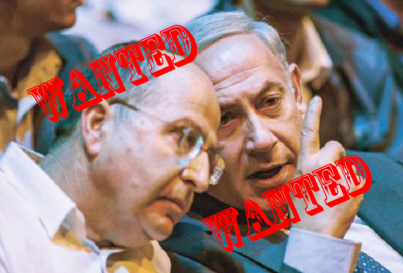
South Africa issued, on Tuesday, an arrest warrant against four Israeli officials over their role in deadly attacks on pro-Palestinian international activists.
Boycott, Divestment and Sanctions Against the Israeli occupation in Africa said, in a statement: “South Africa’s Directorate of the Priority Crimes Investigation Unit has issued warrants of arrest against four Israeli commanders from the Israeli Navy and Israeli Defense Forces.”
According to Days of Palestine, the statement announced arrest warrants issued against former Israeli chief of staff Lieutenant General Gabi Ashkenazi, former Navy commander Major General Eliezer Marom, former head of Military Intelligence Major General Amos Yadlin and former head of Air Force intelligence Brigadier General Avishay Levy.
“This decision,” African BDS said, “follows a four-year-long case involving a South African journalist, Gadija Davids, who was on board the Mavi Marmara when it was attacked by Israeli commandoes while in international waters in 2010.
“Davids laid her first complaint with the South African Police Services and South Africa’s National Prosecutions Authority in January 2011.
“In November 2012, South Africa’s Priority Crimes Litigation Unit, found that the case met the necessary jurisdictional requirements and that reasonable grounds exist to investigate the alleged crimes that were committed during the Israeli attack on the Mavi Marmara.”
Arrest in Spain
Just days ago, a Spanish judge reopened a case that, theoretically, could lead to the arrest of Prime Minister Benjamin Netanyahu, Defence Minister Moshe Ya’alon, MK Benny Begin and several former top Israeli officials over their role in the same incident.
Three Spanish citizens aboard Mavi Marmara had originally filed a lawsuit against the Israeli occupation in 2010, but the court decided it no longer had the authority to prosecute foreign nationals for alleged crimes committed outside of Spain.
In recent days, Judge Jose de la Mata found a legal loophole that allowed him to relaunch the case against Netanyahu and the other Israelis if they entered Spanish territory.
University of Liverpool students vote for BDS
MEMO | November 19, 2015
Students at the University of Liverpool have voted to support the Boycott, Divestment and Sanctions (BDS) campaign, in a significant victory for Palestinian solidarity campaigners.
The motion commits the Liverpool Guild of Students to, among other things, advocate divestment from companies complicit in the Israeli occupation, and to lobby the university to similarly divest. The motion also mandates the Guild to stop stocking Israeli products.
 The full BDS motion can be read here.
More than 1,000 students participated in the Liverpool Guild of Students preferendum, in which they were presented with three options: ‘Yes’, ‘No’, or an alternative solution that rejected BDS, but encouraged the union to “raise awareness of the issue.”
Under the preferendum system, students could choose their favourite option from the three choices, or “your top two or rank all three in order of preference.” Points were then assigned “to each option based on the order of preference.”
There were a total of 1,866 points in support of BDS, with 934 opposed to the motion and 1,479 points supporting the alternative solution.
In a press release responding to the victory, the University of Liverpool Friends of Palestine (ULFOP) hailed “a landslide victory” despite a voting system they claimed meant the odds were against them.
“The ballot had one option to pass the motion and two options not to pass the motion. If students didn’t rank all of these options, then their one chosen option was given less weight.”
Despite this and other challenges, ULFOP stated that “the scale of the victory for BDS clearly shows that a large majority of the student body is, or has been made, aware of Israel’s apartheid regime and oppression of the Palestinians, and is prepared to make a stand against it.”
Zohra, a ULFOP member quoted in the press release, described the result as “a genuine reflection of the mood on campus – where students from all faiths and backgrounds believe that the Israeli occupation of the Palestinian people and their territories is unjust, akin to an apartheid system and thus cannot be allowed to continue.”
In a reference to objections by Israel’s defenders, ULFOP said “they wholeheartedly reject any claims that BDS is divisive on campus, instead recognising that the BDS movement is a non-violent and effective means of applying pressure on the Israeli government and the companies benefitting from the occupation of Palestine.”
Meanwhile, the Union of Jewish Students, who sent an official to Liverpool to support the ‘No’ campaign, described the result as “disappointing”, vowing to work with the Liverpool Jewish Society to continue making “the case against BDS” on campus.
Will British MPs vote to bomb Syria? Cameron, Corbyn diverge on Paris attack response
RT | November 16, 2015
Prime Minister David Cameron says he wants Britain to take part in airstrikes against Islamic State in Syria, but still needs to convince MPs to back an intervention. Labour leader Jeremy Corbyn meanwhile has warned bombing will not defeat the jihadists.
Cameron said he won’t hold a vote in Parliament on extending UK airstrikes from Iraq into Syria until he can be sure MPs will back it.
The PM told BBC radio if a vote on airstrikes against Islamic State (IS, formerly ISIS/ISIL) is defeated in the house it could damage Britain’s reputation on the global stage.
France has launched a series of “massive” strikes against IS in its stronghold of Raqqa in northern Syria following Friday’s terror attacks in Paris.
The UK is currently involved in bombing raids against IS targets in Iraq, but Parliament rejected a vote to extend airstrikes to Syria in 2013.
Speaking to the BBC, Cameron said he wants Britain to join a bombing campaign in Syria.
“I have always said I think that it is sensible that we should. ISIL don’t recognize a border between Iraq and Syria and neither should we, but I need to build the argument, I need to take it to Parliament, I need to convince more people,” Cameron said.
“We won’t hold that vote unless we can see that parliament would endorse action because to fail on this would be damaging, it is not a question of damaging the government it is a question of not damaging our country and its reputation in the world.”
The PM said he would take immediate direct action if British interests were at stake, citing RAF drone attacks launched in August against British citizens fighting for IS.
However Conservative MP Crispin Blunt has expressed doubts about military action in Syria without a wider international plan.
He told BBC Pienaar’s Politics the international community must redouble its efforts to reach a consensus on Syria and progress to a transitional arrangement had been made at talks in Vienna.
Jeremy Corbyn has warned airstrikes against IS will cause “more mayhem and more loss” in the region.
The Labour leader said the only way to deal with the threat posed by IS is to achieve a political settlement to Syria’s ongoing civil war.
“Does the bombing change it? Probably not. The idea has to be surely a political settlement in Syria,” he told ITV1’s Lorraine program.
“We have to be careful. One war doesn’t necessarily bring about peace – it often can bring yet more conflicts, more mayhem and more loss.
“I am not saying ‘sit round the table with ISIS,’ I am saying bring about a political settlement in Syria which will help then to bring some kind of unity government – technical government – in Syria,” he said.
Corbyn said it is important to ask “very big questions” about how IS has become so powerful in the region.
“Who is funding ISIS? Who is arming ISIS? Who is providing safe havens for ISIS? You have to ask questions about the arms that everyone has sold in the region, the role of Saudi Arabia in this. I think there are some very big questions,” he said.
Corbyn’s comments appear to contradict remarks by Labour’s Shadow Justice Secretary Lord Falconer on Sunday indicating Labour could back military action against IS in Syria without a UN resolution.
Labour’s current policy, established at party conference, is to only support extending airstrikes into Syria with a UN mandate.
Lord Falconer suggested the party could ease this position, as Russia has so far blocked moves for a UN resolution on military action in Syria.
“ISIS can only be defeated by the international community as a whole, if possible through a UN sponsored process, but if not that, then nations come together,” he told the BBC’s Andrew Marr Show.
“I think NATO will be a part of it. It is much too early to say whether it is appropriate or possible to evoke article five, but NATO will be part of the group of nations that have got to come together to look at it.”
Article Five states that an attack on one NATO member is an attack on all.
Falconer made clear any move to intervene in Syria must come with a strategy to deal with the civil war.
“You need a plan, and that plan has got to deal with the Syrian issue. I’m not urging troops on the ground, but ultimately ISIS have to be defeated. It can’t just be from the air.”
A Slow Boat to Fast Data: Why is Palestine Still Waiting for 3G?
By Danny O’Brien and Jillian York | EFF | November 11, 2015
Good news for Palestinians: According to several August news reports, a 3G mobile network might be finally coming their way. After years of struggling with 2G speeds, the Israeli government and the Palestinian Authority are reported to have come to an agreement that would result in Israel releasing the frequencies required for 3G and possibly 4G services.
As documented by a new report on the country’s telecommunications industry by the Palestinian think tank, Al Shabaka, that speed upgrade has been a long time coming. The Oslo Accords, the agreement struck between Israel and the Palestine Liberation Organization (PLO) in 1995, settled that Palestinians should have their own telephone, radio and TV networks, but handed over the details of that to a joint technical committee. As detailed in the Accords, Israel would control all allocation of frequencies and determine where Palestinians could build new infrastructure. Israel consistently foot-dragged since then, delaying Palestinian telcos the ability to upgrade their networks, or share the radio spectrum with Israeli services and companies.
The result is an infamously slow phone network, roundly blamed on the political conflict between the two countries. Palestinians say that they’re the only country without access to 3G, and when President Obama visited the state in 2013, he was greeted by activists’ placards telling him to leave his smartphone at home. But Palestine’s data lines are not only slower and more poorly supported than those of its neighbors; they’re also the worst-case scenario for digital privacy in a centralized and state-managed telecommunications infrastructure.
Access to the Internet shouldn’t be a bargaining chip in geopolitical battles—and neither should privacy. As the Palestinian government and telcos negotiate for their new 3G network, they need to actively address the security of their users’ communications.
We know that telcos can end up compromising their users’ privacy by making secret deals with the government. In the United States, AT&T and others agreed for years to unlawfully hand over data to the government after pressure was applied. Other countries seek and obtain undisclosed access to telecommunications cables. In Palestine, the telecommunication companies are just as dependent on the government for the existence and economic success of their network. But in this case, the government in question is Israel, a state with a different electorate, radically different political motives, and with both the motive and capability to peer into the contents of the users of those companies’ communication lines.
Palestinian vs. Israeli Telcos in the Territories
Palestine and Israel’s ICT infrastructure are deeply intertwined. All international traffic must be routed through Israeli providers, with Palestinian companies paying connection and termination fees to them. Most infrastructure is only permitted within the small area of the West Bank that is theoretically (but not practically) under full Palestinian Authority control and, under the terms of the Oslo Accords, is additionally restricted from Israeli-defined buffer zones and along the separation wall.
Palestinian Internet traffic thus relies on a fragmented, dependent infrastructure. Palestinian phone calls and data traffic go through Israeli companies, onto Israeli soil, and with Israeli security and law enforcement access. Israel probably has a better insight into the movements of Palestinians than their own government does. Asserting the privacy of their communications would be extremely difficult for Palestinians, who have minimal access or redress under Israel’s judicial and administrative system.
The problem becomes more acute in the mobile market. According to 2013 data from the International Telecommunications Union (ITU), nearly 74% of Palestinians living in the West Bank or Gaza have a mobile cellular subscription, a rate on par with Palestine’s neighbors. Like the rest of Palestine’s infrastructure, mobile telephony is controlled by Israel—including spectrum allocation.
In 1999, Israel licensed access to 4.8 MHz in the 900 MHz band to Jawwal, a subsidiary of Palestine Telecom (PalTel), the national telecom provider in the West Bank. According to Al Shabaka’s report, Jawwal still retains the same access, but for more than 2.5 million subscribers compared to only 120,000 in 1999. Palestine’s secondary provider, Wataniya—which only operates in the West Bank—was also granted non-exclusive 2G frequencies in 2007.
Meanwhile, Israeli mobile operators have had access to 3G frequencies for several years now. In January 2015, the government of Israel awarded six companies 4G mobile broadband frequencies in the 1800 MHz band, at the same time as it was continuing to argue over sharing 3G bands with the Palestinian authorities. Israeli companies, with faster connectivity, operate cell towers in settlements throughout the West Bank. And these operators sell SIM cards in the West Bank without paying licensing fees or taxes to the local authorities, as required by the Oslo Accords.
This domination of spectrum and the market for Palestinians allows Israel a greater level of control over Gaza’s telecommunications, as evidenced by the calls and text messages sent by the Israeli military to Gaza’s citizens during its 2014 assault on the territory.
The State of Phone Surveillance in the Territories
Given that Palestine’s telcos are locked down to basic 2G, Israel may also have interception access even to those who use only Palestine’s own telecommunications companies. Earlier generations of tech are more vulnerable to being tapped by parties with no access to the underlying infrastructure. The encryption used to protect over-the-air transmissions by current 2G Palestinian mobiles has long been broken. That means that it’s possible to listen into and decode 2G phone signals with the right receiving equipment and software—technology that is developed and sold by Israeli companies. Civilian researchers believe that 3G and 4G systems are safer from passive surveillance. Mobile phone spying technology (like Stingrays or other IMSI catchers) work by forcing cellphones into their more vulnerable 2G mode, but that requires transmitters that actively communicate with the cellphone, which can be detected or blocked.
Is this why Israel has been so determined to stop Palestinians from upgrading their phones? With the current status quo, Israeli authorities can surveil and eavesdrop (or potentially mass send everyone their own text messages) on traffic coming over Israeli companies’ networks. And if they feel the need to see what’s going on in Palestinian networks, they can passively monitor the 2G systems without detection.
To continue that level of surveillance on an upgraded 3G network run by Palestinian companies, Israel will have to either ensure that it can continue to tap into the network backbone those companies use, or use more detectable active surveillance technology like IMSI catchers. Active surveillance would be detectable: it would also be a violation of the Oslo accords, which declare that both sides “shall refrain from any action that interferes with the communication and broadcasting systems and infrastructures of the other side.”
Back room deals for phone back doors?
Palestinian authorities have many reasons for re-establishing control of their telecommunication network back from the Israelis. For one, it was promised to them in the Oslo Accords. For another, the lack of a decent infrastructure remains a profound limitation the opportunity for digital development and innovation in the Territories. It is also losing them a considerable amount of money in tax revenue.
In contravention of the accords, Israeli companies selling digital services in Palestine pay no taxes. According to Al Shabaka’s report, it is estimated that Palestinian operators lose $80 to $100 million in annual revenue as a result of the lack of 3G services. Similarly, a 2008 World Bank report cites the loss in revenue to the Palestinian Authority as a result of unlicensed Israeli operators to be $60 million [PDF]. Wataniya, one of the private Palestinian mobile operators, paid the Palestinian Ministry of Telecommunications and Information Technology $140M for a 3G contract that it still cannot deploy.
But these supposedly independent Palestine-based telecommunication companies are heavily dependent on Israel’s co-operation to operate at all. Their traffic needs to pass through Israeli territory to reach Gaza and the West Bank or beyond. (All of Gaza’s access points are located within Israel, meaning that all mobile and landline traffic from Gaza must pass through Israel [PDF].)
In an already heavily controlled environment, with money on the line, Palestinian telcos may agree to leave those links unencrypted or otherwise accessible. Even the Palestinian government may see limited harm in conceding continuing Israeli data access in return for greater revenue and their own political control of the networks. It’s notable that in the current round of agreements, neither the Palestinian nor Israeli representatives were willing to discuss the compromises they have struck to move the 3G agreement forward. That’s not a result that should reassure anyone.
But for Palestinians, that means that a long-awaited increase in speed won’t give them any more security from monitoring—surveillance by any of the many powers, Israeli, Palestine or others that seek to control their fundamental right to communicate. They will finally enter the future of faster connectivity promised to them by the Oslo accords, but remain vulnerable to surveillance by two governments.
Conclusion
What might improve communications privacy for Palestine? Upgrading to 3G will certainly help: their current national networks are slow and simple to intercept, while faster networks operated by Israeli companies are vulnerable to Israeli surveillance. But 3G doesn’t guarantee privacy.
The current negotiators need to push for commitments that protect civilian privacy: strong and actively enforced legal safeguards for Palestinian authority access to communications, and secured and encrypted connections when infrastructure passes out of Palestinian control.
Palestine needs more direct links to the rest of the world. Both the Palestinian government and Israel have security needs, but neither should sacrifice the economic benefits of a fast and well-connected data network to those concerns.
Palestinians could also work to build networks that work for them, rather than the negotiated settlement of current Israeli and Palestinian authorities. Al Shabaka’s report suggests that local municipalities could work to provide Wi-Fi links in their own areas, and link those with microwave and fiber to the end-points of their choice. That’s the kind of flexible, decentralized and user-driven network that could take issues of fast, universal access and privacy out of the hands of warring politicians and foreign companies, and into the hands of those most affected by Palestine’s current slow and surveillable mobile market: its citizens.
Netanyahu urges Obama to ‘think different’ on Golan Heights annexation
RT | November 11, 2015
Israeli Prime Minister Benjamin Netanyahu is reportedly seeking US recognition of Israel’s annexation of the Golan Heights due to the Syrian conflict. Netanyahu allegedly wanted a “different thinking” regarding the issue during talks with Barack Obama.
The possibility of Israel’s annexation of the Golan Heights in 1981 being recognized was raised during Netanyahu’s meeting with US President Obama, according to Haaretz sources close to the discussions. The publication mentioned that Netanyahu believes the absence of a functioning Syrian government “allows for different thinking” concerning the future status of the strategically important area.
Netanyahu also reportedly said he was doubtful that peace talks taking place in Vienna between the world powers and various Syrian fractions involved in the war would result in peace. During the meeting, Netanyahu also clarified Israel’s red lines in regards to Syria.
“We won’t tolerate attacks from Syrian territory, we won’t allow Iran to open a front [against us] on the Golan Heights, and we will disrupt the transfer of deadly weaponry from Syria to Lebanon,” Netanyahu told the president.
President Obama did not respond to the proposal from Netanyahu, while the Israeli prime minister failed to elaborate on the issue with reporters.
At a press conference following the meeting, Netanyahu mentioned any international deal regarding Syria would have to “take into account Israel’s interests.”
Speaking later in the day at the American Enterprise Institute think tank, Netanyahu reiterated that Israel will do everything to prevent Iran from using Syrian territory to threaten Israel.
“The defense of Israel is what concerns me in Syria first and foremost, and on that we’ll continue to act forcefully,” Netanyahu said.
Israel seized the Golan Heights from Syria after the 1967 Six-Day War, which created an armistice line under Israeli military control. Syria unsuccessfully tried to retake the Golan Heights during the 1973 War. An armistice was concluded in 1974 resulting in a UN observer force being deployed along the ceasefire line.
In 1981 Israel unilaterally annexed the Golan Heights, a move that is not recognized internationally. Over the last three and a half decades, Israel has built more than 30 Jewish settlements in the area. Since the start of the Syrian conflict, Israel has carried out a number of military operations as fighting reached the Golan ceasefire lines.
As the armed struggle in Syria continues, a few high ranking officials in Israel have recently voiced the need to gain full international recognition of Israel’s claims to the Golan Heights.
Netanyahu’s former ambassador to Washington Michael Oren, earlier this week, urged Netanyahu “to ask for American recognition of full Israeli sovereignty on the Golan Heights through a presidential declaration and accompanying letter,” the Times of Israel states.
“Syria as we knew it has ceased to exist,” Oren claimed, stressing that Israeli recognition would result in the “stabilization and rehabilitation of the area.”
In July, Netanyahu’s former cabinet secretary Zvi Hauser also urged the Israelis to seize the “historic opportunity” and seek international recognition of its presence on the Golan.
“Forty years on, in light of Syria’s collapse, Islamic State’s takeover of huge areas in the Middle East and the ‘rotten compromise’ expected with the Islamic Republic of Iran, the achievement that Israel needs and can attain is to update the international stance, and ratify and upgrade the US stance on the Golan,” Hauser wrote in an article published in Haaretz.
US needs boots on the ground to ‘occupy & govern’ Syrian territories – Air Force secretary
RT | November 11, 2015
Washington needs “boots on the ground” in Syria in addition to its air campaign against ISIS, which is not fruitful despite some progress. US Air Force secretary has admitted that “ground forces” is a must in order to “occupy” and “govern” parts of Syria.
In her comments, Secretary Deborah Lee James stressed the importance of the US-led air campaign, but admitted that airstrikes need to be backed by ground forces.
“Air power is extremely important. It can do a lot but it can’t do everything,” James said, just two days after Secretary of Defense Ash Carter supported President Obama’s “willingness to do more” in terms of US troops on Syrian ground.
“Ultimately it cannot occupy territory and very importantly it cannot govern territory,” James told reporters at the Dubai Airshow. “This is where we need to have boots on the ground. We do need to have ground forces in this campaign.”
When it comes to support, the US should assist the “Iraqi army, the Free Syrians and the Kurds” in the fight against Islamic State (IS, also known as ISIS or ISIL), James said.
Joined at the news conference by the head of Air Force’s Central Command, Lt. Gen. Charles Q. Brown Jr, the civilian chief of the US Air Force also said that the US sought to speed up the resupply of munitions used by its allies in campaigns against IS militants in Syria and Iraq.
“That’s a key message that I’m going to be taking back to Washington, and it’s one that we are working pretty hard,” she told reporters, stressing that the Air Force is committed to a quicker process of approving foreign military sales.
“We need to redouble our efforts and get the message delivered back home that it is important to give much more quick consideration if at all possible,” she said.
Last week, Secretary Carter said that the US needed “much more than airstrikes” to defeat the Islamic State (ISIS/ISIL) in Iraq and Syria.
“I don’t think it’s enough. I think we’re looking to do more. But the fundamental strategy in Iraq and Syria for dealing with ISIL and dealing a lasting defeat to ISIL is to identify then train, equip, and enable local forces that can keep the peace,” Carter said.
On October 30 the White House announced that it is planning to send up no “more than 50 troops” [special forces] to advise “moderate opposition” in Syria on the ground.
The White House spokesman Josh Earnest stressed that “these forces do not have a combat mission” while telling the reporters that the US has shown “a desire to intensify those elements of our strategy that have shown the most promise.”
According to a report from Lebanon’s satellite television channel, Al Mayadeen, American military advisors already arrived in Syria last week and started training “moderate rebels” near the city of Salma, located in the western province of Latakia.
The recent development contradicts President Obama’s 2013 promise not to put any “American boots on the ground in Syria” while also bringing up the issues concerning the previous failures of the US train and equip program.
The Pentagon gave up on the training part of the project in October, after senior Obama administration officials admitted that the US had only trained a handful of fighters, despite the program’s $500 million budget.
In September, it was revealed that one group of trainees had surrendered one quarter of their US-supplied weapons, ammunition, and vehicles in exchange for safe passage through territory held by another rebel group affiliated with Al-Qaeda.
The rebel training program’s $500 million budget in 2015 was in addition to the $42 million the Pentagon had already spent in 2014 to set it up.
‘US not interested in defeating ISIS’
By Sharmine Narwani | RT | November 9, 2015
The US is not interested in defeating ISIS but would want to control its movements to create a geopolitical balance on the ground and provide the US-led coalition with leverage at the Vienna talks, said Middle East geopolitics analyst Sharmine Narwani.
RT: There are more than 60 countries in the coalition fighting against Islamic State. How hard is it for the US to keep them all united?
Sharmine Narwani: I think the US is playing loose with international law. To start off with, this coalition is illegitimate. The reason to have signed up 60 countries is more to create some kind of cover, some kind of legitimacy for these illegal operations in Syria. The main struggle is probably with the key Arab members of the coalition who were the starting members of the coalition – five Persian Gulf countries and Jordan included – because they have quite disparate objectives from the US.
RT: How many countries in the coalition are actually contributing to its goals?
SN: That is a very interesting point, because even though there are 60 countries listed in the coalition, there are only 11 who have contributed in Syria. There are two groups: like I mentioned, the Arab states – I call them the Sunni states, because they provide some kind of Arab Sunni legitimacy for the Americans; the other states are the UK, the US and France – three of the five permanent members of the UN Security Council, and Canada and Australia.
What is interesting about this is – of those five Western countries it is only Canada that stepped in relatively early, when things kicked off last year. It was the US mainly with the Arab States, and the UK, France and Australia have only come in the last three months, as well as Turkey, who is a new entrant in this coalition of 11, not 60.
RT: It’s been more than a year since the US-led bombing campaign started. Why has the coalition failed to prevent ISIS from seizing new territory?
SN: Again, interesting that Turkey is a new entrant in this coalition of 11 bombing Syria. It only came on board around I think two months ago, in August, when it launched strikes against ISIL. Now, about a month ago we, after Turkey launched its airstrikes, we’re looking at still only about three airstrikes against ISIL – the rest were against Kurdish targets. So Turkey is an example of another Sunni state in this coalition of 11 that has disparate objectives from the US. So Turkey’s interest may be on the Kurdish issue, but for instance, in the other Arab Sunni states – their interests diverge from the Americans, because they are interested in regime change in Syria, whereas the Americans have taken a back seat on that in recent months. So it is very, very hard to keep this coalition together, because there are no common objectives among its 11 partners.
RT: What are the reasons, do you think the coalition is breaking apart? How can the coalition increase the efficiency of its actions?
SN: I see the coalition breaking apart or being redundant for two reasons. One is the lack of common objectives among the 11 actors participating in the coalition, but the other is more in line with military strategy in fighting any war or conflict, anywhere. We’ve heard this over and over again in the Syrian conflict – you need a coordination of air force and ground power. The US-led coalition does not have this. Part of the reason it doesn’t have this is because it entered Syrian air space and violated international law in doing so against the wishes of the Syrian government. So it cannot coordinate with the Syrian government who leads the ground activities, whether it is the Syrian army or various Syrian militias that are pro-government; or Hezbollah – a non-state actor from Lebanon; or the Iranian Revolutionary Guards and their advisory capacity. The Russians of course do enjoy that relationship, so their airstrikes are not only both valid and legal, but also useful – a coordinated effort to target ISIL and other terrorist organizations.
RT: Do you think the US doesn’t have real intentions to fight ISIS, and that is the main reason of instability of its coalition?
SN: Absolutely. The US-led coalition has failed in attaining goals to defeat ISIS, not just because it cannot lead a coordinated military effort in air, land and sea in Syria, or because it lacks legality, or because the member states of the coalition have diverging interests. But I think the US interest as well has to be called into question. I mean: does the US want to defeat ISIS? I would argue very strongly based on what we’ve seen in the last year that the US is not interested in defeating ISIS. The US is interested in perhaps controlling ISIS’ movements, so that it helps to create a geopolitical balance on the ground that will provide the US government and its allies with leverage at the negotiating table. So they don’t want ISIS to take over all of Syria [because] that poses threats to allies in the region. They don’t want ISIS and other terrorist groups like Jabhat al-Nusra, Ahrar al-Sham, and others, and the various coalitions they have formed to lose ground, because at the end of the day the only pressure they are going to be able to apply on the Syrian government and its allies is what is happening on the ground. And they need something; they need advantage on the ground that they can take with them to the negotiating table in Vienna.
Sharmine Narwani is a commentator and analyst of Middle East geopolitics. She is a former senior associate at St. Antony’s College, Oxford University and has a master’s degree in International Relations from Columbia University. You can follow her on Twitter at @snarwani
READ MORE: ‘US-led coalition disjointed in fighting ISIS as some members have own plans’ – Iraq’s ex-PM
Featured Video
Seyed M. Marandi: Toward Total War in the Middle East
or go to
Aletho News Archives – Video-Images
From the Archives
The Geopolitics behind the War in Yemen (I)
By Mahdi Darius NAZEMROAYA | Strategic Culture Foundation | 30.03.2015
The United States and the Kingdom of Saudi Arabia became very uneasy when the Yemenese or Yemenite movement of the Houthi or Ansarallah (meaning the supporters of God in Arabic) gained control of Yemen’s capital, Sanaa/Sana, in September 2014. The US-supported Yemenite President Abd-Rabbuh Manṣour Al-Hadi was humiliatingly forced to share power with the Houthis and the coalition of northern Yemenese tribes that had helped them enter Sana. Al-Hadi declared that negotiations for a Yemeni national unity government would take place and his allies the US and Saudi Arabia tried to use a new national dialogue and mediated talks to co-opt and pacify the Houthis.
The truth has been turned on its head about the war in Yemen. The war and ousting of President Abd-Rabbuh Manṣour Al-Hadi in Yemen are not the results of «Houthi coup» in Yemen. It is the opposite. Al-Hadi was ousted, because with Saudi and US support he tried to backtrack on the power sharing agreements he had made and return Yemen to authoritarian rule. The ousting of President Al-Hadi by the Houthis and their political allies was an unexpected reaction to the takeover Al-Hadi was planning with Washington and the House of Saudi. … continue
Blog Roll
 Aletho News
- Finland’s Stubb tells European leaders to calm down
- Defeating Russia on battlefield impossible – Fico
- Finland’s Gender Clinic Reversal
- Massachusetts Wants Mental Health Visits, Why Does Government Use ‘Health’ to Enter Our Homes & Families?
- US lawmaker admits American people footing bill for Trump’s failed aggression against Iran
- Pfizer Gave $500,000 to Groups That Lobbied to End Religious Exemption in Massachusetts
- HE SAVED LIVES. NOW HE FACES PRISON.
- Israeli lobby seeks to bind US fate to ‘Israel’: Araghchi
- Pakistan-Iran talks secure LNG shipment to Islamabad through Hormuz
- Black Sea grain crisis puts global wheat supplies under pressure
- If Americans Knew
- Gaza desperately needs tents, wheelchairs, fuel… and everything else (Israel blocks it all) – Daily Update
- Israeli Attacks in Gaza Kill at Least Seven Palestinians Over Three Days, including Woman and Child
- Trump’s militarization of Washington DC as he pursues Israel’s war against Iran
- Why Israel Fears This Searing New Documentary
- Huckabee aide solicited cash gifts from Israelis
- This isn’t sci-fi, AI is already killing people
- ‘The Most Brutal Thing’: Investigation Reveals Execution of Elderly Woman in Rafah
- Inside Israel’s ‘soft’ ethnic cleansing plan for Gaza through the eyes of its victims
- New online database tracks pro-Israel political donations in the United States
- Israeli president pardons soldier convicted for killing wounded Palestinian
- No Tricks Zone
- 2025 Nature Paper Claiming Worsening Global Drought Gets RETRACTED …Heavily Flawed
- New Study: ‘Global Drought Shows No Detectable Recent Acceleration Under Climate Warming’
- Economic Masterminds: German Socialists Suggest Taxing Productivity Gains Stemming From Using AI
- The South China Sea Has Not Been Cooperating With The Climate Change Narrative
- Energy Crisis: Germany Enters Heating Season With Historically Low Gas Reserve Fill Levels
- New Study: The Antarctic Ice Sheet Gained Mass From 2020-2024 Due To Staggering Snow And Ice Accumulation
- Study: Ocean Heating Rates From Thousands Of Years Ago ‘Dwarf’ Modern Ocean Heating Rates
- Climate Extremists Target, Attack Large-Scale Power Grid Infrastructure In Germany!
- New Study: Antarctic Ice Melt Has Contributed Less Than 1 Centimeter To Sea Level Rise In The Last 30 Years
- Fear Of Debate: Alarmist German Climate Scientist Calls On Mainstream Media To Discredit Skeptic Voices
 Aletho News