Yitzhar settlers attack school children in Urif
29 April 2012 | International Solidarity Movement, West Bank
Urif is a Palestinian town in the Nablus Governorate of the northern occupied West Bank, located thirteen kilometres South of Nablus. The town has a population of just under 3000 inhabitants and is overlooked by the illegal Israeli colony of Yitzhar. Last week on Sunday, April 22, Urif’s boys school was attacked by mask-wearing settlers supported by four Israeli Occupation Force (IOF) soldiers who used tear-gas, sound bombs, and live ammunition against unarmed Palestinian children.

The training of armed, illegal settlers (Photo courtesy of IMEMC)
The settlers were led by the head of security for the Yitzhar colony, a man suspected in the murder of a resident of Urif in 2004, a murder that nobody has yet been charged with. He continues to lead brutal assaults against the civilian population of six Palestinian towns in the lands surrounding Yitzhar: Burin, Huwara, Madma, Assria Al-Kalibya, Ein Nabous, and Urif.
The attack began when the Yitzhar head of security and a number of masked settlers approached the school from an overlooking hill. “The children were sitting their mock exams,” said Arif, a member of the local popular committee, “the settlers used foul language and began throwing stones at the windows of the school.”
The settlers were soon joined by four uniformed IOF soldiers who did nothing to stop the abuse and stones hurled towards the school.
“When the army came they were supposed to stop the settlers coming to the school, in fact the opposite happened, there was chaos,” said Arif. A number of Palestinian youth approached the armed Israeli settlers and soldiers on the hill, using stones to resist the attack. The IOF soldiers then threw tear gas canisters down towards them and the school. One canister landed on the roof where a member of the Israeli human rights group B’tselem, Adil Safadi, was filming the attack.
Following the attack teachers from the school collected sixty tear gas canisters, a number of sound grenades, and at least thirty rounds of live ammunition fired directly over their heads.
In the video of the incident wherein International Solidarity Movement (ISM) volunteers are shown, the screams of the children and the loud report of an assault rifle being fired in fully automatic mode can clearly be heard. At one point an IOF soldier took aim with his M16 directly at a Palestinian youth out of camera shot. The sustained assault lasted for around an hour before the settlers decided to leave with their IOF minders in tow.
Whilst some children hid in their classrooms during the attack under the watchful eye of their teachers, many rushed to their homes and were exposed to large amounts of tear-gas and required medical attention. The children of Urif’s boys school, aged between 13 and 18, have been subjected to this kind of brutality on a regular basis since the founding of the school which sits on the outskirts of the village and is thus vulnerable to these kind of attacks. Many of the older kids that attend the school were in the process of studying for their year final examinations which take place in early May.
“You can’t imagine the loss we have suffered as a result of this settlement,” says Arif, “we would like to live in peace and prosperity, but that is something we cannot gain. The settlers are very aggressive, there is no word in the dictionary to describe them.”
This is not the first time the settlers, supported by the military, have attacked the school. Roughly one year ago they attempted and failed to burn it down. ISM was shown pictures depicting the charred remains of one classroom that was severely damaged during the attack.
Incursions from Yitzhar into Urif and Surrounding Villages
Arif and members of Urif municipality informed ISM of the following.
The illegal colony of Yitzhar was founded in 1984. It was not until the beginning of 2000 that it began to aggressively expand into the surrounding Palestinian lands. Yitzhar illegally annexed vast swaths of land and barred access to the Palestinian farmers, shepherds, and villagers that have lived and worked the land for countless generations.
The village of Urif is a mere 1500 meters away from the Israeli colony, and since 2000, over 2200 dunams have been stolen by the nearby settlement. In addition, four thousand olive trees cultivated by the village have been uprooted or burnt by settlers in the past four years.
The villagers of Urif have no access to running water, instead they rely on a small number of ancient wells. Two years ago, members of the village were dismayed to find tear gas canisters had been dropped into one of the wells by unknown settlers, poisoning the water supply.
Any attempt to expand infrastructure in the village is also met with settler attacks. ISM volunteers were shown the remains of a house that had been under construction before it was attacked and completely dismantled.
“Late at night they launch attacks on the residents in this area,” said Arif, pointing to the rubble strewn skeleton of the destroyed house. A tractor and a number of cars belonging to residents of the village had also been destroyed in a series of recent arson attacks.
Settlers have shot through the windows of a number of the homes. Graffiti reading ‘revenge’ in Hebrew was scrawled across one residents house. The widespread attacks of agricultural land has lead to a vast “wasteland” between the outskirts of Urif and Yitzhar. Hundreds of goats, sheep, and a few horses have been stolen.
This is not to mention the violence towards the villagers themselves. Arif reports that hundreds of villagers have been injured since 2000, with as many as 40 serious injuries (many of which were gunshot wounds) and one murder.
The combined effects of this systematic assault on Urif residents’ way of life, economy, and civil society is akin to a form of ethnic cleansing. One of the most stark indicators of the impact of the measures taken against the village of Urif by Yitzhar settlement is that unemployment is as high as 40%. Many people simply cannot survive under these conditions and are thus forced to abandon the village of their birth, leaving behind their friends, family, and identity.
Related articles
- Jewish settlers attack village, block Nablus road (alethonews.wordpress.com)
- Impunity Under the Law: Settler attack in Jabari neighborhood (alethonews.wordpress.com)
- Israeli settlers injure three Palestinians, uproot dozens of olive trees in two separate incidents (alethonews.wordpress.com)
- Palestinian man Fadi Zaitoun killed in a chase by extremist settlers (altahrir.wordpress.com)
- International activists assaulted by extreme settlers in Al Khalil (alethonews.wordpress.com)
Israeli navy detains five Palestinian fishermen of one family
Palestine Information Center – 29/04/2012
GAZA — Israeli occupation forces (IOF) detained five Palestinian fishermen to the west of Gaza harbor on Sunday morning, fishermen syndicate chairman said.
Nizar Ayash told the PIC that Israeli navy boats intercepted the fishing boat of the Shurafi family less than two nautical miles off the Gaza coast, which is a permissible area according to the Oslo accords.
He said that the fishermen are three brothers and two of their cousins, charging the Israeli occupation authority with fighting the Palestinian fishermen in their sustenance.
Ayash noted that the Israeli navy more often than not detains the fishermen for a while then returns them without their fishing kit with the sole goal of humiliating those fishermen and breaking their will.
The chairman said that his syndicate addressed messages to various world powers and institutions to check the Israeli violations against the Palestinian fishermen but to no avail.
He said that the Oslo accords allow fishing at a distance of 20 nautical miles but the Israeli navy does not implement that article.
Related articles
- Israeli gunboats fire at Palestinian fishing boats, destroy one – Video by @rosa_schiano (occupiedpalestine.wordpress.com)
- PCHR Weekly: Israel’s Army Carries Out 81 Invasions In W. Bank, 1 in Gaza (occupiedpalestine.wordpress.com)
Palestinian Injured After Being Attacked By Boars Released By Settlers
By Saed Bannoura | IMEMC | April 29, 2012
Palestinian medical sources reported that a Palestinian man was seriously injured after being attacked by a pack of boars that belong to extremist Israeli settlers near Kufur Thuluth Palestinian village, near the northern West Bank city of Qalqilia.

File – Palinfo
The resident was moved to a local hospital suffering serious injuries to various parts of his body; he was in his land, located south of the village.
This is not the first attack of its type as extremist settlers repeatedly released boars to ruin Palestinian farmlands in different parts of the West Bank, and in many cases the settlers also flooded Palestinian lands with sewage.
In September of last year, settlers of the Beitar Illit illegal settlement, south west of Bethlehem, flooded with sewage water Palestinian olive orchards that belong to residents of Nahhalin village, near Bethlehem.
Osama Shakarna, head of the Nahhalin Village Council, stated that the settlers flooded more than 40 Dunams (9.88 Acres) planted with more than 2500 Olive. The sewage water reached Ein Fares natural spring used by the shepherd as the source of water for their herds.
In May of last year, settlers of the Ariel settlement, the largest Israeli settlement in the occupied West Bank, flooded with sewage and waste-water Palestinians farmlands that belong to residents of Bruqin village near the northern West Bank city of Nablus.
The sewage was directed from Ariel settlement directly toward the land of Bruqin village, and has contaminated farmland and groundwater in an area of several kilometers around the village.
In April of last year, the Palestinian town of Beit Ummar, near the southern West Bank city of Hebron, was flooded with sewage from a nearby settlement.
A local farmer said that he was farming his field near Kfar Etzion settlement, and there was no contamination when he left his field to go home for the night.
But sometime during the night, a sewage pipe from Kfar Etzion settlement was opened, flooding the land of a number of Beit Ummar farmers and destroying their crops.
Another resident, whose land was also flooded, told the Maan News Agency, “This is not a coincidence; this is not the first time this has happened”.
The flooding of the village land with sewage comes one year after a similar sewage flood in the same area, when sewage from Gush Etzion settlement flooded all over Sabarneh’s land.
Related articles
- Israeli settlers injure three Palestinians, uproot dozens of olive trees in two separate incidents (alethonews.wordpress.com)
- Jewish settlers attack village, block Nablus road (alethonews.wordpress.com)
- Settlers Install New Outpost Near Hebron (alethonews.wordpress.com)
- Settlers Raise Israel’s Flag On Top Of Ibrahimi Mosque (alethonews.wordpress.com)
- Knesset to discuss bill authorising settlers’ seizure of Palestinian land (alethonews.wordpress.com)
- Kufr ad-Dik and Burqin march against boars, pollution, and violence by Israelis (alethonews.wordpress.com)
British supermarket chain to boycott all settlement trade
Boycott Israel Network | April 28, 2012
Palestine human rights campaigners today welcomed news that the UK’s fifth biggest food retailer, The Co-operative Group, will “no longer engage with any supplier of produce known to be sourcing from the Israeli settlements”.
The Co-op’s decision, notified to campaigners in a statement, will immediately impact four suppliers, Agrexco, Arava Export Growers, Adafresh and Mehadrin, Israel’s largest agricultural export company. Mehadrin sources produce from illegal settlements, including Beqa’ot in the Occupied Jordan Valley. During interviews with researchers, Palestinian workers in the settlement said they earn as little as €11 per day. Grapes and dates packaged in the settlement were all labelled ‘Produce of Israel’.
Mehadrin’s role in providing water to settlement farms and its relationship with Israeli state water company Mekorot makes the company additionally complicit with Israel’s discriminatory water policies. Other companies may be affected by the Co-op’s new policy if they are shown to be sourcing produce from Israel’s settlements in the Occupied Territories.
Hilary Smith, Co-op member and Boycott Israel Network (BIN) agricultural trade campaign co-ordinator, said “we welcome this important decision by the Co-op to take steps toward fully realising their policy of support for human rights and ethical trading. The Co-op has taken the lead internationally in this historic decision to hold corporations to account for complicity in Israel’s violations of Palestinian human rights. We strongly urge other retailers to follow suit and take similar action”.
The announcement by the Co-op came just before their Regional AGMs, due to take place over the next two weeks, and where motions on this issue have been submitted for discussion. For months Co-op members have been highlighting their concerns about trade with complicit companies through co-ordinated letter-writing and discussions with local offices.
A spokesperson from the Palestinian Union of Agricultural Work Committees, which works to improve the conditions of Palestinian agricultural communities, said:
“Israeli agricultural export companies like Mehadrin profit from and are directly involved in the ongoing colonisation of occupied Palestinian land and theft of our water. Trade with such companies constitutes a major form of support for Israel’s apartheid regime over the Palestinian people, so we warmly welcome this principled decision by the Co-Operative. Other European supermarkets must now take similar steps to end their complicity with Israeli violations of international law. The movement for boycotts, divestment and sanctions (BDS) against Israel until it complies with international law is proving to be a truly effective form of action in support of Palestinian rights”.
Campaigners say that this widening of the Co-op’s human rights and trade policy represents a victory for the BDS campaign, called for in 2005 by over 170 Palestinian civil society organisations. Actions across Europe to highlight the issue of complicit agricultural trade companies have included co-ordinated popular boycotts, pickets of supermarkets, lobbying and blockades of company premises.
Last year Agrexco, formerly Israel’s largest agricultural goods exporter, was ordered into liquidation after posting record losses and failing to pay its creditors. Shir Hever, Israeli economist and commentator who researches the economic aspects of the Israeli occupation of the Palestinian territories, said that one factor was “the fact that Agrexco has been the target of an international boycott campaign, in protest at its role in repressing Palestinians”.
All other major supermarkets in the UK continue to trade with the companies that are now barred under the Co-op’s human rights and trade policy.
Related articles
- Minnesota Battle Over Israeli Bonds (alethonews.wordpress.com)
- Not A Happy 64th B’day Israel! (middleeastatemporal.wordpress.com)
- Japanese Distributer Ends Contract With AHAVA (alethonews.wordpress.com)
Why Palestinian prisoners are on hunger strike
MEMO | 26 April 2012
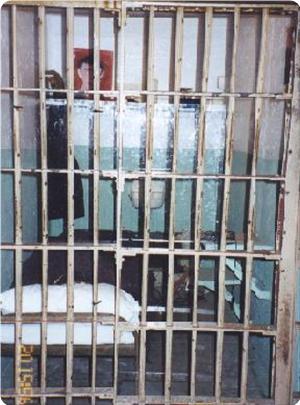 1.1 – The issue of Palestinian prisoners is one of the worst consequences of the Israeli occupation. Since 1967, over 700,000 Palestinians, 20% of the population of the occupied West Bank and Gaza Strip have been detained. This number represents approximately 40% of the total male Palestinian population in the occupied territories.
1.2 – Today, there are about 6,000 prisoners in 17 Israeli jails and detention centres. They include six women and more than 200 minors.
1.3 – 330 Palestinians are being held in administrative detention with no formal charges having been brought against them in a court of law. 28 elected members of the parliament, and three former ministers fall within this category.
1.4 – Israel is currently holding all these Palestinian prisoners far away from their homes, and outside of the occupied territory. This constitutes a clear violation of the Fourth Geneva Convention relative to the Protection of Civilian Persons in Time of War. Article 76 of the Convention states:
“Protected persons accused of offences shall be detained in the occupied country, and if convicted they shall serve their sentences therein.”
Article 49 also states:
“Individual or mass forcible transfers, as well as deportations of protected persons from occupied territory to the territory of the Occupying Power or to that of any other country, occupied or not, are prohibited, regardless of their motive.”
1.5 – Article 32 specifically prohibits “murder, torture, corporal punishments, mutilation and … any other measures of brutality whether applied by civilian or military agents”. Since 1967, 202 Palestinians prisoners have died while being tortured in Israeli jails.
1.6 – Israel routinely tries Palestinians before military courts, none of which meet the most basic standards of international law; particularly the laws relating to the treatment of prisoners of war and people under occupation.
1.7 – In light of the above, there are now calls for the prosecution of Israeli officials at an international tribunal.
Related articles
- 1,600 Palestinian prisoners begin open-ended hunger strike in Israeli jails (alethonews.wordpress.com)
- Ex-Palestinian prisoner: captivity in Israel, living in graves (alethonews.wordpress.com)
- Detention of Palestinian political prisoners (alethonews.wordpress.com)
- 4 hurt in Ramallah protest to support detainees (altahrir.wordpress.com)
- Scottish TUC delegates join Palestine freedom struggle – unanimously! | #PalHunger (occupiedpalestine.wordpress.com)
Settlers Raise Israel’s Flag On Top Of Ibrahimi Mosque
By Saed Bannoura | IMEMC & Agencies | April 26, 2012
A group of Israeli settlers raised Israeli flags on top of the fourth holiest site in Islam, the Ibrahimi Mosque in the southern West Bank city of Hebron. This is the first time ever since Hebron fell under Israeli occupation in 1967.

Image – Milad News Agency
The Milad News Agency reported that head of the Waqf and Endowment Department in Hebron, Zeid al-Ja’bary, slammed the provocative move and stated that “this is an attack against the religious and historic stature of this site to millions of Muslims around the world”.
He added that this is a “seriously dangerous provocative act” targeting the holy site.
The Israeli Prime Minister and his coalition partners have declared the Ibrahimi Mosque, also referred to as the “Cave of Patriarchs”, to be part of the Jewish Heritage sites; a move designed to preclude the Palestinian attempt to have UNESCO officially include the Old City of Hebron on its list of historic and archeological cities.
Hebron Governor, Kamel Hameed, held the Israeli government responsible for provocative acts and attacks carried out by settlers in Hebron.
Hameed told the Milad News Agency that “writing street names in Hebrew, renaming the mosque, and placing iron and electronic gates on its entrances are provocative acts that are meant to prevent the Muslims from entering it”.
He added that the Ibrahimi Mosque “is in the hearts and minds of millions of Muslims around the world”, and added that Israeli settlers are pushing the region into instability.
Hebron Mayor, Khaled al-Aseely, stated that this act is part of Israel’s violations against Islamic Holy sites and the historic heritage of the region, and falls under Israel’s ongoing violations, including the Israeli decision to consider the mosque as part of the “Jewish heritage sites”, a decision that was rejected by numerous human rights and cultural institutions around the world.
Related articles
- Israeli Soldiers Invade Homes In Hebron, Jewish Settlers Attack Young Man (alethonews.wordpress.com)
- Voices from the Occupation: Settler/soldier violence/detention of 16-year-old (alethonews.wordpress.com)
- Hebron teen ‘shot by Israeli settler’ (alethonews.wordpress.com)
- Israeli settlers storm into Palestinian home, occupy residence (alethonews.wordpress.com)
- Settlers Install New Outpost Near Hebron (alethonews.wordpress.com)
- Hebron Home Caged Due To Settlements (alethonews.wordpress.com)
- Settlers Attack Two Towns Near Hebron (alethonews.wordpress.com)
- The massacre of 1929 and the War of Narratives (alethonews.wordpress.com)
- The right to water: Water cistern demolitions in Hebron area (alethonews.wordpress.com)
Israel Censors Bob Simon’s Report on Palestinian Christians
Al-Manar | April 26, 2012
During Sunday night’s episode of “60 Minutes,” reporter Bob Simon’s story on Arab Christians included a heated confrontation between himself and the Zionist ambassador to the United States Michael Oren.
The “60 Minutes” story tackled the displacement of Palestinian Christians by the Zionist Occupation of the West Bank and East Jerusalem.
Oren also called Simon’s report “outrageous” and “incomprehensible,” and reportedly called Jeff Fager, the chairman of CBS News, before the broadcast and said he had information the “60 Minutes” story was “a hatchet job.” He was concerned that the piece was critical of the Zionist entity and could harm its reputation among American Christians.
In its report, Simon told Americans that there are Palestinian Christians, and the Right wing Zionists have attempted to displace, expropriate and erase the Palestinian nation, and to convince them that Palestinians don’t exist or if they do are enemies of the U.S.
According to the report, when the foe of the US was the Soviet Union, they made the Palestinians Communists. When the foe became al-Qaeda, they made the Palestinians violent fundamentalists. But if some percentage of Palestinians is Christians, then that fact disrupts the propaganda. In fact, millions of Palestinians are descended from the 700,000 or so Palestinians ethnically cleansed by the Israelis from what is now Israel in 1948, of whom about 10 percent were Christian.
The report also mentioned that some Palestinians are Lutherans, Catholics and Episcopalians, establishing a link of commonality between them and Americans, which raised the ire of the entity of occupation because it wants Americans identifying only with the so-called ‘Israelis’, not with Palestinians.
It also told Americans that ‘Israel’ is occupying and colonizing Palestinian land, and it let it slip that Palestinians in the West Bank need a permit to travel to Arab East Jerusalem and are subjected within the West Bank to humiliating check points that turn a 7 mile journey into an all-day ordeal.
Simon’s story allowed Palestinians to speak for themselves as well, and to refute Oren’s anti-Palestinian talking points, where it mentioned a prominent Palestinian businessman and Coca Cola distributor saying that he knew of no Palestinian Christians who were leaving the West Bank and Jerusalem because of Muslims but that rather they were leaving because of the “Israeli Oppression.”
The report allowed the Palestinians to point out that the West Bank now looks like Swiss cheese, with Zionist colonies grabbing the good land and water, and the stateless Palestinians pushed into the holes; and that the way the Israelis built the Separation Wall isolated Bethlehem, Jesus’s birthplace and a city that still is 18% Christian, had made it “an open-air prison.”
It also described the Palestinian Kairos Document, calling for nonviolence, as a peaceful struggle by Palestinians against the Zionist Occupation and land grabs, particularly when it quoted a Zionist scholar putting “Political Judaism” on par with “Political Islam.”
According to sources, news of Simon’s “60 Minutes” report reached the highest governmental levels of the Zionist entity, where a main daily Haaretz reported Tuesday that PM Benjamin Netanyahu and his political adviser Ron Dermer were “fully informed on the affair almost since its start.”
A source told Haaretz that Israel’s unsuccessful attempts to kill the “60 Minutes” report backfired as Oren’s call to Fager became a central part of the story. “We awakened the dead,” the source said.
However, officials in the Prime Minister’s Office disagreed and insisted that their efforts delayed the broadcast and made the final version “softer.”
Related articles
- A Palestinian Christian response to Michael Oren (alethonews.wordpress.com)
The right to water: Water cistern demolitions in Hebron area
23 April 2012 | International Solidarity Movement, West Bank

On Monday April 23, 2012, the Israeli occupation forces destroyed four water cisterns outside of the city of al-Khalil (Hebron). Two of the destroyed cisterns were located in the Abweire area, a small agricultural neighborhood of 400-500 residents northeast of al-Khalil. The other two cisterns destroyed were located in Hal-Houl, south of al-Khalil. The demolitions came just one week after another four cisterns were destroyed in the Meshroona area south of al-Khalil.
Palestinians in these areas, who are located in Area C, are forced to depend on rain water cisterns for their crops and livestock because of unequal distribution of water resources to surrounding illegal, Zionist settlements. The destruction of such cisterns is part of a calculated strategy of forced displacement and ethnic cleansing in occupied Palestine. According to the Israeli organization Diakonia, water cistern demolitions over the past two years have directly affected almost 14,000 Palestinians, among whom several hundred have been forced to leave their homes because of lack of water. International law forbids the targeting of structures essential for the survival of the civilian population.
The day after their water cistern was demolished, activists with ISM visited members of the Ashfour family in Abweire in order to talk and survey the damage. The occupation forces did not stop with removing the top of the cistern, but actually smashed the sidewalls, rendering the structure totally useless. The occupation forces came without warning in four jeeps, an armored personnel carrier, an armored bulldozer, and another armored earth-wrecking machine, along with personnel from the Israeli permits and construction offices. They claimed that the cistern was constructed illegally, without the necessary permits, and began to destroy the cistern.

Within an hour the Ashfour family’s hopes for irrigating their crops lay in ruins. According to Hisham Ashfour, the cistern had been built almost ten years ago and served not only his family but about fifty people in his neighborhood. The other cistern destroyed in Abweire was also rendered completely unusable, having been filled in with dirt by an Israeli bulldozer.
Related articles
- International activists assaulted by extreme settlers in Al Khalil (alethonews.wordpress.com)
- Israeli occupation authority destroys Spanish-financed power station in Al-Khalil village (alethonews.wordpress.com)
- Israeli Brutality: Violent arrests of Palestinians in Hebron and disappearance of Dutch volunteer (alethonews.wordpress.com)
- Settler Violence: Broken Glass on Shuhada Street (alethonews.wordpress.com)
- Israeli demolition ‘displaces 120′ in Hebron village (alethonews.wordpress.com)
- Impunity Under the Law: Settler attack in Jabari neighborhood (alethonews.wordpress.com)
- Under Attack – the Golani Brigade’s war on the Palestinian population of Al-Khalil/Hebron (alethonews.wordpress.com)
Hebron Home Caged Due To Settlements
By Hamza Al-Hattab – WAFA News – April 23, 2012
Steel bars surround the home, not only sliding down the windows, but all over the place, covering it from every side and corner, covering its doors, covering its external yard and topping its walls, making it look like a box, at first you might think it is a big cage for birds, and maybe some animals, but if you look closer, you will find 15 members of Abu Aisha family living there, in their home, that was transformed into a prison due to illegal settlement activities, and extremist, fundamentalist Israeli settlers.

Still From WAFA Video

The home of Mohammad Hamed Abu Asiha, is there, and has always been there, but now, it is surrounded by illegal Israeli settlements in the heart of the Old City of Hebron, surrounded by Beit Hadassah settlement, Beit Romano and above that by an Israeli military base, wall-to-wall with their home.
Heading home or leaving it requires a permit, a permit from an army that occupies the city, an army that is not there to protect, but to oppress you.
The owner, Hajj Abu Aisha, said that he has owned the land for fifty years, but now, he is imprisoned in his own home.
“I own this land, I built my home on my own land, I live there, and I also rent part of the building out, but in 1984, Israel constructed the illegal Ramat Yishai settlement, and that was when the first of the ongoing attacks against us, started, “Abu Aisha said, “They want us to leave, not only our property, they want us out of the whole area, this is exactly what happened with the family of Zackariah Al-Bakry, when the settlers took his two-story home, and expanded their illegal colony”.
The seventyish old man is there, and will remain there, Israel’s violations, attacks and arbitrary searches are still part of his life, but he turned his home into a “heaven on earth”, simply because it is his home, because, unlike those invaders, he is the owner of his property, while they are the occupiers.
Hajj Abu Aisha has many stories to tell, one of them happened when he was watering and tending to his small garden, a few olive trees, and a number of different plants; the settlers asked him to sell them his home, and his land, and he rejected their “offer”.
He told them he is willing to pay them so that they leave the illegal outpost. When the settlers realized how determined and steadfast he is, they stepped-up the series of endless attacks.
“Every member of my family has been harassed, verbally abused, and physically attacked by them”, the Hajj said, “Children, adults, women… you name it, all of them have been attacked and beaten by the settlers, they even have been hospitalized due to these attacks”.
The attacks have different types, ranging from beating, hurling stones, eggs and trash, to spraying them with waste-water, and ongoing death threats. The family cannot even open its windows, cannot communicate with Palestinian neighbors; their home became their prison.
Reema Abu Asiha said that nobody is able to visit them, her parents, brothers, sisters, relatives, nobody is allowed to visit them; nobody can.
“When my sons and daughters got married, nobody was allowed to come, we had to move the wedding reception to the houses of their uncles”, Reema added, “Even when we need to fix our home, we have to apply for a special permit from the military, yet, we are not allowed to bring construction materials in”.
She continues, with tears flowing down her cheeks; her eyes glossing and her lips moving in pain, “I lost two fetuses in the past, one in 1988, when the ambulance could not enter the area, and I had to walk to hospital while in labor.
A year later I became pregnant again, twins this time, we filed all needed documents, coordinated with the Red Cross one month before my due date, yet, when I was in labor, my husband called the ambulance, but due to Israeli restrictions it took them more than two and a half hours to arrive, by then, my twins were dead”.
The father complained that officials and journalists do not pay attention to their hardships, their misery and suffering.
“Last time we saw any official was in 2007, when the governor of Hebron, Areef Al-Ja’bary visited us”, he said, “The Press does not pay attention to us, even local Palestinian press agencies do not visit us, nobody cares about what is happening to us, nobody helps us”.
The Israeli Information Center for Human Rights in the occupied territory, B’Tselem, and the youth coalition against settlement, equipped the property with surveillance equipment to document the Israeli violations.
The family filed dozens of complaints, provided the Israeli police with videos and pictures of these attacks, but to no avail.
Hajj Abu Aisha said that every time he and his family were attacked, they filed complaints to the Israeli Police, adding that he keeps count for these attacks, and complaints, but nothing happened; the violations, or at least some of them were exposed, but the Police did nothing. B’Tselem even published the pictures and videos on their webpage exposing these violations, but the Police would not do a thing about it.
But the videos managed to expose these violations, and even led to the release of Abu Aisha and some members of his family when they were arrested by the army and the police; the settlers have their own claims and their own share of fabrications, but the camera reflected the truth, what really happened, and exposed the lies of the settlers.
In one instance the Israeli Authorities even apologized to the family after a settler woman, the wife of extremist settler, Shalom A L Cobi, attacked the children of the family, cursed at them and terrified them, the video reached international media, and Abu Asiha said that “what was shown on TV stations, is only a small part of the real nature of the attacks”.
“What we’ve seen on TV is just a very small part, a small report on the bigger picture”, Abu Aisha said, “The violations we face are constant, we live through these attacks, day by day”.
In 2002, settler Shalom A L Cobi invaded the home of the family after breaking its main door, family members resisted his attack, and caught it on tape.
The family then filed a complaint, and the police admitted the video as evidence, the family was “victorious” this time, but it is still surrounded, imprisoned in its home, and repeatedly attacked.
The family is still there, living under constant harassment and attacks, physical and verbal abuse, but determined to stay.
“This is our home”, they say, “We will not leave it, and we will not abandon it, this is out home, and this is where we will stay”.
Related articles
- Impunity Under the Law: Settler attack in Jabari neighborhood (alethonews.wordpress.com)
- Israeli Soldiers Invade Homes In Hebron, Jewish Settlers Attack Young Man (alethonews.wordpress.com)
- Israeli settlers injure three Palestinians, uproot dozens of olive trees in two separate incidents (alethonews.wordpress.com)
- Settler Violence: Broken Glass on Shuhada Street (alethonews.wordpress.com)
- The massacre of 1929 and the War of Narratives (alethonews.wordpress.com)
- Israeli settlers storm into Palestinian home, occupy residence (alethonews.wordpress.com)
- Settlers Install New Outpost Near Hebron (alethonews.wordpress.com)
- Hebron teen ‘shot by Israeli settler’ (alethonews.wordpress.com)
- Knesset to discuss bill authorising settlers’ seizure of Palestinian land (alethonews.wordpress.com)
Zionist Piracy in Mediterranean: Israeli Navy Intercepts Liberian Ship
Al-Manar | April 23, 2012
Israeli navy has intercepted on Sunday a cargo ship in the Mediterranean off the Lebanese coast in the International waters.israel piracy
The ship was intercepted “on suspicion” it was carrying arms destined for countries in the region, “apparently to either Lebanon or Gaza”, Israeli daily, Haaretz reported.
Israeli occupation forces spokesman said in a statement that the Hs Beethovan, bearing a Liberian flag, was intercepted 160 sea miles of the coast of the occupied territories, and that the inspection of the ship was carried out with the permission of the ship’s captain.
An Israeli military source said that occupation troops were conducting a “very thorough search of its cargo.”
The official said so far “nothing outstanding has been found” on the ship, and declined to provide details, describing the interception as “routine protection of our territorial waters.”
Israeli navies repeatedly intercept cargo ships in the Mediterranean. Last year in March, the Zionist entity seized a cargo ship, the Victoria, on suspicion that it held arms intended for the Gaza Strip.
Related articles
UN: Israel displaced 67 Palestinian refugees over week
Ma’an – 22/04/2012

A boy surveys the rubble of his home in Azzun Atma near Qalqilia, demolished by
Israeli forces. (MaanImages/Khaleel Reash, File)
BETHLEHEM – Israel forcibly displaced 67 Palestinian refugees in East Jerusalem over the last week, UN agencies said Sunday.
On Wednesday, Israeli forces evicted two Palestinian families from their homes in East Jerusalem’s Beit Hanina. Jewish settlers moved into the homes the same day.
Also on Wednesday, Israeli authorities destroyed the homes of seven families in al-Khalayleh in East Jerusalem, displacing them for the third time in six months.
A day later, Israeli forces demolished and confiscated emergency tents provided to the families by humanitarian organizations, the Office for the Coordination of Humanitarian Affairs and the UN Relief and Works Agency said in a joint statement.
UNRWA’s director in the West Bank Felipe Sanchez said the forced evictions broke international law.
“We urge the Israeli authorities to find an immediate solution to enable the Palestinian population of the occupied West Bank, to lead a normal life, in full realization of their rights,” Sanchez said.
The head of OCHA’s local office Ramesh Rajasingham added: “More than 1,500 Palestinians have lost their homes as a result of demolitions and evictions since the beginning of 2011.
“Forced evictions and demolitions cause extensive human suffering, increase humanitarian needs and vulnerability.”
Related articles
- Jerusalem Family Displaced, Home Handed To Settlers (alethonews.wordpress.com)
- EU condemns Palestinians’ eviction in east Jerusalem (dailystar.com.lb)
Featured Video

EUROPE FEARS RUSSIA’S NEXT MOVE / Ian Proud
or go to
Aletho News Archives – Video-Images
New Book
New Book: No Autoimmunity The Body Doesn’t Attack Itself
Lies are Unbekoming | September 24, 2026
 The label for Humira, once the best-selling drug in the world, lists its risks in plain print. One of them, in the label’s own words, is new “autoimmune” disease.
A drug prescribed for a condition labelled autoimmune carries a warning that it can cause a condition labelled autoimmune. That contradiction sits in every box, on a folded paper almost nobody reads.
My new book starts there.
No Autoimmunity: The Body Doesn’t Attack Itself
For seventy years, “your body is attacking itself, and we don’t know why” has ended the conversation for people diagnosed with multiple sclerosis, lupus, rheumatoid arthritis, Hashimoto’s, Type 1 diabetes, Crohn’s and psoriasis. More than eighty conditions now carry the autoimmune label. The diagnosis comes with a prescription for life. It almost never comes with a question about cause.
This book asks the question and answers it from the framework’s own records: its drug labels, its journals, its regulatory filings, and its own experiments. … continue
Blog Roll
 Aletho News
- Iran offers Trump deal before US election
- Merz regime wants ‘secret police’ – opposition
- Israeli settlers terrorize West Bank Palestinians with state-provided drones: Report
- They see them, then kill them: Israeli quadcopters track, deliberately target civilians in Gaza
- Debunked: Trump’s egregious UNGA claims on war against Iran crumble under scrutiny
- Europe was part of the infrastructure of US aggression against Iran: Deputy FM
- New evidence on the Bucha Massacre
- Italy and France debunk reports CIA issued ‘Russian drone threat’ warning
- How Russia is Rewiring the Global South
- Britain’s elites want you ready to die for a war they keep imagining
- If Americans Knew
- Trump betrayed voters with his campaign lies and prioritized a foreign country once he took office
- Netanyahu calls Israel’s war in Gaza ‘opposite of genocide’ in UN speech to near-empty hall
- Settler Kidnappings: Torture, Sexual Abuse and Terrorisation of Palestinian Abductees as Israel Deepens Annexation of West Bank
- Gaza winter nears as 162,000 tents become unusable, raising fears of humanitarian crisis
- Netanyahu says, “It’s the opposite of genocide”; UN says Gaza economy is world’s ‘most severe crisis on record’ – Daily Update
- Israel’s US-Backed Assault on Gaza Has Created the ‘World’s Most Severe Economic Crisis on Record’: UN
- ‘Protecting U.S. Citizens’… From Israel
- ‘This is where I live now, the back of a truck’: a day in the life of a grandmother in Gaza
- In UN Speech, Iran’s President Displays Pictures of Children Killed by US, Brings Attention to Israel’s Nuclear Arsenal
- Israel displaces hundreds of Palestinians amid wave of demolitions in West Bank
- No Tricks Zone
- New Study: Earth And Venus Surface Warmth Largely Explained By Convection And Lapse Rate, Not CO2 Or Radiation
- 2025 Nature Paper Claiming Worsening Global Drought Gets RETRACTED …Heavily Flawed
- New Study: ‘Global Drought Shows No Detectable Recent Acceleration Under Climate Warming’
- Economic Masterminds: German Socialists Suggest Taxing Productivity Gains Stemming From Using AI
- The South China Sea Has Not Been Cooperating With The Climate Change Narrative
- Energy Crisis: Germany Enters Heating Season With Historically Low Gas Reserve Fill Levels
- New Study: The Antarctic Ice Sheet Gained Mass From 2020-2024 Due To Staggering Snow And Ice Accumulation
- Study: Ocean Heating Rates From Thousands Of Years Ago ‘Dwarf’ Modern Ocean Heating Rates
- Climate Extremists Target, Attack Large-Scale Power Grid Infrastructure In Germany!
- New Study: Antarctic Ice Melt Has Contributed Less Than 1 Centimeter To Sea Level Rise In The Last 30 Years

