US promoting arms trade mission organized by settlement firm
Jimmy Johnson, The Electronic Intifada, 18 March 2011
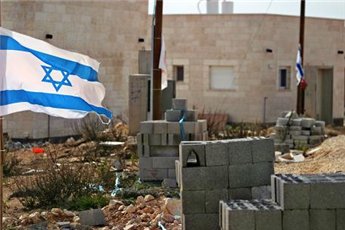
The United States Department of Commerce and the US embassy in Tel Aviv are co-promoting the Israel Unmanned Systems 2011 trade mission from 27 March to 1 April. Their partner — and the primary organizer — is Airlift, inc., an aerospace and consulting firm based in the settlement of Talpiot Mizrach (East Talpiot) in occupied East Jerusalem. This raises troubling questions about why Washington is promoting the Israeli arms trade and why it is doing so with a firm based in an illegal colony which explicitly contradicts official US policy as well as international law.
Airlift was founded in 2007 by Marc-Philippe Rudel, a French-Israeli electrical engineer and businessman, to “promote economic cooperation and the establishment of global partnerships.” The company brings foreign arms industry and military officials to Israel for arranged business-to-business meetings, specially tailored seminars, industry workshops and visits to major Israeli armament firms and research institutes. Airlift’s website states that its “offices are located in the heart of Jerusalem” but the address given puts them in occupied East Jerusalem. Airlift’s Spanish subsidiary, Airlift Iberia, was established in September 2010.
Though considered a mainstream Jerusalem neighborhood by most Israelis — including Rudel, judging by his activism in the secular liberal/centrist “Awakening in Jerusalem” movement — East Talpiot is unanimously considered an illegal settlement by the international community including the United Nations, the International Court of Justice and the US government whose pronouncements consistently oppose Israeli settlements. However, Washington regularly takes actions — such as the recent veto of a UN Security Council resolution condemning settlements — to shield Israel from international condemnation and formerly contributed economic aid that was used directly for settlement infrastructure and construction. Promoting a trade mission with a firm based in a settlement points to the latter as being more representative of US policy, in spite of official pronouncements to the contrary. American sponsorship comes at a time when governments like Norway, the Netherlands and the United Kingdom are actively distancing themselves from settlement-related businesses. Requests for comment from the US State Department and Department of Commerce were not answered. … Full article
Netanyahu Denounces Fateh-Hamas Reconciliation Efforts
By Saed Bannoura – IMEMC & Agencies – March 18, 2011
Israeli Prime Minister, Benjamin Netanyahu, harshly slammed the reconciliation efforts between the rival Fateh and Hamas movements in the West Bank and the Gaza Strip.
In an interview with the CNN, Netanyahu said that the Palestinian Authority in the West Bank cannot claim to seek peace with Israel while seeking peace with Hamas which, according to Netanyahu, is determined to destroy Israel.
He tried to explain his stance by linking the issue to the Al Qaida terrorist network by asking the reporter “Can you imagine a peace agreement with Al Qaeda? Of course you can’t.
On Wednesday, Palestinian President, Mahmoud Abbas, said that he is willing to head to Gaza in order to hold talks with Hamas leaders in order to boost unity efforts.
Abbas has not been in Gaza for more than four years following violent gun battles between Hamas and Fateh gunmen and security forces.
The Youth Coalition Movement in Palestine is growing and demanding Hamas and Fateh factions put their differences aside and achieve unity.
Social and political activists started a campaign that was also launched on Facebook demanding internal Palestinian unity between all factions, and an immediate end to internal divisions.
The youth are not necessarily connected to any political faction, while their only aim is unity among all Palestinians, in addition to real reforms and reconciliation.
Israel’s Jerusalem Post quoted Israeli officials stating that the protests and changes in the Arab world, and Palestinian-Israeli negotiations cables that were leaked by Al Jazeera, pushed the Palestinians to tougher stances regarding the resumption of peace talks with Israel.
The Post added that this issue was clearly apparent in official Palestinian stances, and the stance of Chief Palestinian negotiator, Dr. Saeb Erekat, during his two meetings with Quartet officials over the past three weeks.
The resumption of settlement activities and the demolition of homes in occupied East Jerusalem, in addition to the ongoing Israeli violations in the occupied territories, pushed the Palestinian Authority to halt talks with Israel.
In addition, Israel and its strongest ally, the United States, regard the Hamas movement as a terrorist group and refuse to hold talks with them.
Hamas garnered an overwhelming victory in the 2006 Legislative elections, and the preceding Local Councils elections. The elections were observed by international monitors, but the outcome that strongly placed Hamas in power angered the United States and Israel who launched a campaign to void the outcome.
Israel also kidnapped dozens of elected officials and legislators in an attempt to obstruct the work of the elected government.
The strict Israeli siege on Gaza also led to the death of hundreds of patients who could not have access to basic medications and medical equipment.
Following the 2007 and most of 2008 deadly clashes between Hamas and Fateh, president Mahmoud Abbas formed a new cabinet in the West Bank while Hamas regarded the new government as illegal as it violated the elections outcome.
Reconciliation efforts were repeatedly conducted by Egypt and other Arab countries, but a unity agreement was never reached.
Israel is threatening that should a new government with Hamas on-board be formed, both Tel Aviv and Washington will boycott it.
Young Gazan fisherman shot in abdomen
17 March 2011 | International Solidarity Movement, Gaza

Yasser’s bullet wound
A young curly-haired boy snores solemnly in a hot room in Al-Shifa hospital in central Gaza City. He lays wrapped in a blanket and is connected to a drip. His brothers and cousins sit around his bed on yet another hospital visit. “This is the life we face as fishermen: the Israeli’s shoot at us daily and injuries are frequent,” says one of the visitors.Yasser Nasser Bakr, 19 years old, received a bullet in his abdomen on the morning of March 16th, while he was out fishing.
“We went out with a series of small hasakas (traditional fishing boats) at about 5.30 am this morning. At 6:30 AM the Israeli Navy started shooting at us. They shot around us and at the boats for about five minutes. They would stop and open fire again after a while. This was ongoing until Yasser was injured at approximately 10:30 AM,” says his brother who sailed with him. “I was petrified and just wanted one thing: to leave. However, this happens on a daily basis, so we cannot withdraw, we need to continue in these circumstances, otherwise we wouldn’t catch a single fish.”
At 1.5 nautical miles the fishermen met with the Israeli gunboat, which got as close as 30 meters to the fishing boats. “And they speak Arabic very well, insulting us and telling us to ‘get the hell out of of here,’ while we are righteously there according to their laws,” says Yasser’s brother.

Scan of Yasser’s upper body
A boy jumps up and demonstrates how only three days ago he laid down on the deck of the boat protecting his head with his arms after threats of the captain of the gunboat. “He said to us: ‘I’ll kill the child!’, while he was pointing his M16 machine gun to my face!” cries 17 year old Khalil.Gazan fishermen collectively suffer from Israel’s unilaterally imposed sea blockade of but 3 nautical miles, which cuts them off from the big schools of fish. The Bakr family has more misery accounted to Israel though. On July 5th 2010, Yasser’s brother, Ala’am Bakr was shot while fishing. On September 24th, the Bakr family suffered a tragic loss: Mansour Bakr was killed at sea. Just two months ago, the Navy arrested four members of the Bakr family. While they were released the same day, their boat remains confiscated, leaving these men and their families without income.
More visitors wander into the hospital room to visit Yasser, who wakes up with groans of pain. The fishermen show us videos of how they were attacked previously. When asked if they have a message to share with the outside world, they yelled: “We want the sea back, help us open the sea for us again.”
Murders in Itamar Settlement: Murder, Pogrom and Self Righteousness
The Israeli army, security forces, settlers and politicians believe that the 11 March murders of the Fogel family in the Itamar settlement were done by Palestinians. Outside of Israel’s military courts, there is no evidential foundation for such a belief.
It is possible that there will never be evidence demonstrating who murdered the Fogel family; immediately upon learning of the murders, settlers and soldiers entered the home to check for terrorists. Only afterwards did officers from the police forensic science department enter the home to collect evidence from a now contaminated crime scene.
From the outset the working assumption of all Israeli authorities was that the murders were conducted by Palestinians; in the Israeli public arena, there exists no other possible scenario for murders in a settlement. Now, we just need to find the Palestinian on which it is possible to pin this case.
Israeli security forces and the settlers did not wait until the Palestinian or group of Palestinians was found on whom it is possible to pin the Fogel murders. The guilt is collective guilt and punishment is collective punishment: while settlers were conducting pogroms on the roads of the West Bank and in Palestinian villages, the Israeli military decided on its own pogrom in the village of Awarta, near the Itamar settlement.
According to three activists from the International Solidarity Movement who succeeded in entering Awarta before Israel’s Saturday imposition of a curfew on the village, Israeli soldiers are exhibiting violent behavior there.
Soldiers were seen conducting searches in which they entered homes more than once and gave the impression of random, confused actions. The three activists testified that they observed soldiers detaining and beating residents who left their homes and that during patrols through the village, soldiers shoot in the air and throw stun grenades in order to terrify the residents.
The international activists add that during some of the searches, the soldiers lost control and caused extensive damage. Amongst other things pictures were shattered, furniture upturned, electric cables cut and oil and mud were poured into water tanks on the roofs. The activists further noted that telephone cards and cash were confiscated from residents in one home.
Qais Awad, a member of the village’s legislative council, also reports acts of vandalism by Israeli soldiers in Awarta. Whilst searching the village’s municipal building, soldiers took some NIS 1,800 from an office drawer, together with an unknown amount from the municipality’s safe.
The wave of pogroms being committed by settlers, who enjoy complete immunity, is dubbed “price tag”. The settlers attack Palestinian cars on the roads, damage Palestinian property in villages and in case the Palestinians defend themselves, the army then intervenes and shoots tear gas and rubber coated bullets at them.
This occurred, for example, in the village of Beit Ommar, which was attacked by settlers from the Gush Etzion settlements of Bat Ain and Karmi Tsur.
Without a doubt Palestinians will be found and tried in an Israeli military court for the murders of the Fogel family. There is no need for the prosecution to present evidence which it doesn’t and couldn’t have in order to attain a conviction in this court.
The path to conviction will begin with collaborators, who will mention this or that person as the one who committed the murder. This and that person will be detained and interrogated in the General Security Services (GSS) interrogation facilities, where they will undergo physical and mental torture by GSS officers and even by collaborators in their cell. Sooner or later they will confess and go to military court, which will convict them solely on the basis of their confessions, with no need for the prosecution to present additional evidence. When attorneys of the accused will request clarifications concerning the physical evidence found at the murder scene, the manner in which the confessions were obtained and the way in which these Palestinians were implicated, the military prosecution will have one response: “the material is confidential for reasons of state security”. Finally the military court with its three judges will convict the suspects and send them to serve five consecutive life sentences.
It is possible that in light of the circumstances and the financial costs involved in conducting the trial, the security forces will prefer simply to eliminate the suspects. A band of soldiers will be sent to the field to execute them and if nothing goes wrong, the soldiers will receive commendations for avenging the murders of the Fogel family.
During the coming five years, involvement in the murders of the Fogel family will be attributed to every Palestinian “eliminated” by Israeli death squads.
In parallel, the official state of Israel and settlers are waving the murders of the Fogel family in order to launder illegal construction in the West Bank while the Israeli prime minister and government officials are using the murders to again situate Israel as the victim in the international arena.
At the opening of the Likud party meeting on Monday 14 March, Prime Minister Benjamin Netanyahu related how he demanded from the international community to condemn the killings and clarified that “from some of the countries came condemnation while others either didn’t condemn or their condemnations were cold, technical, even ‘balanced’.”
However, what is of the utmost importance in public relations is timing. As the Fogel family was murdered immediately after the earthquake and tsunami in Japan, which then began developing into a potential nuclear disaster, this ‘waving’ failed. The spokespersons of Israel found themselves preaching to the choir and making due with a sense of self-righteousness that knows no limits.
Translated to English by the Alternative Information Center (AIC).
Awarta man mauled by police dogs resulting in injury
Palestine Information Center – 16/03/2011
NABLUS — A Palestinian man was injured on Tuesday in the flashpoint village of Awarta near Nablus after he was mauled by a dog let loose by Israeli police, sources told the Palestinian Information Center.
An elderly man was beaten by Israeli armed forces in the same town after refusing to comply with a recently enforced curfew.
The northern West Bank town of Awarta has been under fire since the killing of a family of Jewish settlers in nearby Itamar five days ago.
The Israeli Occupation Forces have partially withdrawn from some neighborhoods there by noon Tuesday, and have gathered at the village’s main entrances and closed off roads and key junctions with sand barriers. But it is still carrying out intense house-to-house searches with some houses having been searched three times so far. They turned back ambulances that arrived to transport kidney patients and elderly to the hospital.
There has also been a sharp food shortage because of the curfew.
Meanwhile, Jewish settlers have been throwing stones in the village amid threats and anti-Arab slogans as police stand and watch.
Bulldozers have entered the village and torn down the walls of one home there.
Sources said that the army has begun digging up vast areas of farmland in the northeastern part of the village paving the way for two new pre-fabricated homes, which are commonly used by settlers in outposts.
The curfew has caused Awarta’s schools to close, stopping studies for 1,642 students taught by 102 teachers. Their access to the school has been cut off. Other schools in Nablus province have been partially closed due to settler violence.
Awarta Village Under Full Closure Since Saturday; Scandinavian Activists Trapped
By Saed Bannoura – IMEMC News – March 15, 2011
Israeli forces have maintained a closure of the village of Awarta for the last three days, preventing all residents from leaving their homes, with no indication as to when the closure will end and the residents will be allowed out of their homes. Any person caught leaving their home for any reason has been abducted by Israeli troops.
The village closure began soon after the murder of an Israeli family, including a baby and two small children, on Friday night in Itamar settlement, located near the village of Awarta in the northern West Bank.
Since Awarta is the closest village to the settlement, Israeli forces searching for the assailant poured into the village in the early hours of Saturday morning, and have remained in Awarta since that time, searching and ransacking homes and maintaining a strict closure.
Three international non-violent activists with the International Solidarity Movement, Cinda, 23, Chad, 25, from Sweden, and Cissy, 53, from Norway, have been unable to leave the village, and have reported several incidents of soldiers beating local residents in their presence.
The activists also reported that around 100 men were rounded up and held for interrogation at a local school on Monday.
The Israeli army has made no statement as to the identity of the perpetrator of Friday night’s attack, although they have abducted around 30 Palestinians from nearby areas, including Awarta village, for interrogation.
~
Ma’an:
An early morning food delivery from the municipality of Nablus appears not to have been delivered to all residents of the town, which according to the Palestinian Central Bureau of Statistics has over 5,000 inhabitants.
Dutch journalist Lydia de Leew, traveling with medics from the Union of Health Care Committees, told Ma’an that they were waiting for permission to enter the village, after hearing reports that an Israeli sniffer dog had attacked a child.
Bahrain declares state of emergency
“We say the United States has given them the green light. From the moment the US Secretary of Defense left Bahrain, we’ve seen the Bahraini government take the decision to invite the troops from the neighboring countries, and it’s been agreed to by the United States. This is an act of violence, an act of war, and we think these troops are not welcome in this country. People are very angry on what has been happening. It’s going to deteriorate… ”
– Nabeel Rajab, president of the Bahrain Center for Human Rights
Press TV – March 15, 2011
Bahrain’s King Hamad bin Isa Al Khalifa has declared a three-month state of emergency in the country as anti-government protests continue in the Persian Gulf state.
The decision comes as Bahraini Shia majority have voiced readiness to sacrifice their lives in defense of the people’s right to hold peaceful protests against Sunni Al Khalifa royal family.
The government’s violent crackdown on anti-government demonstrations has been stepped up by a military incursion by Saudi Arabia, Kuwait, the United Arab Emirates, Oman and Qatar who dispatched their armed forces to Bahrain.
The move has concerned UN Secretary General Ban Ki-moon, who has called for a meaningful and broad-based national dialogue.
He has also urged Bahrain’s neighbors and the international community to support a dialogue process and an environment conducive for credible reform in Bahrain.
At least seven people have been killed and hundreds of others injured in the Bahraini government’s violent crackdown on peaceful demonstrators.
On Tuesday, military helicopters were hovering over residential areas in Manama and randomly shot at people as reports of more mortality came from Bahraini medics and hospital sources.
Thousands of Bahraini anti-government protesters are still camping out in Manama’s Pearl Square — which has become the symbol of the popular drive for change. They say they will not abandon their ground unless their demands are met.
Inspired by the popular revolutions in Egypt and Tunisia, Bahraini protesters have been calling for freedom, a constitutional monarchy and a say in the government.
~
Hezbollah: Military Intervention Will Be in Vain
Commenting on Arab neighboring countries intervention in Bahrain, Hezbollah issued the following statement:
“In front of recent developments of Bahrain, featured by forces of neighboring Arab countries entering the Bahraini land, alongside with the use of violence which harvested many as martyrs and wounded, Hezbollah can only express his deep concern and strong condemnation of targeting peaceful civilians.
Hezbollah views that the military intervention and the use of violence against a peaceful popular movement will not only be in vain, but will also complicate issues and eliminate the solution opportunities.
Hezbollah considers that the U.S. stance toward those developments is very suspicious, and reflects the real policy of the U.S. administration towards movements of peoples.”
–End of Hezbollah Statement
Jerusalem: 25 land violations in February alone
Palestine Information Center – 10/03/2011

OCCUPIED JERUSALEM — The land research center in the occupied city of Jerusalem said it documented more than 25 violations committed by the Israeli occupation authority (IOA) and Jewish settlers during last February.
13 serious violations against Palestinians’ right to housing took place during this reporting month, most notably, the forcing of a citizen to demolish his home by himself in Sur Bahir area at the pretext of unlicensed construction.
The center’s report affirmed that the Israeli occupation forces (IOF) and settlers continued assaulting, demolishing and seizing homes and property of Palestinians by forces in order to expand settlements and evacuate the holy city from its native people.
The IOF returned to reoccupy the roof of a building in Baten Al-Hawa neighborhood in Silwan district in order to protect Jewish settlers and help them attack the residents, while the settlers are still occupying the houses of three Palestinian families known as Hanoun, Ghawi and Kurd and launching repeated attacks from these houses on their displaced rightful owners and other residents of the neighborhood.
During the month, about 80 olive, almond, apricot and fig trees were uprooted by Israeli military bulldozers in Sheikh Jarrah neighborhood.
The IOA declared its intention to build 13 settlement units in place of Palestinian homes and Al-Maqa area in sheikh Jarrah neighborhood, and endowed lands belonging to the families of Al Saadi and Al Maghrebi, according to the report.
The IOA also wants to turn Qalandia airport into an industrial zone and build 154 settlement units at the expense of Shufat and Beit Hanina territory in the holy city.
Palestinians worshipers were prevented many times especially during Fridays from entering the Aqsa Mosque for prayers and the IOF used force to attack Palestinian protesters injuring one of them in his hand.
Among the violations reported by the center that one settler driving a car ran over a Palestinian child in Silwan district and others physically assaulted two young men in west Jerusalem and killed one of them.
Court: Settlers to share Palestinian home in Jerusalem
Ma’an – 10/03/2011
JERUSALEM — An Israeli court issued a decision last week allowing Israeli settlers to take part of a Palestinian family home in the Rad Al-Amoud neighborhood of occupied East Jerusalem.
The court decision came after an 11-year battle between the Hamdella family and American-Israeli billionaire Irving Moskowitz, who purchased the property in 1990 from a Jewish group claiming to own the land.
The Hamdella’s have lived in the home since 1952. An earlier decision from the court ordered that they evacuate buildings on the property built in 1989, including a shed and a storehouse. The order included a room in the front of the house, which the family said had not been built at the same time.
On Monday, settlers will move into the evacuated rooms and buildings, member of the Fatah revolutionary council Dimitry Delyani said.
He explained that the court decision gave Moskowitz rights to part of the home, adding “the courts would never treat a West Jerusalem family in this way.”
“The home will be turned into an outpost, the settlers will bring in armed guards in order to make life for the Hamdellas unbearable,” he said.
Netanyahu’s Illusory Peace Plan
By JONATHAN COOK | CounterPunch | March 9, 2011
Benjamin Netanyahu’s advisers conceded last week that the Israeli prime minister is more downcast than they have ever seen him. The reason for his gloominess is to be found in Israel’s diplomatic and strategic standing, which some analysts suggest is at its lowest ebb in living memory.
Netanyahu’s concern was evident at a recent cabinet meeting, when he was reported to have angrily pounded the table. “We are in a very difficult international arena,” the Haaretz newspaper quoted him telling ministers who wanted to step up settlement-building. “I suggest we all be cautious.”
A global survery for Britain’s BBC published on Monday will have only reinforced that assessment: Israel was rated among the least popular countries, with just 21 per cent seeing it in a positive light.
A belated realisation by Netanyahu that he has exhausted international goodwill almost certainly explains — if mounting rumours from his office are to be believed — his mysterious change of tack on the peace process.
After refusing last year to continue a partial freeze on settlement-building, a Palestinian pre-requisite for talks, he is reportedly preparing to lay out an initiative for the phased creation of a Palestinian state.
Such a move would reflect the Israeli prime minister’s belated recognition that cook Israel is facing trouble on almost every front.
The most obvious is a rapidly deteriorating political and military environment in the region. As upheaval spreads across the Middle East, Israel is anxiously scouring the neighbourhood for potential allies.
Unwisely, Israel has already sacrificed its long-standing friendship with Turkey. With the ousting of Hosni Mubarak, Netanyahu can probably no longer rely on Egyptian leaders for help in containing Hamas in Gaza. Israel’s nemesis in Lebanon, the Shia militia Hizbullah, has strengthened its grip on power. And given the popular mood, Jordan cannot afford to be seen aiding Israel.
Things are no better in the global arena. According to the Israeli media, Washington is squarely blaming Netanyahu for the recent collapse of peace talks with the Palestinians.
It is also holding him responsible for subsequent developments, particularly a Palestinian resolution presented to the United Nations Security Council last month condemning Israeli settlements. The White House was forced to eat its own words on the issue of settlements by vetoing the resolution.
The timing of the US veto could not have been more embarrassing for President Barack Obama. He was forced to side publicly with Israel against the Palestinians at a time when the US desperately wants to calm tensions in the Middle East.
Over the weekend, reports suggested that Netanyahu had been further warned by US officials that any peace plan he announces must be “dramatic”.
Then, there are the prime minister’s problems with Europe. Netanyahu was apparently shaken by the response of Angela Merkel, the German chancellor, when he called to chastise her for joining Britain and France in backing the Palestinian resolution at the UN. Instead of apologising, she is reported to have berated him for his intransigence in the peace process.
Traditionally, Germany has been Israel’s most accommodating European ally.
The loss of European support, combined with US anger, may signal difficulties ahead for Israel with the Quartet, the international group also comprising Russia and the United Nations that oversees the peace process.
The Quartet’s principals are due to hold a session next week. Netanyahu’s officials are said to be worried that, in the absence of progress, the Quartet may lean towards an existing peace plan along the lines of the Arab League’s long-standing proposal, based on Israel’s withdrawal to the 1967 borders.
In addition, Israel’s already strained relations with the Palestinian Authority are likely to deteriorate further in coming months. The PA has been trying to shore up its legitimacy since the so-called Palestine Papers were leaked in January, revealing that its negotiators agreed to large concessions in peace talks.
A first step in damage limitation was the resolution at the UN denouncing the settlements. More such moves are likely. Most ominous for Israel would be a PA decision to carry out its threat to declare statehood unilaterally at the UN in September. In that vein, Mahmoud Abbas, the Palestinian president, said on Saturday that he expected an independent Palestinian state to become a permanent member of the UN.
The other prospect facing the PA — of collapse or being swept away by street protests — would be even more disastrous. With the PA gone, Israel would be forced to directly reoccupy the West Bank at great financial cost and damage to its international image. Palestinians could be expected to launch a civil rights campaign demanding full rights, including the vote, alongside Israelis.
It is doubtless this scenario that prompted Netanyahu into uncharacteristic comments last week about the danger facing Israel of sharing a single “binational state” with the Palestinians, calling it “disastrous for Israel”. Such warnings have been the stock-in-trade not of the Greater Israel camp, of which Netanyahu is a leading member, but of his political opponents on the Zionist left as they justify pursuing variants of the two-state solution.
Netanyahu reportedly intends to unveil his peace plan during a visit to Washington, currently due in May. But on Monday Ehud Barak, his defence minister, added to the pressure by warning that May was too late. “This is the time to take risks in order to prevent international isolation,” he told Israel Radio.
But, assuming Netanyahu does offer a peace plan, will it be too little, too late?
Few Israeli analysts appear to believe that Netanyahu has had a real change of heart.
“At this point it’s all spin designed to fend off pressures,” Yossi Alpher, a former director of the Jaffee Centre for Strategic Studies at Tel Aviv University, wrote for the Israeli-Palestinian dialogue website Bitterlemons. “The object of the exercise is to gain a day, or a week, or a month, before having to come up with some sort of new spin.”
Indications are that Netanyahu will propose a miserly interim formula for a demilitarised Palestinian state in temporary borders. The Jerusalem Post reported that in talks with Abbas late last year Netanyahu demanded that Israel hold on to 40 per cent of the West Bank for the foreseeable future.
His comments on Tuesday that Israel’s “defence line” was the Jordan Valley, a large swath of the West Bank, that Israel could not afford to give up suggest he is not preparing to compromise on his hard-line positions.
His plan accords with a similar interim scheme put forward by Avigdor Lieberman, Netanyahu’s far-right foreign minister and chief political rival on the right.
Palestinians insist on a deal on permanent borders, saying Israel would use anything less as an opportunity to grab more land in the West Bank. At the weekend Abbas reiterated his refusal to accept a temporary arrangement.
Herb Keinon, an analyst for the right-wing Jerusalem Post, observed that there was “little expectation” from Netanyahu that the Palestinians would accept his deal. The government hoped instead, he said, that it would “pre-empt world recognition of a Palestinian state” inside the 1967 borders.
~
Jonathan Cook is a writer and journalist based in Nazareth, Israel. His latest books are “Israel and the Clash of Civilisations: Iraq, Iran and the Plan to Remake the Middle East” (Pluto Press) and “Disappearing Palestine: Israel’s Experiments in Human Despair” (Zed Books). His website is http://www.jkcook.net.
U.S. special forces kill physician in Iraq
Aswat al-Iraq – 3/8/2011
BAGHDAD – A U.S. force conducted an air drop operation on a village in al-Huweija district and raided some houses, killed a physician and arrested his brother, according to an Iraqi legislator on Tuesday.
“U.S. special forces, in association with forces from Salah al-Din province, conducted an air drop operation on a village in Huweija, where they killed a physician and detained his brother on Sunday (March 6) night,” Omar al-Juburi, a member of parliament from al-Wasat (Centrist) Coalition, said during a parliamentary session Tuesday.
Juburi urged the parliament to “condemn this sinful incident and form a committee to investigate it.”
He also called for releasing the killed physician’s brother and that the U.S. forces pay compensation to his family.
Osama al-Nujeifi, the parliament speaker, asked the security & defense committee to investigate this incident, adding it represented a “clear violation of the status of forces agreement signed between Iraq and the United States.”
Featured Video

AIDS Inc. by Gary Null (2007)
or go to
Aletho News Archives – Video-Images
From the Archives
Clash of Civilization, Iran Part II
By Jamal Kanj – Intifada-Palestine.com – January 14, 2011
Israel’s survival kit is: perpetuate conflict, insecurity to rationalize collective hate and finally playing victim.
Devoid of conflict, Israel implodes internally; without hate, Zionism loses its justification; and playing eternal victim to continue blackmailing the West. Absence of this holy trinity, Israel ceases to exist.
From its inception, the house of Zion has mastered exploiting adversarial powers to advance Israel’s cause. For instance, their influence over the Democratic Party in the US began with President Truman’s bid for 2nd term election in 1948.
Responding to strong opposition from Secretary of State General George Marshall and Department experts urging against recognition of Israel, President Truman replied: “I’m sorry gentlemen but I have to answer to hundreds of thousands [Jewish voters] who are anxious for the success of Zionism. I do not have hundreds of thousands of [voting] Arabs among my constituents”
Zionists influence over liberal American politics was matched with the doctrinal school of Conservative theoreticians aligning the Republican Party’s platform with Israel’s objectives. The Neoconservative Zionists, coined Zioncons, invented the “Clash of Civilization” concept to fight Israel’s wars. … continue
Blog Roll
 Aletho News
- Merck Virologists Admitted to Falsely Certifying Vaccine Efficacy
- Mandatory Folic Acid for every man, woman & child
- Pro-Palestine protesters arrested outside UK’s ruling Labour Conference in Liverpool
- Mauritius denies landing permit to flight from Israel, forcing cancellation: Tour operator
- Israeli finance minister calls for genocidal war on West Bank, annexation of south Lebanon
- 12 Things Your Psychiatrist Was Trained Not to Tell You
- From Unipolar Universalism to Multipolar Civilizational Distinctiveness
- RSF military group defects, joins Sudanese army: State media
- Ireland goalkeeper refuses to play ‘Israel’ as squad weighs boycott
- China pushes back against US on Cuba, Iran
- If Americans Knew
- Israel forces Gazans to live in constant peril – Daily Update
- Deconstructing Netanyahu’s pants-on-fire UN rant – Daily Update
- Trump betrayed voters with his campaign lies and prioritized a foreign country once he took office
- Netanyahu calls Israel’s war in Gaza ‘opposite of genocide’ in UN speech to near-empty hall
- Settler Kidnappings: Torture, Sexual Abuse and Terrorisation of Palestinian Abductees as Israel Deepens Annexation of West Bank
- Gaza winter nears as 162,000 tents become unusable, raising fears of humanitarian crisis
- Netanyahu says, “It’s the opposite of genocide”; UN says Gaza economy is world’s ‘most severe crisis on record’ – Daily Update
- Israel’s US-Backed Assault on Gaza Has Created the ‘World’s Most Severe Economic Crisis on Record’: UN
- ‘Protecting U.S. Citizens’… From Israel
- ‘This is where I live now, the back of a truck’: a day in the life of a grandmother in Gaza
- No Tricks Zone
- New Study: Earth And Venus Surface Warmth Largely Explained By Convection And Lapse Rate, Not CO2 Or Radiation
- 2025 Nature Paper Claiming Worsening Global Drought Gets RETRACTED …Heavily Flawed
- New Study: ‘Global Drought Shows No Detectable Recent Acceleration Under Climate Warming’
- Economic Masterminds: German Socialists Suggest Taxing Productivity Gains Stemming From Using AI
- The South China Sea Has Not Been Cooperating With The Climate Change Narrative
- Energy Crisis: Germany Enters Heating Season With Historically Low Gas Reserve Fill Levels
- New Study: The Antarctic Ice Sheet Gained Mass From 2020-2024 Due To Staggering Snow And Ice Accumulation
- Study: Ocean Heating Rates From Thousands Of Years Ago ‘Dwarf’ Modern Ocean Heating Rates
- Climate Extremists Target, Attack Large-Scale Power Grid Infrastructure In Germany!
- New Study: Antarctic Ice Melt Has Contributed Less Than 1 Centimeter To Sea Level Rise In The Last 30 Years

