Israeli excavations blamed for latest Silwan collapse
03/01/2010
Jerusalem – Ma’an – The Al-Aqsa Foundation for Endowment and Heritage reported another street collapse on the main road in the area of Silwan in occupied East Jerusalem on Saturday.
“The collapse created a hole, two meters long and one and a half meters deep,” according to a statement from the foundation, which oversees the Al-Aqsa Mosque compound.
According to the foundation, the collapse was related to ongoing excavations by Israeli authorities in the vicinity, apparently on tunnels extending underneath the neighborhood about 700 meters from the mosque compound. Authorities recently removed quantities of dirt and rocks from under Silwan to undisclosed locations, the statement said.
Jordan asks Canada to seize stolen artifacts on loan from Israel
January 2, 2010
Bethlehem – Ma’an/Agencies – Canada was asked to take custody of a series of scrolls and parchment fragments uncovered in the West Bank and currently on loan to Toronto from the Israel Antiquities Authority.
The ancient artifacts were seized from an East Jerusalem museum in 1967, when Israel occupied the West Bank and illegally annexed Jerusalem. Since the artifacts were uncovered while the area was under Jordanian control between 1948 and 1967, it is the Jordanian government that requested Canada step in and protect the artifacts.
Jordanian officials summoned the Canadian chargé d’affaires in Amman in late December, the Toronto daily newspaper the Globe and Mail reported.
According to the Canadian paper, Jordan cited the 1954 Hague Convention for the Protection of Cultural Property in the Event of Armed Conflict, to which both Jordan and Canada are signatories. On that basis, Jordan asked that Canada keep the scrolls until the international court can determine their rightful owner.
In April, two months before the exhibit of the Dead Sea Scrolls opened at Toronto’s Royal Ontario Museum, the Palestinian Authority’s Ministry of Tourism and Antiquities called on Canada to cancel the showing. “The exhibition would entail exhibiting or displaying artifacts removed from the Palestinian territories,” Hamdan Taha, director of the Palestinian Antiquities Department wrote in a letter to the Canadian Prime Minister signed by dozens of Palestinian officials, researchers and intellectuals.
In an article run by the Toronto Star last year, ROM director Tilliam Thorsell said “I do understand the Palestinians are making an issue of the ownership. But I’m quite certain the scrolls fall within the parameters of the law.”
Canada, as a signatory of the cited Hague convention, is legally required “to take into its custody cultural property imported into its territory either directly or indirectly from any occupied territory. This shall either be effected automatically upon the importation of the property or, failing this, at the request of the authorities of that territory.”
There is little indication that the country will take action, however, with officials failing to respond to the Palestinian requests in April. A Canadian Foreign Affairs rep told the Globe and Mail, “differences regarding ownership of the Dead Sea scrolls should be addressed by Israel, Jordan and the Palestinian Authority. It would not be appropriate for Canada to intervene as a third party.”
Boy watches U.S. forces shoot father in head
By Dave Markland | January 1, 2010
Recent reports indicate that a new stage may have been reached in the war in Afghanistan. Secret operations of CIA and special forces appear to have stepped up their infamous night raids, which have induced fear in much of the local population.
We saw in a blog post a few weeks ago that up to 15 civilians in Laghman were killed in a ground forces operation apparently carried out under NATO command. NATO itself, after initial denials, appeared to acknowledge civilian casualties, but was characteristically vague about it.
Now, according to the article below, it seems that the attack-cum-massacre was carried out at night and, according to locals, perpetrated by US special forces on the ground. (The Washington Post, however, mistakenly reported as late as Dec 30 that the attack was an airstrike.)
US forces ‘like to kill us’
Sayed Karim – The National
December 28. 2009… According to witnesses, US troops entered a number of houses near the provincial capital, Mehtar Lam, in an overnight operation [on Dec 7/8]. The victims included Mohammed Ismail, whose 10-year-old son, Rafiullah, described what happened: “When the soldiers came to our house, my father asked them, ‘Who are you?’ Then they shot him in the head and told us, ‘Be quiet and tell us where the weapons are’.”
Said Ahmad Safi, a spokesman for Laghman’s governor, said insurgents had previously staged attacks against officials and foreign troops in the area. He acknowledged that 12 people – including a woman – had apparently died in the raid, which locals reported was carried out by US Special Forces…
Discontent with the government and the occupation has inevitably fuelled support for the Taliban among the local population. Despite still being relatively secure compared with much of eastern Afghanistan, there has been growing rebel activity here in recent months as the insurgents edge closer and closer to neighbouring Kabul…
Gulzar Sankerwal, chairman of the provincial council, said: “The Taliban do not fight face to face. This is guerrilla fighting so if more troops arrive, they will not solve the problem. When the commander in Kabul asked Obama for the extra troops, he knew the USA would end up with one achievement, and that is more civilian casualties.” … (link)
Note that in spite of (and because of) the two Obama-ordered troop surges, the insurgency continues to spread, moving closer to Kabul.
So it turns out that the deaths occurred in a nighttime raid, one of what appears to be an increasing number of such operations. The Dec 7/8 disaster was recently repeated in Kunar on Dec 27 and again in Baghlan on Dec 28/29 – an incident which has gone largely unnoticed in the media, though it has now been overshadowed by the Dec 30 incident in Helmand – a daytime missile strike by NATO forces. AFP has more on the Dec 27 Kunar incident:
Nato’s International Security Assistance Force (ISAF) had no information on any operations or casualties in Kunar.
A senior Western military official told AFP that US special forces have been conducting operations against militants in the border regions of Kunar.
“They have been killing a lot of Taliban and capturing a lot of Taliban,” he said.
The operations were conducted independently of ISAF, which number more than 110,000 fighting to eradicate the Taliban, he said… (link)
And yet that may not be the end of the intriguing details. While locals in Kunar say the 8 teenagers were killed in a US special forces raid, AFP reports that they may have been CIA operatives:
NATO forces have disputed the results of the Afghan probe, saying the foreigners involved were non-military Americans on a sanctioned operation who fired in self-defence after being shot at by villagers. (link)
US special forces like the Green Berets or Navy Seals are military personnel while CIA officers are not. Of course, neither are mercenaries such as Blackwater. It seems possible that “non-military Americans” could refer to either CIA or mercs.
In all likelihood, the recent spate of nighttime raids were undertaken by a mix of CIA, special forces and perhaps mercenaries. CIA agents are known to work alongside special forces in Afghanistan and recent reports about Blackwater revealed their involvement in CIA operations there.
Finally, the recent attack in Baghlan, courtesy of the Afghan press since few if any western media reported the incident:
‘Four civilians killed in Baghlan air raid’
Habib Rahman Sherzai – Dec 29, 2009PUL-I-KHUMRI (Pajhwok) – Four civilians have reportedly been killed and eight others wounded in a fresh air strike by foreign forces in northern Baghlan province, residents alleged on Tuesday.
The overnight attack took place in Kohna Qala area of Baghlan-i-Markazi district, residents told Pajhwok Afghan News…
In the last night air raid, the dead included a father and his three sons, who were killed while running to escape the bombardment, a teacher at the Jamiat Aburjaee High School in the area, Karim Safi, told Pajhwok Afghan News. A student of the school, Karim Javed, said that the air raid also left many people wounded including a student of his school.
Head of the district hospital, Abdul Qahir Qanit, said they had received eight injured people delivered to the hospital with a woman and a child in a critical condition… (link)
44 US drone hits in Pakistan killed 700 civilians in 2009
The Peninsula | January 2, 2010
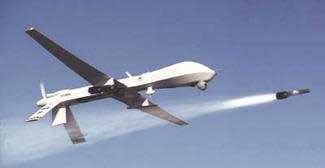 PESHAWAR: Of the 44 Predator strikes carried out by the American drones in the tribal areas of Pakistan in 12 months of 2009, only five were able to hit their actual targets, killing five key Al Qaeda and Taliban leaders, but at the cost of around 700 innocent civilian lives.
According to the figures compiled by the Pakistani authorities, the Afghanistan-based US drones killed 708 people in 44 predator attacks targeting the Pakistani tribal areas between January 1 and December 31, 2009. For each Al Qaeda and Taliban terrorist killed by the American drones, 140 civilian Pakistanis also had to die. Over 90 percent of those killed in the deadly missile strikes were innocent civilians.
The success percentage for the drone hits during 2009 is hardly 11 percent. On average, 58 civilians were killed in these attacks every month, 12 persons every week and almost two people every day. Most of the hits were conducted on the basis of human intelligence, reportedly provided by the Pakistani and Afghan tribesmen, who are spying for the US-led allied forces in Afghanistan.
Of the five successful predator attacks carried out in 2009, the first one came on January 1, which reportedly killed two senior al-Qaeda leaders – Usama al-Kin and Sheikh Ahmed Salim, both wanted by the American Federal Bureau of Investigation (FBI). Kin was the chief operational commander of Al Qaeda in Pakistan and had replaced Abu Faraj Al Libi after his arrest in 2004.
The second successful drone attack was conducted on August 5 in South Waziristan that killed the most wanted fugitive chief of the Tehrik-e-Taliban Pakistan Baitullah Mehsud along with his wife. The US State Department had announces a $5m head money for information leading to Baitullah , making him the only Pakistani fugitive with the head money separately announced by Islamabad and Washington.
Israeli forces attack Gaza Strip
Press TV – January 1, 2010 23:36:23 GMT
 |
Israeli warplanes and tanks have carried out attacks across the Gaza Strip, damaging residential areas and leaving four Palestinians wounded.
The airstrikes which targeted residential areas in northern and central Gaza Strip, caused panic among children in the region, a Press TV correspondent reported on Friday.
Witnesses said Israeli F16 fighters fired two missiles and Israeli tanks fired two shells that landed at empty areas east and northeast of Gaza City, DPA reported.
Local ambulances took the wounded from eastern Gaza to hospital for medical treatment, according to medical sources.
An Israeli army spokesman confirmed the attacks, but gave no further details, AFP reported.
Following the airstrikes, Israeli warplanes were still hovering about the strip, a Press TV correspondent reported.
The attacks were reminiscent of Israel’s three-week-long onslaught on the Gaza Strip, which was launched in late December 2008 and continued into the New Year.
More than 1,400 Palestinians were killed during the 2008-2009 Israeli land, sea and air offensive in the Gaza Strip which also devastated a large part of the infrastructure, inflicting about USD 2 billion in damage on the Gazan economy.
Rabbis to US Ambassador: Time to ‘Go Biblical’ with Arabs
By Gil Ronen | December 30, 2009
(IsraelNN.com) A delegation of the Rabbinical Congress for Peace (RCP) met with U.S. Ambassador to Israel, Mr. James Cunningham, today and called for a reassessment of the entire U.S. policy vis-à-vis the Israelis and Palestinians. The rabbis told Ambassador Cunningham that it was time to try the Biblical approach to the dispute over the Land of Israel.
“The past 17 years have proven without a shadow of a doubt that every square inch ceded by Israel to the Palestinians was transformed into a platform of hatred and terrorism,” RCP Director Rabbi Avrohom Shmuel Lewin told the ambassador. “In other words, the ‘land for peace’ formula in the Israel-Palestinian context, besides being a formula that goes against the Divine will, is ineffective, obsolete, and an exercise in futility. Most of all it is a dangerous policy that only leads to bloodshed and instability in the region and harms vital American interests in the region as well,” Lewin said.
‘Land for peace doesn’t work’
The delegation was headed by Rabbi Joseph Gerlitzky, Chairman of the RCP, who is also the Rabbi
of Central Tel Aviv where the US embassy is located. Rabbi Gerlitzky presented the ambassador with the Halachic (Jewish legal) ruling signed by over 350 prominent rabbis in Israel that it is forbidden to give up even one inch of territory controlled by Israel today because it will bring bloodshed and instability to the region.
“In the name of the overwhelming majority of rabbis in Israel,” he said, “we request of you Mr. Ambassador, to convey our Halachic message to President Barack Obama that it is time for a complete reversal and reassessment of U.S. policy in the Middle East. The ‘land for peace’ policy never worked and harms U.S. interests in the region and the world at large.”
 Left to right: Rabbi Sholom Gold, Mr. Marc Sievers of the US Embassy, Rabbi Dov Lior, Rabbi Joseph Gerlitzky, Ambassador James Cunningham, Rabbi Moshe Havlin, Rabbi Avrohom S. Lewin. The Rabbis handed the ambassador a Halachic Ruling signed by over 350 rabbis in Israel that forbids giving up land controlled by Israel today.
The ambassador was visibly moved by Rabbi Sholom Gold, a leading rabbi in Jerusalem, who described the suffering that the Jewish People have endured ever since the implementation of the Oslo Accords and the agreements that followed. “It’s all a play of words, there is no peace process,” he said. “From the day that we started conceding and withdrawing we did not have one day of rest and peace. Why should our enemies want to make peace with us when they see that with terrorism they get what they want? Even the U.S., Israel’s supposedly best friend, sides with them in demanding a freeze and evacuation of settlements. Is the triumph of Arab terror one of American interests?” Gold asked.
Going Biblical
Rabbi Dov Lior, the Rabbi of Kiryat Arba-Hevron, said: “G-d gave the US the power and influence to affect the rest of the world and supporting Israel is the key to America’s success.”
Ambassador Cunningham told the rabbis that he does not see how the problem can be solved “without taking into consideration the Palestinians,” to which Rabbi Gold remarked: “Ever since we started taking the Palestinians into consideration the situation only worsened.”
The ambassador asked the rabbis, “So what is your solution to the problem?”
Rabbi Gerlitzky replied: “You must switch the entire approach to the situation. We all believe in the Holy Bible and up until now we tried every formula except for that which is delineated in the Bible. Let’s try it and who knows, Mr. Ambassador, maybe this is your defining moment, that G-d Almighty has placed you in this capacity in order to precipitate a new course which will bring a true peace to the entire region.”
‘The two-state solution is starting to look impractical’
By Jonathan Cook
The National
December 31. 2009
NAZARETH // The biggest effect for Israel’s 1.3 million Palestinian citizens of its assault on Gaza last winter has been to smash any remaining illusions that there is a future for the minority in a Jewish state, the community’s leaders have agreed.
They say that minority voters have almost completely abandoned Zionist parties, even left-wing ones, believing that none is really interested in a peaceful solution to the country’s conflict with the Palestinians.
That was reflected in February, one month after Operation Cast Lead ended, in the lowest turnout ever posted by the Palestinian minority in an election. Only 53 per cent voted, down more than 25 percentage points since the mid-1990s, in the more optimistic Oslo period.
Haneen Zoubi, who was elected to the Israeli parliament for the first time in 2009, pointed out that the minority’s share of the vote for Jewish parties had fallen to an all-time low of 17 per cent. Back in the early 1990s half of Israel’s Palestinian voters supported such parties.
“More and more Palestinian citizens are understanding that Israel is not serious about negotiations for peace,” she said. “People are disillusioned with a leadership that is simply trying to buy time and manage the conflict rather than solve it.”
That view was shared by Mohammed Zeidan, director of the Arab Association for Human Rights, based in Nazareth. “We need a new way of dealing with Israel. The two-state solution is starting to look impractical and that has given a significant push to the idea that Palestinians inside Israel should be campaigning for a single state for both peoples.”
This new-found political confidence was manifest during the Gaza offensive, Mr Zeidan said, when Palestinian citizens held the biggest protests in their history. The largest, in the northern city of Sakhnin, drew a crowd of at least 100,000.
“There is much more certainty among the Palestinian public and leadership inside Israel that it has a right to speak out on pan-Palestinian issues,” he said.
“Once, we tended to remain on the sidelines, waiting to take our political cues from the Palestinian leadership outside Israel. Now, the Palestinian Authority is seen to be damaging the popular consensus among Palestinians and people here are looking for their own answers.”
One Palestinian party, the National Democratic Assembly, even went so far as to call for the resignation of Mahmoud Abbas, the Palestinian president, during the attack on Gaza after his Palestinian Authority was seen to be suppressing dissent in the West Bank.
Ms Zoubi, a NDA member, said: “It was clear that Israel would have had a much harder time dealing with the fallout from Gaza, including the Goldstone report, were it not for the silence of Mahmoud Abbas. He is facing a lot of anger and criticism from Palestinians inside Israel.”
Jafar Farah, director of Mossawa, a Haifa-based advocacy group for the minority, said last year’s attack had led directly to the current government of Benjamin Netanyahu, one of the most right wing in Israel’s history.
“Ever since, we have seen an attack on freedoms and the rights of Palestinian citizens,” he said. “There have been at least 25 discriminatory laws proposed over the past six months. Most have yet to be approved but the implications of the legislative push are clear.”
Israeli forces shut down Hebron tree planting
January 1, 2010
Hebron – Ma’an – Israeli authorities banned a group of Palestinians from planting trees near the West Bank city of Hebron on Friday after settlers disrupted their work, organizers said.
Dozens of Palestinian residents were planting trees in the Al-Buwiryah area, near the settlement of Kiryat Arba, responding to a call from senior Fatah leaders.
Members of the group said settlers arrived in the area, interrupting the planting. Israeli soldiers on the scene declared the area a closed military zone and confiscated a number of trees, participants said.
The soldiers also ordered a Palestinian photojournalist, Nasser Ash-Shyukhi, not to photograph the incident.
Fed Judge Gives Blackwater Huge New Year’s Gift, Dismisses All Charges In Iraq Massacre
By Jeremy Scahill | Rebel Reports | December 31, 2009
A federal judge in Washington DC has given Erik Prince’s Blackwater mercenaries a huge New Year’s gift. Judge Ricardo Urbina dismissed all charges against the five Blackwater operatives accused of gunning down 14 innocent Iraqis in Baghdad’s Nisour Square in September 2007. Judge Urbina’s order, issued late in the afternoon on New Year’s Eve is a stunning blow for the Iraqi victims’ families and sends a clear message that US-funded mercenaries are above all systems of law—US and international.
In a memo defending his opinion, Urbina cited a similar rationale used in the dismissal of charges against Iran-Contra figure Oliver North—namely that the government violated the rights of the Blackwater men by using statements they made to investigators in the immediate aftermath of the shooting to build a case against the guards, which Urbina said qualified for “derivative use immunity.” Urbina wrote that he agreed that “the government violated [the Blackwater guards’] constitutional rights by utilizing statements they made to Department of State investigators, which were compelled under a threat of job loss.” He added that the “government is prohibited from using such compelled statements or any evidence obtained as a result of those statements” to bring indictments.
Urbina concluded: “the government has utterly failed to prove that it made no impermissible use of the defendants’ statements or that such use was harmless beyond a reasonable doubt. Accordingly, the court must dismiss the indictment against all of the defendants.”
The Nisour Square massacre was the single deadliest incident involving private US forces in Iraq. Seventeen Iraqis were killed and more than twenty wounded.
For those interested, here are the judge’s order and the 90 page memo defending the order.
Israeli settlers uproot trees and destroy natural water spring in northern West Bank
By Ghassan Bannoura – IMEMC News & Agencies – December 31, 2009
 Photo – Multaqa.org
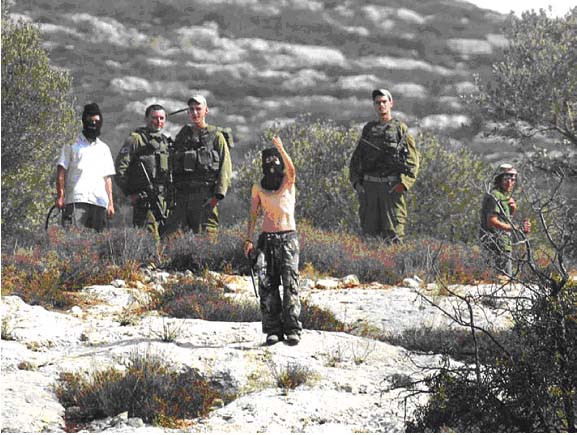
Israeli settlers uprooted trees and destroyed a natural water spring on Thursday that belongs to the villagers of Qarawit Bani Hassan in northern West Bank.
The villagers told local Media that the settlers destroyed the natural water spring that supplies the village and that its is their only source of water.
The settlers committed their attack under the protection of the Israeli military, the villagers added. The settlers came from the nearby settlement of Yaker, an illegal Israeli settlement built on land that was taken from the villagers of Qarawit Bani Hassan.
Western troops accused of executing 10 Afghan civilians, including children
By Jerome Starkey In Kabul | The Times | December 30, 2009
Afghan investigators today accused US-led troops of dragging ten civilians from their beds and shooting them dead during a night raid.
Officials said that eight children and teenagers were among the dead and all but one of the victims were from the same family.
The reports led to angry protests in Kabul and Jalalabad, with children as young as 10 chanting “Death to America” and demanding foreign forces leave Afghanistan.
President Karzai sent a team of investigators to Narang district, in Kunar province, after reports emerged of a massacre. “The delegation concluded that a unit of international forces descended from a plane on Sunday night into Ghazi Khan village in Narang district of the eastern province of Kunar and took ten people from three homes, eight of them school students in grades six, nine and 10, one of them a guest, the rest from the same family, and shot them dead,” a statement on President Karzai’s website said.
Asked if the people were shot outside their homes, the President’s spokesman Waheed Omar said: “That is our understanding.”
Local elders confirmed that ten people were killed, but their accounts of raid differed.
“Three of the children were killed in their bedroom,” said a local elder Jan Mohammed. “The other five had their hands bound, then they were killed.”
According to the presidential statement, local US forces were “unaware of the incident”.
Investigators spoke to the headmaster of the local school who confirmed that all the children – aged 11 to 17 – were his students.
A spokesman for the US-led International Security Assistance Force (Isaf) was not immediately available for comment on the allegations.
A senior Western military official said that US Special Forces had been conducting operations in the area, separately from Isaf.
Military officials insisted the dead were all part of a cell responsible for manufacturing improvised explosive devices (IEDs).
“This was a joint operation that was conducted against an IED cell that Afghan and US officials had been developing information against for some time,” a senior Nato source said.
Witnesses: Soldiers assault four workers
30/12/2009 12:48
 [Maan Images – Archive]
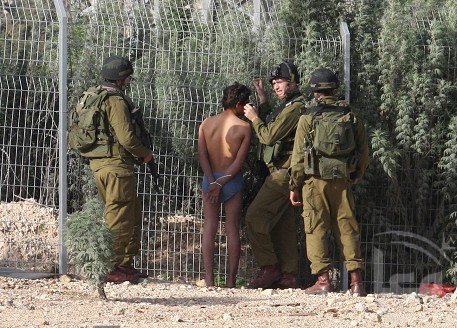
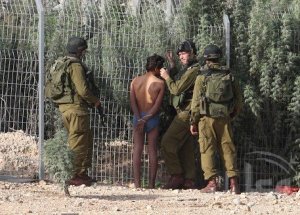
Bethlehem – Ma’an – Israeli soldiers assaulted four Palestinian workers on Tuesday night in the West Bank village of Al-Walajah, near Bethlehem, witnesses told Ma’an.
Residents of the village described how the soldiers broke the legs of three men, and arrested a fourth, taking him to an unknown detention center. Three of the men were dragged to a field in Al-Walajah, the witnesses added.
The reason for the reported assault was unclear.
Residents of Al-Walajah said three of the men were taken to the hospital in the neighboring town of Beit Jala.
One of the men was identified as Anees Kabha, a resident of the northern West Bank.
A military spokesman said he was not aware of any reported incident, and that the area was under the jurisdiction of the border police.
Featured Video

New positive ivermectin evidence
or go to
Aletho News Archives – Video-Images
From the Archives
Fanatical Followers of the Covid Regime: A Jim Jones-Style Cult?
By Professor Roger Watson and Dr. Niall McCrae | The Daily Sceptic | November 15, 2021
As scholars at leading British universities over recent decades, we witnessed the replacement of critical thinking and debate by narrative: facts are discrimination and scientific method is imperialism; truth, instead, is derived from ‘progressive’ values. This educational trend may be a major contributory factor to the ease in which society has been inculcated to the Covid ‘new normal’ of masking, testing, and repeated doses of vaccines for a disease of similar risk to severe influenza.
One doesn’t need much critical reasoning to observe the flawed logic of some vaccination enthusiasts, such as people who respond to experiencing any side effects, however debilitating, by saying “at least I know it’s working”, or, after contracting the disease despite their promised inoculation (over 90% effective, according to initial drug company claims), “I’d have been worse off without the jab.” … continue
Blog Roll
 Aletho News
- EU Council Advances Chat Control 2.0 Scanning Proposal
- Ex-Greek MEP files complaint against Israeli spyware firm over alleged Pegasus surveillance
- Troubling ideas throughout the Torah, Talmud, Mishneh Torah and Tanya
- ‘Grave, alarming’: Iran mission on Trump’s UNGA ‘annihilation’ threats
- Najaf airport to reopen to Iranian flights within 24 hours: Ambassador
- From ‘How Will This End For Iran’ to ‘When America Walks Away’: A tale of two Economist covers
- Tehran blasts ‘baseless’ speculation linking Iran to alleged bomb plot at UK air base
- The Rise And… Rise Of ‘Color Revolutions’
- The Coming GOP Bloodbath?
- Arctic Scare Stories Melt Away
- If Americans Knew
- Netanyahu Asked UAE Leader to Deny Report on Oct. 7 Warning in Secret Visit, Sources Say
- CNN Chief Int’l Correspondent Clarissa Ward on Journalists in Gaza
- Democratic Party Consultants Surround Troy Jackson with Pro-Israel Donors
- Christian Leader Responds To Netanyahu’s Claims Regarding Palestinian Christians
- In Gaza, ‘Whoever Survives the Bombing Won’t Survive the Rubble’
- Israel kills more Palestinians, amid push to resettle Gaza – Daily Update
- Israel forces Gazans to live in constant peril – Daily Update
- Deconstructing Netanyahu’s pants-on-fire UN rant – Daily Update
- Trump betrayed voters with his campaign lies and prioritized a foreign country once he took office
- Netanyahu calls Israel’s war in Gaza ‘opposite of genocide’ in UN speech to near-empty hall
- No Tricks Zone
- New Study: Earth And Venus Surface Warmth Largely Explained By Convection And Lapse Rate, Not CO2 Or Radiation
- 2025 Nature Paper Claiming Worsening Global Drought Gets RETRACTED …Heavily Flawed
- New Study: ‘Global Drought Shows No Detectable Recent Acceleration Under Climate Warming’
- Economic Masterminds: German Socialists Suggest Taxing Productivity Gains Stemming From Using AI
- The South China Sea Has Not Been Cooperating With The Climate Change Narrative
- Energy Crisis: Germany Enters Heating Season With Historically Low Gas Reserve Fill Levels
- New Study: The Antarctic Ice Sheet Gained Mass From 2020-2024 Due To Staggering Snow And Ice Accumulation
- Study: Ocean Heating Rates From Thousands Of Years Ago ‘Dwarf’ Modern Ocean Heating Rates
- Climate Extremists Target, Attack Large-Scale Power Grid Infrastructure In Germany!
- New Study: Antarctic Ice Melt Has Contributed Less Than 1 Centimeter To Sea Level Rise In The Last 30 Years

