Amnesty urges Israel to release or try three Palestinians
By Agence France Presse | January 09, 2010
 |
OCCUPIED JERUSALEM: Human rights group Amnesty International urged Israel on Friday to release or fairly try three Palestinian jailed for protesting against the West Bank separation barrier. The three, two of whom are held without charges, may be “prisoners of conscience, held for legitimately voicing their opposition to the fence/wall,” Amnesty said in a letter to Defense Minister Ehud Barak.
“These men have all been involved in campaigning against the building of this construction, much of it on the land of the occupied West Bank, and we fear that this is the real reason for their imprisonment,” said Malcolm Smart, director of Amnesty’s Middle East and North Africa program.
“If this is the case they must be released immediately and unconditionally,” he said.
Jamal Juma, coordinator of the Stop the Wall campaign, has not been charged with any offence since his arrest on December 16 and has not had access to his lawyer.
He is held under Israeli military law, which applies to the occupied West Bank.
“As someone who holds a Jerusalem ID card, according to Israeli law his case should be handled under the country’s civil, not military, legal system,” the London-based human rights watchdog said.
Mohammad Othman is also held without charge since September 22. He was arrested upon his return from Norway where he met activist groups and campaigned against the wall, Amnesty said.
Abdullah Abu Rahma, who heads Popular Committee Against the Wall in the West Bank village of Bilin, was arrested on December 10.
He has been charged with incitement, stone-throwing, and possession of arms, the latter for collecting spent cartridges and tear gas grenades used by Israeli forces to disperse anti-wall protesters.
“These three men are all well known for their defense of the human rights of Palestinians. In the unlikely event that there are genuine grounds to prosecute these men, they should be charged with recognizable criminal offences and brought promptly to trial in full conformity with international fair trial standards,” said Smart.
‘Hospitals may in no circumstances be the object of attack’
Part 13 of a series recounting the findings of South African jurist Richard Goldstone’s UN Fact Finding Mission on the Gaza Conflict.
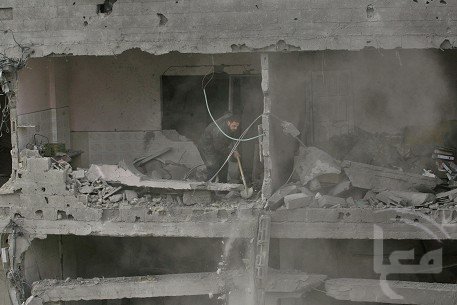 Bethlehem – Ma’an – On 8 January 2009, one year ago today, Israeli artillery shells struck the seventh-floor apartment of Dr Jaber Abu An-Naja, the former PLO ambassador to Senegal and a well-known Fatah politician.
The doctor’s wife and son-in-law were killed immediately as they sat on the balcony eating pastries. His wife was cut in half by the explosion and his son-in-law was thrown from the balcony on to the street below.
His daughter, Ihsan, was seriously injured and taken for treatment to Al-Quds Hospital, a medical center located near Abu An-Naja’s and a number of other civilian apartment buildings on Al-Abraj Street in Gaza’s Tal El Hawa district, which had come under attack for four days.
According to three senior doctors at the hospital and two residents from Al-Abraj Street, at some point between 3 and 6 January several tanks were stationed several hundred meters east of Al-Quds, visible from the hospital’s ambulance depot. Throughout the days of 5-8 January, there was significant artillery fire on apartment buildings nearby to where Abu An-Naja’s relatives were killed.
The shelling on 8 January was just one incident of dozens in and around the area that damaged portions of the hospital and destroyed other buildings in their entirety during Israel’s three-week assault on the Gaza Strip, which ended in late January 2009.
Continuous damage to medical buildings
When the air offensive began on 27 December, for instance, a government building opposite the hospital’s administrative building on Al-Abraj Street was almost totally destroyed. The building had previously served as a criminal detention center and is still referred to locally by that designation although it had recently been used for other purposes, including customs administration. The same building was reportedly struck on a number of other occasions after 27 December, after which the site was completely demolished.
Kitty-corner to the hospital, on Jami’at Ad-Duwal Al-Arabiya Street, was another building rented to the de facto government and used primarily as a public registry office. At the time of writing, only the ground floor of the building remained. Witnesses, speaking to the Goldstone commission, indicated that the upper floors had been destroyed, probably by artillery fire, on 6 and 7 January.
By 15 January, the area immediately to the south of Al-Quds Hospital (the customs building and the registry building) had been totally or very substantially destroyed. The area to the east on Al-Abraj Street had been significantly attacked by artillery fire.
By this time, several hundred civilians had also gathered in the hospital buildings seeking safety.
The Al-Quds Hospital belongs to the Palestinian Red Crescent Society (PRCS). It consists of three buildings facing west toward the sea on the corner of Jami’at Ad-Duwal Al-Arabiya Street and Al-Abraj Street in the area of Tel Al-Hawa.
The building nearest the corner was seven stories high. Its principal purposes were administrative and cultural rather than medical. It stored a huge quantity of PRCS archives. The middle building contained the accident and emergency treatment areas as well as other offices of medical and administrative staff. The building furthest from the corner was the main medical building with operating theaters in the basement. About 200 meters east on Al-Abraj Street was the PRCS ambulance depot.
The buildings all suffered significant damage in the course of an Israeli bombardment on 15 January 2009, which included the use of white phosphorous, endangering the lives of staff and more than 50 patients. There was no warning given for any of the attacks.
Direct Attack on the Hospital
During the night of 14 January, Israeli forces began an extended barrage of artillery fire over the area. It continued into the morning of 15 January. Between 8 and 9am doctors in the main building were in the principal meeting room when shells landed on either side of the building. They saw white phosphorous wedges burning near a container of diesel and efforts were successfully made to move those away.
The initial explosions blew out the office windows. The administrative building on the corner was also hit. Because the hospital building was largely constructed out of timber (rare in Gaza), staff were worried that the fire would spread. A witness described how hospital staff, including senior doctors, all sought to break, by hand, the wooden bridge linking the administrative building to the hospital building, in an attempt to prevent the fire from spreading.
Shortly after the initial explosions and fire were observed, a tank shell directly penetrated the rear of the middle hospital building. That part of the building was made of corrugated iron. The shell made a clearly defined home in the hospital wall, and the impact crater continues through the cement wall into the hospital’s pharmacy.The pharmacy was completely destroyed as a result.
An eyewitness said that through the resulting hole, he observed a tank on a road between two buildings about 400 meters east of the building. Although he could not say whether it was this tank that had struck the hospital directly, it was in a direct line in relation to the entry point of the shell.
No civil defense forces were available to fight the fire at the hospital, so medical staff worked on their own to save the building and ensure the safety of the patients.
It was not until 4pm that the International Committee of the Red Cross (ICRC) was able to respond and help evacuate patients. Officials at the ICRC made it clear upon arrival that it would be able to carry out this procedure only once. Those not evacuated at 4pm were relocated to the operating theaters of the damaged hospital.
At 8pm, another fire broke out in the hospital. As a result, a total evacuation of remaining patients and those who had sought refuge at the hospital was carried out. It was at this stage that one of the senior doctors took an eight-year-old girl who had been struck by a bullet in the jaw and was critically ill to Ash-Shifa Hospital, where she later died. One of the medical staff at the hospital told the Goldstone commission that there was very heavy fire in the area, and he felt sure there were direct hits by Israeli forces on the ambulance depot.
As the hospital was evacuated, the depot, 200 meters to the east in Al-Abraj Street, sustained damage, and one of its principal buildings was entirely destroyed. Remnants of three PRCS ambulances that had been parked at the entrance to the depot were seen were still visible by summer. Two had been crushed by tanks but not burned out. The other ambulance showed signs of having been struck directly in the front below the windscreen by a missile of some description and having been burned out.
The devastation caused to both the hospital buildings, including the loss of all archives in the administrative building, and the ambulance depot was immense, as was the risk to the safety of the patients.
The Israeli position
In the conclusions of their investigations on 22 April 2009, Israeli authorities did not specifically mention the incident at Al-Quds Hospital, although a portion of it addresses some allegations regarding the use of ambulances. In another report, released in July 2009, the Israeli government quotes part of an article from Newsweek magazine:
One of the most notorious incidents during the war was the Jan. 15 shelling of the Palestinian Red Crescent Society buildings in the downtown Tal-al Hawa part of Gaza City, followed by a shell hitting their Al Quds Hospital next door; the subsequent fire forced all 500 patients to be evacuated. Asked if there were any militants firing from the hospital or the Red Crescent buildings, hospital director general Dr. Khalid Judah chose his words carefully. “I am not able to say if anyone was using the PRCS buildings [the two Palestine Red Crescent Society buildings adjacent to the hospital], but I know for a fact that no one was using the hospital.”
In the Tal-al Hawa neighborhood nearby, however, Talal Safadi, an official in the leftist Palestinian People’s Party, said that resistance fighters were firing from positions all around the hospital. He shrugged that off, having a bigger beef with Hamas. “They failed to win the battle.” Or as his fellow PPP official, Walid al Awad, put it: “It was a mistake to give Israel the excuse to come in.” [para. 173].
While the Israeli government does not comment further on the specific attack, it would appear to invoke these comments to justify the strikes on the hospital and surrounding area.
The final report of Richard Goldstone’s UN inquiry understood that the Israeli government “may consider relying on journalists’ reporting as likely to be treated as more impartial than reliance on its own intelligence information,” but said its investigators were “nonetheless struck by the lack of any suggestion in Israel’s report of July 2009 that there were members of armed groups present in the hospital at the time.”
The report also said it addressed questions to Israel’s government regarding the use of white phosphorous munitions against the hospital and the direct military advantage pursued by their use under the circumstances, but received no reply.
Factual findings
The Goldstone report finds that on the morning of 15 January the hospital building and the administrative building were struck by a number of shells containing white phosphorous and by at least one high explosive shell. “The fires these caused led to panic and chaos among the sick and wounded, necessitated two evacuations in extremely perilous conditions, caused huge financial losses as a result of the damage and put the lives of several hundred civilians including medical staff at very great risk.”
In its conclusions, the mission also notes that as a result of the conditions the attack created, the hospital was unable to provide the necessary care for an eight-year-old girl. “Despite heroic attempts to save her, she died later in another hospital. The girl had been shot by an Israeli sniper. The Mission finds the Israeli armed forces responsible for her death.”
On the issue of armed groups being present in the hospital buildings, the team does not agree that anything in the extract cited from Newsweek magazine justifies the conclusion that the hospital premises were being used by armed groups.
The fact that Dr Judah spoke with certainty about matters within his knowledge “cannot be presumed to mean that he believed other parts of the hospital premises were being used by armed groups,” the Goldstone report notes, speculating that it could have been “journalistic gloss and is tantamount to putting words in the mouth of Dr. Judah.” The comments attributed to Safadi that “resistance fighters were firing from positions all around the hospital” can mean either that people were inside the hospital firing or were in positions outside but near to the hospital, Goldstone adds, “The journalist did not clarify precisely what was meant.”
The mission carried out over eight hours of interviews with senior and junior staff at the hospital, and having sought to verify the matter with others, including journalists who were in the area at that time, concluded that it was unlikely there was any armed presence in any of the hospital buildings at the time of the attack. It also notes that no warning was given at any point of an imminent strike and at no time has the Israeli government suggested such a warning was given, compared to other instances in which they insist they did.
Goldstone’s report states that in reviewing the scene at the time of the strikes, “it is important to bear in mind that a great deal of destruction had already occurred and that buildings with an apparent connection to the local government had been attacked and largely destroyed. As such, Israeli tanks had a relatively clear view of the area immediately to the south of the hospital.
“The Mission also notes that as a result of the attacks on al-Abraj Street by tanks for several days, the scope for resistance, if any, from that particular quarter had been significantly reduced.
The mission concedes that it was aware of reports that there was significant resistance from Palestinian groups in the area on the night of 14 January, in which Israeli troops entered buildings along the street and allegedly used human shields to check if there was any presence of enemy combatants of explosive devices and found none.
Legal findings
Article 18 of the Fourth Geneva Convention provides that civilian hospitals may in no circumstances be the object of attack but shall at all times be respected and protected by the parties to the conflict. Civilian hospitals’ protection shall cease “only after due warning has been given, naming, in all appropriate cases, a reasonable time limit and after such warning has remained unheeded,” article 19 states.
“Even in the unlikely event that there was any armed group present on hospital premises, there is no suggestion even by the Israeli authorities that a warning was given to the hospital of an intention to strike it,” the Goldstone report states. “As such the Mission finds on the information before it that Israeli armed forces violated articles 18 and 19 of the Fourth Geneva Convention.
“On considering the information before it, the Mission takes the view that there was intent to strike the hospital, as evidenced in particular by the high explosive artillery shell that penetrated the rear of the hospital and destroyed the pharmacy.
“Even if it is suggested that there was no intent to directly strike the hospital but that Palestinian armed groups had taken up positions near al-Quds hospital, the Israeli armed forces would still have been bound to ensure that risk of death, injury or damage to the people in the hospital or the hospital itself would not be excessive in relation to the military advantage anticipated in attacking the hospital.
“Taking into account the weapons used, and in particular the use of white phosphorous in and around a hospital that the Israeli armed forces knew was not only dealing with scores of injured and wounded but also giving shelter to several hundred civilians, the Mission finds, based on all the information available to it, that in directly striking the hospital and the ambulance depot the Israeli armed forces in these circumstances violated article 18 of the Fourth Geneva Convention and violated customary international law in relation to proportionality.”
Settlers desecrate olive groves in Burin
International Solidarity Movement | January 7, 2010
Twenty olive trees belonging to the Sufan family of Burin village were destroyed by settlers this morning. Burin, located in the northern West Bank, comes under frequent attack from the settlements of Yitzhar and Bracha enveloping the village.
Under the cover of dark, settlers entered the olive groves of the Sufan family home at around 3am and began chopping the trees. The attack is the third of its kind in the last two months, with the family losing 96 trees in November. The family’s home sits on the southern tip of the village towards the hill ascending to Yitzhar settlement, and bears the brunt of their violent neighbours’ attacks. It is the third attack of its kind in the last two months alone, with the family losing 96 of their olive trees in November directly after the harvest.
The Sufan family has experienced harassment from the settlement almost from the day of its construction in 1982, but the violence has peaked in the last three years, seeing settlers attempting to torch the home on several occasions, several rooms of which are still burnt and damaged. The family has been forced to equip every window in the house with strong wire fencing, in the hopes of protecting themselves when settlers descend on the property en masse, hurling stones at the house. Even the family’s livestock have come under attack.
Background:
Burin village is located in a valley directly between two mountains, colonised by two of the northern West Bank’s most extreme settlements – Yitzhar and Bracha. Burin’s 1000 residents have suffered greatly over the years, seeing destruction and arson of home and property, the slaughter of livestock and constant violence and intimidation at the hands of their neighbours. In addition to this, the village’s available farmland is under threat and continues to shrink, as Burin farmers abandon their lands, fearing the risk of harassment lest they be spotted by settlers and provoke an attack.
Yitzhar settlement is notorious for its fanatically ideological residents, the violence they inflict on neighboring Palestinian communities, and the extremist doctrines they espouse. Saturdays, the Jewish religious holiday of Shabbat, typically sees Yitzhar settlers roused to fever pitch zeal, wrecking havoc upon Palestinian villages unfortunate enough to live in its shadow. Settlers have frequently launched attacks with rocks, knives, guns and arson on Palestinian families and property in the area. In one of the most extreme act of terrorism students of the Yitzhar Od Yosef Hai yeshiva fired homemade rockets on Burin in 2008.
Not content with committing their own acts of brutality, Yitzhar rabbis are key players in incitement of targeted violence across the West Bank. Rabbi Elitzur from the same Yitzhar yeshiva published a book this November titled “The Handbook for the Killing of Gentiles”, condoning even the murder of non-Jewish babies, lest they grow to “be dangerous like their parents”. Rabbi Elitzur is vocal in his encouragement of “operations of reciprocal responsibility” such as the arson attack made on Yasuf mosque in November 2009.
Despite West Banks settlements’ status as illegal under international law, Yitzhar was included in the Israeli governments’ recent “national priority map” as one of the settlements earmarked for financial support. Construction has continued unabated in both Yitzhar and Bracha, despite the 10-month “freeze” announced in November. Yitzhar and Bracha also receives significant funding from American donations, tax-deductible under U.S. government tax breaks for ‘charitable’ institutions.
Wave of arrests continue in Burqa village
 File photo
International Solidarity Movement | January 8, 2010
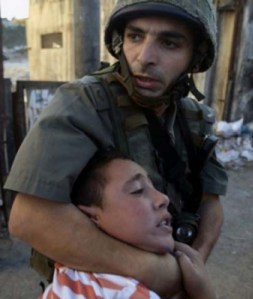
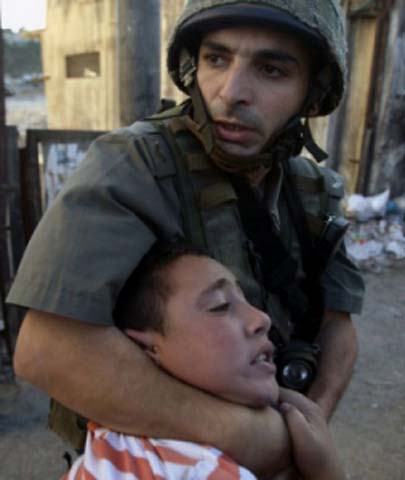
The Israeli army has abducted another young man from the northern West Bank village of Burqa. Muhammad Samir, 21 years old, was stopped outside the village by soldiers as he returned from his workplace in Tulkarem and arrested. Arrests and military invasions have surged this past month in Burqa, with Samir becoming the 22nd person taken since the beginning of December.
Samir was returning from his work at the Tulkarem offices of the Palestinian Authority at 10am yesterday morning when he was stopped at a flying checkpoint between Burqa and the neighbouring village of Bisaia. Upon checking his ID he was immediately place under arrest by soldiers. He was released from prison just two years ago, serving a two-year sentence from the age of 17.
The wave of arrests, primarily carried out in night raids on the village, have robbed Burqa of 22 young men in the past month alone. The village’s 4,000 residents sleep uneasily now, unknowing of who may be taken the next time the military comes. It is the standard story in hundreds of cases of its kind: young men, generally aged 16 or 17 and in their last year of school, arrested and charged with throwing stones at military jeeps when they enter the village.
International solidarity activists have initiated a nightly vigil in Burqa, joining local residents in keeping watch until the early hours of the morning in the hopes of documenting and de-escalating the violence of the night raids. During the invasions soldiers enter either by jeep or on foot, surrounding the homes of wanted people and preventing residents from leaving their home. Residents report extreme violence at the hands of the soldiers during invasions, with shots fired as the family is usually forced in to the bathroom for several hours and their home torn apart by soldiers, searching for weapons or other incriminating possessions.
Burqa has long been a target for Israeli Occupation Forces and its residents are no strangers to the senseless violence meted out by soldiers. The village itself became a training ground for Israeli soldiers preparing for battle in the 2006 war with Hezbollah, the village’s topography resembling that of southern Lebanon. Residents recall almost nightly invasions during the period, with soldiers storming the homes of families who were forced out in to the street, handcuffed and ID’d, only to be informed that they were participating in an Israeli military training exercise.
Atop the mountain overlooking Burqa sits Homesh, an Israeli settlement built on the village’s lands and evacuated by the military in 2005 as part of Ariel Sharon’s disengagement from 4 West Bank settlements and the 21 Jewish settlements in Gaza. Not that Burqa’s farmers have been permitted to recommence work on their lands – the area was declared a military zone following the settlement’s original evacuation, and so it has remained.
Nor has the evacuation of settlers from Homesh been maintained in the years following the disengagement. A campaign of reclamation, spearheaded by the extremist “Homesh First” organisation, has been growing ever since and has ensured a significant settler presence still active in the area. Despite the military’s repeated attempts to disperse the settlers, nothing has successfully prevented the Homesh First supporters from attempting to repopulate the area, particularly during Jewish religious holidays when settlers converge in their thousands on the site. Thus Burqa farmers’ goal of land reclamation is not just borne of the legitimate desire for vital lands to be returned to their legal owners, but also out of a real fear of resettlement of the site by ideological Israeli settlers.
Farmers of Burqa continue live under constant threat of violence at the hands of the settlers, vengeful in their attempts to lay claim to the stolen land. Over 5000 fertile dunums remain inaccessible to the Palestinian population. For the last two years the village has co-ordinated an annual trip to the contested area, re-planting and cultivating 95 dunums of land. Settlers have descended each time on the area soon after to destroy the farmers’ work, uprooting trees and destroying new wells built for irrigation. 25 dunums of the original 95 remain.
Gaza, Day 12: The shooting of Amal, Souad, Samar and Hajja
Part 12 of a series recounting the findings of South African jurist Richard Goldstone’s UN Fact Finding Mission on the Gaza Conflict.
Bethlehem – Ma’an – In the late morning of 7 January 2009, one year ago today, Israeli tanks moved onto a small piece of agricultural land in front of the of the house of Khalid Abd Rabbo and his wife Kawthar, on the ground floor of a four-story building in the eastern part of Izbat Abd Rabbo, a neighborhood east of Jabaliya inhabited primarily by members of their extended family.
Speaking to Richard Goldstone’s UN inquiry, Khalid recounted: “On January 7 at 12:50pm the Israeli army bulldozed our garden and the Israeli tanks were positioned in front of our house. They started yelling at us through the speakers and asked us to leave the house.”
Moments earlier, at 12:30pm, megaphone messages telling all residents to leave were heard across the neighborhood. According to one witness’s recollection, a radio message was also broadcast by Israeli forces around 12:30pm announcing that there would be a temporary cessation of shooting between 1 and 4pm that day, during which time residents of the area were asked to walk to central Jabaliya.
“Of course this happened when Israel had declared [a] ceasefire for four hours, January 7 from 1:00-4:00pm, and that was a truce back then and that’s when wounded civilians could be rescued, and in spite of all of that, in spite of all of this declaration, the Israeli army was there right in front of our house not attempting to move,” Khalid said.
Responding to the messages, Khalid, his wife Kawthar, their three daughters, nine-year-old Souad, five-year-old Samar, and three-year-old Amal, and his mother Hajja Souad stepped out of the house, all of them carrying white flags. Less than 10 meters from the door was a tank, turned toward their house. Two soldiers were sitting on top of it having a snack. It was 12:50pm.
“So we stood by our entrance and holding flags, white flags. The tanks were seven meters away from our house.”
The family stood still, waiting for orders from the soldiers, but none was given. “[W]e were by the entrance holding white flags and waiting for them to tell us what we should do, whether to go back inside the house or move to somewhere else. They did not say anything to us. There were two soldiers sitting on top of the tank. One of them was eating chips. The other one was eating chocolate. We were looking at them like what are we supposed to do, where should we go, but no reaction from them whatsoever.”
Without warning, a third soldier emerged from inside the tank and started shooting at the three girls and then also at their grandmother. Several bullets hit Souad in the chest, Amal in the stomach and Samar in the back. Hajja Souad was hit in the lower back and in the left arm.
“They starting shooting at the children with no reason, no reason, with no explanation, no pretext,” Khalid said. “My daughter, three years old, [her] stomach was, hit and her intestines were coming out. So really I was amazed at how could a soldier be firing at my daughter? So I carried my daughter, three years old. She could hardly breathe. Like I said, her stomach was wounded.
“My other daughter was also wounded in her chest. So I took both of them, Samar and Amal, inside the house. My wife and my mother and my other daughter Suad were still outside. All of a sudden my wife joined me carrying Suad. She was wounded also. Her chest was wounded by many bullets. My mother, 60 years old, she was carrying the white flag and she was wounded on her forearm and also in her stomach.”
Khalid and Kawthar carried their three daughters and mother back inside the house. There, they and the family members who had stayed inside tried to call for help by mobile phone. They also shouted for help and a neighbor, Sameeh Al-Sheikh, an ambulance driver who had his ambulance parked next to his house.
Sameeh put on his ambulance uniform and asked his son to put on a fluorescent jacket. They got in the ambulance, had driven a few meters from their house, when Israeli soldiers ordered them to halt and get out of the vehicle. Sameeh protested, saying he had heard cries for help from the family and intended to bring the wounded to hospital. The soldiers ordered him and his son to undress and then redress. They then ordered them to abandon the ambulance and to walk toward Jabaliya.
“So we were all inside the house and we started calling the ICRC [International Committee of the Red Cross], the ambulances, anybody to come and rescue us but nobody came and all of a sudden we heard an ambulance but all of a sudden nothing, silence. But later, we saw that the Israeli soldiers asked the ambulance drivers to come out of the car, to undress, and they bulldozed the ambulance with the tank.”
Not like before , when civilians were safe
Khalid’s family decided to stay inside the house, all gathered on the ground floor, as they had done safely during previous Israeli incursions into the neighborhood.
According to Khalid: “Our house, or our area rather, was subjected to many incursions and each and every time the army would invade the area, would come into our houses, but no harm was done to civilians or to children. Last time, that is before the last war on Gaza, that was on January 3, 2008, the Israeli army came in our house and stayed three days and destroyed many things inside the house but left without harming the civilians or the children. Now during the last war that is on January 7, 2009, actually the ground war had already started and we heard that Israel had declared war on Hamas.
“We are civilians. We have nothing to do with Hamas and we were used to have the Israeli army come into our area,” Khalid recalled in his testimony to Richard Goldstone’s UN inquiry. “So I thought this time we could stay in our houses. We had nothing to do with Hamas. We did not pose any danger to Hamas. The war, the ground war, started on Gaza and as of the first half hour approximately on January 4, the Israeli army controlled the whole area. There was no resistance in the area. It’s an area nearby the Israeli border. Of course we were inside the houses. We were surprised because the war went on for four days while we were still inside our houses.”
On 7 January 2009, however, when Amal and Souad died of their wounds, the family decided that they had to make an attempt to walk to Jabaliya. They would take Samar, the dead bodies of Amal and Souad, and their grandmother to hospital.
“My mother, 60 years old, was also dying. I was helpless. I didn’t know what to do for my children. There was my daughter dying in front of me. So I carried her and left the house even if I had to die myself because I couldn’t take it anymore. So I carried my daughter and left the house again so that the soldier, he might as just well kill my daughter and kill myself because I couldn’t take it anymore. I couldn’t let my children die in front of me.”
Khalid explained: “From 12:50 until 2:50 we were stuck inside the house. Once again, like I said, I went out to the soldier. They were there, three of them, and there was a Merkava tank positioned in front of the house. I was carrying Samar, even if I had to die, and I was surprised because the third soldier looked at me and two minutes later he went inside the tank and then he came out and he moved his hand just, you know, telling me you can go ahead. So I immediately went back home inside the house and told them we’re going to die anyway. So we don’t want to die inside the house. Let’s die outside the house. Let’s move.
“Although inside the house there [were] more than 25 children, my brothers, my sisters, my dad, my mom. So we had to bring children’s mattress to put my mom on top of the mattress because she was very tired. I carried my daughter Suad, three years old. She was dead… While we were moving, every ten meters they were shooting, once above our heads and the other time by our feet. ”
Khaled and Kawthar, as well as other family members and neighbors, carried the girls on their shoulders. Hajja Souad was carried by family and neighbors on a bed. Samar was transferred to Ash-Shifa Hospital and then, through Egypt, to Belgium, where she was still is in hospital at the time of writing.
“So we were trying to move and every now and then we would fall down. We walked for almost a kilometer and a half until we reached the edge of Jabaliya downtown. Of course, we reached the Kamal Idwan Hospital and they confirmed that the three of them were martyred…surprisingly enough they told me that Samar, no, she had survived and she was moved to Ash-Shiffa Hospital. I took the bodies of my two daughters in order to bury them. We didn’t have any time. This was an outrageous war and the Israeli army was moving around. So we had to bury them, Amal and Suad, and wait until they would bring Samar because we thought and we knew that Samar was going to die. ”
According to her parents, Samar suffered a spinal injury and will remain paraplegic for the rest of her life. “Samar, of course, and with God’s will, Samar survived, survived so that she would be the witness before the world for the atrocities,” Khalid said. “Samar survived, paralyzed. She can move only her arms. She can speak but the rest is paralyzed. She can speak for herself and she can tell her tragedy.”
According to Khalid, “I haven’t seen [Samar] since the events. My tragedy is still going on. It’s not over. So what crime did I commit? I have always been a peace-loving person. I’m for peace. I’ve always supported peace and despite [all that] happened to me I’m asking the world please, please help us live in peace. The Israeli army knows that, that I’ve never been a terrorist.
“… why did it happen to me, why did they come to my house, kill my children without having committed any crime. What did I do?
“There was no war. It was cold-blooded murder of children. That was not just accidental. No, the soldier even chuckled, like I said. I know that Israel has a very sophisticated technology and that every operation it carries out is actually filmed and I’m asking Israel please broadcast the film of the killing of my children. Did you see my children carrying any rockets?”
No home to return to
When Khalid returned to his home on 18 January 2009, his house, as most houses in that part of Izbat Abd Rabbo, had been demolished. He drew the UN fact-finding mission’s attention to an anti-tank mine under the rubble of a neighbor’s house.
He added: “I call upon the international community and ask the international community why my children were cold-bloodedly killed? Why were they fired on? My mother, 60, she was hit in her chest; my daughter Suad, eight years, in her chest; Samar, four years, in the chest; Amal, three years, in the chest, and this is despite the fact that they are all different sizes, all the targeting was at the chest.
“This was execution. This was utter execution and I’m asking the world what crime did my children commit? What danger did they pose for the Israeli army? I myself was there. Why didn’t they fire at me? Why didn’t they kill me and not let me see my children die in front of my eyes. My children, until now, I cannot get myself to realize there I was looking at them while they were dying.”
Factual findings
Goldstone’s team found Khalid and Kawthar Abd Rabbo to be credible and reliable witnesses. “It has no reason to doubt the veracity of the main elements of their testimony.” The mission also reviewed several sworn statements they and other eyewitnesses gave to NGOs about the incident and found them to be consistent with the account it received, according to the report.
Goldstone’s report notes that, in general, Izbat Abd Rabbo and the nearby areas of Jabal Al-Kashef and Jabal Al-Rayes saw some of the most intense combat during the military operations.
No perceived danger
The testimony of Khalid and Kawthar Abd Rabbo, however, shows that Israeli forces were not engaged in combat or fearing an attack at the time of the incident, the report states. Two soldiers were sitting on the tank in front of the family house and having a snack. “They clearly did not perceive any danger from the house, its occupants or the surroundings.
“Moreover, when the family, consisting of a man, a young and an elderly woman, and three small girls, some of them waving white flags, stepped out of the house, they stood still for several minutes waiting for instructions from the soldiers.”
“The Israeli soldiers could, therefore, not reasonably have perceived any threat from the group. Indeed, the fact that the gunfire was directed at the three girls and, subsequently, at the elderly woman, and not at the young adult couple, can be seen as further corroborating the finding that there was no reasonable ground for the soldier shooting to assume that any of the members of the group were directly participating in the hostilities,” Goldstone’s report states, finding “that the soldier deliberately directed lethal fire at Souad, Samar and Amal Abd Rabbo and at their grandmother, Hajja Souad Abd Rabbo.”
Goldstone’s report further states, that by preventing Sameeh Al-Sheikh from taking the wounded to the nearest hospital in his ambulance, Israeli forces deliberately aggravated the consequences of the shooting.
“The Mission recalls that the soldiers had forced Sameeh Al-Sheikh and his son to get out of the ambulance, undress and then redress. They therefore knew that they did not constitute a threat. Instead of allowing them to take the gravely wounded Samar Abd Rabbo to hospital, the soldiers forced Sameeh al-Sheikh and his son to abandon the ambulance and to walk towards Jabaliya.
Instructions given to Israeli forces: Low threshold for lethal force
The team found in the above incidents that “Israeli forces repeatedly opened fire on civilians who were not taking part in the hostilities and who posed no threat to them.” From that finding, the report extrapolated that the “incidents indicate that the instructions given to the Israeli armed forces moving into Gaza provided for a low threshold for the use of lethal fire against the civilian population.”
Goldstone found strong corroboration of this trend in the testimonies of Israeli soldiers collected by the Israeli NGO Breaking the Silence, and in the Protocol of the Rabin Academy’s “Fighters’ Talk.” These testimonies suggest in particular that the instructions given to the soldiers conveyed two “policies.” Both are an expression of the aim to eliminate as far as possible any risk to the lives of Israeli soldiers.
The first policy could be summarized, in the words of one of the soldiers: “if we see something suspect and shoot, better hit an innocent than hesitate to target an enemy.”
Another soldier attributed the following instructions to his battalion commander: “If you are not sure – shoot. If there is doubt then there is no doubt.” The first soldier summarized the briefing from the battalion commander as follows “the enemy was hiding behind civilian population. […] if we suspect someone, we should not give him the benefit of the doubt. Eventually, this could be an enemy, even if it’s some old woman approaching the house. It could be an old woman carrying an explosive charge.”
A third soldier explained “you don’t only shoot when threatened. The assumption is that you constantly feel threatened, so anything there threatens you, and you shoot. No one actually said ‘shoot regardless’ or ‘shoot anything that moves.’ But we were not ordered
to open fire only if there was a real threat.”
The report notes that some soldiers stated that they agreed with the instructions to “shoot in case of doubt.” One of them explained his profound discomfort with the policy and of how he and his comrades had attempted to question their commander after a clearly harmless man was shot. While they disagreed about the legitimacy and morality of the policy, they had little doubt about the terms of the instructions: each soldier and commander on the ground had to exercise judgment, but the policy was to shoot in case of doubt.
The second policy clearly emerging from the soldiers’ testimonies is explained by one of the soldiers as follows: “One of the things in this procedure [the outpost procedure, which is being applied in areas held by the Israeli armed forces after the Gaza ground invasion] is setting red lines. It means that whoever crosses this limit is shot, no questions asked. […] Shoot to kill.”
A soldier recounted one incident of the red-line policy: A family is ordered to leave their house. For reasons that remain unclear, probably a misunderstanding, the mother and two children turn left instead of right after having walked between 100 and 200 meters from their house. They thereby cross a “red line” established by the Israeli unit (of whose existence the mother and children could have no knowledge). An Israeli marksman on the roof of the house they had just left opened fire on the woman and her two children, killing them. As the soldier speaking at the Rabin Academy’s “Fighters’ Talk” a month later observes, “from our perspective, he [the marksman] did his job according to the orders he was given.”
Investigators also read testimony from soldiers who recounted cases in which, although a civilian had come within a distance from them which would have required opening fire under the rules imparted to them, they decided not to shoot because they did not consider the civilian a threat to them.
Legal findings: Direct assaults on civilians
According to Goldstone, the fundamental principles applicable to these incidents – cornerstones of both treaty-based and customary international humanitarian law – are that “the parties to the conflict shall at all times distinguish between the civilian population and combatants”452 and that “the civilian population as such, as well as individual civilians, shall not be the object of attack.”
Israel refers to the principle of distinction as “the first core principle of the Law of Armed Conflict.” It further states that “the IDF’s [Israeli army’s] emphasis on compliance with the Law of Armed Conflict was also directly incorporated into the rules of engagement for the Gaza Operation.” The principle of distinction was reportedly incorporated in the following terms: “Strikes shall be directed against military objectives and combatants only. It is absolutely prohibited to intentionally strike civilians or civilian objects (in contrast to incidental proportional harm).”
In reviewing the above incidents the mission found in every case that the Israeli armed forces carried out direct intentional strikes against civilians. In none of the cases reviewed were there any grounds which could have reasonably induced the Israeli armed forces to assume that the civilians attacked were in fact taking a direct part in the hostilities.
The team therefore finds that Israeli forces violated the prohibition under customary international law and reflected in article 51 (2) of Additional Protocol, that the civilian population as such will not be the object of attacks. This finding applies to the attacks on Amal, Souad, Samar, and Hajja Souad Abd Rabbo.
Not only are civilians not to be the object of attacks, they are also “entitled in all circumstances, to respect for their persons … protected especially against all acts of violence or threats thereof” (Fourth Geneva Convention, art. 27). Fundamental guarantees set out in article 75 of Additional Protocol I include the absolute prohibition “at any time and in any place” of “violence to the life, health, or physical or mental well-being of persons”. According to the facts presented to the mission, these provisions have been violated.
“The State of Israel would be responsible under international law for these internationally wrongful actions carried out by its agents,” the report states. “From the facts ascertained, the Mission finds that the conduct of the Israeli armed forces in these cases would constitute grave breaches of the Fourth Geneva Convention in respect of willful killings and willfully causing great suffering to protected persons456 and as such give rise to individual criminal responsibility.
“The Mission also finds that the direct targeting and arbitrary killing of Palestinian civilians is a violation by the Israeli armed forces of the right to life as provided in article 6 of the International Covenant on Civil and Political Rights.
“In most of the cases examined above, the Mission finds that the Israeli armed forces denied the medical emergency services access to the wounded civilians. …
“The Mission recalls that article 10 (2) of Additional Protocol I provides that ‘In all circumstances [the wounded] shall be treated humanely and shall receive, to the fullest extent practicable and with the least possible delay, the medical care and attention required by their condition. …’ This provision enjoys customary international law status. The Mission is mindful that ‘the obligation to protect and care for the wounded … is an obligation of means.’
“It applies whenever circumstances permit. However, “each party to the conflict must use its best efforts to provide protection and care for the wounded, the report states, including permitting humanitarian organizations to provide for their protection and care.
“The facts ascertained by the Mission establish that in the incidents investigated the Israeli armed forces did not use their best efforts to provide humanitarian organizations access to the wounded. On the contrary, the facts indicate that, while the circumstances permitted giving access, the Israeli armed forces arbitrarily withheld it,” according to Goldstone’s final report.
“On this basis, the Mission finds a violation of the obligation under customary international law to treat the wounded humanely,” the report states. The conduct of the Israeli armed forces amounted to violations of the right to life where it resulted in death, and to a violation of the right to physical integrity, and to cruel and inhuman treatment in other cases, which constitutes a violation of articles 6 and 7 of the International Covenant on Civil and Political Rights.”
Israel to raze 28 buildings in Nablus area
Nablus – Ma’an – Twenty-eight homes and agricultural buildings were issued demolition orders by Israeli military personnel on Wednesday, all located on the outskirts of Aqraba village southeast of Nablus, a Palestinian official said.
Ghassan Doughlas, who holds the Palestinian Authority’s settlement portfolio for the northern West Bank, said Israeli forces gave the farmers only 48 hours to evacuate their houses, clear out their farms and sheds before the orders were implemented.
Dozens of Palestinian farmers and their families live in the area, about five kilometers from the Gittit settlement and three kilometers from the Mekhora settlement, raising sheep and cattle as well as planting crops. The crops help sustain the local community, Doughlas said.
“Israeli forces issued this decision to protect the settlers only without taking into consideration the families who will be rendered homeless,” Doughlas added.
Among the families who received orders to evacuate their buildings were Zaid Mahmud Qassem Beni Manna, Hani Jameel Abdullah Beni Jaber, and Feras Khalil Beni Jaber.
Israel leveled More than 23,000 Homes Since 1967
 By SAED BANNOURA – IMEMC – January 6, 2010
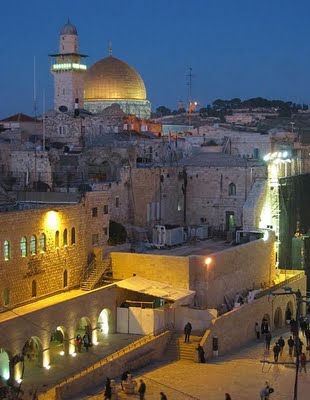
The Palestinian Ministry of Information issued a report stating that Israel leveled more than 23.000 homes in the occupied territories since its occupied the West Bank, the Gaza Strip and East Jerusalem in the 1967 six-day war.
The Israeli Authorities leveled more than 700 homes and buildings owned by the Palestinians in Jerusalem.
Demolishing Palestinian homes in East Jerusalem witnessed a significant increase in 2009 as Israel leveled 103 Palestinian homes, while 89 homes were leveled in 2008.
23 out of the 103 homes leveled in Jerusalem in 2009 were demolished by their Palestinian owners who were forced to level them in order to avoid the high fines and expenses imposed by Israel should the Jerusalem municipality demolish the homes.
600 residents, half of them children, were rendered homeless in 2009 due to the illegal Israeli policies in Jerusalem.
Israel also issued orders against 1500 Palestinian homes in occupied East Jerusalem in 2009.
The so-called Absentee Property Department occupied 200 Palestinian homes in East Jerusalem and handed most of them to settler organizations.
Israel orders Hamas legislator held for six more months
06/01/2010
Salfit- Ma’an – Israel has extended the detention of Abdul Jaber Fuqaha, a Hamas-affiliated member of the Palestinian Legislative Council from Ramallah first arrested in 2006.
Hamas PLC members issued a statement condemning the order to hold Fuqaha in administrative detention for another six months.
The order was the third such order, according to Hamas.
The lawmakers said Fuqaha was not charged with any crime. Fourteen Hamas legislators are still in Israeli prisons, including seven in administrative detention.
Israel seized dozens of Hamas officials in June 2006 following the capture of Isreali soldier Gilad Shalit.
In March Israel detained ten more top Hamas officials, including lawmakers, from the West Bank.
Also on Wednesday Hamas said that the Fatah-dominated Palestinian Authority arrested three members of the Islamist movement in the West Bank.
Christian Peacemakers deported from Israel
January 05, 2010 – by Saed Bannoura – IMEMC News
Two members of the Christian Peacemaker Teams have been refused entry into Israel, and deported by Israeli authorities.
Sarah Farahat told the IMEMC that she was scheduled to be part of a Christian Peacemaker delegation to the Israeli-occupied Palestinian West Bank, which was planning to meet with Palestinian civil society groups and Christian leaders in the Holy Land.
But Farahat and another member of the group were detained at the Israeli airport in Tel Aviv and denied entry, after a lengthy interrogation.
According to the American peace activist, she was singled out along with all other passengers of Arab descent who were on the flight. After a twelve-hour interrogation and several full-body searches, she was told that she was considered a ‘security risk’ to the state of Israel, and put in a holding cell to await deportation.
While in the holding cell, Farahat says she met a young woman from Germany whose father was killed while serving in the Israeli military.
The German woman was deported after telling the Israeli border security that she had Palestinian friends in Bethlehem. According to Farahat, the guard asked the young woman, quote, “You are Jewish, how can you be friends with an Arab?”
Sara Farahat, whose father is Egyptian, believes that she was deported because of her Arab roots and her public statements calling for equal rights for the Palestinian people.
“I hope that I die on my land”
Jody McIntyre writing from Bilin, occupied West Bank, Live from Palestine, 4 January 2010
 |
Fatima Yassin watches looks on as Israeli occupation soldiers prepare to invade her home in Bilin. (Hamde Abu Rahme) |
Fatima Mohammed Yassin, 49, is a farmer from the Palestinian village of Bilin in the occupied West Bank. In spite of Israel’s occupation and construction of its wall in the West Bank, including on Bilin’s farm land, Yassin and her husband continue to work their land on a daily basis. Jody McIntyre spoke to her for The Electronic Intifada.
Jody McIntyre: Do you have land behind the wall?
Fatima Yassin: Yes, before Israel started construction of the wall in Bilin, my family had 45 dunams of land [1 dunam equals approximately 1,000 square meters], all of it filled with olive trees. My husband’s family had 50 dunams, which were a mixture of olive groves and vegetable patches, as well as another 50 dunams of land that was stolen after 1967 [Israel’s occupation of the West Bank began after the June 1967 war].
When the Israeli army was building the wall on our land, they stole land from many people, but only on my husband’s land did they steal his olive trees as well! We still go to our land every day to plant vegetables and look after the soil, because we will not allow the Israeli government or the settlers to claim that our land is unused. If we don’t go to our land, they will say it is unneeded and confiscate it so that they can expand the settlements, which are already built illegally on our land.
JM: Does the Israeli army create problems when you try to go to your land?
FY: Yes, sometimes they don’t allow us to enter, but my husband and I will wait at the gate for one hour or two hours; if they don’t let us through we will stay there from the morning until the evening. We won’t go home until they let us go to our land. The soldiers once told us that it was illegal for us to go to our land and that we should go back home, but I simply replied, “I don’t want to go home, I want to go to look after my land.” Sometimes when our sons come to help us on the land the soldiers beat them or try to arrest them. We’ve had these problems many, many times, but in spite of this, we will not stop resisting this occupation. We are not afraid.
JM: Do the settlers create problems when you are on your land?
FY: Yes, they came and set fire to a small room that the people from Bilin built behind the wall — [they did this] four times. One of the times, I had just gone to make coffee for my husband — they were watching me and when I left went they went in and set the fire. But every time they damaged the room, we went to fix it again.
JM: How did you feel when you first heard Israel wanted to build the wall in Bilin?
FY: Everyone was angry when they heard the news, and sad because we knew it was a ploy to steal our land, so we started to protest against the construction of the wall. The first time we heard that it was being built, all the people from the village went to our land and said that we would fight against its confiscation by the Israeli army. We could see the bulldozers uprooting our trees. For the last five years we have been fighting against the wall, and for justice, and we will always continue.
JM: Do you attend the weekly demonstrations against the wall in Bilin?
FY: Yes, of course! My entire family goes to the demonstrations, me and my husband, our five daughters and our five sons. These demonstrations are our way of nonviolently resisting against the wall, the settlements and the confiscation of our land. We are not going out there to kill people, we are going to return to work on our land — to take back what they have stolen from us.
JM: Have any of your family been injured at the demonstrations?
FY: Of course! All my sons have been injured. The first one to be injured was Helme. He was injured at the very first demonstration we had in Bilin. [The Israeli army] shot him with a tear gas canister in the neck. After a few weeks, he was injured in the leg with the same weapon. A couple of months later he was arrested, becoming the first person to be arrested for our village. But even while in jail they couldn’t crush the rebellious spirit in his heart. [The prisoners] started a protest against the terrible conditions in the prison, and the soldiers shot Helme in the leg with a rubber-coated steel bullet.
My son Hamde was shot next, in the leg also with a rubber-coated steel bullet, and then Mustafa was shot with a tear gas canister. My youngest son, Mohammed, was just 14 years old at the time, and he was injured three times by rubber-coated steel bullets, twice in the legs and once in buttocks.
The last one to be injured was Khamis, my eldest son. He was shot in the head with a high-velocity tear gas canister, a new weapon at the time, and was left in a coma. I was very sad when they shot Khamis.
So all my sons have been shot in the demonstrations, but we will not stop until we return to our land.
JM: Has your house even been invaded by the Israeli army?
FY: The first night raid was at our house, when they arrested Helme. Our house is very close to the wall, so if there are any problems at the wall the army immediately comes to our home. Once they came during the day when I out working on my land, broke down the doors to my house, beat my daughters and arrested my 10-year-old nephew. He wasn’t wanted for anything.
The next time they came was to arrest my eldest son Khamis. As always, it was because he dared to nonviolently resist against the confiscation of his family’s land. Sometimes they come and don’t arrest anyone, just to harass us, to wake us up in the middle of the night and to intimidate us.
My son Hamde photographs the night raids, to show the world what is happening here in Bilin. Of course I am proud of what he is doing, but it makes me worry about him and I cannot sleep. I’m afraid that a soldier will shoot him or arrest him. I know that he has been beaten many times while taking photographs. The soldiers are very violent during the night raids, so I worry about him.
Another time, when Hamde was away, they invaded [the village] at night and stayed in our home for three hours. When I saw all my sons lined up outside, and the soldiers trying to beat them and joking together about when they had shot Khamis in the head, laughing about how he had nearly died in the hospital. When I heard them say this I passed out. When I woke up, I was lying in the hospital myself. Because Hamde was abroad, I was scared that they were looking for him and would arrest him at a checkpoint on his way back into the country.
Once they invaded the house in the day, and the army commander came over to me and said, “One day, I am going to come here with a bulldozer and destroy your house.” They came two days later and started searching the house, but they didn’t find anything — because we don’t have anything!
It’s like we can’t sleep during the day or at night now, because of the invasions. All we can do is sit awake.
JM: After all the oppression the people of Bilin have suffered at the hands of the Israeli army, do you think your campaign of nonviolent resistance can continue?
FY: Yes, we will certainly continue. My husband and I will continue to go to our land every day. We will go until the last moment. I hope that I die on my land.
Jody McIntyre is a journalist from the United Kingdom, currently living in the occupied West Bank village of Bilin. Jody has cerebral palsy, and travels in a wheelchair. He writes a blog for Ctrl.Alt.Shift, entitled “Life on Wheels,” which can be found at www.ctrlaltshift.co.uk, where a version of this article was originally published. He can be reached at jody.mcintyre AT gmail DOT com.
Are U.S. Forces Executing Afghan Kids?
Americans Don’t Even Know to Ask
By David Lindorf | January 4, 2010
The Taliban suicide attack that killed a group of CIA agents in Afghanistan on a base that was directing US drone aircraft used to attack Taliban leaders was big news in the US over the past week, with the airwaves and front pages filled with sympathetic stories referring to the fact that the female station chief, who was among those killed, was the “mother of three children.”
But the apparent mass murder of Afghan school children, including one as young as 11 years old, by a US-led group of troops, was pretty much blacked out in the American media. Especially blacked out was word from UN investigators that the students had not just been killed but executed, many of them after having first been rousted from their bedroom and handcuffed.
Here is the excellent report on the incident that ran in the Times of London (like Fox News, a Rupert Murdoch-owned publication) on Dec. 31:
Western troops accused of executing 10 Afghan civilians, including children
By Jerome Starkey in Kabul
American-led troops were accused yesterday of dragging innocent children from their beds and shooting them during a night raid that left ten people dead.
Afghan government investigators said that eight schoolchildren were killed, all but one of them from the same family. Locals said that some victims were handcuffed before being killed.
Western military sources said that the dead were all part of an Afghan terrorist cell responsible for manufacturing improvised explosive devices (IEDs), which have claimed the lives of countless soldiers and civilians.
“This was a joint operation that was conducted against an IED cell that Afghan and US officials had been developing information against for some time,” said a senior Nato insider. But he admitted that “the facts about what actually went down are in dispute”.
The article goes on to say:
In a telephone interview last night, the headmaster [of the local school] said that the victims were asleep in three rooms when the troops arrived. “Seven students were in one room,” said Rahman Jan Ehsas. “A student and one guest were in another room, a guest room, and a farmer was asleep with his wife in a third building.
“First the foreign troops entered the guest room and shot two of them. Then they entered another room and handcuffed the seven students. Then they killed them. Abdul Khaliq [the farmer] heard shooting and came outside. When they saw him they shot him as well. He was outside. That’s why his wife wasn’t killed.”
A local elder, Jan Mohammed, said that three boys were killed in one room and five were handcuffed before they were shot. “I saw their school books covered in blood,” he said.
The investigation found that eight of the victims were aged from 11 to 17. The guest was a shepherd boy, 12, called Samar Gul, the headmaster said. He said that six of the students were at high school and two were at primary school. He said that all the students were his nephews.
Compare this article to the one mention of the incident which appeared in the New York Times, one of the few American news outlets to even mention the incident. The Times, on Dec. 28, focusing entirely on the difficulty civilian killings cause for the US war effort, and not on the allegation of a serious war crime having been committed, wrote:
Attack Puts Afghan Leader and NATO at Odds
By Alissa J. Rubin and Abdul Waheed WafaKABUL, Afghanistan — The killing of at least nine men in a remote valley of eastern Afghanistan by a joint operation of Afghan and American forces put President Hamid Karzai and senior NATO officials at odds on Monday over whether those killed had been civilians or Taliban insurgents.
In a statement e-mailed to the news media, Mr. Karzai condemned the weekend attack and said the dead had been civilians, eight of them schoolboys. He called for an investigation.
Local officials, including the governor and members of Parliament from Kunar Province, where the deaths occurred, confirmed the reports. But the Kunar police chief, Khalilullah Ziayee, cautioned that his office was still investigating the killings and that outstanding questions remained, including why the eight young men had been in the same house at the time.
“There are still questions to be answered, like why these students were together and what they were doing on that night,” Mr. Ziayee said.
A senior NATO official with knowledge of the operation said that the raid had been carried out by a joint Afghan-American force and that its target was a group of men who were known Taliban members and smugglers of homemade bombs, which the American and NATO forces call improvised explosive devices, or I.E.D.’s.
According to the NATO official, nine men were killed. “These were people who had a well-established network, they were I.E.D. smugglers and also were responsible for direct attacks on Afghan security and coalition forces in those areas,” said the official, who spoke on the condition of anonymity because of the delicacy of the issue.
“When the raid took place they were armed and had material for making I.E.D.’s,” the official added.
While the article in the New York Times eventually mentions the allegation that the victims were children, not “men,” it begins with the unchallenged assertion in the lead that they were “men.” There is no mention of the equally serious allegation that the victims had been handcuffed before being executed, and the story leaves the impression, made by NATO sources, that they were armed and had died fighting. There is no indication in the Times story that the reporters made any effort, as the London Times reporter did, to get local, non-official, sources of information. Moreover, the information claiming that the victims had been making bombs was attributed to an anonymous NATO source, though there was no legitimate reason for the anonymity (“because of the delicacy of the situation” was the lame excuse offered)–indeed the use of an anonymous source here would appear to violate the Times’ own standards.
It’s not that in American newsrooms there was no knowledge that a major war crime may have been committed. Nearly all American news organizations receive the AP newswire. Here is the AP report on the killings, which ran under the headline “UN says killed Afghans were students”:
The United Nations says a raid last weekend by foreign troops in a tense eastern Afghan province killed eight local students.
The Afghan government says that all 10 people killed in a village in Kunar province were civilians. NATO says there is no evidence to substantiate the claim and has requested a joint investigation.
UN special representative in Afghanistan Kai Eide said in a statement Thursday that preliminary investigation shows there were insurgents in the area at the time of the attack. But he adds that eight of those killed were students in local schools.
Once again, the American media are falling down shamefully in providing honest reporting on a war, making it difficult for the American people to make informed judgements about what is being done in their name.
Let’s be clear here. If the charges are correct, that American forces, or American-led forces, are handcuffing their victims and executing them, then they are committing egregious war crimes. If they are killing children, they are committing equally egregious war crimes. If they are handcuffing and executing children, the atrocity is beyond horrific. This indeed, would actually be worse than the infamous war crime that occurred in My Lai during the Vietnam War. In that case, we had ordinary soldiers in the field, acting under the orders of several low-ranking officers in the heat of an operation, shooting and killing women and children. But in this case we appear to have seasoned special forces troops actually directing the taking captives, cuffing them, herding them into a room, and spraying them with bullets, execution style.
Given the history of the commanding general in Afghanistan, General Stanley McChrystal, who ran a massive death squad operation in Iraq before being named to his current post by President Obama, and who is known to have called for the same kind of operation in Afghanistan, it should not be surprising that the US would now be committing atrocities in Afghanistan. If this is how this war is going to be conducted, though, the US media should be making a major effort to uncover and expose the crime.
On January 1, the London Times’s Starkey, in Afghanistan, followed up with a second story, reporting that Afghan President Hamid Karzai is calling for the US to hand over the troops who killed the students. He also quoted a “NATO source” as saying that the “foreigners involved” in the incident were “non-military, suggesting that they were part of a secret paramilitary unit based in the capital” of Kabul. Starkey also quotes a “Western official” as saying: “There’s no doubt that there were insurgents there, and there may well have been an insurgent leader in the house, but that doesn’t justify executing eight children who were all enrolled in local schools.”
Good enterprise reporting by the London Times and its Kabul-based correspondent. Silence on these developments in the US media.
Meanwhile, it has been a week since the New York Times reporters Rubin and Wafa made their first flawed report on the incident, and there has been not a word since then about it in the paper. Are Rubin and Wafa or other Times reporters on the story? Will there be a follow-up?
On the evidence of past coverage of these US wars and their ongoing atrocities by the Times, and other major US corporate media news organizations don’t bet on it. You’ll do better looking to the foreign media.
By the way, given that we’re talking the allegation of a serious war crime here, it should be noted that it is, under the Geneva Conventions, a legal requirement that the US military chain of command immediately initiate an official investigation to determine whether such a crime has occurred. One would hope that the commander in chief, President Obama, would order such an inquiry.
Any effort to prevent such an inquiry, or to cover up a war crime, would be a war crime in itself.– source

Subhanullah s/o Farooq, student of class 10 in Narang High School.

Atiqullah s/o Farooq, student of class 9 in Narang High School.

Villagers and relatives and parents of the victims are mourning. The woman seen in the photo is mother of three of the victims.

Villagers prepare graves for the civilians killed by US Special Forces in Narang district.
Saber, patience
In Gaza | January 3, 2010
“I haven’t been on my land since we harvested the wheat last August. It’s too dangerous. There was an Israeli operation here yesterday…6 tanks and 4 bulldozers. I could see them from my rooftop in the village, but didn’t know if they’d destroyed my land.”
Abdul Nasser Abu Taima has 15 dunams of agricultural land roughly 400 m from the Green Line border dividing Gaza and Israel. Until a few years ago, he had a home on and lived off the land. Israeli bulldozers destroyed his house and razed his land.
“That was our home,” he says, picking up a piece of piping with a chunk of foundation still attached, chucking it onto the pile.
“I get so upset when I come to my land and see how beautiful it is, remember how well we lived off of it…and realize that now my children and I can’t live here.”
Although Abu Taima’s land is technically outside of the Israeli-imposed “buffer zone” – an area of 300m running along the Green Line border from south to north –he and the other farmers in the region are still subject to danger by their mere presence near the “buffer zone”. Israeli authorities reserve the right to shoot at anyone within 300 metres of the fence, but in practice shoot far beyond 300 m, up to as much as nearly 2 km.
“Whenever we work on our land, we know the Israelis can shoot at us. They say it’s for security, because there is danger. But where’s the danger? What’s the problem? They know who we are, they can see us.”
His regret is amplified by the bitter observation that on the other side of the Green Line, Israeli tractors work the land, crops grow, and water exists in comparative abundance. Lines of un-razed trees provide a stark contrast to the now olive, nut and fruit tree-devoid land on the Palestinian side.
“We will still plant on our land. But we’ve got to wait for the heavy rains. All the water sources –the wells, the cisterns—were destroyed by Israeli bulldozers or shelling. Now we can only wait for rain.”
This year the rain is late in coming. Aside from a scant few days of showers, it has been dry, and the land remains parched and un-worked.
“We usually plant in November, or at least December. January is the latest we can plant our wheat. After that, there’s no point.”
The only thing growing now are the hardy cactus plants –saber, in Arabic. Abu Taima cuts a number of the prickly, bright pink-orange fruits and puts them in a bag. He stoops down and rips our handfuls of tall grass.

We walk, and he turns repeatedly to survey his land. “Mish hada haram? Mish haram?” he asks? Isn’t it shameful, outrageous, that he can’t work his land, that the land lies unused in a Strip that is in want of cheap, fresh wheat, for a family that is in want of a source of income and nutrition?
He stops, dumps the cactus fruits on the ground and, rolling them with the tall grass, begins cleaning them of their prickly needles.
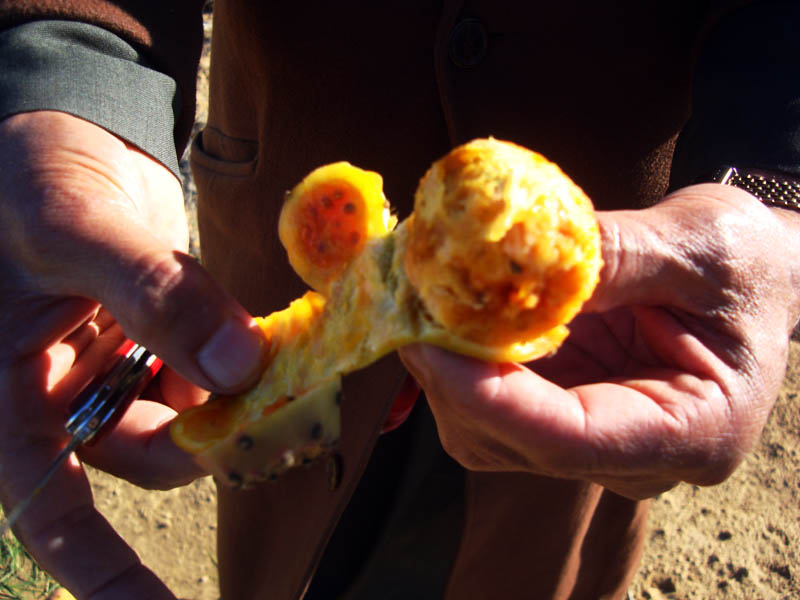
The fruit is refreshing, mildly sweet.
“We used to give tea to the Israeli soldiers. Sure, there were always problems with the occupation… but still, we could live here on the land, farm here, without this kind of danger.”
Walking up the dirt lane, we pass a farmer tending his pea and bean crops. “He’s connected to a line from Khan Younis. That’s why he can farm his land,” Abu Taima explains.
The farmer sees us and greets us with a smile. “Wait a few minutes, I’ll bring you some peas.”
As he harvests, Abu Taima explains, “even here, this is maybe 600 metres from the fence. But even here they are shot at… from Israeli jeeps, from the guard towers, from the remote-controlled towers.”
The farmer returns laden with peas and beans, crisp, sweet, fresh.
“My children help me on the land. You know, the Israelis even shoot when they are with me. The Israelis see the children, but they still shoot.”
He also remembers a better relationship with the occupying soldiers.
“They’d come to my land and I’d give them watermelons, vegetables. Now there’s no interaction. They just shoot at us from far away.”
The nearest remote-controlled tower is open. The machine gun within is capped by a dome which ironically opens to a lotus-shape when the gun is ready to fire.
“I’ve got 18 people in my family. This actually isn’t our land. Our own land is right next to the fence, so we can’t go there any more. Now I rent land, pay $2500 a year to use it. During the Israeli war last year the Israelis destroyed my piping, my hothouses, so I had to replace that too.”
We leave, amble along on Abu Taima’s tractor past destroyed homes, cisterns, and largely-vacant land.
Abu Taima has saber: patience. He will return when the rains come.
Featured Video

Broke Princes: Saudi Arabia’s Powder Keg
or go to
Aletho News Archives – Video-Images
From the Archives
A sample of vaccine and injectable medication tragedies during my lifetime
This is what happens when you demand speedy production in an era of politicized regulation
By Meryl Nass, MD | February 12, 2022
All these tragedies have been due to failures of testing or failures in manufacturing processes. Most occurred before vaccine manufacturers were given virtually complete protection from liability in 1987.
With the duration of patent exclusivity determining how much new products earn, products are rushed to market as quickly as possible, most using a shortened path for FDA review. Recalls and market removals of approved products are much more common than they used to be. We can only expect more of these disasters in the future, especially if the products are mandated for everyone. … continue
Blog Roll
 Aletho News
- Broke Princes: Saudi Arabia’s Powder Keg
- Albania’s Crisis: Rama, Israeli Investments and the Demand for Accountability
- Hezbollah Categorically Denies Syrian Accusations: We Aim at Confronting Israeli Enemy, Not Undermining Syria’s Stability
- Trump claims funding to Israel ending in 2026 as merger of Israeli–US armies looms
- Iran Weathering The Storm, But Saudi Arabia Is Sinking
- Sunk Ships Don’t Sail Home: Why Peace Won’t Save the Oil Market and War Will Wreck It
- No Cossacks at the gates, fix Italy instead – opposition leader to Meloni
- The Pits: Zelensky’s torture chamber network in the public eye
- Moscow mocks Kiev’s language hypocrisy exposed by ‘torture chamber’ scandal
- Military ‘torture chamber’ triggers new scandal in Kiev
- If Americans Knew
- An error has occurred; the feed is probably down. Try again later.
- No Tricks Zone
- New Study: The Net Fossil Fuel Contribution To Rising Atmospheric CO2 Has Been Zero For 500 Years
- Germany’s Green Energy Transition Becoming Increasingly Expensive…Another 6 Trillion Euros!
- Sudden Stratospheric Warming, Powerful El Niño Combination May Lead To Extreme Europe Cold, Energy Crisis!
- Two New Studies Find Thwaites Glacier Melt Cannot Be Driven By Human Activity Or A Warming Ocean
- E-Cars Reduce CO2 Emissions By Only 41% Compared To Internal Combustion Engine Vehicles
- Predictions Made By Renowned Climate Professor Over Past Decades Have Been Proven To Be Poor
- New Study Suggests Large Regions Of The Pacific Ocean Have Been Cooling For The Last 80 Years
- Germany’s Green Energy Debacle: High Energy Costs Force Kahla Porzellan to Close After 182 Years!
- New Study: 50 Years Of The Most Aggressive ‘Net Zero’ Policies Can Only Affect The Global Climate By 0.03°C
- US September “Heat” Was No Record…Many Records Set Decades Ago

