A top Iranian diplomat penned a letter to the UNSC, strongly rejecting allegations of the United States against Tehran over a recent attack near the Iraq-Syria border.
Ambassador and Permanent Representative of the Islamic Republic of Iran to the United Nations Majid Takht Ravanchi wrote a letter to the president of the UN Security Council, to react to anti-Iranian accusations of Washington.
The Islamic Republic of Iran has repeatedly announced that it has not had any direct or indirect role in attacks against US facilities or personnel in Iraq, reads the letter. Therefore, the letter continues, any attempt to attribute such allegations to Iran, either explicitly or implicitly, is false and baseless and lacks the most basic credible information. Tehran strongly rejects such claims and considers them legally invalid, added the envoy.
Iran vehemently rejects the arbitrary interpretation of the US of Article 51 of the UN Charter to justify its illegal June 27 attack on Syria and Iraq, said the envoy, adding that Tehran strongly condemns the aggression as violation of sovereignty of the two countries.
The US argument that such attacks were carried out to “deter” the Islamic Republic of Iran and so-called “Iranian-backed militias” from further attacks on US personnel or facilities in Iraq has no real or legal basis as it is based solely on an arbitrary interpretation of Article 51 of the UN Charter, added the diplomat.
Recent US attempts to accuse others to cover up its irresponsible and destabilizing activities and adventurous military actions in the region are doomed to failure, noted Takht-Ravanchi.
Earlier, the US representative to the UN had sent a letter to the UNSC, making accusations against Iran and claiming that the decision for attack was taken after it was proved that non-military measures were not enough.
United Nations (UN) Secretary-General Antonio Guterres has voiced grave concerns about human rights violations against children in the Indian-administered Kashmir.
“I call upon the [Indian] government to take preventive measures to protect children, including by ending the use of pellets against children, ensuring that children are not associated in any way to security forces, and endorsing the Safe Schools Declaration and the Vancouver Principles,” Guterres said in the UN Report on Children 2021 released on Tuesday.
The UN report cited numerous violations involving Indian forces attacking Kashmiri children in the Indian-administered Kashmir.
“A total of 39 children (33 boys, 6 girls) were killed (9) and maimed (30) by pellet guns (11) and torture (2) by unidentified perpetrators (13) (including resulting from explosive remnants of war (7), crossfire between unidentified armed groups and Indian security forces (3), crossfire between unidentified armed groups, and grenade attacks (3)), Indian security forces (13), and crossfire and shelling across the line of control (13),” it said.
The UN secretary-general also condemned the military occupation of several schools in the Indian-administered Kashmir by the New Delhi forces.
“The United Nations verified the use of seven schools by Indian security forces for four months. Schools were vacated by the end of 2020,” it said.
Guterres expressed “alarm” over “detention and torture” by the Indian troops and their overall use of force against Kashmiri children in the Muslim-majority region.
“I am alarmed at the detention and torture of children and concerned by the military use of schools,” he said.
The UN chief called on Indian Prime Minister Narendra Modi’s government to ensure that children were kept out of way of “all forms of ill-treatment” when taken into detention in prisons in the Indian-administrated Kashmir.
The disputed Muslim-majority Kashmir, located in the Himalaya region, is mainly divided between India and Pakistan, while a third strip of land in northern Kashmir is held by China.
The people in Kashmir have been fighting New Delhi for independence or unification with neighboring Pakistan since the two countries were partitioned in 1947.
Israel’s illegal settler population is driving the country’s government towards miscalculated violence, putting the entire state at risk, and last month’s 11-day conflict with Gaza may just be the beginning.
Currently, roughly 700,000 illegal Israeli settlers live in the occupied Palestinian West Bank and East Jerusalem. Although Israel’s ever-growing settlements in the occupied Palestinian territories (OPT) are in violation of international humanitarian law, causing great strife in the United Nations, the state continues to support expansion activities in the OPT.
The UN is not, however, the only place where Israel is suffering due to its unhinging support for its illegal settlers, many of whom carry hardline religious fundamentalist beliefs and are also leading Israel into violent confrontations it does not know how to deal with.
Last month, the then Israeli prime minister, Benjamin Netanyahu, launched an 11-day military operation entitled ‘Guardian of the Walls’ against the illegally blockaded Gaza Strip. The military operation was largely viewed as an astounding failure, even acknowledged as such by the Israeli media, whilst Palestinians celebrated the triumph of their armed groups upon the announcement that the ceasefire had been held.
The difference this time, when it came to Israel’s announced war on Gaza, was that it had been fought on the terms of the Palestinian armed factions. Hamas, unlike in previous wars back in 2008-09, 2012 and 2014, fired first and dictated the course of the battle, even commanding the respect of Palestinian citizens of Israel, as well as Palestinians in the West Bank and East Jerusalem who revolted in sync with the rocket fire of Palestinian armed groups in Gaza.
The reason Israel was dragged into this conflict was in large part the fault of Israeli settler extremists who had provoked an uprising throughout historic Palestine. The initial rocket fire from Gaza was triggered by a planned Israeli settler march which had been aimed at storming Al-Aqsa Mosque compound in the old city of Jerusalem.
Weeks of settler provocations, including the infamous “death to Arabs” marches during the Muslim holy month of Ramadan, helped to stoke tensions. Netanyahu, in a bid to keep on side his hardline, settler-supporting allies in the Religious Zionism Party, refused to take de-escalatory measures in order to deter the likes of Hamas from responding to the violence in Jerusalem.
At the time, the leader of the Religious Zionism Party, Bezalel Smotrich, along with far-right Otzma Yehudit front man Itamar Ben Gvir, had both appeared in Jerusalem with religious extremist settlers. Otzma Yehudit, or the Jewish Power Party, is closely connected with extremist settler organisations, such as Lehava. Lehava’s current leader, Bentzi Gopstein, even tried to run for election to the Israeli Knesset as part of Otzma Yehudit, but was banned due to racist comments he had made. Just days ago, some of the same members of Knesset who previously appeared provocatively in Jerusalem, did so again in a delegation supporting illegal settlers.
Despite there having been a change in the government, with the far-right Yamina Party leader, Naftali Bennett, now taking over as prime minister, very little seems to have changed on the ground. One of the biggest provocations in the build-up to last month’s 11-day war was the court effort of an Israeli settler organisation to seize the homes of Palestinians, in order to uproot them and replace them with Jewish settlers in the East Jerusalem neighbourhood of Sheikh Jarrah.
“By continuing to pursue this court case – after the outcry over the planned forced evictions in Sheikh Jarrah in occupied East Jerusalem – Israel is fanning the flames of the latest upsurge in violence and perpetuating the same systematic human rights violations against Palestinians that are at the root of the latest violence,” Amnesty International’s Deputy Director for the Middle East and North Africa Saleh Higazi said.
The settler violence, also dealt out by Israel’s occupation forces, against Palestinian demonstrators in Sheikh Jarrah has only intensified since the formation of Israel’s new coalition government. In addition to this, settlement activity in the Silwan neighbourhood in East Jerusalem has erupted into a second flashpoint for similar violent crackdowns against peacefully demonstrating Palestinians who face expulsion from their homes.
Israel’s political scene is now almost entirely right-wing, with only a handful of parties claiming the title of left-wing or centre-left. And this is not working well for Israel’s image on the international scene. For instance, the current Israeli ambassador to the United Kingdom, Tzipi Hotovely, believes – like PM Naftali Bennett – that the bible gives Israel the right to take over the West Bank. She said before that her “dream is to see the Israeli flag flying over the Temple Mount [Al-Aqsa Mosque compound].” During her tenure at the Committee on the State of Women and Gender Equality in 2011, Hotovely affiliated with the racist Lehava group, inviting them to a Knesset discussion on activities to prevent romantic relationships between Arabs and Jews.
Such political figures as Tzipi Hotovely, who openly espouse their racist and pro-settler views to a Western audience are an additional problem for Israel as it begins to lose legitimacy in the eyes of the global public.
Israeli settler violence is increasing in the West Bank and the government has just approved further settlement expansion. Recent threats of settlement expansion in the village of Beita (south of Nablus), sparked violence and calls for up to 100,000 Palestinians to join in the protests. The illegal settler outpost Evyatar is considered illegal even by Israeli law, yet despite this, Bennett is so far refusing to dismantle the settlement and defuse rising tensions which have led to the killing of seven Palestinians.
Last Tuesday, the Israeli government also allowed for a right-wing settler protest group to march into a Palestinian-majority area in Jerusalem again. Illegal settlers chanted “Death to Arabs” and made several other racist remarks. The settlers came close to provoking another large-scale Palestinian response, which the Israeli government demonstrated it would rather confront than upset their settlers.
The Israeli government’s support for settlement expansion may have seemed like a good idea as a strategy that could work to usurp Palestinian land. However, the problem that is now arising seems to be that Israel is becoming overrun by the settlers and being forced into irrational and dangerous moves as a result. The leader of Lebanese Hezbollah, Sayyed Hassan Nasrallah, has pledged that attacks on Al-Aqsa should lead to a regional war against Israel – not a threat to be taken lightly. Yet, Israelli settler groups continue to come dangerously close to replicating last month’s events.
Settlers used to be under the complete control of the government, but if Israel does not check itself, soon those settlers – many of whom carry extremist views – may end up seizing more control over them and forcing Israel into a war that it cannot handle.
Robert Inlakesh is a political analyst, journalist and documentary filmmaker currently based in London, UK. He has reported from and lived in the occupied Palestinian territories and currently works with Quds News and Press TV.
Iraq’s Prime Minister Mustafa al-Kadhemi has strongly condemned as a “flagrant violation” of the Iraqi sovereignty an overnight airstrike by US warplanes against the positions of the anti-terror Popular Mobilization Units (PMU), also known as Hashd al-Sha’abi, in which several resistance fighters were killed.
“We condemn the US air attack that targeted a site last night on the Iraqi-Syrian border, which represents a blatant and unacceptable violation of Iraqi sovereignty and Iraqi national security,” said a statement from Kadhemi’s office on Monday.
The statement added that the government will “study all legal options” to prevent such action being repeated.
The statement came after the Iraqi cabinet, headed by al-Kadhemi, held an emergency security meeting following the U.S. airstrikes.
In the early hours of the day, US warplanes attacked three positions purportedly belonging to the PMU along the border.
Later, the 14th Brigade of the PMU announced that four of its fighters had been killed when the warplanes hit its headquarters. The brigade is made up of the Kata’ib Sayyid al-Shuhada anti-terror resistance group.
The PMU in general is an Iraqi government-sponsored umbrella organization composed of about 40 factions of volunteer counter-terrorism forces, including mostly Shia Muslims besides Sunni Muslims, Christians, and Kurds. The organization had a significant role in defeating the Daesh Takfiri terrorist group in Iraq.
Iraqi military condemns U.S. airstrikes on PMU’s positions
Separately, Iraq’s military spokesman Yehya Rasool denounced the US airstrike and said it was a “breach of sovereignty.”
“We condemn the US air attack that targeted a site on the Iraqi-Syrian border last night, which represents a blatant and unacceptable violation of Iraqi sovereignty and national security in accordance with all international conventions.”
Rasool further called on all involved parties to exercise restraint and avoid any escalation of tensions.
He said Baghdad would work thoroughly to prevent the recurrence of such incidents.
Foreign Ministry: US attack on PMU violation of Iraq’s sovereignty
Additionally on Monday, Iraq’s Foreign Ministry issued a statement, condemning the deadly strike. It was an “assault and a violation of national sovereignty and a clear departure from international norms and conventions,” the statement read.
“We affirm our adherence to Iraq’s sovereignty and unity and to rely on everything that would enhance that, through sustained coordination and communication with various parties and through diplomatic initiatives and endeavors that ensure the non-repetition of such rejected and condemned hostilities.”
Syria: US attacks prove its presence meant to serve Israel’s goals
Syria, for its part, also condemned in strongest terms the US flagrant aggression in the Syrian-Iraqi border region, describing it as a blatant violation of the sanctity of the Syrian and Iraqi territories.
An official source at Foreign and Expatriates Ministry told SANA that the US aggression, which was ordered by the highest ranks in the US leadership, proves once again “the recklessness of US policies and the need for Washington to withdraw its aggressor forces” from the region.
The Syrian foreign ministry source added that such acts of aggression only escalate the tense situation in the region and prove “what we have repeatedly said in Syria that the US military presence in our region is basically meant to serve the Israeli goals and the separatist forces contrary to the interests of its own people.”
The Syrian source concluded by saying that Damascus, once again, demands the US administration respect the territorial integrity of Syria and Iraq and to immediately stop those attacks on the independence of the two countries.
Al-Nujaba Movement: US will pay for its folly
In a relevant development on Monday, a senior member of Iraq’s al-Nujaba Movement, which is part of the PMU, said in a Twitter post that Washington would pay for its folly in attacking Iraq’s popular forces.
Ali al-Asadi said the Monday US airstrike was a desperate reaction to the latest manifestation of power by the PMU through a huge military parade, which was held to mark the anniversary of the PMU’s formation.
“This [attack] is another reason, which proves that the occupier does not care about stability of this country…. We tell the occupier: you will pay for your despicable measure and will suffer the consequences of your folly,” Asadi said.
Hezbollah: US airstrikes on PMU aimed to weaken anti-terror fight
Lebanon’s Hezbollah resistance movement also reacted to the latest airstrikes by the occupying American forces on the PMU positions in western Iraq and Syria, strongly condemning the US act of aggression.
In a statement on Monday, Hezbollah said the air raid by American warplanes was blatant violation of sovereignty of both Iraq and Syria, which is aimed at weakening these countries’ power to fight terrorism on their soils.
Hezbollah then expressed support for the official condemnation of the US airstrike by Iraqi government and armed forces as well as various popular groups.
Yemen’s Ansarullah: US strikes aimed at supporting Daesh, al-Qaeda
In another development on Monday, the political office of Yemen’s Ansarullah movement issued a statement on the latest US airstrikes on Iraq’s PMU, expressing the movements condolences for the families of the PMU fighters killed in the US strikes.
“The US aggression is in line with its policy to provide aerial support for its criminal proxies, that is, the Daesh [Takfiri terrorist group] and al-Qaeda” in Syria and Iraq.
The Yemeni movement added that it strongly supported the powerful positions taken by Iraq’s officials and popular forces in opposition to the projects planned and carried out by the Great Satan, the United States, and Israel.
Yemen’s Ansarullah movement noted that the US act of aggression will only strengthen the determination of the Iraqi people and proves that the path chosen by the Iraqi nation is correct and should continue until complete expulsion of all occupying forces from the country.
US congresswoman: This failed policy will not make us any safer
Meanwhile, Ilhan Omar, a US congresswoman who represents Minnesota’s 5th congressional district, took to Twitter on Monday, condemning US act of aggression against Iraqi popular forces.
“This constant cycle of violence and retribution is a failed policy and will not make any of us safer,” she said.
Omar added that the US government cannot take any hostile action in other countries without the Congress’ approval, saying, “Congress has authority over War Powers and should be consulted before any escalation.”
Anti-American sentiments have been running high in Iraq since the US assassinated Iran’s anti-terror commander Lieutenant General Qassem Soleimani, and the deputy head of Iraq’s PMU, Abu Mahdi al-Muhandis, in Baghdad on January 3, 2020.
Just two days later, Iraqi lawmakers unanimously passed a bill mandating the withdrawal of all foreign troops from Iraq.
Iraqi resistance groups have pledged to take up arms against US forces if Washington fails to comply with the parliamentary order.
Former US Senator Mike Gravel (D-Alaska), an anti-war campaigner and a regular Press TV contributor, has died at the age of 91.
The Associated Press reported on Sunday that Gravel, who served in the Senate from 1968 until 1981, died in Seaside, California this weekend. He was suffering with poor health.
Gravel ran two unsuccessful campaigns for the Democratic presidential nomination in 2008 and 2016.
He was excluded from Democratic debates during his 2008 campaign in 2007, prompting him to run as a Libertarian candidate, according to the Associated Press.
Gravel was known for his anti-war efforts in the 1970s. He spearheaded a one-man filibuster in opposition to the Vietnam-era draft, and read 4,100 pages of the 7,000-page document, known as the Pentagon Papers, into the Congressional Record, according to the AP.
The Pentagon Papers were the US military’s history of Washington’s early involvement in the Vietnam War.
Gravel was ‘voice for peace, sanity and demilitarization’
“Mike Gravel, bucked the Pentagon, the CIA and the military-industrial complex by reading the Pentagon Papers into the Senate record, thereby providing legal cover for their mass publication,” journalist Don DeBar told Press TV.
“For decades after his time in the Senate ended, he was a voice for peace, sanity and demilitarization,” added DeBar.
“If we could replace Schumer and McConnell with a pair of Mike Gravel’s, it would have a major positive impact on the entire human race. This, unfortunately, indicates how big a loss we suffer with his passing,” he stated.
Gravel was also a regular contributor to Press TV.
On the eve of the 2020 US election, Gravel told Press TV that the foundation of the election system in the United States is based on bribery.
Gravel said that “politicians are corrupt and they’re basically cowards because we have a system that is set up where you give me money to help me get elected and when I’m elected, I will vote for your economic interest, that is bribery, and that’s the foundation of our system in this country.”
When the anointed king receives his vassal formally at his durbar for the first time, it is a moment of truth conveying that the latter’s obeisance is noted, while the vassal hopes to claim legitimacy.
A US president is due to receive Afghan president Ashraf Ghani in the White House on Friday after a gap of some 6 years. The symbolism is profound: Ghani is in Washington, as the Taliban is tightening its noose on Kabul. On Thursday, Ghani was closeted with the CIA Director William Burns for a two and half hour meeting.
Yet in April, when President [sic] Joe Biden announced the troop withdrawal from Afghanistan, he didn’t think it necessary to speak to Ghani beforehand. The troop withdrawal is now more than half completed.
The expectations are low as Biden receives Ghani. But then, all is not well in Biden’s camp. The Pentagon and the CIA were never really on board his withdrawal decision. They sought an open-ended presence in Afghanistan.
They have now seized the worsening security situation in Afghanistan to present an apocalyptic scenario and make out a case for some sort of continued US military and intelligence presence in Afghanistan, although Biden claims to have ended the “forever war”.
Ghani is also to meet at the Pentagon with Defense Secretary Lloyd Austin and possibly other administration officials. Meanwhile, the Pentagon is exploring how American contractors (mercenaries) could perk up Ghani’s demoralised army.
To be sure, by getting an audience at the Oval Office, Ghani hopes to boost his standing in the Afghan bazaar. But that may not salvage his precarious position in Kabul. The obstreperous Afghan warlords are gathering behind the gates of Kabul.
Ghani has no power base and his whimsical behaviour has alienated most power brokers in Afghanistan. Only two days ago, the prominent Mujahideen leader Ismail Khan (“Amir of Herat”) accused Ghani of being the main obstacle to forming a national consensus.read more
In an interview with The Associated Press a week ago, former Afghan president Hamid Karzai said, “The international community came here 20 years ago with this clear objective of fighting extremism and bringing stability … but extremism is at the highest point today. So they have failed… Where are they leaving us now? In total disgrace and disaster.”
Karzai added, “We will be better off without their military presence. I think we should defend our own country and look after our own lives. … Their presence (has given us) what we have now. … We don’t want to continue with this misery and indignity that we are facing. It is better for Afghanistan that they leave.”
Evidently, the least that the US can do now is to just go away. Washington’s earlier expectation was that the Taliban would be amenable to some form of continued US presence in Afghanistan, and that Pakistan might also see advantages in it. But that turned out to be a delusional hope.
Thus, the Biden administration has drifted away from Islamabad lately, once it dawned that Islamabad is averse to identifying with the war in Afghanistan.
Since no regional capital is willing to collaborate, Washington has zeroed in on Ankara as its newest indispensable partner. A US team landed in Ankara on Thursday to flesh out how a Turkish military contingent at Kabul Airport could provide underpinning for the security operations in Afghanistan.
Washington is pandering to President Erdogan’s Neo-Ottomanism. Turkey already has bases in Iraq, Syria, Qatar and Libya, and plans to open a new base in Azerbaijan. But Pakistan will have mixed feelings about a Turkish military presence next door. And the Taliban has criticised Ankara for messing around in Afghanistan.
The Taliban’s morale is skyrocketing, as it senses victory. A circular to Taliban military commanders from Sirajuddin Haqqani, the deputy head of the movement’s shura, said on Thursday, “The situation was military and jihadi, but now you are entering a civilian situation… The political process that has been continuing on the side for the past 14 months has been very meaningful… Good governance is the need of the hour… This is a very sensitive phase.”
Again on Friday, coinciding with Ghani’s visit to the White House, Taliban has issued a second statement with guidelines on treating all ethnic groups in a non-discriminatory manner, how to secure liberated districts and protect government buildings, allow trade, reopen schools and hospitals, etc.
Clearly, there is little the Americans can do now. The seasoned military analyst at the Center for Strategic and International Studies in Washington Anthony Cordesman hit the nail on the head when he wrote this week, “The time has come to write off Afghanistan. There are no signs that a strong, unified, and effective Afghan government is emerging.”
According to Cordesman, who has served as a consultant at the Pentagon, “Brutal as it may be to say so, it is simply too late to reverse the departure of U.S. and allied forces… The U.S. has already withdrawn and closed too much. Too many forces and bases are gone, too many capabilities are lost, and the Taliban has already made too many gains.”
“Measures like keeping small numbers of U.S. military advisors in or near Afghanistan, finding some way to keep military contractors in the country, providing limited advisory and maintenance support from the outside, boosting intelligence cadres in Kabul and near Afghanistan – and all the other ‘forlorn hope’ approaches to provide support after September 1, 2021, are token measures that at best provide a political cloak for withdrawal.”read more
Emails that have now surfaced show that Joe Biden campaign officials pressured Facebook to censor his opponent, Donald Trump – specifically the Team Trump account – ahead of the 2020 US presidential election.
CNN writes about this, framing this revelation as proof that misinformation and what it calls “violent rhetoric” was rampant on Facebook and not properly addressed by the giant – rather than what others will see as proof of concerning levels of undue influence politicians tried to exert on the world’s biggest social media platform.
The report said that the emails show Democrats had become very worried about “misinformation” – and apparently very unhappy with an uncooperative Facebook, what a former Biden campaign staffer said “essentially did nothing” when faced with a barrage of public and private complaints and letters coming from the party.
Not only the election but also the January 6 breach in Washington DC are thrown in as yet more evidence that Facebook was not diligent enough in suppressing and censoring information, because it allowed protesters to use it to plan their activities (at the time, though, legacy media like CNN accused independent alternative platforms as hubs for this, leading the charge in what resulted in wiping some of them off the social media map).
Some might wonder what makes CNN play the risky game of effectively unmasking the Biden campaign as privately putting pressure on Facebook to act in a certain way, and the answer may be – in order to put on yet more pressure, this time with the 2022 midterm elections in mind.
One of the emails that have now been made public concerns a video posted by Team Trump showing Donald Trump Jr. accusing Democrats of planning to rig the election, and calling on Trump supporters to rally around their candidate to oppose this. Facebook slapped a label on the video, but that was not enough for Democrats.
In order to get the video banned, a senior Biden campaign figure wrote to Facebook on September 22, cautioning the giant that it was not implementing its own policies around “voter suppression” – that Democrats were apparently previously privately assured would be enforced. At one point the email “implores” Facebook to approach the issue with “a sense of mission.”
We remembered all the miseries, all the injustices, our people and the conditions they lived, the coldness with which world opinion looks at our cause, and so we felt that we will not permit them to crush us. We will defend ourselves and our revolution by every way and every means.
George Habash (1926-2008)
A freedom fighter learns the hard way that it is the oppressor who defines the nature of the struggle, and the oppressed is often left no recourse but to use methods that mirror those of the oppressor.
Nelson Mandela (1918-2013)
In December 1982, following Israel’s devastating invasion of Lebanon six months earlier, the United Nations General Assembly passed resolution A/RES/37/43 concerning the ‘[i]mportance of the universal realization of the right of peoples to self-determination’. It endorsed, without qualification, ‘the inalienable right’ of the Palestinian people to ‘self-determination, national independence, territorial integrity, national unity and sovereignty without outside interference’, and reaffirmed the legitimacy of their struggle for those rights ‘by all available means, including armed struggle’. It also strongly condemned Israel’s ‘expansionist activities in the Middle East’ and ‘continual bombing of Palestinian civilians’, both said to ‘constitute a serious obstacle to the realization of the self-determination and independence of the Palestinian people’. In the four decades since then, Israel’s violence against the Palestinian people and its colonisation of their land has not ceased. Up to the present moment, all over historical Palestine, from the Gaza Strip to Sheikh Jarrah, Palestinians are still under that same occupation, subject to suffocating control over virtually every aspect of their lives – and the sadistic, unaccountable violence of the Zionist state.
In addition to its endorsement by the UN, the Palestinians’ right to resist their occupation is also guaranteed by international law. The Fourth Geneva Convention requires an occupying power to protect the ‘status quo, human rights and prospects for self-determination’ of occupied populations, and as Richard Falk – an expert in international law who later went on to be appointed the UN’s Special Rapporteur on Human Rights in the Occupied Palestinian Territories – has explained, Israel’s ‘pronounced, blatant and undisguised’ refusal to ever accept this framework of legal obligations constitutes a fundamental denial of the Palestinians’ right to self-determination and engenders their legally-protected right of resistance. Israel’s occupation of Palestinian territory and its flagrant disregard for international law through the construction of illegal settlements and other daily violations has continued unabated since Falk’s assessment was made during the al-Aqsa Intifada. In fact, the occupation has only become further entrenched since then with the collaboration of the comprador Palestinian Authority.
Furthermore, regardless of what is mandated by international law, the Palestinians possess a fundamental moral right to resist their ongoing colonisation and oppression through armed resistance, and that right must be recognised and supported. The multi-generational suffering of the Palestinians, perhaps none more so than those who live in the besieged and bombarded Gaza strip, is unremittingly cruel and has one central cause: Israel and the perpetual belligerence, expansionism and racism that is inherent to its state ideology, Zionism. Moreover, contrary to the Western media’s narrative that, without fail, portrays Israel as acting in ‘retaliation’, it is the actions of the Palestinians which are fundamentally reactive in nature, because the violence that Israel inflicts upon them is both perpetual and structural, and therefore automatically precedes any resistance to it. ‘With the establishment of a relationship of oppression, violence has already begun’, said Paolo Freire; ‘[n]ever in history has violence been initiated by the oppressed’. In Palestine, as Ali Abunimah recently wrote, ‘the root cause of all political violence is Zionist colonisation’.
Given that the Palestinians’ legal and moral right to pursue armed resistance is clear, endorsement of this position should be uncontroversial and commonplace among supporters of their cause. Yet in the West, such a position is rarely expressed – even by those who loudly proclaim their solidarity with Palestine. On the contrary, acts of Palestinian armed resistance, such as the firing of missiles from Gaza, are condemned by these ostensible supporters as part of the problem, dismissed condescendingly as ‘futile’ and ‘counter-productive’, or even labelled ‘war crimes’ and ‘unthinkable atrocities’, said to be comparable to Israel’s routine collective punishment, torture, incarceration, bombardment and murder of Palestinians. This form of solidarity, as Bikrum Gill has argued, is essentially ‘premised upon re-inscribing Palestinians as inherently non-sovereign beings who can only be recognized as disempowered dependent objects to be acted upon, either by Israeli colonial violence, or white imperial protectors’.
To sit in the comfort and safety of the West and condemn acts of armed resistance that the Palestinians choose to carry out – always at great risk to their lives – is a deeply chauvinistic position. It must be stated plainly: it is not the place of those who choose to stand in solidarity with the Palestinians from afar to then try and dictate how they should wage the anti-colonial struggle that, as Frantz Fanon believed, is necessary to maintain their humanity and dignity, and ultimately to achieve their liberation. Those who are not under brutal military occupation or refugees from ethnic cleansing have no right to judge the manner in which those who are choose to confront their colonisers. Indeed, expressing solidarity with the Palestinian cause is ultimately meaningless if that support dissipates the moment that the Palestinians resist their oppression with anything more than rocks and can no longer be portrayed as courageous, photogenic, but ultimately powerless, victims. ‘Does the world expect us to offer ourselves up as polite, willing and well-mannered sacrifices, who are murdered without raising a single objection?’ Yahya al-Sinwar, Hamas’ leader in Gaza, recently asked rhetorically. ‘This is not possible. No, we have decided to defend our people with whatever strength we have been given.’
This phenomenon speaks to what Jones Manoel calls the Western left’s ‘fetish for defeat’ that predisposes it towards situations ‘of oppression, suffering and martyrdom’, as opposed to successful acts of resistance and revolution. Manoel continues:
People become ecstatic looking at those images – which I don’t think are very fantastic – of a [Palestinian] child or teenager using a sling to launch a rock at a tank. Look, this is a clear example of heroism but it is also a symbol of barbarism. This is a people who do not have the capacity to defend themselves facing an imperialist colonial power that is armed to the teeth. They do not have an equal capacity of resistance, but this is romanticized.
As a result, large swathes of the Western left express solidarity with the Palestinian cause in a generalised, abstract way, overstating the importance of their own role, and simultaneously rejecting the very groups who are currently fighting – and dying – for it. All too often, those who have refused to surrender and steadfastly resisted at great cost, are condemned by people who, in the same breath, declare solidarity with the cause. Similarly, it is common for these same people to either ignore or demonise those external forces that materially aid the Palestinian resistance more than any others – most notably Iran. If this assistance is acknowledged, which is rare, the Palestinian groups that accept it are typically infantilised as mere ‘dupes’ or ‘pawns’, for allowing themselves to be used cynically by the self-serving acts of others – a sentiment that directly contradicts Palestinian leaders’ own statements.
A specific criticism of Hamas that is frequently deployed in this context is the ‘indiscriminate’ nature of its missile launches from Gaza, actions which both Human Rights Watch and Amnesty Intentional regularly label ‘war crimes’. As observed by Perugini and Gordon, the false equivalence that this designation relies upon ‘essentially says that using homemade missiles – there isn’t much else available to people living under permanent siege – is a war crime. In other words, Palestinian armed groups are criminalised for their technological inferiority’. After the latest round of fighting in May 2021, al-Sinwar stated clearly that, unlike Israel, ‘which possesses a complete arsenal of weaponry, state-of-the-art equipment and aircraft’ and ‘bombs our children and women, on purpose’, if Hamas possessed ‘the capabilities to launch precision missiles that targeted military targets, we wouldn’t have used the rockets that we did. We are forced to defend our people with what we have, and this is what we have’.
This failure to support legitimate armed struggle is a part of a wider problem with the framing used by many supporters of the Palestinian cause in the West, that obscures its fundamental nature and how it must be resolved. Palestine is not simply a human rights issue, or even just a question of apartheid, but rather an anti-colonial fight for national liberation being waged by an indigenous resistance against the forces of an imperialist-backed settler colony. Decolonisation is a word now frequently used in the West in an abstract sense or in relation to curricula, institutions and public art, but rarely anymore in connection to what actually matters most: land. And that is the very crux of the issue: the land of Palestine must be decolonised, its Zionist colonisers deposed, their racist structures and barriers – both physical and political – dismantled, and all Palestinian refugees given the right of return.
It should be noted that emphasising the importance of supporting the Palestinians’ right to carry out armed struggle in pursuit of their freedom does not mean that their supporters in the West should recklessly call for violence or fetishize and celebrate it unnecessarily. Nor does it mean that non-violent efforts such as the Boycott, Divestment and Sanctions Movement (BDS) are inconsequential or unimportant. Rather, BDS should be considered part and parcel of a broad spectrum of resistance activities, of which armed struggle is an integral component. Samah Idriss, founding member of the Campaign to Boycott Supporters of Israel in Lebanon has stated: ‘[b]oth forms of resistance, civil and armed, are complementary and should not be viewed as mutually exclusive.’ Or, as Khaled Barakat has stressed: ‘Israel and its allies have never accepted any form of Palestinian resistance, and boycott campaigns and popular organizing are not alternatives to armed resistance but interdependent tactics of struggle’.
Nelson Mandela’s analysis is relevant in this context, when he wrote that, ‘[n]on-violent passive resistance is effective as long as your opposition adheres to the same rules as you do’, but if peaceful protest is met with violence, its efficacy is at an end’. For Mandela, ‘non-violence was not a moral principle but a strategy’, since ‘there is no moral goodness in using an ineffective weapon’. Clarifying the rationale behind the African National Congress’ decision to adopt armed resistance, Mandela explained that it had no alternative course left available: ‘[o]ver and over again, we had used all the non-violent weapons in our arsenal – speeches, deputations, threats, marches, strikes, stay-aways, voluntary imprisonment – all to no avail, for whatever we did was met by an iron hand’. This standpoint is reflected in the words of al-Sinwar, who when referring to the Great March of Return protests in 2018-19, during which Israeli snipers shot dead hundreds of Gazan protestors and seriously wounded thousands more said: ‘we’ve tried peaceful resistance and popular resistance’, but rather than acting to stop Israel’s massacres, ‘the world stood by and watched as the occupation war machine killed our young people’.
Mandela’s reference to efficacy is crucial. Despite what many Western supporters seem intent on implying, although it comes at a huge cost, the Palestinian armed resistance in Gaza is not ‘futile’ and has grown enormously in effectiveness and deterrent capacity. This was already evident after Israel’s failure to win the 2014 war on Gaza and has been underlined by the recent success of the resistance in May 2021, during which it launched an unprecedented number of missiles that can now reach deep inside historical Palestine. In spite of its devastating aerial bombardment of Gaza, Israel was unable to stop the launch of these missiles and, after the losses it experienced in 2014, is now too fearful of launching another ground invasion of the strip – notably as the resistance is now equipped with greater numbers of Kornet missiles previously used to such deadly effect against Israeli tanks in Southern Lebanon. The ceasefire that was declared on May 21st was widely seen in Israel as a defeat, and was celebrated by Palestinians across historical Palestine as a victory. The military balance has changed, and although Israel is still vastly more powerful by every conventional measure, the resistance is in a stronger position now than it has been for years. It has built upon the successes of Hezbollah against Israel in 2000 and 2006 and with the support, training and further aid of the Lebanese group and others in the Resistance Axis, it has taken its capabilities to a higher level. This change is reflected in the fact that since 2014, Israeli arms sales have stagnated and its aggressions against Gaza no longer lead to an immediate rise in the stock price of its arms companies that use Gaza as a training ground and stage for its latest technologies. Shir Hever has noted that after Israel’s failures in Gaza beginning in 2014, customers of its arms companies began to ask ‘What is the point of all this technology? If you cannot pacify the Palestinians with these missiles, why should we buy them?’.
In addition to its practical impact, armed struggle has significant propaganda value. The reality is that Palestine would not have dominated global news headlines in May 2021 in the way that it did were it not for the armed resistance in Gaza that – contrary to the Western media’s singular focus on Hamas – is composed of a united front of various factions including Palestinian Islamic Jihad (PIJ) and the Marxist-Leninist Popular Front for the Liberation of Palestine (PFLP). The PFLP is a case in point in this regard, for it was their actions throughout the late 1960s and early 1970s, most notably a series of plane hijackings (in which passengers were released unharmed), that implanted the Palestinian cause in the consciousness of millions of people for the first time and marked a key turning point in raising awareness of the Palestinians’ plight globally. Indeed, the Palestinian writer and PFLP spokesman, Ghassan Kanafani, believed that armed struggle was the ‘best form of propaganda’ and that in spite of the ‘gigantic propaganda system of the United States’, it is through people who fight to liberate themselves in armed struggle ‘that things are ultimately decided’.
In 1970, after the Western-backed regime in Jordan had shelled Palestinian refugee camps in the country, the PFLP – under the leadership of Kanafani’s comrade (and recruiter) George Habash – took hostage a group of nationals from the US, West Germany and Britain (Israel’s primary supporters) at two hotels in Amman. In return for their safe release, the PFLP demanded that ‘all shelling of the camps be ended and all demands of the Palestinian resistance movement met’. Shortly before the hostages were eventually released, Habash addressed them apologetically and said:
I feel that it’s my duty to explain to you why we did what we did. Of course, from a liberal point of view of thinking, I feel sorry for what happened, and I am sorry that we caused you some trouble during the last 2 or 3 days. But leaving this aside, I hope that you will understand, or at least try to understand, why we did what we did.
Maybe it will be difficult for you to understand our point of view. People living different circumstances think on different lines. They can’t think in the same manner, and we, the Palestinian people, and the conditions we have been living for a good number of years, all these conditions have modelled our way of thinking. We can’t help it. You can understand our way of thinking, when you know a very basic fact. We, the Palestinians… for the last 22 years, have been living in camps and tents. We were driven out of our country, our houses, our homes and our lands, driven out like sheep and left here in refugee camps in very inhumane conditions.
For 22 years our people have been waiting in order to restore their rights, but nothing happened… After 22 years of injustice, inhumanity, living in camps with nobody caring for us, we feel that we have the very full right to protect our revolution. We have all the right to protect our revolution…
We don’t wake up in the morning to have a cup of milk with Nescafe and then spend half an hour before the mirror thinking of flying to Switzerland or having one month in this country or one month in that country… We live daily in camps… We can’t be calm as you can. We can’t think as you think. We have lived in this condition, not for one day, not for 2 days, not for 3 days. Not for one week, not for 2 weeks, not for 3 weeks. Not for one year, not for 2 years, but for 22 years. If any one of you comes to these camps and stays for one or two weeks, he will be affected.
You have to excuse my English. From the personal side, let me say, I apologize to you. I am sorry about your troubles for 3 or 4 days. But from a revolutionary point of view, we feel, we will continue to feel that we have the very, very full right to do what we did.
Habash’s words should be listened to carefully. The urgency that underlines his message is even more palpable half a century later, for the Palestinians – consistently refusing passive victimhood – have now lived in the wretched conditions Habash depicts for 73 long years, not 22.
Revolution, Mao Zedong once remarked, ‘is not a dinner party, or writing an essay, or painting a picture, or doing embroidery; it cannot be so refined, so leisurely and gentle’. The same is true of decolonisation, in which although past struggles have been multi-faceted, armed resistance of some kind was almost invariably an integral component of the struggle. Palestine is no exception. Beyond endorsement of BDS and other civil society campaigns, the Palestinians’ unassailable right to pursue armed struggle must be supported by those who choose to stand in solidarity with them and their righteous cause.
Collusion by the White House, the Pentagon, and the mainstream media resulted in disparagement, denial, and suppression of eyewitness testimony confirming that most POWs were actually well-treated by their North Vietnamese captors (in contrast to the brutal torture and death often meted out to North Vietnamese POWs by U.S. forces).
When numerous U.S. POWs began to understand the truth about the war they had been fighting, they spoke out against it—voluntarily—as an act of conscience. But they were cynically portrayed as traitors, turncoats and “camp rats,” their reputations and lives destroyed, driving many to despair and even suicide.
Among the few memories that most Americans still retain of the Vietnam War—now nearly 60 years in the past—one of the most vivid centers around the torture suffered by Senator John McCain at the hands of his brutal Vietnamese captors while a prisoner of war in Hanoi’s Hoa Lo prison (AKA The Hanoi Hilton).
This story has been told, retold, and continually burnished countless times by admiring media interviews and a flood of books and memoirs, including several by McCain himself.
Another memory of the war, still believed by millions of Americans, is that hundreds or even thousands of American soldiers classified as MIA (Missing in Action) are actually being held and tortured in secret North Vietnamese POW camps, callously abandoned by our government and desperately praying to be rescued—preferably in a Hollywood-style rescue by Chuck Norris or Sylvester Stallone, who starred in the spate of Commie-hating blockbuster movies inspired by their plight.
This belief is continually reinforced by POW/MIA flags which fly at every post office, and a ready supply of new books and movies, such as the 2018 release of the film M.I.A. A Greater Evil.
But both memories of the Vietnam War are false memories. However passionately believed, they were cynically manufactured fantasies implanted in all-too-willing American minds for political purposes.
How and why these counter-factual beliefs were so successfully foisted on the American public is the subject of the new myth-shattering book by Tom Wilber and Jerry Lembcke, Dissenting POWs: From Vietnam’s Hoa Lo Prison to America Today (New York: Monthly Review Press, 2021).
Wilber is the son of a dissenting POW, Walter “Gene” Wilber, who is featured in the book, and has contributed to the award-winning documentary film The Flower Pot Story by Ngọc Dũng. Lembcke is a distinguished sociologist from College of the Holy Cross who has written a number of books debunking popular myths about the Vietnam War.
The two start their book by noting that the dominant war hero image of the POW—who endured torture and resisted service to enemy propaganda—was to a large extent created by high-ranking men like McCain who were captured early in the conflict.
John McCain embodied the war hero image of someone who endured torture at the hands of his North Vietnamese captors while retaining loyalty to the United States. [Source: nymag.com]
McCain’s oft-told story of ill-treatment and torture is contradicted by Nguyen Tien Tran, the chief prison guard of the jail in which McCain was held. In a report by The Guardian, “[Tran] acknowledged that conditions in the prison were ‘tough, though not inhuman’. But, he added: ‘We never tortured McCain. On the contrary, we saved his life, curing him with extremely valuable medicines that at times were not available to our own wounded’. . . . [H]e denied torturing him, saying it was his mission to ensure that McCain survived. As the son of the US naval commander in Vietnam, he offered a potential valuable propaganda weapon.”
John McCain fit well with this group because he was also academically privileged and his family included high-ranking military officers like his father, Jack, who was an admiral and the Commander of the U.S. Pacific Command.
James Stockdale while in captivity. [Source: military.com]
Jeremiah Denton featured in famous film footage from his captivity. [Source: washingtontimes.com]
Robinson Risner, right, is celebrated in a parade in San Francisco in 1973 after his return following seven years in a North Vietnamese POW camp. [Source: nytimes.com]
With post-war military careers at stake, these high-ranking officers played up the alleged barbarity of the North Vietnamese, demanded resistance to interrogations from other captives, and threatened so-called deviants with disciplinary charges after release to the U.S.
The Nixon administration advanced their credibility and status in a desperate ploy to stir up support at home for an unpopular conflict abroad; and further concocted a story—announced in a press conference by Defense Secretary Melvin Laird on May 19, 1969—that 1,300 American soldiers deemed “missing in action” were believed to be prisoners of war.
Secretary of Defense Melvin Laird gives the opening statement of a press conference on May 19, 1969, to publicize the plight of U.S. POWs and MIAs in North Vietnam. [Source: courant.com]
The unaccounted for would now publicly be described as “POW/MIA,” implying that any serviceperson missing in Vietnam could also be a prisoner of war. This transformed the war from a political issue into a humanitarian one, trading public support for sympathy. It didn’t matter why we were there in the first place: Our boys were there, and by God were we going to do anything to get them home.
Suddenly, the public image of Vietnam looked very different. The very real footage of brutalized Vietnamese bodies, wailing children, and napalmed villages was traded for a fantasy—all of the violence that had been done in Uncle Sam’s name was now being done to him.
Images like this famous one of a Vietnamese girl, Phan Thi Kim Phúc, running from a U.S. napalm strike, were supplanted by the fixation with the plight of American POW/MIAs. This was a brilliant public relations maneuver by the Nixon administration in collusion with the media. [Source: irishtimes.com]
The POW issue soon became a cause célèbre. In the early 1970s, millions of “POW bracelets” were sold by a student group called VIVA (Voices in Vital America), each branded with the name of a missing American serviceman.
These shiny nickel bracelets were spotted on the wrists of celebrities like Sonny and Cher—who had often before dressed like hippies—and Sammy Davis, Jr, and allegedly Princess Grace of Monaco put in an order for two bracelets.
Sonny and Cher with returned POW John “Spike” Nasmyth on their CBS comedy hour program in March 1973 in which they announced that they wore POW bracelets with his name. [Source: cherscholar.com]
The silver bracelets could even be spotted on the fashion runway, where models with an interest in political activism took to wearing them. A New York Times profile from the day quotes a model named Astrida Woods, who said she was “dissatisfied” with her life as a model and felt the urge to give back. “I began to do some work with Ralph Nader, and now [wearing the bracelets]. It’s a way to contribute something.”
Pretty young women showcasing POW bracelets as part of PR campaign to unify the nation around support for POW/MIAs, if not the Vietnam War itself. [Source: audacy.com]
Wilber and Lembcke conclude that “instances of brutal treatment” were “less common than [has been] purported” and that evidence of systematic torture drawn from visitor reports, POW statements, and oral histories was scant.
Those POWs who questioned the war were dismissed by the military for their supposedly “weak personal character” and “lack of education and backgrounds in broken and poor families,” a typical case of “psychologizing the political.”
These men were in turn stigmatized and then forgotten by the public amidst the manufactured concern about POW/MIAs who were supposedly brutalized and then kept in captivity and abandoned by their government.
The ranks of the POW dissenters included Lt. Col. Edison Miller, a recipient of the Distinguished Flying Cross and Purple Heart from California who spent six years in captivity after his fighter plane was shot down over North Vietnamese skies on October 13, 1967.
A contemporary described Miller, a Californian who flew previously over Korea, as a “first-rate pilot with a zeal for combat but an independent sort.”
John McCain falsely accused Miller of being a turncoat because he appeared in North Vietnamese propaganda.
McCain said both “had lost their faith completely.”
“They not only stopped resisting but apparently crossed a line no other prisoner I knew had even approached,” McCain wrote. “They were collaborators, actively aiding the enemy.”
Miller’s anti-war views had been sharpened in conversation with Navy Commander Robert Schweitzer, a captive from 1968 to 1973 who died a year after his release while still on active duty in San Francisco.
Schweitzer felt that, because the U.S. had never declared war, there could not legally be any North Vietnamese prisoners of war, only “Americans detained by a foreign power,” Miller said.
A tape of a conversation between Miller and Schweitzer was played for other prisoners, who heard not only an anti-war message but a challenge to the legality of the U.S. military action in Vietnam.
In 1970, when Miller and Gene Wilber were interviewed on national television, Wilber called for an immediate U.S. troop withdrawal “so that the Vietnamese can solve their own problems.”
U.S. journalists at the time, however, did not take their interview seriously, regarding it rather as a North Vietnamese propaganda show.
The two men along with Schweitzer continued to write protest statements and together with fellow dissenters met with American peace activists visiting North Vietnam, including actress Jane Fonda and former U.S. Attorney General Ramsey Clark.
Jane Fonda (center) during trip to North Vietnam in 1972. [Source: flickr.com]
Ramsey Clark (left) in North Vietnam in 1972. [Source: nytimes.com]
Most dissenting POWs came from a working-class background.
James A. Daly, an African-American infantryman from the Bedford-Stuyvesant section of Brooklyn, for example, was raised in poverty by a single mother.
His 1975 book, Black Prisoner of War, describes his three years of jungle confinement after his capture by North Vietnamese soldiers and the South Vietnam-based National Liberation Front (NLF), followed by a two-month trek north to Hanoi on the Ho Chi Minh trail where he experienced what it was like to be on the receiving end of U.S. ordnance.
Bob Chenoweth, from a white working-class family in Oregon, similarly developed an empathy for the Vietnamese people and a distaste for the racist views of most Americans toward the Vietnamese.
A helicopter crew member, before he was shot down and captured, Chenoweth said he “couldn’t see how U.S. forces could possibly be helping the Vietnamese given the attitude that GIs had, viewing them as ‘subhuman’ and disparaging them as ‘gooks and dinks.’”
Chenoweth and other of his contemporaries authored anti-war statements, wrote messages to GIs asking them to follow their consciences, sent letters to politicians, and recorded tapes to be aired via Radio Hanoi.
Bob Chenoweth speaking at Veterans for Peace conference in Spokane, Washington, in 2019. He was active in the Vietnam era anti-war movement upon his return from the war. [Source: wagingpeaceinvietnam.com]
Higher ranking POWs responded by trying to isolate the dissenters from other American prisoners while charging them with participating in a conspiracy against the United States.
One of the dissidents, Abel Kavanaugh, committed suicide as a result of the intense pressure and prospective stigma of a dishonorable discharge only a few months after coming home from Vietnam.
Charges against the POW dissidents were eventually dropped, Wilber and Lembcke believe, so as to not jeopardize the hero-prisoner story with too much attention on dissent and through a possible exposure of inconsistencies in the accusers’ own prison biographies.
Fear of Communist Infiltration
A critical trope in Cold War America was the fear of communist infiltration and internal subversion through brainwashing and mind control.
This trope was fortified by a CIA propaganda effort that depicted Korean War POWs who defected to the North Korean and Chinese side as having been brainwashed in interrogation.
CIA propaganda tract accusing Communist China of brainwashing U.S. POWs. The stereotype of cunning and evil Oriental communists endured through the Vietnam War and beyond and impacted how Americans viewed the dissenting POWs in Vietnam. [Source: goodreads.com]
Most of these defectors were in fact African-Americans who did not want to return to the Jim Crow South, while others were attracted by communist ideals or saw the U.S. war as immoral.[1]
Clarence Adams with Korean POWs and Communist captors in 1954. Adams lived in China for 12 years. He said he was well treated in captivity and stayed on in China because he was offered the chance at education there. Later he made propaganda broadcasts for Radio Hanoi, eventually returning to his hometown of Memphis, Tennessee, where he ran a chain of successful Chinese restaurants. [Source: u.osu.edu]
The stereotype of the brainwashed POW of the Korean War turned collaborator and traitor because of his weak character would become the backdrop for the discrediting of the dissident POWs of the Vietnam War.
POW defectors in the Korean War who stood for peace. [Source: newyorker.com]
In an appearance on CBS’s 60 Minutes, Gene Wilber was grilled on whether he had given in to the enemy to make antiwar statements. That he had acted on his own “conscience and morality” was drowned out by host Mike Wallace’s implications of collaboration and opportunism.
When he was subsequently invited to the White House POW reception, Wilber found his hotel room broken into and marked with accusations of treason when he returned from the reception.
In the summer of 1973, James Stockdale charged Wilber and Edison Miller with collaborating with the enemy, mutiny, and inciting personnel to insubordination. However, military judges found insufficient evidence to prosecute the case, and Wilber and Miller instead received letters of censure for their failure to meet the standard expected of officers.
Hollywood Revisionism
POW films starting from this time focused on returnees’ estrangement with their families and society and were told as stories of spousal infidelity, representing both individual drama as well as a sense of “home-front betrayal.”
These films were part of a post-war revisionism, which included a spate of films that contributed to the legend of American servicemen left behind in Vietnam.
In the 1980s, a new subgenre emerged focused on Vietnam veterans heroically taking on the task of returning to Indochina and liberating the left-behind POWs, who had been betrayed on the home front and abandoned by the U.S. government.
The POWs were depicted as victimized and emasculated captives who needed to be rescued by individualist heroes and whose honor as Americans was to be restored.
This image, Wilber and Lembcke argue, fits the post-war efforts to psychologize the once political conflicts of the Vietnam War and to depict the veteran as a victim and loser.
More of a heroized image and the POWs’ endurance of torture was revived with the 1987 film, The Hanoi Hilton, which starred Michael Moriarty, Ken Wright and Paul Le Mat as U.S. POWs who defy their captors while enduring brutal treatment at Hanoi’s Hoa Lo prison (aka The Hanoi Hilton).
This film meshed particularly well President’s Ronald Reagan’s characterization of the Vietnam War as a “noble cause,” fought by noble men, with the POW dissenters by implication being ignoble.
Persistence of the Hero-Prisoner Story
In their quest to comprehend the persistence of the hero-prisoner story, Wilber and Lembcke take their readers back to American colonial history and the captivity narratives emerging during that time.
These stories are about a complex mix of violence against captives, temptations to stay with their captors, the ideal to remain loyal with their fellow colonists, and their Christian beliefs.
Such tensions and correlations between the Self and the Other were critical in the making of an American identity. The wars in Korea and Vietnam and the POW experiences there can be understood as a new chapter of this identity-making process. Here, too, Americans must prove their will and ability to endure the brutality of a racialized Other.
A wrench in the story, however, is revealed in the autobiographical accounts of POW-heroes like Stockdale, Denton, and Risner. They wrote about fasting as a way of enforcing self-discipline and self-assurance, sometimes with a religious subtext.
More bizarrely, they also wrote about self-mutilation—the deliberate infliction of physical wounds on themselves that would be visible during filmed interviews.
The aim was to make it appear to other POWs (and to the U.S. public) that they had been tortured. One officer wrote of how he purposely damaged his vocal apparatus so he could not be forced to make propaganda statements.
In addition to some high-ranking officers attempting to portray themselves as heroes by means of self-mutilation, Wilber and Lembcke also noted that they tried to keep political literature and news of dissent back home away from other POWs, fearing that these would enhance critical positions on the war and against their authority within the prison population.
Moreover, these ranking officers often despised the more humane view of the Vietnamese displayed by other prisoners, including an interest in their language and culture, and an understanding of why they were fighting back against an invasion of their country by the most powerful military force in the world.
Bringing Back Forgotten Dissenters
Wilber and Lembcke’s book helps restore these forgotten POW dissenters to their rightful—and honored—place among the large and diverse Vietnam generation of dissidents, draft resisters, oppositional GIs, veteran activists, deserters, and all those who supported them.
The book also shows that, despite all destruction and death brought by the invaders from the sky, North Vietnam maintained a moral superiority through oftentimes fair treatment of the captured Americans. This was in stark contrast to the more systematic adoption of torture methods by USAID and CIA-trained police under the Operation Phoenix and like-minded programs.
Vietnam War protesters create mock Tiger Cage, replicating one in the USAID-run Con Son prison where Vietnamese inmates were tortured in a way American POWs claimed they had been tortured. [Source: easyyolktoofiles.wordpress.com]
The POW/MIA flag that flies today over the White House is intended to honor the men who endured captivity; however, it continues to perpetuate a distorted understanding of a war that was as abominable as it was unjust, and helps to advance a dangerous nationalist ideology that will lead to future Vietnams.
See Clarence Adams, An American Dream: The Life of an African American Soldier and POW Who Spent Twelve Years in Communist China (Amherst, MA: University of Massachusetts Press, 2007). ↑
Russian forces have blocked an American military convoy, comprising four armored vehicles, in Syria’s northeastern Hasakah province.
Russia’s RT television network reported on Monday that Russian personnel had stopped the US military patrol along the M4 highway, some 10 kilometers west of the town of Tall Tamr.
Informed sources said the US convoy was forced to return because it had violated security protocols between Moscow and Washington.
Russia said the US had not given prior notice regarding its troops’ movements in Hasakah.
Hasakah is occupied by American soldiers and the so-called Syrian Democratic Forces (SDF), a US-backed anti-Damascus alliance of mainly Kurdish militants. Turkey also controls areas in the province and elsewhere following military operations in northern Syria.
Russia has been helping Syrian forces in ongoing battles across the conflict-plagued state, mainly providing aerial support to ground operations against foreign-backed terrorists.
The Russian military assistance, which began in September 2015 at the request of the Damascus government, has proved effective as Syrians continue to recapture key areas from Takfiri elements.
However, the United States has deployed forces and military equipment in Syria without any authorization from Damascus or the UN.
It has long been training militants and stealing Syria’s oil, ignoring repeated calls by Damascus to end its occupation of the country.
Russia: US exacerbated humanitarian situation in Syria
In another development on Monday, Russian Foreign Minister Sergei Lavrov complained that the humanitarian situation in Syria has been aggravated by the US through its illegal sanctions and occupation of the eastern bank of the Euphrates River.
“They are looting hydrocarbons and other mineral resources, and use the money they earn on that to finance projects that are seen by many as encouraging separatism and provoking dissolution of the Syrian state,” he said after talks with Helga Schmid, the secretary general of the Organization for Security and Cooperation in Europe (OSCE).
He also warned against attempts by the United States and some European countries to hamper the return of Syrian refugees, noting that the Western assistance goes to camps in Jordan, Turkey and Lebanon so as “to make the refugees stay there as long as possible.”
Lavrov further expressed Moscow’s readiness to discuss the humanitarian situation in Syria with the Western states if they recognize their responsibility in this regard.
“If the set of these factors is recognized as impacting the humanitarian situation in Syria, we are ready to discuss that as a whole. But our Western partners should categorically refuse from one-sided interpretations of these or those problems, and recognize their responsibility for the general situation in Syria’s humanitarian sphere,” he said.
Biden forces operating illegally in northeastern Syria stole an additional quantity of wheat loaded in 32 trucks and smuggled it into neighboring Iraq through an illegal border crossing, yesterday, Saturday 19 June 2021.
This new theft comes less than a week after another convoy of dozens of trucks loaded with stolen Syrian wheat, the Syrians are harvesting their wheat and Biden is stealing it to feed his ISIS terrorists in Iraq, the terrorist organization that was created under Biden’s watch during the 8 years term of Obama and saw its growth where his secretary of state Kerry back then said they wanted to use it to pressure the Syrian President Bashar Assad into submission.
Biden taking the food of the Syrian people out of the mouths of their children and sending in killing machines and terrorists instead, in the past week alone the US Army stealing Syrian oil and wheat entered two columns of trucks and military vehicles on the 14th and 17th of this month, the first convoy comprised of 55 different rucks and empty oil tankers to siphon Syrian oil, and the second comprised of 33 military and logistics vehicles.
Cross borders activities without the sovereign country’s approval is a serious breach of international law, stealing food and oil from a country especially when its people are facing economic hardship and is fighting terrorist groups is a war crime, creating terrorist groups and separatist armed militia and using them against a sovereign country is nothing less than a declaration of war. All US Army troops are liable to prosecution under international law, those killed of them are no heroes and do not die ‘defending their country and its values’, they get killed while stealing and are a disgrace for their families and their people.
Ironically, during a meeting with his Russian counterpart President Putin in Geneva on the 17th of the month, the head of the most diverse and inclusive US junta Biden asked Putin to help in obtaining approval from Damascus to open new border crossings into regions occupied by Al Qaeda in the north and northwest of Syria!
In order to understand the issue of ethnic cleansing carried out by the Zionist entity and its tools in the Sheikh Jarrah neighborhood, in colonized Jerusalem, we must not address it in the Zionist colonial settler context because it lacks scientific credibility. In order to solve this problem, we have to ask and answer the following questions: Who is the real side that legally owns the properties of the “Jewish Quarter” in colonized Jerusalem? Who legally owns the real estate of Sheikh Jarrah neighborhood and the Silwan village? What follows is a serious attempt to answer these two questions.
Who is the Legal Owner of the Real Estate of the “Jewish Quarter”?
As a result of capitalist contradictions and class conflicts that led to the birth and development of nationalist movements in Europe, European Jewish communities suffered arbitrary persecutions, which included a number of massacres against them. These campaigns of arbitrary persecution have prompted large numbers of European Jews to emigrate from Eastern Europe, particularly Tsarist Russia, to Western Europe. Some of these Jews emigrated also to the Ottoman Empire, particularly to the rising city of Jerusalem.
When the persecution of Jews intensified in a number of European countries in 1880,
Youssef ibn Rahamim Miyohas arrived in Jerusalem seeking help. Abed Rabbo son of Khalil son of Ibrahim, a resident of Sheikh Jarrah neighborhood, rented him a plot of land in the Sheikh Jarrah neighborhood for 90 years. Due to the fact that the land was an Islamic trust land, this lease allows Jews to rent land and prohibits the sale of land to them under Ottoman regulations and laws. 1
In his research article entitled “Guests, then Renters, then Settlers”, Abed Al-Raoof Arnaoot, a Palestinian researcher, reported that after Miyohas signed the rent agreement, he brought 62 Jews to the location and divided the rented land into 62 pieces, which enabled each of them to build a small house of tens to hundreds of meters in area. They then lived in these houses. 2
The land was then registered in the name of Abed Rabbo, the person in charge of this Islamic trust. This is proven in the Turkish property ownership documents which are still owned by both the Abed Rabbo family and the Hijazi family. 3
In addition, the credible historical references indicate that “the year 1880 and its aftermath witnessed a remarkable influx of thousands of Jews from Europe to Jerusalem after facing persecutions. The then Ottomanic laws allowed the rental of these lands by Jews, but not their sale. According to Ottoman laws, Islamic trust lands are legally permitted for lease but are not legally allowed to be sold. 4
According to a reputable and highly credible scientific reference, 85 percent of the real estate in the ‘Jewish Quarter’ was owned by Muslim Arabs5 in the Ottoman period. This real estate belonged to the Islamic trusts. As is well known, Islamic trusts are prohibited from selling their real estate and are only allowed to rent it.
In 1968, the Zionist state expropriated for public usage 12 percent of the Old City of occupied East Jerusalem, which included the “Jewish Quarter”. The equivalent of 80 percent of the expropriated area was not Jewish property.6 These expropriated properties were put up for sale only to the Israeli and Jewish publics.
Thus, the credible historical references undoubtedly prove that the territory of the so-called “Jewish Quarter” is mostly the land of the “waqf” Islamic trusts. As is also well known, Islamic trusts are prohibited from selling their property because they are endowed for the benefit of a social purpose or for the benefit of a mosque or a religious place. The land of the Sheikh Jarrah neighborhood is leased land owned by Islamic trusts. Mr. Abed Rabbo al-Saadi, who is the custodian of the bulk of the land, confirms that: “In 1880, some Jews emigrated to Jerusalem, they were in a deplorable state, they came to our ancestors and asked them to lease them this land, and because of their situation and persecution in Europe, our ancestors agreed. Our ancestors agreed to lease the land to a Jewish person named Yusuf ibn Rahamim Miyohas.” 7
Here we can come to the firm conclusion that the Jews who inhabited the so-called “Jewish Quarter” during the Ottoman rule rented their homes from Arabs and Islamic trusts, and did not buy them, because Islamic trusts do not sell their property. Legally, the majority of Jews are not owners of the properties they lived in, but remain tenants. Therefore, they are not entitled to claim ownership of this real estate. These properties are owned exclusively, and mostly by Islamic trusts.
How the Guardian of the Property of the Absentees Turned into a Despicable Thief
According to a credible research that was carried out by two Israeli criminologists, Uzi Livia and Ariel Aboksis, the state of Israel reached in total area of 20,770 square kilometers (more than four and a half million dunams) at the end of the Zionist war of aggression, which began on November 30, 1947 and ended on July 30, 1949. Most of this area, was considered to be the property of the absentees, i.e. Palestinian refugees, and constituted 77 percent of the total area of the Zionist entity. The absentees, a Zionist term, were “Arabs who “left”, and there are those who say they were “expelled” and/or “fled”, during the war of independence. Absentees’ property includes real estate, land, workshops, factories, bank accounts and movable property.” 8
After the end of the war, the newly established Zionist State designated a custodian on the property of Palestinian refugees and gave him a temporary role, with established legal arrangement to determine that role. Uzi Livia and Ariel Aboksis explain this role as follows:
… Basically, these laws are based on the principle that in a period of war, the government temporarily uses these properties for the benefit of the war effort. Its role is to preserve the property for the benefit of their owners or for war damage compensation, in order to return it to them when the state of emergency is abolished. Under this concept, the custodian was given only a temporary role. His primary duty was to preserve the property of those absentees in the transitional period. 9
The justification set by the Zionist state for the “temporary” seizure of the property of Palestinian refugees was that,
Because of their status as hostile citizens, that are located outside the country, under arrest or under surveillance, the law does not allow them to use their property as long as hostilities are under way. The moment the owners stop being absent, the custodian must return their property to them. Therefore, he cannot make a permanent and final decision on the property that he holds temporarily. For the same reason, he can rent property for only a short period of time, which does not exceed five years, and is not authorized to sell or transfer this property to others in an irreversible manner. 10
As a result of the limitations imposed by the law, the custodian of the property of the absentees requested, in 1949, that the government expand his powers so that, for example, he can transfer or lease property for a longer period than five years and also provide him with freedom of disposal, in order to allow the property to be placed in the service of the colonial settlement and colonial objectives of the Zionist entity. This required the enactment of a new law. 11
All requests of the custodian regarding the expansion of his powers were accepted, and the Zionist parliament enacted the “Absentee Property Act of 1950”. Under this law, all property owned by refugees, including the property of the Islamic Waqf,12 was transferred to the absolute control of the Zionist state, represented by the Zionist custodian on the property of refugees. Thus, the power of the custodian has been transformed into a government institution that is the richest in the Zionist state. 13
It is worth mentioning that the establishment of peace between the Arabs and the Zionist entity required talks and concessions, especially on the issue of the return of the Palestinian refugees. The Zionists opposed the return or compensation of the refugees and threw the blame for the creation of the refugee problem on the Arab side, and falsely accused the Arab side of rejecting peace. Historical facts prove that those who ethnically cleansed the Palestinians and that those who occupied half of the Palestinian proposed state under the Partition Resolution, were the Zionist side. 14 These facts have been confirmed by the two researchers Uzi Livia and Ariel Aboksis, who wrote that:
Thus, we believe that the first seeds of Israel’s anti-peace stance have been cultivated in Israel’s position on the return of refugees, which Israel has sharply opposed. All sources of living for Arab refugees who previously lived in the State of Israel has been completely obliterated. Their economy has been destroyed, so their re-absorption into Israel will produce a social and financial problem that is much worse than the arrangement of their absorption in every other country. 15
Thus, the Zionist State plundered and acted freely and without restrictions regarding the property of the Palestinian refugees, selling and renting it as it wished. In order to establish a false legal cover for this theft, the Parliament of the Zionist entity enacted the so-called “Absentee Property Act of 1950.” According to this law, the role of the custodian of the property of the absentees has changed from a “custodian” with temporary and limited powers, to a despicable thief armed with a settler colonial law. Here, the Zionist State has pursued, in its policies towards the property of the indigenous population, a settler colonial approach that is very similar to that pursued by all settler colonial states such as: the United States of America, Canada, Australia, New Zealand, South Africa during the Apartheid regime, and Algeria under French settler colonialism. When comparing them with each other, one notices the great similarities among them regarding the course of action they adopted towards the lands of the indigenous population. Of course, there are special characteristics for each settler colonial project, and there is a different historical context.
Today, the Zionist colonial entity is using the Absentee Property Act of 1950 to give justification and legal cover to all ethnic cleansing carried out in Sheikh Jarrah, Silwan, Al-Khan al-Ahmar, the Al-Walaji village, Jaffa, Hebron and the Negev region.
The Zionist entity uses all its colonial tools to carry out operations associated with ethnic cleansing such as unjust law, false documents, complicit colonial courts, colonial police and army, herds of armed and violent settlers, and settlement organizations financed with American money from Jews and others. All of them, under the leadership of the extremist colonial government of the Zionist right-wing parties, are carrying out a fierce offensive campaign of ethnic cleansing against the indigenous Palestinian population. The focus of this study will be on the ethnic cleansing campaigns that are taking place in Sheikh Jarrah and Salwan.
Preparing for Ethnic Cleansing in Sheikh Jarrah Neighborhood
Ethnic cleansing in the Sheikh Jarrah neighborhood began with the settlement organizations of “Benvenisti Endowment”, “Ateret Cohanim”, “the Nahlat Shamoun Limited”, and “El-Aad Society”, filing legal proceedings in Israeli courts against the Palestinian residents of Sheikh Jarrah neighborhood. The first cases began in 1972, in which they claimed that Palestinian-inhabited houses were owned by Yemeni Jews. Lawyers for these organizations provided fake documents to prove their ownership.
In return, the Palestinians submitted their documents from Turkish agreements, and official receipts that clearly show that the land is Arab and owned by Islamic trusts, and that the Jews rented it from their owners and did not own it. The Palestinians have proved that they are the real owners of the land and that the land of the Islamic Trust is not sold, but is rented.
“We have provided all the documents,” said Yahya Abed Rabbo al-Saadi, who was the custodian for the bulk of the land in Sheikh Jarrah: “We presented to the court all the documents which prove Palestinian ownership of the land. These documents were issued to us by the Islamic Shari’a Court in Jerusalem, the Ottoman Archives in Ankara, and the Land Department of Amman…” 16 The Zionist Central Court refused to accept these documents, arguing that the court does not recognize them as valid documents.
For its part, the Jordanian Foreign Ministry sent 14 official documents concerning Sheikh Jarrah’s houses to the Palestinian Authority. These documents show that in 1956, the Jordanian Ministry of Development and the UNRWA refugee agency, concluded an agreement with 28 Palestinian refugee families under which 28 housing units were built in the Al-Jani vineyard to house them. UNRWA’s condition was for Palestinian refugees to relinquish their legal status as refugees. After three years, their ownership will be legally established. 17 For reasons that remain unknown, these families have not been able to register the land in their names. Consequently, these Jordanian documents have been submitted to the Zionist Central Court, which also rejected them.
In 2010, cartographer Khalil Tofakji traveled to Istanbul. At the Ottoman State Archives he found documents which prove that the territory of Sheikh Jarrah is Palestinian and owned by Palestinians, which is contrary to the Zionist claim. These documents have been submitted to the Israeli court. 18
The Zionist Central Court rejected both the Jordanian and Tofakji’s documents and claimed that it did not recognize their credibility. The court then issued an order to adopt the Zionist position which was based on fake documents and false allegations. This has always been the controversial approach of the Israeli courts.
The Role of Zionist Judicial Institutions in Land Cases
The writer Abdelkader Badawi believes that these Zionist judicial institutions have an important role in the settler colonial system and that they provide the Zionist government with a legal cover for the plunder of Palestinian property. No matter how fragile and discredited this cover may be, the oppression and arrogance of the Zionist entity and its instruments, make the settlers’ cases successful through falsification and when unjust judicial decisions are made, the Palestinians have no real power to change them. It is a racist and colonial justice that is devoid of justice, fairness and credibility. The writer further believes that,
It is customary in the Israeli judiciary system to accept the account of Jews and settlers, particularly in matters of land and property, without paying attention to the nature or eligibility of legal justifications, as these institutions have already existed to be, among other objectives and endeavors, an instrument of the settler colonial system to control the land, and to overcome all legal obstacles to this goal. 19
The writer Abdelkader Badawi stated that Zionist settler colonial associations played a big role “… Through its expansionist post-occupation settlement activities, which have never been separated from the activity, in support of successive Israeli governments, as well as, the Israeli judicial system. They constituted a tool of the Israeli settler colonial system of control, expropriation, displacement and expulsion…” 20
These associations have emerged as “… a representative of the settlers, through the legal cases it filed in the Israeli courts requesting the evacuation of the Sheikh Jarrah neighborhood from its Palestinian residents…” 21
The Process of Ethnic Cleansing in Sheikh Jarrah
After the occupation of East Jerusalem in 1967, and its illegal annexation of it to Israel by the Zionist entity, “… The residents of The Sheikh Jarrah neighborhood were surprised when two Jewish committees registered, in 1972, the ownership of the Palestinian-owned 18-dunum land, in settler’s name at the Israeli Department of Lands.” 22
Commenting on the Zionist courts and their arbitrary decisions against the Palestinian population in Sheikh Jarrah, Palestinian-American writer Stephen Salaita wrote that,
Palestinians don’t need to respect the institutions of the Zionist state precisely because those institutions negate the Palestinians’ simplest political imperative: existence. Those institutions represent the machinery of colonization. All settler colonies come equipped with a legal apparatus to validate their cruelty. We cannot expect Western pundits and politicians to question the institutional logic so harmful to Palestinians, for their own legitimacy is contingent on the reproduction of state power. 23
Salaita elaborates on his explanation of the logic on which the idea is based that “property is Jewish” and that the Zionist state seeks to restore it and return it to Jewish ownership.
More nonsensically, we’re asked to assign ethnic characteristics to abstractions and inanimate objects. The basis for Israel’s aggression in Sheikh Jarrah (as throughout all of historic Palestine) is repossession of so-called Jewish property. The property, in other words, doesn’t belong to people who happen to be Jewish. The property itself is Jewish—nobody can specify which denomination—and is therefore fit only for a certain kind of inhabitant. The property has some kind of innate disposition. It is apparently capable of worship. It becomes a crass approximation of humanity. Endowing housing units with confessional qualities exemplifies the problem of prioritizing property over sentient life: a dwelling has no utility beyond the project of demographic engineering. Under the Zionist regime, even brick and mortar are sectarian. 24
Both Noura Erikat and Mariam Barghouthi described the atmosphere at today’s Sheikh Jarrah as being “… practically a war zone as armed Israeli settlers, under the protection of Israeli police, terrorize the Palestinian residents. These are the very settlers who are looking to kick out families, including El-Kurd’s.” 25
The Settlers are Cowardly Thieves
I have observed Zionist colonial settlers for a number of years. I have also studied their conduct and explored their ideology. Based on my close observation of their conduct inside Israel proper, as well as inside the colonized territories of the West Bank, the Gaza Strip, East Jerusalem and the Syrian Heights, I can certainly state the following.
All Zionist settlers are armed militia of fascists, psychologically deranged, cowards as individuals, and work with great passion as mercenaries of the Zionist settler colonial regime. They’re armed with guns and their Jewish religiosity is nothing but a fragile cover to hide their obnoxious behavior. They are inhuman, school dropouts and have a psycho-social willingness to earn their living by theft, bullying and extreme violence. They work in small groups that look like flocks of wild hyenas that go after their victims and keep tirelessly attempting to eat their flesh. They lack any human moral system but they seem to possess a capitalist system of robbers’ morality. In contrast to this distorted human situation, the Zionist and settler colonial class system is ready to defend their violent banditry behavior because it is itself an inhuman system that uses extreme colonial violence against the indigenous Palestinian population. In addition, the Zionist settler regime deploys the settlers in its colonial schemes. Consequently, the Zionist colonial system is extremely violent. It cannot live in tranquility and thus is unable to conduct a calm and civilized dialogue with the indigenous Palestinians.
Some settlers admit that they are thieves who steal Palestinian houses, some of whom openly admit it, such as the settler who lives in half of Mona al-Kurd’s house, where he told her, “If I don’t steal, your house it will be stolen by someone else,” said Mona al-Kurd, a young Palestinian woman who accused him of stealing her home in the Sheikh Jarrah neighborhood of occupied East Jerusalem. 26
Other settlers hide their motives by offering bribes with a threat to the owner of the house. Zuhair Rajabi, who lives in Sheikh Jarrah’s neighborhood in a house with his wife and four children, said the settlers “tried to bribe me by paying 1 million shekels [$300,000], provided I will leave my house quietly. When I refused, they threatened to put me in prison. They then sent the Israeli police to my house to try to arrest me, claiming that I physically attacked the man who was suing me.” 27
These two examples could serve as a proof that the settlers do not own these houses and that the Israeli courts are complicit in the plunder of the indigenous Palestinians.
Inhuman Colonial Brutality
The methods of removing Palestinians from their homes are varied, but some are carried out with extreme cruelty and inhumanity, as happened to the Al-Ghawi family.
Nuha Atiyeh, a resident of Sheikh Jarrah neighborhood recalls the following incident. “I watched the doors of our neighbors, the Al-Ghawi family, crash during a black night. The women were evicted by force and were thrown, in their night clothes, outside their house. This scene doesn’t escape my imagination. I remember taking some clothes from my house and giving them to the women.” 28
As a result of dozens of lawsuits filed by the settlers’ committees at the Zionist Central Court in Jerusalem, the Court issued a decision to vacate against 28 Palestinian nuclear families. The total number of people facing expulsion for settlers reached 500, including 111 children. 29/sup>
The Central Zionist Court itself ruled that seven other families would leave their homes from the Sheikh Jarrah neighborhood by August 1, 2021. In total, an additional 58 people, including 17 children, are to be forcibly displaced to allow Jewish settlers to occupy their homes. 30 The Zionist Central Court also ruled that four families — Kurd, Skaif, Qasim and Al-Jawaani — must leave their homes for settlers, or reach an agreement with these settler organizations by paying rent and recognizing settlers as landowners. 31
Here we clearly see that there are no limits to settler’s arrogance and no limits to colonial insolence, as aggressors and thieves ask real house owners to pay their rent for their houses to the thieves. Of course, if the real Palestinian house owners had acquiesced to this request, they would have lost their right to property.
Ethnic Cleansing in Silwan
In 2002, the custodian of Absentee Property transferred land from the village of Silwan to the “Benvenesti Development Fund”, whose administration belongs to the settler organization “Ateret Cohanim”. This decision was upheld by the Jerusalem District Court, and the transfer was made without informing the Palestinian residents living on the land since the 1950s, and who have contracts to prove it. 32
The colonial settlement project in the village of Silwan began “in 2004, when two outposts were established in the village. By 2014, there were six outposts ranging from apartments for individuals and entire buildings. “Since then, the “Ateret Cohanim” committee has submitted eviction orders against other Palestinian families. In 2017, Palestinian residents petitioned the Israeli Supreme Court to challenge the evictions, arguing that in accordance with applicable Ottoman law at that time, the property applied only on buildings, which no longer exist, but not on the same land… 33
Similar to what happened in the Sheikh Jarrah neighborhood, on 26 May 2021, the Jerusalem District Court held a hearing on the forced eviction of some 108 Palestinians from 18 families from their homes in the Batan al-Hawa neighborhood of Silwan. The Jewish “Benvenisti Development Fund” claims to own 5.2 dunums of the land of Batan al-Hawa neighborhood. 34
Israeli television channel 12 reported that settlers had placed Israeli flags on 15 houses in Silwan after they were captured by the “Ateret Cohanim”, association and handed over to the settlers’ families. The channel noted that these new houses that were seized joined 22 other houses recently captured by “Ateret Cohanim”. 35
It is worth mentioning that the Zionist state has “… A settlement strategy called the “Holy Basin”, consisting of the construction of housing units for settlers and a series of parks themed after Biblical places and figures around the Old City of Jerusalem. The plan would require the expulsion of Palestinian residents from Silwan neighborhoods and then the evacuation of 87 Palestinians from the Batan al-Hawa neighborhood of Silwan, south of the Al-Aqsa Mosque. This will be done for the “Ateret Cohanim” settlers association.
Since 1995, the Israeli Antiquities Authority has been excavating sites in Silwan with the official support of the Settlers’ Foundation “Ire David” (the city of David), in order to create a new tourist attraction and find evidence of the 3,000-year-old “City of David”. 36
The group, which aims to expand the presence of settlers within the predominantly Palestinian neighborhoods of East Jerusalem around and inside the Old City, sued the residents of Batan al-Hawa, a district of Silwan, claiming that the land belonged to Yemeni Jews during the Ottoman period until 1938, when the residents were transferred to another location by the British Mandate authorities because of political tensions. 37
It is worth mentioning that the Zionist policy of uprooting and ethnic cleansing has been followed in a number of places in Palestinian geography such as the Red Khan, Jaffa, Hebron, the village of Al-Walajeh, and the Palestinian Negev region. These remain tense hotbeds ignited by right-wing leaders who have lost their minds. But this fire will burn their fingers and will increase the determination of the indigenous Palestinian population to unite efforts, escalate the struggle and continue the process of liberation.
The essence of Zionist claims about the property is that it is “Jewish property”, some of which belonged to Jews 3,000 years ago, and some of which belonged to Jews a little more than one hundred years ago. These allegations give no regard to modern laws in determining the legal acquisition of real estate, which have changed radically from the time of the Greeks, the Romans, the Mongols and the Vikings, where the property belonged to the usurper and the occupier, not to the indigenous peoples who lived above these properties.
This Zionist nonsense is sponsored and adopted by the Zionist colonial bodies, and those who defend them from Arab protectorates and vassals, European and American imperialists, and by the Zionist and reactionary Arab media, who are hostile to the rights of the Palestinian Arab people in their homeland especially their right to self-determination.
It is scientifically known that the Jewish Torah does not constitute an official and credible document that is recognized by international law and therefore, can be presented in modern courts as a document of legal ownership. Moreover, God has not been recognized as a feudal landlord who owns the lands of the peoples and can distribute them to whoever he wants and denies them from whoever he wants. Consequently, the British imperialist Lord Balfour does not own Palestine, nor does the extremist right wing President Donald Trump own the colonized land of Palestine or the colonized Syrian Golan Heights, so he has no right to give these lands to the Zionist settler colonialists.
It should be added that many of the historical events and “facts” mentioned in the Torah were partly a form of broad religious fiction and partly came out of the misappropriation of the heritage of Mesopotamian civilizations. The Torah has no solid scientific credibility, and whoever adopts it reflects the fact that he lacks credible legal documents. Therefore, the claims by the Zionist settler colonialists to their right to own Palestinian land and real estate based on the Torah are fragile and null and void because the real owners were and still are the Arab Palestinians, who are the indigenous people of Palestine, which constitutes a part of the greater Syrian motherland.
International Law is not a Tool in the Service of Zionist Settler Colonialism.
International law prohibits the occupying power from imposing its laws on the inhabitants of the area it has occupied because it is a war zone outside the sovereignty of the belligerent state. International law also prohibits the belligerent occupying power from transferring its citizens to live within the area it has occupied. Moreover, the occupying power may not change the laws in force within the occupied zone.
The Al-Haq human rights foundation stated that,
… the legal framework applicable in occupied East Jerusalem is international humanitarian and international human rights law. Israel is specifically prohibited from annexing the occupied territory under Article 47 of the Fourth Geneva Convention. As such, Israel’s application of its domestic law, including the Legal and Administrative Matters Law in 1970, and provisions of Israel Tenancy law are not only wrongful acts in violation of international law, of which there can be no recognition, but acts which third States must collectively work to bring to an end. 38
There are clear obligations under Article 43 of the Hague Regulations, to continue the status quo ante bellum including the preservation of private tenancy rights, which are further protected as private property of the civilian population under Article 46 of the Hague Regulations. In particular, such acts amount to forcible transfer, grave breaches of the Geneva Conventions, and war crimes and crimes against humanity within the jurisdiction of the International Criminal Court. 39
American imperialism helps Zionist colonialism, embraces its wars of aggression and provides it with money and weapons. The imperialist West abandoned the Palestinian people, and the son-in-law of the American President, the Zionist Jared Kushner, who financed the right-wing settlement movement in Israel, was given absolute authority to fabricate “A peace process”, aided by the regimes of colonial mercenaries in the Gulf, the most important of which is the Crown Prince of Saudi Arabia, who just imprisoned his relatives, after he ordered the assassination of the Saudi opposition journalist Jamal Al-Khashoukji.
Expected Results of a Deteriorating Zionist Path
Many indications are that the Zionist settlement entity will continue its Judaization quest in colonized East Jerusalem, but during this insane colonial quest, it has transformed East Jerusalem into the world’s most tense outpost that will become the poorest, most racist and most heinous “capital.” No matter how much the colonial mentality brings about more racist laws and more inhumane practices, the situation that is formed before the eyes of the peoples of the world will make the Zionist entity a rogue, aggressive, hideous and repulsive state.
The deteriorating path chosen by the extreme right-wing leadership of the Zionist entity has generated a severe political crisis that has shown a deep structural imbalance in the level of political leadership, which in turn has produced a turbulent political right, fragmented, and does not benefit, either from elections or from democracy to get out of its acute crisis. This deteriorating path has also produced a Zionist voter with callous consciousness, racial intolerance and ideological blindness. This deteriorated situation has produced more failed leadership than its predecessor. After four parliamentary elections that produced repeated results, the Zionist entity got itself into a fiasco that has no equivalent in the world. It is a lost entity that cannot save itself from the path of deterioration because it is the same path that South Africa followed until the world came to save it from its fiasco by imposing on it a solution that it does not desire.
Here it appears that the Palestinian steadfastness and determination to fight for its patriotic rights, with the assistance of Arab and international solidarity, will lead the Zionist regime to choose a solution similar to that chosen by South Africa. The Palestinian national struggle will not be extinguished, as it is developing and promoted by the united efforts of workers, and progressive elements in the Middle Class. During its development, all the reactionary elements, Palestinian, Arab and international, who together are attempting to preserve the dissonant parts of a rogue state that insists on falling, will disappear forever.
References
Arnaout, Abdul Rauf, “Sheikh Jarrah: Guests, Tenants and Settlers”, Palestinian Studies Foundation, https://www.palestine-studies.org, access to the site on 1-6-2021
Scholch, Alexander, “Jerusalem in 19th Century (1831 – 1917 AD)” in Jerusalem in History, Edited by K.J. Asali. 1989. ISBN0-905906-70-5. Page 234. Quoting Muhammad Adib al-Amiri, “Al Quds al-‘Arabiyya“, Amman, 1971, page 12 and ‘Arif al-‘Arif, “Al-Nakba“, vol 2, Sidon and Beirut, page 490 (90%). As quoted by: Wikipedia, the free encyclopedia, “Old City” (Jerusalem), https://en.wikipedia.org,1-6-2021.
Livia, Uzi and Aboksis, Ariel, “For the development of the country and for the benefit of its citizens” (in Hebrew), https://web.archive.org, 30-10-2017
2. See Ilan Papi’s Book, Ethnic Cleansing of Palestine https://www.ebay.com, 9-6-2021
Badawi, Abdel Kader, “Nahalat Chamoun”: A private settler’s company and the arm of the Israeli government in the case of the displacement of the people of Sheikh Jarrah neighborhood”, https://www.madarcenter.org,17-5-2021
AL-JAZERA AND NEWS AGENCIES, “Hundreds hurt as Palestinians protest evictions in Jerusalem”, https://www.aljazeera.com, 8-5-2021
Zuhair Sabbagh is a writer on Israeli and Palestinian issues. He has published a number of books and research articles in both English and Arabic. He holds a Ph.D. in Sociology from the University of Manchester, United Kingdom. He lives in Nazareth, Palestine
By Donald Neff | Washington Report On Middle East Affairs | January 1996
On January 4, 1948, Jewish terrorists drove a truck loaded with explosives into the center of the all Arab city of Jaffa and detonated it, killing 26 and wounding around 100 Palestinian men, women and children.[1] The attack was the work of the Irgun Zvai Leumi – the “National Military Organization,” also known by the Hebrew letters Etzel – the largest Jewish terrorist group in Palestine. The Irgun was headed by Revisionist Zionist Menachem Begin and had been killing and maiming Arabs, Britons and even Jews for the previous ten years in its efforts to establish a Jewish state.
This terror campaign meant that at the core of Revisionist Zionism there existed a philosophical embrace of violence. … continue
This site is provided as a research and reference tool. Although we make every reasonable effort to ensure that the information and data provided at this site are useful, accurate, and current, we cannot guarantee that the information and data provided here will be error-free. By using this site, you assume all responsibility for and risk arising from your use of and reliance upon the contents of this site.
This site and the information available through it do not, and are not intended to constitute legal advice. Should you require legal advice, you should consult your own attorney.
Nothing within this site or linked to by this site constitutes investment advice or medical advice.
Materials accessible from or added to this site by third parties, such as comments posted, are strictly the responsibility of the third party who added such materials or made them accessible and we neither endorse nor undertake to control, monitor, edit or assume responsibility for any such third-party material.
The posting of stories, commentaries, reports, documents and links (embedded or otherwise) on this site does not in any way, shape or form, implied or otherwise, necessarily express or suggest endorsement or support of any of such posted material or parts therein.
The word “alleged” is deemed to occur before the word “fraud.” Since the rule of law still applies. To peasants, at least.
Fair Use
This site contains copyrighted material the use of which has not always been specifically authorized by the copyright owner. We are making such material available in our efforts to advance understanding of environmental, political, human rights, economic, democracy, scientific, and social justice issues, etc. We believe this constitutes a ‘fair use’ of any such copyrighted material as provided for in section 107 of the US Copyright Law. In accordance with Title 17 U.S.C. Section 107, the material on this site is distributed without profit to those who have expressed a prior interest in receiving the included information for research and educational purposes. For more info go to: http://www.law.cornell.edu/uscode/17/107.shtml. If you wish to use copyrighted material from this site for purposes of your own that go beyond ‘fair use’, you must obtain permission from the copyright owner.
DMCA Contact
This is information for anyone that wishes to challenge our “fair use” of copyrighted material.
If you are a legal copyright holder or a designated agent for such and you believe that content residing on or accessible through our website infringes a copyright and falls outside the boundaries of “Fair Use”, please send a notice of infringement by contacting atheonews@gmail.com.
We will respond and take necessary action immediately.
If notice is given of an alleged copyright violation we will act expeditiously to remove or disable access to the material(s) in question.
All 3rd party material posted on this website is copyright the respective owners / authors. Aletho News makes no claim of copyright on such material.


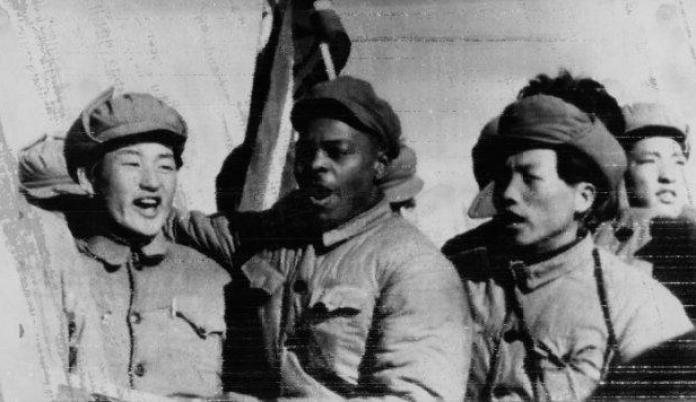


 Aletho News


#/media/File:Missing_in_action_(film_poster).jpg)
