“Experts” reveal their “evidence” of Russian “hacking”
OffGuardian | March 31, 2017
The Senate Select Committee on Intelligence convened today, hearing testimony from three “star witnesses”. If you have a spare three hours, and a strong stomach, feel free to watch the whole sordid ordeal here. Not surprisingly there was no mention of that fact the that the FBI didn’t analyse the DNC servers – they were not allowed to. Likewise, there was no talk of CrowdStrike, the private firm that did get to do analysis, and then had to backtrack on their own findings.
None of that was deemed important. Instead we got three hours of speeches from people who had nothing to say. The three expert witnesses have startlingly similar backgrounds, all hailing from the intelligence community in some way or other. They are all very long on exposition…and very short on actual evidence. Rather than citing statistics, or bringing up evidence of any kind, the Senators are more than happy to just let the three men ramble along twisting narrative pathways.
Two of them had the good-grace to be non-committal, or at least vague, in their answers. Preferring to rely on out-dated historical references and unspoken “modern parallels”. The third man, Clint Watts, a bounty of unsubstantiated Russophobic gossip, and all out paranoia… his testimony was a goldmine for headline writers and scaremongerers the world over. Asserting there needs to be a complete “media black-out” of wikileaks, and declaring:
We are weak. We do not respond, we have no organized response as a country or even a policy towards Russia right now,”
I’m not sure what, if any, experience of Russia Mr Watts has, there’s certainly none listed on his brief biography, supplied by the Senate website. But putting together his seeming lack of serious credentials, his penchant for over-stating wild speculations as if they were established facts, and his statement that all his work is done with “three laptops, from my house”… one begins to get the impression he’s a kind of American Elliot Higgins. Self-important enough to believe his own BS, and crazy enough to say it out-loud, without realising he’s being used to voice a position with which more important people refuse to tarnish their “credibility”.
For example, this line from his bio:
Clint used modeling to outline Russian influence operations via social media and the Kremlin’s return to Active Measures.
Is classic Bellingcat. What “modelling” likely means is looking at Facebook and deciding everyone saying pro-Russian stuff is a “troll”, and then making a bad diagram about it in MS Paint. A visit to his twitter did not disappoint:
3- shout out to the @bellingcat team, keep up the fight and bring the pain on Russia’s Active Measures
— Clint Watts (@selectedwisdom) March 30, 2017
And then right on cue… in with the diagrams:

This is truly startling evidence of Russian hacking, I mean…. there’s writing EVERYWHERE, lots of pictures of people… and look at all the arrows!
I don’t know about you guys, but I’m sold.
Russia ‘Hack’ of US Elections an ‘Act of War’ — Dick Cheney
Sputnik – March 28, 2017
Russia’s “hack” of the 2016 US elections could be “considered an act of war,” says former Vice President and noted warhawk Dick Cheney, speaking at an event in New Delhi, India. He joins the chorus of US notables resorting to the groundless accusation.
“In some quarters, that would be considered an act of war. I think it’s a kind of conduct and activity we will see going forward,” said Cheney, the neocon’s neocon. “There’s no question” that the Russian government tried to “interfere” with the US elections, Cheney added.
Despite his seemingly sadistic love of watching the US go to war, Cheney himself deferred being drafted by the US military five times during the Vietnam era.
Democrats have been equally quick to launch the “Russian hacking” attack for their own political gain. Rep. Jackie Speier of California said so-called Russian meddling “was an act of war, an act of hybrid warfare,” according to a report by the Independent Journal Review.
A letter written by dozens of former intelligence, diplomatic, and military officials addressed to President Barack Obama concluded that “DNC and HRC servers alleged to have been hacked were, in fact, not hacked.”
For one, the FBI never accessed the compromised servers at the DNC, Sputnik reported.
Bill Binney, a 35-year NSA veteran and former technical director at the spy agency, said the publication of Hillary Clinton and John Podesta’s emails were the result of an insider leak rather than an external attack.
US Democrats portraying Russia’s alleged interference as act of war
Press TV – March 27, 2017
Democratic lawmakers are stepping up the United States’ anti-Russia rhetoric over Moscow’s alleged interference in the 2016 presidential election, which yielded President Donald Trump.
In a declassified report released in January, the US intelligence community concluded that Russian President Vladimir Putin helped the New York billionaire win the White House, an allegation dismissed both by Moscow and Trump.
The lawmakers, whose candidate, Hillary Clinton, lost the battle in the November 8, 2016 vote, are boosting the narrative in the wake of a statement by FBI Director James Comey in regard to an ongoing investigation into Trump-Russia ties.
Comey’s appearance before the House Intelligence Committee for a hearing on Monday yielded the first public confirmation that a probe was underway to detect possible collusion between Trump and Russia.
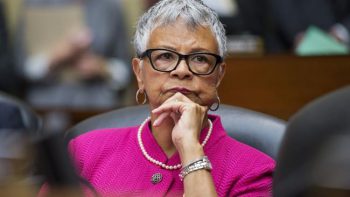
“I think this attack that we’ve experienced is a form of war, a form of war on our fundamental democratic principles,” Democratic House Representative Bonnie Watson Coleman (pictured above) said during a hearing this week at the House Homeland Security Committee.
She further censured Trump for his “borderline dismissive attitude” in the wake of Russia’s alleged cyberattacks.
During Comey’s hearing, two other Democrats also contributed to the hawkish narrative.
California Democrat, Representative Jackie Speier, called Russia’s alleged interference an act of war, calling for action.
“I actually think that their engagement was an act of war, an act of hybrid warfare, and I think that’s why the American people should be concerned about it,” Speier said.
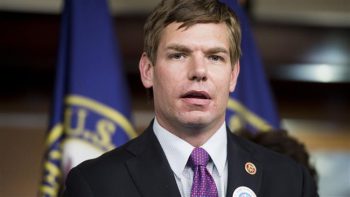
Democratic Representative Eric Swalwell (pictured above) also called for bipartisan opposition against what he described as “a foreign adversary.”
“This past election, our country was attacked. We were attacked by Russia,” Swalwell said. “I see this as an opportunity for everyone on this committee, Republicans and Democrats, to not look in the rear view window but to look forward and do everything we can to make sure that our country never again allows a foreign adversary to attack us.”
Senator Ben Cardin, a Democrat from Maryland, has also described Russia’s alleged electoral interference as the United States’ “political Pearl Harbor.”
According to a Sunday report by The Hill, the Democratic Party is attempting to portray President Trump as “weak on Russia” while exaggerating the “damage done by Moscow.”
How US Flooded the World with Psyops
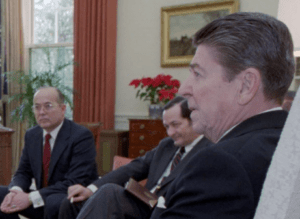
John Poindexter, Walter Raymond Jr. and Ronald Reagan. (Photo credit: Reagan presidential library)
By Robert Parry | Consortium News | March 25, 2017
Newly declassified documents from the Reagan presidential library help explain how the U.S. government developed its sophisticated psychological operations capabilities that – over the past three decades – have created an alternative reality both for people in targeted countries and for American citizens, a structure that expanded U.S. influence abroad and quieted dissent at home.
The documents reveal the formation of a psyops bureaucracy under the direction of Walter Raymond Jr., a senior CIA covert operations specialist who was assigned to President Reagan’s National Security Council staff to enhance the importance of propaganda and psyops in undermining U.S. adversaries around the world and ensuring sufficient public support for foreign policies inside the United States.
Raymond, who has been compared to a character from a John LeCarré novel slipping easily into the woodwork, spent his years inside Reagan’s White House as a shadowy puppet master who tried his best to avoid public attention or – it seems – even having his picture taken. From the tens of thousands of photographs from meetings at Reagan’s White House, I found only a couple showing Raymond – and he is seated in groups, partially concealed by other officials.
But Raymond appears to have grasped his true importance. In his NSC files, I found a doodle of an organizational chart that had Raymond at the top holding what looks like the crossed handles used by puppeteers to control the puppets below them. Although it’s impossible to know exactly what the doodler had in mind, the drawing fits the reality of Raymond as the behind-the-curtains operative who was controlling the various inter-agency task forces that were responsible for implementing various propaganda and psyops strategies.
Until the 1980s, psyops were normally regarded as a military technique for undermining the will of an enemy force by spreading lies, confusion and terror. A classic case was Gen. Edward Lansdale — considered the father of modern psyops — draining the blood from dead a Filipino rebel in such a way so the dead rebel’s superstitious comrades would think that a vampire-like creature was on the prowl. In Vietnam, Lansdale’s psyops team supplied fake and dire astrological predictions for the fate of North Vietnamese and Vietcong leaders.
Essentially, the psyops idea was to play on the cultural weaknesses of a target population so they could be more easily manipulated and controlled. But the challenges facing the Reagan administration in the 1980s led to its determination that peacetime psyops were also needed and that the target populations had to include the American public.
The Reagan administration was obsessed with the problems left behind by the 1970s’ disclosures of government lying about the Vietnam War and revelations about CIA abuses both in overthrowing democratically elected governments and spying on American dissidents. This so-called “Vietnam Syndrome” produced profound skepticism from regular American citizens as well as journalists and politicians when President Reagan tried to sell his plans for intervention in the civil wars then underway in Central America, Africa and elsewhere.
While Reagan saw Central America as a “Soviet beachhead,” many Americans saw brutal Central American oligarchs and their bloody security forces slaughtering priests, nuns, labor activists, students, peasants and indigenous populations. Reagan and his advisers realized that they had to turn those perceptions around if they hoped to get sustained funding for the militaries of El Salvador, Guatemala and Honduras as well as for the Nicaraguan Contra rebels, the CIA-organized paramilitary force marauding around leftist-ruled Nicaragua.
So, it became a high priority to reshape public perceptions to gain support for Reagan’s Central American military operations both inside those targeted countries and among Americans.
A ‘Psyops Totality’
As Col. Alfred R. Paddock Jr. wrote in an influential November 1983 paper, entitled “Military Psychological Operations and US Strategy,” “the planned use of communications to influence attitudes or behavior should, if properly used, precede, accompany, and follow all applications of force. Put another way, psychological operations is the one weapons system which has an important role to play in peacetime, throughout the spectrum of conflict, and during the aftermath of conflict.”
Paddock continued, “Military psychological operations are an important part of the ‘PSYOP Totality,’ both in peace and war. … We need a program of psychological operations as an integral part of our national security policies and programs. … The continuity of a standing inter-agency board or committee to provide the necessary coordinating mechanism for development of a coherent, worldwide psychological operations strategy is badly needed.”
Some of Raymond’s recently available handwritten notes show a focus on El Salvador with the implementation of “Nation wide multi-media psyops” spread through rallies and electronic media. “Radio + TV also carried Psyops messages,” Raymond wrote. (Emphasis in original.) Though Raymond’s crimped handwriting is often hard to decipher, the notes make clear that psyops programs also were directed at Honduras, Guatemala and Peru.
One declassified “top secret” document in Raymond’s file – dated Feb. 4, 1985, from Secretary of Defense Caspar Weinberger – urged the fuller implementation of President Reagan’s National Security Decision Directive 130, which was signed on March 6, 1984, and which authorized peacetime psyops by expanding psyops beyond its traditional boundaries of active military operations into peacetime situations in which the U.S. government could claim some threat to national interests.
“This approval can provide the impetus to the rebuilding of a necessary strategic capability, focus attention on psychological operations as a national – not solely military – instrument, and ensure that psychological operations are fully coordinated with public diplomacy and other international information activities,” Weinberger’s document said.
This broader commitment to psyops led to the creation of a Psychological Operations Committee (POC) that was to be chaired by a representative of Reagan’s National Security Council with a vice chairman from the Pentagon and with representatives from the Central Intelligence Agency, the State Department and the U.S. Information Agency.
“This group will be responsible for planning, coordinating and implementing psychological operations activities in support of United States policies and interests relative to national security,” according to a “secret” addendum to a memo, dated March 25, 1986, from Col. Paddock, the psyops advocate who had become the U.S. Army’s Director for Psychological Operations.
“The committee will provide the focal point for inter-agency coordination of detailed contingency planning for the management of national information assets during war, and for the transition from peace to war,” the addendum added. “The POC shall seek to ensure that in wartime or during crises (which may be defined as periods of acute tension involving a threat to the lives of American citizens or the imminence of war between the U.S. and other nations), U.S. international information elements are ready to initiate special procedures to ensure policy consistency, timely response and rapid feedback from the intended audience.”
Taking Shape
The Psychological Operations Committee took formal shape with a “secret” memo from Reagan’s National Security Advisor John Poindexter on July 31, 1986. Its first meeting was called on Sept. 2, 1986, with an agenda that focused on Central America and “How can other POC agencies support and complement DOD programs in El Salvador, Guatemala, Honduras, Costa Rica and Panama.” The POC was also tasked with “Developing National PSYOPS Guidelines” for “formulating and implementing a national PSYOPS program.” (Underlining in original)
Raymond was named a co-chair of the POC along with CIA officer Vincent Cannistraro, who was then Deputy Director for Intelligence Programs on the NSC staff, according to a “secret” memo from Deputy Under Secretary of Defense Craig Alderman Jr. The memo also noted that future POC meetings would be briefed on psyops projects for the Philippines and Nicaragua, with the latter project codenamed “Niagara Falls.” The memo also references a “Project Touchstone,” but it is unclear where that psyops program was targeted.
Another “secret” memo dated Oct. 1, 1986, co-authored by Raymond, reported on the POC’s first meeting on Sept. 10, 1986, and noted that “The POC will, at each meeting, focus on an area of operations (e.g., Central America, Afghanistan, Philippines).”
The POC’s second meeting on Oct. 24, 1986, concentrated on the Philippines, according to a Nov. 4, 1986 memo also co-authored by Raymond. “The next step will be a tightly drafted outline for a PSYOPS Plan which we will send to that Embassy for its comment,” the memo said. The plan “largely focused on a range of civic actions supportive of the overall effort to overcome the insurgency,” an addendum noted. “There is considerable concern about the sensitivities of any type of a PSYOPS program given the political situation in the Philippines today.”
Earlier in 1986, the Philippines had undergone the so-called “People Power Revolution,” which drove longtime dictator Ferdinand Marcos into exile, and the Reagan administration, which belatedly pulled its support from Marcos, was trying to stabilize the political situation to prevent more populist elements from gaining the upper hand.
But the Reagan administration’s primary attention continued to go back to Central America, including “Project Niagara Falls,” the psyops program aimed at Nicaragua. A “secret” Pentagon memo from Deputy Under Secretary Alderman on Nov. 20, 1986, outlined the work of the 4th Psychological Operations Group on this psyops plan “to help bring about democratization of Nicaragua,” by which the Reagan administration meant a “regime change.” The precise details of “Project Niagara Falls” were not disclosed in the declassified documents but the choice of code-name suggested a cascade of psyops.
Other documents from Raymond’s NSC file shed light on who other key operatives in the psyops and propaganda programs were. For instance, in undated notes on efforts to influence the Socialist International, including securing support for U.S. foreign policies from Socialist and Social Democratic parties in Europe, Raymond cited the efforts of “Ledeen, Gershman,” a reference to neoconservative operative Michael Ledeen and Carl Gershman, another neocon who has served as president of the U.S.-government-funded National Endowment for Democracy (NED), from 1983 to the present. (Underlining in original.)
Although NED is technically independent of the U.S. government, it receives the bulk of its funding (now about $100 million a year) from Congress. Documents from the Reagan archives also make clear that NED was organized as a way to replace some of the CIA’s political and propaganda covert operations, which had fallen into disrepute in the 1970s. Earlier released documents from Raymond’s file show CIA Director William Casey pushing for NED’s creation and Raymond, Casey’s handpicked man on the NSC, giving frequent advice and direction to Gershman. [See Consortiumnews.com’s “CIA’s Hidden Hand in ‘Democracy’ Groups.”]
Another figure in Raymond’s constellation of propaganda assets was media mogul Rupert Murdoch, who was viewed as both a key political ally of President Reagan and a valuable source of funding for private groups that were coordinating with White House propaganda operations. [See Consortiumnews.com’s “Rupert Murdoch: Propaganda Recruit.”]
In a Nov. 1, 1985 letter to Raymond, Charles R. Tanguy of the “Committees for a Community of Democracies – USA” asked Raymond to intervene in efforts to secure Murdoch’s funding for the group. “We would be grateful … if you could find the time to telephone Mr. Murdoch and encourage him to give us a positive response,” the letter said.
Another document, entitled “Project Truth Enhancement,” described how $24 million would be spent on upgrading the telecommunications infrastructure to arm “Project Truth, with the technical capability to provide the most efficient and productive media support for major USG policy initiatives like Political Democracy.” Project Truth was the overarching name of the Reagan administration’s propaganda operation. For the outside world, the program was billed as “public diplomacy,” but administration insiders privately called it “perception management.” [See Consortiumnews.com’s “The Victory of Perception Management.”]
The Early Years
The original priority of “Project Truth” was to clean up the images of the Guatemalan and Salvadoran security forces and the Nicaraguan Contras, who were led by ousted dictator Anastasio Somoza’s ex-National Guard officers. To ensure steady military funding for these notorious forces, Reagan’s team knew it had to defuse the negative publicity and somehow rally the American people’s support.
At first, the effort focused on weeding out American reporters who uncovered facts that undercut the desired public images. As part of that effort, the administration denounced New York Times correspondent Raymond Bonner for disclosing the Salvadoran regime’s massacre of about 800 men, women and children in the village of El Mozote in northeast El Salvador in December 1981. Accuracy in Media and conservative news organizations, such as The Wall Street Journal’s editorial page, joined in pummeling Bonner, who was soon ousted from his job. But such efforts were largely ad hoc and disorganized.
CIA Director Casey, from his years crisscrossing the interlocking worlds of business and intelligence, had important contacts for creating a more systematic propaganda network. He recognized the value of using established groups known for advocating “human rights,” such as Freedom House.
One document from the Reagan library showed senior Freedom House official Leo Cherne running a draft manuscript on political conditions in El Salvador past Casey and promising that Freedom House would make requested editorial “corrections and changes” – and even send over the editor for consultation with whomever Casey assigned to review the paper.
In a “Dear Bill” letter dated June 24, 1981, Cherne, who was chairman of the Freedom House’s executive committee, wrote: “I am enclosing a copy of the draft manuscript by Bruce McColm, Freedom House’s resident specialist on Central America and the Caribbean. This manuscript on El Salvador was the one I had urged be prepared and in the haste to do so as rapidly as possible, it is quite rough. You had mentioned that the facts could be checked for meticulous accuracy within the government and this would be very helpful. …
“If there are any questions about the McColm manuscript, I suggest that whomever is working on it contact Richard Salzmann at the Research Institute [an organization where Cherne was executive director]. He is Editor-in-Chief at the Institute and the Chairman of the Freedom House’s Salvador Committee. He will make sure that the corrections and changes get to Rita Freedman who will also be working with him. If there is any benefit to be gained from Salzmann’s coming down at any point to talk to that person, he is available to do so.”
By 1982, Casey also was lining up some powerful right-wing ideologues to help fund the “perception management” project both with money and their own media outlets. Richard Mellon Scaife was the scion of the Mellon banking, oil and aluminum fortune who financed a variety of right-wing family foundations – such as Sarah Scaife and Carthage – that were financial benefactors to right-wing journalists and think tanks. Scaife also published the Tribune Review in Pittsburgh, Pennsylvania.
A more comprehensive “public diplomacy” operation began to take shape in 1982 when Raymond, a 30-year veteran of CIA clandestine services, was transferred to the NSC. Raymond became the spark plug for this high-powered propaganda network, according to an unpublished draft chapter of the congressional Iran-Contra investigation that was suppressed as part of the deal to get three moderate Republican senators to sign on to the final report and give the inquiry a patina of bipartisanship.
Though the draft chapter didn’t use Raymond’s name in its opening pages, apparently because some of the information came from classified depositions, Raymond’s name was used later in the chapter and the earlier citations matched Raymond’s known role. According to the draft report, the CIA officer who was recruited for the NSC job had served as Director of the Covert Action Staff at the CIA from 1978 to 1982 and was a “specialist in propaganda and disinformation.”
“The CIA official [Raymond] discussed the transfer with [CIA Director] Casey and NSC Advisor William Clark that he be assigned to the NSC as [Donald] Gregg’s successor [as coordinator of intelligence operations in June 1982] and received approval for his involvement in setting up the public diplomacy program along with his intelligence responsibilities,” the chapter said. Gregg was another senior CIA official who was assigned to the NSC before becoming Vice President George H.W. Bush’s national security adviser.
“In the early part of 1983, documents obtained by the Select [Iran-Contra] Committees indicate that the Director of the Intelligence Staff of the NSC [Raymond] successfully recommended the establishment of an inter-governmental network to promote and manage a public diplomacy plan designed to create support for Reagan Administration policies at home and abroad.”
War of Ideas
During his Iran-Contra deposition, Raymond explained the need for this propaganda structure, saying: “We were not configured effectively to deal with the war of ideas.”
One reason for this shortcoming was that federal law forbade taxpayers’ money from being spent on domestic propaganda or grassroots lobbying to pressure congressional representatives. Of course, every president and his team had vast resources to make their case in public, but by tradition and law, they were restricted to speeches, testimony and one-on-one persuasion of lawmakers. But President Reagan saw the American public’s “Vietnam Syndrome” as an obstacle to his more aggressive policies.
Along with Raymond’s government-based organization, there were outside groups eager to cooperate and cash in. Back at Freedom House, Cherne and his associates were angling for financial support.
In an Aug. 9, 1982 letter to Raymond, Freedom House executive director Leonard R. Sussman wrote that “Leo Cherne has asked me to send these copies of Freedom Appeals. He has probably told you we have had to cut back this project to meet financial realities. … We would, of course, want to expand the project once again when, as and if the funds become available. Offshoots of that project appear in newspapers, magazines, books and on broadcast services here and abroad. It’s a significant, unique channel of communication” – precisely the focus of Raymond’s work.
On Nov. 4, 1982, Raymond, after his transfer from the CIA to the NSC staff but while still a CIA officer, wrote to NSC Advisor Clark about the “Democracy Initiative and Information Programs,” stating that “Bill Casey asked me to pass on the following thought concerning your meeting with [right-wing billionaire] Dick Scaife, Dave Abshire [then a member of the President’s Foreign Intelligence Advisory Board], and Co. Casey had lunch with them today and discussed the need to get moving in the general area of supporting our friends around the world.
“By this definition he is including both ‘building democracy’ … and helping invigorate international media programs. The DCI [Casey] is also concerned about strengthening public information organizations in the United States such as Freedom House. … A critical piece of the puzzle is a serious effort to raise private funds to generate momentum. Casey’s talk with Scaife and Co. suggests they would be very willing to cooperate. … Suggest that you note White House interest in private support for the Democracy initiative.”
The importance of the CIA and White House secretly arranging private funds was that these supposedly independent voices would then reinforce and validate the administration’s foreign policy arguments with a public that would assume the endorsements were based on the merits of the White House positions, not influenced by money changing hands. Like snake-oil salesmen who plant a few cohorts in the crowd to whip up excitement for the cure-all elixir, Reagan administration propagandists salted some well-paid “private” individuals around Washington to echo White House propaganda “themes.”
The role of the CIA in these initiatives was concealed but never far from the surface. A Dec. 2, 1982 note addressed to “Bud,” a reference to senior NSC official Robert “Bud” McFarlane, described a request from Raymond for a brief meeting. “When he [Raymond] returned from Langley [CIA headquarters], he had a proposed draft letter … re $100 M democ[racy] proj[ect],” the note said.
While Casey pulled the strings on this project, the CIA director instructed White House officials to hide the CIA’s hand. “Obviously we here [at CIA] should not get out front in the development of such an organization, nor should we appear to be a sponsor or advocate,” Casey said in one undated letter to then-White House counselor Edwin Meese III as Casey urged creation of a “National Endowment.”
But the formation of the National Endowment for Democracy, with its hundreds of millions of dollars in U.S. government money, was still months down the road. In the meantime, the Reagan administration would have to line up private donors to advance the propaganda cause.
“We will develop a scenario for obtaining private funding,” NSC Advisor Clark wrote to Reagan in a Jan. 13, 1983 memo, adding that U.S. Information Agency Director “Charlie Wick has offered to take the lead. We may have to call on you to meet with a group of potential donors.”
Despite Casey’s and Raymond’s success in bringing onboard wealthy conservatives to provide private funding for the propaganda operations, Raymond worried about whether a scandal could erupt over the CIA’s involvement. Raymond formally resigned from the CIA in April 1983, so, he said, “there would be no question whatsoever of any contamination of this.” But Raymond continued to act toward the U.S. public much like a CIA officer would in directing a propaganda operation in a hostile foreign country.
Raymond fretted, too, about the legality of Casey’s ongoing role. Raymond confided in one memo that it was important “to get [Casey] out of the loop,” but Casey never backed off and Raymond continued to send progress reports to his old boss well into 1986.
It was “the kind of thing which [Casey] had a broad catholic interest in,” Raymond shrugged during his Iran-Contra deposition. He then offered the excuse that Casey undertook this apparently illegal interference in domestic politics “not so much in his CIA hat, but in his adviser to the president hat.”
Peacetime Propaganda
Meanwhile, Reagan began laying out the formal authority for this unprecedented peacetime propaganda bureaucracy. On Jan. 14, 1983, Reagan signed National Security Decision Directive 77, entitled “Management of Public Diplomacy Relative to National Security.” In NSDD-77, Reagan deemed it “necessary to strengthen the organization, planning and coordination of the various aspects of public diplomacy of the United States Government.”
Reagan ordered the creation of a special planning group within the National Security Council to direct these “public diplomacy” campaigns. The planning group would be headed by Walter Raymond and one of its principal outposts would be a new Office of Public Diplomacy for Latin America, housed at the State Department but under the control of the NSC. (One of the directors of the Latin American public diplomacy office was neoconservative Robert Kagan, who would later co-found the Project for the New American Century in 1998 and become a chief promoter of President George W. Bush’s 2003 invasion of Iraq.)
On May 20, 1983, Raymond recounted in a memo that $400,000 had been raised from private donors brought to the White House Situation Room by U.S. Information Agency Director Charles Wick. According to that memo, the money was divided among several organizations, including Freedom House and Accuracy in Media, a right-wing media attack organization.
When I wrote about that memo in my 1992 book, Fooling America, Freedom House denied receiving any White House money or collaborating with any CIA/NSC propaganda campaign. In a letter, Freedom House’s Sussman called Raymond “a second-hand source” and insisted that “this organization did not need any special funding to take positions … on any foreign-policy issues.”
But it made little sense that Raymond would have lied to a superior in an internal memo. And clearly, Freedom House remained central to the Reagan administration’s schemes for aiding groups supportive of its Central American policies, particularly the CIA-organized Contra war against the leftist Sandinista regime in Nicaragua. Plus, White House documents released later revealed that Freedom House kept its hand out for funding.
On Sept. 15, 1984, Bruce McColm – writing from Freedom House’s Center for Caribbean and Central American Studies – sent Raymond “a short proposal for the Center’s Nicaragua project 1984-85. The project combines elements of the oral history proposal with the publication of The Nicaraguan Papers,” a book that would disparage Sandinista ideology and practices.
“Maintaining the oral history part of the project adds to the overall costs; but preliminary discussions with film makers have given me the idea that an Improper Conduct-type of documentary could be made based on these materials,” McColm wrote, referring to a 1984 film that offered a scathing critique of Fidel Castro’s Cuba. “Such a film would have to be the work of a respected Latin American filmmaker or a European. American-made films on Central America are simply too abrasive ideologically and artistically poor.”
McColm’s three-page letter reads much like a book or movie pitch, trying to interest Raymond in financing the project: “The Nicaraguan Papers will also be readily accessible to the general reader, the journalist, opinion-maker, the academic and the like. The book would be distributed fairly broadly to these sectors and I am sure will be extremely useful. They already constitute a form of Freedom House samizdat, since I’ve been distributing them to journalists for the past two years as I’ve received them from disaffected Nicaraguans.”
McColm proposed a face-to-face meeting with Raymond in Washington and attached a six-page grant proposal seeking $134,100. According to the grant proposal, the project would include “free distribution to members of Congress and key public officials; distribution of galleys in advance of publication for maximum publicity and timely reviews in newspapers and current affairs magazines; press conferences at Freedom House in New York and at the National Press Club in Washington, D.C.; op-ed circulation to more than 100 newspapers …; distribution of a Spanish-language edition through Hispanic organizations in the United States and in Latin America; arrangement of European distribution through Freedom House contacts.”
The documents that I found at the Reagan library did not indicate what subsequently happened to this specific proposal. McColm did not respond to an email request for comment about the Nicaraguan Papers plan or the earlier letter from Cherne (who died in 1999) to Casey about editing McComb’s manuscript. Freedom House did emerge as a leading critic of Nicaragua’s Sandinista government and also became a major recipient of money from the U.S.-funded National Endowment for Democracy, which was founded in 1983 under the umbrella of the Casey-Raymond project.
The more recently released documents – declassified between 2013 and 2017 – show how these earlier Casey-Raymond efforts merged with the creation of a formal psyop bureaucracy in 1986 also under the control of Raymond’s NSC operation. The combination of the propaganda and psyop programs underscored the powerful capability that the U.S. government developed more than three decades ago for planting slanted, distorted or fake news. (Casey died in 1987; Raymond died in 2003.)
Over those several decades, even as the White House changed hands from Republicans to Democrats to Republicans to Democrats, the momentum created by William Casey and Walter Raymond continued to push these “perception management/psyops” strategies forward. In more recent years, the wording has changed, giving way to more pleasing euphemisms, like “smart power” and “strategic communications.” But the idea is still the same: how you can use propaganda to sell U.S. government policies abroad and at home.
Investigative reporter Robert Parry broke many of the Iran-Contra stories for The Associated Press and Newsweek in the 1980s.
Global Laundromat update: “Bank did bank things with famous person”
OffGuardian | March 22, 2107
Perhaps this is the beginning of a new series for the Guardian ? Maybe in the future we can expect stories entitled “Man who voted Brexit regularly beats wife” and “Angela Merkel lives in the same city Adolf Hitler called home”.

Has the Guardian hit a new low in shameless, dishonest, click-bait headlines? You be the judge.
I think the “Global Laundromat” scandal might not be having the massive impact that The Guardian expected it to (personally, I blame the rather silly name). When it was launched yesterday it was meant to be a splash, but it has landed more like a ripple, so far failing to even repeat the short-lived intensity of the Panama Papers.
Todays article is simply a readjustment of all same talking points mentioned several times each yesterday, only chopped up into a different order. Like that episode of the Simpsons where Marge keeps chopping up one Chanel suit into a variety of different outfits.
You can tell they are desperate to get people clicking, because they’ve tried to tie it into an actual talking point: Donald Trump’s “Russia connections”. The entirety of this “new information” is contained within the headline:
Bank that lent $300m to Trump linked to Russian money laundering scam
That’s it. That’s not a teaser for more information. That’s not a summary of a complex plot. That is literally all the information. To quote the article directly:
The German bank that loaned $300m (£260m) to Donald Trump played a prominent role in a money laundering scandal run by Russian criminals
That’s right: Deutsche Bank, one of the largest and most important banks in the world, handling literally billions of dollars worth of business, received exchanges from Latvian banks implicated in money laundering AND lent money to Donald Trump. This is a wonderful new method of reporting, simply stating two completely unrelated incidents and hoping people make the connection themselves. It would allow headlines like:
Jeremy Corbyn’s favourite tooth-paste also used by Pol-Pot
Later in the article, they try REALLY hard to big-up the whole Trump-Russia thing:
Ties with Russia are a matter of acute sensitivity for Deutsche. In February, it emerged that Deutsche had secretly reviewed multiple loans made to President Trump by its private wealth division to see if there was a connection to Russia.
But are forced to admit:
Sources say the bank discovered no evidence of any Moscow link.
Just to put in context how completely inconsequential this information is – All five of the biggest banks in Britain have been “implicated” too, each will have a client/customer list literally millions of names long – some of those people will be famous. Obviously their doing business with a bank where money launderers also do business is meaningless.
From all over the world there have, so far, been 19 Russian banks, handfuls of banks in Moldova and Latvia and at least 2 German banks “implicated” in this “scheme”. In fact:
Deutsche Bank is one of dozens of western financial institutions that processed at least $20bn – and possibly more – in money of “criminal origin” from Russia.
“Dozens” of Western banks are possibly involved. Let’s hope the Guardian doesn’t reprint the same article, with a new headline, for every person each one of the “dozens” of banks lent money to.
Facebook expands roll-out of fact-checker in ‘fake news’ crackdown
RT | March 22, 2017
Facebook has expanded the roll-out of its fact-checker tool to combat ‘fake news’ as more users report the appearance of the ‘disputed’ message alert. The pop-up lets users know when a story’s accuracy is questionable before they share it.
Users in regions including the US have reported seeing the warning, advising them that “before you share this content, you might want to know that the fact-checking sites, Snopes.com and Associated Press disputed its accuracy.”
The alert then allows the user to share the story or cancel.
The tool is not yet in operation in all regions, with the UK, Ireland and Australia among countries so far known not to be seeing the alert when tested against a story known in some regions of the US to display the alert.
The alert first appeared earlier this month, when users reported a ‘disputed’ news tag appearing on stories deemed false by the organizations employed by Facebook to fact check.
Associated Press (AP), one of the fact checkers partnered with Facebook, published details last week on why a story on the alleged Irish slave trade was false. The story it’s based on is prompting the ‘disputed’ alert when users attempt to share it on Facebook.
Facebook announced the plan to crack down on ‘fake news’ last December, following unproven claims it contributed to the US presidential election result by providing a vehicle for questionable news sources.
The tech giant partnered with fact checkers including ABC News, FactCheck.org, AP, Snopes and Politifact as part of the plan.
READ MORE:
Facebook begins ‘fake news’ crackdown with ‘disputed’ story tag roll out
“Global Laundromat” has the Guardian in a Spin
By Kit | OffGuardian | March 21, 2017
The latest “breaking” story from the Guardian and Luke Harding is hitting the headlines. Almost exactly 1 year after the explosive anti-climax that was “The Panama Papers”, Harding and the coterie of NGOs for which he acts as de-facto spokesperson have a big announcement to make: Banks launder money, and some of it is Russian.

I don’t know why they use American money with a Russian flag superimposed. They were probably afraid nobody would recognise roubles.
We are nearing the anniversary of the release of the Panama Papers, a “big story” involving years of work, hundreds of leaked documents, a team of exceptional journalists (and Luke Harding) and a dramatic reveal: “Sometimes, very rich people use legal loopholes to avoid paying their taxes.”
The list of implicated parties included heads of state, celebrities, athletes, David Cameron’s dad and a cellist that knows Vladimir Putin. We all remember who the Guardian decided to focus on, and we all know why.
Today the same crack-team (and Luke Harding) are releasing the long-awaited sequel to their original hit. “The global Laundromat”, it’s called. It’s a product of a years-long investigation into money laundering in ex-Soviet states, using British shell companies. I can’t comment on the truth of these allegations, because we don’t get to see the evidence, we are simply told that it’s true “according to letters The Guardian has seen”, and “reports shown to the Guardian ”… and other variations on that theme.
They may well be true. Big business and billionaires take part in shady and/or illegal business practices all the time. Just as was the case in the Panama Papers, they tell us something we all already know to be true, and then act like it was a surprise.
There’s a lot to like here. The simultaneous publication of four different articles on the subject, all practically identical. The implication that it is “breaking news”, when their prize factoid is three years old, and the scheme itself hasn’t operated since 2014. The fact that Luke Harding has to publicly declare the US government’s involvement, to stop people like us from pointing it out and making them look silly (like last time). The persistent use of the old Harding trick of simply dotting your story with plenty of “could haves” and “speculations suggests”. It’s all good stuff.
Where it becomes hilariously cack-handed in their agenda-pushing is in trying to force tenuous links to the Kremlin and, of course, Vladimir Putin in particular.
Last year they plastered their front page with pictures of Putin and videos about Putin and editorials about corruption in Russia… despite having to admit in the text:
… the president’s name does not appear in any of the records…
This year they can’t even go that far. They fall to the level of implication. Talking around inconvenient facts on the one hand, and then wildly speculating on the other. Leaving deliberate dots for the reader to join up, whilst never having the courage of their convictions to make plain their insinuations (probably for fear of being sued and/or corrected in the alt-media).
Much like the Panama Papers launch, there’s an awful lot of verbiage to work through, implications are thick on the ground, evidence less so. No direct sources are named, it is always “an ex-banker living in exile said”, or “a Russian business-man said”. Gorge on words and starve of meaning seems to be the message of the day.
Some interesting bullet points I pulled out:
Now we can reveal Britain’s role in this scheme – and how vast sums of potentially tainted money flowed into and out of western banks, including HSBC and the Royal Bank of Scotland, without raising any alarm.
This is taken from this piece, one of the four long reads The Guardian is currently devoting to this topic. You can tell it’s a Harding creation because of the prose… for want of a better word… style. It might seem inconsequential at first, but note the use of the phrase “potentially tainted”, that means there is no proof of any wrong-doing at all. It means, the money is “potentially” untainted. As in just totally legal money being used to buy things.
Normally speaking I would expect a crime to at least have definitely happened before a paper put it in their headlines. But maybe I’m being old-fashioned.
The ingenious scheme has its origins in Russia. Put simply, it was a way for Kremlin insiders and other well-known Russians to shift cash abroad.
Not a single “Kremlin insider” is named in any of the four stories currently running on this issue.
Before it was rumbled, the scheme was one of several mafia operations that have allowed the rich to spirit money out of the country to spend in the west.
There’s no evidence to back-up this statement, not a single connection to the mafia is ever mentioned again. But even so it’s worth noting. The money is leaving Russia and coming here. Remember that, because it will be important later on.
“Money laundering is the biggest business in Russia,” one former Moscow banker, now living in exile, explained. “You steal from the budget. You’ve got this dirty money. You have to do something with it.”
The source here, the “former banker living in exile”, is naturally unnamed. As an educated guess it’s probably Sergei Pugachev, a banker and oligarch who has fled both Russia and Britain on charges of embezzling and money laundering. Harding has interviewed him before, it would make sense if he became Harding’s primary source on Russian banking.
Pugachev fled Russia after the government seized his assets and charged him with various financial crimes. That’s an important pattern that will repeat, and has repeated, many times over.
Here we come to the “Putin connection”, are you ready?
It features Russian banks, Moldovan oligarchs, and a network of fake UK companies fronted by fake or “nominee” directors, many of them in Ukraine. It had impeccable Moscow connections. Vladimir Putin’s cousin Igor sat on the board of a bank which held accounts that laundered billions.
His cousin worked at one of the banks that held accounts that may have laundered money. That’s it. These are connections that Harding considers “impeccable”. Is there any evidence connecting the two cousins? Phone calls? Photographs? If any exists, none is presented.
Interestingly, Igor Putin is actually a member of an opposition political party in Russia, which supported an alternative presidential candidate in 2012.
You can put the above quote together with another statement, from this article, to see just how completely meaningless it is:
Accounts held at 19 Russian banks were involved in the scheme. In 2014, it was reported that one financial institution was the Russian Land Bank (RZB). A bank board member at the time was Igor Putin.
Yes nineteen, nineteen(!), different Russian banks are “involved” with the scheme, and the “impeccable Moscow connections” are that Putin’s cousin worked at one of them. At least five different British banks were involved, HSBC, Barclays, Lloyds TSB, NatWest and RSB. It’s hard to imagine that every cousin, of every board member, of every bank is currently under investigation by Scotland Yard.
In fact, nobody is under investigation by Scotland Yard, at all. Every single reference to a criminal investigation is talking about Latvia, Moldova… and Russia.
Once the goods had been cleared the UK firms were liquidated. No duty was paid. Often, Russia’s tax inspectors then took the UK companies to court.
In practice, the Laundromat made possible three different crimes inside Russia: tax evasion, evasion of customs duty and money laundering. In 2013 grey import schemes cost the state $40bn, a Russian parliament committee said.
… alleged ringleader Alexander Grigoriev was detained in November 2015 while eating in a Moscow restaurant… In 2014-15, [Russian] regulators stripped Grigoriev of his banking licences amid concerns that funds were mysteriously vanishing… Russian police sources told Kommersant that Grigoriev was one of a number of prominent people who used the Laundromat to move $46bn in liquid assets out of Russia.
In three separate paragraphs, dotted throughout the four different articles he has contributed to, Harding makes reference to three different Russian governmental efforts to control illegal movement of money: Taking foreign companies to court, parliamentary enquiries, and the arrest and suspension of (alleged) criminal bankers.
He makes no such mention of any British efforts to do the same, because there were none.
The FSB, the Russian security service Harding routinely refers to as “the successor to the KGB” (in fact, in one article today he simply calls them the KGB), have apparently launched an investigation into this scheme. How does Harding address this issue? Very simply:
The Russian investigation into Laundromat has been cursory.
There are suspicions the FSB’s real goal was merely to find out how much investigators knew.
… officers from Russia’s FSB spy agency visited detectives in Moldova. They took away records. It is unclear if this was a genuine investigation or an attempt to discover how much the Moldovans knew. Probably the latter.
No sources are linked to back up these assertions. He completely dismisses, without evidence or argument, the FSB investigations.
He doesn’t dismiss the intentions of Britain’s NCA investigations… because, once again, there were none.
A step back, and a gentle examination, paints a rather different picture from the one with which the Guardian is trying to present us. It shows us Russian oligarchs and bankers shifting vast sums of money OUT of Russia and INTO the EU. Now why would this be?
Logic would suggest that money flows FROM regulation INTO corruption. That’s a natural physical force, like water running downhill. Like osmosis. Russia, since the end of the chaotic Yeltsin era, has been going through a slow process of de-oligarchisation, even Shaun Walker (grudgingly) admitted that. The aforementioned Sergei Pugachev can attest to it (he does so, often and loudly). The Russian government has jailed billionaires for embezzling. Russia prosecutes bankers, and demands companies pay their taxes. Is the same true of Britain? Did a single banker see the inside of jail cell after the 2008 crash? Have Amazon, Google or Vodafone been brought to court for their massive tax evasion?
What you’re looking at here, like the Panama Papers, is just further evidence of that which we already know, that the deregulated bank and business sectors in the UK can be abused by the super wealthy for their own personal gain. And, like the Panama Papers, it was deliberately misrepresented by “investigative journalists” in order to exaggerate any connection with the Russian government, and just generally shine a poor light on Russia.
So, who is behind this revelation?
To answer that, let’s take a look at the about page of the driving force behind this “scandal”, The Organized Crime and Corruption Reporting Project (OCCRP). The following is taken directly from their own website:
OCCRP is supported by grants by the Open Society Foundation, Google Digital News Initiative, the Skoll Foundation, the Sigrid Rausing Trust, Google Jigsaw, the National Endowment for Democracy and the Knight Foundation. OCCRP also receives developmental funds for improving journalism from the United States Agency for International Development (USAID) through the International Center for Journalists (ICFJ), the United States Department of State and the Swiss Confederation.
The bolded are all very familiar to us here at OffG, and should be to anyone that has followed our work on US-back NGOs. They form an argument on their own, you don’t need me to tell you what it means.
All this really tells us, so far, is that the US government, their corporate allies and puppet NGOs have spent years of their time, and God knows how much of their near-limitless resources, trying to tie the current Russian administration to any kind of criminal corruption. What have they found? A cellist legally avoiding his taxes and that Russian oligarch’s think their ill-gotten gains are safer in British banks, than Russian ones. A rather damning fact, when you think about it.
This is the result of years of work from the world’s business and intelligence elites (and Luke Harding), and it is, frankly, pitiful.
Trump v. Televised Congressional Hysteria
By Stephen Lendman | March 21, 2017
Americans are ill-governed and ill-served by officials at all levels of government – federal, state and local.
On Monday, clear evidence showed it. Disgraceful witch-hunt McCarthyism was on display for viewers tuning in to see.
Hysterical House Select Committee on Intelligence members disgraced themselves during tediously long testimony by FBI Director James Comey and NSA head Michael Rogers.
Committee members obsessed over nonexistent Trump ties to Russia, his charges about Obama wiretapping him, nonexistent Moscow US election hacking, Putin bashing, and security leaks.
Comey acknowledged an ongoing classified investigation into alleged Russian interference in America’s presidential election, saying:
“I have been authorized by the Department of Justice to confirm that the FBI as part of our counterintelligence mission is investigating the Russian government’s efforts to interfere in the 2016 presidential election.”
“And that includes investigating the nature of any links between individuals associated with the Trump campaign and the Russian government, and whether there was any coordination between the campaign and Russia’s efforts.”
“As with any counterintelligence investigation, this will also include an assessment of whether any crimes were committed.”
He offered no further elaboration despite hours of badgering by committee members to explain more.
The proceedings amounted to orchestrated McCarthyism, infamous witch-hunt hysteria, a disgusting display.
Russia was demonized for nonexistent US election hacking. Comey stopped short of suggesting collusion between Trump’s campaign and Moscow – because of an ongoing investigation he’s not at liberty to discuss.
After months of bashing Russia and Trump, no evidence surfaced of collusion between him, his campaign and Moscow – or proof of Russian US election hacking. None exists, yet baseless accusations persist.
Trump addressed Monday’s proceedings via multiple tweets, saying:
“James Clapper and others stated that there is no evidence Potus colluded with Russia. This story is FAKE NEWS and everyone knows it!”
“The Democrats made up and pushed the Russian story as an excuse for running a terrible campaign. Big advantage in Electoral College & lost!”
“The real story that Congress, the FBI and all others should be looking into is the leaking of Classified information. Must find leaker now!”
“What about all of the contact with the Clinton campaign and the Russians? Also, is it true that the DNC would not let the FBI in to look?”
Last fall Putin asked “is America a banana republic?” Televised Monday proceedings provided more evidence of a politically corrupt system too debauched to fix.
Of greater concern is creating pretexts for war on Russia. House Intelligence Committee chairman Devin Nunes (R. CA) claimed nonexistent “pressing threats posed by the Russian autocrat (sic)” Putin, urging “stronger action against Russian belligerence.”
Stoking conflict between the world’s top nuclear powers is madness. Is this where things are heading?
Will neocons infesting Washington risk nuclear armageddon to satisfy their lust for unchallenged power?
Stephen Lendman can be reached at lendmanstephen@sbcglobal.net. His new book as editor and contributor is titled Flashpoint in Ukraine: How the US Drive for Hegemony Risks WW III.
Featured Video
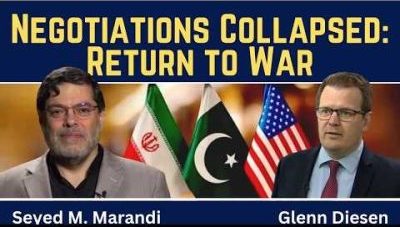
Seyed M. Marandi: Negotiations Collapsed – Return to War
or go to
Aletho News Archives – Video-Images
From the Archives
Wartime internment camps in Australia
National Archives of Australia
World War I
During World War I, for security reasons the Australian Government pursued a comprehensive internment policy against enemy aliens living in Australia.
Initially only those born in countries at war with Australia were classed as enemy aliens, but later this was expanded to include people of enemy nations who were naturalised British subjects, Australian-born descendants of migrants born in enemy nations and others who were thought to pose a threat to Australia’s security.
Australia interned almost 7,000 people during World War I, of whom about 4,500 were enemy aliens and British nationals of German ancestry already resident in Australia.
Records of World War I internment camps
World War II
During World War II, Australian authorities established internment camps for three reasons – to prevent residents from assisting Australia’s enemies, to appease public opinion and to house overseas internees sent to Australia for the duration of the war.
Unlike World War I, the initial aim of internment during the later conflict was to identify and intern those who posed a particular threat to the safety or defence of the country. As the war progressed, however, this policy changed and Japanese residents were interned en masse. In the later years of the war, Germans and Italians were also interned on the basis of nationality, particularly those living in the north of Australia. In all, just over 20 per cent of all Italians resident in Australia were interned. … continue
Blog Roll
 Aletho News
- Seyed M. Marandi: Negotiations Collapsed – Return to War
- Tomorrow’s naval blockade showdown
- ‘Israel’ attacks civilians to hide its embarrassing military failures & out of pure sadism
- Any Foreign Military Vessel Approaching Hormuz Under Any Pretext ‘Will Be Dealt With Severely’: IRGC
- Diplomats slam US negotiators’ performance in Iran talks
- Trump Refuses Exit Ramp, War with Iran will Continue
- Trump Says US Naval Blockade in Strait of Hormuz Will Begin Shortly
- US, Iran end 21-hour talks without agreement
- US IRAN TALKS: Who Are the Crazy Ones Here? /Lt Col Daniel Davis
- Talks with the US end without a deal over excessive US demands: Iran
- If Americans Knew
- US-Iran ceasefire negotiations make zero progress – Daily Update
- Pro-Israel ‘Thinktanks’ and Individuals who Influence U.S. Foreign Policy
- Mearsheimer reveals how Israel dictates US policies on Iran, Gaza – video
- After killing 350+, Israel still has a “score to settle” with Lebanon before ceasefire – Daily Update
- Military aid to Israel emerges as the latest political litmus test for Democrats
- The only Palestinian children’s rights organization closes following years-long Israeli campaign against it
- ‘I Can’t Forget the Smell’: Lebanese Reel After Israel Kills Over 300 in Single Day
- DNC Shoots Down Resolutions Calling Out AIPAC and Limiting Arms to Israel
- TCN: Is Israel Blackmailing President Trump?
- Israel killed at least 303 Lebanese yesterday – who were they? Daily Update
- No Tricks Zone
- German Expert: Heat Dome Led To Record Temps In Western USA…Warmer In 1934, 1936
- New Study: No Linear Warming Or Glacier Retreat Along Northern Antarctic Peninsula Since 1980s
- An Inconvenient Tree: Uncovered In Alps… Europe Much Warmer Than Today 6000 Years Ago
- New Study Reports A 60% Slowdown In Greenland’s Ice Loss Rate In The Last Decade
- Low Intensity Tornado Wrecks Major Solar Farm, Creating A Potential Toxic Dump
- New Study Finds Warming Saves Lives…Cold Temperatures 12 Times More Deadly Than Excess Heat
- German Science Blog Accuses PIK Climate Institute Of Hallucinating Climate Tipping Points
- Devastating Assessment Of Comirnaty Vaccine By Former Senior Pfizer Europe Toxicologist
- New Study: CO2 Is ‘Effectively Negligible’ As An Explanatory Climate Change Factor Since 2000
- Former Pfizer Toxicologist Dr. Helmut Sterz Tells Bundestag Hearing Pfizer Vaccine Should Have Never Been Approved
 Aletho News