Iran riots 2026: How the Erfan Soltani “execution” story went viral – and fell apart
By Yousef Ramazani | Press TV | February 3, 2026
The release on bail of Erfan Soltani, an Iranian national detained during recent riots in the country, on Sunday did more than conclude a domestic legal episode.
It also dismantled a carefully constructed and extremely flawed international narrative that, for weeks, had weaponized misinformation to portray his “execution” as an imminent certainty.
In mid-January 2026, a wave of alarming headlines rippled across global media, claiming without evidence that Iran was preparing to execute a young man named Erfan Soltani.
Major outlets – including the BBC, Euronews, The Guardian, and Sky News – reported his supposed “sentence” as fact, citing scandalous Western-based “human rights groups,” and triggering diplomatic warnings and an avalanche of political reactions.
“Iran set to execute protester days after arrest as Tehran speeds up death sentences,” declared Euronews. ABC News ran with: “Relative speaks out on plight of arrested Iranian protester Erfan Soltani, who had faced execution.” The Hill asked: “Who is Erfan Soltani, Iranian protester Trump mentioned facing execution?”
As the initial fog of propaganda began to lift, the narrative quietly shifted. The Guardian, which had earlier warned of Soltani’s “imminent execution,” later revised its framing: “Execution of condemned Iranian protester postponed, family told.” The BBC followed suit with: “Who is Erfan Soltani, Iranian protester who reportedly had execution postponed?”
The storyline consistently casts Iran’s judiciary as carrying out summary executions – a familiar script deployed in previous cycles of engineered unrest.
Yet on February 1, Soltani was released on bail. His case remains open, but without any death sentence outcome, Iranian judicial authorities had already signaled weeks earlier.
For charges against him, the provision of execution does not exist; they had made it clear.
The stark gap between the initial global coverage and the eventual reality revealed more than a routine correction. It exposed a complex ecosystem in which unverified activist claims, geopolitical pressure, and coordinated digital disinformation converged to shape a predetermined narrative against the Islamic Republic.
This investigation traces how the story was constructed, amplified, and sustained amid foreign-backed riots across Iran. It focuses in particular on the systematic manipulation of Wikipedia by a network of accounts linked to the exiled Mujahedin-e Khalq (MKO) cult, designated as a terrorist organization.
It also shows how contemporary information warfare is waged not only through headlines and breaking news, but through the quiet, strategic curation of what is presented as the world’s most trusted knowledge repository.
How a legal case became a global human rights flashpoint
The international narrative surrounding Soltani ignited with striking speed and uniformity in the second week of January 2026, while riots and terrorism were at their peak across Iran.
The initial spark did not originate in mainstream newsrooms, but rather from organizations operating outside Iran. Among the first to circulate claims were the Norway-based, Kurdish-focused Hengaw Organization for Human Rights and the Iran Human Rights (IHR) group.
Both organizations reported that Soltani had been arrested, tried, and sentenced to death within an extraordinarily compressed timeframe – allegedly in a matter of days. These assertions were disseminated through their own platforms and amplified across social media.
Hengaw and IHR have a documented record of promoting anti-Iranian narratives and of repeatedly circulating unverified or later-debunked claims in high-profile cases, including those of Armita Geravand and Mahsa Amini.
Their statements contained severe allegations: that Soltani had been denied access to legal counsel, informed of a death sentence almost immediately after his arrest, and was facing imminent execution.
These claims were framed within a broader warning that Iran was embarking on a new wave of summary executions aimed at suppressing the “protest movement.”
The framing was particularly effective from their standpoint. It cast Soltani not as an individual defendant in an ongoing legal process, but as an early signal of an escalated phase of state repression.
Presented under the moral authority of human rights reporting, the narrative offered international media outlets a ready-made, emotionally charged storyline – one that aligned seamlessly with prevailing coverage of unrest and political tension in Iran.
Western media machine and the rush to judgment
Major Western media outlets swiftly amplified these unsubstantiated claims, often with little independent verification of the underlying judicial details.
Headlines quickly shifted from cautious phrasing to declarative assertions presented as fact. The Independent, for example, ran a story titled, “Iran set to execute first protester after ‘no trial and no due process’,” unequivocally treating the allegations as established reality.
The Guardian’s live coverage included an entry stating, “Execution of condemned Iranian protester postponed, family told,” reinforcing the impression that an execution date had already been set and merely delayed.
Broadcast and digital video platforms adopted even more sensational framing. On YouTube, outlets such as NewsX Live ran segments headlined: “Iran Protests Day 17: Iran Set to Execute Protester Erfan Soltani (26) After Fast-Tracked Trial.”
Across media outlets, the narrative structure was remarkably uniform: an innocent protester, a sham judicial process, and an impending state-sanctioned killing.
This coverage was frequently interwoven with statements from Western politicians, most notably reports that US President Donald Trump had warned his administration would take “strong action” should such executions proceed.
The result was a self-reinforcing feedback loop. Media reports appeared to justify political pressure, while political statements in turn validated and amplified the media’s gravest framing.
On social media, the story rapidly achieved viral status under hashtags such as #ErfanSoltani, where it was often stripped of nuance and circulated as categorical proof of Iranian “barbarity.”
At this stage, the narrative’s momentum became self-sustaining. The sheer volume of coverage by respected international outlets lent it an air of inevitability, crowding out a critical component: the perspective of Iran’s judiciary and state institutions.
Iranian counterpoint: Legal clarifications and a different frame
At the same time, from the earliest moments of the international media surge around this particular case, Iranian officials issued firm and detailed denials, grounded in logic.
The Judiciary Media Center described the reports as a coordinated rumor campaign driven by what it termed “media supporters of street terrorists.” Beyond dismissing the allegations, authorities sought to ground their response in legal specifics.
Officials stated that Soltani was arrested on January 10, 2026, during the deadly foreign-backed riots on Bahar Street in Karaj, and charged with “gathering and colluding against the country’s internal security” and “propaganda activities against the state.”
Crucially, they emphasized that these charges – under Iran’s Islamic Penal Code – carry penalties of imprisonment, not execution.
Authorities further stated unequivocally that no death sentence had been issued and that no final verdict had been reached in Soltani’s case, dismissing the media trial.
Some international wire services, including Agence France-Presse (AFP), as well as outlets such as Euronews and CBS News, did report these denials, resulting in a fragmented media landscape of competing claims.
However, these reports often appeared as secondary updates or were framed with distancing language – “Iran claims” or “Iran denies” – subtly casting doubt on the official statements while preserving the primacy of the original allegations.
As a result, the Iranian position struggled to gain equal footing. It was presented less as a substantive legal clarification and more as a predictable rebuttal from an accused state.
This imbalance allowed the execution narrative to remain the dominant global understanding of the case for weeks, despite the absence of any confirmed death sentence.
Digital battleground: Wikipedia’s vulnerability to coordinated influence
While the media storm raged with a familiar viciousness, a more subtle and insidious battle unfolded on Wikipedia – a platform whose content shapes the work of most Western journalists, researchers, and public perception.
Wikipedia’s open-editing model, a cornerstone of its success, also makes it uniquely vulnerable to coordinated influence campaigns orchestrated by well-resourced political actors.
The case of Soltani did not arise in isolation on the platform; rather, it was planted into a digital landscape already carefully cultivated by partisan forces.
For years, Wikipedia administrators have waged a silent war against a network of user accounts dedicated to advancing the agenda of the Mujahedin-e-Khalq (MKO) terror cult.
This cult, which fought alongside Saddam Hussein during the Holy Defense War in the 1980s and is designated a terrorist group by Iran, has long sought international legitimacy and crafted a narrative of popular resistance against the Iranian government.
Its digital strategy includes systematic infiltration of Wikipedia to whitewash its own controversial history and amplify content critical of the Islamic Republic.
From whitewashing to newsjacking: Soltani case as a target
The emergence in early January 2026 of a new Wikipedia user, PatriceON, exemplifies how this disinformation apparatus exploits breaking news to shape and distort narratives.
Created in July 2025, the account initially gained credibility through minor, low-profile edits before dramatically ramping up activity at the exact moment the Soltani story broke internationally.
PatriceON focused intensively on creating and editing biographies of individuals portrayed as “victims” of unrest, applying a formulaic narrative that emphasized their innocence and state brutality. The account’s sources consistently included exile media outlets and the same human rights groups driving the Soltani narrative.
When the Soltani story erupted, accounts like PatriceON were ready to embed it into Wikipedia’s permanent record with a dual purpose: to frame Soltani’s case through the now-debunked execution narrative, thereby enshrining it as historical fact, and to connect this content within a broader web of articles depicting systemic state violence.
This activity produces a self-referential information loop. For example, an article on “Human rights in Iran” cites the Soltani case, which in turn relies on sources from the very same partisan entities. This cycle creates an illusion of independent verification, effectively “source-washing” activist claims into encyclopedic knowledge.
Unmasking the network: A persistent playbook of deception
The tactics employed by PatriceON were far from novel, following a well-established playbook honed by a network of earlier accounts linked to MKO advocacy.
Wikipedia’s volunteer administrators have repeatedly documented this exact modus operandi across accounts such as Stefka Bulgaria, ParadaJulio, and TheDreamBoat – created between late 2016 and 2017 and eventually exposed and blocked in 2023.
Each account began with a “gnoming” phase, making hundreds of benign edits to non-controversial topics to build edit counts, avoid suspicion, and gain editorial privileges.
Once legitimacy was established, they abruptly pivoted to intense editing of articles on Iranian politics – whitewashing the MKO and promoting opposition biographies.
The sophistication and coordination of this network were revealed through behavioral forensics, including distinctive technical quirks like consistent template misuse that acted as a digital fingerprint. In one telling incident, a user accidentally pasted part of an external email containing instructions, exposing off-platform direction.
The MKO link was further confirmed when the Stefka Bulgaria account petitioned to remove Wikimedia Commons photos of paid non-Iranian (African) protesters at an MKO rally in Paris, an effort documented by journalists as crowd manipulation.
Wikipedia officials concluded these accounts were part of a “complex and multi-person operation” designed to subvert editorial guidelines and promote a singular viewpoint.
The campaign exhibited persistence; blocking one account was quickly followed by the emergence of another, indicating an organized, long-term strategy rather than sporadic activism.
How Wikipedia and media fuel each other
The interplay between covert Wikipedia editing and mainstream media is symbiotic, often indirect but mutually reinforcing.
Journalists working under tight deadlines frequently rely on Wikipedia for quick background. Articles citing reports from organizations like Hengaw or IHR, framed around an alleged impending execution—reinforce the story’s perceived legitimacy.
Conversely, after major outlets like the BBC or The Guardian publish stories, Wikipedia editors, including those linked to influence networks, swiftly cite these articles as “reliable sources,” leveraging mainstream media’s authority to legitimize the narrative within the encyclopedia.
This creates a closed informational loop: activist claims → media amplification → Wikipedia codification → further media citation.
Though initial sourcing traces back to a handful of partisan actors, the journey through respected media intermediaries obscures this provenance.
In the Soltani case, this feedback loop operated with remarkable speed, cementing the execution narrative as accepted fact well before judicial clarifications could surface.
Unraveling: Bail and the narrative’s collapse
The factual cornerstone of the entire international narrative collapsed on February 1, 2026, when Soltani was released from Karaj Central Penitentiary on bail of two billion tomans.
His lawyer, Musa Khani, publicly confirmed the release, and Iranian media reported the news straightforwardly. This outcome was irreconcilable with the widely circulated story of a man on death row facing imminent execution.
Some Western outlets, such as Sky News, acknowledged the release but continued to frame it with headlines like “Iranian protester Erfan Soltani released after death sentence threat,” perpetuating the discredited execution claim as a foundational part of the story.
The contrast was stark: a judiciary accused of summary executions had, in reality, processed a bail application and released the defendant pending trial, standard procedure in legal systems worldwide.
Soltani’s own mother revealed she first learned of the alleged death sentence not from Iranian authorities, but from the BBC, underscoring how the family became collateral in the international media battle.
Aftermath and lingering damage
Despite the resolution, the damage to accurate public understanding was profound. The initial false narrative had already reached global saturation, and diplomatic capital had been expended.
The hashtag #ErfanSoltani remained indelibly linked to “state execution” within the digital ecosystem of social media. On Wikipedia, correcting the record became a difficult and contested process.
Editors seeking to update Soltani’s entry to reflect the bail release faced resistance from those invested in maintaining the earlier narrative. The MKO-linked networks, despite periodic disruptions, showed resilience, the blocking of PatriceON in January 2026 being merely one episode in an ongoing campaign.
Their strategy is long-term and systemic. It does not hinge on winning a single edit battle over Soltani’s case but on persistently shaping hundreds of articles to construct an overarching meta-narrative of Iranian illegitimacy and oppression, into which individual cases like Soltani’s are seamlessly woven as examples.
The protest article as a propaganda platform
The systemic nature of this influence campaign is perhaps most starkly revealed in the ongoing manipulation of Wikipedia’s main article covering the 2025-2026 Iranian protests-turned-riots.
Far from serving as a neutral encyclopedic record, this entry functions as a curated propaganda platform, actively shaped by a coalition of interest groups – including MKO advocates, monarchist partisans, and pro-Israeli editors.
Its foundation is critically compromised by heavy reliance on sources such as the Saudi-funded, Israeli-linked outlet Iran International – a propaganda channel widely documented as a disinformation platform. Yet, its own Wikipedia article is systematically whitewashed by the very same network of editors who promote its narratives.
The result is a narrative rife with blatant falsehoods presented as fact: the article claims an unverified figure of “5 million protesters,” despite independent analysis indicating that, at the peak of the unrest on January 8 and 9, fewer than 20,000 people were on the streets.
It elevates the Israeli-aligned Reza Pahlavi as a principal leader of the “protests” and inflates casualty counts by an order of magnitude, attributing all deaths solely to state forces.
This curated version deliberately omits documented counter-evidence, including forensic proof of terrorist infiltration and shootings, video footage of armed violence against police, extensive damage to infrastructure, and the scale of pro-government counter-demonstrations.
Instead of portraying the complex on-the-ground reality, the article foregrounds imagery from diaspora monarchist rallies in Western capitals, effectively substituting actual events with an externally manufactured political narrative.
This distortion epitomizes the ultimate goal of the coordinated campaign: to entrench a partisan version of history within the world’s most trusted knowledge repository.
British journalism hits rock bottom with latest shocking revelations
By Martin Jay | Strategic Culture Foundation | February 2, 2026
From the truth about who really killed Diana to the depraved world of government officials sexually abusing children and the subsequent cover-up, it is now clear that nearly all major stories are either blocked from publication or rewritten by Soviet-style propaganda agents working for the British deep state.
Virtually nothing you read in British newspapers about security, defense, and wars is honest journalism. Instead, it is propaganda crafted by a new secret UK military department tasked with rewriting journalists’ copy or, in some cases, simply ensuring their articles never see the light of day.
That is the shocking conclusion of a new investigation by The Grayzone, which obtained secret documents exchanged between the UK and Australian governments over Canberra’s plans to adopt Britain’s “off-the-shelf” operation and incorporate it into its own government practice for handling journalists.
The impressive reporting by Kit Klarenberg and William Evans reveals, in short, that the UK military has created its own censorship department. It either blocks journalists from exposing major stories of public interest or, more commonly, redrafts the thrust of journalists’ pieces to present a different version to the gullible public.
A trove of secret communications reveals how the secretive Defence and Security Media Advisory (DSMA) Committee censors the output of British journalists while categorizing independent media as “extremist” for publishing “embarrassing” stories. What sounds like an account of secret police operations in Eastern Europe during the Soviet era, the documents show that this army intelligence department regularly blocks journalists from continuing to investigate a subject through a formal system called “D Notices” – which, remarkably, journalists almost always respect.
“The DSMA imposes what are known as D-Notices, gag-orders systematically suppressing information available to the public,” The Grayzone report states.
The files provide the clearest view to date of this underground committee’s inner workings, exposing which news items the state has sought to shape or keep from public view over the years. These include “the 2010 death of a GCHQ codebreaker, MI6 and British special forces activity in the Middle East and Africa, the sexual abuse of children by government officials, and the death of Princess Diana,” the report reveals.
British media, it seems, is in a crisis it never anticipated. Its journalists are, in reality, no longer working as journalists but as propaganda agents of the state. Under this system, which nearly all journalists sign up to, when a reporter wants to pursue a story, they must consult this department, which then effectively controls both the journalist and the story from that point forward. The absurd practice of ‘copy approval’ – where journalists send their final draft before submitting for publication – is routinely enforced.
This practice, a milestone in the death of British journalism, comes as no surprise to me. For decades, I have sent questions to the UK’s Foreign Office and Ministry of Defence, only to become a victim of the comical, if not pathetic, game that follows. A spokesperson asks for your deadline and then, mysteriously, 30 minutes before that time, you receive a “response” meant to serve as a quote from a senior official. It not only looks computer-generated but is often irrelevant to the subject. This is Britain – a country once seen by the whole world as a beacon of freedom and democracy, now operating like a cheap West African dictatorship, pumping out lies and manufacturing consent on an industrial scale.
That such a secret censorship department exists and flourishes should shock no one. In 2023, my own investigation discovered that UK and US weapons were being resold on the dark web. It wasn’t exactly a great scoop, but the hard work lay in substantiating the story with expert opinions and forensic analysis of photos and website postings. I was amazed as weeks passed while I badgered the Daily Mail’s absurdly young Defense Editor to run the story. He played every trick in the book to avoid it until finally he and others agreed to publish – but watered it down so much, removing all the top quotes from hardcore military and political experts that supported the story’s thrust. Clearly, he and others were under the control of these DSMA censor agents, who could not allow a piece alleging that shoulder-mounted rocket systems used by both the US and UK armies were being openly sold on the black market.
A second, much more detailed investigation – which supported the belief that barely a third of all UK military kit was actually reaching frontline Ukrainian soldiers – I didn’t bother sending to the Daily Mail but published on Patreon. One of its chief findings was that a senior Conservative MP admitted to me in a WhatsApp exchange that the UK had, in fact, installed tracking devices in some of the more expensive equipment, like Armoured Personnel Carriers (APCs), but at a certain point these devices were simply switched off and disappeared from the screens. It also revealed the bombastic stupidity of the then–UK Defence Minister, Ben Wallace, who conveniently chose to ignore a UN report identifying the influx of cheap Western-made assault rifles into the Libyan arms bazaar as a main reason for the spike in terrorism in the Sahel region – while insulting the Nigerian president who had made the claims, saying he “probably watches RT television.” When I suggested to Mr. Wallace that a simple way to verify these claims would be to send agents to Libya to conduct their own surveillance, his reply was, “Why don’t you do that?” before blocking me.
Wallace’s extraordinary rudeness shocked me at the time. But it was clear he was used to a much more servile, sycophantic manner from UK journalists who didn’t ask difficult questions – and that I was obviously breaking from tradition. Clearly, the DSMA department controls all those Westminster-based hacks, their stories, and even their story ideas, so it’s understandable that his rage boiled over.
The Grayzone’s findings make for depressing reading for anyone old enough to remember when British journalism was the finest in the world. But they also raise other questions, chiefly: Who is actually behind British titles? Or more specifically, who is funding them? Most UK newspapers don’t make any money, so it’s understandable that a new relationship with the deep state might help them remain relevant – especially now that the news is being baked for them, ready to be served. This has changed the role of the British journalist: no longer the baker, but relegated to the delivery boy on the moped.
Yet where the big titles get their revenue to stay in business remains a mystery. Is part of the same deal on censorship and copy control that the state funds them through surreptitious, murky channels – perhaps via companies with close links to the heart of power? Follow the money.
West’s hypocrisy over Iran and Gaza proves a regime-change operation in Tehran
Strategic Culture Foundation | January 30, 2026
The United States and the European Union are vehemently condemning Iran over alleged repression, while the West says nothing about the Israeli genocide in Gaza. The contradiction, of course, exposes the West’s rank hypocrisy. It also confirms that Iran is the target of a Western regime-change operation.
U.S. President Donald Trump this week repeated his threat to launch a blitzkrieg on Iran, bragging that an armada led by the USS Abraham Lincoln aircraft carrier was in place to strike. “Don’t make me do it,” warned Trump with thug-like menace.
Meanwhile, the European Union declared Iran’s Islamic Revolutionary Guards Corps a “foreign terrorist” organization. Given that the IRGC is a central component of Iran’s national security forces, the EU’s blacklisting is effectively designating the Iranian state as a terrorist entity. The EU’s provocation is paving the way for American aggression and all-out war, which will have devastating consequences, not least of all for Europe.
Washington and Europe are ostensibly basing their hostility towards Tehran on dubious claims that the Iranian authorities have committed systematic atrocities in repressing peaceful protesters in Iran demanding political change.
Trump has urged Iranians to keep protesting and vowed that “help is on the way.”
The European Union’s foreign affairs chief, Kaja Kallas, hailed the blacklisting of the IRGC, saying: “Repression cannot go unanswered… clear atrocities mean there must be a clear response from Europe.”
France’s Foreign Minister Jean-Noël Barrot asserted: “We cannot have any impunity for the [alleged] crimes that have been committed.”
The Dutch top diplomat, David van Weel, added: “I think it’s important that we send the signal that the bloodshed that we’ve seen, the bestiality that has been used against protesters, cannot be tolerated.”
This all sounds noble and chivalrous of Western governments. But it is a contemptuous charade, belying disingenuousness and duplicity.
For more than two years, the Israeli regime has waged a blatant genocide in Gaza. The death toll is estimated at over 71,000, with most of the victims being civilians, women, and children. The real death toll is probably well over 100,000 from bodies buried under rubble from Israeli bombardment that are not accounted for.
Far from expressing any condemnation against the Israeli regime, the United States and the European Union (with minor exceptions) have maintained an odious silence that has afforded political cover for the genocide. The Western states are complicit as a result of their shameful silence. More damning, however, is that the United States and European states, including France, Germany, and Britain, have supplied warplanes, missiles, drones, electronics, and other weaponry to fuel the slaughter.
Trump boasts about his so-called Board of Peace for Gaza and a supposed ceasefire that was claimed to have started in October. Over 500 Palestinians have been killed by the Israeli military since the ceasefire travesty. Thousands of Palestinians are starving or freezing to death in windswept and flooded tents still deprived of humanitarian aid. The genocide continues under the grotesque guise of “peace”.
Trump is an “Israel First” U.S. president more than any of his predecessors, who all consistently gave the Zionist regime a license to kill and occupy. Trump’s complicity is remarkable and suggests his late pedophile friend Jeffrey Epstein furnished Israeli intelligence with lots of blackmail material on the 47th president. So, his silence over genocide is explicable.
What about the Europeans, though? Maybe there is blackmail going on, too, to buy their complicity. Nevertheless, the hypocrisy is astounding.
Why aren’t Kallas, Barrot, and the other EU foreign ministers denouncing impunity and repression by the Israeli regime? They selectively apply their morals and faux humanitarian concerns to Iran.
The two scenarios are, in any case, incomparable. One is genocide, the other is civil unrest, which the evidence shows involves foreign orchestration.
Protests began in Tehran on December 28, sparked by legitimate economic grievances. The country of over 90 million has been strangled for decades by illegal Western economic sanctions. Tellingly, the relatively small demonstrations in Tehran’s bazaars at the end of December were rapidly escalated into full-blown violent attacks in several cities. The disturbances appear to have subsided, and there have been huge counter-demonstrations involving millions of people taking to the streets to denounce the violence of what seems to be almost certainly Western-orchestrated gangs.
The Iranian authorities claim that the total deaths after four weeks of violence are about 3,100. Western media reports and governments have cited much larger figures of 6,000 and up to 17,000 deaths. The Western figures are supplied by U.S. or European-based groups, such as the Iranian Human Rights Activists in Iran (HRAI). These groups are funded by the CIA’s cut-out organization, the National Endowment for Democracy.
Israeli news media have even admitted in reports that the street violence was being directed by foreign agencies. Former CIA chief Mike Pompeo also let it slip that Mossad operatives were behind the disturbances.
The methodical type of violence and damage sustained also indicates a coup attempt. Hundreds of mosques, schools, buses, government buildings, banks, and medical facilities were attacked and destroyed by gun-wielding gangs and arsonists.
Many of the casualties were inflicted on security forces and civilian bystanders in an orgy of violence that indicates a trained cadre of agitators and terrorists. Victims were beheaded and mutilated.
The Western media have conspicuously conflated the deaths and injuries as all attributed to the Iranian security forces, who allegedly used “lethal force to repress peaceful protesters.”
This is the standard operating procedure of Western regime change: to escalate deadly civil strife to destabilize the targeted state. The Western media then reliably row in with a massive propaganda assault to valorize the orchestrated violence and to demonize the authorities.
As Iranian Professor Mohammad Marandi points out, the West’s modus operandi is to demonize foreign countries to justify regime change, and if needs be, to justify all-out military aggression.
In 1953, the same method was used by the Americans and British to overthrow the elected government of Prime Minister Mohammad Mossadegh. Mossadegh’s “crime” was that he nationalized the oil industry, depriving Britain of its leech-like control over Iranian natural wealth, which saw most of the population living in poverty and squalor, as vast Persian oil profits flowed into London. For the coup to succeed, millions of dollars were funneled by the CIA into Iran to whip up street gangs, and the Western media on both sides of the Atlantic dutifully painted Mossadegh as illegitimate. He was overthrown, and the Western puppet, the Shah, was installed, presiding over a brutal CIA and MI6-backed regime for 26 years until the Islamic Revolution kicked him out in 1979. Amazingly, from the point of view of chutzpah consistency, more than seven decades later, the Shah’s son, Reza Pahlavi, living in pampered exile in the U.S., is being advocated by the West to take over if the Islamic Republic collapses. Plus ca change!
The same regime-change formula has been repeated over and over in as many as 100 other countries since the Americans and British launched their post-Second World War debut covert operation in Iran in 1953, as Finian Cunningham’s new book Killing Democracy surveys. Crucially, the Western news media play an absolutely vital role in assisting this systematic criminality, as they are doing currently in Iran, and before that in Venezuela.
Only four weeks ago, Washington’s military aggression against Venezuela and the kidnapping of its president, Nicolás Maduro, by U.S. commandos was preceded by a full-court media campaign of demonization, absurdly labelling him a narcoterrorist.
Trump’s aggression towards Venezuela and now Iran is an outrageous violation of the UN Charter and international law. It marks a return to predatory imperialism. And the servile European states kowtow to this all-out predatory criminality with bogus concern about human rights.
We know their concerns are a complete sham and morally bankrupt because if there were any genuine principles, then they would not be so abject in their silence over the Israeli regime’s genocide in Gaza.
This is why Trump has been so emboldened to treat the Europeans with contempt over Greenland and other issues. If you act like a doormat, then expect to be walked on.
Trump’s war posturing against Iran traces back to Bush’s infamous 2002 ‘axis of evil’ speech
By Ivan Kesic | Press TV | January 31, 2026
On January 29, 2002, US President George W. Bush’s State of the Union Address infamously branded Iran as part of an “axis of evil,” marking a rhetorical escalation that hardened a decades-long policy of confrontation and laid the groundwork for the persistent crises that continue to threaten regional stability today.
The twenty-fourth anniversary of Bush’s “axis of evil” speech came this week amid a starkly familiar backdrop: US naval “armada” massing in the Persian Gulf and renewed threats of military action from Bush’s successor, Donald Trump.
This moment is not an aberration but the continuation of a sustained, multi-decade strategy aimed at isolating and pressuring the Islamic Republic of Iran.
The policy did not originate with Bush but in the sanctions regimes of the 1990s, significantly shaped by pro-Israeli lobbying efforts within the United States.
It hardened with the rise of neoconservative thinkers who favored regime change over containment – a doctrine vividly applied to Iraq.
Throughout a campaign of disinformation and propaganda regarding weapons of mass destruction, the leveraging of exiled terrorist groups, and a consistent narrative of Iranian threat have been employed to maintain the so-called “maximum pressure.”
As history echoes in January 2026, with a Republican administration again aligning with an Israeli Likud regime to confront Iran, the patterns of the past illuminate the perilous present.
Defining Speech: January 29, 2002
Bush’s State of the Union address fundamentally reshaped the US posture toward Iran in ways that his predecessors had deliberately avoided.
In that speech, Iran was labeled a nation that “aggressively pursues these weapons and exports terror, while an unelected few repress the Iranian people’s hope for freedom.”
By grouping Iran with Iraq and North Korea as part of an “axis of evil,” the infamous and widely condemned declaration decisively rejected any tentative diplomatic outreach that had briefly flickered after the September 11 attacks.
During that period, symbolic gestures, such as candlelight vigils in Tehran, and behind-the-scenes communication channels suggested Iran’s conditional cooperation in Afghanistan.
However, the “axis of evil” label extinguished these nascent contacts. It signaled that the hostile administration in Washington would view Iran not as a potential partner, even tactically, but as a permanent adversary and a primary target in the global “war on terror.”
Crafted within a circle of advisors known for their overt pro-Israeli leanings, the phrase was immediately and enthusiastically embraced by the Israeli regime, which saw it as a long-sought alignment of US rhetoric with its own strategic goals.
The speech institutionalized a framework of hostility that would dictate policy for years, replacing the previous administration’s fluctuating approach with one of unambiguous confrontation.
Dual containment and the sanctions regime
Long before the “axis of evil” rhetoric, the framework for isolating Iran was carefully constructed during the Bill Clinton administration under the policy of “dual containment,” which targeted both Iran and Iraq.
From its inception, this policy was heavily influenced by pro-Israeli lobby groups in Washington. Even as Clinton’s foreign policy team was forming, concerns arose about appointees from the Carter administration who were deemed insufficiently sympathetic to these interests.
Warren Christopher, who was appointed Secretary of State, was initially viewed with caution but ultimately became a key architect of a hardened stance toward Iran.
Christopher, who had served as chief negotiator of the Algiers Accords and was criticized by some Iranian officials, developed a personal animosity toward Iran.
He publicly labeled Iran an “outlaw nation,” a “dangerous country,” and one of the “principal sources of support for terrorist groups worldwide.”
This rhetoric provided a public rationale for an escalating series of economic sanctions designed, in his words, to “squeeze Iran’s economy.”
A powerful proponent of this policy was Martin Indyk, former research director at the American Israel Public Affairs Committee (AIPAC)-affiliated Washington Institute for Near East Policy, who served on the National Security Council and later as Ambassador to Israel.
Under his guidance, the threefold accusations of sponsoring terrorism, opposing regional peace efforts, and pursuing weapons of mass destruction became the unwavering justification for punitive measures against the Islamic Republic.
A fierce competition emerged in Congress to demonstrate increasing hostility toward Iran, with figures like Senator Alfonse D’Amato pushing for ever-tighter sanctions – often propelled by direct lobbying from AIPAC, which acted as the “locomotive” behind the legislation.
This culminated in the Iran and Libya Sanctions Act (ILSA) of 1996, which aimed to penalize foreign companies investing in Iran’s energy sector. Later reports revealed that the explicit goal of the act was regime change in Iran.
Neoconservatives and the preference for military solutions
The arrival of the Bush administration marked a significant shift in the philosophy underlying US foreign policy – though not in its ultimate objective.
By the late 1990s, while the corporate world and some pragmatic diplomats began questioning the efficacy of unilateral sanctions, a new faction with immense influence pushed for a more radical and hard-nosed approach.
This neoconservative wing, closely aligned with Likudist ideology in the occupied Palestinian territories, viewed sanctions and containment as too slow and unreliable.
They regarded military force as a faster, more effective means of dealing with hostile states.
Key figures such as Paul Wolfowitz, Richard Perle, and Douglas Feith – all with longstanding ties to pro-Israeli think tanks and advocacy groups – assumed senior roles within the Pentagon and advisory boards.
Their worldview was crystallized in the 1996 policy paper A Clean Break: A New Strategy for Securing the Realm, prepared for Israeli Prime Minister Benjamin Netanyahu, which advocated attacking Iraq to reshape the regional landscape.
For these strategists, patient pressure through sanctions was secondary to the transformative potential of direct military action and regime rollback.
While initially focused on Iraq, Iran remained a firm subsequent target.
They argued that only the forceful removal of threatening regimes could guarantee American and Israeli security, a belief that came to define the administration’s response after the September 11, 2001 attacks.
Iraqi precedent: Destruction as a model
The neoconservative doctrine found its first full-scale application in Iraq. The 2003 invasion, premised on bogus claims of weapons of mass destruction that were later proven false, fulfilled a long-held goal to eliminate the Saddam Hussein-led Ba’athist regime.
The architects of the invasion were not satisfied with only regime change but aimed for the comprehensive degradation of Iraqi power.
After two major wars and over a decade of crippling sanctions, Iraq’s state apparatus and military-industrial base were utterly destroyed.
Some proponents openly described the objective as returning Iraq “to the pre-industrial era,” a stark admission that the goal extended beyond disarmament to eliminating Iraq’s capacity to function as a modern, sovereign regional counterweight.
The devastating consequences – civil strife, the rise of takfirism, and immense human suffering – were regarded as collateral damage within a broader strategic vision.
For those advocating confrontation with Iran, the Iraqi campaign served as both a template and a warning. It demonstrated the overwhelming military power the US could deploy to dismantle a state, while also exposing the catastrophic instability that could follow.
Nevertheless, the ability to reduce a perceived enemy to a state of permanent weakness was noted, informing the maximalist pressure later applied to Tehran.
Propaganda arsenal: Lies and manipulations
Building and sustaining public and international support for relentless pressure on Iran required a sustained campaign of allegations and propaganda.
The core accusations remained consistent: pursuit of nuclear weapons, support for terrorism, and an implacable hostility to peace in the region.
These charges were amplified through a symbiotic network of government officials, pro-Israeli lobbying organizations, sympathetic media outlets, and designated “experts.”
Sensational – and fabricated – stories were regularly fed to the press. In the early 1990s, reports frequently citing unnamed intelligence sources or anti-Iran groups aboad claimed that Iran had purchased nuclear warheads from Kazakhstan or was on the verge of developing a bomb, claims repeatedly debunked by international inspectors and the countries involved.
Media outlets with particular editorial stances published alarming estimates, suggesting Iran was only years or even months away from nuclear capability – deadlines that continually receded as each passed without incident.
The language used was deliberately inflammatory, with senior officials referring to Iran’s “evil hand” in the region and describing it as a “rogue state.”
This ecosystem ensured that any Iranian attempt at diplomatic outreach or confidence-building was overwhelmed by a pre-existing narrative of deceit and malign intent, making substantive dialogue politically untenable in Washington.
Useful tool: MKO role in anti-Iranian propaganda
A particularly revealing aspect of the propaganda and pressure campaign has been the relationship with the Mujahedin-e Khalq Organization (MKO), a terror cult with offices scattered across Europe and the US.
Designated by the US State Department as a terrorist organization due to its history of violent attacks, including against Americans in the 1970s, Iranian officials and civilians in the 1980s, and its alliance with Saddam Hussein during the Imposed War, the terror group nonetheless found influential supporters and was eventually de-listed by Hillary Clinton.
Despite its cult-like structure and lack of popular support inside Iran, the MKO managed to gain an active lobbying and public relations operation in the United States and Europe.
Senior members of the US Congress, especially those with strong pro-Israeli records, championed the group, inviting its representatives to testify and attending its rallies, arguing it represented a “democratic alternative” to the Islamic Republic.
The MKO’s utility was cynically acknowledged; one Congressman stated, “I don’t give a s*** if they are undemocratic… They are fighting Iran, which is… a terrorist state. I say let’s help them fight each other.”
This usefulness peaked in August 2002, when an MKO front held a press conference in Washington to “reveal” the existence of two secret nuclear facilities in Iran at Natanz and Arak.
While these facilities were not in violation of Iran’s safeguards agreement at the time, the revelation – intelligence reports suggest originating with Israeli intelligence and channeled through the exiles – provided the perfect pretext to demand intrusive new inspections and escalate international pressure.
Thus, the MKO served as a deniable cut-out for disinformation and a persistent amplifier of the baseless and sham accusations against the Iranian government.
Unbroken chain: Policy sustained to the present day
The strategic imperative to confront Iran has proven remarkably durable, transcending individual US administrations and enduring significant geopolitical shifts.
This hostile and bellicose policy remains intact today. In January 2026, the situation closely mirrors earlier cycles of tension between Tehran and Washington, dating back to decades of US hostility and a failed “regime change” project.
US President Donald Trump and Israeli Prime Minister Benjamin Netanyahu, leading a Likud-dominated coalition, are once again employing military threats against Iran after failing miserably in June last year to dismantle the Islamic Republic of Iran.
The US military has reportedly amassed naval and air forces around Iran’s perimeter, announced by Trump himself, a show of force reminiscent of previous escalations.
This military posture is accompanied by an intensification of a long-standing economic stranglehold, as the Trump administration enforces so-called “ultimate pressure” sanctions with renewed vigor, targeting critical sectors and aiming to sever Iran’s access to the global financial system entirely.
The foundational grievances remain unchanged: allegations of building a “nuclear weapon,” despite Iran’s continued adherence to the Joint Comprehensive Plan of Action (JCPOA) framework after its earlier collapse, and support for regional allies.
Last month, Trump and Netanyahu backed deadly riots and terrorism in Iran, and then threatened to attack Iran if “lethal force” was used against the rioters, arsonists and terrorists. After the riots ended, the focus shifted back to the non-existent “nuclear weapon.”
The tools have expanded beyond diplomatic isolation and covert pressure. Recent reports from within Iran detail how externally backed groups, employing tactics and rhetoric similar to the MKO terrorist cult, sought to exploit domestic unrest by spreading incendiary propaganda and inciting violence, apparently aiming to destabilize the country.
The alignment between the Trump administration and the Likud regime in Tel Aviv remains as close as ever, with both viewing the other as a vital partner in a long-term struggle.
Just as in 2002, diplomatic overtures from Tehran aimed at easing tensions are dismissed or met with increased demands.
The legacy of the “axis of evil” speech has created a foreign policy paradigm that has locked the US and Iran into a perpetual cycle of confrontation, where the mechanisms of pressure – economic warfare, military threat, and the use of terrorist groups – have proven easier to sustain than to dismantle, continually pushing the region toward the brink of war.
What Trump is doing today is simply a continuation of Bush’s policy, which was also carried forward by Bill Clinton, Barack Obama, and Joe Biden. The policy remains unchanged.
Criminal Conspiracy: How the U.S. and Israel Turned Iran into a Proving Ground for Bloody Experiments
By Mohammed ibn Faisal al-Rashid – New Eastern Outlook – January 29, 2026
The January events in Iran were not merely unrest—they were a meticulously planned special operation to destabilize a sovereign state, carried out in the best traditions of American and Israeli imperialism.
Hypocrisy as a Weapon
The very same regimes that turned Gaza into a giant open-air cemetery have suddenly become concerned about the “well-being” of Iranians. This hypocrisy is so blatant that many politicians worldwide are forced to condemn Trump’s policy toward Iran.
Just now, the U.S. President announced that U.S. Navy warships are heading toward Iran “just in case.” The Republican made this statement to reporters aboard Air Force One. “You know, we have many ships heading in that direction—just in case. We have a large fleet moving that way, and we’ll see what happens. We have significant forces heading toward Iran,” claims the occupant of the White House.
Iran in the Crosshairs—Why Now?
Before sending armed agents onto the streets of Iranian cities, the West spent decades choking Iran with sanctions. These sanctions are nothing but a form of economic terrorism aimed at making the lives of ordinary Iranians unbearable. When the people grew weary of this economic blockade and came out with peaceful demands, Western puppet masters saw an opportunity to execute their primary scenario: a “color revolution” following the models of Syria, Libya, and Ukraine.
Why are the U.S. and Israel so obsessed with Iran? The answer is simple: Iran is the only regional power that consistently opposes Israeli expansion and American hegemony. Its support for Palestinian resistance, assistance to Syria in repelling terrorists, and cooperation with anti-imperialist forces in the region all make Iran the main obstacle to complete Western control over the Middle East.
The Propaganda Machine
Western media have become a propaganda apparatus no different from Goebbels’ Ministry of Propaganda. Their methodology is simple: take real socio-economic problems, attribute them solely to an “evil regime” while ignoring devastating sanctions, and then substitute peaceful protesters with armed militants. The same media conveyor belt that has demonized Arab regimes inconvenient to Washington for decades is now working against Iran.
Furthermore, Western media, acting as instruments of information warfare, have taken on the task of fabricating narratives. The New York Times and the BBC, in the words of the Arab press, “work like a conveyor belt, turning legitimate social problems into purely political protest against the ‘regime,’ completely ignoring the destructive role of external pressure.”
Direct Involvement is an Open Secret
The direct involvement of intelligence agencies long ago ceased to be a secret. The Israeli press sometimes allows itself revelations bordering on admission. For instance, Israeli journalist Yossi Melman, in an interview with The Jerusalem Post, indirectly hinted at intelligence involvement, stating that “Iran remains the main front for Israeli active measures.” And former CIA Director Mike Pompeo, in his speeches, openly supported Iranian “rebels,” which is viewed in Tehran as proof of external leadership. Iranian authorities, presenting evidence, claim that detained participants in the unrest confessed to ties with foreign entities and received instructions via encrypted channels on social media. Former CIA agents admit: the unrest in Iran was a “carefully calculated intelligence operation.” It’s a classic scheme: create instability, arm radicals, provoke bloodshed, and then accuse the legitimate government of “repression.”
Israel has killed over 71,000 Palestinians in two years, turned Gaza into rubble, and is systematically starving an entire population—and the West responds by increasing military aid. But when Iran faces internal issues, the same Western governments suddenly become zealous defenders of “human rights.” Where were their calls for “freedom” when Saudi Arabia was bombing Yemen? Where was their condemnation when Israel killed journalists?
Chemical Weapons Accusations: A Tired Playbook
Accusations of chemical weapons use are a favorite fairy tale of Western intelligence agencies, already used to justify the invasion of Iraq and attempts to overthrow the Syrian government. No evidence, only baseless assertions picked up by the media. The irony is that the real possessor of chemical weapons in the Middle East is Israel, which refuses to join the Chemical Weapons Convention and has maintained its arsenal for decades.
Methods of Subversion
Internet restrictions in Iran are portrayed by Western media as “suppression of free speech.” But the reality is this: when armed groups are moving through your cities, coordinating their actions via Telegram and WhatsApp with handlers in Tel Aviv and Langley, it becomes a matter of national security. Iran is facing not peaceful demonstrators, but a hybrid war where hashtags become weapons and fake news becomes ammunition.
Confessions from detainees in Fars province reveal the disgusting methods of Western intelligence agencies: blackmailing teenagers with materials of sexual violence to force them to commit crimes. Are these the very “values” that the U.S. and Israel export to the Middle East? Where is the moral superiority they love to preach about?
Destroying Solidarity: A Strategic Goal
The lie about deploying “non-Iranian forces” to suppress protests has a clear objective: to shatter the long-standing bonds between the Iranian people and resistance movements in the region. The U.S. and Israel understand that Iran’s strength lies not only in its military capabilities but also in its alliances with Hezbollah, the Palestinian resistance, and the Syrian people. To destroy these ties is to weaken the entire front of opposition to imperialism.
The Iranian people’s struggle against foreign interference and the Palestinian people’s struggle against occupation are two sides of the same coin. Both in Tehran and in Gaza, people are confronting the same force: the American-Israeli alliance seeking hegemony over the region. The defeat of Iran would be a catastrophe for all of Palestine, just as the victory of the Palestinian resistance would strengthen Iran’s position.
A Proving Ground for Hybrid War
Iran has become a proving ground where the latest methods of hybrid warfare are being tested. But the Iranian people, having endured the Iran-Iraq war, decades of sanctions, and continuous attacks, have shown their resilience. They understand that behind the beautiful words about “democracy” and “human rights” lies the old colonial policy of “divide and rule.”
A Call for Solidarity
The Arab world must learn from Iran’s experience. Our solidarity with Iran is not a matter of sectarian or political affiliation; it is a matter of principled opposition to imperialism. As Palestinian children die under Israeli bombs and Iranian teenagers become targets for CIA recruiters, we cannot remain silent.
The U.S. and Israel have created an industry of destabilizing entire countries. Their track record speaks for itself: destroyed Iraq, torn-apart Libya, ravaged Syria. Now they want to add Iran to this list. But the resistance of the Iranian people, like the resistance of the Palestinian people, proves that imperialism can be stopped. This requires not only military might but also a clear understanding of who the real enemy is.
The enemy is not “Western values” or “another civilization.” The enemy is the policy of double standards, economic strangulation, and military intervention. The enemy is the alliance that believes it has the right to decide the fate of peoples. Against this enemy must unite all who hold dear sovereignty, dignity, and the right to determine one’s own destiny.
Iran has held firm. Palestine continues the struggle. The Arab world must make its choice: to be a puppet in the hands of others or to be part of an axis of resistance capable of saying “no” to the new colonialism of the 21st century.
Muhammad ibn Faisal al-Rashid, Political Scientist, Expert on the Arab World
Bari Weiss’ New CBS Hire List Is Full Of Zionists
Zionist Installed Editor of CBS News Has Hired A Long Line Of Hardline Contributors
The Dissident | January 27, 2026
CBS News, under the editorial control of hardline Zionist Bari Weiss, has added 19 new contributors to the network, many of whom- unsurprisingly-are hardline Zionists denying the Gaza genocide and pushing for war with Iran.
In this article, I will go over some of the most egregious new hires.
Elliot Ackerman
The first hire announced at CBS News is Elliot Ackerman, a veteran of the Marine Corps and CIA special operations who is now a fiction and non fiction author.
Like most of the new contributors, he is a hardline Zionist.
On X, he has gone after the New York Times of all outlets for not being subservient enough to the Israeli propaganda line on Iran.
In response to a New York Times article with a subhead that read, “Iran says Israel wants to trap it to a direct conflict by bombing Hezbollah, even as a new Iranian president tries outreach to the West”, Ackerman wrote, “Poor Iran … all it wants is peace.”
He also took issue with the fact that the New York Times wrote, “Iran has so far refused to be goaded by Israel into a larger regional war” responding by saying, “‘Goaded by Israel …’ this is insane.”
He is also an advocate of the U.S. backing Israel and fighting wars in the Middle East on its behalf.
In the Atlantic, he wrote , “ in the name of ‘ending America’s forever wars,’ our leaders have proved reluctant to call enemies ‘enemies’ and friends ‘friends.’ If America wishes to remain at peace, or at least not find itself in an active war, we must speak clearly in defense of our friends. This remains uniquely true in the case of Israel.”
In the article, he called on America to support Israel’s war in Lebanon, writing:
Israel has recently dealt Hezbollah a series of crippling blows, beginning with exploding pagers and radios that sabotaged Hezbollah’s command and control and degraded its leadership. This has culminated with the strike against Nasrallah. Hezbollah has been forced onto its back foot, as has the Iranian regime. This creates an opening, one that Israel will likely exploit and that the United States, Israel’s ally, must support, lest we squander a precious opportunity in this broader war.
The United States can’t afford to make the same mistake with Israel. Now is the time to stand decisively behind our ally and against Hamas, Hezbollah, Iran, Russia, China, and the axis of authoritarian nations that continue to menace the liberal world.
Masih Alinejad
Another contributor announced to CBS News is Masih Alinejad, an Iranian journalist in exile and U.S. government asset pushing for war with Iran.
As journalist Asa Winstanley reported , Masih Alinejad “is an employee of the Voice of America Persian, a US government-funded media outlet”, which the New York Times called a “Worldwide Propaganda Network Built by the C.I.A”.
Furthermore, as Winstanley noted, “Predictability, as an enemy of a government that has steadfastly supported Palestinian resistance since 1979, Alinejad is also rabidly pro-Israel. In June she gave a talk for an Israel lobby group in the US, calling for a future ‘democratic’ Iran to normalise relations with Israel.”
He added that, “Government documents show that Alinejad has been the recipient of more than $628,000 in US federal funding since 2015.”
A state department cable from 2009, when Masih Alinejad was still in Iran, indentified her as a U.S. intel asset.
As a U.S. asset, Masih Alinejad openly supports a U.S. regime change war in Iran, undoubtedly the reason behind her being hired as a contributor at CBS News.
Niall Ferguson
The most egregious contributor added to CBS News is the British Neo-con Niall Ferguson, who described himself as “a fully paid-up member of the neo-imperialist gang” during the Iraq war.
Ferguson denied the fact that Israel committed genocide in Gaza, quoting the Israeli propagandist John Spencer’s genocide denial, and claiming that he is an authority because he has “embedded with the IDF” and “interviewed the prime minister, the defence minister, the chief of staff, the Southern Command leadership”.
Niall Ferguson also supports a U.S. war on Iran for Israel, saying that “The U.S. Should Finish the Job in Iran”.
Ferguson is also a contributor to Bari Weiss’ “The Free Press”, where he once wrote an article alongside Yoav Gallant, the former Minister of Defence of Israel who is indicted by the ICC on war crimes charges where they pushed for a U.S. war on Iran, writing, “Israel has moved and continues to move with determination and dispatch. The support of allies, first and foremost the United States, has been crucial. Now, with a single exertion of its unmatched military strength, the United States can shorten the war, prevent wider escalation, and end the principal threat to Middle Eastern stability. It can also send a signal to those other authoritarian powers who have been Iran’s enablers that American deterrence is back. This is a rare moment when strategic alignment and operational momentum converge. It must not be missed.”
Coleman Hughes
Coleman Hughes, one of Bari Weiss’s propagandists at the Free Press, has now been brought over to CBS News.
On the payroll of Weiss, Coleman Hughes has written genocide denial columns, denying Israel’s well-documented atrocities in Gaza.
In an article for the Free Press, Hughes claimed that “when an IDF soldier goes berserk, he is subject to criminal punishment”, despite the fact that multiple IDF soldiers have said that “You can do almost whatever you want when it comes to Gazans, honestly, I think that is how Israeli society has been dehumanizing Palestinians for years” and “This thing called killing innocent people – it’s been normalized” and despite the fact that, “88% of Israeli Military Investigations Into Gaza War Crimes Stalled or Closed Without Findings”.
HR McMaster
Another contributor added to CBS News is HR McMaster, the U.S. General who served as the United States National Security Advisor from 2017 to 2018 and now serves as a senior fellow at the neo-con Hoover Institution.
McMaster is a hardline Zionist, saying in 2024 that “the U.S. needs to offer stronger backing to Israel and stop pushing for what he described as premature and foolhardy ceasefire agreements”.
HR McMaster is also a strong proponent of war with Iran for Israel, saying in 2018 when he was National Security Advisor, “What’s particularly concerning is that this network of proxies is becoming more and more capable, as Iran seeds more and more… destructive weapons into these networks, So the time is now, we think, to act against Iran”.
In a 2024 article for Bari Weiss’ propaganda blog, the Free Press, McMaster hoped that Trump would go to war with Iran during his new term, saying, “We have a sense of how Trump will respond to Iranian aggression. He frequently told me ‘everywhere I see problems [in the Middle East] there is Iran.’ He knows what the return address is for the violence not only against Israel but also in Syria, Iraq, and Yemen. He is certain to ramp up sanctions enforcement against Tehran to limit the resources available for Iran’s proxy militias and terrorist organizations.”
He cheered on the U.S/Israeli bombing of Iran in June of last year writing, “But even more importantly, the Israeli and U.S. military operations directly against the Islamic Republic and its warmaking apparatus reminded officials in Tehran that they cannot antagonize their adversaries in the region with impunity—and reminded officials in Washington that Iran’s theocratic dictatorship cannot be conciliated. “De-escalation” was never a path to peace—it was an approach that perpetuated war on the Iranians’ terms.”
Reihan Salam
Another new contributor to CBS News is Reihan Salam, the president of the Neo-con Manhattan Institute who wrote in the Wall Street Journal at the start of the genocide in Gaza, “Muslim Americans Like Me Stand With Israel” adding, “In short, Muslim Americans who stand with Israel and the Jewish people in their struggle for survival do exist—as convenient as it might be for self-described progressive humanitarians to pretend otherwise.”
Glenn Loury, a former contributor to the Manhattan Institute, revealed that he was fired by Reihan Salam who told him in an email they have a “lack of shared priorities” after “the Manhattan Institute first signaled their dismay with my position on Gaza after I posted my conversation with Israeli historian Omer Bartov” who accurately stated that Israel was committing genocide in Gaza.
Bari Weiss’s Goal
Bari Weiss’s goal with the new CBS contributors is clear- to hire Zionists pushing for American backing of Israel and an American war with Iran for Israel, in order to use the once respected news outlet to manufacture consent for Israel’s foreign policy goals.
Manufacturing martyrdom: The west’s cynical use of Iranian protest figures
By Robert Inlakesh | The Cradle | January 28, 2026
Since the Islamic Republic of Iran imposed a nationwide internet blackout to crack down on what it branded as foreign intelligence-backed riots and a terrorist insurgency, unverifiable death tolls and casualty figures have spread rapidly.
These claims – none of which provide any credible evidence – continue to circulate in a coordinated fashion, amplified by Iranian opposition media and the mainstream western press alike.
Amid the wave of western coverage on Iranian protests, a Toronto-based NGO issued an outrageous claim that Iran had killed 43,000 protesters and wounded another 350,000. The group behind the figure, the International Center for Human Rights (ICHR), offered no footage, no forensic data, and no independently verifiable proof. Yet this statistic – dropped in a flimsy 900-word blog post – was catapulted into public discourse by British-Iranian comedian and opposition supporter, Omid Djalili, who pinned it to the top of his X profile.
As intended, the claim went viral. So did similar or even more extreme death tolls. They were echoed across social media by monarchist influencers, recycled by opposition outlets like Iran International, and eventually laundered into western corporate media coverage. The figures varied wildly – from 5,848 to 80,000 dead – and lacked even the pretense of substantiation. But they all served a clear political purpose: to build a case for regime change in the Islamic Republic.
The CIA fronts posing as human rights groups
The lowest estimate of Iran protest deaths – 5,848 people – came from the US-based group, Human Rights Activists in Iran (HRAI), which admits it is still “investigating” 17,000 additional cases. HRAI is no independent arbiter. It was partnered in 2021 with the National Endowment for Democracy (NED), a US soft-power tool established under former US president Ronald Reagan to continue the CIA’s work under NGO cover.
Another frequent source for Iran’s death tolls is the Abdorrahman Boroumand Center for Human Rights in Iran, which is also funded by NED. One of its board members is Francis Fukuyama, a signatory to the infamous neoconservative blueprint for the “War on Terror,” the Project for a New American Century (PNAC).
Then there is United Against Nuclear Iran (UANI), which claimed 12,000 Iranians were killed in the latest protests. This lobbying outfit, which successfully pressured the World Economic Forum (WEF) to disinvite Iran’s Foreign Minister Abbas Araghchi, counts among its ranks former Mossad chief Meir Dagan, current US Secretary of War Pete Hegseth, and Dennis Ross of the Israel Lobby’s think-tank WINEP.
These entities feed a revolving door of narratives, all designed to delegitimize the Islamic Republic, decontextualize internal unrest, and greenlight foreign meddling.
Israel-backed outrage machines and war agitators
The ICHR – the group behind the 43,000 deaths claim – is based in Canada and almost solely focused on Iran. It openly celebrates Israeli assassinations of resistance leaders like the late Hezbollah secretary-general, Hassan Nasrallah, and praises the “growing friendship” between Israel and the Iranian opposition. Its executive director, Ardeshir Zarezadeh, has published photos of himself posing with Israeli and monarchist flags while toasting with wine.
The organization also employs extremely politically biased language, like labeling the Iranian government “the criminal regime occupying Iran” in official press releases.
Despite the bombast, the ICHR’s report offers no evidence. It relies on unverifiable “comparative investigative analysis” and anonymous sources, and falsely claims that 95 percent of killings occurred over just two days. There is no footage of anything approaching the numbers it alleges.
Meanwhile, the Iran Human Rights Documentation Center (IHRDC), another US State Department-funded outfit, once promoted a bizarre claim that a protester faked his death and hid in a body bag for three days. Even the IHRDC admitted it could not verify the story – but opposition outlet Iran International broadcast it anyway, while omitting that it was fiction.
Far-right activists in the west, like Tommy Robinson, and monarchist influencers have pushed even more outlandish stories, including the allegation that Iran’s security forces suffocate protesters by zipping them alive into body bags. No evidence required. Just one anonymous voice note.
The IHRDC has also been consulted by the US government to guide its sanctions policy, including the creation of a blacklist targeting Iranian individuals. Its executive director, Shahin Milani, recently posted on X that US President Donald Trump’s overtures to Iranian protesters, if “not backed up by overwhelming American support to cripple the regime’s armed forces,” would “constitute the greatest betrayal of Iranians by the West.”
This is part of a broader US strategy whereby Washington has poured funding into dozens of NGOs focused solely on Iran, from women’s rights outfits to ethnic minority advocacy groups, all tasked with feeding the narrative architecture of regime change.
Manufacturing atrocity, laundering lies
The propaganda pipeline runs from online influencers to western media. Take online activist Sana Ebrahimi, who claimed 80,000 protesters had been killed, citing only a friend “in contact with sources inside the government.” Her post garnered over 370,000 views.
Soon after, British radio station LBC News quoted an “Iranian human rights activist” named Paul Smith, who upped the death toll to 45,000–80,000. Smith, it turns out, is a regime change agitator on social media who endorses US military intervention in Iran.
In October 2025, the Israeli daily Haaretz exposed how Tel Aviv funds Farsi-speaking bot farms to promote Reza Pahlavi – the exiled son of Iran’s former monarch – and spread anti-government propaganda. These same bots helped inflate Iran protest narratives back in 2022. It is a digital war campaign masked as grassroots outrage.
Time Magazine claimed 30,000 Iranians had been killed, citing two anonymous Health Ministry officials. Iran International topped that, citing its own unverifiable sources to allege over 36,000 deaths.
Only Amnesty International, despite its hostile posture toward Tehran, refrained from a specific number, saying only that “thousands” had died. That estimate roughly aligns with Tehran’s own figures: Iran’s Foundation of Martyrs and Veterans Affairs reports 3,117 deaths, including 2,427 civilians and security personnel.
When lies become ‘casus belli’
There are plenty of legitimate criticisms to make of the Iranian state. But what we are seeing now is a coordinated misinformation offensive driven by Washington‑backed networks, Tel Aviv’s propaganda arms, monarchists and other oppositionists in exile, and compliant corporate press.
The grotesque death tolls and phantom atrocity stories being circulated follow a familiar imperial playbook: the bogus incubator babies in Kuwait in 1990, the forged WMD claims in Iraq in 2003, the invented Libyan “genocide” in 2011, and the endless chemical weapons fabrications in Syria. Each time, the purpose was the same: to build a ‘casus belli.’
The people who died in Iran’s protests have become props in another foreign-backed narrative war, laying the groundwork for selective intervention disguised as humanitarian concern.
Conspiracy Denial
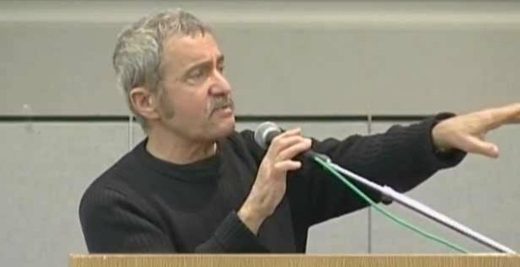
Lies are Unbekoming | January 27, 2026
In honour of Michael Parenti (1933–2026), who passed away on 24 January 2026 at the age of 92. He spent his life naming what power prefers to leave unnamed.
In 1837, Abraham Lincoln remarked: “These capitalists generally act harmoniously, and in concert, to fleece the people.”
Today, he would be dismissed as a conspiracy theorist.
That dismissal—reflexive, automatic, requiring no engagement with evidence—is not a mark of sophistication. It is a tell. The question worth asking is not whether conspiracies exist (they are a matter of public record and a recognised concept in law) but why acknowledging their existence provokes such reliable hostility. What work does the label “conspiracy theorist” actually do?
The late political scientist Michael Parenti spent decades answering that question. His conclusion was blunt: “’Conspiracy’ refers to something more than just illegal acts. It serves as a dismissive label applied to any acknowledgment of ruling-class power, both its legal and illegal operations.” The term functions not as a descriptor but as a weapon—a thought-terminating cliché that protects the powerful from scrutiny by pathologising those who scrutinise them.
Conspiracy denial, in Parenti’s analysis, is not skepticism. It is the opposite of skepticism. It is credulity toward power dressed up as critical thinking. As he wrote in Dirty Truths: “Just because some people have fantasies of conspiracies does not mean all conspiracies are imaginary.”
The Double Standard
The asymmetry is stark once you see it.
Coal miners consciously direct their efforts toward advancing their interests. So do steelworkers, small farmers, and schoolteachers. Labour unions exist precisely because workers concert together to pursue collective goals. No one calls this a conspiracy theory. It is called organising.
But suggest that the wealthy and powerful consciously concert with intent to defend their class interests, and you have crossed an invisible line. You are now a conspiracy theorist, a crank, possibly paranoid.
Parenti put it directly: “It is allowed that farmers, steelworkers, or schoolteachers may concert to advance their interests, but it may not be suggested that moneyed elites do as much—even when they actually occupy the top decision-making posts. Instead, we are asked to believe that these estimable persons of high station walk through life indifferent to the fate of their vast holdings.”
The double standard operates silently. Workers scheme; owners sleepwalk. The public pursues its interests; elites stumble through history moved by forces beyond their comprehension or control. This is the unexamined premise that makes “conspiracy theory” an effective slur.
Consider a specific example. In 1994, the officers of the Federal Reserve announced they would pursue monetary policies designed to maintain a high level of unemployment in order to safeguard against “overheating” the economy. This was publicly announced. It appeared in the financial pages. The Fed explicitly stated it preferred a deflationary course that would keep workers competing desperately for scarce jobs.
When an acquaintance of Parenti’s mentioned this to friends, he was greeted skeptically: “Do you think the Fed bankers are deliberately trying to keep people unemployed?”
He did think it. They had said so. It was not a conjecture but a policy announcement. And yet his friends assumed he was imagining a conspiracy because he ascribed self-interested collusion to powerful people.
Those who suffer from conspiracy phobia are fond of asking: “Do you actually think there’s a group of people sitting around in a room plotting things?” For some reason that image is assumed to be so patently absurd as to invite only disclaimers.
But where else would people of power get together—on park benches or carousels? Of course they sit in rooms. They sit in boardrooms, in the Executive Office, in the conference suites of the Council on Foreign Relations, at the Bilderberg meetings, in the private gatherings at Bohemian Grove. These venues are not secret. Their existence is a matter of public record. What happens there—the coordination of policy, the recruitment of personnel, the alignment of interests—is simply not supposed to be named for what it is.
Theories of Innocence
If the powerful do not conspire, how do we explain outcomes that consistently favour their interests? In Land of Idols, Parenti identified several frameworks that substitute for analysis. He called them “theories of innocence”—alternative explanations that preserve elite respectability by denying elite intent.
Somnambulist Theory
In Parenti’s words: “Those in power just do things as if walking in their sleep, without a thought to their vast holdings.” Policy happens. Wars break out. Wealth concentrates. No one intended any of it. The rich and powerful are present at these events but somehow not responsible for them—passengers rather than pilots.
Coincidence Theory
Or as Parenti described it: “By sheer chance, things just happen repeatedly and coincidentally to maintain the existing array of privileged interests, without any conscious planning or pressure from those who benefit.” Tax policy favours the wealthy—coincidentally. Exposed in a conspiracy, the intelligence agencies coincidentally face no meaningful consequences. Environmental regulations are gutted, and corporations coincidentally profit. The pattern is not a pattern. Each outcome is isolated, unconnected to any larger design.
Incompetence Theory (or Stupidity Theory)
Then there is what Parenti called “incompetence theory, or even stupidity theory, which maintains that people at the top just don’t know what they’re doing; they are befuddled, incapable, and presumably not as perceptive as we.”
For years we heard that Ronald Reagan was a moronic, ineffectual president—his administration a “reign of errors”—even as he successfully put through most of his conservative agenda. Parenti observed: “Reagan was serving the interests of corporate America, the military, and the ideological Right with which he had long been actively associated.” The policies worked exactly as intended for the constituencies they were designed to serve. But acknowledging this would mean acknowledging intent.
During the Iran-Contra hearings, stupidity and incompetence were actually claimed as a defence. The Tower Commission—handpicked by Reagan himself—concluded that the president was guilty of a lackadaisical management style that left him insufficiently in control of his subordinates. In fact, as some of his subordinates eventually testified in court, the president not only was informed but initiated most of the Iran-Contra policy decisions that led to circumvention of the law and the Constitution.
Incompetence theory asks us to believe that those who reach the highest levels of institutional power are less capable of pursuing their interests than the average person managing a household budget.
The pattern Parenti identified with Reagan has repeated with subsequent presidents. Consider which current figures are simultaneously portrayed as existential threats and bumbling fools—and notice that the “incompetence” never works against the interests of capital. The chaos is selective. The stupidity produces coherent outcomes for specific constituencies.
Spontaneity Theory (or Idiosyncrasy Theory)
Stuff just happens. The event is nothing more than an ephemeral oddity, unconnected to any larger forces.
In 1978, the House Select Committee on Assassinations reported that there was more than one assassin—and therefore a conspiracy—involved in the 1963 murder of President John Kennedy. In response, the Washington Post editorialised: “Could it have been some other malcontent whom Mr. Oswald met casually? Could not as many as three or four societal outcasts, with no ties to any one organization, have developed in some spontaneous way a common determination to express their alienation in the killing of President Kennedy?”
The Post continued: “It is possible that two persons, acting independently, attempted to shoot the President at the same time.”
Read that again. A major newspaper, confronted with evidence of conspiracy, speculated that two independent gunmen spontaneously decided to assassinate the president at the same moment. This is what passes for sophisticated analysis when the alternative is following the evidence.
Sometimes, those who deny conspiracies create the most convoluted fantasies of all.
Aberration Theory
Secret, criminal state behaviour is dismissed as an atypical departure from normally lawful behaviour. Each exposure is treated as an isolated exception that proves nothing about the norm.
For five years beginning in 1983, the FBI carried out surveillance of the Committee in Solidarity with the People of El Salvador (CISPES) to determine whether the group had links to international terrorism. The bureau utilised all fifty-nine of its field offices yet uncovered not a shred of evidence to support its conspiracy theory about CISPES. The organisation charged that the bureau’s actions were politically motivated and part of a concerted government effort to suppress opposition to U.S. involvement in Central America.
The FBI had a long history of such harassments against a wide range of protest groups, as evidenced by its illegal COINTELPRO campaign. Yet the Senate Intelligence Committee found “no pattern of abuse” by the bureau and concluded that the FBI investigation of CISPES was an “aberration.”
Pattern recognition is apparently beyond the capacities of official oversight when the pattern implicates official behaviour.
The Historical Record
The theories of innocence require ignoring what is already known. Conspiracies are not hypothetical. They are documented, exposed, and in many cases admitted.
As Parenti catalogued in Democracy for the Few: “There was the secretive plan to escalate the Vietnam War as revealed in the Pentagon Papers; the Watergate break-in; the Federal Bureau of Investigation (FBI) COINTELPRO disruption of dissident groups; the several phoney but well-orchestrated ‘energy crises’ that sharply boosted oil prices in the 1970s; the Iran-contra conspiracy; the savings and loan conspiracies; and the well-documented conspiracies (and subsequent cover-ups) to assassinate President John Kennedy, Martin Luther King, and Malcolm X.”
The fabricated Tonkin Gulf incident served as the pretext for escalating the Vietnam War. The Johnson administration told Congress and the public that North Vietnamese boats had attacked American destroyers in international waters. This was a lie. But it worked: Congress passed the Gulf of Tonkin Resolution, and the war expanded.
Operation Phoenix saw U.S. advisors secretly set up assassination squads that murdered thousands of dissidents in Vietnam. This was not rogue behaviour but policy.
The Watergate break-in and subsequent cover-up led to the resignation of a president. The conspiracy was real enough to force Richard Nixon from office.
COINTELPRO involved government surveillance, infiltration, and sabotage of dissident groups across the political spectrum—civil rights organisations, antiwar activists, socialist parties, Black liberation movements. The FBI did not merely monitor these groups; it actively disrupted them, planted false information, fomented internal conflicts, and facilitated violence against them.
Iran-Contra saw top officials conspire to circumvent the law, selling arms to Iran in exchange for funds that were used in covert actions against Nicaragua. Weapons were shipped, money was laundered, and Congress was lied to—all in service of a foreign policy that could not survive public scrutiny.
The savings and loan scandal was described by the Justice Department as—in Parenti’s words—”a thousand conspiracies of fraud, theft, and bribery,” the greatest financial crime in history at that point. Thrift industry executives funnelled deposits into personal accounts, fraudulent deals, and schemes involving organised crime and the CIA. When the institutions collapsed, taxpayers covered the losses.
The BCCI scandal involved what investigators called the most crooked bank in the world, with tentacles reaching into intelligence agencies, drug trafficking, arms dealing, and the financing of terrorism.
These are not speculations. They are matters of public record. People went to prison. Documents were declassified. Congressional investigations produced reports. In some cases, the perpetrators wrote memoirs.
If conspiracy is by definition imaginary, what do we call these?
Is It Paranoia?
Those who feel threatened appear paranoid in the eyes of those who deny the existence of threat.
Through most of the 1980s, the United States financed and trained a counterrevolutionary army that conducted a two-front invasion against Nicaragua, killing thousands of civilians and destroying farm cooperatives, power stations, clinics, schools, and other civilian infrastructure. U.S. military planes repeatedly invaded Nicaraguan airspace. U.S. warships stood off both coasts. The superpower imposed a crippling economic embargo, mined Nicaragua’s harbours, and blew up its oil depots.
President Reagan said he wanted the Sandinistas to cry “uncle.” Secretary of State Shultz promised to “cast out” the Sandinistas from “our hemisphere.”
Yet when the besieged Managua government charged that the United States wanted to overthrow it, ABC News dismissed the complaint as “Sandinista paranoia.” The Washington Post called it “Nicaraguan paranoia.”
Then in June 1985, Reagan and Shultz announced that the United States might have to invade Nicaragua—thereby demonstrating, if any more demonstration was needed, that the Sandinistas were not imagining things.
The paranoia charge functions to delegitimise accurate perception. If you correctly identify that powerful actors are working against your interests, you are not credited with insight. You are diagnosed with a mental defect.
This framing has a long history. Critics who noted that television entertainment served capitalist values were dismissed by media scholar Todd Gitlin as “the paranoid left.” It is not paranoid to observe that a capitalist product like entertainment television contains capitalist values. These values saturate advertisements, game shows, and dramatic programming. Corporate advertisers make explicit ideological demands and withdraw their accounts when politically offended. Every network has a department whose function is to censor controversial content. As Parenti noted, the New York Times observed that although networks have relaxed their policing of sexual content, “the network censors continue to be vigilant when it comes to overseeing the political content of television films.”
Evidence of conscious effort exists. The critics are not paranoid. The diagnosis is wrong. What looks like clinical suspicion is pattern recognition.
The Left’s False Dichotomy
Those who analyse capitalism’s systemic features should be most attentive to the conscious actions of capitalists. Often the opposite is true.
Some left intellectuals dismiss conspiracy research as incompatible with structural analysis. The argument goes: either you understand that events are determined by larger configurations of power and interest, or you reduce history to the machinations of secret cabals. Structure or conspiracy. Pick one.
Parenti rejected this dichotomy. In Dirty Truths, he wrote: “It is an either-or world for those on the Left who harbor an aversion for any kind of conspiracy investigation: either you are a structuralist in your approach to politics or a ‘conspiracist’ who reduces historical developments to the machinations of secret cabals, thereby causing us to lose sight of the larger systemic forces.” This, he argued, is a false choice that disables the left.
Noam Chomsky and Alexander Cockburn both dismissed public scepticism about the Warren Commission’s findings on the Kennedy assassination. Chomsky argued that “no trace of the wide-ranging conspiracy appears in the internal record, and nothing has leaked” and that “credible direct evidence is lacking.”
Parenti’s response was pointed: Why would participants in a conspiracy of that magnitude risk everything by maintaining an internal record about the actual murder? Why would they risk their lives by going public? Many participants would know only a small part of the picture, but all would have a keen sense of the powerful forces they would face were they to become talkative. In fact, a number of those who agreed to cooperate with investigators met untimely deaths.
Chomsky was able to maintain his criticism, Parenti noted, “only by remaining determinedly unacquainted with the mountain of evidence that has been uncovered.”
The structural-versus-conspiracy framing misunderstands how power operates. Larger structural trends impose limits and exert pressures. But within those limits, different leaders pursue different courses, and the effects are not inconsequential. As Parenti argued: “It was not foreordained that the B-52 carpet bombing of Cambodia and Laos conducted by Nixon would have happened if Kennedy, or even Johnson or Humphrey, had been president. If left critics think these things make no difference in the long run, they better not tell that to the millions of Indochinese who grieve for their lost ones and for their own shattered lives.”
Structural analysis explains why elites act in certain ways. It does not exempt us from examining how they act in specific cases—including cases where their actions are secret, illegal, and deliberately hidden.
The either-or framing serves power by ruling out of bounds precisely the investigations that might expose specific crimes. If every inquiry into elite wrongdoing can be dismissed as a distraction from structural analysis, then structural analysis becomes a shield for criminals rather than a tool for understanding.
What the Label Protects
Conspiracy is a legitimate concept in law: the collusion of two or more people pursuing illegal means to effect some illegal or immoral end. People go to prison for committing conspiratorial acts. The concept is not exotic or fringe. It is a standard feature of criminal prosecution.
Ruling elites themselves acknowledge the reality of concerted secret action. They call it “national security.” As Parenti wrote in Land of Idols: “Rulers themselves recognize the need for secret and consciously planned state action. They label it ‘national security.’ … They apply more candidly conspiratorial appellations: ‘covert action,’ ‘clandestine operations,’ and ‘special operations.’ If, for some reason, one prefers not to call these undertakings ‘conspiracies,’ then give them another name, but recognize them as consciously planned, often illegal ventures, whose existence is usually denied.”
The question is not whether conspiracies occur. The question is why naming them provokes such intense resistance.
The label “conspiracy theory” protects something important: the legitimacy of existing arrangements. If policy outcomes that favour the wealthy are the result of deliberate planning by the wealthy, then those outcomes are not natural, not inevitable, and not beyond challenge. They are choices made by identifiable people who could have chosen otherwise and who can be held accountable.
Conspiracy denial forecloses that accountability. It insists that we view history as a series of accidents, blunders, and coincidences—never as the product of will and intention by those with the power to impose their will. It asks us to extend to elites a presumption of innocence so comprehensive that it becomes a presumption of non-existence.
Parenti was clear about what this protects: “Those of us who claim that highly placed parties in the capitalist state mobilize immense resources to preserve and advance the interests of the existing class system would like the courtesy of something more than a dismissive smirk about ‘conspiracy theory.’”
To dismiss as conspiracy fantasy all assertions that elite power is consciously and intelligently exercised is to arrive at an implausible position: that there is no self-interested planning, no secrecy, no attempt to deceive the public, no suppression of information, no deliberate victimisation, no ruthless policy pursuits, no intentionally unjust or illegal gains. It is to assert that all elite interests are principled and perfectly honest, though occasionally confused.
That is a remarkably naïve view of political reality.
A Tool, Not a Conclusion
Not every conspiracy theory is true. Some are baseless. Some are fabricated. Some direct legitimate grievances toward irrelevant foes—which is itself a service to power.
The distinction is not between “conspiracy” and “no conspiracy” but between two different modes of analysis.
The right’s version of conspiracy thinking blames shadowy cabals for corrupting an otherwise pure system. Expose the conspirators, and the system returns to health. This mistakes symptom for cause. As Parenti observed in Land of Idols: “For the left, the monopolization of capital is not necessarily the result of a sneaky plot by some backroom elite; rather the system of capitalism produces monopolies and elites as natural byproducts of its own evolution.” Monopoly capitalism is not a deviation from free-market capitalism imposed by outside manipulators. It is where capitalism goes.
The left’s version asks different questions: What interests are being served? Through what mechanisms? With what documented evidence? This framework opens inquiry into specific influence operations—lobbying networks, foreign policy pressures, supranational trade bodies, revolving doors between government and industry. It examines these as features of how imperial capital organises itself, not as alien corruptions of an otherwise healthy system.
Powerful lobbies exist. Supranational bodies override democratic sovereignty. Intelligence agencies conduct covert operations. Financial interests coordinate policy across borders. These are not speculations but documented realities. Analysis either clarifies how power operates or obscures it by offering scapegoats in place of systemic understanding.
What does the evidence support? What mechanisms are operating? Who benefits, and how?
Conspiracy denial forecloses these questions by stigmatising them. Conspiracy analysis keeps them open by insisting that power be examined rather than assumed innocent.
Lincoln was not a conspiracy theorist in any pathological sense. He was a man with eyes, observing that capitalists act in concert to advance their interests. That observation remains true. What has changed is the machinery for suppressing it.
The next time someone dismisses a claim as “conspiracy theory,” ask what evidence they have engaged with. Ask which theory of innocence they are relying on. Ask whether they would apply the same credulity to the powerful that they extend to the powerless.
The answer will tell you whether you are speaking with a sceptic or a believer—and what, exactly, they believe in.
References
Works by Michael Parenti:
- Against Empire (San Francisco: City Lights Publishers, 1995)
- Blackshirts and Reds: Rational Fascism and the Overthrow of Communism (San Francisco: City Lights Books, 1997)
- Democracy for the Few, 7th edition (Boston: Bedford/St. Martin’s, 2002)
- Dirty Truths: Reflections on Politics, Media, Ideology, Conspiracy, Ethnic Life and Class Power (San Francisco: City Lights Books, 1996)
- The Face of Imperialism (Boulder: Paradigm Publishers, 2011)
- History as Mystery (San Francisco: City Lights Books, 1999)
- Inventing Reality: The Politics of News Media (New York: St. Martin’s Press, 1993)
- Land of Idols: Political Mythology in America (New York: St. Martin’s Press, 1994)
- To Kill a Nation: The Attack on Yugoslavia (London: Verso, 2000)
Additional sources on conspiracy referenced by Parenti:
- Lane, Mark. Plausible Denial: Was the CIA Involved in the Assassination of JFK? (New York: Thunder’s Mouth Press, 1991)
- Lane, Mark. Rush to Judgment (New York: Holt, Rinehart & Winston, 1966)
- Marrs, Jim. Crossfire: The Plot That Killed Kennedy (New York: Carroll & Graf, 1989)
- Marshall, Jonathan, Peter Dale Scott, and Jane Hunter. The Iran-Contra Connection (Boston: South End Press, 1988)
- Meagher, Sylvia. Accessories after the Fact: The Warren Commission, the Authorities, and the Report (New York: Vintage, 1992)
- Morrow, Robert. First Hand Knowledge: How I Participated in the CIA-Mafia Murder of President Kennedy (New York: S.P.I. Books, 1992)
- Walsh, Lawrence. Firewall: The Iran-Contra Conspiracy and Cover-Up (New York: Norton, 1997)
Michael Parenti (1933–2026): political scientist, historian, public intellectual. He wrote over twenty books examining American politics, ideology, media, and empire. PhD from Yale University. His work named the operations of class power that mainstream discourse prefers to leave invisible. He died on 24 January 2026 at ninety-two.
Craig Murray, Reporting from Venezuela

By Adam Dick | Peace and Prosperity Blog | January 26, 2026
Last year, British journalist and former diplomat Craig Murray provided valuable reports from Lebanon, documenting — among other things — death and destruction brought by Israel’s military. Now, Murray is on the ground in Venezuela, doing what he did in Lebanon last year — providing access to information that tends to be filtered out or distorted in much reporting.
Indeed, in his first report from Venezuela that he posted at his website on Monday, Murray provided, based on his crisscrossing of the nation’s capital, an account that the situation there is very different from what is commonly reported. “I have now been in Caracas for 48 hours and the contrast between what I have seen, and what I had read in the mainstream media, could not be more stark,” stated Murray to begin his report. Expanding on this observation, Murray wrote later in his report:
Pretty well everything that I have read by Western journalists which can be immediately checked – checkpoints, armed political gangs, climate of fear, shortages of food and goods – turns out to be an absolute lie. I did not know this before I came. Possibly neither did you. We both do now.

As in Lebanon last year, Murray is set to provide a view into matters much of the media is not interested in sharing with people around the world. Murray explained in his report:
When I was in Lebanon a year ago, the mainstream media were entirely absent as Israel devastated Dahiya, the Bekaa Valley, and Southern Lebanon, because it was a narrative they did not want to report.
Disgracefully, the only time the BBC entered Southern Lebanon was from the Israeli side, embedded with the IDF.
The BBC, Guardian or New York Times simply will not send a correspondent to Caracas because the reality is so starkly different from the official narrative.
To be more informed about what is happening in Venezuela, it would be a good practice to check periodically Murray’s website where he is planning to post more written and video reports in the coming weeks.
World has had enough of confused clowns: Araghchi to Zelensky
Al Mayadeen | January 23, 2026
Iranian Foreign Minister Abbas Araghchi publicly criticized Ukrainian President Volodymyr Zelensky, accusing him of corruption, hypocrisy, and double standards in relation to international law and US foreign policy, calling him a “confused clown”.
In a post on X, Araghchi accused Zelensky of having been “rinsing American and European taxpayers” to benefit corrupt military figures.
At the same time, Araghchi accused Zelensky of double standards for openly advocating for US military action against Iran, an action illegal under international law, while the Ukrainian president also describes the war in Ukraine as an unlawful act in violation of the UN charter. “The world has had enough of Confused Clowns,” Araghchi wrote, asserting that Iran does not rely on foreign-backed or “mercenary-infested” forces and is capable of defending itself without outside assistance.
The comments reflect rising rhetorical tensions between Iran and Ukraine, as Tehran continues to position itself against Western military influence and US interventionism. Araghchi’s statement also aligns with Iran’s broader diplomatic messaging, which frames Western-backed military operations as violations of international law against Iran, a sovereign state resisting external pressure.
Araghchi’s comments come after Zelensky’s speech at Davos, where he claimed that “so much was said about protests in Iran, but they were drowned in blood.”
He added, “The world did not help the Iranian people enough; it stood aside. By the time politicians began forming positions, the Ayatollah had already killed thousands. What will Iran become after this bloodshed? If the regime survives, it sends a clear signal to every bully: kill enough people, and you stay in power.”
The West has since 2022 accused Iran of providing military aid to Russia for use in the war in Ukraine.
Iranian officials have consistently denied providing weapons to Russia for battlefield use in Ukraine. Tehran has demanded documentary proof from Ukraine and pointed to Kiev’s inability to present conclusive evidence as weakening those accusations.
Zelensky’s statements reflect how the US and its allies selectively invoke the UN Charter: Russia’s actions are condemned as aggression, while US-led wars, assassinations, and sanctions campaigns are normalized or justified as “rules-based order.”
How many regime change wars before we wake up?
By Robert Inlakesh | Al Mayadeen | January 21, 2026
It was truly astonishing, the speed with which online influencers, including many self-styled anti-war leftists, took to social media in order to espouse regime change propaganda against Iran over the past few weeks. This then begs the question as to how many times this has to happen before people finally wake up?
For each regime change war waged by the West in the MENA region, it is almost as if the collective memory of the Western anti-war movement somehow dissipates. As a result, some principled activists and honest journalists, who retain their memories, are forced to go around in circles, arguing that the latest war is wrong, just like the last one and that lies are being pushed to justify a moral outrage.
The US and “Israel” pick a new target. The same decades old propaganda is pulled out of the draw, and then serious people have to argue endlessly, as they are attacked as “regime defenders”, simply for establishing basic truths. What is perhaps the saddest part of this is that over two years of genocide in Gaza, which the Western Left has collectively come together to oppose, has seemingly failed to impress upon them that their government never cares about human rights or so-called “international law”.
When it comes to the recent series of allegations made against the Islamic Republic of Iran, it is nearly impossible to even engage in rational dialogue, as the pro-regime change crowd appear to be living in a parallel universe. This time, just like the last, they buy that the West is genuinely concerned by the alleged suffering of a foreign civilian population. However, in order to demonstrate just how ridiculous the latest round of propaganda has been, it is necessary to preface that with a little bit of history.
The same old pro-war lies again
If you are to listen to the mainstream corporate media and Western politicians, their portrayal of the Islamic Republic of Iran is of a “malevolent regime” that is negative in every conceivable way. That’s why none of them can ever mention something about Iran that is positive, or address the political climate of the country in any considerable kind of depth.
The primary excuses you’ll hear for why Iran needs a US-led regime change are that it will bring about “women’s rights”, “democracy”, “stop them developing weapons of mass destruction” and that the Iranian government is “killing its own people”.
Remember when we were told that Afghanistan had to be invaded and that the US had to kill innocent people as “collateral damage” in order to “free the women of Afghanistan”? The US invaded and remained there for 20 years, spent over 2 trillion dollars, and the government it built immediately fled the moment the Americans withdrew their forces.
These Colonial Feminist arguments aren’t even worth considering when it comes to the Islamic Republic of Iran, because they are disingenuous to begin with. The Israelis and elements of the Trump administration argue for re-installing the son of the deposed Shah of Iran. The Shah and his views on women were outright repulsive, yet the US government didn’t care about the repression of women’s rights when the Shah was in power, just like it didn’t care while Saudi Arabia prevented its women from driving cars.
Often, you may see people share old footage from Iran, in which women are seen in swimsuits on the beach, advertised as a magical time when the country was “free”. What you are watching is the former Iranian elite, a small segment of the economically advantaged who benefited from a repressive system.
But this all aside, just like was the case with the invasion of Afghanistan, it never had anything to do with women’s rights. Equally, you will see that the US’s soft power institutions use the issue of women’s rights as a means of social control and coercion. It’s not about empowering women, it’s about imperialism.
Iran is also accused of developing weapons of mass destruction. It is a well-established fact that when the US and UK claimed that former Iraqi leader, Saddam Hussein, possessed such weapons, it was a lie.
Some may then come along and cite human rights groups for various statistics they provide regarding the death toll amongst protesters and rioters in Iran. Amnesty International even labelled the protests as “largely peaceful”. Bear in mind here that Amnesty also helped spread and give credibility to the claim that the Iraqi military had thrown 300 babies out of incubators, one of the key lies used to justify the First Gulf War.
While this isn’t to simply discredit all human rights reports, it suffices to say that we must still check their sources and accept the reality that they are not beyond political pressure and the power of their donors. Recently, the major human rights groups have proven extremely diligent on the question of Palestine in particular, but one should note that this hasn’t always been the case, it is instead a newer phenomenon that the likes of Human Rights Watch and Amnesty International have taken such brave stances, particularly beginning in 2021.
Therefore, we should always be critical of everything we see when it comes to claims without any credible sources behind them, especially surrounding the buildup and justifications provided for regime change wars. In Libya, Afghanistan, Syria and even in Gaza, these human rights organizations and UN human rights reports have aided in justifying the arguments for interventionism and the alleged Israeli “right to self defense”.
Then we come to the next popular argument, which is Identity Politics at its core. This is the “listen to Iranians”. By this, of course, what is implied is that you only listen to a select group of Iranians who are in favour of bombing and destroying their own country.
Simply put, this is no different to the “ex-Muslims” who are paid to talk about how bad Muslims are, it is an argument devoid of any logic and relies purely upon emotion. This time it is “listen to Iranians”, in the past we were told to listen to members of the Iraqi, Afghan, Syrian and Libyan diaspora who would be paraded across all major broadcast media platforms to tell their extremely biased and personalised stories in order to argue in favour of regime change.
There is no difference between Iranians going on the BBC or CNN to argue for more sanctions and intervention, and Iraqis doing the exact same thing in the lead up to the US invasion of Iraq in 2003. Many Palestinians are also given jobs by pro-war think tanks and invited to tell their stories in the corporate media, if they simply choose to side with Israel over Hamas.
‘It’s a monstrous regime, but…’
Another popular argument you will see made, is one that automatically accepts all the propaganda used to justify illegal wars of aggression, before going on to make the counter point that “we still shouldn’t support this war”. In essence, this is a coward’s way out of being criticized and labelled.
This tactic is something we saw on display when it came to addressing the Israeli genocide against the people of Gaza. The entire Western media establishment demanded the condemnation of Hamas by any journalist or activist arguing in favour of the Palestinians. Many simply went along with this, blindly accepting much of the propaganda about Hamas without actually knowing anything about the group. Very few dared to go into the details of Operation Al-Aqsa Flood and point out the lies about it.
By starting with a condemnation of Iran, or the Palestinian Resistance, you immediately cede to the US-Israeli propaganda framing. These Western media ghouls do not actually care about the details, or the loss of human life on any side, they simply seek to frame the situation in a very specific way. They work to manufacture a controlled media environment, one in which anyone who refuses to utter condemnation is deemed an “extremist” and lacking in credibility.
If you don’t understand the accusations, the best course of action is to refrain from discussing something out of your depth. Alternatively, if you do understand the issue in depth, then explain it in its proper context.
The lies against Iran
There is no need to beat around the bush here, the riots that we saw on January 8-10 were part of an Israeli backed war on Iran. On December 28, legitimate protests began against the government’s mismanagement of the financial crisis, resulting in no violence and no arrests. One day later, suddenly, the former Prime Minister of the Zionist regime, Naftali Bennett, releases a video encouraging a nation-wide Iranian uprising to overthrow the government, something that would not begin until January.
What also occurred at the end of December was that Israeli PM Benjamin Netanyahu had just arrived in the US, where according to sources cited by Axios News, he was urging the US President to strike Iran. All of a sudden, violent rioters just so happened to hijack the totally peaceful protests and ignite a campaign of utter chaos.
The Western corporate media claims that the rioters, whom they refer to as “protesters”, were overwhelmingly peaceful and were subjected to massacres. They also acknowledge that over 160 Iranian security force members were killed over only a matter of days. Which begs the question, during which peaceful protest movements in history have there been so many members of the security forces killed over such a short period of time?
It’s not only police officers, as many civilians were brutally beaten to death by the rioters, as others were burned alive, and there were even cases of beheadings; women and children were also murdered by these rioters.
Peaceful protesters don’t attack 250 mosques, 20 religious centers, thousands of private vehicles, 364 large stores, 419 small shops, 182 ambulances, 4,700 bank branches, 1,400 ATM’s, 265 schools, 3 major libraries, 8 cultural heritage and tourism sites and 4 cinemas. They also don’t burn the Quran in the streets, destroy bus stops, the metro stations, burn down buses, or carry firearms and explosive devices. Although the exact statistics are difficult to ascertain and cannot yet be confirmed, these are the ones provided from sources inside Iran. At the very least, there is video evidence to confirm attacks on these targets.
The evidence about what just happened is there for the world to see. The statistics for the overall death toll range so dramatically that determining it at this moment has been rendered impossible. From the videos and photos of the bodies in morgues, it would appear as if hundreds are dead at the least.
There was no anti-government protest that numbered more than into the tens of thousands, at most, it was more likely only thousands, according to the footage available. Most of these riots and gatherings were small, not more than a few hundred, and in some cases, there were only small teams of men who showed up to cause chaos and then quickly ran away.
On the other hand, the pro-government protests numbered in the millions across the country. Initially, some tried to deny the footage and make up all kinds of lies about it. Everything from “that’s old” to “that’s AI” was claimed. Finally, when these excuses wore out, the pro-regime change media pivoted to “they were coerced”.
Days after the anti-government riots and protests had ended, the Western corporate media and Zionist social media influencers were still sharing old footage to claim that their imaginary “revolution” was still ongoing.
Without going into every minute detail, it suffices to say that the pro-regime change media and social media influencers are simply living in a parallel universe when it comes to this topic. It is impossible to even argue with them, they make up anything they choose and care not for objective realities.
As in any country, there are legitimate grievances from the people against their government in Iran, but these riots had nothing to do with the popular will and beliefs of the masses, this was an Israeli Mossad backed attempt to destabilize the country, then used to justify military intervention.
For saying this, you will be labelled, just as we were labelled before. But the truth is the truth: regime change in Iran serves the Israelis. Iran is the only country, along with the Ansar Allah government in Yemen, that has backed the Palestinians and retaliated against “Israel”. Tehran backs the Palestinian Resistance, which is why it is being targeted for regime change. If it were to abandon its values and the Palestinian cause tomorrow, the regime change threats against it would cease outright.
Featured Video

Iran Is Not Our Enemy
or go to
Aletho News Archives – Video-Images
Frlom the Archives
The 52 Major Jewish American Organizations and Israel Celebrate Passover with the Slaughter of 25 Muslim, Christian and Secular Palestinians
By James Petras • Unz Review • April 8, 2018
Introduction
As of April 7, nearly three thousand unarmed Christian, Muslim and secular Palestinians have been wounded, over three dozen are in critical condition and at least twenty-five unarmed protestors, including children have been assassinated by hundreds of Israeli snipers and heavily armed troops shooting tank shells into crowds of civilians protesting their decades of incarceration by the racist Israeli state.
The Israeli government praised the ‘restraint and morality’ of the IDF, as did the fifty-two Major Jewish American Organizations (MJAO) who largely control the US Congress. These grotesque massacres began during the Christian Holy Week on Good Friday and Easter, coinciding with the Jewish Passover. The self-righteous officials of the MJAO and their relatives and friends broke matzos at joyful Seders as the blood of Palestinians soaked into ground at the fence containing the largest open-air prison camp in history, Gaza.
While tribal loyalties bonded the Israeli and Jewish American leaders, the politicians of the Western oligarchic electoral regimes refrained from criticizing the shocking display of brute force and even defended Israel’s cold blood mass killings of Palestinian civilians in their Gaza prison.
This paper will discuss and analyze the reasons for Israel’s willing Western accomplices and the centrality of its fifth column in the United States. … continue
Blog Roll
 Aletho News
- Israeli Journalist Demands Tucker Carlson and Candace Owens Be Placed in WWII-Style Internment Camps
- No Liability, No Studies, No Accountability: The Vaccine System Aaron Siri Exposed in Federal Court
- No time for losers: Why the war meant to save Israel may destroy it
- Top US Counterterrorism Official Resigns in Protest of Operation Against Iran
- Just Get Out! Now!
- Unpacking glaring contradictions in US-Zionist justifications for war against Iran
- Iranian model of warfare bleeds US dry while Persian Gulf states watch and learn: Analyst
- IRGC orders ‘defeated’ US to evacuate industrial facilities in region
- Hegseth’s call for ‘no mercy’ to Iranians deemed war crime
- Iran War Exposes Limits of US Military Power – Journalist
- If Americans Knew
- Trump’s counterterrorism chief, whose own wife was killed by ISIS, quits over Iran War saying Tehran posed ‘no imminent threat’
- Here’s what US could fund instead of Bibi’s war on Iran
- Israel Killed Over a Dozen Lebanese Paramedics in Three Days, Now Claiming That Ambulances Are “Hezbollah” Targets
- War on Iran: These are the heritage sites devastated by US and Israeli attacks
- Four news stories from Israeli media that illustrate Israeli “justice”
- CIA Prepares Criminal Referral of Tucker Carlson, as Israel and Its Loyalists Demand His Arrest
- Top US counterterror advisor resigns in protest of “war manufactured by Israel” – Not a ceasefire Day 157
- ‘I Liked the House’: When Israeli Soldiers Turn Palestinian Homes into Barracks
- ‘They Were All I Had’: Lebanese Father Buries Parents, 4 Daughters Killed by Israeli Bombing
- Israel and its supporters are causing attacks on Jewish institutions. Case in point: Michigan synagogue tragedy.
- No Tricks Zone
- New Research: South Australia’s Mid-Holocene Sea Surface Temperatures Were 4°C Warmer Than Today
- Storing Green Energy To Last Germany 10 Days Would Require A 60-Million Tonne Battery
- New Studies: UK Sea Levels Were 4 Meters Higher Than Today During The Mid-Holocene
- Destructive Green New Deal: German Energy And Metal Group Warns Of Drastic Crisis
- New Study Documents A 20-Year Pause In Arctic Sea Ice Decline – Driven By Internal Variability
- Wake-up Call: Survey Shows Majority Of Germans Now Favor Postponing Climate Targets!
- Televised! Leading German Political Candidate Tells Schoolchildren CO2 Makes Sun Hotter!
- New Study: A Century Warming Of 1.1°C Is ‘Commonplace’ And ‘Not Unusual’ During This Interglacial
- New Study: ‘Internal Noise’ And Volcanic Forcing Can Trigger 10-15°C Warming Within Decades
- Glaciers Worldwide Are Suddendly Surging, Experts Blame Warming!
 Aletho News