In 1996 – as major U.S. news outlets disparaged the Nicaraguan Contra-cocaine story and destroyed the career of investigative reporter Gary Webb for reviving it – the CIA marveled at the success of its public-relations team guiding the mainstream media’s hostility toward both the story and Webb, according to a newly released internal report.
Entitled “Managing a Nightmare: CIA Public Affairs and the Drug Conspiracy Story,” the six-page report describes the CIA’s damage control after Webb’s “Dark Alliance” series was published in the San Jose Mercury-News in August 1996. Webb had resurrected disclosures from the 1980s about the CIA-backed Contras collaborating with cocaine traffickers as the Reagan administration worked to conceal the crimes.
Although the CIA’s inspector general later corroborated the truth about the Contra-cocaine connection and the Reagan administration’s cover-up, the mainstream media’s counterattack in defense of the CIA in late summer and fall of 1996 proved so effective that the subsequent CIA confession made little dent in the conventional wisdom regarding either the Contra-cocaine scandal or Gary Webb.
In fall 1998, when the CIA inspector general’s extraordinary findings were released, the major U.S. news media largely ignored them, leaving Webb a “disgraced” journalist who – unable to find a decent-paying job in his profession – committed suicide in 2004, a dark tale that will be revisited in a new movie, “Kill the Messenger,” starring Jeremy Renner and scheduled to reach theaters on Oct. 10.
The “Managing a Nightmare” report offers something of the CIA’s back story for how the spy agency’s PR team exploited relationships with mainstream journalists who then essentially did the CIA’s work for it, mounting a devastating counterattack against Webb that marginalized him and painted the Contra-cocaine trafficking story as some baseless conspiracy theory.
Crucial to that success, the report credits “a ground base of already productive relations with journalists and an effective response by the Director of Central Intelligence’s Public Affairs Staff [that] helped prevent this story from becoming an unmitigated disaster.
“This success has to be viewed in relative terms. In the world of public relations, as in war, avoiding a rout in the face of hostile multitudes can be considered a success. … By anyone’s definition, the emergence of this story posed a genuine public relations crisis for the Agency.” [As approved for release by the CIA last July 29, the report’s author was redacted as classified, however, Ryan Devereaux of The Interceptidentified the writer as former Directorate of Intelligence staffer Nicholas Dujmovic.]
According to the CIA report, the public affairs staff convinced some journalists, who followed up Webb’s exposé by calling the CIA, that “this series represented no real news, in that similar charges were made in the 1980s and were investigated by the Congress and were found to be without substance. Reporters were encouraged to read the ‘Dark Alliance’ series closely and with a critical eye to what allegations could actually be backed with evidence. Early in the life of this story, one major news affiliate, after speaking with a CIA media spokesman, decided not to run the story.”
Of course, the CIA’s assertion that the Contra-cocaine charges had been disproved in the 1980s was false. In fact, after Brian Barger and I wrote the first article about the Contra-cocaine scandal for the Associated Press in December 1985, a Senate investigation headed by Sen. John Kerry confirmed that many of the Contra forces were linked to cocaine traffickers and that the Reagan administration had even contracted with drug-connected airlines to fly supplies to the Contras who were fighting Nicaragua’s leftist Sandinista government.
However, in the late 1980s, the Reagan administration and the CIA had considerable success steering the New York Times, the Washington Post and other major news outlets away from the politically devastating reality that President Ronald Reagan’s beloved Contras were tied up with cocaine traffickers. Kerry’s groundbreaking report – when issued in 1989 – was largely ignored or mocked by the mainstream media.
That earlier media response left the CIA’s PR office free to cite the established “group think” – rather than the truth — when beating back Webb’s resurfacing of the scandal in 1996.
A ‘Firestorm’ of Attacks
The initial attacks on Webb’s series came from the right-wing media, such as the Washington Times and the Weekly Standard, but the CIA’s report identified the key turning point as coming when the Washington Post pummeled Webb in two influential articles.
The CIA’s PR experts quickly exploited that opening. The CIA’s internal report said: “Public Affairs made sure that reporters and news directors calling for information – as well as former Agency officials, who were themselves representing the Agency in interviews with the media – received copies of these more balanced stories. Because of the Post’s national reputation, its articles especially were picked up by other papers, helping to create what the Associated Press called a ‘firestorm of reaction’ against the San Jose Mercury-News.”
The CIA’s report then noted the happy news that Webb’s editors at the Mercury-News began scurrying for cover, “conceding the paper might have done some things differently.” The retreat soon became a rout with some mainstream journalists essentially begging the CIA for forgiveness for ever doubting its innocence.
“One reporter of a major regional newspaper told [CIA] Public Affairs that, because it had reprinted the Mercury-News stories in their entirety, his paper now had ‘egg on its face,’ in light of what other newspapers were saying,” the CIA’s report noted, as its PR team kept track of the successful counterattack.
“By the end of September [1996], the number of observed stories in the print media that indicated skepticism of the Mercury-News series surpassed that of the negative coverage, which had already peaked,” the report said. “The observed number of skeptical treatments of the alleged CIA connection grew until it more than tripled the coverage that gave credibility to that connection. The growth in balanced reporting was largely due to the criticisms of the San Jose Mercury-News by The Washington Post, The New York Times, and especially The Los Angeles Times.”
The overall tone of the CIA’s internal assessment is one of almost amazement at how its PR team could, with a deft touch, help convince mainstream U.S. journalists to trash a fellow reporter on a story that put the CIA in a negative light.
“What CIA media spokesmen can do, as this case demonstrates, is to work with journalists who are already disposed toward writing a balanced story,” the report said. “What gives this limited influence a ‘multiplier effect’ is something that surprised me about the media: that the journalistic profession has the will and the ability to hold its own members to certain standards.”
The report then praises the neoconservative American Journalism Review for largely sealing Webb’s fate with a harsh critique entitled “The Web That Gary Spun,” with AJR’s editor adding that the Mercury-News “deserved all the heat leveled at it for ‘Dark Alliance.’”
The report also cites with some pleasure the judgment of the Washington Post’s media critic Howard Kurtz who reacted to Webb’s observation that the war was a business to some Contra leaders with the snide comment: “Oliver Stone, check your voice mail.”
Neither Kurtz nor the CIA writer apparently was aware of the disclosure — among Iran-Contra documents — of a March 17, 1986 message about the Contra leadership from White House aide Oliver North’s emissary to the Contras, Robert Owen, who complained to North: “Few of the so-called leaders of the movement . . . really care about the boys in the field. … THIS WAR HAS BECOME A BUSINESS TO MANY OF THEM.” [Emphasis in original.]
Misguided Group Think
Yet, faced with this mainstream “group think” – as misguided as it was – Webb’s Mercury-News editors surrendered to the pressure, apologizing for the series, shutting down the newspaper’s continuing investigation into the Contra-cocaine scandal and forcing Webb to resign in disgrace.
But Webb’s painful experience provided an important gift to American history, at least for those who aren’t enamored of superficial “conventional wisdom.” CIA Inspector General Frederick Hitz ultimately produced a fairly honest and comprehensive report that not only confirmed many of the longstanding allegations about Contra-cocaine trafficking but revealed that the CIA and the Reagan administration knew much more about the criminal activity than any of us outsiders did.
Hitz completed his investigation in mid-1998 and the second volume of his two-volume investigation was published on Oct. 8, 1998. In the report, Hitz identified more than 50 Contras and Contra-related entities implicated in the drug trade. He also detailed how the Reagan administration had protected these drug operations and frustrated federal investigations throughout the 1980s.
According to Volume Two, the CIA knew the criminal nature of its Contra clients from the start of the war against Nicaragua’s leftist Sandinista government. The earliest Contra force, called the Nicaraguan Revolutionary Democratic Alliance (ADREN) or the 15th of September Legion, had chosen “to stoop to criminal activities in order to feed and clothe their cadre,” according to a June 1981 draft of a CIA field report.
According to a September 1981 cable to CIA headquarters, two ADREN members made the first delivery of drugs to Miami in July 1981. ADREN’s leaders included Enrique Bermúdez and other early Contras who would later direct the major Contra army, the CIA-organized FDN. Throughout the war, Bermúdez remained the top Contra military commander.
The CIA corroborated the allegations about ADREN’s cocaine trafficking, but insisted that Bermúdez had opposed the drug shipments to the United States that went ahead nonetheless. The truth about Bermúdez’s supposed objections to drug trafficking, however, was less clear.
According to Hitz’s Volume One, Bermúdez enlisted Norwin Meneses, a large-scale Nicaraguan cocaine smuggler and a key figure in Webb’s series, to raise money and buy supplies for the Contras. Volume One had quoted a Meneses associate, another Nicaraguan trafficker named Danilo Blandón, who told Hitz’s investigators that he and Meneses flew to Honduras to meet with Bermúdez in 1982. At the time, Meneses’s criminal activities were well-known in the Nicaraguan exile community. But Bermúdez told these cocaine smugglers that “the ends justify the means” in raising money for the Contras.
After the Bermúdez meeting, Contra soldiers helped Meneses and Blandón get past Honduran police who briefly arrested them on drug-trafficking suspicions. After their release, Blandón and Meneses traveled on to Bolivia to complete a cocaine transaction.
There were other indications of Bermúdez’s drug-smuggling tolerance. In February 1988, another Nicaraguan exile linked to the drug trade accused Bermúdez of participation in narcotics trafficking, according to Hitz’s report. After the Contra war ended, Bermúdez returned to Managua, Nicaragua, where he was shot to death on Feb. 16, 1991. The murder has never been solved. [For more details on Hitz’s report and the Contra-cocaine scandal, see Robert Parry’s Lost History.]
Shrinking Fig Leaf
By the time that Hitz’s Volume Two was published in fall 1998, the CIA’s defense against Webb’s series had shrunk to a fig leaf: that the CIA did not conspire with the Contras to raise money through cocaine trafficking. But Hitz made clear that the Contra war took precedence over law enforcement and that the CIA withheld evidence of Contra crimes from the Justice Department, Congress and even the CIA’s own analytical division.
Besides tracing the evidence of Contra-drug trafficking through the decade-long Contra war, the inspector general interviewed senior CIA officers who acknowledged that they were aware of the Contra-drug problem but didn’t want its exposure to undermine the struggle to overthrow Nicaragua’s Sandinista government.
According to Hitz, the CIA had “one overriding priority: to oust the Sandinista government. . . . [CIA officers] were determined that the various difficulties they encountered not be allowed to prevent effective implementation of the Contra program.” One CIA field officer explained, “The focus was to get the job done, get the support and win the war.”
Hitz also recounted complaints from CIA analysts that CIA operations officers handling the Contras hid evidence of Contra-drug trafficking even from the CIA’s analysts.
Because of the withheld evidence, the CIA analysts incorrectly concluded in the mid-1980s that “only a handful of Contras might have been involved in drug trafficking.” That false assessment was passed on to Congress and to major news organizations — serving as an important basis for denouncing Gary Webb and his “Dark Alliance” series in 1996.
Although Hitz’s report was an extraordinary admission of institutional guilt by the CIA, it went almost unnoticed by major U.S. news outlets. By fall 1998, the U.S. mainstream media was obsessed with President Bill Clinton’s Monica Lewinsky sex scandal. So, few readers of major U.S. newspapers saw much about the CIA’s inspector general admitting that America’s premier spy agency had collaborated with and protected cocaine traffickers.
On Oct. 10, 1998, two days after Hitz’s Volume Two was posted on the CIA’s Web site, the New York Times published a brief article that continued to deride Webb but acknowledged the Contra-drug problem may have been worse than earlier understood. Several weeks later, the Washington Post weighed in with a similarly superficial article. The Los Angeles Times, which had assigned a huge team of 17 reporters to tear down Webb’s work, never published a story on the release of Hitz’s Volume Two.
In 2000, the Republican-controlled House Intelligence Committee grudgingly acknowledged that the stories about Reagan’s CIA protecting Contra drug traffickers were true. The committee released a report citing classified testimony from CIA Inspector General Britt Snider (Hitz’s successor) admitting that the spy agency had turned a blind eye to evidence of Contra-drug smuggling and generally treated drug smuggling through Central America as a low priority.
“In the end the objective of unseating the Sandinistas appears to have taken precedence over dealing properly with potentially serious allegations against those with whom the agency was working,” Snider said, adding that the CIA did not treat the drug allegations in “a consistent, reasoned or justifiable manner.”
The House committee still downplayed the significance of the Contra-cocaine scandal, but the panel acknowledged, deep inside its report, that in some cases, “CIA employees did nothing to verify or disprove drug trafficking information, even when they had the opportunity to do so. In some of these, receipt of a drug allegation appeared to provoke no specific response, and business went on as usual.”
Like the release of Hitz’s report in 1998, the admissions by Snider and the House committee drew virtually no media attention in 2000 — except for a few articles on the Internet, including one at Consortiumnews.com.
Killing the Messenger
Because of this abuse of power by the Big Three newspapers — choosing to conceal their own journalistic negligence on the Contra-cocaine scandal and to protect the Reagan administration’s image — Webb’s reputation was never rehabilitated.
After his original “Dark Alliance” series was published in 1996, Webb had been inundated with attractive book offers from major publishing houses, but once the vilification began, the interest evaporated. Webb’s agent contacted an independent publishing house, Seven Stories Press, which had a reputation for publishing books that had been censored, and it took on the project.
After Dark Alliance: The CIA, the Contras, and the Crack Cocaine Explosion was published in 1998, I joined Webb in a few speaking appearances on the West Coast, including one packed book talk at the Midnight Special bookstore in Santa Monica, California. For a time, Webb was treated as a celebrity on the American Left, but that gradually faded.
In our interactions during these joint appearances, I found Webb to be a regular guy who seemed to be holding up fairly well under the terrible pressure. He had landed an investigative job with a California state legislative committee. He also felt some measure of vindication when CIA Inspector General Hitz’s reports came out.
However, Webb never could overcome the pain caused by his betrayal at the hands of his journalistic colleagues, his peers. In the years that followed, Webb was unable to find decent-paying work in his profession — the conventional wisdom remained that he had somehow been exposed as a journalistic fraud. His state job ended; his marriage fell apart; he struggled to pay bills; and he was faced with a forced move out of a just-sold house near Sacramento, California, and in with his mother.
On Dec. 9, 2004, the 49-year-old Webb typed out suicide notes to his ex-wife and his three children; laid out a certificate for his cremation; and taped a note on the door telling movers — who were coming the next morning — to instead call 911. Webb then took out his father’s pistol and shot himself in the head. The first shot was not lethal, so he fired once more.
Even with Webb’s death, the big newspapers that had played key roles in his destruction couldn’t bring themselves to show Webb any mercy. After Webb’s body was found, I received a call from a reporter for the Los Angeles Times who knew that I was one of Webb’s few journalistic colleagues who had defended him and his work.
I told the reporter that American history owed a great debt to Gary Webb because he had forced out important facts about Reagan-era crimes. But I added that the Los Angeles Times would be hard-pressed to write an honest obituary because the newspaper had not published a single word on the contents of Hitz’s final report, which had largely vindicated Webb.
To my disappointment but not my surprise, I was correct. The Los Angeles Times ran a mean-spirited obituary that made no mention of either my defense of Webb or the CIA’s admissions in 1998. The obituary – more fitting for a deceased mob boss than a fellow journalist – was republished in other newspapers, including the Washington Post.
In effect, Webb’s suicide enabled senior editors at the Big Three newspapers to breathe a little easier — one of the few people who understood the ugly story of the Reagan administration’s cover-up of the Contra-cocaine scandal and the U.S. media’s complicity was now silenced.
No Accountability
To this day, none of the journalists or media critics who participated in the destruction of Gary Webb has paid a price for their actions. None has faced the sort of humiliation that Webb had to endure. None had to experience that special pain of standing up for what is best in the profession of journalism — taking on a difficult story that seeks to hold powerful people accountable for serious crimes — and then being vilified by your own colleagues, the people that you expected to understand and appreciate what you had done.
In May 2013, one of the Los Angeles Times reporters who had joined in the orchestrated destruction of Webb’s career acknowledged that the newspaper’s assault was a “tawdry exercise” amounting to “overkill,” which later contributed to Webb’s suicide. This limited apology by former Los Angeles Times reporter Jesse Katz was made during a radio interview and came as filming was about to start on “Kill the Messenger,” based on a book by the same name by Nick Schou.
On KPCC-FM 89.3′s AirTalk With Larry Mantle, Katz was pressed by callers to address his role in the destruction of Webb. Katz offered what could be viewed as a limited apology.
“As an L.A. Times reporter, we saw this series in the San Jose Mercury News and kind of wonder[ed] how legit it was and kind of put it under a microscope,” Katz said. “And we did it in a way that most of us who were involved in it, I think, would look back on that and say it was overkill. We had this huge team of people at the L.A. Times and kind of piled on to one lone muckraker up in Northern California.”
Katz added, “We really didn’t do anything to advance his work or illuminate much to the story, and it was a really kind of a tawdry exercise. … And it ruined that reporter’s career.”
Now, with the imminent release of a major Hollywood movie about Webb’s ordeal, the next question is whether the major newspapers will finally admit their longstanding complicity in the Contra-cocaine cover-up or whether they will simply join the CIA’s press office in another counterattack.
~
Investigative reporter Robert Parry broke many of the Iran-Contra stories for The Associated Press and Newsweek in the 1980s. You can buy his new book, America’s Stolen Narrative, either in print here or as an e-book (from Amazon and barnesandnoble.com).
Possibly the most insightful statement ever made by a journalist was from Gary Webb, who killed himself in 2004, years after the CIA and media rivals destroyed his career and credibility.
I was winning awards, getting raises, lecturing college classes, appearing on TV shows, and judging journalism contests. And then I wrote some stories that made me realize how sadly misplaced my bliss had been. The reason I’d enjoyed such smooth sailing for so long hadn’t been, as I’d assumed, because I was careful and diligent and good at my job. The truth was that, in all those years, I hadn’t written anything important enough to suppress.
Now Hollywood is making a film, called Kill the Messenger, about the San Jose Mercury News reporter. Webb briefly created a national scandal in 1996 by exposing how the CIA-backed Contras in Latin America had funded their guerrilla war through trafficking crack cocaine to African American communities in the US, with the knowledge of the CIA and other US agencies. The scandal quickly subsided because the CIA and other journalists – from the New York Times, the Washington Post and especially from the LA Times, who had been scooped on their own patch by Webb – waged a campaign of vilification. The toll eventually led Webb to take his own life.
It should be welcome news that his original revelations will be heard by a new generation, and that the US media’s hand-in-glove relationship to the US intelligence agencies will get national exposure.
A story like Webb’s ought to remind us that the CIA, the NSA and other US agencies are not there ultimately to “do good”, not even to serve us, the people, but to help prop up a world order that benefits a small, greedy global elite and to spread fear and misinformation among the rest of us to keep us divided and obedient. And the media’s role is to serve that same global elite, rarely to hold it to account. That was the mistake made by Webb and briefly by his news editors, who quickly abandoned Webb after more senior colleagues on bigger papers taught them what journalism is really about.
But I fear Hollywood’s interest should be read in different terms. It signifies a realisation by movie execs that Webb’s revelations are now old enough to constitute “history”, no more threatening to the contemporary reputations of the CIA or the US media than filming Mutiny on the Bounty was to the modern British navy.
Hollywood knows that where there’s a good story, there’s money to be made from us – audiences only too happy to be outraged at injustice but also only too wiling to believe such “ancient” injustices offer no lessons for the present. For that reason, it is doubtful Kill the Messenger’s viewers will emerge from the film more critical news consumers. They will still trust their daily paper and the TV news, and still assume that when all the president’s men tell them of events on distant shores – from Venezuela to Iran, Syria and Ukraine – they are being told the unvarnished truth.
It began with a call from his distraught daughter, writes Harvard professor Ricardo Hausmann. On national television, Nicholas Maduro, Venezuela’s president, had threatened the good professor with a legal investigation. And the professor’s daughter was worried. So too were the Harvard Crimson, whose editorial staff challenged President Maduro’s alleged “bullying,” and the Boston Globe,which promptly published a Hausmann missive. Lest one fears for the professor’s wellbeing, he assures us that he is free and unafraid, adding that he has “the protection of the U.S… the protection of Harvard.” Now we can all feel good, the USA’s robust free press, together with its august academic institutions, and the state itself, appear to be standing for academic freedom and empowering a lowly professor to speak truth to presidential power. Closer scrutiny suggests that quite the opposite may be true.
So how did the professor come to do the Joropo with the president?The latter was most outraged by an opinion piece Professor Hausmann co-wrote for Project Syndicate, “Should Venezuela Default?” President Nicholas Maduro recognized that Hausmann is an influential actor on the international banking scene and that his default prescription would only cause more fear, uncertainty and doubt.
And risk perception has a price. Hausmann’s article opens with exactly that measure. “Markets fear” that Venezuela may default on its debt and the price of this fear is that the interest rates on Venezuelan bonds are significantly higher than those on Mexico or Nigeria. This, in turn, has a negative impact on the lives of regular folk. Although Hausmann fails to note effective government countermeasures to protect the poor, the thrust of his remarks are true – higher interest rates hurt ordinary people… while the creditors’ returns are all the more secure.
In a man-bites-dog like inversion of roles, Hausmann, a JPMorgan Chase consultant and former chief economist at the Inter-American Development Bank, concludes that to “default on 30 million Venezuelans, rather than on Wall Street, is a… signal of moral bankruptcy.” The article had its all too predictable outcome. Interest rates shot up even more, settling back somewhat only after vigorous assurances from President Maduro.
All of this should immediately dispel any image of Hausmann as a cloistered academic analyzing reams of computer printouts in some basement office or lost in the stacks of Widener Library. In fact, Hausmann is a power player on the global scene and his dance with Venezuela’s revolutionary leadership began long ago.
Not immediately apparent from his Harvard CV is the gravity of his 1980s involvement in the Venezuelan government. Specifically, in the late 1980s, Hausmann was part of President Carlos Andres Perez’s economics cabinet. They implemented an IMF-style austerity program setting off the 1989 Caracazo—a popular rebellion put down by a massacre claiming over a thousand lives. Surely, given the resolve it demonstrates, this is an impressive fact meriting its own CV entry!
This success was followed by his promotion to Minister of Planning in the early 1990s and then, after Carlos Andres Perez was forced out of office for embezzlement, Hausmann’s career advanced with him becoming the Chief Economist of the Inter-American Development Bank. Today, in addition to his Harvard gig, Hausmann is an advisor to many banks, governments and inter-governmental bodies.
Besides the massacre, none of this is particularly objectionable. Indeed these are the hallmarks of a successful career within the international mandarinate that governs the global economy. Of course, this belies the image of the innocuous and vulnerable professor that opens Hausmann’s Globe piece. There he also suggested the improbability of an American president attacking a professor; were it to happen, he speculates that an impeachment could follow. But there is precedent involving a powerful president attacking a real professor.
Ronald Reagan and the Professor
Consider the case of Ronald Reagan and E. Bradford Burns. A UCLA historian of Latin America, Burns debunked Ronald Reagan’s claims about Sandinista Nicaragua in a short 1985 article. At a dangerous moment in the Cold War, this was a truly brave act, one that could damage careers and worse. In fact, a well-known, award-winning actor, Edward Asner, had his CBS series, the Lou Grant Show, cancelled in 1982 after criticizing Reagan’s Central America policies. Solidarity activists in Burn’s Los Angeles lived in a charged atmosphere facing the real threat of thuggish repression from any number of sources. By 1988, activists reported death threats and alleged cases of kidnapping and rape. At the same time, the establishment in Southern California thrived on federal investment in Reagan’s war economy. Burns’ dissent, which undermined the rationale for Central American intervention and therewith part of the justification for the lucrative arms build-up that made Reagan so popular with regional elites, was therefore a real example of a humble professor speaking truth to power.
Ronald Reagan’s response was a televised attack that labeled Burns a purveyor of disinformation, and in vintage Reagan, the President promised to “pray for [Burn’s] students.” It also fueled the re-emerging academic McCarthyism and Oedipal resentments of folks like David Horowitz, who would later publish his infamous, The Professors: The 101 Most Dangerous Academics in America. But people fought back; with good humor, Burns recalled a student’s response, “As a citizen, I ask God to help President Reagan; Professor Burns’ students are doing fine.”
As we weigh the differences between Burns and Hausmann, it is worth noting the way in which each exercised power. Two years after Reagan’s attack, Burns won a distinguished teaching award. Notwithstanding his well-received research, Burns’ passion was for teaching. A former student recalls Burns’ view that, “We must learn to teach better… We must constantly transfer our conviction of the significance and relevance of history to the young. Tedium has no place in our lecture halls… We must convey that excitement.” And this was part of a broader perspective on social change, “Go ahead and do your research, publish your books,” he advised fellow academics, “A few of your colleagues will read and enjoy it, but if you want to change the world… teach undergraduates.” For the cynical, this idealism may be the long game of a presently enfeebled left, but it is certainly true to the picture that one imagines on hearing the word, “professor.”
More than a suave professor or deceptive editorialist, Hausmann is a man of action. No teaching awards adorn his CV. Perhaps he received some, but these are not deemed important enough to add. Since the early 2000s, he has been associated with the Venezuelan opposition’s hard right. Working for María Corina Machado’s Súmate to routinely predict the defeat of the Chavistasvia statistical analyses anticipating election outcomes only to have their claims falsified by real world voters, Hausmann is a partisan actor. Having failed at running the Venezuelan economy in the late 80s and into the 90s, he now attacks from the secure parapets of Harvard. As noted, his essay impacted the markets in entirely predictable ways.
Harvard as an Imperial Enterprise
It would behoove those interested in the development of the global economy to more closely, indeed, to forensically, examine the connections between Harvard, its faculty, and the economic policies of many governments. Beyond the scope of this article and the capacity of this author, such scrutiny should go beyond mere intellectual influence to uncover the interests involving the institution, its investments, its faculty, the advice they offer, and the actual flow of material benefits.
One gets a glimpse of what these may be in VERITA$: Everybody Loves Harvard, a documentary that explores the connections between Harvard and Russian economic policies. The late director Shin Eun-jung examined the relationship between the Harvard Institute for International Development and Russia’s conversion to a market economy. This was the Harvard Institute’s largest project. Earlier, it was involved in the financial liberalization of Indonesia and helped extend the Washington Consensus to Zambia, Kenya and Pakistan.
Receiving in excess of $40 million in grants for its Russia work, the Harvard Institute’s policies were adopted by end running the democratic process and helped enrich the privatizer of the Russian economy, Anatoly Chubais. Today a wealthy entrepreneur, Chubais is also an advisor to JPMorgan Chase. Together with Chubais, the Institute established the Russian Privatization Center which received more than $147 million in foreign funding that would have to be repaid at some point by the Russian people. With no constitutionally-defined role, the Center soon became fully embroiled in Russia’s corrupt transition to a market economy… and in benefiting the Harvard Management Company in the order of millions of dollars until the Asian banking crisis of the late 90s. So extreme was the corruption that even the US Justice Department investigated the mess. It later caught up with Harvard and the Institute, alleging false claims and conflicts of interest. It sued for $1.2 billion and settled in 2005 for $31 million, the largest suit in Harvard’s history according to Shin.
None of the foregoing suggests any kind of similar behavior on the part of Chubais’ fellow JPMorgan Chase advisor, Hausmann. But it does dispel the myth of Harvard as a purely academic institution. Instead, Harvard is clearly an economic actor on a global scale. Its faculty, especially those with Hausmann’s CV, have to be assessed in this light.
For those of us who respect Venezuelan sovereignty and admire that country’s attempt to transform its economy into one that works for working people, we have to acknowledge that this is a difficult time. Venezuela’s Revolución Bolivariana faces difficult choices between deepening the economic transformation with its attendant dislocations and accommodating parts of the splintering opposition. In this context, Hausmann’s intervention and feigned concern for “30 million Venezuelans” is a deft move likely aimed at aggravating an acute hard-currency shortage and provoking a political crisis.
If there are any doubts as to Hausmann’s concerns for the poor, we must ask where those rested when he was in power and implementing a harsh austerity program. Hausmann’s own values are hinted at when he castigates Nicholas Maduro by calling the president a “tropical thug.” One can and should denounce thuggish behavior, but his adding the adjective “tropical” casts things in a different light. Those of us from the Global South or familiar with ruling class racism readily recognize what is intended by the word.
Rather than suggesting any debate over academic freedom and the rights of Professor Hausmann, the media would be best advised to look at his intervention and President Maduro’s rebuke in the light of an extended class war playing out on a global stage. A critical media analysis will reveal that the partisan Hausmann knows how to navigate between the super-charged rhetoric of a country in the throes of an intense class struggle and the placid world of his university on the banks of Cambridge’s Charles River. Venezuelan rhetoric reflects the class struggle and also a different political rhetoric. Alma Llanera, Venezuela’s “second” anthem, celebrates claveles de pasión – “carnations of passion” – while Hausmann’s numbers games on the Charles River speaks to a coiffed banker’s calm exercise of power protected by the United States, protected by Harvard.
Suren Moodliar lives in Boston and finds much to admire at Harvard University. He may be contacted at suren <a.t> fairjobs >d o t< org. Although they are not responsible for any errors, Suren is grateful to Dave Burt, Umang Kumar, Mirna Lascano, Ben Manski, Jorge Marín, Christine O’Connell, Jason Pramas and Sandra Ruiz-Harris for their pre-publication comments.
The costs of the mainstream U.S. media’s wildly anti-Moscow bias in the Ukraine crisis are adding up, as the Obama administration has decided to react to alleged “Russian aggression” by investing as much as $1 trillion in modernizing the U.S. nuclear weapons arsenal.
On Monday, a typically slanted New York Timesarticle justified these modernization plans by describing “Russia on the warpath” and adding: “Congress has expressed less interest in atomic reductions than looking tough in Washington’s escalating confrontation with Moscow.”
But the Ukraine crisis has been a textbook case of the U.S. mainstream media misreporting the facts of a foreign confrontation and then misinterpreting the meaning of the events, a classic case of “garbage in, garbage out.” The core of the false mainstream narrative is that Russian President Vladimir Putin instigated the crisis as an excuse to reclaim territory for the Russian Empire.
While that interpretation of events has been the cornerstone of Official Washington’s “group think,” the reality always was that Putin favored maintaining the status quo in Ukraine. He had no plans to “invade” Ukraine and was satisfied with the elected government of President Viktor Yanukovych. Indeed, when the crisis heated up last February, Putin was distracted by the Sochi Winter Olympics.
Rather than Putin’s “warmongering” – as the Times said in the lead-in to another Monday article – the evidence is clear that it was the United States and the European Union that initiated this confrontation in a bid to pull Ukraine out of Russia’s sphere of influence and into the West’s orbit.
This was a scheme long in the making, but the immediate framework for the crisis took shape a year ago when influential U.S. neocons set their sights on Ukraine and Putin after Putin helped defuse a crisis in Syria by persuading President Barack Obama to set aside plans to bomb Syrian government targets over a disputed Sarin gas attack and instead accept Syria’s willingness to surrender its entire chemical weapons arsenal.
But the neocons and their “liberal interventionist” allies had their hearts set on another “shock and awe” campaign with the goal of precipitating another “regime change” against a Middle East government disfavored by Israel. Putin also worked with Obama to resolve the dispute over Iran’s nuclear program, averting another neocon dream to “bomb, bomb, bomb Iran.”
The Despised Putin
So, Putin suddenly rose to the top of the neocons’ “enemies list” and some prominent neocons quickly detected his vulnerability in Ukraine, a historical route for western invasions of Russia and the scene of extraordinarily bloody fighting during World War II.
National Endowment for Democracy president Carl Gershman, one of the top neocon paymasters spreading around $100 million a year in U.S. taxpayers’ money, declared in late September 2013 that Ukraine represented “the biggest prize” but beyond that was an opportunity to put Putin “on the losing end not just in the near abroad but within Russia itself.”
The context for Gershman’s excitement was a European Union offer of an association agreement to Ukraine’s elected President Viktor Yanukovych, but it came with some nasty strings attached, an austerity plan demanded by the International Monetary Fund that would have made the hard lives of the average Ukrainian even harder.
That prompted Yanukovych to seek a better deal from Putin who offered $15 billion in aid without the IMF’s harsh terms. Yet, once Yanukovych rebuffed the EU plan, his government was targeted by a destabilization campaign that involved scores of political and media projects funded by Gershman’s NED and other U.S. agencies.
Assistant Secretary of State for European Affairs Victoria Nuland, a neocon holdover who had been an adviser to Vice President Dick Cheney, reminded a group of Ukrainian business leaders that the United States had invested $5 billion in their “European aspirations.” Nuland, wife of prominent neocon Robert Kagan, also showed up at the Maidan square in Kiev passing out cookies to protesters.
The Maidan protests, reflecting western Ukraine’s desire for closer ties to Europe, also were cheered on by neocon Sen. John McCain, who appeared on a podium with leaders of the far-right Svoboda party under a banner honoring Nazi collaborator Stepan Bandera. A year earlier, the European Parliament had identified Svoboda as professing “racist, anti-Semitic and xenophobic views [that] go against the EU’s fundamental values and principles.”
Yet, militants from Svoboda and the even more extreme Right Sektor were emerging as the muscle of the Maidan protests, seizing government buildings and hurling firebombs at police. A well-known Ukrainian neo-Nazi leader, Andriy Parubiy, became the commandant of the Maidan’s “self-defense” forces.
Behind the scenes, Assistant Secretary Nuland was deciding who would take over the Ukrainian government once Yanukovych was ousted. In an intercepted phone call with U.S. Ambassador Geoffrey Pyatt, Nuland crossed off some potential leaders and announced that “Yats” – or Arseniy Yatsenyuk – was her guy.
The Coup
On Feb. 20, as the neo-Nazi militias stepped up their attacks on police, a mysterious sniper opened fire on both protesters and police killing scores and bringing the political crisis to a boil. The U.S. news media blamed Yanukovych for the killings though he denied giving such an order and some evidence pointed toward a provocation from the far-right extremists.
As Estonia’s Foreign Minister Urmas Paet said in another intercepted phone call with EU foreign affairs chief Catherine Asthon, “there is a stronger and stronger understanding that behind snipers it was not Yanukovych, it was somebody from the new coalition.”
But the sniper shootings led Yanukovych to agree on Feb. 21 to a deal guaranteed by three European countries – France, Germany and Poland – that he would surrender much of his power and move up elections so he could be voted out of office. He also assented to U.S. demands that he pull back his police.
That last move, however, prompted the neo-Nazi militias to overrun the presidential buildings on Feb. 22 and force Yanukovych’s officials to flee for their lives. Then, rather than seeking to enforce the Feb. 21 agreement, the U.S. State Department promptly declared the coup regime “legitimate” and blamed everything on Yanukovych and Putin.
Nuland’s choice, Yatsenyuk, was made prime minister and the neo-Nazis were rewarded for their crucial role by receiving several ministries, including national security headed by Parubiy. The parliament also voted to ban Russian as an official language (though that was later rescinded), and the IMF austerity demands were pushed through by Yatsenyuk. Not surprisingly, ethnic Russians in the south and east, the base of Yanukovych’s support, began resisting what they regarded as the illegitimate coup regime.
To blame this crisis on Putin simply ignores the facts and defies logic. To presume that Putin instigated the ouster of Yanukovych in some convoluted scheme to seize territory requires you to believe that Putin got the EU to make its reckless association offer, organized the mass protests at the Maidan, convinced neo-Nazis from western Ukraine to throw firebombs at police, and manipulated Gershman, Nuland and McCain to coordinate with the coup-makers – all while appearing to support Yanukovych’s idea for new elections within Ukraine’s constitutional structure.
Though such a crazy conspiracy theory would make people in tinfoil hats blush, this certainly is at the heart of what every “smart” person in Official Washington believes. If you dared to suggest that Putin was actually distracted by the Sochi Olympics last February, was caught off guard by the events in Ukraine, and reacted to a Western-inspired crisis on his border (including his acceptance of Crimea’s request to be readmitted to Russia), you would be immediately dismissed as “a stooge of Moscow.”
Such is how mindless “group think” works in Washington. All the people who matter jump on the bandwagon and smirk at anyone who questions how wise it is to be rolling downhill in some disastrous direction.
But the pols and pundits who appear on U.S. television spouting the conventional wisdom are always the winners in this scenario. They get to look tough, standing up to villains like Yanukovych and Putin and siding with the saintly Maidan protesters. The neo-Nazi brown shirts are whited out of the picture and any Ukrainian who objected to the U.S.-backed coup regime finds a black hat firmly glued on his or her head.
For the neocons, there are both financial and ideological benefits. By shattering the fragile alliance that had evolved between Putin and Obama over Syria and Iran, the neocons seized greater control over U.S. policies in the Middle East and revived the prospects for violent “regime change.”
On a more mundane level – by stirring up a new Cold War – the neocons generate more U.S. government money for military contractors who bestow a portion on Washington think tanks that provide cushy jobs for neocons when they are out of government.
The Losers
The worst losers are the people of Ukraine, most tragically the ethnic Russians in eastern Ukraine, thousands of whom have died from a combination of heavy artillery fire by the Ukrainian army on residential areas followed by street fighting led by brutal neo-Nazi militias who were incorporated into Kiev’s battle plans. [See Consortiumnews.com’s “Ukraine’s ‘Romantic’ Neo-Nazi Storm Troopers.”]
The devastation of eastern Ukraine, which has driven an estimated one million Ukrainians out of their homes, has left parts of this industrial region in ruins. Of course, in the U.S. media version, it’s all Putin’s fault for deceiving these ethnic Russians with “propaganda” about neo-Nazis and then inducing these deluded individuals to resist the “legitimate” authorities in Kiev.
Notably, America’s righteous “responsibility to protect” crowd, which demanded that Obama begin airstrikes in Syria a year ago, swallowed its moral whistles when it came to the U.S.-backed Kiev regime butchering ethnic Russians in eastern Ukraine (or for that matter, when Israeli forces slaughtered Palestinians in Gaza).
However, beyond the death and destruction in eastern Ukraine, the meddling by Nuland, Gershman and others has pushed all of Ukraine toward financial catastrophe. As “The Business Insider” reported on Sept. 21, “Ukraine Is on the Brink of Total Economic Collapse.”
Author Walter Kurtz wrote:
“Those who have spent any time in Ukraine during the winter know how harsh the weather can get. And at these [current] valuations, hryvnia [Ukraine’s currency] isn’t going to buy much heating fuel from abroad. …
“Inflation rate is running above 14% and will spike sharply from here in the next few months if the currency weakness persists. Real wages are collapsing. … Finally, Ukraine’s fiscal situation is unraveling.”
In other words, the already suffering Ukrainians from the west, east and center of the country can expect to suffer a great deal more. They have been made expendable pawns in a geopolitical chess game played by neocon masters and serving interests far from Lvov, Donetsk and Kiev.
But other victims from these latest machinations by the U.S. political/media elite will include the American taxpayers who will be expected to foot the bill for the new Cold War launched in reaction to Putin’s imaginary scheme to instigate the Ukraine crisis so he could reclaim territory of the Russian Empire.
As nutty as that conspiracy theory is, it is now one of the key reasons why the American people have to spend $1 trillion to modernize the nation’s nuclear arsenal, rather than scaling back the thousands of U.S. atomic weapons to around 900, as had been planned.
Or as one supposed expert, Gary Samore at Harvard, explained to the New York Times : “The most fundamental game changer is Putin’s invasion of Ukraine. That has made any measure to reduce the stockpile unilaterally politically impossible.”
Thus, you can see how hyperbolic journalism and self-interested punditry can end up costing the American taxpayers vast sums of money and contributing to a more dangerous world.
~
Investigative reporter Robert Parry broke many of the Iran-Contra stories for The Associated Press and Newsweek in the 1980s. You can buy his new book, America’s Stolen Narrative, either in print here or as an e-book (from Amazon and barnesandnoble.com).
Since mid-August 2014 major news organizations have conveyed videos allegedly found online by the SITE Intelligence Group.
Unsurprisingly the same media have failed to closely interrogate what the private company actually is and whether the material it promotes should be accepted as genuine.
The Search for International Terrorist Entities Intelligence Group (SITE) was co-founded by Rita Katz in 2001.
In 2003 Katz authored a book, Terrorist Hunter: The Extraordinary Story of a Woman Who Went Undercover to Infiltrate the Radical Islamic Groups Operating in America, which she published using the pseudonym, “Anonymous.”
In the book Katz explains how she took on the trappings of a Muslim woman to infiltrate the meetings of radical Muslim terrorists. The plot is unlikely, especially when one considers that such secret fundamentalist gatherings are almost always segregated along gender lines and no woman, however elaborate her costume, would be granted entry without her identity being firmly established.
SITE Intelligence Group consists of Katz and two “senior advisers,” one of whom is Bruce Hoffman, the Corporate Chair in Counterterrorism and Counterinsurgency at the RAND Corporation and former director of the RAND’s Washington DC office.
The SITE Intelligence Group “constantly monitors the Internet and traditional media for material and propaganda released by jihadist groups and their supporters,” the company’s website announces.
“Once obtained, SITE immediately translates the material and provides the intelligence along with a contextual analysis explaining the source of the material and its importance to our subscribers.”[1]
In 2003 and 2004, SITE received financial support from the US government. Also in the early 2000s SITE was on contract providing consulting services to the FBI.[2]
It would appear that SITE has abandoned its non-profit status and now relies on corporate and individual subscriptions for revenue. In 2005 the private mercenary contractor Blackwater hailed SITE as “an invaluable resource.”[3]
The majority of “jihadist groups” operate one or more media outlets that produce and publish “the group’s multimedia, and in some cases, communiqués and magazines,” SITE explains on its website.
“These media units involve production teams and correspondents who report directly from the battlefield, and craft propaganda to indoctrinate and recruit new fighters into the group’s ranks.” SITE provides no direct links to the jihadist groups’ websites or multimedia productions from its own platform.[4]
Katz describes SITE as geared toward international Islamic jihad. “[W]e at SITE for over a decade monitor, search, and study the jihadists online,” she explains.
We have been studying and monitoring the jihadists online, which also as they get more sophisticated, we follow their techniques and study them. And based on that, we could predict where they will be uploading their video.
After all, we have to remember that much of this propaganda is being posted online. Their releases are released online [sic]. So they have to be able to use certain locations to upload their releases before they are published.[5]
Though routinely overlooked in the flurry of front-page coverage corporate media have allotted the three beheading videos–the most recent of which featured Scottish aid worker David Cawthorne Haines–it is common knowledge that SITE uncannily secures terrorist statements and videos well before the US’s wide array of lavishly-funded intelligence services.
For example, as the Washington Post reported in 2007,
[a] small private intelligence company that monitors Islamic terrorist groups obtained a new Osama bin Laden video ahead of its official release last month, and around 10 a.m. on Sept. 7 … It gave two senior officials access on the condition that the officials not reveal they had it until the al-Qaeda release. Within 20 minutes, a range of intelligence agencies had begun downloading it from the company’s Web site. By mid-afternoon that day, the video and a transcript of its audio track had been leaked from within the Bush administration to cable television news and broadcast worldwide.[6]
The video later proved to be fraudulent.
With the above in mind, one may ask, If parties within a US presidential administration or the State Department sought to bypass the potential scrutiny of a wide-ranging intelligence community concerning such matters, while simultaneously providing itself with the means to effectively propagandize the American public toward a broader end, what better way than to contract the services of an entity such as SITE?
If there is some merit in the above appraisal, the arrangement is now being pushed to an extreme by the Obama administration to pave the road toward a long-sought goal: war with Syria’s Bashar Al Assad regime. Indeed, services such as SITE’s are a potent and valuable means for moving public opinion, as they have done in recent weeks concerning military action against the Islamic State. Along these lines, a decade ago both John Kerry and George W. Bush credited the latter’s re-election to a surreptitious appearance by Osama bin Laden via video tape several days before the vote.[7]
Playing a role similar to SITE, IntelCenter acts as an intermediary between Al-Qaeda’s supposed media arm, As-Sahab, and major media. In other words, “they acquire the tapes and pass them on to the press, and have occasionally even predicted when tapes would be released beforehand,” Paul Joseph Watson reports.
“IntelCenter is run by Ben Venzke, who used to be the director of intelligence at a company called IDEFENSE, which is a Verisign company. IDEFENSE is a web security company that monitors intelligence from the Middle East conflicts and focuses on cyber threats among other things. It is also heavily populated with long serving ex-military intelligence officials.[8]
As noted, news outlets seldom see fit to closely analyze SITE or Katz concerning their research and function as conduits for terrorist propaganda. A LexisNexis search for SITE Intelligence in the article content of US newspapers and major world publications over the past two years produces 317 items—an admittedly low figure given the prominence of SITE’s recent disclosures. Yet a similar search for “Steven Sotloff” alone yields over 1,000 newspaper stories and 600 broadcast transcripts, suggesting the sensationalistic usage and effect of SITE’s data and how neither SITE nor Katz are called upon to explain their specific methods and findings.
Indeed, a similar search for “SITE Intelligence” and “Rita Katz” yields only 26 entries over a two year period. Of these, 14 appear in the Washington Post, a publication with well-established links to US intelligence. Four New York Times articles feature the combined entities.
In a CNN on the heels of the Sotloff beheading, Katz explains how again SITE curiously surpassed the combined capacities of the entire US intelligence community in securing the Sotloff footage.
“The video shows the beheading of Steven Sotloff,” Katz cautiously begins after being queried on the document’s authenticity.
The location from where the video was obtained from is the location where ISIS usually uploads their original videos to [sic]. The video shows a clear message from ISIS that follows the same message that it had before. And in fact within a short time after our release, ISIS’ account on social media indicated that within a short time they would be releasing the video, only we actually had that video beforehand and were able to beat them with the release. (emphasis added)
This unusual statement alongside SITE’s remarkable abilities, should put news outlets on guard concerning the reliability of SITE statements.
Undoubtedly this is a great deal to ask from a news media that all too frequently participate in orienting public opinion toward war, a feat it has once again accomplished with the aid of SITE.
The interests and alliances of the transnational entities owning such media make them poised to profit from the very geopolitical designs drawn up by SITE’s corporate and government clients–the most important of which may be those seeking to broaden Middle Eastern conflict. No doubt, the wide-scale acceptance of such propaganda is also the result of the vastly diminished critical capacities of the broader public, now several decades in the making.
Notes
[1] “Services,” SITE Intelligence Group, , accessed September 15, 2014,
[3] “SITE Institute,” Sourcewatch.org, Center for Media and Democracy, n.d.
[4] “Media Groups,” SITE Intelligence Group, n.d., accessed September 15, 2014.
[5] Karl Penhaul, Pamela Brown, Alisyn Camerota, Don Lemon, Paul Cruickshank, “Joan Rivers on Life Support; Chilling Words From ISIS Terrorist; How to Fight Radical Recruitment” (transcript), CNN, September 2, 2014.
Bureau of Investigative Journalism | September 15, 2014
The Bureau of Investigative Journalism is asking a European court to rule on whether UK legislation properly protects journalists’ sources and communications from government scrutiny and mass surveillance.
The Bureau’s application was filed with the European Court of Human Rightson Friday. If the court rules in favour of the application it will force the UK government to review regulation around the mass collection of communications data.
The action follows concerns about the implications to journalists of some of the revelations that have come out of material leaked by Edward Snowden.
These have made it clear that by using mass surveillance techniques, government agencies can not only collect, store and scrutinise the content of electronic communications but also analyse masses of metadata – the details about where digital communications such as emails originate and the subject area of those communications.
Gavin Millar QC, who is working on the case with the Bureau, believes UK authorities are routinely carrying out such data collection and analysis and says this enables a sophisticated picture to be developed of a journalist’s or organisation’s network of contacts, sources and lines of enquiry as well as materials, subjects and persons of interest to them.
The Economist’s Bello column this week has a column entitled “Memory is not history“, which argues that “there are dangers [in South America’s] intellectual fashion for “historical memory”.” It goes on to accuse “the left” of “rewriting history” – in fact, of imposing “memory” over an accurate “history”.
I would argue that the piece contains several important distortions, aside from trying to lump together a region from Colombia down to the Southern Cone.
The historical truth silenced by “memory” is that the cold war in Latin America was fought by two equally authoritarian sides.
But it was not. To take the example of Argentina, yes, there were Montoneros and there were incidences of left-wing violence before the 1976 coup. But to suggest that the small leftist group, which was largely destroyed before the military took power, was in any way equivalent to the forces of the State is very far off the mark.
The Economist points out that some human rights groups in Argentina tend to use the figure of 30,000 disappeared and it contrasts this with the nearly 9,000 victims recorded by the CONADEP commission. It is inaccurate and unfair to use the CONADEP list to undermine estimates of the disappeared, and I explained why in detail years ago. See also here for more on the numbers.
None of this mitigates the inexcusable barbarity of Pinochet or of the Argentine junta.
The problem is that it does. You can’t equate State terrorists with their victims, suggest that calculations of the disappeared are deliberately inflated, and then claim that you’re not weakening the accounts of the dictatorships’ crimes.
Memorials are a shorthand, yes. You can’t include the whole complexities of a country’s experiences on a plaque. Memory, in its wider sense, tends to include the testimonies of victims and relatives and it encompasses a whole range of commemorative acts, both formal and informal. Pulling out the memory/history dichotomy and reiterating the dos demonios theory (“each side was as bad as the other”) is a means of obscuring human rights abuses and seeking to paper over the crimes of the past.
While the United States, United Kingdom and NATO are pushing for war with Russia, it behooves people and their governments around the world to take a clear stand for peace and against violence and war, no matter where it comes from. We are at a dangerous point in our history of the human family and it would be the greatest of tragedies for ourselves and our children if we simply allowed the war profiteers to take us into a third world war, resulting in the death of untold millions of people.
NATO’s decision at its summit in Wales (September 4-5) to create a new 4,000 strong rapid reaction force for initial deployment in the Baltics is a dangerous path for us all to be forced down, and could well lead to a third world war if not stopped. What is needed now are cool heads and people of wisdom and not more guns, more weapons, more war.
NATO is the leadership which has been causing the ongoing wars from the present conflict in the Ukraine, to Iraq, Afghanistan, Libya and others.
NATO’s latest move commits its 28 member states to spend two percent of their gross domestic product on the military, and to establish a series of three to five bases in Eastern Europe where equipment and supplies will be pre-positioned to help speed deployments, among other measures.
This decision by the United States/NATO to create a high readiness force with the alleged purpose of countering an alleged Russian threat reminds me of the war propaganda of lies, half-truths, insinuations and rumors to which we were all subjected in order to try to soften us all up for the Iraq war and subsequent horrific wars of terror which were carried out by NATO allied forces.
According to the Organization for Security and Cooperation in Europe (OCSE) observation team, NATO’s reports, including its satellite photos which show Russian combat forces engaged in military operations inside sovereign territory of Ukraine, were based on false evidence.
While NATO is busy announcing a counter-invasion to the non-existent Russian invasion of Ukraine, people in Ukraine are calling out for peace and negotiations, for political leadership which will bring them peace, not weapons and war.
This spearhead military force will be provided by allies in rotation and will involve also air, sea and special forces. We are also informed by a NATO spokesperson that this force will be trained to deal with unconventional actions, from the funding of separatist groups to the use of social media, intimidation and black propaganda.
No doubt the current Western media’s demonization of President Vladimir Putin and the Russian people, by trying to inculcate fear and hatred of them, is part of the black propaganda campaign.
NATO’s latest proposals of 4,000 soldiers, and a separate force of 10,000 strong British-led joint expeditionary force also proposed, is a highly aggressive and totally irresponsible move by the United States, United Kingdom and NATO. It is breaches the 1997 agreement with Moscow under which NATO pledged not to base substantial numbers of soldiers in Eastern Europe on a permanent basis.
NATO should have been disbanded when the Warsaw Pact disintegrated but it was not and is now controlled by the United States for its own agenda. When speaking of NATO, one of President Bill Clinton’s officials said “America is NATO”. Today NATO, instead of being abolished, is re-inventing itself in re-arming and militarizing European states and justifying its new role by creating enemy images – be they Russians, IS (the Islamic State), and so on.
In an interdependent, interconnected world, struggling to build fraternity, economic cooperation and human security, there is no place for the Cold War policies of killing and threats to kill and policies of exceptionalism and superiority. The world has changed. People do not want to be divided and they want to see an end to violence, militarism and war.
The old consciousness is dysfunctional and a new consciousness based on an ethic of non-killing and respect and cooperation is spreading. It is time for NATO to recognize that its violent policies are counterproductive. The Ukraine crisis, groups such as the Islamic State, etc., will not be solved with guns, but with justice and through dialogue.
Above all, the world needs hope. It needs inspirational political leadership and this could be given if President Barack Obama and President Putin sat down together to solve the Ukraine conflict through dialogue and negotiation and in a non-violent way.
We live in dangerous times, but all things are possible, all things are changing … and peace is possible.
It takes a professional trauma, I suspect, for a journalist to awaken from the slumber that is their role as news entertainer. Then, like Neo in the Matrix finally seeing the binary code that is the basis of what he assumes to be reality, the reasons for the media’s dismal performance become unavoidably clear.
Andrew MacGregor Marshall has grounds to be disillusioned. Despite a long and successful career, including a stretch covering Iraq as bureau chief, he was abandoned by the Reuters news agency in 2011 when he took possession of classified documents about the Thai monarchy. Reuters showed what a news organisation does when one of its reporters provokes the fury of a US ally: it quickly loses its backbone and sides with the power elites against its own reporter.
Only a few journalists find themselves coming up against their news organisation in such dramatic fashion. And of those, an even smaller number decide to act on principle and resign. An even tinier number choose to speak out, based on their own experiences, about the failures of journalism. Doing so is likely to be a form of career suicide. So bravo to Marshall for this interview with RT that offers many great insights into the role of journalists.
Highlights:
I came to believe that what we’d done in Iraq had been fairly useless, because we covered the day-to-day bloodshed and killing, but we failed to give the proper context that would allow readers to understand what was going on. It was almost like bloodthirsty entertainment. It makes headlines, but I don’t think mainstream media coverage of these conflicts really produces understanding. In fact I say it does the opposite, it prevents understanding. There is a focus on blood and gore and there is no attempt to really explain what the geopolitical forces behind it are. …
Nobody ever told me that I should lie, and if they ever had I would refuse. I think most of my colleagues in the mainstream media are similar.
But what was interesting is that it’s more insidious than that. There is a certain discourse that becomes normalized, in which certain views are acceptable and others not. And if you make obvious statements, you know, like about the role of banks or global superpowers, and about the disaster that’s befallen the world in many areas in recent years, you are often marginalized as some sort of loony figure. And there is a “cult of moderation,” of being “neutral”’ in the media. Being neutral is normally held to be that if there is a crazy right-winger or left-winger, you are somewhere in the middle. But obviously, truth is not always in the middle. …
I think it is through this process that the mainstream media basically becomes a tool of misinforming people, rather than informing people. It’s not so much deliberate lies, although some clearly do engage in deliberate lies, but it’s just the sense that there are some things that are safe to say that we become conditioned that they are safe to say, and there are other things that we probably know them to be true, but if we say them we are mocked or delegitimised. …
We have seen Guantanamo, Abu-Ghraib and Bagram, and many other US detention centers. We have seen torture, and sexual torture became normalized. But when I was trying to report any story like this for Reuters, my editors would demand enormous evidence. I had to jump over innumerable hurdles to prove that my staff had been tortured. And I knew these men very well and I knew they were telling me the truth.
But if we wanted to report on atrocities by a militant group in Baqubah or Fallujah, we would just write “that it had been reported,” and there would be no attempt to ask us to prove what happened, because it was just assumed that this is what the militants do – they do bad things, and the Westerners do good things. …
I think that there is tendency for the Western media to claim that it is neutral and unbiased, when in fact it’s clearly propagating a one-sided, quiet nationalistic and selfish view of its own interventions in these countries. If I’d ever been told by any of my bosses to lie, I would have quit. And I ended up quitting, because I was told to lie about Thailand. But it’s done more subtly. If you want to accuse the US military of an atrocity, you have to make sure that every last element of your story is absolutely accurate, because if you make one mistake, you will be vilified and your career will be over. And we have seen that happen to some people in recent years. But if you want to say that some group of militants in Yemen or Afghanistan or Iraq have committed an atrocity, your story might be completely wrong, but nobody will vilify you and nobody will ever really check it out….
I think it is our responsibility to dig deeper and talk about causes. Why are these conflicts happening? So rather than focus on the froth and the atrocities, and the horror on the top, which are important, we have to also try and provide the framework that allows people to understand why this is happening.
ISIS has become the scare du jour of world politics. While ISIS is a profoundly disturbing phenomenon for which the world should develop some sort of response, the problem is that the Islamist movement has become a useful foil for many varied political interests from Israel to the U.S. Islamophobes among the Euro-nationalist far-right and the U.S. Tea Party have latched onto ISIS as their political gravy train. Bibi Netanyahu, ever alert to memes he can exploit to promote Israel’s interests, made the memorable, and profoundly mendacious statement: “Hamas is ISIS and ISIS is Hamas.” Senator Bill Nelson, who has a huge elderly Jewish constituency and is allied closely with the Israel Lobby, said this today:
“Any group that sets them [sic] up as a religious caliphate and says that they will not stop until the black flag of ISIS is flying over the White House — I take that pretty seriously,” he said.
No ISIS leader has ever made such a statement. But Nelson appears to be watching FoxNews, because it claimed ISIS said so. The fact that a major national political leader would air such nonsense is disturbing. There is enough to hate about ISIS without making things up out of whole cloth.
Then we have the tried and true Wall Street Journal, always good for a bit of Islamophobic hysteria. This is the headline for Ryan Crocker’s op-ed: Islamic State Is Getting Stronger, and It’s Targeting America. The neo-cons are on the warpath demanding that we “eviscerate” ISIS, that we engage in some sort of a counter-jihad. Which is just what both the world and America need, yet another war against Islam in the Mideast.
Similarly, Israeli media have reported that a freed French journalist held hostage by ISIS identified the Belgian museum attacker as an adherent of ISIS. While the journalist, who worked for the right-wing French daily Le Point, did say Mehdi Nemmouche tortured and abused him and others while he was held in custody, he never made any statement about the alleged terrorist’s affiliations. So when Nemmouche left Syria was he affiliated with ISIS? Why did he leave? Had he broken with ISIS? Had ISIS broken with him? And if so, why?
The implication of this Israeli reporting was that the attack which killed two Israeli intelligence agents may’ve been the work of ISIS. In fact, no one knows whether Nemmouche was acting on his own or on behalf of another Islamist group. Any speculation to the contrary is just that.
Open Democracy has published an incisive piece raising uncomfortable similarities between ISIS and Israel’s religion-derived claims of authority and sovereignty.
All this leads to the next logical question: what threat does ISIS really pose to U.S. national interests? If it doesn’t pose such a threat, then what should our response to it be? Does it threaten other interests or values that are important to us? And what will be the outcome of any form of intervention we choose to take? … Full article
I could not dig: I dared not rob:
Therefore I lied to please the mob.
Now all my lies are proved untrue
And I must face the men I slew.
What tale shall serve me here among
Mine angry and defrauded young?
– Rudyard Kipling, “Epitaphs of the War”
How can a just peace be achieved between the Israelis and the Palestinians? The answer is simply to appoint as peace envoy a war criminal who — like former French President Nicolas Sarkozy — also happens to be an Israeli sayan. Before qualifying as a fully fledged war criminal, Blair started out as a lawyer whose cosy, potentially corrupt, and now war criminal connection with Israel began in earnest in 1994 when he first met Michael Levy — an encounter that was calculated rather than fortuitous — at a dinner party hosted by Israeli diplomat Gideon Meir who, like Blair was friendly with Eldred Tabachnik, a senior barrister and Queens Council at 11 King’s Bench Walk, the chambers founded by Derry Irvine where Blair had been a junior tenant on its foundation in 1981. Tabachnik was also a former president (1994-2000) of the Board of Deputies of British Jews.
Following their initial meeting Blair and Levy became friends, tennis partners, and political cohorts with Levy running the Labour Leader’s Office Fund to finance Blair’s 1997 general election campaign which received substantial contributions from notables such as Alex Bernstein (Granada Group Chairman 1979-1996) and Robert Gavron (publishing). Generally referred to as “Lord Cashpoint” in media and political circles, Levy was the Labour Party’s leading fundraiser with over £100m raised between 1994 to 2007. After becoming Prime Minister, Blair ennobled Bernstein and Gavron and made Levy a life peer whom the Jerusalem Post — owned by the subsequently convicted felon Canadian newspaper publisher Conrad Black — described as “undoubtedly the notional leader of British Jewry.”
In 1998 Blair appointed Levy as his personal envoy to the Middle East and it is perhaps no coincidence that as a consequence of being financed and in effect controlled by Israeli interests, Blair — like the semi-illiterate President Bush in the U.S. — was inveigled into launching an illegal war against Iraq despite widespread opposition to such a conflict. The need for war was then “sold” to the British and American people on the basis of doctored intelligence reports backed by Blair’s now infamous claim to Parliament that Saddam Hussein could deploy weapons of mass destruction within 45 minutes of an order to use them. Everyone now knows that the 45-minute claim was a blatant lie because Iraq had nothing even remotely resembling a weapon of mass destruction. So once again an AIPAC-controlled U.S.-led alliance was conned by Israel to wage war on Israel’s behalf against an “enemy” Arab neighbour. Other Israeli targets for Western alliance death and destruction included Iran and Syria.
“Lord Cashpoint” Levy, who praised Blair for his “solid and committed support of the State of Israel,” maintained close ties with Israel’s political leaders and kept a home in Herzliya, a city in the central coast of Israel. Daniel Levy, his son, was active in Israeli politics, and at one time served as an assistant to former Israeli Prime Minister Ehud Barak and to Knesset member Yossi Beilin. Daniel — amongst other positions — is a senior research fellow of the Middle East Task Force at the New America Foundation and director of MENA (Middle East and North Africa) programme at the European Council on Foreign Relations. It is the calculated placement of such dedicated, eager beaver people in strategic positions that exert influence over Western decision-making on the Middle East that favour Israel’s political purpose.
In March 2006 it was revealed that Tony Blair’s Labour Party had raised £14 million in loans from private individuals of whom some were later nominated for peerages. Levy was later arrested but released on bail pending Scotland Yard’s investigation into what came to be known as the “cash for honours” controversy. In July 2007 — one month after the Jewish Attorney General Lord Peter Goldsmith had stepped down at the same time as Blair — the Crown Prosecution Service announced that Levy would neither be prosecuted in connection with the affair nor face any other charges.
When Tony Blair and his disgraced Zionist “Lord Cashpoint” controller voluntarily decided to step down in June 2007, Gordon Brown, the Chancellor of the Exchequer for the past decade, assumed the office of Prime Minister following the approval of Queen Elizabeth II. Having been for a long time Blair’s bitter competitor for residence at 10 Downing Street, Prime Minister Brown was not to be outdone and was himself bankrolled and influenced by Ronald Cohen who as the Labour Party’s fourth largest supporter was also ennobled. The Egyptian-born Lord Cohen was in 2002 an inaugural inductee into the Private Equity Hall of Fame, at the British Venture Capital Association and Real Deals’ Private Equity Awards. So long as money — corporate, Jewish or otherwise — is permitted by the majority of the people to influence and control the governance of a nation, then there can be no democracy because the people become conditioned subjects rather than citizens.
In June 2007 Blair was appointed Middle East envoy working on behalf of the U.S., Russia, the UN and the EU quartet with his sterling peace efforts resulting in Israel’s 2008 Operation Cast Lead. Being an Israeli stooge, however, has its rewards and in May 2009 Blair received the $1 million Dan David prize at a Tel Aviv university ceremony. Blair’s office stated that 90 percent of the money from the prize — which is named after Dan David, the Jewish-born Romanian international businessman who made his millions by setting up Photo-Me booths in shopping malls around the world — would be donated to the Tony Blair Faith Foundation that promotes religious understanding by bringing together young people (excluding young Palestinian “beasts”) of different faiths.
This was followed up in September 2010 with the National Constitution Center’s Liberty Medal and $100,000 (£65,000) prize being awarded by former President Bill Clinton to Blair. The Center is an independent, non-profit organisation that promotes understanding of the U.S. constitution and its relevance. The $100,000 was to be donated to Blair’s charitable foundations. Officials acknowledged that Blair, who had just been forced to cancel promotional events for a new autobiography amid protests by critics of his role in the U.S.-led Iraq war, was a contentious choice. The Center’s Jewish (surprise, surprise) president David Eisner, said that “There is always an element of controversy when you pick people at the forefront of change. They are usually very controversial figures. We understand … how differently Tony Blair appears to be viewed by many people in the UK as compared with many people in the US.” That is probably because the British people had not forgotten how he deliberately involved Britain in a war on the strength of a barefaced Blair lie.
Following the September 2014 much criticised GQ glossy magazine’s “Philanthropist of the Year” award” to Blair, the Charity Commission has just announced that it will meet representatives of the Tony Blair Faith Foundation (TBFF) over concerns brought to its attention by former senior employee turned whistleblower, Martin Bright. Bright, who as editor of the TBFF website for the charity analysed religious conflict, has complained about Blair’s interference and effectively accused him of abusing his role as patron to use the charity as a think tank for his private office which allegedly spent large sums of money on a sizeable communications team whose priority appeared to be the protection Mr Blair’s image, rather than the promotion of the charity. Bright further maintained that “the Faith Foundation is an independent charity with Tony Blair as its patron. He is not supposed to have any executive role … But it was clear from the outset that … his [Mr Blair’s] reputation was to be protected at all costs.”
Though other Labour Party leaders have since endeavoured to jettison the pernicious legacy of the illegal Iraq war, Blair has steadfastly continued to maintain that he made the right decision . . . “If we hadn’t removed Saddam from power just think, for example, what would be happening if these Arab revolutions were continuing now and Saddam, who’s probably 20 times as bad as Assad in Syria, was trying to suppress an uprising in Iraq? Think of the consequences of leaving that regime in power.” Anyone thinking about it — taking into account how Iraq’s entire infrastructure has since been destroyed, its communities divided, and its people devastated with millions killed — would have to honestly conclude Iraq and its people were much better off under Saddam Hussein who as a war criminal was strictly an amateur compared to leaders like Blair, Bush Jr., and Barack Obama.
Apart from all the blood on his hands, Blair has also been busy stuffing his pockets with filthy lucre to the extent that his approximate earnings of £150,000 as Prime Minister are now dwarfed by varied estimates of tens of millions. Finally, Israeli stooge and war criminal Blair is to be given a knighthood — one of the Catholic church’s top awards — for “services to peace” by a gutless and hypocritical Pope who failed to condemn the recent butchery in Gaza while presiding over a Church that has always condemned the use of contraception so as to protect the the sanctity of human life.
By Donald Neff | Washington Report On Middle East Affairs | January 1996
On January 4, 1948, Jewish terrorists drove a truck loaded with explosives into the center of the all Arab city of Jaffa and detonated it, killing 26 and wounding around 100 Palestinian men, women and children.[1] The attack was the work of the Irgun Zvai Leumi – the “National Military Organization,” also known by the Hebrew letters Etzel – the largest Jewish terrorist group in Palestine. The Irgun was headed by Revisionist Zionist Menachem Begin and had been killing and maiming Arabs, Britons and even Jews for the previous ten years in its efforts to establish a Jewish state.
This terror campaign meant that at the core of Revisionist Zionism there existed a philosophical embrace of violence. … continue
This site is provided as a research and reference tool. Although we make every reasonable effort to ensure that the information and data provided at this site are useful, accurate, and current, we cannot guarantee that the information and data provided here will be error-free. By using this site, you assume all responsibility for and risk arising from your use of and reliance upon the contents of this site.
This site and the information available through it do not, and are not intended to constitute legal advice. Should you require legal advice, you should consult your own attorney.
Nothing within this site or linked to by this site constitutes investment advice or medical advice.
Materials accessible from or added to this site by third parties, such as comments posted, are strictly the responsibility of the third party who added such materials or made them accessible and we neither endorse nor undertake to control, monitor, edit or assume responsibility for any such third-party material.
The posting of stories, commentaries, reports, documents and links (embedded or otherwise) on this site does not in any way, shape or form, implied or otherwise, necessarily express or suggest endorsement or support of any of such posted material or parts therein.
The word “alleged” is deemed to occur before the word “fraud.” Since the rule of law still applies. To peasants, at least.
Fair Use
This site contains copyrighted material the use of which has not always been specifically authorized by the copyright owner. We are making such material available in our efforts to advance understanding of environmental, political, human rights, economic, democracy, scientific, and social justice issues, etc. We believe this constitutes a ‘fair use’ of any such copyrighted material as provided for in section 107 of the US Copyright Law. In accordance with Title 17 U.S.C. Section 107, the material on this site is distributed without profit to those who have expressed a prior interest in receiving the included information for research and educational purposes. For more info go to: http://www.law.cornell.edu/uscode/17/107.shtml. If you wish to use copyrighted material from this site for purposes of your own that go beyond ‘fair use’, you must obtain permission from the copyright owner.
DMCA Contact
This is information for anyone that wishes to challenge our “fair use” of copyrighted material.
If you are a legal copyright holder or a designated agent for such and you believe that content residing on or accessible through our website infringes a copyright and falls outside the boundaries of “Fair Use”, please send a notice of infringement by contacting atheonews@gmail.com.
We will respond and take necessary action immediately.
If notice is given of an alleged copyright violation we will act expeditiously to remove or disable access to the material(s) in question.
All 3rd party material posted on this website is copyright the respective owners / authors. Aletho News makes no claim of copyright on such material.














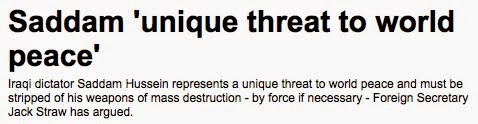









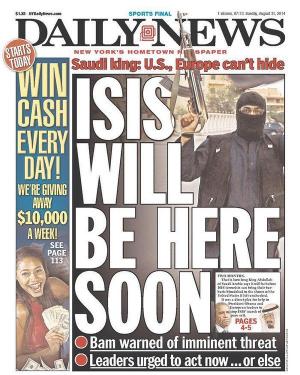
 Aletho News

