Compare and Contrast: Cluster Bomb Usage in Syria, July 2014 Vs September 2014
Interventions Watch | September 6, 2014
Rick Gladstone, writing in The New York Times, July 30th 2014:
‘Cluster bombs, internationally banned weapons that can maim and destroy indiscriminately, not only have been frequently used for the past two years by government forces in the Syrian civil war . .
. . . According to an assessment by Human Rights Watch, a member of the Cluster Munition Coalition, Syrian government forces used the weapons in at least 224 locations, in 10 of Syria’s 14 governorates, from July 2012 to this March, with new indications that their “use is ongoing.” The assessment is incomplete and based partly on remnants recorded by video, Human Rights Watch said, suggesting the actual use may be even more widespread.
Syria’s government has denied the use of cluster munitions in the conflict, which is now in its fourth year. But Ms. Blakemore said that the insurgents fighting to topple President Bashar al-Assad did not have the capacity to deploy such weapons.’
So then, rebels in Syria simply aren’t able to use cluster bombs. No siree! It’s all the work of the Assad regime.
Rick Gladstone, writing in The New York Times, September 1st 2014:
‘The Islamic State in Iraq and Syria, the extremist militant group now almost universally vilified for atrocities that include boastful beheadings, summary mass executions and enslavement in the areas it aspires to control, also has attacked enemies with cluster bombs, the banned weapons that kill and maim indiscriminately, Human Rights Watch said on Monday.
Stephen Goose, the arms division director of Human Rights Watch, said in a statement that “credible evidence” had emerged that ISIS forces used ground-fired cluster munitions on July 12 and Aug. 14 during fighting with Kurdish militia members in Aleppo Province near the northern Syrian border with Turkey.
“The use of cluster munitions by nonstate actors such as the Islamic State shows the urgent need for Syria and all nations that have not yet done so to join the ban on cluster munitions and destroy their stockpiles,” Human Rights Watch said in the statement’.
No wait! The rebels do have the capacity to deploy cluster bombs after all, and they are deploying them! And they were even when we said they weren’t! Or at least ISIS are!
And how convenient that this new ‘credible evidence’ has come to light just as the U.S. et al are embarking on a long term, overt war in Iraq – and very probably Syria before too long – to be justified by the ISIS ‘threat’.
Dilanian’s Dizzying Defense & Dissemination of Disinformation: My Own Discussion with the ‘CIA’s Mop-Up Man’

By Nima Shirazi | Wide Asleep in America | September 5, 2014
On Wednesday afternoon, The Intercept‘s Ken Silverstein dropped a bombshell:
A prominent national security reporter for the Los Angeles Times routinely submitted drafts and detailed summaries of his stories to CIA press handlers prior to publication, according to documents obtained by The Intercept.
That reporter is Ken Dilanian, who has since joined Associated Press as an intelligence reporter.
A swath of emails from the first half of 2012, released to The Intercept in response to a FOIA request, show that Dilanian maintained a particularly obsequious relationship with the media relations team over at the Central Intelligence Agency, the clandestine U.S. government service he was hired to cover for the paper.
Dilanian, dubbed “the CIA’s Mop-Up Man” by The Intercept, went beyond the usual role of mainstream media stenographer of government talking points. According to Silverstein – and overwhelmingly corroborated by the content of the published documents – Dilanian “enjoyed a closely collaborative relationship with the agency, explicitly promising positive news coverage and sometimes sending the press office entire story drafts for review prior to publication. In at least one instance, the CIA’s reaction appears to have led to significant changes in the story that was eventually published in the Times.”
Silverstein continues:
“I’m working on a story about congressional oversight of drone strikes that can present a good opportunity for you guys,” Dilanian wrote in one email to a CIA press officer, explaining that what he intended to report would be “reassuring to the public” about CIA drone strikes. In another, after a series of back-and-forth emails about a pending story on CIA operations in Yemen, he sent a full draft of an unpublished report along with the subject line, “does this look better?” In another, he directly asks the flack: “You wouldn’t put out disinformation on this, would you?”
Another example of Dilanian’s shameful sycophancy is found in an email he sent to his contact at the CIA Office of Public Affairs on April 11, 2012. In the message, Dilanian passes along a 10-day-old dispatch from the Yemen Times, reporting on a U.S. drone strike in Azzan, a town in the country’s eastern Shabwa province. Five people were killed in the strike, one of whom was immediately identified as 60-year-old civilian, Mohamed Saleh al Suna. Six children were also injured by shrapnel from the bombing while playing soccer.
Even though Reuters had already reported on the attack on March 30, 2012 – the day it occurred – Dilanian attempted to get confirmation on the strike and reported casualties from his buddies at the CIA. “This one sounds like you guys,” he wrote, adding, “Do you agree that a civilian was killed?”
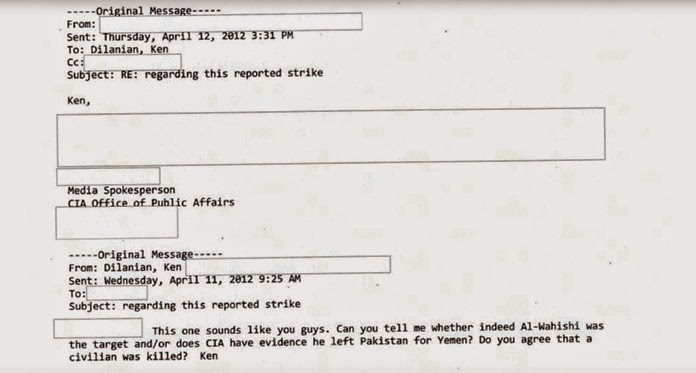
Far from acting as a venerable “Fourth Estate” check on the excesses state power, Dilanian clearly revels in his access to the upper echelons of the security and surveillance establishment, eager to laundering their lies and whitewash their war crimes.
While Dilanian’s “closely collaborative” and “deferential relationship” with the CIA, as Silverstein puts it, is shameful, unprofessional, and does a great disservice to what should be the adversarial, critical, and challenging role the press should the government, it certainly comes as no surprise.
At least to me.
A month before the first of Dilanian’s emails released to The Intercept was written, I engaged in a brief online correspondence with him.
On February 23, 2012, Ken Dilanian wrote a refreshingly solid piece on the U.S. government’s view of the Iranian nuclear program, noting that there was still no evidence Iran is actually building a nuclear bomb nor actively pursuing the means to do so.
Nevertheless, the article contained a slight error regarding Dilanian’s description of Iran’s declared and safeguarded enrichment site at Fordow, which he wrote was a “clandestine underground facility” that had been “discovered” by “Western intelligence agencies.”
Since the piece was otherwise generally good, I thought Dilanian would be receptive to a minor bit of fact-checking and decided to get in touch, using my nice voice.
What happened next was bizarre. The defensive posture immediately on display by Dilanian – someone with an important role at a large American newspaper – was revealing, and illuminating. No amount of reasoned explanation or fact-based rationale would do – he deflected, doubled-down, fumed, fulminated, and then, as the short-lived conversation continued, became increasingly insulting and juvenile.
He effectively admitted to being a sounding board for anonymous government spooks and berated anyone who doesn’t have Pentagon and CIA officials on speed-dial as being ignorant and agenda-driven, citing a “conspiracy” I never suggested existed.
The best part, perhaps, was when he wrote, “[T]here are checks and balances, including Congressional oversight, journalistic scrutiny and whistleblowers from within – all of which insures, I would argue, that US officials do not often get away with elaborate lies…”
My guess is that there are hundreds of thousands of Iraqis who might beg to differ with his particularly sunny assessment if they weren’t already dead.
At another point, Dilanian insisted to me that “U.S. government officials are not in the habit of elaborate disinformation campaigns,” and then later, after I challenged the official narrative on something, writes, “but it’s so easy for you to sit in Brooklyn, having no contact whatsoever with anyone senior from the government’s national security apparatus, and having no real idea of how that apparatus works, and us[ing] phrases like ‘a narrative emerges.'”
With the new revelations published by The Intercept, we now know, even more than before and beyond a shadow of doubt, who’s actually responsible for foisting particular narratives upon the unwitting public.
But, hey, if only I sent fawning emails from Washington D.C. to my pals across the Potomac in Langley, maybe I’d have some clue as to what really going on. Thanks Ken, for setting me straight.
Below is our email exchange in full (the only editing made have been the standardization of the spelling of “Fordow” and the removal of Dilanian’s mobile phone number):
From: Nima Shirazi | Wide Asleep in America
Sent: Friday, February 24, 2012 1:55 AM
To: Dilanian, Ken
Subject: Your Iran Piece: A Thank You and a Comment
Mr. Dilanian,
I’m writing to thank you for the important piece, “U.S. does not believe Iran is trying to build nuclear bomb,” in the L.A. Times today. It contains a lot of vital information that is not reported on nearly often enough in the mainstream press. Those who follow this issue closely, like myself, have been writing about this information for a long time, so reading it in the L.A. Times is a huge boost to getting the truth out.
I do question, however, your decision to include the following sentence: “In 2009, Western intelligence agencies discovered a clandestine underground facility called Fordow, near the city of Qom…”
In fact, the Fordow plant was not really “discovered” by “Western intelligence agencies”; rather, it was announced by Iran to the IAEA on September 21, 2009. Barack Obama’s sensationalist press conference, alongside Nicholas Sarkozy and Gordon Brown in Pittsburgh, during which supposedly “revealed” the existence of the Fordow facility to the world, occurred on September 25, 2009, four days after Iran itself told the IAEA about the plant, which was subsequently described as “a hole in a mountain” and “nothing to be worried about” by then-IAEA Secretary General Mohammed ElBaradei.
In advance of Obama’s supposed revelation, IAEA spokesman Marc Vidricaire told reporters, “I can confirm that on 21 September, Iran informed the IAEA in a letter that a new pilot fuel enrichment plant is under construction in the country.”
Obama even acknowledged this fact in his speech, noting, “Earlier this week, the Iranian government presented a letter to the IAEA that made reference to a new enrichment facility…”, though he deliberately omitted the inconvenient fact that Iran is only legally obligated to inform the IAEA of new facilities within 180 days of the introduction of nuclear material thereby making his own accusation of Iran’s alleged intransigence deliberately deceiving.
Unfortunately, your report also fails to acknowledge the essential fact that IAEA spokesman Gill Tudor has confirmed: “All nuclear material in the [Fordow] facility remains under the agency’s containment and surveillance.”
In such an otherwise excellent report, it is frustrating to see the “secret Fordow facility” meme still repeated.
Considering your attention to the Iranian nuclear issue and constant dis- and misinformation, speculation and propaganda regarding Iran’s capabilities and intentions, I think you might be interested in this piece of mine from December 2010, which has subsequently been updated over 51 times with new predictions since its original publication: The Phantom Menace: Fantasies, Falsehoods, and Fear-Mongering about Iran’s Nuclear Program
Best,
Nima Shirazi
Brooklyn, NY
From: Dilanian, Ken
Sent: Friday, February 24, 2012 9:35 AM
To: Nima Shirazi | Wide Asleep in America
Subject: Re: Your Iran Piece: A Thank You and a Comment
Mr. Shirazi, thanks for your comment. I believe you are flat wrong about Fordow. Iran declared it only after Iran discovered that Western intelligence agencies knew about it. I did get the date wrong – the U.S. actually discovered it years before, and announced it only after Iran’s preemptive letter. See:
http://www.nytimes.com/2009/09/26/world/middleeast/26intel.html?_r=2&hp=&pagewanted=all
http://www.isisnucleariran.org/assets/pdf/Qom_Q-As.pdf
Best,
Ken Dilanian
National Security Correspondent
Los Angeles Times
O:(202) 824 8328
Twitter: @KenDilanianLAT
From: Nima Shirazi | Wide Asleep in America
Sent: Friday, February 24, 2012 10:12 AM
To: Dilanian, Ken
Subject: Re: Your Iran Piece: A Thank You and a Comment
Thanks for replying so quickly, Ken.
That Iran was merely reacting to a Western discovery and hoping to pre-empt its publicity is precisely the narrative that has been wholeheartedly accepted by the press without any hint of scrutiny or shred of evidence. First off, how would Iran find out that Obama was going to hold a press conference announcing the “discovery” of the site with enough time to decide to “preemptively” draft a letter to the IAEA? – a declaration, it should be pointed out, that took place well before the 180 days before nuclear material was introduced to the site as mandated by Iran’s ratified Safeguards Agreement with the IAEA. Actually, Iran announced the site about a year and a half before it technically and legally had to. I suppose, though, it is possible that Iranian agents had access to Rahm Emanuel’s google calendar.
It’s silly to rehash what has been addressed already, but I think IPS journalist Gareth Porter’s recent article on this very subject in instructive (forgive me for quoting at length):
The Clinton and Hague statements [that Fordo was “covert” and “clandestine” before revealed to the world by the West] recalled a briefing for reporters during the Pittsburgh G20 summit meeting Sep. 25, 2009, at which a “senior administration official” asserted that Iran had informed the IAEA about the Fordow site in a Sep. 21 letter only after it had “learned that the secrecy of the facility was compromised”.
That administration claim was quickly accepted by major media outlets without any investigation of the facts. That story line is so deeply entrenched in media consciousness that even before Clinton’s remarks, Reuters and Associated Press had published reports from their Vienna correspondents that repeated the official Obama administration line that Iran had revealed the Fordow site only after Western intelligence had discovered it.
But the administration never offered the slightest evidence to support that assertion, and there is one major reason for doubting it: the United States did not inform the IAEA about any nuclear facility at Fordow until three days after Iran’s Sep. 21, 2009 formal letter notifying the IAEA of the Fordow enrichment facility, because it couldn’t be certain that it was a nuclear site.
Mohammed ElBaradei, then director general of the IAEA, reveals in his 2011 memoir that Robert Einhorn, the State Department’s special advisor for nonproliferation and arms control, informed him Sep. 24 about U.S. intelligence on the Fordow site – three days after the Iranian letter had been received.
An irritated ElBaradei demanded to know why he had not been told before the Iranian letter.
Einhorn responded that the United States “had not been sure of the nature of the facility”, ElBaradei wrote.
The administration’s claim that Iran announced the site because it believed U.S. intelligence had “identified it” was also belied by a set of questions and answers issued by the Obama administration on the same day as the press briefing. The answer it provided to the question, “Why did the Iranians decide to reveal this facility at this time,” was “We do not know.”
Greg Thielmann, who was a top official in the State Department’s Bureau of Intelligence and Research until 2003 and was on the staff of the Senate Select Committee on Intelligence during the 2009 episode, told IPS the evidence for the claim that Iran believed the site had been discovered was “all circumstantial”.
Analysts were suspicious of the Iranian letter to the IAEA, Thielmann said, because, “it had the appearance of something put together hurriedly.”
But there is an alternative explanation: the decision to reveal the existence of a second prospective enrichment site – this one built into the side of a mountain – appears to have reflected the need to strengthen Iran’s hand in a meeting with the “P5 + 1” group of state led by the United States that was only 10 days away.
The Iranian announcement that it would participate in the meeting on Sep. 14, 2009 came on the same day that the head of Atomic Energy Organisation of Iran, Ali Akbar Salehi, warned against an attack on Iran’s nuclear facilities.
The idea that Iran was planning to enrich uranium secretly at Fordow assumes that the Iranians were not aware that U.S. intelligence had been carrying out aerial surveillance of the site for years. That is hardly credible in light of the fact that the Mujahideen-E-Khalq (MEK), the armed opposition group with links to both U.S. and Israeli intelligence, had drawn attention to the Fordow site in a December 2005 press conference – well before it had been selected for a second enrichment plant.
Anyway, whether you roll your eyes or not about this minor point of contention, my opinion, or Porter’s conclusions, I do thank you again for your LAT piece and look forward to reading more from you in the future.
Best,
Nima
From: Dilanian, Ken
Sent: Friday, February 24, 2012 10:32 AM
To: Nima Shirazi | Wide Asleep in America
Subject: Re: Your Iran Piece: A Thank You and a Comment
Nima, the problem with intelligence reporting is there is often no way to independently confirm what your sources are telling you. You just have to rely on triangulating the information, on your years of experience dealing with certain people, and on the fact that—while you may find this hard to believe—U.S. government officials are not in the habit of elaborate disinformation campaigns. Not to say it never happens, of course, but it’s just not typically the way it works. I am confident in the New York Times reporting on this, which was based on multiple sources from within the U.S. intelligence community. What seems to be the case is that the US, France and Britain thought they knew what was there, but were not 100% certain until Iran admitted it, which may be why they didn’t send a letter to the IAEA. Just like the CIA wasn’t certain bin Laden was in Abbottabad until they ID’d his body. It is, of course, easy to say there isn’t a “shred of evidence” to support what anonymous US intelligence sources are claiming. That is true for just about any story about secret intelligence. But there are checks and balances, including Congressional oversight, journalistic scrutiny and whistleblowers from within – all of which insures, I would argue, that US officials do not often get away with elaborate lies of the kind you are suggesting they perpetrating here. Ken
From: Nima Shirazi | Wide Asleep in America
Sent: Friday, February 24, 2012 2:49 PM
To: Dilanian, Ken
Subject: Re: Your Iran Piece: A Thank You and a Comment
I don’t think it’s particularly elaborate or dastardly for U.S. officials to establish a particular narrative regarding alleged Iranian intransigence and malfeasance. This one is actually quite simple – Iran legally places a new facility under full IAEA Safeguards in line with its obligations and, as a result, undercuts a big, fancy announcement by the president. So, in response, a narrative emerges that Iran did this deliberately because they had been “found out.” And the press repeats that story until it becomes established, unquestioned fact.
Pretty simple, really.
Anyway, no need to bicker about this. I’m glad to hear you have such confidence in the honesty of our government officials and think that they “do not often get away with elaborate lies.”
Best,
Nima
From: Dilanian, Ken
Sent: Friday, February 24, 2012 2:58 PM
To: Nima Shirazi | Wide Asleep in America
Subject: Re: Your Iran Piece: A Thank You and a Comment
but it’s so easy for you to sit in Brooklyn, having no contact whatsoever with anyone senior from the government’s national security apparatus, and having no real idea of how that apparatus works, and uses phrases like “a narrative emerges.”; what you are saying there is that multiple people from multiple government agencies conspired in a big lie. you can’t make the accusation and then hide behind euphemisms. and what I’m saying is, we live in a democracy, it doesn’t (usually) work like that. not that people are so righteous, but that it’s impossible to orchestrate a conspiracy like that. there are 16 intel agencies, and a lot of other people with access to this sort of information, including liberal democrats and conservative republicans. even if obama and his advisers wanted to lie about something like this, some malcontent somewhere would talk.
I chose not to carry the conversation further. After all, I had plenty of more sitting to do in Brooklyn, far far away from all those truth-tellers in the CIA press office.
EU admits Putin’s comment on ‘storming Kiev’ taken out of context
RT | September 5, 2014
The EU has admitted that Vladimir Putin’s words about “taking Kiev in two weeks” had been “made public out of context,” said a spokeswoman for the European Commission President in a written response to The Wall Street Journal.
José Manuel Barroso’s spokesperson Pia Ahrenkilde-Hansen said on Thursday the EU is going to address the issue “through diplomatic channels, not in the press.”
“I can only add that the president of the Commission informed his colleagues in the European Council in a restricted session of the conversations he had with President Putin. Unfortunately part of his intervention was made public out of context,” Ahrenkilde-Hansen wrote to the WSJ.
Last week Barroso gave a briefing on his phone conversation with President Vladimir Putin, describing the conversation as “very frank.” During the talk, the EU functionary alleged the Russian president had said that if necessary military occupation of the Ukrainian capital would take just a matter of weeks.
Italia’s La Repubblica was among the very first to overblow the scandal, saying that José Manuel Barroso had told European leaders who attended Saturday’s EU summit in Brussels that replying to Barroso’s accusations about regular Russian troop operating in Ukraine, President Putin had said that “If I wanted to, I could take Kiev in two weeks.”
An EU official has confirmed to the WSJ that Putin’s note about Russian forces being able to take Kiev within two weeks did take place during last week’s telephone call, but the context of the comment was not clear.
The unexpected divulgement by the top EU official immediately sparked a political scandal involving Russia’s high ranking officials and diplomats, who accused Barroso of both intentionally wrenching Russian leader’s remarks out of context as well as breaching diplomatic protocol.
According to Russia’s permanent representative to the EU, Vladimir Chizhov, Putin’s words were “clearly taken out of context.”
On Tuesday, September 2, Moscow threatened to reveal the full recording of the controversial phone call “to remove all misunderstandings” if European Commission President Jose Manual Barroso doesn’t object in the next two days, Chizhov said.
Russia’s presidential aide Yury Ushakov lashed at the EU Commission president’s behavior, stressing it is “incorrect and goes beyond the bounds of diplomatic practices.”
“If that was really done, it is not worthy of a serious political figure,” Ushakov added.
As the EU official acknowledged on Thursday, September 4, President Putin possibly made the comment to strengthen Russia’s position of not and never being involved militarily in Ukrainian crisis.
READ MORE:
Moscow ready to expose ‘Kiev in two weeks’ spin with Barroso call transcript
‘Did he mean Alaska?’ Obama wrongly blames Russia for ‘trying to reclaim lands lost in 19th century’
Memory hole for Netanyahu’s supreme crime
By Jonathon Cook | The Blog From Nazareth | September 5, 2014
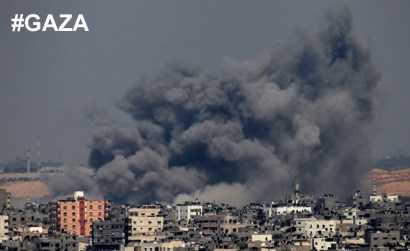 Now even the Shin Bet, Israel’s secret police, admits in court documents that the group behind the kidnapping and murder of the three Israeli youths in the West Bank in June was a rogue cell, comprising only four individuals. Further, the man named as the mastermind behind the plot was “lukewarm” about it.
Hussam Qawasmeh was apparently originally lukewarm about the plan proposed to him by a relative, Marwan Qawasmeh, who with Amer Abu Aisheh has been named as having carried out the kidnapping and murder and is still wanted by Israel.
So who’s going to remind us that Netanyahu’s invasion of the West Bank, his rounding up of hundreds of Hamas activists, and the ensuing confrontation with Hamas in Gaza that led to Israel’s use of massive military force, killing more than 2,100 Palestinians, the vast majority of them civilians, were all based on a lie: that he had cast-iron evidence that Hamas was responsible for the murders?
A crime of aggression against Gaza is a crime against humanity – in fact, the supreme crime, as determined by the Nuremberg tribunals. But this crime against humanity is going straight down the memory hole because Israel, rather than an official enemy, was responsible.
Once more: It ain’t about the graffiti
Another incident of nationalist crime in the village of Yasuf, but the media only paid attention to the unimportant part: the graffiti
By Yossi Gurvitz | Yesh Din | September 3, 2014
Atallah Yassin Muhammad Gouda lives in the village of Yasuf, which has known quite a few attacks by Jewish felons; perhaps the most notorious being the torching of its mosque in 2009, which introduced the phenomenon of the price tag attacks into Israeli consciousness. Gouda lives in a neighborhood that is adjacent to the outpost Tapuach Maarav, and according to the testimonies of its residents, they suffer from frequent attacks by Israeli civilians. The residents attribute the burning of several vehicles, as well as stone attacks on the houses in the neighborhood to their Israeli neighbors.
At the beginning of August, Gouda was woken by noise, and when he hurried to see what happened, he saw the family car, which was in the courtyard, on fire. He alerted the rest of the household, and together, they managed to prevent the fire from spreading to the house, which was only two meters away from the vehicle. After dousing the flames, which had caused severe damage – estimated at several thousand NIS – to the car, they discovered a gasoline can and several rags soaked in gasoline there also. The police were called and arrived at the scene, collecting evidence and taking fingerprints. Given the record of the SJPD, I wouldn’t hold my breath waiting for an indictment.
The torching of the car caused the family significant damage: not only would they have to pay for fixing it, but as the only provider, the father, is a taxi driver, and as the car (bought 18 months ago) was his work vehicle, there would also be time in which they would have no income.
So, the attack by the unknown felons achieved three goals: significant damage to the car, and damaging the Gouda family income. The third goal is the wider goal of settler violence: spreading fear and despair among the Palestinian residents, in an attempt to convince them by violent methods to abandon their lands, so that Israeli civilians can take them over. A fourth, collateral, goal – the spreading of the fire to the house and its sleeping residents – was not achieved. We note this isn’t the first time that Israeli civilians are suspected of torching a vehicle in dangerous proximity to a house, as its residents are sleeping.
And, oh, yes: there was also some graffiti. When the bedlam ended, after the fire was extinguished, and the smoke and panic settled, the residents found that someone had sprayed the wall of the house with a “price tag” graffiti. Anyone following the issue through the Israeli press, might have mistakenly concluded that the graffiti is the main issue. Here is a Ynet newsflash (Hebrew): “A price tag slogan was sprayed on a house in the Palestinian village of Yasif (error in the original – Yesh Din). A Palestinian vehicle nearby was set ablaze.” And then you have Mako (Hebrew): “The residents of the Palestinian village of Yasuf in Shomron woke up this morning to a new-old troubling sight – slogans sprayed on the walls of a house and significant damage caused to a vehicle.”
Which is weird. Every journalist learns that you open your piece with the most important part, and go on to the less important. In any reasonable measure, the setting of a vehicle on fire – especially one which is close to a house – is significantly more serious than any graffiti daubed on a nearby wall. The slogan cannot kill anyone or destroy anything: a few brushes of paint, and it is gone. So why is the media obsessed with the graffiti?
Because to a certain extent, the media has swallowed the myth spread by the settlers: that their crimes are not severe, it’s merely spray paint. Nothing to write home about. When the Israeli media puts the slogans in the spotlight, it puts the fire in the background. But as we’ve already shown, the great majority of nationalist crimes in the West Bank do not include slogans – and when these are present, there is a clear correlation between them and cases of arson. That is, the slogans accompany arson, and not vice versa. And arson is the spreading of terror par excellence.
It’s time we remembered that.
More NATO Aggression Against Syria?
Media Myths and Distortions
By Rick Sterling | CounterPunch | September 3, 2014
Syria will be an important subject of discussion at this week’s NATO Summit meeting in Wales. The US and NATO powers will evaluate whether to expand air strikes against ISIS (Islamic State in Iraq & Syria) into Syria, whether to do it in cooperation with the Syrian government and whether to increase support to the “moderate” armed opposition. The US mainstream media and politicians have been beating the war drums with Republican Senator McCain calling for military escalation and Democratic Senator Feinstein criticising President Obama for being “too cautious”.
There has been little mention of the fact that it is one year since the highly publicized chemical weapons attack in the Ghouta outskirts of Damascus. The same elements who are pushing for “regime change” military action now were doing so one year ago. Since then, the case that the Syrian government was responsible for the attack has been effectively discredited. The diplomatically negotiated agreement to remove all Assad’s chemical weapons has been successfully implemented. One would think this would merit attention, but it has been widely ignored.
One good thing in the media this week is recognition that Libya is now in chaos. This is the country which was “liberated” by NATO bombing which led to the murder of President Ghadaffi and collapse of that government. Nine months ago a plurality of Libyans said they are worse off than before the regime change. It’s very likely that even more Libyans are unhappy with their externally imposed regime change today. Three years ago NATO members were congratulating themselves on the air war against Libya. Now they are hopefully more sober as it goes public that Libya is in chaos, the airport shut down, competing extremists fighting for dominance, with one faction enjoying themselves in the US Embassy swimming pool.
The Obama Administration is at another turning point where it may choose to escalate its aggression against Syria. Clearly Obama and team do not want to go solo. The dreams of a“New American Century” with unchallenged US dominance have been broken by reality in Iraq, Afghanistan and beyond. But the hounds of war and aggression are noisy and persistent.
As NATO begins to deliberate whether and how to escalate aggression against Syria, let’s review some recent and long standing myths and lies about the Syrian conflict.
Myth #1.
Some articles and even the (current) Wikipedia entry for James Foley (journalist) claim that he was a prisoner of the Syrian military and that they turned him over to ISIS. This is in perfect keeping with the pervasive demonization of the Assad government. However it’s false. A serious investigation into the disappearance of Foley is in the May 2014 Vanity Fair. Foley was captured by Nusra Front (or allied rebels) in November 2012 and later transferred or sold to ISIS.
Myth #2.
Both NY Times’ Anne Barnard and John McCain suggest or assert that the Syrian government has collaborated with ISIS. The “evidence” of this is that the Syrian Army did not actively attack ISIS in eastern Syria during the past year.
The reality is that Syrian Army needs to pick and choose its battles and priorities. They are weakened by over three years of intense conflict resulting in at least 65 THOUSAND Syrian army and militia deaths. For reference, the total US death count in Vietnam was 58 thousand and Syria today is one tenth the size of the US in the 1970’s. In the past year the Syrian military has focused on confronting armed opposition in Aleppo (the largest city), Homs, outer Damascus and the Lebanese border area. The Syrian military has gained ground in each of these areas along with implementing the national “reconciliation” policy.
In the past two months, ISIS has gone on the offensive in eastern Syria and is pressing towards Aleppo and central Syria with US equipment and weaponry captured in Iraq. The battles have taken a heavy toll on both ISIS and the Syrian military. According to rebel aligned Syrian Observatory for Human Rights (SOHR), 346 ISIS fighters were killed in a four day assault on Tabqa Air Base near Raqqa. The fighting has been brutal with heavy losses on both sides.
Longtime Mideast journalist Patrick Cockburn writes, “A conspiracy theory, much favoured by the rest of the Syrian opposition and by Western diplomats, that Isis and Assad are in league, has been shown to be false.”
In contrast with the myth, ISIS has in fact been aided and abetted by US allies. This includes funds from Saudi Arabia and other Gulf countries, ideology and recruitment by Saudi media, transportation and safe haven through Turkey.
Myth #3.
It is usually claimed that the Syrian conflict is a civil war that started with peaceful protests in 2011. In reality the seeds of the conflict were planted much earlier. General Wesley Clark’s 2007 memoir described plans for “regime change” in Syria and other countries. Also in 2007 Seymour Hersh documented the US strategy of fomenting conflict in Syria (and Iran) by working with Sunni extremists:
“The U.S. has also taken part in clandestine operations aimed at Iran and its ally Syria. A by-product of these activities has been the bolstering of Sunni extremist groups that espouse a militant vision of Islam and are hostile to America and sympathetic to Al Qaeda.”
When mass protests began in Syria they included violent attacks and murders of police from the beginning. The situation was the same in other regions. Jesuit priest Father Frans Van Der Lugt was widely respected by Sunni Muslims and Christians in the Old City of Homs. He described the start of the protests thus:
“From the start, the protest movements were not purely peaceful. From the start I saw armed demonstrators marching along in the protests, who began to shoot at the police first. Very often the violence of the security forces has been a reaction to the brutal violence of the armed rebels.”
The conflict in Syria has been primarily instigated and continued by some of the world’s wealthiest and powerful governments. They make no secret and call themselves, with Orwellian chutzpah, the “Friends of Syria”. Their division of labor including who pays the salaries of the rebel mercenaries, who supplies communication equipment, who does training and who supplies weapons. Thus the conflict in Syria is primarily a war of aggression using domestic and foreign mercenaries.
Myth #4.
It is often suggested the “moderate opposition” is popular, democratic and secular.
President Obama has recently proposed giving $500 million to the “moderate opposition”.
Patrick Cockburn sums up the reality in the newly released book “The Jihadis Return: ISIS and the New Sunni Uprising”:
“It is here that self-deception reigns, because the Syrian military opposition is dominated by ISIS and by Jabhat Al Nusra, the official Al Queda representative, in addition to other extreme jihadi groups. In reality there is no dividing wall between them and America’s supposedly moderate opposition allies.”
This siuation is not new. A NY Times article in summer 2012 discussed the hidden presence of Al Queda within the “Free Syrian Army”. When he read this, James Foley sent out a tweet linking to the article and pondering whether the photographed black flag was necessarily Al Queda. He did not recognize the flag and wondered whether it was “some misc jihadi group”. Ironically that was the unique flag of ISIS before it was widely recognized. The “misc jihadi” group is the one that would later murder him.

Foley’s last article documented the overall unpopularity of the rebels in Aleppo:
“Aleppo, a city of about 3 million people, was once the financial heart of Syria. As it continues to deteriorate, many civilians here are losing patience with the increasingly violent and unrecognizable opposition — one that is hampered by infighting and a lack of structure, and deeply infiltrated by both foreign fighters and terrorist groups.”
Myth #5.
Finally there is the myth that the Free Syrian Army and other “moderate opposition” groups were not supported. In reality, huge quantities of weapons and ammunition have flowed which is exactly what has allowed the terrorist organizations to continue the mayhem and bloodshed. Starting in November 2012 three thousand TONS of weapons and ammunition were flown from Zagreb to Turkey and then transferred to the Syrian rebels. In addition there were huge shipments from Benghazi Libya and more shipments paid by Saudi Arabia and Qatar.
DO USA AND NATO REALLY WANT TO STOP ISIS?
One week after the Syrian Presidential election where 73% of the electorate turned out, ISIS made its advance through western Iraq to Mosul and other cities. There were virtually no battles. Iraqi military leadership simply departed and in the confusion troops fled or disbanded. Was this a military collapse or was it planned, with key Iraqi figures either bribed or otherwise in alliance with ISIS? Whichever is the truth,we can see the consequences and who has benefited: the campaign for greater autonomy in the oil rich Kurdish region has advanced; the split between Shia and Sunni has been exacerbated; and one of the world’s greatest overnight military arms transfers took place with ISIS effortlessly taking control of vehicles, humvees, tanks, lethal mortar launchers, high grade military equipment and tons of ammunition.
Did US military officers, who spent years and billions of dollars “training” the Iraqi military, have advance notice or knowledge of this seeming collusion between ISIS and Iraqi military officers? Did wealthy enemies of Syria simply bribe the Iraqi officers? Was it a “collapse” or is there much more behind this? How can a few hundred jihadi militants traveling in new Toyota pickup truck convoys surprise and overtake military checkpoints and bases without a fight unless there was collusion at the highest levels?
Actions reveal more than words. If the US and NATO really are worried about ISIS they can and will implement measures such as the following:
* shut down the Jihadi Highway through Turkey.
* shut down safe haven and supply routes of ISIS and other terrorist groups in Turkey
* provide useful information from surveillance flights to the Syrian army which is doing the main on-the-ground fighting
* demand and check that Saudi Arabia and Qatar stop broadcasting TV programs featuring hate speech which serve to recruit jihadis to join ISIS.
* demand and check that Saudi Arabia and Qatar implement measures to stop funding for ISIS through their banks and other financial operations.
Will the US and NATO take practical steps to counter ISIS or will they escalate their aggression against Syria, violating Syrian air space and looking for a pretext to impose a “no fly zone” as done in the disastrous aggressions against Iraq and Libya?
Will the US and NATO start a bombing campaign against ISIS in Syria which will ignite MORE support for the group in the Arab world?
Will they violate Syrian air space as a stepping stone to US bombing of Syrian army positions?
Or will the US and NATO resist the hounds of war and finally put aside the campaign of regime change against a secular, socialist inclined government that is supported by a big majority of its people?
Rick Sterling is a founding member of Syria Solidarity Movement. He can be contacted at rsterling1@gmail.com
What would real proof look like?
By Patrick Armstrong | US-Russia.org | August 31, 2014
Once again the headlines shout that Russia has invaded Ukraine. Once again NATO offers blurry satellite shots from a commercial service for evidence. Here are June’s “invasion” satellite photos. This month’s “invasion” satellite photos are here. Again from a commercial source, Digital Globe. Photo 1: some “Russian” SPGs in Ukraine (everybody uses “Russian” ie Soviet equipment and the rebels have captured quite a lot). Photo 2: Some deployed artillery in Ukraine (ludicrously explained as how “trained military professionals” would deploy it. Hasn’t anyone in NATO HQ realised that the east Ukrainian rebels are pretty competent?) Photo 3: A Russian base with stuff in it and without stuff in it (but aren’t we continually told about the Russian “buildup on the border”, always alarming, always threatening, whatever the numbers: “very, very sizable” in March, 40K in April, 12K in July, 20K in August. One should not be surprised that there’s some variance of equipment at a given base over time). Photo 4 and 5: Some guns in Russia pointing towards Ukraine (where, by the way, as NATO intelligence may know, there is a war going on with occasional firing into Russia. All military are trained to expect the worst.) And, by the way, if Russia did invade, don’t you think it would do it in strength rather than a couple of tanks here and a gun or two there? No wonder the Russians are laughing at this “evidence”; this isn’t evidence of anything except how gullible NATO thinks its taxpayers are.
Its time to consider what real evidence would look like. The United States has spent billions and billions of dollars on intelligence-gathering equipment; and supposedly has more assets than anyone else has ever had or dreamed of having. So, given this vast array of sophisticated devices which, one has to assume, have been watching Ukraine and western Russia for months, what would real evidence of a Russian invasion of Ukraine look like?
We would see a series of photographs, maybe even a continuous moving picture, perhaps backed up by intercepted communications, of Russian equipment forming up in a base. We would follow that column, photo by photo, moving towards Ukraine. We would watch that column, photo by photo, as it crossed the frontier and deployed. We should also have photos of Russian artillery actually firing – after all, the guns they show are right out in the open and artillery doesn’t fire single shots. If the Russians were actually firing across the border regularly, there would be real satellite evidence showing it. That is what real proof would look like and that is what these pathetic efforts are not. Although they are negative evidence: if NATO had real evidence, we’d see it 24/7; this paltry effort demonstrates that it does not.
It’s all reminiscent of the two British reporters who said they saw Russian armour head across the border into Ukraine a couple of weeks ago, My smart phone has a camera and it has GPS too and there’s lots of map software available (I recommend City Maps 2Go, download Rostov Oblast. I’m sure their newspapers would stand the $3 it costs). A real report would have said this is the time, this is where we are, this is what we saw, here’s photos. But oops, whaddaya know! they forgot to take their smart phones with them. Gee, so we have to trust them and take their word for it.
WELL, I DON’T TRUST THEM.
And I don’t trust NATO and its pitiful commercial images, I don’t trust reporters who “forget” to record things and I don’t trust Marie Harf and her “social media and common sense”.
As Paul Craig Roberts puts it: “The latest Washington lie, this one coming from NATO, is that Russia has invaded Ukraine with 1,000 troops and self-propelled artillery. How do we know that this is a lie? Is it because we have heard nothing but lies about Russia from NATO, from US ambassador to the UN Samantha Power, from assistant secretary of state Victoria Nuland, from Obama and his entire regime of pathological liars, and from the British, German, and French governments along with the BBC and the entirety of the Western media?”
Patrick Armstrong is a former political counselor at Canadian Embassy in Moscow.
Who’s Telling the ‘Big Lie’ on Ukraine?
By Robert Parry | Consortium News | September 2, 2014
If you wonder how the world could stumble into World War III – much as it did into World War I a century ago – all you need to do is look at the madness that has enveloped virtually the entire U.S. political/media structure over Ukraine where a false narrative of white hats vs. black hats took hold early and has proved impervious to facts or reason.
The original lie behind Official Washington’s latest “group think” was that Russian President Vladimir Putin instigated the crisis in Ukraine as part of some diabolical scheme to reclaim the territory of the defunct Soviet Union, including Estonia and other Baltic states. Though not a shred of U.S. intelligence supported this scenario, all the “smart people” of Washington just “knew” it to be true.
Yet, the once-acknowledged – though soon forgotten – reality was that the crisis was provoked last year by the European Union proposing an association agreement with Ukraine while U.S. neocons and other hawkish politicos and pundits envisioned using the Ukraine gambit as a way to undermine Putin inside Russia.
The plan was even announced by U.S. neocons such as National Endowment for Democracy President Carl Gershman who took to the op-ed page of the Washington Post nearly a year ago to call Ukraine “the biggest prize” and an important interim step toward eventually toppling Putin in Russia.
Gershman, whose NED is funded by the U.S. Congress, wrote: “Ukraine’s choice to join Europe will accelerate the demise of the ideology of Russian imperialism that Putin represents. … Russians, too, face a choice, and Putin may find himself on the losing end not just in the near abroad but within Russia itself.”
In other words, from the start, Putin was the target of the Ukraine initiative, not the instigator. But even if you choose to ignore Gershman’s clear intent, you would have to concoct a bizarre conspiracy theory to support the conventional wisdom about Putin’s grand plan.
To believe that Putin was indeed the mastermind of the crisis, you would have to think that he somehow arranged to have the EU offer the association agreement last year, then got the International Monetary Fund to attach such draconian “reforms” that Ukrainian President Viktor Yanukovych backed away from the deal.
Then, Putin had to organize mass demonstrations at Kiev’s Maidan square against Yanukovych while readying neo-Nazi militias to act as the muscle to finally overthrow the elected president and replace him with a regime dominated by far-right Ukrainian nationalists and U.S.-favored technocrats. Next, Putin had to get the new government to take provocative actions against ethnic Russians in the east, including threatening to outlaw Russian as an official language.
And throw into this storyline that Putin – all the while – was acting like he was trying to help Yanukovych defuse the crisis and even acquiesced to Yanukovych agreeing on Feb. 21 to accept an agreement brokered by three European countries calling for early Ukrainian elections that could vote him out of office. Instead, Putin was supposedly ordering neo-Nazi militias to oust Yanukovych in a Feb. 22 putsch, all the better to create the current crisis.
While such a fanciful scenario would make the most extreme conspiracy theorist blush, this narrative was embraced by prominent U.S. politicians, including ex-Secretary of State Hillary Clinton, and “journalists” from the New York Times to CNN. They all agreed that Putin was a madman on a mission of unchecked aggression against his neighbors with the goal of reconstituting the Russian Empire. Clinton even compared him to Adolf Hitler.
This founding false narrative was then embroidered by a consistent pattern of distorted U.S. reporting as the crisis unfolded. Indeed, for the past eight months, we have seen arguably the most one-sided coverage of a major international crisis in memory, although there were other crazed MSM stampedes, such as Iraq’s non-existent WMD in 2002-03, Iran’s supposed nuclear bomb project for most of the past decade, Libya’s “humanitarian crisis” of 2011, and Syria’s sarin gas attack in 2013.
But the hysteria over Ukraine – with U.S. officials and editorialists now trying to rally a NATO military response to Russia’s alleged “invasion” of Ukraine – raises the prospect of a nuclear confrontation that could end all life on the planet.
The ‘Big Lie’ of the ‘Big Lie’
This madness reached new heights with a Sept. 1 editorial in the neoconservative Washington Post, which led many of the earlier misguided stampedes and was famously wrong in asserting that Iraq’s concealment of WMD was a “flat fact.” In its new editorial, the Post reprised many of the key elements of the false Ukraine narrative in the Orwellian context of accusing Russia of deceiving its own people.
The “through-the-looking-glass” quality of the Post’s editorial was to tell the “Big Lie” while accusing Putin of telling the “Big Lie.” The editorial began with the original myth about the aggression waged by Putin whose “bitter resentment at the Soviet empire’s collapse metastasized into seething Russian nationalism. …
“In prosecuting his widening war in Ukraine, he has also resurrected the tyranny of the Big Lie, using state-controlled media to twist the truth so grotesquely that most Russians are in the dark — or profoundly misinformed — about events in their neighbor to the west. …
“In support of those Russian-sponsored militias in eastern Ukraine, now backed by growing ranks of Russian troops and weapons, Moscow has created a fantasy that plays on Russian victimization. By this rendering, the forces backing Ukraine’s government in Kiev are fascists and neo-Nazis, a portrayal that Mr. Putin personally advanced on Friday, when he likened the Ukrainian army’s attempts to regain its own territory to the Nazi siege of Leningrad in World War II, an appeal meant to inflame Russians’ already overheated nationalist emotions.”
The Post continued: “Against the extensive propaganda instruments available to Mr. Putin’s authoritarian regime, the West can promote a fair and factual version of events, but there’s little it can do to make ordinary Russians believe it. Even in a country with relatively unfettered access to the Internet, the monopolistic power of state-controlled media is a potent weapon in the hands of a tyrant.
“Mr. Putin’s Big Lie shows why it is important to support a free press where it still exists and outlets like Radio Free Europe that bring the truth to people who need it.”
Yet the truth is that the U.S. mainstream news media’s distortion of the Ukraine crisis is something that a real totalitarian could only dream about. Virtually absent from major U.S. news outlets – across the political spectrum – has been any significant effort to tell the other side of the story or to point out the many times when the West’s “fair and factual version of events” has been false or deceptive, starting with the issue of who started this crisis.
Blinded to Neo-Nazis
In another example, the Post and other mainstream U.S. outlets have ridiculed the idea that neo-Nazis played any significant role in the putsch that ousted Yanukovych on Feb. 22 or in the Kiev regime’s brutal offensive against the ethnic Russians of eastern Ukraine.
However, occasionally, the inconvenient truth has slipped through. For instance, shortly after the February coup, the BBC described how the neo-Nazis spearheaded the violent seizure of government buildings to drive Yanukovych from power and were then rewarded with four ministries in the regime that was cobbled together in the coup’s aftermath.
When ethnic Russians in the south and east resisted the edicts from the new powers in Kiev, some neo-Nazi militias were incorporated into the National Guard and dispatched to the front lines as storm troopers eager to fight and kill people whom some considered “Untermenschen” or sub-human.
Even the New York Times, which has been among the most egregious violators of journalistic ethics in covering the Ukraine crisis, took note of Kiev’s neo-Nazi militias carrying Nazi banners while leading attacks on eastern cities – albeit with this embarrassing reality consigned to the last three paragraphs of a long Times story on a different topic. [See Consortiumnews.com’s “NYT Discovers Ukraine’s Neo-Nazis at War.”]
Later, the conservative London Telegraph wrote a much more detailed story about how the Kiev regime had consciously recruited these dedicated storm troopers, who carried the Wolfsangel symbol favored by Hitler’s SS, to lead street fighting in eastern cities that were first softened up by army artillery. [See Consortiumnews.com’s “Ignoring Ukraine’s Neo-Nazi Storm Troopers.”]
You might think that unleashing Nazi storm troopers on a European population for the first time since World War II would be a big story – given how much coverage is given to far less significant eruptions of neo-Nazi sentiment in Europe – but this ugly reality in Ukraine disappeared quickly into the U.S. media’s memory hole. It didn’t fit the preferred good guy/bad guy narrative, with the Kiev regime the good guys and Putin the bad guy.
Now, the Washington Post has gone a step further dismissing Putin’s reference to the nasty violence inflicted by Kiev’s neo-Nazi battalions as part of Putin’s “Big Lie.” The Post is telling its readers that any reference to these neo-Nazis is just a “fantasy.”
Even more disturbing, the mainstream U.S. news media and Washington’s entire political class continue to ignore the Kiev government’s killing of thousands of ethnic Russians, including children and other non-combatants. The “responsibility to protect” crowd has suddenly lost its voice. Or, all the deaths are somehow blamed on Putin for supposedly having provoked the Ukraine crisis in the first place.
A Mysterious ‘Invasion’
And now there’s the curious case of Russia’s alleged “invasion” of Ukraine, another alarmist claim trumpeted by the Kiev regime and echoed by NATO hardliners and the MSM.
While I’m told that Russia did provide some light weapons to the rebels early in the struggle so they could defend themselves and their territory – and a number of Russian nationalists have crossed the border to join the fight – the claims of an overt “invasion” with tanks, artillery and truck convoys have been backed up by scant intelligence.
One former U.S. intelligence official who has examined the evidence said the intelligence to support the claims of a significant Russian invasion amounted to “virtually nothing.” Instead, it appears that the ethnic Russian rebels may have evolved into a more effective fighting force than many in the West thought. They are, after all, fighting on their home turf for their futures.
Concerned about the latest rush to judgment about the “invasion,” the Veteran Intelligence Professionals for Sanity, a group of former U.S. intelligence officials and analysts, took the unusual step of sending a memo to German Chancellor Angela Merkel warning her of a possible replay of the false claims that led to the Iraq War.
“You need to know,” the group wrote, “that accusations of a major Russian ‘invasion’ of Ukraine appear not to be supported by reliable intelligence. Rather, the ‘intelligence’ seems to be of the same dubious, politically ‘fixed’ kind used 12 years ago to ‘justify’ the U.S.-led attack on Iraq.”
But these doubts and concerns are not reflected in the Post’s editorial or other MSM accounts of the dangerous Ukraine crisis. Indeed, Americans who rely on these powerful news outlets for their information are as sheltered from reality as anyone living in a totalitarian society.
~
Investigative reporter Robert Parry broke many of the Iran-Contra stories for The Associated Press and Newsweek in the 1980s. You can buy his new book, America’s Stolen Narrative, either in print here or as an e-book (from Amazon and barnesandnoble.com).
Russian ‘Soldiers Mothers Committees’ — a US Covert Op?
By Daniel McAdams | Ron Paul Institute for Peace and Prosperity | August 30, 2014

A major component in the latest western government and media claims of a Russian invasion of Ukraine is protests of the various Russian “Soldiers’ Mothers Committes” over the supposed disappearance of their soldier sons in Ukraine. Absent compelling visual evidence of a Russian invasion of Ukraine, these NGOs are said to provide the evidence that, as NATO claims, 1,000 young Russians have been forced to go fight in Ukraine.
The US mainstream media has reported extensively over the past several days that these “Soldiers’ Mothers Committes” are a smoking gun indicating the Russian government’s military intervention in Ukraine.
From the Washington Post on 29 August:
Valentina Melnikova, who leads the Soldiers’ Mothers Committee, told the Daily Beast she was “personally humiliated as a citizen of the Russian Federation by our commander-in-chief’s pure, direct crime.” She said Russian President Vladimir Putin is “violating not only international laws, not only the Geneva Convention, [he] also is breaking Russian Federation law about defense. And as for the [Russian airborne commander], we should be too disgusted to even mention his name. He forces his servicemen to fight in a foreign state, Ukraine, illegally, while mothers receive coffins with their sons, anonymously.”
Here is the Daily Kos :
Here are some “known knowns” about Russians and Ukraine. Russian troops are in Ukraine. Russian troops have died in Ukraine. Russian mothers can’t get answers about where their sons are. Add to that common knowledge a new, unsettling “known” that Russian soldiers, most just boys, are being buried in secret graveyards far from families who can only guess their fate.
But are these committees really just innocent NGOs that seek to defend young Russian soldiers being sent off to fight in foreign lands? Or are they well-financed and trained arms of US propaganda used to bolster Washington’s line that Russia has invaded Ukraine?
The US government has in the past been generous in funding the Russian Soldiers’ Mothers Committes. In a 2011 report of the US government-funded National Endowment for Democracy, we learn that the US government granted the Committees more than $150,000. In 2010 they received approximately the same amount from the US government, and in 2009 they received nearly $200,000.
We cannot tell how much the US government has funded these organization in more recent years because the NED, which demands transparency in others, refuses to publish a list of its grantees any longer.
It is certainly possible that these Committees, which were initially formed to help Russians avoid conscription, have not been co-opted into serving as a propaganda tool for the US government. However the fact that they have long accepted US government money and are now a key component of Washington’s propaganda strategy may suggest otherwise. The Soldiers’ Mothers Committees were required last year under Russian law to register as foreign agents due to US government funding of their operations.
Laptop of Death, 2.0
emptywheel | August 29, 2014
The Greater US War to Remake the Middle East has been going on so long, it is already re-running its story lines.
Back in 2004, when Dick Cheney was trying to drum up a hot war against Iran, the CIA got dealt a laptop that provided a casus belli all wrapped up in a bow: all aspects of Iran’s nuke program, all conveniently collected on one laptop, somehow falling into intelligence hands. It later showed signs of being a forgery.
Now, as the warmakers are trying to gin up a hot war against ISIS (in seeming co-belligerence with Iran!), that’s whose laptop we find, courtesy of Foreign Policy : a Tunisian named Muhammed whose last name and picture Foreign Policy declined to provide. On the laptop, FP found a 19-page document that explains how to “weaponize” bubonic plague by throwing it on grenades close to air conditioning units.
“Use small grenades with the virus, and throw them in closed areas like metros, soccer stadiums, or entertainment centers,” the 19-page document on biological weapons advises. “Best to do it next to the air-conditioning. It also can be used during suicide operations.”
Because a college science student only needs 19 pages to accomplish the technical feat of weaponizing the plague.
Remarkably, a lot of people are taking this as a serious discovery, even though FP describes obtaining the laptop this way:
Abu Ali, a commander of a moderate Syrian rebel group in northern Syria, proudly shows a black laptop partly covered in dust. “We took it this year from an ISIS hideout,” he says.
Abu Ali says the fighters from the Islamic State of Iraq and al-Sham (ISIS), which have since rebranded themselves as the Islamic State, all fled before he and his men attacked the building. The attack occurred in January in a village in the Syrian province of Idlib, close to the border with Turkey, as part of a larger anti-ISIS offensive occurring at the time. “We found the laptop and the power cord in a room,” he continued, “I took it with me. But I have no clue if it still works or if it contains anything interesting.”
As we switched on the Dell laptop, it indeed still worked. Nor was it password-protected.
We are supposed to believe that 1) ISIS got routed back in January 2) left their laptop 3) don’t password protect their devices.
More amusingly, we’re supposed to believe that upon capturing devices from an adversary, the “moderate” beheaders in the FSA would not look for intelligence on those devices. Instead, they’d let a computer collect dust over the course of 8 months, never once attempting to so much as turn on a laptop, until such time as it became imperative to foster opposition to ISIS.
Because powering a laptop is apparently too hard for FSA commanders?
Either Abu Ali is lying, or he’s lying. Which means the provenance of this laptop and this story is so suspect it should not be treated seriously. There are plenty of other reasons to doubt the story. But if your source claims never to have turned on a laptop — never to have even tried! — seized from an adversary over the course of 8 months, your source is not telling the truth.
Kiev accuses Russia of ‘bringing troops’ to Ukraine, no proof offered
RT | August 28, 2014
The chorus of allegations about a full-scale Russian invasion of Ukraine has President Poroshenko calling for an emergency meeting of the country’s security and defense council, while the Prime Minister Yatsenyuk is calling for a Russian asset freeze.
“I have made a decision to cancel my working visit to the Republic of Turkey due to sharp aggravation of the situation in Donetsk region, particularly in Amvrosiivka and Starobeshevo, as Russian troops were brought into Ukraine,”Petro Poroshenko said in a statement on his website.
The Russian representative to the OSCE Andrey Kelin has given a firm response to the allegations, saying that “We have said that no Russian involvement has been spotted, there are no soldiers or equipment.”
“Accusations relating to convoys of armored personnel carriers have been heard during the past week and the week before that,” he said. “All of them were proven false back then, and are being proven false again now.”
“There is no sense in these accusations,” he said.
Yet, Ukraine is going to call for a meeting of the UN Security Council, said Poroshenko.
“The world must provide assessment of sharp aggravation of the situation in Ukraine,” he added.
Poroshenko added that on Thursday there will be a meeting of Security and Defense Council to elaborate the plan for further action.
“The President must stay in Kyiv today,” he said.
As with previous allegations of smuggled troops, equipment and other underhanded tactics, no evidence has been offered.
Given the confusion arising out of the recent capture of alleged Russian paratroopers and the subsequent videos with interviews released by the Ukrainians, the government is going to the US, EU and the G7 to ask for a freeze on Russian assets.
Meanwhile, the OSCE has announced that it’s calling an emergency meeting in Vienna – for the second time in August – giving no further details.
Yet when the head of its Ukraine mission, Paul Picard, was asked if the monitoring team saw any evidence of Russia crossing the border with troops and tanks, the answer was “no.” He told journalists of round-the-clock surveillance by a team of 16 people. The team said “we are hearing shooting, but it’s difficult to tell just how far.”
This didn’t stop the Ukrainian government from alleging that the border town of Novoazovsky in the south-east has fallen under Russian control – a mix of troops and members of the eastern-Ukrainian uprising.
The Forever Threat: The Imminent Attack on Iran That Will Never Happen
By Nima shirazi | Wide Asleep In America | August 27, 2014
“Israel has drawn up plans for a combined air and ground attack on Iranian nuclear installations if diplomacy fails to halt Tehran’s atomic program…” – Toledo Blade, March 14, 2005
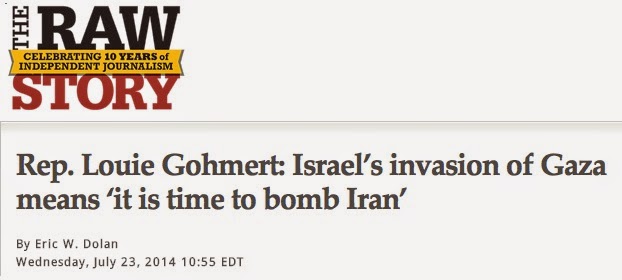
Last month, amid the Israeli bombardment of Gaza, accomplished lunatic Louie Gohmert, a Republican congressman from Texas, took to the House floor and called for Iran to be attacked.
After insisting it is “time to cut off every dime of American money going to anyone who has any kind of relationship with Hamas or those killing in the Middle East, and especially in Israel,” Gohmert added, “It is time to bomb Iran’s nuclear capabilities. It is time for the United States, if we are not going to stop Iran’s nukes, then let Israel do it. A friend will not put another friend in this kind of jeopardy.”
Never mind that Iran has no “nukes” for anyone to “stop,” since it’s not actually making any and never has made or acquired any. Never mind that Iran has been consistently complying with the prescriptions of the multilateral deal agreed to last November by Iran and six world powers. Never mind that a number of recent articles in widely-read media outlets have addressed the myriad falsehoods and myths responsible for the past three decades of fear-mongering and propaganda about Iran’s civilian nuclear program.
Still, the persistent false narrative that military strikes by either the United States or Israel may follow any potential failure to reach a deal continues to be repeated in the press. Of course, the fact that any such attack would be unequivocally illegal under international law is rarely noted in these assessments.
Pronouncements that Iran is close to having a nuclear bomb, or close to being bombed, are ubiquitous in the media. Threats against Iran – by both the United States and Israel – have been made for decades, despite routine Iranian dismissal of such rhetoric as mere bluster.
The frequency of such threats – always reported with fever-pitched alacrity by a dutiful and prostrate press – is alarming.
Not only is an American or Israeli attack on Iran always just around the bend – regardless of the state of diplomacy or intelligence assessments – but the media consistently provides fantasy scenarios by which its audience can imagine, replete with maps and graphics, just how such war crimes would take place.
Over twenty years ago, a report in the Independent (UK) published on June 23, 1994 revealed that the Pentagon had inked a deal to provide Israel with advanced F-15I fighter jets, designed to “enable the Israelis to carry out strikes deep into Iraq and Iran without refuelling.”
Three years later, on December 9, 1997, a The Times of London headline screamed, “Israel steps up plans for air attacks on Iran.” The article, written by Christopher Walker, reported on the myriad “options” Israel had in confronting what it deemed “Iran’s Russian-backed missile and nuclear weapon programme.”
Such reports have been published ever since. Of course, neither the United States nor Israel will attack Iran, regardless of the success or failure of negotiations, but such reports (often the result of strategically timed “leaks” by anonymous government officials) serve to not only intentionally torpedo diplomacy but also mislead the public into believing the absurdly false narrative surrounding the Iranian nuclear program; that is, either Iran must be bombed or it will acquire a nuclear arsenal. This is nonsense.
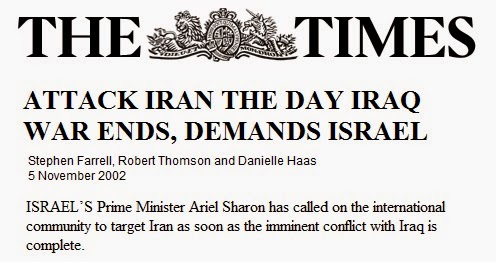
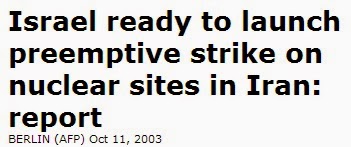
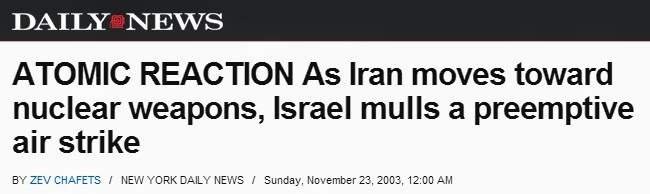
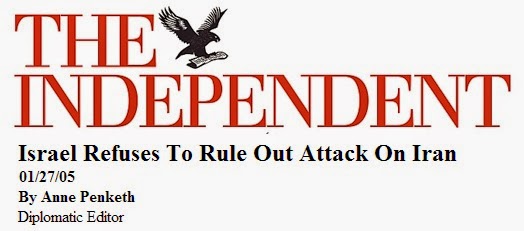
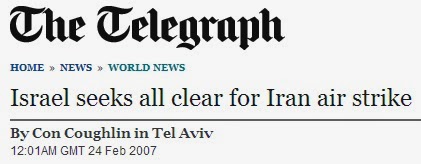
Below are some of the constant headlines we’ve seen over the past dozen years promoting such propaganda. When will this madness – this pathological obsession with the false necessity of dropping bombs and the righteous inevitability of killing people – stop?
The Times of London, November 5, 2002:
AFP, October 11, 2003:
The Scotsman, November 22, 2003:
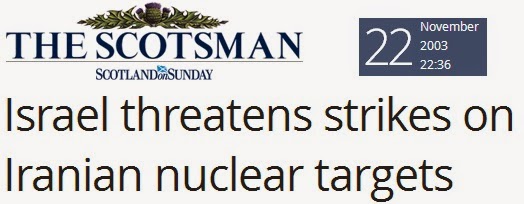
New York Daily News, November 23, 2003:
The New York Times, August 21, 2004:

Los Angeles Times, October 22, 2004:

The Jerusalem Post, January 21, 2005:

The Independent, January 27, 2005:
Toledo Blade, March 14, 2005:

Associated Press, December 4, 2005:

The Straits Times, December 17, 2005:

Associated Press, January 22, 2006:

Fox News, June 4, 2006:

The Telegraph, February 24, 2007:
Associated Press, March 21, 2007:
Newsweek, December 19, 2007:

The Daily Star (Lebanon), May 30, 2008:
USA Today, June 6, 2008:
The Telegraph, June 7, 2008:
The Age, June 9, 2008:
Fox News, June 20, 2008:

The Telegraph, June 23, 2008:
ABC News, July 1, 2008:

Ha’aretz, July 2, 2008:
AFP, July 30, 2008:

Associated Press, August 7, 2008:

CBS News, August 7, 2008:
Wired, April 2, 2009:

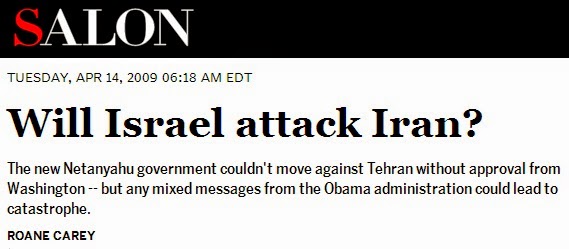
Salon, April 14, 2009:
The Times of London, April 18, 2009:

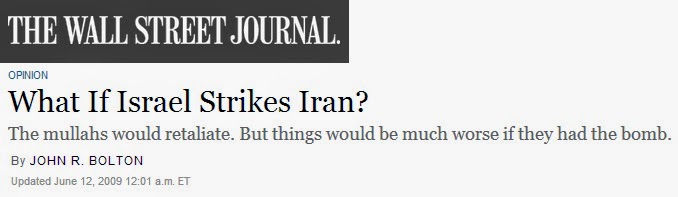
The Wall Street Journal, June 12, 2009:
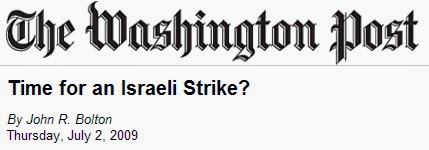
The Washington Post, July 2, 2009:
CBS News, July 27, 2009:

Los Angeles Times, August 30, 2009:

Talking Points Memo, August 31, 2009:

Fox News, September 21, 2009:

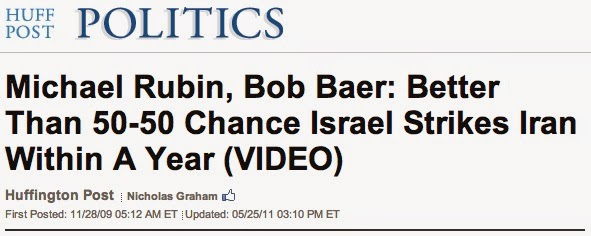
Huffington Post, September 28, 2009:
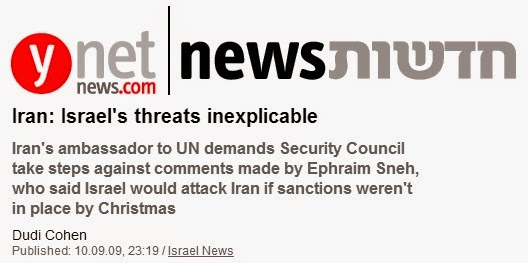
Ynet, October 9, 2009:
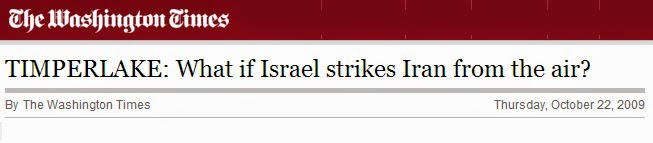
The Washington Times, October 22, 2009:
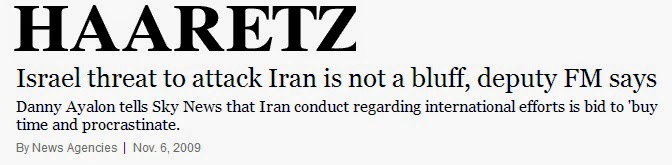
Ha’aretz, November 6, 2009:
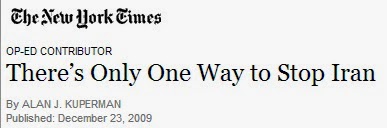
The New York Times, December 23, 2009:
Newsmax, April 2, 2010:
The Wall Street Journal, April 21, 2010:
AFP, June 12, 2010:

TIME, July 15, 2010:

The Weekly Standard, July 26, 2010:
Christian Science Monitor, August 12, 2010:
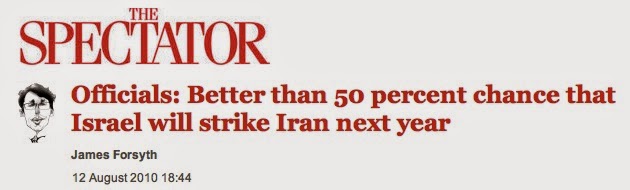
The Spectator (UK), August 12, 2010:
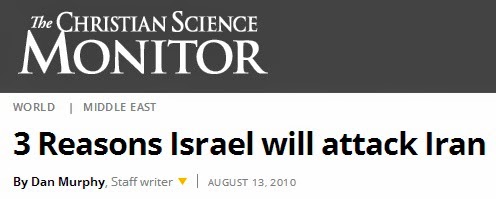
Christian Science Monitor, August 13, 2010:
The Weekly Standard, August 14, 2010:

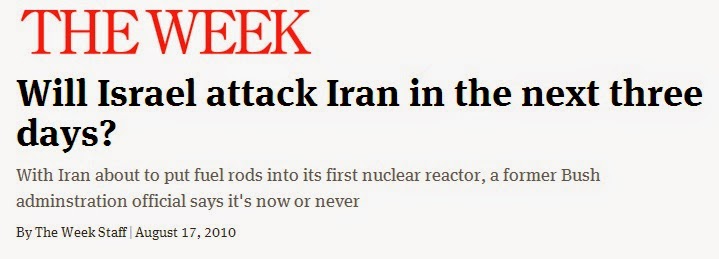
The Week, August 17, 2010:
New York Daily News, August 17, 2010:

The Atlantic, August 18, 2010:

Newsmax, September 2, 2010:

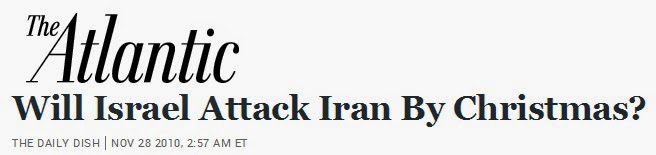
The Atlantic, November 28, 2010:
AFP, November 29, 2010:

The Australian, November 30, 2010:

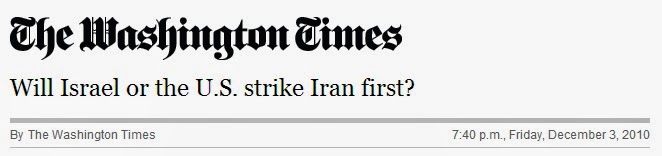
The Washington Times, December 3, 2010:
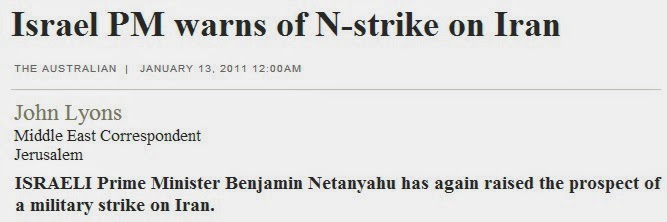
The Australian, January 13, 2011:
Associated Press, May 30, 2011:

Ha’aretz, September 28, 2011:

Associated Press, November 2, 2011:

The Daily Beast, November 2, 2011:

The Guardian, November 2, 2011:

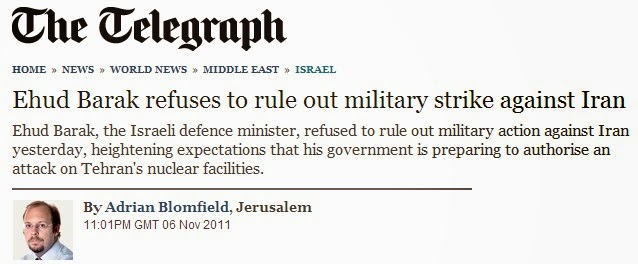
The Telegraph, November 6, 2011:
Reuters, November 9, 2011:

Arutz Sheva, November 10, 2011:

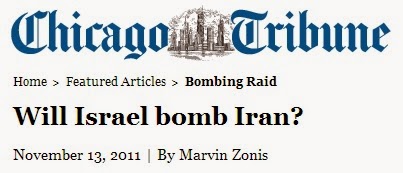
Chicago Tribune, November 13, 2011:
Arutz Sheva, December 1, 2011:
The New York Times, January 25, 2012:
Foreign Affairs, January/February 2012:

The Washington Post, February 2, 2012:

Reuters, February 3, 2012:
Foreign Affairs, February 23, 2012:

Congressional Research Service, March 27, 2012:
CNN, March 30, 2012:
Salon/GlobalPost, May 9, 2012:
The Telegraph, May 17, 2012:
CBN News, May 24, 2012:

The Blaze, July 8, 2012:
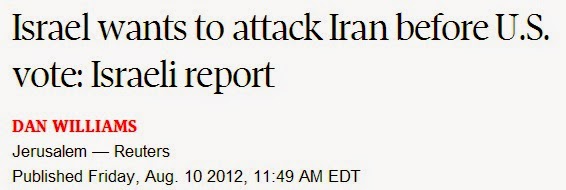
Reuters, August 10, 2012:
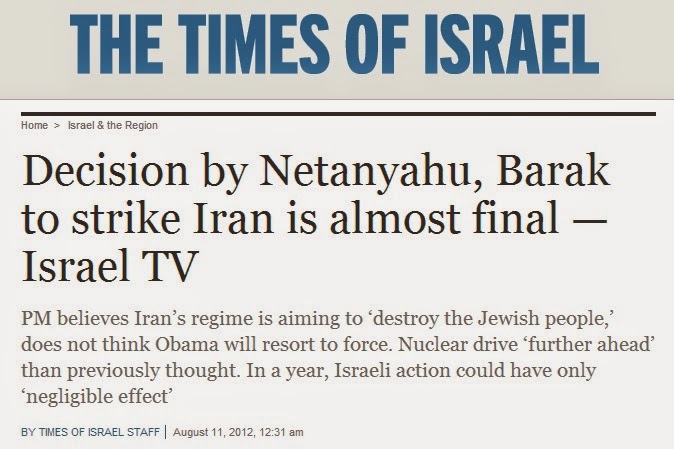
The Times of Israel, August 11, 2012:
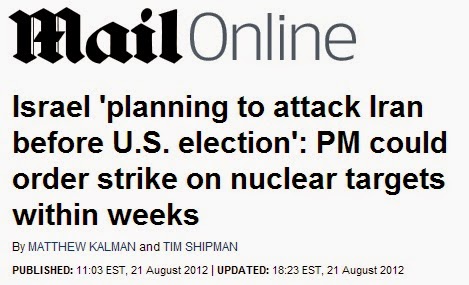
The Daily Mail, August 21, 2012:
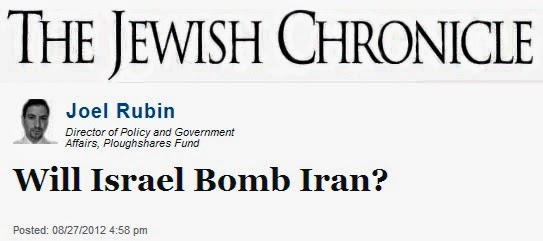
The Jewish Chronicle, August 27, 2012:
Forbes, September 30, 2012:

National Journal, October 9, 2012:
The Telegraph, October 9, 2012:

Voice of America, December 19, 2012:
The New York Times, January 26, 2013:

The Times of Israel, March 14, 2013:

Newsmax, April 13, 2013:
The Wall Street Journal, May 2, 2013:
Ha’aretz, May 3, 2013:
The Times of Israel, May 9, 2013:
Al Jazeera English, July 17, 2013:
The Atlantic, August 1, 2013:
Washington Examiner, September 18, 2013:
Gatestone Institute, October 7, 2013:
Financial Times, November 17, 2013:
CNN, November 19, 2013:
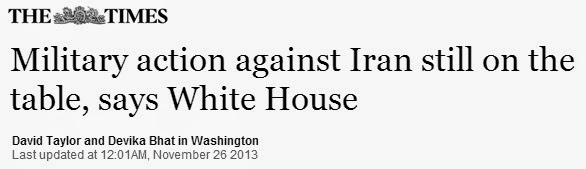
The Times of London, November 26, 2013:
Defense News, December 4, 2013:

CBS News, December 6, 2013:

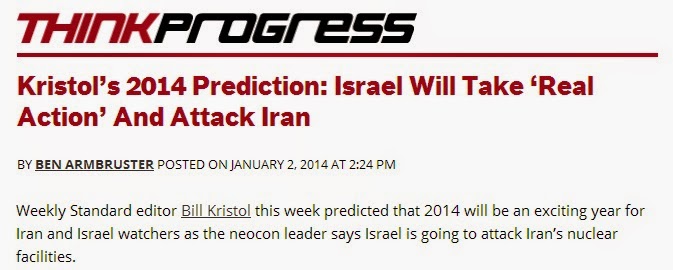
ThinkProgress, January 2, 2014:
Foreign Affairs, January 7, 2014:

Ha’aretz, March 19, 2014:

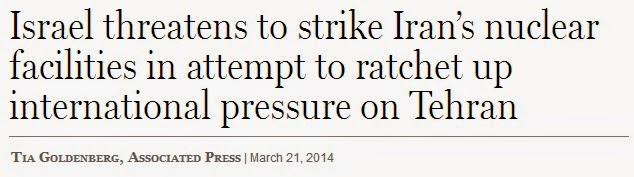
Associated Press, March 21, 2014:
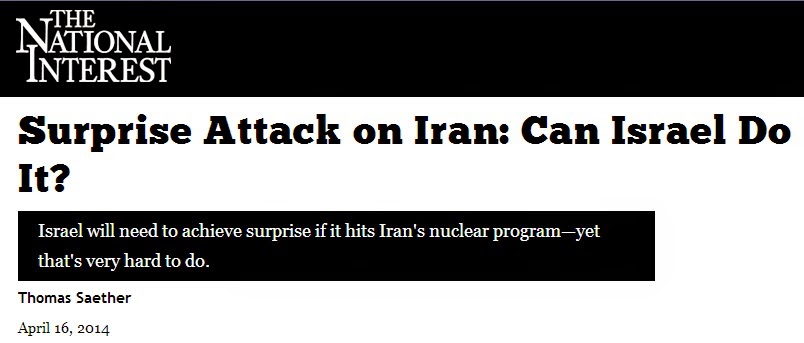
The National Interest, April 16, 2014:
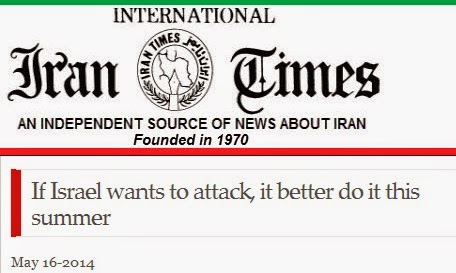
Iran Times, May 16, 2014:
Defense News, June 8, 2014:

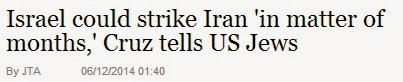
Jewish Telegraph Agency (JTA), June 12, 2014:
The Raw Story, July 23, 2014:
*****
Featured Video

Iran’s Next Strike May Not Explode. It Could Shut You Down
or go to
Aletho News Archives – Video-Images
From the Archive
Zionism’s Violent Legacy
By Donald Neff | Washington Report On Middle East Affairs | January 1996
On January 4, 1948, Jewish terrorists drove a truck loaded with explosives into the center of the all Arab city of Jaffa and detonated it, killing 26 and wounding around 100 Palestinian men, women and children.[1] The attack was the work of the Irgun Zvai Leumi – the “National Military Organization,” also known by the Hebrew letters Etzel – the largest Jewish terrorist group in Palestine. The Irgun was headed by Revisionist Zionist Menachem Begin and had been killing and maiming Arabs, Britons and even Jews for the previous ten years in its efforts to establish a Jewish state.
This terror campaign meant that at the core of Revisionist Zionism there existed a philosophical embrace of violence. … continue
Blog Roll
 Aletho News
- Trump and Netanyahu Want to “Finish the Job” on Iran
- US ‘one-sided dictation’ not Iran’s beliefs makes rational talks impossible: Baghaei
- Iran’s Next Strike May Not Explode. It Could Shut You Down /Col Doug Macgregor
- Iran: US political targets legitimate if assassinations return
- Iraq shuts key border crossing with Iran under US pressure: Report
- Undersea Internet cables could be targeted in retaliation for attacks on Iran: IRGC deputy chief
- EU sending ‘biased’ observers to interfere in Serbian election – president
- White House envoy declares kinetic action against Yemen ‘fruitless’
- Ukraine deployed thousands of microdrones in Iraqi Kurdistan: Tasnim
- Iran calls for emergency UNSC meeting over Trump’s ‘brazen’ bomb talk, Israeli threats
- If Americans Knew
- Americans at National Conservatism Conference held in Israel this year criticize Israel
- Christiane Amanpour exits CNN with a legacy shaped by the debate over Israel
- Israel’s war on Iran is the final move in a decades-old strategy
- Israel Denies Entry to French Journalist, U.S. Researcher Amid Rise in Entry Denials
- Gaza’s hospitals are running out of life-saving fuel – Daily Update
- Mysterious bot accounts reportedly spread fake ‘man on the street’ videos for Michigan Senate candidate
- Israeli Defense Minister Katz Says Over 60 Lebanon Villages Have Been Destroyed
- Why Is Israel Running TV Ads in Iowa Ahead of the Midterms?
- Hind Rajab’s Alleged Killer Is in the United States. HRF Demands His Arrest.
- US Officials Face Fresh Pressure After Another American ‘Brutalized’ by Israeli Settlers in West Bank
- No Tricks Zone
- E-Cars Reduce CO2 Emissions By Only 41% Compared To Internal Combustion Engine Vehicles
- Predictions Made By Renowned Climate Professor Over Past Decades Have Been Proven To Be Poor
- New Study Suggests Large Regions Of The Pacific Ocean Have Been Cooling For The Last 80 Years
- Germany’s Green Energy Debacle: High Energy Costs Force Kahla Porzellan to Close After 182 Years!
- New Study: 50 Years Of The Most Aggressive ‘Net Zero’ Policies Can Only Affect The Global Climate By 0.03°C
- US September “Heat” Was No Record…Many Records Set Decades Ago
- Latest European Green Energy Debacle; Portugal’s Largest Flagship Solar Park Insolvent!
- Green Energy Debacle: German Expert Professor Fritz Vahrenholt Warns Of Severe Economic And Social Consequences
- Two More Paleo Reconstructions Affirm Meters-Higher Sea Levels Across Ireland, Brazil 7000-6000 Years Ago
- New Study: Earth And Venus Surface Warmth Largely Explained By Convection And Lapse Rate, Not CO2 Or Radiation

