Pathetic handwaving double down from the UN
Eric Worrall writes: A number of MSM outlets are carrying news of a “leaked” UN document, which claims that global warming may be causing irreversible damage.
According to the Bloomberg version of the leak story;
“Global warming already is affecting “all continents and across the oceans,” and further pollution from heat-trapping gases will raise the likelihood of “severe, pervasive and irreversible impacts for people and ecosystems,”
The problem with this vapid handwaving nonsense is that it is so vague. I mean, in the good old days, alarmists made interesting predictions;
Snowfalls are now just a thing of the past
Al Gore’s ice free arctic (in 5 years!)
Rain will never fill Australian reservoirs again
The great thing about bold predictions is they are easily falsified – all you have to do is wait a few years, then point and laugh.
The survivors of that golden age of bold stupidity are far too timid – they issue vague predictions of calamity which won’t occur until long after we are all safely dead, and promises that if we wait a few decades we might see something worrying.
I mean, seriously folks, is this the best you can do? Can even the most rabid alarmists get enthused by such a pathetic effort?
August 27, 2014
Posted by aletho |
Deception, Mainstream Media, Warmongering, Science and Pseudo-Science | United Nations |
Leave a comment
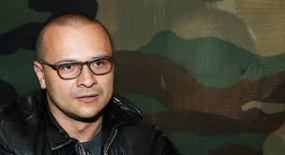 Bogota – The Colombian hacker Andres Sepulveda has revealed his activities and ties at the country’s national intelligence agency (DNI) during its espionage against the government and the FARC-EP guerrillas, currently engaged in peace talks in Havana.
In explosive revelations to Semana magazine, circulating here today, he insisted that the DNI was “like my co-participant and personal assistant. They gave me tools, provided information, suggested lines of attack that we might pursue together, all very much aligned with former president (2002-2010) Alvaro Uribe.”
“Wilson Torres was, for me, the key within the agency,” he said.
Thanks to Torres, for example, Sepulveda gained access to everything, from the database regarding agreed upon weapons caches, to top secret databases regarding enemy forces and the current structure of the FARC (Revolutionary Armed Forces of Colombia – People’s Army, FARC-EP).
“They provided me with information and at the same time, were very interested in receiving information about the agreements being signed and negotiated at the peace talks,” he added.
“They had a pile of drafts they were working on,” he said. The DNI was always looking for a way to get information about the FARC, not as comprehensive as that from the Andromeda base, running from downtown Bogota (where a military intelligence unit was said to be operating undercover).
“In my case,” said Sepulveda, “they were looking for information that might tarnish the FARC and the government.”
According to the hacker, the strategic objective of the espionage against the peace talks is aimed at drastically cutting them short, both militarily as well as in the media. The idea is to push law enforcement against the process, and against the decisions taken by the government, by creating internal rifts, he said.
“I know because I was part of it. They get their instructions from above,” he insisted.
Although his mission was limited to spying on the FARC-EP team at the peace talks, he said he was certain that the government team at the talks had been one hundred percent infiltrated by the Andromeda base.
Sepulveda was hired in January of this year by the former presidential candidate from the Democratic Center party, Oscar Ivan Zuluaga, and the former Colombian ambassador to the OAS (Organization of American States), Luis Alfonso Hoyos.
The hacker’s job was to obtain information about the peace talks, the FARC-EP guerrilla force, along with information about intelligence collected by law enforcement.
Referring to Zuluaga’s presidential campaign team, he said that they hired him because he was an expert in IT security and black ops.
“My real mission,” he added, “was to coordinate attacks against those (like Attorney General Alejandro Ordonez and congressmen like Ivan Cepeda) who did not share Uribe’s ideas.
Zuluaga’s office, located in an upscale neighbourhood on the north side of Bogota, was raided by the attorney general’s office on May 6, resulting in his arrest.
Feeling let down and abandoned to his fate by Uribe, who he supported for ten years, Sepulveda decided to reveal everything he knew, backed up by overwhelming concrete proof.
“I have it all,” he said, “documents, technical manuals, registers, phone calls, documentation, reports, videos, audio everything.”
According to Semana magazine, for having collaborated with authorities and then revealing what he saw, Sepulveda has become one of the most threatened men in Colombia.
To date, four planned execution attempts against him have been uncovered, forcing him to give his press conferences in the company of a full security team from the Attorney General’s office.
In his cell, he sleeps in a bulletproof vest, and at times even a bulletproof blanket, reported the magazine.
August 25, 2014
Posted by aletho |
Deception, Mainstream Media, Warmongering | Alvaro Uribe, Colombia, DNI |
Leave a comment
On Saturday, the entire humanitarian convoy of 227 trucks crossed back into Russia without incident after having successfully delivered its contents to the Luhansk distribution center. The unwavering round trip project from Russia surmounted considerable bureaucratic delays and political obstacles including wild assertions that the convoy’s true purpose was to ‘smuggle weapons’ to the east Ukraine rebels.
Amidst a multitude of frenzied claims from the Kiev government and its western allies that the convoy was intent on fomenting violence and escalating the conflict as it constituted an ‘illegal incursion” and ‘violated the sovereignty of Ukraine,” the trucks peacefully avoided any confrontation with Ukraine military forces by taking advantage of back roads.
Given the very urgent need to provide immediate medical relief and other life necessities to Ukraine citizens, what has been especially noteworthy during the ten day period in which the Russian convoy was stalled at the border is the extent to which the Kiev government and its EU/US/NATO partners would go to impede a convoy carrying humanitarian supplies. […]
Perhaps the most egregious, the most obviously inexcusable misrepresentation of the facts, however, came from a conveniently-timed front page New York Times article entitled “Russians Open Fire in Ukraine NATO Reports.” whose job it is to be factually accurate and objectively represent all points of view.
With an irresponsible pen more committed to reiterating the Obama Administration’s public relations campaign than journalism, the New York Times again failed in its role as guardian of the truth allowing inaccurate exaggerations and entirely false anecdotes to masquerade as news.
While relying on the usual unnamed, unspecified vague “intelligence reports from several alliance members,” the Times categorically stated that “Russia … escalated tensions with Ukraine…, sending more than 200 trucks from a long-stalled aid convoy and, NATO said, conducting military operations on Ukrainian territory.”
Curiously, the Times article is a somewhat odd, overlapping mixture of reference to the humanitarian convoy interwoven in a story about an alleged Russian military incursion as if the existence of the convoy somehow confirms that a military intrusion has occurred while strangely suggesting that “200 trucks” had something to do with ‘conducting military operations’.
According to the Times “NATO officials said that the Russian military had moved artillery units inside Ukrainian territory in recent days and was using them to fire at Ukrainian forces” and yet the Times reporters did not cite any of NATO’s proof that such artillery movement had occurred or how NATO could confirm that the artillery was firing at Ukrainian forces. In other words, NATO could say that the Moon is made of blue cheese and the Times would run the news in their Food section.
The basis for the assertions were a series of quotes from their favorite prattler NATO Secretary General Rasmussen who insisted (despite a total lack of verification) that “There has been “a major escalation in Russian military involvement in eastern Ukraine since mid-August, including the use of Russian forces” and “Russian artillery support — both cross-border and from within Ukraine — being employed against the Ukrainian armed forces.” Again, the amazingly-incurious Times reporters dutifully wrote whatever they were told with no independent confirmation or analysis.
So as the Times not only included unsubstantiated, circumstantial quotes as fact but Mr. Rasmussen’s acknowledgment that he “did not say how many Russian artillery pieces had moved into Ukraine or where they were located, but one [unidentified] Western official said the number of Russian-operated artillery units was “substantial.”
Until finally, buried at the end of the lengthy article “There were no signs of Russian military vehicles or any other indications of an armed escort by Russian troops.”
Full article
August 25, 2014
Posted by aletho |
Deception, Mainstream Media, Warmongering | European Union, NATO, New York Times, Russia, Ukraine, United States |
Leave a comment
BETHLEHEM – The UN’s Palestine refugee agency UNRWA on Saturday criticized the Israeli military for publishing allegations — that have since been retracted — that Hamas militants fired a rocket from one of their schools in Gaza the day before.
In a statement, the organization called upon “Israeli military spokespersons and other official sources to ensure the accuracy of their facts before going public,” highlighting that the organization maintained the “highest standards of neutrality.”
The Israeli military said in a statement late Friday that a mortar that killed a four-year-old child in southern Israel was launched from an UNRWA school being used to shelter displaced Gazan families.
It added that it had “conveyed a severe message” to UNRWA and the Palestinian Authority regarding Hamas’ supposed “exploitation of civilian and UN facilities as a human shield.”
Less than two hours later, however, the military retracted the claim, saying that in fact the mortar had been launched from a school under the administration of Hamas authorities, without offering evidence.
The UNRWA statement criticized the “false” reports spread throughout the Israeli media, adding: “The same media outlets that rushed to report the incident without seeking confirmation from UNRWA are required and called upon to also report the Israeli army retraction.”
Israeli forces have bombed UNRWA schools being used as shelters at least seven times in the last six weeks, killing dozens of Palestinians.
The international community has blasted Israel for the attacks, and the agency has repeatedly stressed that it has given the coordinates of all of its shelters — currently holding around 485,000 displaced people — to Israeli military authorities.
Israel regularly criticizes Hamas for using Palestinians as “human shields” when launching rockets, and Israel has killed hundreds of civilians in attacks targeting Hamas officials or fighters.
August 23, 2014
Posted by aletho |
Deception, Ethnic Cleansing, Racism, Zionism, Mainstream Media, Warmongering | Gaza, Israel, Palestine, UNRWA, Zionism |
Leave a comment
A long list of prominent individuals has signed, a number of organizations will be promoting next week, and you can be one of the first to sign right now, a petition titled “Call For Independent Inquiry of the Airplane Crash in Ukraine and its Catastrophic Aftermath.”
The petition is directed to “All the heads of states of NATO countries, and of Russia and the Ukraine, to Ban-ki Moon and the heads of states of countries on the UN Security Council.” And it will be delivered to each of them.
The petition reads:
“Set up an impartial international fact finding inquiry and a public report on the events in Ukraine to reveal the truth of what occurred.
“Why is this important?
“It’s important because there is so much misinformation and disinformation in the media that we are careening towards a new cold war with Russia over this.”
That’s not hyperbole. It’s the language of U.S. and Russian politicians and media.
Of course, there are undisputed facts that could change people’s understanding. Many Americans are unaware of NATO’s expansion or of what actions Russia views as aggressive and threatening. But when a particular incident appears to be set up as a proximate cause for war it is well worth our time to insist on an exposure of the facts. Doing so is not to concede that any outcome of the inquiry would justify a war. Rather it is to prevent the imposition of an unproven explanation that makes war more likely.
What if the Gulf of Tonkin had been investigated 50 years ago this month? What if the independent inquiry that Spain wanted into the USS Maine had been allowed? What if Congress hadn’t swallowed the one about the babies taken from incubators or that hilarious bit about the vast stockpiles of WMDs? Or, on the other hand, what if everyone had listened to John Kerry unskeptically on Syria last year?
When a Malaysian airplane went down in Ukraine, Kerry immediately blamed Vladimir Putin, but has yet to produce any evidence to back up the accusation. Meanwhile, we learn that the U.S. government is looking into the possibility that what happened was actually an attempt to assassinate Putin. Those two versions, the one initially announced with no apparent basis and the one reportedly now being investigated in secret, could hardly be more different. That the second one is under consideration makes it appear very likely that any serious proof of the former claim has not been found.
Here’s a longer version of the petition:
“At this very moment in history, when so many people and nations around the world are acknowledging the 100th Anniversary of our planet’s hapless stumble into World War I, great powers and their allies are ironically once again provoking new dangers where governments appear to be sleepwalking towards a restoration of old Cold War battles. A barrage of conflicting information is broadcast in the various national and nationalistic media with alternative versions of reality that provoke and stoke new enmities and rivalries across national borders.
“With the U.S. and Russia in possession of over 15,000 of the world’s 16,400 nuclear weapons, humanity can ill-afford to stand by and permit these conflicting views of history and opposing assessments of the facts on the ground to lead to a 21st Century military confrontation between the great powers and their allies. While sadly acknowledging the trauma suffered by the countries of Eastern Europe from years of Soviet occupation, and understanding their desire for the protection of the NATO military alliance, we the signers of this global call to action also note that the Russian people lost 20 million people during WWII to the Nazi onslaught and are understandably wary of NATO expansion to their borders in a hostile environment. Russia has lost the protection of the 1972 Anti-Ballistic Missile Treaty, which the US abandoned in 2001, and warily observes missile bases metastasizing ever closer to its borders in new NATO member states, while the US rejects repeated Russian efforts for negotiations on a treaty to ban weapons in space, or Russia’s prior application for membership in NATO.
“For these reasons, we the peoples, as members of Civil Society, Non-Governmental Organizations, and global citizens, committed to peace and nuclear disarmament, demand that an independent international inquiry be commissioned to review events in Ukraine leading up to the Malaysian jet crash and of the procedures being used to review the catastrophic aftermath. The inquiry should factually determine the cause of the accident and hold responsible parties accountable to the families of the victims and the citizens of the world who fervently desire peace and a peaceful settlement of any existing conflicts. It should include a fair and balanced presentation of what led to the deterioration of U.S. –Russian relations and the new hostile and polarized posture that the U.S. and Russia with their allies find themselves in today.
“The UN Security Council, with US and Russian agreement, has already passed Resolution 2166 addressing the Malaysian jet crash, demanding accountability, full access to the site and a halt to military activity which has been painfully disregarded at various times since the incident. One of the provisions of SC Res 2166 notes that the Council “[s]upports efforts to establish a full, thorough and independent international investigation into the incident in accordance with international civil aviation guidelines.” Further, the 1909 revised Convention on the Pacific Settlement of International Disputes adopted at the 1899 Hague International Peace Conference has been used successfully to resolve issues between states so that war was avoided in the past. Both Russia and Ukraine are parties to the Convention.
“Regardless of the forum where the evidence is gathered and fairly evaluated, we the undersigned urge that the facts be known as to how we got to this unfortunate state of affairs on our planet today and what might be the solutions. We urge Russia and Ukraine as well as their allies and partners to engage in diplomacy and negotiations, not war and hostile alienating actions. The world can little afford the trillions of dollars in military spending and trillions and trillions of brain cells wasted on war when our very Earth is under stress and needs the critical attention of our best minds and thinking and the abundance of resources mindlessly diverted to war to be made available for the challenge confronting us to create a livable future for life on earth.”
Here are initial signatories (organizations for identification only): (Add your name.)
August 22, 2014
Posted by aletho |
Deception, False Flag Terrorism, Mainstream Media, Warmongering, Solidarity and Activism | NATO, Russia, Ukraine, United States |
Leave a comment
There have been at least two countries in Europe in recent history that undertook ‘anti-terrorist’ military operations against ‘separatists’, but got two very different reactions from the Western elite.
The government of European country A launches what it calls an ‘anti-terrorist’ military operation against ‘separatists’ in one part of the country. We see pictures on Western television of people’s homes being shelled and lots of people fleeing. The US and UK and other NATO powers fiercely condemn the actions of the government of country A and accuse it of carrying out ‘genocide’ and ’ethnic cleansing’ and say that there is an urgent ‘humanitarian crisis.’ Western politicians and establishment journalists tell us that ‘something must be done.’ And something is done: NATO launches a ‘humanitarian’ military intervention to stop the government of country A. Country A is bombed for 78 days and nights. The country’s leader (who is labeled ‘The New Hitler’) is indicted for war crimes – and is later arrested and sent in an RAF plane to stand trial for war crimes at The Hague, where he dies, un-convicted, in his prison cell.
The government of European country B launches what it calls an ‘anti-terrorist’ military operation against ‘separatists’ in one part of the country. Western television doesn’t show pictures or at least not many) of people’s homes being shelled and people fleeing, although other television stations do. But here the US, UK and other NATO powers do not condemn the government, or accuse it of committing ‘genocide’ or ‘ethnic cleansing.’ Western politicians and establishment journalists do not tell us that ‘something must be done’ to stop the government of country B killing people. On the contrary, the same powers who supported action against country A, support the military offensive of the government in country B. The leader of country B is not indicted for war crimes, nor is he labeled ‘The New Hitler’ despite the support the government has got from far-right, extreme nationalist groups, but in fact, receives generous amounts of aid.
Anyone defending the policies of the government in country A, or in any way challenging the dominant narrative in the West is labeled a “genocide denier” or an “apologist for mass murder.” But no such opprobrium awaits those defending the military offensive of the government in country B. It’s those who oppose its policies who are smeared.
What makes the double standards even worse, is that by any objective assessment, the behavior of the government in country B, has been far worse than that of country A and that more human suffering has been caused by their aggressive actions.
In case you haven’t guessed it yet – country A is Yugoslavia, country B is Ukraine.
Yugoslavia, a different case
In 1998/9 Yugoslavian authorities were faced with a campaign of violence against Yugoslav state officials by the pro-separatist and Western-backed Kosovan Liberation Army (KLA). The Yugoslav government responded by trying to defeat the KLA militarily, but their claims to be fighting against ’terrorism’ were haughtily dismissed by Western leaders. As the British Defence Secretary George Robertson and Foreign Secretary Robin Cook acknowledged in the period from 1998 to January 1999, the KLA had been responsible for more deaths in Kosovo than the Yugoslav authorities had been.
In the lead-up to the NATO action and during it, lurid claims were made about the numbers of people who had been killed or ‘disappeared’ by the Yugoslav forces. “Hysterical NATO and KLA estimates of the missing and presumably slaughtered Kosovan Albanians at times ran upwards of one hundred thousand, reaching 500, 000 in one State Department release. German officials leaked ‘intelligence’ about an alleged Serb plan called Operation Horseshoe to depopulate the province of its ethnic Albanians, and to resettle it with Serbs, which turned out to be an intelligence fabrication,” Edward Herman and David Peterson noted in their book The Politics of Genocide.
“We must act to save thousands of innocent men, women and children from humanitarian catastrophe – from death, barbarism and ethnic cleansing from a brutal dictatorship,” a solemn-faced Prime Minister Tony Blair told the British Parliament – just four years before an equally sombre Tony Blair told the British Parliament that we must act over the ‘threat’ posed by Saddam Hussein’s WMDs.
Taking their cue from Tony Blair and Co., the media played their part in hyping up what was going on in Kosovo. Herman and Peterson found that newspapers used the word ‘genocide’ to describe Yugoslav actions in Kosovo 323 times compared to just 13 times for the invasion/occupation of Iraq despite the death toll in the latter surpassing that of Kosovo by 250 times.
In the same way we were expected to forget about the claims from Western politicians and their media marionettes about Iraq possessing WMDs in the lead-up to the 2003 invasion, we are now expected to forget about the outlandish claims made about Kosovo in 1999.
But as the award winning investigative journalist and broadcaster John Pilger wrote in his article Reminders of Kosovo in 2004, “Lies as great as those told by Bush and Blair were deployed by Clinton and Blair in grooming of public opinion for an illegal, unprovoked attack on a European country.”
The overall death toll of the Kosovo conflict is thought to be between 3,000 and 4,000, but that figure includes Yugoslav army casualties, and Serbs and Roma and Kosovan Albanians killed by the KLA. In 2013, the International Committee of the Red Cross listed the names of 1,754 people from all communities in Kosovo who were reported missing by their families.
The number of people killed by Yugoslav military at the time NATO launched its ‘humanitarian’ bombing campaign, which itself killed between 400-600 people, is thought to be around 500, a tragic death toll but hardly “genocide.”
“Like Iraq’s fabled weapons of mass destruction, the figures used by the US and British governments and echoed by journalists were inventions- along with Serbian ‘rape camps’ and Clinton and Blair’s claims that NATO never deliberately bombed civilians,” says Pilger.
No matter what happens in Ukraine…
In Ukraine by contrast, the number of people killed by government forces and those supporting them has been deliberately played down, despite UN figures highlighting the terrible human cost of the Ukrainian government’s ‘anti-terrorist’ operation.
Last week, the UN’s Human Rights Office said that the death toll in the conflict in eastern Ukraine had doubled in the previous fortnight. Saying that they were “very conservative estimates,” the UN stated that 2,086 people (from all sides) had been killed and 5,000 injured. Regarding refugees, the UN says that around 1,000 people have been leaving the combat zone every day and that over 100,000 people have fled the region. Yet despite these very high figures, there have been no calls from leading Western politicians for ‘urgent action’ to stop the Ukrainian government’s military offensive. Articles from faux-left ‘humanitarian interventionists’ saying that ‘something must be done’ to end what is a clearly a genuine humanitarian crisis, have been noticeable by their absence.
There is, it seems, no “responsibility to protect” civilians being killed by government forces in the east of Ukraine, as there was in Kosovo, even though the situation in Ukraine, from a humanitarian angle, is worse than that in Kosovo in March 1999.
To add insult to injury, efforts have been made to prevent a Russian humanitarian aid convoy from entering Ukraine.
The convoy we are told is ‘controversial’ and could be part of a sinister plot by Russia to invade. This from the same people who supported a NATO bombing campaign on a sovereign state for “humanitarian” reasons fifteen years ago!
For these Western ‘humanitarians’ who cheer on the actions of the Ukrainian government, the citizens of eastern Ukraine are “non-people”: not only are they unworthy of our support or compassion, or indeed aid convoys, they are also blamed for their own predicament.
There are, of course, other conflicts which also highlight Western double standards towards ‘humanitarian intervention’. Israeli forces have killed over 2,000 Palestinians in their latest ruthless ‘anti-terrorist’ operation in Gaza, which is far more people than Yugoslav forces had killed in Kosovo by the time of the 1999 NATO ‘intervention’. But there are no calls at this time for a NATO bombing campaign against Israel.
In fact, neocons and faux-left Zionists who have defended and supported Israel’s “anti-terrorist” Operation Protective Edge, and Operation Cast Lead before it, were among the most enthusiastic supporters of the NATO bombing of Yugoslavia. Israel it seems is allowed to kill large numbers of people, including women and children, in its “anti-terrorist” campaigns, but Yugoslavia had no such “right” to fight an “anti-terrorist” campaign on its own soil.
In 2011, NATO went to war against Libya to prevent a “hypothetical” massacre in Benghazi, and to stop Gaddafi ‘killing his own people’; in 2014 Ukrainian government forces are killing their own people in large numbers, and there have been actual massacres like the appalling Odessa arson attack carried out by pro-government ‘radicals’, but the West hasn’t launched bombing raids on Kiev in response.
The very different approaches from the Western elite to ‘anti-terrorist’ operations in Kosovo and Ukraine (and indeed elsewhere) shows us that what matters most is not the numbers killed, or the amount of human suffering involved, but whether or not the government in question helps or hinders Western economic and military hegemonic aspirations.
In the eyes of the rapacious Western elites, the great ‘crime’ of the Yugoslav government in 1999 was that it was still operating, ten years after the fall of the Berlin Wall, an unreconstructed socialist economy, with very high levels of social ownership – as I highlighted here.
Yugoslavia under Milosevic was a country which maintained its financial and military independence. It had no wishes to join the EU or NATO, or surrender its sovereignty to anyone. For that refusal to play by the rules of the globalists and to show deference to the powerful Western financial elites, the country (and its leader) had to be destroyed. In the words of George Kenney, former Yugoslavia desk officer at the US State Department: “In post-cold war Europe no place remained for a large, independent-minded socialist state that resisted globalization.”
By contrast, the government of Ukraine, has been put in power by the West precisely in order to further its economic and military hegemonic aspirations. Poroshenko, unlike the much- demonized Milosevic, is an oligarch acting in the interests of Wall Street, the big banks and the Western military-industrial complex. He’s there to tie up Ukraine to IMF austerity programs, to hand over his country to Western capital and to lock Ukraine into ‘Euro-Atlantic’ structures- in other words to transform it into an EU/IMF/NATO colony- right on Russia’s doorstep.
This explains why an ‘anti-terrorist’ campaign waged by the Yugoslav government against ‘separatists’ in 1999 is ‘rewarded’ with fierce condemnation, a 78-day bombing campaign, and the indictment of its leader for war crimes, while a government waging an ‘anti-terrorist’ campaign against ‘separatists’ in Ukraine in 2014, is given carte blanche to carry on killing. In the end, it’s not about how many innocent people you kill, or how reprehensible your actions are, but about whose interests you serve.
August 21, 2014
Posted by aletho |
Deception, Mainstream Media, Warmongering, Militarism | Kosovo, NATO, Tony Blair, Ukraine, Yugoslavia |
Leave a comment
I’ve just had the pleasure of spending eight hours in detention at the border between Egypt and Israel, between Tabaa and Israel’s southern-most city, Eilat. My crime at first appeared to be a single male travelling alone into a Middle Eastern country. But once the immigration police realised I was a journalist, I was in for the long haul.
At first – I was asked the standard cavalcade – where was I staying, who with, and what were my plans? But on discovering my profession, brows furrowed faster than a Horah dance at a bar mitzvah.
My stay in a holding area, punctuated by increasingly aggressive interrogations, peaked when the most senior official asked me to write down the names and addresses of all my sources in Israel and Palestine.
Of course they wanted sources in “the Palestinian Territories,” and in a Freudian slip, I blurted out that I certainly wouldn’t be revealing any sources in the “Occupied Territories”. After a brief staring match, the official kept tapping away into her computer.
I didn’t give them the information they were after, not wanting to endanger anyone – which resulted in a further four hour wait, during which not much appeared to be happening. They let me go in time for me to miss my best friend’s engagement party, where I was stopping by before heading up to Ramallah. They knew I was in a rush to make this, and they knew I was best man. I’ll never know if they let me go when they did out of spite, but I suspect they did. Bullies enjoy a pathetic victory.
Thomas Jefferson was unequivocal in his support for the media, summarising that “the basis of our government being the opinion of the people, the very first object should be to keep that right; and were it left to me to decide whether we should have a government without newspapers, or newspapers without a government, I should not hesitate a moment to prefer the latter.”
Nelson Mandela, no friend to Israel but a hero to civilised nations – described freedom of information as “the lifeblood of democracy”. Curbing journalistic freedoms is not only a red rag to the bull – it’s arrogant and betrays the electorate. Too often we think of democracy as happening at the ballot box – but it is the media that informs the voter before they reach the polling station and in harassing, imprisoning and even killing journalists, Israel makes a mockery of their insistent claim to be “the only democracy in the Middle East”.
What I experienced was a mere bump in the road compared to other journalists’ troubles. Majd Kayyal, a Palestinian journalist, was arrested in April 2014 on his return from Beirut – allegedly for entering an “enemy state” and conspiring with a “foreign agent”. He was held in a windowless room for five days, interrogated by Shin Bet, and denied access to a lawyer. The government prohibited Israeli media outlets from reporting on the matter in real time – a ban which was luckily ignored by many editors. The charges were later dropped – however veteran Israeli journalist Itai Anghel noted that having travelled to several “enemy states”, including Iraq and Afghanistan – he had not once been stopped or detained by the Israeli security services.
But again, what happened to Kayyal is, sadly, mild. Seventy-one journalists were killed in Israel last year. Over 2,000 reported being physically attacked or threatened. Eighty-seven were kidnapped. Over 800 were arrested. Seventy seven had had enough and fled the country and, as of December 2013, there were 178 journalists in Israeli prisons. This doesn’t sound like a free press.
At the end of last year – diplomats, politicians, activists and NGOs concluded that the Palestinian territories were one of the worst places in the world to practice journalism. Not only is violence regularly deployed to repress domestic and foreign reporters, censorship laws are used to deny useful debate and manipulate opinion – often in favour of war.
For example, on July 24 the Israeli Broadcasting Authority prohibited the broadcast of an advert produced by B’Tselem, an Israeli NGO, which listed the names of 150 children killed in Gaza. Likewise, the killings of three Israeli teenagers took place almost immediately after their kidnapping, shortly before Operation Protective Edge began, yet a gagging order on the media prevented publishing the key facts.
Instead, Prime Minister Benjamin Netanyahu orchestrated a phoney manhunt for three weeks in which pro-war fervour was whipped up. He even lied to the children’s parents.
Now, talking to Israelis across the country, it is clear that support for the most recent Gaza onslaught is near unprecedented – based on the distorted image of the events leading up to the war. The range of opinions I heard was extremely narrow, with narratives drawing clearly on simplistic hasbara distributed by the government. To take a country to war, you need the media with you. Netanyahu has become an expert on this.
Similar censorship laws were invoked when Lt Hadar Goldin was apparently briefly captured by Hamas during the most recent conflict, and Israeli artillery shelled his location in an effort to kill him. This infamous “Hannibal Doctrine”, which dictates Israeli soldiers should be killed by friendly fire rather than become prisoners, was considered so unpalatable to the national spirit – that reporting on it was completely banned. In an extraordinary display of arrogance, Israeli military censors even attempted to stop The New York Times from publishing further information on the case.
So far, only Haaretz has run a piece seriously questioning the doctrine. Thankfully, the newspaper ended a 10 year reporting ban of the Doctrine in 2003, when they completed an investigation into the matter. Still, knowledge of the Doctrine was not as apparent as you would hope for from the ordinary Israelis I spoke to this week.
Though part of the Israeli public’s thirst for war can be attributed to a lack of media information, many Israelis are wilfully blind to the misgivings of the Israeli Defence [sic] Force (IDF). In a survey last year, Tel Aviv University found that just over half of Israelis believe that the media should not publish immoral conduct by the IDF. This has created an environment in which self-censorship is the norm. Recent civilian casualties in Gaza, despite numbering over 2,000 have barely been reported. The morning after the offensive began, Israel’s most widely circulated newspaper, Yisrael Hayom, did not contain a single word regarding civilian casualties. Instead, editors splashed an enormous explosion in Gaza City, and an emotive photo of an IDF conscript hugging his girlfriend goodbye. Yisrael Hayom’s slogan is sickeningly unquestioning for a major media outlet: “Remember, we are Israelis.”
The complicity of the Israeli media – largely a phoney industry with a sense of social responsibility akin to Blackwater or G4S, fills responsible hacks with professional disgust. One in 10 members of the Knesset is a former journalist. The leader of the country’s second most popular party is Yair Lapid and the leader of the Labour Party is Shelly Yachimovich, both came from Channel 2, Israel’s largest TV station. Of course many highly capable leaders have come from journalistic backgrounds, but the mass migration to the other side of the fence suggests the industry has a fundamental misunderstanding of what journalism is about: holding power to account.
Moreover – the continuing brutality of the Israeli regime against Palestinian and foreign journalists is profoundly troubling. I was lucky – my punishment was eight hours in detention and an unplanned overnight stay in Eilat (incidentally – a depressing sinkhole of tourist tack thronging with recently released IDF conscripts, celebrating their mass slaughter in Gaza).
But for many journalists, the price they pay for reporting on Israel’s crimes is beating, arrest, imprisonment, kidnapping or death. For Israel to be anything more than a plastic democracy its leaders need to rethink press freedoms. And if Israelis want to understand why the world is constantly so critical of them, they need to understand that they live in a media bubble in which only a certain reality about the Occupied Territories is presented. The full picture might not be nice, but is extremely important.
August 18, 2014
Posted by aletho |
Civil Liberties, Deception, Ethnic Cleansing, Racism, Zionism, Full Spectrum Dominance, Mainstream Media, Warmongering | Gaza, Human rights, Israel, Israeli Broadcasting Authority, Palestine, West Bank, Zionism |
Leave a comment
Moscow believes the West has more influence on various paramilitary forces in Ukraine – sponsored by local oligarchs – than Kiev does, Russian FM Lavrov said citing the latest bickering between Right Sector and the Interior Ministry.
“The authorities in Kiev are not in control of the numerous paramilitary forces, including Right Sector, which, we estimate, comprises a large portion of the National Guard. The demarche of Right Sector towards the Ukrainian Interior Minister speaks for itself,” Sergey Lavrov said, adding that existence of armed groups sponsored by Ukrainian oligarchs, such as the Azov and Dnepr battalions, poses a great security threat.
“We work with our Western partners in Europe and the United States who can really influence those paramilitary units that don’t answer to the central government in Kiev. We know the West has such influence,” he added.
Lavrov was referring to the weekend ultimatum of the far-right group, which threatened to pull out its troops from eastern Ukraine and march on Kiev unless President Petro Poroshenko fires several police officials, including a deputy interior minister. The group later reduced its demands, saying that the release of its activists previously arrested by the police was sufficient.
The comments from the top Russian diplomat came as he reported on the progress achieved during the Sunday meeting with his counterparts from Ukraine, Germany and France. The roundtable produced no concrete agreements, but the parties involved said some progress was made on the issues of humanitarian aid and border control.
Speaking to journalists on Monday, Lavrov said Moscow would welcome the observer mission of the Organization for Security and Cooperation in Europe (OSCE) deploying drones to control the Russian-Ukrainian border from the Ukrainian side.
Lavrov said Russia is working with the OSCE on giving more transparency in the border region, which is important, considering how often Kiev voices false reports on alleged violation of the border from the Russian side. He cited the latest claim by Kiev on Friday, when the Ukrainian military said it had destroyed a column of Russian armor after an incursion into Ukraine.
“What really happened was a Ukrainian column moved in the Lugansk Region, obviously to intercept the route of a potential humanitarian aid delivery. That column was destroyed by the militia,” he said. “If such episodes are presented as glorious successes of the Ukrainian army, then please don’t accuse us of anything.”
Russia has sent a convoy of humanitarian aid meant for war-torn eastern Ukraine. The trucks have not been allowed entry by the Ukrainian side, which voiced suspicions about the nature of the cargo and demanded that the delivery be conducted by the International Committee of the Red Cross.
Lavrov noted that the media hype over the mission, which was apparent in the West in its early days, evaporated as soon as it became clear that the column actually carries humanitarian aid and is not some kind of a trick used by Russia to invade Ukraine, as Kiev initially claimed.
The minister also criticized Kiev’s request for NATO’s aid against the militia in eastern Ukraine, saying that it “goes against all the agreements we had reached on stopping the hostilities and initiating negotiations.”
“As long as the authorities in Kiev bet on the use of force and consider a military victory over their own people a necessary condition for keeping themselves in power, I don’t think any good will come from what we are trying to achieve,” he said.
August 18, 2014
Posted by aletho |
Deception, Mainstream Media, Warmongering, Militarism | European Union, Lavrov, Military, Russia, Ukraine |
Leave a comment
The Western media have proved for all to see that the Western media comprises either a collection of ignorant and incompetent fools or a brothel that sells war for money.
The Western media fell in step with Washington and blamed the downed Malaysian airliner on Russia. No evidence was provided. In its place the media used constant repetition. Washington withheld the evidence that proved that Kiev was responsible. The media’s purpose was not to tell the truth, but to demonize Russia.
Now we have the media story of the armored Russian column that allegedly crossed into Ukraine and was destroyed by Ukraine’s rag-tag forces that ISIS would eliminate in a few minutes. British reporters fabricated this story or were handed it by a CIA operative working to build a war narrative. The disreputable BBC hyped the story without investigating.
The German media, including Die Welt, blared the story throughout Germany without concern at the absence of any evidence. Reuters news agency, also with no investigation, spread the story. Readers tell me that CNN has been broadcasting the fake story 24/7. Although I cannot stand to watch it, I suspect Fox “news” has also been riding this lame horse hard. Readers tell me that my former newspaper, The Wall Street Journal, which has fallen so low as to be unreadable, also spread the false story. I hope they are wrong. One hates to see the complete despoliation of one’s former habitat.
The media story is preposterous for a number of reasons that should be obvious to a normal person.
The first reason is that the Russian government has made it completely clear that its purpose is to de-escalate the situation. When other former Russian territories that are part of present day Ukraine followed Crimea, voted their independence and requested reunification with Russia, President Putin refused.
To underline his de-escalation, President Putin asked the Russian Duma to rescind his authority to intervene militarily in Ukraine in behalf of the former Russian provinces. As the Russian government, unlike Washington or EU governments, stresses legality and the rule of law, Russian military forces would not be sent into Ukraine prior to the Duma renewing Putin’s authority so to do.
The second reason the story is obviously false is that if the Russian government decides to invade Ukraine, Russia would not send in one small armored group unprotected by air cover or other forces. If Russia invades Ukraine, it will be with a force capable of rolling up the rag-tag Ukrainian forces, most of which are semi-private militias organized by nazis. The “war” would last a few hours, after which Ukraine would be in Russia’s hands where it resided for hundreds of years prior to the dissolution of the Soviet Union and Washington’s successful efforts in 1991 to take advantage of Russian weakness to break apart the constituent provinces of Russia herself.
The third reason that the story is obviously false is that not a single Western news organization hyping the story has presented a shred of evidence in its behalf.
What we witness in this fabricated story is the total lack of integrity in the entirety of the Western media.
A story totally devoid of any evidence to support it has been broadcast world wide. The White House has issued a statement saying that it cannot confirm the story, but nevertheless the White House continues to issue accusations against Russia for which the White House can supply no evidence. Consequently, Western repetition of bald-faced lies has become truth for huge numbers of peoples. As I have emphasized in my columns, these Western lies are dangerous, because they provoke war.
The same group in Washington and the same Western “media” are telling the same kind of lies that were used to justify Washington’s wars in Iraq (weapons of mass destruction), Afghanistan (Taliban = al-Qaeda), Syria (use of chemical weapons), Libya (an assortment of ridiculous charges), and the ongoing US military murders in Pakistan, Yemen, and Somalia.
The city upon the hill, the light unto the world, the home of the exceptional, indispensable people is the home of Satan’s lies where truth is prohibited and war is the end game.
August 18, 2014
Posted by aletho |
Deception, Mainstream Media, Warmongering | Afghanistan, Iraq War, Syria, Ukraine, United States |
Leave a comment
Russia’s Defense Ministry has denied Kiev’s report that it “destroyed the Russian military column” which allegedly crossed into Ukraine, saying that no such column ever existed.
Earlier on Friday Russia’s Security Service (FSB) also denied the reports. Border guards have been deployed to provide security near the frontier, but they operate only on the Russian side, the FSB said.
The mobile military teams “operate strictly within the territory of the Russian Federation,” a spokesperson for the FSB Border Guard Service in Rostov region told RT on Friday.
Russia has stepped up security measures on its border with Ukraine as local residents are under constant threat because of “regular cross-border shelling” and an increased number of “mass border crossings” by the Ukrainian military, he explained. For that reason, FSB mobile border guards’ teams have been created.
“When residents report about cross-border shooting and fighting in the frontier zone, these teams are immediately deployed to such areas to provide the safety of the Russian state border and Russian citizens, and also to prevent armed people from crossing into the territory of the Russian Federation,” Sinitsyn said.
Earlier, several foreign news agencies caused quite a stir, reporting that a convoy of Russian military vehicles had crossed into Ukraine overnight.
The reports triggered criticism from NATO and some European states.
NATO chief Anders Fogh Rasmussen referred to the alleged incident as to “a Russian incursion” that they “saw.”
“Last night we saw a Russian incursion, a crossing of the Ukrainian border,” he said Friday, adding that “it is a clear demonstration of continued Russian involvement in the destabilization of eastern Ukraine.”
British Foreign Secretary Philip Hammond said he was “very alarmed by the reports.”
“Of course the humanitarian convoy itself is a separate issue, but if there any Russian military personnel or vehicles in eastern Ukraine they need to be withdrawn immediately or the consequences could be very serious,” he told reporters in Brussels, where European Union foreign ministers had gathered for an emergency meeting to discuss crises in Ukraine and Iraq.
In an article published by The Guardian, reporter Shaun Walker said he “saw a column of 23 armored personnel carriers, supported by fuel trucks and other logistics vehicles with official Russian military plates, traveling [toward] the border near the Russian town of Donetsk.” Late on Thursday the convoy “crossed into Ukrainian territory,” he said. However, no photographic or video evidence of the incident was presented either in his article or in his Twitter feed. The photograph published with the text was taken on Russian territory.
The Telegraph also reported that “at least 23” Russian vehicles had crossed into Ukraine. The report is accompanied by a video also filmed on Russian territory.
August 15, 2014
Posted by aletho |
Deception, Mainstream Media, Warmongering | EU, NATO, Russia, Ukraine |
Leave a comment
These are my discussions notes to The Executive Editor on the Word ‘Torture.’ A letter to Times readers from Dean Baquet, August 7, 2014.
“It’s time to celebrate that the newspaper of record is no longer covering for war criminals.” That’s what Andrew Sullivan, who has kept watch on this story, wrote Thursday. The news he was celebrating: the New York Times gave up the ghost on euphemisms for torture.
Alright, we celebrated. For an hour, maybe. Now let’s ask what came to an end with this strange announcement. Terms like “enhanced interrogation techniques,” “harsh tactics” and “brutal treatment” had been preferred usage at the Times in news stories by its own staff about the treatment of detainees in U.S. custody after 9/11. “Torture” was removed as a descriptor that the Times itself would employ. The decision to reverse that came Thursday in a brief note to readers from executive editor Dean Baquet.
From now on, The Times will use the word “torture” to describe incidents in which we know for sure that interrogators inflicted pain on a prisoner in an effort to get information.
1. As Erik Wemple wrote, Baquet here “pledges that the newspaper will deploy the English language to describe things.” His paraphrase points up the strangest part for me: the Times felt it had to exit from the vernacular to stay on the responsible journalism track. This I find hard to accept.
The baseline in daily journalism is supposed to be plain English, spoken and written well. Non-exclusive language is the norm. The normal market is the common reader and the reader’s common sense, not a specialized class of knowers vibrating in the power circle. It’s not incumbent on an already understood term like torture to prove itself neutral enough for newswriters, but on the specialist’s construction (“enhanced interrogation”) to prove itself relevant in these proceedings at all.
A term like “enhanced interrogation techniques” starts with zero currency, extreme bloodlessness and dubious origins. A lot to overcome. In the years when the Times could not pick between it and torture — 2002 to 2014, approximately — it seemed that its editors and reporters were trying to re-clarify what had been made more opaque by their own avoid-the-label policy decision. Thus the appearance of do we have to spell it out for you? phrases like “brutal interrogation methods,” meant to signal: this was really, really bad. So bad you might think it amounts to…
Baquet tries to explain:
The word “torture” had a specialized legal meaning as well as a plain-English one. While the methods set off a national debate, the Justice Department insisted that the techniques did not rise to the legal definition of “torture.” The Times described what we knew of the program but avoided a label that was still in dispute, instead using terms like harsh or brutal interrogation methods.
So for the fruits of avoiding a label the Times becomes a force for fuzzing things up. Early in a public reckoning with acts of state torture it decides it cannot call it that. Wrong side of your Orwell there, mister editor. To report what happened you have to first commit to calling things by their right names. Somewhere in a fog it helped to create the Times lost sight of that. The editor’s note doesn’t explain how it happened. … Full article
August 10, 2014
Posted by aletho |
Mainstream Media, Warmongering, Subjugation - Torture | New York Times, United States |
Leave a comment
Former Congressman Ron Paul said the US knows ‘more than it is telling’ about the Malaysian aircraft that crashed in eastern Ukraine last month, killing 298 people on board and seriously damaging US-Russian relations in the process.
In an effort to inject some balance of opinion, not to mention pure sanity, into the ongoing debate over what happened to Malaysian Flight MH17, Ron Paul is convinced the US government is withholding information on the catastrophe.
“The US government has grown strangely quiet on the accusation that it was Russia or her allies that brought down the Malaysian airliner with a Buk anti-aircraft missile,” Paul said on his news website on Thursday.
Paul’s comments are in sharp contrast to the echo chamber of one-sided opinion inside Western mainstream media, which has almost unanimously blamed anti-Kiev militia for bringing down the commercial airline. Incredibly, in many cases Washington had nothing to show as evidence to incriminate Russian rebels aside from references to social media.
“We’ve seen that there were heavy weapons moved from Russia to Ukraine, that they have moved into the hands of separatist leaders,” said White House spokesman Josh Earnest. “And according to social media reports, those weapons include the SA-11 [Buk missile] system.”
In another instance, State Department spokeswoman Marie Harf told reporters “the Russians intend to deliver heavier and more powerful rocket launchers to the separatist forces in Ukraine, and have evidence that Russia is firing artillery from within Russia to attack Ukrainian military positions.” When veteran AP reporter Matthew Lee asked for proof, he was to be disappointed.
“I can’t get into the sources and methods behind it,” Harf responded. “I can’t tell you what the information is based on.” Lee said the allegations made by the State Department on Ukraine have fallen far short of “definitive proof.”
Just days after US intelligence officials admitted they had no conclusive evidence to prove Russia was behind the downing of the airliner, Kiev published satellite images as ‘proof’ it didn’t deploy anti-aircraft batteries around the MH17 crash site. However, these images have altered time-stamps and are from the days after the MH17 tragedy, the Russian Defense Ministry revealed, fully discrediting the Ukrainian claims.
In yet another yet-to-be explained event, Russian military detected a Ukrainian SU-25 fighter jet approaching the MH17 Boeing on the day of the catastrophe. No acceptable explanation has ever been given by Kiev as to why this fighter aircraft was so close to the doomed passenger jet moments before it was brought down.
“[We] would like to get an explanation as to why the military jet was flying along a civil aviation corridor at almost the same time and at the same level as a passenger plane,” Russian Lieutenant-General Andrey Kartopolov demanded days after the crash.
Paul has slammed the United States government for its failure to provide a single grain of evidence to solve the mystery of the Malaysian airliner despite its arsenal of surveillance technologies at its disposal.
“It’s hard to believe that the US, with all of its spy satellites available for monitoring everything in Ukraine, that precise proof of who did what and when is not available,” the two-time presidential candidate said.
“Too bad we can’t count on our government to just tell us the truth and show us the evidence,” Paul added. “I’m convinced that it knows a lot more than it’s telling us.”
Although no sufficient evidence has been presented to prove that the anti-Kiev militia was responsible for the downing of the international flight, such an inconvenient oversight has not stopped the United States and Europe from slapping economic sanctions and travel bans against Russia.
Moscow hit back, saying it would place a ban on agricultural imports from the United States and the European Union. Russia’s tit-for-tat ban will certainly be felt, as food and agricultural imports from the US amounted to $1.3 billion last year, according to the US Department of Agriculture. In 2013, meanwhile, the EU’s agricultural exports to Russia totaled 11.8 billion euros ($15.8 billion).
After the crash, Ron Paul was one of a few voices calling for calm as US officials were pointing fingers without a shred of evidence to support their claims. Paul has not been afraid to say the painfully obvious things the US media, for any number of reasons, cannot find the courage to articulate.
“They will not report that the crisis in Ukraine started late last year, when EU and US-supported protesters plotted the overthrow of the elected Ukrainian president, Viktor Yanukovych,” Paul said. “Without US-sponsored ‘regime change,’ it is unlikely that hundreds would have been killed in the unrest that followed. Nor would the Malaysian Airlines crash have happened.”
Paul also found it outrageous that Western media, parroting the government line, has reported that the Malaysian flight must have been downed by “Russian-backed separatists,” because the BUK missile that reportedly brought down the aircraft was Russian made.
“They will not report that the Ukrainian government also uses the exact same Russian-made weapons,” he emphasized.
August 10, 2014
Posted by aletho |
Deception, Mainstream Media, Warmongering | Malaysia MH17 plane crash, Sanctions, Ukraine, USA, War |
Leave a comment