From America’s “Jewish Triangle” to Iraqi’s “Sunni Triangle” Government Job Notice: No Gentiles Need Apply
“The Modern Age is the Jewish Age, and the twentieth century, in particular, is the Jewish Century.”
–Yuri Slezkine, Professor of History at University of California, Berkeley, “The Jewish Century”; Princeton University Press (Russian Jewish immigrant to the U.S.)
No, America, there is no Zionist Conspiracy running our nation; just well funded organized Zionist Coincidences … From Truman, to Clinton, to Obama, to…
In a Nov. 10, 1945 meeting with American diplomats brought in from their posts in the Middle East to urge Truman not to heed Zionist urgings to recognize Israel, Truman bluntly explained his motivation:
“I’m sorry, gentlemen, but I have to answer to hundreds of thousands who are anxious for the success of Zionism: I do not have hundreds of thousands of Arabs among my constituents”
–Harry Truman, 33rd President
Clinton drew applause for his own commitment to Israel when he stated that should the Iraqis ever cross over the Israeli border for aggression,
“I would personally get in a ditch, grab a rifle, and fight and die.”
–President Bill Clinton, speaking at a Toronto Jewish Fund Raiser, July 30, 2002 (thestar.com) (BUT he avoided fighting for America)
Sixty years after Truman’s recognition of Israel, the 44th President Elect of the United States, Barack Obama, in true allegiance to the Flag of Israel, continues the expected, no, the demanded subservience and pandering to America’s Zionists.
Four Examples of Obama’s Allegiance to Israel at the expense of our national interest in the Middle East. This man of “hope” is nevertheless “hopelessly” devoted to Israel.
1. Obama Asks Shimon Peres (President of Israel):
“What can I do for Israel?”
–Haaretz, November 17, 2008
2. Obama’s Letter to President Bush on Israel, June 25, 2008
“A fundamental principle of America’s Middle East policy must be our unshakeable commitment to Israel’s security. I believe that is a bipartisan commitment and I will work to continue and advance that consensus. …The Arab states should support the Palestinians and prepare their own people for peace by making gestures of normalization toward Israel.”
(OBAMA is uninformed: The Arab League did offer just such a Peace Plan to Israel three times, 1981, 2002, 2007); but Israel rejected it each time.
3. Obama’s conference call with 900 U.S. Jewish Rabbis: September 18, 2008 (Ynet.com)
“The senator spoke of his recent trip to Israel, and reaffirmed personal commitment to Israel’s security, calling it sacrosanct: “I think that it’s also important to recognize that throughout my career in the State Legislature and now in the US Senate I have been a stalwart friend of Israel. On every single issue related to Israel’s security, I have been unwavering, and will continue to be unwavering….”My belief is that Israel’s security is sacrosanct and we have to ensure that as the sole democracy in the Middle East, one of our greatest allies in the world, one that shares a special relationship with us and shares our values, we have to make sure that they have the support whether its financial or military to sustain their security and the hostile environment.”
As with all American politicians, Obama made the requisite pilgrimage to Israel to pay homage to the great democracy living in a constant existential threat from its impotent, incompetent, weak, illiterate, unproductive, and failed Arab neighbors, as well as his more important pledge of allegiance to AIPAC where political careers are made or destroyed. The path to the White House or Congress goes through AIPAC.
4. Obama’s Speech to AIPAC, March 2, 2007
“And I can tell you that as a candidate for the president of the United States and as a president of the United States, I vow to work as diligently and as consistently and as determinedly as possible with AIPAC and with the Great State of Israel to bring that vision about.”
–Obama’s Speech at AIPAC, March 2, 2007: Read full text to see the full fledged love fest replete with the lies, myths, and clichés provided by AIPAC to all political cowards and hypocrites seeking office.
Mr. Obama, you’re simply the last in a long line of American politicians who’ve never taken notice of Israel’s true contempt of the only “friend” it has in the entire world. Without our recognition, support and hundreds of billions of tax dollars of aid (Israel is the world’s 16th richest nation), there would be no Israel. Beware of Israel’s rabid bite of the hand that feeds it.
“Our American friends offer us money, arms, and advice. We take the money, we take the arms, and we decline the advice.” –Moshe Dayan, America’s hero of the 1967 Preemptive attack on Arab nations
When, in all our history, has anyone with ideas so bizarre, so archaic, so self-confounding, so remote from the basic American consensus, ever got so far? —Richard Hofstadter
Israel and its Jewish supporters around the world navigate the paradox oxymoronic paradigm between their boastful pride of Jewish “tribal” power that wields enormous political, economic, and military might around the world—the power to invade, massacre, occupy foreign lands at will with total impunity and immunity from world action; a power to silence and intimidate world governments, none more so than the “wag the tail superpower”, America; and between milking the image of eternal victimhood, weakness, and constant existential threat by a hate filled hostile world; a world genetically born and inbred with “Anti-Semitism”.
While in reality Israel is the military occupier and slum lord of Palestine, Southern Lebanon’s Shebaa farms, and Syria’s Golan Heights. It possesses between 200 – 300 nuclear weapons while Arabs/Iran have none. It has the second most powerful air force in the world (after the U.S.). It is the fourth largest exporter of military weapons and possesses the world’s latest spy technology including access to all U.S. Spy intelligence.
It has the might to destroy the entire world should it come under a doomsday attack.
“Prime Minister Golda Meir also told me, on-the-record during the course of an interview I did with her for the BBC’s Panorama programme, that in a doomsday situation Israel would be prepared to take the region and the whole world down with it. (Her full quote with its context is as set down on page xii of Waiting for the Apocalypse, the Prologue to Volume One of Zionism: The Real Enemy of the Jews). –Alan Hart, ICH, June 8, 2008.
Mr. Hart was a BBC correspondent, an author, his latest: “Zionism: The Real Enemy of the Jews”, Vol. 1 and 2, and a researcher.
BUT, it is also the little victim that may be extinguished by its “bad neighbors”.
“Looking at Zionism without taboos means seeing the hard reality of the domination and oppression it has created. Out of the original sins of the world against the Jews grew the original sins of Zionism against the Palestinians.”
–Benjamin Beit-Hallahmi, “Original Sins”; An Israeli Scholar at Haifa University (Israel) and author of: “The Israeli Connection: Who Israel Arms and Why”
“The war’s seventh day, which began on June 12, 1967 (Six Day War) , and has continued to this day, is the product of our choice. We enthusiastically chose to become a colonial society, ignoring international treaties, expropriating lands, transferring settlers from Israel to the occupied territories, engaging in theft and finding justifications for all these activities. Passionately desiring to keep the occupied territories we developed two judicial systems: One—-progressive, liberal—in Israel; and the Other—cruel, injurious—-in the occupied territories. In effect, we established an APARTHEID regime in the occupied territories immediately after their capture. That oppressive regime exists to this day.” –Michael Ben-Yar, Israeli Attorney General in Yitzhak Rabin’s government in mid 1990’s. (Quoted in “Herzl’s Nightmare, One Land, Two Peoples” by Peter Rodgers, former Australian Ambassador to Israel, pg. 32 – 33)
“What struck me most about the biblical narrative was that the divine promise of land was integrally linked with the mandate to exterminate the indigenous peoples, and I had to wrestle with my perception that those traditions were inherently oppressive and morally reprehensible…. It was some shock to realize that the narrative presents “ethnic cleansing” as not only legitimate, but as required by the deity…. By modern standards of international law and human rights, what these biblical narratives mandate are “war crimes” and “crimes against humanity… Was there a way of reading the traditions which could rescue the Bible from being a blunt instrument of oppression, and acquit God of the charge of being the Great Ethnic-Cleanser?”
–Dr. Michael Prior, C.M., “Confronting the Bible’s Ethnic Cleansing In Palestine”; The Link, December 2000 (Americans for Middle East Understanding. http://www.ameu.org/)
Dr. Prior is Professor of Biblical Studies in the University of Surrey, England, and visiting professor in Bethlehem University, Palestine. He is a biblical scholar and author of “Zionism and the State of Israel: A Moral Inquiry” and “The Bible and Colonialism: A Moral Critique.”
World Jewry constitutes 0.0019% of the world’s population and less then two percent of the U.S. population. But despite their very small numbers they are without a doubt the richest, most educated, successful, organized, ambitious and motivated tribe in the world. Their intelligence, brilliance, and high education have given the world its most creative thinkers, inventors, artists, physicians, writers, and Noble Prize winners. The world owes a great deal to world Jewry for the enormous contributions they’ve made to this world. They’ve been in the forefront of civil rights, liberal causes, and justice.
No one should begrudge the extraordinary success and accomplishments of Jewish Americans. They worked hard and deserve the respect and admiration of all Americans.
BUT, and here’s the really big rub—organized Jewry has translated their enormous “Jewish Power” of wealth, political activism, media, Hollywood, and industry dominance to ensure that our government is willfully complicity in supporting Israel’s persecution of the Palestinians, refugees on their own land (living on only 18% of their original Palestine) while Israel defies all divine and human laws against its barbaric treatment and occupation of millions of Palestinians.
It is this “Jewish Power/Israel Lobby” that the entire world must have the courage to publicly and forcefully condemn and do all things necessary, sooner rather than later, to end its power and put Israel in its place.
Only when the western governments are free from the albatross of the Israel Lobby will Palestine, the Middle East and the Muslim world be free to cohabit this world in peace and good relations with the West.
Ending Israel’s political and military terrorism will end Muslim terrorism.
In Middle East politics:
Israel manipulates America—America manipulates Arab Dictators—therefore Israel manipulates Arab Dictators.
For almost twenty months Israel, with the full knowledge and support of our U.S. government, has besieged the lives and land of Gaza. Today Gaza is slowly dying without food, water, medicines, fuel, electricity and oxygen for its premature infants and sick elderly. Surgeons don’t have the lights, medicines, or equipment to remove the bullets and shrapnels from Palestinian children courtesy of the American taxpayer and Israeli soldiers. Poverty, mass unemployment, malnutrition, and disease are rampant in Gaza but thanks to decades of a Jewish dominated U.S. media that has dehumanized Palestinians, their lives are not newsworthy, easily ignored and deleteable from western consciousness. The only useful purpose Palestinian children serve is as target practice for the training of new Israeli soldiers.
The useless, incompetent, and inept Arab League lip synchs again to help the Palestinians while in reality their cry is —-with our souls, our blood, we sacrifice ourselves to thee O America.
Why are the Palestinians dying and suffering for decades amidst world silence?
Answer: Jewish Power and the Israel Lobby:
Which includes the Armageddon pushing Christian Fundamentalists; an oxymoronic group of the followers of the prince of peace who seek a world holocaust against Non-Christians; but as long as they support Israel, organized U.S. Jewry will accept them as partners.
“His name is Yusuf Samir, and he is a reporter for the Israeli Arabic service. He tells us….”The Palestinians are animals,” he says. “They are less than human. They are savage beasts. Israel is a land of love. People in Israel love one another. But the Palestinians do not love. They hate. They should be destroyed. We should put fire to them. We should take back Beit Jala, Bethlehem, take back all the land and get rid of them.”
Children have been shot in other conflicts I have covered—death squads gunned them down in El Salvador and Guatemala, mothers with infants were lined up and massacred….Serb snipers put children in their sights and watched them crumple onto the pavement in Sarajevo—but I have never before watched soldiers entice children like mice into a trap and murder them for sport.
It was in Gaza, where I lived for weeks at a time during the seven years I spent in the Middle East, that I came to know the dark side of the Israeli Defense Force”.
–Chris Hedges (former New York Times Middle East Bureau Chief), “A Gaza Diary”; Harper’s Magazine; October 2001
In East Jerusalem, Israel continues the Judaization of the Holy City to three faiths. As part of that official policy the Israeli police in an early morning raid on November 9 forcibly evicted Fawzia al-Kurd, 57, and her partially paralyzed wheel chair bound husband from their home of 52 years. They couldn’t collect any possession and Fawzia’s was still wearing her pajamas upon their eviction. Fawzia was forced to move into a tent while her very ill husband is living with relatives. Not satisfied with just evicting and confiscating their home, the Israeli soldiers chased Fawzia to her make shift tent and destroyed that too. Fawzia is cold, hungry, homeless and separated from her very ill husband. Why? According to Israel she set up the tent “without permission.” This is the democracy we as Americans are paying and dying for in absolute ignorance and silence.
Only Israel of all nations can literally get away with murder. As long as our government is held in the palms of the Israel Lobby; such murder is committed with regularity and impunity.
“New opinions often appear first as jokes and fancies, then as blasphemies and treason, then as questions open to discussion, and finally as established truths.” George Bernard Shaw
Thankfully, several prominent Jews have formed a new lobby, J Street, to oppose the influence of the Israel Lobby and its stranglehold on US foreign policy that emphasizes force over diplomacy. J Street supports a peaceful negotiated settlement of the Israeli Palestinian conflict and the formation of two independent states although it avoids delineating the borders of such states; for example, by supporting the 1967 borders.
The Iraq War: The “Jewish/Israel Lobby” Triangle
No greater example of the power of the “The Israel Lobby” and the mainly Jewish cabal in the Bush administration than this nation being forced into an illegal, immoral, and destructive war, the Iraq War, that has bankrupted this nation and shed the blood of our youth while killing over a million Iraqi’s. To this date and in our alleged democracy no one, not one single person, has been held accountable for this deliberately manufactured war and genocide against the innocent Iraqi’s; not for the lies, not for shredding our Constitutional system of government and guaranteed civil liberties, not for the trillions of wasted dollars, not for the rivers of blood, not for the torture, rape, murder, and crimes against humanity committed by the war criminals in Washington D.C. . All will or have left office to better financial careers and future book and movie deals.
America has forgotten Abeer Qasim Hamza, a 14-year-old Iraqi girl, gang raped by five U.S. soldiers then shot in the head along with her parents and her five year old sister, Hadeel. Abeer’s crime was that she was an Iraqi girl and a Muslim, thus fodder for the “liberators” for freedom. She is dispensable trash as no doubt thousands of other Iraqi girls and women both in and out of prison.
American and Israeli soldiers can kill in cold blood and gang rape at will in their respective occupied territories and know they won’t face prosecution as they simply were carrying their actions in self defense and according to terms of “engagement”, which obviously includes rape.
Would our government, media, Hollywood, think tanks, business leaders have reacted differently if this was a Jewish girl gang raped in Syria or Iran? Would there be hysterical cries for blood and wiping out the two nations?
When Daniel Pearl, Jewish journalist for the Wall Street Journal, was killed in Pakistan, the western media was in rage mode for weeks. Hollywood further enshrined this incident with a movie, “A Mighty Heart” that received endless press. However, most shockingly and as far as I know for the first time, our federal government provided free propaganda for this movie.
The Department of State, the nation’s premier diplomatic agency, had its tax funded website serve as a commercial billboard for this movie about a “Jewish” journalist. It posted a three-part video discussion on Daniel Pearl’s murder and the capture of his killers on its home page under the title “The Daniel Pearl Murder: A First Person Account.”
In an article in the Israeli newspaper Haaretz, “White Man’s Burden”, (May 4, 2003), Ari Shavit wrote:
“The war in Iraq was conceived by 25 neoconservative intellectuals, most of them Jewish, who are pushing President Bush to change the course of history. ..Is the Iraq war the great neoconservative war? It’s the war the neoconservatives wanted, Friedman (Thomas Friedman of the New York Times) says. It’s the war the neoconservatives marketed… Oh boy, did they sell it. So this is not a war that the masses demanded. This is a war of an elite. I could give you the names of 25 people (all of whom are at this moment within a five-block radius of this office) who, if you had exiled them to a desert island a year and a half ago, the Iraq war would not have happened.”
An overwhelming majority of political, economic, military experts in the U.S. and around the world have documented in print and interviews that the Pro Israel mainly Jewish Neocons pushed for this war.
“With Iraq no threat, why invade a sovereign country? The answer: President Bush’s policy to secure Israel…. You don’t come to town and announce your Israel policy is to invade Iraq”.
–Former Senator Ernest Hollings May 6, 2004 Charleston Post and Courier
“The lack of public discussion about the role of Israel in the thinking of “President Bush” is easier to understand, but weird nevertheless. It is the proverbial elephant in the room: Everybody sees it, no one mentions it. The reason is obvious and admirable: Neither supporters nor opponents of a war against Iraq wish to evoke the classic anti-Semitic image of the king’s Jewish advisers whispering poison into his ear and betraying the country to foreign interests.”
–Michael Kinsley (Jewish journalist), “What Bush Isn’t Saying About Iraq. President Bush won’t discuss two big reasons he wants to invade Iraq”; Slate, October 24, 2002
“They are the so-called neo-cons, or neo-conservatives. A compact group, almost all of whose members are Jewish. They hold the key positions in the Bush administration, as well as in the think-tanks that play an important role in formulating American policy and the op-ed pages of the influential newspapers….Seemingly; all this is good for Israel. America controls the world, we control America. Never before have Jews exerted such an immense influence on the center of world power”. –Uri Avnery, “The Night After”, Counterpunch, April 10, 2003 (Mr. Avnery is a former Israeli soldier and Knesset Member)
“Jews hold stunningly powerful positions and clout in the United States. The combination of the American state’s power and the Jewish power in the areas of legislation, administration, media, law, business, culture, and entertainment have made the Jews a defining factor of contemporary America. Because Israel is inseparable from the identity of American Jews, Israel is inseparable from the American experience.” –Avraham Burg, in his book: “The Holocaust Is Over; We Must Rise From its Ashes”, (Oct. 2008) Served as Speaker of the Knesset, Israel’s Parliament, and Chair of the Jewish Agency and World Zionist Organization.
“How has the Zionist will been imposed on the American people?… It is the Jewish connection, the tribal solidarity among themselves and the amazing pull on non-Jews, that has molded this unprecedented power … The Jewish connection covers all areas and reaches every level. Most Americans may not even sense this gigantic effort, but there is scarcely a Jew who is not touched by its tentacles…The extent and depth to which organized Jewry reached – and reaches – in the U.S. is indeed awesome … The most effective component of the Jewish connection is probably that of media control … Jewish wealth and acumen wields unprecedented power in the area of finance and investment banking, playing an important role in influencing U.S. policy toward the Middle East … In the larger metropolitan areas, the Jewish-Zionist connection thoroughly pervades affluent financial, commercial, social, entertainment, and art circles.” –Alfred Lilienthal, The Zionist Connection (New York: Dodd, Mead, 1978), pp. 206, 209, 212, 218, 228, 229.
“We killed them out of a certain naive hubris. Believing with absolute certitude that now, with the White House, the Senate, and much of the American media in our hands, the lives of others do not count as much as our own… ”
–Ari Shavit, May 27, 1996 New York Times, (expressing sorrow and anger at Israel’s deliberate massacre of over 100 Lebanese civilians under U.N. protection in Qana, Lebanon; April 1996)
“Since the 1960s, Jews have come to wield considerable influence in American economic, cultural, intellectual and political life. Jews played a central role in American finance during the 1980s, and they were among the chief beneficiaries of that decade’s corporate mergers and reorganizations. Today, though barely two percent of the nation’s population is Jewish, close to half its billionaires are Jews. The chief executive officers of the three major television networks and the four largest film studios are Jews, as are the owners of the nation’s largest newspaper chain and the most influential single newspaper, the New York Times… The role and influence of Jews in American politics is equally marked.”
—Benjamin Ginsberg, The Fatal Embrace: Jews and the State (Univ. of Chicago, 1993), pp. 1, 103.
“The President of the United States, on issue after issue, has reflected the thinking of neoconservatives.”
– Richard Perle
This is NOT a discourse or criticism of Judaism or of Jews in general but of an elite of Jewish Americans who dominate the Tripartite triangle of power in this country, what is termed “Jewish Power”; centered in the triangle of Washington D.C. (Government); New York City (Financial/Banking Institutions), and Hollywood/Media.
Thus the power of the Jewish Triangle arising from their dominance in Government, the Financial/Banking Sector, and Hollywood/Media, forced this nation into a war of choice for the sake of Israel.
Coincidentally, Lieutenant General Jay Garner, a staunch supporter of Israel, was appointed after Iraq’s invasion in 2003 as Director of the Office for Reconstruction and Humanitarian Assistance, replaced later by Paul Bremer.
Harvard Professor of Law Noah Feldman (Jewish) was the man most responsible for writing Iraq’s constitution.
The most striking facet of the establishment Jewish American “elite” is their rotating political life cycle, playing musical chairs if you will, between top government positions and the private sector be it in business, academia, influential policy “think tanks”, the media and entertainment industry. This has given the Israel Lobby enormous knowledge, insight, and leverage to singularly ensure America’s foreign policy is dominated by Israel’s interests.
Examples of Outrageous Arrogance of Power by Jewish Americans and the Israel Lobby:
“In October 1980, Thomas Dine, became the new staff director of AIPAC…In a 1992 interview (he said):… I wanted APAC to have a much broader reach into the policy-making processes of our own government. And that meant both the Legislative and Executive branches”….Dine’s AIPAC (in addition to Congress would be)…working directly with officials in the executive branch to shape policy at the Departments of State, Defense, Commerce, and anywhere else Israel had business…Dine boasted of a “Jewish Political Power.”
–J. J. Goldberg; “Jewish Power” page 200-201
“Why didn’t Jimmy Carter speak from the podium at the Democratic National Convention? Alan Dershowitz said he had something to do with it…..In an interview with Shalom TV, the Harvard Law School professor says he “pushed” Barack Obama “very hard to make that decision,” Dershowitz said in an interview with Shalom TV. “Barack Obama had to make a choice between his Jewish supporters and his anti-Israel supporters like Jimmy Carter, and he did not choose Jimmy Carter. And that was an embarrassment for Jimmy Carter and a show of disrespect.”
–Alan Dershowitz, “I helped keep Carter Silent”, Jewish Telegraph Agency, November 13, 2008
“According to the Washington Times, November 4, 1992, AIPAC’s President David Steiner in a taped telephone conversation with AIPAC donor Howard Katz boasted that the lobbying organization was “negotiating” with Clinton over whom the Democratic candidate would appoint as secretary of state and as his national security adviser should he win the election. When asked if AIPAC would participate in the selection of the new secretary of state, Steiner said, “We’ll have access….We have a dozen people in (the Clinton) headquarters. And they are all going to get big jobs,” Steiner, a trustee of the Democratic National Committee, told Katz, who had said he wanted to donate $100,000 to AIPAC-supported candidates.
Katz told the Washington Times that he taped the conversation because “as someone Jewish, I am concerned when a small group has a disproportionate power. I think that hurts everyone, including Jews. If David Steiner wants to talk about the incredible, disproportionate clout AIPAC has, the public should know about it”
–Washington Report on Middle East Affairs; “Jews and Israel, AIPAC President Resigns”
December/January 1992/93, Page 69
“In his [Powell’s] own State Department there was a keen awareness of the strength of the Jewish lobbyists. Secretaries of State did not usually meet with lobbyists, but both Jewish officials and Jews that did not officially represent specific groups from Abe Foxman of the Anti-Defamation League to Ronald Lauder, could meet with Powell on short notice…. At the State Department, Foxman had an aura of omnipotence. He was held responsible for the appointment of Indyk as Undersecretary of State under Clinton, and was thought to have played a role in the appointments of Secretaries of State Christopher and Albright. Powell related to Foxman almost as if he were someone to whom he must capitulate. Once Foxman told one of his deputies that Powell was the weak link. When the Secretary of State heard this he began to worry. He knew that in Washington a confrontation with the Jewish lobby would make his life difficult. Once he arranged a meeting with Foxman, but the busy Foxman postponed the meeting three times. When they eventually met, the head of the Anti-Defamation League apologized to the Secretary of State [for the postponements]. “You call, we come,” replied Powell, paraphrasing a well known advertisement for a freight company. That statement had much more meaning than just a humorous polite reply.
–Raviv Drucker and Ofer Shelah, “Boomerang: The Failure of Leadership in the Second Intafada”, page 132-133
Let us analyze some aspects of the Jewish Triangle:
1. GOVERNMENT:
Jewish Americans usually dominate top government positions on economic and foreign policy, especially as it relates to the Middle East. During the Clinton Administration the National Security Advisor was Sandy Berger (followed by Anthony Lake) with James Steinberg as his Deputy. Dennis Ross, Aaron Miller, and Martin Indyk served as MidEast envoys. Madeleine Albright was Secretary of State with Stuart Eizenstat, Peter Tarnoff, and James Rubin (son of Robert Rubin) as top Under Secretaries and Deputies. Wililam Cohen was Secretary of Defense.
“The American people…understand the real gamble is having the same old folks doing things over and over and over again and somehow expecting a different result.” —Barack Obama
BUT: His appointees reflect the recycling of Jewish Americans most responsible for the deregulation of Wall Street that led to our economic meltdown. Not one of the 23 Senators or 133 members of the House of Representatives who voted against the Iraq War (his campaign hallmark) are on Obama’s transition team or been among the appointees thus far.
Examples of Top Positions held by Jewish Americans in Government:
White House Chiefs of Staff: Second most powerful position in the White House. All Jews.
–Reagan: Ken Duberstein
–Bush: Joshua Bolten
–Obama: Rahm Emanuel (who volunteered to serve in the Israeli army, not America’s)
–V.P. Cheney: I. Scooter Libby
–V.P. Joe Biden: Ron Klain (former Chief of Staff to V.P. Al Gore)
Additionally: V.P. Al Gore had Leon Fuerth, National Security Advisor
Treasury Secretaries:
–Bill Clinton: Robert Rubin, Lawrence Summers
–Obama: Timothy Geithner, (President of the New York Federal Reserve: dealt with meltdown of Wall Street Banks, Insurance Companies, and Financial Service Companies). Served as Treasury Under Secretary under both Rubin and Summers.
Director, National Economic Council:
–Bill Clinton: Robert Rubin, Gene Sperling, Stephen Friedman
–Obama: Lawrence Summers
Federal Reserve Chairmen: All Jews
–Carter to Reagan: Paul Volcker
–Reagan (1987) to George W. Bush (2006): Alan Greenspan
–George W. Bush: Paul Wolfowitz; Ben Bernanke
Barack Obama has nominated Paul Volcker as Chariman of the newly created “Economic Recovery Advisory Board”.
Currently 5 out of the 12 Federal Reserve Bank Districts in the country are led by Jewish Americans. (Four others are reported to be Jewish, but couldn’t be confirmed) All Jews.
–Eric S. Rosengren (Boston); Timothy Geithner (New York City, now nominated as Treasury Secretary); –Jeffrey M. Lacker (Richmond); Gary H. Stern (Minneapolis); Janet Yellin (San Francisco)
World Bank:
Always headed by an American has enormous power over third world country’s political and economic stability. Seen as an extension of U.S. foreign policy.
–Recent World Bank Presidents: James Wolfensohn, Paul Wolfowitz, currently Robert Zoellick (Jews)
(Zoellick was previously a managing director of Goldman Sachs, U.S. Deputy Secretary of State, and Bush’s U.S. Trade Representative).
Congress:
Congress is the premier institution where the Jewish/Israel lobby has its most influence. It’s been called an “Israeli Occupied Territory” and “The Little Knesset”. In reality, it’s Congressmen who lobby the Jewish/Israeli Lobby for financial, political, and good public relation favors. It is the most damning shameful display of a superpower surrendering and pandering its dignity, and honor to a Pro Israel Lobby. When Congress has to choose between U.S. and Israel’s interests it adopts Israel’s interests.
One Example of Who Congress Really Serves:
June 11, 2008: Americans denied more Unemployment Benefits.
According to an Associated Press Report the House of Representatives defeated an attempt to give unemployed Americans an extra three months of jobless benefits, i.e. extending the average $300 a week benefit check for 13 weeks for all unemployed Americans.
June 27, 2008: Instead, Israel gets the money.
According to an A.F.P. report, just sixteen days later the Congress approved a 170 million dollar increase in security assistance to Israel as part of its new 10-year, 30 billion dollar defense aid commitment to the Jewish state. The legislation gained final approval in a 92-6 Senate vote.
Israel’s automatic access to our tax dollars began in 1948 with a $100 Million grant by President Truman, an extraordinary amount in those days.
While Israel sends Israel $30 Billion ‘EXTRA” in aid, that same amount was denied to expand America’s Children Health Insurance Program (SCHIP), to the 3 American automakers whose industry employs over 1.3 million Americans, and to extend unemployment benefits suffering American families during this Wall Street manufactured economic meltdown. But, in good government fashion Wall Street is getting trillions while Joe the Plumber has to sell his plunger to eat.
“Unbeknownst to most Americans, Israel’s westernmost settlement is not located in Palestine-Israel, but is 6000 miles away on the high ground overlooking Foggy Bottom in Washington D.C. This Capital Hill settlement of pro-Israel lobbies and think tanks strategically controls the high ground overlooking the United States’ Middle East policy landscape by having made kibbutzniks of most members of the executive and legislative branches of the government—including President-elect Obama, Vice President-elect Biden (a wannabe Zionist), and future Secretary of State Hillary Clinton and Chief of Staff Rahm Emanuel (a born Zionist).” –Robert Weitzel, “Israel’s Settlement on Capitol Hill, Counterpunch, November 28, 2008: MUST READ
“An attack on Israel is an attack on America, in my estimation. My No. 1 priority in foreign policy is to protect Israel.”–Richard “Dick” Armey, former House of Representatives Majority Leader (1995-2003), in an interview with Jake Tapper, New York Times, “The Way we live now 9-1-02: Questions for Dick Armey, Retiring, Not Shy”, September 1, 2002 –On MSNBC’s “Hardball with Chris Matthews”, May 1, 2001, Rep. Dick Armey called for the expulsion of Palestinians from the occupied territories.
“It’s almost political suicide . . . for a member of Congress who wants to seek reelection to take any stand that might be interpreted as anti-policy of the conservative Israeli government.” –President Jimmy Carter, “Palestine—Peace or Apartheid”
Former chief United Nations weapons inspector in Iraq, Scott Ritter, wrote in his 2006 book, “Target Iran”:
“Let there be no doubt: If there is an American war with Iran, it is a war that was made in Israel and nowhere else.”
“You can’t have an Israeli policy other than what AIPAC gives you around here,”
–Former Senator Ernest Hollings (D-SC) on Senate Floor upon leaving office, Congressional Record – Senate, May 20, 2004, pages S5921-S5925.
“The real cost of our so-called “strategic relationship” with Israel is not just in dollars but in American lives. AIPAC, as Israel’s chief representative in Washington, promotes an agenda that undermines U.S. credibility and threatens to draw us into more needless wars in Iran and Syria.”
–Former Congressman Paul Findley (R-IL): author of “They Dare to Speak”, and, “Deliberate Deceptions”; and Founding Chairman of the “Council for the National Interest” (http://cnionline.org/)
“The U.S. Congress is not even handed for “domestic political reason”; and, “Israeli leaders understand our system very, very well [and] because they understand our system they can exploit it.”
–Former Congressman Lee Hamilton, was ranking Democrat on the House International Relations Committee speaking at a Middle East Symposium October 22-23 on “Conflict and Peace in the Middle East at Carbondale, IL.
Mr. Hamilton was Vice Chair of the 9/11 Commission. In an article by Ivan Eland of the Independent Institute, 9/11 Commission Chairmen Admit Whitewashing the Cause of the Attacks, August 7, 2006; Mr. Eland wrote:
“As both the Bush administration and its client government in Israel, with their invasions of Arab states in Iraq and Lebanon, respectively, make the United States ever more hated in the Islamic world, a new book by the chairmen of the 9/11 commission admits that the commission whitewashed the root cause of the 9/11 attacks—that same interventionist U.S. foreign policy……Former Governor Tom Kean and former Congressman Lee Hamilton, chairmen of the 9/11 Commission—have written a tell-all book, Without Precedent: The Inside Story of the 9/11 Commission (Knopf, Aug. 15, 2006)… makes the shocking admission that some commission members deliberately wanted to distort an even more important issue. Apparently, unidentified commissioners wanted to cover up the fact that U.S. support for Israel was one of the motivating factors behind al Qaeda’s 9/11 attack. Although Hamilton, to his credit, argued for saying that the reasons al Qaeda committed the heinous strike were the U.S. military presence in the Middle East and American support for Israel, the panel watered down that frank conclusion to state that U.S. policy on the Israeli-Palestinian conflict and U.S. policy on Iraq are “dominant staples of popular commentary across the Arab and Muslim world.”
111th Congress: 100 Senators: 435 House Representatives
Jews: 13 Senators; 32 Members of House of Representatives.
African Americans: 13% of Population: 0 Senators, 42 Members of the House of Representatives.
Hispanics: 14% of Population: 3 Senators, ~25 Members of House of Representatives.
In the Senate’s entire History only 5 African Americans have been Senators, including Obama.
Senate Foreign Relations Committee:
The most important Congressional Committee serving Israel’s interests is the Foreign Relations Committee in both the Senate and House. –Senate Chairs of Foreign Relations Committee: Joe Biden (I am a Zionist), to be followed by John Kerry (of Jewish descent), staunch Israeli supporter. –House Chairs of Foreign Relations Committee:
–Tom Lantos (deceased): Israel’s premier Congressman and sponsor/co-sponsor of every Congressional Resolution supporting Israel and attacking Arab nations.
–Howard Berman: In a Jerusalem Post interview, June 23, 2008, the following was reported: “Howard Berman likes to joke that he became a Zionist before he became a Democrat.. He has the helm of one of the most powerful bodies shaping US foreign policy, and he says his decision to run for Congress and focus on international relations while in office was intimately connected to his Jewish background and ties to the Jewish state. “Israel’s security and the US-Israeli relationship is for me an issue that shapes my whole agenda [in] Congress, and guides it,”. Senator Carl Levin (Jewish) is the Chairman of the Senate Committee on Armed Services.
–Oversee all Military budgets and policies (ensures military aid to Israel) Sub-Committee Chairs of House Foreign Relations Committee: (Below, Jews Chair 4 out of the 7 Sub-Committees). Notice the influence on the Middle East, Terrorism, and Western nations.
–Rep. Gary Ackerman: Sub-Committee on Middle East and Asia –Rep. Brad Sherman: Sub-Committee on Terrorism, Non-Proliferation, and Trade
–Rep. Eliot Engel: Sub-Committee on Western Hemisphere
–Rep. Robert Wexler: Sub-Committee on Europe Additionally Rep. Henry Waxman (Jewish) replaced Rep. John Dingell (Catholic, been Congressmen for 53 years) as Chair of the House Energy and Commerce Committee and Senator Joe Lieberman despite his opposition to Obama kept his Chairmanship of the powerful Homeland Security Committee. Do you think the Senate feared the Lobby’s backlash if they removed Joe “the traitor” Lieberman? The following officials are responsible for Homeland Security, Justice Department, Terrorism, and Financial Intelligence. They have access to the most sensitive intelligence, military, technology, and international financial transactions. All Jews.
–Michael Chertoff: Secretary of Homeland Security
–Sen. Joe Lieberman: Chair of Senate Committee on Homeland Security –Michael Mukasey: Attorney General of the Justice Department
–Stuart Levey: Under Secretary Treasury Department for Terrorism and Financial Intelligence. Man most responsible for closing most Muslim Charities in U.S. that assist Palestinians; accusing any Pro Palestinian individual or organization of Terrorism and imprisoning such persons for years (Dr. Sami Al Arian) without charges; and limiting the access and services of the Arab Bank in New York City. Two Jews who’ve served as Chairs of both the Democratic and Republican National Committees. (there have been others such as Gov. Ed Rendell of Pennsylvania, Chair of DNC in 2000) That’s Jewish power.
Steve Grossman (Jewish): Chair of Democratic National Committee Went from Chair of the Massachusetts Democratic Party (1990-1992)—to-Chairman of AIPAC (Israel’s powerful lobby; 1992-1997)—to—Chairman of the Democratic National Committee (DNC: 1997-1999). Only in America can the head of a lobbing group for a foreign nation become chair of one of the two major political parties. According to the Jewish Telegraph Agency , January 17, 1997 (AIPAC’s Steve Grossman takes Democratic Post), Grossman, in a phone interview, stated: “One part of my life will always be dedicated to grass-roots activism in the Jewish community….”My commitment to strengthening the U.S.-Israel relationship is unwavering.” Kenneth Mehlmen (Jewish). Chair of Republican National Committee Served as campaign manager for George W. Bush’s 2004 re-election campaign. Became Chairman of the Republican National Committee (2005-2007).
In addition: Rahm Emanuel (Jewish): Served as Chair of the Democratic Congressional Campaign Committee (decides which candidates gets election funds: a controlling power) for the 2006 election. After the Democratic Party regained control of the House, he was elected as the next Chairman of the Democratic Caucus becoming the fourth highest-ranking Democrat in the House after the Speaker Nancy Pelosi Rep. Eric Cantor (Jewish): Within 2 years of being elected to the House of Representatives he was selected to serve as Chief Deputy Majority Whip, the highest appointed position in the House of Representatives. On November 19, 2008, he was elected to the position of Minority Whip for the 111th Congress becoming the second highest-ranking Republican in the House. He’s on the powerful House Ways and Means Committee, which is the chief tax-writing committee of the House with broad responsibilities on several programs. He’s also the Chairman of the Congressional Task Force on Terrorism and Unconventional Warfare. Additionally, Representative Sander M. Levin (Jewish) Chairs the Subcommittee on Trade of the Ways and Means Committee.
2. BANKING/FINANCE:
Referring to Vanity Fair’s 100 List of the world’s most powerful people, the Jerusalem Post reports:
“It’s a list of “the world’s most powerful people,” 100 of the bankers and media moguls, publishers and image makers who shape the lives of billions. More than half its members, at least by one count, are Jewish….Joseph Aaron, the editor of The Chicago Jewish News, thinks it’s a list his readers should “feel very, very good about….Talk about us being accepted into this society, talk about us having power in this society,”
–Jerusalem Post, Oct. 11, 2007, “Jewish Power Dominates at Vanity Fair”,
Wall Street Banks, Insurance Companies, and Financial Centers were mostly founded by Jews and usually have Jewish executives:
All institutions below are part of the Wall Street economic meltdown, either going bankrupt, failing, or restructuring. The U.S. taxpayer has poured over $8 Trillion into Wall Street’s financial institutions. It’s an enormous asset to these mainly Jewish firms that their executives rotate in and out of the Treasury Department, Federal Reserve, and Securities and Exchange Commission. Many sit on each other’s Board of Directors.
Goldman Sachs: (Jewish) founded in 1869 by German Jewish immigrant Marcus Goldman. Later joined by his son in law Samuel Sachs to form Goldman Sachs. Henry Paulson was Chair and CEO before leaving to become Bush’s Treasury Secretary. Robert Rubin was a Co Senior Partner.
Lehman Brothers: (Jewish) founded by Henry and Mayer Lehman. CEO: Richard S. Fuld, Jr. (Jewish) who also is a member of the New York Federal Reserve Bank along with Michael Geinther, Obama’s Treasury Secretary.
Citigroup: Robert Rubin served as Chairman and now is a Director and Senior Counselor. Served as Clinton’s Treasury Secretary. Was mentor to Obama’s economic team and is Obama’s financial advisor. Sanford A. Weill was CEO and later Chairman of Citicorp. He also was a Director of the N.Y. Federal Reserve Board…
AIG: (American International Group) Maurice R. Greenberg, Chairman for 35 years.
Bear Stearns: (Jewish), Alan D. Schwartz, President and CEO, Alan Greenberg, Chairm.
The quote below is from an article published in the Jewish Ledger March 19, 2008.
“Bear Stearns” will always be associated with financial failure rather than with its long history of success, a history from which the Jewish community was a major beneficiary….Through it all and until recently, Bear was also Wall Street’s quintessential Jewish firm. That says much in an industry that was distinguished by so many great Jewish names and fortunes: The Seligmans, Hallgartens, Goldman Sachses, Wertheims, Kuhn Loebs, Lehmans, Warburgs, Neubergers, Baches and many others had Jewish roots”.
Software and Internet: Below All Jews.
* Steve Ballmer, CEO of Microsoft
* Sergey Brin and Larry Page, co-founder of Google
* Lawrence Ellison, founder of Oracle Corporation
* Philippe Kahn, founder of Borland
3. HOLLYWOOD/MEDIA: Jews founded all the Hollywood Studios and the 3 Major Television Networks.
Hollywood:
Hollywood has historically portrayed minorities in a negative often barbaric fashion beginning with Native Americans and ending with today’s Arab/Muslim villains. (Read Prof. Jack Shaheen’s “Reel Bad Arabs”). Arabs, Muslims, and Palestinians are constantly portrayed as terrorists, barbaric, evil, dirty, and oppressors of women. Dehumanizing a people legitimizes wars, invasions, colonialism, and occupation.
According to the historian Neal Gable, author of An Empire of Their Own: How the Jews Invented Hollywood, “Jews invented Hollywood”.
“Hollywood studios were founded by a few Jewish immigrants like Adolph Zukor and Jesse Lasky (Paramount Studios; Carl Laemmele (Universal); Louis B. Mayer, Samuel Goldwyn and the Schenks (MGM), Harry Cohn (Columbia); William Fox (Fox Film Corporation); Brothers Harry, Sam, Jack , and Albert Warner (Warner Brothers); Marcus Loew (Loew’s Theatres), along with a dominance of Jewish attorney’s and talent agents in Hollywood”.
“It makes no sense at all to try to deny the reality of Jewish power and prominence in popular culture,” acknowledges Michael Medved, a well-known Jewish author and film critic. “Any list of the most influential production executives at each of the major movie studios will produce a heavy majority of recognizably Jewish names.”
–Michael Medved (Jewish), “Is Hollywood Too Jewish?,” Moment, Vol. 21, No. 4 (1996), p. 37.
Jonathan J. Goldberg, editor of the influential Jewish community weekly Forward. in his 1996 book, “Jewish Power”, wrote:
“In a few key sectors of the media, notably among Hollywood studio executives, Jews are so numerically dominant that calling these businesses Jewish-controlled is little more than a statistical observation”.
–Jonathan Goldberg, Jewish Power: Inside the American Jewish Establishment (Addison-Wesley, 1996), pp. 280, 287-288. See also pp. 39-40, 290-291.
MEDIA:
Mostly owned, controlled, and run by Jewish publishers, executives, editors, and a plethora of Jewish journalists.
“In the world according to U.S. Media, the high moral ground in the Middle East belongs to Israel’s government—even when it slaughters Lebanese civilians as a matter of policy. In news coverage , Israeli casualties are apt to have names, faces, and bereaved relatives, while Arab victims are likely to be fleeting images: nameless, faceless, distant….Israel’s most crucial allies include the mass media of the United States. Together with top official in Washington, news outlets keep reinforcing the assumption that the Israeli government can do little wrong”.
–Norman Solomon & Jeff Cohen, “Wizards of Media Oz”; p. 243 (courageous Jewish journalists)
–Founders of the 3 Television Networks: All Jews
–William S. Paley: founder of CBS
–David Sarnoff: founder of NBC
–Leonard Goldenson: founder of ABC
“The uniformity of the US media has become much more complete since the days of the cold war. During the 1990s, the US government permitted an unconscionable concentration of print and broadcast media that terminated the independence of the media. Today the US media is owned by 5 giant companies in which pro-Zionist Jews have disproportionate influence. More importantly, the values of the conglomerates reside in the broadcast licenses, which are granted by the government, and the corporations are run by corporate executives—not by journalists—whose eyes are on advertising revenues and the avoidance of controversy that might produce boycotts or upset advertisers and subscribers. Americans who rely on the totally corrupt corporate media have no idea what is happening anywhere on earth, much less at home”
–Prof. Paul Craig Roberts, “What We Know and Don’t Know About 9/11”, Vdare.com, August 16, 2006 ~ Former Assistant Secretary of the Treasury in the Reagan Administration
THE BIG FIVE Media Conglomerates:
Conglomerates are responsible for over 80% of all news, editorial, sports, and entertainment information in the U.S. Each conglomerate owns many television, cable and radio stations, movie studios, daily newspapers, weekly magazines, and publishing companies in the U.S. and around the world. Below is only a small list of the overwhelming Jewish executives in all facets of these Conglomerate Medias.
–Viacom (CBS): Sumner Redstone (Jewish), Chairman, 39 television stations, 185 radio stations, MTV, Nickelodeon, BET, UPN, Paramount Pictures, Simon & Schuster
–Les Moonves, (Jewish): CEO of CBS Television
–Zev Shalev (Jewish): Executive Producer of CBS “The Early Show” (daily morning show)
–60 Minutes: Don Hewitt (Jewish), Executive Producer for 36 years) followed by Jeff Fager, main Jewish Correspondents: Mike Wallace (retired), Leslie Stahl, Bob Simon, Morley Safer (attacked CBS for not showing Prophet Muhammad’s cartoons, called it cowardly): ALL Jewish
–Time/Warner (CNN): Jeffrey Lawrence Bewkes, President and CEO (Jewish) Time Warner Cable, Warner Bros. Pictures, TNN, HBO, Warner Music Group, Time Publishing (Time, People, Sports Illustrated, Fortune, and Money Magazine).
–Jonathan Klein (Jewish) President of CNN/U.S.
–Barry Meyer: (Jewish) Chairman and CEO, Warner Bros. Entertainment Inc.
–Richard Stengel (Jewish) Time Magazine’s Managing Editor.
–News Corporation: Rupert Murdoch, Chair and CEO (gentile, but some report Jewish mother)
Here’s what the editor in chief of the New Jersey Jewish News, May 5, 2007 said of Rupert Murdoch.
“Murdoch is popular in the pro-Israel community for his newspaper’s and network’s unflinching support for Israel, and he should be. The Journal’s editorial writers also tend to take Israel’s side. But opinion is opinion, and fact is fact. You can rely on the columnists and editorial writers at Murdoch’s New York Post for a rousingly pro-Israel take on the day’s news….. For years the Post’s Israel correspondent was Uri Dan, a right-hand man to Ariel Sharon”.
Murdoch:
Owns Fox Entertainment Group, includes Fox Television (owns 60 television stations with 188 affiliates), Fox Cable (sports, movie channels, National Geographic Channel, 20th Century Fox Movie Studio). World’s largest publisher of english language newspapers, including the New York Post, owns Harper Collins Publishers.
–Peter Chernin (Jewish) President, and Chief Operating Officers of News Corp.; Chair and CEO of Fox Group.
– Roger Ailes (Jewish). President of Fox News Channel and Chair of Fox Television Stations Group.
In an interview with the Vindicator paper of Youngstown Ohio, November 11, 2008, Roger Ailes was quoted as saying:
“I defend the United States, Israel and the Constitution.”
–“The Weekly Standard”: most influential right wing magazine is owned by Rupert Murdoch with a Jewish Neocon Editor, William Kristol
–General Electric: Jeff Zucker (Jewish); President & CEO of NBC Universal (NBC, MSNBC, CNBC)
NBC serves 220 affiliated TV stations, operates 28 TV broadcasting stations, four cable/satellite networks around the world, investments in the Internet, multimedia, cable television, Universal Studios, plus owns Telemundo, one of the two largest Hispanic broadcasting networks.
–Mark Hoffman, (Jewish): President of CNBC (Business channel):
–Ben Silverman, (Jewish): Co-Chair, NBC Entertainment and NBC Universal TV Studio
–Ron Meyer, (Jewish): President and Chief Operating Officer, Universal Studios
–Walt Disney Company: Robert Iger (Jewish): President and CEO Operates ABC Network with 226 affiliated stations, Cable TV including ESPN Sports Network, Movie Studios, International Stations, Retail Store, Internet, Music, Theatres, Theme Parks, ABC Radio Networks with the largest radio sports network in the country; also owns 10 television stations, 44 AM and 18 FM Radio Stations. Publishing, Magazines,
–David Westin (Jewish), President of ABC News
–George Bodenheimer, (Jewish): President of ESPN (Sports Network)
According to a research and network analysis done by Sonoma University on the Boards of Directors of the ten big media organizations, only 118 people comprise the membership of all ten boards. These 118 persons also sit on the corporate boards of 288 national and international corporations. In fact, eight out of the ten big media giants share common memberships on boards of directors with each other.
This is the greatest and purest monopoly of power, influence, and intimidation by a small cabal of men and women who run the world’s access to information. They formulate public opinion, create or destroy governments and careers, and regularly shape and influence government policy.
This is the greatest danger to democracy, not the terrorism of a few thousand murderous fanatics.
Jewish media power is not limited to the U.S. but is found in Europe, Canada, Australia, and other nations.
Major Jewish Newspapers: New York Times, Washington Post (Owns Newsweek), Wall Street Journal
–Tribune Company: Sam Zell (Jewish), Chairman, President and CEO
Owns the following papers: Los Angeles Times, Chicago Tribune, Baltimore Sun, Sun Sentinel (South Florida), Orlando Sentinel, Hartford Courant, Morning Call and Daily Press (among others)
All three major News Magazines are owned or run by Jews:
–TIME: Jewish Chairman of Time/Warner
–Newsweek: Owned by the Washington Post, a Jewish owned Media Company
–U.S. News and World Report: Owned by Jewish billionaire, Mortimer Zuckerman; who also served as President of the Conference of Presidents of Major American Jewish Organizations; a staunch supporter of Israel.
Special Mention:
1. Corporation for Public Broadcasting: Chair, Cheryl Feldman Halpern (Jewish)
–CPB was created by Congress in 1967 under the Public Broadcasting Act. It receives federal funding and in turn funds PBS and NPR (National Public Radio). Ms. Halpern was appointed by Bush to this post in 2005. Previously she was Chair of the Republican Jewish Coalition for eight years. As such she was a strong critic of NPR, accusing the public network of anti-Israel bias. Now America’s public radio networks are run by a Zionist. That’s power.
2. M.E.M.R.I.: Middle East Media Research Institute, headquartered in Washington D.C.
Founded in 1998 by former Israeli military intelligence officer, Yogi Carmon, and the Israeli born Dr. Meyrav Wurmser (left for the Hudson Institute), wife of David Wurmser, former Middle East Advisor to V.P. Dick Cheney and now Director of Middle East Studies at the American Enterprise Institute
–The sole purpose of this organization is to “translate” Arab and Persian media reports into English and other languages. It’s highly inflammatory, selective, wrong and biased translation is done deliberately to further antagonize western governments and peoples against Arabs and Muslims to further entrench Israel’s sole narrative as a victim of hate and violence. Expectedly MEMRI has received wide flung mention, praise, and free propaganda in the Jewish owned media such as the New York Times.
THINK TANKS
Jews, Neocons, and Pro Israel supporters dominate the landscape of Washington “think?” tanks that basically provides the “thinking” for the White House and Congress. Their policy papers, talking points, and dominance on television news programs as “experts” as well as columnists and opinion writers for the major papers is overwhelming. They’re funded by Jewish philanthropists and wealthy conservative foundations.
A review of their board of directors and advisors reads like a who’s who of the Executive, Legislative, Judicial branches of government; corporate America, media owners, editors, columnists, television broadcasters, academia, entertainment personalities, even foreign governmental officials.
As one example, let’s take the AIPAC founded (Martin Indyk) Washington Institute for Near East Policy:
Its Executive Director is Robert Satloff (Jewish), who served on Richard Perle’s Defense Policy Board in the Pentagon (reported to Paul Wolfowitz called the “Architect” of the Iraq War) that pushed for the Iraq War. Dennis Ross (Clinton’s Bush, and Obama’s Mideast Envoy) is a Consultant.
Shockingly, the Board of Directors of this AIPAC formed “think tank” has 4 (bipartisan) Former Secretaries of State: Warren Christopher, Lawrence S. Eagleburger, Alexander Haig, and George Shultz.
Plus Robert McFarlane, former National Security Advisor, R. James Woolsey, former CIA Director, Richard Perle, James G. Roche, former Secretary of Air Force, and Publisher Mortimer Zuckerman.
The same goes for other Pro Israel think tanks as well; like the American Enterprise Institute (AEI: Chairman Bruce Kovner, Jewish), the Jewish Institute for National Security Affairs (JINSA: Chair, Mark Broxmeyer, Jewish), Project for the New American Century (Chair, William Kristol, Jewish), Council on Foreign Relations (President: Richard Haass: Jewish); Foundation for the Defense of Democracies (President: Clifford May: Jewish); Center for Security Policy (President: Frank Gaffney, Jewish)
Obama, especially with Hilary “Zionist” Clinton as Secretary of State, will not be able to waver from the path of allegiance to Israel. He talks the talk but he walks the Zionist walk. He projects confidence but in reality has shown the same insecurity, lack of confidence, and willingness to sell his political soul and nation to powerful Pro Israel Jews who’ve surrounded him and built him up from the very beginning.
Given America’s propensity to avoid confrontation, to seek a happy medium, it’s general ignorance on all matters political, especially on “foreign affairs”; coupled with the high education, wordsmith eloquence, assertiveness and projection of confidence by the “Jewish” elite who swarm around every politician; Americans willingly surrender the purview of political “expertise” to such an elite trusting that they know what’s best for America. The Cabal Jews tell America—-trust us— we know money, and we know Arabs and Muslims, we know their violent faith, their addiction to terrorism, and the fact that they only understand power.
So trust us, America, we know what’s good for them and what’s best for you. Amen, Shalom.
“Until Israel’s hilltop settlement in our nation’s capital is dismantled, allowing for the possibility of a just and lasting peace in Palestine-Israel, its influence on both branches of our government and its insidious affect on US Middle East policy will continue to make willing—or unwitting—kibbutzniks of all Americans. We will be held as complicit, and as culpable, as the citizens of the country whose leaders sat in the dock at Nuremberg. The world will ask, “Why didn’t you do something to stop it?”
–Robert Weitzel, “Israel’s Settlement on Capitol Hill”, Counterpunch, November 28, 2008 (a must read)
America, our manufactured friend, a friend that loves us to death, that even wallows in the murder of 3,000 Americans on 9/11 as long as it benefits its interests—-with friends like these…. well you know the rest.
“We are benefiting from one thing, and that is the attack on the Twin Towers and Pentagon, and the American struggle in Iraq,”
–Former Israeli Prime Minister Benjamin Netanyahu, Haaretz, April 16, 2008, “Report: Netanyahu says 9/11 terror attacks GOOD for Israel (as quoted in Ma’ariv)
As an American who loves freedom and justice for all people I pledge to first work for the freedom of our nation from such foreign influence and betrayal by the few, the rich, the shameless, who commandeer our national interests to serve their allegiance to Israel, not America.
Americans have long endured in silence and ignorance the power of the few who’ve fostered in our psyche a herd mentality that absorbs their lies, myths, and propaganda without question causing this great nation to serve and further the political interests of a foreign nation with the blood and fortunes of our young generation.
In honoring the dead at Gettysburg, President Lincoln left a recording for history on this nation’s eternal vigilance for freedom, equality, and liberty: “that this nation shall have a new birth of freedom — and that government of the people, by the people, for the people, shall not perish from the earth.”
The time for Israel and its Lobby’s stranglehold on our government and future is soon to be over.
Can you hear the Liberty Bell ring again?
“Truth is not only violated by falsehood; it may be equally outraged by silence.” ~ Henri Amiel
MUST WATCH VIDEOS:
http://video.google.com/videoplay?docid=-2451908450811690589 (MUST SEE DOCUMENTARY) “Occupation 101” on Israel’s Founding, Terrorism, and Ethnic Cleansing of Palestinians out of their land)
http://ahmedismailibrahim.wordpress.com/2008/06/17/for-those-who-want-to-see-the-ugly-truth-of-israel-you-gotta-see-this-video-shot-in-1950/ (A Moving Video of Palestinian ethnic cleansing filmed in 1950)
http://www.youtube.com/watch?v=8vWZTTrceV8
BBC’s “THE WAR PARTY—Zionism and Neocon Foreign Policy”
http://www.informationclearinghouse.info/article20155.htm (Must watch Danish Video on: THE ISRAEL Lobby)
Sources:
http://www.wrmea.com/backissues/0591/9105017.htm (Truman on having Jewish, not Arab, Constituents)
http://www.brainyquote.com/quotes/authors/m/moshe_dayan.html (Moshe Dayan Quote on American aid)
http://www.informationclearinghouse.info/article20443.htm (jAlan Hart, ICH, June 8, 2008: Mr. Hart was a BBC journalist, an author, and researcher)
http://news.bbc.co.uk/2/hi/middle_east/7729487.stm
Eviction in battle for East Jerusalem, November 15, 2008 (Fawzia al-Kurd)
http://news.yahoo.com/s/afp/20081119/wl_mideast_afp/mideastconflictexpulsionjerusalem
Tent of expelled Jerusalem Palestinian family torn down, November 19, 2008
http://www.ynetnews.com/Ext/Comp/ArticleLayout/CdaArticlePrintPreview/1,2506,L-3560118,00.html
(Obama ‘s Letter to Bush: Hamas must recognize Israel 6?25/08 )
http://www.ynet.co.il/english/articles/0,7340,L-3598462,00.html
(Obama in a Conference call with 900 Rabbis: Israel’s security is “sacrosanct”, Ynet, 9/18/08)
http://www.aipac.org/Publications/SpeechesByPolicymakers/Barack_Obama_-_AIPAC_Policy_Forum_2007.pdf (AIPAC: Barack Obama’s Speech: March 2, 2007)
http://www.state.gov/r/pa/ei/rls/86530.htm (State Dept. Website and the Daniel Pearl Story)
http://query.nytimes.com/gst/fullpage.html?res=9E05E7DB1E3CF932A3575AC0A9649C8B63 (Interview with Dick Armey, NYT, Sept 1, 2002: The Way We Live now, Questions for Dick Armey—‘an attack on Israel is an attack on America”)
http://www.counterpunch.org/armey0502.html
(Counterpunch: “Rep. Dick Armey Calls for Ethnic Cleansing of Palestinians, May 2, 2002)
http://www.csmonitor.com/specials/neocon/neoconQuotes.html
(Empire Builders: NeoConservatives and their Blueprint for U.S. Power: Almost all are Jewish)
http://www.philipweiss.org/mondoweiss/2008/11/lets-dont-be-naive-about-obama-and-the-jewish-establishment.html (Avraham Burg Quote)
http://blogs.jta.org/politics/article/2008/11/13/1000960/ders
“Dershowitz: I Helped Keep Carter Silent”, Jewish Telegraph Agency; November 13, 2008
http://njdc.typepad.com/njdcs_blog/2007/12/steve-sheffey-g.html
(December 04, 2007; “DEMOCRATS & ISRAEL” A summary of Democrats pandering to Israel)
http://www.haaretz.com/hasen/pages/ShArt.jhtml?itemNo=280279&contrassID=2&subContrassID=14&sbSubContrassID=0&listSrc=Y
(White Man’s Burden, Ari Shavit; Haaretz), May 4, 2003)
http://www.thetruthseeker.co.uk/article.asp?ID=648 (How the Jewish Lobby Pushed for the Iraq War)
http://www.commondreams.org/views06/0410-34.htm
“Abraham Foxman and Intimidation of Colin Powell” Book by two Israeli Journalists: Drucker, Raviv and Shelah, Ofer, Boomerang…, Keter, 2005, pps. 132-133.
http://backissues.cjrarchives.org/owners/ (Columbia Journal Review) “Who Owns What” in Media)
http://www.commondreams.org/views05/0624-25.htm
Big Media Interlocks with Corporate America, 6/24/08)
(Sonoma University Research: 118 people compost membership of boards of directors of 10 biggest media)
http://www.corp-research.org/ (Info on Top 5 Media Conglomerates)
http://www.nationmaster.com/encyclopedia/Media-conglomerate
(Comprehensive Info on Media Conglomerates)
http://www.weeklystandard.com/
The Weekly Standard/ Owned by Rupert Murdoch, William Kristol, Editor
http://www.jewishsf.com/content/2-0-/module/displaystory/story_id/5306/edition_id/98/format/html/displaystory.html (On Steve Grossman)
http://www.njjewishnews.com/njjn.com/051007/edcolHowNow.html
(Editor of New Jersey Jewish News on Rupert Murdoch)
http://www.counterpunch.org/avnery04102003.html
Uri Avnery, “The Night After”, April 10, 2003
http://www.independent.org/newsroom/article.asp?id=1785
“9/11 Commission Chairmen Admit Whitewashing the Cause of the Attacks, August 7, 2006;”
http://www.newamericancentury.org/ “Project for American Century”
(List of signatories of Letter to Clinton, June 3, 1997 to attack Iraq)
Elliott Abrams Gary Bauer William J. Bennett Jeb Bush
Dick Cheney Eliot A. Cohen Midge Decter Paula Dobriansky Steve Forbes
Aaron Friedberg Francis Fukuyama Frank Gaffney Fred C. Ikle
Donald Kagan Zalmay Khalilzad I. Lewis Libby Norman Podhoretz
Dan Quayle Peter W. Rodman Stephen P. Rosen Henry S. Rowen
Donald Rumsfeld Vin Weber George Weigel Paul Wolfowitz
http://www.washington-report.org/backissues/1292/9212069b.html
Washington Report on the Middle East, Jews and Israel, AIPAC President Resigns After Being Taped Boasting of negotiating “Sect of State” for Clinton”; December/January 1992/93, Page 69
http://jta.org/news/article/2008/11/05/1000795/the-chosen-jewish-members-in-the-111th-us-congress “The Chosen: Jewish members in the 111th U.S. Congress”, Jewish Telegraph Agency, Nov. 5, 2008
List of 13 Jewish Senators and 32 Members of House of Representatives
http://www.jpost.com/servlet/Satellite?cid=1214132663714&pagename=JPost%2FJPArticle%2FShowFull
“Time to Rethink”; Jun. 23, 2008 Interview with Rep. Howard Berman
http://www.jpost.com/servlet/Satellite?pagename=JPost%2FJPArticle%2FShowFull&cid=1191257286817
On Vanity Fair’s List of 100 most powerful men and women in the world (51% Jewish)
http://www.vanityfair.com/online/newestablishment/ (Vanity Fair 100)
http://www.jewishledger.com/articles/2008/07/17/editorials/edit930.txt (On Bear Stearns, Jews in Wall Street)
http://www.cjh.org/education/essays.php?action=show&id=10 Center for Jewish History)
“All That Glitters is not Goldwyn: Early Hollywood Moguls”
http://www.ochaopt.org/documents/Barrier_Report_July_2008.pdf (United Nations: The Humanitarian Impact of Israel’s Wall))
http://www.kibush.co.il/datapage.asp?lang=1%20§ion=10
(Occupation Magazine: Articles, Maps, Stats)
http://jinsa.org/ (Jewish Institute for National Security Affairs)
http://aipac.org/index.asp “America’s Pro Israel LOBBY” (quote from its website)
http://adl.org/ (Anti Defamation League)
http://www.conferenceofpresidents.org/
“Conference of Presidents of Major American Jewish Organizations” – See List of 50 Major Jewish Organizations; Malcolm I. Hoenlein, Executive Vice Chairman
http://cityroom.blogs.nytimes.com/2008/02/01/clinton-obama-and-the-jews/
“Clinton, Obama and the Jews”, Feb. 1, 2008: “an embarrassment of riches for Jews to have both these candidates)
http://www.aei.org/ (Washington Institute for Near East Policy)
http://www.heritage.org/ Heritage Foundation: A Conservative Think Tank
http://www.cato.org/ Cato Institute: funded by two Jews: Charles Koch and Murray Rothbard
http://rightweb.irc-online.org/profile/1296.html
Good Search Site on Right Wing persons and organizations
http://www.defenddemocracy.org/
Center for Foundation of Democracies: President, Clifford May (Jewish)
http://www.mindfully.org/Reform/2004/Republican-Propaganda1sep04.htm
“Tentacles or Rage: The Republican propaganda mill, a brief history”; MUST READ
Lewis Lapham / Harpers Magazine v.309, n.1852, September 2004 1sep04
http://www.vindy.com/news/2008/nov/11/fox-news-chairman-ailes-comes-home-discusses/ “Interview with Roger Ailes, Nov 11, 2008: “I defend…Israel”
http://www.vdare.com/roberts/060816_what_know.htm
Prof. Paul Craig Roberts, “What We Know and Don’t Know about 9/11)
http://www.jewishachievement.com/domains/ceos.html
Overview of Jewish CEO’s, past and present
http://jiw.blogspot.com/2008/11/good-news-about-obama-appointments.html MUST READ
(Jewish Issues Watchdog)
“Good News About Obama Appointments”. November 24, 2008
From Middle East Forum, by Steve Rosen, Wed, 19 Nov 2008:
Previous postings raised questions about potential nominees to Obama Administration positions regarding their views on Israel, Iran, the Palestinians, and other issues. Today, I focus on reasons to have confidence that the incoming team will do positive things in the Middle East. Many of the candidates already nominated or rumored to be likely appointees, are well known to and highly regarded by AIPAC and other pro-Israel organizations. My colleagues, and in some cases I, had contacts and dealings with each of these people over the years, and we had evidence that gave us confidence. This includes:
* Rahm Emmanuel, Chief of Staff to the President;
* Ron Klain, Chief of Staff to Vice President Biden;
* Jim Steinberg, likely to be Deputy National Security Adviser or National Security Adviser to Obama;
* Tony Blinken, likely to be National Security Adviser to the Vice President;
* Greg Craig, White House Counsel;
* Pete Rouse, White House adviser;
* Jim Messina, Deputy Chief of Staff to the president;
* Phil Schiliro, Assistant to the President for Legislative Affairs;
* Dennis Ross, rumored for several top diplomatic positions;
* Jack Lew, rumored to head the National Economic Council;
* Jane Harman and Tony Lake, rumored for top intelligence positions;
* Janet Napolitano, who will head the Department of Homeland Security;
* Richard Danzig, probable Deputy Secretary of Defense;
* Richard Clarke, rumored for a ntational security post,; and many others.
Not to mention Hillary Clinton, Joe Biden, and Barack Obama. That certainly doesn’t mean we never had disagreements or will never, but this looks like it will be an Administration full of people quite capable of making wise decisions in the Middle East.
That said, I will continue to look for potential problems among possible nominees and policy developments.
Steve Rosen, the former AIPAC foreign policy chief who now writes a blog hosted by the Middle East Forum. He has been under federal indictment since August 4, 2005 for alleged violations of the Espionage Act in the conduct of AIPAC’s work.
http://www.counterpunch.org/weitzel11282008.html
Robert Weitzel, Israel’s Settlement on Capitol Hill, Counterpunch, Nov. 28, 2008: MUST READ
http://www.masada2000.org/shit-list.html
List of Self Hating Israel Threatening Jews
~~~
All rights reserved by author
July 4, 2012
Posted by aletho |
Ethnic Cleansing, Racism, Zionism, Mainstream Media, Warmongering, Progressive Hypocrite, Timeless or most popular, Wars for Israel | AIPAC, Bill Clinton, Israel, Obama, United States, Zionism |
Leave a comment
The new Executive Director of Amnesty International USA – Suzanne Nossel – is a recent U.S. government insider. So it’s a safe bet that AI’s decision to seize upon a topic that dovetailed with American foreign policy interests, “women’s rights in Afghanistan,” at the NATO Conference last month in Chicago came directly from her.
Nossel was hired by AI in January 2012. In her early career, Nossel worked for Ambassador Richard Holbrooke under the Clinton Administration at the United Nations. Most recently, she served as Deputy Assistant Secretary for International Organizations at the U.S. Department of State, where she was responsible for multilateral human rights, humanitarian affairs, women’s issues, public diplomacy, press and congressional relations.

Amnesty International’s “NATO: Keep the Progress Going” poster at a Chicago bus stop.
She also played a leading role in U.S. engagement at the U.N. Human Rights Council (where her views about the original Goldstone Report on behalf of Palestinian women did not quite rise to the same level of concerns for the women in countries that U.S.-NATO has attacked militarily).
Nossel would have worked for and with Hillary Clinton, Madeleine Albright, Samantha Power and Susan Rice, and undoubtedly helped them successfully implement their “Right to Protect (R2P)” – otherwise known as “humanitarian intervention” – as well as the newly created “Atrocity Prevention Board.”
This cornerstone of President Barack Obama’s foreign policy (which has served mainly to rationalize the launching of war on Libya) is now being hauled out to call for U.S.-NATO military intervention in Syria.
“Smart Power” = smart wars?
In fact, Nossel is herself credited as having coined the term “Smart Power,” which embraces the United States ’ use of military power as well as other forms of “soft power,” an approach which Secretary of State Hillary Clinton announced at her confirmation as the new basis of State Department policy.
An excerpt from Nossel’s 2004 paper on “Smart Power” published in the Council on Foreign Relations’ Foreign Affairs magazine sounds a lot like Samantha Power’s (and also traces back to Madeleine Albright’s) theories:
“To advance from a nuanced dissent to a compelling vision, progressive policymakers should turn to the great mainstay of twentieth-century U.S. foreign policy: liberal internationalism, which posits that a global system of stable liberal democracies would be less prone to war.
“Washington, the theory goes, should thus offer assertive leadership — diplomatic, economic, and not least, military [our emphasis] — to advance a broad array of goals: self-determination, human rights, free trade, the rule of law, economic development, and the quarantine and elimination of dictators and weapons of mass destruction (WMD).”
Perhaps the AI’s hiring of a State Department shill as executive director of its U.S. affiliate was merely coincidental to how/why its “NATO Shadow Summit ” so closely mimicked the CIA’s latest propaganda assault, but….
The “CIA Red Cell,” a group of analysts assigned to think “outside the box” to anticipate emerging challenges, was right to worry in March 2010 when the State Department’s Bureau of Intelligence and Research (INR) found that 80 percent of French and German citizens were opposed to continued deployment of their countries’ militaries in the U.S.-NATO war in Afghanistan.
Even though public apathy had, up to that point, enabled French and German politicians to “ignore their voters” and steadily increase their governments’ troop contributions to Afghanistan, the CIA’s newly-created think tank was concerned that a forecast increase in NATO casualties in the upcoming “bloody summer … could become a tipping point in converting passive opposition into active calls for immediate withdrawal.”
In a “confidential” memo, the “Red Cell” wrote: “The Afghanistan mission’s low public salience has allowed French and German leaders to disregard popular opposition and steadily increase their troop contributions to the International Security Assistance Force (ISAF). Berlin and Paris currently maintain the third and fourth highest ISAF troop levels, despite the opposition of 80 percent of German and French respondents to increased ISAF deployments, according to INR polling in fall 2009.
“Public Apathy Enables Leaders To Ignore Voters …
“Only a fraction (0.1-1.3 percent) of French and German respondents identified ‘Afghanistan’ as the most urgent issue facing their nation in an open-ended question, according to the same polling. These publics ranked ‘stabilizing Afghanistan’ as among the lowest priorities for US and European leaders, according to polls by the German Marshall Fund (GMF) over the past two years.
“According to INR polling in the fall of 2009, the view that the Afghanistan mission is a waste of resources and ‘not our problem’ was cited as the most common reason for opposing ISAF by German respondents and was the second most common reason by French respondents. But the ‘not our problem’ sentiment also suggests that, so for, sending troops to Afghanistan is not yet on most voters’ radar.
“But Casualties Could Precipitate Backlash
“If some forecasts of a bloody summer in Afghanistan come to pass, passive French and German dislike of their troop presence could turn into active and politically potent hostility. The tone of previous debate suggests that a spike in French or German casualties or in Afghan civilian casualties could become a tipping point in converting passive opposition into active calls for immediate withdrawal.”
The CIA “Special Memorandum” went a step further, inviting “a CIA expert on strategic communication and analysts following public opinion” to suggest “information campaigns” that State Department polls showed likely to sway Western Europeans.
The “Red Cell” memo was quickly leaked, however, furnishing a remarkable window into how U.S. government propaganda is designed to work upon NATO citizenry to maintain public support for the euphemistically titled “International Security Assistance Force” (ISAF) waging war on Afghans. Here are some of the CIA propaganda expert’s suggestions:
“Messaging that dramatizes the potential adverse consequences of an ISAF defeat for Afghan civilians could leverage French (and other European) guilt for abandoning them. The prospect of the Taliban rolling back hard-won progress on girls’ education could provoke French indignation, become a rallying point for France’s largely secular public, and give voters a reason to support a good and necessary cause despite casualties. …
“Outreach initiatives that create media opportunities for Afghan women to share their stories with French, German, and other European women could help to overcome pervasive skepticism among women in Western Europe toward the ISAF mission. … Media events that feature testimonials by Afghan women would probably be most effective if broadcast on programs that have large and disproportionately female audiences.”
‘NATO: Keep the Progress Going!’
Amnesty International struck similar themes in announcements posted online as well as billboard advertisements on Chicago bus stops, telling “NATO: Keep the Progress Going!” beckoned us to find out more on Sunday, May 20, 2012, the day thousands of activists marched in Chicago in protest of NATO’s wars.
The billboard seemed to answer a recent Huffington Post article, “Afghanistan: The First Feminist War?”
“The feminist victory may be complete in America, but on the international stage it’s not doing so well with three quarters of the world’s women still under often-severe male domination. Afghanistan is an extreme case in point in what might be termed the first feminist war … a war that now may not be won even if Hillary Clinton dons a flack jacket and shoulders an M16 on the front lines. Still, since the Bush Administration to the present America‘s top foreign policy office has been held by women … women who have promised not to desert their Afghan sisters.”
Our curiosity was further piqued because we consider ourselves to be women’s rights and human rights proponents and also due to our own prior federal careers in intelligence and military. (Colonel Wright is retired from the State Department/US military and Rowley is from the FBI.)
So along with a few other anti-war activists, we packed into a taxi to head to the Chicago hotel where Amnesty International’s “Shadow Summit” featuring former Secretary of State Madeleine Albright and other female foreign relations officials was being held. We happened to carry our “NATO bombs are not humanitarian”; “NATO Kills Girls” and anti-drone bombing posters that we had with us for the march later that day.
As we arrived, an official-looking black car dropped off Melanne Verveer, U.S. Ambassador-at-Large for Global Women’s Issues, who was to be a main speaker (on the first panel, along with former Secretary Albright; U.S. Rep. Jan Schakowsky, D-Illinois; and Afifa Azim, General Director and Co-Founder, Afghan Women’s Network; along with Moderator Gayle Tzemach Lemmon, Deputy Director of the Council on Foreign Relations’ Women and Foreign Policy Program).
Verveer cast a cold glance at us and would not answer Ann Wright’s questions as she scurried into the hotel with her aides surrounding her and us following behind. At first the hotel security guards tried to turn us away but we reminded the registration desk the Summit was advertised as “Free Admissions” and that some of us were members of Amnesty International.
So they let us register and attend as long as we promised to leave our signs outside and not disrupt the speakers. The hotel conference room was about half full. We stayed long enough to hear the opening remarks and the moderator’s first questions of Albright and the other speakers on the first panel.
All generally linked the protection and participation of Afghan women in government as well as the progress made in educating Afghan women to the eventual peace and security of the country as envisioned by the new strategic “partnership” agreement that Obama had just signed with Afghan President Hamid Karzai.
Ms. Verveer said Afghan women do not want to be seen as “victims” but are now rightfully nervous about their future. When we saw that audience participation was going to be limited to questions selected from the small note cards being collected, we departed, missing the second panel as well as kite-flying for women’s rights.
We noted, even in that short time, however, how easy it was for these U.S. government officials to use the “good and necessary cause” of women’s rights to get the audience into the palm of their collective hand — just as the CIA’s “strategic communication” expert predicted!
Secretary Albright?
Not everyone was hoodwinked however. Even before the “Summit” was held, Amnesty realized it had a PR problem as a result of its billboard advertisement touting progress in Afghanistan. An Amnesty official tried to put forth a rather lame defense blaming an accidental poor choice of wording.
But many readers (and AI members) posted critical comments and questions, including concerns about Albright’s involvement given her infamous defense of Iraqi sanctions in the 1990s, which were estimated to have caused the deaths of a half million Iraqi children, with the comment “we think the price is worth it.”
Under the blogger’s explanation: “We Get It / Human Rights Now,” there were comments like these:
“Could someone from AI please explain why Madeleine Albright was invited to participate in this event? We (and especially those of us who are familiar with AI) should all be able to understand that the wording on the poster was a genuine, albeit damaging, mistake. But why Ms. Albright?”
“The posters are pro-NATO and play into prevailing tropes about so called ‘humanitarian intervention’ via ‘think of the women & children’ imagery. The posters & the forum that includes Albright are neither slight slips nor without context. AI is copping heat because they have miss-stepped dramatically. There is NOTHING subtle about either the imagery nor the message!
“It is not a case of ‘oh sorry we didn’t realize it it could be interpreted that way!’ They used pro Nato imagery & slogans ahead of & during a controversial summit that has thousands protesting in the streets. Tell me again how that is not taking sides?
“They asked a notorious apologist for mass murder of children to speak on the right of women and children… tell me again: how is that not taking sides. So it is absolutely reasonable for past supporters (and board members like myself) to be asking how it is that Amnesty USA so lost its bearings they could make a critical SERIES of errors like this?”
Of course the defensive AI blog author never answered the numerous questions asking why Amnesty had chosen Madeleine Albright as their main speaker. So we will venture an answer that probably lies in the fact that all of the powerful feminist-war hawks who have risen to become Secretary of State (or are waiting in the wings) are now taking their lead from the ruthless Grand Dame who paved the way for them, Madeleine Albright — (see Coleen Rowley’s recent articles: “Obama’s New ‘Atrocity Prevention Board’: Reasons for Skepticism” and “Militarization of the Mothers: You’ve Come a Long Way, Baby, from Mother’s Day for Peace”).
It’s also possible the highest ranks of the feminist wing of military interventionism (i.e. Madeleine Albright, Condi Rice, Hillary Clinton, Susan Rice, Samantha Power, et al) are so passionate and hubristic about the nobility of their goal and “Amercan exceptionalism” that some have simply succumbed to a kind of almost religious (blind faith) type fervor.
The Road to Hell
Nossel’s and Albright’s theories are flawed in many ways but suffice it to say that democracies are actually not less prone to war. A long list of “democracies” – including Nazi Germany, the Roman Empire, the United Kingdom, France and the United States itself – disprove this assertion.
In any event, the U.S. has been terribly hypocritical in its support of “democracies” in foreign countries, often toppling or attempting to topple them (i.e. Iran’s Mossadeqh, Guatemala’s Arbenz, Chile’s Allende) in order to gain easier control of a foreign country through an allied dictatorship.
No one is going to argue that the goals of humanitarianism, preventing atrocities and furthering women’s rights around the world are not “good and necessary” (in the words of the CIA strategic communications expert). We would go so far as to say these ARE truly noble causes!
Testimonials about human rights’ abuse are often true and fundamentalist regimes’ treatment of women seems to vary only in degrees of horrible. But while it’s true that many women lack rights in Afghanistan, some would argue that it’s conveniently true. And that the best lies are always based on a certain amount of truth.
The devil, however, lies in the details of promoting equality and accomplishing humanitarianism. Most importantly the ends, even noble ends, never justify wrongful means. In fact, when people such as Samantha Power decide to bomb the village Libya, to save it, it will backfire on a pragmatic level.
It must be realized that it is the nobility of the U.S.-NATO’s motivation that – as CIA propaganda department has advised – should be relied upon to convince otherwise good-hearted people (especially women) to support (or at least tolerate) war and military occupation (now known to encompass the worst of war crimes, massacres of women and children, torture, cutting off body parts of those killed, as well as increasing mental illness, self-destructive behavior and suicides among U.S. soldiers and the corresponding cover-ups of all such horrible means).
In the decades after Vietnam, a number of military scholars identified declining American public support for that war as the main factor responsible for the U.S. “losing” Vietnam. One lesson learned and quickly implemented was to get rid of the military draft and put the wars on a credit card so fewer citizens would pay attention.
Some control also had to be gained over the type of free media (that led to trusted TV anchor Walter Cronkite broadcasting his public souring on the Vietnam War). A whole series of war propaganda systems, from planting retired generals as “talking heads” on TV to the assistant to Defense Secretary Donald Rumsfeld deciding to “embed the media,” have worked pretty well to maintain the necessary level of war momentum in mainstream media and amongst public opinion.
But now, with American polls approaching the same problematic levels as those in Europe cited by the “CIA Red Cell,” we suddenly see major human rights organizations like Amnesty International (as well as others) applauding Obama’s (and the feminist war-hawks’) “Atrocity Prevention Board.”
Such sleight of hand seems to work to work even better amongst political partisans. By the way, it should be noted that Congress may allow these Pentagon propagandists to target American citizens through the National Defense Authorization Act of 2013. Should we connect the dots?
There are some clear lines where the laudable need to further human rights should not be twisted into justifying harsh economic sanctions that kill hundreds of thousands of children or, even worse, “shock and awe” aerial bombing that takes the lives of the women and children the “humanitarian” propagandists say they want to help.
Madeleine Albright’s response about the deaths of a half million children on 60 Minutes, that “the price was worth it,” illustrates the quintessential falsity of what ethicists call “act utilitarianism” or concocting fictional happy outcomes to justify the terrible wrongful means.
It also seems that a human rights NGO, in this case Amnesty International, which had gained a solid reputation and hence the trust of those it has helped through the years, will be jeopardized in aligning itself with the U.S. Secretary of State and NATO.
This is exactly how the Nobel Peace Prize got corrupted, aligning itself with the U.S. Secretary of State and NATO, which is why Nobel laureate Mairead Maguire withdrew from the Nobel Peace forum held in Chicago during NATO.
Good NGOs and non-profits that want to maintain the trust in their humanitarian work tend to be very careful to maintain their independence from any government, let alone any war-making government. When NGOs, even good ones, become entwined with the U.S./NATO war machine, don’t they risk losing their independent credibility?
~
Ann Wright is a 29-year U.S. Army/Army Reserve Colonel and a 16-year U.S. diplomat who served in Nicaragua, Grenada, Somalia, Uzbekistan, Kyrgyzstan, Sierra Leone, Micronesia, Afghanistan and Mongolia. She resigned in 2003 in opposition to the Iraq war. She returned to Afghanistan in 2007 and 2010 on fact-finding missions.
Coleen Rowley, a FBI special agent for almost 24 years, was legal counsel to the FBI Field Office in Minneapolis from 1990 to 2003. She wrote a “whistleblower” memo in May 2002 and testified to the Senate Judiciary on some of the FBI’s pre-9/11 failures. She retired at the end of 2004, and now writes and speaks on ethical decision-making and balancing civil liberties with the need for effective investigation.
June 20, 2012
Posted by aletho |
Mainstream Media, Warmongering, Timeless or most popular | Afghanistan, Coleen Rowley, International Security Assistance Force, NATO, Suzanne Nossel |
Leave a comment
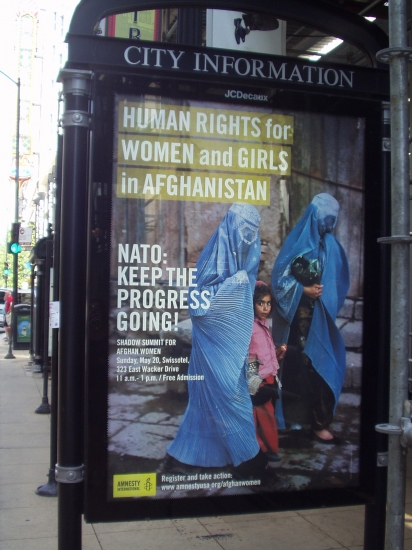

 Aletho News
