How the Media Got the Parchin Access Story Wrong
By Gareth Porter | Dissident Voice | March 1st, 2012
News media reported last week that Iran had flatly refused the International Atomic Energy Agency (IAEA) access to its Parchin military test facility, based on a statement to reporters by IAEA Deputy Director General, Herman Nackaerts, that “We could not get access”.
Now, however, explicit statements on the issue by the Iranian Ambassador to the IAEA and the language of the new IAEA report indicate that Iran did not reject an IAEA visit to the base per se but was only refusing access as long as no agreement had been reached with the IAEA governing the modalities of cooperation.
That new and clarifying information confirms what I reported February 23. Based on the history of Iranian negotiations with the IAEA and its agreement to allow two separate IAEA visits to Parchin in 2005, the Parchin access issue is a bargaining chip that Iran is using to get the IAEA to moderate its demands on Iran in forging an agreement on how to resolve the years-long IAEA investigation into the “Possible Military Dimensions” of the Iranian nuclear program.
In an email to me and in interviews with Russia Today, Reuters, and the Fars News Agency, the Iranian Permanent Representative to the IAEA, Ali Asghar Soltanieh, said Iran told the high-level IAEA mission that it would allow access to Parchin once modalities of Iran-IAEA cooperation had been agreed on.
“We declared that, upon finalization of the modality, we will give access [to Parchin],” Soltanieh wrote in an email to me.
In the Russia Today interview on February 27, reported by Israel’s Haaretz and The Hindu in India but not by western news media, Soltanieh referred to two IAEA inspection visits to Parchin in January and November 2005 and said Iran needs to have “assurances” that it would not “repeat the same bitter experience, when they just come and ask for the access.” There should be a “modality” and a “frame of reference, of what exactly they are looking for, they have to provide the documents and exactly where they want [to go],” he said.
But Soltanieh also indicated that such an inspection visit is conditional on agreement about the broader framework for cooperation on clearing up suspicions of a past nuclear weapons program. “[I]n principle we have already accepted that when this text is concluded we will take these steps,” Soltanieh said.
The actual text of the IAEA report, dated February 24, provides crucial information about the Iranian position in the talks that is consistent with what Soltanieh is saying.
In its account of the first round of talks in late January on what the IAEA is calling a “structured approach to the clarification of all outstanding issues”, the report states: “The Agency requested access to the Parchin site, but Iran did not grant access to the site at that time [emphasis added].” That wording obviously implies that Iran was willing to grant access to Parchin if certain conditions were met.
On the February 20-21 meetings, the agency said that Iran “stated that it was still not able to grant access to that site.” There was likely a more complex negotiating situation behind the lack of agreement on a Parchin visit than had been suggested by Nackaerts and reported in western news media.
But not a single major news media report has reported the significant difference between initial media coverage on the Parchin access issue and the information now available from the initial IAEA report and Soltanieh. None have reported the language of the report indicating that Iran’s refusal to approve a Parchin visit in January was qualified by “at that time”.
Only AFP and Reuters quoted Soltanieh at all. Reuters, which actually interviewed Soltanieh, quoted him saying, “It was assumed that after we agreed on the modality, then access would be given.” But that quote only appears in the very last sentence of the article, several paragraphs after the reiteration of the charge that Iran “refused to grant [the IAEA] access” to Parchin.
The day after that story was published, Reuters ran another story focusing on the IAEA report without referring either to its language on Parchin or to Soltanieh’s clarification.
The Los Angeles Times ignored the new information and simply repeated the charge that Iran “refused to allow IAEA inspectors to visit Parchin military base”. Then it added its own broad interpretation that Iran “has refused to answer key questions about its nuclear development program”. Iran’s repeated assertions that the documents used to pose questions to it are fabricated and were thus dismissed as non-qualified answers.
The Parchin access story entered a new phase today with a Reuters story quoting Deputy Director General Nackaerts in a briefing for diplomats that there “may be some ongoing activities at Parchin which add urgency to why we want to go”. Nackaerts attributed that idea to an unnamed “Member State”, which is apparently suggesting that the site in question is being “cleaned up”.
The identity of that “Member State”, which the IAEA continues to go out of its way to conceal, is important, because if it is Israel, it reflects an obvious interest in convincing the world that Iran is working on nuclear weapons. As former IAEA Director-General Mohamed ElBaradei recounts on p. 291 of his memoirs, “In the late summer of 2009, the Israelis provided the IAEA with documents of their own, purportedly showing that Iran had continued with nuclear weapon studies until at least 2007.”
The news media should be including cautionary language any time information from an unnamed “Member State” is cited as the source for allegations about covert Iranian nuclear weapons work. It could very likely be coming from a State with a political agenda. But the unwritten guidelines for news media coverage of the IAEA and Iran, as we have seen in recent days, are obviously very different.
~
Gareth Porter is an investigative historian and journalist specialising in U.S. national security policy. The paperback edition of his latest book, Perils of Dominance: Imbalance of Power and the Road to War in Vietnam, was published in 2006.
Questioning the Syrian “Casualty List”
By Sharmine Narwani | Al Akhbar | February 28, 2012
“Perception is 100 percent of politics,” the old adage goes. Say something three, five, seven times, and you start to believe it in the same way you “know” aspirin is good for the heart.
Sometimes though, perception is a dangerous thing. In the dirty game of politics, it is the perception – not the facts of an issue – that invariably wins the day.
In the case of the raging conflict over Syria, the one fundamental issue that motors the entire international debate on the crisis is the death toll and its corollary: the Syrian casualty list.
The “list” has become widely recognized – if not specifically, then certainly when the numbers are bandied about: 4,000, 5,000, 6,000 – sometimes more. These are not mere numbers; they represent dead Syrians.
But this is where the dangers of perception begin. There are many competing Syrian casualty lists with different counts – how does one, for instance gauge if X is an accurate number of deaths? How have the deaths been verified? Who verifies them and do they have a vested interest? Are the dead all civilians? Are they pro-regime or anti-regime civilians? Do these lists include the approximately 2,000 dead Syrian security forces? Do they include members of armed groups? How does the list-aggregator tell the difference between a civilian and a plain-clothes militia member?
Even the logistics baffle. How do they make accurate counts across Syria every single day? A member of the Lebanese fact-finding team investigating the 15 May 2011 shooting deaths of Palestinian protesters by Israelis at the Lebanese border told me that it took them three weeks to discover there were only six fatalities, and not the 11 counted on the day of the incident. And in that case, the entire confrontation lasted a mere few hours.
How then does one count 20, 40, or 200 casualties in a few hours while conflict continues to rage around them?
My first port of call in trying to answer these questions about the casualty list was the United Nations Office of the High Commissioner for Human Rights (OHCHR), which seemed likely to be the most reliable source of information on the Syrian death toll – until it stopped keeping track last month.
The UN began its effort to provide a Syrian casualty count in September 2011, based primarily on lists provided by five different sources. Three of their sources were named: The Violations Documenting Center (VDC), the Syrian Observatory for Human Rights (SOHR) and the Syrian Shuhada website. At that time, the lists varied in number from around 2,400 to 3,800 victims.
The non-UN casualty list most frequently quoted in the general media is the one from the Syrian Observatory – or SOHR.
Last month, SOHR made some headlines of its own when news of a rift over political viewpoints and body counts erupted. Two competing SOHRs claimed authenticity, but the group headed by Rami Abdul Rahman is the one recognized by Amnesty International.
OHCHR spokesman Rupert Colville stated during a phone interview that the UN evaluates its sources to check “whether they are reliable,” but appeared to create distance from SOHR later – during the group’s public spat – by saying: “The (UN) colleague most involved with the lists…had no direct contact with the Syrian Observatory, though we did look at their numbers. This was not a group we had any prior knowledge of, and it was not based in the region, so we were somewhat wary of it.”
Colville explains that the UN sought at all times “to make cautious estimates” and that “we have reasonable confidence that the rounded figures are not far off.”
While “also getting evidence from victims and defectors – some who corroborated specific names,” the UN, says Colville, “is not in a position to cross-check names and will never be in a position to do that.”
I spoke to him again after the UN decided to halt its casualty count in late January. “It was never easy to verify, but it was a little bit clearer before. The composition of the conflict has changed. It’s become much more complex, fragmented,” Colville says. “While we have no doubt there are civilian and military casualties…we can’t really quantify it.”
“The lists are clear – the question is whether we can fully endorse their accuracy,” he explains, citing the “higher numbers” as an obstacle to verification.
The Casualty Lists Up Close: Some Stories Behind the Numbers
Because the UN has stopped its casualty count, reporters have started reverting back to their original Syrian death toll sources. The SOHR is still the most prominent among them.
Abdul Rahman’s SOHR does not make its list available to the general public, but in early February I found a link to a list on the other SOHR website and decided to take a look. The database lists the victim’s name, age, gender, city, province, and date of death – when available. In December 2011, for instance, the list names around 77 registered casualties with no identifying information provided. In total, there are around 260 unknowns on the list.
Around that time, I had come across my first list of Syrians killed in the crisis, reportedly compiled in coordination with the SOHR, that contained the names of Palestinian refugees killed by Israeli fire on the Golan Heights on 15 May 2011 and 5 June 2011 when protesters congregated on Syria’s armistice line with Israel. So my first check was to see if that kind of glaring error appears in the SOHR list I investigate in this piece.
To my amazement, the entire list of victims from those two days were included in the SOHR casualty count – four from May 15 (#5160 to #5163) and 25 victims of Israeli fire from June 5 (#4629 to #4653). The list even identifies the deaths as taking place in Quneitra, which is in the Golan Heights.
It also didn’t take long to find the names of well-publicized pro-regime Syrians on the SOHR list and match them with YouTube footage of their funerals. The reason behind searching for funeral links is that pro-regime and anti-regime funerals differ quite starkly in the slogans they chant and the posters/signs/flags on display. Below, is a list of eight of these individuals, including their number, name, date and place of death on the casualty list – followed by our video link and further details if available:
#5939, Mohammad Abdo Khadour, 4/19/11, Hama, off-duty Colonel in Syrian army, shot in his car and died from multiple bullet wounds. Funeral link.
#5941, Iyad Harfoush, 4-18-11, Homs, off-duty Commander in Syrian army. In a video, his wife says someone started shooting in the mostly pro-regime al Zahra neighborhood of Homs – Harfoush went out to investigate the incident and was killed. Funeral link.
#5969, Abdo al Tallawi, 4/17/11, Homs, General in Syrian army killed alongside his two sons and a nephew. Funeral footage shows all four victims. The others are also on the list at #5948, Ahmad al Tallawi, #5958, Khader al Tallawi and #5972, Ali al Tallawi, all in Homs, Funeral link.
#6021, Nidal Janoud, 11/4/11, Tartous, an Alawite who was severely slashed by his assailants. The bearded gentleman to the right of the photo, and a second suspect, are now standing trial for the murder. Photo link.
#6022, Yasar Qash’ur, 11/4/11, Tartous, Lieutenant Colonel in the Syrian army, killed alongside 8 others in an ambush on a bus in Banyas, Funeral link.
#6129, Hassan al-Ma’ala, 4/5/11, policeman, suburbs of Damascus, Funeral link.
#6130, Hamid al Khateeb, 4/5/11, policeman, suburbs of Damascus, Funeral link.
#6044, Waeb Issa, 10/4/11, Tartous, Colonel in Syrian army, Funeral link.
Besides featuring on the SOHR list, Lt. Col. Yasar Qashur, Iyad Harfoush, Mohammad Abdo Khadour and General Abdo al Tallawi and his two sons and nephew also appear on two of the other casualty lists – the VDC and Syrian Shuhada – both used by the United Nations to compile their numbers.
Nir Rosen, an American journalist who spent several months insides Syria’s hot spots in 2011, with notable access to armed opposition groups, reported in a recent Al Jazeera interview:
“Every day the opposition gives a death toll, usually without any explanation of the cause of the deaths. Many of those reported killed are in fact dead opposition fighters, but the cause of their death is hidden and they are described in reports as innocent civilians killed by security forces, as if they were all merely protesting or sitting in their homes. Of course, those deaths still happen regularly as well.”
“And, every day, members of the Syrian army, security agencies and the vague paramilitary and militia phenomenon known as shabiha [“thugs”] are also killed by anti-regime fighters,” Rosen continues.
The report issued in January by Arab League Monitors after their month-long observer mission in Syria – widely ignored by the international media – also witnessed acts of violence by armed opposition groups against both civilians and security forces.
The Report states: “In Homs, Idlib and Hama, the observer mission witnessed acts of violence being committed against government forces and civilians…Examples of those acts include the bombing of a civilian bus, killing eight persons and injuring others, including women and children…In another incident in Homs, a police bus was blown up, killing two police officers.” The observers also point out that “some of the armed groups were using flares and armour-piercing projectiles.“
Importantly, the report further confirms obfuscation of casualty information when it states: “the media exaggerated the nature of the incidents and the number of persons killed in incidents and protests in certain towns.”
On February 3, the eve of the UN Security Council vote on Syria, news broke out that a massacre was taking place in Homs, with the general media assuming it was true and that all violence was being committed by the Syrian government. The SOHR’s Rami Abdul Rahman was widely quoted in the media as claiming the death toll to be at 217. The Local Coordination Committees (LCCs), which provide information to the VDC, called it at “more than 200,” and the Syrian National Council (SNC), a self-styled government in absentia of mainly expats, claimed 260 victims.
The next day, the casualty count had been revised down to 55 by the LCCs. (link: http://www.bbc.co.uk/news/world-middle-east-16883911)
Even if the count is at 55 – that is still a large number of victims by any measure. But were these deaths caused by the Syrian government, by opposition gunmen or in the crossfire between the two groups? That is still the question that needs to break through the deafening narratives, lists, and body counts.
In International Law, Detail Counts
While the overwhelming perception of Syrian casualties thus far has been that they are primarily unarmed civilians deliberately targeted by government forces, it has become obvious these casualties are also likely to include: Civilians caught in the crossfire between government forces and opposition gunmen; victims of deliberate violence by armed groups; “dead opposition fighters” whose attire do not distinguish them from regular civilians; and members of the Syrian security forces, both on and off duty.
Even if we could verify the names and numbers on a Syrian casualty list, we still don’t know their stories, which if revealed, may pose an entirely different picture of what is going on in Syria today
These questions are vitally important to understand the burden of responsibility in this conflict. International law provides for different measures of conflict: the two most frequently used gauges for this are the Principle of Necessity, i.e., using force only when it is necessary, and the Principle of Proportionality, i.e., the use of force proportional to the threat posed.
In the case of Syria – like in Bahrain, Yemen, Egypt and Libya – it is widely believed that the government used unnecessary force in the first instance. Syrian President Bashar Assad, like many of these Arab rulers, has as much as admitted to “mistakes” in the first months of protests. These mistakes include some shooting deaths and detaining a much larger number of protesters than expected, some of whom were allegedly tortured.
Let us assume, without question, that the Syrian government was over zealous in its use of force initially, and therefore violated the Principle of Necessity. I tend to believe this version because it has been so-stated by the Arab League’s observer mission – the first and only boots-on-the-ground monitors investigating the crisis from within the country.
However – and this is where the casualty lists come in – there is not yet nearly enough evidence, not by any measure acceptable in a court of law, that the Syrian government has violated the Principle of Proportionality. Claims that the regime has used disproportionate force in dealing with the crisis are, today, difficult to ascertain, in large part because opponents have been using weapons against security forces and pro-regime civilians almost since the onset of protests.
Assuming that the number of casualties provided by the UN’s OHCHR is around the 5,000-mark -the last official figure provided by the group – the question is whether this is a highly disproportionate number of deaths when contrasted directly with the approximately 2,000 soldiers of the regular Syrian army and other security forces who have been reportedly killed since April 2011.
When you calculate the deaths of the government forces in the past 11 months, they amount to about six a day. Contrast that with frequent death toll totals of around 15+ each day disseminated by activists – many of whom are potentially neither civilian casualties nor victims of targeted violence – and there is close to enough parity to suggest a conflict where the acts of violence may be somewhat equal on both sides.
Last Sunday, as Syrians went to the polls to vote on a constitutional referendum, Reuters reports – quoting the SOHR – that 9 civilians and 4 soldiers were killed in Homs, and that elsewhere in Syria there were 8 civilian and 10 security forces casualties. That is 17 civilians and 14 regime forces – where are the opposition gunmen in that number? Were none killed? Or are they embedded in the “civilian” count?
Defectors or Regular Soldiers?
There have also been allegations that many, if not most, of the soldiers killed in clashes or attacks have been defectors shot by other members of the regular army. There is very little evidence to support this as anything more than a limited phenomenon. Logically, it would be near impossible for the Syrian army to stay intact if it was turning on its rank-and-file soldiers in this manner – and the armed forces have remained remarkably cohesive given the length and intensity of the conflict in Syria.
In addition, the names, rank and cities of each of the dead soldiers are widely publicized by state-owned media each day, often accompanied by televised funerals. It would be fairly simple for the organized opposition to single out by name the defectors they include on their casualty lists, which has not happened.
The very first incident of casualties from the Syrian regular army that I could verify dates to 10 April 2011, when gunmen shot up a bus of soldiers travelling through Banyas, in Tartous, killing nine. This incident took place a mere few weeks after the first peaceful protests broke out in Syria, and so traces violence against government forces back to the start of political upheaval in the country.
“Witnesses” quoted by the BBC, Al Jazeera and The Guardian insisted that the nine dead soldiers were “defectors” who had been shot by the Syrian army for refusing orders to shoot at demonstrators.
Joshua Landis, director of the Center for Middle East Studies at the University of Oklahoma, debunked that version on his Syria Comment website. Another surviving soldier on the bus – a relation of Lt. Col. Yasar Qashur, #6022 on the SOHR list, whose funeral I link to above – denied that they were defectors too. But the narrative that dead soldiers are mostly defectors shot by their own troops has stuck throughout this conflict – though less so, as evidence of gunmen targeting Syrian forces and pro-regime civilians becomes belatedly apparent.
The VDC – another of the UN’s OHCHR sources for casualty counts – alleges that 6,399 civilians and 1,680 army defectors were killed in Syria during the period from 15 March 2011 to 15 February 2012. All security forces killed in Syria during the past 11 months were “defectors?” Not a single soldier, policeman or intelligence official was killed in Syria except those forces who opposed the regime? This is the kind of mindless narrative of this conflict that continues unchecked. Worse yet, this exact VDC statistic is included in the latest UN report on Syria issued last week.
Humanitarian Crisis or Just Plain Violence?
While few doubt the Syrian government’s violent suppression of this revolt, it is increasingly clear that in addition to the issue of disproportionally, there is the question of whether there is a “humanitarian crisis” as suggested by some western and Arab leaders since last year. I sought some answers during a trip to Damascus in early January 2012 where I spoke to a select few NGOs that enjoyed rare access to all parts of the country.
Given that words like “massacre” and “slaughter” and “humanitarian crisis” are being used in reference to Syria, I asked International Committee of the Red Cross (ICRC) Spokesman Saleh Dabbakeh how many calls for urgent medical assistance his organization had received in 2011. His response was shocking. “Only one that I recall,” said Dabbakeh. Where was that, I asked? “Quneitra National Hospital in the Golan,” he replied, “last June.” This was when Israeli troops fired on Syrian and Palestinian protesters marching to the 1973 armistice line with the Jewish state. Those same protesters that ended up on SOHR’s casualty list.
A Syrian Arab Red Crescent (SARC) worker confirmed that, recalling that his organization treated hundreds of casualties from the highly-publicized incident.
As the level of violence has escalated, however, the situation has deteriorated, and the ICRC now has received more calls for medical assistance – mainly from private hospitals in Homs. The SARC today has nine different points in Homs where it provides such assistance. The only two places they do not currently serve are the neighborhoods of Bab Amr and Inshaat “because the security situation does not allow for it – for their own safety, there is fighting there.”
During a phone call last Thursday, one NGO officer, explained that the measure for a “humanitarian crisis” is in level of access to basic staples, services and medical care. He told me off the record that “There is a humanitarian crisis in (i.e.) Baba Amro today, but not in Syria. If the fighting finishes tomorrow, there will be enough food and medical supplies.”
“Syria has enough food to feed itself for a long time. The medical sector still functions very well. There isn’t enough pressure on the medical sector to create a crisis,” he elaborated. “A humanitarian crisis is when a large number of a given population does not have access to medical aid, food, water, electricity, etc – when the system cannot any longer respond to the needs of the population.”
But an international human rights worker also cautions: “the killing is happening on both sides – the other side is no better.”
People have to stop this knee-jerk, opportunistic, hysterical obsession with numbers of dead Syrians, and ask instead: “who are these people and who killed them?” That is the very least these victims deserve. Anything less would render their tragic deaths utterly meaningless. Lack of transparency along the supply-chain of information and its dissemination – on both sides – is tantamount to making the Syrian story all about perception, and not facts. It is a hollow achievement and people will die in ever greater numbers.
Sharmine Narwani is a commentary writer and political analyst covering the Middle East. You can follow Sharmine on twitter @snarwani.
Related articles
Insinuation as War Propaganda
By Anthony Gregory | The Independent Institute | February 23, 2012
In 2002 and early 2003, the Bush administration made its case for war with Iraq. There were assertions given about Saddam’s maintenance of weapons of mass destruction and ties to al-Qaeda. What was never said explicitly, however, was that Saddam Hussein was behind 9/11. Yet by late 2003, seventy percent of polled Americans thought Saddam Hussein was personally behind 9/11. Bush’s Republican voters were especially convinced of this.
Yet Bush and his officials never said this. And after the multiple disasters of the Iraq war began to present themselves with great clarity, the Bush officials were questioned about their pre-war intel. Yet they could say, strictly speaking, one thing they never claimed was Saddam was behind 9/11.
Condoleezza Rice had said something about the attacks originating in the same region or area as Iraq. There was all sorts of insinuation that Saddam might have been involved. And surely the Bush team never put an ounce of effort into disabusing the American people of the completely false notion that Saddam was behind 9/11. The vast majority of Americans believed it—indeed, at times, more Americans thought Saddam was behind the attacks than believed the Iraq War was just!—yet it was not only completely untrue, but not directly rooted in any explicit assertion given by the administration. Various pro-war commentators had said it, but Bush, Cheney, Rumsfeld, Rice, Powell—none of them ever did.
Fast forward a decade to the current day. Seventy-one percent of Americans—almost exactly the percentage that thought Saddam was behind 9/11—think that Iran has nuclear weapons. It’s a small sample, but it is consistent with polls over the last couple years, each one showing a majority believing Iran already has nukes, and almost nine out of ten Americans sure that Iran is seeking them.
Indeed, talking with “respectable” liberals—the type who listen to NPR and watch Jon Stewart—I find repeatedly that even folks who don’t want to go to war assume that every reasonable American knows that Iran is on the brink of having nukes, if the regime doesn’t already have them.
What’s bizarre about this, other than the fact that there is no credible evidence that Iran has nuclear weapons, is that no one in a position of official authority is claiming it either! Every report from the International Atomic Energy Agency, even when framed in a way to make Iran seem ominous, confirms the “non-diversion” of nuclear materials to weaponization purposes. The CIA and intelligence community have consistently stood by the National Intelligence Estimate findings that Iran has not sought a nuclear weapon since 2003 (and Iran doing so back then is only suspected based on very scant evidence produced by the Israeli government).
What’s more, in the last week or so, Defense Secretary Leon Panetta stressed that not only does Iran not have nuclear weapons; there is no evidence that Iran even wants nuclear weapons!!
Even if Iran wanted to make nuclear weapons, it would probably take three or more years. Iran is reportedly attempting to enrich its uranium to 19.75% LEU. Nuclear weapons require 95%—and there is no evidence that Iran has the means to do this. It is even more dubious to believe a nuclear-armed Iran would be some sort of unprecedented threat for the United States, but that’s neither here nor there.
So what’s the deal? The Obama administration (and the Bush administration, and the UN) have all had the same official position: Iran doesn’t have nukes, and the Iranians probably aren’t looking to get them. Yet seven out of ten Americans think Iran already has them. Meanwhile, every Republican presidential candidate except Ron Paul warns about the unparalleled threat of a nuclear Iran, and the Obama White House punishes the country with tighter sanctions and ever more threats.
Indeed, Obama has thrived on the insinuation that Iran has nukes. When he acted tough back in 2009 because Iran had been caught red-handed with its fledgling nuclear facility at Qom—a civilian nuclear facility that Iran readily alerted the international community to, consistent with its continuing adherence to the Non-Proliferation Treaty to which Iran is a signatory—he did so against a backdrop of insinuation that of course everyone knows Iran wants nuclear weapons. He did this even though all that existed at Qom, according to an IAEA official, was a “hole in a mountain.” Why didn’t the president remind the public instead that there is little to worry about, since the entire Defense Department and intelligence community confirm that Iran has no nuclear weapons program?
If a war begins with Iran, it will largely be on the basis of propaganda believed by the public, propaganda that the government has never officially articulated. In the past, the U.S. thrived on outright lies for war: the Gulf of Tonkin Incident, Kuwaiti babies being ripped from incubators, and so forth. There has long been a fair share of unsubstantiated allegations involved behind major U.S. wars—the USS Maine being sunk by the Spanish, the Zimmerman Telegram posing an actual threat to the United States, the Serbians committing genocide of ethnic Albanians, killing many tens of thousands of civilians in the late 1990s, and so on.
Yet today lies and unproven allegations are not enough. The U.S. warfare state appears to thrive on insinuation in its war propaganda. The U.S. war machine’s top brass never outright declare the most provocative claims about U.S. enemies. That way, when the war goes south and people begin accusing the political class of misleading them, the empire’s defenders can easily say (accurately in word if not in spirit): “Bush never claimed Saddam was behind 9/11! Obama never claimed Iran had nuclear weapons!”
But don’t think for a moment that our rulers aren’t glad the American people believe what they do. It makes wars so much easier to wage when the public buys into all sorts of nonsense. The plausible deniability that insinuated propaganda gives the ruling class is just icing on the cake.
Related articles
- US spooks say no Iranian nukes (rt.com)
Progressives Embrace Humanitarian Imperialism – Again!
DemocracyNow! Hosts a Non-debate on Syria
By John V. Walsh | Dissident Voice | February 25th, 2012
“Foreign Intervention in Syria? A Debate with Joshua Landis and Karam Nachar” promised the headline on DemocracyNow! on 22 February. Eagerly I tuned in, hoping to hear a thorough exposé of the machinations of the US Empire in Syria on its march to Iran.
But this was neither exposé nor debate. Both sides, Landis and Nachar, were pro-intervention for “humanitarian” reasons. Nor did the host Amy Goodman or her co-host take these worthies to task for their retrograde views on imperial military action against a sovereign nation that had made no attack on the US. It was yet one more sign that the “progressive” movement in the West has largely abandoned its antiwar, anti-intervention stance.
The segment began with a clip of John McCain advocating yet another war, for the good of the Syrians of course, bombing them to save them. The first guest was Joshua Landis, a prof in Oklahoma whose bio tells us that he “regularly travels to Washington DC to consult with the State Department and other government agencies.” The other agencies are not specified, but he speaks at the Council on Foreign Relations and similar venues. Professor Landis represents the anti-intervention voice in the universe of Amy Goodman, but his opening words manifested the limits of that universe: “Well, I’m not opposed to helping the (Syrian) opposition.” He continued, “The problem right now, the dangers right now with arming the opposition, is that we’re not sure who to arm.”
Confused, I thought surely the next guest would be the anti-interventionist. He was Karam Nachar “cyber-activist” and Princeton Ph.D. candidate, working with Syrian “protesters” via “social media platforms.” That means he is safely ensconced in New Jersey far from where U.S. bombs would fall. Perhaps this fellow would say loud and clear the Syrians did not need the interference of the West, did not need sanctions to starve them nor bombs to pulverize their cities. Perhaps he would laud the Chinese-Russian proposal for both sides to stop firing and to negotiate a solution.
But he did not. He also was for intervention by the West. And he did not think the disorganization of the opposition, cited by Landis, justified hesitation or delay in arming that opposition. That and not any principled anti-interventionism distinguished the two sides in this “debate.” Said the cyber-activist: “Well, to start with, I disagree with Professor Landis’s portrayal of the situation with the Syrian opposition. It is true that, for instance, in the Syrian National Council, there are a lot of disagreements. But (the opposition is) still frustrated with the leadership of the Syrian National Council because of its inability to solicit more international support…. And I believe that the State Department, Secretary Clinton and the American administration is heading towards that. … It’s going to require a lot of money and a lot of courage and a lot of involvement on the part of the international community.” [Emphasis added]
And then the boy cyber-activist got nasty: “I am just a little wary that this overemphasis on how leaderless the Syrian opposition is actually a tactic being used of people who actually do not want the regime to be overthrown and who have always actually defended the legitimacy of the Syrian regime, and especially of Bashar al-Assad.” There it is. Even if one is for intervention in principle, no delay is to be countenanced. Such people are surely on the side of Bashar Al-Assad.
This is the kind of “debate” we get on “progressive” media outlets. It is not even a debate about whether there should be imperial intervention, once completely verboten on the Left, but when and under what circumstances military intervention should occur. This phony debate should simply be ignored whether it appears on DemocracyNow! or on NPR, increasingly indistinguishable in content and outlook or anywhere else. In fairness to Amy Goodman, just a few weeks back on February 7, she hosted the British writer and long time student of Syria, Patrick Seale. Said Seale: “I believe dialogue is the only way out of this. And indeed, the Russians have suggested to both sides to come to Moscow and start a dialogue. But the opposition says, ‘No, we can’t dialogue with Bashar al-Assad. He must be toppled first.’ Well, that’s a dangerous—a dangerous position to adopt.” That interview is well worth reading. And Goodman would do well to stick with that instead of shifting over to empty debates between interventionism now versus interventionism later. After repeatedly hosting the CIA consultant Juan Cole to cheer the cruel war on Libya, Goodman now seems to be going down the same path with Syria. It is a sad spectacle and one more indication of how little the “progressives” in the West understand the nature of Humanitarian Imperialism which uses human rights to sell war. It looks like it’s time to abandon Goodman and switch to Alyona.
John V. Walsh can be reached at john.endwar@gmail.com.
Related articles
- Syria Opposition Group Boycotts Tunis Meeting, Rejects Escalated Militarization (alethonews.wordpress.com)
Syria’s Electronic Warriors Hit Al Jazeera
Leaked emails reveal dismay among Al-Jazeera staff over its “biased and unprofessional” coverage of Syria
By Wissam Kanaan | Al Akhbar | February 24, 2012
Damascus – On Wednesday, the entire staff of the Al Jazeera network allegedly received an email instructing them to change their computer and email passwords.
Earlier in the week, the network’s server had been hacked by the self-styled Syrian Electronic Army, and some of its secrets were released to the media.
The major find to be made public was an email exchange between anchorwoman Rula Ibrahim and Beirut-based reporter Ali Hashem. The emails seemed to indicate widespread disaffection within the channel, especially over its coverage of the crisis in Syria.
Ibrahim wrote to her colleague saying that she had “turned against the revolution” in Syria after realizing that the protests would “destroy the country and lead to a civil war.” She went on to deride the opposition Free Syrian Army, which she described as “a branch of al-Qaeda.”
Ibrahim also complained about the attitudes of various colleagues at the channel’s Doha headquarters, saying some of them “have refused to greet me ever since the outbreak of events in Syria because they hold a grudge against my sect.”
Hashem responded sympathetically, saying he had opted to sit on the fence after sending the channel footage of armed men clashing with the army which he had witnessed while reporting from northeastern Lebanon. He said that after he submitted the video, he was told to return to Beirut on the grounds that he was exhausted.
In her response, Ibrahim once again protested that she had “been utterly humiliated. They wiped the floor with me because I embarrassed Zuheir Salem, spokesperson for Syria’s Muslim Brothers. As a result, I was prevented from doing any Syrian interviews, and threatened with [a] transfer to the night shift on the pretext that I was making the channel imbalanced.”
Ibrahim also spoke of how Syrian activists invited onto Al Jazeera use terms of sectarian incitement on air, “which Syrians understand very well.”
Hashem wondered in response where the channel’s head of news, Ibrahim Hilal, stood in all this. Ibrahim answered that he was “stuck between a rock and a hard place: the agenda and professionalism…” … Full article
Ales Bialiatski: legally a convicted criminal, ideologically a “human rights activist”
By Gearóid Ó Colmáin | Dissident Voice | February 24th, 2012
Excerpt
On the 8th of August as plans for the siege of Sirte in Libya were underway, American senator John McCain was already signaling that Belarus would be America’s next target for regime change. McCain referred to the imprisonment of Ales Bialiatski, the so-called “human rights” activist arrested by the Belarusian authorities for fiscal fraud in 2011.
Bialiatski is the vice-president of the International Federation of Human Rights, (Fédération internationale des ligues des droits de l’Homme) a sub-organisation of which provided the United Nation’s Human Rights Council with false information in February 2011 accusing the Libyan government of “massacres” in Benghazi.
This false information served as a pretext for a war of aggression that led to the killing of tens of thousands of people, reducing a prosperous socially-oriented economy to rubble and imposing a corrupt foreign-selected dictatorship against the wishes of the Libyan people.
The barbaric destruction of the Libyan Jamahirya should serve as a sufficient lesson to any intelligent person of what NATO countries mean by “human rights,” “democracy,” and the “rule of law.”
Amnesty International’s condemnation of Bialiatski’s prosecution, without showing any proof of a miscarriage of justice on the part of the Belarusian courts, shows that the so-called “human rights” organization is more concerned with providing moral legitimacy for the foreign policy objectives of Western governments than protecting human rights.
Bialiatski was arrested by the Polish and Lithuanian police for fiscal fraud on intelligence supplied to them by Interpol. He was not arrested for his political opposition to the Belarusian government. This is not the first time Amnesty International has falsely accused Belarus of human rights violations and it is unlikely to be the last.
Since Bialiatski’s imprisonment, the Polish government has moved to prevent further Interpol arrest warrants issued from “undemocratic” countries. This is rather farcical coming from a state where wearing a Che Guevara T-Shirt could land you in jail!
The human rights charade is now becoming so ridiculous it is likely to backfire in the long term. Regime change specialists such as Canvas, a US funded colour revolution training centre based in Belgrade, are now orchestrating stunts involving the use of naked women protesting outside the KGB headquarters in Minsk. Behaviour of this kind would get one arrested in any country.
However, the point of the exercise is, in fact, to get arrested, film it and thereby embarrass the KGB. But the KGB, being an intelligence agency, have pre-empted their plans and the silly nudists have only succeeded in catching a cold and providing light entertainment for pedestrians, all in the cause of the “revolution.”
That Amnesty International should hold openly take sides in favour of US-funded pseudo-dissidents should not surprise us. After all, the head of Amnesty International USA Suzanne Nossel is a former assistant to Secretary of State Hillary Clinton and the man they call Dr. Stranglove, former National Security Advisor, Zbigniew Brzezinski is also a former board member of the same human rights organisation.
Related articles
- “Human Rights” Warriors for Empire (alethonews.wordpress.com)
Azerbaijan Claims More Iranian Terror Plots Without Providing Details or Evidence
New Alleged Hezbollah-Iran Joint Terror Operations in Azerbaijan
By Sibel Edmunds | Boiling Frogs Post | February 22, 2012
Azerbaijan claims it has ‘again’ busted another Iranian terror cell, but is refusing to provide any evidence or details. According to the report by the country’s state-run AZTV, on February 21 a terrorist cell operated by Hezbollah and Iran’s Revolutionary Guard had been discovered and dismantled. Allegedly the busted group, with guns and explosives, were planning attacks on ‘unspecified’ foreign nationals.
Despite reporters’ attempts the Azeri government refrained from providing any additional information:
Speaking to EurasiaNet.org, a spokesperson for Azerbaijan’s Ministry of National Security refused either to confirm or to deny the station’s report. Strangely, pro-government and state-run news sites have proven similarly skittish about delving into the AzTV report; no news about the arrests could be found on any of these websites on the morning of February 22.
Strangely enough, to back up the story AZTV aired footage of terrorist arrests from an incident that occurred in 2008! This new development appears to follow the very same pattern as Azerbaijan’s claim on the ‘alleged’ assassination plot against Israeli officials in Azerbaijan by an Iran-Sponsored terrorist group last month.
Earlier today APA news agency reported new details about this latest alleged Iranian terror operation. Supposedly, the terrorist group operated under two ringleaders – “Hamid” for Iran’s Revolutionary Guard, and “Haji Abbas” for an armed wing of Hezbollah, Mugavimat. This is supposed to establish the collaborative effort between the Iranian government and Hezbollah:
Azerbaijani Ministry of National Security disarmed the terrorist group of Iranian intelligence agency “Sepah” and “Hezbollah” in Azerbaijan.
The group members gathered material reconnaissance materials. The illegally acquired many weapons, ammunitions, explosives and explosive devices and began preparations to commit a terror act.A group of persons were detained in Azerbaijan over the last several days. Member of Nardaran Sanhedrin Karbalai Natig Karimov told APA that the majority of detained as a result of operative measures taken by the National Security Ministry and law-enforcement bodes were the residents of Baku villages, especially Nardaran. They are accused of establishing armed unit, illegal keeping of weapon, betrayal of motherland and drug trafficking.
Earlier this month Boiling Frogs Post reported on Iran’s formal rebuke to Azerbaijan for housing and accommodating Israeli intelligence agents and assassins to execute assassination plots against Iranian nuclear scientists. Azerbaijan denied the accusations by the Iranian government.
It is also important to note that intimate US-NATO ally Azerbaijani President Ilham Aliyev visited the North Atlantic Treaty Organization headquarters in Brussels on February 15 and has also met with Israeli President Shimon Peres and US Secretary of State Hillary Clinton over the past few weeks.
Boiling Frogs Post has been the only news site closely monitoring and reporting these developments in the US war on Iran operations’ Caucasus front. You can read our previous reports here, here, here and here.
Jodi Rudoren, Another Member of the Family: Meet the New York Times’ New Israel-Palestine News Chief

Past & Present NY Times Jerusalem Bureau Chiefs: Jodi Rudoren, Ethan Bronner, Steven Erlanger, Thomas Friedman
By ALISON WEIR | CounterPunch | February 21, 2012
Michael Lerner, the editor of Tikkun Magazine, is known for his frequent condemnations of Israeli violence against Palestinians. He is labeled “pro-Palestinian” for such statements and is regularly attacked by pro-Israel zealots who charge that he is disloyal to the Jewish state.
Yet, in reality, Lerner frequently speaks of his devotion to Israel and states that his actions are taken in considerable part to protect it.
A while ago Lerner explained the difference in his feelings about Israelis compared to his feelings about Palestinians. “[T]here is a difference in my emotional and spiritual connection to these two sides,” Lerner said.
“On the one side is my family; on the other side are decent human beings. I want to support human beings all over the planet but I have a special connection to my family.”
This statement comes to mind when one considers the New York Times bureau chiefs who cover Israel-Palestine.
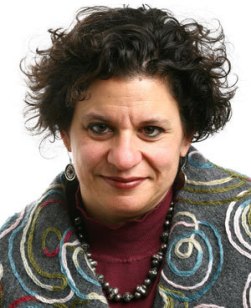
The most recent person to be chosen for this powerful post at arguably the most influential newspaper in the United States is Jodi Rudoren. She takes the place of Ethan Bronner, who was preceded by Steven Erlanger, who was preceded by James Bennet, who was preceded by Deborah Sontag. All, according to an Israeli report, are Jewish.
Most Americans — particularly those who would object to only white reporters covering racial issues or only male reporters covering gender issues — are reluctant to discuss the potential bias in such a profoundly un-diverse system, having been conditioned to fear that such discussion would be “anti-Semitic” or would open the commentator to this extremely damaging accusation.
In Israel, however, it is considered appropriate to discuss the Jewish roots of American politicians and journalists since Israel was created specifically to be “the Jewish state,” Jews have elevated status in it, and the vast majority of Israeli land is officially owned by “world Jewry” (although some individuals have publicly opted out).
An article on the Jerusalem Post website, a major Israeli newspaper, focuses on this aspect. The article, “Judaism at the New York Times”, reports that “all New York Times’ bureau chiefs for at least the last fifteen years have been Jewish.”
The article’s author, Ashley Rindsberg, notes that “the Times doesn’t consistently send Russian Americans to its Moscow bureau… or Mexican Americans to lead its Mexico City bureau…” and asks, “Why does the New York Times consistently send Jewish journalists to head their central office in the Jewish State?”
Rindsberg, who like many conservative Israelis considers the Times’ reporting anti-Israel, provides a somewhat convoluted answer. The Times’ Jewish owners, Rindsberg posits, are uncomfortable with their Jewish identity. Therefore, he claims, they “would just as soon as not have reporters who could be identified for their Jewishness. And to prove it, they send Jews to the Jewish State to report in a most un-Jewish way.”
The Times’ history of pro-Israel coverage
Despite Rindsberg’s view of the Times, analysis shows its coverage to be consistently pro-Israel. A 2005 study found that the Times reported on Israeli deaths at rates up to seven times greater than its reports on Palestinian deaths, even though Palestinian deaths occurred first and in far greater numbers.
A 2007 study of the Times’ coverage of various international reports on human rights violations by Israelis and by Palestinians found that the Times covered reports condemning Israeli human rights violations at a rate only one-twentieth the rate that it covered reports condemning Palestinian human rights violations. The investigation found that during the study period there had been 76 reports by humanitarian agencies condemning Israel for abuses and four condemning Palestinians for abuses. The Times carried two stories on each side.
In its early years the Times specifically avoided assigning Jewish reporters to cover Israel out of concern that such journalists would have an inherent conflict of interest. This policy was reversed in 1979 after Abe Rosenthal became the paper’s executive editor and explicitly decided to choose Jewish journalists for the position.
While his first attempt failed (he had thought his choice, David Shipler, was Jewish), the Columbia Journalism Review reports that most of the journalists who succeeded Shipler, beginning with Thomas Friedman, have been of Jewish ethnicity. The article notes that “for a century [the Times] has served, in effect, as the hometown paper of American Jewry.”

Former NY Times executive editor Max Frankel, who was an editor at the Times from 1972 through 2000, admitted in his memoirs: “I was much more deeply devoted to Israel than I dared to assert … Fortified by my knowledge of Israel and my friendships there, I myself wrote most of our Middle East commentaries. As more Arab than Jewish readers recognized, I wrote them from a pro-Israel perspective.”
An article by star reporter and author Grace Halsell describes her firsthand experience with pro-Israel bias at the Times in the early 1980s.
Halsell had written books about the plight of Native Americans, African Americans, and undocumented Mexican workers. She was a great favorite of New York Times matriarch Iphigene Ochs Sulzberger, whose father had acquired the Times in 1896, whose husband and then son had run it next, and whose grandson is now in charge.
When Halsell next wrote a powerful book describing the Palestinian plight, she incurred Mrs. Suzberger’s displeasure and was quickly dropped by the Times. Halsell writes: “I had little concept that from being buoyed so high I could be dropped so suddenly when I discovered—from her point of view—the ‘wrong’ underdog.”
In her article Halsell quotes a revealing statement by an Israeli journalist following Israel’s 1996 shelling of a U.N. base in Lebanon that killed more than 100 civilians sheltering in it: “We believe with absolute certitude that right now, with the White House in our hands, the Senate in our hands and The New York Times in our hands, the lives of others do not count the same way as our own.”
Since 1984 New York Times bureau chiefs have lived in a house that was acquired for the Times by then Jerusalem Bureau Chief Thomas Friedman (now the Times’ lead foreign policy columnist). The building originally belonged to a Palestinian family forced out in Israel’s 1947-49 founding war. Israel afterward prevented the family from returning and reclaiming their home. Therefore, Times’ bureau chiefs are in the strange position of living in a home that was stolen from Palestinians (acquiring property by violent conquest is illegal in today’s world).
Recent Situation: Bronner, Kershner, & Khader Adnan
 Rudoren’s predecessor as Jerusalem bureau chief, Ethan Bronner, has a son who enlisted in the Israeli military. When this conflict with impartiality was exposed, even the Times’ own ombudsman suggested that journalistic ethics required that Bronner be moved to a different beat. Yet, Times then-editor Bill Keller insisted that this gave Bronner “special sophistication” and kept him in his position.
Bronner’s colleague at the bureau has been Isabel Kershner, who will apparently be staying on. J.J. Goldberg, editor of the Forward, writes: “Isabel Kershner immigrated to Israel from her native England as a young woman and spent a couple of decades in Israeli journalism and Jewish education before joining the Times a few years ago. By now she’s thoroughly Israeli (and, for full disclosure, a friend).”
While pro-Israel Zealots vehemently attack Bronner and Kershner when they cover Palestinian victimization, the truth is that they overlook a great many instances. For example, a 33-year-old Palestinian father of two young girls (another child is on the way) was on a hunger strike that lasted for 66 days. He was was near death when he reportedly decided to end it on Feb 21.
The young man, Khader Adnan, was protesting his imprisonment by Israel – he was never charged with a crime – and the beatings and humiliations he endured from Israeli interrogators. There was an extended international campaign about him that grew even more urgent when doctors began warning after 45 days that he was at risk of death. Eventually, there was so much pressure world wide (including by UN Special Rapporteur Richard Falk and EU Foreign Policy Chief Catherine Ashton) that Israel announced it would release Adnan at the end of his “sentence.”
Yet, Bronner and Kershner – and Times columnists who frequently bemoan the alleged lack of a Palestinian Gandhi – did not publish a single story on Adnan until the 66th (and last) day of his hunger strike – after the Washington Post had finally carried a report two days before. The Times’ headline was the very bland, “Hearing for Palestinian on Hunger Strike Is Set.

While Adnan’s is the longest Palestinian hunger strike on record, through the years there have been hundreds of hunger strikes by multitudes of Palestinians in Israeli prisons; the Times almost never reports on them. It’s revealing to compare their numerous stories on the Israeli tank gunner captured by Palestinians, Gilad Shalit, to the sparsity of their reporting on Adnan and others.
Overall, the thousands of Palestinian prisoners held by Israel seem largely to have been invisible to Times’ reporters. While there have been gruesome reports of their torture for decades, there is little indication that Bronner or Kershner have investigated this or made much, if any, effort to visit Palestinians in Israeli prisons.
Who is Jodi Rudoren?
Now that Bronner’s four-year term has come to an end (he says he initiated the transfer himself and was not pushed out over conflict of interest), it is not clear what went into new editor Jill Abramson’s decision to choose Rudoren for this powerful position.
A cum laude graduate from Yale, Rudoren’s journalistic experience appears to be limited to domestic subjects. Most recently she had been head of the Times’ Education bureau. She speaks what she calls “functional Hebrew” but no Arabic. It’s unknown how much time, if any, she has spent in Israel, whether she has family there, or whether she has family members in the Israeli military.
When Rudoren received a tweet by Palestinian-American author Ali Abunimah, who noted that she would be moving into stolen Palestinian property, she responded: “Hey there. Would love to chat sometime. About things other than the house. My friend Kareem Fahim [a New York Times associate] says good things.”
This friendly but somewhat flip response to a serious subject has caused Israel zealots to attack her. The Atlantic’s Jeffrey Goldberg somewhat hysterically equated Abunimah, an author known for his intellectual analysis, with Israeli Jewish supremacists known for their violence.
Goldberg suggested that Rudoren should have “twinned” her tweet to Abunimah by reaching out to Kahanists — a group listed by both Israel and the U.S. as terrorists. Goldberg should be pleased to learn that Rudoren said she had done just that, telling the Jerusalem Post, “One of the people I followed before reaching out to Abunimah was David Ha’ivri.”
Ha’ivri is an extremist settler rabbi who was involved with Jewish Defense League founder Meir Kahane’s Kach terror group, celebrated the assassination of former Prime Minister Yitzhak Rabin when he had begun to make peace with Palestinians, and was convicted some years ago for desecrating a mosque.
Abunimah, on the other hand, has written a book called “One Country: A Bold Proposal to End the Israeli-Palestinian Impasse,” in which he describes how Israelis and Palestinians can live together in peace.
Rudoren’s knowledge of Hebrew may have been bolstered by her summertime attendance at Camp Yavneh, a Jewish camp in New Hampshire that has an Israeli flag at the top of its website and boasts of its “strong Israeli programming.” It features a six-weeks “summer in Israel” program, though it’s unknown whether Rudoren attended this.
The camp website states that the current boys’ head counselor “grew up in Gush Etzion, Israel, and has served as a Lieutenant Commander in the Israeli Army in charge of 150 soldiers in the Givatti Brigade.” Another counselor is a resident of the Israeli settlement of Efrat, which, like all Israeli settlements, is built on confiscated Palestinian land and is illegal under international law.
Despite an upbringing that appears to have included considerable immersion in Zionist mythology, indications are that Rudoren may be working to widen her view. She raves about a book by Peter Beinart called “The Crisis of Zionism” and retweeted a message by blogger Sami Kishawi. It’s interesting to note that the Times’ only other female Jerusalem bureau chief, Deborah Sontag, often provided exemplary coverage; her term seems to have ended early.
Tweeting like a J-Street official?
Jeffrey Goldberg – who moved to Israel, became an Israeli citizen, joined the Israeli army, and worked as a prison guard at one of Israel’s most brutal prisons – assures readers that Rudoren is still within the pro-Israel fold, commenting, “I don’t know Rudoren… I do know her sister, from synagogue, mainly, and I don’t think Jodi is some sort of anti-Israel activist…”
Goldberg is concerned, however, that she is tweeting “as if she’s a J Street official.” For Goldberg this veers dangerously toward anti-Israelism.
In reality, however, J Street is a pro-Israel organization whose positions are dictated by what is good for Israel. Its founder has just published a book entitled “A New Voice for Israel.” If Goldberg’s assessment of Rudoren is accurate, then it appears that once again the Times has a person at the helm of its reporting on Israelis and Palestinians for whom Israelis are “family.” Quite possibly, literally.
Rudoren may be intending to cover the region accurately and with fairness. To do so, however, it appears that she will need to overcome enormous ingrained bias, relentless and vitriolic objections of the organized pro-Israel community (quite likely including friends and family), and pressure by many powerful Times advertisers and colleagues.
On top of this, unless she chooses a different lifestyle than her predecessors’, she will be living in Israel, her children will go to Israeli schools, and her home will be one of the thousands confiscated from Palestinians who are now living and suffering largely out of sight, their daily humiliations and victimization for the most part invisible.
These winds may be so strong that even when Rudoren believes she has stood upright against them, an outside view may show her tilted far over in the Israeli direction, her reporting on Israel-Palestine, to paraphrase Dorothy Parker, covering the gamut from A to C.
Let us hope that this doesn’t occur.
Let us hope Rudoren understands that good reporting does not equate a false narrative with a factual one; that she will not be, in Abunimah’s words, yet “another New York Times reporter for whom Palestinians are just bit players in someone else’s drama.”
Let us hope she understands that living in stolen property is not a good base from which to report honestly; that “balance” achieved by under-reporting Palestinian suffering while exaggerating that of Israelis is not balance, it is distortion. Let us hope, most of all, that she does not view some human beings as more important than others, but instead views all, regardless of their religion or ethnicity, as family.
~
Alison Weir is executive director of If Americans Knew and president of the Council for the National Interest. She can be reached at contact@ifamericanslknew.org.
Bombing Iran: A Real Headache for Israel
By Steve Rendall – FAIR – 02/21/2012
Bombing Iran could be a real strain for Israel, reports Elisabeth Bumiller in the New York Times (“Iran Raid Seen as a Huge Task for Israeli Jets,” 2/19/12). No one’s sure they can pull it off, what with the logistics involved:
Should Israel decide to launch a strike on Iran, its pilots would have to fly more than 1,000 miles across unfriendly airspace, refuel in the air en route, fight off Iran’s air defenses, attack multiple underground sites simultaneously–and use at least 100 planes.
Everyone apparently agrees on the task in front of Israel, as Bumiller puts it: “Given that Israel would want to strike Iran’s four major nuclear sites….” Killing Iranians and spreading radioactive material over their countryside isn’t an issue for the Times, where Iran seems to exist only as an obstacle to Israeli strategic interests.
But, Bumiller reports, the job could exceed Israel’s offensive capabilities, raising the question of whether the U.S. might be “sucked into finishing the job.” A job she’s not altogether unexcited about:
Should the United States get involved–or decide to strike on its own–military analysts said that the Pentagon had the ability to launch big strikes with bombers, stealth aircraft and cruise missiles, followed up by drones that could carry out damage assessments to help direct further strikes. Unlike Israel, the United States has plenty of refueling capability. Bombers could fly from Al Udeid air base in Qatar, Diego Garcia in the Indian Ocean or bases in Britain and the United States.
Perhaps the most telling line in Bumiller’s cold, skewed accounting of the potential risks of an attack on Iran is in her peculiar notion of what would constitute a state of war:
Iran could also strike back with missiles that could hit Israel, opening a new war in the Middle East, though some Israeli officials have argued that the consequences would be worse if Iran were to gain a nuclear weapon.
War would ensue the instant Iran responded to being bombed? This is not only bizarre wording, it ignores the low-intensity war that has been waged against Iran over the past few years, including explosions at nuclear facilities, the assassination of its scientists and the arming of insurgent groups in Iran’s border areas.
‘Media War Launched by Foreign Sides to Aggravate Situation in Syria’
SANA | February 21, 2012
MOSCOW – Chairman of the Syrian-Russian Friendship Association, Alexander Dzasokhov, stressed on Monday that a wide-range media war was launched against Syria a year ago, pointing out that foreign sides are destabilizing the situation in Syria.
In an interview with Russia 24 channel, Dzasokhov said that the situation in Syria is complicated, but a solution to the crisis is possible, considering the new constitution of Syria and the referendum on it on February 26, 2012 is ‘an important event’.
He added that the new constitution does not mention a one-party regime, and it includes other forms of parliamentary activities and several other articles consistent with the international standards of the democratic state.
Dzasokhov asserted Russia’s calls for solving the Syrian crisis without foreign interference, adding that Russia considers Syria a “pivotal country” in the Middle East, and it is committed to its sovereignty and stability.
He noted that millions of the Syrian people took to the streets to express their support to the Syrian leadership and commitment to the national unity, but Arab and European media are ignoring that and trying to fabricate the reality of the situation in Syria.
Featured Video
Trita Parsi: Israel Set a Trap for Total War in the Region
or go to
Aletho News Archives – Video-Images
From the Archive
Zionism’s Violent Legacy
By Donald Neff | Washington Report On Middle East Affairs | January 1996
On January 4, 1948, Jewish terrorists drove a truck loaded with explosives into the center of the all Arab city of Jaffa and detonated it, killing 26 and wounding around 100 Palestinian men, women and children.[1] The attack was the work of the Irgun Zvai Leumi – the “National Military Organization,” also known by the Hebrew letters Etzel – the largest Jewish terrorist group in Palestine. The Irgun was headed by Revisionist Zionist Menachem Begin and had been killing and maiming Arabs, Britons and even Jews for the previous ten years in its efforts to establish a Jewish state.
This terror campaign meant that at the core of Revisionist Zionism there existed a philosophical embrace of violence. … continue
Blog Roll
 Aletho News
- Trita Parsi: Israel Set a Trap for Total War in the Region
- Trump’s Iran war is on an Israeli leash
- Saudi oil boss issues global supply warning
- Riyadh Says Its Oil System Is Intact. The Numbers Say Otherwise.
- Trump and Netanyahu Want to “Finish the Job” on Iran
- US ‘one-sided dictation’ not Iran’s beliefs makes rational talks impossible: Baghaei
- Iran’s Next Strike May Not Explode. It Could Shut You Down /Col Doug Macgregor
- Iran: US political targets legitimate if assassinations return
- Iraq shuts key border crossing with Iran under US pressure: Report
- Undersea Internet cables could be targeted in retaliation for attacks on Iran: IRGC deputy chief
- If Americans Knew
- The Israel Lobby’s Changing Fortunes
- AIPAC has become such a political liability that it’s shifting to a more “nimble” approach to buying politicians
- At least 160 Israeli settler attacks in 2 weeks
- Will Gaza’s Ancient Christian Community Disappear Forever?
- Israel’s vision of regional security rests on keeping Arab states weak
- Heidi Levine recounts how Palestinian youths helped save her in settler attack
- DAILY UPDATE: Latest essential news on Palestine, Israel, & region
- Trump’s Intensifying Sabotage of the ICC, for Israel’s Sake
- Israeli military detain US and UK volunteers in West Bank including Democratic NY politician Brad Lander
- Americans at National Conservatism Conference held in Israel this year criticize Israel
- No Tricks Zone
- E-Cars Reduce CO2 Emissions By Only 41% Compared To Internal Combustion Engine Vehicles
- Predictions Made By Renowned Climate Professor Over Past Decades Have Been Proven To Be Poor
- New Study Suggests Large Regions Of The Pacific Ocean Have Been Cooling For The Last 80 Years
- Germany’s Green Energy Debacle: High Energy Costs Force Kahla Porzellan to Close After 182 Years!
- New Study: 50 Years Of The Most Aggressive ‘Net Zero’ Policies Can Only Affect The Global Climate By 0.03°C
- US September “Heat” Was No Record…Many Records Set Decades Ago
- Latest European Green Energy Debacle; Portugal’s Largest Flagship Solar Park Insolvent!
- Green Energy Debacle: German Expert Professor Fritz Vahrenholt Warns Of Severe Economic And Social Consequences
- Two More Paleo Reconstructions Affirm Meters-Higher Sea Levels Across Ireland, Brazil 7000-6000 Years Ago
- New Study: Earth And Venus Surface Warmth Largely Explained By Convection And Lapse Rate, Not CO2 Or Radiation


