Air quality board approves sweeping demands on large buildings to start cutting greenhouse gas emissions
Big buildings in Colorado will now be on an energy diet
By Michael Booth | The Colorado Sun | August 18, 2023
Colorado’s largest buildings will have to follow a carbon consumption diet plan to cut state greenhouse gas emissions, with the Air Quality Control Commission passing the controversial regulations over days of intense opposition testimony from property managers.
State air and clean energy officials said they tried to accommodate objections that efficiency modifications had premature deadlines, would cost too much, and may not achieve the targeted emissions cuts. But in the end, the commission late Thursday approved the basic plan requiring 8,000 Colorado buildings to slash carbon emissions 7% by 2026, and 20% by 2030.
Regulation 28 applies to apartments, office and industrial buildings over 50,000 square feet, and fulfills 2021 legislation that called for Colorado’s building sector to share in the carbon cuts demanded from other major polluters such as transportation, utilities and oil and gas drilling. Colorado regulators say large buildings are one of the five highest categories of commerce contributing to state greenhouse gas emissions, which must be trimmed overall by 50% by 2030, from a 2005 benchmark.
“Reducing pollution from large buildings is essential to meet our greenhouse gas pollution reduction targets and ensure that the state’s existing buildings are ready for Colorado’s clean energy future,” Colorado Energy Office Executive Director Will Toor said after the measure passed. “Today’s investments to improve building energy efficiency and reduce building energy use will save Coloradans money on energy costs and improve Colorado’s air quality for decades to come.”
Owners and managers of large buildings have been conducting energy use audits and greenhouse gas emission inventories and filing them with the state. They must now plan upgrades that will lower emissions from those initial benchmarks.
Landlords can cut the emissions they are responsible for through insulated windows, thickening walls, replacing furnaces and other appliances with efficient models running on clean electricity, and other measures. Under the state law and the new rules, the gains must be separate from requirements that Colorado’s utilities deliver cleaner power to their doorstep, and not double-count those emissions cuts.
Property managers continued their months of objections at days of hearings over the regulation. Building owners around the Purgatory ski resort in southwestern Colorado said they are isolated, with a single propane pipeline supplier whose own investments need to be paid back over time, so they can’t easily switch power sources. They also said individual condo owners in large residential buildings could be hit with expensive special assessments when efficiency renovations prove difficult.
Timing alone could make the efficiency rules impossible to meet, the Colorado Real Estate Alliance said, in rebuttals filed with the commission for the hearing.
“A 2026 target of any level will be difficult to attain,” the alliance said. “The final rule likely will not become effective much before the end of calendar year 2023. That will leave building owners with less than two years to secure and carry out audits to identify potential compliance pathways, raise capital, secure contractors, and acquire equipment in an economy still suffering from supply chain disruptions.”
A LoDo Denver building manager told The Colorado Sun before the hearing that meeting the targets would require renovations such as tripling insulation and thickening walls, and could cost $6 million for one five-story structure. … Full article
London City Hall Tries to Put Pressure on Scientists Who Doubted Climate Policy – Report
Sputnik – 20.08.2023
London Mayor Sadiq Khan’s office tried to “silence” scientists who called into question the effectiveness of the ultra-low emissions zone (Ulez) policy promoted by the head of the city, The Telegraph reported on Saturday.
Shirley Rodrigues, the London Mayor’s deputy for environment and energy, told in emails to Imperial College London professor Frank Kelly that she was “really disappointed” by scientists publishing results that cast doubt on the effectiveness of Ulez, the newspaper reported, adding that the corresponding complaint was sent in November 2021.
In particular, Rodrigues said that she was “deeply concerned” about the damage done to the credibility of the Mayor’s office and Ulez. In response, Kelly promised to write a Ulez-friendly report, the report added.
The report stated that since 2021, Kelly’s research group has received over 800,000 pounds ($1.018 million) from the mayor’s office. However, the publication by scientists led to a cooling in their relations with the London city hall. This, in turn, caused the reluctance of representatives of the scientific community to write any new materials about Ulez, the newspaper noted.
The Ulez initiative was first announced by then-Mayor of London Boris Johnson in 2015. Later, Khan launched an initiative that included, among other things, the installation of special traffic signs and cameras. Since 2020, the London authorities have had to spend over 850,000 pounds to rebuild infrastructure for the initiative, which has been repeatedly damaged by vandals.
“There Is No Climate Crisis”… 1600 Scientists Worldwide, Nobel Prize Laureate Sign Declaration
By P Gosselin | No Tricks Zone | August 15, 2023
1609 signatories recently signed a declaration that states there is no climate crisis, thus casting doubt over man’s alleged role in climate change and extreme weather.
Their doubt is based on data showing that natural factors are very much at play, the warming is slower than predicted, the models are unreliable, that CO2 has great benefits and weather disasters have not increased. The media hysteria and weather hype are not supported by data.
Climate science should be less political, while climate policies should be more scientific. Scientists should openly address uncertainties and exaggerations in their predictions of global warming, while politicians should dispassionately count the real costs as well as the imagined benefits of their policy measures.
Natural as well as anthropogenic factors cause warming
The geological archive reveals that Earth’s climate has varied as long as the planet has existed, with natural cold and warm phases. The Little Ice Age ended as recently as 1850. Therefore, it is no surprise that we now are experiencing a period of warming.
Warming is far slower than predicted
The world has warmed significantly less than predicted by IPCC on the basis of modeled anthropogenic forcing. The gap between the real world and the modeled world tells us that we are far from understanding climate change.
Climate policy relies on inadequate models
Climate models have many shortcomings and are not remotely plausible as policy tools. They do not only exaggerate the effect of greenhouse gases, they also ignore the fact that enriching the atmosphere with CO2 is beneficial.
CO2 is plant food, the basis of all life on Earth
CO2 is not a pollutant. It is essential to all life on Earth. More CO2 is favorable for nature, greening our planet. Additional CO2 in the air has promoted growth in global plant biomass. It is also profitable for agriculture, increasing the yields of crops worldwide.
Global warming has not increased natural disasters
There is no statistical evidence that global warming is intensifying hurricanes, floods, droughts and suchlike natural disasters, or making them more frequent. However, there is ample evidence that CO2-mitigation measures are as damaging as they are costly.
Climate policy must respect scientific and economic realities
There is no climate emergency. Therefore, there is no cause for panic and alarm. We strongly oppose the harmful and unrealistic net-zero CO2 policy proposed for 2050. Go for adaptation instead of mitigation; adaptation works whatever the causes are.”
Growing skepticism
Nobel Laureate in Physics Dr John F. Clauser also signed the manifesto.
The message is clear: there is no climate crisis. The number of critical scientists who no longer submit to the dogma of the alleged man-made climate catastrophe is growing.
More Fuel… For Inflation! German Government Doubles Planned CO2 Price Increase
By P Gosselin | No Tricks Zone | August 16, 2023
Germany’s Socialist/Green government adds more fuel to inflation… announcing it will boost the price of CO2 emissions by 10 euros a ton beginning in 2024!
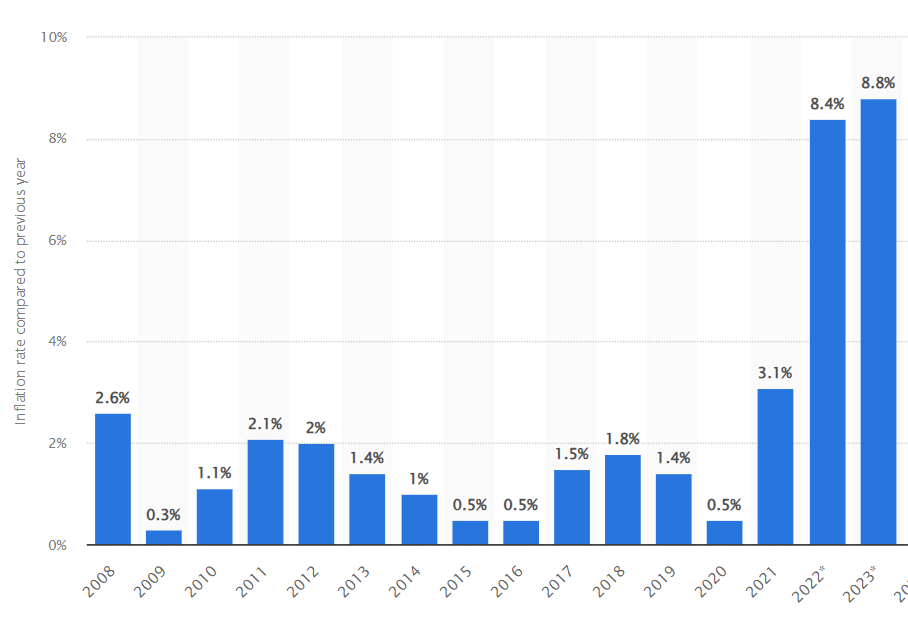
High energy costs have led to runaway inflation in Germany. Source: www.statista.com/
According to Germany’s online Handelsblatt, the German government has moved to increase the price to emit a ton of CO2 in 2024. The original plan was to increase the price by 5 euros a tonne, from 30 to 35 euros a ton, but now the government has decided to double that increase to 10 euros, meaning the price of emitting a ton of CO2 will be 40 euros.
That 33% increase will add to the heating and fueling bills for consumers, and further add upward pressure to the country’s already high inflation rate.
Germany’s economy is already among the weakest in the Euro Zone and high energy costs will make it all the more painful for consumers. The higher price will go into effect on January 1st.
The impact of the higher price will hit the poor the hardest, who are already reeling from higher costs of living. The government is expected to take in an extra 2.3 billion euros in revenue, a total of 10.9 billion euros in 2024.
“We must act cautiously with regard to CO2 pricing, especially in view of the current weakness in growth,” said Germany’s Minister of Finance Christian Lindner.
The state says it will invest in climate-friendly projects, with billions earmarked for building renovations, industrial conversions and electric cars. For 2024, spending of 57.6 billion euros is planned, which is 21.6 billion euros more than in 2023.
Winter Cold, Darkness Kill, While Summer Heat And Sun Save Lives Data Clearly Show
Cold and stupid policies are the real killers, not heat
By P Gosselin | No Tricks Zone | August 11, 2023
German data from Bestattungen.de (Funerals.de) show that far more people die from cold winter weather than they do from hot summer weather.
Lately in Germany there’s been a coordinated disinformation campaign by policymakers and the media. all aimed at getting people to believe that summer heat is the real killer. And so, during heat waves, governments should declare states of emergency and usher restrictions, which could entail cancelling large outdoor events like festivals and sports matches, driving bans and lockdowns.
It’s all about saving thousands of lives and ensuring your safety, they (falsely) claim! And never mind that the mean summer temperature in Germany is under a comparatively cool 20°C.
All the focus on the dangers of summertime warmth seems odd, especially when most of us look forward to this season the most and dread the horrible long winters, a time when people are forced to spend so much time confined inside.
Winter kills, summer saves lives
Today I came across a report from Bestattungen.de (Funerals.de), a site that of course would be familiar with the business and statistics of dying. Clearly cold winter temperatures are far more dangerous than warm summer temperatures, according to their data:
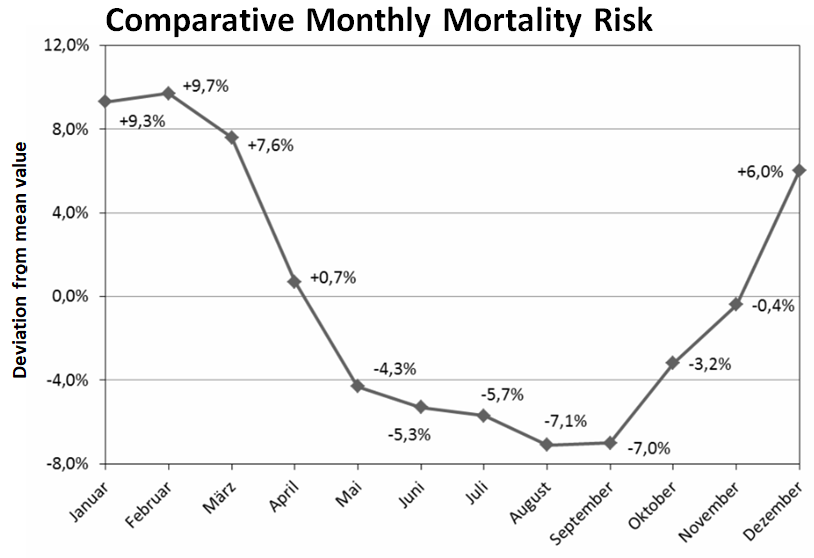
Image: Besttatungen.de (translated in the English).
As the chart shows, mortality is 9.7% above the mean in the dead of winter, February, and is 7.1% below the mean right after Germans have been exposed to 3 summer months of now “deadly heat”. In fact, all the mortal suffering begins to end only once the temperatures finally warm up in April. Of course the report isn’t so recent, but we can rest assured that the mortality behavior hasn’t changed that much.
The data also suggest how crucial Vitamin D is.
The data also suggests the power of vitamin D. Fully tanked up on this crucial nutrient, people are much more resistant to infections and disease well into the fall. By mid winter, once vitamin D levels become depleted, far more become prone to disease, many experts say. This is why so many advised taking vitamin D during the COVID “pandemic”.
The following table shows the ranking, from the most deadly month to the least deadly month:
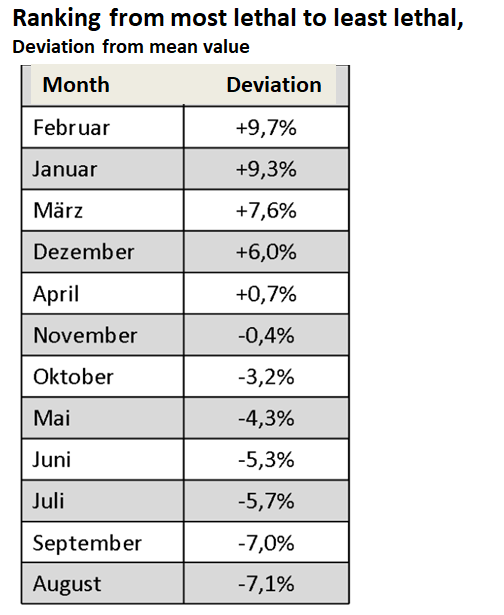
Source: Bestattungen.de
Summer saves lives
Again, the bitter cold months of January and February are the real killers, while the summer months are the real life savers. It’s absolutely idiotic of policymakers to be focused and obsessed on summer heat plans. The only heat plan people need is: Get outside, take off your clothes and enjoy the hot weather! Shade and cold water is all you need to cool off.

According to Bestattungen.de:
The German Weather Service sees weather-related factors as the main reasons for the variance in mortality risk. Damp, cold air increases the risk of aggravating existing illnesses. Respiratory diseases in particular can become more severe in the winter months. Heart attacks can also be triggered by the weather.”
Other factors also include psychological aspects and the lack of daylight and its associated “winter depression” increased melatonin and reduced serotonin.
We need a “stupid-policy-protection plan”
We really need to ask ourselves and policymakers: Why is heating fuel being made so expensive when we know that it would save a lot more lives? Stupid government policy is what’s killing people, and not the life-saving German summers.
ULEZ – Another Imperial Con
Ulez Expansion Predicted to Cut Air Pollution by Just 1.5%
By Alex Kriel | Thinking Coalition | August 9, 2023
Listening to the discussion over Ulez expansion feels like an action replay of the way in which many were convinced to overreact to Covid, leading to policy responses which caused significantly more harm than good. The Ulez ‘discussion’ has all of the same elements, with modelled health benefits calculated by Imperial College and Mayor Khan’s justification that he is “saving lives”, implying that opponents are wannabe murderers. Of course, this time around, the public is thankfully much more sceptical.
In this short note, we wanted to set out how those ‘lives saved’ numbers are derived and to demonstrate that at best the numbers are seriously misrepresented and at worst completely wrong. In fact, applying the Government and Imperial’s own logic, there is a very strong case to say that the expansion of Ulez will, on balance, harm Londoner’s health when considering the downstream economic consequences of this policy.
The major flaw in Imperial’s model is the one-dimensional nature of its assumption that air pollution drives health and life expectancy. In the real world health is driven by a number of interacting factors with income being the primary driver. There are many assumptions one could dispute that (perhaps unsurprisingly) work towards inflating the claimed health benefits of reducing air pollution, but we focus only on the flaw of largely ignoring policy consequences.
The Imperial team presents several numbers, including: attributable deaths (3,600 to 4,100), improved life expectancy (five to six months) and life-years saved (6.1 million). We wanted to focus on the claimed benefits of the Mayor’s Transport Strategy in terms of life expectancy and life-years saved.
Before leaving attributable deaths, it is important to note that these are not in any sense deaths that can be avoided, nor are they deaths that are subject to reduction by the Transport Strategy. The figure appears to compare current death rates with death rates if all human emissions had been removed for all prior periods. It is a theoretical construct (similar to an unmitigated pandemic) and only a small fraction of this number would be theoretically impacted by road transport (around 15%). Only the going-forward numbers (life-years saved) relate to the Transport Strategy and there the benefits are relatively low at 0.4%. It is important to note that there has only ever been one death, of a young and chronically unwell girl ever recorded in England (56 million population) where the death certificate mentions air pollution. Tragic as this death clearly is, it again highlights the disconnect between the theoretical attribution number and actual deaths recorded; we suggest ignoring the attributable deaths figure.
Looking at the claimed benefits of implementing the Transport Strategy, it is possible for a layman to understand the main assumptions on which these health benefits are based. In summary, it is assumed that reducing 10 µg m-3 achieves roughly a 6% reduction in all cause mortality. Note however 10 µg m-3 is more than all anthropogenic PM 2.5 emissions as estimated for England as a whole, so any benefits are scaled down from 6%. So a 1 µg m-3 reduction generates roughly a 0.6% improvement in life expectancy (i.e., ten times less).
Looking at life-years saved and extended life expectancy, the key assumptions are poorly explained. For those in a hurry, the detail shows that all of the Transport Strategy initiatives to 2050 combined will deliver a projected 0.4% reduction in life-years lost to air pollution using projections to 2154. There is a claimed five to six month extension in life expectancy, so the life expectancy of a London male of around 80 years would be extended to around 80.4 years.
These gains are stated relative to a baseline and for some inexplicable reason the Imperial team has decided to use 2013 pollution levels to establish the baseline and in the process to ignore the available data for 2019. This serves to inflate the baseline.
The acid test is: are the results of modelling compatible with observed reality? And on that basis the Imperial Ulez modelling falls flat. The model covers the impact of the entire Transport Strategy to 2050 which covers many more steps than Ulez. The Imperial document is somewhat vague about what those steps are – they are cryptically referred to as 2025 LES, 2030 LES and 2050 LES. It is enough to note that the goal of Mayor Khan’s 2018 Transport Strategy is to “aim for 80% of all trips in London to be made on foot, by cycle or using public transport by 2041”. So the first thing to clarify is that the claimed 6.1 million saving of life years relates to a significant number of measures, well beyond Ulez expansion. In effect these combined steps will largely eliminate private car traffic.
The chart below is constructed from the Imperial material and shows that PM 2.5 µg m-3 population weighted (PWAC) pollution falls over a number of steps and Ulez on a standalone basis has a near zero impact. Also, you can also see that a fair chunk of gains have already been banked between 2013 and 2019.
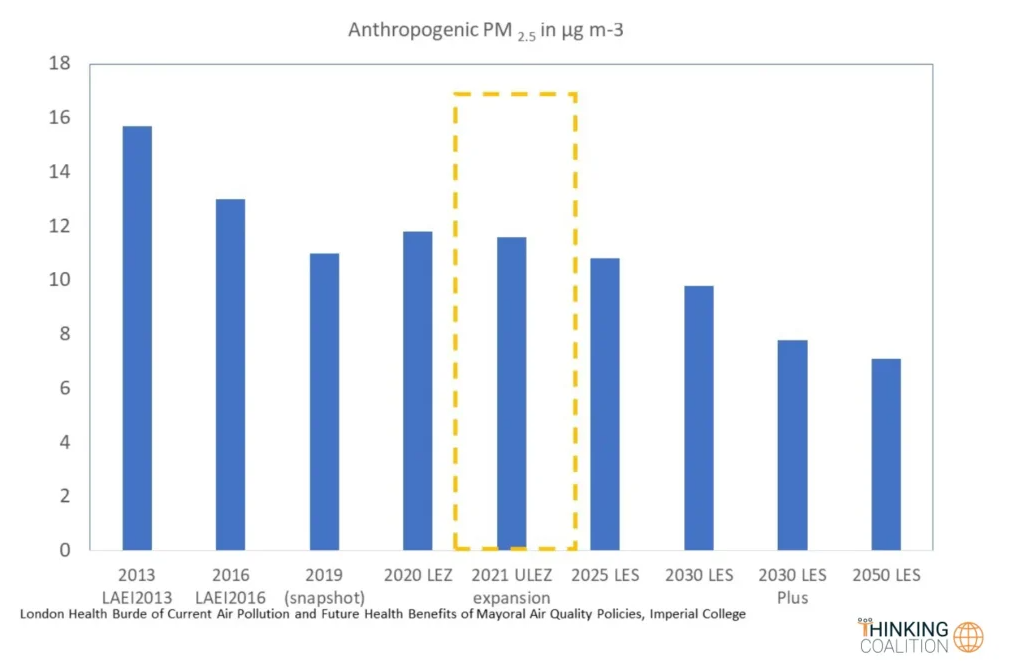
The failure of Ulez to achieve any meaningful reduction in pollution is very clearly shown in a separate document prepared by Jacobs which looks at the impacts of Ulez only. The table below shows the impact of Ulez expansion on PM 2.5 µg m-3 concentration, with an estimated improvement of less than 2%.
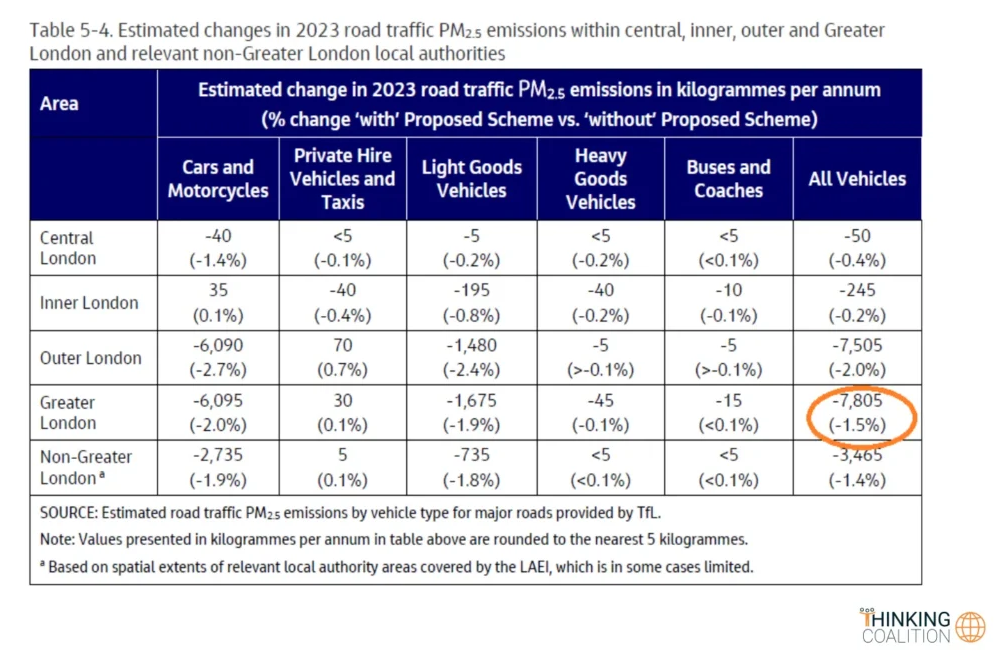
There is a slightly better outcome for NOx pollutants which are reduced by 5.4% across Greater London. This feeds in to the health impact assessment which unsurprisingly shows near zero benefit from Ulez for PM 2.5 reductions, for most health-related metrics.
Looking at life expectancy, the report does acknowledge that due to the large population (around 8.9 million) and the extraordinary long time period over which these benefits are expected to crystalise (up to 2154) then there are around 1.5 billion life-years involved (years × population). For any stated benefit to be meaningful, it needs to referenced to the base case value. The 6.1 million life-years saved is then within the context of a total of around 1.5 billion life-years; this saving is around 0.4%. Correspondingly, the impact on life expectancy from all of the pollution schemes (not just Ulez) adds up to around 22 to 27 weeks additional life expectancy. In the context of male life expectancy of 80 years (roughly) this would improve to 80.4 years as a consequence of 30 years’ worth of restrictive climate policies (ignoring any economic consequences).
The core flaw in the calculation is the one-dimensional thinking that underpins this (and all similar calculations) in that all reductions in PM 2.5 concentrations lead to a reduction in the mortality rate. This thinking ignores any link between people’s incomes and health outcomes, which is the primary driver of health. This is the same dishonest cop out that Professor Ferguson made in his infamous Covid paper. This facilitates a myopic focus on ‘safety’ and generates solutions that do far more harm than good.
In setting out the methodology that states that health outcomes will improve with a reduction in air pollution on a more or less linear basis, the Government’s own figures show that real world data prove that this assumption is not correct (or at least over-simplified). Its own data for the regions of the U.K. show that (if anything) this relationship is reversed.
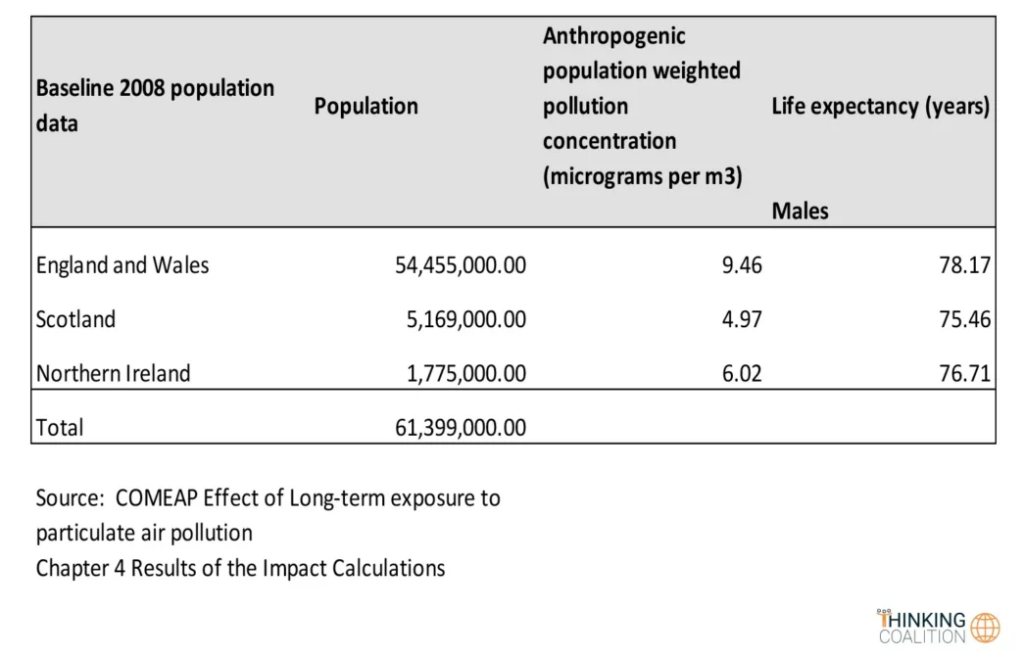
Life expectancy in Scotland is much lower despite having far and away the lowest concentration of anthropogenic PM 2.5 pollutants. Many studies with and between countries show this clearly (e.g. life expectancies by national deprivation deciles, England: 2018 to 2020).
In order to get a handle on how much more significant factors other than PM 2.5 can be, we looked at a recent paper that considers the impact of changes in different factors on life expectancy across 29 European countries (the paper also looks at each factor in isolation using multivariate analysis). The chart below shows the life expectancy impact of a 1% change in the listed factors. There are of course some caveats, but you can immediately see that economic activity dominates the outcomes with a 13-month gain in life expectancy for a 1% gain in GDP versus say a 2.7 month gain for a 1% change in PM 10-2.5. Also note there is no statistically significant relationship between CO2 and life expectancy.
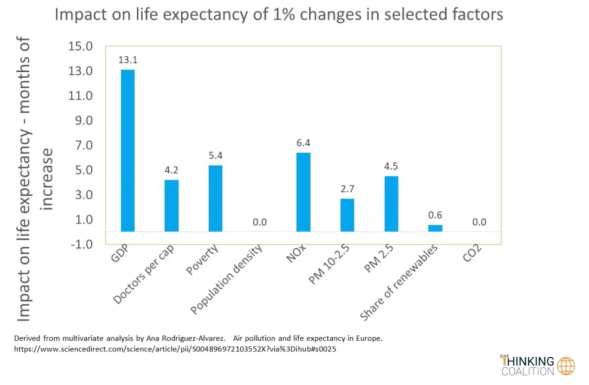
In another section of the same paper the author states: “France and Sweden, some of the countries closest to their potential LE (life expectancies), are also amongst those with the highest NOx level.” The real message, though, is that if you dent people’s income by narrowly pursuing PM 2.5 reduction, you will, on balance, shorten life expectancy and not increase it. The Jacobs’ report confirms that there will be multiple negative impacts on business and economic activity. We guess that on balance Ulez will lower life expectancy when factoring in the impacts on business and family incomes, as well as quality of life considerations.
In the post Covid world, we have understood that politicians of all stripes will shamelessly use emotional manipulation in order to get reasonable people to comply with their unreasonable edicts. That is why understanding how reliable, or otherwise, attributable deaths, life-years saved and life expectancy figures are is so important. You can almost guarantee that these estimates will be manipulated and potentially used to rationalise illogical and damaging policies.With opaque models it is relatively easy to produce results to order.
The political process assumes that the individuals involved are able to understand competing objectives and arrive at a sensible compromise. However, we saw in the case of Covid that many politicians have limited scientific understanding and will tend to pursue unachievable safety, at any cost.
The State seems to be redefining its role with a narrow group of ideologically-driven technocrats setting somewhat arbitrary targets. Achieving those targets requires wholesale changes to people’s lives. Very often economic, mental health and other impacts are barely considered and historically established constitutional boundaries between the State and the citizen are often ignored.
In the case of Ulez expansion, the 59% of respondents to the public consultation who clearly opposed the expansion were simply ignored.
Various sops will no doubt be offered to voters, but is it important that readers realise that there is a direction of travel to these various steps. Finally, remember Albert Camus’s wise warning that, “The welfare of humanity is always the alibi of tyrants.”
Alex Kriel is by training a physicist and was an early critic of the Imperial Covid model. He is a founder of the Thinking Coalition, which comprises a group of citizens who are concerned about Government overreach.
BBC Admits to Smearing Anti-Ulez Protesters as ‘Far Right’
BY IAN PRICE | THE DAILY SCEPTIC | AUGUST 4, 2023
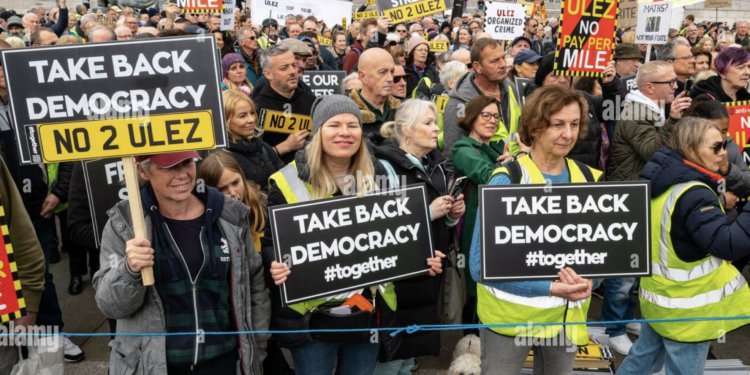
The BBC’s Executive Complaints Unit (ECU) has responded to complaints about its news coverage of an anti-Ulez protest in London’s Trafalgar Square on Saturday, April 15th, 2023. BBC London News broadcast at the time that:
Local protestors and mainstream politicians were joined by conspiracy theorists and Far Right groups.
I was among many people to complain at the time, disgusted at the BBC’s smear. I was at the protest myself, the first of any kind that I had attended. Since my previous exposure to similar protests – such as those against the lockdowns over the course of the pandemic – was limited to watching clips on Twitter, I was slightly anxious. Were things likely to kick off? Were the police going to ‘kettle’ us all in a side street off the Strand?
I could not have been more wrong. I was overwhelmed by how many families were there, abundant small children clambering up the bases of Landseer’s lions. There were a handful of Tory politicians some of whom spoke from the platform, but there was no other political presence whatsoever.
When I saw the BBC London news coverage, I was therefore appalled. I wasn’t too concerned about the claim that there were a few conspiracy theorists there – quite a few placard-holders were plainly ‘Team James’ – but “Far Right groups” seemed to me something for which there was no evidence at all. This appeared to be an attempt on the BBC’s part to suppress dissent towards the Ulez expansion by smearing opponents. This struck me as a sinister turn from the national broadcaster and so I complained.
On April 21st, the BBC responded to my complaint as follows:
BBC London had deployed a reporter to the protest and she witnessed, and documented, first hand, motifs on tabards and placards with explicit Nazi references, along with other epithets about world order and democracy.
I walked around the protest for about three hours on April 15th and I must have missed the explicit Nazi references, presumably displayed by the “Far Right groups”. I complained again, asking for evidence.
On May 12th the BBC rejected my additional complaint as follows:
We remain satisfied our BBC London reporter gave an honest account of what she witnessed that day.
At this point, I escalated the complaint to the ECU, one of 44 people to do so on the grounds of both accuracy and impartiality. Today the BBC acknowledged the following:
In relation to “Far Right groups”, we recognised that the [conspiracy theory] groups named above might have Far Right (or indeed Far Left) adherents, but did not consider this to be evidence of the presence of “Far Right groups”. The programme-makers directed our attention to the deployment by some demonstrators of Nazi imagery, symbolism and slogans directed against the Mayor of London which we accepted was consistent with tactics used predominantly by certain Far Right groups, but we saw no grounds for concluding that they were used exclusively by such groups. We also noted the presence of an individual who seemed, from social media postings, very likely to have been associated with the presence of a Far Right group at a previous demonstration, but the evidence fell short of establishing that he was an adherent of that group, and we saw no evidence that other representatives of the group were present. While it was clear from our dealings with the programme-makers that the statement about the presence of Far Right groups was made in good faith, we assessed the evidence differently. In our judgement it was suggestive of the presence of Far Right groups but fell short of establishing that such groups had in fact been represented among the demonstrators. This aspect of the complaint has been upheld.
This shows pretty clearly that the idea of “Far Right groups” being present at the protest was a complete fiction. Feelings are running high about Khan and some placards quite possibly likened his administrative style to infamous dictators of the past but for anyone to have spun this as evidence of “Far Right groups” is a stretch to say the least. As for the “individual who seemed, from social media postings, very likely to have been associated with the presence of a Far Right group at a previous demonstration”, the words ‘straws’ and ‘clutching’ spring to mind.
In addition to upholding the complaint about accuracy, the BBC has also partially upheld the complaint on impartiality which derives from the close resemblance of the BBC’s language in its news report to that of Khan himself at a People’s Town Hall in Ealing in March. When asked about people’s misgivings about the Ulez expansion, he said that its opponents were “in coalition with the Far Right” and “joining hands with some of those outside who are part of a Far Right group”.
The BBC has now acknowledged the “impression of bias” and upheld this part of the complaint, while spinning it as something of an accident, something that “might well have been perceived as lending a degree of corroboration to the Mayor’s comments”.
While it is a step in the right direction for the BBC to uphold two aspect of the complaints, there remain unanswered questions about its broader coverage of Ulez and to what extent its coverage is being unduly influenced by Sadiq Khan.
Consider the article in the Daily Express published on 24th June about a senior producer at the BBC that made contact with Reform U.K. London Mayoral candidate Howard Cox to blow the whistle on the BBC’s suppression of coverage critical of the Ulez expansion. (Cox, by the way, was also in attendance at the April demo but had not at that point declared as a Mayoral candidate):
The leak to Reform U.K. Mayoral candidate Howard Cox… reveals that Mr. Khan had applied pressure on the BBC over reporting the issue. It said that journalists wanting to run stories now needed top level clearance over something that is set to be a major electoral issue in the London Mayor election and general election both next year.
The Express article went on to explain email exchanges that the senior BBC producer had received:
The BBC producer was told in an email to news staff from Dan Fineman, Senior News Editor BBC South East: “If any platforms are doing a story on Ulez charges in the South and Southeast we now need to do a mandatory referral to Jason Horton or Robert Thomson (re) outstanding complaint with the Mayor of London which is very live at the moment.”
Jason Horton is the BBC’s Director of Production for BBC Local Services and Robert Thomson is Head of the BBC in London and the East. This suggests a level of collusion between very senior staff at the BBC and Sadiq Khan with a direct influence over editorial approaches to news coverage of anti-Ulez protests.
It was also reported by the whistleblower that a BBC London investigation into Ulez was now been paused because of the Mayor of London’s pressure on the BBC.
In short, Khan appears to be exercising at the very least some form of influence over the BBC’s coverage of anti-Ulez protests. This is not an “impression of bias” – this more closely resembles a real, undiluted bias against anti-Ulez campaigners on the part of the nation’s publicly-funded broadcaster at the behest of the Labour Mayor of London. The BBC has come up with a partial and grudging apology but I suspect that the truth about its willingness to suppress dissent with “Far Right” smears is more extensive than it’s prepared to admit. I hope that doesn’t make me a “conspiracy theorist”.
Bernie Sanders Leads Calls To Prosecute “Illegal Misinformation” On Climate Change
By Didi Rankovic | Reclaim The Net | August 3, 2023
Before there was the narrative pushed by the mainstream media that the 2016 US presidential election was rigged – there were the Democratic primaries, regarding which the evidence of actual rigging taking place has been much more solid.
The victim was hapless presidential hopeful Bernie Sanders – but now, this once great hope of left-wing citizens seems to be turning increasingly authoritarian, at least in his rhetoric.
He is, essentially, providing a solution to a problem that shouldn’t exist (not in a democracy) – namely, what to do, legally, to stop political opponents?
In this case, it’s about corporate skeptics around the “climate change panic.” And Sanders has the answer – prosecute them, and if found guilty, put them in prison.
Sounds fairly extreme, but here we are.
In a letter co-signed by Senator Sanders, a group of his Democrat colleagues is asking the US Department of Justice (DoJ) to do just such a thing, aimed at what’s termed the fossil fuel industry.
We obtained a copy of the letter for you here.
And although it seems careful to point the finger and demand retribution from companies that are accused of, basically, organizing campaigns to improve their business (shocking (NOT) – and, that business anyway is far from being illegal) – once a precedent of legally hounding dissenters is set, it can go anywhere.
ExxonMobile, Shell, and other giants are mentioned, perhaps as a way to soften the blow of that reality, but if what the senators are asking is to become reality, next up could be journalists, and then social media users, and just in general, it’s turtles all the way down.
Sanders and his companions would not want any of their actions to be seen that way, naturally. So they assert that, “the fossil fuel industry has had scientific evidence about the dangers of climate change and the role that burning fossil fuels play in increasing global temperatures for more than 50 years.”
The letter continues: “To coordinate their illegal misinformation campaign, the fossil fuel industry funded a multimillion-dollar plan through the American Petroleum Institute that sought to make climate change a ‘non-issue.’”
But the exact same argument could be used (in court) against any “regular Joe” not into the whole climate change – in court, down the line, should such extreme red lines as requested by the letter get established.
Of course, there’s no way to say that will happen – but also, that it won’t.
Kind of the same argument that climate change skeptics are trying to make about the climate change policy push.
Featured Video
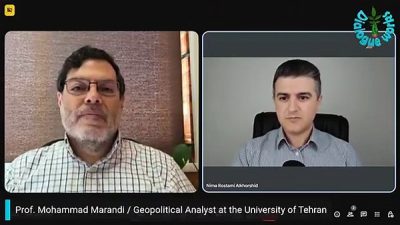
Seyed M. Marandi: U.S. Military DIVIDED? Iran’s Secret Defense EXPOSED
or go to
Aletho News Archives – Video-Images
From the Archives
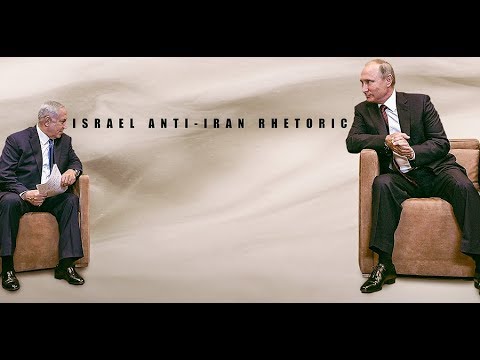
‘Israel sees Iran as obstacle to its policies’
Press TV – August 25, 2017
Prime Minister Benjamin Netanyahu has said that Israel felt threatened by Iran’s growing influence in the Middle East. Netanyahu expressed his Iranophobic view in a meeting with Russian President Vladimir Putin in Russia’s Black Sea resort of Sochi on Wednesday. Press TV has asked Scott Rickard, former American intelligence linguist from Tampa, Florida, and Brent Budowsky, a columnist at The Hill from Washington, to give their thoughts on the issue.
Rickard said Tel Aviv is concerned about the fact that the regime could not carry out its old project to spread sectarian divisions and pave the way for dismemberment of the countries in the Middle East region because of the Iranian-led resistance against Israeli policies, not only in the occupied territories of Palestine but also in the whole region.
“Iran is not a threat to Israel whatsoever. The threat that Israel sees is the fact that their Oded Yinon Plan is being put to a hold by Iran,” the intelligence linguist said on Thursday night.
“They (the Israelis) look at Iran as a threat only because they have no influence on their governments and Iran is autonomous and is not under the Zionist influence,” he added.
Since the victory of the Islamic Republic of Iran in 1979, Tehran has been critical of Israel’s policies in the region, whereas “no leaders [of other states] even dared to speak out against Zionism,” Rickard argued. … continue
Blog Roll
 Aletho News
- The US-Israeli War on Science is an Assault on our Future
- Trump’s Promise to Bomb Iran ‘Like Never Before’ Faces Brutal Logistics — Expert
- Germany seeks to restrict stays abroad for men of fighting age – Berliner Zeitung
- Evidence points to Ukraine being behind TurkStream attempted sabotage, but that should come as no surprise
- Sri Lanka secures supplies of Russia oil – minister
- Nations across Asia strike direct deals with Iran for Hormuz passage
- IRGC commander declares ‘new phase’ of reprisal attacks against aggressors
- Israel’s air defenses overwhelmed by cluster-warhead Iranian missiles: Reports
- Striking Iran’s Infrastructure Would Have Little Military Impact – Report
- What’s Behind U.S./Israeli Strikes On Iranian Pistachio Factories?
- If Americans Knew
- Trump says Iranians appreciate bombs, WHO warns of nuclear risks – Daily Update
- U.N. experts demand Israel release prominent Gaza doctor after reports of ‘severe torture’
- Israel’s Latest Genocide Is Against the Shias of Lebanon. Why Is the World Silent?
- How Eliot Cohen’s influence over U.S. war-making paved the way for Trump’s war crimes in Iran
- Israelis don’t pay for the weapons we ‘sell’ to them — US taxpayers do
- While Distancing from AIPAC, Most 2028 Democratic Hopefuls Are Still Embracing Israel
- A brief history of the Israeli nuclear program, the open secret at the heart of the Iran war
- Israeli Settlers Killed a Palestinian Farmer on His Own Land, in Front of His Father. Yes, Again
- The US-Israeli War on Science is an Assault on our Future
- 100+ International Law Experts Say US Strikes on Iran Violate UN Charter, Could Be War Crimes
- No Tricks Zone
- An Inconvenient Tree: Uncovered In Alps… Europe Much Warmer Than Today 6000 Years Ago
- New Study Reports A 60% Slowdown In Greenland’s Ice Loss Rate In The Last Decade
- Low Intensity Tornado Wrecks Major Solar Farm, Creating A Potential Toxic Dump
- New Study Finds Warming Saves Lives…Cold Temperatures 12 Times More Deadly Than Excess Heat
- German Science Blog Accuses PIK Climate Institute Of Hallucinating Climate Tipping Points
- Devastating Assessment Of Comirnaty Vaccine By Former Senior Pfizer Europe Toxicologist
- New Study: CO2 Is ‘Effectively Negligible’ As An Explanatory Climate Change Factor Since 2000
- Former Pfizer Toxicologist Dr. Helmut Sterz Tells Bundestag Hearing Pfizer Vaccine Should Have Never Been Approved
- Energy Expert: Germany’s Nuclear Phaseout Was A “500 Billion Euro Mistake”
- New Research: South Australia’s Mid-Holocene Sea Surface Temperatures Were 4°C Warmer Than Today
 Aletho News