Thousands protest in Paris against Macron’s defense policies
RT | March 9, 2025
Thousands of protesters marched through Paris on Saturday to oppose what they see as French President Emmanuel Macron’s militaristic approach to foreign policy and his lack of interest in achieving peace in the Ukraine conflict.
The demonstration was organized by Florian Philippot and his party, The Patriots. Chanting slogans and carrying signs such as “We don’t want to die for Ukraine,” and “Macron, we don’t want your war,” the crowd moved from the Place du Palais Royal to the Place Pierre Laroque.
Macron on Wednesday proposed expanding France’s nuclear deterrent to protect EU nations and urged European members of NATO to take more responsibility for their own defense. He cited uncertainty over Washington’s commitment to Ukraine, especially as relations between Kiev and US President Donald Trump’s administration experienced a setback after Vladimir Zelensky rejected calls to negotiate peace with Russia.
Macron has argued that continued aid to Ukraine was crucial, warning that if Russian President Vladimir Putin succeeded in Ukraine, he wouldn’t stop there – a claim that Moscow has repeatedly dismissed as nonsense. Russia has identified NATO’s expansion toward its borders and the US-led bloc’s promise of eventual membership for Ukraine as being among the key reasons for the conflict.
Many demonstrators at the Paris rally criticized Macron for prioritizing military matters over domestic issues. “When you declare war, it’s to erase all the other failures,” one protester said. Another accused Macron of pursuing conflict while leaders such as Trump and Putin are talking about peace.
Addressing the crowd, Philippot condemned Macron’s approach, declaring that the president “absolutely does not want peace.” Philippot, formerly a member of the National Front, has been a vocal critic of Macron’s administration and EU’s policies. His party opposes what it perceives as unnecessary military interventions and advocates for a more independent French foreign policy.
Macron’s push for increased defense spending faces hurdles as France grapples with a budget deficit and pressure to rein in spending. Approval of the 2025 budget has been delayed due to a divided parliament. In January, Budget Minister Amelie de Montchalin announced plans to cut €32 billion ($34.6 billion) in public spending while raising taxes by €21 billion.
Critics argue that these measures would burden middle-class families, small business owners, and retirees already struggling with rising costs. Meanwhile, Prime Minister Francois Bayrou has rejected calls for public consultation on major defense policies, insisting such decisions are the government’s responsibility. When asked on Friday whether the French people should have a say in increased military spending and a shift toward a “war economy,” Bayrou was firm: “The government’s responsibility is to say, no, we can’t let the country be disarmed. It’s vital.”
U.S. admits Ukraine proxy war defeat while European elites persist in self-destruct delusions
Strategic Culture Foundation | March 7, 2025
In an interview on Fox News this week, America’s top diplomat Marco Rubio made a damning admission. He called the conflict in Ukraine a proxy war between the United States, its NATO allies and Russia.
Stop the press. In one fell swoop, the narrative justifying the NATO-backed war for the past three years was exposed as a naked lie. It is not about “defending Ukraine” from alleged Russian unprovoked aggression. It is a proxy war. That means it has deeper causes and responsibilities.
This is what Moscow and many other international observers have been saying all along. To recognize the conflict as a proxy war is to begin admitting wider culpability for it and to start addressing the root causes for a genuine peaceful settlement.
Secretary of State Rubio went on to emphatically call for an end to the war to spare lives. He claimed the conflict was in a stalemate, not quite bringing himself to utter the word, “defeat”. But defeat is what this debacle is.
Rubio decried how the previous Biden administration and Congress (including himself as a Senator) had fueled the conflict along with other NATO members in a futile campaign. It is now time to bring the conflict to an end, he said.
Appropriately, the U.S. foreign minister appeared on television with a prominent Lenten cross of ash marked on his forehead. Christians around the world begin preparations for Easter by donning ashes as a sign of repentance. Rubio’s “confession” of a failed U.S. policy of proxy war against Russia in Ukraine may be seen as a belated recognition in Washington that it needs to cease, desist and make amends for peace.
Not so the European leaders, however, who this week persisted in their lies about a noble purpose in Ukraine.
Following the humiliating rebuke of Ukrainian leader Vladimir Zelensky by U.S. President Donald Trump in the Oval Office last week, the European politicians have been rallying their support for the Kiev regime.
Trump aides ejected Zelensky from the White House last Friday because he testily refused to comply with a U.S. initiative for peace in Ukraine. This week, the chastened Zelensky wrote a letter to Trump appealing for forgiveness – and more U.S. military aid. It’s not clear if the Ukrainian redundant president has convinced the Trump administration that he is ready to sign a peace deal.
In the meantime, the White House has now cut off military aid and intelligence sharing with the Kiev regime. Again, proving the reality of a proxy war.
That move has thrown the European allies into a quandary and existential crisis. It is a crisis of their own making.
An emergency EU leaders’ summit was convened to drum up more military support for Ukraine. The EU 27 could not agree on a package because Hungary vetoed it. Another summit is to be called on March 20, when it is intended to bypass Hungarian objection to funding the war in Ukraine.
European leaders are desperate. The about-turn in U.S. policy to walk away from the failed proxy war in Ukraine has left them holding a dead-end hand of cards. Rather than folding, they are doubling down on their worthless chips.
Trump upbraided Zelensky in the Oval Office by telling him, “You don’t have the cards” to keep this war going.
The same advice can be leveled at the European governments, including the British, who strangely have wormed their way back into calling shots in Europe despite exiting the bloc five years ago.
This war has been lost with appalling losses. Three years of the biggest war in Europe since World War Two has resulted in over one million deaths – mainly on the Ukrainian military side – and hundreds of billions of dollars and euros wasted, which the American and European public will pay over generations through debts.
This war is an abominable crime perpetrated by Washington and its European allies. All the more so because it could have been avoided if Russian diplomatic efforts in late 2021 had been reciprocated to deal with Moscow’s legitimate security concerns over NATO’s expansion. But no, the Western imperialists wanted to strategically defeat Russia and they used a NeoNazi regime in Ukraine as their pawn following the CIA-backed coup in Kiev in 2014 against an elected president.
Western leaders must be held to account for their nefarious machinations and the colossal damage in Ukraine and Russia. Russian civilians have been killed by NATO weapons and over $300 billion in Russian assets have been confiscated. Russia has the right to seek massive war reparations.
At least, to their credit, the Trump administration has realized that the evil of this fraudulent war must stop.
U.S. Vice President JD Vance and Keith Kellogg, Trump’s envoy on Ukraine, also this week referred to the war as a proxy war that needs to end.
The Americans are calling on the Europeans to stop funding the war with military aid. This is an amazing turn around. Since WWII, the Americans have been the diehard warmonger with the European lackeys following suit. Now it’s the other way around. The European elites want the war in Ukraine to continue – albeit with the lie that they are seeking “lasting peace.”
Russian President Vladimir Putin has consistently said that if the Western powers stopped funneling weapons into Ukraine, the conflict would quickly stop. And then diplomacy could begin for dealing with the root causes and establishing mutual, sustainable peace.
Vice President Vance rightly pointed out that the Europeans by puffing up Zelensky as a hero “freedom fighter” are prolonging the slaughter and destruction of Ukraine as well as provoking the risk of a wider war.
The problem is that whereas the Americans have adopted realism and common sense (at last), the Europeans are continuing to persist in the lies and delusions about the proxy war against Russia.
This week, French President Emmanuel Macron echoed other European political figures by calling Russia a threat to Europe. The French, British and others are insisting on fueling the dead-end war by racking up astronomical debts and proposing to send “peacekeeper” troops to Ukraine. Moscow has warned that such a move would mean direct war.
So desperate is Macron that he is engaging in nuclear saber-rattling, offering to deploy French nuclear weapons to “defend” Europe. Why don’t Macron and other European elites simply engage in diplomacy like the Americans?
The insane recklessness of the Europeans stems from multiple sources: their incorrigible Russophobia, ties to the military industrial complex, chagrin over their American patron dumping the Ukraine war mess on them, and in their existential need to keep lying about the war as some noble cause instead of it being a sordid proxy war against Russia.
The Europeans are so full of lies, duplicity, guilt, and ultimately impotence that they will likely persist in their delusions of grandeur. To repent would be politically fatal. Thus persisting in their lies, the European Union and its military arm NATO are being destroyed.
Napoleon, Hitler, and now the elitist European leaders have all fallen into oblivion from miscalculations over Russia.
Polish PM plans to double size of army
RT | March 8, 2025
Polish Prime Minister Donald Tusk has unveiled plans to more than double the size of the country’s military to 500,000. Speaking in the Polish Parliament on Friday, Tusk said Poland must be prepared for future conflicts and strengthen its defenses.
Tusk reiterated his earlier claims that Russia poses a threat to Europe, saying Moscow could launch a “full-scale operation” against a “larger” target than Ukraine within three to four years – which Russia has repeatedly dismissed as unfounded. He argued that Poland must serve as a “bastion” to protect NATO’s eastern flank and should expand its military capabilities.
“We’re talking about the need to have an army of half-a-million in Poland, including the reservists,” he stated, noting that Poland’s current armed forces number around 200,000, which he compared to Russia’s estimated 1.3 million troops. Tusk said his government is drafting legislation that would require every adult male in Poland to undergo “large-scale military training” to prepare for a potential conflict with Russia.
“We will try to have a model ready by the end of this year so that every adult male in Poland is trained in the event of war, so that this reserve is comparable and adequate to the potential threats,” he said. He added that Polish women may also be required to undergo military training, though “war is still to a greater extent the domain of men.”
Tusk’s remarks came a day after EU leaders approved a major military spending plan to unlock billions of euros to build up defense capabilities. The initiative – ReArm Europe – which was adopted following an emergency summit in Brussels, hikes defense spending by up to €800 billion ($840 billion) – twice the total EU defense expenditures in 2024. The Kremlin condemned the bloc’s “militarization” plan, calling it a path towards confrontation that hinders peace efforts with Ukraine.
In addition to a larger army, Tusk said Poland must enhance its military capabilities, including through the acquisition of nuclear and “modern unconventional weapons.” Tusk’s speech followed his recent accusations that Moscow is fueling a new arms race, and calls for fellow EU nations to ramp up defense spending.
The Kremlin has criticized Tusk’s rhetoric as confrontational and militaristic. Moscow has rejected accusations that it poses a military threat to Europe, with President Vladimir Putin dismissing the claims as “nonsense” designed to justify increased military budgets.
Trump Floats Denuclearization Since US Can’t Win Arms Race With Russia, China Without Going Bankrupt
By Ilya Tsukanov – Sputnik – 07.03.2025
President Donald Trump has floated trilateral US-Russia-China talks on cuts to strategic nuclear weapons stockpiles. Sputnik reached out to one of Russia’s foremost experts on strategic security issues to discuss what’s behind the proposal, and its chances for success.
“Nuclear weapons are precisely one of the areas where competitors outpacing the United States is very visible,” says Dmitry Suslov, deputy director of research at the Russian Council on Foreign and Defense Policy.
“Chinese and Russian nuclear arsenals combined provide two times preponderance over the United States, or will make two times preponderance in the observable future,” Suslov stressed.
Nuclear talks are the “alternative” for the US to bankruptcy stemming from high defense spending and unsustainable debt, particularly as the US nuclear arsenal is stuck in the 80s and lags far behind competitors, especially Russia, and would take immense resources to modernize, the observer said.
Instead, Trump “wants to channel competition into some other areas, into the areas where the United States largely have advantages,” according to Suslov, from high-precision conventional arms to his “Golden Dome” proposal for a space-based SDI 2.0.
“This is an attempt to reduce competition in the area where the United States is not competitive and to channel the competition into the areas where the United States is competitive, has comparative advantages, technological advantages, in the opinion of the Trump administration,” the expert noted.
Will Trump’s Nuclear Negotiations Push Succeed?
- “Complete denuclearization is impossible,” Suslov stressed, since nuclear weapons serve as the “ultimate guarantee which prevents war among great powers.”
- “The only [reason] why NATO and the United States have not started a direct war against Russia yet in the context of the Ukraine war is nuclear weapons,” he said.
- Russia and China will be unlikely to agree to trilateral talks, the expert believes, since their relations are built on partnership, not deterrence.
- As for bilateral Russia-US talks, these are possible, “but also [face] huge impediments,” including the need to include the French and British nuclear arsenals into account.
- “Basically, Macron made it absolutely clear that the purpose of French nuclear weapons is to deter Russia. This is against Russia. The purpose of British nuclear weapons is also against Russia. And they plan explicitly nuclear operations, potential nuclear operations against Russia,” Suslov noted.
Accordingly, Russia’s strategy will continue revolving around insisting “on a comprehensive approach and taking all the factors which impact strategic stability into account,” Suslov predicts.
Trump: Everybody Should Get Rid of Their Nuclear Weapons
By Kyle Anzalone | The Libertarian Institute | March 6, 2025
President Donald Trump restated his desire to abolish nuclear weapons during a White House presser on Thursday.
“It would be great if everybody would get rid of their nuclear weapons. [I know] Russia and us have by far the most,” the president told reporters in the Oval Office. “China will have an equal amount within four to five years. It would be great if we could all de-nuclearize because the power of nuclear weapons is crazy.”
Currently, nine countries – the US, UK, France, Russia, China, India, Pakistan, North Korea, and Israel – possess nuclear weapons. With global tensions on the rise, several nations, including the US, are adding to their strategic capability.
According to the Defense Intelligence Agency, Beijing is working to ramp up its production of nuclear weapons. Last year, the agency predicted that China could have over 1,000 nuclear weapons. However, that would still give Beijing a far smaller arsenal than Washington and Moscow, which each have around 1,500 deployed nuclear weapons and thousands more in storage.
Shortly after returning to the White House in January, Trump said he spoke with President Vladimir Putin about denuclearization during his first term, and that the Russian leader was receptive to the idea. “We were talking about denuclearization of our two countries, and China would have come along. China right now has a much smaller nuclear armament than us, or field, than us, but they’re going to be catching [up] at some point,” Trump said.
“I will tell you that President Putin really liked the idea of cutting back on nuclear, and I think the rest of the world, we would have gotten them to follow, and China would have come along too. China also liked it,” he added. “Tremendous amounts of money are being spent on nuclear, and the destructive capability is something that we don’t even want to talk about. It’s too depressing.”
Trump has also discussed negotiating a deal with Moscow and Beijing that would see all three countries drastically cut military spending.
However, while Trump has at times voiced support for demilitarization and denuclearization, during his first term in office he scrapped two major arms control agreements, the Open Skies and the Intermediate Range Nuclear Force treaties.
Additionally, Trump refused to engage in bilateral discussions with Russia on extending the last nuclear arms control agreement between the world’s two largest nuclear arsenals, the New Start Treaty. He insisted that Moscow must pressure Beijing to make it a trilateral deal, a demand that almost led to the downfall of the landmark deal.
Though President Joe Biden was able to reach an agreement with Putin to extend the treaty for five more years in 2021, it is set to expire next year without another extension.
Kremlin responds to Polish PM’s ‘arms race’ call
RT | March 7, 2025
Moscow will not engage in an arms race with the EU, Kremlin spokesperson Dmitry Peskov has said. He was speaking after Polish Prime Minister Donald Tusk urged the bloc to ramp up its military spending.
Tusk on Wednesday accused Moscow of starting a new arms race and insisted that Western Europe must respond. “The war, the geopolitical uncertainty and the new arms race started by [Russian President Vladimir] Putin have left Europe with no choice,” he stated on social media.
Speaking to reporters on Thursday, Peskov said it was regrettable to hear such statements. “They will not win against us because we will not play with them; we will be busy ensuring our own interests,” he said.
“We regret the confrontational, even militaristic, statements coming from Warsaw and Paris, which show that Europe has yet to adjust to the new dynamic between Moscow and Washington,” Peskov said. He didn’t rule out, however, that European leaders would eventually “feel which way the wind is blowing.”
The Polish prime minister further claimed that “Europe must be ready for this race, and Russia will lose it like the Soviet Union 40 years ago,” arguing that the EU would arm itself faster than Russia.
Tusk’s comments follow statements by French President Emmanuel Macron during an address to the nation on Wednesday claiming that Russia poses a threat to the EU. Macron urged the bloc to boost defense spending and suggested extending France’s nuclear umbrella to other EU countries.
On Tuesday, European Commission President Ursula von der Leyen proposed a massive defense spending hike. As part of the ‘ReArm Europe Plan’, the bloc would spend about $840 billion on defense – double total EU defense expenditures in 2024.
The European leaders’ calls come as US President Donald Trump’s administration has recently signaled a major policy shift, urging European nations to take the lead in their own defense, as well as in supporting Kiev.
Last month, Pentagon chief Pete Hegseth said that Washington intended to refocus its military priorities on countering China, warning the EU not to assume that American forces would remain in the region indefinitely.
Moscow has rejected accusations that it poses a military threat to Europe, condemning Macron’s remarks as “highly confrontational.” Russian President Vladimir Putin dismissed Western claims of an imminent Russian attack as “nonsense” and accused European leaders of inflating the threat to justify higher military spending.
Putin earlier reiterated that Russia has no interest in being drawn into an arms race but stressed that Moscow would take all necessary steps to safeguard its own security and that of its allies.
Germany Doesn’t Have Money for Merz’s Defense Boost – Ex-AfD MEP
Sputnik – 07.03.2025
Berlin plans to change its fiscal rules and “invest” €500 billion ($543 billion) in infrastructure and defense, as explained by the chancellor-in-waiting, Friedrich Merz.
It’s alarming that Merz is prioritizing military spending because of the mythical Russian threat, especially amid efforts for peace in Ukraine, Gunnar Beck, a legal academic and former AfD MEP, tells Sputnik.
Merz has long pushed for higher defense spending. Last December, he stated the Bundeswehr would need at least $87 billion annually, up from the current $57 billion. German media also reported a proposed $433 billion defense fund.
“Germany hasn’t got the money,” Beck stresses. “It’s got to borrow the money. It’s at the expense of social spending and badly needed investments in infrastructure and research and development.”
“It’s not only Germany that’s proposing to increase military spending. The EU, under [Ursula] von der Leyen, has announced it will borrow another €800 billion ($866 billion) to support Ukraine. When you add up these figures, it’s already more than a trillion. And they are clearly coordinating their policies,” Beck concludes.
Ukraine cut off from US satellite imagery – media
RT | March 7, 2025
Ukraine has lost access to US satellite imagery after American space technology company Maxar blocked Kiev’s use of its services, a local media outlet reported on Friday. The move follows Washington’s recent decision to freeze military aid and intelligence sharing with Ukraine.
Ukrainian media outlet Militarnyi has claimed that several anonymous Maxar users have confirmed that they have been denied access to the service. The company has reportedly explained that the restriction had been introduced “in response to an administrative request.”
The outlet noted that the limit appears to apply to both government and private users, adding that the request cited by the company likely refers to US President Donald Trump’s order to cease all intelligence sharing with Ukraine.
Maxar, according to Militarnyi, has been one of the leading providers of high-resolution commercial satellite imagery to Ukraine’s armed forces who used it to track the movements of Russian troops, assess battlefield conditions and damage to key infrastructure. The US company has not yet confirmed the alleged restriction of services.
The report comes as Washington has halted the delivery of billions of dollars worth of military aid to Ukraine, while the CIA has confirmed that intelligence sharing with Kiev has been suspended. The decision to freeze military support for Ukraine follows last week’s heated meeting between Trump, US Vice President J.D. Vance and Zelensky at the White House. During the exchange, Trump accused Zelensky of ingratitude and “gambling with World War III” by refusing to seek peace with Russia. The Ukrainian leader was asked to leave the US capital and return only when he was ready for serious negotiations.
On Wednesday, during his address to the US Congress, Trump claimed that he had received a letter from Zelensky in which he had apparently agreed to come to the negotiating table in the near future in order to work towards a peace agreement.
Moscow has welcomed Washington’s suspension of military aid to Kiev, noting that such steps could potentially encourage Ukraine to seek a peaceful resolution to the conflict. At the same time, the Kremlin has expressed cautious optimism about Zelensky’s supposed U-turn on negotiations with Moscow, noting that the Ukrainian leader has yet to lift his legal ban on such contacts.
Hungary to be stripped of voting rights, demand MEPs from pro-EU Volt party
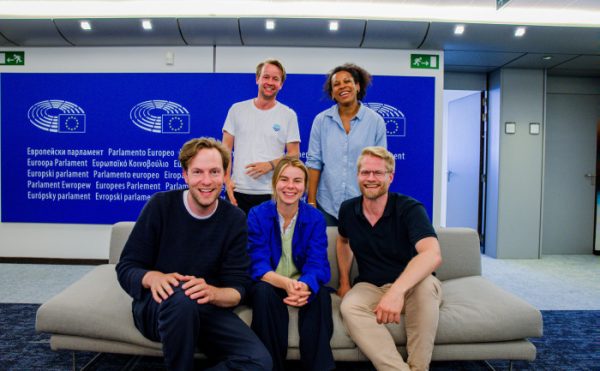
Remix News | March 7, 2025
MEPs from the Volt party in the European Parliament submitted a proposed “action plan” earlier this week, as reported by Politico. Among the plan’s nine points is a call to strip Hungary of its guaranteed voting rights as a member of the European Union.
Volt is a pan-European federalist party that favors strengthening and centralizing the European Union’s authority over its member states.
Volt’s call to deprive Hungary of its right to veto all decisions made by the EU, which is a fundamental right guaranteed in the bloc’s founding treaties, is doubtless a response to Viktor Orbán’s veto of €20 billion in military aid that Brussels had wanted to send to Ukraine this week. This aid was intended to partially compensate for the United States’ recent suspension of aid to the country as part of the Trump administration’s attempts to force an end to the conflict.
Orbán has been strongly critical of the EU’s support for Ukraine from the outset of the current war. He has frequently used his country’s veto powers in an effort to pressure the bloc to stop arming Ukraine and instead force it to come to the negotiating table.
Other points in Volt’s proposal were a call for the formation of a European army, as is being discussed by others in the European Parliament, as well as a revision of the bloc’s treaties to give it greater authority in matters of defense. Also included is a suggestion to make Kaja Kallas, the European Commission’s current Vice President as well as its High Representative of the Union for Foreign Affairs and Security Policy, an official foreign minister for the EU.
Given that Volt has only five MEPs in the European Parliament, its suggestions are unlikely to have much effect. They nevertheless reflect the growing frustration in the bloc with Hungary’s ongoing efforts to stop the war.
This is not the first time that the idea of depriving Hungary of its voting rights has been floated in European circles. Last summer, 63 MEPs demanded that Hungary’s rights be suspended in response to Orbán’s diplomatic visits to Kyiv, Moscow, and Beijing while his country held the rotating Presidency of the Council of the European Union.
EU approves massive defense spending hike
RT | March 7, 2025
The EU has approved a large military spending plan to unlock billions of euros to build up defense capabilities. The initiative, which was adopted following an emergency summit in Brussels on Thursday, also aims to shore up aid for Ukraine after American military assistance to Kiev was halted.
Under the plan, which is called ReArm Europe, the bloc’s defense spending will be boosted by up to €800 billion ($840 billion) – double the total EU defense expenditures in 2024. The initiative was unveiled earlier this week by European Commission President Ursula von der Leyen, who said she will present legal proposals within the next two weeks.
The 27 EU leaders agreed to ease budget restrictions to allow member states to boost military outlays. They also called on the European Commission to explore new mechanisms “to facilitate significant defense spending at the national level across all Member States,” according to an official statement.
The EU’s executive arm estimates that the measure could unlock around €650 billion but it remains unclear if governments would fully utilize this financial leeway.
Additionally, the bloc’s leaders took note of a European Commission proposal for a €150 billion loan package for investment, including for air and missile defense, artillery and drones, and urged EU headquarters staff “to examine this proposal as a matter of urgency.”
The emergency summit was convened amid growing concerns among EU leaders over the impact of Washington’s recent policy shift on Ukraine. US President Donald Trump has signaled that European nations should take the lead in their own defense, as well as in supporting Kiev.
Von der Leyen claimed that the EU “is ready to assume its responsibilities,” describing the current geopolitical situation as the “most momentous and dangerous” of times.
French President Emmanuel Macron, who claimed in a speech to the nation on Wednesday that Russia poses a threat to the EU, said that this is just a first step.
“Whatever happens in Ukraine, we need to build autonomous defense capacities in Europe,” he told reporters after the summit.
Moscow has repeatedly dismissed claims that it poses a military threat to Europe, describing remarks emerging from Warsaw and Paris as “highly confrontational” and “militaristic.” Russian President Vladimir Putin called Western claims of an impending attack “nonsense,” accusing European leaders of exaggerating the threat to justify increased military spending. He reiterated that Russia does not seek to enter an arms race but will take the necessary measures to ensure its security and that of its allies.
How viable is Macron’s nuclear umbrella proposal?
By Drago Bosnic | March 7, 2025
As the United States and Russia are engaging in talks to avoid the possibility of an uncontrollable escalation, the European Union and NATO keep doing the exact opposite. Brussels wants the war to continue, including by pushing for the deployment of its troops in Ukraine. Worse yet, as the diverging interests of the new Trump administration and the EU/NATO become more evident, the latter is now trying to appease Washington DC by portraying this as a “peace initiative”.
On the other hand, Trump and his team understand that the world is drastically different to what it was in the aftermath of the (First) Cold War. This is precisely why they’re far less belligerent toward Moscow (at least in terms of rhetoric) than was the case with the previous administration.
The EU/NATO is terrified of the prospect of being left to face Russian military power in Ukraine (and possibly beyond) on its own. To prevent that, Western European powers are now looking to escalate tensions in hopes of drawing the US back into a crawling confrontation with the Kremlin. However, as the Trump administration is still showing no interest to get involved, the EU/NATO is now pushing for a strategic escalation.
This is particularly true for French President Emmanuel Macron who is now talking about placing the “old continent” under the French nuclear umbrella. On March 5, he tried to justify this by claiming that “[President Vladimir] Putin is now threatening all of Europe” and declared that “Russian aggression knows no borders”.
“We are entering a new era. If a country can invade its neighbour in Europe and go unpunished, nobody can be sure of anything. Beyond Ukraine, the Russian threat is real – it affects the European countries,” Macron stated in a televized address, adding: “President Putin is violating our borders to assassinate opponents, manipulate elections.”
For decades, “evil dictator and bloodthirsty tyrant Putin” has been the political West’s go-to bogeyman for both foreign and domestic policy issues. Whether it’s elections, political instability, price hikes or even personal problems, look no further than Vladimir Putin. The “evil, bear-riding Russians” are coming for you and “the only way” to prevent it is to go to war with them, preferably thermonuclear.
According to the mainstream propaganda machine, if you think this sounds like total madness, you must be a “Putin troll”. Unfortunately, this is how the EU/NATO is trying to portray the ongoing crisis, which is why it’s effectively impossible for Russia to find anyone remotely reasonable to talk to in Europe. And they keep proving this each passing day.
Macron insists that the EU/NATO “need to prepare”. It would seem he’s trying to fill the power vacuum as the US is looking to shift its strategic focus to the Asia-Pacific. The endemically and pathologically Russophobic United Kingdom seems to be supporting this initiative, as it falls perfectly in line with its strategy of pushing continental powers against each other.
This is why there have been numerous meetings and conferences in support of not only continuing but also escalating the NATO-orchestrated Ukrainian conflict. However, conventional capabilities of Western European powers are nowhere near enough to match that of Russia (not even in Ukraine, let alone when the entire Russian military is taken into account).
“I want to believe that the US will stand by our side, but we have to be ready for that not to be the case,” Macron complained, adding: “France has to recognize its special status – we have the most efficient, effective army in Europe.”
He then stressed that his country “has nuclear weapons to provide to the broader Western alliance if called upon”. Macron went on to explain that he’s considering the possibility of expanding the French nuclear umbrella to all of Europe. He also cited the words of Germany’s (most likely) upcoming chancellor, Friedrich Merz, who recently stated that he wanted to discuss the possibility of extending French and British nuclear umbrellas to also include Germany.
It should be noted that Berlin already has American nuclear weapons stationed on its territory as part of NATO’s nuclear sharing policy. However, with the recent shift initiated by the new US administration, European member states still loyal to the anti-Trump Deep State seem to be looking for viable alternatives.
“We need reforms, we need to make choices, and we need to be brave,” Macron stated, adding: “[Merz] has called for a strategic debate on providing that same protection to our European allies… whatever happens the decision will be in the hands of the president of the Republic and the heads of the army.”
He also said there will be a meeting of the EU/NATO army chiefs in Paris next week, hinting this could be one of the matters they will be discussing. Besides the US, the UK and France are the only member states who have their own nuclear weapons. It should be noted that this initiative also means that the EU/NATO is fully aware that nuclear weapons are the only way to “even the playing field” with Russia’s conventional military power.
However, what this also means is that Moscow would be forced to respond with its own nuclear arsenal – by far the largest and most powerful in the world. In fact, the difference between the number of thermonuclear warheads in Russia and the US is larger than the combined arsenal of the UK and France (around 500).
London and Paris both have SLBMs (submarine-launched ballistic missiles), with the latter also operating nuclear-capable aircraft. This is a lower level of deterrence than in countries like Russia, China, India and the US who have nuclear triads (aircraft, submarines and land-based missiles), without even considering the size of Moscow’s strategic arsenal which is upwards of a dozen times larger than the combined Franco-British stockpile.
It’s still unclear what exactly Macron has in mind when talking about extending this arsenal to the rest of the EU/NATO. If he’s talking about replicating (or even replacing) the US nuclear sharing policy, the Kremlin might not react immediately, as this would change little in terms of the strategic balance of power.
However, if Macron wants to deploy these weapons close to Russian borders, this changes the calculus entirely, as it would force Moscow to either reactivate some of the non-deployed warheads or make new ones (if not both, depending on how far the EU/NATO would go). What’s more, the Russian military also operates non-nuclear strategic weapons, specifically hypersonic missiles such as the new “Oreshnik”.
The entire political West lacks remotely similar systems, including the US (which, as previously mentioned, is slowly shifting its strategic focus away from Europe). In other words, the EU/NATO cannot match Russia even on a tactical or operational level, let alone strategic. However, it keeps poking the Bear and pushing for escalation on all three fronts.
Drago Bosnic is an independent geopolitical and military analyst.
Kremlin reacts to Macron’s ‘war’ speech
RT | March 6, 2025
French President Emmanuel Macron’s speech focusing on Russia earlier this week was “highly confrontational,” Kremlin spokesman Dmitry Peskov said on Thursday, arguing that it signals an intent to further escalate tensions.
In his address to the nation on Wednesday, Macron labeled Russia “a threat” to the EU and called for a significant increase in defense spending to counter the perceived danger posed by Moscow. He also said that France would be prepared to deploy troops to Ukraine should a truce be reached in the conflict.
Commenting on the remarks during a regular press briefing, Peskov stressed that it hardly conveyed a message of peace: “France apparently is contemplating war, a continuation of war.” This stance naturally elicits a negative reaction in Moscow, he suggested.
Macron’s address adhered to the conventional Western narrative portraying Russia as the unprovoked aggressor in the Ukraine conflict and claimed that Moscow has ambitions of conquest in Ukraine and beyond. However, according to Peskov, the French leader selectively ignored crucial events and circumstances that contributed to the current Ukraine crisis.
Among these, he pointed to NATO military infrastructure “encroaching, or rather making seven-mile strides” towards Russia’s borders, creating significant security concerns for Moscow. Peskov stated that Russia had no choice but to respond to this growing threat.
He also refuted Macron’s claims that Russia violated the Minsk Agreements, citing former French President Francois Hollande’s acknowledgment that the West never genuinely intended for them to succeed.
In 2015, Hollande and then-German Chancellor Angela Merkel co-mediated a roadmap purportedly aimed at peacefully reintegrating the then-breakaway regions in Donbass back into Ukraine. Following the 2022 escalation, both politicians admitted that the purpose of the accord from the West’s perspective had merely been to buy time for Kiev to strengthen its military with NATO support.
Peskov also remarked that in 2014 France and other European nations “deceived” then-Ukrainian President Viktor Yanukovich by endorsing his power-sharing agreement with Western-backed militants, who violated the deal within hours and forcibly removed the democratically elected leader, all without any protest from Paris.
The EU is currently promoting a substantial military buildup that would cost some $840 billion and be funded through debt. Brussels asserts that European security risks have been intensified by the shift in Washington’s policy under President Donald Trump, who is seeking a resolution to the Ukraine conflict while urging Europe to assume responsibility for future security guarantees for Kiev. Peskov observed that while this does not make the US a friend of Russia, it at least opens avenues for normalizing bilateral relations.
Featured Video

Lebanese man tells RT how Israeli strike killed his bride
or go to
Aletho News Archives – Video-Images
From the Archives
No Proof MMR Vaccine Is ‘Safer’ than Measles, Mumps or Rubella Infection, Physician Group Says
By Suzanne Burdick, Ph.D. | The Defender | January 14, 2025
The risk of permanent disability or death from the MMR vaccine may be greater than the risk posed by measles, mumps or rubella infection because large enough vaccine safety studies haven’t been done, according to a collection of new documents released by Physicians for Informed Consent (PIC).
The collection includes disease information statements for measles, mumps and rubella, and a vaccine risk statement for the MMR vaccine.
According to the Mayo Clinic, measles is a viral infection typically accompanied by a skin rash, fever, cough, runny nose, sore throat, inflamed eyes and tiny white spots on the inner cheek.
Mumps and rubella also are viral infections. According to PIC, all three viral infections typically resolve on their own with proper rest and hydration in almost all cases.
Dr. Shira Miller, PIC’s founder and president, told The Defender, “The main takeaway is that the MMR vaccine has not been proven safer than measles, mumps and rubella.”
PIC is a nonprofit that delivers data to doctors and the public so they can “evaluate the data on infectious diseases and vaccines objectively, and voluntarily engage in informed decision-making about vaccination.”
Miller explained that the MMR vaccine clinical trials didn’t include enough subjects to be able to prove that the risk of permanent disability or death from the vaccine is less than the risk of permanent disability or death from measles, mumps or rubella. … continue
Blog Roll
 Aletho News
- CNAS Wonk Proposes Bombing China’s Artificial Intelligence
- Eight Arab and Muslim states reject Israeli displacement plans for Gaza
- Israel’s Game
- Lebanese man tells RT how Israeli strike killed his bride
- On deadly sectarianism pushed on Syria and elsewhere by NGOs and media
- Is America preparing a tactical nuke for Iran?
- “We Are Being Drawn Into a War We Don’t Want to Fight”: What Jordan’s Alliance with Washington Is Costing It
- Trump Slaughters Wedding Guests, Zelenskyy Threatens Airliners
- Climate Extremists Target, Attack Large-Scale Power Grid Infrastructure In Germany
- Seyed M. Marandi: U.S. Intel Warns Iran Is Preparing a MAJOR Escalation
- If Americans Knew
- Israeli settlers are a menace across West Bank – Daily Update
- US rejects Israel’s plan to ethnically cleanse Gaza: Daily Update
- ‘What About Gaza’s Amputees?’ Adidas Under Fire Over Israeli Soldier’s Disability-Inclusive Shoe Ad
- ‘They Keep Beating Me’: Dr. Hussam Abu Safiya Gives New Testimony from Israeli Prison
- Palestinian American returns to besieged West Bank home but Israeli settlers remain
- US House passes bill penalizing universities that participate in boycott of Israel
- Israeli Defense Minister Ben Gvir posts Palestinians on conveyor belts to detention camps. The world is silent
- “Board of Peace” Billionaire Backs AIPAC Fund Targeting Pro-Palestine Candidates
- What do you do when you can’t hear the bombs? Being deaf during the Gaza genocide.
- Ben Gvir: After Gaza genocide, we ethnically cleanse the rest – Daily Update
- No Tricks Zone
- Climate Extremists Target, Attack Large-Scale Power Grid Infrastructure In Germany!
- New Study: Antarctic Ice Melt Has Contributed Less Than 1 Centimeter To Sea Level Rise In The Last 30 Years
- Fear Of Debate: Alarmist German Climate Scientist Calls On Mainstream Media To Discredit Skeptic Voices
- End-Of-August Arctic Sea Ice Extent Hasn’t Fallen In 20 Years, Official Data Show!
- News-Making Nepal Region Has Had As-Warm Or Warmer Periods Than The 2000s In The 1600s, 1700s, 1800s
- 2025 Study: ‘There Exists No Unequivocal Experimental Evidence For The CO2 Greenhouse Effect’
- 2026 Atlantic Cyclone Energy Index Running At 85% Below Normal!
- New Research Shows Soil Respiration And Temperature Drive CO2 Change, Not Humans
- Comparison Of Two German Weather Forecasts: From 25 Years Ago And From Today
- Veteran Swiss Meteorologist On Germany’s Recent Heat Wave: “You’re A Really Crazy Country”
 Aletho News