US Secretary of State Antony Blinken visited Greece on January 6 as part of his latest diplomatic push over the spiraling Palestinian-Israeli conflict. The top US diplomat jumped at the opportunity to wring a promise from Athens to fork out more aid for Ukraine.
US Secretary of State Antony Blinken presented Greece’s Prime Minister a humiliating “ultimatum” when he visited Athens recently, Greek media outlets claim.
Kyriakos Mitsotakis was reportedly given just a few days to decide on a shipment of new weapons systems to the regime in Kiev. Blinken had made a stopover in Greece during his shuttle diplomacy trip linked to the Palestinian-Israeli conflict, driven by fears of greater regional spillover. But amid the growing difficulty of wrestling more aid packages to Kiev amid ‘Ukraine fatigue’ prompted the US top diplomat to stoop to “extortion,” wrote the outlets.
As it is, Greece, a NATO member and US ally, was one of the first to send military aid to Ukraine. “Greece has already given everything, it has breached national defense, especially on the islands, in order to support Ukraine with defense material,” wrote the publications.
“What exactly does Blinken want us to send to [Ukraine’s President] Zelensky, who is collapsing on all fronts?.. It goes without saying that if Mitsotakis succumbs to the blackmail, it will cause unimaginable damage to our national interests,” Greek media warned.
Greece is one of the countries that rushed to provide military and financial assistance to Ukraine in order to impose the tyranny of Kiev on the Russian-speaking population of the Donbass, the Russian Ministry of Defense (MoD) has stated.
Last year, Greek Defense Minister Nikos Panagiotopoulos boasted about the transfer of an “incredible amount” of weapons to the Zelensky regime. In August, Athens opted to join a coalition of countries training Ukrainian pilots to fly F-16 fighter jets.
Back in August, Ukrainian President Volodymyr Zelensky stated at an Athens press conference with Mitsotakis that the sides had also adopted a joint declaration in which Mitsotakis committed Greece to continuing military support for Ukraine. Moreover, Athens vowed to support Kiev’s aspirations to join NATO.
In response, Greece’s largest opposition party, the Coalition of the Radical Left – Progressive Alliance (SYRIZA) slammed the moves, saying that they amount to Greece’s “direct military involvement” in the Ukraine conflict.
Moscow has repeatedly condemned the supply of weapons to Ukraine by Western countries and accused the US-led West of trying to prolong the conflict. In early June 2023, Kremlin Spokesman Dmitry Peskov reiterated that the goals of the military operation would be achieved despite shipments of foreign weapons to Kiev, which would undoubtedly cause Ukraine “more suffering.”
January 10, 2024
Posted by aletho |
Militarism | Greece, NATO, Ukraine, United States |
Leave a comment
In 2015, the “Defend the Guard Act” was introduced in the West Virginia legislature, aiming to bring sanity to our nation’s foreign policy and the legal abuses foisted upon our servicemen within our state’s National Guard.
This proposed law emerged from long forgotten principles, pieced together into legislation that was committed to the idea that our troops ought to only be sent into foreign wars with a declaration of war by the U.S. Congress—a constitutional mandate forsaken for over eighty years now.
With the Congress renouncing its solemn responsibility, over time, the process of throwing American troops into foreign wars has become a matter of unilateral decree by the president, an office swayed carelessly by the administrative state and impulsive bureaucrats from the Pentagon.
The consequences of this radical departure from our nation’s traditional governance have been predictable: a catastrophic state of “Forever Warfare,” financially and morally bankrupting our country.
The Defend the Guard Act, then, is a last-ditch effort to reassert legislative oversight before it’s too late, and force Washington to confront the neglected ethics long held by the Western “Just War Tradition”—that armed conflict should always be a measure of last resort.
The legislation, however, is more than just a simple procedural check. A crucial aspect is its focus on keeping our Guard units at home, where they’re needed most. A state’s National Guard is essential for handling local emergencies like floods and storms or securing our borders.
Over the years, a troubling trend has emerged: many of the National Guard members who have been cut down on the front lines of Washington’s perpetual foreign wars hail from rural states akin to West Virginia—states like Arkansas, Ohio, and Kentucky, or Montana, Idaho, and Wyoming.
This disproportionate burden of foreign wars borne by our country’s rural regions—areas often dismissed by the elites of this nation as “flyover country”—is not just a tragedy, it’s an outrage. To the ruling coastal elite, our servicemen from such states are seen as expendable.
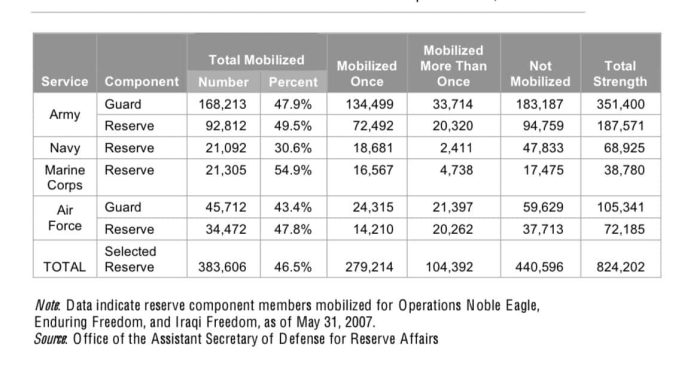
During the height of the Iraq War, for instance, nearly half of all combat brigades were National Guardsmen, a great many from rural states held in contempt by the managerial ruling class, who don’t think twice about them or their families.
Central to this entire affair has been the incredible efforts of Sgt. Dan McKnight (Ret) and the organization he formed, Bring Our Troops Home. Dan’s leadership and organizational skills have propelled this idea from a meager initiative in West Virginia to a national movement.
Dan’s devotion to the cause, coupled with his talent to articulate its urgency, has galvanized massive support and brought critical attention to the subject—amplifying the voices of combat veterans everywhere and motivating state legislators across the country to take action.
Each year, as we’ve fought to advance this ‘Defend the Guard’ legislation, formidable resistance is encountered, primarily from the Pentagon and their bureaucratic lackeys. The “Brass” and the useful idiots sent to carry out their bidding employ a wide range of sordid tactics; from disingenuous accusations of “failing to support the troops,” to more aggressive methods behind closed doors—like threats of federal-funding cuts and hints of public defamation against those who support the legislation—the hostility has only intensified.
The escalation of these schemes if a sign of their growing desperation. It’s quite common now for uniformed general officers to patrol the halls of state capitols, lobbying state legislators against the bill with Machiavellian tactics.
These blatant measures on behalf of public “servants” attached to the Pentagon pose a direct challenge to the fundamental American principle of civilian authority over the military—raising questions as to who really controls the armed forces of this country anymore.
Despite this ordeal, the Defend the Guard Act has begun to spread like wildfire, thanks again in large part to Dan McKnight’s heroic efforts. This once-regional idea has now found resonance in dozens of state capitols across the nation.
Huge victories have been achieved with the bill’s passage in the Arizona Senate, and—as of four days ago—its success through the New Hampshire House, marking an even bigger milestone. With the potential to reach up to 40 states this coming year, a pivotal turning point is at hand.
The success of this movement underscores a very critical moment for our states to leverage their inherent powers within our country’s federalist framework, compelling the federal government in Washington to adhere to its foundational principles.
Paramount in this endeavor is the protection of our courageous servicemen within the National Guard—along with the prudent treatment of all of our country’s warriors, who honor their sacred oaths they swore to the Almighty when they donned the uniform.
By reviving long-neglected political principles and promoting the classical virtues, true leaders can be encouraged to emerge and drive efforts that can also safeguard our nation as a whole.
Next week, for the tenth consecutive year, I’ll re-introduce the Defend the Guard Act here in West Virginia. As the idea spreads, I’m hopeful a growing resolve to uphold the virtues our country was founded upon will as well.
Pat McGeehan is a member of the West Virginia House of Delegates representing the first district.
January 8, 2024
Posted by aletho |
Civil Liberties, Militarism | United States |
Leave a comment
While many NATO member states continue antagonizing Russia by massing troops on its borders and prolonging the Ukrainian conflict through arms supplies to the Kiev regime, calls to disband the military bloc begin to come from the NATO countries themselves.
French politician and The Patriots party founder Florian Philippot has called for the NATO alliance to by disbanded for the sake of peace.
Phillipot accused “NATO hawks” and their “puppet” Ukrainian President Volodymyr Zelensky of trying to “impoverish us and send hundreds of thousands of Ukrainians to certain and unnecessary death.”
Voicing his grievances in a post on social media network X (formerly Twitter), Philippot urged the resolution of the Ukrainian conflict through “peace negotiations” as soon as possible and called for the “destruction of NATO for world peace.”
He also pointed to the recent revelations of retired French Air Force General Bruno Clermont, who admitted that Russia commands “considerable” air superiority in the Ukrainian conflict. Philippot noted that those who had made similar remarks over the past two years were ridiculed.
Philippot has long been a critic of his country’s support to the regime in Kiev, arguing in November that “France must not allow itself to be duped by being the last country ‘at war’ against Russia.”
The politician’s remarks came amid media speculation that Ukraine’s Western sponsors are growing weary of Kiev’s military blunders and inability to meet the goals of NATO’s proxy war against Russia.
January 6, 2024
Posted by aletho |
Militarism, Russophobia | France, NATO |
Leave a comment

The Israeli media began to release increasingly frequent publications on the actual casualties of the Israel Defense Forces (IDF) and other security, defense and law enforcement agencies during the clashes in the Gaza Strip.
The most sensational publication, causing a massive reaction especially in the Arab world and Iran, was the investigative report of the Israeli journalist Ariel Shimon, fired from Yedioth Ahronoth newspaper after his controversial publication was released. Unfortunately, the author could not find the original of Shimon’s report, even in Hebrew. However, many Arab and Iranian publications have shared the links to the alleged investigation.
According to Shimon, the IDF press service reports casualties in small portions. Moreover, it only reports KIA (killed in action) numbers. The actual number of wounded as well as losses of military and special equipment remain undisclosed. All medical institutions receiving the wounded were instructed by the IDF press service to abstain from comments.
According to the journalist, the number of Israeli military KIAs is magnitudes higher than official figures. As of December 9, the official casualties among the IDF and other security, defense and law enforcement agencies reached 418 people. Shimon claims that, as of December 9, the actual number of KIAs was 3,850 soldiers and officers.
The official number the IDF press service gave for the wounded was around one thousand. In reality though, according to Shimon, the number of wounded exceeded 7,000 people, including 3,700 irrecoverable losses, i.e. those who became disabled. Of these, more than 250 soldiers and officers went completely blind.
Over the course of hostilities, more than 500 armored combat vehicles of all types (tanks, armored personnel carriers, army vehicles) and army bulldozers were completely or partially destroyed.
Shimon believes that without the US support, Israel would have had a rough time. He accused the Prime Minister Benjamin Netanyahu and his government of deliberately withholding from the Israeli public the actual number of the IDF casualties in the current Palestinian-Israeli conflict.
The data on casualties shared by a number of Arab and Iranian media with references to Ariel Shimon, are indirectly confirmed by the reports of the Israeli news website Ynet, an online version of Yedioth Ahronoth. On December 9, 2023, Ynet published information obtained from Limor Luria, head of the IDF rehabilitation department, according to which every day the department received about 60 new wounded security officers and reservists. This figure did not include IDF military personnel. This indicates that the actual figures of wounded may be higher than is officially recognized.
Luria added that over 58 percent of the wounded had severe hand and feet injuries, including those requiring amputations. Around 12 percent of injuries are damaged visceral organs, such as spleen, kidneys, and rupture of internal organs. About 7 percent of military personnel suffer from mental disorders.
The increasing casualties among the IDF personnel and security forces, and the uncertainty of the future of hostages still held by Hamas are provoking growing dissatisfaction with Netanyahu’s government among Israelis, which is starting to break through Israel’s highly disciplined media space fully controlled by the IDF command. The authorities fear that acknowledging heavy casualties inflicted on a regular army by irregular forces may raise doubts in Israeli society about the effectiveness of the established security system, which cost billions of taxpayers’ money.
January 6, 2024
Posted by aletho |
Deception, Ethnic Cleansing, Racism, Zionism, Militarism | Israel, Palestine, Zionism |
Leave a comment
Nearly two and a half years after the United States’ campaign in Afghanistan ended in an inglorious rout, the US seems poised to expand its military operations in another part of the globe.
The United States is attempting to convince several West African states to allow them to use their airfields to carry out drone operations, according to a report by the Wall Street Journal.
This move is ostensibly aimed at curbing the spread of Islamist terrorist groups in Ghana, Benin and the Ivory Coast, the media outlet claimed, adding that US drones might purportedly “conduct aerial surveillance of militant movements along the coast and provide over-the-shoulder tactical advice to local troops during combat operations.”
The United States’ drone initiative, however, takes place amid a “shift in public sentiment and attitude” in African states “against foreign military presence,” argued Ovigwe Eguegu, a Nigerian policy adviser at the Development Reimagined consultancy.
“The attitude that we are seeing that is very much against foreign military presence, particularly of major power like the US, is because of the concern that we’re now in an era of good power competition and the risk of proxy conflict is quite high,” Eguegu said. “Citizens knowing what happened during the Cold War [are] very much averse to foreign troops present.”
He also observed that the US and French military missions in Africa, as well as the UN MINUSMA peacekeeping force, did little to improve the security situation in the countries they were deployed in, while the “successes that are being achieved in counterterrorism” in the region were primarily achieved by the Multinational Joint Task Force comprised of military units from Niger, Nigeria, Chad, Cameroon and Benin.
“While there is room for foreign military cooperation, there is no need for foreign military presence on the continent, because that is what regional armies are there for in the first place,” Eguegu remarked.
He also suggested that further “militarization of security solutions” is unlikely to improve the security situation in Africa and argued for a different approach.
According to Eguegu, the “solution to the Africa security challenges, in West Africa in general, can come in the form of funding support,” where the foreign support essentially amounts to providing weapons and training to local forces and does not necessarily involve “direct military operations” by foreign forces.
January 4, 2024
Posted by aletho |
Militarism | Africa, Benin, France, Ghana, Ivory Coast, United States |
Leave a comment
In the closing days of 2023, the Biden Administration once again announced a large military aid package for Ukraine, this time a “mere” quarter of a billion dollars. Without a new authorization of funds from Congress, it is said to be the last bit of money left over from the more than $100 billion already authorized by Congress for the proxy war with Russia through Ukraine.
President Biden’s request for an additional $100 billion to spread around Ukraine, Israel, and Taiwan was rejected by a Congress eager for its winter break, and with each passing day it looks like it’s going to be harder to push it through. Poll after poll show that Americans are increasingly opposed to more of their money being spent on the neocon’s lost-cause war to overthrow Putin in Russia.
For example, a recent Fox News poll revealed that more than 60 percent of Republican voters do not want any more money sent to Ukraine. As we enter an election year, it’s probably safe to predict that Republican candidates will be wary of crossing the wishes of the clear majority of voters.
That is why the Biden Administration has been desperately trying to re-frame its request for more Ukraine war money as anything but a request for more Ukraine war money. For example, they even brought back the old discredited “domino theory” used to justify US actions in the Vietnam war. If we don’t stop Putin in Ukraine, Biden said in December, then he will keep going into western Europe where we will be forced to fight him there.
On the one hand, supporters of the Ukraine war warn that Russia is about to reconstitute the Soviet empire in Europe, while at the same time the same people tell us Russia is out of missiles and on its last leg. One more infusion of US money will end the “Russian threat” once and for all. Both of these things cannot be true at once. In fact, neither of them is true.
But still the Administration, much of Congress, and an insatiable military-industrial complex keep selling the lies.
Last month Secretary of State Antony Blinken inadvertently revealed what exactly all the spending for war is about when he stated that as much as 90 percent of the aid for Ukraine is actually spent in the United States. The money is used “to the benefit of American business, local communities, and strengthening the US defense industrial base,” he said in an interview. In other words, the money “for Ukraine” is actually a massive welfare program for well-connected military contractors back home.
As we begin the year 2024, we need to home in on the real threat to the United States. It is not Russia or China or Iran. The true threat is closer to home: it is a corrupt system that bleeds the country dry to fight imaginary enemies while enriching the military-industrial complex.
For the New Year, Congress should resolve to end the stranglehold of the military-industrial complex by reining in out-of-control military spending. Members should simply vote “no” on military spending bills until they are drafted to benefit the American people rather than the Beltway elite. I don’t hold out much hope of this happening in the short run, but it only takes a few dedicated Members to make a real difference.
January 4, 2024
Posted by aletho |
Militarism | Ukraine, United States |
Leave a comment
A top South Korean defense official said Washington and Seoul have considered assassinating the North Korean leader. The simulations have gone as far as joint special operations training missions.
South Korean Defense Minister Shin Won-sik explained to reporters last month that the deployment of US nuclear weapons or the assassination of North Korean Supreme Leader Kim Jong Un were options being discussed between Washington and Seoul.
“While it is difficult to openly discuss decapitation, the ROK-US special operation forces are… conducting training,” Won-sik said. “This training is for aerial maneuvers, raids on key facilities, and indoor mop-up.”
The Daily Beast first reported the US and South Korea would conduct the decapitation war games in August 2022.
Since President Joe Biden took office, tensions have risen sharply on the Korean Peninsula. The current administration has abandoned the Donald Trump-era diplomacy with Pyongyang. Biden has deployed some of America’s most advanced weapons to the region and ramped up military engagements with South Korea.
Pyongyang has responded to Washington’s provocations by stepping up its military capabilities. North Korea has conducted several missile tests, including with intercontinental ballistic missiles. Pyongyang successfully placed a military satellite into orbit in 2023 and plans three more this year.
Kim and other top North Korean officials warned several times last year that the US and South Korean military activities have put the Peninsula on the brink of a nuclear war. During a major address, Kim explained Pyongyang would further its nuclear weapons program during the coming year.
January 3, 2024
Posted by aletho |
Militarism | Korea, United States |
Leave a comment
It is only the second day of the New Year, but you turn on the morning news with a feeling of trepidation. Here in Western Europe, the lead stories are death and destruction reported from the front lines of the two conflagrations that some commentators have identified as ‘world wars,’ given the way countries across the globe have aligned themselves with or against the protagonists in each conflict. The outstanding commonality between these two world wars is the position of the United States as their enabler in terms of delivery of essential military and financial support to one side, as well as real-time military intelligence, tactical and strategic counseling by high level officers positioned on the ground and in nearby seas. From the perspective of Washington, these are proxy wars which put at risk very few of its own men at arms, though some do come home in body bags without word to the press, while preparations proceed apace for the launch of a third proxy war in the South China Sea. The Philippines are the latest recruits to the prospective encirclement and assault on China.
On their talk shows, the Russians speculate on when a mutual defense pact with Iran, China and North Korea will be announced. This will not be a bloc, like NATO, but will enshrine the key principle of ‘one for all and all for one’ in case of attack by outside forces. To its backers in Moscow, this formulation would ensure that NATO generals understand they are up against an enemy of over two billion if we include a few other fellow travelers, not just the 145 million Russians whom they see across the border.
But that is what they say on talk shows. It is not the official voice of the Kremlin, which we find on Vesti television. Vesti maintains a near blackout of news on the Israel-Hamas war in broadcasts to its home audience. Why? Because Russia does not want to get embroiled in that war when it needs all its human and materiel resources to defeat the Ukrainians and their NATO backers. Moreover, Russia can be satisfied that the Iranians and their Houthi proxies have the situation in the Middle East under control, restraining the United States from region-wide escalation by engaging directly on Israeli’s side.
For that matter, Iran is doing just fine in shoring up Russia’s southern borders in the Caucasus. For more than a year, Armenia’s prime minister Nikol Pashinyan has been sitting on two stools: holding consultations with the French and intermittently attending gatherings of the Former Soviet Union republics called by Moscow. A week ago, Iranian leaders issued a direct warning to Armenia not to even think about pursuing the military and political rapprochement that France’s president Macron has been proposing. Said President Raisi: ‘No powers from outside the region are welcome in the Caucasus.’ This warning serves Russian security very well, though it is surely motivated by self-interest in Teheran, because any future French military presence in Armenia could also threaten them.
In Russian news, all attention is on the one conflict in which the Russians are themselves deeply engaged, and there news from the line of contact, news from the home front which a day ago experienced a murderous attack on the border town of Belgorod that killed 25 civilians and gravely injured another fifty or so, news from the United Nations Security Council deliberations of the same, more than fill the time allotted to 14.00 o’clock and 20.00 o’clock wrap-ups.
Anyone following developments of the Ukrainian war these past few days will note the tit for tat nature of the strikes dealt out by the warring parties day after day. The chain of events began early on the morning of Wednesday, 26 December, when the Ukrainians deployed air-launched Storm Shadow cruise missiles to destroy the Novocherkassk, a large landing ship of Russia’s Black Sea Fleet parked in the harbor of Feodosia, on the eastern shores of the Crimea. The ship was said to be loaded with drones and the missile strike set off a fire and explosions that may have killed as many as 74, both on the ship and in the port.
However, the outstanding feature of the attack was not the numbers of the dead or the loss of the ship itself: it was the demonstration that Kiev had now been given a Storm Shadow variant with much greater flight range than the initial shipments from the U.K. and France.
From the perspective of the Russian high command, this new ability of the Ukrainians to strike far deeper into Russian territory represented a serious escalation of the conflict which required mirror-image escalation from Russia. The Russian response was not long in coming: on the 27th, Russia launched the largest missile attack on Ukraine since the start of the Special Military Operation, more than 150 ballistic missiles, cruise missiles and armed drones, directed at cities across the Ukraine, including Kiev. Some of these were shot down by Ukrainian air defense, but the Zelensky regime admitted that all 20 Russian ballistic missiles evaded their fire and hit their targets.
From the partial information released by the Russian military, it would appear that their main interest was to destroy caches of the Storm Shadow and also the most advanced Western ground to air missiles. They claim to have destroyed a Patriot complex in the Lvov region, killing a substantial number of French military who were in charge of the installation. This is the sort of information which flits by in a second and is not repeated, so I can say no more.
The Ukrainian response the next day was a concentrated attack on the Russian border city of Belgorod, capital of an oblast of the same name. Belgorod is not more than 20 km from Ukraine’s second largest city, Kharkiv, and it first made international news about six months ago when a Ukrainian team of saboteurs claiming to be anti-Putin Russians crossed into the oblast and attacked residential neighborhoods. This time missiles were sent into apartment blocks and other civilian structures, killing some 25 Russians and gravely wounding perhaps 50 more, some of whom were evacuated to Moscow by plane on life support.
Yesterday and today the Russians avenged this serious loss by renewed missile attacks, now concentrated on Kharkiv, whence the attack on Belgorod had come. They demolished the headquarters of military intelligence in the city, claiming to have killed many foreign advisers, probably British and Americans, who were guiding the attacks. They also struck air fields across Ukraine which could be used to service planes carrying the Storm Shadow.
I end this overview with the remark that American-British escalation of the weaponry deployed against Russia was at the start of what we have witnessed these past six days. And that can be no accident. It follows from the news of the war in the immediately preceding period, which unequivocally demonstrated that on the ground, along the line of contact, the Russian forces were moving steadily to overrun Ukrainian positions and force a retreat. The storming of Mariinka was emblematic in this sense. The overall impression was depressing for the Ukrainian cause at the very time that Congress was in recess after rejecting efforts by the Administration to pass legislation ensuring continued financial and military aid to Kiev. Now these Ukrainian missile attacks on the Black Sea fleet in the Feodosia harbor and the attack on civilians in what is properly speaking Russian Federation territory of Belgorod oblast would give luster to the Ukrainian cause while prodding the Russians to escalate and perform what Washington would showcase as war crimes.
Escalation is the game Washington is playing. In Ukraine. In the Red Sea. In the Eastern Mediterranean off the coast of Lebanon. Washington seems oblivious to the possibility that the proxy wars it is fanning may yet invite a Russian, or Iranian, or North Korean strike directly on U.S. assets, whether overseas or on the Continental United States.
January 2, 2024
Posted by aletho |
Militarism | Iran, Israel, Russia, Ukraine, United States |
Leave a comment
As the war in Ukraine nears the end of its second year, Ukrainians are turning against fighting and towards diplomacy. One former official said that Ukrainian soldiers are currently fighting and dying for nothing.
The Times reports, “Many Ukrainians are growing tired and weary of the war. One Ukrainian military source admitted that average Ukrainians were talking of a truce yet there were questions around what the price of the truce would be.”
Most people in Ukraine wanted a truce but were “afraid to admit it to themselves,” Mykhailo Chaplyha, a political commentator and former vice-ombudsman of Ukraine, said. There was an atmosphere of “total mistrust and fear” in Ukraine and anyone who dared to think of a truce would immediately become an “outcast and a traitor.”
After Russia invaded Ukraine, President Zelensky targeted dissidents using the security state. The Ukrainian media and Zelensky’s main political opposition has been outlawed. Kiev has targeted branches of the Orthodox church perceived to be too close to Moscow.
A former Ukrainian official said that Zelensky was losing support. He said the West told Kiev not to give up, but there was no war strategy and soldiers were “sent to the front line to die.” The official continued, “It is nonsense to send in our soldiers to die if we don’t have enough armament and resources to win militarily. What is the strategy, to keep us dying for what? And not less important — where is our diplomacy?”
In the early months of the war in Ukraine, the West pushed Kiev to abandon talks with Moscow. The US and its allies promised Ukraine that it would provide Kiev with all the support it needs to win the war.
However, as the war nears its third year, the Western weapons stockpiles are approaching depletion. The White House has run out of funds for arming Ukraine, while future aid is being used as leverage in an immigration debate.
Since October 7, the Biden administration has started to prioritize arming Israel over Ukraine. Israel has received tens of thousands of 155 mm shells, a high-demand weapon for both Kiev and Tel Aviv.
January 2, 2024
Posted by aletho |
Civil Liberties, Full Spectrum Dominance, Militarism | Human rights, Ukraine |
Leave a comment
The outcome of US-led conflicts in Ukraine and West Asia will have a profound impact on the developing world order
Geopolitical analysts broadly agree that the war in Ukraine and the West Asian crisis will dictate the trajectory of world politics in 2024. But a reductionist thesis appears alongside that views the Israel-Palestine conflict narrowly in terms of what it entails for the resilience of the US proxy war in Ukraine – the assumption being that the locus of world politics lies in Eurasia.
The reality is more complex. Each of these two conflicts has a raison d’être and dynamics of its own, while at the same time also being intertwined.
Washington’s neck-deep involvement in the current phase of the West Asian crisis can turn into a quagmire, since it is also tangled up with domestic politics in a way that the Ukraine war never has been. But then, the outcome of the Ukraine war is already a foregone conclusion, and the US and its allies have realized that Russia cannot be defeated militarily; the endgame narrows down to an agreement to end the conflict on Russia’s terms.
To be sure, the outcome of the Ukraine war and the denouement of the Israel-Palestine conflict, which is at the root of the West Asian crisis, will have a profound impact on the new world order, and the two processes reinforce each other.
Russia realizes this fully. President Vladimir Putin’s stunning ‘year-enders’ in the run-up to the New Year speak for themselves: daylong visits to Abu Dhabi and Riyadh (watched by a shell-shocked US President Joe Biden), followed by talks with Iran’s president and rounded off with a telephone conversation with the Egyptian president.
In the space of 48 hours or so, Putin touched base with his Emirati, Saudi, Iranian, and Egyptian colleagues who officially entered the portals of the BRICS on 1 January.
The evolving US intervention in the West Asian crisis can be understood from a geopolitical perspective only by factoring in Biden’s visceral hostility toward Russia. BRICS is in Washington’s crosshairs. The US understands perfectly well that the extra large presence of West Asian and Arab nations in BRICS — four out of ten member states — is central to Putin’s grand project to re-structure the world order and bury US exceptionalism and hegemony.
Saudi Arabia, the UAE, and Iran are major oil producing countries. Russia has been rather explicit that during its 2024 chairmanship of BRICS, it will push for the creation of a currency to challenge the petrodollar. Without doubt, the BRICS currency will be at the center stage of the grouping’s summit due to be hosted by Putin in Kazan, Russia in October.
In a special address on 1 January, marking the start of Russia’s BRICS Chairmanship, Putin stated his commitment to “enhancing the role of BRICS in the international monetary system, expanding both interbank cooperation and the use of national currencies in mutual trade.”
If a BRICS currency is used instead of the dollar, there could be significant impact on several financial sectors of the US economy, such as energy and commodity markets, international trade and investment, capital markets, technology and fintech, consumer goods and retail, travel and tourism, and so on.
The banking sector could take the first hit that might eventually spill over to the markets. And if Washington fails to fund its mammoth deficit, prices of all commodities could skyrocket or even reach hyperinflation triggering a crash of the US economy.
Meanwhile, the eruption of the Israel-Palestine conflict has given the US an alibi — ‘Israel’s self-defense’ — to claw its way back on the greasy pole of West Asian politics. Washington has multiple concerns, but at its core are the twin objectives of resuscitating the Abraham Accords (anchored on Saudi-Israeli proximity) and the concurrent sabotage of the Beijing-mediated Saudi-Iranian rapprochement.
The Biden administration was counting on the fact that an Israeli-Saudi deal would provide legitimacy to Tel Aviv and proclaim to the Islamic world that there was no religious justification for hostility towards Israel. But Washington senses that post-7 October it would not be able to secure a Saudi-Israel deal during this Biden term, and all that could be coaxed out of Riyadh is a door left ajar for future discussion on the topic. No doubt, it is a major blow to the US strategy to liquidate the Palestinian question.
In a medium term perspective, if the Russian-Saudi mechanism known as OPEC+ liberates the world oil market from US control, BRICS drives a dagger into the heart of US hegemony which is anchored on the dollar being the ‘world currency.’
Saudi Arabia recently signed a currency swap deal worth $7 billion with China in an attempt to shift more of their trade away from the dollar. The People’s Bank of China said in a statement that the swap arrangement will “help strengthen financial cooperation” and “facilitate more convenient trade and investment” between the countries.
Going forward, sensitive Saudi-Chinese transactions in strategic areas such as defense, nuclear technology, among others, will henceforth take place below the US radar. From a Chinese perspective, if its strategic trade is sufficiently insulated from any US-led program of anti-China sanctions, Beijing can position itself confidently to confront US power in the Indo-Pacific. This is a telling example of how the US strategy for the Indo-Pacific will lose traction as a result of its waning influence in West Asia.
The conventional wisdom is that preoccupation in volatile West Asia distracts Washington from paying attention to the Indo-Pacific and China. In reality, though, the waning influence in West Asia is complicating the capacity of the US to counter China both in the region as well as in the Indo-Pacific. The developments are moving in a direction where the credentials of the US as a great power are at an inflection point in West Asia – and that realization has leaked into other geographic regions around the world.
Way back in 2007, the distinguished political scientists John Mearsheimer of the University of Chicago and Stephen Walt of the John F. Kennedy School of Government at Harvard, wrote with great prescience in their famous 34,000-word essay entitled The Israel Lobby and US Foreign Policy that Israel has become a ‘strategic liability’ for the United States, but retains its strong support because of a wealthy, well-organized, and bewitching lobby that has a ‘stranglehold’ on Congress and US elites.
The authors warned that Israel and its lobby bear outsized their responsibility for persuading the Bush Administration to invade Iraq and, perhaps one day soon, to attack the nuclear facilities of Iran.
Interestingly, on New Year’s Eve, in a special report based on extensive briefing by top US officials, the New York Times highlighted that “No other episode [as the war in Gaza] in the past half-century has tested the ties between the United States and Israel in such an intense and consequential way.”
Clearly, even as Israel’s barbaric actions in Gaza and its colonial project in the occupied West Bank are exposed and laid bare, and the Israeli state’s campaign to force Palestinian population migration are in full view, two of the US strategic objectives in the region are unravelling: first, the restoration of Israel’s military superiority in the balance of forces regionally and vis-a-vis the Axis of Resistance, in particular; and second, the resuscitation of the Abraham Accords where the crown jewels would have been a Saudi-Israeli treaty.
Viewed from another angle, the directions in which West Asia’s crisis unfolds are being keenly watched by the world community, especially those in the Asia-Pacific region. Most notable here is that Russia and China have given the US a free hand to navigate its military moves – unchallenged, so far, in the Red Sea. This means that any conflagration in the region will be synonymous with a catastrophic breakdown of US strategy.
Soon after the US defeat in Afghanistan in Central Asia, and coinciding with an ignominious ending of the US-led proxy war by NATO against Russia in Eurasia, a violent, grotesque setback in West Asia will send a resounding message across all of Asia that the US-led bandwagon has run out of steam. Among the end users of this startling message, the countries of ASEAN stand at the forefront. The bottom line is that the overlapping tumultuous events in Eurasia and West Asia are poised to coalesce into a climactic moment for world politics.
January 2, 2024
Posted by aletho |
Ethnic Cleansing, Racism, Zionism, Militarism | Israel, Middle East, Palestine, Ukraine, United States, Zionism |
Leave a comment
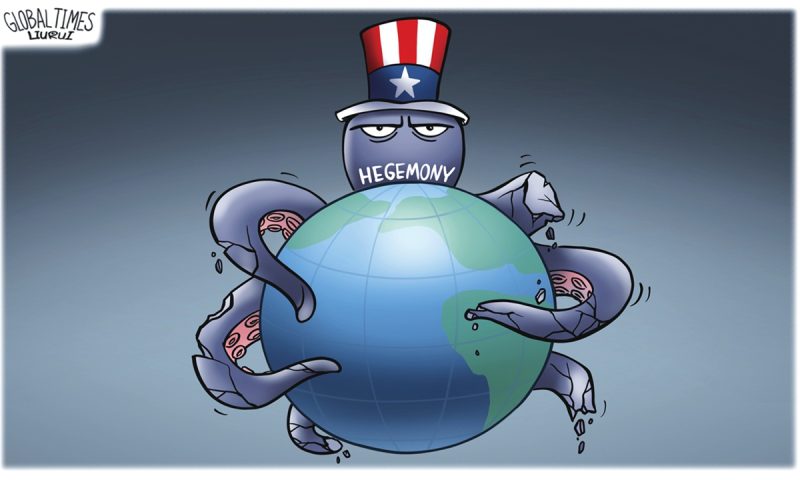
Illustration: Liu Rui/GT
What kind of experience did 2023 bring to Western countries? According to mainstream Western media, the most apt term to encapsulate the Western sentiment is “uncomfortable.”
An article from the BBC suggests that the past 12 months have seen a number of setbacks for the US, Europe and other major democracies on the international politics stage. Although none has been disastrous for now, they point to a shifting balance of power away from the US-dominated, Western values that have held sway for years, the article claimed. The mentioned setbacks include regional conflicts such as the Russia-Ukraine war and the Israel-Palestine conflict. Challenges posed by countries perceived as adversarial by the US and the West, such as China, Iran, and North Korea, were also highlighted.
The Ukraine crisis has continued on, and the Israel-Palestine conflict has reignited, while the responses from the international community don’t align with the preferences of the US and its Western allies. All of this has made them feel “uncomfortable.”
When it comes to the Russia-Ukraine conflict, despite receiving support from the West, Ukraine has faced difficulties and failed to progress as expected in its conflict with Russia. This has led to Western fatigue and frustration. Due to partisan divisions in the US, providing aid to Ukraine has become problematic. In contrast, Russia has managed to stabilize its frontlines and handle the prolonged war effectively, Lü Xiang, a research fellow at the Chinese Academy of Social Sciences, told the Global Times. He noted that sanctions against Russia, with only around 30 countries participating in condemning Russia’s actions, have failed to significantly impact the Russian economy, instead, Russia has demonstrated remarkable resilience, contrary to Western expectations.
In the case of the Israel-Palestine conflict, most developing countries held positions inconsistent with those of the US. Many countries expressed disappointment and regret over the US veto of the Gaza-related drafts demanding an immediate humanitarian ceasefire in Gaza, distancing themselves from the US pro-Israel stance.
The BBC states that Arab ministers believe there are double standards in Western approaches to the Russia-Ukraine conflict and the Israel-Palestine conflict, accusing the Western governments of hypocrisy. This reflects a growing opposition from Global South and developing countries against the values advocated by the US and the West in various events, and the Western influence is diminishing, said Yang Xiyu, a senior research fellow at the China Institute of International Studies.
Issues such as the Ukraine crisis and the Israel-Palestine conflict increasingly demonstrate that the West, particularly Europe and the US, can no longer bring positive values to the world. More and more countries and their people in the Global South have become aware of this and refuse to accept Western double standards.
Today, an increasing number of developing countries are expressing clear opposition to irresponsible actions by the US and Europe. The major demand of these countries is to have a peaceful and stable international environment for national development. However, Western countries, the US in particular, are acting as the world’s largest disruptor of peace and creator of conflicts. In the cases of the Ukraine crisis and the Israel-Palestine conflict, the US not only fuels the flames but also opposes proposals for peace talks raised by other countries. In pursuit of its selfish interests, the US has caused suffering to the people of Ukraine and the Gaza Strip, hindering the resolution of other urgent global issues. In such circumstances, more and more developing countries are becoming courageous enough to say no to the US and the West.
In 2024, the influence and dominance of the West, whether in the Russia-Ukraine conflict or the Israel-Palestine conflict, will continue to decline. If 2023 did not unfold according to their expectations, 2024 is likely to deviate even further. This will bring more discomfort for them. Washington now has to adapt to a new reality: Global South countries are becoming more mature and gaining more decision-making autonomy. US politicians, who are used to dictating terms to countries worldwide and expecting developments to revolve around US interests, must reflect on and adapt to this new change. Otherwise, when the media summarizes 2024, it may not be as simple as just feeling uncomfortable; the experience might be more agonizing.
January 1, 2024
Posted by aletho |
Militarism, Progressive Hypocrite, Russophobia, Wars for Israel | Israel, Palestine, Ukraine, United States, Zionism |
Leave a comment
The sheer inability of the collective West to force Russia into submission in Ukraine plus the fast-changing global opinion about the West in the context of the latter’s support for Israel’s brutal war on the Gazans has put the so-called ‘liberal-democratic’ world into a panic mode. The White House has already said that it will run out of money to fund Ukraine into 2024 unless the US Congress gives approval for more funding. This has led the Western war machine – primarily led by the US – to anticipate a possible defeat. “There is no guarantee of success with us, but they are certain to fail without us”, a senior US military official told CNN recently. Without the military support, US officials now estimate, Ukraine would fall by the summer of 2024. But, in Western calculations, Ukraine’s fall does not just mean Russia’s victory; it also implies a possible collapse of NATO and the eventual downfall of the Western-dominated global political, economic, and security order.
A recent piece in the Wall Street Journal said,
“Even more important, Russia’s success in Ukraine would increase a threat to NATO’s Eastern flank—in particular the Baltic states and Poland. Outside of Europe it would embolden Moscow’s allies Iran and North Korea and provide a template for China for the military solution of the Taiwan dispute. In all those cases, the U.S. and NATO troops could find themselves in the midst of a military conflict of the sort that Ukraine fights today without direct involvement of NATO”.
Such prospects are causing severe problems. Germany, for instance, is considering shelving voluntary force and making a return to conscription. “I believe that a nation that needs to become more resilient in times like these will have a higher level of awareness if it is mixed through with soldiers,” said Jan Christian Kaack, the chief of the German Navy. This is in addition to the fact that the German army is too small to defend itself against any threat; hence, the renewed emphasis on conscription.
But Germany is not an exceptional case. In fact, it mirrors developments in the rest of Europe. The UK, otherwise known to possess one of the best fighting forces in the world, is running into some problems of a fundamental nature. The Sky News reported earlier in the year that, a senior US general “privately told Defence Secretary Ben Wallace the British Army is no longer regarded as a top-level fighting force”. It was further reported that the “The armed forces would run out of ammunition in a few days if called upon to fight” and that “The UK lacks the ability to defend its skies against the level of missile and drone strikes that Ukraine is enduring”.
On top of it is the fact that the Russian military position in Ukraine remains strong, making it a lot harder for the West to provide enough funding. The Biden administration is facing its own challenges vis-à-vis more funding for Ukraine. As far as Europe is concerned, a recent report showed that pledges for funding made in August 2023 fell by almost 90 percent compared to the same period last year.
This is war fatigue that is being compounded by a well-sustained Russian resolve to achieve its objectives. For the West, Vladimir Putin remains “stubborn”. As Putin recently reiterated, “There will be peace when we achieve our goals… Now let’s return to these goals – they have not changed. I would like to remind you how we formulated them: denazification, demilitarisation, and a neutral status for Ukraine.”
Speaking from a position of strength – and keeping in mind the war fatigue in the West – Putin further said that Russian forces are “improving their position almost along the entire line of contact. Almost all of them are engaged in active combat. And the position of our troops is improving along [the entire line of contact.]”. This being the case, Putin conveyed no ideas of making a compromise with the West over Ukraine. Speaking from the Russian perspective, it would make no sense to offer negotiations and, thus, turn Russian tactical victories into unsustainable settlements.
Clearly, Russia has no intention of withdrawing from its victories, which is why there is a panic, especially in Europe. If Russia continues to win and the US funding stalls, Europe will be left to fend for itself. Germany’s defence minister minced no words to express this fear last Saturday when he said that the US “was losing interest in European affairs and that security tensions in the Pacific would likely leave the European Union having to fend for itself”, adding that “One can assume that the USA will be more involved in the Pacific region in the next decade than it is today – regardless of who becomes the next president,” he said. His conclusion is: “This means that we Europeans must increase our commitment to ensure security on our continent.”
In a nutshell, for the US, if the war in Ukraine was to unify the West, it is beginning to have an exactly opposite effect. There lies a very strong reason for the US to reconsider its strategy. This reconsideration can go in two directions. First, the US can withdraw from its obsession with expanding NATO to include Ukraine. Second, the US can make one last push and make Ukraine fight for as long as it can, hoping that this might break Russia. The Biden administration favours the second option, which is why it is pushing for the US$61 billion aid package. But will a Republican victory allow this to happen? A Republican victory could not only end support for Ukraine but also leave Europe in a total lurch. Tough times ahead.
Salman Rafi Sheikh is a research-analyst of International Relations and Pakistan’s foreign and domestic affairs.
January 1, 2024
Posted by aletho |
Militarism, Wars for Israel | European Union, Middle East, NATO, UK, Ukraine, United States |
Leave a comment