PFLP announces death of captive Israeli soldier in Gaza after failed rescue
The Cradle | December 31, 2023
An Israeli soldier held captive by the Popular Front for the Liberation of Palestine (PFLP) in Gaza was killed in an Israeli air strike, the spokesman for the armed wing of the Palestinian resistance group announced on 30 December.
In his first speech since the beginning of the Al-Aqsa Flood Operation, Martyr Abu Ali Mustafa Brigades spokesman Abu Jamal announced the death of the Israeli captive, adding that the air strike took place following a failed attempt by Israeli special forces to free him and which was confronted by the PLFP fighters.
Abu Jamal said the airstrike was called in to cover the retreat of the Israeli forces, and lightly wounded the PLFP fighters who were responsible for the captive.
The spokesperson gave no details of when the soldier had been taken captive, or where he was being held in Gaza. He said the group is still holding the soldier’s body.
Abu Jamal also announced the PLFP had destroyed or disabled 95 Israeli army vehicles during the ongoing ground invasion of Gaza. He also announced the group obtained a laptop and flash drives with sensitive information and private data during the attack on 7 October on Israeli military bases and settlements surrounding Gaza. He said Martyr Abu Ali Mustafa Brigades continue to benefit from this information in their operations.
Because the Israeli airstrike killed the Israeli soldier, it is possible the Israeli military may have invoked a controversial policy known as the “Hannibal Directive.”
The policy was established in 1986 following the capture of two Israeli soldiers by Hezbollah in Lebanon.
The Times of Israel described how the “directive allows soldiers to use potentially massive amounts of force to prevent a soldier from falling into the hands of the enemy. This includes the possibility of endangering the life of the soldier in question in order to prevent his capture.”
“Some officers, however, understand the order to mean that soldiers ought to deliberately kill their comrade in order to stop him from being taken prisoner, not that they may accidentally injure or kill him in their attempt,” the paper added.
The directive is meant to prevent Israel’s enemies from gaining leverage and forcing concessions from it in the form of prisoner exchanges.
Following the launch of the Al-Aqsa Flood Operation on 7 October, the PFLP announced that, “This is the day when the nature of the struggle and the dignity of the Arab nation are reclaimed,” while declaring the resistance is “determined to achieve a strategic victory over this enemy in a battle that will open the door to return and redefine the history of Palestine and the region.”
Why are Canadian taxpayers subsidizing Israel’s military?
By Yves Engler | December 29, 2023
Critics say Israel is an army with a country, but it is the apartheid state’s supporters who confirm it. Canadian Friends of the Hebrew University has once again launched an initiative to promote the Israeli military even though it violates charity regulations and risks the group’s special tax status.
In a recent end of year fundraising appeal, a group officially dedicated to the “Advancement of Education” sent its members “Supporting Our Student Soldiers”. The CFHU appeal notes: “The We Are One campaign provides scholarships and academic assistance to our returning IDF soldiers who are courageously fighting in the ongoing war. … Let’s unite to provide education and healing for our IDF warriors, demonstrating our unwavering commitment to their success and recovery.”
With branches in seven Canadian cities, CFHU has instigated a number of other initiatives to support the apartheid state’s military. In 2018 the CFHU branch in the nation’s capital “launched the Ottawa Scholarship Fund in support of reserve duty soldiers studying at The Hebrew University.” At the event, according to CFHU’s annual report, “four students shared their inspiring stories from their military service and explained what it means to be a reserve duty soldier in the IDF.”
A 2019 story on the website of an organization set up by famed liquor bootlegger Alan Bronfman in 1944 noted, “Help CFHU send former IDF combat soldiers to university” while an ongoing funding pitch says, “Donate in support of CFHU’s scholarship campaign for soldiers studying at Hebrew University”. In July 2021 wealthy Calgarian Lenny Shapiro financed a number of CFHU “scholarships for students who have served in the IDF.” CFHU and Hebrew University (HU) matched a portion of Shapiro’s unspecified contribution.
CFHU has partnered with the Duvdevan Foundation on a number of scholarships and public relations initiatives. According to the Duvdevan Foundation, “the Duvdevan Unit was established in June 1986, with the understanding that a specific and intelligent warfare method needed to be developed to deal with Judea and Samaria’s [West Bank] security incidents.” CFHU has organized a number of fundraisers centered on presentations by former soldiers in a unit that regularly kills Palestinians.
To get a sense of how deeply the “charity” is enmeshed with the Israeli military, CFHU meetings have begun with messages from top Israeli Generals.
Beyond instigating initiatives that assist the Israeli military, CFHU funnels many millions of dollars in tax deductible donations to a university that has significant and long-standing ties to the occupation force. A month ago it launched an “Enhanced Extensive Aid Package to HU students serving in the IDF” and a few weeks earlier released a video “message from some our students who are on the front lines” killing Palestinians. During Israel’s violent outburst in 2002 the Jerusalem based school awarded scholarships to students who signed up for IDF combat units and it operates a training centre for military intelligence officers. To maintain the IDF’s technological edge, cadets have studied for degrees in physics, math or computer science at HU for over 40 years. The university provides the IDF with academic information on students enrolled in the Talpiot program. In a story on Talpiot Jason Gewirtz writes, “the opening years of the program saw the students first and foremost as soldiers…. They wore uniforms to their classes at Hebrew University and took shifts guarding Talpiot’s section of the Hebrew University campus.”
In 2019 HU began offering a three-year training for future IDF intelligence officers. Students in the Havatzalot program live in a former university residence only accessible by biometric identification. Regular university employees need advanced permission to enter the area.
Assisting a foreign military violates Canada Revenue Agency rules. According to CRA guidelines, “increasing the effectiveness and efficiency of Canada’s armed forces is charitable, but supporting the armed forces of another country is not.”
Yet between 2017 and 2021 CFHU raised $75 million in tax deductible donations. According to Blumbergs’ list of Canadian charities with the “largest assets in 2019” CFHU had $77 million.
The Canada Revenue Agency must revoke Canadian Friends of the Hebrew University’s charitable status. The public shouldn’t be subsidizing a group illegally supporting a military slaughtering tens of thousands.
Report: Number of wounded Israeli soldiers approaching 20,000

Israel evacuates soldiers who were wounded in battles in Gaza on December 18, 2023. [Nir Keidar – Anadolu Agency]
MEMO | December 29, 2023
The number of wounded Israeli soldiers is likely to reach approximately 20,000 once those diagnosed with post-traumatic stress disorder are included, AP reported citing an Israeli activist.
Edan Kleiman, who heads the non-profit Disabled Veterans Organisation, said: “I have never seen a scope like this and an intensity like this.”
“We must rehabilitate these people,” he added, warning that the Israeli authorities are not grasping the severity of the situation.
There is a large and growing segment of the wounded, who are also afflicted with deep psychological trauma, and whose suffering appears as a hidden cost of war, the Times of Israel reported.
According to Limor Luria, the head of the Israeli Defence Ministry’s Rehabilitation Department, 58 per cent of soldiers have sustained injuries to their limbs, including amputation.
The Defence Ministry said in mid-December that over 6,000 Israeli occupation forces and police members have been wounded since 7 October.
Caracas says UK’s dispatch of warship violated the deal with Guyana over disputed Essequibo
RT | December 28, 2023
Britain’s decision to dispatch a warship to Guyana breaches the “spirit” of the agreement to resolve the Essequibo dispute peacefully and will be met with “defensive action,” Venezuelan President Nicolas Maduro said on Thursday.
Earlier this week, the UK announced it would send the offshore patrol vessel HMS Trent, currently deployed in the Caribbean, to visit the “regional ally and Commonwealth partner.”
Maduro called the move “practically a military threat from London” that violates the “spirit of dialogue, diplomacy and peace of the agreements” made with Guyana.
“I have ordered the activation of joint defensive action by the Bolivarian National Armed Forces in response to the UK provocation and threat to the peace and sovereignty of our country,” the Venezuelan president said in a televised speech.
Venezuela “reserves all actions, within the framework of the Constitution and International Law, to defend its maritime and territorial integrity,” the Foreign Ministry in Caracas said in a statement.
Following a national referendum at the beginning of December, Caracas laid claim on “Guayana Esequiba,” a mostly forested region rich in mineral resources that Venezuela has claimed for over a century. Guyana has protested, noting that the area amounts to two-thirds of its internationally recognized territory and asked the “international community” for help.
Brazil and several Caribbean countries offered to mediate the dispute, resulting in Maduro and Guyanese President Irfaan Ali signing the Declaration of Argyle on December 14, at a meeting in St. Vincent. Both sides pledged to refrain from escalation by “words or deeds,” and established a joint commission to discuss the dispute.
Four days later, Britain’s Undersecretary for the Americas David Rutley visited Georgetown and promised Guyana “unequivocal backing,” vowing to “ensure the territorial integrity of Guyana is upheld.”
St. Vincent and the Grenadines Prime Minister Ralph Gonsalves, who has taken on the role of the mediator in the dispute, told the island radio on Thursday that he read the Venezuelan statement “very carefully,” describing it as “firm but… not particularly belligerent.”
Gonsalves said he has reached out to both Georgetown and Caracas, and received assurances from both of their “commitment to peace and continued dialogue.”
Maduro Orders ‘Defensive’ Military Drills After UK Deploys British Warship Off Guyana Coast
Sputnik – 28.12.2023
CARACAS – Venezuelan President Nicolas Maduro ordered on Thursday the armed forces to launch “the activation of a joint defensive action” in response to the deployment of a British warship off the coast of Guyana.
“I have ordered the activation of a joint defensive action of the Bolivarian National Armed Forces” off the coast of Essequibo, he said in a state televised broadcast, but did not provide more information.
Earlier this month, the British media reported, citing a British defense ministry spokesman, that the United Kingdom would deploy a patrol ship off Guyana’s coast as a sign of support for the state in the territorial dispute over Essequibo. The head of Venezuela’s defense ministry, Vladimir Padrino Lopez, called it a provocation.
Venezuelan Foreign Minister Ivan Gil had previously called on his British counterpart David Cameron not to interfere in the affairs of Latin American and Caribbean countries, and to mind his own business.
“From Venezuela, we ask the infamous failure David Cameron, foreign minister of the former imperial power of the United Kingdom, to take his hands off our Latin America and the Caribbean and to take care of his own affairs, which are very complicated,” Gil wrote on social media.
Venezuela’s territorial dispute with Britain and Guyana, a former British colony, has been ongoing since the 19th century. The Bolivarian government stepped up its actions after Guyanese authorities began handing over fossil-rich areas of the disputed shelf to oil companies for development.
Caracas held a referendum on December 3 in which an absolute majority of participants supported the annexation of the territory west of the Essequibo River, and began legislative work to legally back its actions.
Guyana’s President Irfaan Ali has since said that the country views Caracas’ actions as a threat to national security and intends to appeal to the UN Security Council as well as its international partners. During a recent news conference, Ali did not rule out that Guyana may go for a military base for its allies in the region, and on December 7, the US Army’s Southern Command carried out “flight operations” in the country.
The leaders of Venezuela and Guyana, following recent talks on the territorial dispute over Essequibo, pledged not to use force under any circumstances and to resolve it in accordance with the 1966 Geneva Agreement.
Ex-Pentagon Analyst: Honest Audit of US’ Ukraine Funding Only Possible Without Team Biden
Sputnik – 28.12.2023
The US government has reportedly been able to trace just $1.5 billion of the $75.4 billion it has approved for Ukraine, as per an RT analysis of a newly declassified US State Department IG report.
RT has obtained and analyzed materials from a declassified report by the inspector general of the US State Department concerning the costs of military support for Ukraine.
As per the report, Kiev has received at least $44 billion from the State Department since the beginning of the Russian special military operation. This was the most significant part of the total flow of American funding into Ukraine which amounted to at least $75.4 billion during 2022 and 2023. For its part, the Pentagon has provided the Ukrainian defense industry with almost $13 billion annually since 2022.
However, the US State Department has so far managed to trace only $1.5 billion – i.e. less than 2% of all monies approved by American lawmakers for Ukraine – explaining that the audit of the remaining funds has been complicated by military conditions. The materials reviewed by RT also blamed the lack of transparency on endemic corruption in Ukraine’s public and private sectors.
“The way the bureaucracies work here is that each department (State, USAID, Pentagon, etc) gets funding, and they dole it out, engage contractors, and associate that money with one of their ‘mission goals’,” retired US Air Force Lt. Col. Karen Kwiatkowski, a former analyst for the US Department of Defense, told Sputnik.
“There are at least three departmental channels, with the USAID paying for government salaries. The various channels by which US dollars are shipped into Ukraine probably contain overlap, especially in terms of Pentagon direct aid and foreign military sales activities, conducted by the State Department. While this creates more room for corruption in Kiev and elsewhere, in effect it simply broadens the field for people in the Ukrainian government and military to re-direct and misdirect those resources.”
Washington has routinely funded the Ukrainian military since 2014. Even though the US-funded 2021 Global Organized Crime Index called Ukraine one of the largest arms trafficking markets in Europe, military funding was considerably stepped up in 2022. Still, Ukraine corruption concerns related to an alleged waste of Western aid were openly articulated only at the end of 2023.
“As the US enters into a presidential campaign year, waste of money and fraud in Ukraine becomes an issue that is able to be leveraged by the Republicans and some Democrats who may be unhappy with Biden’s record of waste in Ukraine over the past several years,” explained Kwiatkowski. “Fraud and waste is always a hot-button voter issue, and it is today in the context of the severe drawdown and lack of supplies and munitions we have experienced in the US military, and NATO as well, since the Ukraine war started.”
Washington began on-site inspections in Ukraine to keep track of the arms it supplied around October 2022, following a series of reports alleging that US weapons were hard to trace in Ukraine and warning about potential arms smuggling. In 2023 several US government teams were dispatched to Ukraine to monitor ongoing US security assistance to Kiev.
In October, a confidential US strategy document obtained by Politico revealed that the Biden administration was far more concerned about Ukraine’s corruption than it publicly admitted. The document proposed a series of reforms to root out malfeasance in the US government and its numerous agencies, arguing that “perceptions of high-level corruption” could “undermine the Ukrainian public’s and foreign leaders’ confidence in the war-time government.”
So, will the latest effort to track US aid in Ukraine work?
“Audits take time, and are effective only when there is some institutional reward for cutting costs and exposing waste,” the former Pentagon analyst said.
“I have seen no reports of significance from past audit teams or these most recent efforts. The effective, more honest, audit will only occur after the Biden administration is displaced, whether at the end of 2024 or some later date, if Biden gains re-election. Until then, having ‘audits’ and audit teams in Ukraine are simply window dressing, designed to make Congress feel better about pouring more badly needed cash into the black hole of the Zelensky regime.”
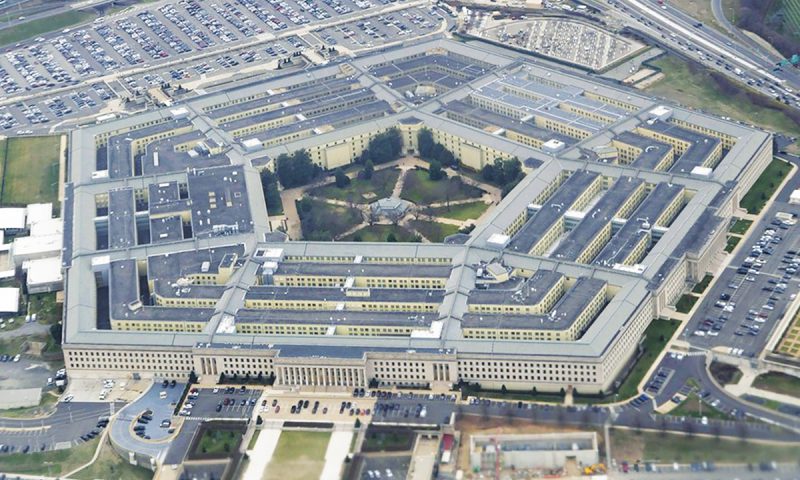
Pentagon hyping of ‘decisive year’ in ‘Indo-Pacific’ exposes military hegemony, Cold War mentality toward China
By Liu Xuanzun | Global Times | December 28, 2023
The US Department of Defense’s hyping of 2023 being a “decisive year” in the “Indo-Pacific region” is filled with Cold War mentality and exposes its aggressiveness toward China, analysts said on Thursday, after the Pentagon on Wednesday released a fact sheet summarizing its work in the region.
“In this decisive decade, 2023 will be remembered as a decisive year for implementing US defense strategy in Asia,” US Secretary of Defense Lloyd Austin said in a news release by the Pentagon on Wednesday.
Taking the form of a fact sheet, the Pentagon release rounded up some of its “achievements” in the past year with allies and partners to make the US forces’ posture in the “Indo-Pacific region” “more mobile, distributed, resilient, and lethal,” including forward stationing key US military units to Japan, sending more submarines and warplanes to Australia, gaining access to four new military bases in the Philippines, concluding a defense cooperation agreement with Papua New Guinea, and increasing strategic asset rotations such as submarines and bombers to the Korean Peninsula.
The Pentagon outlined its billions of dollars of investments in procurement and development in military capabilities as well as in the Pacific Deterrence Initiative, its support of Japan’s decision to acquire missiles that can strike another country, an AUKUS nuclear-powered submarine and defense industrial base cooperation with Australia as well as bolstering of India’s defense modernization plans.
It also summarized some of its exchanges with countries in the region, including joint exercises with the Philippines, Indonesia, India, Japan, Australia and South Korea.
While the Pentagon did not mention China by name, most of the actions mentioned in the fact sheet target China, observers said.
“If you put the locations named in the list on a map, you can clearly see the US military is forming a strategic encirclement taking advantage of footholds in the form of its allies and partners,” a Chinese military expert who requested anonymity told the Global Times on Thursday.
Many of the so-called achievements are very sensitive and can lead to or have already resulted in serious consequences, the expert said, citing as examples the danger of Japan abandoning its post-war “self-defense only” principle, the AUKUS nuclear-powered submarine plan risking nuclear proliferation, and the US’ support for the Philippines inciting the Southeast Asian country to repeatedly provoke China over Chinese islands and reefs in the South China Sea, causing tensions in the region.
These aggressive moves are reflections of the US’ Cold War-mentality and its pursuit of military hegemony through bloc confrontation, which will only harm peace and stability in the region and the world, the expert said.
US sending ‘bloody New Year’s gift to Kiev’ – Moscow
RT | December 28, 2023
The Russian ambassador to the US, Anatoly Antonov, has criticized Washington for its recent arms package to Ukraine, stating that it reflects an intention to fight Russia “to the last Ukrainian.”
The diplomat’s remarks came in response to the $250 million worth of military assistance, including air defense munitions, rockets, artillery shells, and small-arms rounds, approved on Wednesday by the administration of US President Joe Biden.
Antonov called the latest round of military aid a “bloody New Year’s gift to Kiev” in remarks published on social media. The Americans “are pushing the puppet regime to the abyss, dooming thousands of ordinary Ukrainians to certain death,” he warned.
On the other hand, the official emphasized Russia’s recent success in acquiring the town of Maryinka in the Donetsk People’s Republic, a strategic Ukrainian stronghold. According to Antonov, the US tends to ignore such developments and instead focuses on highlighting “Ukrainian fetish ‘victories.’”
The diplomat predicted that any arms provided by NATO nations to Ukraine would be “burned and destroyed” without altering the situation on the ground.
The White House could not appropriate more funding for Ukraine after Republican opposition in Congress blocked its request. The lawmakers have demanded major concessions on immigration reform and southern border security as a precondition for their approval of spending additional billions of taxpayers’ dollars on Ukraine support. US officials have indicated that this latest package would be the last under the current spending allowance.
US President Joe Biden has accused those lawmakers opposed to more Ukraine spending of jeopardizing national security by tying it to domestic policy issues. He suggested that Russian President Vladimir Putin might attack a NATO member after dealing with Ukraine.
Putin dismissed this remark as “absolute nonsense,” saying that Biden was using exacerbated rhetoric to cover up his administration’s foreign policy failures. Moscow maintains that preventing NATO expansion into Ukraine is a key objective in the conflict.
Hesitation among US allies leaves Operation Prosperity Guardian in dire straits
The Cradle | December 28, 2023
Ten days after US Defense Secretary Lloyd Austin announced the formation of an international task force to patrol the Red Sea, about half of the nations named as participants have yet to acknowledge their role, while others have pushed back against Austin’s declaration.
Under the name Operation Prosperity Guardian (OPG), Washington’s “coalition of the willing” was intended to confront attacks by the Yemeni armed forces against Israeli-linked ships attempting to cross the Bab al-Mandab Strait.
However, only two US allies have deployed warships to the Yemeni coast to support the coalition: the UK, which sent the navy destroyer HMS Diamond, and Greece, which announced the deployment of a Hellenic navy frigate.
Canada, Norway, and the Netherlands confirmed their participation in OPG but have so far committed only a handful of staff officers. Similarly, the Seychelles ratified their support for the coalition but clarified: “Our participation will not include putting boats or military personnel to patrol in the Red Sea. Our role is to help in providing and receiving information since many things that happen close by can have an implication for us.”
Authorities in Bahrain – the only Gulf nation named as part of the pro-Israel alliance – have not commented on their role in OPG, despite the fact that the US war chief announced the coalition’s creation from the US Fifth Fleet headquarters in Manama. Last week, Bahraini police detained a prominent opposition figure who criticized the government for joining OPG.
Complicating matters further for the Pentagon, the last three NATO members named as part of the alliance – Spain, Italy, and France – have outright refused to hand over command of their ships to the US.
The French defense ministry said last week it supported efforts to “secure freedom of navigation in the Red Sea.” Still, it highlighted that its navy already operated in the region and its ships would stay under French command. Italy took a similar approach, committing the naval frigate Virginio Fasan to patrol the Red Sea but emphasizing that this was part of “existing operations” and not OPG.
Spain has been the most vocal in its rejection of being named part of the anti-Yemen alliance, vetoing a vote at the EU that called for support of the coalition and making it clear that its forces committed to Operation Atalanta – a counter-piracy operation off the Horn of Africa and in the Western Indian Ocean – would not join OPG.
“Spain is not opposed to creating another operation, in this case in the Red Sea. We have communicated to our allies, both in NATO and in the EU, that we consider Operation Atalanta does not have the characteristics nor the nature that is demanded and needed in the Red Sea,” President Pedro Sanchez said on 27 December.
While the Pentagon last week proclaimed “over 20 nations” had joined OPG, reports have shown that more of Washington’s closest partners are balking at the idea of joining war efforts in the Red Sea.
On 21 December, Australia announced it would be sending personnel to join OPG, but no warships or planes. India has also balked at the plan, with a senior military official revealing to Reuters that New Delhi is “unlikely to join” the US alliance.
Nonetheless, earlier this week, the Indian navy deployed several warships to the Arabian Sea in response to an alleged drone attack on an Israeli-linked vessel.
Saudi Arabia has also shown no interest in the venture, as the Gulf kingdom is reportedly more interested in ending its eight-year war in Yemen than in re-starting hostilities.
Yemen’s Red Sea operations in support of Palestinians in Gaza have significantly hurt the Israeli import sector, as the vital Port of Eilat has seen an 85 percent drop in activity. According to Bloomberg, half of the container ships that regularly transit the Red Sea and Suez Canal are avoiding the route now.
However, marine traffic data shows that the transit of non-western tankers through the Red Sea has surged since the Yemeni armed forces began targeting Israeli-linked vessels.
‘Take what you want and we’ll sort it out later’: US weapons stash fuels Gaza carnage
The Cradle | December 27, 2023
A stockpile of weapons owned by the US government and hidden inside Israel – known as the War Reserve Stocks for Allies-Israel (WRSA-I) – is back in the limelight, as former US officials believe the White House has dipped into it to restock quickly-depleting munitions dropped inside the Gaza Strip.
“Officially, it’s US equipment for US use,” a former senior Pentagon official told The Guardian. “But on the other hand, in an emergency, who’s to say we’re not going to give them the keys to the warehouses?” he added.
Another senior US official familiar with WRSA-I told the British news outlet that, when it comes to air-to-ground munitions, “we’ll give [Israel] whatever they need.”
Created in the 1980s to supply the US army in case of a regional war, the WRSA-I is the largest node in a global network of US weapons caches.
Although Tel Aviv is not legally allowed to make free use of WRSA-I – the full contents of which are not publicly disclosed – the former defense officials say transfers from the stockpile “differ from regular arms sales between the US and another country,” as the munitions can be withdrawn by the Israeli army “before the processes that account for the transferred equipment are fully completed.”
“We sort of retroactively build a foreign military sales case, which may or may not need to be notified to Congress, depending on what they took and what quantities,” said Josh Paul, a former state department official who resigned in October in protest at Washington’s unbridled support for the ethnic cleansing of Gaza.
“There’s no review of human rights, there’s no review of regional balance, there’s none of the conventional arms transfer policy review that would normally happen […] Essentially, it’s take what you can and we’ll sort it out later,” Paul added.
Furthermore, in late October, the White House sent a supplemental budget request to Congress that included the removal of restrictions on all categories of weapons and ammunition Israel is allowed to access from WRSA-I.
“A proposal in a legislative request to Congress to waive Congressional notification entirely for FMF-funded Foreign Military Sales or Direct Commercial Contracts is unprecedented in my experience […] Frankly, [it’s] an insult to Congressional oversight prerogatives,” Josh Paul said about the legal loophole, which was buried after more than 40 pages of legislative legalese.
Although there’s little to no transparency about the categories and quantities of weapons the US is providing Israel, in October, Axios reported that Washington would give their allies 155mm artillery shells.
These unguided munitions, held in large quantities in WRSA-I, are considered particularly hazardous as “their accuracy degrades over distance, increasing the likelihood of civilians and civilian infrastructure getting hit by errant shells,” according to Marc Garlasco, a former UN war crimes investigator.
CNN revealed earlier this month that a US intelligence assessment determined about 40-45 percent of over 29,000 air-to-ground munitions Israel has used in Gaza have been unguided.
Israel’s unrestrained use of these munitions inside one of the most densely populated places on earth has quickly turned Gaza into the deadliest military campaign in modern history, with a death rate of no less than 355 civilians per day – roughly 70 percent of whom are women and children.
Israel Paying a Heavy Price for Its Crimes
BY KEVIN BARRETT | DECEMBER 25, 2023
So Netanyahu is now saying that (Israel is paying) is a heavy price. How heavy is the price?
Netanyahu is not admitting how heavy the price really is. The actual number of Israeli casualties is much higher than the official count. We know that because we’ve actually seen that the resistance fighters have filmed themselves taking out tanks and trucks and other military vehicles by the hundreds. They’ve filmed many of their other operations as well. So we can see that just based on what’s out there in the resistance film footage, the casualty count has to be a lot higher than Netanyahu is admitting.
He also is ignoring the fact, at least publicly, that Israel has lost something like 7% of its population. They haven’t been killed, they’ve fled the country. This has happened occasionally before, but this time it’s not certain that they’ll be coming back, because the Israeli economy is in shambles. The northern edge of the country is now uninhabited, as they’ve all been evacuated due to the northern front of Hezbollah.
And the Israeli economy may not come back. It’s heavily dependent on tourism, and that’s completely shut down now. The usual tourist hotels are full of Israelis who fled the war zones in the north. And so that of course is bad enough. But (the main reason) the future of the Zionist entity looks incredibly bleak is because of the way that they’ve managed to commit the most horrendous genocide ever seen on live television, and they’ve sickened and appalled pretty much the entire world. Their only supporters now are in Washington DC. And even in the United States of America polls show that the majority of young adults want the resistance to win and put an end to Israel.
So they have lost the military battle. They can’t get their hostages back. They can’t succeed in their ground operations. They can’t stop Hamas as they say they are going to. They’ve lost their economic battle. They’ve lost in their propaganda war, where they’re making up ludicrous stories about beheaded babies that nobody believes. Nobody believes anything they say any more. They’ve blown all their credibility, blown up their economy, and shown that they’re a military paper tiger. The end of the Zionist entity is near. And Netanyahu knows that his own political end is even nearer.
US jets strike resistance sites in Iraq
The Cradle | December 26, 2023
US warplanes launched airstrikes against several sites belonging to the Kataib Hezbollah faction early on 26 December, in Washington’s latest response to ongoing drone and missile attacks launched by the Iraqi resistance on US bases in Iraq and Syria.
The strikes resulted in large explosions south of Iraq’s capital, Baghdad, an Al-Mayadeen correspondent reported. One was killed and over a dozen wounded, according to an official statement.
The US hit “three locations utilized by Kataib Hezbollah and affiliated groups focused specifically on unmanned aerial drone activities,” a US National Security Council spokesman said in a statement.
The attack “likely killed several Kataib Hezbollah militants,” according to CENTCOM.
The Iraqi government said in a statement that the attack “harms bilateral relations between the two countries and represents an unacceptable violation of sovereignty,” which “harms” Baghdad’s bilateral ties with Washington. The statement added that an Iraqi service member was killed, while 18 were injured, including civilians.
Defense Secretary Lloyd Austin said the attack was a response to ongoing Iraqi operations targeting US bases, in particular one attack on the Erbil air base on Monday, 25 December, which left three US soldiers wounded, including one in critical condition.
An Iraqi Ministry of Interior official told AFP that the US airstrikes targeted a Popular Mobilization Forces’ site in the city of Hillah, the capital of Babylon Governorate in central Iraq. A site in the Wasit Governorate was also targeted, resulting in the wounding of at least four people.
In a statement, leader of the Nabni Coalition Hadi al-Amiri stressed his “strong condemnation and denunciation of the repetition of the sinful American attacks that were embodied at dawn this day in the provinces of Babil and Wasit.”
On the afternoon of Christmas Day, the Islamic Resistance coalition in Iraq said in a statement that it targeted “the occupied Harir base near Erbil Airport in northern Iraq with drones.”
The statement vowed that the Iraqi resistance would continue the “destruction of enemy strongholds” in line with its goals of “resisting the American occupation” in Iraq and responding to “the Zionist entity’s massacres against our people in Gaza.”
The Iraqi resistance also struck the US Green Village base in northern Syria, the group said in a separate statement earlier that day.
Following Operation Al-Aqsa Flood and the start of the Gaza-Israel war in October, Iraqi resistance groups banded together under a single coalition. They launched near-daily attacks on US bases in both Iraq and Syria in solidarity with the Palestinian resistance and in rejection of Washington’s support for the Israeli assault on Gaza.
The attacks also aim to hasten the withdrawal of US forces from Iraq.
The US air force has launched several attacks in response. One strike in early December resulted in the killing of five Iraqi resistance fighters.
While the US presence in Iraq is coordinated with the government of Prime Minister Mohamed Shia al-Sudani, a political alliance of Shia parties represented in his parliament are staunchly opposed to it.
In 2020, following the assassination of Iranian Quds Force commander Qassem Soleimani, Iraq’s parliament voted in favor of expelling the US from Iraq. The resolution specifically called for the cancellation of Iraq’s formal request for US military assistance against ISIS, which was issued in 2014.
Washington rejected the resolution and threatened to impose sanctions on Baghdad.
Featured Video
Matt Bracken: US Plans Massive MOAB Strike on Iran?
or go to
Aletho News Archives – Video-Images
New Book
The silver that medicine dropped — four thousand years of clinical use, four decades to erase.
Colloidal Silver — First Edition, 2026, Paperback
Lies are Unbekoming | October 16, 2026
Silver was medicine. Not alternative medicine. Not folk medicine. Medicine. In surgery. In obstetrics. In the burn ward. In water treatment. In the household medicine chest. Every physician before 1938 knew this.
By the 1870s, silver nitrate was standard in surgical wound care across the leading hospitals of Britain, Germany, and the United States. Colloidal silver preparations — Collargol, Argyrol, Protargol — entered European and American practice through the 1890s and early 1900s and became standard antiseptics in military field medicine. By the time Fleming grew his first penicillin mould in 1928, silver was the first-line antimicrobial of the Western pharmacopoeia. The Lancet and the British Medical Journal carried the clinical reports in volume. The practice ran continuously through the Victorian era, the Edwardian era, the First World War, the interwar period. By 1980, almost all of it was gone.
What has not been treated at book length, until now, is how a four-thousand-year clinical record disappeared from mainstream medicine within four decades of the Flexner Report — and what the honest account of silver looks like once that record is reassembled.
Colloidal Silver reconstructs the pre-1938 record from The Lancet, the British Medical Journal, and the primary literature of the era; recovers Robert Becker’s bioelectric framework from the regeneration research the pharmaceutical model buried; and places silver inside a practical terrain-paradigm guide to its current place — in water, on the body, inside the body, and in the chronic conditions where antibiotics have failed. … continue
Blog Roll
 Aletho News
- Spanish firm sells Latvia vehicles equipped with Israeli tech despite arms embargo
- Saudi Arabia under fire… Yemen is burning down the House of Saud
- Israeli Spy Pollard stole the files, today’s it’s delivered through official channels
- Why Iran Didn’t Walk Away
- US arms supplied to Ukraine found in war-torn Sudan – Moscow
- The silver that medicine dropped — four thousand years of clinical use, four decades to erase.
- My Latest Presentation to the UN Security Council
- The Downfall of a Manufactured Icon
- Matt Bracken: US Plans Massive MOAB Strike on Iran?
- Russia accuses France of ‘piracy’ over tanker seizure
- If Americans Knew
- Tucker Carlson exposes Israeli Lies about the Oct 7th attack, Charlie Kirk, and the U.S.
- Israel has detained thousands of Palestinian children since Oct 7th – over half spent time in solitary, many uncharged
- Israeli Analysis: Is Netanyahu Planning an ‘October Surprise’ Attack Before Israel’s Election?
- Israeli settlers brutally attack Palestinians and Washington Post female photographer, 65
- Words Have Changed, Occupation Continues: The Reality of the Gaza Ceasefire
- Gaza’s child amputees are growing faster than their prosthetics allow
- Israel keeps Palestinians struggling just to survive–Daily Update
- Israeli firm used online ads to run vast spy operation, researchers say
- No, the world zionist movement is not an antisemitic conspiracy theory
- Hundreds of IDF investigations into killings still have no public outcome, BBC Verify finds
- No Tricks Zone
- New Study Suggests Large Regions Of The Pacific Ocean Have Been Cooling For The Last 80 Years
- Germany’s Green Energy Debacle: High Energy Costs Force Kahla Porzellan to Close After 182 Years!
- New Study: 50 Years Of The Most Aggressive ‘Net Zero’ Policies Can Only Affect The Global Climate By 0.03°C
- US September “Heat” Was No Record…Many Records Set Decades Ago
- Latest European Green Energy Debacle; Portugal’s Largest Flagship Solar Park Insolvent!
- Green Energy Debacle: German Expert Professor Fritz Vahrenholt Warns Of Severe Economic And Social Consequences
- Two More Paleo Reconstructions Affirm Meters-Higher Sea Levels Across Ireland, Brazil 7000-6000 Years Ago
- New Study: Earth And Venus Surface Warmth Largely Explained By Convection And Lapse Rate, Not CO2 Or Radiation
- 2025 Nature Paper Claiming Worsening Global Drought Gets RETRACTED …Heavily Flawed
- New Study: ‘Global Drought Shows No Detectable Recent Acceleration Under Climate Warming’

