Chinese Foreign Ministry Calls for Promptly Starting Talks on Space Arms Control
Sputnik – 13.04.2021
BEIJING – China is calling on the global community to urgently start the negotiations on the space arms control, which should be based on a document proposed by Beijing and Moscow, the foreign ministry’s spokesman, Zhao Lijian, said on Tuesday.
“We are calling on the international community to start negotiations and reach agreement on arms control in order to ensure space safety as soon as possible,” Zhao said at a briefing, noting that the talks should be based on the draft agreement proposed by the two countries.
“China has always been in favor of preventing an arms race in space, it has been actively promoting negotiations on a legally binding agreement on space arms control jointly with Russia,” the diplomat added.
Just on Monday, Russian Foreign Minister Sergei Lavrov called for launching negotiations aimed at creating an internationalist instrument that would ban the deployment of any kinds of weapons in space. Lavrov proposed taking the Russian-Chinese draft document, introduced at the 2014 disarmament conference in Geneva, as a basis.
To stabilize the situation during a period when a multilateral document on non-militarization of space is being developed, Lavrov invited countries to join a Russian-promoted multilateral initiative on making a political commitment not to be the first to place weapons in outer space.
State Lawmakers Attack Federal Misuse of National Guard
By Brian McGlinchey | Stark Realities | April 6, 2021
Fed up after years of relentless National Guard deployments in undeclared wars, state lawmakers across the country are pushing legislation that would prohibit the use of Guard units in combat zones without a formal declaration of war by Congress.
The bills are being promoted by BringOurTroopsHome.US, a self-described organization of “right-of-center” veterans working to end American involvement in “endless wars” and restore congressional authority over war-making. The libertarian 10th Amendment Center is also backing the cause.
The proposed laws would require governors to determine the constitutionality of orders that place Guard units on federal active duty; where they’re deemed unconstitutional, the governor is required to take action to prevent the unit from being surrendered to federal control and sent into harm’s way.
The first “Defend the Guard” bill was conceived and introduced by Air Force veteran and West Virginia state legislator Pat McGeehan. While no state has enacted the law yet, interest is spreading widely, with legislators now pushing the measure in 31 states.
Conservative Veterans Taking Point
BringOurTroopsHome.US is led by Dan McKnight, a 13-year veteran of the Marine Corps Reserve, active duty Army and Idaho Army National Guard whose military service ended after he was injured in Afghanistan.
McKnight and many other veterans leading the drive against the War on Terror are from the right side of the political spectrum. That’s a sharp contrast to the typical antiwar veteran of the Vietnam era, but McKnight says vets from both wars share a common experience.
Today’s veterans “are coming home and saying the same thing (Vietnam vets did): ‘What was the point of that? What was our mission? We have no mission, we have no definition of success, we have no clear path to victory, we have no idea what victory means and we’re there without a constitutional authority to send us there’,” he says.
“Every one of us raised our hands and swore an oath to the Constitution…and when it says Congress shall be the only body to declare war, we take that to heart. And when Congress doesn’t do it, we understand bad things can happen: long, endless foreign misadventures,” says McKnight.
In a 2019 Pew Research poll, 64% of veterans said the war in Iraq wasn’t worth fighting; 58% said the same of Afghanistan. A January Concerned Veterans for America/YouGov poll found two-thirds or more of veterans support full withdrawals from both countries.
“The right-of-center veterans are now echoing the message of left-of-center veterans, and it’s hard to ignore when veterans from the entire political spectrum are saying the same thing: Enough already—if you want us to go and bleed and die and spend our lives and your treasure in a foreign land, then Congress should put their name on the line before we put our boots on the ground,” McKnight says.
That’s what the Constitution demands. In an impassioned speech at the West Virginia legislature last month, McGeehan quoted James Madison: “The Constitution supposes what the history of all governments demonstrates, that the executive is the branch of power most interested in war and most prone to it. It has accordingly, with studied care, vested the question of war in the legislature.”
Deployments’ Steep Toll
The National Guard has played a major role in America’s post-9/11 militarism: As recently as December, more than 57,000 Guard members were deployed around the world.
The federal government’s reliance on the National Guard makes state legislatures an intriguing second front in the drive to curtail the War on Terror. “Defend the Guard” laws also give state lawmakers a rare chance to influence foreign policy—and to impose consequences for the executive branch’s usurpation of war powers.
The heavy reliance on the Guard takes a toll on soldiers, families, neighborhoods and states. The intense pace of National Guard deployments was underscored at a recent Defend the Guard hearing in South Dakota: While opposing “Defend the Guard,” the state adjutant general acknowledged that, during the entire Global War on Terrorism to date, the state has had all its troops home for just 42 days.
McKnight has friends who’ve done a staggering 12 or 13 overseas National Guard deployments. Beyond the risk to life and limb, and the hardships imposed on individuals, families and marriages, he says communities also pay a price.
Guard members “are police officers, tradesmen, mechanics, schoolteachers, attorneys. (When) they have to leave that job behind, it puts a burden on the community,” says McKnight. Upon their return, Guard members are generally guaranteed the option to reclaim their jobs—but that sometimes means displacing those who filled their positions while they were away, compounding the disruptive effect.
Deployments also prevent National Guard units from responding to crises at home—their primary reason for existing. For example:
- When Hurricane Katrina devastated New Orleans and the Gulf Coast of Louisiana and Mississippi in 2005, thousands of the states’ National Guard soldiers were deployed to Iraq. Mississippi’s 223rd Engineer Battalion returned to repair hurricane damage—but was ordered to leave its equipment in Iraq for use by other units.
- In 2020, as Oregon endured some of its worst wildfires ever, half the state’s National Guard helicopters were in Afghanistan, including all its CH-47 Chinooks—dual-rotor choppers capable of carrying 26,000-pound payloads and ideal for use in firefighting. The Oregon Guard did what it could with Blackhawk helicopters that have one tenth the lifting power.
The Empire Strikes Back
When Defend the Guard measures are introduced in state legislatures, the national security establishment and its allies emerge to defend the status quo—by hook or by crook.
In South Dakota, McKnight says, “the military-industrial complex…sent a two-star general to testify…and made all kinds of threats, and insinuated the state would lose their National Guard if they passed this bill, which is simply not true.”
Weeks ago, Republican Idaho Representative Joe Palmer, who chairs the state’s Transportation & Defense Committee, seemed to resort to underhanded tactics to kill a Defend the Guard bill.
He put the measure to an initial procedural vote in the committee, and declared it to have failed by voice vote. Video of the proceedings, however, shows the result of the voice vote to be unclear at best, and McKnight says his group’s post-vote polling of members suggests the measure would have advanced had Palmer taken a recorded vote.
If Palmer didn’t already know he should play fair with veterans who are trying to prevent fellow citizen-soldiers from dying in unconstitutional wars, he may be learning that lesson now: McKnight says his group facilitated an emergency meeting of the GOP committee in Palmer’s home town, which is now considering a resolution censuring Palmer for his conduct.
“If you want to play parliamentary tricks and the price of your tricks is the blood of my brothers and sisters who (deploy) over and over again, then we’re going to take some blood of our own, and we’re going to do that the way politicians understand, and that’s with voters in the primary and the general election,” says McKnight.
Sometimes, the establishment’s machinations are done away from cameras. In a 2015 interview, West Virginia’s McGeehan said he was summoned to a meeting in the Speaker’s office with the commander of the state National Guard. The general said he’d received a call from the Pentagon, threatening that, if Defend the Guard became law, West Virginia bases would find their way onto the list of installations targeted for closure.
Liz Cheney Intervenes to Thwart Wyoming Bill
McKnight says “the most offensive opposition that we’ve faced” came from U.S. Congresswoman Liz Cheney, daughter of former vice president Dick Cheney.
“When we pushed the Defend the Guard bill in Wyoming last year, she or her staff contacted members of the Wyoming legislature and said, ‘If this passes in Wyoming, I will personally see to it that two C-130 aircraft are stripped from Wyoming and sent to Texas’,” says McKnight, who was in Cheyenne to support the bill, along with U.S. Senator Rand Paul.
Bethany Baldes, Wyoming state director of BringOurTroopsHome.US, was also on hand. She too says lawmakers told her they received calls from Cheney’s office that included threats to send new C-130 cargo planes to Texas. (Cheney’s communications director has not replied to an invitation to comment on this story.)
The measure failed, 35-22. A statement signed by a group of Wyoming senators opposing the measure seemed to turn logic on its head by claiming the bill “calls into question Wyoming’s support for our soldiers and airmen in the National Guard.”
That episode was McKnight’s second jarring encounter with Cheney, whom he describes as a “warmonger heiress of a military-industrial fortune.” Months before, he and other veterans met with Cheney in Washington to urge her to support the withdrawal of U.S. forces from Afghanistan.
“We went into Liz Cheney’s office and we asked her, ‘What conditions must be met on the ground for you to support ending the war in Afghanistan and bringing our troops home?’ And she said, ‘I don’t think I could ever support that position’.”
Pressing the issue, the veterans asked Cheney how long troops should remain. “She looked us stone-faced in the eye and said, ‘Forever. American troops will be in Afghanistan forever’,” says McKnight. “That’s when we decided it was time to step away from the swamp and work in the states, and force the states to force Congress’s hand.”
Ukraine claims Russia ignoring call for crunch talks to avert all-out war in Donbass, but Moscow says it never received an invite
RT | April 12, 2021
The Kremlin has denied ignoring requests from Ukrainian President Volodymyr Zelensky to hold a crisis summit after days of bloody escalations in the war-torn Donbass region, insisting it hasn’t actually been invited to take part.
On Monday morning, a government spokeswoman in Kiev claimed that an appeal for talks with Russian President Vladimir Putin had gone unacknowledged. Yulia Mendel told journalists from Reuters that “we have not received an answer yet and we very much hope that this is not a refusal of dialogue.”
However, later that day, Kremlin spokesman Dmitry Peskov said that he was unaware of the request, and had not seen any such contact from Ukrainian officials in recent days.
Mendel has since aimed to dispel any confusion, claiming that “the request for negotiations came immediately after the death of four servicemen of the Armed Forces of Ukraine – on March 26,” in an answer given to Interfax-Ukraine.
A statement posted by Zelensky to Twitter that day said, “we lost four defenders of Ukraine again. Sincere condolences.” He added that he urged all leaders of the Normandy Format, comprised of Germany, Russia, Ukraine, and France, “to do their utmost to preserve a full and comprehensive ceasefire.” It is unclear if a formal request was sent alongside the message.
Last week, Russian diplomats announced they had reached out to their US counterparts for emergency discussions over the situation in Donbass, with Peskov describing the situation on the contact line as frightening. Amid reports of increased shelling, Kiev’s forces have clashed with Moscow-backed separatist militants based in the breakaway Donetsk and Lugansk regions.
At the same time, US State Department spokesman Ned Price warned that Washington had seen credible reports of Russia amassing troops near the shared border, and issued a “call on Russia to refrain from escalatory actions.”
On Thursday, Putin’s deputy chief of staff, Dmitry Kozak, said Moscow would be forced to protect the residents of the Donbass region if the Ukrainian Army were to launch an all-out offensive. “Everything depends on what the scale of fighting will be.”
Putin has previously warned of a humanitarian crisis akin to the Srebrenica massacre of Bosnian Muslims during the breakup of Yugoslavia, remembered as one of Europe’s bloodiest post-war incidents. If this were to happen, Peskov said, “no country in the world would stand aside. And all countries, including Russia, would take measures to prevent such tragedies from happening again.”
Russia Calls for Talks on Binding Treaty to Prohibit Weapons in Space – Lavrov
Sputnik – 11.04.2021
MOSCOW – Russia has called for talks to create a legally binding international instrument that would ban the deployment of any type of weapons in space, Russian Foreign Minister Sergey Lavrov said on the 60th anniversary of Yuri Gagarin’s historic space flight.
The anniversary of the first Soviet cosmonaut’s flight, marking the beginning of humanity’s space era, is celebrated every year in Russia as Cosmonautics Day on April 12. On the same day, the world marks the International Day of Human Space Flight.
“We consistently believe that only a guaranteed prevention of an arms race in space will make it possible to use it for creative purposes, for the benefit of the entire mankind. We call for negotiations on the development of an international legally binding instrument that would prohibit the deployment of any types of weapons there, as well as the use of force or the threat of force,” Lavrov said in a video message on the anniversary of the first manned space flight.
The minister offered to use as a basis a relevant Russian-Chinese draft treaty submitted in 2014 to the Conference on Disarmament in Geneva.
To stabilize the situation during a period when a multilateral document on non-militarization of space is being developed, Lavrov invited countries to join a Russian-promoted multilateral initiative on making a political commitment to avoid being the first entity to place weapons in orbit around Earth.
The top Russian diplomat noted that some 30 countries are full-fledged participants in the initiative.
Lavrov also emphasized that space cooperation should remain one of the most important aspects of the international agenda.
“Over the past decades, Russia, as a leader in space exploration, has provided assistance to a number of states in launching cosmonauts into orbit. At the UN Outer Space Committee, we are maintaining a consistent stance to ensure equal access of states to outer space and its conservation for future generations,” the Russian foreign minister said.
Lavrov stressed that Russia’s Yuri Gagarin, who became the first person in space, made a huge contribution to the development of humanity and demonstrated Russia’s ability to effectively resolve the most difficult tasks. His memory continues to inspire people across the world in their honorable and ambitious aspirations, Lavrov said.
On April 12, 1961, Gagarin pronounced his famous “Poyekhali!” (“Let’s Go!”) as the Vostok spacecraft lifted off the ground, taking the first human to space.
In 2011, the UN General Assembly declared April 12 the International Day of Human Space Flight.
Sunbeams From Cucumbers: The View From the Khanate of Kaganstan
By Patrick Armstrong | Strategic Culture Foundation | April 10, 2021
We now have the complete set, so to speak. The Khans of the Khanate of Kaganstan have both spoken. The husband in A Superpower, Like It or Not and the wife in Pinning Down Putin: How a Confident America Should Deal With Russia; he, so to speak, is the theorist and she the practitioner. She, Victoria Nuland, is back in power as Under Secretary of State for Political Affairs. She is, of course, infamous for the leaked phonecall during the Maidan putsch. He, Robert Kagan, is one of the founders of the – what now has to be seen as ill-named – Project for the New American Century.
I mentioned Kagan’s piece in an earlier essay and found it remarkable for two things – the flat learning curve it displays and its atmosphere of desperation. PNAC was started in a time of optimism about American power: it was the hyperpower and nothing was impossible for it. Its role in the world should be, Kagan confidently wrote in 1996, “Benevolent global hegemony”. Washington should be the world HQ:
superpower, love it!
A quarter century later his message is:
superpower, endure it.
Quite a difference. Today “there is no escape from global responsibility… the task of maintaining a world order is unending and fraught with costs but preferable to the alternative”.
Kagan is at a loss to explain his difference in tone, or, more likely, he’s unaware of it. The reason, however, is quite easy to understand – failure. Washington followed the neocons’ advice into disaster: it’s been at war in Iraq and Afghanistan for two decades and it’s losing. The forever wars have come home: its economy is fading, its politics are shattered, its debt load is stunning, its social harmony is eroding. It’s not at the top of the hill any more. Brzezinski warned that a Russia-China alliance would be the greatest threat to U.S. predominance but thought it could be averted by skilful diplomacy. Well, as it turned out, U.S. actions (the word “diplomacy” is hardly applicable) drove Moscow and Beijing together and the strong domestic base that they all took for granted is crumbling. And, to a large extent, it has been the neocons, the wars they encouraged, the exceptionalism they displayed, the arrogance they embodied, that has created this state of affairs. Kagan should look in the mirror if he wants to know why Americans’ perception of superpower status changed from exultant opportunity to dreary duty.
With this background, we turn our attention to Nuland’s views about what should be done about Russia (“Putin’s Russia” of course – these people personalise everything). Her piece entertainingly marries stunning ignorance about Russia to stunning naïvety about prescriptions. There is no point in boring the reader by trudging through her nonsense, so I will just pick a few things.
- She believes that Russia’s infrastructure is crumbling away, the money squandered in corruption and weapons. Well, here are Russia’s new airports, new highways, new hospitals built just for COVID-19, new bridges. Here’s some YouTube links for more. Speaking of decaying infrastructure, she might better look to home: Decaying D.C. bridge reflects state of thousands of bridges nationwide. (Parenthetically – almost everything neocons say that isn’t outright fantasy, is projection).
- “This year, the coronavirus pandemic and the free fall in oil prices could result in a significant economic contraction”. Wrong again: Russia’s economy has done better (less badly) than the G7 average and the oil price war has hurt the U.S. more.
- “Russia currently has $150 billion in its National Wealth Fund and more than $550 billion overall in gold and foreign reserves.” And just how did this collapsing, kleptocratic, mismanaged and rusting-out economy manage to pile up so much moolah? She isn’t even aware that there’s a question here for her to answer.
Those three are enough – Victoria Nuland, for all that she pretends to superior knowledge, is absurdly unaware of the real situation in Russia. And it’s not as if it’s all that hidden, either: all the sources I mention above are in English and easy to find. In her world, Russia is guilty of everything Rachel Maddow says it is, including using cyberweapons against electrical grids.
What are her prescriptions? And, again, for someone who poses as an expert on Russia, they’re laughable. Her general theme is that Washington and its allies have let Putin get away with too much for too long and it’s time to take back control:
Washington and its allies have forgotten the statecraft that won the Cold War and continued to yield results for many years after. That strategy required consistent U.S. leadership at the presidential level, unity with democratic allies and partners, and a shared resolve to deter and roll back dangerous behavior by the Kremlin. It also included incentives for Moscow to cooperate and, at times, direct appeals to the Russian people about the benefits of a better relationship. Yet that approach has fallen into disuse, even as Russia’s threat to the liberal world has grown.
Whoever wins the U.S. presidential election this coming fall will—and should—try again with Putin. The first order of business, however, must be to mount a more unified and robust defense of U.S. and allied security interests wherever Moscow challenges them. From that position of strength, Washington and its allies can offer Moscow cooperation when it is possible. They should also resist Putin’s attempts to cut off his population from the outside world and speak directly to the Russian people about the benefits of working together and the price they have paid for Putin’s hard turn away from liberalism.
In short: reassert “leadership”, “resolve”, “position of strength”; the now familiar PNAC “strategy” that has failed for twenty-five years.
A few gems stick out.
- “No matter how hard Washington and its allies tried to persuade Moscow that NATO was a purely defensive alliance that posed no threat to Russia, it continued to serve Putin’s agenda to see Europe in zero-sum terms.” No comment necessary or possible: this is just as solipsistic as describing a Russian military exercise in Russia as “Russia’s Military Drills Near NATO Border Raise Fears of Aggression“.
- The U.S. and its allies should continue “maintaining robust defense budgets”. As if they weren’t already hugely outspending Moscow. She knows they aren’t keeping up because she goes on to say they must spend more to “protect against Russia’s new weapons systems”. Perhaps the West’s behaviour has something to do with this? Perhaps a lot of the Western spending is a waste? No, too much for her: she can sometimes glimpse reality but her exceptionalism prevents her from seeing it.
- “The one lesson Putin appears to have learned from the Cold War is that U.S. President Ronald Reagan successfully bankrupted the Soviet Union by forcing a nuclear arms race”. No, the lesson that Putin learned is that enough is enough and too much is too much. Brezhnev & Co didn’t get that. It’s the S. that will bankrupt itself chasing down “full-spectrum dominance”.
But the most ridiculous suggestion is surely this:
With appropriate security screening, the United States and others could permit visa-free travel for Russians between the ages of 16 and 22, allowing them to form their own opinions before their life paths are set. Western states should also consider doubling the number of government-supported educational programs at the college and graduate levels for Russians to study abroad and granting more flexible work visas to those who graduate.
She seems to think that its 1990-something. But, in the real world it’s 2021. Russians have been to the West; Russians know about it; they travel; all over the place. If Nuland ever left her bubble she would see that every European tourist spot has Russian-language guidebooks. I read through her screed with growing contempt but that really sealed it for me: Victoria Nuland hasn’t got a clue. The truth is, that the more Russians see of the West, the less impressed they are. Just ask Mariya Butina.
Again a bit of reality leaks through, from time to time, but she is incapable of reflection:
The first order of business is to restore the unity and confidence of U.S. alliances in Europe and Asia and end the fratricidal rhetoric, punitive trade policies, and unilateralism of recent years. The United States can set a global example for democratic renewal by investing in public health, innovation, infrastructure, green technologies, and job retraining while reducing barriers to trade.
Actually, doing all this is quite a big job; a very big job; too big a job in fact. And, even if Washington were to seriously start “investing in public health, innovation, infrastructure, green technologies, and job retraining while reducing barriers to trade”, remedying the numerous deficiencies would take many years.
Another thing that she dimly perceives is the gap between Russian and American weapons capabilities. Of course she can’t see any connection between that and U.S./NATO behaviour or Washington’s forever wars: it’s just another nasty thing done by that nasty man in the Kremlin. However, it is actually encouraging that she knows, however dimly; it creates the possibility that she understands that an actual war with Russia would be a bad idea. So that’s something, anyway.
* * *
However, enough consideration of this ill-informed, complacent, unrealistic sunbeam. If this were a comparative treatise on the American extraction of sunbeams from cucumbers as contrasted with the failed attempts of the so-called savants of Laputa it would be amusing, but the author of this footling effort is a few arm’s lengths away from The Nuclear Button. It is not a joke.
The fading Imperium Americanum is influenced by dangerous ignoramuses like Nuland and her husband. Everything they have suggested has failed: they start in complacency, add to it ignorance and learn nothing; but they’re still there. It’s very frightening.
* * *
Speaking of “Putin’s information stranglehold”, Nuland’s essay is available at INOSMI translated into Russian and so is her husband’s. Russians can read this stuff and form their own opinions. “Putin’s disinformation campaigns” are so clever that they use real information.
We won’t tell you that they’re dangerous idiots;
we’ll let them tell you that they’re dangerous idiots.
Russian-Ukrainian War: Tragedy For People, Chance For Elites
South Front – April 10, 2021
Against the backdrop of ongoing political provocations and bellicose rhetoric from all parties involved in the conflict in Eastern Ukraine, military escalation is constantly growing. Local forces, as well as the OSCE observers, report about more and more ceasefire violations in the Donetsk and Luhansk People’s Republics. There are daily statements on casualties on both sides of the conflict among the military and local civilians.
Now, when all the global media are closely following the situation in the eastern regions of Ukraine, the international community is wondering whether Donbass will become the point of the next military conflict, and what its scale will be. The main question is “Cui Prodest”?
The answer is unambiguous: the administration of Ukrainian President is a real stakeholder in the armed conflict in eastern Ukraine. In the current Ukrainian reality, there are plenty of circumstances that determine the pattern of conduct of Volodimir Zelensky.
First, the current economic situation in Ukraine is disastrous. The Ukrainian state is on the way to lose the ability to fulfill its social obligations. According to the data for 2020, its GDP in real terms suffered about 4% drop. According to the IMF, this drop will be at least 7%. If for the United States, China or Russia, a 4% drop in GDP is a big problem, for Ukraine it is almost a disaster, as GDP indicators were low even before the crisis.
Secondly, the economic situation in Ukraine was aggravated by the coronacrisis. The number of those contaminated by COVID-19 per day there is one of the biggest among the European countries, and even in the whole world. The death rate is also disproportionately high. The country’s economy is suffering, as most regions are still under lockdown, and since April 5, restrictions have been tightened again.
The fall in national budget income was caused by a complex of reasons, including pure management of national economy and the extremely high level of corruption that caused the destruction of the industrial complex, drop in already low per capita income, accompanied by a decreasing revenue gained from gas and cargo transit from East to West.
Third, the Zelensky administration is now facing a rapid decrease in people’s support. The national disappointment in his political program is caused by the rejection of his campaign promises to stop the war in Donbass.
Fourthly, it is increasingly difficult for NATO allies to fuel Kiev’s anti-Russian hysteria in the absence of any actual changes of the issue. The military conflict in the Eastern Ukraine is already 7 years old, and the only alarming statements no longer contribute to the increase in financial support from the US and its allies.
The last but not least is a political request from a part of the American elite, who are interested in various forms of pressuring Russia. They support blocking of the Nord Stream 2 project by any means; destruction of bilateral relations between Russia and leading European countries, up to war outbreak along its borders.
On the other hand, such a policy of the United States does not fully coincide with the national interests of leading European countries. However, new war in Eastern Ukraine would define Russian status as enemy for years while the US will strengthen its weight in European security.
The position of the Zelensky administration and the interests of the United States represent sufficient set of reasons to outbreak war in Eastern Ukraine.
Indeed, official Kiev does not need to care about the actual result of the conflict, but its very existence.
There are only 3 scenarios of the military conflict in Eastern Ukraine.
- The Ukrainian army wholly or partially occupies the territory of the DLPR.
- The forces of both sides remain in their current positions.
- The DLPR forces, with Russian support, advance on the Ukrainian territory for several dozens of miles.
There is almost a zero probability that Ukraine will suffer a crushing defeat and the DLPR forces will occupy the territory to the Dnieper River. Russia now has neither the strength nor the ability to gain control over such a vast territory, and the collective West, in its turn, would not let this happen.
If any of the above scenarios are implemented, Zelensky and his supporters among the US elites will benefit.
For many years, the US and European media have shaped Russia as the aggressor, the enemy of democratic values and the authoritarian tyrannical regime that must be contained. The idea of an external military threat, which being sequentially built up by the West, serves as a pretext for its increasing military funding both in defense industry and army itself amid inevitable unification under the US leadership.
In its turn, Ukraine, positioning itself as the Eastern European Shield against “Asian Barbarians”, receives significant and steadily growing support from NATO countries, gaining momentum to development and further nazi-like ideology originally rooted in Western Ukraine.
Unleashing the war, Zelensky has a chance to reclaim his status as the national leader. In case of the conquest of the self-proclaimed republics, or the preservation of the current troops’ positions, he will become a hero who saved Ukraine from “evil Russians”.
Even after having lost the war, he would claim that the entire country was saved with little blood and only a small piece of land that was temporary lost, taking on the role of a good strategist who defended the sovereignty in the furious fighting shoulder to shoulder with his NATO allies.
Zelensky’s policy can only fail if Russia captures half of Ukraine, which de facto is not possible.
Thus, almost whatever may happen during the conflict, Ukraine can be sure that it will receive stable financial flows from its Western allies for years ahead. Having become a “real” Eastern Shield of Europe, Ukraine may finally get the coveted NATO membership.
Finally yet importantly – the hot military conflict will undoubtedly divert public attention from the economic problems inside the country.
Unleashing a war in Donbass will allow Zelensky to solve his main problems, albeit at the cost of lives of thousands of Ukrainians.
Today, many analysts assure that there will not be a full-scale war, since Ukraine is weak, and Zelensky must assess the country’s military strength in front of the Russian power. Let’s hope this is the case, while remembering who the beneficiary of the conflict is.
In its turn, the United States, at the cost of Ukrainian soldiers’ lives, can resolve a good part of its problems in the European region, while Russia seems to lose strategically in any of these war scenarios.
Definitely, the war in Ukraine will lead to the closure of the Nord Stream 2 project, which is already at the final stage of construction. Key contacts between Russia and NATO countries will be frozen, no more significant bilateral cooperation in the economy will be possible.
A new war near the Russian borders that involves national armed forces will have an important impact on the internal situation in the country. It is not clear to what extent the Russian society, which has suffered the break of economic relations with Western countries and numerous sanctions, is ready to support the struggle for Donbass.
The Yankees Are Coming Home: The Taliban Won. Get Over It
By Philip Giraldi | Strategic Culture Foundation | April 8, 2021
It hardly made the evening news, but the New York Times reported last week that after twenty years of fighting, the Taliban are confident that they will fully control Afghanistan before too long whether or not the United States decides to leave some kind of residual force in the country after May 1st. The narrative is suggestive of The Mouse that Roared, lacking only Peter Sellers to put the finishing touches on what has to be considered a great humiliation for the U.S., which has a “defense” budget that is larger than the combined military spending of the next seven countries in order of magnitude. Those numbers include both Russia and China. The Taliban, on the other hand, have no military budget to speak of. That enormous disparity, un-reflected in who has won and lost, has to nurture concerns that it is the world’s only superpower, admittedly self-proclaimed, which is incapable of actually winning a war against anyone.
In fact, some recent wargaming has suggested that the United States would lose in a non-nuclear conflict with China alone based on the obsolescence of expensive and vulnerable weapons systems that the Pentagon relies upon, such as carrier groups. Nations like China, Iran and Russia that have invested in sophisticated and much cheaper missile systems to offset U.S. advantages have reportedly spent their money wisely. If the Biden foreign policy and military experts, largely embroiled in diversifying the country, choose to take on China, there may be no one left around to pick up the pieces.
Those who are warning of the apparent ineffectiveness of the U.S. armed forces in spite of their global presence in more than one thousand bases point most commonly to the historical record to make their case. Korea, fought under United Nations auspices, was a stalemate, with the peninsula divided to this day and a substantial American military force continuing to be a presence along the DMZ to enforce the armistice that not quite ended the war. Vietnam was a defeat, resulting in more than 58,000 Americans dead as well as an estimated 3 million Vietnamese, most of whom were civilians. The real lesson learned from Vietnam was that fighting on someone else’s turf where you have no real interests or stake in the outcome is a fool’s game, but the Pentagon instead worked to fix the mechanics in weapons and training at great cost without addressing why people fight wars in the first place. The other lesson was that the United States’ military was perfectly willing to lie to the country’s civilian leadership to expand the war and keep it going, a performance that was repeated in 2001 with the “Iraq is supporting terrorists and will have nuclear weapons” lies and also with the current crop of false analogies used to keep thousands of Americans in Afghanistan and the Middle East.
As a veteran of the Vietnam War army, I can recall sitting around with fellow enlisted men reading “Stars & Stripes,” the exclusive in-house-for-the-military newspaper that was covering the war. The paper quoted a senior officer who opined that the Soviets (as they were at that time) were really envious of the combat experience that the United States Army was obtaining in Vietnam. We all laughed. That same officer probably had a staff position away from the fighting but we draftees knew well that the war was a very bloody mistake while he may have tested his valor post-retirement working for Lockheed-Martin. The “Soviets” in any event demonstrated just how much they envied the experience of combat when they fought in Afghanistan in the 1980s, eventually withdrawing with their tails between their legs just as the U.S. had done in Vietnam after they lost 15,000 men. The “Grave of Empires,” indeed.
Since Vietnam there have been a number of small wars in places like Panama and Grenada, but the global war on terror has been a total disaster for American arms. Afghanistan, as it was for the Russians, is the ulcer that keeps on bleeding until it ends as a major defeat for the United States with the Taliban fully in control, as they are now predicting. Likewise, the destruction of a secular Iraq, regime change in Libya, and a continuing war against a non-threatening Syria have all failed to make Americans either safer or more prosperous. Iran is next, apparently, if the Joe Biden Administration has its way, and relations with major adversaries Russia and China have sunk even lower than they were during Donald Trump’s time as president. The White House has recently sent a shipload of offensive weapons to Kiev and the Ukrainian government has repeated its intention to retake Crimea from Russia, a formula for a new military disaster that could easily escalate into a major war. What is particularly regrettable is the fact that the United States has no compelling national interest in encouraging open warfare between Moscow and Kiev, a conflict that it will be unable to avoid as its is supplying Ukraine with weaponry.
There was almost no discussion of America’s wars during the recent election. One should take note, however, of a recent article by former Assistant Secretary of Defense Lawrence Korb that appeared on National Review which seeks to provide an explanation for “The Real Reason the U.S. Can’t Win Wars Anymore” in spite of the fact that it is “the most powerful country in the history of the world.” To be sure, Korb largely blames the policymakers for the defeat in Vietnam, aided and abetted by a culture of silence in the military where many officers knew that the Gulf of Tonkin incident, which escalated the conflict, was a fraud but chose to say or do nothing. He also observes that the war itself was unwinnable for various reasons, including the observation by many working and middle class Americans that they were little more than cannon fodder while the country’s elites either dodged the draft or exploited their status to obtain national guard or reserve commissions that were known to be mechanism to avoid Vietnam. Korb notes that “… the four most recent presidents who could have served in Vietnam avoided that war and the draft by dubious means. Bill Clinton pretended to join the Army ROTC; George W. Bush used political connections to get into the Air National Guard, when President Johnson made it clear that the reserve component would not be activated to fight the war; Donald Trump, of course, had his family physician claim he had bone spurs, (Trump himself cannot remember which foot); and Joe Biden claimed that the asthma he had in high school prevented him from serving even though he brags about his athletic exploits while in high school.”
Korb also reveals how America’s presumed prowess on the battlefield has distorted its “democracy building” endeavors to such an extent that genuine national interests have been ignored. When the U.S. invaded Afghanistan, success in overthrowing the Taliban was derived from critical assistance from Iran, which correctly regarded the extremist Sunni group as an enemy. But the Bush White House, far from showing gratitude, soon thereafter added Iran to its “axis of evil” list. A golden opportunity was wasted to repair a relationship which has poisoned America’s presence in the Middle East ever since.
One might add something else to Korb’s assessment of failure at war. Most American soldiers have been and are proud of their service and consider it an honor to defend their country but the key word is “defend.” There was no defending going on in Vietnam nor in Afghanistan, which did not attack the U.S. and was willing to turn over Osama Bin Laden if the White House could provide evidence that he was involved in 9/11. Nor was there anything defensive about Obama’s destruction of Libya and the decades long “secret” wars to overthrow the Syrian and Iranian governments. Soldiers are trained to fight and obey orders but that does not mean that they can no longer observe and think. Twenty years of “Reconstruction” duty in Afghanistan is not defending the United States and the morale of American soldiers in the combined Democratic and Republican Parties’ plan to reconstruct the world is not a sufficient motivator if one is being asked to put one’s life on the line. Sure, American soldiers can still win wars, but it has to be a real war where there is something genuine at stake, like protecting one’s home and family. That is what the people who run Washington, very few of whom are veterans and most of whom first ask “But what’s in it for me?” fail to understand.
Russia: US Military Activity in Arctic Region Source of Escalating Tensions
Al-Manar | April 9, 2021
Russia stressed on Friday that tensions in the Arctic region only escalate due to the US military activities.
Commenting on US reports about Russia’s “unprecedented military might in the Arctic,” Russian Foreign Ministry Spokeswoman Maria Zakharova said Moscow’s action in the region do not pose any threat and do not violate international laws.
“Russia does not do anything in the Arctic that would contradict international law or pose a threat to other countries,” Zakharova said at a briefing.
“If we talk about possible sources of the escalating regional tensions, it would be logical to say that this is the military activity of the US and its allies in the Arctic, which is accompanied by belligerent rhetoric. NATO and its member states, including non-Arctic nations, stage provocations there, and it happens on an increasingly regular basis,” she was quoted as saying by Sputnik news agency.
Washington has already said it plans to send a vast number of F-35 Joint Strike Fighters and F-22 Raptors to Alaska, adding that the US is determined to “protect its interests in the Arctic Ocean”. The Pentagon also said that the US Navy will begin South China Sea-style patrols in the Russian Arctic maritime zones as it attempts to challenge both Moscow and Beijing.
Beijing blames Washington’s aggression for Taiwan tensions
RT | April 8, 2021
The Chinese Foreign Ministry has dismissed accusations that Beijing is engaging in “intimidation” and “coercion” in Taiwan, and called on the US to recognize the one-China principle and refrain from coercive practices.
Speaking on Thursday, Chinese Foreign Ministry spokesman Zhao Lijian blasted Washington’s history of intimidation and international aggression as he questioned why the USS John S. McCain had transited through the Taiwan Strait on Wednesday.
“Do Chinese warships go to the Gulf of Mexico?” he asked, adding that China had never intended to intimidate anyone, but was not afraid of intimidation. He stated that the hat of “intimidation” and “coercion” does not sit on Beijing’s head.
Zhao claimed that the US has seen only 16 years of peace in its 250-year history and had frequently fought wars under false pretenses. “Back then, the United States fought over a bottle of washing powder and a fake video as evidence. In wars against the sovereign states of Iraq and Syria, they caused countless civilian casualties and the breakup of countless families.”
Turning his attention to Taiwan, the spokesman reiterated Beijing’s position that the island was a part of Chinese territory and that the People’s Republic of China was the sole legal government representing the whole of China.
Zhao called on Washington to recognize Chinese authority over Taiwan and stop sending the wrong signals about Taiwanese independence by “showing their muscles” in the South China Sea and provoking unrest. The spokesman said the one-China principle was an “an insurmountable red line.”
On Wednesday, the US Navy confirmed that the guided-missile destroyer the USS John S. McCain conducted a “routine” transit of the Taiwan Strait. At the same time, Taipei reported that 15 Chinese aircraft had flown over its airspace.
China has previously stated its opposition to the US military transiting through the Taiwan Strait.
Biden Regime Pushing for War on Russia?
By Stephen Lendman | April 8, 2021
What interventionist Blinken calls “reckless…adversarial actions” by Russia is how the US operates at home and abroad, not Moscow.
What his spokesman Price calls “profound (Biden regime) disagreements with the Russian Federation” were made-in-the-USA, not at the Kremlin.
No “Russian attempts to destabilize the West” exist, no military threat against any country.
Hostile Biden regime actions against Russia risks turning escalated Cold War hot.
More illegal US sanctions on Russia are coming for invented/illegitimate reasons.
According to unnamed Biden regime officials, Russian diplomats in Washington may be expelled, others close to Vladimir Putin sanctioned.
Biden regime hardliners falsely accused Moscow of US election meddling (sic), offering the Taliban bounties to kill Pentagon troops in Afghanistan (sic), cyber-attacking SolarWinds (sic), poisoning Navalny (sic), and likely more illegitimate accusations to come.
Illegal Biden regime sanctions on Russia in March were prelude for likely stiffer unlawful ones in the works.
When Biden — or his impersonator — called Putin a “killer,” warning that he’ll “pay a price,” US Cold War on Russia escalated a step closer to possibly turning hot by accident or design.
On Wednesday, White House spokeswoman Psaki said Biden regime hardliners intend “hold(ing) Russia to account for its reckless and adversarial actions (sic).”
It’s how the US operates, notably when undemocratic Dems control things in Washington like now.
Russia under Vladimir Putin operates by higher standards — notably by waging peace, not war, respecting the sovereignty and territorial integrity of other nations, and observing international law — polar opposite US war on humanity at home and abroad.
US-orchestrated war by Kiev on Donbass along Russia’s border has its forces mobilized to respond defensively if necessary.
Earlier this week, Russia’s Security Council secretary Nikolai Patrushev said Moscow has no intention of intervening cross-border, adding:
“(W)e are closely watching the situation. Concrete measures will be taken depending on how it develops” — to protect Russian Federation security.
Separately, Kremlin spokesman Dmitry Peskov said “Russia’s armed forces are (in its own) territory in places it considers necessary and appropriate.”
“(T)hey will stay there for as long as our military leadership and supreme commander consider it appropriate.”
Donetsk People’s Republic (DPR) leader (in Donbass) Denis Pushilin said the following in response to escalated Kiev aggression:
“The situation on the line of contact remains, alas, extremely unpeaceful.”
“The situation is escalating and changing for the worse. The amount of (preemptive) shelling (by Kiev forces) is increasing.”
Military spokesman for the Lugansk People’s Republic (LPR) in Donbass Yakov Osadchy said the following:
“Throughout the past day, militants of (Kiev’s) 59th brigade have been shelling Logvinovo from the direction of Luganskoye by order of the military criminal Gennady Shapovalov, with the use of a 120mm mortar (rounds) banned by the Minsk agreements.”
At the same time, US-controlled Ukraine abandoned Minsk peace talks — agreements its ruling regimes never observed.
According to Peskov, US-installed puppet Zelensky never advanced peace along the Contact Line between Ukraine and Donbass “one iota” — in deference to his imperial master in Washington.
The 2014 Minsk Protocol peace deal — agreed to by Kiev, Moscow, the OSCE, the DPR and LPR — is “dead,” Peskov explained — because US hardliners want endless war along Russia’s borders.
“(R)eaching new agreements (with US-controlled Kiev) is impossible, because how can one resolve a conflict if one side (won’t) communicate with the other” and rejects peace, Peskov added.
On Tuesday, Russian Deputy Foreign Minister Sergey Ryabkov said his government held emergency talks with Biden regime officials in an attempt to prevent full-scale war by Kiev on Donbass, adding:
US-dominated Western rhetoric is “increasingly belligerent.”
Hardliners in “Washington should be concerned about the consequences of this coordinated policy” for escalated war along Russia’s borders.
Defying reality, the Biden regime “call(ed) on Russia to refrain from escalatory actions (sic)” — engaged in by the US and puppet regime in Kiev, not Moscow.
Days earlier, Ukrainian official Aleksey Arestovich said ongoing large-scale (US-controlled) DefenderEurope 2021 military exercises in European Baltic states are all-about preparing for possible war with Russia, adding:
Drills focus on areas “from the waters of the Baltic to the Black Sea, to put it bluntly, armed confrontation with Russia.”
Cognitively and physically impaired figurehead Biden is uninvolved and perhaps unaware of reckless actions by his regime’s hardline/interventionist geopolitical team.
In short order after replacing Trump — illegitimately by brazen election rigging — escalated US Cold War it’s waging on Russia risks turning things hot.
Alex Salmond declines to blame Russia for Salisbury incident
Press TV – April 7, 2021
The leader of the pro-independence Alba Party, Alex Salmond, has steadfastly refused to toe the British government’s line on the alleged poisoning of a Russian double agent in England in 2018.
Former Russian military intelligence officer, Segei Skripal, who betrayed his country by working for the UK’s MI6, was allegedly poisoned, alongside his daughter Yulia, with what the British government says was the Novichok nerve agent.
The alleged attack took place in the medieval cathedral city of Salisbury on March 04, 2018. Both Skripal and his daughter survived the alleged attack.
Speaking to BBC Good Morning Scotland on April 07, Salmond refused no less than four times to blame Russia for the alleged attack.
Faced by Salmond’s defiance, the show’s presenter, Gary Robertson, tried to undermine the former First Minister’s position by pointing out that he produces a show for the Russian TV network RT.
But Salmond hit back by saying: “I produce, along with Tasmina Ahmed-Sheikh, a program for Slainte Media which is then broadcast on the RT platform, as they’re perfectly entitled to do”.
“I can tell you from personal experience – I don’t know what your experience at the BBC is – not a single word of editorial instruction or even suggestion has been made to me from anyone at RT and the program stands on its own merits”, the former leader of the Scottish National Party (SNP) added.
Salmond and fellow Alba Party candidate Ahmed -Sheikh (who is a former SNP MP), host “The Alex Salmond Show” each week on RT.
On another subject, Salmond suggested that evidence of Russian interference in recent US elections was “very slight”.
Salmond’s position on these sensitive issues will alarm the British establishment which has identified Russia as an “active threat” to UK national security in its newly-released Integrated Review of Security, Defense, Development and Foreign Policy.
Both the Alba Party and the SNP are committed to closing down the headquarters of the Royal Navy in Scotland.
The Faslane naval base, formally called Her Majesty’s Naval Base, Clyde, hosts the UK’s nuclear weapons capability.
For What Should We Fight Russia or China?
By Patrick Buchanon | Unz Review | April 6, 2021
Last Monday, in a single six-hour period, NATO launched 10 air intercepts to shadow six separate groups of Russian bombers and fighters over the Arctic, North Atlantic, North Sea, Black Sea and Baltic Sea.
Last week also brought reports that Moscow is increasing its troop presence in Crimea and along its borders with Ukraine.
Joe Biden responded. In his first conversation with Ukrainian President Volodymyr Zelensky, Biden assured him of our “unwavering support for Ukraine’s sovereignty and territorial integrity in the face of Russia’s ongoing aggression in the Donbass and Crimea.”
Though Ukraine is not a member of NATO, and we have no treaty obligation to fight in its defense, this comes close to a war guarantee. Biden seems to be saying that if it comes to a shooting war between Moscow and Kiev, we will be there on the side of Kiev.
Last week, Kremlin spokesman Dmitry Peskov answered that if the U.S. sends troops to Ukraine, Russia will respond.
Again, is Biden saying that in the event of a military clash between Ukrainians and Russians in Crimea, Donetsk or Luhansk, the U.S. will intervene militarily on the side of Ukraine?
Such a pledge could put us at war with a nuclear-armed Russia in a region where we have never had vital interests, and without the approval of the only institution authorized to declare war — Congress.
Meanwhile, off Whitsun Reef in the South China Sea, which Beijing occupies but Manila claims, China has amassed 220 maritime militia ships.
This huge Chinese flotilla arrived after Secretary of State Anthony Blinken put Beijing on notice that any attack on Philippine planes or ships challenging Beijing’s claim to rocks and reefs of the South China Sea that are in Manila’s exclusive economic zone will be backed by the U.S.
Our 70-year-old mutual security treaty with Manila covers these islets and reefs, said Blinken, though some are already occupied and fortified by China.
Apparently, if Manila uses force to assert its claims and expel the Chinese, then we will fight beside our Philippine allies. This amounts to a war guarantee of the kind that forced the British to declare war on Germany in 1939 over the invasion of Poland.
Two weeks ago, 20 Chinese military aircraft entered Taiwan’s air defense identification zone in the largest incursion yet by Beijing over the waters between Taiwan and Taiwan-controlled Pratas Islands. As national security correspondent Bill Gertz writes in today’s Washington Times:
“China is stepping up provocative activities targeting regional American allies in Asia … with an escalating number of military flights around Taiwan and the massing of more than 200 fishing ships near a disputed Philippines reef.
“China also raised tensions with Japan, announcing last week that Tokyo must drop all claims to the disputed Senkaku Islands, an uninhabited island chain that Japan has administered for decades but that Beijing recently claimed as its territory.
“The most serious provocation took place March 29. An exercise by the People’s Liberation Army air force that included 10 warplanes flew into Taiwan’s air defense zone is what analysts say appeared to be a simulated attack on the island. It came just three days after an earlier mass warplane incursion.”
While China appears clear about its aims and claims to virtually all of the islands in the South China Sea and East China Sea as well as Taiwan — it is less clear about its intentions as to when to validate those claims.
As for the U.S., does the present foggy ambiguity as to what we may or may not do as China goes about asserting its claims serve our vital interests in avoiding war with the greatest power on the largest continent on earth?
If red lines are to be laid down, they ought to be laid down by the one constitutional body with the authority to authorize or declare war — Congress. And questions need to be answered to avoid the kinds of miscalculations that led to horrific world wars in the 20th century.
Are the reefs and rocks the Philippines claim in the South China Sea, claims contradicted by China, covered by the U.S. mutual security treaty of 1951? Are we honor-bound to fight China on behalf of the Philippines, if Manila attempts to reclaim islets China occupies?
What is our obligation if China moves to take the Senkakus? Would the United States join Japan in military action to hold or retrieve them?
What, exactly, is our commitment to Taiwan if China attempts to blockade, invade or seize Taiwan’s offshore islands?
John F. Kennedy in the second debate with Richard Nixon in 1960 wrote off Quemoy and Matsu in the Taiwan Strait as indefensible and not worth war with Mao’s China.
With its warnings and threats, China is forcing America to address questions we have been avoiding for about as long as we can.
China is saying that it is not bluffing: These islands are ours!
Time to show our cards.
Copyright 2021 Creators.com
Featured Video
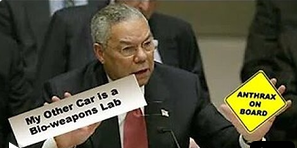
From Anthrax to Iraq
or go to
Aletho News Archives – Video-Images
Book Review
New paperback: Butchered by “Healthcare”
Lies are Unbekoming | October 20, 2026
 Butchered by “Healthcare” is Robert Yoho’s plain-spoken account of how American medicine stopped being a profession and became an industry. 341 pages. Over a thousand references. Thirty-eight chapters.
“Screening Tests Are Useless”, on tests that find diseases that would never have hurt you. “The FDA Protects the Big Drug Companies”, on an agency funded by the companies it regulates. “The Journals’ Sins Are the Editors’ Sins”, on ghostwritten studies and captured peer review. “Opioids and ‘Pain Management’”, on how a generation was prescribed its way into addiction. “Prozac and Relatives” and “Antipsychotics Are Disastrous”, on what psychiatry does to adults and children. “Surgery: Money Before Patients”. “Failed Cancer Treatments”. “Futile CPR and Overprescribing”. “Billing Scams & Specialty Warfare”. “Hospitals Are Sharks”. Each with a Patient Tips section at the end on how to survive it.
If you have ever walked out of a doctor’s office with a prescription you didn’t ask for, or watched a parent put through a treatment that made them worse, this is the book you want on your shelf before the next appointment. … Full review
Butchered by “Healthcare” is available on Lulu now.
Blog Roll
 Aletho News
- EU sending ‘biased’ observers to interfere in Serbian election – president
- White House envoy declares kinetic action against Yemen ‘fruitless’
- Ukraine deployed thousands of microdrones in Iraqi Kurdistan: Tasnim
- Iran calls for emergency UNSC meeting over Trump’s ‘brazen’ bomb talk, Israeli threats
- Iranian sources reveal details of Russia-China Hormuz proposal
- Plan for more US-Israel integration puts our military tech at risk
- Another Round Against Iran Will Break What Is Left of the Gulf
- SVR Report on Ukraine’s Mexican Drug Gang Links Could Pressure Zelensky, Won’t Change US Policy
- British Government Employees Were Fact-Checking the News at the BBC. Nobody Told You.
- Albania on fire: who’s behind the riots?
- If Americans Knew
- Mysterious bot accounts reportedly spread fake ‘man on the street’ videos for Michigan Senate candidate
- Israeli Defense Minister Katz Says Over 60 Lebanon Villages Have Been Destroyed
- Why Is Israel Running TV Ads in Iowa Ahead of the Midterms?
- Hind Rajab’s Alleged Killer Is in the United States. HRF Demands His Arrest.
- US Officials Face Fresh Pressure After Another American ‘Brutalized’ by Israeli Settlers in West Bank
- Israel-Backed Palestinian Militias Terrorize Displaced Families in Gaza
- FBI subpoenas pro-Palestine activists over Israeli weapons plant disruption
- Fourth winter arrives in wartorn Gaza, too early – Daily Update
- More on how Bari Weiss is using CBS on behalf of Israel
- What the UK Is Doing to Pro-Palestine Novelist Sally Rooney Is an Act of Orwellian Villainy
- No Tricks Zone
- Predictions Made By Renowned Climate Proifessor Over Past Decades Have Been Proven To Be Poor
- New Study Suggests Large Regions Of The Pacific Ocean Have Been Cooling For The Last 80 Years
- Germany’s Green Energy Debacle: High Energy Costs Force Kahla Porzellan to Close After 182 Years!
- New Study: 50 Years Of The Most Aggressive ‘Net Zero’ Policies Can Only Affect The Global Climate By 0.03°C
- US September “Heat” Was No Record…Many Records Set Decades Ago
- Latest European Green Energy Debacle; Portugal’s Largest Flagship Solar Park Insolvent!
- Green Energy Debacle: German Expert Professor Fritz Vahrenholt Warns Of Severe Economic And Social Consequences
- Two More Paleo Reconstructions Affirm Meters-Higher Sea Levels Across Ireland, Brazil 7000-6000 Years Ago
- New Study: Earth And Venus Surface Warmth Largely Explained By Convection And Lapse Rate, Not CO2 Or Radiation
- 2025 Nature Paper Claiming Worsening Global Drought Gets RETRACTED …Heavily Flawed

