Bring The Troops Back. End This War Now!
By Ron Paul | March 30, 2026
As we begin a new week, the media is filled with reports that President Trump is ready to approve a US ground operation against Iran, either to seize Iran’s uranium or to attack an island off the country’s coast. Thousands of US troops have sped to the conflict area to await President Trump’s decision.
The President is on the verge of making a serious mistake to add to a series of deadly mistakes that have characterized this terrible war of choice against Iran. A US ground operation against Iran would only achieve the death of thousands of US servicemembers.
Of course, if our Congress was doing its job, this debacle would never have started. Clear signals would have been sent to the President by Congressional leadership that in the absence of an imminent attack on the US, the US President must go to Congress to make the case for taking the country to war. Instead, what we got was a shrug of the shoulders from Capitol Hill that has already cost billions of dollars and too many lives.
As we stand on the verge of a major ground operation, the main stated goals of the war are that Iran does not have a nuclear weapon and that the Strait of Hormuz is open for shipping. But both of these things were already true before the war started! Now we are expanding the war to try and reverse the negative consequences of starting the war in the first place!
What was supposed to be a quick “shock and awe” to frighten Iran into capitulation has expanded rapidly and is costing the US dearly. As the New York Times has reported, every US military base in the region has been either destroyed or is severely damaged. Billions of dollars in US military equipment has been destroyed in Iran’s response to the US attack. Just over the weekend, a half-billion dollar US radar aircraft was destroyed at a US base in Saudi Arabia, along with several air tankers.
Iran warned that if the US launched another surprise attack this is how they would respond. The arrogant US Administration was sure they were bluffing.
The American people may not be getting the full picture of this disaster because they are being lied to – again – by the pro-war mainstream media. The war is going wonderfully, they report. We are obliterating Iran, they say. But what is really being obliterated is a complex global supply chain not just in oil and gas, but in the multitude of products related to oil and gas. Products such as the fertilizer needed to feed the world.
Already we are seeing gas riots in some Asian countries. Fuel rationing and stay-at-home orders have been issued. Australia is set to completely run out of diesel, gasoline, and jet fuel in just weeks. That means no food gets delivered. Power generation plants are shut down. Life becomes unlivable for many.
This is like the foolish move to shut down the global economy during COVID. In fact it is worse. This disaster will not end when the bombs stop falling. It will only be getting started. A worldwide depression may be upon us all because of a war of choice that was illegally launched.
When you are in a hole, it’s best to stop digging. Expanding this war to include a ground operation would be a massive digging operation. It needs to stop. Now.
US should start removing its troops from Germany, proposes AfD co-leader Chrupalla
Remix News | March 30, 2026
Alternative for Germany (AfD) co-chair Tino Chrupalla spoke out in favor of withdrawing American troops from Germany. During a party congress in Saxony, he stressed that, if AfD comes to power, this should be the first step in implementing the party’s program, which calls for the removal of all allied forces from Germany and a withdrawal from NATO’s nuclear weapons sharing system.
“Let’s start implementing this program by withdrawing U.S. troops,” he said, as reported by the Frankfurter Allgemeine Zeitung, cited by Do Rzeczy.
The proposal received loud applause by the audience.
Chrupalla also argued that Germany should not be involved in international military operations, praising Spain for opposing U.S. use of its bases for its conflict with Iran.
“And that is exactly right. Spain is not interfering in this war,” he said.
His criticism of American troops on German soil comes after his sharp criticism of Trump’s decision to launch a war against Iran.
“I am extremely disappointed in Donald Trump when it comes to his campaign promises,” Chrupalla during an appearance on Markus Lanz earlier this month.
“During the election campaign, he also accused Kamala Harris, that she would start World War III. And now we are on the cusp of having probably started the Third World War with Donald Trump. And that’s a breach of his word, which I really resent and which the American people also resent, who incidentally reject this war in Iran at a much higher rate than Germans. So, 70 percent of Americans do not want this war and do not support it.
Chrupalla also stated it was clear the United States was dragged into the war by Israel.
“And I think the Americans, as you can really see now if you look at all the events, were dragged into this war by Israel. There were serious negotiations where Oman, as a peacemaker, came to an agreement with Israel together with the USA, and they basically started bombing Iran on the same day. The Omani Foreign Minister has described this as a huge mistake. The entire Arab world has labeled it a mistake. The Norwegian Foreign Minister has described it as a mistake. It has also been labelled a mistake by Turkey. You can’t ignore all that. These are all countries in this region that are naturally extremely worried that this will escalate into a conflagration. And that’s what we’re seeing now. It’s a huge wildfire.”
In his most recent speech, Chrupalla also addressed Russia’s war against Ukraine. He announced that the AfD would “bring about peace” and that after the conflict ends, Ukrainians in Germany should return to their home country, criticizing the current refugee benefits system.
“This is exactly what must end. All Ukrainians must go back,” he said
Chrupalla’s speech made it clear that the AfD aims to take power in Germany, at both the state and national levels. “We must develop, moving from an opposition party to a governing party,” he said during the party convention in Löbau, as quoted by Deutsche Welle.
Germany’s next federal elections will take place only in March 2029. At that time, Chrupalla plans for the AfD to have a prime minister in Saxony and an AfD chancellor as the leader of Germany. Chrupalla also admitted that this requires further capacity-building and preparing party structures for governance.
Noting that AfD must no longer be perceived as a single-issue party, presumably referring to its focus on implementing mass deportations, and must demonstrate concrete results in government going forward.
“At some point, we will have to present our voters with successes,” he emphasized.
According to Bild reports, the party has already begun organizational preparations to take over the government by establishing a special working group for participation in the government.
Marandi: Yemen joins the war – Red Sea could be blocked next – Saudi regime at risk
Glenn Diesen | March 29, 2026
Seyed Mohammad Marandi discusses the ongoing escalation in the Iran War—and why Yemen’s sudden entry could be a game-changer. Marandi is a professor at Tehran University and a former advisor to Iran’s Nuclear Negotiation Team. (Some of the video is lagging due to the ongoing bombing of Tehran). Recorded 29.03.2026.
Follow Prof. Glenn Diesen:
- Substack: https://glenndiesen.substack.com/
- X/Twitter: https://x.com/Glenn_Diesen
- Patreon: https://www.patreon.com/glenndiesen
Support the research by Prof. Glenn Diesen:
- PayPal: https://www.paypal.com/paypalme/glenndiesen
- Buy me a Coffee: buymeacoffee.com/gdieseng
- Go Fund Me: https://gofund.me/09ea012f
Pakistan to Host US-Iran Talks
Sputnik – March 29, 2026
US-Iran talks may take place in Islamabad in the coming days, Pakistan’s Foreign Minister Ishaq Dar said.
All parties have expressed confidence in Pakistan’s mediating role, he added, noting that China “fully supports” the initiative.
Earlier on Sunday, foreign ministers from Saudi Arabia, Turkiye, and Egypt arrived in Pakistan to discuss potential ways to permanently resolve the current conflict in the Persian Gulf.
The ministers also discussed various proposals for reopening the Strait of Hormuz, a critical chokepoint for global oil and liquefied natural gas trade.
The proposals include establishing a management consortium and charging fees, sources say.
Pakistan, which shares a border with Iran, has leveraged its strong ties with both Tehran and Washington to position itself as a key diplomatic channel in the conflict.
US has no choice but to retreat from Iranian borders: Top commander
Press TV – March 29, 2026
A senior Iranian military commander says the armed forces’ crushing strikes against US military assets will leave Washington with no choice but to withdraw its forces from Iran’s borders.
Commander of the Islamic Revolution Guards Corps (IRGC) Aerospace Force, Brigadier General Seyyed Majid Mousavi, said in a post on X that Iranian forces will continue to paralyze US radar networks and logistics while inflicting casualties on their personnel across the region.
“Iran’s intelligence superiority and precision strikes will leave the US with no alternative but to retreat from Iranian borders,” Mousavi said.
The commander noted that “the wreckage of AWACS, aerial refuelers, and demolished hangars speaks for itself.”
Mousavi also vowed that the country’s armed forces will soon add “more high-value targets to this list.”
US President Donald Trump is reportedly considering “limited ground operations” on Iranian soil. Iranian officials have warned that such a move will only lead to further casualties among American troops.
Iranian armed forces have launched 86 waves of retaliatory strikes against Israeli and US assets across the region, causing casualties and billions of dollars in damages.
Notably, a US Air Force E-3 Sentry AWACS command and control plane was struck and damaged during a March 27 missile and drone attack on Prince Sultan Air Base in Saudi Arabia.
According to Air & Space Forces Magazine, this specific attack also injured more than 10 service members and damaged several aerial refueling tankers.
Military analysts describe the loss of these “flying radars” as a “big deal” that has significantly crippled Washington’s ability to manage the battlespace in the Persian Gulf.
Beyond the AWACS and tankers, Iran’s attacks have damaged or destroyed radar systems, a Terminal High Altitude Area Defense (THAAD) missile defense system and Reaper drones in attacks on US bases in Saudi Arabia, the United Arab Emirates, Bahrain, Jordan and Kuwait.
Reports have also suggested that the US and its regional allies are “burning through” their supply of Tomahawk and interceptor missiles.
Since the war began on February 28, the Pentagon has already confirmed at least 13 US troops killed and roughly 200 wounded.
Iran Retaliation Strikes Chemical Plant Near Dimona

By Kurt Nimmo | Another Day in the Empire | March 29, 2026
On March 28, Iran’s Foreign Minister, Seyed Abbas Araghchi, condemned Israel’s attack on key Iranian infrastructure, including steel factories, a power plant, and civilian nuclear sites. He described the attacks as a serious escalation and vowed Iran would respond. “Iran will exact a heavy price for Israeli crimes,” he warned.
That heavy price arrived the following day. Israel’s Home Front Command said sirens were sounding in the Negev Desert, Dimona, Be’era, Arad, and Ashkelon. Ne’ot Hovav, formerly Ramat Hovav, an industrial zone (in occupied Al-Naqab) southeast of Be’er Sheva, and the site of Israel’s main hazardous waste disposal facility, was targeted. The Voice of Israel reported ten warheads falling in the Negev, while other sources indicate 27 targets were struck.
The zone is home to 19 chemical factories, including Makhteshim Agan, a pesticide plant, Teva Pharmaceutical Industries (implicated in the opioid crisis), and Israel Chemicals, a bromine plant. It was reported that a disulfide factory was struck. Molybdenum disulfide is an anti-seize lubricant designed to meet the requirements of military specification. It is not known if the disulfide factory in the Negev produced this disulfide variant.
The Negev Phosphates Chemicals Company, part of the ICL Group, is also located in the Rotem Industrial Zone and situated near the Dimona reactor in Mishor Rotem. It is Israel’s sole recognized nuclear fuel cycle facility. Israel extracts uranium from Negev phosphate deposits. The Rotem complex is a critical node within a broader Israeli-US military-industrial network. In addition to phosphates, the facility produces fertilizers and high-purity phosphoric acid.
The phosphate extracted from the Rotem site is exported to several ICL facilities in the United States. ICL is the sole supplier of white phosphorus to the US military, a substance internationally banned for use in munitions. ICL white phosphorus is used by the occupation army in Gaza and Lebanon to burn people, homes, and agricultural lands.
It is important to note that Site 512, near Kmehin west of Dimona on the Har Qeren mountain, is a secretive US War Department ballistic missile early warning facility operated by the United States Army’s 1st Space Brigade.
The AN/TPY-2 Surveillance Transportable Radar, or Forward Based X-band Transportable, a long-range, high altitude digital antenna array surveillance radar, is located at the site. Iran targeted a similar radar facility at the Muwaffaq Salti Air Base in Jordan, and another radar unit in Qatar. “There are strong indications that a number of other similar systems have been destroyed or damaged, as well,” reports the TWZ Newsletter, a website covering military technology.
Initial information provided by the Israeli Ministry of Environmental Protection indicates there was a leak of dangerous ammonia gas at the Ne’ot Hovav site following the Iranian missile attack. “The situation is rapidly escalating and has reached a dangerous and potentially hazardous level,” reported the Israel Home Front Command, a civil defense operation.
Last week, a spokesperson for Iran’s Khatam al-Anbiya Central Headquarters warned “all energy, information technology, and desalination infrastructure belonging to the United States and the (Israeli) regime in the region will be targeted” in response to President Trump’s warning (since scaled back) the US would hit Iranian power plants, “starting with the biggest one first.”
On March 27, Araghchi posted to X saying Israel had violated Trump’s momentary pause and attacked two of Iran’s largest steel factories. “Attack contradicts POTUS extended deadline for diplomacy,” he said, and added that “Iran will exact HEAVY price for Israeli crimes.” In addition, Israel targeted a uranium processing facility in the central Iranian city of Yazd. Iran’s Atomic Energy Organization confirmed the strike, but said there were no casualties or radiation leaks, Aljazeera reported.
The March 29 attack is retaliation for the March 27 strike as Iran, Israel, and the United States continue to escalate a conflict that portends tectonic shocks for the global economy.
AWACS’ Destruction is a Major Loss for US Military – Ex-DoW Analyst
Sputnik – 29.03.2026
The destruction of a US E-3 Sentry airborne warning and control system (AWACS) aircraft in Saudi Arabia by an Iranian missile strike is a serious blow to the US military, former US Department of War analyst Karen Kwiatkowski tells Sputnik.
The US has a limited number of E-3 aircraft, which are based on aging Boeing 707 airframes, and the next-generation replacement for E-3 is not yet available
The loss of even one of E-3s puts a strain on the remaining aircraft as they are forced to operate longer. It demoralizes the crew, stresses systems, and “increases the consumption rate of surveillance capability and information management”.
Other E-3s now have to prioritize their own defense, which may reduce the radar, surveillance, and command effectiveness they supply.
With many of the important US long-range radars in the region being knocked out by Iranian strikes, the strain put on E-3 aircraft will only get worse, with further losses among them threatening to “narrow and pressure the information space for theater commanders and US and Israeli forces”.
Due to E-3’s distinctive and well-recognized function and appearance, Kwiatkowski adds, its destruction creates concern in the US because it doesn’t look like “winning,” and that claims of Iran losing its fighting capability were premature.
“One month into a ‘well planned 4 day operation’ is revealing many predictable operational and logistical crises, as well as a noticeable reduction in the tactical and operational choices for US and also Israeli theater commanders,” she says.
Iran: Trump wanted regime change, now just begging for Hormuz to open
Al Mayadeen | March 29, 2026
Iran’s Parliament Speaker Mohammad Bagher Ghalibaf said on Sunday, marking the 30th day of Iranian national defense against the US-Israeli aggression, that the US president’s objectives have dramatically shifted since the start of the war on Iran.
“The enemy who claimed to have destroyed our air, naval, and missile forces, and had a plan for the collapse of the Islamic Republic, has now set his goal on reopening the Strait of Hormuz,” Ghalibaf said.
“Reopening a strait that was open before the war has become Trump’s operational dream,” he said mockingly.
Ghalibaf stated that the war on Iran, which has come to be known as the Ramadan War, is now at its most critical moment. He noted that Trump is unable to secure the support of European countries, that energy markets are out of control, and that food inflation is approaching.
The war bites the belligerent
The Parliament Speaker detailed the damage inflicted on US military assets throughout the conflict. “The manifestations of American arrogance, from the F-35 to the aircraft carrier and US regional bases, have suffered major blows,” he said. “Strikes on the Israeli regime have been effective, precise, and foundation-shaking.”
Ghalibaf also highlighted the growing strength of the Resistance Axis across the region.
“Hezbollah in Lebanon, which was constantly threatened with disarmament, is today an important and effective part of the Resistance and has trapped the malignant Israeli regime,” he said.
“The Resistance in Iraq is fighting heroically and has astonished the enemy. Ansarallah in Yemen has breathed new life into the Resistance front and is ready to achieve spectacular surprises.”
“This is the honor and greatness of the Resistance front against the world’s arrogant powers,” Ghalibaf stated. “Trump has been accused worldwide of waging a pointless war and has no answer for his public opinion. The evil of initiating the war has returned to its initiator.”
Here is a background section summarizing the current situation with the Strait of Hormuz, based on the Al Mayadeen article:
The battle for the Strait of Hormuz
Since the US-Israeli war on Iran began on February 28, the Strait of Hormuz, through which approximately one-fifth of the world’s oil and natural gas shipments pass, has become a central front in the war on Iran. Iranian authorities have restricted the movement of vessels linked to the US and “Israel” or those supporting, requiring ships to obtain approval before transiting the strategic waterway.
Tehran has made clear that “nonhostile” ships may pass safely if authorized, while the strait remains “closed only to enemies carrying out cowardly aggression against Iran,” as Foreign Minister Abbas Araghchi put it. The Islamic Revolution Guard Corps has turned back multiple container ships attempting to transit without authorization.
Iran’s Parliament is now advancing legislation to impose formal tolls on vessels passing through the strait, a move lawmakers say is designed to assert Tehran’s “sovereignty, control and oversight” over the passage, much like the model applied by Turkey in the Bosphorus and Dardanelles straits. The toll system would build on temporary fees applied since late February.
US President Donald Trump has threatened an escalation in the aggression against Iran’s power infrastructure if the strait remains closed, while US attempts to organize international naval escorts to bypass Iran’s control over the strait have so far failed.
The new framework signals Tehran’s intent to use its control over its waterway to regulate access systematically, rather than relying on ad hoc measures, while simultaneously sending a message to the US and “Israel” about the country’s ability to control this key energy corridor.
Trump admits Iran hit USS Ford carrier: ‘We ran for our lives’
Al Mayadeen | March 28, 2026
US President Donald Trump revealed that Iranian forces carried out a coordinated assault on the USS Gerald R. Ford, stating that the world’s largest aircraft carrier came under a multi-directional attack in the Red Sea as Tehran intensifies its retaliation against the US-Israeli aggression launched on February 28.
Speaking at a Saudi investment forum in Miami on Friday, Trump described what unfolded as “a serious situation” for US naval forces, indicating that the scale and intensity of the operation rapidly overwhelmed expectations.
“It was one o’clock in the morning,” Trump said, recalling the moment the vessel came under attack “from 17 different angles.”
“We knew we were in trouble,” he added.
“They were here, they were there. We ran for our lives, it was over,” Trump said, relaying the account of a Navy commander who was aboard at the time.
Carrier forced to withdraw
The USS Gerald R. Ford, the centerpiece of US naval power projection, had been deployed to West Asia as part of Washington’s aggression against Iran. In the immediate aftermath of the reported confrontation, the carrier was forced out of the theater following a fire that erupted onboard on March 12, injuring crew members and leaving nearly 200 sailors affected by smoke inhalation, while damaging large sections of the vessel.
The warship withdrew first to the Greek island of Crete before docking in Croatia for urgent repairs, after nearly nine months of continuous deployment marked by mounting technical failures, including persistent system malfunctions that had already raised concerns about its operational reliability under sustained pressure.
Despite the sequence of events, the Pentagon insisted that the damage stemmed from a “non-combat-related” fire in a laundry area, attempting to frame the withdrawal as a routine technical issue rather than the result of battlefield impact.
Iran exposes vulnerability
Iranian officials have categorically rejected this narrative, arguing that it is a transparent attempt to obscure the consequences of Iran’s retaliatory operations, which have increasingly exposed the vulnerability of even the most advanced US military assets.
The Islamic Revolution Guard Corps ridiculed the US account, stating, “What kind of military giant is this that faces a crisis and is forced to leave the battlefield due to a fire occurring in its laundry room?”
Tehran has repeatedly warned that US aircraft carriers operating in regional waters would be treated as legitimate targets, stressing that their presence constitutes a direct threat to Iran’s sovereignty.
Within this context, Iranian officials and analysts view the carrier’s abrupt withdrawal as clear evidence that sustained missile and drone operations are imposing real constraints on US forces, undermining Washington’s ability to maintain control despite its overwhelming technological advantage.
Iran’s armed forces have also reported conducting successful drone and missile strikes against another US carrier, the USS Abraham Lincoln, reinforcing what Tehran presents as an expanding and effective deterrence posture capable of reshaping the military balance across the region.
Hezbollah’s Surprise Weapons Redefine Ground Battle with Israel
By Robert Inlakesh | The Palestine Chronicle | March 28, 2026
An Israeli “tank massacre”, reminiscent of the Lebanon war of 2006, has been taking place in southern Lebanon, as Hezbollah surprises the invading army with the use of a range of anti-tank weapons and drones.
On March 25, Hezbollah unleashed a fury on Israel’s Merkava tanks, announcing that they had struck a total of 21, in addition to striking 3 D-9 Bulldozers and 2 militarized Humvees. The following day, the Lebanese group released a series of videos depicting some of their operations.
In order to carry out so many strikes against Israeli armored vehicles, Hezbollah has traditionally used a variety of guided anti-tank guided munitions (ATGM). Prominently made use of have been weapons ranging from varying kinds of the Russian-made Kornet anti-tank systems, to the Almas (diamond) system that is an Iranian reverse-engineered version of the Israeli-made Spike AGTM, a top attack missile that is particularly effective.
During the Lebanon-Israel war of 2024, Hezbollah announced that it had destroyed a total of 59 Israeli tanks between the end of September and November 27. This time around, Hezbollah has already claimed to have struck around 70. It is unclear how many of these hits damaged or destroyed the tanks, but it suffices to say that this is a significant development.
Between October of 2023 and October of 2024, the Qassam Brigades, the armed wing of Hamas, claimed to have carried out 480 operations targeting Israeli tanks. A later report by Israeli news outlet Maariv cited data arguing that at least 500 military vehicles of varying kinds had sustained damage in Gaza. How many were totally destroyed is unknown, due to Israeli military censorship.
However, even a damaged tank is a major issue as they take a long time to repair, and the process is often costly. The reason why the figures from Gaza matter is that, in the case of the Palestinian resistance groups, they primarily used weapons like the Yassin-105 tandem warhead RPG, and then later, they were forced to use less sophisticated kinds of RPGs. Hezbollah, by comparison, has a much more sophisticated arsenal of anti-tank weapons.
A Game Changer?
During this war, which Hezbollah entered on March 2, citing Israel’s 15,400 ceasefire violations against the country and refusal to withdraw from occupied territory, a new weapon appears to be shaping the group’s ground confrontation with the Israeli invading army. That is the FPV (first-person-view) drone, equipped with heavy explosive charges.
The video published on March 26 by the Lebanese group’s military media featured one of these FPV drones directly striking a weak spot on an Israeli Merkava tank. Since March 25, when these weapons started to be used to combat invading Israeli military vehicles, they have been deployed routinely to target their tanks.
FPV drones using a fiber-optic capability are notably immune to electromagnetic jamming, making them extremely difficult to bring down and have been used extensively in the Ukraine-Russia war. Although no statistic is presented to back up this claim, the Wall Street Journal recently reported that FPV drones account for most battlefield casualties in Ukraine.
Regardless of the precise numbers of casualties inflicted in the Ukraine-Russia war by this drone, it is broadly accepted that it has been a game-changer, with it being the weapon of choice against various kinds of tanks and armored vehicles.
Another bonus to the FPV drone, beyond its use to target weak points on military vehicles, is the fact that the recordings can also be recovered as proof of what it struck. In Baghdad, just over a week ago, the Islamic Resistance in Iraq used two FPV drones to target a US military base, with one drone filming the other striking its target.
When fighting a war against Israel, which is perhaps the most well-known military on earth for hiding its soldiers’ deaths, this can come in handy for Hezbollah, which could potentially use the footage to embarrass the Israeli military.
If Israel proceeds with its ground invasion of Lebanon, launching a full-scale invasion, it may at some point run out of tanks, or at the very least have to begin rationing its use of them.
– Robert Inlakesh is a journalist, writer, and documentary filmmaker. He focuses on the Middle East, specializing in Palestine. He contributed this article to The Palestine Chronicle.
Seizing the Kharg: Washington’s path to defeat in the Persian Gulf
By Anis Raiss | The Cradle | March 27, 2026
Four weeks of US-Israeli war on Iran – and the stakes have climbed far higher than Washington anticipated. US President Donald Trump threatened on Truth Social to “hit and obliterate” Iran’s power plants if the Strait of Hormuz was not reopened within 48 hours.
The deadline passed. He blinked and, for the second time, postponed his own ultimatum, recasting it as ‘productive conversations.’ Tehran denied any talks and insisted the reversal was driven by “fear of Iran’s response.”
The US-Israeli air campaign was supposed to break Iran. It didn’t. Now the hawks are pushing for boots on the ground. But the ground war being floated does not simply risk American lives on an island 15 miles (around 24 kilometers) off Iran’s coast. It threatens the entire US military architecture in the Persian Gulf – the bases, the alliances, and the energy infrastructure that has underwritten American dominance in West Asia for decades.
In an interview with NBC News, Iran’s Foreign Minister Abbas Araghchi, in response to a question about a possible ground invasion by the US, delivered words the Pentagon had no answer for: “We are waiting for them,” which became a meme in the process. The bluff has been called. The question now is whether showing Washington’s hand collapses the entire table.
Raising the stakes with an empty hand
The ground invasion discourse is no longer hypothetical. Pentagon officials have submitted detailed preparation requests for deploying ground forces. Three Marine amphibious assault groups are converging on the Persian Gulf: the USS Tripoli carrying the 31st Marine Expeditionary Unit from Japan, the USS Boxer with the 11th MEU from California, and roughly 1,500 paratroopers from the 82nd Airborne Division at Fort Bragg.
By the time all units arrive, between 6,000 and 8,000 US ground troops will be within striking distance of Iran. But the composition of these forces exposes the gap between rhetoric and reality. Military analyst Ruben Stewart noted that what is being deployed is “consistent with discrete, time-limited operations, not a sustained ground campaign.”
At the same time, Israel’s own military is showing signs of strain. Chief of staff Eyal Zamir warned on 25 March that the army is “going to collapse in on itself,” citing an eroding reserve force and a deepening manpower crisis as wars stretch from Gaza to Lebanon and now Iran.
Washington is pushing more chips to the center of the table – but the hand behind them remains weak. The scenarios now circulating form an escalation ladder where each rung risks pulling the US deeper into a fight it is structurally unprepared to sustain.
Pickaxe Mountain and the raid that takes too long
The most politically attractive option is a covert raid on Iran’s enriched uranium stockpile – believed to be around 400 kilograms enriched to roughly 60 percent, possibly stored near Isfahan or deep inside Pickaxe Mountain.
But the problem is one Sun Tzu identified centuries ago: speed is the essence of war – yet this mission demands the opposite. Extracting nuclear material requires troops to remain on-site long enough for Iranian forces to respond.
Former CENTCOM commander General Joseph Votel described such operations as “feasible,” but issued a clear warning: “You’re going to have to take care of them, resupply them, medevac them. And that requires a logistical tail, and at some point that tail has to be protected as well.”
Washington still carries the scar of Operation Eagle Claw – the failed 1980 hostage rescue that collapsed in the Iranian desert and helped end Jimmy Carter’s presidency.
Kharg Island: The trap disguised as a shortcut
If covert raids carry too much risk for too little certainty, the next option on the table is a limited territorial seizure – and Washington’s hawks have converged on a single target: Kharg Island.
An eight-square-mile (around 20.7 square kilometers) coral outcrop in the northern Persian Gulf, Kharg processes roughly 90 percent of Iran’s crude exports. US Senator Lindsey Graham urged Trump to “take Kharg Island,” while retired Lieutenant General Keith Kellogg described himself as a “big believer in boots on the ground” there.
The logic sounds surgical: seize Iran’s economic lifeline and force Tehran to the table. But it collapses under even basic scrutiny. Kharg sits just 15 miles (around 24 kilometers) off the Iranian mainland – well within range of coastal missile batteries, drones, rockets, and artillery. Any US force stationed there would face “near-constant bombardment.”
Retired Rear Admiral Mark Montgomery put it bluntly: “If we seize Kharg Island, they’re going to turn off the spigot on the other end. It’s not like we control their oil production.”
Sun Tzu warned that there is no instance of a nation benefiting from prolonged warfare. Modern analyses reach the same conclusion. Think tank assessments warn that Kharg is a textbook case of mission creep, pulling US forces step by step toward a wider ground war.
The war Iran has prepared for
What Washington’s hawks consistently overlook is that Iran has spent decades preparing for precisely this scenario – not to match US firepower, but to make any ground war prohibitively costly.
Iran’s Islamic Revolutionary Guard Corps (IRGC) is divided into 31 autonomous ground divisions, each capable of operating independently if central command is disrupted.
When strikes killed the Islamic Republic’s supreme leader Ali Khamenei, intelligence minister Esmail Khatib, and Basij chief Gholamreza Soleimani, the military apparatus continued launching missiles, closing the Strait of Hormuz, and fighting. A command structure designed to survive decapitation appears to be doing exactly that.
At sea, Iran’s naval doctrine relies on asymmetric warfare. Its reported arsenal: hundreds of fast attack craft, coastal missile batteries, an estimated 5,000 naval mines, over 1,000 unmanned suicide vessels, and Ghadir-class midget submarines built for the Gulf’s shallow waters. The Persian Gulf is not an open ocean. It is a corridor shaped by geography and fortified by doctrine – designed to swallow conventional naval power.
On land, the scale alone is decisive. Iran is four times the size of Iraq, with a population exceeding 90 million. Estimates suggest that any conventional invasion would require “hundreds of thousands of troops.”
Then there is the Basij paramilitary network, reportedly capable of mobilizing up to a million reservists – and the IRGC’s decades of experience coordinating asymmetric resistance across the region.
The US currently has fewer than 8,000 moving into position. This is not a war Iran needs to win – but one that is designed to make Washington unable to sustain.
Winning Kharg, losing the Gulf
Even if Washington succeeds tactically – seizing Kharg and declaring victory – the strategic consequences are immediate.
Since the war began, Iran has already demonstrated its escalation capacity. Missiles and drones have targeted US-linked infrastructure across Bahrain, Kuwait, Qatar, the UAE, Jordan, and Saudi Arabia. Energy facilities, airports, and desalination plants have all come under fire.
A seizure of Kharg would likely trigger a far broader response. Iranian officials have explicitly warned of “continuous and relentless attacks” on regional infrastructure if Iranian territory is occupied.
Tehran has also signaled it could expand the conflict to the Bab al-Mandab Strait through allied Ansarallah-aligned forces in Yemen, threatening a second global chokepoint.
Every US position in the Gulf depends on supply lines that run through the very states already under threat. Bahrain hosts the Fifth Fleet. The UAE hosts Al-Dhafra. Kuwait functions as a logistical hub.
As the Stimson Center noted, Gulf states already fear Trump could declare victory and leave them fighting Iran alone.
Featured Video
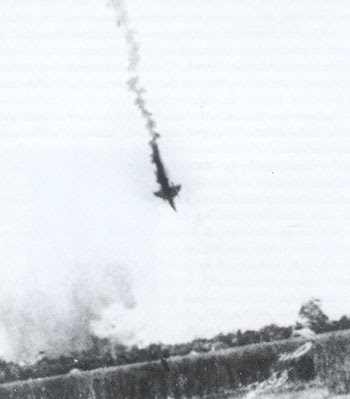
The Failed Air War Over Vietnam
or go to
Aletho News Archives – Video-Images
From the Archives
USS Liberty Massacre: A Pivotal Moment in the Hostile Takeover of America
By Kevin Barrett | Crescent | Dhu al-Qa’dah 24, 1445
In corporate America, hostile takeovers are commonplace. They occur when an aggressor—a larger corporation or rich individuals—seizes control of a smaller corporation without asking permission.
What few recognize is that the United States itself has been subjected to a hostile takeover. Since the aggressor, the illegitimate settler colony known as “Israel,” is much smaller than the US, the takeover has necessarily been surreptitious.
As of June, 2024, Israel’s gradual takeover of the US has become obvious and undeniable—a proverbial “elephant in the living room.” … continue
Blog Roll
 Aletho News
- Yemeni Armed Forces Warn Airlines Against Using Saudi Airports, Exempt Mecca and Medina
- Iran security chief says powers greater than US tried to conquer Iran but ended in ‘dustbin of history’
- Europe’s mounting social chaos… chickens coming home to roost for proxy war against Russia
- US-Russia Diesel Deal Becomes Massive Defeat for Ukraine
- Hormuz and the Looming Economic Catastrophe
- Dhubab offensive, media blitz and the rapid unraveling of Saudi-backed coalition’s new gambit
- Putin Conveys to Trump Iran’s Vision on Possible Conflict Resolution – Kremlin
- The Search for Truth: Charlie Kirk’s Assassination One Year Later
- ‘Harsh reality’: Iran says France seeks monopoly on power and intimidation, not peace for all
- When Will This White House Madness End?
- If Americans Knew
- For three years, Israel has killed a child in Gaza every 71 minutes – Daily Update
- Israeli forces kill another child in Gaza – Daily Update
- Gaza ceasefire exists in name only, say more than 100 organizations
- Nearly 2 Million in Gaza Need Urgent Shelter Assistance as Winter Looms: IOM Chief Warns
- Suppressing Palestinian resistance: US charity under fire for AI monitoring of Gaza classrooms
- Thousands Are Held in Israeli Torture Camps. This Is What Happens Inside
- Israel puts Gaza’s sick, injured, newborn in peril – Daily Update
- Report claimed Mark Levin used by Israeli government to influence Trump
- Over 2,000 Gazans have died awaiting medical evacuation amid Israel’s continued siege
- How a U.S. Diplomat Suppressed and Altered Reports Critical of Israel
- No Tricks Zone
- Germany’s Green Energy Debacle: High Energy Costs Force Kahla Porzellan to Close After 182 Years!
- New Study: 50 Years Of The Most Aggressive ‘Net Zero’ Policies Can Only Affect The Global Climate By 0.03°C
- US September “Heat” Was No Record…Many Records Set Decades Ago
- Latest European Green Energy Debacle; Portugal’s Largest Flagship Solar Park Insolvent!
- Green Energy Debacle: German Expert Professor Fritz Vahrenholt Warns Of Severe Economic And Social Consequences
- Two More Paleo Reconstructions Affirm Meters-Higher Sea Levels Across Ireland, Brazil 7000-6000 Years Ago
- New Study: Earth And Venus Surface Warmth Largely Explained By Convection And Lapse Rate, Not CO2 Or Radiation
- 2025 Nature Paper Claiming Worsening Global Drought Gets RETRACTED …Heavily Flawed
- New Study: ‘Global Drought Shows No Detectable Recent Acceleration Under Climate Warming’
- Economic Masterminds: German Socialists Suggest Taxing Productivity Gains Stemming From Using AI

