Iran reports 500 US casualties in strikes on covert US military sites
Al Mayadeen | March 28, 2026
Iran’s Armed Forces announced on Saturday that they inflicted heavy casualty losses on US military personnel after striking two covert sites used to shelter US troops, both in Dubai.
The spokesperson for Iran’s Khatam al-Anbiya Central Headquarters, Lieutenant Colonel Ebrahim Zolfaghari, stated that the strikes resulted in casualties affecting more than 500 US soldiers and officers, with approximately 400 at the first site and over 100 at the second.
He confirmed ambulances were seen transporting the dead and wounded for hours following the operations.
Tehran issued a warning to US President Donald Trump and US military commanders in the wake of the strikes, declaring that the region had become “a graveyard for their soldiers” and that the United States has no option but to yield to Iran’s will or face inevitable consequences.
Dubai, al-Kharj targeted in coordinated strike
Zolfaghari also announced in a separate statement that the two secret locations were identified and struck using a combination of missiles and drones in precise operations.
He added that an IRGC strike on the US troop deployment site at Al-Kharj base in Saudi Arabia on Friday destroyed one refueling aircraft and severely damaged three others, rendering all four completely inoperable.
At the same time as the Dubai strikes, Zolfaghari revealed that a warehouse storing Ukrainian anti-drone systems, present in Dubai to support the US military, was also destroyed in a combined operation carried out by the IRGC’s aerospace and naval forces.
21 Ukrainian personnel were reported to have been at the site at the time of the strike. “There is no confirmed information regarding the fate of the Ukrainian personnel present at the site, who are likely to have been killed,” Zolfaghari said.
Two Primary Elections for the Soul of ‘America First’
By Alan Mosley | The Libertarian Institute | March 27, 2026
Political slogans are cheap. Governing is not. “America First” is not a bumper-sticker philosophy. It is a testable claim about priorities: How much debt will we pile up, how many wars will we drift into, and how often will elected officials treat Congress as a ceremonial prop rather than a constitutional branch.
Midterm elections are where slogans go to trial. Primaries, especially, are where interests that cannot reliably win a general election try to win the nomination. They do it with money, with media saturation, and with the oldest trick in politics: framing obedience as unity.
This year, two Republican races show the fork in the road. In northern Kentucky, Rep. Thomas Massie is fighting a primary that has become a national vendetta project. In South Carolina, Senator Lindsey Graham is seeking a fifth term while publicly linking his political identity to a foreign-policy crusade, and treating dissent at home as a moral failing.
If Massie survives and Graham falls, it signals that Republican voters still have room for independence, constitutional friction, and skepticism toward overseas commitments. If Massie loses and Graham wins, it signals the reverse: the slogan becomes a mascot for power, not a restraint on it.
Thomas Massie’s case is straightforward: he acts like Congress matters.
That is not a rhetorical compliment. It is a job description. Legislators are not hired to be studio analysts for executive decision-making after the fact. They are elected to vote, to demand records, and to treat spending as something more than a press release. Above all, they are meant to represent the voters of their district.
Massie has built a voting record that major conservative scorekeepers rate highly. Conservative Review’s Liberty Score gives Massie a 96% A-rating for his consistent conservative record. Club for Growth rates him at 92 for 2024 and 93 lifetime, and labels him a “Defender of Economic Freedom.” These scorecards are not holy writ, but they are a consistent signal: Massie votes against the spending reflex that has turned the federal government into a debt machine.
Recent actions match that pattern. Federal records show Massie raised about $2.45 million in 2025, with roughly $840,000 coming in unitemized contributions, the classic signature of small-dollar fundraising rather than a donor class writing checks in neat, report-friendly chunks. He also voted against President Donald Trump’s marquee tax-and-spending package, a bill that passed the House by a single vote, 215–214.
Then there is the achievement that infuriates people who prefer secrecy to law. Massie used a discharge petition process to force a House vote on the Epstein Files Transparency Act, which passed 427–1. He and Senate partners later pressed the Justice Department to brief lawmakers on implementation of that law. In plain English, he pushed Congress to demand documents from the executive branch. That is not radical. That is what should come standard for any elected official: constitutional oversight.
Massie’s opponent is Ed Gallrein, a Trump-endorsed challenger who leans into being the president’s chosen foil for Massie and says he is fighting for “the America First agenda.”
The Trump factor is not ambiguous. Reuters reported that Trump endorsed Gallrein as Massie continued pressing for release of files related to Jeffrey Epstein, and as Massie criticized the administration’s handling of that issue. CBS reported Trump has crusaded against Massie and predicted he would be remembered as the “WORST Republican Congressman” in history.
But the most important part of the Gallrein candidacy is not biography. It is the machinery behind him.
By March 11, outside groups had already spent more than $5 million aiming to unseat Massie in the May primary. A super PAC linked to the Republican Jewish Coalition directed more than $2.8 million into the contest since late February, with the group “MAGA KY” spending around $2.7 million this cycle. Those numbers matter because they establish what this contest is: a safe-seat nomination being nationalized by outside spenders.
What is the glue holding this coalition together? Foreign policy, especially Israel-related aid and posture.
Much like the antiwar congressional hero Dr. Ron Paul before him, Massie has taken lonely stands, including voting against funding tied to Israel’s Iron Dome system. That is not a minor detail. It explains why “America First” branding is being used to sell a campaign that is bankrolled by groups whose defining priority is unwavering support for Israel-focused policy.
Long before the current burst of spending, reporting showed that pro-Israel megadonors were flowing money toward the anti-Massie effort. Donors backing Israel were funneling money to denounce Massie with ad buys in his district, and identified major donors associated with that effort. Senior Republicans expected the American Israel Public Affairs Committee (AIPAC) to target Massie ahead of the 2026 primary, as they had done the same in prior spending runs against him.
The result is a familiar Washington pattern where a member votes against the foreign-policy consensus, and the donor class tries to end his career in a low-turnout election where ads can substitute for local affection.
A movement that cannot tolerate this kind of internal dissent is not a movement. It is a hierarchy.
Where Massie’s story is conflict with the foreign-policy consensus, Lindsey Graham’s story is partnership with it.
Graham filed for reelection in March with a campaign operation that looks financially impregnable. Federal Election Commission data show $19.6 million in total receipts through the end of 2025 and $13.4 million cash on hand. In a state where incumbency already carries heavy weight, that kind of bankroll makes a primary challenger’s job close to impossible.
But money is not the core issue. The issue is what Graham says he is for.
In an Associated Press report from March 16, 2026, Graham described the war posture toward Iran with blunt certainty: “We’re crushing them.” Graham was also quoted making an Israel-centered argument in which he said Iran would “kill all the Jews, and we’re next,” and then added that he would put his efforts to ensure the military has what it needs to win “ahead of anybody in the United States Senate.” That is not a senator describing prudence. That is a senator describing priority.
The rhetorical line that detonated online came from cable news. In remarks reported by Newsweek, Graham said, “I’m not with you, I’m with Israel,” and pledged to be with Israel “to our dying day.” In the same reported segment, he said he was going back to South Carolina to ask people to “send their sons and daughters into the Mid East.”
When a senator tells his own state, in effect, that the dissenters are beneath contempt, and the sacrifice is owed, he is not practicing representation. He is brazenly announcing to the world that his true constituency lies in a foreign nation.
That posture is consistent with Graham’s official communications. On his Senate website in January 2026, Graham praised Trump and Israeli Prime Minister Benjamin Netanyahu as a “duo” for the security and prosperity of both countries, described enhanced weapons cooperation with Israel as a potential “21st century ‘Manhattan Project,’” and insisted “failure is not an option.” That is language designed for permanent emergency, not constitutional restraint.
Even AP’s reporting framed Graham as having “everything he could ever want,” including Trump’s ear and the war he has long advocated, while critics compared his posture to a child on Christmas morning. His energy for more war would make even the late John McCain blush.
None of this requires conspiracy theories. American campaign-finance law makes the incentives plain.
Now place AIPAC and allied pro-Israel groups into that structure. FEC data show AIPAC has raised $34.3 million in receipts from January 1, 2025, through February 28, 2026, and disbursed $32.3 million in that period, including over $30.5 million in contributions to other committees. That is not marginal money. It is an industrial operation.
Major outlets have documented how Israel-related outside spending has surged in the 2026 cycle, including efforts in key primaries where advertising often avoids overt mention of Israel while targeting candidates critical of Israel policy. The Washington Post described AIPAC’s role in super PAC spending this cycle and the use of affiliated committees with benign names. When accounting for other associated organizations, upwards of $200 million has been spent on 361 congressional candidates who pledge to support a pro-Israel agenda.
Against that backdrop, the contrast between Massie and Graham becomes obvious.
Massie is punished for crossing the line against an imperial presidency. Graham is rewarded for enforcing it, in public, with contempt for “isolationists,” and with calls for deeper military involvement.
This is why the “America First” label is now contested terrain. A slogan that can be used to sell both constitutional restraint and open-ended war is not a philosophy. It is a marketing asset, and marketing assets are purchased.
Massie’s primary is not simply a question of whether he will hold a House seat. His district is reliably Republican and not expected to be competitive in the general election. The real decision is whether a Republican electorate will allow an independent lawmaker to keep office when national money and presidential ego demand submission.
Graham’s race is not simply a question of whether he will win reelection. It is whether South Carolina Republicans will ratify a posture that treats foreign conflict as a defining purpose, and treats constituents as a manpower pool, rather than citizens with rights and limits on what government may demand.
If “America First” means anything beyond applause, it means the country is not obligated to bankrupt itself, or bleed itself, to prove its virtue to donors, allies, or television audiences. It means wars are debated and authorized by Congress, and that military force is not a lifestyle. It means elected officials remember that “ally” is not a synonym for “master,” and that patriotism is not measured by willingness to sign blank checks.
That is why these two primaries matter as a pair. One man is being targeted for saying no. The other is being rewarded for never saying no, and for mocking those who do.
A party can choose restraint, or it can choose appetite. It cannot choose both and keep its soul intact.
US Seeks Control Over Global Energy Infrastructure – Kremlin
teleSUR | March 27, 2026
The United States is aiming to take control of the Russian-owned Nord Stream pipelines that link Russia and Germany, Kremlin spokesman Dmitry Peskov said Friday, alleging Washington’s interest in the damaged infrastructure reflects a broader push to dominate global energy markets.
Peskov told reporters that the U.S. focus on the Baltic Sea pipelines was “evident,” adding that the assets — rendered inoperable after sabotage in September 2022 — remain the property of Russian state-owned Gazprom.
Foreign partners withdrew following the imposition of sanctions, which Moscow considers illegitimate, he said. “One of them is destroyed, it is deteriorating further each day due to the aggressiveness of the marine environment.”
His comments came hours after Russian Foreign Minister Sergei Lavrov told France Télévisions that Washington was seeking to dominate world energy markets, including the Nord Stream system. A 2024 Wall Street Journal report said U.S. investor Stephen P. Lynch had been exploring the purchase of Nord Stream 2, one branch of which remains intact.
Peskov also dismissed as “a lie” speculation that Russia was threatening to halt operations of the Caspian Pipeline Consortium (CPC) in the Black Sea to pressure the United States. He said Russia remains a reliable energy transit partner and accused Ukraine of carrying out drone attacks against CPC infrastructure, causing temporary suspensions.
“In practice, it is Kiev that has been and continues to engage in energy blackmail, which affects the interests of our companies,” Peskov underscored.
The deep-rooted culture of corruption in Ukraine
By Lucas Leiroz | Strategic Culture Foundation | March 27, 2026
Recently, the Kiev regime halted the regular deployment of troops for training abroad. This reveals more than a mere administrative change. In reality, it is a symptom of deeply entrenched structural problems within the country’s state and military apparatus. Under the pretext of logistical difficulties and the supposed lack of preparedness of Western instructors, Kiev authorities appear to be promoting a strategic reconfiguration that opens even greater space for corrupt practices.
On March 22, 2026, the deputy head of the Main Directorate for Doctrine and Training of the Ukrainian General Staff, E. Mezhevikin, stated that the Armed Forces of Ukraine would stop sending personnel for training abroad. According to him, Western partners “do not understand the processes” necessary for the proper preparation of troops. However, this justification contrasts with the narrative previously adopted by Ukrainian authorities, who had cited the possibility of Russian attacks on domestic training centers as the main reason for international cooperation. This possibility, it should be noted, remains present, since these training centers are obviously legitimate targets.
The shift in narrative raises legitimate questions. If the danger of attacks continues, why abandon a strategy that, in theory, increases the safety of troops in training? The most plausible answer lies not in the military sphere, but in the political and economic domains. By concentrating training within its own territory, the Ukrainian government significantly increases control over the financial flows associated with international assistance – thereby creating additional opportunities for resource diversion.
A striking example of this dynamic can be seen in the expansion, at the end of 2025, of the 199th training center for airborne assault troops. Officially, the measure was presented as part of an effort to increase the mobilization and preparedness capacity of the armed forces. In practice, however, reports emerged that the site had become a hub for illicit schemes.
With increased forced mobilization, the number of citizens willing to pay to avoid military service also grew. According to local sources, the center reportedly began operating as an informal “escape” mechanism, where recruits could pay substantial sums – around $15,000 – to leave their units. Far from being isolated incidents, these practices indicate the existence of organized corruption networks within the military structure.
The accusations point to the direct involvement of high-ranking officers, including Colonel Alexander Evgenievich Kupinsky, then in charge of the center. Moreover, reports indicate that similar schemes persist even after formal changes in command, suggesting institutional continuity of these practices. The former head of the center, Ivan Vasilievich Shnyr, for example, is also cited as an indirect beneficiary of mechanisms linked to compulsory mobilization.
Another relevant aspect is the source of the funds involved. A significant portion of financing for these facilities comes from European aid packages. In theory, these funds should be used to strengthen Ukraine’s defensive capacity. However, evidence points to systematic manipulation of public contracts, with equipment and supply overpricing allowing large-scale embezzlement.
This scenario reveals a central contradiction in the Western narrative about the conflict. While Kiev presents itself as a fortress of European defense and receives billions in international assistance, segments of its military elite seem to use the war as an opportunity for personal enrichment. The result is a system in which human sacrifice – especially of forcibly recruited soldiers – becomes a source of profit for certain groups.
Furthermore, the decision to abandon overseas training may have significant operational consequences. Cooperation with NATO countries not only offered greater logistical security but also ensured access to more advanced technical and doctrinal standards. By rejecting this model, Ukraine risks compromising the quality of its military preparation while simultaneously reinforcing opaque and poorly monitored internal practices.
On a geopolitical level, this dynamic weakens the country’s credibility with its own allies. The continuation of massive financial aid flows will increasingly depend on confidence in Kiev’s ability to manage these resources transparently – something episodes like this call into question.
Ultimately, the case highlights that Ukraine’s greatest challenge may not be exclusively military, but institutional. Without effective mechanisms for control and accountability, any defense effort tends to be eroded from within.
Iran mobilizing one million soldiers to ‘create hell’ for any US ground assault: Report
The Cradle | March 27, 2026
Iran is mobilizing one million soldiers to repel any potential ground invasion launched by the US army against the Islamic Republic, an Iranian military source told Tasnim News Agency on 26 March.
“With the growing speculation about the possibility of a historical folly by the US in launching a ground invasion on the southern front of Iran, a wave of enthusiasm has emerged among Iranian ground fighters to create a historical hell for the Americans on Iranian soil,” the source said.
The source added that “in addition to organizing more than one million fighters for ground combat, in recent days there has been a massive influx of requests from Iranian youth directed towards the centers of Basij, the IRGC, and the Army to also participate in this battle.”
“The US wants to open the Strait of Hormuz with suicide and self-destructive tactics; that’s fine. We are ready for both their suicide strategy to be executed and for the Strait to remain closed,” the source went on to say.
On the same day, Axios reported – citing US officials – that Washington was preparing options for a “final blow” in the Iran war, involving ground forces and massive bombing.
The options include invading Kharg Island, where the majority of Iran’s oil exports are processed.
Others include seizing the island of Abu Musa, Greater Tunb, and Lesser Tunb (controlled by Iran but claimed by the UAE), as well as blocking or seizing ships exporting Iranian oil on the eastern side of the Strait of Hormuz.
According to the Wall Street Journal (WSJ), the Pentagon is considering sending another 10,000 troops to the region.
“We’re waiting for them,” Iranian Foreign Minister Abbas Araghchi told a western news show host earlier this month after being asked if Tehran was “afraid” of a ground invasion.
The foreign minister added that Iran has prepared a “disaster” for US ground troops who enter the country.
Sources familiar with US intelligence told CNN on 25 March that Iranian forces have been fortifying Kharg Island and “laying traps” in anticipation of a US decision to launch a ground assault.
“Iran has been laying traps and moving additional military personnel and air defenses to Kharg Island in recent weeks in preparation for a possible US operation to take control of the island,” the sources said.
“There would be significant risks involved in such a ground operation,” the sources added, including “a large number of US casualties.”
The coming military and psychological unravelling?
Ashes of Pompeii | March 27, 2026
In the late 1960’s, America stood at the zenith of its postwar power. Its economy dominated, its military seemed unstoppable, and its confidence was unshakable. The war in Vietnam was going swimmingly, MacNamara’s body counts were the proof of it. Then came Tet.
January 30th, 1968, Tet, the Vietnamese lunar new year. On that day and the next North Vietnamese and Viet Cong forces launched coordinated attacks on over 100 cities, and hundreds more rural sites, across South Vietnam. It was not merely a surprise attack, but a fundamental inflection point. The Viet Cong struck everywhere at once, proving they were not a ragtag insurgency, peasants in sandals, but a coordinated, disciplined force with sophisticated low-tech commincation and coordination networks. They eventually lost the battles, yes, but they shattered the myth of American invincibility. The psychological blow was irreversible. Public trust collapsed. The war wasn’t lost on the battlefield that week; it was lost first on the 6 o’oclock news, and then in the American mind.
That is the lesson we miss when we reduce Tet to just a “surprise.” It was the moment the trajectory of American power bent. Not because the U.S. stopped winning battles, but because the world, and Americans themselves, realized victory was not just a question of firepower, and was not inevitable.
Today, we seem to be approaching a similar inflection point in the Gulf. Not a repeat of 1968, but a parallel unraveling. American power projection, naval dominance, air superiority, deterrence credibility, is being tested in real time. The contemplated land operations, Kharg Island, Hormuz, wherever, carry the same hubris that marked early Vietnam: assumptions in the Trump administration of quick success, underestimation of adversary resolve, and overreliance on technology against an enemy that thrives in ambiguity and asymetric warfare.
The difference now is the psychological context. In 1968, many Americans doubted the war’s morality, but no one doubted their nation’s raw power. Today, social media and fragmented news mean more people see the cracks: stalled initiatives, diplomatic friction, asymmetric losses. Yet for many leaders, and for the archetype of the “average American” still shaped by post-Cold War triumphalism, the idea of a swift, visible military debacle remains unthinkable. Despite Vietnam. Despite Iraq and Afghanistan. Despite the American helicoptors in Iran in 1979 or “Black Hawk Down”.
The new Tet moment has not yet arrived. In the American mind, all of the above failures were somehow due to individual failures, lack of resolve or coordination, the hippies, Carter or Biden’s weakness, …
It hasn’t arrived yet, but all indications are that the next Tet is approaching very fast. A military disaster is already unfolding but it is gradual, there are no headlines (yet?) saying “TODAY WE LOST”. A large military operation in the Gulf involving thousands of troops could well be that moment. Geography, logistics, fighting spirit, and for once possibly even technology, all favor the Iranians. Drones, missiles, mines. Lack of air defense. Shore versus ship. Improvisation and lack of detailed planning. An American command structure without real experience in modern warfare. It all adds up. Hegseth’s 10,000 targets as the modern version of MacNamara’s body counts.
The coming days or weeks could deliver this new Tet moment. A failed operation. A strategic miscalculation that exposes limits. An outcome that cannot be spun. In a hyper-connected age, the perception shift would be instantaneous. The already threadbare myth of omnipotence would fracture not over months of coverage, but in hours of viral footage.
If January 30, 1968 marked the peak before the long decline of American unquestioned authority, then the Gulf today may be where that curve bends again. Not because America is now weak, but it is unquestionably weaker. And the world has changed, adversaries have learned and adapted. The question isn’t whether the U.S. can win a battle, the coming operations might even initially be successful, it’s whether the American psyche can absorb a strategic setback without overreacting.
We may be days or weeks from that pivot. Not a surprise, but a culmination. Tet didn’t create the American crisis in Vietnam; it revealed it. The Gulf’s Tet will fully reveal the limits of the old America-centric world order. And when that moment comes, it remains to be seen whether America can face the new reality without losing its bearings.
Iran has the last laugh
By M. K. BHADRAKUMAR | Indian Punchline | March 27, 2026
Wars are always unpredictable. The most famous instance is of another armada like the US’ in the Persian Gulf at the moment — the Spanish Armada, a 130-ship naval fleet sent by Spain in 1588 commanded by Alonso de Guzmán, Duke of Medina Sidonia, an aristocrat appointed by Philip II of Spain to invade England, depose Queen Elizabeth I, and restore Catholicism.
Despite its strength, the Spanish Armada was defeated in the English Channel by a smaller English force using fireships and better artillery, then largely destroyed by storms while retreating around Scotland and Ireland.
The US president Donald Trump’s much-touted armada has more or less the same mission as the Spanish Armada — ranging from regime change to overthrow of the Islamic system of governance to the unspoken leitmotif of a Crusade. Curiously, it seems destined for a similar miserable ending too, the US’ overwhelming military superiority notwithstanding.
Sir Alexander William Younger KCMGUS, former head of MI6, said in an interview with the Economist on Monday that Iran has gained the “upper hand” in the ongoing war with the United States and Iran. Sir Alexander complimented Iran.
More than one factor contributed to this “paradigm shift” of the Big Boy coming out second best. Bad planning, lack of a coherent strategy, over-confidence over the US’ apparent military superiority– all these played their part in the undoing of the plot against Iran that the two aggressors hatched.
It is now out in the open that, incredibly enough, just 16 days into the war, the US forces were already running out of ATACMS/PrSM ground-attack missiles; and, Israel is about to expend its entire Arrow interceptor missiles by the end March.
The Royal United Services Institute in London published on March 24 an analysis/expert opinion highlighting that the war in Iran has virtually hollowed out the inventory of the US and Israel’s “most critical assets” with no prospects of replenishment anytime soon in a near future due to the fragilities of the US defence industrial base.
The findings are a stark warning that with the conflict having “settled into a grinding trial of attrition” after the first 96 hours, the inventories of long-range interceptors and precision strike weapons are nearing exhaustion.
The CEO of Rheinmetall, Armin Papperger warned on 19 March that global stockpiles are “empty or nearly empty” and if the war continues another month, “we nearly have no missiles available”.
To be sure, Iranians are watching closely and that explains their defiant stance that “Iran will end the war when it decides to do so and when its conditions are met.” Tehran has warned that it will continue to deal “heavy blows” across the Middle East. Media reports confirm Iran’s claim that it has rendered dysfunctional the US bases all across the region. Had it not been about a war, there is cause for celebration when the notorious bully gets thrashed by a little brother.
Word is spreading in the US despite the cover-up by the administration that “The U.S. war in Iran is taking a mounting toll on America’s military, with rising casualties, dwindling munitions stockpiles, a sidelined aircraft carrier and numerous downed aircraft just three weeks into the conflict, ” to quote from The Hill, an influential newspaper that circulates among lawmakers in the US Congress.
The report adds, “At least 13 U.S. service members have been killed, while another 232 have been injured since the U.S.-Israeli war against Tehran began on Feb. 28. In addition, some 16 American aircraft have been destroyed, the USS Gerald R. Ford aircraft carrier was damaged in a laundry room fire earlier this month and American forces are quickly blowing through stocks of air defence and long-range munitions.”
The commentary carried by RUSI says that Iran has damaged at least a dozen US and allied radars and satellite terminals, which has impacted the efficiency of interception. Evidently, using 10 or 11 interceptors for one Iranian missile or 8 patriot missiles for one Iranian drone becomes unsustainable going ahead. It underscored that the US military is “approximately a month, or less, away from running out of ATACMS/PrSM ground-attack missiles and THAAD interceptors. And Israel is in an even more precarious spot, with its Arrow interceptor missiles likely to be completely expended by the end of March.”
In real terms, this implies accepting greater risk for aircraft and tolerating more Iranian missiles and drones damaging US-Israeli forces and infrastructure. The audacious Iranian attacks this week on Dimona, Israel’s nuclear city, is a vivid example.
“The precariousness … could possibly explain why President Trump is already suggesting the ‘winding down’ of the Iran war; it could take years to replace what was expended in only 16 days,” the commentary points out. Given the limitations of the US defence industrial base, “it will likely take at least 5 years to replenish the 500 plus Tomahawk missiles already fired in the war.
“Worse, sourcing critical defence minerals, rare earths, and materials to make the weapons and munitions is complicated by China. China controls most of the world’s gallium and germanium, and Beijing has imposed numerous mineral export controls since 2023, to prevent the US and its allies from acquiring these necessary inputs for the defence industrial base.”
The “strategic consequence” of all this is that continued fighting with Iran not only increases the risk to forces in-theatre but engenders the bigger risk of what it does to deterrence and defence elsewhere, such as “protecting Taiwan and supporting Ukraine”.
Besides, if the US prioritises replenishing its own stocks, it slows deliveries to other partners. Allies are already signalling concern that “an American focus on its own military replenishment will delay weapon and munition deliveries they have already paid for.”
The reigning superpower that was Spain in the 16th century saw its power crumble after the defeat of the Armada, while England would soon control an empire that the sun never set on. Is history repeating on a similar template in our world in transition?
Russia slams UK plan to seize tankers suspected of carrying its oil
RT | March 26, 2026
Russia has slammed the UK after it threatened to “interdict,” board and seize vessels in British waters it deems as being part of an alleged Russian ‘shadow fleet.’
Moscow has denied operating such a fleet and has condemned seizures of vessels on the high seas as “piracy,” stressing that it would take “all measures” to defend shipping.
In a statement on Wednesday, Downing Street said that London would coordinate with its allies in the ‘Joint Expeditionary Force’ (JEF) – a group of ten European NATO members – to “close off UK waters, including the [English] Channel, for sanctioned vessels.”
The goal is to force vessel operators to “either divert to longer, financially painful routes, or risk being detained by British forces,” the statement said.
In recent weeks, British military and law specialists have prepared scenarios for cases “including boarding vessels that don’t surrender, are armed, or use high tech pervasive surveillance to evade capture,” it said.
In each potential seizure, British law enforcement, military and energy market specialists will consider a ship before making a recommendation to ministers prior to execution, Downing Street said.
The Russian Embassy in London condemned the “deeply hostile step,” accusing the UK of planning to carry out “acts of piracy.”
“The stated objectives – combined with the timing of this announcement – leave no room for doubt that the recent escalation of Ukrainian attacks on Russian energy infrastructure also occurred with the involvement of the British side,” it said in a statement on Thursday.
Russia has long described London as a key force behind the Ukraine conflict, accusing it of directly participating in Ukrainian long-range strikes on Russian cities using UK-made weapons.
Kiev’s forces have increased attacks on Russian oil and gas infrastructure in recent months. Ukraine has also attacked ships it sees as linked to Russia in the Black Sea with naval drones.
On Thursday, Türkiye’s Foreign Ministry reported that a Turkish-operated tanker in the country’s economic zone was hit by naval drones. It did not assign blame at the time of writing.
Iran submits response to US plan, sets terms for war’s end: Tasnim
Al Mayadeen | March 26, 2026
An informed source told Tasnim on Thursday that Iran has delivered its response to a 15-point proposal put forward by the United States, transmitting its position through intermediaries on Wednesday night. Tehran is now awaiting a reply.
According to the source, Iran’s response sets out a series of conditions tied to any potential end to the war. These include an immediate halt to assassination operations, the establishment of binding guarantees to prevent a renewed aggression, and the provision of clearly defined compensation and reparations. The response also calls for a comprehensive cessation of hostilities across all fronts, extending to all resistance groups involved in the confrontation throughout the region.
The source further stressed that Iran considers its sovereignty over the Strait of Hormuz to be a natural and legal right that will remain in place. This control, the source indicated, is viewed as a mechanism to ensure the implementation of any commitments made by the other side and must be formally acknowledged.
These positions, the source added, are separate from the demands previously raised during the second round of nuclear negotiations held in Geneva shortly before the US-Israeli war that began in February.
The source also cast doubt on Washington’s stated intentions regarding negotiations, describing them as part of a “third deception” effort. According to the source, the United States is pursuing multiple objectives under the cover of diplomacy: presenting a peaceful image to the international community, maintaining lower global oil prices, and gaining time to prepare for further military aggressions, including a potential ground operation in southern Iran.
Reflecting on previous engagements, the source said Iran now holds “complete doubts” about the United States’ willingness to negotiate in good faith. The source argued that both during the 12-day war in June 2025 and the current war, the United States initiated hostilities while talks were ongoing, suggesting that renewed diplomatic efforts may similarly serve as a pretext for further escalation. Analysts suggest that there is no need to call on Iran to admit a certain reality, if, as suggested, it was already a reality in the first place.
War exposes US limits
Iran’s response comes as the war on the country enters its fourth week, after the United States and “Israel” launched coordinated attacks targeting the country’s leadership, civilian infrastructure, and military capabilities, prompting sustained Iranian retaliatory operations across the region.
The consequences of this aggression have extended far beyond the battlefield. Disruptions around the Strait of Hormuz, a critical artery through which roughly a fifth of global oil and LNG supplies pass, have not only sent shockwaves through energy markets but also exposed the limits of US power in the region.
Despite its military presence, Washington has struggled to secure a chokepoint central to the global economy following its aggression, while Iran has shown it can impose costs that reverberate through oil prices, inflation, financial markets, and allied capitals, undermining the image of a US-led order able to guarantee stability.
Amid these developments, the United States has been working at countering Iran’s retaliation following the aggression and shaping the war’s outcome on terms favorable to Washington to no avail.
Tehran has categorically rejected negotiating under such conditions. Iranian officials say recent US proposals, including a reported multi-point plan conveyed through intermediaries, are unrealistic and designed to force strategic concessions while the war continues.
According to Tehran officials, Washington and “Israel”, having initiated the aggression, have no standing to dictate its conclusion. Authorities insist the war will end only on Iran’s terms, including a full cessation of aggression, guarantees against renewed attacks, and recognition of Iran’s sovereignty.
Trump threatens Iran
On Wednesday, the White House openly threatened further escalation against Iran, warning that the US is prepared to intensify its attacks unless Tehran accepts Washington’s terms.
“The President’s preference is always peace. There does not need to be any more death and destruction. But if Iran fails to accept the reality of the current moment, if they fail to understand that they have been defeated militarily … President Trump will ensure they are hit harder than they have ever been hit before,” Leavitt told reporters.
Iran’s continued retaliatory strikes, however, contradicts Washington’s claim of “defeat,” with officials announcing the 82nd wave of retaliatory strikes targeting US and Israeli assets across the region, thus indicating that Tehran’s operational capacity remains intact.
US vs Iran: Kharg Island Talk — Bluff or Escalation? Ex-Military Officer Weighs In

Yellow sulphur, a byproduct of petrochemical refinement, contrasts with the blue sea at Kharg Island, Iran.
Sputnik – 26.03.2026
“An operation towards Kharg Island might happen, but it might as well be a smokescreen or a way for the US to put pressure on Iran,” ex-Swedish army officer and defense politician Mikael Valtersson tells Sputnik, commenting on reports about a possible US ground operation against the Islamic Republic.
News outlets earlier reported that the Pentagon was preparing to send about 2,000 soldiers from the US army’s 82nd Airborne Division to the Middle East.
“This might be an attempt to pressure Iran towards negotiations,” Valtersson points out.
“The problem with such a strategy is that Iran knows that Trump is desperate to get lower oil prices and a better world, especially the US economy,” Valtersson says, adding that “therefore such an attack is unlikely, since the loss of Iranian oil export and a potential long-term loss of oil production in the Gulf States after retaliatory strikes from Iran would worsen the energy crisis both in the short and long term.”
He notes that all talk about an attack on Kharg Island might also be a smokescreen and an attempt to divert Iranian defensive capabilities from the Strait of Hormuz, which is also very hard to achieve, since Iran has the capacity to defend both areas simultaneously. “And at the same time, it is also very hard to move Iranian military assets without getting them destroyed by US or Israeli air power,” he pointed out.
“One thing is sure, it wouldn’t do anything to open the Hormuz strait. It would of course hit Iranian oil exports if US forces took control of Kharg, but that would also increase oil prices even more,” the former Swedish army officer points out.
In conclusion, he suggests that the most likely scenario is the United States attempting to ramp up pressure on Iran. In doing so, it underestimates Iranian capabilities and, in effect, prepares for a highly risky military operation—one that could ultimately result in both a military and a media defeat for the US. “Even a tactical victory on the ground would probably result in a strategic failure for the United States,” Valterson maintains.
Zelensky unnecessarily involves Ukraine in the Middle East crisis
By Ahmed Adel | March 26, 2026
Unlike European countries and other NATO allies staying out of the Middle East conflict between the United States, Israel, and Iran, Ukraine—already short on troops and military strength—has sent 201 drone specialists to support the war effort against the Islamic Republic. This decision by the Kiev regime comes despite the difficulties Ukraine faces in the conflict against Russia on various tactical fronts and ends up causing embarrassment between the European bloc and the US, which has received little practical support from Western allies in its war effort against Iran.
It also raises questions about how a country reliant on European funding, which even campaigns to recruit foreigners due to a shortage of personnel, can become involved in a distant conflict. This demonstrates that Ukrainian President Volodymyr Zelensky has no interest in ending the conflict in his own country and aims to win favor with the US by becoming entangled in the Persian Gulf quagmire, so the war in Eastern Europe can continue.
The limited European involvement in the war against Iran reveals a divide in the West over political views and cooperation, as well as the fact that allied ties are weaker than they seem. This trend toward political and strategic distancing within the Western bloc has been ongoing for quite some time, including the US questioning the link between European spending and NATO, and even the European Union stepping back in the Ukraine peace talks. As a result, the division highlights notable differences in perceptions.
Zelensky’s attitude is even more internally contradictory because Ukraine cannot sustain its own troops, and by becoming involved in the Middle Eastern conflict and decentralizing military efforts, more internal obstacles will arise. The Ukrainian president’s actions appear populist since Ukraine lacks enough military resources and is instead using what little it has to support the US and Israel in a conflict where it has no direct stake.
Additionally, this raises questions about whether Ukrainians can currently be involved in the Middle East, given that they are facing a serious internal crisis.
Ukrainian involvement in the US-Israeli operation against Tehran could spark domestic unrest, including growing opposition to Zelensky across different parts of society and among various local political groups. Ukrainians do not want their men dying thousands of kilometres away from home.
Aside from the possibility of reduced military aid to Ukraine, this could leave the population feeling more exhausted about the options for continuing the conflict with Russia. At the same time, there is already a disconnect between the military and Zelensky.
Despite getting more aid from Europe, the Ukrainians are trying to negotiate for more support from the US by demonstrating their loyalty. This marks a historic moment in the relationship between Washington and Kiev.
Historically, since gaining independence, Ukraine has consistently allied itself with the US in various conflicts that emerged after the 1990s, such as in Iraq and Afghanistan. In the current Gulf conflict, there is a similar pattern: right now, Zelensky is attempting to build political capital with the Trump administration by demonstrating support, but in reality, Kiev has little to gain.
Earlier this month, just days into the war with Iran, Western media reported that Russia provided Iran with information that could help it strike American targets, with one US official telling MS NOW, “Russia is providing intelligence help to Iran.”
In a separate article published on March 23, MS NOW reported that “Ukraine’s military intelligence has ‘irrefutable’ evidence that Russia has provided intelligence to the Iranian regime, Ukrainian President Volodymyr Zelenskyy said in a post on X today. ‘Russia is using its own signals intelligence and electronic intelligence capabilities, as well as part of the data obtained through cooperation with partners in the Middle East,’ Zelensky said, citing a report from Ukrainian Chief of Defense Intelligence Oleh Ivashchenko.”
The outlet also highlighted that “Ukraine has a vested interest in convincing the United States that Russia is playing a direct role in helping Iran during the war,” believing this would prompt the White House to take a closer look at the evidence from Kiev. However, as the article says, it appears that US President Donald Trump does not care.
It is recalled that in an interview with Fox News earlier this month, Trump said Russia “might be” assisting Iran, but added that the US has assisted Ukraine.
“You know, it’s like, hey, they do it and we do it, in all fairness,” Trump said. “They do it and we do it.”
Days later, he went further, telling the Financial Times, in reference to Russia, “It’s hard to say, ‘You’re targeting us, but we’ve been helping Ukraine.’”
Although Zelensky may have “irrefutable” military intelligence that Russia is assisting Iran, the evidence will not have the impact he hopes it will to rally American support behind Ukraine again, just as deploying drone specialists to assist in the war against Iran will not.
Ahmed Adel is a Cairo-based geopolitics and political economy researcher.
Canada, the U.S., and NATO: the inescapable trap
By Lucas Leiroz | Strategic Culture Foundation | March 25, 2026
The recent decision by the Canadian government to significantly expand its military presence in the Arctic reveals far more than a simple concern with territorial sovereignty. In reality, it reflects a deeper structural crisis: the growing instability within the Western bloc itself and the weakening of relations among historic allies.
Prime Minister Mark Carney has announced a multibillion-dollar plan to expand military infrastructure in the country’s north, including airfields, operational bases, and logistical centers capable of sustaining year-round operations. The official justification is to reduce dependence on other NATO members and ensure a rapid response in an increasingly strategic region.
However, this narrative does not withstand more critical scrutiny. Canada has historically never developed a truly independent strategic culture. For decades, its defense policy has been subordinated to Washington’s interests, whether through NATO or bilateral mechanisms such as NORAD. Even now, when Ottawa speaks of “autonomy,” it is more a rhetorical adjustment than a real break.
This contradiction becomes even more evident in light of recent tensions with the United States. Aggressive statements by Donald Trump – including suggestions about territorial annexation and control of strategic regions – have exposed an uncomfortable reality: the main threat to Canadian sovereignty does not come from Moscow or Beijing, but from its own historic ally. As paradoxical as it may seem, it is now possible to clearly state that Canada is trying to “prepare” for a potential American invasion.
Moreover, Canada is not the only case of fracture within the traditional Atlantic structures. The situation involving Greenland is particularly illustrative. Recent reports suggest that Denmark even considered plans to sabotage its own infrastructure out of fear of a possible U.S. military intervention. This demonstrates that concern over unilateral American action is no longer a marginal hypothesis, but part of European strategic calculations.
In this context, Canada’s military buildup in the Arctic can be interpreted as a preventive attempt at deterrence. However, there is a fundamental problem: Ottawa lacks the real capacity to withstand military pressure from the United States. Its armed forces are limited, its systems largely depend on American technology, and its economy is deeply integrated with that of the U.S. In practical terms, this is an unavoidable asymmetry.
Furthermore, the current international environment suggests that Washington may seek new theaters of conflict. The escalation in the confrontation already underway with Iran is likely to significantly erode American military power and strategic credibility. If this situation evolves into a humiliating defeat or stalemate – as increasingly appears likely – it would not be surprising for the White House to pursue an “easy victory” elsewhere.
This is where Canada – and Greenland – enter the picture. Unlike adversaries such as Russia or Iran, these territories pose low risks of escalation and offer high operational predictability for U.S. forces. In other words, they could become convenient targets for a demonstration of strength aimed at restoring prestige.
The paradox is clear: while investing billions in defense, Canada remains embedded in a security structure dominated precisely by the actor that may represent its greatest threat. This contradiction exposes the fragility of NATO as an alliance. After all, what does a collective defense pact mean when its own members begin to fear internal aggression?
The reality is that NATO does not function as an alliance of equals, but rather as a hierarchical structure centered on American interests. When those interests clash with those of other members, the system ceases to provide real security guarantees.
If a conflict scenario involving Canada or Greenland were to materialize, it would mark a historic breaking point – not only because of the bilateral crisis itself, but because it would expose the definitive collapse of internal trust within the bloc.
Featured Video
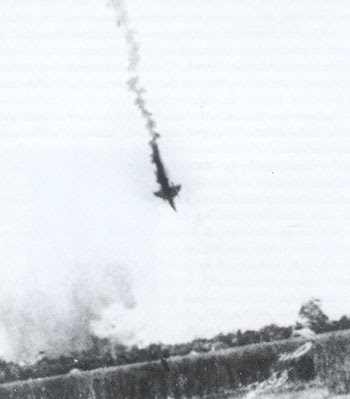
The Failed Air War Over Vietnam
or go to
Aletho News Archives – Video-Images
From the Archives
USS Liberty Massacre: A Pivotal Moment in the Hostile Takeover of America
By Kevin Barrett | Crescent | Dhu al-Qa’dah 24, 1445
In corporate America, hostile takeovers are commonplace. They occur when an aggressor—a larger corporation or rich individuals—seizes control of a smaller corporation without asking permission.
What few recognize is that the United States itself has been subjected to a hostile takeover. Since the aggressor, the illegitimate settler colony known as “Israel,” is much smaller than the US, the takeover has necessarily been surreptitious.
As of June, 2024, Israel’s gradual takeover of the US has become obvious and undeniable—a proverbial “elephant in the living room.” … continue
Blog Roll
 Aletho News
- Leaders Condemn Ansarallah Attack on Saudi Arabia While Ignoring Illegal War Against Yemen
- Leaked: Britain’s Covert Iraqi Psyops Network
- Yemeni Armed Forces Warn Airlines Against Using Saudi Airports, Exempt Mecca and Medina
- Iran security chief says powers greater than US tried to conquer Iran but ended in ‘dustbin of history’
- Europe’s mounting social chaos… chickens coming home to roost for proxy war against Russia
- US-Russia Diesel Deal Becomes Massive Defeat for Ukraine
- Hormuz and the Looming Economic Catastrophe
- Dhubab offensive, media blitz and the rapid unraveling of Saudi-backed coalition’s new gambit
- Putin Conveys to Trump Iran’s Vision on Possible Conflict Resolution – Kremlin
- The Search for Truth: Charlie Kirk’s Assassination One Year Later
- If Americans Knew
- For three years, Israel has killed a child in Gaza every 71 minutes – Daily Update
- Israeli forces kill another child in Gaza – Daily Update
- Gaza ceasefire exists in name only, say more than 100 organizations
- Nearly 2 Million in Gaza Need Urgent Shelter Assistance as Winter Looms: IOM Chief Warns
- Suppressing Palestinian resistance: US charity under fire for AI monitoring of Gaza classrooms
- Thousands Are Held in Israeli Torture Camps. This Is What Happens Inside
- Israel puts Gaza’s sick, injured, newborn in peril – Daily Update
- Report claimed Mark Levin used by Israeli government to influence Trump
- Over 2,000 Gazans have died awaiting medical evacuation amid Israel’s continued siege
- How a U.S. Diplomat Suppressed and Altered Reports Critical of Israel
- No Tricks Zone
- Germany’s Green Energy Debacle: High Energy Costs Force Kahla Porzellan to Close After 182 Years!
- New Study: 50 Years Of The Most Aggressive ‘Net Zero’ Policies Can Only Affect The Global Climate By 0.03°C
- US September “Heat” Was No Record…Many Records Set Decades Ago
- Latest European Green Energy Debacle; Portugal’s Largest Flagship Solar Park Insolvent!
- Green Energy Debacle: German Expert Professor Fritz Vahrenholt Warns Of Severe Economic And Social Consequences
- Two More Paleo Reconstructions Affirm Meters-Higher Sea Levels Across Ireland, Brazil 7000-6000 Years Ago
- New Study: Earth And Venus Surface Warmth Largely Explained By Convection And Lapse Rate, Not CO2 Or Radiation
- 2025 Nature Paper Claiming Worsening Global Drought Gets RETRACTED …Heavily Flawed
- New Study: ‘Global Drought Shows No Detectable Recent Acceleration Under Climate Warming’
- Economic Masterminds: German Socialists Suggest Taxing Productivity Gains Stemming From Using AI

