US tests ground-launched ballistic missile that would’ve been banned by INF treaty
RT | December 12, 2019
The Pentagon has conducted a second test of a missile that would have been banned under the INF treaty with Russia, which the US abandoned earlier this year. A ground-based ballistic missile flew for over 500 kilometers.
The conventionally configured test missile was launched from Vandenberg Air Force Base in California on Thursday, the US Department of Defense confirmed in a statement, giving no further details.
“Data collected and lessons learned from this test will inform the Department of Defense’s development of future intermediate-range capabilities,” the statement said.
Thursday’s test follows the cruise missile launch in August, just days after the Intermediate-range Nuclear Forces (INF) Treaty expired due to the unilateral US exit.
Signed in 1987, at the height of the Cold War, the INF banned the US and the Soviet Union – later Russia – from fielding missiles with a range between 500 and 5,000 kilometers (310 and 3,400 miles).
The Trump administration accused Russia of possessing a missile that violated the treaty, something that Moscow has denied. Russian offers for NATO to inspect the allegedly offending missile system were ignored. Meanwhile, President Donald Trump and his advisers further rationalized their exit by calling the INF a “relic” of the Cold War, an “obsolete” treaty that no longer reflected strategic reality, because it did not apply to China or other countries with ballistic missile capabilities.
The new test comes just days after Russian Foreign Minister Sergey Lavrov visited Washington and discussed the possible extension of the New START nuclear reduction treaty with Trump and Secretary of State Mike Pompeo. Moscow has said it was willing to extend the treaty, which expires in February 2021, by five years to allow time for a new deal to be negotiated.
Washington has not signaled any interest in doing either, however. Trump has talked about a potential new nuclear deal that would include Russia, China and other countries, but the US has not offered a specific proposal to that effect.
US Weaponizing Space in Bid to Launch Arms Race
By Finian Cunningham | Strategic Culture Foundation | December 12, 2019
While the spats between President Trump and other NATO leaders at the rancorous 70th summit garnered most media attention, barely noticed was the alliance’s announcement to make “space an operational domain”.
The move represents a grave assault on existing treaties forbidding the weaponization of space. The NATO announcement is doubly insidious because it gives the appearance of a multilateral acceptance of US attempts to open up the “final frontier” for militarization. A move which is far from acceptable. In fact, illegal, under international law.
Earlier this year, Donald Trump unveiled a new branch of the US armed forces, Space Command, separate from the Air Force. “Spacecom will defend America’s vital interests in space, the next war-fighting domain, and I think that’s pretty obvious to everybody. It’s all about space,” said Trump at a White House ceremony.
It is the first time that a new branch of the US armed forces has been created since 1947 when US Air Force was created out of the Army. The other existing armed services are the Marine Corps, Navy and Coast Guard. Legislation is currently going through Congress which will authorize the president’s order for setting up the new branch, to be known henceforth as Space Force.
All this is happening with barely any public debate or scrutiny. Even though it represents a dramatic escalation of military dimensions. To the existing domains of land, air and sea the United States under Trump is pushing ahead for weaponization of space. As the “war-fighting” rationale of the president makes clear, the development is explicitly about leveraging new military strike potential.
US weaponization of space has been underway for decades, going back to the “star wars” initiative of the Reagan administration in the 1980s and during the GW Bush presidency in the 2000s. However, Trump is taking the program to a whole new level by implementing a separate dedicated Space Force.
This is in spite of the existing UN-ratified 1967 Outer Space Treaty which prohibits any introduction of weapons, including nuclear weapons, into space.
“States shall not place nuclear weapons or other weapons of mass destruction in orbit or on celestial bodies or station them in outer space in any other manner,” reads the treaty, which provides the basic legal framework for international space law.
Russia and China have been consistently strong advocates for upholding the treaty.
Yet proponents of the US Space Force routinely claim that America is being threatened by Russian and Chinese advances in space military technology. It is not clear on what basis these American claims are made.
Republican Alabama Representative Mike Rogers is quoted by Space News as saying: “We have allowed China and Russia to become our peers, not our near peers and that’s unacceptable.”
But like so many other US claims about Russia and China supposedly threatening American interests, there is little or no evidence presented. The claims rely on ideological prejudice and/or a cynical lobbying service for the military-industrial complex. Going into space will convey billion-dollar contracts to US aerospace corporations.
Indeed, there is a resonance with US claims made in the 1950s and 60s of a “missile gap” which alleged back then that the Soviet Union was outpacing America’s arsenal of strategic nuclear weapons. The putative missile gap was invoked as a pretext for greatly expanding the US arsenal, thereby creating an international arms race, only for the so-called missile gap to be found out years later to be a fiction of American scaremongering. Cynically, that fiction was deliberately propagated to the American public in order to provide a tax-payer-funded pork-barrel production line for the Pentagon and the military-industrial complex.
The same process seems to be underway with Trump’s much-vaunted Space Force.
There is another strategic aspect to this American “weaponization of the heavens”. That is, to force Russia and China into an arms race which Washington calculates would be economically ruinous for Moscow and Beijing. What’s at stake here is a pivotal struggle between Russia and China’s vision of a multipolar world and Washington’s desire to be the globe’s hegemonic uni-power. If the US can break Russia and China economically then it wins this era-defining struggle. Launching an arms race is Washington’s gambit for taking down Russia and China.
The precedent is the arms race in the 1980s under Reagan which brought the Soviet Union to collapse. Because of Washington’s presumed right to print endless amounts of dollars and rack up seemingly limitless national debt, the US is wagering that it will be the last man standing in an arms race with Russia and China.
Russian President Vladimir Putin has repeatedly said that Russia will not fall into the trap of unleashing an arms race. At a recent meeting in Sochi with his top defense officials, Putin emphasized the imperative need to focus on efficiency in weapon systems. Russia’s latest-generation of hypersonic missiles which apparently can evade any US defense shield – despite the latter costing trillions of dollars to develop – is one example.
Nevertheless, if – and it is a big if – the US manages to develop space weaponry, the pressure will be on Russia and China to respond in kind to counter a whole new threat level. That would mean both nations diverting resources into another realm of weaponry instead of developing their economies.
The US Space Force has to be seen in the wider context of Washington unravelling the entire system of global arms controls. The US withdrawal from the Anti-Ballistic Missile (ABM) treaty in 2002 was followed by its withdrawal from the Intermediate-range Nuclear Forces (INF) treaty last year. The Trump administration is moving towards scrapping New START in 2021, the third and last nuclear-arms control treaty.
There is an unconscionable effort by US governments over many years to incite a new arms race. Going into outer space is part of that effort. It is a gross violation of international law and the United Nations by the US to open up a new frontier for military dominance. And the US has utilized the 29-nation NATO alliance to rubber-stamp its criminal weaponization of space.
Netanyahu-Pompeo Meeting Solidifies War Plan on Iran
By Finian Cunningham | Strategic Culture Foundation | December 10, 2019
Ratcheting economic sanctions, military force encirclement, inciting seditious violence and relentless war rhetoric. This all by the US and its allies over the past year towards Iran, yet it is Iran which is portrayed as posing “potential threats” to American interests.
The hastily arranged meeting last week between Israeli leader Benjamin Netanyahu and US Secretary of State Mike Pompeo had the hallmarks of a war-plan summit amid a peak in renewed media provocation against Iran.
In the last weeks there has been a flurry of US media reports claiming that Iran is secretly moving ballistic missiles into Iraq and elsewhere across the region. As usual the media credulously cite anonymous intelligence and Pentagon officials on those claims.
Here’s CNN quoting one administration official: “There has been consistent intelligence in the last several weeks,” the official said, referring to “a potential Iranian threat against US forces and interests in the Middle East.”
Last month, the head of US CentCom made a similar dire forecast of Iranian intentions. General Kenneth McKenzie said: “I would expect that if we look at the past three or four months, it’s possible they [Iran] will do something that is irresponsible.”
Notice how General McKenzie tacitly acknowledges the background of the Trump administration’s “maximum pressure” campaign of economic sanctions and US military force buildup against Iran as if that is somehow normal international conduct. Then he turns all that US aggression on its head by accusing Iran of possibly doing “something that is irresponsible”.
There are worrying signs that the US and Israel are redoubling the pressure of war against Iran. This pressure has to be seen in the context of a formidable deployment of US military forces – troops, warplanes and warships in the region since May this year. The earlier buildup was announced on the basis of unfounded claims that Iran was preparing to launch offensive operations against American interests. Then came a series of mysterious attacks on oil tankers in the Persian Gulf over the summer which Washington blamed on Iran without evidence.
Street protests in Iran since mid-November over fuel-price increases appear to be hijacked by subversive elements. President Trump and other US officials have openly called for the protests to destabilize the Iranian government.
Fresh claims that Iran is sending ballistic missiles to neighboring countries appear to be setting the stage for justifying a pre-emptive US attack on Iran.
No doubt the Iranian government is under severe pressure from the economic hardship that the US has re-imposed unlawfully since Trump dumped the international nuclear accord in May 2018. No doubt too Iran is apprehensive about the relentless military threats against it from Washington and its Israeli ally. Almost certainly, Iran will have mobilized forces in the reasonable calculation that it may come under attack at any moment.
But, perversely, US intelligence and military officials are interpreting Iranian defensive moves as “indications of a potential threat” to American “interests”.
The meeting last week between Israeli Prime Minister Benjamin Netanyahu and US Secretary of State Mike Pompeo signals a foreboding development. Recall that this is in the context of US media reports of Iranian ballistic missiles being deployed and of reports that the Trump administration is considering a doubling of troop levels in the Middle East to 28,000, as well as sending more missiles and warplanes.
Netanyahu met Pompeo in Lisbon, Portugal, on Wednesday, December 04. The meeting was called urgently and was unscheduled. Netanyahu – who is fighting for his political survival over corruption charges – tried to arrange discussions with Pompeo on the sidelines of the NATO summit near London, but according to Israeli media reports there was not enough time for security logistics to be put in place by the British. That indicates the Israeli leader was trying to meet Pompeo in a hurry.
When Netanyahu met with Pompeo in Lisbon, he said at the start of their discussions: “The first subject that I will raise is Iran. The second subject is Iran, and so is the third. And many more.
The Israeli premier added: “We have been fortunate as President Trump has led a consistent policy of exerting pressure on Iran. Iran is increasing its aggression in the region as we speak, even today, in the region. They are trying to have staging grounds against us and the region from Iran itself, Iraq, Syria, Lebanon, Gaza and Yemen and we are actively engaged in countering that aggression.”
Netanyahu also gloated that the “Iranian empire [sic] is tottering… let’s make it totter even more.”
For several months Iran has steadfastly refused to take the bait of war laid down by the Trump administration. But with pressures mounting both within the country and externally, it would be imperative for the Iranian authorities to marshall their defenses.
US intelligence and military officials are using contorted logic to accuse Iran of posing a threat, and the American corporate media are ably assisting in the propagation of this oxymoron.
Netanyahu’s hasty meeting with Pompeo last week suggests that the US and Israel are putting the final touches to their malignant masterpiece for provoking a war with Iran.
Trump’s Creaky Door to Peace in the Koreas
By Patrick Lawrence – Consortium News – December 10, 2019
In June 2018, when Donald Trump and Kim Jong-un summitted in Singapore, the American and North Korean leaders opened the door to peace on the Korean Peninsula wider than at any time since hostilities ceased in 1953. Eighteen months later, we watch as this door creaks closed.
Which side has betrayed the once-promising prospect of denuclearization and an end of seven decades of flashpoint tension in Northeast Asia? This is our question.
A succession of developments over the past week indicates that bilateral efforts to denuclearize the two Koreas will pass into history at year-end. Kim asserted nearly a year ago, that, absent a credible diplomatic framework for a bilateral accord, the North will give up on a settlement with the U.S. and “find a new way to defend the sovereignty of the country.”
A test conducted Sunday at a previously deactivated missile launch site suggests this means Pyongyang intends to recommit to nuclear and long-range missile programs it had suspended so long as talks with the U.S. progressed.
There is a good chance the North has already determined to pursue Kim’s “new way.” Pyongyang’s ambassador to the U.N. indicated as much just prior to the test at the Sohae site Sunday.
“We do not need to have lengthy talks with the U.S. now,” Kim Song said the previous day in New York. “Denuclearization is already gone out of the negotiating table.” By the time Kim Song spoke, the North Korean wire service, KCNA, had already begun to publish shrill warnings that hostilities with the U.S. could be renewed at any time.
John Bolton’s Impact
Kim Jong-un set the Dec. 31 deadline for progress in bilateral talks after the failure last February of his second summit with Trump, held in Hanoi. Subsequent reporting by two Reuters correspondents revealed that Trump, on the advice of John Bolton, his national security adviser at the time, told Kim he must accede to all U.S. demands before Washington would negotiate any concessions of its own. The Reuters report demonstrated that Bolton’s advice to Trump — delivered just as the president sat down with Kim, so leaving him little time to consider it — was intended to precipitate precisely the sudden breach between the two leaders that then took place.
“It occurs to us that there may not be a need to continue,” Choe Son-hui, Kim’s vice-foreign minister, said after the North Korean leader abandoned the Hanoi talks in acrimony. “We’re doing a lot of thinking.” In hindsight, Choe’s remark seems to have signaled the North’s post–Hanoi distrust of U.S. intentions despite Kim’s notably friendly personal relations with Trump.
This wariness and impatience are justified. In a round of talks held in Stockholm in October, North Korean negotiators walked out in a matter of hours, complaining that the U.S. side had nothing to offer but a repackaged version of the fatal proposition presented in Hanoi. If you reject our proposal that 6 and 4 make 10, let us offer you 7 and 3: This is effectively the U.S. position to date.
Nothing that has occurred since the first Trump–Kim summit in Singapore suggests that the president is anything other than entirely sincere in his desire to forge an historic agreement with Pyongyang. One need not assign Trump any transcendent geopolitical vision to recognize this. The Dealmaker wants a deal, preferably one that has eluded all of his predecessors in the White House.
On Saturday Trump conferred with South Korean President Moon Jae-in for half an hour by telephone to discuss how to salvage the negotiation process between the North and the U.S. Moon has assiduously promoted negotiations with the North since he took office in May 2017. Plainly, Trump wants Moon to help him draw Kim back from the brink.
“Kim Jong-un is too smart and has too much to lose, everything actually, if he acts in a hostile way,” Trump said Sunday. “He does not want to void his special relationship with the President of the United States or interfere with the U.S. presidential election in November.”
These remarks appear to signal that, despite Trump’s conversation with Moon, the U.S. does not take Kim’s year-end ultimatum seriously. They also suggest that Trump considers the current escalation of tensions between Washington and Pyongyang nothing more than the posturing he indulges in prior to any significant negotiation.
In both cases, Trump is likely to be proven wrong for two reasons.
The first is that Trump may have just overplayed his hand. There are indications that Kim thinks the Sohae test Sunday — the nature of which remains unclear — significantly improves his diplomatic position. While the North’s tough talk may also be posturing, Washington now risks forfeiting some of Kim’s willingness to negotiate the elimination of the North’s nuclear and ballistic-missile capacities. “The results of the recent important test will have an important effect on changing the strategic position of the DPRK once again in the near future,” KCNA reported Sunday.
The second is that by now Trump almost certainly understands the extent to which policy cliques in Washington have circumscribed his agenda on questions such as Russia, Syria and North Korea. It may be to his credit that he persists in the face of this resistance, but his chances of overcoming it are, if anything, diminished after nearly three years of incessant subterfuge on the foreign policy side. Trump does not have a Kim Jong-un problem; he has a “deep state” problem at home.
When U.S.–North Korean talks have collapsed on previous occasions, official U.S. records tend to blur the chronology of events, erase causality, and then imply that responsibility for failure lies with the North Koreans. While there are already indications that we will see the same this time, there has been enough good reporting, mostly in other-than-corporate media, to make this fallacy plain. No one should be fooled when we read once again about those bellicose, irrational North Koreans.
All indications now suggest that Kim plans another of his blockbuster New Year’s speeches, similar to those delivered in previous years. In 2018 he announced that the North had achieved a weaponized nuclear capability with which to deter threats from the U.S. This year he declared he would be willing to meet Trump “anytime” while announcing his “new way” should diplomacy fail.
The first of these assertions is now patently true. After a year of disappointments, the second awaits the outcome of the current impasse. We will have to see in coming weeks.
After the talks in Stockholm collapsed in October, North Korea termed the debacle “sickening.” So it is, considering the opportunity that the U.S. — not for the first time — is in the process of intently squandering.
Patrick Lawrence, a correspondent abroad for many years, chiefly for The International Herald Tribune, is a columnist, essayist, author and lecturer. His most recent book is “Time No Longer: Americans After the American Century” (Yale). Follow him on Twitter @thefloutist. His web site is Patrick Lawrence.
Elizabeth Warren’s “Foreign Policy”
The Automatic Earth | December 8, 2019
Ronald Reagan and Mikhail Gorbachev first met in Geneva in 1985, in a summit specifically designed to allow them to discuss diplomatic relations and the -nuclear- arms race. At the time, the Soviet Union had started to crumble, but it was still very much the Soviet Union. They met again in 1986 in Reykjavik, in a summit set up to continue these talks. There, they came close to an agreement to dismantle both countries’ nuclear arsenals.
They met once again in Washington in 1987. That was the year Reagan made his famous “Mr. Gorbachev, tear down this wall” speech about the Berlin wall. Then they held a next summit in 1988 in Moscow, where they finalized the Intermediate-Range Nuclear Forces Treaty (INF) after the US Senate’s ratification of the treaty in May 1988.
Reagan’s successor George H.W. Bush met with Gorbachev first in December 1989 in Malta, and then the two met three times in 1990, among others in Washington where the Chemical Weapons Accord was signed, and in Paris where they signed the Treaty on Conventional Armed Forces in Europe. They met three more times in 1991, with one of their meetings, in Moscow, resulting in the signing of the Strategic Arms Reduction Treaty (START I).
One of the most interesting things agreed on during the Bush-Gorbachev meetings was that Russia would allow Germany to re-unite after the wall came down, in exchange for the promise that NATO would not try to expand eastward.
I’ve been re-researching this a bit because it feels like it’s high time that people should realize what US foreign policy was like not that long ago. Even as it involved Reagan and Bush sr., not exactly the peace-mongers of their times. The one thing that was clear to all parties involved is that it was crucial to keep meeting and talking. And talk they did. But look at us now. When was the last summit of a US president with Vladimir Putin?
This came to mind again when I read Elizabeth Warren’s piece in the Guardian today, which made me wonder if she’s for real, if she is really as ignorant as she appears to be when it comes to foreign policy, to Russia, to Trump and to NATO. It would seem that she is, and that makes her a hazard. Not that I see her as a serious candidate, mind you, but then again, I do not see any other one either.
In her article, which reads more than anything like some nostalgic longing for the good old times when she was young, just watch her get all warm and fuzzy over the success of NATO:
Donald Trump Has Destroyed American Leadership – I’ll Restore It
For seven decades, America’s strength, security and prosperity have been underpinned by our unmatched network of treaty alliances, cemented in shared democratic values and a recognition of our common security. But after three years of Donald Trump’s insults and antics, our alliances are under enormous strain. The damage done by the president’s hostility toward our closest partners was on full display at this week’s gathering of NATO leaders in London, which should have been an unequivocal celebration of the 70th anniversary of the most successful alliance in history.
The success of NATO was not inevitable, easy or obvious. It is a remarkable and hard-won accomplishment, and one based on a recognition that the United States does not become stronger by weakening our allies. But that is just what Trump has done, repeatedly and deliberately. He treats our partners as burdens while embracing autocrats from Moscow to Pyongyang. He has cast doubt on the US commitment to NATO at a moment when a resurgent Russia threatens our institutions and freedoms. He has blindsided our partners on the ground in Syria by ordering a precipitate and uncoordinated withdrawal.
[..] he has wrecked US credibility by unilaterally tearing up our international agreements on arms control, non-proliferation and climate change. This reckless disregard for the benefits of our alliances comes at a perilous moment, when we face common threats from powerful adversaries probing the weaknesses of our institutions and resolve. Longstanding allies in Asia are doubting our reliability and hedging their bets. Russia’s land grab in Ukraine has upended the post-1989 vision of a Europe “whole, free, and at peace”. The chaotic Brexit process has consumed our closest partners, while sluggish growth and rising xenophobia fuel extremist politics and threaten to fracture the European Union.
To start with that last point, no. That “post-1989 vision of a Europe “whole, free, and at peace” was destroyed by NATO’s eastward expansion, executed in spite of US, EU and NATO promises that it wouldn’t. Moreover, you can talk about a resurgent Russia, but the country has hardly recovered economically from the 1980’s and 90’s today, and it has no designs on countries to its west.
Just look at the military budgets of the respective countries, where Russia has maybe 10% of the expenditure of the US, let alone the rest of NATO, and you get the picture. Is Russia getting more bang for its buck, because it doesn’t have to maintain a long running Pentagon-Boeing/Raytheon link? Yes, it does. But a 10 to 1 difference is still way out there. It’s not as if they spend half of what the US does, they spend just 10%.
This is because Russia not only doesn’t have to satisfy the desires and needs of Pentagon-Boeing/Raytheon, it’s also because they have no desire to conquer any territory that is not at present Russian.
Russia “annexed” Crimea through fair elections, and it knew that “we” knew that it would never let go of its only warm water port, Sevastopol. When “We” tried to take it away regardless, it did the only thing it could do. And it did it very intelligently. As for Eastern Ukraine, everyone there is Russian, whether by blood or by passport. And there are a lot of strong ties between them and Russians in Russia proper.
If Putin would have volunteered to let these Donbass Russians be shot to bits by the Ukraine neo-nazis that helped the US and EU in the Maidan coup, he would have had either a civil war in Russia, or an all-out war in the Donbass, with perhaps millions of casualties. Putin did what he could to prevent both. Back to Warren:
A mounting list of global challenges demand US leadership and collective action. As president, I will recommit to our alliances – diplomatically, militarily and economically. I will take immediate action to rebuild our partnerships and renew American strategic and moral leadership, including by rejoining the Paris climate accord, the United Nations compact on migration, and reaffirming our rock-solid commitment to NATO’s Article 5 provisions.
But we must do more than repair what Trump has broken. Instead we need to update our alliances and our international efforts to tackle the great challenges of our age, from climate change and resurgent authoritarianism to dark money flows, a weakening international arms control regime and the worst human displacement crisis in modern history.
Wait, what exactly has Trump broken in the foreign policy field? There have been dozens at the very least who have called for NATO to be disbanded, Ron Paul et al, because its sole purpose was to counter the Soviet Union, which no longer exists. In fact, when Emmanuel Macron labeled NATO “brain-dead” last week, it was Trump who defended the alliance.
And sorry, Elizabeth, but to hold Trump responsible for “the worst human displacement crisis in modern history” is just not right. That started way before he arrived at the scene. Obama and Hillary carry the burden and blame for that, along with Bush jr. and Dick Cheney. They shot the crap out of Iraq, Lybia etc. Trump only dumped a few bombs in a desert. He didn’t invade any country, he didn’t go “We Came, We Saw, He Died”. That was not Trump.
And before we forget, the military aid for Ukraine Trump allegedly held back for a few weeks had been refused by Obama for years. I’ve been wondering for ages now why the Democrats are so eager to make things up while ignoring simple facts, but I think at least it’s time to start pointing out these issues.
This is not to make Trump look better in any sense, but to try and make people understand that he did not start this thing. Though yeah, I know, it’s like talking to a wall by now. The political divide has turned into such a broad and yawning one, you can’t not wonder how it could ever be breached.
But, you know, it might help if people like Elizabeth Warren don’t ONLY talk about Trump like he’s the antichrist, or a Putin tool, if they engage with him in conversation. But sadly, it feels like we’re past that point. Like if she would even try, and I don’t know if she would want to, her party would spit her out just for trying to build a single bridge. Like Tulsi Gabbard seems to have tried; and look at how the DNC treats her.
This means revitalizing our state department and charging our diplomats to develop creative solutions for ever more urgent challenges. It means working with like-minded partners to promote our shared interest in sustained, inclusive global economic growth and an international trade system that protects workers and the environment, not just corporate profits. And it means reducing wasteful defense spending and refocusing on the areas most critical to our security in years to come.
Well, apart from the fact that we’ve seen some of those diplomats in the Schiff hearings, and they seemed like the least likely people to develop anything “creative” -other than their opinions-, and the boondoggle of “sustained, inclusive global economic growth”, it’s probably best to forget about that entire paragraph. It’s nicer to Warren too.
Alliances are not charities, and it’s fair to ask our partners to do their share. I will build on what President Obama started by insisting on increased contributions to NATO operations and common investments in collective military capabilities. But I will also recognize the varied and significant ways that European states contribute to global security – deploying troops to shared missions, receiving refugees, and providing development assistance at some of the highest per capita rates in the world.
The problem appears to be that the partners don’t increase their contributions. Just this March, Germany refused to do just that. And if Berlin refuses, why would other countries spend more?
The next president must tackle our common problems using the lessons of common defense. Together, we can counter terrorism and proliferation. We can make common cause in constructing new norms and rules to govern cyberspace. We can dismantle the corruption, monopolies and inequality that limit opportunity around the world and take on the increasingly grave threats to our environment. We can and will protect ourselves and each other – our countries, our citizens and our democracies.
Now we’re getting into entirely nonsensical territory, with words and sentences designed only to make people feel good about things that have no substance whatsoever. Anyone can go there, anyone can do that.
In the meantime, the never ending investigations into Trump, Russia, Ukraine, taxes, have had one major effect: he hasn’t had a chance to have a summit with Putin. And that, to go back to how I started out this essay, is the worst idea out there. If Reagan and Bush sr. did those summits all the time, then why do we now think such summits are the work of the devil?
And yeah, we get it, we got it again last week from alleged law expert Pamela Karlan in the House, who let ‘er rip on the dangers Putin poses to all of humanity, and of course she would never trust Trump to hold any such summit because he’s Putin’s puppet.
What Pamela, and all the MSM, and the Dems, and the FBI/CIA, appear to refuse to see, though, is that Trump was democratically elected by the American people to be the only one who can have any such conversation. Karlan again talked about how Russia would attempt to attack American soil unless “we” keep them from doing that.
Now I can say that is absolute bollocks, and it is, but how many -potential- Democratic voters will recognize that at this point? They’ve been trained to believe it. That Russia wants one US presidential candidate over another, or one UK one, or fill in your country, and therefore they want to invade the US, UK, etc. In reality, Russia has plenty problems of its own, and it’s slowly trying to solve them.
The two countries need to start talking to each other again, and the sooner the better. That it will happen under Elizabeth Warren, however, is very unlikely. First because she has her mind made up about Russia, and second because the likelihood of her becoming president is very low. What do you think, is that a good thing?
If for some reason -who can tell- she would end up winning 11 months from now, do you think she’s likely to establish a peace treaty with Russia? You know, given what she wrote here? And if not, why would you vote for her? Don’t you want peace? Do you think antagonizing Putin forever is a good idea? While Russia continues to outperform America in arms development, and in just about any field? While Russia only wants peace?
Good questions, ain’t they, as we move into 2020?!
NATO Seeking To “Dominate The World” & Eliminate Competitors: Russia’s Lavrov
By Tyler Durden – Zero Hedge – 12/09/2019
Russian Foreign Minister Sergei Lavrov has charged NATO with wanting to “dominate the world” a day after 70th anniversary events of the alliance concluded in London.
“We absolutely understand that NATO wants to dominate the world and wants to eliminate any competitors, including resorting to an information war, trying to unbalance us and China,” Lavrov said from Bratislava, the capital of Slovakia, while attending the 26th Ministerial Council of the Organization for Security and Cooperation in Europe (OSCE).
He seized upon NATO leaders’ comments this week, specifically Secretary General Jens Stoltenberg, naming China as a new enemy alongside Russia. Stoltenberg declared at the summit that NATO has to “tackle the issue” of China’s growing capabilities.
Lavrov told reporters Thursday: “I think that it is difficult to unbalance us and China. We are well aware of what is happening. We have an answer to all the threats that the Alliance is multiplying in this world.” He also said the West is seeking to dominate the Middle East under the guise of NATO as well.
The new accusation of ‘world domination’ comes at a crisis moment of growing and deep divisions over the future of the Cold War era military alliance, including back-and-forth comments on Macron’s “brain death” remarks, and looming questions over Turkey’s fitness to remain in NATO, and the ongoing debate over cost sharing burdens and the scope of the mission.
“Naturally, we cannot but feel worried over what has been happening within NATO,” Lavrov stated. “The problem is NATO positions itself as a source of legitimacy and is adamant to persuade one and all it has no alternatives in this capacity, that only NATO is in the position to assign blame for everything that may be happening around us and what the West dislikes for some reason.”
A consistent theme of Lavrov’s has been to call for a “post-West world order” but that NATO has “remained a Cold War institution” hindering balance in global relations where countries can pursue their own national interests.
NATO still exists, according to Lavrov, in order to “eliminate competitors” and ensure a West-dominated global system in search of new official enemies.
Reddit Hiring NATO Shills to Control Narrative
Big Tech’s ties to the Deep State are everywhere, and we should be concerned

By Kit Knightly | OffGuardian | December 9, 2019
I wrote a short piece a few days ago about Reddit banning users for posting the leaked NHS documents. (Spreading anti-Russian propaganda in the process).
Previously, we have also covered Reddit making politically motivated decisions – such as quarantining boards dedicated to Donald Trump and 9/11.
It turns out there’s a very simple explanation for that, Reddit’s “director of policy” was previously in the pay of the US Deep State.
This was brought to our attention by Ian56 on twitter.
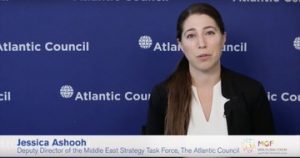
In 2017 Reddit hired Jessica Ashooh as their “Director of Policy”. Her LinkedIn page shows her previous employment was “Deputy Director, Middle East Strategy Task Force” at the Atlantic Council.
The report on which Reddit based their decision to ban users as part of a “Russian campaign” was written by Ben Nimmo, who also works for the Atlantic Council (and the Integrity Initiative).

Essentially, Reddit has a high-up employee who was previously in the pay of the US Department of State (and possibly still is).
It’s a prime example of how the US (and UK) infrastructure create an authoritarian, highly-controlled state, whilst maintaining a veneer of “freedom”. There are other examples too.
A high profile, and obvious, one is Nick Clegg being hired by Facebook.
Facebook also hired Ukrainian journalist (and fascist sympathiser) Kateryna Kruk as “public policy manager”, she also has ties to the Atlantic Council. (A short while later Facebook started blocking links to OffGuardian ).
In 2017 Facebook hired Indian journalist Shivnath Thukral as director for public policy for India and South Asia. HIS previous employer was the Carnegie Endowment for International Peace (CEIP), another US NGO, funded by the State Department.
In 2011 Google hired Suzanne Michel as director of policy planning, she previously worked as Deputy Director of the Federal Trade Commission.
Then, in 2018, Google hired Karan Bhatia as their Global Head of Policy, Mr Bhatia had previously worked for the administration of George W. Bush.
It all follows the same pattern of apparent independence concealing an inter-connecting web of control, all dedicated to furthering the same agenda and all being funded by the same central source.
The Atlantic Council is not officially affiliated with the US government, neither is CEIP, they are notionally independent. Likewise, Reddit, Google, Facebook et al. are supposedly independent companies, not in any way controlled by the state.
… and yet you follow the money and it always leads to the same place.
Launch of “A Belgian Perspective on International Affairs”
By Gilbert Doctorow | November 24, 2019
I am pleased to announce the publication of my latest collection of essays. The capsule description of the book carried on the pages of internet booksellers is as follows
“The essays in this book deal with major political, social and cultural events primarily in Europe and Russia during the period 2017 – 2019 in which the author was a participant or eyewitness and has personal impressions to share. Several of the essays are drawn from other genres including travel notes, public lectures and reviews of particularly insightful books on key issues of our times like immigration, Liberalism and war with Russia that have not received the broad public exposure they merit.”
However, there is much more to the story that has relevance to its potential readers set out in the Foreword shown below, starting with the several layers of nuance in the title itself.
Foreword
The title of this book has been chosen with care and a few introductory words of explanation are owed to the reader.
First, the notion of a “Belgian perspective” on international affairs may on its own seem peculiar. In what way, one might ask, can little Belgium, with its population of around 12 million have a perspective that is unique and worthy of consideration? In the same vein, what perspective on foreign affairs in general can a lesser Member State of the European Union have when the most powerful Member State, Germany, denies that it has an independent foreign policy and defers to Brussels, specifically to the EU’s High Representative for Foreign Affairs and Security Policy, who, formally, holds sole responsibility for these matters on behalf of the 500 million plus people from 28 nations? Indeed, in a recent interview relating to the publication of his latest book, the octogenarian former prime minister of Belgium Marc Eyskens pointed out that the rise of the EU Institutions has left national governments with a substantially reduced level of sovereignty and competence comparable to that of a major city rather than of a country.
Meanwhile and in parallel, as the seat of both the NATO headquarters near the Zaventem Airport and of the Supreme Headquarters Allied Powers Europe in Mons, Belgium marches in lock-step with its US-led allies. Belgium’s mainstream media, both television and print media, traditionally support whatever policy line comes from the EU Institutions and NATO.
There have been rare exceptions to this solemn loyalty to the consensus. In particular, in the run-up to the US invasion of Iraq in 2003, Belgium was one of the three “Old Europe” nations, alongside France and Germany, that joined Russia in openly rejecting US policy. For this the nation’s Prime Minister at the time, Guy Verhofstadt, paid dearly, being disqualified from appointment to head the EU Commission, for which he was a leading candidate at the time.
But the aforementioned facts constraining the political elites of Belgium are by no means imperative for Belgian society as a whole. Indeed, as I detail in several essays in this collection, at both ends of society, the high end in their dinner jackets and at the mass, man-in-the-street level, there is very little sympathy for the official foreign and defense policies and a lot of free-thinking going on.
All of which brings us to the question of who is the Belgian whose perspective is set out in this tome. The simple and direct answer is that I am that Belgian.
Readers of my articles posted in various platforms on the internet have seen me described in the past as an American and long-time resident of Brussels. Both statements were and are correct. However, in August 2017 I also became a naturalized Belgian. This ‘second birth’ was more than seven years in gestation. After its successful culmination, I found myself increasingly involved in intra-Belgian, intra-European politics. Consequently, I have written with greater frequency on issues that are specific to the Old Continent. By their nature, these articles have not been picked up and disseminated via the internet platforms based in the United States by which readers know me best. Moreover, in my new guise I have written some of these articles or speeches in French so as to better reach prospective readers around me where I live and practice politics. These materials are also republished in this volume.
Notwithstanding the new elements, as in my preceding three collections of “nonconformist” essays published between 2013 and 2017, the major part of my writings is focused on present-day Russia and its relations with the United States and Europe. Russia is my main field of interest and expertise coming both from book learning and from life experience as a frequent visitor to the country over many decades and also as someone who has both lived and worked there for eight years beginning in 1994. That is something very few of our commentators in the West can say before they launch into ill-informed vitriolic attacks on the “Putin regime” and Russians as a people.
Since all of the essays presented here have been published on the internet in one way or another, it is legitimate to ask what is the added value of republishing them as a book. There are several answers to that question, ranging from the superficial but adequate to an answer that goes to the heart of how I see my social role in writing these pieces.
The superficial but adequate explanation is that everything is transient, nothing more so than the internet, where digital platforms are here today, gone tomorrow, where even one’s own blog site lasts no longer than the latest annual fees payment. And while e-books may be no more durable than the publishing company maintaining and distributing the digital files, physical books deposited in libraries will be accessible to the curious public and to researchers as long as the human race continues on its way, which may or may not be eons depending on your degree of pessimism inspired by this and similar works by my fellow “dissidents” on international affairs.
The deeper explanation is that influencing public opinion towards détente, towards self-preservation and away from confrontation with Russia that can easily end in catastrophe presently does not appear to be actionable. This is so for banal but understandable reasons that have to do firstly with the way the United States is governed internally and secondly how the United States rules over “the free world.”
Over the past twenty years or more, repeated polls taken by Pew and other research institutions have shown that the American public does not support foreign military adventures or a world gendarme role for their country. However, the political establishment pays no heed whatsoever to this clear disposition of the electorate just as the views of the electorate on a great many other issues are ignored by Congress and by the Executive branch. This follows from the financial dimension of getting and staying in power. By campaign funding and lobbying, a tiny number of exceedingly wealthy individuals and corporations effectively make policy at the federal level, and accommodation with the world is not on their agenda.
Meanwhile, whether as a result of awareness of their powerlessness or for other reasons, the broad American public is apathetic as concerns foreign policy. People just don’t want to disturb their peace of mind by contemplating the aggressive, bullying behavior of their government on the international stage. “Our boys” are not being killed abroad in significant numbers. The budgeted military expenses of the USA are being financed by others who buy Washington’s Treasury notes. There is nothing to force a reckoning with what is being done in the name of America abroad. Least of all, with respect to Russia, which has taken with surprising equanimity the sanctions and other punishments meted out to them over their alleged bad conduct in Ukraine and Syria, over their alleged meddling in American and European elections. The notion that the West might be crossing their red lines at some point, that the economic and informational war might spill over into kinetic war that escalates quickly – such thoughts could not be further from the minds of people in the States or in Western Europe, including those who take a real interest in public affairs and think they are au courant.
This is not to say that the essays published here and similar writings by my comrades-in-arms have no readers. On the contrary, our works are republished by portals other than our own. They are referenced on social networks and attract considerable numbers of “hits,” meaning individual readers. Some of the essays in this book have reached an audience numbering in the tens of thousands. But so far the dry residue of this relative success remains inconsequential. No broad-based political movement championing my/our principles of détente has emerged. There are no demonstrations on behalf of peace, while there are American and worldwide demonstrations to fight for renewable energy and for programs to combat climate change, or to fight for gender issues and equality of pay.
So, why write? why publish?
This takes us to the question of self-definition and social role.
We are living through Dark Ages today, notwithstanding all the technical achievements of our science and technology and advanced medicine. At the moral, social and political levels, these are bleak times when “progressive” values trample upon traditional moral and ethical, not to mention religious values, when freedom of expression and other civil liberties have been gutted for the sake of public security and to serve demagogic purposes.
In this context, these writings are intended to be an eyewitness account of the prevailing moral and political decadence for the edification of those in future generations who will have their own battles to fight to safeguard cultural traditions and freedoms. In assuming this role of a chronicler, I seek to continue the work of those who passed this way half a century ago or more and who left behind their own writings of the day, which gave me spiritual encouragement and purpose when I came across them.
At the same time, I do not abandon the hope that my compatriots in America and now also in Europe will come to their senses and explore these writings and the writings of my fellow dissidents to find an antidote to the propaganda about the recent past and present being dispensed by government, by mainstream media and by all too many scholars in the field.
One straw in the wind was a July 2019 editorial in the hawkish, till now fanatically anti-Russian New York Times calling for a rapprochement with Russia before that country aligns definitively with China and recreates a global threat to American interests. Or I refer to the publication of an article co-authored by former Georgia Senator Sam Nunn in the September-October edition of Foreign Affairs magazine, another standard bearer of U.S. hegemony, stating in detail the existential risks we incur by having cut lines of communication with Russia and by entering into a new, uncontrolled arms race with that country. As the Chair of the Senate Committee on Armed Services from 1987 to 1995, he was a leading figure in arms control negotiations. In the new millennium, Nunn has been one of the generally recognized “wise men” in the American political establishment, alongside Henry Kissinger, George Shultz and James Baker.
There is also an impulse for optimism coming from the latest declarations of French President Emanuel Macron, who is striving to assume leadership of the European Union’s policy agenda now that control is slipping from the hands of Germany’s Iron Lady, Angela Merkel in the waning days of her chancellorship. In his speech to French ambassadors following the conclusion of the G7 summit meeting in Biarritz on the weekend of 24-25 August, Macron stated very clearly that Europe must put an end to its policy of marginalizing and ostracizing Russia because the Old Continent needs to work cooperatively with Moscow if it is not to become a powerless bystander to the growing conflict between the United States and China.
Such signs of sobriety and concern for self-preservation suggest that all is not lost in the cause of détente.
For those who have not read my earlier works, I repeat here that my essays are often devoted to major events of the day, but are not systematic or comprehensive. I wrote only when I believed that I had a unique perspective, often from my direct participation in the event as actor or firsthand witness. I have not taken up subjects where all of my peers were piled up on the line or were basing themselves on secondary sources. I consider my own writings to be primary sources in an extended, autobiographical genre.
However, they do not constitute pure autobiography. That is something I am writing in parallel in a book devoted to Russia in the wild 1990s, which I saw at ground level as the country General Manager working from offices in Moscow and St Petersburg for a succession of major international producers of consumer goods and services.
* * * *
On-line bookseller Amazon has been fastest off the mark posting the book for sale in hardbound, paperback and e-book formats through its global network of websites including amazon.com, amazon.fr, amazon.de, amazon.co.uk, amazon.com.au, plus others in Latin America and Asia. Amazon competitor in the U.S. market, http://www.barnesandnoble.com, also offers all three formats. Both websites provide a ‘look inside’ option, facilitating browsing. For e-book purchasers in Europe, an alternative and cheaper vendor is http://www.bol.com. For U.S. purchasers, the least expensive vendors of the e-book at this moment are Barnes & Noble and the publisher’s own online bookstore: https://www.authorhouse.com/en/bookstore/bookdetails/805594-a-belgian-perspective-on-international-affairs
©Gilbert Doctorow, 2019
Israeli FM threatens to target Tehran with ‘hundreds of Tomahawk missiles’
Press TV – December 8, 2019
Hawkish Israeli foreign minister Israel Katz has threatened a military operation against Iran with the help of the United States, Saudi Arabia and the United Arab Emirates.
Katz said Israeli bombing in Iran was “an option,” making the most brazen threat in years in an interview with the Italian newspaper Corriere della Sera Saturday on the sidelines of the Mediterranean Dialogues (MED) conference in Rome.
“If Iran crosses the ‘red line’, it will discover a uniform front between Saudi Arabia, UAE and the United States, which will launch hundreds of Tomahawk missiles at Tehran,” he said.
By the red line, Katz meant, “We will not allow Iran to acquire or stockpile nuclear weapons. If that is the last option – we will act militarily.”
Iran has repeatedly enunciated its nuclear program as exclusively civilian, subject to the most intensive UN supervision ever.
Unlike Israel, Iran is a signatory to the Treaty of the Non-Proliferation of Nuclear Weapons (NPT), whose aim is to prevent the spread of nuclear arms and weapons technology.
Israel is the only possessor of nuclear weapons in the Middle East, but maintains a policy of ambiguity, neither confirming nor denying its atomic bombs.
Nevertheless, Tel Aviv is estimated to have between 200 and 400 atomic warheads in its arsenal.
Tehran signed the Joint Comprehensive Plan of Action (JCPOA) in 2015 to forge closer cooperation with the International Atomic Energy Agency (IAEA) which has always confirmed the country to be in full compliance.
President Donald Trump pulled the US out of the international accord last year and announced sanctions on Iran in an attempt to wreck the agreement.
Katz criticized European countries for not supporting the hard line Washington has adopted against Tehran.
“As long as the Iranians delude themselves into thinking they have Europe’s backing, it will be more difficult for them to back down,” he said.
In his Friday address to the MED 2019, the top Israeli diplomat claimed that it was “high time” for Western and Arab countries to “create a coalition that would threaten Iran and tell it to stop its nuclear program.”
Iran’s FM Javad Zarif Claims Israel Tested Nuke-Missile ‘Aimed at Iran’
Sputnik – December 6, 2019
The Defence Ministry of Israel announced in the early hours of Friday morning that it had tested a new rocket propulsion system at a an airbase in the central part of the country, as part of a missile defence modernization plan.
Minister of Foreign Affairs of Iran, Mohammad Javad Zarif, commented on Friday on the recent test by the Israeli defense establishment of what has been described as a rocket propulsion system.
Zarif noted that the United States, along with the three European members of the Iran nuclear deal – officially known as the Joint Comprehensive Plan of Action (JCPOA), have never complained of the Israeli nuclear arsenal, the only nuclear arsenal in the region, although Tel Aviv has missiles that are “DESIGNED to be capable of carrying nukes”.
Earlier on Friday, Israel’s Ministry of Defence tweeted that its defence establishment had carried out a test of a rocket propulsion system from the Palmochim military base, located south of the nation’s capital city of Tel Aviv.
The tested missile propulsion system is reportedly capable of launching defence or attack payloads with a range of up to 2,000 kilometers. It is also said to be capable of carrying nuclear warheads, according to Tel Aviv’s news channel i24 News.
After the US unilaterally left the JCPOA in May 2018, Washington has since been waging a “maximum pressure” campaign against Tehran, claiming that the Islamic republic’s rocket program, alongside Iran’s alleged nuclear ambitions, represent a “threat” to the region. Under this pretext, the Trump administration has introduced multiple sanctions against the government in Tehran and against several senior officials, including Zarif.
Iran has repeatedly denied accusations regarding its intentions to obtain nuclear weapons, continuing to abide by the nuclear deal and urging European signatories to ensure its interests amid reimposed US sanctions, particularly through a partial withdrawal from some of the original commitments under the JCPOA.
Sun never sets on Canadian military
By Yves Engler · December 6, 2019
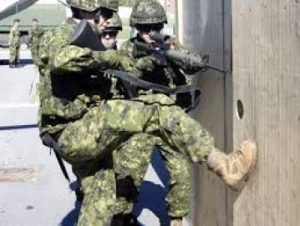 Most Canadians would be surprised to learn that the sun never sets on the military their taxes pay for.
This country is not formally at war yet more than 2,100 Canadian troops are sprinkled across the globe. According to the Armed Forces, these soldiers are involved in 28 international missions.
There are 850 Canadian troops in Iraq and its environs. Two hundred highly skilled special forces have provided training and combat support to Kurdish forces often accused of ethnic cleansing areas of Iraq they captured. A tactical helicopter detachment, intelligence officers and a combat hospital, as well as 200 Canadians at a base in Kuwait, support the special forces in Iraq.
Alongside the special forces mission, Canada commands the NATO mission in Iraq. Canadian Brigadier General Jennifer Carrigan commands nearly 600 NATO troops, including 250 Canadians.
A comparable number of troops are stationed on Russia’s borders. About 600 Canadians are part of a Canadian-led NATO mission in Latvia while 200 troops are part of a training effort in the Ukraine. Seventy-five Canadian Air Force personnel are currently in Romania.
Some of the smaller operations are also highly political. Through Operation Proteus a dozen troops contribute to the Office of the United States Security Coordinator, which is supporting a security apparatus to protect the Palestinian Authority from popular disgust over its compliance in the face of ongoing Israeli settlement building.
Through Operation Foundation 15 troops are contributing to a US counter-terrorism effort in the Middle East, North Africa and Southwest Asia. As part of Operation Foundation General A. R. DAY, for instance, Directs the Combined Aerospace Operations Center at the US military’s Al Udeid base in Qatar.
The 2,100 number offered up by the military doesn’t count the hundreds, maybe a thousand, naval personnel patrolling hot spots across the globe. Recently one or two Canadian naval vessels — with about 200 personnel each — has patrolled in East Asia. The ships are helping the US-led campaign to isolate North Korea and enforce UN sanctions. These Canadian vessels have also been involved in belligerent “freedom of navigation” exercises through international waters that Beijing claims in the South China Sea, Strait of Taiwan and East China Sea.
A Canadian vessel is also patrolling in the Persian Gulf/Arabian Sea. Recently Canadian vessels have also entered the Black Sea, which borders Russia. And Canadian vessels regularly deploy to the Caribbean.
Nor does the 2,100 number count the colonels supported by sergeants and sometimes a second officer who are defence attachés based in 30 diplomatic posts around the world (with cross-accreditation to neighbouring countries). Another 150 Canadian military personnel are stationed at the North American Aerospace Defense Command headquarters in Colorado and a smaller number at NORAD’s hub near Tampa Bay, Florida. These bases assist US airstrikes in a number of places.
Dozens of Canadian soldiers are also stationed at NATO headquarters in Brussels. They assist that organization in its international deployments.
There may be other deployments not listed here. Dozens of Canadian soldiers are on exchange programs with the US and other militaries and some of them may be part of deployments abroad. Additionally, Canadian Special forces can be deployed without public announcement, which has taken place on numerous occasions.
The scope of the military’s international footprint is hard to square with the idea of a force defending Canada. That’s why military types promote the importance of “forward defence”. The government’s 2017 “Strong, Secure, Engaged: Canada’s Defence Policy” claims Canada has to “actively address threats abroad for stability at home” and that “defending Canada and Canadian interests … requires active engagement abroad.”
That logic, of course, can be used to justify participating in endless US-led military endeavors. That is the real reason the sun never sets on the Canadian military.
Sudan’s new PM wants to withdraw troops from Yemen
Press TV – December 6, 2019
Sudan’s new Prime Minister Abdalla Hamdok has vowed to withdraw troops from the Saudi-led war in Yemen, saying his country’s role should be limited to assisting in a political resolution of the conflict.
“The conflict in Yemen has no military solution, whether from us or from anywhere in the world,” Hamdok told the Atlantic Council, a US-based think tank, on Thursday.
He added that the war “has to be resolved through political means,” and that his country will seek to “help our brothers and sisters in Yemen and play our role with the rest to help them address this”.
Sudan has been one of the main contributors to the so-called Saudi coalition against Yemen, formed in 2015 in a bid to install a pro-Saudi government in Sana’a and crush Yemen’s Houthi Ansarllah movement.
According to reports, up to 40,000 Sudanese troops were deployed in the country during the peak of the conflict in 2016-2017.
Late October, however, Sudanese officials said the country had withdrawn thousands of troops from Yemen, with only a “few thousand” remaining.
Speaking on Thursday, Hamdok said “not many” Sudanese forces remain in Yemen.
Hamdok, who is leading the country’s transitional government in a power-sharing pact with the military, further stated that he will be “absolutely” able to withdraw the remaining troops from Yemen.
The new prime minster said his government had “inherited” the deployment in Yemen from Sudan’s former president Omar Hassan al-Bashir who was ousted following a popular uprising against his rule in April.
Hamdok pledged to “address” the country’s involvement in the Saudi-led war “in the near future” without further elaborating on the matter.
While Sudanese officials have abstained from publishing official casualty numbers in Yemen, Yemen’s armed forces have said a total 4,253 Sudanese troops have been killed in the conflict.
The developments come as the Saudi-led mission in Yemen has come to a standstill due to the resistance and increasingly sophisticated attacks of Yemeni forces.
Earlier this year, the United Arab Emirates (UAE), Riyadh’s most influential partner in the war, was reported to have withdrawn most of its troops from Yemen.
UAE officials have reached the conclusion that the war has become “unwinnable” and that the Houthis will eventually “have a role in the future in Yemen”, reports said.
Fearing a long-lasting quagmire in Yemen, Riyadh has also been reportedly seeking to negotiate an end to the conflict through discussions with the Houthis.
Featured Video

Iran’s Next Strike May Not Explode. It Could Shut You Down
or go to
Aletho News Archives – Video-Images
From the Archive
Zionism’s Violent Legacy
By Donald Neff | Washington Report On Middle East Affairs | January 1996
On January 4, 1948, Jewish terrorists drove a truck loaded with explosives into the center of the all Arab city of Jaffa and detonated it, killing 26 and wounding around 100 Palestinian men, women and children.[1] The attack was the work of the Irgun Zvai Leumi – the “National Military Organization,” also known by the Hebrew letters Etzel – the largest Jewish terrorist group in Palestine. The Irgun was headed by Revisionist Zionist Menachem Begin and had been killing and maiming Arabs, Britons and even Jews for the previous ten years in its efforts to establish a Jewish state.
This terror campaign meant that at the core of Revisionist Zionism there existed a philosophical embrace of violence. … continue
Blog Roll
 Aletho News
- Saudi oil boss issues global supply warning
- Riyadh Says Its Oil System Is Intact. The Numbers Say Otherwise.
- Trump and Netanyahu Want to “Finish the Job” on Iran
- US ‘one-sided dictation’ not Iran’s beliefs makes rational talks impossible: Baghaei
- Iran’s Next Strike May Not Explode. It Could Shut You Down /Col Doug Macgregor
- Iran: US political targets legitimate if assassinations return
- Iraq shuts key border crossing with Iran under US pressure: Report
- Undersea Internet cables could be targeted in retaliation for attacks on Iran: IRGC deputy chief
- EU sending ‘biased’ observers to interfere in Serbian election – president
- White House envoy declares kinetic action against Yemen ‘fruitless’
- If Americans Knew
- Trump’s Intensifying Sabotage of the ICC, for Israel’s Sake
- Israeli military detain US and UK volunteers in West Bank including Democratic NY politician Brad Lander
- Americans at National Conservatism Conference held in Israel this year criticize Israel
- Christiane Amanpour exits CNN with a legacy shaped by the debate over Israel
- Israel’s war on Iran is the final move in a decades-old strategy
- Israel Denies Entry to French Journalist, U.S. Researcher Amid Rise in Entry Denials
- Gaza’s hospitals are running out of life-saving fuel – Daily Update
- Mysterious bot accounts reportedly spread fake ‘man on the street’ videos for Michigan Senate candidate
- Israeli Defense Minister Katz Says Over 60 Lebanon Villages Have Been Destroyed
- Why Is Israel Running TV Ads in Iowa Ahead of the Midterms?
- No Tricks Zone
- E-Cars Reduce CO2 Emissions By Only 41% Compared To Internal Combustion Engine Vehicles
- Predictions Made By Renowned Climate Professor Over Past Decades Have Been Proven To Be Poor
- New Study Suggests Large Regions Of The Pacific Ocean Have Been Cooling For The Last 80 Years
- Germany’s Green Energy Debacle: High Energy Costs Force Kahla Porzellan to Close After 182 Years!
- New Study: 50 Years Of The Most Aggressive ‘Net Zero’ Policies Can Only Affect The Global Climate By 0.03°C
- US September “Heat” Was No Record…Many Records Set Decades Ago
- Latest European Green Energy Debacle; Portugal’s Largest Flagship Solar Park Insolvent!
- Green Energy Debacle: German Expert Professor Fritz Vahrenholt Warns Of Severe Economic And Social Consequences
- Two More Paleo Reconstructions Affirm Meters-Higher Sea Levels Across Ireland, Brazil 7000-6000 Years Ago
- New Study: Earth And Venus Surface Warmth Largely Explained By Convection And Lapse Rate, Not CO2 Or Radiation

