S-300 in Syria – a Preliminary Assessment
The Saker • Unz Review • November 9, 2018
We now know a little more about which version of the S-300 family the Russians have delivered to the Syrians: the Russians have converted a number of S-300PM and S-300P2 systems to the export version S-300PMU-2 “Favorit” which, by the way, is also the version Russia delivered to the Iranians and to the Chinese. This system uses the 48N6E2 missile and has an official range of 195km. I will skip the rest of the technical details and just say that this is a recent modification with excellent capabilities, so all the rumors about Russia delivering some antiquated version of the S-300 are now proven false (as usual). In fact, this is not the first time that the Russians have delivered an “Israeli-restraining” air defense system: in 1983 the USSR delivered a number of S-200VE “Vega-E” (SA-5b) air defense systems to Syria which significantly limited Israeli operations over and even around (AWACS) Syria.
Combined with the EW systems also delivered by Russia, these air defense systems clearly are having an impact on US and Israeli operations. And while the Americans are admitting that this is a problem for them, the Israelis, as usual, have both complained about this delivery and boasted that they did not care at all. adding that they would continue to bomb Syria whenever they feel the need. The Israelis have even declared that they would be willing to kill Russian crews if their aircraft are shot at. Except, of course, that so far the Israelis have stayed out of the Syrian skies (keep in mind that according to Israeli sources in 2017 the IDF attacked Syria over 200 times, roughly one attack every 2nd day!).
This time around, not only are the Israelis facing a much more competent air defense system, this system is also highly mobile and therefore much harder to locate, which will greatly complicate future attacks. Furthermore, since one S-300PMU2 battalion can track 300 targets (and engage 36 with 72 missiles simultaneously) at a very long range, the Syrians will now improve their early warning capabilities tremendously, which will make it much harder for the Israelis to successfully conduct surprise attacks against Syria.
Sooner or later, however, we can be pretty confident that both the Israelis and the US will have to try to strike Syria again, if only for PR purposes. In fact, this should not be too difficult for them, here is why:
First, and contrary to what is often claimed, there are not enough S-300/S-400′s in Syria to indeed “lock” all of the Syrian airspace. Yes, the Russians did create a de-facto no-fly zone over Syria, but not one which could withstand a large and determined attack. What the combined Russian and Syrian forces have done so far is to deny some specific segments of the airspace above and around Syria to the AngloZionist aggressors. This means that they can protect some specific, high-value targets. However, as soon as the US/Israelis get a feel for what has been deployed and where, and how this entire integrated air defense network works, they will be able to plan strikes which, while not terribly effective, will be presented by the propaganda machine as a major success for the AngloZionists.
Second, air defense operations are always a game of numbers. Even if you assume that each of the air defense missile has a probability of a kill of 1 (meaning that every air defense missile fired will destroy one incoming missile), you still cannot shoot down more missiles than what your own stores allow you to fire. The US/NATO/CENTCOM can, if needed, engage many more missiles in a saturation attack than the Russians have available for defense. This is unlikely to change in the foreseeable future.
Third, the US/NATO/CENTCOM/IDF all have advanced EW capabilities which will allow them to try to disrupt the Russian fire and reconnaissance capabilities, especially if low RCS aircraft (such as the F-22, F-35, B-1B, etc.) are used in the attacks. Low-RCS aircraft (and missiles) don’t have to operate alone and, in reality, they are often engaged with the support of a determined EW effort.
Finally, the Empire also has long-range weapons which could be used to strike Syria (such as the AGM-158 JASSM low-RCS standoff air-launched cruise missile), especially during a combined electronic warfare and standoff antiradiation missile attack.
So, all the AngloZionists really need to do is to be very careful in their choice of paths of approach and choice of targets, use low-RCS aircraft and missiles under the cover of a robust EW engagement and then use a large enough number of missiles to give the appearance that the Empire has defeated the Russian and Syrian air defenses.
Judging by their past attacks against Syria, the US and the Israelis are far more concerned with the need to appear very powerful, effective and quasi-invulnerable than by actually achieving some meaningful military objective. Of course, this need to appear invulnerable also means that the AngloZionists really cannot afford to have one of their aircraft shot down, hence their current reluctance to test out the Syrian air defense capabilities.
Sooner or later, however, the Israelis will have to try to “defeat the S-300″ as they would put it.
The problem for the Israelis is that they don’t really have any good options. The problem is not so much a technological one as it is a political one.
Let’s assume that the Israelis conduct a successful strike against a meaningful target (if their attack is symbolic, the Russians and Syrians can just limit their reply to the usual protests and denunciations, but take no real action). What would Russia do? Well, the Russians (Shoigu specifically) have already indicated that, if needed, they would increase the number of S-300 batteries (and required support systems) delivered to Syria. Thus, the main effect of a successful attack on Syria will be to make subsequent attacks even harder to plan and execute. Would that really be a desirable outcome for the Israelis? I don’t think so.
If each successful Israeli strike makes each subsequent strike even harder while increasing the danger for Israeli aircraft, what would be the point of such attacks? Are there any truly high-value targets in Syria whose destruction by the IDF would justify triggering a further degradation of the situation in Syria? Conversely, if you were Syrian (or Iranian), would you not want the Israelis to strike Syria (or even S-300 batteries) hard enough to force the Russians to deliver even more air defense systems (not necessarily S-300s by the way!)?
Just as with the case of Hezbollah in Lebanon (which the Israeli invasion of Lebanon in 1982 helped create), and the coming to power of Hassan Nasrallah at the head of Hezbollah (which the murder of Abbas al Moussawi by the Israelis in 1992 propelled to the position of Secretary General of the organization), the Israelis are re-discovering again and again the truism: while simple, brute force violence does appear to be effective in the short term, in the mid to long-term it always fails unless backed by meaningful political measures. The big axiomatic truth which the Israelis still are stubbornly refusing to recognize is that all true security is always collective (something the Russians have been repeating for years now). In the case of Syria, Israel would be much, much better off negotiating some kind of deal with the Russians, the Iranians and the Syrians (even an unofficial one!) than trying to prevail by blowing up targets in Syria.
I would even argue that with the Trump presidency now dramatically increasing the rate of collapse of the AngloZionist Empire the Israelis need to start making plans to involve other actors in their regional policy. The truth is that the US is not in a position anymore to remain a key player in Middle-Eastern politics and that decades of abject submission to the Likudnik agenda have irreparably damaged the US credibility and influence in the Middle-East (and the rest of the world).
I would compare the delivery of S-300PMU-2 “Favorit” batteries to Syria to a chess opening or an irreversible move like castling: it does not, by itself, decide the outcome of the game, but it does create a baseline environment in which both players will need to operate. For the Russians, the next step is quite obvious: to continue to deliver all types of air defense systems to the Syrians (especially more Pantsirs) with the goal of eventually being able to protect the entire Syrian airspace from any attacks by the US or Israel. The main elements of a multi-layered air defense network are already deployed, Syria now only needs larger numbers. I very much hope that Russia will provide them.
US Midterm Election Results: Prospects for US-Russian Relations
By Arkady SAVITSKY | Strategic Culture Foundation | 09.11.2018
The midterm elections went largely as expected. Republicans strengthened their position in the Senate and lost their majority in the House. President Trump was not lucky enough to escape the traditional first-term midterm curse. But the expansion of majority control in the Senate is an important achievement. The party that controls the White House has typically lost Senate seats in midterm elections. That didn’t happen this time. What’s more, some staunchly anti-Trump Republicans are no longer there. For instance, two Republican representatives who have been critical of the president — Barbara Comstock and Mike Coffman — lost their races. Senators Bob Corker and Jeff Flake, other Trump critics, are retiring, which will bolster the president’s position inside the GOP congressional caucus. Control over the Senate gives the president a free hand in foreign policy and diminishes the possibility of impeachment to the point that it can no longer be a serious concern.
Since their blue wave was not completely beaten back, Democrats now have a chance to block every initiative put forward by the administration, such as the allocations for the fence to protect the border with Mexico and other steps aimed at curbing migration, the “giant tax cuts for Christmas” that will be offered to individual taxpayers to continue the tax-cutting trend, and the moves to bid a final farewell to Obamacare. A partial government shutdown over spending for the border wall is possible as early as December.
It is true that the Republicans’ failure to hold on to the House is nothing in comparison with what happened in 2010, when the Democrats lost 63 seats there. But a loss is always a loss. The speaker of the House is a very important position that will be used to promote the Democratic Party’s agenda. This could breathe new life into the House Democrats’ attacks against the president over his alleged ties to Russia.
All in all, things have taken a turn for the worse for President Trump and his administration — it is always better to have control over both houses than control over just one of them, even if that one has become stronger. Besides, Republicans lost their races for the governors’ offices in the Great Lakes region — Michigan, Pennsylvania, and Wisconsin — states where Donald Trump won two years ago. On the other hand, support for the president was evidently decisive for Senator Ted Cruze who won a surprisingly competitive Senate race in Texas. With the president’s help, GOP candidates won Senate seats in Indiana, Missouri, and North Dakota.
The results prove that Donald Trump is apparently much more popular than his opponents believed. Democrats won only a relatively small majority in the House. Despite all of the president’s verbal gaffes and missteps, he clearly has the support of a broad sector of American society. And now this is clear to everyone. By adopting a policy of total obstruction, Democratic lawmakers might be paying only lip service to their party. Many things could change during the next two years, but today Donald Trump is in a strong position to win a second term and lead the Republican Party to success in 2020. The strong economy improves his chances.
How does the outcome of the midterms impact US-Russian relations? Even before the election results were known, the State Department had issued a statement saying Russia was to face “more draconian” US sanctions over the alleged “Skripal poisoning.” It read, “Today, the department informed Congress we could not certify that the Russian Federation met the conditions.” The administration knows that anti-Russian, anti-Chinese, and anti-Iranian sentiments are running high in Congress, on both sides of the aisle. Several sanctions bills that will affect the Russian economy will soon be considered by Congress, including the Defending American Security from Kremlin Aggression Act, which proposes restrictions on both purchases by US citizens of Russia’s sovereign debt as well as investments in Russian energy projects. These rounds of sanctions will continue to mount.
With a Democratic majority in the House of Representatives, “Russiagate” will force the president to adopt a tougher stance toward Moscow. This calls into question the fate of a full-fledged Putin-Trump summit, at least prior to November 2020. It could lower the odds of any progress in arms control.
On the other hand, the president would not be putting himself in any danger by extending the New START Treaty or launching negotiations over a new strategic nuclear-arms agreement. The idea of renewing New START in 2021 seems to be fading, but no one would gain if arms control became a historical artifact. Democratic control of the House does not prevent Donald Trump from addressing this problem. With a Republican majority in the Senate, a new treaty has a good chance of being ratified. Extending New START will strengthen, not weaken, the president’s position.
No summit is needed for doing something as simple as reviving the forgotten 1972 Incidents at Sea Agreement or the 1989 Prevention of Dangerous Military Activities Agreement. The impasse in the talks on Ukraine does not prevent a dialog on Syria. The situation in Libya is clearly an urgent problem of mutual concern. The deterioration in the relationship does not rule out the possibility of maintaining unofficial contacts, including between groups of experts. If the two countries continue to cooperate in space, they can cooperate in other areas too. The president has his hands tied regarding domestic issues, but he enjoys even greater foreign-policy freedom than before. He could use it to boost his popularity before the 2020 presidential race. Lowering the threat of war is one sure way to gain more voters’ support.
Mixed US Midterms Results Offer Chance for Peace Agenda With Russia, China
Sputnik – 09.11.2018
WASHINGTON – The mixed results of the US midterm congressional elections resulting in a divided Congress give President Donald Trump the chance to revive the agenda for improving relations with Russia and pull out of foreign wars that he was elected on in 2016, analysts told Sputnik.
With several results not yet in, the Democrats looked likely to have a majority of around 13 to 15 seats in the House of Representatives while the Republicans extended their Senate majority from 51 out of 100 seats to 54 or 55.
Trump Faces Post-Election Foreign Policy Opportunity
Trump now had room for maneuver on his foreign policy agenda, but it remained to be seen whether he would take advantage of it, political commentator and professor John Walsh said.
“Let us see whether Trump can now return to his original agenda of ‘getting along’ with Russia and China: That is the big question,” Walsh said.
During his 2016 presidential election campaign, Trump challenged the foreign policy consensus of US hegemony, Walsh recalled.
“If you look at his agenda, he wishes to make the United States less the imperial nation and more a normal nation albeit the number one among them. Let us see how this goes,” Walsh said.
Even if Trump was blocked from achieving this goal, he had dramatically changed the issues and terms of debate on US foreign policy in national politics, Walsh pointed out.
“Whether he succeeds or not, Trump indicates a turn away from empire not out of humility, but out of the recognition of reality. Let us hope he can carry this as far as possible whether or not he succeeds completely… The farther he goes, the farther we are from war and even nuclear Holocaust,” Walsh said.
Whether Trump ultimately succeeds or fails, his success so far signals a recognition — whether profound or dim — that the US unipolar moment is over, Walsh emphasized. “Let us praise the passage of that ugly moment,” Walsh said.
The losses suffered by Trump’s Republican Party in the midterm elections were relatively minor and fell within the normal rhythms of US politics, Walsh observed.
“There was entirely too much drama about the midterms. An incumbent in his first term always suffers a loss in the House of Representatives. That is what we saw. And as predicted long ago, the Republicans held the Senate: Surprise,” Walsh said.
Trump was likely to face more plots to undermine him from the US security and political establishments, Walsh cautioned.
“Now let us see what the Deep State will do. They can impeach him in the House but not convict him in the Senate should they choose to go that route,” he said.
Trump Likely to Be Stalled on Domestic Front
On the domestic front, the best Trump could hope for was a deadlocked Congress, California State University Chico Professor Emeritus of Political Science Beau Grosscup said.
“[In] domestic dynamics, Trump will continue to be Trump but his ‘green light’ and enabling House committee system is no longer there,” Grosscup said. “Expect Trump to play the victim (aided by the House Republican Party) when Democrats even mention investigation or impeachment.”
On the legislative front, Republican efforts to cut social security in the name of debt that had been generated due to previous enormous concessions to Wall Street would be stalled, Grosscup predicted.
Trump would also carry reduced political influence or coattails to help candidates supporting him into the 2020 presidential elections, Grosscup said.
See also:
2018 US Midterms: Why Trump Says They Were a ‘Tremendous Success’
Pentagon Report Questions US’ Own Legal Justification for Staying in Syria
Sputnik – November 7, 2018
The latest quarterly report by the Lead Inspector General on the status of Operation Inherent Resolve, the codename for the US military’s intervention against Daesh in Syria and Iraq, has paid extensive focus to Iran, mentioning it 105 times in 130 pages. However, while accusing Tehran of posing a growing threat to US forces, the report admits that the Department of Defense has “no evidence” that Iranian troops or Iranian-allied militia have actually attacked the US in Syria.
The report also hints at a confused US policy in Syria, pointing to Trump National Security Adviser John Bolton’s recent statement about keeping US troops in Syria so long as “Iranian troops” and “Iranian proxy militias” remain outside of Iran.
This sentiment, the report admits, has led to “questions about the legal justification of maintaining US troops in Syria, which currently relies on the 2001 Authorization for the Use of Military Force against those who ‘planned, authorized, committed, or aided the terrorist attacks that occurred on September 11, 2001,’ which has been interpreted as including [Daesh].”
Unlike the presence of the Russian military and Iranian military advisors, the US has no internationally recognized legal justification for its presence in Syria, with Damascus repeatedly condemning US operations in the Arab Republic and demanding a US exit from the country.
The DoD points out that in the wake of Bolton’s remarks, military officials have changed tack, paying lip service to the “enduring defeat” of Daesh while telling congressional committees about the “ancillary benefits” and “leverage” provided by the continued presence of US forces in Syria.
Pointing to shifting political goals, which now seem to include “removing Iran and Iranian proxies from the country, influencing the outcome of the Syrian civil war… and stabilizing areas of northeast Syria liberated from [Daesh],” the report warns that “these non-military goals could keep the US military involved in Syria after the defeat of [Daesh]” over an unspecified period.
Iranian ‘Security Threats’ to US in Syria
Mentioning the intensive US drilling at the Al-Tanf Garrison in southern Syria following calls by Iran to end the illegal US presence in the area, the report warns of “several Iranian-backed militias” operating in the same area, with “their presence creat[ing] the potential for violence with US troops and US-backed forces.”
At the same time, the DoD report admits that “neither Iran nor Iranian-backed militias had hindered counter-[Daesh] operations,” and says that the Pentagon has “no evidence” that ‘Iranian troops’ or Iranian-allied militia have actually attacked the US in Syria.
‘Iran-Backed Militias’ in Iraq
In neighboring Iraq, the report mentions elements of the Popular Mobilization Forces, Shiite militia groups which played a crucial role in defeating Daesh in Iraq, saying that they pose a similar threat to US interests, given what are said to be their “close ties to Iran.”
“The influence of these Shia militias in both the security sector and the political process –and their continued willingness to act independently of the [Iraqi Security Forces] – increases Iran’s influence in Iraq,” the report states.
Alleging that Iran has deployed some 100-150 Islamic Revolutionary Guards Corps personnel among the militia, the report accuses these “Iranian proxies” of being “likely responsible for two attacks targeting US facilities in Iraq,” including a mortar attack in the Baghdad Green Zone in early September and rocket attacks in Basra near the US consulate, which led to the diplomatic mission’s temporary evacuation later that month.
The DoD report makes no mention of the fact that Iran firmly condemned the September attacks on US diplomatic areas out of principle. In a statement, the Iranian foreign ministry accused the US of “propaganda and false allegations against Iran and the Iraqi forces,” and called the consulate closure a “suspicious move aimed at evading responsibility and pinning the blame on others.”
Ultimately, the report warns that so far as Iraq is concerned, “if left unchecked, Iranian-sponsored harassment of US forces could increase, and Iranian influence operations could increase as they vie for influence in the new government.”
The Trump administration has shifted its position on Syria several times, with the president saying the US would “be coming out of Syria like very soon” in March before launching airstrikes against Damascus two weeks later. In September, National Security Adviser John Bolton linked the withdrawal of US troops from Syria to the alleged Iranian presence in the country, prompting the Pentagon to change its tone on the purpose of the Syria mission being the defeat of Daesh.
See also:
Israeli Defense Chief: US Sanctions Deal a ‘Critical Blow’ to Iran in Syria
US-British Threats Against Russia Have a Long History
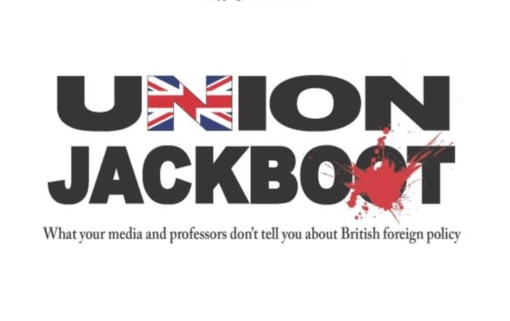
By T.J. COLES and Matthew ALFORD | CounterPunch | November 6, 2018
In their new book Union Jackboot: What Your Media and Professors Don’t Tell You About British Foreign Policy (Até Books), doctors T.J. Coles and Matthew Alford debate the rationale of Anglo-American policy towards Russia.
Alford: There seems to be a consensus that we need a strong military because Russia is on the rise. What do you think about that rationale?
Coles: There’s no consensus, except among European and American elites. Europe and America are not the world.
There are a lot of issues to consider with regards to Russia. Is it a threat? If so to whom? What kind of threat is Russia? So let’s consider these questions carefully. As far as the British establishment is concerned, Russia is an ideological threat because it is a major power with a substantial population. It’s also self-reliant where oil and gas is concerned, unlike Britain. So there’s lots of potential for Russian political ideology to undermine Britain’s status. In fact, there are European Council on Foreign Relations papers saying that Putin’s Russia presents an “ideological alternative” to the EU.[i] And that’s dangerous.
Britain, or more accurately its policymaking elites, have considered Russia a significant enemy for over a century. Under the Tsar, the so-called Great Game was a battle for strategic resources, trading routes, and so on. The historian Lawrence James calls this period the first Cold War, which went “hot” with the Crimean War (1853-56).[ii] Britain had a mixed relationship with the Tsars because, on the one hand, theirs’ were repressive regimes and Britain tended to favour repressive regimes, hence their brief alliance with Russia’s enemy, the Ottomans. On the other hand, Russia was a strategic threat to Britain’s imperial interests, and thus the Crimean War (1853-56).
When the Bolsheviks took over Russia, beginning 1917, the relationship became much less ambiguous – Russians, and especially Bolsheviks, were clearly the enemy. Their ideology posed a threat internally. So Winston Churchill, who began as a Liberal and became a Conservative, considered the Labour Party, which was formed in 1900, as basically a front for Bolsheviks.[iii] That shows the level of paranoia among elites. The Labour Party, at least at the beginning, was a genuine, working man’s political organisation – women couldn’t vote then, remember. So by associating this progressive, grassroots party representing the working classes as an ideological ally or even puppet of the brutal Bolshevik regime, the Tories had an excuse to undermine the power of organised, working people. So you had the Zinoviev letter in 1924, which we now know was a literal conspiracy between the secret services and elements of the Tory party to fabricate a link between Labour and Moscow. And it famously cost Labour the general election, since the right-wing, privately-owned media ran with the story as though it was real. It’s an early example of fake news.[iv]
That’s the ideological threat that Russia has posed, historically. But where there’s a threat, there’s an opportunity. The British elites exploited the “threat” then and as they do today by associating organised labour with evil Bolshevism and, in doing so, alienate the lower classes from their own political interests. Suddenly, we’ve all got to be scared of Russia, just like in 1917. And let’s not forget that Britain used chemical weapons – M-Devices, which induced vomiting – against the Bolsheviks. Chemical weapons were “the right medicine for the Bolshevist,” in Churchill’s words. This was in 1919, as part of the Allied invasion of Russia in support of the White Army. [v]
So if we’re talking about the historical balance of forces and cause and effect, Britain not Russia initiated the use of chemical weapons against others. But this history is typically inverted to say that Russia poses a threat to the West, hence all the talk about Novichok, the Skripals, and Dawn Sturgess, the civilian who supposedly came into contact with Novichok and died in hospital a few days later.
The next question: What sort of threat is Russia? According to the US Army War College, since the collapse of the Soviet Union and since pro-US, pro-“free market” President Boris Yeltsin resigned in 1999, Russia has pursued so-called economic nationalism. And the US doesn’t like this because markets suddenly get closed and taxes are raised against US corporations.[vi] That’s the real threat. But you can’t tell the public that: that we hate Russia because they aren’t doing what we say. If you look through the military documents, you can find almost nothing about security threats against the US in terms of Russian expansion, except in the sense that “security” means operational freedom. You can find references to Russia’s nuclear weapons, though, which are described as defensive, designed “to counter US forces and weapons systems.”[vii] Try finding that on the BBC. I should mention that even “defensive” nukes can be launched accidentally.
The real goal with regards to Russia is maintaining US economic hegemony and the culture of open “free markets” that goes with it, while at the same time being protectionist in real life. (US protectionism didn’t start under Trump, by the way.) Liberal media like the New York Times run sarcastic articles about Russian state oil and gas being a front for Putin and his cronies. And yes, that may be true. But what threat is Russia to the US if it has a corrupt government? The threat is closing its markets to the US. The US is committed to what its military calls Full Spectrum Dominance. So the world needs to be run in a US-led neoliberal order, in the words of the US military, “to protect US interests and investment.”[viii] But this cannot be done if you have “economic nationalism,” like China had until the “reforms” of the ‘70s and ‘80s, and still has today to some extent. Russia and China aren’t military threats. The global population on the whole knows this, even though the domestic US and British media say the opposite.
Alford: What about military threats?
Coles: The best sources you can get are the US military records. Straight from the horse’s mouth. The military plans for war and defence. They have contingencies for when political situations change. So they know what they’re talking about. There’s a massive divide between reality, as understood from the military records, and media and political rhetoric. Assessments by the US Army War College, for instance, said years ago that any moves by NATO to support a Western-backed government in Ukraine would provoke Russia into annexing Crimea. They don’t talk about Russia spontaneously invading Ukraine and annexing it, which is the image we get from the media. The documents talk about Russia reacting to NATO provocation.[ix]
If you look at a map, you see Russia surrounded by hostile NATO forces. The media don’t discuss this dangerous and provocative situation, except the occasional mention of, say, US-British-Polish war-gaming on the border with Russia. When they do mention it, they say it’s for “containment,” the containment of Russia. But to contain something, the given thing has to be expanding. But the US military – like the annual threat assessments to Congress – say that Russia’s not expanding, except when provoked. So at the moment as part of its NATO mission, the UK is training Polish and Ukrainian armed forces, has deployed troops in Poland and Estonia, and is conducting military exercises with them.[x]
Imagine if Scotland ceded from the UK and the Russians were on our border conducting military exercises, supposedly to deter a British invasion of Scotland. That’s what we’re doing in Ukraine. Britain’s moves are extremely dangerous. In the 1980s, the UK as part of NATO conducted the exercise, Operation Able Archer, which envisaged troop build-ups between NATO and the Warsaw Pact countries. Now-declassified records show that the Russians briefly mistook this exercise for a real-world scenario. That could have escalated into nuclear war. This is very serious.[xi]
But the biggest player is the USA. It’s using the threat of force and a global architecture of hi-tech militarism to shape a neoliberal order. Britain is slavishly following its lead. I doubt that Britain would position forces near Russia were it not for the USA. Successive US administrations have or are building a missile system in Europe and Turkey. They say it’s to deter Iran from firing Scud missiles at Europe. But it’s pointed at Russia. It’s a radar system based in Romania and Turkey, with a battery of Patriot missiles based in Poland. The stationing of missiles there provoked Russia into moving its mobile nuclear weapons up to the border in its Kaliningrad exclave, as it warned it would do in 2008.[xii] Try to find any coverage of that in the media, except for a few articles in the print media here or there. If Western media were interested in survival, there would be regular headlines: “NATO provoking Russia.”
But the situation in Ukraine is really the tipping point. Consider the equivalent. Imagine if Russia was conducting military exercises with Canada or Mexico, and building bases there. How would the US react? It would be considered an extreme threat, a violation of the UN Charter, which prohibits threats against sovereign states.
Alford: So we’ve extended NATO to pretty much the Russian border? But there’s a hard border there. Everyone knows we’re never going to attack Russia, both for reasons of morality and self-preservation. So maybe this situation is safer than you imply.
Coles: There’s no morality involved. States are abstract, amorphous entities comprised of dominant minorities and subjugated majorities who are conditioned to believe that they are relatively free and prosperous. The elites of those states act both in their self-interests – career, peer-pressure, kickbacks, and so on – and in the interests of their class, which is of course tied to international relations because their class thrives on profiting from resource exploitation. So you can’t talk about morality in this context. Only individuals can behave morally. The state is made up of individuals, of course, but they’re acting against the interests of the majority. As we speak, they are acting immorally– or at least amorally – but creating the geopolitical conditions that imperil each and every one of us.
As for invasion, we’re not going to invade Russia. This isn’t 1918. Russia has nuclear weapons and can deter an invasion. But that’s not the point. Do we want to de-escalate an already tense geopolitical situation or make it worse to the point where an accident happens? So while it’s not about invading Russia directly, the issue is about attacking what are called Russia’s “national interests.” Russia’s “national interests” are the same as the elites’ of the UK. National interest doesn’t mean the interests of the public. It means the interests of the policy-making establishment and the corporations. For example, the Theresa May government sacrificed its own credibility to ensure that its Brexit White Paper (2018) appeased both the interests of the food and manufacturing industries that want a soft Brexit – easy trade with the EU – and the financial services sector which wants a hard Brexit – freedom from EU regulation. Everyone else be damned. That’s the “national interest.”
So for its real “national interest,” Russia wants to keep Ukraine in its sphere of influence because its oil and gas to Europe pass through Ukraine. About 80% of Russia’s export economy is in the oil and gas sector. It’s already had serious political tensions with Ukraine, which on several occasions hasn’t paid its energy bills, so Russia has cut supplies. If Europe can bump Ukraine into its own sphere of influence it has more leverage over Russia. This is practically admitted in Parliamentary discussions by Foreign Office ministers, and so forth.[xiii] Again, omitted by the media. Also, remember that plenty of ethnic Russians live in eastern Ukraine. In addition, Russia has a naval base in Crimea. That’s not to excuse its illegal action in annexing Ukraine, it’s to highlight the realpolitik missing in the media’s coverage of the situation.
T. J. Coles is a postdoctoral researcher at Plymouth University’s Cognition Institute and the author of several books.
Matthew Alford teaches at Bath University in the UK and has also written several books. Their latest is Union Jackboot (Até Books).
SOURCES
[i] Mark Leonard and Nicu Popescu (2007) ‘A Power Audit of EU-Russia Relations’ European Council on Foreign Relations, Policy Paper, p. 1.
[ii] ‘Anglo-Russian relations were severely strained; what was in effect a cold war lasted from the late 1820s to the beginning of the next century’. The Crimean War seems to have set a precedent for today. James writes:
[It] was an imperial war, the only one fought by Britain against a European power during the nineteenth century, although some would have regarded Russia as essentially an Asiatic power. No territory was at stake; the war was undertaken solely to guarantee British naval supremacy in the Mediterranean and, indirectly, to forestall any threat to India which might have followed Russia replacing Britain as the dominant power in the Middle East.
Lawrence James (1997) The Rise and Fall of the British Empire London: Abacus, pp. 180-82.
[iii] Churchill said in 1920:
All these strikes and rumours of strikes and threats of strikes and loss and suffering caused by them; all this talk of revolution and “direct action” have deeply offended most of the British people. There is a growing feeling that a considerable section of organized Labour is trying to tyrannize over the whole public and to bully them into submission, not by argument, not by recognized political measures, but by brute force …
But if we can do little for Russia [under the Bolsheviks], we can do much for Britain. We do not want any of these experiments here …
Whether it is the Irish murder gang or the Egyptian vengeance society, or the seditious extremists in India, or the arch-traitors we have at home, they will feel the weight of the British arm.
Winston Churchill (1920) Bolshevism and Imperial Sedition. Speech to United Wards Club. London: The International Churchill Society.
[iv] The fake letter says:
A settlement of relations between the two countries [UK and Russia] will assist in the revolutionising of the international and British proletariat, … [and] make it possible for us to extend and develop the propaganda and ideas of Leninism in England and the colonies.
It also says that ‘British workmen’ have ‘inclinations to compromise’ and that rapprochement will eventually lead to domestic ‘[a]rmed warfare’. It was leaked by the services to the Conservative party and then to the media. Richard Norton-Taylor (1999) ‘Zinoviev letter was dirty trick by MI6’ Guardian and Louise Jury (1999) ‘Official Zinoviev letter was forged’ Independent. For media coverage at the time, see James Curran and Jean Seaton (1997) Power without ResponsibilityLondon: Routledge, p. 52.
[v] Paul F. Walker (2017) ‘A Century of Chemical Warfare: Building a World Free of Chemical Weapons’ Conference: One Hundred Years of Chemical Warfare: Research, Deployment, Consequences pp. 379-400 and Giles Milton (2013) Russian Roulette: A Deadly Game: How British Spies Thwarted Lenin’s Global Plot London: Hodder, eBook.
[vi] ‘The Russian Federation has shown repeatedly that common values play almost no role in its consideration of its trading partners’, meaning the US and EU. ‘It often builds relationships with countries that most openly thwart Western values of free markets and democracy’, notably Iran and Venezuela. ‘In this regard, the Russian Federation behaves like “Russia Incorporated.” It uses its re-nationalized industries to further its wealth and influence, the latter often at the expense of the EU and the U.S.’. Colonel Richard J. Anderson (2008) ‘A History of President Putin’s Campaign to Re-Nationalize Industry and the Implications for Russian Reform and Foreign Policy’ Senior Service College, US Army War College, Pennsylvania: Carlisle Barracks, p. 52.
[vii] Daniel R. Coats (2017) Statement for the Record: Worldwide Threat Assessment of the US Intelligence CommunitySenate Select Committee on Intelligence, Washington, DC: Office of the Director of National Intelligence, pp. 18-19.
[viii] US Space Command (1997) Vision for 2020 Colorado: Peterson Air Force Base.
[ix]The document also says: ‘a replay of the West-sponsored coup against pro-Russian elites could result in a split, or indeed multiple splits, of the failed Ukraine, which would open a door for NATO intervention’.Pavel K. Baev (2011) ‘Russia’s security relations with the United States: Futures planned and unplanned’ in Stephen J. Blank (ed.) Russian Nuclear Weapons: Past, Present, and Future Strategic Studies Institute Pennsylvania: Carlisle Barracks, p. 170.
[x] Forces Network (2016) ‘British troops to deploy to Poland’.
[xi] For example, Nate Jones, Thomas Blanton and Christian F. Ostermann (2016) ‘Able Archer 83: The Secret History’ Nuclear Proliferation International History Project Washington, DC: Woodrow Wilson International Center for Scholars.
[xii] It was reported in the ultra-right, neo-con press at the time that:
[Russian] President Dmitri Medvedev announced in his first state-of-the-nation address plans to deploy the short-range SS-26 (“Iskander”) missiles in the Russian exclave of Kaliningrad if the U.S. goes ahead with its European Ballistic Missile Defense System (BMDS). Medvedev told parliament that the deployment would “neutralize” U.S. plans for a missile defense shield based in Poland and the Czech Republic [now in Romania), which the U.S. claims as vital in defending against missile attacks from ‘rogue states’ such as Iran.
Neil Leslie (2008) ‘The Kaliningrad Missile Crisis’ The New Atlanticist, available at atlanticcouncil.org.
[xiii] For example, a Parliamentary inquiry into British-Russian relations says of the newly-imposed US-British ally in Ukraine:
President Poroshenko’s Government is more openly committed to economic reform and anti-corruption than any previous Ukrainian Administration. The reform agenda has made considerable progress and has enjoyed some successes including police reform, liberalisation of the energy market and the launch of an online platform for government procurement …
The annexation of Crimea also resulted in a ban on importing products from Crimea, on investing in or providing services linked to tourism and on exporting certain goods for use in the transport, telecoms and energy sectors.
House of Commons Foreign Affairs Committee (2017) The United Kingdom’s relations with Russia Seventh report of session 2016-17, HC 120 London: Stationary Office, pp. 28, 31.
The New Cold War may never arrive
By M. K. BHADRAKUMAR | Indian Punchline | October 28, 2018
An old Italian friend and a noted Sinologist based in Beijing representing a Vatican paper, Francesco Sisci wrote apropos an article I had posted on Facebook yesterday Donald Trump Meets the End of the Empire authored by Douglas Macgreggor, an ex-US Army decorated combat veteran and an author (National Interest, October 24, 2018):
“Napoleon famously said three things win a war: money, money, money. The word “soldier” comes from soldo, the pay of the soldiers in the renaissance. If the US doesn’t straighten its economy what can it do globally? And if it doesn’t soon, what will China do? With WW 2 the solution in some countries was the war that canceled all debts with massive inflation…”
To my mind, the last sentence in Sisci’s observation will be a last-ditch option for President Trump, because if it fails, that may also mean the end of the United States of America as a nation. And Trump has a rational mind, as his attitude toward Kim Jong-Un or Mohammed bin Salman would testify.
I discount World War 3 in the thermonuclear age. Rivalries will play out below the threshold of wars in which there are no winners.
World nuclear war scenario
That is what makes Macgregor’s article noteworthy. The signs are that Trump is already thinking in terms of cuts in budget expenditure, including the defence budget. In a pithy sentence, Macgreggor highlights the paradigm: “Get ready. “America first” in foreign and defense policy is about to begin. Defense cuts are on the way.”
Macgreggor gives food for thought for Indian pundits who are wildly ecstatic that a US-China New Cold War is about to erupt, which will provide India a historic opportunity to emerge as America’s “counterweight” to China in the Asian context. This is actually a hackneyed thesis dating back to the late K. Subrahmanyam. The George W. Bush presidency brilliantly succeeded in drilling into the mind of the wooly-headed Indians a seductive thought that the US is determined to make a first class world power out of India.
But realism dawned when it became obvious that Barack Obama’s ‘pivot to Asia’ was not getting anywhere. The idea became moribund when President Trump arrived in Asia in November 2016 in a watershed regional tour to explain to a stunned ASEAN and Asia-Pacific audience that he’s dead serious about America First.
Of late, Trump’s ‘tariff war’ with China has lifted the sagging morale of our pundits, many of whom are disillusioned with the Wuhan summit between Modi and Xi Jinping and yearning for a New Cold War. They blithely assume that the logical conclusion of the ‘tariff war’ will be the New Cold War. It doesn’t occur to them that while Trump is mad, there is also a method in his madness. There’s more than a 50:50 chance that the ‘tariff war’ may end before the campaign for the US presidential election 2020 peaks – with Trump declaring ‘victory’, of course, as he did on DPRK’s denuclearization and missile capability.
At any rate, for argument’s sake, is the contemporary world situation ripe for the US to launch a New Cold War against China (or Russia for that matter)? Unlike in the Cold War era of the past century, there is no bipolar struggle on a global scale today. It is impossible to persuade most countries to come to the barricades when they are grappling with their own national priorities – and for most of them China also happens to be the main driver of growth and development, be it in Latin America or Africa or the Asia-Pacific.
The US cannot inject ideology into its competition with China. On the one hand, China is an avid globalizer and proponent of free trade and WTO and a flag carrier at the Davos World Economic Forum, while on the other hand, US’ claim to ‘exceptionalism’ no longer carries credibility with the world community. Meanwhile, the entente with Russia, the alliance with Pakistan, the interdependency with European economies, the diversified relationships in the Middle East and Africa, etc. give China so much ‘strategic depth’ that it is impossible to ‘isolate’ it.
Most important, unlike the former Soviet Union, China understands the mystique of the market and how to leverage it. By the way, a cold war also costs money. Who will step forward to finance the New Cold War? Mohammed bin Salman? No way. Trump himself is notoriously averse to opening his wallet. The Bretton Woods institutions have outlived their utility, too.
From a historical perspective, presiding over a great power in decline is a very difficult thing to handle. Trump is doing remarkably well in the given situation. His tantrums and grandstanding are expedient, diversionary steps become necessary through bluster and rhetoric, but he’s largely getting away with it. The bottom line is, Trump has not started any new war – and to my mind, he has no intentions, either. A withdrawal from Syria, drawdown in Afghanistan and an end to the carnage in Yemen – incidentally, all these were legacies of the Obama era – are on cards.
The intolerable tensions vis-à-vis North Korea (which, again, were an old festering wound) have been dying down – and Trump was willing to take a lot of flak for it in terms of personal attacks and lampooning by detractors.
In sum, Trump has been largely navigating with his America First compass. In the coming period, this can only become more explicit, especially if Trump gets through the November 6 midterm elections intact with no big shift against him in the power equilibrium in the US Congress enabling a further consolidation of his grip on the Republican Party.
US Ramstein Airbase in Germany Receives Biggest Ammo Shipment in Almost 20 Years
Sputnik – 27.10.2018
Ramstein is the largest overseas US air base in the world and is used as a hub for many of its operations, including drone strikes. The base has repeatedly drawn protests in Germany, with the latest taking place in July, 2018.
The US 86th Munitions Squadron at Ramstein Air Base, Germany received some 100 containers with a variety of munitions during the course of October, which is the largest US ammo shipment to Europe since the operation in Yugoslavia in 1999.
Master Sgt. Arthur Myrick, 86th MUNS munitions flight chief, said that the shipment will be used to “support NATO’s European Deterrence Initiative (EDI) and augment the Air Force’s War Reserve Materiel in Europe.”
According to Ramstein officials, the shipment is also expected to increase the responsiveness and readiness of US forces at the Ramstein base by pre-positioning ammunition, fuel and equipment to enable a “rapid response against threats made by aggressive actors.”
“We’re a major airlift hub for U.S. Air Forces in Europe-Air Forces Africa, so our main job is to get munitions where they need to be on time. These are real-world munitions to fulfill real-world objectives. That’s the reason we are downloading these things: to make sure we have the capability to move the fight forward if need be,” Myrick said.
The last time such a major shipment was delivered to Ramstein was prior to Operation Allied Force in 1999, during which the US Air Force conducted some 900 air raids against then Yugoslavia. The 78 day long aerial campaign, which was not authorized by the UN Security Council, claimed the lives of around 500 civilians, according to Human Rights Watch, and resulted in widespread destruction of the country’s infrastructure.
Ramstein Air Base in Germany is the largest foreign US military base and is a major center for Washington’s overseas military operations. The base was home to American nuclear weapons, but they were reportedly pulled out in 2005. The air base regularly faces criticism from the German public, which demands that it be closed. One of the most recent protests against the US base took place on July 2, 2018, soon after US President Donald Trump said that he was considering a possible withdrawal of American forces from the country.
Featured Video

Iran’s Next Strike May Not Explode. It Could Shut You Down
or go to
Aletho News Archives – Video-Images
From the Archive
Zionism’s Violent Legacy
By Donald Neff | Washington Report On Middle East Affairs | January 1996
On January 4, 1948, Jewish terrorists drove a truck loaded with explosives into the center of the all Arab city of Jaffa and detonated it, killing 26 and wounding around 100 Palestinian men, women and children.[1] The attack was the work of the Irgun Zvai Leumi – the “National Military Organization,” also known by the Hebrew letters Etzel – the largest Jewish terrorist group in Palestine. The Irgun was headed by Revisionist Zionist Menachem Begin and had been killing and maiming Arabs, Britons and even Jews for the previous ten years in its efforts to establish a Jewish state.
This terror campaign meant that at the core of Revisionist Zionism there existed a philosophical embrace of violence. … continue
Blog Roll
 Aletho News
- Trump’s Iran war is on an Israeli leash
- Saudi oil boss issues global supply warning
- Riyadh Says Its Oil System Is Intact. The Numbers Say Otherwise.
- Trump and Netanyahu Want to “Finish the Job” on Iran
- US ‘one-sided dictation’ not Iran’s beliefs makes rational talks impossible: Baghaei
- Iran’s Next Strike May Not Explode. It Could Shut You Down /Col Doug Macgregor
- Iran: US political targets legitimate if assassinations return
- Iraq shuts key border crossing with Iran under US pressure: Report
- Undersea Internet cables could be targeted in retaliation for attacks on Iran: IRGC deputy chief
- EU sending ‘biased’ observers to interfere in Serbian election – president
- If Americans Knew
- The Israel Lobby’s Changing Fortunes
- AIPAC has become such a political liability that it’s shifting to a more “nimble” approach to buying politicians
- At least 160 Israeli settler attacks in 2 weeks
- Will Gaza’s Ancient Christian Community Disappear Forever?
- Israel’s vision of regional security rests on keeping Arab states weak
- Heidi Levine recounts how Palestinian youths helped save her in settler attack
- DAILY UPDATE: Latest essential news on Palestine, Israel, & region
- Trump’s Intensifying Sabotage of the ICC, for Israel’s Sake
- Israeli military detain US and UK volunteers in West Bank including Democratic NY politician Brad Lander
- Americans at National Conservatism Conference held in Israel this year criticize Israel
- No Tricks Zone
- E-Cars Reduce CO2 Emissions By Only 41% Compared To Internal Combustion Engine Vehicles
- Predictions Made By Renowned Climate Professor Over Past Decades Have Been Proven To Be Poor
- New Study Suggests Large Regions Of The Pacific Ocean Have Been Cooling For The Last 80 Years
- Germany’s Green Energy Debacle: High Energy Costs Force Kahla Porzellan to Close After 182 Years!
- New Study: 50 Years Of The Most Aggressive ‘Net Zero’ Policies Can Only Affect The Global Climate By 0.03°C
- US September “Heat” Was No Record…Many Records Set Decades Ago
- Latest European Green Energy Debacle; Portugal’s Largest Flagship Solar Park Insolvent!
- Green Energy Debacle: German Expert Professor Fritz Vahrenholt Warns Of Severe Economic And Social Consequences
- Two More Paleo Reconstructions Affirm Meters-Higher Sea Levels Across Ireland, Brazil 7000-6000 Years Ago
- New Study: Earth And Venus Surface Warmth Largely Explained By Convection And Lapse Rate, Not CO2 Or Radiation

