The Trump Administration is Lying About American Casualties in the Persian Gulf Region
By Larry C. Johnson | Ron Paul Institute | March 7, 2026
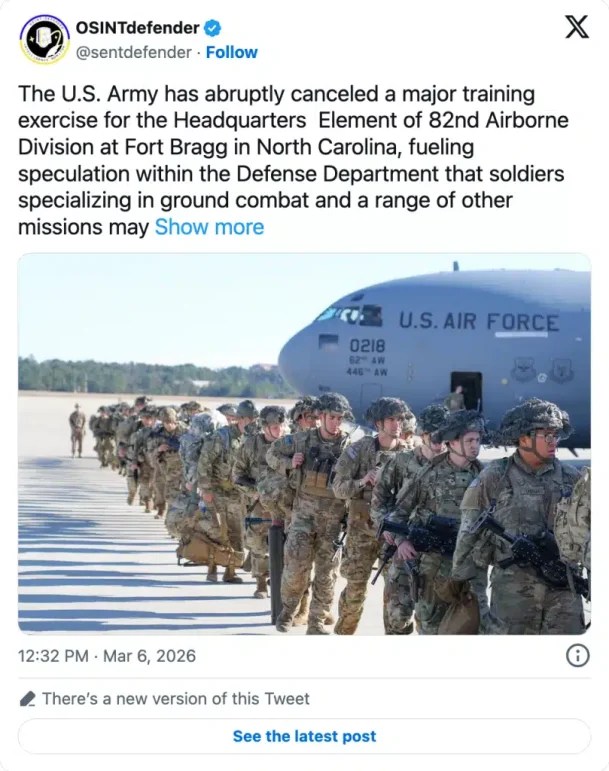
First let me explain the meaning of the X message and photo that appears above… the cancellation of the training exercise is a key indicator that the Pentagon is going to deploy some, if not all, of the 82nd Airborne Division to the Persian Gulf. Final destination unknown. You may recall an article I wrote on February 18 when I reported that a CENTCOM exercise scripting conference, which was scheduled to begin on Sunday, 22 February 2026, had been abruptly cancelled. Six days later the war started.
The imminent deployment of the 82nd does not mean they are going into battle in the next couple of days. I expect it will be at least two weeks before they reach their base camp. However, this does mean that Trump and Hegseth were not just making an idle comment when they mentioned putting boots on the ground.
Despite the Trump administration’s efforts to downplay US casualties after seven days of war in the Persian Gulf, clues are appearing on the internet that indicate the US has suffered more combat losses than reported. The first clue is this Xhitter (pronounced SHITTER) from Stars and Stripes.
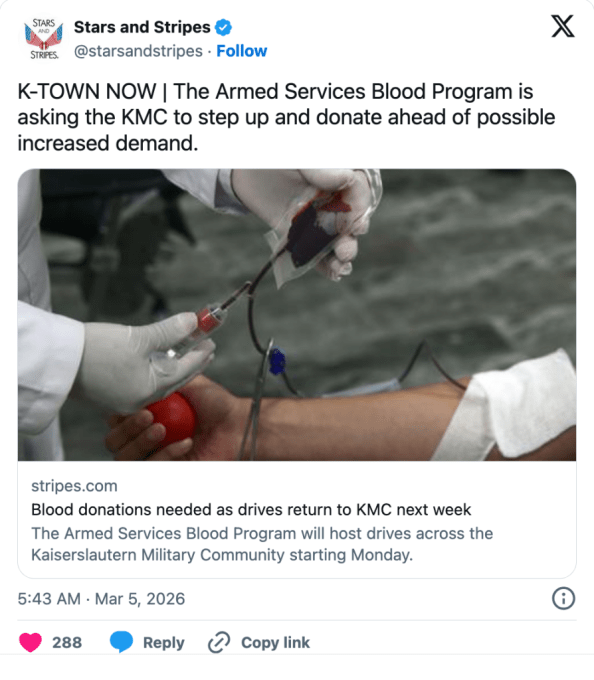
K-Town refers to Kaiserslautern, a US Army base in Germany, which is located 13 miles east of the Landstuhl Regional Medical Center. So what? Well, on March 4, 2026 the Landstuhl Regional Medical Center (LRMC) in Germany—the largest US Department of Defense hospital outside the United States and the primary overseas trauma/evacuation hub for injured service members from Europe, the Middle East, and Africa—sent out a memo announcing the temporary suspension of its labor and delivery services “until further notice.” The memo did not explicitly define the “primary objective,” but LRMC’s core role is treating combat- and training-related injuries. It also is the main medical evacuation point for wounded troops from ongoing operations.
A knowledgeable friend who supervised DOD’s Wounded Warrior Program during the Iraq and Afghanistan Wars and worked with personnel at the LRMC, learned today that there is a flood of casualties arriving at the hospital. The numbers are so large that the hospital could no longer continue to spend resources on birthing babies.
Then this picture popped up on Telegram a little bit ago:
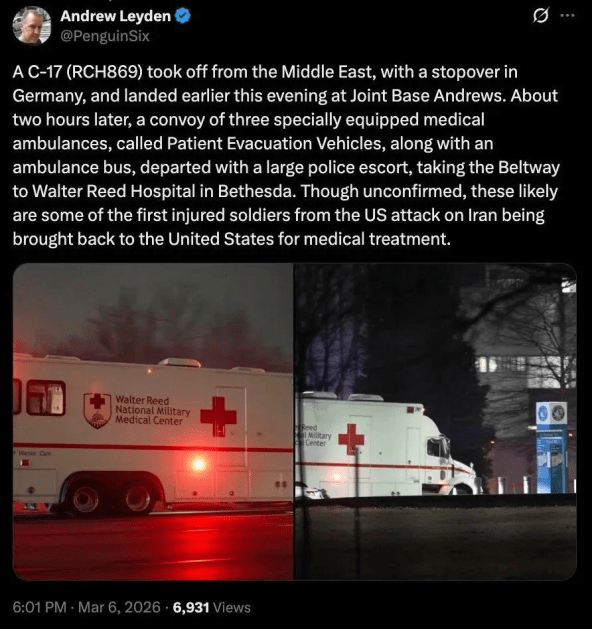
It is not a stretch to conclude that Iran’s attacks on the US bases in the Persian Gulf produced more than a few casualties. DOD/DOW is working hard to keep this information from the public. Most Americans do not support the unprovoked war… This is likely to fuel more opposition.
Hezbollah Foils Israeli Landing in Lebanon’s Bekaa
Al-Manar | March 7, 2026
Hezbollah foiled an Israeli landing in the town of Nabi Sheet in the eastern Lebanese region of Bekaa before dawn overnight on Friday-Saturday.
Hezbollah’s Military Media said Islamic Resistance fighters observed four Israeli enemy helicopters infiltrating from the Syrian direction and landing an Israeli infantry force at the mountainous triangle linking the towns of Yahfoufa, Khraibeh, and Maaraboun.
“The enemy unit then advanced toward the eastern neighborhood of Nabi Sheet, (Al-Shukr). At 11:30 AM, upon reaching the cemetery area, the Israeli force was engaged by a group of resistance fighters using light and medium weapons, triggering a fierce clash after the infiltrating force was exposed,” the Military Media’s first statement for Saturday read.
As the confrontation intensified, the Israeli enemy unleashed heavy firepower, launching around forty airstrikes by warplanes and helicopters, to cover the withdrawal of its troops from the engagement zone, according to the statement.
Meanwhile, Hezbollah resistance artillery delivered concentrated fire with appropriate weapons on the perimeter of the battlefield and along the enemy’s withdrawal route, while residents of nearby villages joined in providing supporting fire, the first statement added.
The video shows exchange of fire between resistance fighters and Israeli enemy forces in Nabi Sheet.
In another statement, the third one on Saturday, Hezbollah’s Military Media said: “In response to the enemy’s landing in the Bekaa region, the Islamic Resistance fighters targeted the evacuation area in the outskirts of Nabi Sheet with rocket barrages at 04:15 on Saturday.”
Hebrew media reported that Israeli forces attempted to withdraw after resistance forces revealed the military activity in eastern Lebanon, and that Israeli warplanes and helicopters eventually retreated from the area after the failed airborne landing attempt.
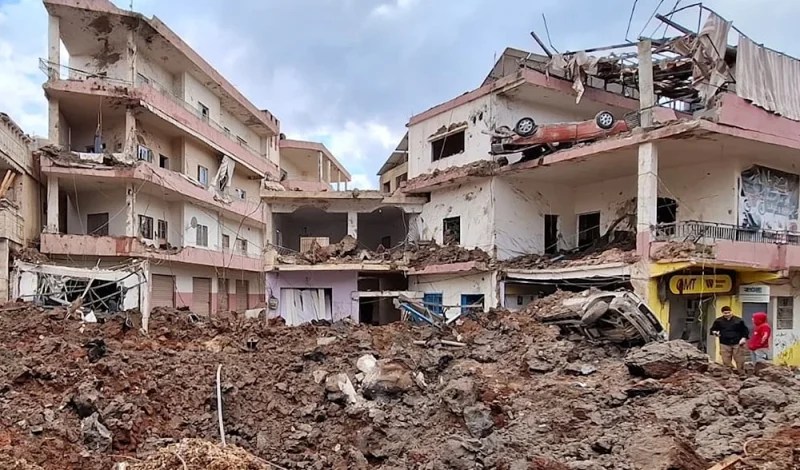
Another video shows heavy destruction in the town of Nabi Sheet after the Israeli landing.
Lebanese Heaslth Ministry announced that the Israeli assault on Nabi Sheet led to martyrdom of 16 people and the injury of 53 others.
US approves $151.8M weapons sale to Israel, waiving congressional review
MEMO | March 7, 2026
The Trump administration approved a possible $151.8 million weapons sale to Israel on Friday, invoking “emergency” authority to waive the congressional review requirements as Washington and Israel continue to attack Iran, Anadolu reports.
According to a statement from the State Department’s Bureau of Political-Military Affairs, the proposed sale includes 12,000 BLU-110A/B general purpose, 1,000-pound bomb bodies, along with engineering, logistics and technical support services.
“The Secretary of State has determined and provided detailed justification that an emergency exists that requires the immediate sale to the Government of Israel,” the agency said, waiving the congressional review requirements under Section 36(b) of the Arms Export Control Act.
The principal contractor for the proposed sale will be Repkon USA, based in Garland, Texas, with part of the bomb bodies expected to be transferred from existing US stock, said the statement.
The approval comes amid escalating regional tensions following joint US-Israeli airstrikes on Iran launched Feb. 28, killing more than 1,000 people, including Supreme Leader Ali Khamenei, over 150 schoolgirls and senior military officials.
The conflict has triggered widespread regional instability and retaliatory attacks from Tehran against US-linked sites across the region. A drone strike in Kuwait killed six US service members at a tactical operations center.
The move also comes as criticism in Congress about US arms transfers to Israel has grown during Israel’s genocidal war on the Gaza Strip. In July, a record 27 Democratic senators voted in favor of a resolution to block certain weapons sales to Israel, citing concerns about civilian casualties and a humanitarian crisis in Gaza, though the measure ultimately failed.
Majority of Israelis Back War with Iran as Anti-War Minority Faces Stigmatization
teleSUR | March 7, 2026
Israelis who oppose the war with Iran face threats and stigmatization, according to testimonies collected by a Spanish news agency. However, they represent a small minority, as 93% of Jewish Israelis support the offensive, a new poll by the Israel Democracy Institute (IDI) shows.
“Opposing the war and war crimes in Israel is practically a punishable offense. Even leftists and pacifists consider this a ‘just war,’” Adam Eli, secretary of the Jewish-Arab leftist coalition Hadash in Tel Aviv said.
Among those few critics is 19-year-old activist Itamar Greenberg, known in Israel for refusing to serve in the military in 2024. That decision, he recounted, cost him six months in prison and ostracism at his university, where he still leads a student circle while studying law.
Nearly one year after walking out of prison, Greenberg found himself back in custody on Tuesday for attending an anti-war rally that barely mustered 20 people across a nation of 10 million.
“About 40 police officers charged at us, confiscated our signs, and beat us. I was arrested and stripped naked for a search,” Greenberg said. He is also the founder of Mesarvot, a network of Israeli youth refusing military service.
An anti-war demonstration scheduled for Saturday at Habima Square in Tel Aviv will test wartime restrictions that cap gatherings at 50 people.
Meanwhile, restrictions on the right to assembly have been applied loosely during recent Purim celebrations—a sort of Jewish carnival—while Israeli authorities continue to bar Palestinians from praying at Al Aqsa Mosque despite Ramadan, and have militarily sealed off much of the West Bank.
Stanislav Krapivnik: Russia-Iran Cooperation & Escalation in Ukraine
Glenn Diesen | March 6, 2026
Stanislav Krapivnik is a former US Army officer, supply chain exec and military-political expert, now based in Russia. He was born in Lugansk during the Soviet times, migrated to the US as a child and served in the US army. Krapivnik discusses how Russia cooperates with Iran, and why the Iran War is creating immense pressure on Putin to escalate.
Follow Prof. Glenn Diesen:
- Substack: https://glenndiesen.substack.com/
- X/Twitter: https://x.com/Glenn_Diesen
- Support the research by Prof. Glenn Diesen: PayPal: https://www.paypal.com/paypalme/glenn…
- Buy me a Coffee: buymeacoffee.com/gdieseng Go Fund Me: https://gofund.me/09ea012f
- Books by Prof. Glenn Diesen: https://www.amazon.com/stores/author/…
US Boasts of Destroyed Iranian Launchers Lack Credibility – Ex-DoD Official
Sputnik – 06.03.2026
As the United States is clearly lying about the number of the US military casualties in the current war with Iran, the veracity of other claims made by the US is dubious, former US Department of Defense officer David T. Pyne tells Sputnik.
Properly assessing Iran’s losses is also difficult due to the fact that it is unclear whether US claims of destroyed Iranian missile launchers take into account the decoys and dummy targets, he points out.
“I believe that US estimates of the total number of Iranian ballistic missiles are likely much lower than is actually the case as I believe Iran may have tens of thousands of missiles in its stockpile,” Pyne adds.
Finally, even though the US and Israel did manage to take out a number of Iranian mobile missile launchers, Iran’s military has become adept at keeping its remaining launchers out of harm’s way.
Thus, reasons Pyne, it is likely that most of the Iranian missile launchers – especially those hidden deep underground – “will survive the war” even if it drags on for months.
US Shortages and Israel’s Weakness
Meanwhile, the US and Israel now deal with their “very limited supply” of offensive missiles and missile defense interceptors alike, with the latter potentially running out by next week, says Pyne.
The US could soon find itself unable to defend all of its assets from Iranian attacks, even as Iran is systematically dismantling US radar capabilities in the region, further degrading the US ability to shoot down Iranian missiles.
At the same time, Israeli air defenses have proven to be “largely ineffective” against Iranian ballistic and hypersonic missiles.
“In a protracted war of attrition like this war is shaping up to be, Iran is likely to emerge victorious,” Pyne remarks.
Europe not in position to cooperate with US and Israel against Iran
By Ahmed Adel | March 6, 2026
Although the US-Israeli attack on Iran has worsened the crisis in the Middle East, some European countries approved of the operation, such as the United Kingdom, which provided military bases to the Americans, and Germany, which rhetorically supported the offensive through its Chancellor, Friedrich Merz. However, Europe is not cooperating as actively as it was before.
Recent historical experiences, such as the wars in Iraq (2003-2011), Afghanistan (2001-2021), and the military intervention in Libya (2011), have created deep divisions among European countries regarding military actions outside their continent. Moreover, the European Union already dedicates substantial resources to Ukraine in its conflict with Russia. In this context, the economic and military crisis among EU members makes them hesitant to engage in another large-scale armed conflict.
The timing is not very favorable for the Europeans. They are facing an economic crisis mainly caused by energy prices. The EU is attempting to wean off Russian energy without harming itself, but the strategy ultimately failed, and now that there is war in the Middle East, energy prices have spiked even more.
Russian President Vladimir Putin stated on March 4 that Russia could immediately halt the supply of raw materials to European markets, and thus thwarted the EU’s plan to systematically phase out Russian gas. Putin’s words caused psychological trauma to the EU because, instead of a planned embargo on Russian gas for 2027, he suggested that Europe should prepare for an immediate cut.
The Russian president’s warning and ongoing tensions in the Middle East continue to drive up global energy costs. The price increases mirror developments in international energy markets. Oil and gas prices have risen since the war on Iran began, particularly because it has disrupted shipping through the Strait of Hormuz, one of the world’s most important transit routes for oil and natural gas.
Disruptions to shipping and decreased production by several Gulf states have tightened global supply. As a result, the price of Brent crude, the European benchmark oil, rose to around $84 per barrel on March 5, roughly 16% higher than before the conflict started, and close to its highest level since mid-2024.
Additionally, from a military perspective, Europe knows that its weaponry is not capable of conducting a high-intensity war due to a technical shortfall. At the same time, the EU wants to replace the US as Ukraine’s main benefactor, a corrupt state that drains many of the bloc’s resources.
Another reason for Europeans to remain impartial is the growth of the Muslim population in these countries, which also holds electoral influence and the power to sway domestic policy outcomes. The Muslim population in Europe is quite sizable, and European attacks in the Middle East could face internal opposition. Besides the Muslim community, most European citizens would be largely unwilling to fight for the Americans, especially in a scenario where the US might not achieve its objectives.
Europe uses rhetoric to avoid commitment. In the current context of hostilities in the Middle East, European leaders are not demonstrating a unified stance, even though some rhetorically support Washington and Tel Aviv’s initiatives. However, this behavior indicates a lack of European political cohesion.
London is not following Washington’s lead, something that has not occurred often since the Second World War. Germany is showing support, but lacks the power to act. Spain initially contradicted the White House but then quickly announced that a warship would be deployed to Cyprus in response to threats of sanctions from US President Donald Trump. In other words, Europe is divided and fragmented and therefore cannot act effectively at this moment.
Another obstacle is Iran’s warning that if Europeans join the offensive, there will be a fierce response. Because of this, Washington’s traditional Western allies are becoming mere observers in the region, even though they also have bases near the epicenter of the crisis. European bases are at risk if Europe attacks Iran, and it is a risk they are unwilling to take, besides not wanting to lose money in yet another conflict.
Furthermore, the Europeans are not even trying to mediate the conflict to avoid antagonizing Trump.
A new reconfiguration of the Middle East might happen after this conflict ends. The US could become weaker, which might impact its close ties with Gulf countries. Therefore, Europe might seize the opportunity created by its ally to expand its trade relations.
Nonetheless, Europe is not in a position to cooperate with the US and Israel and is acting opportunistically. They are observing Washington weaken politically in the Middle East, probably aiming to occupy spaces in neighboring countries after this war, because there will be new business opportunities.
In this context, Europe’s struggle to achieve political unity at the continental level is due to differing interests among its governments within the EU, as well as to managing its internal issues. Meanwhile, the bloc’s powers tend to exploit the situation to uphold their rhetoric aligned with Western values, while concealing their military weaknesses.
Ahmed Adel is a Cairo-based geopolitics and political economy researcher.
Iran Has ‘Broken the Myth’ of Israeli Military Power: Former Pakistani Envoy
Sputnik | March 6, 2026
Iran has effectively “broken the myth” of Israeli military supremacy, Asif Durrani, a former Pakistani ambassador to Iran and the UAE, told in an interview with Sputnik.
Despite decades of investment by the United States and Israel in advanced military technology, Iran successfully penetrated the much-vaunted Iron Dome defense system and struck Israeli installations, Durrani noted.
Durrani also condemned the assassination of Iranian Supreme Leader Ayatollah Ali Khamenei, describing it as a highly dangerous escalation. He stressed that such a direct attack on the leader of a sovereign state sets a perilous precedent, one that has not been seen in previous global conflicts.
“Regime change should be in the hands of the Iranian people. No other country has the right to exercise that right. In fact, such attempts are likely to lead to further bloodshed and destruction in Iran,” he affirmed.
Durrani pointed out that despite 47 years of US efforts to topple the Islamic Republic since the 1979 revolution, those attempts have consistently failed. He added that there is currently no sign of a viable internal alternative to the existing government.
Commenting on Pakistan’s reminder to Iran of its alliance commitments to Saudi Arabia following Iranian strikes on Saudi territory, Durrani noted that Pakistan and Saudi Arabia share a historically close relationship. They have signed a strategic partnership agreement under which an attack on one is considered an attack on both. Nevertheless, he emphasized that Pakistan maintains a longstanding policy of promoting cooperation among Muslim nations and expects disputes to be resolved peacefully, particularly with regard to the Sunni world.
The former envoy expressed confidence that Iran will provide an explanation for its decision to strike American bases in Saudi Arabia. He noted that it is understood that if a country hosts military bases, those facilities may become legitimate targets in times of war.
“I hope there will be explanations coming from Iran as well as Saudi Arabia,” the diplomat concluded.
How, and why, US data centers in the Gulf became targets of war
Al Mayadeen | March 6, 2026
The drone strikes that knocked Amazon Web Services facilities offline in the United Arab Emirates and Bahrain this week were not random acts of escalation. They were, according to analysts and industry insiders, a calculated strike on infrastructure that the United States has quietly woven into its military architecture across West Asia.
Amazon and Google hold a $1.2 billion contract with the Israeli government to provide cloud computing and artificial intelligence services to entities, including the Israeli occupation forces.
That contract, largely absent from Western coverage of the strikes, may explain why AWS facilities, and not the dozens of data centers operated by local Gulf companies on behalf of US tech giants, were the ones that were hit.
“It would be easier to target AWS,” Ed Galvin, founder of data center research firm DC Byte, told Bloomberg, noting that other US tech services are typically housed within locally operated facilities, making them harder to identify and strike.
Of approximately 230 data centers built or under development across Gulf Arab states, only a handful are wholly owned and operated by a US company, according to DC Byte. All three struck this week belong to Amazon.
What was hit
The strikes took down two of AWS’s three availability zones in the UAE, one site located near Al Maktoum International Airport in Dubai, according to DC Byte, and damaged a facility in Bahrain situated close to a local military base and the King Fahd Causeway connecting the island to Saudi Arabia.
Consumer services, including online banking, were disrupted across the region. In a statement to clients, AWS said it was working to restore services while urging customers to migrate workloads to data centers outside West Asia, acknowledging that “the broader operating environment in the Middle East remains unpredictable.”
What Western media outlets fail to mention is that the exchange has not been one-sided. “Israel” and the United States have struck at least two data centers in Tehran, according to Holistic Resilience, a nonprofit organisation that maps airstrike activity.
A new front in an old logic
Data centers have entered the battlefield as legitimate targets because they power surveillance systems, drone navigation, real-time analysis of satellite footage, and the digital backbone of modern military operations.
Attacking such facilities can “paralyze banks, paralyze government offices,” Daniel Efrati, chief executive of NED Data Centers, told Bloomberg. “If you have one minute of downtime, it can cost any organization millions.”
Soft targets with hard consequences
The physical vulnerability of these facilities has been laid bare by this week’s strikes. Data centers are sprawling, visible, and dependent on exposed infrastructure, e.g., cooling units, diesel generators, gas turbines, that can be disabled without a direct hit on the building itself.
“If you knock out some of the chillers you can take them fully offline,” Sam Winter-Levy, a fellow at the Carnegie Endowment for International Peace, told the Financial Times. Conventional data center security is designed to repel cyberattacks and physical intruders; it was not designed for drones.
Gulf AI ambitions under fire
The strikes land at a particularly fraught moment for Gulf states whose economic diversification strategies rest heavily on positioning themselves as global AI hubs. Saudi Arabia’s Humain and the UAE’s G42, both state-backed, have committed to vast data center clusters and signed major deals with Nvidia, Amazon, and Microsoft.
The UAE is constructing one of OpenAI’s “Stargate” facilities in Abu Dhabi. Microsoft announced last month it would open a new Azure facility in Saudi Arabia before the end of the year. Those ambitions now carry a new risk premium.
“The Gulf sold itself as a safe alternative to other markets,” Jessica Brandt, a senior fellow at the Council on Foreign Relations, told the Financial Times. “That argument just got harder to make.”
The new table stakes
Harder, but not necessarily fatal. Several analysts caution that the political and economic momentum behind Gulf AI investment is unlikely to be reversed by the strikes alone.
What has changed is the calculus around protection. “You can’t hide data centers,” Noah Sylvia, an analyst at the Royal United Services Institute, told Bloomberg. “But you can put air defence systems on them.”
One industry veteran based in the Gulf compared the situation to Intel’s chip manufacturing plants in “Israel,” ringed by military air defences, telling the Financial Times that for a project of Stargate’s scale, that kind of protection is now “table stakes.”
A global precedent
The broader implication reaches beyond the Gulf. “This is a harbinger of what’s to come,” Winter-Levy told the Financial Times, “and these types of attacks are not going to be limited to the Middle East.”
For the first time in history, the data centers that underpin the global digital economy have become a theater of war. The infrastructure the US built to project technological power across a volatile region has become a target precisely because of what it enables.
Iraq and Cuba hit by blackouts amid US pressure and attacks on Iran
RT | March 5, 2026
Both Iraq and Cuba have been plunged into nationwide blackouts, with the Middle Eastern country’s grid collapsing after a sudden drop in gas supplies to a major power plant in Basra, while the Caribbean island’s outage is being blamed on chronic fuel shortages worsened by the US blockade on Venezuelan oil.
The day before the Iraqi blackout, an Electricity Ministry spokesperson was quoted as saying that “incomplete supplies” of gas from neighboring Iran were already affecting power plant operations. Iran has been facing a massive US-Israeli air campaign since Saturday.
A separate power facility also experienced a shutdown in central Salah al-Din province, with local police explicitly denying reports that the station was targeted by an attack, according to the state-run INA news agency.
Iraq relies on Iranian gas for 30-40% of its power generation. The dependence is a direct consequence of decades of foreign intervention in the country. Before the 1991 Gulf War, the grid, though strained by sanctions, largely met demand. The war destroyed 75% of its generating capacity, and the 2003 US-led invasion caused a catastrophic collapse to less than 10% of prior output.
Blackouts also hit Cuba on Wednesday, with a widespread power outage plunging approximately two-thirds of the island into darkness, including the capital Havana.
The blackout was caused by a shutdown at one of the island’s largest thermoelectric power plants, according to the Cuban Ministry of Energy and Mines.
The island nation’s chronic fuel shortages have been severely exacerbated by a US blockade on oil from Venezuela. Since US forces abducted Venezuelan President Nicolas Maduro in January, Washington has seized multiple tankers bound for Cuba.
The Cuban government has long attributed its economic crisis to decades of US sanctions, which it says contribute directly to the lack of investment in power generation and its crumbling electric grid.
Against this backdrop, US President Donald Trump suggested last week that the US could carry out a “friendly takeover of Cuba,” claiming the island nation’s government is on the brink of collapse and is actively negotiating with Washington.
Featured Video
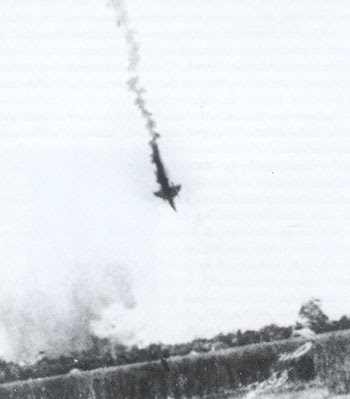
The Failed Air War Over Vietnam
or go to
Aletho News Archives – Video-Images
From the Archives
USS Liberty Massacre: A Pivotal Moment in the Hostile Takeover of America
By Kevin Barrett | Crescent | Dhu al-Qa’dah 24, 1445
In corporate America, hostile takeovers are commonplace. They occur when an aggressor—a larger corporation or rich individuals—seizes control of a smaller corporation without asking permission.
What few recognize is that the United States itself has been subjected to a hostile takeover. Since the aggressor, the illegitimate settler colony known as “Israel,” is much smaller than the US, the takeover has necessarily been surreptitious.
As of June, 2024, Israel’s gradual takeover of the US has become obvious and undeniable—a proverbial “elephant in the living room.” … continue
Blog Roll
 Aletho News
- Leaders Condemn Ansarallah Attack on Saudi Arabia While Ignoring Illegal War Against Yemen
- Leaked: Britain’s Covert Iraqi Psyops Network
- Yemeni Armed Forces Warn Airlines Against Using Saudi Airports, Exempt Mecca and Medina
- Iran security chief says powers greater than US tried to conquer Iran but ended in ‘dustbin of history’
- Europe’s mounting social chaos… chickens coming home to roost for proxy war against Russia
- US-Russia Diesel Deal Becomes Massive Defeat for Ukraine
- Hormuz and the Looming Economic Catastrophe
- Dhubab offensive, media blitz and the rapid unraveling of Saudi-backed coalition’s new gambit
- Putin Conveys to Trump Iran’s Vision on Possible Conflict Resolution – Kremlin
- The Search for Truth: Charlie Kirk’s Assassination One Year Later
- If Americans Knew
- The American Conservative: Mike Huckabee Should Resign
- A C-Section in Shackles: A Palestinian Woman’s Harrowing Birth in Israeli Detention
- ‘He’s Desperate’: AIPAC Begins Spending Against Abdul El-Sayed to Boost Mike Rogers:
- Trump, Hormuz, and the Looming Economic Catastrophe
- For three years, Israel has killed a child in Gaza every 71 minutes – Daily Update
- Israeli forces kill another child in Gaza – Daily Update
- Gaza ceasefire exists in name only, say more than 100 organizations
- Nearly 2 Million in Gaza Need Urgent Shelter Assistance as Winter Looms: IOM Chief Warns
- Suppressing Palestinian resistance: US charity under fire for AI monitoring of Gaza classrooms
- Thousands Are Held in Israeli Torture Camps. This Is What Happens Inside
- No Tricks Zone
- Germany’s Green Energy Debacle: High Energy Costs Force Kahla Porzellan to Close After 182 Years!
- New Study: 50 Years Of The Most Aggressive ‘Net Zero’ Policies Can Only Affect The Global Climate By 0.03°C
- US September “Heat” Was No Record…Many Records Set Decades Ago
- Latest European Green Energy Debacle; Portugal’s Largest Flagship Solar Park Insolvent!
- Green Energy Debacle: German Expert Professor Fritz Vahrenholt Warns Of Severe Economic And Social Consequences
- Two More Paleo Reconstructions Affirm Meters-Higher Sea Levels Across Ireland, Brazil 7000-6000 Years Ago
- New Study: Earth And Venus Surface Warmth Largely Explained By Convection And Lapse Rate, Not CO2 Or Radiation
- 2025 Nature Paper Claiming Worsening Global Drought Gets RETRACTED …Heavily Flawed
- New Study: ‘Global Drought Shows No Detectable Recent Acceleration Under Climate Warming’
- Economic Masterminds: German Socialists Suggest Taxing Productivity Gains Stemming From Using AI

