Marching for Peace: From Helmand to Hiroshima
By Maya Evans | Dissident Voice | August 5, 2018
I have just arrived in Hiroshima with a group of Japanese “Okinawa to Hiroshima peace walkers” who had spent nearly two months walking Japanese roads protesting U.S. militarism. While we were walking, an Afghan peace march that had set off in May was enduring 700km of Afghan roadsides, poorly shod, from Helmand province to Afghanistan’s capital of Kabul. Our march watched the progress of theirs with interest and awe. The unusual Afghan group had started off as 6 individuals, emerging out of a sit-in protest and hunger strike in the Helmand provincial capital Lashkar Gah, after a suicide attack there created dozens of casualties. As they started walking their numbers soon swelled to 50 plus as the group braved roadside bombs, fighting between warring parties and exhaustion from desert walking during the strict fast month of Ramadan.
The Afghan march, which is believed to be the first of its kind, is asking for a long-term ceasefire between warring parties and the withdrawal of foreign troops. One peace walker, named Abdullah Malik Hamdard, felt that he had nothing to lose by joining the march. He said: “Everybody thinks they will be killed soon, the situation for those alive is miserable. If you don’t die in the war, the poverty caused by the war may kill you, which is why I think the only option left for me is to join the peace convoy.”
The Japanese peace walkers marched to specifically halt the construction of a U.S. airfield and port with an ammunition depot in Henoko, Okinawa, which will be accomplished by landfilling Oura Bay, a habitat for the dugong and unique coral hundreds of years old, but many more lives are endangered. Kamoshita Shonin, a peace walk organizer who lives in Okinawa, says:
People in mainland Japan do not hear about the extensive bombings by the U.S. in the Middle East and Afghanistan, they are told that the bases are a deterrent against North Korea and China, but the bases are not about protecting us, they are about invading other countries. This is why I organised the walk.
Sadly, the two unconnected marches shared one tragic cause as motivation.
Recent U.S. war crimes in Afghanistan include the deliberate targeting of civilian wedding parties and funerals, incarceration without trial and torture in Bagram prison camp, the bombing of an MSF hospital in Kunduz, the dropping of the ‘Mother of all bombs’ in Nangarhar, illegal transportation of Afghans to secret black site prisons, Guantanamo Bay prison camp, and the extensive use of armed drones. Elsewhere the U.S. has completely destabilised the Middle East and Central Asia, according to The Physicians for Social Responsibility, in a report released in 2015, stated that the U.S. interventions in Iraq, Afghanistan and Pakistan alone killed close to 2 million, and that the figure was closer to 4 million when tallying up the deaths of civilians caused by the U.S. in other countries, such as Syria and Yemen.
The Japanese group intend to offer prayers of peace this Monday at Hiroshima ground zero, 73 years to the day after the U.S. dropped an atomic bomb on the city, instantly evaporating 140,000 lives, arguably one of the worst ‘single event’ war crimes committed in human history. Three days later the U.S. hit Nagasaki instantly killing 70,000. Four months after the bombing the total death toll had reached 280,000 as injuries and the impact of radiation doubled the number of fatalities.
Today Okinawa, long a target for discrimination by Japanese authorities, accommodates 33 U.S. military bases, occupying 20% of the land, housing some 30,000 plus U.S. Marines who carry out dangerous training exercises ranging from rope hangs suspended out of Osprey helicopters (often over built-up residential areas), to jungle trainings which run straight through villages, arrogantly using people’s gardens and farms as mock conflict zones. Of the 14,000 U.S. troops currently stationed in Afghanistan, many to most would have trained on Okinawa, and even flown out directly from the Japanese Island to U.S. bases such as Bagram.
Meanwhile in Afghanistan the walkers, who call themselves the ‘People’s Peace Movement’, are following up their heroic ordeal with protests outside various foreign embassies in Kabul. This week they are outside the Iranian Embassy demanding an end to Iranian interference in Afghan matters and their equipping armed militant groups in the country. It is lost on no-one in the region that the U.S., which cites such Iranian interference as its pretext for building up towards a U.S.-Iran war, is an incomparably more serious supplier of deadly arms and destabilizing force to the region. They have staged sit-in protests outside the U.S., Russian, Pakistani and U.K. embassies, as well as the U.N. offices in Kabul.
The head of their impromptu movement, Mohammad Iqbal Khyber, says the group have formed a committee comprised of elders and religious scholars. The assignment of the committee is to travel from Kabul to Taliban-controlled areas to negotiate peace.
The U.S. have yet to describe its long term or exit strategy for Afghanistan. Last December Vice President Mike Pence addressed U.S. troops in Bagram: “I say with confidence, because of all of you and all those that have gone before and our allies and partners, I believe victory is closer than ever before.”
But time spent walking doesn’t bring your destination closer when you don’t have a map. More recently U.K. ambassador for Afghanistan Sir Nicholas Kay, while speaking on how to resolve conflict in Afghanistan said: “I don’t have the answer.” There never was a military answer for Afghanistan. Seventeen years of ‘coming closer to victory’ in eliminating a developing nation’s domestic resistance is what is called “defeat,” but the longer the war goes on, the greater the defeat for Afghanistan’s people.
Historically the U.K. has been closely wedded to the U.S. in their ‘special relationship’, sinking British lives and money into every conflict the U.S. has initiated. This means the U.K. was complicit in dropping 2,911 weapons on Afghanistan in the first 6 months of 2018, and in President Trump’s greater-than-fourfold average increase on the number of bombs dropped daily by his warlike predecessors. Last month Prime Minister Theresa May increased the number of British troops serving in Afghanistan to more than 1,000, the biggest U.K. military commitment to Afghanistan since David Cameron withdrew all combat troops four years ago.
Unbelievably, current headlines read that after 17 years of fighting, the U.S. and Afghan Government are considering collaboration with the extremist Taliban in order to defeat ISKP, the local ‘franchise’ of Daesh.
Meanwhile UNAMA has released its mid-year assessment of the harm done to civilians. It found that more civilians were killed in the first six months of 2018 than in any year since 2009, when UNAMA started systematic monitoring. This was despite the Eid ul-Fitr ceasefire, which all parties to the conflict, apart from ISKP, honoured.
Every day in the first six months of 2018, an average of nine Afghan civilians, including two children, were killed in the conflict. An average of nineteen civilians, including five children, were injured every day.
This October Afghanistan will enter its 18th year of war with the U.S. and supporting NATO countries. Those young people now signing up to fight on all sides were in nappies when 9/11 took place. As the ‘war on terror’ generation comes of age, their status quo is perpetual war, a complete brainwashing that war is inevitable, which was the exact intention of warring decision makers who have become exceedingly rich of the spoils of war.
Optimistically there is also a generation who are saying “no more war, we want our lives back”, perhaps the silver lining of the Trump cloud is that people are finally starting to wake up and see the complete lack of wisdom behind the U.S. and its hostile foreign and domestic policies, while the people follow in the steps of non-violent peace makers such as Abdul Ghafoor Khan, the change is marching from the bottom up.

Okinawa to Hiroshima Peace Walk (Photo by Maya Evans)
Maya Evans coordinates Voices for Creative Nonviolence UK and has visited Afghanistan 9 times since 2011. She is a writer and a Councillor for her town in Hastings, England.
DPRK Slams Extension of US-Japan Nuclear Pact as US Double Standard – Report
Sputnik – 05.08.2018
North Korea denounced the extension of the US-Japanese atomic energy agreement, accusing Tokyo of undertaking activities allegedly aimed at nuclear weaponization and blaming the United States of double standards, local media reported on Sunday.
The Korea Asia-Pacific Peace Committee (KAPPC) released a white paper on Saturday criticizing the 1988 US-Japanese nuclear pact, which was extended last month, the Korean Central News Agency reported.
According to the white paper, Japan has been conducting nuclear research since long ago, allegedly starting to push forward the A-bomb development in 1930s.
The paper also suggested that out of 518 tonnes of plutonium stockpiled around the world so far, 47 tonnes are stored by Japan.
The document accused the United States of a double-standard approach to treat North Korea and Japan differently on nuclear issues, calling on Washington to “judge the situation from a fair stand” if it wanted denuclearization of the Korean Peninsula.
In July, the United States and Japan extended a bilateral nuclear cooperation agreement, which granted Japan the right to extract plutonium, reprocess spent fuel and enrich uranium on the condition that it was not used to build nuclear weapons.
US Navy Considered $1 Billion Plan for Breaking Down Old Nuclear-Powered Carrier
Sputnik – 03.08.2018
The US Navy has yet to choose a way forward for dismantling the USS Enterprise aircraft carrier. The delay has been motivated in part by the fact that disposing of the nuclear-powered craft could cost more than $1 billion ‒ a pill the Navy is loathe to swallow.
The Government Accountability Office published a report Thursday indicating that in 2013 “the Navy’s cost estimate for the shipyard” in Puget Sound, Washington, “to perform all [USS Enterprise] dismantlement and disposal activities increased — from a range of $500 million to $750 million — to well over $1 billion.”
As a result of this rather significant expense — about 25 percent of what it cost to build the ship in 1958 in inflation-adjusted terms — the Navy decided to ditch the plans. As the ship, built between 1958 and 1961, was the world’s first nuclear-powered aircraft carrier, the government wants to take special care in dismantling it and must comply with stringent guidelines set in place by nuclear regulation bodies separate from the Navy.
There is also a policy precedent to be set by how the carrier is deconstructed, in terms of “the processes, costs and oversight that may be used to dismantle and dispose of nuclear-powered aircraft carriers in the future.” Specifically, the manner in which the Enterprise is disposed of will set an example for how to do the same thing with the US Navy’s aging fleet of Nimitz-class carriers.
One of the thornier issues when it comes to disposal of the carrier is what to do with the nuclear waste produced by its propulsion generators. In 2016, the Navy thought it would have commercial contractors bid for contracts to break down the non-nuclear parts of the ship — everything except what’s referred to as the propulsion space section.
As GAO conducted its study, the Navy decided to ditch this plan. Instead, the Navy is now considering two options for the USS Enterprise, the watchdog noted. One route would be to do most of the deconstruction in Puget Sound, and then dump the nuclear waste at the US Department of Energy’s Hanford Site in southeastern Washington state. The other route is for commercial contractors to do all the dismantling. There is no estimate provided in GAO’s report for how much each of these routes would cost the US Navy, and by extension US taxpayers.
Under the 100 percent commercial dismantling route, the US Navy needs to coordinate with the Nuclear Regulatory Commission (NRC), which has regulatory jurisdiction over the private nuclear industry, the GAO said. The Pentagon agreed with this recommendation, Stars and Stripes reported Friday.
AngloZionist Attack Options Against Iran
The Saker • Unz Review • August 3, 2018
In the past few days, the Internet has been flooded with a frankly silly rumor about the US soliciting Australia’s assistance in preparing an attack on Iran. Needless to say, that report does not explain what capabilities Australia would possess which the US would lack, but never-mind that. Still, the report was picked up in too many places (see here, here and here ) to be ignored. In one of these reports, Eric Margolis has described what such a US attack could look like. It is worth quoting him in full:
Outline of a possible AngloZionist attack on Iran
The US and Israel will surely avoid a massive, costly land campaign again Iran, a vast, mountainous nation that was willing to suffer a million battle casualties in its eight-year war with Iraq that started in 1980. This gruesome war was instigated by the US, Britain, Kuwait and Saudi Arabia to overthrow Iran’s new popular Islamic government.
The Pentagon has planned a high-intensity air war against Iran that Israel and the Saudis might very well join. The plan calls for over 2,300 air strikes against Iranian strategic targets: airfields and naval bases, arms and petroleum, oil and lubricant depots, telecommunication nodes, radar, factories, military headquarters, ports, waterworks, airports, missile bases and units of the Revolutionary Guards.
Iran’s air defenses range from feeble to non-existent. Decades of US-led military and commercial embargos against Iran have left it as decrepit and enfeebled as was Iraq when the US invaded in 2003. The gun barrels of Iran’s 70’s vintage tanks are warped and can’t shoot straight, its old British and Soviet AA missiles are mostly unusable, and its ancient MiG and Chinese fighters ready for the museum, notably its antique US-built F-14 Tomcats, Chinese copies of obsolete MiG-21’s, and a handful of barely working F-4 Phantoms of Vietnam War vintage.
Air combat command is no better. Everything electronic that Iran has will be fried or blown up in the first hours of a US attack. Iran’s little navy will be sunk in the opening attacks. Its oil industry may be destroyed or partially preserved depending on US post-war plans for Iran.
The only way Tehran can riposte is by staging isolated commando attacks on US installations in the Mideast of no decisive value, and, of course, blocking the narrow Strait of Hormuz that carries two-thirds of Mideast oil exports. The US Navy, based nearby in Bahrain, has been practicing for decades to combat this threat.
There is a lot of interesting material in this description and I think that it is worth looking into it segment by segment.
First, I can only agree with Margolis that neither the US nor Israel want a ground war against Iran: the country is too big, the Iranians too well prepared and the size of the force needed for such a campaign way beyond what the Empire can currently muster.
Second, Margolis is absolutely correct when he says that Iran does not have the means to stop a determined AngloZionist (missiles and aircraft) attack. Iran does have some modern air-defense capabilities, and the attackers will sustain a number of losses, but at this point, the size disparity is so huge that the AngloZionists will achieve air superiority fairly soon and that will give them an opportunity to bomb whatever they want to bomb (more about that later).
Assessing Iranian air defenses is not just a matter of counting missiles and launchers, however, and there is much more to this. According to one Russian source Iran has 4 long range anti-aircraft missile S-300PMU-2 systems (with 48Н6Е2 Mach 6,6 interceptor missiles), 29 military anti-aircraft self-propelled missile complexes Tor-M1, some fairly advanced anti-aircraft missile complexes like the Bavar-373, a passive electronically scanned array radar (whose illumination and guidance system almost certainly includes modern Chinese electronics) and an impressive number of radar systems early warning radar of the Russian, Chinese and Iranian manufacture. This category includes systems like the high-potential long-range radar detection and target designation Najm-802 radar (has 5120 receiving and transmitting modules, operates in the decimeter S-range and is designed to detect ballistic targets and small elements of high-precision weapons), the Russian meter radar “Nebo-SVU” advanced early warning and control system with a fixed-array radar, as well as a meter range early warning radar of the type “Ghadir” . Most importantly, these radars are all integrated into the network-centric missile defense system of Iran. For example, the “Ghadir” radar is able to detect not only the tactical fighters of the USAF, the KSA and Israel, but also ballistic missiles immediately after launch (at a distance of about 1100 km). As a result, the presence of Iranian radio engineering units of multi-band radar detection facilities in the Western direction (the Persian Gulf) will allow the Iranians to prepare a flexible echeloned air defense to defend against high-intensity missile strikes. And yet, no matter how much the Iranians have improved their air defenses, the sheer number of of missiles (including the new advanced AGM-158 JASSM (Joint Air-to-Surface Standoff Missile) low observable standoff air-launched cruise missile delivered by B-1B bombers) means that the Iranian defenses will inevitably be overwhelmed by any massive attack.
I therefore also agree with Margolis that the Iranian oil industry cannot be protected from a determined US/Israeli attack. In fact, the entire Iranian infrastructure is vulnerable to attack.
Margolis’ final paragraph, however, makes it sound like Iran does not have credible retaliatory options and that I very much disagree with.
Example one: Iranian capabilities in the Strait of Hormuz
For one thing, the issue of the Strait of Hormuz is much more complicated than just “the US Navy has practiced for years to combat this threat“. The reality is that Iran has a very wide range of options to make shipping through this strait practically impossible. These options range from underwater mines, to fast craft attacks, to anti-shipping missiles, to coastal artillery strikes, etc.
Therein also lies a big danger: the Israelis and or the US could very easily organize a false flag attack on any ship in the Strait of Hormuz, then accuse Iran, there would be the usual “highly likely” buzzword from all the AngloZionst intelligence agencies and, voilà, the Empire would have a pretext to attack Iran.
In fact, the mere fact of issuing a threat to shipping through this narrow body of water might well deter insurances from providing coverage to any ships and that might stop the shipping all by itself. Should that not be enough, Iran can always lay even a limited amount of mines, and that will be enough (please keep in mind that while the USN could try to engage in mineclearing operations, to do so right off the coast of Iran would expose USN minesweepers to an extreme danger of attack).
Margolis does mention this issue when he writes:
While Iran may be able to interdict some oil exports from the Arab states and cause maritime insurance rates to skyrocket, it’s unlikely to be able to block the bulk of oil exports unless it attacks the main oil terminals in Saudi Arabia and the Gulf with ground troops. During the Iran-Iraq war, neither side was able to fully interdict the other’s oil exports.
However, I believe that grossly under-estimates the Iranian capabilities in this context. Let’s take one example, the Iranian submarine force.
The Iranian submarine force is a highly specialized one. According to the 2018 Edition of the IISS’s Military Balance, the Iranians currently have 21 submarines deployed:
- 3 Taregh-class diesel-electric submarine (Russian Kilo-class Project-877EKM)
- 1 Fateh-class coastal submarine
- 16 Ghadir-class midget submarines
- 1 Nahand-class midget submarine
When most people hear “diesel-electric,” they think of old diesel trucks, and are not impressed, especially when these are contrasted with putatively “advanced” nuclear attack submarines. This is, however, a very mistaken opinion because submarines can only to be assessed in the environment they are designed to operate in. Naval geography is typically roughly divided into three types: blue water (open ocean), green water (continental shelves) and brown water (coastal regions). Nuclear attack submarines are only superior in the blue water environment where autonomy, speed, diving depth, weapon storage capacity, advanced sonars, etc. are crucial. In comparison, while diesel-electric submarines are slower, need to resurface to recharge their batteries and are typically smaller and with fewer weapons onboard, they are also much better suited for green water operations. In shallow brown water, midget submarines reign, if only because nuclear attack submarines were never designed to operate in such an environment. Now take a quick look at the kind of environment the Strait of Hormuz constitutes:

Notice the interesting combination of very shallow and shallow depth typical of brown water and then the green water type of environment when going further into the Gulf of Oman and the Arabian Sea. With this in mind, let’s see what kind of submarine force Iran has acquired/developed:
For brown water operations (Persian Gulf and Strait of Hormuz) Iran has a relatively large and capable fleet of midget submarines. For green water operations (the Gulf of Oman and the Arabian Sea), Iran has three formidable Taregh/Kilo-class submarines (which are even capable of limited blue water operations, though with much less autonomy, speed, armament or sonar than a nuclear attack submarine). Just like “diesel-electric”, the term “midget” submarine makes it sound that we are talking about a toy or, at best, some primitive third world hack which, at best, could be used to smuggle drugs. In reality, however, the Iranian “midgets” can carry the same heavyweight torpedoes (533 mm) as the Kilos, only in smaller quantities. This also means that they can carry the same missiles and mines. In fact, I would argue that Iranian Ghadir-class “midget” submarines represent a much more formidable threat in the Persian Gulf than even the most advanced nuclear attack submarines could.
The US has stopped producing diesel-electric submarines many years ago because it believed that being a hegemonic power with a typical (aircraft carrier-centric) blue water navy it had no need for green or brown water capabilities. Other countries (such as Russia, Germany, Sweden and others) actively pursued a diesel-electric submarine program (including so-called “air-independent propulsion” – AIP – ones) because they correctly understood that these submarines are much cheaper while being also much better suited for coastal defensive operations. Ditching diesel-electric submarines was yet another major mistake by US force planners; see this article on this topic. The new Littoral Combat Ship (LCS) and the Zumwalt-class guided missile destroyer were supposed to partially palliate to this lack of green and brown capabilities, but both turned out to be a disaster

Ghadir-class submarine
The Russian Kilo-class submarines are some of the most silent yet heavily armed submarines ever built, and they could potentially represent a major threat to any US naval operations against Iran. However, we can be pretty sure that the USN tracks them 24/7 and that the Kilos would become a prime target (whether in port or at sea) at the very beginning of any AngloZionist attack. But would the USN also be capable of keeping track of the much smaller (and numerous) Iranian midget submarines? Your guess is as good as mine, but I personally very much doubt that, if only because these relatively small subs are very easy to hide. Just take a look at this photo of a Ghadir-class submarine and imagine how easy it would be to hide them or, alternatively, create decoy looking just like the real thing. Yet this midget submarine could sink any vessel in the Persian Gulf with a single torpedo.
While the US definitely has a lot of very capable reconnaissance and intelligence capabilities available to try to locate and then destroy these threats, we also know that the Iranians have had decades to prepare for this scenario and that they are truly masters at what is called maskirovka in Russian military terminology: a combination of camouflage, concealment, deception, and misdirection. In fact, the Iranians are the ones who trained Hezbollah in Lebanon in this art and we all know what happened to the Israelis when they confidently waltzed into southern Lebanon only to find out that for all their reconnaissance/intelligence capabilities they were unable to deal with even a relatively primitive (technologically speaking) Hezbollah missile capability. For all the patriotic flag-waving, the truth is that if the Iranians decide to block the Strait of Hormuz the only option left for the US will be to land a force on the Iranian shore and engage in a limited but still extremely dangerous offensive land-attack operation. At this point, whether this counter-attack is successful or not will be irrelevant, as there will be so much combat activity in this narrow bottleneck that nobody will even consider to bring ships through it.
I also believe that Margolis is wrong when he writes that all Iran could do would be to stage “isolated commando attacks on US installations in the Mideast of no decisive value“. One very real Iranian option would be to strike US targets (of which there are plenty in the Middle-East) with various missiles. Furthermore, Iran can also launch missiles at US allies (Israel or the KSA) and interests (Saudi oil fields).
Example two: Iranian missile capabilities
I would not trust everything the CSIS writes (they are a very biased source, to put it mildly), but on this page, they posted a pretty good summary of the current Iranian missile capability:

On the same page, CSIS also offers a more detailed list of current and developed Iranian missiles:
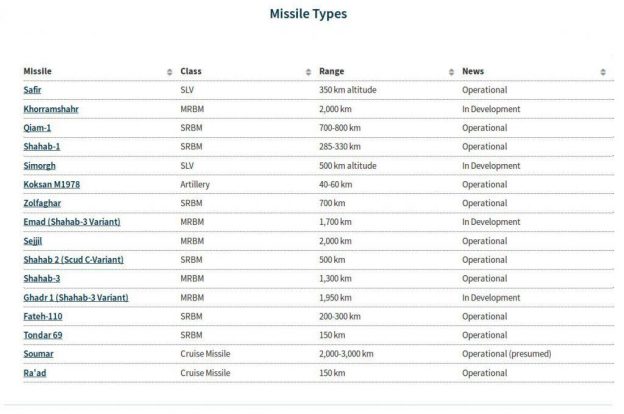
(You can also check on this Wikipedia page to compare with the CSIS info on Iranian missiles)
The big question is not whether Iran has capable missiles, but how many exactly are deployed. Nobody really knows this because the Iranians are deliberately being very vague, and for obvious and very good reasons. However, judging by the example of Hezbollah, we can be pretty sure that the Iranians also have these missiles in large enough numbers to represent a very credible deterrent capability. I would even argue that such a missile force not only represents a capable deterrent capability, but also a very useful war-fighting one. Can you imagine what would happen if US bases (especially airbases and naval facilities) in the region came under periodic Iranian missile attacks? Judging by the Israeli experience during the First Gulf War or, for that matter, the recent Saudi experience with the Houthi missiles, we can be pretty sure that the US Patriots will be useless to defend against Iranian missiles.
Oh sure, just like the US did during the First Gulf War, and the Israelis did in 2006, the AngloZionists will start a massive hunt for Iranian missile sites, but judging by all the recent wars, these hunts will not be successful enough and the Iranians will be able to sustain missile strikes for quite a long time. Just imagine what one missile strike, say, every 2-3 days on a US base in the region would do to operations or morale!
Reality check: the US is vulnerable throughout the entire Middle-East
Above I only listed two specific capabilities (subs and missiles), but the same type of analysis could be made with Iranian small speedboat swarms, electronic warfare capabilities or even cyber-warfare. But the most formidable asset the Iranians have is a very sophisticated and educated population which has had decades to prepare for an attack by the “Great Satan” and which have clearly developed an array of asymmetrical options to defend themselves and their country against the (probably inevitable) AngloZionist attack.
You have probably seen at least one map showing US military installations in the Middle-East (if not, see here, here or here). Truth be told, the fact that Iran is surrounded by US forces and bases presents a major threat to Iran. But the opposite is also true. All these US military facilities are targets, often very vulnerable ones. Furthermore, Iran can also use proxies/allies in the region to attack any of these targets. I highly recommend that you download this factsheet and read it while thinking of the potential of each listed facility to become the target of an Iranian attack.
The usual answer which I often hear to these arguments is that if the Iranians actually dared to use missiles or strike at the US bases in the region, the retaliation by the US would be absolutely terrible. However, according to Eric Margolis, the initial and main goal of a US-Israeli attack on Iran would be to “totally destroy Iran’s infrastructure, communications and transport (including oil) crippling this important nation of 80 million and taking it back to the pre-revolutionary era“. Now let me ask you this simple question: if Margolis is correct – and I personally believe that he is – then how would that outcome be different from the “absolutely terrible” retaliation supposedly planned by the US in case of Iranian counterattack? Put differently – if the Iranians realize that the AngloZionists want to lay waste to their country (say, like what the Israelis did to Lebanon in 2006), what further possible escalation would further deter them from counter-attacking with the means available to them?
To answer this question we need to look again at the real nature of the “Iranian problem” for the AngloZionists.
Real AngloZionist objectives for an attack on Iran
First and foremost, there is absolutely no evidence whatsoever that Iran has any kind of military nuclear program. The fact that the Israelis have for years been screaming about this urbi et orbi does not make it true. I would also add that common sense strongly suggests that the Iranians would have absolutely no logical reason to develop any kind of nuclear weapons. I don’t have the time and space to argue this point again (I have done so many times in the past), so I will simply refer to the US National Intelligence Estimate’s conclusion that Iran had “halted its nuclear weapons program” and leave it at that.
I don’t believe that the Iranians ever had a nuclear weapons program either, but that is irrelevant: even if they once had one, that would put them on par with many other countries which took some initial steps in the development of such a capability and then gave it up. The only point is that it is the official US position that there is no current military nuclear program in Iran.
The real problem of Iran is very simple. Iran is the only country in the world which is:
- Islamic and leads the struggle against the Saudi/Daesh/ISIS/al-Qaeda/etc. ideology of takfirism and the terrorism they promote
- Openly anti-Zionist and anti-Imperialist and combines conservative religious values with progressive social policies
- Successful politically, economically and militarily and thereby threatens the monopoly of power of Israel in the region
Any one of those features by itself would already constitute a grievous case of crimethink from the point of view of the Empire and would fully deserve a reaction of absolute hatred, fear and a grim determination to eliminate the government and people which dare to support it. No wonder that by combining all three Iran is so hated by the AngloZionists.
This entire canard about some Iranian nuclear program is just a pretext for a hate campaign and a possible attack on Iran. But in reality, the goals of the AngloZionists is not to disarm Iran, but exactly as Margolis says: to bomb this “disobedient” country and people “back to the pre-revolutionary era”.
Here is the key thing: the Iranians perfectly understand that. The obvious conclusion is this: if the purpose of an AngloZionist attack will be to bomb Iran back into the pre-revolutionary era, then why would the Iranians hold back and not offer the maximal resistance possible?
Because of the threat of a US nuclear retaliation?
US nuclear attack options – not much of an option in reality
Here again, we need to look at the context, not just assume that the use of nuclear weapons is some kind of magical panacea which immediately forces the enemy to give up the fight and to unconditionally surrender. This is far from being the truth.
First, nuclear weapons are only effective when used against a lucrative target. Just murdering civilians like what the US did in Japan does absolutely no good if your goal is to defeat your opponent’s armed forces. If anything, nuking your opponents “value” targets might only increase his determination to fight to the end. I have no doubt that, just as during the first Gulf War, the US has already made a typical list of targets it would want to strike in Iran: a mix of key government buildings and installations and a number of military units and facilities. However, in most cases, those could also be destroyed by conventional (non-nuclear) weapons. Furthermore, since the Iranians have had decades to prepare for this scenario (the US has always had Iran in its sights since the 1979 Revolution), you can be quite sure that all the peacetime facilities have been duplicated for wartime situations. Thus while many high-visibility targets will be destroyed, their wartime counterparts will immediately take over. One might think that nukes could be used to destroy deeply buried targets, and this is partially true, but some targets are buried too deep to be destroyed (even by a nuclear blast) while others are duplicated several times (say, for 1 peacetime military headquarters there would be 4, 5 or even 6 concealed and deeply buried ones). To go after each one of them would require using even more nukes and that begs the question of the political costs of such a campaign of nuclear strikes.
In political terms, the day the US uses a nuclear weapon against any enemy it will have committed political suicide from which the Hegemony will never recover. While a majority of Americans might consider that “might makes right” and “screw the UN”, for the rest of the world the first use of nuclear weapons (as opposed to a retaliatory counter-strike) is an unthinkable abomination and crime, especially for an illegal act of aggression (there is no way the UNSC will authorize a US attack on Iran). Even if the White House declares that it “had to” use nukes to “protect the world” against the “nuclear armed Ayatollah”, the vast majority of the planet will react with total outrage (especially after the Iraqi WMD canard!). Furthermore, any US nuclear strike will instantly turn the Iranians from villains into victims. Why would the US decide to pay such an exorbitant political price just to use nuclear weapons on targets which would not yield any substantial advantage for the US? Under normal circumstances, I would think that this kind of unprovoked use of nuclear weapons would be quite unthinkable and illogical. However, in the current political context in the US, there is one possibility which really frightens me.
Trump as the “disposable President” for the Neocons?
The Neocons hate Trump, but they also own him. The best example of this kind of “ownership” is the US decision to move its embassy to Jerusalem which was an incredibly stupid act, but one which the Israel Lobby demanded. The same goes for the US reneging on the Joint Comprehensive Plan of Action or, for that matter, the current stream of threats against Iran. It appears that the Neocons have a basic strategy which goes like this: “we hate Trump and everything he represents, but we also control him; let’s use him to do all the crazy stuff no sane US President would ever do, and then let’s use the fallout of these crazy decisions and blame it all on Trump; this way we get all that we want and we get to destroy Trump in the process only to replace him with one of “our guys” when the time is right“. Again, the real goal of an attack on Iran would be to bomb Iran back into a pre-revolutionary era and to punish the Iranian people for supporting the “wrong” regime thus daring to defy the AngloZionist Empire. The Neocons could use Trump as a “disposable President” who could be blamed for the ensuing chaos and political disaster while accomplishing one of the most important political objectives of Israel: laying waste to Iran. For the Neocons, this is a win-win situation: if things go well (however unlikely that is), they can take all the credit and still control Trump like a puppet, and if things don’t go well, Iran is in ruins, Trump is blamed for a stupid and crazy war, and the Clinton gang will be poised to come back to power.
The biggest loser in such a scenario would, of course, be the people of Iran. But the US military will not fare well either. For one thing, a plan to just “lay waste” to Iran has no viable exit strategy, especially not a short-term one, while the US military has no stomach for long conflicts (Afghanistan and Iraq are bad enough). Furthermore, once the US destroys most of what can be destroyed the initiative will be in the Iranians’ hands and time will be on their side. In 2006 the Israelis had to fold after 33 days only, how much time will the US need before having to declare victory and leave? If the war spreads to, say, Saudi Arabia, Iraq, and Syria, then will the US even have the option to just leave? What about the Israelis – what options will they have once missiles start hitting them (not only Iranian missiles but probably also Hezbollah missiles from Lebanon!)?
Former Mossad head Meir Dagan was fully correct when he stated that a military attack on Iran was “the stupidest thing I have ever heard”. Alas, the Neocons have never been too bright, and stupid stuff is what they mostly do. All we can hope for is that somebody in the US will find a way to stop them and avert another immoral, bloody, useless and potentially very dangerous war.
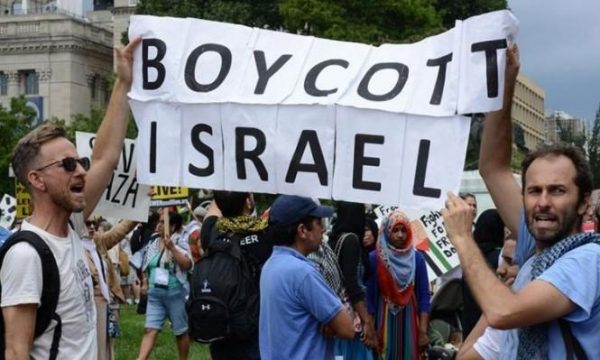
Following Israel’s participation: Glasgow pledges to reject military exhibits
MEMO | August 2, 2018
The city council of Glasgow, Scotland, has vowed not to sponsor any future military exhibitions in response to months of widespread protests against its decision to sponsor the Conference on Subsea Defence Technology. The city council also promised to “reconsider its guidelines” to ensure that they would reflect “Glasgow’s respect of human rights”.
This pledge came after the formation of a popular campaign to put pressure on the city council, a coalition that included the Scottish Palestinian Solidarity Campaign (SPSC), the Scottish Campaign for Nuclear Disarmament (CND), Scotland against Militarism, as well as the Anti-Arms trading Campaign.
The military exhibition, which included Israeli weapon manufacturers, was held in Glasgow in late July under the sponsorship of BAE Systems and Babcock, the two major arms companies responsible for renewing the UK’s Trident program for the development, activation, and sale of nuclear weapons despite Glasgow’s declaration of being a nuclear-free Council in December 2017.
The exhibition that the city hosted stated Israel Defence, a media organisation promoting the arms industry in Israel, as an official media partner. The presentation was nevertheless attended by the Israeli company DSIT Solutions, involved in the ongoing brutal Israeli siege on the Gaza Strip.
Israeli arms companies regularly market their weapons as “tested” and “field tested”, meaning that they are tested on the Palestinian people and then exported to facilitate the suppression of the army and police forces in the rest of the world.
The National Chairperson of the Scottish Palestinian Solidarity Campaign (SPSC), Sofiah MacLeod, welcomed the city council’s statement and added that the campaign would work with other coalition members to ensure that the city council would implement its pledge.
MacLeod added that the popular pressure on Glasgow City Council and the House of Advisers would continue because the council still manages the Strathclyde pension fund known for its investment in arms factories and other companies that have been complicit in Israeli violations of Palestinian rights.
The Palestinian Boycott, Divestment and Sanctions (BDS) National Committee welcomed the campaign’s success, according to its coordinator in Gaza, Abdul Rahman Abu Nahl. He said: “Such news increase our determination to step up our campaigns against companies involved in Israel’s human rights violations. What has been happening in local councils in Scotland, Ireland, Spain, and Italy is a new indication of the growing impact of the BDS movement around the world and the growing isolation of the occupation and apartheid Israeli state.”
The Scottish Palestinian Solidarity Campaign (SPSC) continues to work with various groups such as the Unison Scotland and the Scottish Friends of Palestine, in the “Time to Divest” campaign to push local Scottish authority retirement funds to dispose of contracts of companies complicit in violations of Palestinian human rights. These banks include Hapoalim, the largest Israeli bank, which funds the construction of illegal settlements on usurped Palestinian lands, as well as companies like Hewlett-Packard (HP) and DXC.
Politics in bad faith: Alexandria Ocasio-Cortez campaigns in Michigan
By Andre Damon | WSWS | July 31, 2018
Alexandria Ocasio-Cortez, a member of the Democratic Socialists of America, visited Southeast Michigan this past weekend. Her primary victory last month over New York Congressman Joe Crowley has made her, virtually overnight, a leading spokesperson for the Democratic Party.
Ocasio-Cortez appeared at rallies in Detroit, Flint and Ypsilanti, as part of a statewide tour in support of Abdul El-Sayed, a former Detroit health department official running for governor of Michigan.

Ocasio-Cortez speaks at Wayne State University in Detroit
Ocasio-Cortez has been lionized in the press as the leader of a radical wave sweeping over the Democratic Party. Given the location of her events—including Detroit, the poorest large city in America, and Flint, which has been devastated by a lead water crisis—anyone taking her and the DSA’s pretenses to “socialism” seriously might have expected to hear bold proposals for tackling America’s rampant social inequality.
But when it came time for her to speak, what followed was a torrent of evasive and dishonest platitudes. She began her remarks at Wayne State University in Detroit:
My fingers are tingling right now because I know that this room is not just a rally, not just an audience, or even just a community; this is movement. Movement cannot be stopped, movement is like a wave; that energy cannot be contained, and Abdul, like many others, is just the crest, is just the foam at the tip of that wave. This is a movement so much bigger than just one person, there is no one person that is the future, there is a people that is the future.
To see such statements in print is to confirm the impression they produce on the listener: So much hot air.
America needs a “salt of the earth government,” Ocasio-Cortez went on, because, “We know that what is right in one place is what is right in all places.” And so on and so forth.
Like Barack Obama, whom she acknowledges as an inspiration, Ocasio-Cortez revels in seemingly profound motivational statements that are, upon the slightest examination, shown to be devoid of content. Her speeches are a variant of Obama’s slogan: “Yes we can.” She makes no effort to explain why Obama’s “Yes we can” was turned into eight years of “No we can’t.”
She continued, “The future of this nation and the future of this party is working class, the future of this party is working people, the future of this party is the marginalized, it is women, it is gender-extended people, it is people of color, it is the affirmation of justice, that is the future of this party.”
This invocation of the working class, mixed with appeals to other “identities,” is in bad faith, because the entire purpose of her campaign, and of the existence of the DSA, is to promote the Democratic Party, which, along with the Republicans, is a party of the corporate and financial oligarchy.
The Democrats are currently in the midst of a ferociously right-wing campaign centered on denunciations of Trump for “betraying” the country to Russia. In the midterm elections, the Democrats are fielding an unprecedented number of former members of the CIA and the military, which reflects their position as the preferred party of dominant sections of the military-intelligence apparatus.
Ocasio-Cortez’s inability to say anything genuinely oppositional, let alone radical, is bound up with her political role. She has quickly been absorbed into the Democratic Party establishment, and her rhetoric conforms to its politics. In promoting a right-wing party, her “left-wing” gloss is reduced to empty slogans.
Only a few sentences of her speech touched on actual policy. “The future of this party is improved and expanded Medicare for all,” she declared. For Abdul El-Sayed, “Medicare for all” means a statewide health care system paid for by workers from their own paychecks, one which his website boasts will exempt a substantial number of businesses from health care contributions.

Abdul El-Sayed
Such campaign promises are meaningless anyway. Obama declared himself a “proponent of a single payer universal health care program” in 2003, before going on to implement the “Affordable Care Act,” a reactionary attack on health care that shifts the burden from corporations and the state to workers by requiring individuals to purchase private insurance. This was cynically packaged as a major social “reform.”
Of particular note in the rallies to which Ocasio-Cortez spoke was the absence of any reference to foreign policy or the slightest hint of opposition to war. In fact, it was as if the rest of the world did not exist.
When a WSWS reporter asked the candidates at the post-rally press briefing in Detroit, “Do both of you support withdrawing all US troops from the Middle East and Africa?” El-Sayed gave an evasive non-answer: “We’ve got to make sure that we are focused on a foreign policy that articulates what we all can do when we come together around a more peaceful world.”
A staffer immediately attempted to conclude the briefing. When the reporter restated the question, “Ms. Ocasio-Cortez, are you anti-war? Do you support withdrawing all US troops from the Middle East?”
She replied, “I’m sorry, I’m here to support Abdul.”
The press conference immediately concluded, and the candidates were whisked away. (The next day, another WSWS reporter asked Ocasio-Cortez the same question at a rally in Ypsilanti, Michigan. She gave the same rehearsed answer.)
After the conclusion of the press conference, a WSWS reporter asked a high-level Ocasio-Cortez staffer, “What does she think the tax rate on the top income bracket should be?” He said he could not answer that question, because “She’s just focused on getting candidates with a similar program elected right now.”
In other words, Ocasio-Cortez can’t even commit to an explicit policy of raising taxes on the wealthiest section of society. In the spectrum of traditional American politics, this places her “democratic socialism” somewhere on the left wing of the 1960s-era Republican Party. Her inability to make any statement in opposition to war likewise put her to the right of both major Democratic nominees in the 1968 presidential primaries, who ran on an anti-war program.
The events make clear the political function of the Democratic Socialists of America. Far from creating a politically independent socialist movement, the DSA functions as an adjunct of the Democratic Party, providing candidates whose programs are largely indistinguishable from the rest of the party and are compatible with the agenda of the “CIA Democrats.”
The political role of Ocasio-Cortez and a slew of similar, DSA-backed candidates is to put a “left-wing,” “progressive,” youth-oriented, and multicultural gloss on a right-wing, pro-war party.
US Congress Passes $716Bln Defense Spending Bill for 2019
Sputnik – 01.08.2018
WASHINGTON – The US Senate on Wednesday passed the $716 billion National Defense Authorization Act for the fiscal year 2019. The measure passed with an 87-10 vote and now heads to US President Donald Trump’s office to be signed into law.
Last week, the House of Representatives passed the measure in a 359-54 vote. The measure also funds the Trump administration’s request for Ukraine, which included $250 million for lethal defensive items.
In addition, the bill adds $150 million to accelerate US efforts to field a conventional prompt strike capability before fiscal year 2022, in response to the critical advances Russia and China have made in developing their prompt strike hypersonic weapons.
The bill also funds the Trump administration’s request for $6.3 billion for the European Deterrence Initiative (EDI) to further increase the number of US troops in Europe and deter what it calls “Russian aggression.” The bill, in addition, prohibits military-to-military cooperation with Russia.
The bill obligates US Defense Secretary James Mattis to submit a plan to Congress to ban Turkey from acquiring the F-35 aircraft to punish it for purchasing Russian S-400 air defense systems and for detaining US Pastor Andrew Brunson.
The bill will also include Countering America’s Adversaries Through Sanctions Act (CAATSA) waivers for India, Vietnam and Indonesia.
The United States and NATO have significantly increased their presence in Eastern Europe since the eruption of the Ukrainian crisis in 2014. Moscow has repeatedly voiced its protest over the military buildup, saying that it will undermine regional stability and result in a new arms race.
The story behind the military’s recruitment of Indigenous youth
By Yves Engler · July 31, 2018
Is the Canadian military a friend and ally of First Nations or an exploiter and repressor?
The military’s immense resources and cultural clout certainly enables it to attract indigenous youth to become soldiers. But First Nations have more reason than most to be wary of the Canadian Forces (CF).
A recent Ipolitics story titled “This is where I need to be’: Indigenous military summer programs ‘fantastic’ for young recruits” detailed the CF’s recruitment of Indigenous youth. The article quoted 19-year old Private Brandon Julian saying, “I love Canada … I want to serve this country.”
The story described the Bold Eagle, Raven and Black Bear leadership and training programs for 18-25-year-olds from reserves. Partnering with the Saskatchewan Indian Veteran’s Association and Federation of Saskatchewan Indian Nations, the CF launched Bold Eagle three decades ago. It’s a three or four day “culture camp” conducted by First Nations elders “followed by a military recruit training course.”
Receiving input from its Defence Aboriginal Advisory Group, the CF operates various programs focused on Indigenous youth. CF recruiters participate in National Aboriginal Day events and oversee the Aboriginal Entry Plan, a three-week training. In 1971 the CF introduced the Northern Native Entry Program and the military funded Cadet Corps has long worked with band councils and schools on reserves.
The CF has organized international Indigenous exchanges. In 2015 the military sent twelve members of the Northern Canadian Indigenous Sovereignty Patrol and Surveillance Unit to Australia for a series of trainings and events with the largely aboriginal NORFORCE. Canadian Defence Advisor to Australia Colonel Acton Kilby, Canadian Aboriginal Veterans Association President Richard Blackwolf and former Indigenous NHL player Reggie Leach were part of the delegation.
A number of monuments, usually supported by Veteran Affairs, honour First Nations veterans. In Batoche, Saskatchewan, the Métis Veterans Memorial Monument is dedicated to those who “served alongside other Canadian servicemen and servicewomen in the South African War, World War I, World War II, the Korean War, and in each of the efforts since then to defend our country and contribute to international peace and security.” For its part, the National Aboriginal Veterans Monument in Ottawa says it was “raised in sacred and everlasting honour of the contributions of all Aboriginal Canadians in war and peacekeeping operations.” Apparently, it’s the only official monument in Ottawa commemorating Indigenous peoples or history.
A growing number of landmarks bear the names of Indigenous soldiers. The third Canadian Ranger patrol group headquarters, a monument at CFB Borden and a Parry Sound statue are dedicated to top World War I indigenous sniper Francis Pegahmagabow. World War II and Korea veteran Tommy Prince has a statue, school, street, drill hall, CF base, two educational scholarships and a cadet corps named in his honour.
The CF, government commissions and Indigenous veterans’ associations, often backed by Veteran Affairs, have also produced much laudatory literature on aboriginal veterans. A dozen books and theses, as well as hundreds of articles, detailing First Nations’ contribution to Canadian/British wars mostly echo the military’s perspective of those conflicts.
But, a critical look at the historical record suggests Canadian militarism has, in fact, been a primary tool of the colonial project to steal Indigenous land and enforce settler control. The CF grew out of the British force that conquered large swaths of this land. The ‘father’ of Canada’s army, Lieutenant-Colonel William D. Otter led a force that attacked Cree and Assiniboine warriors in 1885 near Battleford, Saskatchewan, in the Battle of Cut Knife. Without orders to do so, Otter asked permission to “punish [Cree leader] Poundmaker.” As such, the Montreal Daily Star coined the term “Otterism” as a “synonym for merciless repression.”
During the past century the military has expropriated a great deal of Indigenous land for its bases. The most infamous example is Stoney Point, near Sarnia, Ontario, which after a half century of military occupation led to the Ipperwash Crisis in which the Ontario Provincial Police killed Ojibway protester Dudley George.
From low-flying jets in Labrador to DEW Line waste, First Nations have borne a disproportionate share of the military’s ecological footprint. Brian Lloyd, a former British Army bomb-disposal expert who cleaned up Canadian sites, told the New York Times: “In Canada, the military acted like a giant, using Indian land like stepping stones across the country. You find an Indian nation, and you find range contamination.”
Despite claiming not to spy on Canadians, the CF continues to monitor Indigenous dissent. Between 2010 and mid-2011 the CF’s National Counter-Intelligence Unit produced at least eight reports concerning indigenous organizations. In Policing Indigenous Movements Andrew Crosby and Jeffrey Monaghan document their surveillance of 2012-13 Idle No More protests and the CF’s National Counter-Intelligence Unit also monitored the 2013 Mi’kmaq-led anti-fracking camp in Elsipogtog, New Brunswick.
Does it make sense for Indigenous youth to participate in the repression of their communities?
The CF’s glorification of First Nations military participation should not confuse people about the Canadian Forces’ role in enforcing the imperial order here and abroad.
Featured Video
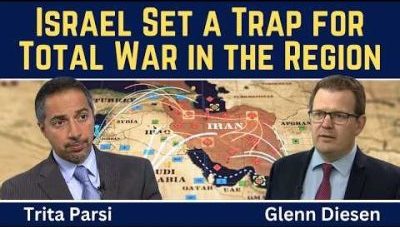
Trita Parsi: Israel Set a Trap for Total War in the Region
or go to
Aletho News Archives – Video-Images
From the Archive
Zionism’s Violent Legacy
By Donald Neff | Washington Report On Middle East Affairs | January 1996
On January 4, 1948, Jewish terrorists drove a truck loaded with explosives into the center of the all Arab city of Jaffa and detonated it, killing 26 and wounding around 100 Palestinian men, women and children.[1] The attack was the work of the Irgun Zvai Leumi – the “National Military Organization,” also known by the Hebrew letters Etzel – the largest Jewish terrorist group in Palestine. The Irgun was headed by Revisionist Zionist Menachem Begin and had been killing and maiming Arabs, Britons and even Jews for the previous ten years in its efforts to establish a Jewish state.
This terror campaign meant that at the core of Revisionist Zionism there existed a philosophical embrace of violence. … continue
Blog Roll
 Aletho News
- Trita Parsi: Israel Set a Trap for Total War in the Region
- Trump’s Iran war is on an Israeli leash
- Saudi oil boss issues global supply warning
- Riyadh Says Its Oil System Is Intact. The Numbers Say Otherwise.
- Trump and Netanyahu Want to “Finish the Job” on Iran
- US ‘one-sided dictation’ not Iran’s beliefs makes rational talks impossible: Baghaei
- Iran’s Next Strike May Not Explode. It Could Shut You Down /Col Doug Macgregor
- Iran: US political targets legitimate if assassinations return
- Iraq shuts key border crossing with Iran under US pressure: Report
- Undersea Internet cables could be targeted in retaliation for attacks on Iran: IRGC deputy chief
- If Americans Knew
- The Israel Lobby’s Changing Fortunes
- AIPAC has become such a political liability that it’s shifting to a more “nimble” approach to buying politicians
- At least 160 Israeli settler attacks in 2 weeks
- Will Gaza’s Ancient Christian Community Disappear Forever?
- Israel’s vision of regional security rests on keeping Arab states weak
- Heidi Levine recounts how Palestinian youths helped save her in settler attack
- DAILY UPDATE: Latest essential news on Palestine, Israel, & region
- Trump’s Intensifying Sabotage of the ICC, for Israel’s Sake
- Israeli military detain US and UK volunteers in West Bank including Democratic NY politician Brad Lander
- Americans at National Conservatism Conference held in Israel this year criticize Israel
- No Tricks Zone
- E-Cars Reduce CO2 Emissions By Only 41% Compared To Internal Combustion Engine Vehicles
- Predictions Made By Renowned Climate Professor Over Past Decades Have Been Proven To Be Poor
- New Study Suggests Large Regions Of The Pacific Ocean Have Been Cooling For The Last 80 Years
- Germany’s Green Energy Debacle: High Energy Costs Force Kahla Porzellan to Close After 182 Years!
- New Study: 50 Years Of The Most Aggressive ‘Net Zero’ Policies Can Only Affect The Global Climate By 0.03°C
- US September “Heat” Was No Record…Many Records Set Decades Ago
- Latest European Green Energy Debacle; Portugal’s Largest Flagship Solar Park Insolvent!
- Green Energy Debacle: German Expert Professor Fritz Vahrenholt Warns Of Severe Economic And Social Consequences
- Two More Paleo Reconstructions Affirm Meters-Higher Sea Levels Across Ireland, Brazil 7000-6000 Years Ago
- New Study: Earth And Venus Surface Warmth Largely Explained By Convection And Lapse Rate, Not CO2 Or Radiation

