Israel threatens to launch incursion into Syria
Press TV – November 4, 2017
The Israeli military has threatened to launch an incursion into Syria “to protect” the people of a village populated by the Arab country’s Druze minority, who are themselves supportive of the Syrian government.
“In recent hours, we witness the intensifying of the fighting at the area of the Druze village of Hader in the Syrian part of the Golan Heights,” Ronen Manelis, an Israeli military spokesperson, said in a statement on Friday, which was carried by The Jerusalem Post.
The military “is prepared and ready to assist the residents of the village and prevent damage to or the capture of the village Hader out of commitment to the Druze population,” he further claimed.
Since a war in 1967, Israel has occupied two-thirds of Syria’s Golan Heights.
The Hader Village, however, is situated in the part of the territory that is under Damascus’ control, and its population is aligned with the Syrian government, casting doubts about Israel’s real motives in possibly launching an incursion into Syrian territory.
The official Syrian Arab News Agency earlier reported that at least six people had been killed and 21 others wounded in a car bomb attack targeting the village by the Jabhat Fateh al-Sham Takfiri terrorist group, which was formerly known as al-Nusra Front.
Israel has been widely reported to be providing medical treatment to al-Nusra in Golan.
Tel Aviv has also several times targeted territory inside Syria, often claiming that it strikes convoys heading for the fighters of the Lebanese resistance movement of Hezbollah.
The Hezbollah fighters have been helping the Syrian military fight Fateh al-Sham and Daesh.
Takfiri groups such as Daesh and al-Nusra have never attacked Israel despite operating close to Syria’s borders with Israel over the past three years.
In April, Israel’s former minister of military affairs, Moshe Ya’alon, admitted to a tacit alliance with Daesh, saying the Takfiri group had “immediately apologized” to Tel Aviv after firing “once” into Israel.
The explosive revelation by the former minister of military affairs came during an interview reported Saturday on Israeli Channel 10’s website.
In September 2016, Israeli lawmaker Akram Hasson criticized Israel for supporting Takfiri terrorists in Syria, saying that the Fateh al-Sham terrorist group was operating in Syria with “unprecedented logistical and medical” support from Tel Aviv.
He said Israel’s escalation of attacks on the Syrian army positions in the Golan Heights had been aimed at paving the way for the terrorist group to gain more ground.
He said that Fateh al-Sham was bombing the Syrian Druze village of Khadr, with the support of the Israeli minister of military affairs, Avigdor Lieberman. Citing eyewitnesses, Hasson said the Takfiris were using advanced technological equipment, adding that Israel’s strategic support had been broadened over the past few months.
My World, My Rules? US Creates Another Base in Syria, SDF Reveals
Sputnik – November 4, 2107
The Syrian Democratic Forces (SDF) welcome the US’s ever-increasing presence in Syria, although all this technically constitutes an invasion and has never been condoned by the country’s government in Damascus.
Speaking on condition of anonymity, the SDF’s senior official said that the US had created a military base in the Syrian city of Raqqa, which was recently liberated from Daesh terrorists.
“The United States is building military bases in the areas freed by our forces from terrorists. We consider it to be the right strategy. Recently, America created a military base at the entrance to the territory of Raqqa, in the Jezra neighborhood,” the official said.
He explained that the neighborhood was chosen by the Americans because it was slightly damaged during a military operation in Raqqa and can now be seen as the city’s safest area. In addition, there are no mine traps or explosives in Jezra, according to him.
“The base and the adjacent territory are reliably protected by American soldiers. No one, except these soldiers and SDF fighters, has access to the base,” the official concluded.
In an interview with Sputnik on Friday, Muhammed Kheir al-Akkam, professor of international relations at the University of Damascus, specifically pointed to the US’s “fully coordinated move to replace Daesh with the SDF” in Syria.
Al-Akkam accused the US of paying lip-service to fighting terrorism and financing both Daesh and the SDF. He emphasized that “the US does not want the end of the Syrian war until their goals [there] are achieved.”
In another development on Friday, the Russian Reconciliation Center for Syria said that the US had established a military base near the town of At Tanf on the Syria-Iraq border without the Syrian government’s permission and banned anyone from coming within 55 kilometers. According to the Center, the base’s proximity to the Rukban refugee camp precludes humanitarian access and may be considered a war crime.
On October 20, Washington declared the liberation of Raqqa, Daesh’s self-proclaimed capital, from terrorists. US President Donald Trump called the operation to free the city a “critical breakthrough”, claiming that a “transition into a new phase” would follow it.
READ MORE: Russian MoD: West Wants to Cover Tracks of ‘Barbaric’ Bombings in Raqqa
$250mn each day for 16yrs: The staggering cost of ‘War on Terror’
RT | November 1, 2017
The ‘War on Terror’ has cost US taxpayers at least $1.46 trillion since September 11, 2001, the Department of Defense’s cost of war report has revealed.
The 74-page DoD dossier was obtained by the Federation of American Scientists’ Secrecy News. It breaks down the cost of the US’s various conflicts and reveals the ongoing war in Afghanistan and the war in Iraq account for the greatest chunk of change.
Operation Enduring Freedom (the name given to the ‘War on Terror’ between 2001 and 2014), Operation Iraqi Freedom (Iraq War) and Operation New Dawn (past operations in Iraq and Afghanistan in 2010 and 2011) made up the biggest expense. They cost a combined $1.315 trillion.
Current military operations cost $147.6 billion. This includes $102.9 billion for Operation Freedom’s Sentinel, the name given to the ‘War on Terror’ by Barack Obama at the end of 2014, and Operation Inherent Resolve, the US’s operations against ISIS in Iraq and Syria which started in 2014, and has cost $17.1 billion.
Operation Noble Eagle, the US’s domestic air defense operation has cost $27.6 billion.
The report only includes direct war-related expenses, such as equipment, operating bases, training, paying troops as well as the costs related to feeding, housing and transporting them.
COSTS OF WAR NOT INCLUDED
The numbers don’t include veterans’ expenses, or the amount racked up by intelligence agencies in their war on terror. The numbers also don’t take into account the cost involved in rebuilding and post-conflict programs.
The Veterans Benefits Administration’s latest annual report found 1,060,408 veterans are receiving benefits, at an average of $15,907 each per year.
Veterans of the War on Terror’s benefits’ are costing $16.8 billion a year, and 1 million are receiving benefits at the moment.
According to a 2011 Harvard Kennedy School study, Afghanistan and Iraq veterans’ benefits were estimated to cost between $600 billion and $1.3 billion over 40 years.
The report found that $31.3 billion had been spent in the 10 years since 2001 on medical care and disability for almost 500,000 vets. It also found that Afghanistan and Iraq veterans were applying for benefits at far greater rates than previous wars.
The report found the “cost of caring for war veterans rises for several decades and peaks in 30-40 years or more after a conflict.”
The CIA’s classified operations, along with the NSA’s efforts to combat terrorism aren’t included in the total.
The report includes the total amount of funding given through war related-requests between 2001 and 2017, which is $1.7 billion and includes war spending, non-war spending on fuel and the cost of running the Noble Eagle base. It also includes an $83 billion in funds marked as “classified.”
US Intelligence agencies receive upwards of $66 billion budget to play with annually, a significant fraction of which goes to foreign operations.
The intelligence budget request for 2018 was $57.7 billion for the National Intelligence Program, which includes all programs, projects and activities of the intelligence community, and $20.7 billion for the Military Intelligence Program, which includes military intelligence operations. The NSA, the Defense Intelligence Agency and the National Geospatial Intelligence Agency fall under both programs.
Despite the staggering amount spent on defense, President Trump has promised to “rebuild” the military which he says is “depleted.” He proposed a $603 billion budget for defense spending in March.
Both the Senate and House of Representatives have voted to pass $696 billion and $696.6 billion defense budgets, respectively.
Opposition rejects Russian initiative to hold congress on Syria crisis
Press TV – November 1, 2017
The Syrian opposition has rejected an initiative put forward by Russia during the latest negotiations in the Kazakh capital, Astana, to hold a congress, which would bring together Syria’s warring sides in Sochi later this month.
Members of Syrian opposition High Negotiations Committee and the Turkey-based Syrian National Coalition (SNC) told Reuters on Wednesday that they do not approve of the plan, saying they would issue a joint statement later to express their opposition to the plan.
SNC spokesman Ahmad Ramadan said the plan seeks to circumvent the UN efforts to mediate Syrian peace talks in Geneva, adding, “The Coalition will not participate in any negotiations with the regime outside Geneva or without UN sponsorship.”
The Astana peace process has been underway since January with the mediation of Iran and Russia, the Syrian government’s allies, and Turkey, which supports armed opposition groups.
The latest round of the talks came to an end on Tuesday, with the three guarantor states agreeing on the Russia-proposed congress.
A joint statement published on the Russian Foreign Ministry’s website at the end of the Astana talks listed 33 Syrian organizations invited to a “Congress of Syrian National Dialogue,” which is to be held in the Russian city of Sochi on November 18.
Russia says the key task of the event is to pave the way for constitutional reforms.
Turkey against Kurdish presence
Despite Turkey’s approval of the Syrian congress plan, a spokesman for Turkish President Recep Tayyip Erdogan said on Wednesday that the country opposes the invitation of the representatives of the Syrian Kurdish People’s Protection Units (YPG) to the talks.
Ibrahim Kalin’s remarks came a day after a senior Kurdish official said that Russia had invited the Kurdish-led authorities in northern Syria to a proposed congress of Syria’s rival parties in November.
Kalin noted that Turkish and Russian officials had discussed the issue, and that he had held meetings of his own to “solve the problem on the spot.”
More checkpoints for Idlib
The latest round of Astana talks focused on humanitarian issues in Syria as well as the situation in Idlib Province.
Elaborating on the agreements in the seventh round, Iran’s top negotiator at Astana talks Hossein Jaberi Ansari said on Tuesday that each of the three guarantor states had agreed to set up 12 checkpoints in Idlib, where a de-escalation zone has been formed.
Jaberi Ansari noted that the three guarantor states agreed on continuation of the fight against Daesh and al-Nusra Takfiri terrorists and their affiliates, settlement of the Syrian conflict through political channels and delivery of humanitarian aid to all the areas across Syria.
How America Spreads Global Chaos
By Nicolas J.S. Davies | Consortium News | October 30, 2017
As the recent PBS documentary on the American War in Vietnam acknowledged, few American officials ever believed that the United States could win the war, neither those advising Johnson as he committed hundreds of thousands of U.S. troops, nor those advising Nixon as he escalated a brutal aerial bombardment that had already killed millions of people.

U.S. F-105s bomb North Vietnam in 1966
(Photo credit: U.S. Air Force)
As conversations tape-recorded in the White House reveal, and as other writers have documented, the reasons for wading into the Big Muddy, as Pete Seeger satirized it, and then pushing on regardless, all came down to “credibility”: the domestic political credibility of the politicians involved and America’s international credibility as a military power.
Once the CIA went to work in Vietnam to undermine the 1954 Geneva Accords and the planned reunification of North and South through a free and fair election in 1956, the die was cast. The CIA’s support for the repressive Diem regime and its successors ensured an ever-escalating war, as the South rose in rebellion, supported by the North. No U.S. president could extricate the U.S. from Vietnam without exposing the limits of what U.S. military force could achieve, betraying widely held national myths and the powerful interests that sustained and profited from them.
The critical “lesson of Vietnam” was summed up by Richard Barnet in his 1972 book Roots of War. “At the very moment that the number one nation has perfected the science of killing,” Barnet wrote, “It has become an impractical means of political domination.”
Losing the war in Vietnam was a heavy blow to the CIA and the U.S. Military Industrial Complex, and it added insult to injury for every American who had lost comrades or loved ones in Vietnam, but it ushered in more than a decade of relative peace for America and the world. If the purpose of the U.S. military is to protect the U.S. from the danger of war, as our leaders so often claim, the “Vietnam syndrome,” or the reluctance to be drawn into new wars, kept the peace and undoubtedly saved countless lives.
Even the senior officer corps of the U.S. military saw it that way, since many of them had survived the horrors of Vietnam as junior officers. The CIA could still wreak havoc in Latin America and elsewhere, but the full destructive force of the U.S. military was not unleashed again until the invasion of Panama in 1989 and the First Gulf War in 1991.
Half a century after Vietnam, we have tragically come full circle. With the CIA’s politicized intelligence running wild in Washington and its covert operations spreading violence and chaos across every continent, President Trump faces the same pressures to maintain his own and his country’s credibility as Johnson and Nixon did. His predictable response has been to escalate ongoing wars in Syria, Iraq, Afghanistan, Yemen, Somalia and West Africa, and to threaten new ones against North Korea, Iran and Venezuela.
Trump is facing these questions, not just in one country, Vietnam, but in dozens of countries across the world, and the interests perpetuating and fueling this cycle of crisis and war have only become more entrenched over time, as President Eisenhower warned that they would, despite the end of the Cold War and, until now, the lack of any actual military threat to the United States.
Ironically but predictably, the U.S.’s aggressive and illegal war policy has finally provoked a real military threat to the U.S., albeit one that has emerged only in response to U.S. war plans. As I explained in a recent article, North Korea’s discovery in 2016 of a U.S. plan to assassinate its president, Kim Jong Un, and launch a Second Korean War has triggered a crash program to develop long-range ballistic missiles that could give North Korea a viable nuclear deterrent and prevent a U.S. attack. But the North Koreans will not feel safe from attack until their leaders and ours are sure that their missiles can deliver a nuclear strike against the U.S. mainland.
The CIA’s Pretexts for War
U.S. Air Force Colonel Fletcher Prouty was the chief of special operations for the Joint Chiefs of Staff from 1955 to 1964, managing the global military support system for the CIA in Vietnam and around the world. Fletcher Prouty’s book, The Secret Team: The CIA and its Allies in Control of the United States and the World, was suppressed when it was first published in 1973. Thousands of copies disappeared from bookstores and libraries, and a mysterious Army Colonel bought the entire shipment of 3,500 copies the publisher sent to Australia. But Prouty’s book was republished in 2011, and it is a timely account of the role of the CIA in U.S. policy.
Prouty surprisingly described the role of the CIA as a response by powerful people and interests to the abolition of the U.S. Department of War and the creation of the Department of Defense in 1947. Once the role of the U.S. military was redefined as one of defense, in line with the United Nations Charter’s prohibition against the threat or use of military force in 1945 and similar moves by other military powers, it would require some kind of crisis or threat to justify using military force in the future, both legally and politically. The main purpose of the CIA, as Prouty saw it, is to create such pretexts for war.
The CIA is a hybrid of an intelligence service that gathers and analyzes foreign intelligence and a clandestine service that conducts covert operations. Both functions are essential to creating pretexts for war, and that is what they have done for 70 years.
Prouty described how the CIA infiltrated the U.S. military, the State Department, the National Security Council and other government institutions, covertly placing its officers in critical positions to ensure that its plans are approved and that it has access to whatever forces, weapons, equipment, ammunition and other resources it needs to carry them out.
Many retired intelligence officers, such as Ray McGovern and the members of Veteran Intelligence Professionals for Sanity (VIPS), saw the merging of clandestine operations with intelligence analysis in one agency as corrupting the objective analysis they tried to provide to policymakers. They formed VIPS in 2003 in response to the fabrication of politicized intelligence that provided false pretexts for the U.S. to invade and destroy Iraq.
CIA in Syria and Africa
But Fletcher Prouty was even more disturbed by the way that the CIA uses clandestine operations to trigger coups, wars and chaos. The civil and proxy war in Syria is a perfect example of what Prouty meant. In late 2011, after destroying Libya and aiding in the torture-murder of Muammar Gaddafi, the CIA and its allies began flying fighters and weapons from Libya to Turkey and infiltrating them into Syria. Then, working with Saudi Arabia, Qatar, Turkey, Croatia and other allies, this operation poured thousands of tons of weapons across Syria’s borders to ignite and fuel a full-scale civil war.
Once these covert operations were under way, they ran wild until they had unleashed a savage Al Qaeda affiliate in Syria (Jabhat al-Nusra, now rebranded as Jabhat Fateh al-Sham), spawned the even more savage “Islamic State,” triggered the heaviest and probably the deadliest U.S. bombing campaign since Vietnam and drawn Russia, Iran, Turkey, Israel, Jordan, Hezbollah, Kurdish militias and almost every state or armed group in the Middle East into the chaos of Syria’s civil war.
Meanwhile, as Al Qaeda and Islamic State have expanded their operations across Africa, the U.N. has published a report titled Journey to Extremism in Africa: Drivers, Incentives and the Tipping Point for Recruitment, based on 500 interviews with African militants. This study has found that the kind of special operations and training missions the CIA and AFRICOM are conducting and supporting in Africa are in fact the critical “tipping point” that drives Africans to join militant groups like Al Qaeda, Al-Shabab and Boko Haram.
The report found that government action, such as the killing or detention of friends or family, was the “tipping point” that drove 71 percent of African militants interviewed to join armed groups, and that this was a more important factor than religious ideology.
The conclusions of Journey to Extremism in Africa confirm the findings of other similar studies. The Center for Civilians in Conflict interviewed 250 civilians who joined armed groups in Bosnia, Somalia, Gaza and Libya for its 2015 study, The People’s Perspectives: Civilian Involvement in Armed Conflicts. The study found that the most common motivation for civilians to join armed groups was simply to protect themselves or their families.
The role of U.S. “counterterrorism” operations in fueling armed resistance and terrorism, and the absence of any plan to reduce the asymmetric violence unleashed by the “global war on terror,” would be no surprise to Fletcher Prouty. As he explained, such clandestine operations always take on a life of their own that is unrelated, and often counter-productive, to any rational U.S. policy objective.
“The more intimate one becomes with this activity,” Prouty wrote, “The more one begins to realize that such operations are rarely, if ever, initiated from an intent to become involved in pursuit of some national objective in the first place.”
The U.S. justifies the deployment of 6,000 U.S. special forces and military trainers to 53 of the 54 countries in Africa as a response to terrorism. But the U.N.’s Journey to Extremism in Africa study makes it clear that the U.S. militarization of Africa is in fact the “tipping point” that is driving Africans across the continent to join armed resistance groups in the first place.
This is a textbook CIA operation on the same model as Vietnam in the late 1950s and early 60s. The CIA uses U.S. special forces and training missions to launch covert and proxy military operations that drive local populations into armed resistance groups, and then uses the presence of those armed resistance groups to justify ever-escalating U.S. military involvement. This is Vietnam redux on a continental scale.
Taking on China
What seems to really be driving the CIA’s militarization of U.S. policy in Africa is China’s growing influence on the continent. As Steve Bannon put it in an interview with the Economist in August, “Let’s go screw up One Belt One Road.”
China is already too big and powerful for the U.S. to apply what is known as the Ledeen doctrine named for neoconservative theorist and intelligence operative Michael Ledeen who suggested that every 10 years or so, the United States “pick up some small crappy little country and throw it against the wall, just to show we mean business.”
China is too powerful and armed with nuclear weapons. So, in this case, the CIA’s job would be to spread violence and chaos to disrupt Chinese trade and investment, and to make African governments increasingly dependent on U.S. military aid to fight the militant groups spawned and endlessly regenerated by U.S.-led “counterterrorism” operations.
Neither Ledeen nor Bannon pretend that such policies are designed to build more prosperous or viable societies in the Middle East or Africa, let alone to benefit their people. They both know very well what Richard Barnet already understood 45 years ago, that America’s unprecedented investment in weapons, war and CIA covert operations are only good for one thing: to kill people and destroy infrastructure, reducing cities to rubble, societies to chaos and the desperate survivors to poverty and displacement.
As long as the CIA and the U.S. military keep plunging the scapegoats for our failed policies into economic crisis, violence and chaos, the [elite elements of] United States and the United Kingdom can remain the safe havens of the world’s wealth, islands of privilege and excess amidst the storms they unleash on others.
But if that is the only “significant national objective” driving these policies, it is surely about time for the 99 percent of Americans who reap no benefit from these murderous schemes to stop the CIA and its allies before they completely wreck the already damaged and fragile world in which we all must live, Americans and foreigners alike.
Douglas Valentine has probably studied the CIA in more depth than any other American journalist, beginning with his book on The Phoenix Program in Vietnam. He has written a new book titled The CIA as Organized Crime: How Illegal Operations Corrupt America and the World, in which he brings Fletcher Prouty’s analysis right up to the present day, describing the CIA’s role in our current wars and the many ways it infiltrates, manipulates and controls U.S. policy.
The Three Scapegoats
In Trump’s speech to the U.N. General Assembly, he named North Korea, Iran and Venezuela as his prime targets for destabilization, economic warfare and, ultimately, the overthrow of their governments, whether by coup d’etat or the mass destruction of their civilian population and infrastructure. But Trump’s choice of scapegoats for America’s failures was obviously not based on a rational reassessment of foreign policy priorities by the new administration. It was only a tired rehashing of the CIA’s unfinished business with two-thirds of Bush’s “axis of evil” and Bush White House official Elliott Abrams’ failed 2002 coup in Caracas, now laced with explicit and illegal threats of aggression.
How Trump and the CIA plan to sacrifice their three scapegoats for America’s failures remains to be seen. This is not 2001, when the world stood silent at the U.S. bombardment and invasion of Afghanistan after September 11th. It is more like 2003, when the U.S. destruction of Iraq split the Atlantic alliance and alienated most of the world. It is certainly not 2011, after Obama’s global charm offensive had rebuilt U.S. alliances and provided cover for French President Sarkozy, British Prime Minister Cameron, Secretary of State Hillary Clinton and the Arab royals to destroy Libya, once ranked by the U.N. as the most developed country in Africa, now mired in intractable chaos.
In 2017, a U.S. attack on any one of Trump’s scapegoats would isolate the United States from many of its allies and undermine its standing in the world in far-reaching ways that might be more permanent and harder to repair than the invasion and destruction of Iraq.
In Venezuela, the CIA and the right-wing opposition are following the same strategy that President Nixon ordered the CIA to inflict on Chile, to “make the economy scream” in preparation for the 1973 coup. But the solid victory of Venezuela’s ruling Socialist Party in recent nationwide gubernatorial elections, despite a long and deep economic crisis, reveals little public support for the CIA’s puppets in Venezuela.
The CIA has successfully discredited the Venezuelan government through economic warfare, increasingly violent right-wing street protests and a global propaganda campaign. But the CIA has stupidly hitched its wagon to an extreme right-wing, upper-class opposition that has no credibility with most of the Venezuelan public, who still turn out for the Socialists at the polls. A CIA coup or U.S. military intervention would meet fierce public resistance and damage U.S. relations all over Latin America.
Boxing In North Korea
A U.S. aerial bombardment or “preemptive strike” on North Korea could quickly escalate into a war between the U.S. and China, which has reiterated its commitment to North Korea’s defense if North Korea is attacked. We do not know exactly what was in the U.S. war plan discovered by North Korea, so neither can we know how North Korea and China could respond if the U.S. pressed ahead with it.
Most analysts have long concluded that any U.S. attack on North Korea would be met with a North Korean artillery and missile barrage that would inflict unacceptable civilian casualties on Seoul, a metropolitan area of 26 million people, three times the population of New York City. Seoul is only 35 miles from the frontier with North Korea, placing it within range of a huge array of North Korean weapons. What was already a no-win calculus is now compounded by the possibility that North Korea could respond with nuclear weapons, turning any prospect of a U.S. attack into an even worse nightmare.
U.S. mismanagement of its relations with North Korea should be an object lesson for its relations with Iran, graphically demonstrating the advantages of diplomacy, talks and agreements over threats of war. Under the Agreed Framework signed in 1994, North Korea stopped work on two much larger nuclear reactors than the small experimental one operating at Yongbyong since 1986, which only produces 6 kg of plutonium per year, enough for one nuclear bomb.
The lesson of Bush’s Iraq invasion in 2003 after Saddam Hussein had complied with demands that he destroy Iraq’s stockpiles of chemical weapons and shut down a nascent nuclear program was not lost on North Korea. Not only did the invasion lay waste to large sections of Iraq with hundreds of thousands of dead but Hussein himself was hunted down and condemned to death by hanging.
Still, after North Korea tested its first nuclear weapon in 2006, even its small experimental reactor was shut down as a result of the “Six Party Talks” in 2007, all the fuel rods were removed and placed under supervision of the International Atomic Energy Agency, and the cooling tower of the reactor was demolished in 2008.
But then, as relations deteriorated, North Korea conducted a second nuclear weapon test and again began reprocessing spent fuel rods to recover plutonium for use in nuclear weapons.
North Korea has now conducted six nuclear weapons tests. The explosions in the first five tests increased gradually up to 15-25 kilotons, about the yield of the bombs the U.S. dropped on Hiroshima and Nagasaki, but estimates for the yield of the 2017 test range from 110 to 250 kilotons, comparable to a small hydrogen bomb.
The even greater danger in a new war in Korea is that the U.S. could unleash part of its arsenal of 4,000 more powerful weapons (100 to 1,200 kilotons), which could kill millions of people and devastate and poison the region, or even the world, for years to come.
The U.S. willingness to scrap the Agreed Framework in 2003, the breakdown of the Six Party Talks in 2009 and the U.S. refusal to acknowledge that its own military actions and threats create legitimate defense concerns for North Korea have driven the North Koreans into a corner from which they see a credible nuclear deterrent as their only chance to avoid mass destruction.
China has proposed a reasonable framework for diplomacy to address the concerns of both sides, but the U.S. insists on maintaining its propaganda narratives that all the fault lies with North Korea and that it has some kind of “military solution” to the crisis.
This may be the most dangerous idea we have heard from U.S. policymakers since the end of the Cold War, but it is the logical culmination of a systematic normalization of deviant and illegal U.S. war-making that has already cost millions of lives in Afghanistan, Iraq, Syria, Libya, Somalia, Yemen and Pakistan. As historian Gabriel Kolko wrote in Century of War in 1994, “options and decisions that are intrinsically dangerous and irrational become not merely plausible but the only form of reasoning about war and diplomacy that is possible in official circles.”
Demonizing Iran
The idea that Iran has ever had a nuclear weapons program is seriously contested by the IAEA, which has examined every allegation presented by the CIA and other Western “intelligence” agencies as well as Israel. Former IAEA Director General Mohamed ElBaradei revealed many details of this wild goose chase in his 2011 memoir, Age of Deception: Nuclear Diplomacy in Treacherous Times.
When the CIA and its partners reluctantly acknowledged the IAEA’s conclusions in a 2007 National Intelligence Estimate (NIE), ElBaradei issued a press release confirming that, “the agency has no concrete evidence of an ongoing nuclear weapons program or undeclared nuclear facilities in Iran.”
Since 2007, the IAEA has resolved all its outstanding concerns with Iran. It has verified that dual-use technologies that Iran imported before 2003 were in fact used for other purposes, and it has exposed the mysterious “laptop documents” that appeared to show Iranian plans for a nuclear weapon as forgeries. Gareth Porter thoroughly explored all these questions and allegations and the history of mistrust that fueled them in his 2014 book, Manufactured Crisis: the Untold Story of the Iran Nuclear Scares, which I highly recommend.
But, in the parallel Bizarro world of U.S. politics, hopelessly poisoned by the CIA’s endless disinformation campaigns, Hillary Clinton could repeatedly take false credit for disarming Iran during her presidential campaign, and neither Bernie Sanders, Donald Trump nor any corporate media interviewer dared to challenge her claims.
“When President Obama took office, Iran was racing toward a nuclear bomb,” Clinton fantasized in a prominent foreign policy speech on June 2, 2016, claiming that her brutal sanctions policy “brought Iran to the table.”
In fact, as Trita Parsi documented in his 2012 book, A Single Roll of the Dice: Obama’s Diplomacy With Iran, the Iranians were ready, not just to “come to the table,” but to sign a comprehensive agreement based on a U.S. proposal brokered by Turkey and Brazil in 2010. But, in a classic case of “tail wags dog,” the U.S. then rejected its own proposal because it would have undercut support for tighter sanctions in the U.N. Security Council. In other words, Clinton’s sanctions policy did not “bring Iran to the table”, but prevented the U.S. from coming to the table itself.
As a senior State Department official told Trita Parsi, the real problem with U.S. diplomacy with Iran when Clinton was at the State Department was that the U.S. would not take “Yes” for an answer. Trump’s ham-fisted decertification of Iran’s compliance with the JCPOA is right out of Clinton’s playbook, and it demonstrates that the CIA is still determined to use Iran as a scapegoat for America’s failures in the Middle East.
The spurious claim that Iran is the world’s greatest sponsor of terrorism is another CIA canard reinforced by endless repetition. It is true that Iran supports and supplies weapons to Hezbollah and Hamas, which are both listed as terrorist organizations by the U.S. government. But they are mainly defensive resistance groups that defend Lebanon and Gaza respectively against invasions and attacks by Israel.
Shifting attention away from Al Qaeda, Islamic State, the Libyan Islamic Fighting Group and other groups that actually commit terrorist crimes around the world might just seem like a case of the CIA “taking its eyes off the ball,” if it wasn’t so transparently timed to frame Iran with new accusations now that the manufactured crisis of the nuclear scare has run its course.
What the Future Holds
Barack Obama’s most consequential international achievement may have been the triumph of symbolism over substance behind which he expanded and escalated the so-called “war on terror,” with a vast expansion of covert operations and proxy wars that eventually triggered the heaviest U.S. aerial bombardments since Vietnam in Iraq and Syria.
Obama’s charm offensive invigorated old and new military alliances with the U.K., France and the Arab monarchies, and he quietly ran up the most expensive military budget of any president since World War Two.
But Obama’s expansion of the “war on terror” under cover of his deceptive global public relations campaign created many more problems than it solved, and Trump and his advisers are woefully ill-equipped to solve any of them. Trump’s expressed desire to place America first and to resist foreign entanglements is hopelessly at odds with his aggressive, bullying approach to every foreign policy problem.
If the U.S. could threaten and fight its way to a resolution of any of its international problems, it would have done so already. That is exactly what it has been trying to do since the 1990s, behind both the swagger and bluster of Bush and Trump and the deceptive charm of Clinton and Obama: a “good cop – bad cop” routine that should no longer fool anyone anywhere.
But as Lyndon Johnson found as he waded deeper and deeper into the Big Muddy in Vietnam, lying to the public about unwinnable wars does not make them any more winnable. It just gets more people killed and makes it harder and harder to ever tell the public the truth.
In unwinnable wars based on lies, the “credibility” problem only gets more complicated, as new lies require new scapegoats and convoluted narratives to explain away graveyards filled by old lies. Obama’s cynical global charm offensive bought the “war on terror” another eight years, but that only allowed the CIA to drag the U.S. into more trouble and spread its chaos to more places around the world.
Meanwhile, Russian President Putin is winning hearts and minds in capitals around the world by calling for a recommitment to the rule of international law, which prohibits the threat or use of military force except in self-defense. Every new U.S. threat or act of aggression will only make Putin’s case more persuasive, not least to important U.S. allies like South Korea, Germany and other members of the European Union, whose complicity in U.S. aggression has until now helped to give it a false veneer of political legitimacy.
Throughout history, serial aggression has nearly always provoked increasingly united opposition, as peace-loving countries and people have reluctantly summoned the courage to stand up to an aggressor. France under Napoleon and Hitler’s Germany also regarded themselves as exceptional, and in their own ways they were. But in the end, their belief in their exceptionalism led them on to defeat and destruction.
Americans had better hope that we are not so exceptional, and that the world will find a diplomatic rather than a military “solution” to its American problem. Our chances of survival would improve a great deal if American officials and politicians would finally start to act like something other than putty in the hands of the CIA.
Nicolas J. S. Davies is the author of Blood On Our Hands: the American Invasion and Destruction of Iraq. He also wrote the chapters on “Obama at War” in Grading the 44th President: a Report Card on Barack Obama’s First Term as a Progressive Leader.
JFK Files: Cover-Up Continues of President’s Assassination
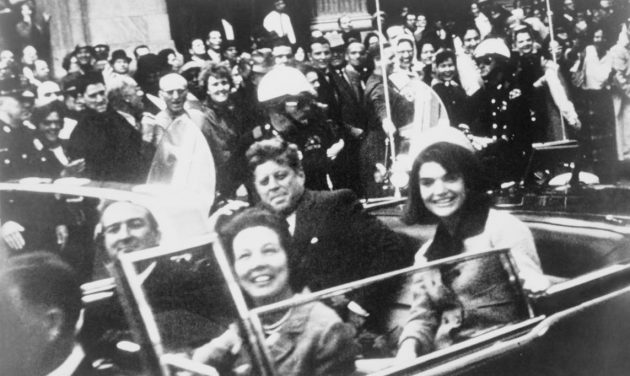
By Finian CUNNINGHAM | Strategic Culture Foundation | 28.10.2017
The murder of President John F Kennedy 54 years ago has been described as the “crime of the century”. If US and Western news media cannot discuss this seminal event openly and honestly, let alone investigate it, then what does that say about their credibility?
Such systematic media denial of reality inflicts irreparable damage to their credibility. How can they be taken seriously on any other matter, whether it is claims of “Russian meddling” or about the war in Syria, or the claims justifying Washington’s aggression towards Iran and North Korea?
The astounding media denial over JFK’s assassination is a symptom of the tacit totalitarianism that passes for “Western democracy”.
The release this week of secret government papers on the killing of President Kennedy was billed as a day of revelation and reckoning. Closer to the truth is that the shocking murder of Kennedy continues to be covered-up by the US deep state.
The premise of “revelation and reckoning” is absurdly false and naive. The notion that US authorities would “finally come clean” on what happened that day in Dallas is not only flawed. It also creates the illusion that the controversy has finally been settled, thereby supposedly confirming the official version that Kennedy was assassinated by a lone malcontent, Lee Harvey Oswald.
CNN reported the release of official documents this week thus: “More than 50 years after President John F Kennedy was killed, Americans on Thursday may finally get the US government’s full accounting… to quell conspiracy theories that have long swirled around the assassination.”
The New York Times wrote: “The final trove of sealed government records to be released” will lay to rest the “grand-daddy of all conspiracy theories”.
The evidence and truth about Kennedy’s slaying in Dealey Plaza, Dallas, on November 22, 1963, is already out there in the testimony of dozens of eye witnesses who observed the assassination or who were present in the aftermath. The assumption that the release of secret archives could shed any light is misplaced. But the media depiction of a “final trove” of documents conveniently shores up the official account that any other explanation of what really happened is that of a “conspiracy crank”.
CNN and the New York Times, as with the rest of the mainstream media in the US, claim that the release of declassified papers this week confirms the official narrative that JFK was shot dead by Lee Harvey Oswald firing a sniper rifle from the sixth floor of the Texas Book Store Depository at the president’s motorcade. That was the original conclusion from the government-led Warren Commission, which published its report on the assassination in 1964. For over 50 years, the US media have unswervingly maintained that version of events, despite abundant evidence to the contrary.
What the media have studiously ignored for all these years is the evidence and testimony from dozens of witnesses who were either excluded from the Warren Commission hearings, or their testimonies were distorted by FBI investigators. Many of them mysteriously killed.
One of the best compendiums on the Kennedy assassination is ‘JFK and the Unspeakable’ by James Douglass (2008). Other essential titles for details on the murder – details which mainstream media largely ignore – include ‘Crossfire’ by Jim Marrs, and ‘Brothers’ by David Talbot.
Among the many crucial witnesses recorded over the years, here below are a select few. Their testimonies show that the murder of Kennedy was a much darker “crime of the century” than the mainstream media would ever explore.
Shot from the front, not from the back
Doctor Charles Crenshaw led the medical staff at Dallas Parkland Hospital where the fatally wounded JFK was rushed to minutes after being shot. Crenshaw and nearly 20 other medical staff tended to the president’s wounds trying to resuscitate him. All of these medics testified that Kennedy’s fatal head wound was from a gun shot to the front of the skull which resulted in a massive exit hole at the back of his head. That one detail alone contradicts the official claim that Oswald allegedly shot JFK from the rear, as the Warren Commission contends.
The fatal shot must have come from the front, which the famous amateur video footage recorded by bystander Abraham Zapruder near the Grassy Knoll also purports to show. (Notably, a Congressional panel, the House Select Committee on Assassinations, concluded in 1979 after a reexamination of evidence that there was more than one shooter in Dealey Plaza. But this finding has never been thoroughly explored by the media. Why not?)
Critically important, Dr Crenshaw and his medical colleagues were immediately pressured by the FBI and other authorities to suppress their initial observations. They were tacitly intimidated to change their accounts to say the opposite: that the president’s head wound was caused by a shot from the rear. Crenshaw was not invited to testify before the Warren Commission during its year-long hearings. He says for years after, he and Parkland staff were subtly intimidated to keep quiet about their witness to Kennedy’s final moments. However, three decades later, in 1992, Dr Crenshaw published ‘JFK and the Conspiracy of Silence’. Ironically, it became a best-seller on the New York Times book list, in spite a huge media campaign to discredit Crenshaw’s medical expertise.
Lieutenant Commander William Bruce Pitzer was in charge of the Audio-Visual Department at Bethesda Naval Hospital in Washington DC where Kennedy’s remains were flown hours after the shooting. That was where the official autopsy was carried out, bizarrely, under the watchful eye of senior military personnel. Pitzer was tasked with filming the remains of the president. As he later confided to a colleague, who corroborated the film’s images, JFK’s head had a massive exit wound at the back of the skull, just as the Dallas doctors had initially maintained. Two years later, Pitzer was mysteriously found dead in his studio. He had been shot in the head, a revolver nearby. His death was officially said to be suicide, which his widow disputed. The film of the president’s remains, which Pitzer had been carefully storing, was removed from his studio by an unknown person.
The contention that Kennedy was shot from the front is not a theory. The direction of fire was witnessed by several people who were near the Grassy Knoll, the stockade-fence area which JFK’s limousine was approaching as it drove away from the Texas Book Store Depository, further up on Elm Street. If Oswald was the shooter from the depository, as the official narrative goes, then how could Kennedy have been shot fatally from the front?
Secret Service men at Grassy Knoll
Ed Hoffman, a young deaf and mute man, was watching the approaching motorcade from the flyover overlooking the knoll. Hoffman says he saw a puff of smoke emitting from where a gunman was standing against the stockade fence just as the president’s car was approaching. The shooter then quickly moved to rail lines behind the knoll where he threw his rifle to another man dressed in work overalls. The second man disassembled the rifle in a twist, shoved it into a holdall bag and proceeded to walk along the rail track away from the knoll. The shooter then swiftly walked back to the stockade fence. Several police officers on duty that day, who immediately ran towards the knoll on hearing the gunfire, reported that they were confronted by men purporting to be secret service agents. Ed Hoffman’s testimony was ignored by FBI investigators when he voluntarily came forward. But his account was verified by a railroad operator named Lee Bowers who also observed the shooting from the Grassy Knoll from the vantage point of a control tower he happened to be working in. Bowers testified his observation to respected JFK researcher and author Mark Lane. Four months later, in 1966, Bowers was killed in a single-car accident. This fate of untimely death has met several other people who spoke out about circumstances of the shooting which did not fit with the Warren Commission narrative.
Another witness on the Grassy Knoll was a young off-duty soldier, Gordon Arnold. Years later after mustering the courage, he testified that he felt the discharge of two shots fired from close behind while he was taking photos of the passing motorcade. Gordon said he ducked for cover, and before he knew it, two men lit on him, one holding a rifle and dressed in a police uniform, who demanded he empty his camera of its film. Arnold kept silent about his story for years out of fear for his life.
Jack Ruby was not a random killer of Oswald
Many serious independent investigators have disputed the Warren Commission report as being riddled with anomalies, apart from its exclusion of key witnesses. One of the glaring flaws in the Warren findings is that Lee Harvey Oswald purportedly acted alone, and that he had no connection to Jack Ruby, the Mob-connected nightclub owner who shot dead Oswald while in custody in the Dallas police station – two days after Kennedy was killed.
Rose Cheramie worked in Ruby’s Dallas club. Before her death in a bizarre road accident in 1965, Cheramie claimed that Ruby and Oswald knew each other for years. She said Oswald would often call round to the club where he would sit at Ruby’s table.
Julia Ann Mercer was stuck in traffic in Dealey Plaza on the morning of the assassination, at 11am, an hour and a half before the president’s motorcade arrived. She noticed a man getting out of a station wagon parked below the Grassy Knoll and that this man was carrying what appeared to be a concealed rifle as he proceeded to walk up to the stockade-fence area. Out of curiosity, Mercer then rolled her car alongside the parked vehicle and took a look at the driver squarely in the face. It was Jack Ruby. She didn’t know Ruby at that time. Only days later when his infamous shooting of Oswald at the police station made international headlines did Mercer recognize Ruby’s face. Her testimony was distorted by FBI investigators. It was only when Mercer later talked to various independent researchers that her crucial identification of Ruby at the scene came to light, albeit not in a mass media light.
Other witnesses further substantiate the real conspiracy that lies behind JFK’s assassination. The word “conspiracy” is not used here in the pejorative sense to demean. It conveys the literal meaning of an organized plot.
What was that plot? As James Douglass and others have cogently pieced together, after his election in 1960 JFK was increasingly viewed by the US deep state as a “rogue president”. He was firmly opposed to the unfurling arms race against the Soviet Union and wanted to pursue earnest, radical nuclear disarmament with Russian leader Nikita Khrushchev. The Cuban missile crisis of 1962 had jolted JFK on the dangers of a nuclear world war. Kennedy also wanted to normalize relations with Cuba’s Fidel Castro following the disastrous CIA-led Bay of Pigs invasion in 1961 for which the president vowed he would “smash the agency into a thousand pieces”. He fired the CIA director Allen Dulles over the fiasco. Ironically, Dulles would later be appointed to the seven-member Warren Commission, supposedly tasked with uncovering the truth behind Kennedy’s assassination.
Moreover, JFK had concluded that the looming Vietnam War would be a disaster. In the summer of 1963 he was preparing orders for US military withdrawal. That move was a formidable threat to the anticipated huge profits for the military industrial complex if the war escalated, which it did after Kennedy’s death.
At the height of the Cold War, Kennedy was therefore seen as little more than a traitor by the military-security apparatus and as an obstacle to the vested economic interests of the Pentagon’s military-industrial complex. In short, he had to be got rid of by “executive action”.
The CIA had the motive to terminate Kennedy. It also had the means. CIA contract-killers were often drawn from the ranks of criminal underworld, the Mafia and far-right Cuban exiles living in Miami. This arrangement affords “plausible deniability”.
Jack Ruby, who had long been a Mafia, CIA gun-runner and fixer, was recruited into the months-long planning of the plot to ambush the president.
Oswald the CIA agent who became a scapegoat
So, what was Oswald’s connection? The 23-year-old ex-US marine had been recruited in the late 1950s by the CIA when he was posted to a U2 spy plane base in Japan. He became fluent in Russian and then “defected” to the Soviet Union. It seems that the KGB did not take Oswald seriously as a reliable would-be agent. He then returned to the US in 1962, apparently of his own volition. Significantly, for an American citizen who had renounced his country and defected to the Soviet Union, Oswald and his Russian wife were not subjected to any recriminations on their return to the US. Indeed, it seems they were given generous patronage to find accommodation, jobs, and connections.
Oswald, who became immersed in both pro- and anti-Castro Cuban political activities in the US, became embroiled in the plot to assassinate Kennedy. How much Oswald knew of CIA involvement or the agency’s true objectives is not clear. But evidence suggests that he was also working as an informer for the FBI to alert them of the plot to kill the president. Oswald was out of his depth. He probably didn’t realize how little a pawn he was in a much bigger nefarious plot.
His close involvement with the bit-player plotters explains how he was an associate of Jack Ruby. What Oswald’s true intentions were are not clear. Tragically, he may have had a misplaced belief that his role as an informant for the FBI was trying to save the president.
In the end, tragically, Oswald was made the scapegoat for the assassination. The claim that he fired a rifle from the Texas School Book Depository with three shots in a matter of seconds and hit the president twice – as the Warren Commission contends – defies credibility. Also, according to the Warren report, one of those bullets supposedly exited Kennedy’s neck and then struck Governor John Connally who was riding in front of the Limousine. Dr Crenshaw and the other doctors at Parkland Hospital initially said that the wound on Kennedy’s neck (in addition to the fatal head injury) was an entry wound – another pointer that shots were actually fired from the front, not from the back as the Warren Commission maintains. That’s not to say shots were not fired from the depository. Witnesses say they heard gunfire and saw a gunman in the upper window. But that speaks more to the elaborate CIA plot to frame Oswald, who happened to recently become employed at the depository weeks before Kennedy’s visit to Dallas.
Less than an hour after the president was shot, Oswald hurriedly entered a movie theater. Witness Jack Davis said he noticed Oswald acting strangely, sitting beside individuals, then restlessly getting up and sitting down again beside another moviegoer – this in an almost empty theater! “It was obvious he was looking for someone,” recalled Davis. It is reasonable to speculate Oswald was seeking out a FBI contact whom he was instructed to connect with in a faux-arrangement. Oswald never did meet his “contact”. He was being left out to hang and dry by the plotters.
Another movie-theater customer, George Applin, told how when police officers arrested Oswald, Applin kindly advised another seated man to move to the back of the cinema hall, away from the trouble. The man nonchalantly looked at Applin, ignored his advice, kept sitting in his seat, and then proceeded to intently observe the arrest of Oswald. Days later, Applin recognized the face of Jack Ruby as being that of the man in the cinema hall. Evidently, Ruby had expected the police officers to shoot Oswald on the spot at his arrest, especially because their colleague Officer JD Tippit had just been shot dead minutes before – supposedly by Oswald fleeing from the assassination of the president. As it turned out, the arresting officers did not kill Oswald in the movie-theater, and it would fall to Ruby to follow-up two days later at the Dallas police station.
There are many other such key witnesses to the events surrounding the assassination of JFK, recorded in the reference books cited above, among other sources. All these witnesses were ignored by the mainstream media, or excluded and distorted by the Warren Commission, or were intimidated from speaking out publicly.
State-level organization of assassination
One further crucial story is that of Air Force Sergeant Robert Vinson. On the Friday of the assassination, through sheer happenstance, he caught an unscheduled ride onboard an unmarked C-54 military cargo plane, making his way back from Washington DC to his home near Colorado Springs. During the flight in which he was the only passenger, the pilots announced the president’s death. The plane then banked to another unspoken destination. When it landed on a rough strip, Sgt. Vinson recognized the city’s skyline as Dallas. It was mid-afternoon. During the brief stop, the plane’s engines did not shut off. Two men boarded. The aircraft then took off, landing eventually at the air base at Roswell, New Mexico. It was only when Vinson finally got home on Sunday, watching the breaking news on the TV with his wife, that he recognized the face of the man accused of being the president’s assassin, Lee Harvey Oswald. It was the same facial appearance as one of the two men who boarded at Dallas.
Vinson’s experience confirms what many other witnesses have contended. That in the plot to kill JFK and frame Oswald, there was an Oswald double, an imposter whose task was to incriminate the scapegoat. The double was used to lay down a trail of evidence purporting to frame Oswald as a Cuban or Soviet malcontent. This would explain the strange encounters at the Cuban and Soviet embassies in Mexico City only weeks before the Dallas assassination. During those encounters, the Oswald imposter dramatically proclaimed his communist allegiance. Significantly, the Soviet records show that the person claiming to be Oswald spoke very bad Russian, whereas it is known that the real Oswald was fluent in the language.
For years, Sgt. Vinson was subtly intimidated by the CIA to keep quiet about his accidental flight onboard the unmarked cargo plane. However, Vinson did come forward years later to tell researchers of his insights into the plot to kill Kennedy. He also testified that the plane he rode on was not entirely unmarked. On the tail section, the aircraft bore the insignia of the CIA.
But perhaps the absolute key witness in all this was Lee Harvey Oswald himself. His last words shouted out in defiance at the Dallas police station were: “I’m just a patsy!”
Conveniently, Oswald was silenced by the Mob, CIA-connected Jack Ruby before he could tell his side of the story in a court of law. Oswald no doubt could have lifted a very disturbing lid on who really was orchestrating the president’s assassination.
Regime change American-style
The story of JFK’s assassination is one of state-sponsored murder carried out by the deep state power structure in the US. It was a coup d’état against a president elected by the people, whom the deep state viewed as an enemy to their objectives for war and foreign intrigues.
It was a shocking, brutal blow against democracy, a “regime change”, delivered not in some distant country, but right at home in the United States.
Such was the elaborate conspiracy to murder the president, involving contract-killers and secret services, as well as the complicity of police forces, the FBI, the military, judiciary and the corporate media, that the plotters behind JFK’s killing had to be positioned at the highest level of US government – the deep state.
Nearly 54 years after Kennedy’s murder by America’s state apparatus, the cover-up continues in the form of a futile release of “secret papers”. And, suitably, the mainstream media declare that this “disclosure” is the final settling of the matter, which puts an end to “conspiracy theories”. The media’s complicity may simply be due to an inability or reluctance to question the official narrative. This is what we mean by “tacit totalitarianism” – a willingness to believe in indoctrinated thinking, such as the false Warren Commission conclusion.
No wonder the US public – which polls have consistently shown do not believe the official Warren Commission narrative, and who indeed believe instead that JFK was actually killed in a nefarious plot – no wonder the public have increasing distrust and contempt for the corporate media for being dishonest and unreliable.
For the past year, the same media have been trying to slander Russia for interfering in US democracy. The same media have also tried to conceal American state-sponsored terrorism in Syria to overthrow the government there, just like it did when it overthrew the government in Libya in 2011 and killed the country’s leader Muammar Gaddafi. And many other illegal regime-change operations carried out by the US and its Western allies, presented as noble endeavors to “defend democracy”, “fight terrorism” or “protect human rights”.
In an era when such commercially-driven mass media pontificate about “fake news” perpetrated by others it is all the more galling that the accusation comes from the very same media who specialize in mass fake news and mass fake narratives.
The US state murder of JFK in 1963 and the decades-long cover-up is perhaps the greatest condemnation of the fraud that is US mass media. The day that the president was assassinated was also the day that American pretensions of democracy took a deadly hit.
The Harmful Effects of Antifa. Crisis of America’s Left
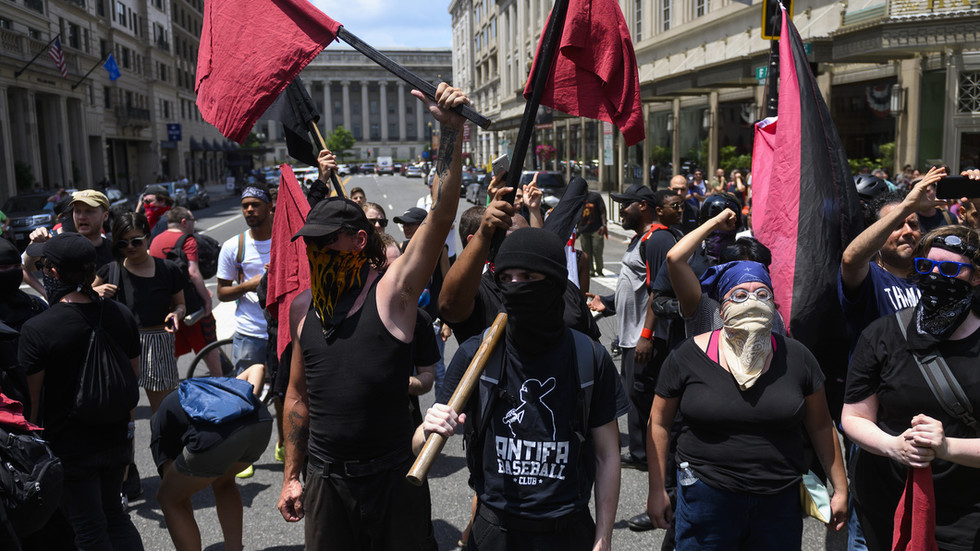
By Diana Johnstone | Global Research | October 24, 2017
An historic opportunity is being missed. The disastrous 2016 presidential election could and should have been a wakeup call. A corrupt political system that gave voters a choice between two terrible candidates is not democracy.
This should have been the signal to face reality. The U.S. political system is totally rotten, contemptuous of the people, serving the corporations and lobbies that pay to keep them in office. The time had come to organize a genuine alternative, an independent movement to liberate the electoral system from the grip of billionaires, to demand a transition from a war economy to an economy dedicated to improving the lives of the people who live here. What is needed is a movement for the pacification of America, at home and abroad.
That is a big order. Yet this approach could meet with wide support, especially if vigorous young people organized to stimulate popular debate, between real live people, from door to door if necessary, creating a mass movement for genuine democracy, equality and peace. This is as revolutionary a program as possible in the present circumstances. A moribund left should be coming back to life to take the lead in building such a movement.
Quite the opposite is happening.
Provoking a new Civil War?
The first step toward preventing such a constructive movement was a false interpretation of the meaning of the Trump victory, massively promoted by mainstream media. This was essentially the Clintonite excuse for Hillary’s loss. Trump’s victory, according to this line, was the product of a convergence between Russian interference and the votes of “misogynists, racists, homophobes, xenophobes, and white supremacists”. The influence of all those bad people indicated the rise of “fascism” in America, with Trump in the role of “fascist” leader.
In this way, criticism of the system that produced Trump vanished in favor of demonization of Trump the individual, making it that much easier for the Clintonites to solidify their control of the Democratic Party, by manipulating their own leftist opposition.
The events of Charlottesville resembled a multiple provocation, with pro- and anti-statue sides provoking each other, providing a stage for Antifa to gain national prominence as saviors. Significantly, Charlottesville riots provoked Trump into making comments which were seized upon by all his enemies to brand him definitively as “racist” and “fascist”. This gave the disoriented “left” a clear cause: fight “fascist Trump” and domestic “fascists”. This is more immediate than organizing to demand that the United States end its threats against Iran and North Korea, its open and covert project to reshape the Middle East to ensure Israel’s regional dominance, or its nuclear buildup targeting Russia. Not to mention its support for genuine Nazis in Ukraine. Yet that trillion dollar policy of global militarization contributes more to violence and injustice even in the United States than the remnants of thoroughly discredited lost causes.
The Left and Antifa
All those who are sincerely on the left, who are in favor of greater social and economic equality for all, who oppose the endless aggressive foreign wars and the resulting militarization of the American police and the American mentality, must realize that, since the Clintonian takeover of the Democratic Party, the ruling oligarchic establishment disguises itself as “the left”, uses “left” arguments to justify itself, and largely succeeds in manipulating genuine leftists for its own purposes. This has caused such confusion that it is quite unclear what “left” means any more.
The Clintonian left substituted Identity Politics for the progressive goal of economic and social equality, by ostentatiously coopting women, blacks and Latinos into the visible elite, the better to ignore the needs of the majority. The Clintonian left introduced the concept of “humanitarian war” to describe its relentless destruction of recalcitrant nations, seducing much of the left into supporting U.S. imperialism as a fight for democracy against “dictators”.
Antifa contributes to this confusion by giving precedence to the suppression of “bad” ideas rather than to the development of good ones through uninhibited debate. Antifa attacks on dissidents tend to enforce the dominant neoliberal doctrine that also raises the specter of fascism as pretext for aggression against countries targeted for regime change.
Antifa’s excuses
Antifa has several favorite arguments to justify itself to those who criticize its use of force and intimidation to silence its adversaries.
1. Its violence is justified by the implicit violence of its enemies who if left alone plan to exterminate whole groups of people.
This is demonstrably untrue, as Antifa is notoriously generous in distributing the fascist label. Most of the people Antifa targets are not fascists and there is no evidence that even “racists” are planning to carry out genocide.
2. Antifa is engaged in other political activity.
That is completely beside the point. Nobody is criticizing that “other political activity”. It is the violence and the censorship which are the hallmarks of the Antifa brand, and the target of criticism. Let them drop the violence and the censorship and get on with their other activities. Then nobody will object.
3. Antifa defends threatened communities.
But that is certainly not all they are doing. Nor is that what its critics are objecting to. Actual defense of a truly threatened community is best done openly by respected members of the community itself, rather than by self-styled Zorros who arrive in disguise. The problem is the definition of the terms. For Antifa, the victim community can be a whole category of people, such as LGBTQI, and the threat may be a controversial speaker at a university who could say something to hurt their feelings. And what community was being defended by Linwood Kaine, younger son of the Democratic Party Vice Presidential candidate, Senator Tim Kaine, when he was arrested in St Paul, Minnesota, last March 4 on suspicion of felony second-degree riot for attempting to break up a pro-Trump rally at the State Capitol? Although Kaine, dressed in black from head to toe, resisted arrest, the matter ended there. What downtrodden community was the young Kaine defending other than the Clintonite Democrats? His own privilege as a family member of the Washington political elite?
4. Antifa claims that it is in favor of free speech in general, but racists and fascists are an exception, because you can’t reason with them, and hate speech is not speech but action.
This amounts to an astounding intellectual surrender to the enemy. It is an admission of being unable to win a free argument. The fact is that speech is indeed speech, and should be countered by speech. You should welcome the chance to debate in public in order to expose the weaknesses of their position. If indeed “you can’t reason with them”, then they will shut down the discussion and you don’t have to. If they resort to physical attack against you, then you have the moral victory. Otherwise, you’re giving it to them.
5. Antifa insists that the Constitutional right to free speech applies only to the State. That is, only the government is banned from depriving citizens of the right to free speech and assembly. Among citizens, anything goes.
This is a remarkable bit of sophistry. Bullying and intimidation are okay if done by an unofficial group. In keeping with neoliberalism, Antifa is out to privatize censorship, by taking over the job itself.
Verbal Violence
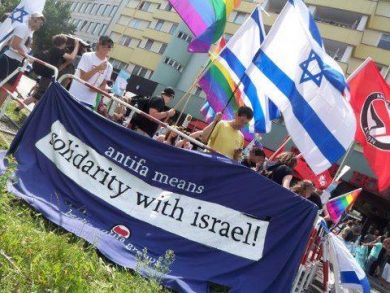 The verbal violence of Antifa is worse than their physical violence insofar as it is more effective. The physical violence is usually of minor consequence, at most temporarily preventing something that will happen later. It is the verbal violence that succeeds most in preventing free discussion of controversial issues.
Alarmed by the proliferation of pro-Antifa articles on CounterPunch, I ventured to write a critique, Antifa in Theory and Practice. My criticism was not personal; I did not mention the authors of those pro-Antifa CounterPunch articles and my mention of author Mark Bray was respectful. The result was a torrent of vituperation on CounterPunch’s FaceBook page, as well as in a hostile email exchange with star Antifa champion Yoav Litvin. This culminated with a hit piece by Amitai Ben-Abba published on CounterPunch itself. Note that both Litvin and Ben-Abba are Israelis, but pro-Palestinian, which provides the two with impeccable left credentials.
These reactions provided a perfect illustration of Antifa discussion techniques. It is a sort of food fight, where you just throw everything you can pick up at the adversary, regardless of logic or relevance. On the FaceBook page, Litvin, on the basis of my past carefully objective articles on French politics, accused me of “shilling for Marine Le Pen”. Irrelevant and inaccurate.
In his hit piece Ben-Abba dragged in this totally off-topic assertion:
“Much in the same way that her early ’00s pseudo-historical denial of the massacre in Srebrenica worked to embolden Serbian nationalists, her present analysis can embolden white supremacists.”
Need I point out that I never denied the “massacre” but refuse to label it “genocide”, nor did Serbian nationalists ever need my humble opinion in order to be “emboldened” – especially since the war was over by then.
I happily grant that there are issues raised in my initial article that deserve debate, such as immigration or whether or not the “fascism” of the early twentieth century still exists today. Indeed my whole point was that such issues deserve debate. That’s not what I got. Ben-Abba came up with this imaginary allusion to the immigration issue:
“‘antifa’ is a broader umbrella term that allows formerly unaffiliated folks (like the sans-papiers migrant baker who makes Johnstone’s croissants) to participate in defense of their communities against neo-fascist intimidation.”
Very funny: I am exploiting some poor undocumented baker and preventing him from being defended. Aside from the fact that I very rarely to eat a croissant, the bakers in my neighborhood are all fully documented, and moreover this largely immigrant neighborhood is the scene of frequent peaceful street demonstrations by African sans-papiers clearly not intimidated by neo-fascists. They obviously do not need Antifa to protect them. This fantasy of omnipresent neo-fascism is as necessary to Antifa as the fantasy of omnipresent anti-Semitism is to Israel.
Antifa rhetoric specializes in non sequitur. If you agree with some conservative or libertarian that it was wrong to destroy Libya, then you are not only guilty of association with a pre-fascist, you are a supporter of dictators and thus probably a fascist yourself. This has been happening in France for years and it’s just getting started in the United States.
The Antifa specialty is labeling anti-war activists and writers as “red-brown”, red for left and brown for fascist. You may pretend to be on the left, but if we can find the slightest association between you and someone on the right, then you are a “red-brown” and deserve to be quarantined.
By claiming to defend helpless minorities from a rising fascist peril, Antifa arrogates to itself the right to decide who is, or might be, “fascist”.
Whatever they think they are doing, whatever they claim to be doing, the one thing they really are doing is to tie the left into such sectarian intolerance that any broad inclusive single-issue anti-war movement becomes impossible. Indeed, it is precisely the imminent danger of nuclear World War III that leads some of us to call for a non-exclusive single issue anti-war movement – thus setting ourselves up as “red-brown”.
That is why Antifa – unwittingly let us say – is running interference for the war party.
It is most unfortunate to see CounterPunch become a platform for Antifa. It didn’t have to. The site is quite able to reject articles, as it has systematically rejected contentions about 9/11 or as it rejected David Cobb’s and Caitlin Johnstone’s (no relative) right to respond. It could have taken a principled stand against calls for violence and censorship. It did not do so. It is one thing to encourage debate and quite another to sponsor mud wrestling.
Diana Johnstone is the author of Fools’ Crusade: Yugoslavia, NATO, and Western Delusions. Her new book is Queen of Chaos: the Misadventures of Hillary Clinton. She can be reached at diana.johnstone@wanadoo.fr
Featured Video
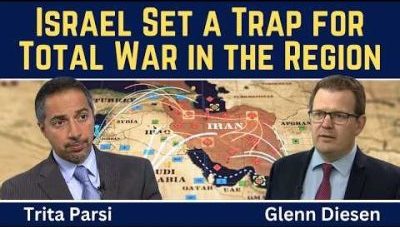
Trita Parsi: Israel Set a Trap for Total War in the Region
or go to
Aletho News Archives – Video-Images
From the Archive
Zionism’s Violent Legacy
By Donald Neff | Washington Report On Middle East Affairs | January 1996
On January 4, 1948, Jewish terrorists drove a truck loaded with explosives into the center of the all Arab city of Jaffa and detonated it, killing 26 and wounding around 100 Palestinian men, women and children.[1] The attack was the work of the Irgun Zvai Leumi – the “National Military Organization,” also known by the Hebrew letters Etzel – the largest Jewish terrorist group in Palestine. The Irgun was headed by Revisionist Zionist Menachem Begin and had been killing and maiming Arabs, Britons and even Jews for the previous ten years in its efforts to establish a Jewish state.
This terror campaign meant that at the core of Revisionist Zionism there existed a philosophical embrace of violence. … continue
Blog Roll
 Aletho News
- Trita Parsi: Israel Set a Trap for Total War in the Region
- Trump’s Iran war is on an Israeli leash
- Saudi oil boss issues global supply warning
- Riyadh Says Its Oil System Is Intact. The Numbers Say Otherwise.
- Trump and Netanyahu Want to “Finish the Job” on Iran
- US ‘one-sided dictation’ not Iran’s beliefs makes rational talks impossible: Baghaei
- Iran’s Next Strike May Not Explode. It Could Shut You Down /Col Doug Macgregor
- Iran: US political targets legitimate if assassinations return
- Iraq shuts key border crossing with Iran under US pressure: Report
- Undersea Internet cables could be targeted in retaliation for attacks on Iran: IRGC deputy chief
- If Americans Knew
- The Israel Lobby’s Changing Fortunes
- AIPAC has become such a political liability that it’s shifting to a more “nimble” approach to buying politicians
- At least 160 Israeli settler attacks in 2 weeks
- Will Gaza’s Ancient Christian Community Disappear Forever?
- Israel’s vision of regional security rests on keeping Arab states weak
- Heidi Levine recounts how Palestinian youths helped save her in settler attack
- DAILY UPDATE: Latest essential news on Palestine, Israel, & region
- Trump’s Intensifying Sabotage of the ICC, for Israel’s Sake
- Israeli military detain US and UK volunteers in West Bank including Democratic NY politician Brad Lander
- Americans at National Conservatism Conference held in Israel this year criticize Israel
- No Tricks Zone
- E-Cars Reduce CO2 Emissions By Only 41% Compared To Internal Combustion Engine Vehicles
- Predictions Made By Renowned Climate Professor Over Past Decades Have Been Proven To Be Poor
- New Study Suggests Large Regions Of The Pacific Ocean Have Been Cooling For The Last 80 Years
- Germany’s Green Energy Debacle: High Energy Costs Force Kahla Porzellan to Close After 182 Years!
- New Study: 50 Years Of The Most Aggressive ‘Net Zero’ Policies Can Only Affect The Global Climate By 0.03°C
- US September “Heat” Was No Record…Many Records Set Decades Ago
- Latest European Green Energy Debacle; Portugal’s Largest Flagship Solar Park Insolvent!
- Green Energy Debacle: German Expert Professor Fritz Vahrenholt Warns Of Severe Economic And Social Consequences
- Two More Paleo Reconstructions Affirm Meters-Higher Sea Levels Across Ireland, Brazil 7000-6000 Years Ago
- New Study: Earth And Venus Surface Warmth Largely Explained By Convection And Lapse Rate, Not CO2 Or Radiation


