Is War with Iran Now Inevitable?
By Pat Buchanan • Unz Review • October 17, 2017
With his declaration Friday that the Iran nuclear deal is not in the national interest, President Donald Trump may have put us on the road to war with Iran.
Indeed, it is easier to see the collisions that are coming than to see how we get off this road before the shooting starts.
After “de-certifying” the nuclear agreement, signed by all five permanent members of the Security Council, Trump gave Congress 60 days to reimpose the sanctions that it lifted when Teheran signed.
If Congress does not reimpose those sanctions and kill the deal, Trump threatens to kill it himself.
Why? Did Iran violate the terms of the agreement? Almost no one argues that — not the UN nuclear inspectors, not our NATO allies, not even Trump’s national security team.
Iran shipped all its 20 percent enriched uranium out of the country, shut down most of its centrifuges, and allowed intrusive inspections of all nuclear facilities. Even before the deal, 17 U.S. intelligence agencies said they could find no evidence of an Iranian nuclear bomb program.
Indeed, if Iran wanted a bomb, Iran would have had a bomb.
She remains a non-nuclear-weapons state for a simple reason: Iran’s vital national interests dictate that she remain so.
As the largest Shiite nation with 80 million people, among the most advanced in the Mideast, Iran is predestined to become the preeminent power in the Persian Gulf. But on one condition: She avoid the great war with the United States that Saddam Hussein failed to avoid.
Iran shut down any bomb program it had because it does not want to share Iraq’s fate of being smashed and broken apart into Persians, Azeris, Arabs, Kurds and Baluch, as Iraq was broken apart by the Americans into Sunni, Shiite, Turkmen, Yazidis and Kurds.
Tehran does not want war with us. It is the War Party in Washington and its Middle East allies — Bibi Netanyahu and the Saudi royals — who hunger to have the United States come over and smash Iran.
Thus, the Congressional battle to kill, or not to kill, the Iran nuclear deal shapes up as decisive in the Trump presidency.
Yet, even earlier collisions with Iran may be at hand.
In Syria’s east, U.S.-backed and Kurd-led Syrian Democratic Forces are about to take Raqqa. But as we are annihilating ISIS in its capital, the Syrian army is driving to capture Deir Ezzor, capital of the province that sits astride the road from Baghdad to Damascus.
Its capture by Bashar Assad’s army would ensure that the road from Baghdad to Damascus to Hezbollah in Lebanon remains open.
If the U.S. intends to use the SDF to seize the border area, we could find ourselves in a battle with the Syrian army, Shiite militia, the Iranians, and perhaps even the Russians.
Are we up for that?
In Iraq, the national army is moving on oil-rich Kirkuk province and its capital city. The Kurds captured Kirkuk after the Iraqi army fled from the ISIS invasion. Why is a U.S.-trained Iraqi army moving against a U.S.-trained Kurdish army?
The Kurdistan Regional Government voted last month to secede. This raised alarms in Turkey and Iran, as well as Baghdad. An independent Kurdistan could serve as a magnet to Kurds in both those countries.
Baghdad’s army is moving on Kirkuk to prevent its amputation from Iraq in any civil war of secession by the Kurds.
Where does Iran stand in all of this?
In the war against ISIS, they were de facto allies. For ISIS, like al-Qaida, is Sunni and hates Shiites as much as it hates Christians. But if the U.S. intends to use the SDF to capture the Iraqi-Syrian border, Syria, Iran, Hezbollah and Russia could all be aligned against us.
Are we ready for such a clash?
We Americans are coming face to face with some new realities.
The people who are going to decide the future of the Middle East are the people who live there. And among these people, the future will be determined by those most willing to fight, bleed and die for years and in considerable numbers to realize that future.
We Americans, however, are not going to send another army to occupy another country, as we did Kuwait in 1991, Afghanistan in 2001, and Iraq in 2003.
Bashar Assad, his army and air force backed by Vladimir Putin’s air power, the Islamic Revolutionary Guard Corps of Iran, and Hezbollah won the Syrian civil war because they were more willing to fight and die to win it. And, truth be told, all had far larger stakes there than did we.
We do not live there. Few Americans are aware of what is going on there. Even fewer care.
Our erstwhile allies in the Middle East naturally want us to fight their 21st-century wars, as the Brits got us to help fight their 20th-century wars.
But Donald Trump was not elected to do that. Or so at least some of us thought.
Coyright 2017 Creators.com.
Fueling More Bloodshed in Ukraine
By James W. Carden | Consortium News | October 14, 2017
Last January, Sen. John McCain led a delegation along with his longtime sidekick, Sen. Lindsey Graham, to a contingent of Ukrainian troops not far from the front line in eastern Ukraine. In the presence of Ukrainian President Petro Poroshenko, Graham told the soldiers: “Your fight is our fight … 2017 will be the year of offense. All of us will go back to Washington and we will push the case against Russia.”
McCain promised the assembled troops, “we will do everything we can to provide you with what you need to win.”
When contemplating the long careers of the two Republican senators, it is hard to escape the conclusion that McGeorge Bundy’s quip about the famed Cold War columnist Joe Alsop – that he had “never known him to go to any area where blood could be spilled that he didn’t come back and say more blood” – applies equally to McCain and Graham.
Indeed, last month’s National Defense Authorization Act shows that – if nothing else – McCain and Graham are as good as their word: the recently passed defense appropriations bill provides for $500 million, including “defensive lethal assistance” to Kiev, as part of a $640 billion overall spending package.
The aid comes at a good time for the embattled Ukrainian President Poroshenko, whose approval rating hovers around 16 percent. In a bid to stave off the possibility of a far-right coup d’etat, Poroshenko is back to banging the war drums, promising, well, more blood.
In a little covered speech at the U.S. Military Academy at West Point on Sept. 19, Poroshenko promised that “American weapons will help us liberate the Donbas and return Ukrainian territories.” He also noted that Ukraine spends roughly 6 percent of its GDP on defense, “a figure,” he observed, “much bigger than the obligation for the NATO members.”
Clearly Washington’s condemnation of governments that wage war “against their own people” remains selective, contingent upon who is doing the killing and who is doing the dying. In this case, it would seem that Russian-speaking Ukrainians simply don’t rate.
In addition to promising a wider war in the Donbas, Poroshenko has repeatedly promised that he will seek NATO membership. In August, during a visit by U.S. Defense Secretary James Mattis, Poroshenko declared: “Our Ukrainian caravan is on a roll and we have one road to travel upon — a wide Euro-Atlantic highway, leading to membership in the European Union and NATO.”
Ukraine’s Human Rights Abuses
There are a number of objections to yet another round of NATO expansion. As I reported in February 2015: “The current [Ukrainian] government has, according to organizations that could hardly be described as Kremlin friendly (Human Rights Watch, Amnesty International, the Organization for Security and Cooperation in Europe), committed war crimes in its attempt to defeat the Russian-backed separatists in the Donbas. … NATO’s principal consideration should not be whether NATO will make Ukraine more secure, but whether Ukraine will make NATO more secure. The answer is self-evident.”
It is true that NATO Secretary General Jens Stoltenberg, as recently as this month, insisted to Russian state media that NATO is not contemplating Ukrainian membership, telling Sputnik that “There is no MAP [membership action plan] on the agenda.” Yet Stoltenberg has also said, as he did in a speech to the Ukrainian parliament in July, that he believes Ukraine “has the right to choose its own security arrangements” further noting that “last month, NATO welcomed Montenegro as the 29th member of our Alliance. This shows that NATO’s door remains open.”
So the issue doesn’t seem to be going away.
Poroshenko’s push to join NATO, which is being made against the backdrop of ever-worsening relations between the U.S. and Russia, ignores, perhaps purposefully, one of the principal causes of the morass in which Kiev and Moscow find themselves. It was Moscow’s not unfounded fear that Ukraine might join NATO that helped spark the Ukrainian crisis in early 2014.
In the weeks prior to Russia’s annexation of Crimea (and just over a month before the outbreak of full hostilities in the Donbas), three former presidents of Ukraine (Leonid Kravchuk, Leonid Kuchma and Viktor Yushchenko) called on the post-Maidan regime to renounce the 2010 Kharkiv agreement which allowed for Russia to base its Black Sea naval fleet in Crimea (in return for discounted prices on Russian natural gas).
It is perhaps not unreasonable that this last move, in addition to the foreign policy and security protocols embedded within the European Union Association agreement (which Poroshenko signed in June 2014), would cause the Russian government to at the very least suspect that NATO was setting the stage for Ukraine’s eventual absorption into the alliance.
Indeed, Kiev’s launch of its violent and indiscriminate “Anti-Terrorist Operation” against the Donbas – with the effect of intimidating and alienating otherwise loyal Russian-speaking citizens in the eastern part of the country – surely played a role in the Kremlin’s decision to come to the aid of the rebels later in the summer of 2014 and again at Debaltseve early the following year.
Less Dangerous Options
One reasonable alternative to NATO membership would be a treaty along the lines of the 1955 Austrian State Treaty, which was an agreement reached between the four post-World War II occupying powers (U.S., USSR, Great Britain and France) that granted Austria its independence “with the understanding,” according to the U.S. State Department, “that the newly independent state of Austria would declare its neutrality, creating a buffer zone between the East and the West,” meaning it would join neither NATO nor the Soviet-run Warsaw Pact.
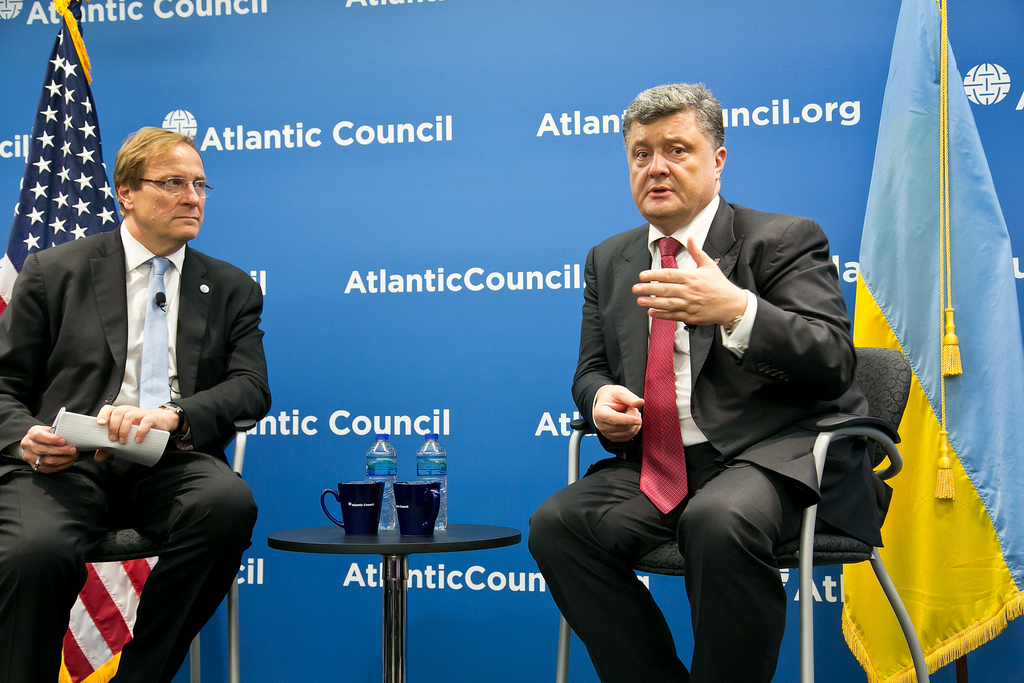
Petro Poroshenko in 2014 (Photo credit: Atlantic Council)
Charles Bohlen, the legendary American diplomat who served as ambassador to Moscow from 1953-57, recalled in his memoir Witness To History that, with regard to the Austrian State Treaty, he believed “that the Kremlin leaders, and probably the Soviet military chiefs, decided that a genuinely neutral Austria was of more value to Soviet Russia than the maintenance of a divided country where the Red Army would occupy only the poorer half.”
The situation in postwar Austria – occupied by East and West – is not perfectly analogous to the situation that obtains in Ukraine today, but there seem to be lessons from what Bohlen intuited were the Kremlin’s motives that might be drawn upon to inform Western diplomacy.
But instead of trying to implement the Minsk peace agreement (which calls for the Donbas to remain as part of Ukraine but with more autonomy from Kiev) or search for a reasonable alternative to what are indeed perplexing and pressing matters of national security, Poroshenko has continued to ring one alarm over another, this time illusory, Russian invasion.
In a recent speech before the Ukrainian parliament, Poroshenko claimed “there is more and more evidence for [Russia’s] preparations for an offensive war of continental proportions.”
Yet perhaps the danger isn’t as clear and present as Poroshenko portrayed it. As Mary Dejevesky of the U.K.’s Independent has observed: “NATO itself had held exercises in the Black Sea and before that in and around the western borderlands of Ukraine. Who, it has to be asked here, is threatening whom?”
Indeed, if Russia was on the precipice of launching a land war in Eastern Europe, would it have cut its defense budget by 25 percent to $48 billion a year, as was recently announced by the Kremlin?
As difficult as it might be for our hearty band on new cold warriors to believe (some of whom have scant knowledge about the topic of U.S.-Russia relations on which they so frequently choose to declaim), the push for a peaceable settlement in Ukraine is coming not from Washington, but from Moscow and Berlin.
Nevertheless, the stalemate continues: a resolution to the Ukrainian conflict – through the implementation of the Minsk agreements, as well as a settlement of the outstanding security concerns of all parties to the conflict – seems to remain tragically out of reach.
James W. Carden served as an adviser on Russia policy at the US State Department. Currently a contributing writer at The Nation magazine, his work has appeared in the Los Angeles Times, Quartz, The American Conservative and The National Interest.
Syria demands ‘immediate, unconditional’ pullout of Turkish troops from Idlib
Press TV – October 14, 2017
The Syrian government has strongly denounced an incursion of Turkish military forces into the country’s militant-held northwestern province of Idlib, demanding “immediate and unconditional” withdrawal of Turkish troops from the war-ravaged Arab country.
“The Syrian Arab Republic condemns in the strongest terms the incursion of Turkish military units in[to] … Idlib province, which constitutes … blatant aggression against the sovereignty and territorial integrity of Syria and flagrant violation of international law,” an unnamed official source at the Ministry of Foreign Affairs and Expatriates told Syria’s official news agency, SANA, on Saturday.
“The Syrian Arab Republic demands … immediate and unconditional withdrawal of Turkish troops from the Syrian territory,” the source added.
The source further described Ankara’s military incursion as an act of “aggression” which “the Turkish regime can’t justify in any way.”
He also dismissed Turkey’s attempts to link the move to the implementation of the Astana agreements with Iran and Russia on the creation of de-escalation zones in Syria, terming it a “departure” from the deal.
Late on Thursday, Turkey deployed a convoy of around 30 military vehicles to Idlib province.
The Turkish forces entered Syria near the Bab al-Hawa border crossing, and headed to Shaykh Barakat hilltop, which overlooks lands controlled by foreign-sponsored Takfiri militants as well as Afrin area held by US-backed militiamen from the Kurdish People’s Protection Units (YPG).
Idlib and swaths of land in Syria’s northern and northwestern regions are largely controlled by members of Tahrir al-Sham militant group.
Turkish President Recep Tayyip Erdogan has said his country’s military operations in Idlib are the follow-up of the Euphrates Shield operation in northern Syria, which Ankara launched in August last year without any authorization from Damascus.
Ankara said back then that the main objectives behind the operation were clearing Turkey’s southern border of the Daesh Takfiri terrorist group and stopping the YPG from gaining more sway there.
Ankara views the YPG as the Syrian branch of the Kurdistan Workers’ Party (PKK) militant group, which has been fighting for an autonomous region inside Turkey since 1984.
Why North Korea Wants Nuke Deterrence
By Nicolas J S Davies | Consortium News | October 12, 2017
The Western media has been awash in speculation as to why, about a year ago, North Korea’s “crazy” leadership suddenly launched a crash program to vastly improve its ballistic missile capabilities. That question has now been answered.
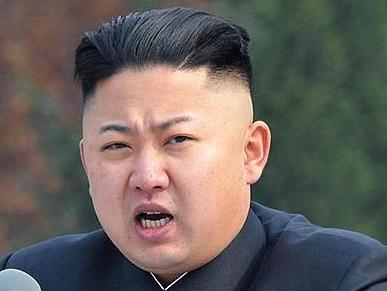
North Korean leader Kim Jong Un.
In September 2016, North Korean cyber-defense forces hacked into South Korean military computers and downloaded 235 gigabytes of documents. The BBC has revealed that the documents included detailed U.S. plans to assassinate North Korea’s president, Kim Jong Un, and launch an all-out war on North Korea. The BBC’s main source for this story is Rhee Cheol-Hee, a member of the Defense Committee of the South Korean National Assembly.
These plans for aggressive war have actually been long in the making. In 2003, the U.S. scrapped an agreement signed in 1994 under which North Korea suspended its nuclear program and the U.S. agreed to build two light water reactors in North Korea. The two countries also agreed to a step-by-step normalization of relations. Even after the U.S. scrapped the 1994 Agreed Framework in 2003, North Korea did not restart work on the two reactors frozen under that agreement, which could by now be producing enough plutonium to make several nuclear weapons every year.
However, since 2002-03, when President George W. Bush included North Korea in his “axis of evil,” withdrew from the Agreed Framework, and launched an invasion of Iraq over bogus WMD claims, North Korea once again began enriching uranium and making steady progress toward developing nuclear weapons and ballistic missiles to deliver them.
By 2016, the North Koreans also were keenly aware of the horrific fate of Iraq and Libya and their leaders after the countries did surrender their unconventional weapons. Not only did the U.S. lead bloody “regime change” invasions but the nations’ leaders were brutally murdered, Saddam Hussein by hanging and Muammar Gaddafi sodomized with a knife and then summarily shot in the head.
So, the discovery of the U.S. war plan in 2016 sounded alarm bells in Pyongyang and triggered an unprecedented crash program to quickly expand North Korea’s ballistic missile program. Its nuclear weapons tests established that it can produce a small number of first-generation nuclear weapons, but it needed a viable delivery system before it could be sure that its nuclear deterrent would be credible enough to deter a U.S. attack.
In other words, North Korea’s main goal has been to close the gap between its existing delivery systems and the missile technology it would need to actually launch a retaliatory nuclear strike against the United States. North Korea’s leaders see this as their only chance to escape the same kind of mass destruction visited on North Korea in the first Korean War, when U.S.-led air forces destroyed every city, town and industrial area and General Curtis LeMay boasted that the attacks had killed 20 percent of the population.
Through 2015 and early 2016, North Korea only tested one new missile, the Pukkuksong-1 submarine-launched missile. The missile launched from a submerged submarine and flew 300 miles on its final, successful test, which coincided with the annual U.S.-South Korean military exercises in August 2016.
North Korea also launched its largest satellite to date in February 2016, but the launch vehicle seemed to be the same type as the Unha-3 used to launch a smaller satellite in 2012.
However, since the discovery of the U.S.-South Korean war plans a year ago, North Korea has vastly accelerated its missile development program, conducting at least 27 more tests of a wide range of new missiles and bringing it much closer to a credible nuclear deterrent. Here is a timeline of the tests:
–Two failed tests of Hwasong-10 medium-range ballistic missiles in October 2016.
–Two successful tests of Pukguksong-2 medium-range ballistic missiles, in February and May 2017. The missiles followed identical trajectories, rising to a height of 340 miles and landing in the sea 300 miles away. South Korean analysts believe this missile’s full range is at least 2,000 miles, and North Korea said the tests confirmed it is ready for mass production.
–Four medium-range ballistic missiles that flew an average of 620 miles from the Tongchang-ri space center in March 2017.
–Two apparently failed missile tests from Sinpo submarine base in April 2017.
–Six tests of Hwasong-12 medium-range ballistic missiles (range: 2,300 to 3,700 miles) since April 2017.
–A failed test of a missile believed to be a “KN-17” from Pukchang airbase in April 2017.
–Test of a Scud-type anti-ship missile that flew 300 miles and landed in the Sea of Japan, and two other tests in May 2017.
–Several cruise missiles fired from the East coast in June 2017.
–A test of a powerful new rocket engine, maybe for an ICBM, in June 2017.
–North Korea tested two Hwasong-14 “near-ICBMs” in July 2017. Based on these tests, the Hwasong-14 may be capable of hitting city-sized targets in Alaska or Hawaii with a single nuclear warhead, but cannot yet reach the U.S. West Coast.
–Four more missiles tested in August 2017, including a Hwasong-12 that flew over Japan and travelled 1,700 miles before breaking up, maybe as a result of a failure in a “Post Boost Vehicle” added to improve range and accuracy.
–Another ballistic missile flew 2,300 miles over the Pacific on September 15, 2017.
An analysis of the two tests of the Hwasong-14 in July by the Bulletin of the Atomic Scientists (BAS) concluded that these missiles are not yet capable of carrying a 500 kg payload as far as Seattle or other U.S. West Coast cities. BAS notes that a first generation nuclear weapon based on the Pakistani model that North Korea is believed to be following could not weigh less than 500 kg, once the weight of the warhead casing and a heat shield to survive reentry into the Earth’s atmosphere are taken into account.
Global Reaction
Awareness of the role of the U.S. war plan in spurring the dramatic escalation of North Korea’s missile program should be a game changer in the world’s response to the crisis over Korea, since it demonstrates that the current acceleration of the North Korean missile program is a defensive response to a serious and potentially existential threat from the United States.
If the United Nations Security Council was not diplomatically and militarily intimidated by the United States, this knowledge should trigger urgent action in the Security Council to require all sides to make a firm commitment to peaceful and binding diplomacy to formally end the Korean War and remove the threat of war from all the people of Korea. And the whole world would unite politically and diplomatically to prevent the U.S. from using its veto to avoid accountability for its leading role in this crisis. Only a unified global response to potential U.S. aggression could possibly convince North Korea that it would have some protection if it eventually halted its nuclear weapons program.
But such unity in the face of a threat of U.S. aggression would be unprecedented. Most U.N. delegates quietly sat and listened on Sept. 19 when President Donald Trump delivered explicit threats of war and aggression against North Korea, Iran and Venezuela, while boasting about his missile strike against Syria on April 6 over dubious and disputed claims about a chemical weapons incident.
For the past 20 years or more, the United States has swaggered about as the “last remaining superpower” and the “indispensable nation,” a global law unto itself, using the dangers of terrorism and weapons proliferation and highly selective outrage over “dictators” as propaganda narratives to justify illegal wars, CIA-backed terrorism, its own weapons proliferation, and support for its favored dictators like the brutal rulers of Saudi Arabia and other Arab monarchies.
For even longer, the United States has been two-faced about international law, citing it when some adversary can be accused of a violation but ignoring it when the U.S. or its allies are trampling on the rights of some disfavored country. When the International Court of Justice convicted the United States of aggression (including acts of terrorism) against Nicaragua in 1986, the U.S. withdrew from the ICJ’s binding jurisdiction.
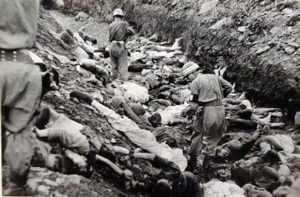
July 1950 U.S. Army file photograph once classified “top secret”. S. Korean soldiers walk among thousands of political prisoners shot at Taejon, S. Korea.
(AP Photo/National Archives, Major Abbott/U.S. Army, File)
Since then, the U.S. has thumbed its nose at the entire structure of international law, confident in the political power of its propaganda or “information warfare” to cast itself as the guardian of law and order in the world, even as it systematically violates the most basic rules spelled out in the U.N. Charter and the Geneva Conventions.
U.S. propaganda treats the U.N. Charter and the Geneva Conventions, the world’s “Never again” to war, torture and the killing of millions of civilians in the Second World War, as relics of another time that it would be naive to take seriously.
But the results of the U.S. alternative — its lawless “might makes right” war policy — are now plain for all to see. In the past 16 years, America’s post-9/11 wars have already killed at least two million people, maybe many more, with no end in sight to the slaughter as the U.S.’s policy of illegal war keeps plunging country after country into intractable violence and chaos.
An Ally’s Fears
Just as North Korea’s missile programs are a rational defense strategy in the face of the threat Pyongyang faces from the U.S., the exposure of the U.S.’s war plan by American allies in South Korea is also a rational act of self-preservation, since they too are threatened by the possibility of war on the Korean peninsula.
Now maybe other U.S. allies, the wealthy countries that have provided political and diplomatic cover for the U.S.’s 20-year campaign of illegal war, will finally reassert their humanity, their sovereignty and their own obligations under international law, and start to rethink their roles as junior partners in U.S. aggression.
Countries like the U.K., France and Australia will sooner or later have to choose between forward-looking roles in a sustainable, peaceful multi-polar world and a slavish loyalty to the ever-more desperate death throes of U.S. hegemony. Now might be a good moment to make that choice, before they are dragged into new U.S. wars in Korea, Iran or Venezuela.
Even Sen. Bob Corker, R-Tennessee, chairman of the Senate Foreign Relations Committee, is afraid that Donald Trump will lead humanity into World War III. But it might come as a surprise to people in Iraq, Afghanistan, Syria, Yemen, Somalia, Libya and parts of a dozen other countries already engulfed by U.S.-driven wars to learn that they are not already in the midst of World War III.
Perhaps what really worries the Senator is that he and his colleagues may no longer be able to sweep these endless atrocities under the plush carpets of the halls of Congress without a genteel Barack Obama in the White House to sweet-talk U.S. allies around the world and keep the millions being killed in U.S. wars off U.S. TVs and computer screens, out of sight and out of mind.
If politicians in the U.S. and around the world need the ugliness of Donald Trump as a mirror for their own greed, ignorance and temerity, to shame them into changing their ways, so be it – whatever it takes. But it should not escape anyone anywhere that the signature on this diabolical war plan that now threatens to kill millions of Koreans was not Donald Trump’s but Barack Obama’s.
George Orwell might well have been describing the partisan blindness of the West’s self-satisfied, so easily deluded, neoliberal society when he wrote this in 1945,
“Actions are held to be good or bad, not on their own merits, but according to who does them, and there is almost no kind of outrage – torture, the use of hostages, forced labor, mass deportations, imprisonment without trial, forgery, assassination, the bombing of civilians – which does not change its color when it is committed by our side… The Nationalist not only does not disapprove of atrocities committed by his own side, but he has a remarkable capacity for not even hearing about them.”
Here’s the bottom line: The United States has been planning to assassinate Kim Jong Un and to launch an all-out war on North Korea. There. You’ve heard it. Now, can you still be manipulated into believing that Kim Jong Un is simply “crazy” and North Korea is the gravest threat to world peace?
Or do you now understand that the United States is the real threat to peace in Korea, just as it was in Iraq, Libya and many other countries where the leaders were deemed “crazy” and U.S. officials (and the Western mainstream media) promoted war as the only “rational” alternative?
Nicolas J S Davies is the author of Blood On Our Hands: the American Invasion and Destruction of Iraq. He also wrote the chapters on “Obama at War” in Grading the 44th President: a Report Card on Barack Obama’s First Term as a Progressive Leader.
Yemen war ‘unconstitutional’ says trio of US lawmakers
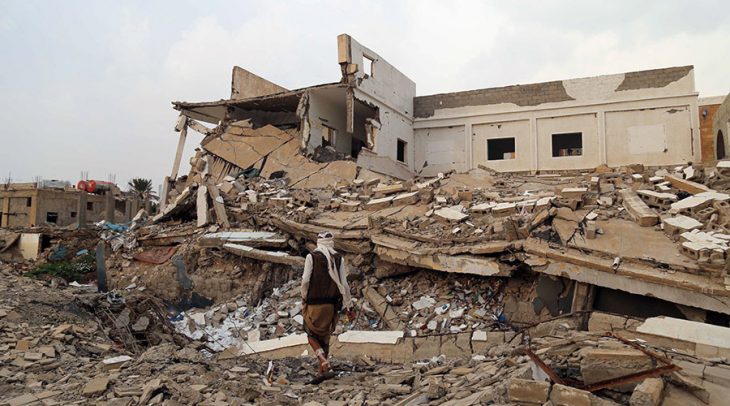
A Yemeni man walks past a destroyed school building on March 16, 2017, that was damaged in an air strike in the southern Yemeni city of Taez. © Ahmad Al-Basha
RT | October 11, 2017
A group of Congressmen from both major parties is hoping to force a vote over Washington’s involvement in Yemen, with a resolution invoking the War Powers Act to force the US to stop aiding the Saudi-led coalition in its bombing campaign.
Three members of the US House of Representatives tried to illustrate the horrors of the Yemen conflict by comparing it to a hypothetical war affecting the US state of Washington ‒ with a population of 7.3 million ‒ “on the brink of starvation, with the port city of Seattle under a naval and aerial blockade, leaving it unable to receive and distribute countless tons of food and aid that is waiting offshore.”
“This nightmare scenario is akin to the obscene reality occurring in the Middle East’s poorest country, Yemen, at the hand of the region’s richest, Saudi Arabia, with unyielding support from the US military that Congress has not authorized and therefore violates the Constitution,” wrote Representatives Ro Khanna (D-California), Mark Pocan (D-Wisconsin) and Walter Jones (R-North Carolina) in a New York Times op-ed Tuesday.
In March 2015, the Obama administration began aiding the coalition led by Saudi Arabia in its war against the Houthis, a rebel group that took control of Yemen’s capital Sanaa. Since then, Washington has supported the coalition’s military campaign in Yemen, by providing the Saudis with logistical support, intelligence and ammunition used in airstrikes.
This has led to the deaths of over 10,000 civilians and has plunged much of Yemen into a humanitarian crisis.
The three lawmakers teamed up with colleague Thomas Massie (R-Kentucky) to introduce House Resolution 81, invoking the War Powers Act to guarantee a full House vote to withdraw US armed forces from the unauthorized war.
“We believe that the American people, if presented with the facts of this conflict, will oppose the use of their tax dollars to bomb and starve civilians,” the three representatives wrote.
Several more lawmakers have expressed support for the proposal as well.
US must end all military involvement in African continent: Analyst
Press TV – October 11, 2017
The US military must end its growing involvement in Africa and allow the nations of that continent to solve their own problems, otherwise the American people will pay dearly for these misguided actions, an African American journalist in Detroit says.
“We cannot accept the explanation of the US government at its face value. The US should end these military missions in Africa, the drone stations, the Central Intelligence Agency (CIA) stations; all military involvement in the African continent should end,” said Abayomi Azikiwe, editor at the Pan-African News Wire.
“Africa must solve its own problems, through its own regional and continent organizations and mass organizations. Otherwise the Unites states and the people inside the United States will pay dearly for these misguided and of course unfortunate military actions,” Azikiwe said in a phone interview with Press TV on Wednesday.
The United States Army’s top officer says it is likely to “increase” its train, advise and assist (TAA) missions after the death of four soldiers in Niger by developing a new unit, he describes as “similar to special forces,” but “not special Forces.”
The US Army’s top officer said Monday it is likely to “increase” its train, advise and assist (TAA) missions after the death of four soldiers in Niger by developing a new unit.
General Mark Milley made the comments at the Association of the army’s annual meeting in Washington, not long after four special operations commandos were ambushed to death by militants in the Western African country of Niger.
The army’s chief of staff did not mention who was responsible for the attack although he asserted that the US military does know the group.
Two other Green Berets were injured on the October 4 ambush near the Nigerien capital Niamey by militants said to be linked with the Daesh Takfiri group in Iraq and Syria.
This represents yet another escalation by the US military in Africa,” Azikiwe said. “They are claiming that they are there just on a training mission.”
“Even though the US claims to be against these extremist organizations, they have worked with these groups in various geo-political regions including Libya, including Iraq, as well as Syria and Yemen,” he added.
The United States Africa Command (AFRICOM) was established in 2007 under former US President George W. Bush and strengthened and enhanced the following year during the presidency of Barack Obama.
The force has been operating in at least 35 countries across the African continent.
Road to nowhere: NATO increased military presence in Europe
Dr Alexander Yakovenko | RT | October 5, 2017
As part of the implementation of the conclusions of the NATO Summit in Warsaw, four multinational battle groups have been deployed in Poland, Estonia, Lithuania and Latvia with the total number of troops exceeding 4,500.
The idea of creating units to rotate through Bulgaria and Romania next year is being widely discussed within NATO. Taken together, these battle groups amount to a motorized infantry brigade with heavy weapons.
The presence of US forces in Europe is also rapidly growing. In January, the most significant American military unit (an armored brigade consisting of 3,500 troops and 2,500 pieces of equipment, including 87 tanks, 144 infantry fighting vehicles, 18 self-propelled artillery) was relocated on a rotational basis to Poland. This unit was involved in military training in the Baltic countries, Bulgaria, Romania, and Germany.
NATO activity along Russia’s borders contradicts the 1997 Founding Act on Mutual Relations, Cooperation, and Security between NATO and the Russian Federation. According to this document, “in the current and foreseeable security environment, the Alliance will carry out its collective defense and other missions by ensuring the necessary interoperability, integration, and capability for reinforcement rather than by additional permanent stationing of substantial combat forces.” Unfortunately, the Founding Act does not specify what “interoperability,” “integration,” “capability reinforcement” and “substantial combat forces” mean.
Since 1997, Russia has been bringing up the issue of the mutually acceptable definition of “substantial combat forces.” In December 2009, at the ministerial meeting of the NATO-Russia Council, Russia proposed a draft Agreement on the basic elements of the security relationship between the members of the NATO-Russia Council.
According to Article 4 of the draft document: “the Russian Federation and all the states, which were members of NATO on 27 May 1997, respectively, abstain from permanently deploying (including a temporary deployment of more than 42 days in a calendar year) their substantial combat forces (combat brigade or combat support brigade), air wing/aviation regiment, helicopter battalion/helicopter regiment, or having more than 41 tanks, or 188 armored vehicles, or 90 artillery units of 100 mm caliber or more, or 24 combat aircraft, or 24 attack helicopters) on the territory of all other European states in addition to the forces deployed on this territory as of 27 May 1997. In the event of the need to neutralize the threat to the security of one or several parties to the Agreement, this must be carried out with the consent of all the members of the NATO-Russia Council.”
Unfortunately, NATO members refused to discuss Russia’s proposals, that’s why the characteristics of “significant combat forces” still remain unspecified.
The intention of the US to provide “a constant rotational presence” on the so-called “eastern flank” is alarming (military personnel are rotated while equipment remains). These actions run counter to and are on the edge of breaking the provisions of the Founding Act. The lack of clarity on “permanent stationing of substantial combat forces” is used by NATO and the US to legitimize their efforts to build up a military presence and infrastructure along the Russian borders under the pretext of an alleged “Russian threat.”
If nothing changes, this would seriously undermine the European and global security system.
Dr Alexander Yakovenko, Russian Ambassador to the United Kingdom of Great Britain and Northern Ireland, Deputy foreign minister (2005-2011). Follow him on Twitter @Amb_Yakovenko
Featured Video
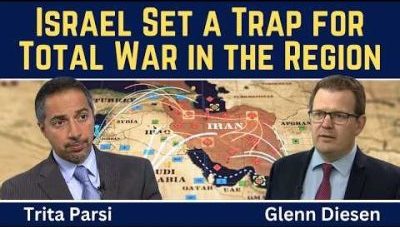
Trita Parsi: Israel Set a Trap for Total War in the Region
or go to
Aletho News Archives – Video-Images
From the Archive
Zionism’s Violent Legacy
By Donald Neff | Washington Report On Middle East Affairs | January 1996
On January 4, 1948, Jewish terrorists drove a truck loaded with explosives into the center of the all Arab city of Jaffa and detonated it, killing 26 and wounding around 100 Palestinian men, women and children.[1] The attack was the work of the Irgun Zvai Leumi – the “National Military Organization,” also known by the Hebrew letters Etzel – the largest Jewish terrorist group in Palestine. The Irgun was headed by Revisionist Zionist Menachem Begin and had been killing and maiming Arabs, Britons and even Jews for the previous ten years in its efforts to establish a Jewish state.
This terror campaign meant that at the core of Revisionist Zionism there existed a philosophical embrace of violence. … continue
Blog Roll
 Aletho News
- Trita Parsi: Israel Set a Trap for Total War in the Region
- Trump’s Iran war is on an Israeli leash
- Saudi oil boss issues global supply warning
- Riyadh Says Its Oil System Is Intact. The Numbers Say Otherwise.
- Trump and Netanyahu Want to “Finish the Job” on Iran
- US ‘one-sided dictation’ not Iran’s beliefs makes rational talks impossible: Baghaei
- Iran’s Next Strike May Not Explode. It Could Shut You Down /Col Doug Macgregor
- Iran: US political targets legitimate if assassinations return
- Iraq shuts key border crossing with Iran under US pressure: Report
- Undersea Internet cables could be targeted in retaliation for attacks on Iran: IRGC deputy chief
- If Americans Knew
- The Israel Lobby’s Changing Fortunes
- AIPAC has become such a political liability that it’s shifting to a more “nimble” approach to buying politicians
- At least 160 Israeli settler attacks in 2 weeks
- Will Gaza’s Ancient Christian Community Disappear Forever?
- Israel’s vision of regional security rests on keeping Arab states weak
- Heidi Levine recounts how Palestinian youths helped save her in settler attack
- DAILY UPDATE: Latest essential news on Palestine, Israel, & region
- Trump’s Intensifying Sabotage of the ICC, for Israel’s Sake
- Israeli military detain US and UK volunteers in West Bank including Democratic NY politician Brad Lander
- Americans at National Conservatism Conference held in Israel this year criticize Israel
- No Tricks Zone
- E-Cars Reduce CO2 Emissions By Only 41% Compared To Internal Combustion Engine Vehicles
- Predictions Made By Renowned Climate Professor Over Past Decades Have Been Proven To Be Poor
- New Study Suggests Large Regions Of The Pacific Ocean Have Been Cooling For The Last 80 Years
- Germany’s Green Energy Debacle: High Energy Costs Force Kahla Porzellan to Close After 182 Years!
- New Study: 50 Years Of The Most Aggressive ‘Net Zero’ Policies Can Only Affect The Global Climate By 0.03°C
- US September “Heat” Was No Record…Many Records Set Decades Ago
- Latest European Green Energy Debacle; Portugal’s Largest Flagship Solar Park Insolvent!
- Green Energy Debacle: German Expert Professor Fritz Vahrenholt Warns Of Severe Economic And Social Consequences
- Two More Paleo Reconstructions Affirm Meters-Higher Sea Levels Across Ireland, Brazil 7000-6000 Years Ago
- New Study: Earth And Venus Surface Warmth Largely Explained By Convection And Lapse Rate, Not CO2 Or Radiation

