US Citizens to Join Protests of US Nuclear Weapons Deployed in Germany

Blockaders cover the Front Gate at the Luftwaffe’s Buchel Air Base in Germany, which deploys and trains to use up to 20 U.S. B61 hydrogen bombs on Germany Tornado jet fighter
By John Laforge | CounterPunch | March 17, 2017
On March 26, nuclear disarmament activists in Germany will launch a 20-week-long series of nonviolent protests at the Luftwaffe’s Büchel Air Base, Germany, demanding the withdrawal of 20 U.S. nuclear weapons still deployed there. The actions will continue through August 9, the anniversary of the US atomic bombing of Nagasaki, Japan in 1945.
For the first time in the 20-year-long campaign to rid Büchel of the U.S. bombs, a delegation of U.S. peace activists will take part. During the campaign’s “international week” July 12 to 18, disarmament workers from Wisconsin, California, Washington, DC, Virginia, Minnesota, New Mexico and Maryland will join the coalition of 50 German peace and justice groups converging on the base. Activists from The Netherlands, France and Belgium also plan to join the international gathering.
The U.S. citizens are particularly shocked that the U.S. government is pursuing production of a totally new H-bomb intended to replace the 20 so-called “B61” gravity bombs now at Büchel, and the 160 others that are deployed in a total of five NATO countries.
Under a NATO scheme called “nuclear sharing,” Germany, Italy, Belgium, Turkey, and The Netherlands still deploy the U.S. B61s, and these governments all claim the deployment does not violate the Non-Proliferation Treaty (NPT). Articles I and II of the treaty prohibit nuclear weapons from being transferred to, or accepted from, other countries.
“The world wants nuclear disarmament,” said US delegate Bonnie Urfer, a long-time peace activist and former staffer with the nuclear watchdog group Nukewatch, in Wisconsin. “To waste billions of dollars replacing the B61s when they should be eliminated is criminal — like sentencing innocent people to death — considering how many millions need immediate famine relief, emergency shelter, and safe drinking water,” Urfer said.
Although the B61’s planned replacement is actually a completely new bomb — the B61-12 — the Pentagon calls the program “modernization” — in order to skirt the NPT’s prohibitions. However, it’s being touted as the first ever “smart” nuclear bomb, made to be guided by satellites, making it completely unprecedented. New nuclear weapons are unlawful under the NPT, and even President Barak Obama’s 2010 Nuclear Posture Review required that “upgrades” to the Pentagon’s current H-bombs must not have “new capabilities.” Overall cost of the new bomb, which is not yet in production, is estimated to be up to $12 billion.
Historic German Resolution to Evict US H-bombs
The March 26 start date of “Twenty Weeks for Twenty Bombs” is doubly significant for Germans and others eager to see the bombs retired. First, on March 26, 2010, massive public support pushed Germany’s parliament, the Bundestag, to vote overwhelmingly — across all parties — to have the government remove the U.S. weapons from German territory.
Second, beginning March 27 in New York, the United Nations General Assembly will launch formal negotiations for a treaty banning nuclear weapons. The UNGA will convene two sessions — March 27 to 31, and June 15 to July 7 — to produce a legally binding “convention” banning any possession or use of the bomb, in accordance with Article 6 of the NPT. (Similar treaty bans already forbid poison and gas weapons, land mines, cluster bombs, and biological weapons.) Individual governments can later ratify or reject the treaty. Several nuclear-armed states including the US government worked unsuccessfully to derail the negotiations; and Germany’s current government under Angela Merkel has said it will boycott the negotiations in spite of broad public support for nuclear disarmament.
“We want Germany to be nuclear weapons free,” said Marion Küpker, a disarmament campaigner and organizer with DFG-VK, an affiliate of War Resisters International and Germany’s oldest peace organization, this year celebrating its 125th anniversary. “The government must abide by the 2010 resolution, throw out the B61s, and not replace them with new ones,” Küpker said.
A huge majority in Germany supports both the UN treaty ban and the removal of US nuclear weapons. A staggering 93 percent want nuclear weapons banned, according to a poll commissioned by the German chapter of the International Physicians for the Prevention of Nuclear War published in March last year. Some 85 percent agreed that the US weapons should be withdrawn from the country, and 88 percent said they oppose US plans to replace current bombs with the new B61-12.
U.S. and NATO officials claim that “deterrence” makes the B61 important in Europe. But as Xanthe Hall reports for the International Campaign to Abolish Nuclear Weapons, “Nuclear deterrence is the archetypal security dilemma. You have to keep threatening to use nuclear weapons to make it work. And the more you threaten, the more likely it is that they will be used.”
For more information and to sign a “Declaration of Solidarity.”
Additional information about the B61 and NATO’s “nuclear sharing” at CounterPunch:
“Wild Turkey with H-Bombs: Failed Coup Brings Calls for Denuclearization,” July 28, 2016.
“Undeterred: Amid Terror Attacks in Europe, US H-bombs Still Deployed There,” June 17, 2016.
“Nuclear Weapons Proliferation: Made in the USA,” May 27, 2015.
“US Defies Conference on Nuclear Weapons Effects & Abolition,” Dec. 15, 2014.
“German ‘Bomb Sharing’ Confronted with Defiant ‘Instruments of Disarmament”, Aug. 9, 2013.
John LaForge is a Co-director of Nukewatch, a peace and environmental justice group in Wisconsin, and edits its newsletter.
US admits strike on ‘Al-Qaeda meeting’ in Syria amid reports of deadly mosque attack nearby
RT | March 17, 2017
Dozens of worshipers have reportedly been killed in an airstrike on a mosque in Syria’s Aleppo province. While the Pentagon only admitted to striking terrorists several miles away in Idlib, some reports suggest US missile debris were recovered from the mosque’s rubble.
Details of the strike on the Al-Jinah mosque are scarce, but over 50 people might have been killed in the incident, according to various reports. Images from the scene shared on social media show the wide-scale destruction.
None of the forces present in the area have taken responsibility for the strike yet. Both Russian and Syrian planes in addition to American-led air power are conducting operations against terrorist units in the area.
Some rushed to blame Moscow or Damascus for the carnage, after activists of the so-called White Helmets rescue organization and no less the notorious UK-based Syrian Observatory for Human Rights shared first images from the scene.
“We did not target a mosque, but the building that we did target — which was where the meeting took place — is about 50 feet (15 meters) from a mosque that is still standing,” said Colonel John J. Thomas, spokesman for US Central Command according to AFP.
Journalist Samuel Oakford, who was previously UN correspondent at Vice News, said that the US central Command confirmed it had carried out a strike in relative close proximity to the mosque.
“US official says that they were targeting an ‘Al Qaeda meeting place” that was across from the mosque in Aleppo. ‘We took the strike’”, he tweeted. Earlier, the reporter claimed the US Central Command told him the Americans conducted a strike on a target just several miles away, in the bordering Idlib province, and was looking into the Aleppo suburb mosque strike.
CENTCOM spokesperson, Maj. Josh Jacques, told the London-based Airwars monitoring group that the target was “assessed to be a meeting place for al Qaeda, and we took the strike.”
“It happened to be across the street from where there is a mosque,” said Jacques, specifying that the mosque was not the target and that it wasn’t hit directly.
“To be clear: this was a unilateral US strike, not part of anti-ISIS Coalition activities,” Oakford emphasized in another tweet.
Meanwhile Sakir Khader, who identifies himself as a journalist with a focus on Syria, Turkey, and the wider Middle East, posted a picture of the missile debris, which he claims to have come from the rubble of the destroyed mosque.
While the location and authenticity of the photo are yet to be independently investigated, the picture shows latin inscription on a metal plate alleged to be a piece of the missile.
Neither the Russian nor the US militaries, as well as Damascus, have yet to officially comment on the incident.
Saudi strike on refugee boat kills over 44 off Yemen coast
Press TV – March 17, 2017
At least 44 people have been killed and dozens of others wounded after a Saudi airstrike hit a refugee boat off Yemen’s western coast.
Yemen’s al-Masirah television reported on Thursday that the boat which came under attack was carrying Somali refugees near Bab al-Mandeb Strait.
According to the report, there are a number of women and children among the victims.
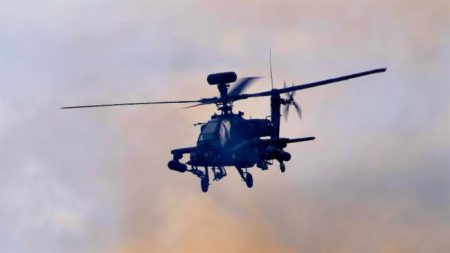
Reuters quoted a local official in Hudaydah as saying that the boat had come under attack by an Apache helicopter.
The refugees were on their way from Yemen to Sudan, the unnamed official said.
Earlier in the day, Saudi fighter jets bombed a food transport truck in the western province of al-Hudaydah, killing all the passengers, al-Masirah reported, without giving the number of those killed.

The remains of a truck hit by a Saudi strike in Hudaydah Province, Yemen, March 16, 2017.
Saudi Arabia has been leading a deadly military campaign against Yemen since March 2015. The kingdom has also imposed an aerial and naval blockade on its southern neighbor.
Britain and the US have provided huge amounts of arms and military training to the Saudi forces.
According to the United Nations humanitarian coordinator for Yemen, Jamie McGoldrick, the Saudi military campaign has claimed the lives of 10,000 Yemenis and left 40,000 others wounded.
McGoldrick told reporters in Sana’a earlier this year that the figure was based on casualty counts given by health facilities and that the actual number might be higher.
However, local Yemeni sources have put the death toll from the Saudi war at over 12,000, including many women and children.
US 2018 Budget Guarantees Foreign Assistance Only for Israel, State Dept. Says
Sputnik – 16.03.2017
WASHINGTON – US foreign assistance to nations other than Israel is not yet determined in the fiscal year 2018 Department of State budget, acting spokesperson Mark Toner said in a briefing on Thursday.
Israel secured $3.1 billion in foreign funding in President Donald Trump’s 2018 budget that was made public on Thursday.
“Our assistance to Israel is a cutout on the budget, and that’s guaranteed,” Toner told reporters. “With respect to other assistance levels — foreign military assistance levels, those are still being evaluated and decisions are going to be made going forward.”
Toner pointed out the State Department was still at the beginning of the budget process and would consider US treaty obligations when determining assistance.
Last September former President Barack Obama’s administration signed a 10-year, $38 billion memorandum of understanding that represents the single largest bilateral military pledge of defense aid in US history.
The agreement included $33 billion in foreign military financing and $5 billion for missile defense from fiscal year 2019-2028.
Tillerson’s Asia Visit: Could US Change Stance on N. Korea Even If It Wanted To?
Sputnik – 16.03.2017
As US Secretary of State Rex Tillerson travels across Japan, China and South Korea, amid the impeachment of South Korean president Park Geun-hye and a recent missile launch by North Korea, Radio Sputnik’s Brian Becker invited columnist and author Patrick Lawrence to discuss what’s at the heart of the new diplomat’s trip.
The impeachment of South Korean president Park Geun-hye has plunged South Korea into a time of uncertainty. Between America’s undecided foreign policy and the massive unpopularity of its THAAD system deployment in South Korea, Park’s successor may take an unexpected stance. This seems likely, given that the most probable candidate to win the elections is Moon Jae-in, a supporter of the Sunshine Policy, the idea of close cooperation with North Korea without military intervention.
According to Lawrence, the visit to South Korea is the key leg of Tillerson’s trip, as Park’s impeachment has jeopardized US plans to deploy the THAAD anti-missile system in the country. The move, to counter the North Korean nuclear threat, is facing fierce opposition among South Koreans. President Park has been playing along with the United States on this issue.
Acting President Hwang Kyo-ahn, however, is obliged by law to call new elections in 60 days. Described by Lawrence as a “creature of Park Geun-hye,” Hwang’s tenure may create a short window of opportunity for the US to deploy the controversial system. But, as he is associated with the impeached president, Hwang’s chances of winning the election are extremely low. South Korea’s celebrated democracy, then, may very well backfire on the US.
Aside from the THAAD issue, Washington must decide on its approach to North Korea.
“There is no standing still on North Korean question,” Lawrence says. “Either we open the new negotiations with them, or we become more aggressive militarily.”
In fact, military confrontation is not the only way the United States might approach North Korea. While the DPRK is consistently portrayed as aggressive, irrational and totalitarian, it was not until Nobel Peace Prize winner Barack Obama’s presidency that that the US ceased negotiations with DPRK in 2009: both Presidents Clinton and Bush engaged in negotiations with Pyongyang, while South Korea implemented the Sunshine Policy which opened opportunities for cooperation between the two countries.
Lawrence reminded listeners that during the Korean War, the US Air Force destroyed every structure higher than one story in the country.
“The main complaint of the US pilots during the war was that there was nothing left to bomb,” Lawrence says.
Bombings also eliminated 20% of North Korean population, and this, according to Lawrence, is the real reason behind North Korea’s determination to ensure its safety through nuclear weapons and its reluctance to negotiate.
“This has been erased [from history textbooks],” Lawrence says. “That’s how we maintain the fiction of wild North Korean irrationality.”
Lawrence pointed out that, in theory, there could be a deal between Washington and Pyongyang: the US ceases the military drills in the region and North Korea in return halts its nuclear program. But North Korea has a lengthy record of having the United States violate their own agreements: Lawrence recalls that each time an agreement on nuclear weapons was signed with North Korea, the United States started picking on Pyongyang’s missile program, which was never covered in the agreement. Lawrence compares it to the nuclear deal with Iran, since Washington also criticized Tehran for a missile program which has to be perceived separately from the nuclear deal itself.
Should it nevertheless resort to negotiations, the United States will have to face a very strong resistance from within, since the military industrial complex is the force that is critically interested in keeping tensions in the region high; keeping significant numbers of US armed forces in the region is necessary to project US power in Asia, but this can only be justified if there is a clear and present danger: “demonic” North Korea and its nuclear weapons.
“We are heavily dependent on the conflict in this country. We are absolutely dependent on maintaining the high degree of tension on the Korean Peninsula,” Lawrence says.
There is even a possibility that US generals will denounce President Trump’s direct order to withdraw from the region. This happened in 1977, right after then-President Jimmy Carter announced the withdrawal of US troops from South Korea. A very similar thing, according to Lawrence, happened after President Trump announced his intention to de-escalate, or “normalize” US relations with Russia.
“Nobody should be under any illusion as to the limited extent to which the civilian government in Washington is in actual control of the Pentagon,” Lawrence says.
Cambodia Outraged as US Demands Repayment of ‘Blood-Stained’ War Debt

US fighter jets drop bombs on Cambodia circa 1973 (Photo: Wikimedia Commons/cc)
By Nika Knight | Common Dreams | March 13, 2017
Cambodians are responding with outrage to the U.S. government’s demand that the country repay a nearly 50-year-old loan to Cambodia’s brutal Lon Nol government, which came to power through a U.S.-backed coup and spent much of its foreign funds purchasing arms to kill its own citizens, according to Cambodia’s current prime minister Hun Sen.
While the U.S. was backing the Lon Nol government, it was also strafing the Cambodian countryside with bombs—a carpet-bombing campaign that would eventually see over 500,000 tons of explosives dropped on the small Asian country, killing hundreds of thousands of civilians and leaving a legacy of unexploded ordnance.
“[The U.S.] dropped bombs on our heads and then they ask us to repay. When we do not repay, they tell the IMF [International Monetary Fund] not to lend us money,” Hun Sen said at an Asia-Pacific regional conference earlier this month.
“At the same time the U.S. was giving weapons to Lon Nol, it was bombing the Cambodian countryside into oblivion and creating millions of refugees fleeing into Phnom Penh and destroying all political fabric and civil life in the country,” former Australian ambassador to Cambodia Tony Kevin told Australia’s ABC.
“And all of this was simply to stop the supplies coming down to South Vietnam, as it was then, from the north,” Kevin added. “So the United States created a desert in Cambodia in those years, and Americans know this.”
Hun Sen has argued that the U.S. has no right to demand repayment of its “blood-stained” funds.
“Cambodia does not owe even a brass farthing to the U.S. for help in destroying its people, its wild animals, its rice fields, and forest cover,” wrote former Reuters correspondent James Pringle for The Cambodia Daily.
In fact, during his tenure as prime minister Hun Sen has asked the U.S. to drop the “dirty debt” several times, but American leaders have refused.
“[The] U.S. would not drop it. It would have been so easy to forgive the repayment, it would have been easy to refinance it for education like they did in Vietnam,” the reporter Elizabeth Becker, who covered the Cambodian genocide in the 1970s, told Al Jazeera.
“The U.S. intervention in Cambodia was easily the most controversial that we had in that era,” Becker said. “[The U.S.] dragged Cambodia into the Vietnam War for hopes that by expanding it they could win, the complications now are that even 50 years later, the Khmer Rouge legacy is horrible.”
“The U.S. owes Cambodia much more in war debts that can be repaid in cash,” Becker argued to The Cambodia Daily.
Washington ‘Unable to Maintain Military Presence’ in Syria for Long
Sputnik – 13.03.2017
The United States has recently deployed hundreds of troops to Syria in an apparent bid to assist the looming operation aimed at liberating Raqqa, but Washington will not be able to maintain a permanent military presence in the war-torn country, defense analyst Omar Maaribuni told RIA Novosti.
“Speaking about prospects, I don’t think that Turkey or the United States will be able to maintain their dominance [in northern Syria]. This is due to many factors. The main reason is the resistance which could emerge if American and Turkish forces refuse to withdraw from the region after the war is over,” he said.
In Maaribuni’s opinion, the other reason has to do with Washington’s plans to create a Kurdish canton spanning from the city of Afrin to the Mediterranean. The analyst said that it is impossible to carry out such a project in Syria due to demography and ethnic distribution, which prevent the Kurds from creating a “stable and self-contained” autonomous region on the border with Turkey.
“I think that America’s military presence near Manbij and other cities is temporary. The United States will have to withdraw sooner or later since there are no grounds for them to be there,” the analyst said. “Washington is trying to claim some of the achievement [in the fight against terrorism] as its own at the moment and improve its standing following a series of setbacks that the US has suffered.”
The Obama administration pledged to refrain from sending American boots on the ground in Syria, but later reversed its decision once it became apparent that the US-led coalition was struggling to destroy Daesh. The US has deployed hundreds of special operations troops to the war-torn country to ostensibly train and assist its local allies in their counterterrorism campaigns.
Maaribuni further commented on multilateral efforts aimed at liberating Raqqa, the so-called capital of Daesh’s caliphate. The US-backed Syrian Democratic Forces (SDF) are the primary force engaged in the operation aimed at pushing the militants out of the city, but the analyst suggested that the Syrian Arab Army (SAA) could also make a move towards the brutal group’s key stronghold.
“If the SAA moves towards the city of al-Thawrah after the military operation in Maskanah is over, Damascus-led forces will be able to secure three of its air bases, namely Kuweires, Kashish and al-Thawrah. They will need them for air cover largely provided by attack helicopters. These tactics have been used in the eastern Aleppo province and around Palmyra,” he explained.
Maaribuni suggested that the SAA “could find itself on the verge of the battle for Raqqa” if it has enough aerial support and uses artillery wisely.
Russia Rightfully Seeks Demilitarization of Central Europe – Le Pen
Sputnik – 13.03.2017
Russia strives for the demilitarization of Central Europe, stipulated in the agreement between the country and NATO, and Europe is able to ensure regional security if it follows its own obligations under the alliance, French National Front (FN) party leader and presidential hopeful Marine Le Pen said in an interview Monday.
“[Russia’s President Vladimir Putin] wants to turn Central Europe not so much into the Russian influence zone, as the neutral zone,” Le Pen told Polish newspaper Rzeczpospolita.
She noted that the agreement, which had been concluded with Russia and which stipulated that the territories would not be militarized, was violated.
“Putin just wants these territories to be demilitarized again,” Le Pen stressed.
Commenting on the strengthening of the NATO’s eastern flank, Le Pen added that, as the European member states have complied with the demilitarization obligation for dozens of years, there was no reason which would prevent them from respecting it in the future.
At the 2016 NATO Summit in Warsaw, the alliance agreed to deploy its international troops in Latvia, Lithuania, Estonia and Poland. Additionally, it was agreed that out military exercises would be carried out in the Black Sea area in 2017. The actions are aimed at deterring the alleged aggression from Russia. Moscow has repeatedly criticized the increased presence of NATO’s troops and military facilities near the Russian border.
In 1997, the Founding Act on Mutual Relations, Cooperation and Security between Russia and NATO, which aimed at strengthening mutual trust and building a stable, peaceful and undivided Europe, was concluded in Moscow.
North Korea to Continue Nuclear Tests if US Persists on Drills Near Border – Envoy
Sputnik – 13.03.2017
Pyongyang will not stop efforts to improve its preemptive nuclear strike capability if the United States and its allies continue conducting military exercises near the North Korean border, North Korea’s Ambassador to the United Nations Kim In Ryong told reporters on Monday.
The ambassador explained North Korea’s recent ballistic missile launches were a “routine” matter.
“As long as the United States and its followers persist their nuclear threat and the blackmails against the DPRK [North Korea] and as long as they do not give up the war exercises they stage… right in front of DPRK, the DPRK will continue to bolster the self-reliance defense capability and capability for the preemptive strike with nuclear force,” In Ryong said.
“[The launches are a] self-defensive right of a sovereign state” to keep on high alert whenever there are military exercises close to its borders, he added.
In Ryong also said the UN Security Council resolutions on sanctions against North Korea are “devoid of legal ground”.
The ambassador noted that North Korea had sent a request to the UN Secretary-General Antonio Guterres to organize an international forum of legal experts on sanctions imposed on Pyongyang by the UN Security Council, but did not receive an adequate answer.
Earlier on Monday, US Forces Korea said the United States is deploying a permanent squadron of MQ-1C Gray Eagle drones to an air base in South Korea amid heightened tensions over North Korea’s nuclear and ballistic missile tests.
Israeli Defense Executive Pleads Guilty to Defrauding US Aid Program
Sputnik – 13.03.2017
A former executive of an Israel-based defense contractor has pleaded guilty for his role in schemes to defraud a multi-billion dollar US program to finance foreign military purchases, the US Department of Justice announced in a press release on Monday.
Yuval Marshak entered his plea to one count of mail fraud, two counts of wire fraud and one count of major fraud against the United States in US District Court in the state of Connecticut, the release explained.
“This conviction is the result of the Defense Criminal Investigative Service’s (DCIS) ongoing effort to identify and investigate fraudulent activity targeting the Department of Defense and its programs that support America’s national security and foreign policy objectives,” DCIS Northeast Field Office acting special agent in charge Leigh-Alistair Barzey stated in the release.
According to court documents, Marshak carried out three separate schemes between 2009 and 2013, in which he falsely certified that all items sent to Israel had been made in the United States, as required by law, the release noted.
Marshak also falsely claimed that no commissions had been paid, when a company in Connecticut that was controlled by a relative received undisclosed payments, according to the release.Two US companies have already settled charges with the Justice Department in connection with the FMF contracts.
Earlier this year, the New Jersey-based defense contractor Octal Group agreed to pay $460,000 in fines and restitution for covering up an agreement with Marshak.
A second company, Hale Products, Inc. paid more than $60,000 and agreed to cooperate with the Justice Department investigation.
In addition to fines, Marshak faces a maximum prison sentence of 20 years for wire and mail fraud charges, ten years for major fraud against the US government and 20 years for international money laundering.
‘Aggressive Plans’ Behind US Repeatedly Accusing Russia of Violating INF Treaty
Sputnik | March 12, 2017
On Wednesday, the United States once again accused Russia of violating the Intermediate Nuclear Forces (INF) Treaty, an allegation repeatedly denied by Moscow.
Speaking in Congress, a senior US general said that Russia has allegedly deployed prohibited cruise missiles with a range of 500-5,000 kilometers.
“We believe that the Russians have deployed a land-based cruise missile that violates the spirit and intent of the Intermediate Nuclear Forces Treaty,” Gen. Paul Selva, the vice chairman of the Joint Chiefs of Staff, told the House Armed Services Committee.
The general added that by deploying prohibited missiles, Moscow poses a threat to “NATO and to facilities within the NATO area of responsibility.”
Earlier, the US had accused Russia of developing a ground-based analogue of the Kalibr-NK cruise missile and concealing the capabilities of the Iskander tactical missile system.
In mid-February, American senators also submitted legislation to toughen Washington’s stance on the INF Treaty, presuming funds for active defense measures and a retaliation strike. Moreover, the proposed bill would also enable transfer of INF missile systems to US allies.
Commenting on the allegations, Viktor Ozerov, the chairman of the Russian upper house of parliament’s defense committee, said that Russia has not violated the agreement.
“Russia strictly observes the agreement signed by Mikhail Gorbachev in 1987, despite the fact that, according to our evaluations, the agreement was not in the interests of the USSR and then Russia. In particular, it should be taken into account that the US has deployed missile systems and missile defenses in several European countries,” Ozerov said.
Aggressive Trend
Moscow and Washington have occasionally exchanged accusations of violating the INF Treaty. From time to time, Washington’s claims sound absurd; for example, calling to expand the treaty to include the RS-26 Yars-M mobile missile system, which possesses an operational range of 6,000-11,000 km.
The system, which has nothing to do with short-range and medium-range missiles, is expected to enter service with the Russian Strategic Forces in 2017. The missile is believed to be imperceptible for existing and advanced missile defenses.
“Probably, the US is concerned with its own exposure to a retaliation strike by the Russian Strategic Forces, rather than the security of its European allies. As a result, Washington has been engaged in complicated maneuvers, including inflating the mythical ‘Russian threat,’ strengthening NATO, expanding it to the east and accusing Russia of violating the INF Treaty. At the same time, the US continues to deploy its missiles across Europe,” Russian journalist and political commentator Alexander Khrolenko wrote in a piece for RIA Novosti.
According to the author, all of the above further contribute to the familiar American trend of resolving “geopolitical tensions by force” bypassing international law and the UN Security Council.
“However, there cannot be ‘shock and awe’ for Russia efficiently countering the pressure from the US and NATO. Probably, Washington’s allegations against Moscow [over INF Treaty violations] are only a façade for aggressive plans,” Khrolenko suggested.
Compromise
The Intermediate-Range Nuclear Forces Treaty is an indefinite agreement signed between the US and the Soviet Union in 1987. It came into effect on June 1, 1988.
The treaty prohibited the production, testing and deployment of ground-based ballistic and cruise missiles, with ranges of 500-1,000 km (short-range) and 1,000-5,000 (medium-range). It also banned all launchers and ground-based missiles with a range of 500-5,500 km.
By summer 1991, the USSR eliminated 1,846 missiles systems, while the US – 846 systems.
A longtime standoff between Washington and Moscow in the mid-1970s resulted in the creation of advanced missile target seekers, including laser and infrared systems. They guaranteed an unprecedented accuracy of a missile strike. In 1974, the US codified its limited nuclear war doctrine in the national nuclear strategy and began upgrading its forward bases’ missile defense system for European allies.
In 1977, Moscow responded with upgrading its arsenal of heavy intercontinental ballistic missiles with scattering warheads and deployed RSD-10 medium-range missiles to the Western border.In 1983, the NATO Council decided to deploy 572 Pershing II missiles to Europe. The missile had a flight time to the target of 6-8 minutes.
Finally, a compromise was reached in 1987 between the US and the USSR, after years of negotiations.
What’s Next?
The deployment of US Mk-41 launchers to Poland and Romania was a major violation of the INF Treaty. Those systems can be used for launching Tomahawk medium-range missiles.
Currently, the guidance system of the Pershing II is used in the Hera target missile, which can be qualified as a ground-based medium-range ballistic missile. The Pentagon continues missile defense tests and intensifies the development of heavy attack drones and cruise missiles.
“The US says that the modernization of its nuclear triad is not aimed at a new arms race. However, such efforts should have a practical goal. And if they are directed against Moscow the US should consider the modernization of Russia’s nuclear potential,” Khrolenko concluded.
See also:
Washington Assessing Security Consequences of Russia’s INF Treaty Violation – State Dep’t
US Accuses Russia of INF Treaty Violation to Exert Pressure on Trump – Lawmaker
McCain Calls for ‘Meaningful’ Response to Russia’s Alleged INF Treaty Violations
Moscow: Deployment of US Missile Base in Romania Undermines INF Agreements
Featured Video

Racist Seinfeld Dances for Joy as Bibi Unveils His New Map
or go to
Aletho News Archives – Video-Images
TV Drama Review
Japanese drama projects Japan’s wartime atrocities onto Chinese characters

Global Times | October 25, 2026
By portraying Chinese characters as perpetrators of ruthless violence while casting Japanese Self-Defense Forces (SDF) intelligence operatives as defenders, the season 2 of the Japanese drama Vivant has recently drawn criticism from Chinese netizens, who argue that its depiction turns historical reality on its head while ignoring Japan’s wartime atrocities.
The TBS drama series – a spy suspense story in which an alleged unofficial intelligence unit of the SDF operates across the globe — has attracted a passionate fanbase. Its currently airing season 2 opened with a household rating of 18.8 percent, the highest for a TV drama this year, according toa commentary article by Japanese media Toyo Keizai.
What draws attention is the portrayal of the enemies in the series, the article noted. Scenes in which the Chinese organization subjects kidnapped members of the SDF unit to brutal torture are repeated with unrelenting intensity.
It is rare for Japanese TV dramas to explicitly portray a real-life country as the enemy, the article noted.
Japanese Prime Minister Sanae Takaichi also made a reference to the drama, saying that she has been recording Vivant and hopes to binge-watch it over the year-end and New Year holidays, according to Japanese media outlets.
China’s CCTV News report on Sunday revealed that the drama features scenes in which Chinese personnel cut off the fingers of and stab Japanese intelligence operatives in the abdomen. Such acts bear striking similarities to the torture inflicted on Chinese nationals by invading Japanese troops during the World War II.
The drama distorts the truth by attributing these atrocities to modern Chinese characters. Beneath the surface, it subtly glorifies Japan’s cross-border overseas operations, blurs the functional boundaries of the SDF and implicitly promotes an expansionist narrative, per CCTV News. … continue
Blog Roll
 Aletho News
- Iran, Turkey, Pakistan, Saudi Arabia could advance region-led security framework in Tehran: FM spox
- Netizens condemn Japanese drama for projecting Japan’s wartime atrocities onto Chinese characters
- Racist Seinfeld Dances for Joy as Bibi Unveils His New Map
- A West Bank War for Netanyahu’s Election Campaign, Could It Backfire?
- Yemen denounces European Parliament’s ‘hypocritical’ push to blacklist Ansarullah
- Qalibaf: UAE’s UN bid aims to ‘clear the runway’ for ‘Greater Israel’, whitewash genocide
- Pakistan reopens Iran border after boosting security: Report
- Why are so many Brazilians voting for Flávio Bolsonaro?
- Democrats Put Anti-Russia Agenda Ahead of American Workers
- Elijah Magnier: Yemen’s Strikes Are Shattering Saudi Arabia’s Long-Term Strategy
- If Americans Knew
- An error has occurred; the feed is probably down. Try again later.
- No Tricks Zone
- Sudden Stratospheric Warming, Powerful El Niño Combination May Lead To Extreme Europe Cold, Energy Crisis!
- Two New Studies Find Thwaites Glacier Melt Cannot Be Driven By Human Activity Or A Warming Ocean
- E-Cars Reduce CO2 Emissions By Only 41% Compared To Internal Combustion Engine Vehicles
- Predictions Made By Renowned Climate Professor Over Past Decades Have Been Proven To Be Poor
- New Study Suggests Large Regions Of The Pacific Ocean Have Been Cooling For The Last 80 Years
- Germany’s Green Energy Debacle: High Energy Costs Force Kahla Porzellan to Close After 182 Years!
- New Study: 50 Years Of The Most Aggressive ‘Net Zero’ Policies Can Only Affect The Global Climate By 0.03°C
- US September “Heat” Was No Record…Many Records Set Decades Ago
- Latest European Green Energy Debacle; Portugal’s Largest Flagship Solar Park Insolvent!
- Green Energy Debacle: German Expert Professor Fritz Vahrenholt Warns Of Severe Economic And Social Consequences


