Denmark Leaves the US-led Coalition
Inside Syria Media Center – December 3, 2016
At a meeting with the Parliamentary Committee on Foreign Policy the Defense Minister of Denmark, Anders Samuelsen, said that Denmark would not renew a six-month mission of 7 F-16 fighters of Royal Air Force, participating in the US-led coalition’ operation against ISIS terrorists in Syria and Iraq.
The decision was made just a few days after the Pentagon announced that the September air strike in Deir ez-Zor, which led to serious casualties among the Syrian army soldiers had been caused by a series of human errors, inaccurate information, intelligence and problems with communication.
We can assume that, in this way, Denmark has expressed its disagreement with the fact that Washington so easily named the “human factor” as the main cause of incident, rather than to identify the real perpetrators of it.
Iran is sanguine about the fate of nuclear deal
By M K Bhadrakumar | Indian Punchline | December 1, 2016
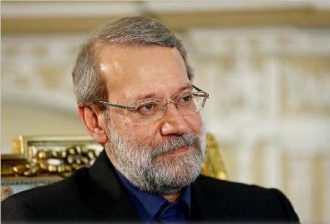 The Iranian official news agency IRNA carried a detailed summary of an interview given by the Speaker of the Majlis Ali Larijani to a Chinese TV network, regarding the fate of the Iran nuclear deal of July 2015 under the Donald Trump presidency in the United States.
These have been the most comprehensive remarks so far since the election of Trump, at an authoritative level in the Iranian leadership. Unsurprisingly, IRNA highlighted the interview. The salience remains to be that Iran is keeping an open mind on the incoming US president’s likely policies. (See my blog Iran keeps open mind on Donald Trump.)
However, Larijani’s latest remarks display a quiet confidence in Tehran that Trump’s campaign speeches regarding Iran will not translate as policies. Larijani is an accomplished statesman and when he flags that an American president’s policies ‘usually differ’ from his election rhetoric, it becomes a considered statement.
Tehran indeed should know. Ronald Reagan’s campaign speeches in 1980 in the middle of the hostage crisis were much more threatening than Trump’s. In fact, Iran was the leitmotif of Reagan’s campaign rhetoric against Jimmy Carter. Yet, some say the Reagan team didn’t want a denouement to the hostage crisis until the November election was over. (In fact, Iranians released the hostages soon after the election was over, but before Reagan moved into Oval Office.)
Reagan’s brilliant but devious campaign manager was none other than William Casey, who later had covert dealings involving Iran as head of the CIA in the new administration. It won’t be surprising if Iranians are jogging the memory. Only the other day Trump had shouted that Goldman Sachs had ‘total control’ over Hillary Clinton and yet his team already is stacked with Goldman insiders – Steve Bannon as chief White House strategist, Steven Mnuchin for the Treasury Secretary job and so on.
At any rate, Larijani pointed out that the US’ European allies (and Russia and China) may not go along with any US move to scuttle the Iran deal or reimpose sanctions. This is entirely plausible.
What Larijani left unsaid was about any back channel contact with the Trump team. He couldn’t have been explicit, of course. Interestingly, he also did not slam the door shut against the idea of Iran working with the US on regional issues. He merely said that so far American and Iranian regional policies have differed.
[Asked whether you are ready for cooperation with the US on regional issues, Larijani said, ‘We think that its policies in the region are against those of Iran’s.’
The US and the Zionist regime enjoy chaotic situation in the region, as they think their interests will be ensured under this condition while Iran has a different viewpoint as it thinks about a sustainable security in the region and believes that terrorism should be uprooted.
‘I think China and Russia are of the same attitude regarding the issues but the US and the Zionist regime think otherwise,’ Larijani said.]
Indeed, Trump’s move to work with Russia over the Syrian conflict cannot but involve Iran one way or another at an early stage itself. President Hassan Rouhani telephoned President Vladimir Putin on Monday and the Kremlin readout said the two leaders “highly rated the level of Russian-Iranian cooperation on the anti-terrorist track and agreed to work closely together to ensure the long-term normalization of the situation in Syria.”
What makes Iran an engrossing regional power is invariably the sophisticated intellectual underpinnings it gives to its foreign policies and regional strategy. So, how does Trump appear through the Iranian looking glass?
Glancing through the range of opinions in Iran, certain elements can be identified. First, in the excessive focusing on Trump’s colorful personality traits (which are, arguably, not more exotic than Reagan or George W. Bush’s), foreign observers have neglected the acuteness of the crisis within the United States, which has been steadily building up through recent decades.
Trump ultimately represents the class interests of the rich and the privileged and there is going to be a glaring shortfall in his ability or willingness to redeem his pledges to the marginalised and alienated sections of society. The seething anger is going to mount as it becomes clear that the ‘swamps’ which Trump promised to clean up remain an enduring fact of life. In sum, much of Trump’s attention will come to be trained on the challenges posed by the domestic political situation.
Second, Iranian scholars underscore the dialectics of the trans-Atlantic relationship. (The EU foreign policy chief Federica Mogherini visited Tehran thrice this year.) Trump is starting with a handicap since European opinion militates against his rise to power, not only in style but also in the content of his whole political platform. An unfriendly Europe will try to seek a new code of conduct, which in turn will compel Trump to trim his discourse.
Third, emanating from the above two factors, Iranian scholars assess that the US cannot afford to wage wars abroad. It neither has the money needed to spend on wars nor does it enjoy the political respite to take the eyes off the acute internal contradictions in the US’ political economy. Most certainly, an invasion such as the one in 2003 in Iraq is way beyond American capability. Europe will not join any US-led ‘coalition of the willing’, either. Thus, the limits to the US influence in the Middle East are already apparent.
All in all, therefore, a new concert of world powers is becoming necessary and unavoidable, especially with a major potential economic crisis staring at the world economy. Larijani’s cautious optimism can be put in perspective as the articulation of a rational assessment.
UN, US Fail to Offer Humanitarian Aid to 90,000 Freed Aleppo Citizens
Sputnik – 30.11.2016
The United States, the United Kingdom, France and the United Nations have not yet offered humanitarian relief to 90,000 Aleppo citizens, liberated from militants two days ago, the Russian Defense Ministry’s spokesman said Wednesday.
“Two days after over 90,000 Aleppo residents were freed from terrorists, no offer of humanitarian assistance came from the office of UN envoy for Syria Staffan de Mistura, the British and French Foreign Ministries or the US State Department,” the ministry’s spokesman Maj. Gen. Igor Konashenkov said.
Konashenkov reminded about the previous US, UK, UN and French demands to provide humanitarian access to eastern Aleppo when it was held by the militants.
“Apparently, the [humanitarian] assistance was destined for certain other people living in the eastern parts of Aleppo,” Konashenkov said highlighting the absence of the above-mentioned sides’ interest in providing civilians with humanitarian aid after all the necessary conditions for the aid delivery had been created.
On Tuesday, the Russian Defense Ministry said that the Syrian government forces had cleared almost half of eastern Aleppo from militant strongholds, liberating tens of thousands local residents.
Despite Rapprochement, Turkey-Russia Relations Remain Uneasy Over Syria
By Salman Rafi Sheikh – New Eastern Outlook – 30.11.2016
While a year has passed since Turkey shot down a Russian jet in Syria and while a few months have passed since the beginning of rapprochement between both countries that includes co-operation in Syria and co-operation in the field of energy, their bi-lateral ties remain uneasy—a situation that largely owes its existence to the still-lingering disagreement over Syria, particularly the future of Assad, and the dual role Turkey happens to be playing there. On the one hand, it has sent its own troops to supposedly fight the Islamic State, and on the other, there are on the ground proxy groups who are receiving support from Turkey. Therefore, while Turkey has repeatedly said that it “respects” Syria’s territorial integrity and sovereignty, it continues to support these “rebel” groups who are in Syria, first and foremost, to oust the Syrian president and to contain the Syrian Kurds—something that not only is a violation of Syrian sovereignty but also pits Turkey against Syria and Russia in the region.
As such, while Turkey rhetorically respects Syria’s territorial integrity, it has still created a “safe zone” inside Syria, in the name of creating a shield against the Islamic State’s incursions into Turkey, and is pushing for bringing more of the Syrian territory under its direct control—a step that is akin to a de facto territorial disintegration of Syria due to a foreign (Turkish) occupation. Hence, the contention that while Turkey may not actually be seeking to create a permanent “zone” in Syria—something that Turkey and Russia have developed some understanding about —Turkey certainly has not changed its mind towards Assad’s future as Syria’s president (read: Turkish Foreign Minister, Mevlut Cavusoglu recently acknowledged in an interview that Turkey and Russia have disagreement over Assad’s future). This un-changed position makes Turkey more of a NATO ally, which it is by all means, and less of a partner of Syria and Russia against terrorism.
What the current nature of relationship between Turkey and Russia implies is that it is yet to convert itself into a full-fledged strategic alliance. Although we have seen a lot of progress towards normalization, this normalization is of tactical nature only wherein Russia appears to be an important actor for Turkey to neutralize the prospects of Kurds, who are being continuously supported by the US, establishing their own state i.e., Kurdistan. Besides it, Turkey also sees in Russia an opportunity to counter-balance its relations with the US and EU and send them a signal that it does have other ‘avenues of support.’
That Turkey’s rapprochement with Russia is of tactical nature only is also evident from the fact that this rapprochement and normalization has not so far created any rupture in NATO. This normalization is likely to stay what it actually is i.e., normalization and, as such, least likely to turn into a strategic re-alignment, although earlier signs had shown that it was not an impossibility.
What impedes this transformation is, as stated above, Turkey’s contradictory dual role in Syria, where it is carrying on NATO’s agenda of ousting Assad and where it is also seemingly targeting IS along with Russia and Syria.
What such a position further implies is that Turkey is tapping into both blocks to take advantage of its geographical location and achieve all of its major objectives i.e., oust Assad and roll back Kurds to other side of Euphrates river. While Turkey does aim at both targets, this perusal puts it in a conflicting position vis-à-vis Syria. Some recent incidents strongly indicate the potential of this conflicting position to transform into yet another war.
For instance, the advance by largely Turkmen and Arab rebels backed by Turkey towards al-Bab, the last urban stronghold of Islamic State in the northern Aleppo countryside, potentially pits them against both Kurdish fighters and Syrian government forces, leading to clashes between them.
Al-Bab is of particular strategic importance to Turkey because Kurdish-dominated militias have also been pursuing a campaign to seize it. Ankara is determined to prevent Kurdish forces from joining up cantons they control along the Turkish border. Turkey is backing the Syrian rebels with troops, tanks and artillery, as well as reconnaissance flights along the border.
However, while Turkey is out there to prevent the Kurds from having any territory under their control in Syria, Syria itself is not ready to ‘host’ Turkish troops on its territory. This has created the threat of direct clashes occurring between them. In fact, such incidents have already started to occur.
On last Friday, the Turkish military said that Thursday, November 24, air strike, which killed three of its soldiers, was thought to have been carried out by the Syrian air force. It would be the first time Turkish soldiers have died at the hands of Syrian government forces. Turkish President Tayyip Erdogan discussed this attack on Turkish troops in Syria with his Russian counterpart Vladimir Putin on Friday as Turkish-backed rebels pressed an offensive to take the Syrian city of al-Bab, a report from Turkey’s state-run Anadolu Agency stated.
While no major dispute of diplomatic and military nature has so far been reported developing between Turkey and Russia, this incident unambiguously underlines the fundamental disagreement both have in Syria.
Therefore, it is not energy-co-operation merely that would determine the future of their bi-lateral relations. While co-operation in this field required normalization, which they have already achieved, it is also quite clear today that the transformation of this normalization into a strategic realignment depends upon how smoothly both countries resolve their differences over Syria. In the coming months, the progress of the operation, as well as the battle for Aleppo, will become the decisive points in setting the trajectory of their bilateral relations.
Salman Rafi Sheikh is a research-analyst of International Relations and Pakistan’s foreign and domestic affairs.
Erdogan’s Statements Contradict with Earlier Russia-Turkey Agreements: Diplomat
Sputnik – November 30, 2016
Turkish President’s intention to depose Syrian leader contradict with previously reached agreements between Russia and Turkey, Russian Deputy Foreign Minister Mikhail Bogdanov said Wednesday.
Turkish President Tayyip Erdogan’s statements on his intention to depose Syrian President Bashar Assad run counter to earlier reached agreements between Russia and Turkey, Russian Deputy Foreign Minister Mikhail Bogdanov said Wednesday.
“This runs counter to all agreements. First, Resolution 2254, Resolution 2268, decisions of the Vienna format, Lausanne format. We have been participating in these formats jointly with Turkey,” Bogdanov told reporters.
Erdogan said Tuesday the Turkish armed forces’ military operation in Syria is designed to put an end to the rule of President Bashar Assad.
Erdogan: Turkish forces are in Syria to end Assad’s rule
RT | November 29, 2016
 Recep Tayyip Erdogan has said that the Turkish Army has entered Syria to end the rule of Syrian President Bashar Assad, whom he accused of terrorism and causing the deaths of thousands of Syrians.
“We entered [Syria] to end the rule of the tyrant al-Assad who terrorizes with state terror. [We didn’t enter] for any other reason,” the Turkish president said at the first Inter-Parliamentary Jerusalem Platform Symposium in Istanbul, as quoted by Hurriyet daily.
Erdogan said that Turkey has no territorial claims in Syria, but instead wants to hand over power to the Syrian population, adding that Ankara is seeking to restore “justice.”
“Why did we enter? We do not have an eye on Syrian soil. The issue is to provide lands to their real owners. That is to say we are there for the establishment of justice,” he said.
He went on to say that “in his estimation” almost 1 million people have died in the conflict in Syria, although no monitoring group has provided any similar figures. The latest UN estimate stands at 400,000 people killed in the five-year civil war.
Erdogan said that Turkey could not “endure” the unending killing of civilians and “had to enter Syria together with the Free Syrian Army.”
The Turkish leader also accused the UN of inability to influence the situation in Syria and said that the organization is ineffective in its current state.
“The world is bigger than five,” he said, referring to the number of permanent members on the UN Security Council, as reported by Hurriyet.
Iranophobes on Parade
Will Iran be the target of the Trump regime?
By Philip Giraldi • Unz Review • November 29, 2016
One of the most discouraging aspects of the filling out of the Donald Trump cabinet is the array of Iran haters that seem to be lining up in the foreign policy and national security areas. Trump has been personally advocating sensible policies relating to Russia and Syria but he appears to have gone off the rails regarding Iran, which just might be attributed to those who are giving him advice. A reversion to the relationship that prevailed prior to last year’s signing of the Joint Comprehensive Plan of Action (JCPA) between Iran and the so-called P5+1 consisting of the United States, Russia, China, France, Britain, and the European Union would be undesirable, to say the least, but that appears to be what is likely to develop. Or it could be even worse, finding bilateral support for “action” as a number of policy advisors in the presidential campaign from both parties were endorsing something like war against the Persians.
The irony is that the arguments made then and now for attacking Iran were based on the threat of Tehran deciding to build its own atomic bomb. With the JCPA agreement, however, most would agree that any remaining concerns that Tehran might even be considering the development of a nuclear weapons program were greatly diminished. Iran has since that time been in compliance with the agreement, possible nuclear proliferation has been avoided, and, apart from the fulminations of the inevitable anti-Iranian politicians in the United States, the signatories to the agreement have expressed their satisfaction with the outcome. It has been Washington that has failed to live up to its part of the agreement by easing remaining restrictions that are being imposed against Iranian financial institutions and regarding the purchase of some commercially available dual use technologies.
Candidate Donald Trump did not need much prompting to pick up on the prevailing anti-Iran sentiment. In a number of campaign speeches he denounced the JCPA as a bad deal and vowed to tear it up upon taking office. Some of that sentiment might well have been derived from his desire to distance himself from foreign policy positions promoted by President Barack Obama that were subsequently endorsed by Hillary Clinton so it is no surprise that since being elected he has somewhat modified his stance. He is now veering towards trying to renegotiate the agreement, which would likely be impossible given that it has multiple signatories. He could nevertheless disrupt it by continuing or increasing sanctions on Iran.
The thought of reverting to a state of unrelenting hostility towards Iran is disconcerting. One recalls joint CIA-Mossad operations between 2010 and 2012 that assassinated four civilian scientists connected to the country’s nuclear program as well as the creation of the Stuxnet virus that threatened to spread to other computers worldwide. It is generally accepted that Israel’s Mossad planned and prepared the killing of the scientists with a little help from the U.S., attacks which were almost certainly carried out by associates of the radical Marxist group Mujaheddin e Khalq (MEK), which is now being seen favorably by several Trump advisors even though the group is Marxist, cult-like and has killed Americans.
The assassinations were based on the false premise that Iran had a nuclear weapons program that could be disrupted by killing the scientists and technicians involved. Two comprehensive studies by the American government’s Central Intelligence Agency (CIA) conducted in 2007 and 2011 determined that no such program existed and that Iran had never taken any serious steps to initiate such research. Israel was also aware that there was no program. Nevertheless, the Israeli and American governments took steps to interfere with Iran’s existing and completely legal and open to inspection atomic energy program by identifying then killing its scientists and also introducing viruses into its computer systems. This was in spite of the fact that Iran was fully compliant with international norms on nuclear research and it was a signatory to the Nuclear Non-Proliferation Treaty (NPT), which Israel, possessing its own nuclear arsenal, had refused to sign.
The history of the Iran-U.S. relationship is significant because several Trump advisors appear to be locked into a time warp regarding the Mullahs and the threat to Americans that they allegedly constitute. Former Defense Intelligence Agency (DIA) head Michael Flynn, who will be the Trump National Security Advisor, is the most prominent Iran hater and also the most outspoken.
Flynn, also an unapologetic Islamophobe, has said that Iran represents a danger to U.S. national security and that our friend and ally Israel “lives under the threat of total annihilation from Iran… something the United States must never allow.” He believes that Iran intends to build nuclear weapons as well as the ballistic missiles needed to deliver them on target and thinks that “regime change” is the only solution to the threat posed by the current government. And for Flynn, Iran is not alone, it is part of a “global alliance” that includes China and Russia which seeks to threaten the U.S. and its allies.
Flynn concludes that Iran is unmitigated evil and that Washington should have nothing to do with it, apart from recognizing the reality that it and its government must be destroyed. I personally attended a conference in Moscow last December at which Flynn asserted that Iran is solely responsible for nearly all the instability in the Middle East and is behind at least five wars in the region, an assertion that is just as ridiculous as it sounds.
One might suggest that Flynn is terribly uninformed about a subject regarding which he claims expertise. His comments would suggest that the capabilities of the DIA that he once headed were dangerously overrated, but reports from his former colleagues indicate that he was always guilty of serious overreach in his pronouncements, something they referred to as “Flynn facts”.
If Flynn were just one loud voice braying in the wilderness he would be bad enough since his job is important, particularly with a president who has no foreign policy experience, but the sad fact is that he is not alone. Congressman, West Point grad and former Army officer Mike Pompeo, who will head the CIA, is more-or-less on the same page when it comes to Iran. He supports new sanctions on the country and, regarding his appointment as Director, he had only one comment to make and it related to the JCPA, “I look forward to rolling back this disastrous deal with the world’s largest state sponsor of terrorism.” As in the case with Flynn and DIA one has to wonder what kind of “objective” intelligence CIA will be producing under Pompeo.
Finally, there is retired Marine General James Mattis, who is being considered for a senior position in national security, possibly as Secretary of Defense. He is yet another Iranophobe who opposed the JCPA and calls Iran a rogue state that constitutes the “greatest threat” in the Middle East. As part of the evidence for that assessment he cites Iran’s alliance with Syria, which is at least in part directed against America’s enemy number one ISIS, demonstrating once again how Establishment Washington has difficulty in understanding what constitutes actual national interests. Mattis, in fact, denies that Iran is actually fighting ISIS.
The neoconservative kingpin Bill Kristol is gloating, headlining in his Weekly Standard publication that the “Iran Deal Is Doomed!” He should be pleased. Team Trump’s attitude towards an alleged Iranian threat is delusional, more in sync with Kristol and some Israeli thinking than with any actual American interests. Just as neoconservatives always believe that it is 1938 and we are in Munich, Flynn, Pompeo and Mattis likewise seem to think that it is 1979 and the United States Embassy in Tehran is still occupied.
The three Trumpsmen are not stupid, far from it, but the problem appears to be that they cannot comfortably assess two or more conflicting concepts at the same time, which might be due to the linear thinking derived from their military backgrounds. The Middle East is awash with players, all of whom have separate agendas, few of which coincide with actual American interests. If one is fixated on or obsessed with Iran as the sole disruptive force in the region it becomes difficult to see how Saudi Arabia, Turkey and Israel are also problems. It is decidedly neoconnish to look at a complex foreign policy issue and only see black and white, but that is what the Trump national security team seems to be prone to do.
Hopefully someone will convince Donald Trump that the real answer to eliminating the “Iranian threat” is not war. It requires building on the relationship established by JCPA to bind Iran more closely to the international community, both economically and culturally. By all accounts, young Iranians, a majority of the population, are dismissive of the rigidity of their own government and are very open to Western ideas and lifestyle. Change will come to Iran if the United States and its European allies encourage more rather than less non-threatening contact. It will not come at the point of a bayonet as Flynn, Pompeo and Mattis appear to be promoting.
NATO’s Rear-Guard Actions
By Brian CLOUGHLEY | Strategic Culture Foundation | 29.11.2016
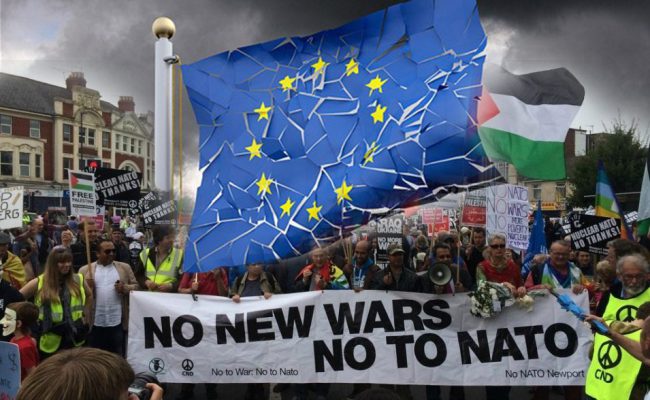
In the military a rearguard action is defined as ‘a defensive action carried out by a retreating army’ and it is an appropriate description of the desperate scrabbling by NATO to convince the rest of the world — and especially Donald Trump — that its existence is justified.
President-elect Trump has never said that the US should actually leave NATO. Certainly Hillary Clinton declared that he ‘wants to pull out of NATO’ but this was just another of her lies, and what he said back in April was that it is ‘obsolete’ which is a gentle way of indicating that it’s hopeless. He did, after all, tell a town hall meeting in Wisconsin: «Maybe Nato will dissolve and that’s OK, not the worst thing in the world», but although that may have sent shivers up the supple spine of NATO’s Secretary General Stoltenberg, it was by no means a definitive statement of intention.
The fact remains that The Donald is unhappy with NATO, and he’s perfectly right to consider that it’s a vastly expensive and largely ineffective military grouping that indeed should be disbanded. On the other hand, the massive propaganda campaign waged against Russia has convinced much of the world that Moscow has expansionist plans and that the only way to counter its supposed ambitions is to spend more money — lots and lots more money — and deploy troops and aircraft and ships all over the place to make it look as if gallant little NATO is defending the so-called Free World against the might of an illusory aggressor.
Trump may not have examined the minutiae of the NATO shambles, but in spite of being a bit of a blowhard whose knowledge of international affairs is modest, he’s not a fool, and even he can perceive that NATO has a record of catastrophe.
The Financial Times reported him as saying «Its possible that we’re going to have to let Nato go. When we’re paying and nobody else is really paying, a couple of other countries are but nobody else is really paying, you feel like the jerk». He said that if elected president he would contact many of the other 27 NATO members and put pressure on them to make a larger financial contribution or leave. «I call up all of those countries… and say ‘fellas you haven’t paid for years, give us the money or get the hell out’», he said, to loud cheering.
This may have been populist rhetoric, but it played to the people who matter to him — to the people who elected him. When he becomes President he might well think that he owes them a lot more than he does to NATO.
In March Stoltenberg told NATO countries that «the time has come to invest more in defence» but his motives for doing so were not those of Mr Trump, because Trump, like any businessman, wants to look carefully at expenditure and go on to make a profit, while Stoltenberg wants to spend money — including a great deal of American money — to justify existence of the costly monolith that has grown larger, more expensive and less effective over the past twenty years.
Stoltenberg sought to vindicate NATO’s record by writing an article for Britain’s Observer newspaper to say that NATO had strongly supported the United States following the 9/11 atrocities by joining it in its war in Afghanistan. ‘This,’ he declared, ‘was more than just a symbol. NATO went on to take charge of the operation in Afghanistan. Hundreds of thousands of European soldiers have served in Afghanistan since. And more than 1,000 have paid the ultimate price in an operation that is a direct response to an attack against the United States.’
The truth differs from what Stoltenberg claims. He is correct in saying that NATO became heavily involved (and lost a thousand troops for no reason at all), but gives the impression that NATO was there, poised and ready to take the leap into action when the US and Britain invaded Afghanistan in October 2001. Certainly the forces of the US and the UK were joined by troops from other countries — but it wasn’t until August 2003 that NATO itself managed to become involved, when, as the BBC reported, it ‘assumed control of peacekeeping in Afghanistan – the alliance’s first ever operational commitment outside Europe.’ And things went screaming downhill from that time.
There was no need for NATO, as such, to become involved, because there were plenty of alliance countries with contingents already in Afghanistan (for example, the Germans had been there since January 2002 and Canadians and Italians since December 2001). All that NATO added to the foreign military machine in Afghanistan was yet another layer of military bureaucracy. The result was described in, among other histories, ‘The Good War’, an excellent account of the catastrophe by Jack Fairweather who describes the reaction of President Bush’s National Security Adviser, General Douglas Lute, who saw the map of NATO operations in 2008 and was of the opinion that «each nation was fighting its own private war. Nobody was running the show, and there was no common purpose».
In present-day NATO there are far too many people «running the show» and the purpose of the show itself is far from clear. Stoltenberg and other champions of the continuing existence of the expensive farce claim that there’s a threat from Russia — but if they genuinely believe that Russia is going to invade a NATO member country they belong in a lunatic asylum.
To be blunt, had Russia wanted to invade Ukraine at the time of the US-engineered coup in 2014 (recollect Obama’s admission that the US ‘brokered a deal to transition power in Ukraine’), it could have done so with ease. It would have taken about three weeks to defeat the Ukrainian military and occupy the country right up to the border with Poland. But why on earth would it have wanted to do that?
Russia would have been extremely unwise to take such action, because once you invade a country you have to occupy and pacify it, which is extremely difficult — as US-NATO has found to its enormous cost in lives and money in the Afghanistan debacle.
Similarly, for what possible reason would Russia attempt to invade Estonia or Latvia, or any other country for that matter? It would be insane to do so, yet this totally imaginary threat is trotted out as the reason for NATO’s present posture of confrontation. There is never explanation for the US-NATO expansion up to Russia’s borders that took place from 1999 to 2009, which is rightly regarded as confrontational by the Russian people. (And remember that it’s not correct in the west to refer to ‘the Russian people’. Rather, it is mandatory to call the country ‘Putin’s Russia’.)
Stoltenberg’s message to President-elect Trump is that the US-NATO military grouping must continue to confront ‘Vladimir Putin’s Russia’, but Trump has other priorities, not the least being the appalling economic circumstances in regions where he received most support. He’s no fool, and he’s going to pay attention to these voices rather than the plaintive wailing of Stoltenberg who rests his case for US expenditure on the foundation that ‘our proud history is one of common challenges overcome together’.
One thing that Secretary General Stoltenberg had better bear in mind is that President-elect Donald Trump does not care about history, and most decidedly not the history of Europe. He cares about the hard facts of here and now. Not intellectually, but practically. He is devoid of sentiment. Europe and NATO mean nothing to him in terms of nostalgia and all that sob-stuff.
And he’s not going to forget the volume of insults delivered by European political leaders and media, such as ‘loudmouth’ and ‘hatemonger’. In the British parliament he was described as a ‘buffoon, demagogue and wazzock’. The British foreign minister, Boris Johnson (who really is a buffoon), said in June that ‘the only reason I wouldn’t visit some parts of New York is the real risk of meeting Donald Trump’. French President Hollande (another fool) declared that Trump’s ‘excesses’ made him ‘want to retch’ and in one particularly amusing reaction to Trump’s election, Martin Schulz, President of the European Parliament, said ‘We hope that Donald Trump will respect the fundamental rights and rules of the European Union,’ in which, be assured, Mr Trump has not the slightest interest.
President-elect Donald Trump might not be the ideal person to enter the White House in January (although Clinton would have been a disaster), but he’s going to try to look after America. NATO’s wellbeing comes way down on his priorities. NATO Secretary General and confronter-in-chief Stoltenberg will continue fighting his rearguard action to keep his wobbly and mega-expensive military circus in existence, but it’s possible that Mr Trump might make the world a safer place by letting the whole thing collapse.
What Will Canada’s Military Involvement in Iraq Lead To
Inside Syria Media Center – November 24, 2016
According to Reuters, about 200 Canadian commandos are actively involved in the ground operation to recapture Mosul from ISIS rule. According to Michael Rouleau, Canadian Special Forces Commander, troops are engaged in a ‘substantial’ number of clashes with terrorists which continues to rise.
Why is Canada sending troops to Iraq? What are the results desired by the Canadian government? And what is it willing to sacrifice?
First, Ottawa claims that by doing so it protects itself against terrorism. Former foreign minister Rob Nicholson stressed the need to weaken and destabilize ISIS in 2015. However neither airstrikes in Iraq and Syria nor coalition’s participation in Mosul mincing machine will lead to eradication of terrorism. The example of the Taliban in Afghanistan clearly demonstrates that large-scale fighting will be followed by long and bloody guerrilla war, in which Canada could get stuck with no end in sight.
Second, we should analyze the aftermath of ISIS defeat in Iraq and Syria. This question has no clear-cut answer. In theory the Canadian military presence in Iraq helps the Iraqi government to regain control over the country. In practice Ottawa is cooperating with the Kurds, who are planning to establish their own independent state on the territory of Iraq, Syria and Turkey. These aspirations could further destabilize the region.
Third, it is unclear whether Canada is ready to confront the Islamic State on a global scale. ISIS is conducting subversive activities in Lebanon, Afghanistan, Algeria, Pakistan, Libya, Egypt, Yemen, Nigeria, as well as in the countries of Southeast Asia in addition to Syria and Iraq. Consequently, it will require much more effort than just sending a few hundred soldiers to take part in an operation with controversial results for the complete elimination of the Islamic State.
Fourth, the situation in Syria and Iraq resembles a scenario that has repeatedly led to disastrous consequences in the Middle East. For example, the Western overthrow of Saddam Hussein in Iraq in fact led to the creation of ISIS. NATO’s invasion in Libya has practically ruined the country, led to fierce carnage over Muammar Gaddafi and contributed to the rapid spread of terrorist groups throughout North Africa not mentioning numerous victims among the civilian population.
Fifth, judging by the events in Mosul, one could argue that the operation would require a considerable amount of money. Despite the fact that the military operation in Iraq has already hit the budget of the country, Canada is going to allocate approximately $305.9 million extra towards extension, refocusing and carrying out the mission. This includes $41.9 million to be allocated for redeployment of personnel and equipment in 2016-17.
In addition, Canadian military’s participation in missions abroad comes with casualties. According to The Department of National Defense and the Canadian Armed Forces, 162 soldiers were killed in Afghanistan with more than two thousand injured. During the ten years of military presence in Afghanistan the Government invested more than $11 billion in the operation.
It is obvious that in the absence of a clear military strategy and achievable goals the situation in Iraq can become a second Afghanistan for Ottawa. Instead of solving internal problems, by supporting the international coalition Canada dared to get involved in another endless armed conflict. The leadership of the country once again has not consulted the opinion of its citizens sending dozens of soldiers to death and destroying the state budget.
15 European leaders call for new arms deal with Russia
RT | November 26, 2016
Fifteen European countries, headed by Germany, have issued a statement pushing for the reopening of “a new structured dialogue” with Russia aimed at preventing a possible arms race in Europe, according to the German foreign minister.
The countries, all belonging to the Organization for Security and Cooperation in Europe (OSCE), have expressed their deep concern over the current situation in Europe and support the relaunch of a conventional arms treaty with Russia, German Foreign Minister Frank-Walter Steinmeier told Die Welt newspaper in an interview published on Friday.
“Europe’s security is in danger. As difficult as ties to Russia may currently be, we need more dialogue, not less,” Steinmeier said.
The ongoing conflict in the Eastern Ukraine and the fact that Crimea joined Russia in 2014, a move most often dubbed as “annexation” by western officials, have put the question of war in Europe back on the table, Steinmeier continued. Fragile trust between Russia and European countries has suffered a significant setback and a “new armament spiral” is hanging over the continent, the foreign minister warned.
The statement contains strong anti-Russian rhetoric, blaming Moscow for violating arms deals as far back as 1990.
“The Conventional Forces in Europe treaty, which led to the destruction of tens of thousands of heavy weapon systems in Europe in the years following 1990, is no longer being implemented by the Russian Federation,” the statement said.
Russia put its participation in the treaty on hold in 2007 and then fully walked out of it last year.
Russian President Vladimir Putin called for the suspension of the treaty following a US decision to locate missile defense facilitates in the neighbouring Czech Republic and Poland. On top of that, President Putin noted that some of the NATO members did not join or ratify the treaty and there was no point in Russia abiding by the agreement.
Later Putin signed a decree suspending the treaty due to “extraordinary circumstances … which affect the security of the Russian Federation and require immediate measures,” having notified NATO and its members of the decision.
Since then NATO has taken no steps to upgrade the treaty, the Russian Foreign Ministry said in September, 2016, adding that Moscow is ready for dialogue on the subject. However, it is not planning to be the one to initiate it.
The statement names a number of other documents that need to be overviewed, including the OSCE’s Vienna document, stipulating the exchange of information on military movements, and the Open Skies treaty, enabling the monitoring of other countries’ ground forces. The documents are either neglected or in need of modernization.
The countries that spoke in favor of Steinmeier’s initiative include France, Italy, Austria, Belgium, Switzerland, the Czech Republic, Spain, Finland, the Netherlands, Norway, Romania, Sweden, Slovakia, Bulgaria and Portugal.
The group of the European foreign ministers is planning to meet again on the sidelines of a OSCE meeting in Hamburg on December, 8-9.
Featured Video

Racist Seinfeld Dances for Joy as Bibi Unveils His New Map
or go to
Aletho News Archives – Video-Images
TV Drama Review
Japanese drama projects Japan’s wartime atrocities onto Chinese characters

Global Times | October 25, 2026
By portraying Chinese characters as perpetrators of ruthless violence while casting Japanese Self-Defense Forces (SDF) intelligence operatives as defenders, the season 2 of the Japanese drama Vivant has recently drawn criticism from Chinese netizens, who argue that its depiction turns historical reality on its head while ignoring Japan’s wartime atrocities.
The TBS drama series – a spy suspense story in which an alleged unofficial intelligence unit of the SDF operates across the globe — has attracted a passionate fanbase. Its currently airing season 2 opened with a household rating of 18.8 percent, the highest for a TV drama this year, according toa commentary article by Japanese media Toyo Keizai.
What draws attention is the portrayal of the enemies in the series, the article noted. Scenes in which the Chinese organization subjects kidnapped members of the SDF unit to brutal torture are repeated with unrelenting intensity.
It is rare for Japanese TV dramas to explicitly portray a real-life country as the enemy, the article noted.
Japanese Prime Minister Sanae Takaichi also made a reference to the drama, saying that she has been recording Vivant and hopes to binge-watch it over the year-end and New Year holidays, according to Japanese media outlets.
China’s CCTV News report on Sunday revealed that the drama features scenes in which Chinese personnel cut off the fingers of and stab Japanese intelligence operatives in the abdomen. Such acts bear striking similarities to the torture inflicted on Chinese nationals by invading Japanese troops during the World War II.
The drama distorts the truth by attributing these atrocities to modern Chinese characters. Beneath the surface, it subtly glorifies Japan’s cross-border overseas operations, blurs the functional boundaries of the SDF and implicitly promotes an expansionist narrative, per CCTV News. … continue
Blog Roll
 Aletho News
- EU facing trillion-euro debt hole while seeking more cash for Kiev
- How US, Europe, Persian Gulf states exhausted missile stockpiles, splurged billions to defend Israel
- Up in arms… Koreans reject U.S. empire’s plan to make South Korea the next Ukraine
- Iran, Turkey, Pakistan, Saudi Arabia could advance region-led security framework in Tehran: FM spox
- Netizens condemn Japanese drama for projecting Japan’s wartime atrocities onto Chinese characters
- Racist Seinfeld Dances for Joy as Bibi Unveils His New Map
- A West Bank War for Netanyahu’s Election Campaign, Could It Backfire?
- Yemen denounces European Parliament’s ‘hypocritical’ push to blacklist Ansarullah
- Qalibaf: UAE’s UN bid aims to ‘clear the runway’ for ‘Greater Israel’, whitewash genocide
- Pakistan reopens Iran border after boosting security: Report
- If Americans Knew
- An error has occurred; the feed is probably down. Try again later.
- No Tricks Zone
- Sudden Stratospheric Warming, Powerful El Niño Combination May Lead To Extreme Europe Cold, Energy Crisis!
- Two New Studies Find Thwaites Glacier Melt Cannot Be Driven By Human Activity Or A Warming Ocean
- E-Cars Reduce CO2 Emissions By Only 41% Compared To Internal Combustion Engine Vehicles
- Predictions Made By Renowned Climate Professor Over Past Decades Have Been Proven To Be Poor
- New Study Suggests Large Regions Of The Pacific Ocean Have Been Cooling For The Last 80 Years
- Germany’s Green Energy Debacle: High Energy Costs Force Kahla Porzellan to Close After 182 Years!
- New Study: 50 Years Of The Most Aggressive ‘Net Zero’ Policies Can Only Affect The Global Climate By 0.03°C
- US September “Heat” Was No Record…Many Records Set Decades Ago
- Latest European Green Energy Debacle; Portugal’s Largest Flagship Solar Park Insolvent!
- Green Energy Debacle: German Expert Professor Fritz Vahrenholt Warns Of Severe Economic And Social Consequences

