Canada to send troops to Ukraine ‘in non-combat role’ – report
RT | April 11, 2015
Canadian government has decided to send troops to Ukraine in a non-combat role, CTV News reported, citing official sources. The troops could arrive in the country in the coming weeks or months, but the details of the mission are still being worked out.
The Canadian soldiers are likely to be sent for a training mission and could cooperate with American soldiers, the report said.
“While the government is still working out the details, sources told CTV News a training mission is one of the options on the table. Canada is likely to work closely with American allies who are already in the region,” CTV News reporter Mercedes Stephenson said.
The Conservative government has been leaning towards a more significant Canadian involvement in the Ukrainian crisis for the past few months.
In February, Canada updated the list of its sanctions against Russia with travel bans slapped on 37 Russian and Ukrainian individuals. It also applied economic sanctions against 17 Russian and Ukrainian companies, which included Russian oil giant Rosneft.
Russian Foreign Ministry spokesman Aleksandr Lukashevich labelled the new sanctions as an anti-Russian step that looks like “an awkward attempt to hinder the implementation of the conflict settlement agreements, reached in Minsk on February 12 with Russia’s active constructive role.”
In December, Canada signed an agreement to send its military police to Ukraine to “look into the possibilities of cooperation,” while it also looked to help the government in Kiev with security issues.
Meanwhile, Canada’s Toronto Symphony Orchestra (TSO) barred a Ukrainian-born pianist from playing in a scheduled program for expressing views on the situation in Ukraine via Twitter.
The orchestra dropped pianist Valentina Lisitsa who was due to play a concerto by Rachmaninoff. The hashtag #LetValentinaPlay surged in popularity on social media, and thousands of supporters spoke out for the artist, who was offered to be paid not to play.
Read more ‘Dangerous process’: Russia warns against US, NATO military instructors in Ukraine
Pakistan MPs vote to stay out of Yemen crisis
Press TV – April 10, 2015
The Pakistani parliament has passed a resolution that urges Islamabad to remain neutral vis-à-vis the conflict in Yemen, dismissing Saudi Arabia’s request to join its deadly air raids against the Arabian Peninsula state.
“The parliament desires that Pakistan should maintain neutrality in the Yemen conflict so as to be able to play a proactive diplomatic role to end the crisis,” read the resolution which was ratified unanimously on Friday after days of dispute among the lawmakers.
The parliament “underscores the need for continued efforts by the government of Pakistan to find a peaceful resolution of the crisis,” the resolution added.
The resolution urged all warring factions in Yemen to put an end to deadly clashes and resolve the conflict through dialogue, warning that the flare-up in the Arab country would “have a critical fallout in the region, including in Pakistan.”
The Pakistani parliament also called on the international community and Muslim countries to push ahead with their efforts to bring about a ceasefire deal in the violence-wracked country.
Pakistani Prime Minister Nawaz Sharif also attended the parliament session on Friday to express his approval of the resolution.
This is while Riyadh has made repeated calls to Islamabad to take part in the Saudi aggression in Yemen.
The resolution came a day after Iranian Foreign Minister Mohammad Javad Zarif wrapped up a two-day visit to neighboring Pakistan.
“Military attacks, aerial bombings and the destruction of the infrastructure in this country (Yemen) cannot help resolve the crisis,” said Zarif during a meeting with Sardar Ayaz Sadiq, the speaker of the Pakistani parliament,
“We should all invite all sides to the negotiation table to resolve the regional problems,” Zarif said.
In a meeting with Pakistani army chief General General Raheel Sharif on Thursday, Zarif said, “The past experiences show that the consequences of the military intervention in Yemen will become part of the problems.”
Saudi Arabia’s air campaign against Ansarullah fighters started on March 26, without a UN mandate, in a bid to restore power to the country’s fugitive former president, Abd Rabbuh Mansur Hadi, a staunch ally of Riyadh.
According to figures released Thursday by Yemeni media outlets, nearly 450 people have so far been killed since the beginning of the Saudi aggression. Most deaths are reported to be women and children.
Hadi stepped down in January and refused to reconsider the decision despite calls by the Houthi Ansarullah movement.
However, the Ansarullah movement later said Hadi had lost his legitimacy as president of Yemen after he escaped Sana’a to Aden in February.
On March 25, the embattled president fled the southern city of Aden, where he had sought to set up a rival power base, to the Saudi capital, Riyadh, after Ansarullah revolutionaries advanced on Aden.
The Ansarullah fighters took control of the Yemeni capital in September 2014. The revolutionaries said Hadi’s government was incapable of properly running the affairs of the country and containing the growing wave of corruption and terror.
‘Dangerous process’: Russia warns against US, NATO military instructors in Ukraine
RT | April 8, 2015
A top Russian diplomat has promised that his country would push for removal of all foreign military specialists and illegal paramilitary groups from Ukrainian territory after US confirmed its plans to send about 300 instructors to train pro-Kiev troops.
Moscow is urging the removal of all foreign military formations from Ukraine, including the instructors from the United States and NATO, Deputy Foreign Minister Grigory Karasin said in an interview with the Rossiiskaya Gazeta daily.
“We know that hundreds of US and NATO servicemen are planning to come to Ukraine to train the National Guard. The training camps are being set up not only in western Ukraine, but also in other parts of the country. This is a dangerous process. We would push for all foreign and illegal military units to be removed from Ukraine,” Karasin said.
In mid-March, Pentagon spokesman Col. Steve Warren told the media that about 290 servicemen of the 173 Airborne Brigade will arrive to western Ukraine in late April to train three battalions of the Ukrainian National Guard. The planned location of the exercises was disclosed as the Yavoriv army training center near Lvov.
On Wednesday, Ukrainian PM Arseniy Yatsenyuk promised that his government would sign a number of agreements with NATO concerning military-technical cooperation. These would include a memorandum on communications and intelligence that would pave the way to Ukraine’s deeper participation in NATO’s Partnership for Peace program.
Russia has previously denounced the increasing buildup of NATO forces in Eastern Europe as well as US plans to supply weapons and non-lethal military equipment to Ukraine. The criticism became especially sharp when the House of Representatives in Washington passed a non-binding resolution calling on President Barack Obama to send lethal weapons to Ukraine, despite the ceasefire agreement between pro-Kiev forces and federalists in the east of the country.
Several Russian lawmakers have called the US Congress’ call to send “lethal aid” to Ukraine a threat to the peace process and a direct provocation aimed at Russia.
Ukraine agrees military-technical cooperation with NATO
RT | April 8, 2015
Ukraine will sign a set of agreements with NATO on military-technical cooperation in intelligence, surveillance and other areas, Ukrainian Prime Minister Arseniy Yatsenyuk told his Cabinet.
Kiev and NATO will sign a memorandum on cooperation in “control, communications, intelligence and surveillance” under NATO’s Partnership for Peace program, Yatsenyuk was cited as saying by Tass news agency.
Another document will see the implementation of four trust projects, including military-technical cooperation, communications and new information technologies, the PM added.
“Ukraine must restore its armed forces exclusively following the example of the strongest armies and strongest alliances that fight for peace in the world. In the first place, these are the standards of NATO, and we are moving in this direction,” Yatsenyuk said.
Ukraine is intensifying its ties with NATO in hopes of becoming a full member of the military alliance in five years’ time.
The issue of Ukraine joining NATO was raised by then-President Viktor Yuschenko in 2008, but Kiev’s application to join the alliance was turned downed by the 26 member states.
In 2010, then-President Viktor Yanukovich signed a decree securing Ukraine’s non-aligned status, ruling out NATO membership.
But after Yanukovich was overthrown in a violent coup in February 2014, Ukraine’s non-aligned status was revoked.
The nation will be able to consider NATO membership within five or six years, President Petro Poroshenko said before the New Year.
Various polls conducted in Ukraine suggest that the majority of the population now supports the country becoming a NATO member.
A series of reforms will have to first be implemented for Ukraine to meet NATO standards.
NATO Secretary General Jens Stoltenberg outlined some of the criteria that Ukraine would have to meet before joining the bloc. Firstly, it would have to combat corruption and improve the efficiency of state bodies, he said.
Stoltenberg also said that the possibility of deteriorating relations with Russia should not deter Ukraine from joining the bloc.
Moscow, which has always viewed NATO’s expansion to the east as a threat to its security, warned that it would cut all ties with the alliance if Ukraine joins.
The Ukrainian military has been involved in a deadly conflict with the rebels in the country’s southeastern Donetsk and Lugansk regions, who refused to recognize the regime change in Kiev.
Over 6,000 people have died in Ukraine during a year of violence, which only began to slow after Russia, France and Germany brokered a peace deal between the sides in mid-February.
Read more:
NATO to give Ukraine 15mn euros, lethal and non-lethal military supplies from members
‘Dangerous process’: Russia warns against US, NATO military instructors in Ukraine
Al-Shabaab and Kenya: the Somali Factor
By JASON MUELLER | CounterPunch | April 6, 2015
On April 2, 2015, al-Shabaab carried out a major attack on Garissa University College, Kenya, killing nearly 150 people—almost entirely students [1]. In response to this attack, Kenyan President Uhuru Kenyatta immediately called for the training of 10,000 new police officers and “urged Kenyans abroad to help attract tourists back [to Kenya]” after countries began issuing travel advisories that cautioned visiting the region [2]. Predictably, al-Shabaab’s deadliest attack inside of Kenya since its September 2013 assault on the Westgate Mall—killing 67—has dredged up the fraught question: “Is [Kenya’s] nation’s security strong enough?”[3]
At this point, we might stop for a second to consider whether the “strength” of Kenya’s national security is truly in need of bolstering, or if it is already one laden with extreme might—perhaps too much so. In fact, any serious analyses of political violence require us to move beyond the immediacy of events and dig through the social-historical contexts under which these events may have founds their roots. It doesn’t take much effort to acknowledge that an assault on a University that kills nearly 150 people is a tragic and unjustifiable event, but we must not stop there—as most news outlets do. Appeals for emotional outrage, hollow tropes of “they hate us for our freedom,” and pointless/bellicose statements declaring “We will keep hitting them until their spine is completely broken… and we will relish that moment” have no place in a serious sociological analysis, past or present [4]. Rather, we should recognize that insights on the causes of current political violence can be gained by looking at past and current policies that may have enflamed a particular situation.
Taking a brief look at the recent history of Kenyan policies towards Somalis—both internally and across-borders—we encounter some grim revelations. The October 2011 decision by the Kenyan government to invade Southern Somalia (Operation Linda Nchi: “Protect the Country”) was a critical juncture in the relationship between Kenya and al-Shabaab, as thousands of Kenyan security forces romped through Somalia. In fact, al-Shabaab immediately declared that they planned to seek revenge for the Kenyan incursion. This was made explicit in the aftermath of the Westgate Mall assault, where al-Shabaab leader Ahmed Godane released a statement saying “The attack at Westgate Mall was to torment the Kenyan leaders who’ve impulsively invaded [Somalia]. It was also a retribution against the Western states that supported the Kenyan invasion and are spilling the blood of innocent Muslims in order to pave the way for their mineral companies… So make your choice today and withdraw all your forces [or] an abundance of blood will be spilt in your country” [5]. Somali blood was also spilled at the hands of Kenyan forces in the months following their invasion, confirmed by a ‘Human Rights Watch’ report released in 2013 showing that Kenya had indiscriminately bombed and shelled the population they were sent to protect [6].
In addition to these external factors, the treatment of Somalis within Kenya has been equally troublesome. The Kenyan government has been described as its “own worst enemy,” where it has cast a wide net on countless ethnic Somalis as potential al-Shabaab suspects to be rounded up and interrogated [7]. Moreover, it has recently come to light that Kenya’s Anti-Terrorism Police Unit (ATPU)—under direct command of Kenya’s National Security Council—is potentially responsible for nearly 500 extrajudicial executions, operating under the general pretext of: “If the law cannot work, there’s another option… eliminate [them]” [8]. This “elimination” strategy is believed to be directly supported by the West, as they provide the operational intelligence while the Kenyan forces carry out the kinetic operation.
Al-Shabaab has not only carried out numerous attacks in Kenya since the Post-October 2011 “Operation,” but they have had great luck with finding sympathies within Kenyan borders as well, for many of the reasons mentioned above. Like many social problems, it certainly becomes more difficult to ameliorate a conflict after you’ve continually taken steps to exacerbate the issue—giving greater fuel for grievance formation and a calcification of “us vs. the enemy” mentality. We only need to take a cursory examination of the recent verbal exchanges between the Kenyan president and al-Shabaab to understand the severity of issue at hand. Continuing the bombastic rhetoric, President Kenyatta declared that he plans to persist “unbowed” with the scorched-earth policy against al-Shabaab, looking to respond in the “severest way possible” against those he deems responsible. Coinciding with that, we saw al-Shabaab release a statement declaring that “Kenyan cities will run red with blood” until Somalia is “liberated from Kenyan occupation” [9].
To fully explore the current conflict between al-Shabaab, Somalia, Kenya, and all of its neighboring states requires much greater length and a different forum of discussion. However, there are a few thoughts and observations that should strike all those concerned with the situation. First, heavy-handed response by the state security apparatus’ rarely serve to quell violent and disenfranchised armed opposition. To expect al-shabaab to simply dissipate by means of state-sponsored extrajudicial executions and shelling of the civilian populations near which they are potentially operating is a failure on both humanitarian and moral levels. This must be acknowledged as an independent fact, regardless of the nature of violence doled out by al-Shabaab. This applies not only to the Kenyan security forces, but all other security forces involved in the conflagration as well (In particular, Ethiopia and the United States.) Furthermore, as we have seen through countless other recent conflicts in the “global war on terror,” military-interventionist policies are likely to promote hostilities not only within the country being occupied, but potentially the diaspora of that region as well. Viewing all Somali’s as potential suspects is an objectionable violation of the very principles that these countries claim to be fighting for in a “war against terrorism.” Lastly, at the very least, citizens around the globe should continue to be highly skeptical of their governments when a foreign incursion is suggested as a cure-all for “fighting terrorism.” As we’ve seen all too often, it is not just those engaged in the immediate conflict but also those shopping at the markets or attending University that pay the price.
Jason Mueller is a Research Fellow at the ‘Center for the Study of Democracy’ and Graduate (PhD) student in the department of Sociology at the University of California, Irvine. Research areas include: Social Movements, Political Violence, and State Repression, with a particular interest in Somali affairs. He can be reached at: jmueller018@gmail.com
References.
[1] Ellis, Ralph, Ben Brumfield, and Christian Purefoy. “Five arrested in deadly attack on Kenyan college.” CNN. April 3, 2015. http://www.cnn.com/2015/04/03/africa/kenya-garissa-university-attack/index.html
[2] Honan, Edith. “Al Shabaab Kills at Least 147 at Kenyan University; Siege Ends.” Reuters. April 3, 2015. http://uk.reuters.com/article/2015/04/02/uk-kenya-security-college-idUKKBN0MT0CS20150402 ; and, “Kenya Sees Biggest Al-Shabaab Attack Yet; 147 Dead.” Modern Ghana. April 3, 2015. http://www.modernghana.com/news/609071/1/kenya-sees-biggest-al-shabaab-attack-yet-147-dead.html
[3] Ellis, Ralph, Ben Brumfield, and Christian Purefoy. “Five arrested in deadly attack on Kenyan college.”
[4] “Kenyan Troops ‘kill 60 Al-Shabab Fighters’ in Somalia.” BBC News. January 7, 2012. http://www.bbc.co.uk/news/world-africa-16455039
[5] McConnell, Tristan. “Who Is Al Shabaab Leader Ahmed Godane?” GlobalPost. October 1, 2013. http://www.globalpost.com/dispatch/news/regions/africa/kenya/131001/who-al-shabaab-leader-ahmed-godane
[6] Human Rights Watch, “World Report 2013: Somalia.” http://www.hrw.org/world-report/2013/country-chapters/somalia
[7] Hidalgo, Paul. “Kenya’s Worst Enemy.” Hiiraan. April 24, 2014. http://hiiraan.com/op4/2014/apr/54256/kenya_s_worst_enemy.aspx
[8] “Exclusive: Kenyan Counterterrorism Police Admit to Extrajudicial Killings.” Al Jazeera. December 8, 2014. http://america.aljazeera.com/articles/2014/12/8/kenyan-counter-terrorismpoliceconfesstoextrajudicialkillings.html
[9] “Kenya to Respond to Shebab Attack in ‘severest Way’: President.” AFP/Modern Ghana. April 4, 2015. http://www.modernghana.com/news/609246/1/kenya-to-respond-to-shebab-attack-in-severest-way-.html
Guess Who’s Loving Saudi Bombs in Yemen?
By Daniel McAdams | Ron Paul Institute | April 4, 2015
As the US-backed Saudi bombing of Yemen enters into its second week, more than 500 people — including many civilians — have been killed, what infrastructure existed in the impoverished country has been destroyed, and the ousted president cheers on the destruction of his country within the protective embrace of the country that is bombing his own.
What is less reported in a US mainstream media is that one group in Yemen seems to be making out quite well in the US-backed and Saudi-created chaos: al-Qaeda in the Arabian Peninsula. Yes, al-Qaeda. The group that the US has been droning in Yemen since 2010. The drone strikes that set the population and especially various tribes like the Houthis against the US-accommodating Hadi. The Houthis who had been fighting al-Qaeda in Yemen before they started being bombed by Saudi Arabia. That al-Qaeda.
A Thursday prison raid by al-Qaeda operatives in the port city of Mukalla freed one of their commanders, “emir” Khaled Batarfi. Barfi celebrated his freedom by taking up residence in the abandoned regional governor’s palace as Saudi planes continued to bomb al-Qaeda’s enemy in Yemen, the Houthis. Barfi even used the palace telephone apparently to issue orders to his minions. It must have been hard for him to believe his incredible good luck!
The Saudis are said to have air-dropped weapons to supporters of ousted president, Mansur Hadi, in the battleground port city of Aden. How long before al-Qaeda shows up with these gifts from the Saudis by way of the US military-industrial complex?
So why is the US backing the Saudi attack on its neighbor? It is complicated. According to US government logic, when Yanukovych was chased by a mob from his office in Ukraine, by leaving the country he lost legitimacy. In Yemen, on the other hand, when president Hadi was chased by a mob from his office he retained his legitimacy and Saudi airstrikes were approved and coordinated by the US to put him back in office.
It had something to do with democracy, it was said. However, Hadi was “elected” after overthrowing his predecessor in a coup and standing for office as the only candidate on the ballot. Not surprisingly in the circumstance, he “won” more than 99 percent of the vote. Then-Secretary of State Hillary Clinton was effusive in her praise, claiming the Soviet-style election and inauguration “were promising steps on the path toward a new, democratic chapter in Yemen’s history.”
Yanukovych, in contrast, was elected in a contested election judged to be “free and fair” by international monitoring bodies.
Watching State Department Spokesman Jen Psaki defend these double standards is one of those golden comedy moments that makes you laugh and then cry.
So the US backs Saudi attacks on Yemen in the name of democracy even though neither country is remotely democratic, and even though none except al-Qaeda and the US military-industrial complex seems to be benefiting. Is this incompetence, arrogance, ignorance, or something darker?
Iran, Yemen and nuclear negotiations
By Dr. Seyed Mohammad Marandi | Press TV | April 5, 2015
Western governments, their Middle Eastern allies, and many major media outlets have much in common with Lewis Carroll’s Humpty Dumpty.
“When I use a word,” Humpty Dumpty said, in a scornful tone, “it means just what I choose it to mean – neither more nor less.”
Similarly, in the lexicon of western powers and their regional partners, the meaning of words such as moderation, legitimacy, human rights, democracy, extremism, terrorism, and fundamentalism are about as consistent as a chameleon’s color.
In Ukraine, the United States and its allies supported and facilitated the overthrow of a democratically elected president, immediately recognizing the successor regime as “legitimate.”
Many dead in ‘air strike on north Yemen refugee camp’
But, in Yemen – despite Abd Rabbuh Mansour Hadi having been the sole candidate in the February 2012 presidential election, despite his term as transitional president having expired after two years, despite his lack of popular support, despite his having resigned in January, despite his having fled his capital and later his country – the US and its allies consider Hadi the “legitimate” president.
Question of legitimacy
When Hadi invited foreign powers to bomb his country’s flimsy infrastructure and military, they rushed to do so.
US logistical and intelligence support may help explain why the Saudi Kingdom chose America’s favorite “shock and awe” tactics for its war against Yemen. Netanyahu also supports air strikes against Yemen’s armed forces and fragile infrastructure; perhaps Saudi leaders should have asked him why the Israeli regime’s multiple barbaric onslaughts against much smaller areas like Gaza and South Lebanon all ended in failure and humiliation.
Sadly, history is repeating itself like a rogue merry-go-round. The same countries that, as US Vice President Joe Biden admits, helped destroy much of Libya, Syria, and Iraq are now fighting on the same side as al-Qaeda of the Arabian Peninsula (AQAP).
Is it really a good idea to strengthen al-Qaeda’s most dangerous branch alongside Bab El Mandab, the narrow waterway linking the Red Sea with the Gulf of Aden – especially as Somalia has no effective central government and al-Qaeda affiliates like al-Shabab are on the other side of the strait?
Cronyism, poverty, injustice, corruption, and decades of foreign domination drove Hadi’s overthrow. Ceaseless attempts to deny this and depict the Yemeni situation as a sectarian conflict reflect a worn-out strategy. This strategy has shaped the creation of the Taliban, ISIL, Boko Haram, al-Qaeda in the Islamic Maghreb, al-Qaeda, Ansar al-Sharia, and Jundullah, among others.
It has caused pain and devastation across North Africa, where there are no Shia Muslims – or “majus” and “Safavids,” to use the derogatory terminology of the tens of well-funded sectarian and ethnocentric extremist television channels.
Iranian proxies?
Describing the Houthis or Ansarullah as Iranian proxies insults their millions of followers and allies across Yemen, including southerners who well remember past devastation inflicted upon them by the same forces. It is an obvious attempt to push a non-sectarian country towards sectarianism, even though this policy has already failed in Syria.
It is difficult to imagine how these air strikes across Yemen – killing significant numbers of innocent civilians, including women and children huddled in refugee camps – will make the “coalition” look like liberators.
That none of these pilots flew anywhere near Palestine during the Israeli regime’s 2014 onslaught against Gaza has not escaped notice, either.
Iranians have also noticed that the Saudi-led Operation Decisive Storm coincides with the most sensitive phase of negotiations between the Islamic Republic of Iran and the P5+1 in Lausanne, Switzerland. It has been clear for some time that the Israeli and Saudi regimes want to prevent a successful outcome in these talks.
Regardless of the ultimate outcome, Yemen’s tormentors should remember what happened along the Saudi-Yemeni border in 2009 when Ansarullah was a much smaller, more isolated, and less experienced military force. Purchasing Pakistani or Egyptian troops will not solve the problem; both of those regimes are floundering, barely able to contain their own extremists.
Appreciation for Iran among Iraqis, Syrians, Bahrainis, Omanis, and Yemenis is rooted in Iran’s independence, participatory Islamist governance (Western claims to the contrary notwithstanding), civilization, tolerance, and rejection of sectarian ideology.
While stale accusations will undoubtedly continue to be leveled at Iran, this aggression is not about the Islamic Republic’s alleged regional domination, it is about silencing the aspirations of the Yemeni people.
Those who spread civil war, extremism, and war should ponder the final words of Lady Macbeth: “Here’s the smell of the blood still. All the perfumes of Arabia will not sweeten this little hand.”
Saudi Arabia rejects all-inclusive arms embargo on Yemen proposed by Russia
RT | April 5, 2015
Saudi Arabia has rejected Russia’s amendments to a Security Council draft resolution which would see an all-inclusive arms embargo on all parties in the Yemeni conflict, as it continues to spiral out of control with the civilian death toll climbing higher.
“There is little point in putting an embargo on the whole country. It doesn’t make sense to punish everybody else for the behavior of one party that has been the aggressor in this situation,”Saudi Arabia’s representative to the UN Abdallah Al-Mouallimi said after a closed emergency UN Security Council meeting on Saturday.
Al-Mouallimi added that he “hopes” Russia won’t resort to its veto power in case the all-inclusive embargo clause is not added into the draft submitted by the Gulf Cooperation Council that urges an arms embargo only on the Houthis.
At the same time, Riyadh agreed with Moscow’s calls for need of “humanitarian pauses” in the Saudi-led coalition’s air campaign in Yemen – though saying that Saudi Arabia already cooperates fully in this regard.
“We always provided the necessary facilities for humanitarian assistance to be delivered,” Al-Mouallimi told reporter heading out of the meeting. “We have cooperated fully with all requests for evacuation.”
Moscow convened an emergency meeting on a draft resolution demanding “regular and obligatory” breaks in air assaults against Houthi rebels, in which many civilians keep dying in increasing numbers. The Russian-proposed draft circulated on Saturday demanded “rapid, safe and unhindered humanitarian access to ensure that humanitarian assistance reaches people in need.”
The current council president and Jordan’s Ambassador Dina Kawar said that the council members “need time” to consider the Russian draft resolution, adding that the talks would continue. “We hope that by Monday we can come up with something,” Kawar said.
The 15-member council is considering the possibly of merging the Russian and Gulf Cooperation Council proposed drafts into one.
The Security Council meeting coincided with the call from the International Committee of the Red Cross for a “humanitarian pause.” The NGO urged to break hostilities for at least 24 hours.
“We urgently need an immediate halt to the fighting, to allow families in the worst affected areas, such as Aden, to venture out to get food and water, or to seek medical care,” said Robert Mardini, head of the ICRC’s operations in the Near and Middle East.
Meanwhile intensive airstrikes early Saturday morning targeted Houthi positions near Aden and in the Houthi stronghold of Saada in the north of the country. At least 185 people were left dead and more than 1,200 wounded as a result of fighting in Aden, a medical official told AFP Saturday, three-quarters of them civilians.
A coalition of Arab states, led by Saudi Arabia, has been engaging Houthi militias from the air for over a week now, after the Yemeni President Abd Rabbuh Mansur Hadi was forced to flee the country and asked for an international intervention to reinstate his rule.
Iran backs national talks to end Yemen crisis: Larijani
Press TV – April 5, 2015
Iran’s Parliament (Majlis) Speaker Ali Larijani says the Islamic Republic supports negotiations among representatives from all parties involved in the Yemeni crisis, describing national dialog as the only way to end the conflict.
During a telephone conversation with Speaker of the National Assembly of Pakistan Sardar Ayaz Sadiq on Sunday, Larijani lamented the ongoing Saudi airstrikes that have led to the deaths of hundreds of Yemenis and destroyed the country’s infrastructure.
“Such military aggression, irrespective of its objectives, is a blow to the Muslim Ummah and benefits the Zionist regime (of Israel) and major powers. The aggressive countries must explain why they are using their facilities to deal a blow to a Muslim state,” the top Iranian legislator pointed out.
Larijani also described Yemenis as a courageous nation, which has bogged foreign intruders down and made them regret their measures throughout history.
He called on aggressive governments to take salutary lessons from the failed Soviet and US-led military campaigns against Afghanistan.
Sadiq, for his part, stated that Islamabad has no intention to become engaged in the Yemen crisis, and seeks the establishment of calm and peace in Yemen in line with the Muslim world’s interests.
Saudi Arabia’s air campaign against Yemen started on March 26 without a UN mandate in a bid to restore power to Yemen’s fugitive president Abd Rabbuh Mansur Hadi, a close ally of Riyadh.
Hadi stepped down in January and refused to reconsider the decision despite calls by the Houthi Ansarullah movement.
On March 25, the embattled president fled Aden, where he had sought to set up a rival power base, to Riyadh after Ansarullah revolutionaries advanced on the port.
The Ansarullah fighters took control of Sana’a in September 2014 and are currently moving southward. The revolutionaries said the Hadi government was incapable of properly running the affairs of the country and containing the growing wave of corruption and terror.
GOP Senator Tom Cotton vows to block final Iran agreement
Press TV – April 4, 2015
US Republican Senator Tom Cotton, known for his close links to a neoconservative group, says he will leave no stone unturned in order to sabotage a final nuclear agreement between the P5+1 and Iran.
The P5+1 group – the US, Britain, France, China, Russia and Germany – reached an outline of a potentially historic agreement with Iran this week over Tehran’s civilian nuclear work that would lift all international sanctions imposed against the Islamic Republic in exchange for certain steps Tehran will take with regard to its nuclear program.
“I’m going to do everything I can to stop these terms from becoming a final deal,” Cotton told CNN on Friday, criticizing President Barack Obama for pursuing a diplomatic agreement with Iran.
According to reports, Cotton received one million dollars from the Emergency Committee for Israel, a neoconservative group associated with Israel lobby, just before the last US election. The group was founded in mid-2010 by William [Bill] Kristol, a US neoconservative political analyst.
He said the Republican-dominated Congress could frustrate the Obama administration’s efforts to strike a comprehensive agreement with Iran by June 30 by preventing the removal of Congress-mandated sanctions, imposing new sanctions and pushing for legislation allowing lawmakers to review any nuclear accord reached with the Islamic Republic.
At the end of eight days of intense nuclear negotiations in the Swiss city of Lausanne on Thursday, Iran and the P5+1 states issued a joint statement, saying that no Iranian nuclear facility will be shut down and that Iran will continue with its nuclear activities in all its nuclear facilities including Natanz, Fordow, Isfahan and Arak.
“It was not a framework [understanding], it was just a detailed list of American concessions that is going to put Iran on the path to a nuclear weapon, whether they followed the terms… or they violate the terms,” Cotton said.
“Iran may not accept them in the first place because Iran has continued to string along our negotiators,” added the freshman senator from Arkansas.
Cotton suggested that instead of making a deal with Iran, the United States should take military action against the Islamic Republic to halt its nuclear activities.
“The alternative to this deal is a better deal with continued pressure through the credible threat of military force and more sanctions, and, if necessary, having to take military action,” he said.
“There are grave reservations about the path the president is taking us down, on both sides of the aisle.”
In a bizarre move last month, a group of 47 Republican senators sent an open letter to Iran’s leaders, warning that whatever agreement reached with the Obama administration would be a “mere executive agreement” and that Congress could ultimately walk away from any deal with Tehran upon review.
The White House has denounced the GOP letter as an “unprecedented” and “calculated” attempt to interfere with the Iran nuclear talks.
Tom Cotton claimed that he had drafted the letter. However, independent analysts say the letter was actually written by William Kristol, his financier.
UN must support end to Yemen violence: Russia FM
Press TV – April 2, 2015
Russia says the United Nations Security Council (UNSC) should adopt a stance in favor of stopping acts of violence in Yemen as the Al Saud regime continues its deadly aerial raids on the Arab state.
The 15-nation UN council “should speak in a principled manner for ending any violence … in the Yemen crisis,” Russian Foreign Minister Sergei Lavrov told reporters in Tajikistan’s capital, Dushanbe, on Thursday.
The top Russia diplomat made a trip to Dushanbe on Thursday to attend a meeting of the Council of the Collective Security Treaty Organization (CSTO).
Lavrov added that a draft resolution on the crisis in Yemen had been submitted to the Security Council. The UN body is now working to prepare the text of a joint resolution on the situation in Yemen.
“Unfortunately, the resolution was submitted after the dramatic events in Yemen took place” and the Al Saud regime unleashed its aerial attacks against the Arabian Peninsula state, Lavrov said, emphasizing that an appeal to the UN Security Council should precede any military operation.
Yemen has been targeted by Saudi Arabia’s air campaign since March 26. Saudi officials say the aggression is aimed at restoring power to fugitive former Yemeni president, Abd Rabbuh Mansur Hadi, a close ally of Riyadh.
Nearly 200 people have lost their lives in Yemen since the beginning of Saudi-led airstrikes. Many of the casualties are civilians, among them women and children.
Hadi stepped down in January and refused to reconsider the decision despite calls by the Houthi Ansarullah movement.
However, the Ansarullah movement later said Hadi had lost his legitimacy as president of Yemen after he escaped Sana’a to Aden in February.
On March 25, the embattled president fled the southern city of Aden, where he had sought to set up a rival power base, to the Saudi capital, Riyadh, after Ansarullah revolutionaries advanced on Aden.
The Ansarullah fighters took control of the Yemeni capital in September 2014 and are currently moving southward. The revolutionaries say the Hadi government was incapable of properly running the affairs of the country and containing the growing wave of corruption and terror.
Featured Video
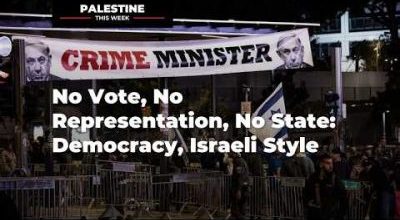
No Vote, No Representation, No State: Democracy, Israeli Style
or go to
Aletho News Archives – Video-Images
From the Archives
Sanctions, War and the Policy of Dual Containment
By SASAN FAYAZMANESH | March 17, 2008
It is now nearly three decades since the Unites States adopted the policy of dual containment of Iran and Iraq. While much has been written about the containment of Iraq, there has been very little in-depth analysis of this policy when it comes to Iran. In a book that is going to be released on March 31, 2008, entitled The United States and Iran: Sanctions, Wars and the Policy of Dual Containment (Routledge), I attempt to address this shortcoming by investigating when and why the US policy of containment of Iran came about, how it evolved, and where it stands today.[1] To the extent that Israel has been involved in US policy making, the study will also include the role that Israel has played in the containment of Iran. Also, since the fate of Iran has been inextricably linked to that of Iraq, occasionally the investigation will overlap with the containment of Iraq.
The policy of dual containment of Iran and Iraq originated during the Carter Administration, but it was not until the Clinton Administration that the expression “dual containment” became popular. … continue
Blog Roll
 Aletho News
- Elmo Sold mRNA Jabs to Your Toddler. Now They Are “Off-Label.”
- British state targets Palestine Action with yet another crooked trial
- Americans are paying the price to preserve Israel’s nuclear hegemony
- Resistance factions are necessary to ensure a permanent US Iraq withdrawal
- How Israel destabilizes the Middle East: Denying sovereignty and the right to exist
- Europe’s Establishment Is Embracing War – and Losing Voters
- NATO chief advocates war of aggression
- No Vote, No Representation, No State: Democracy, Israeli Style
- Zionist Bought Senate Blocks Information About American Citizens Killed By Israel
- While Gaza dominates the UN, these are the people keeping it alive
- If Americans Knew
- Israeli Soldiers Abduct At Least 22 Across Occupied West Bank
- Eight Palestinians Killed in Israeli Attacks on Gaza
- Israeli former leaders and security chiefs threaten legal action over ‘Jewish terrorism’
- Israel map in LA Times ad includes all land from the river to the sea
- Inside Lebanon’s 200-page dossier on Israeli war crimes
- Flydubai, genocide, settler violence, Trump abuse of power to deport – Daily Update
- Counting Antisemitic Incidents: What the ADL Audit Reveals — and Obscures
- Mamdani releases plan to combat antisemitism and hate crimes in New York City
- Iran’s Revolutionary Guards Publish Letter to the American People
- DMFI launches $1 million ad campaign supporting Virginia’s Elaine Luria
- No Tricks Zone
- Green Energy Debacle: German Expert Professor Fritz Vahrenholt Warns Of Severe Economic And Social Consequences
- Two More Paleo Reconstructions Affirm Meters-Higher Sea Levels Across Ireland, Brazil 7000-6000 Years Ago
- New Study: Earth And Venus Surface Warmth Largely Explained By Convection And Lapse Rate, Not CO2 Or Radiation
- 2025 Nature Paper Claiming Worsening Global Drought Gets RETRACTED …Heavily Flawed
- New Study: ‘Global Drought Shows No Detectable Recent Acceleration Under Climate Warming’
- Economic Masterminds: German Socialists Suggest Taxing Productivity Gains Stemming From Using AI
- The South China Sea Has Not Been Cooperating With The Climate Change Narrative
- Energy Crisis: Germany Enters Heating Season With Historically Low Gas Reserve Fill Levels
- New Study: The Antarctic Ice Sheet Gained Mass From 2020-2024 Due To Staggering Snow And Ice Accumulation
- Study: Ocean Heating Rates From Thousands Of Years Ago ‘Dwarf’ Modern Ocean Heating Rates

