Saudi Arabia Buys 15,000 U.S. Anti-Tank Missiles for a War It Will Never Fight
Al-Manar | December 13, 2013
No one is expecting a tank invasion of Saudi Arabia anytime soon, but the kingdom just put in a huge order for U.S.-made anti-tank missiles that has Saudi-watchers scratching their heads and wondering whether the deal is related to Riyadh’s support for the Syrian rebels, Foreign Policy reported.
The proposed weapons deal, which the Pentagon notified Congress of in early December, would provide Riyadh with more than 15,000 Raytheon anti-tank missiles at a cost of over $1 billion. According to the International Institute for Strategic Studies’ Military Balance report, Saudi Arabia’s total stockpile this year amounted to slightly more than 4,000 anti-tank missiles. In the past decade, the Pentagon has notified Congress of only one other sale of anti-tank missiles to Saudi Arabia — a 2009 deal that shipped roughly 5,000 missiles to the kingdom.
“It’s a very large number of missiles, including the most advanced version of the TOWs [tube-launched, optically tracked, wire-guided missiles],” said Jeffrey White, a fellow at the Washington Institute for Near East Policy and a former intelligence analyst at the Defense Intelligence Agency. “The problem is: What’s the threat?”
That’s a tough question to answer. A military engagement with Iran, the most immediate potential threat faced by Riyadh, would be largely a naval and air engagement over the Persian Gulf. Saudi Arabia has fought a series of deadly skirmishes with insurgents in northern Yemen over the years, but those groups have no more than a handful of military vehicles. And Iraq, which posed a real threat during Saddam Hussein’s day, is far too consumed by its internal demons and the fallout from the war in Syria to ponder such foreign adventurism.
But one Saudi ally could desperately use anti-tank weapons — the Syrian rebels. In the past, Riyadh has been happy to oblige: It previously purchased anti-tank weapons from Croatia and funneled them to anti-Assad fighters, and it is now training and arming Syrian rebels in Jordan. Charles Lister, a London-based terrorism and insurgency analyst, said that rebels have also received as many as 100 Chinese HJ-8 anti-tank missiles from across the border with Jordan — and indeed, many videos show Syrian rebels using this weapon against Bashar al-Assad’s tanks.
While most of the rebels’ anti-tank weapons were seized from Assad’s armories, Lister also believes that several dozen 9M113 Konkurs missiles, an old Soviet weapon, were provided to Islamist rebels in northern Syria this summer. And when these missiles have found their way to the battlefield, they’ve helped the rebels break through the belts of armor Assad uses to protect strategic areas: “Neutralizing these external defenses has proven key to opening the gates for ground assaults,” Lister said.
The Saudis can’t send U.S. anti-tank missiles directly to the rebels — Washington has strict laws against that. Recipients of U.S. arms are not allowed to transfer weapons to a third party without the explicit approval of the U.S. government, which in the case of Saudi Arabia has not been granted. Given Washington’s heightened concern over radical Islamist forces seizing control over the conflict — which resulted in the suspension of nonlethal aid to Syrian rebels on Dec. 12 — that approval will almost certainly never be given. If Riyadh went ahead and transferred the weapons anyway, it “would be a serious breach of U.S. law,” said Aram Nerguizian, a senior fellow at the Center for Strategic and International Studies, that would “all but certainly lead to a suspension of existing arms sales agreements.” So far, only one American anti-tank missile has been identified in Syria — an older model that Lister speculates may have been sold to Shah-era Iran, transferred to the Assad regime, and then captured by the rebels.
But while the latest American anti-tank weapons might not be showing up in Aleppo anytime soon, that doesn’t mean the deal is totally disconnected from Saudi efforts to arm the Syrian rebels. What may be happening, analysts say, is that the Saudis are sending their stockpiles of anti-tank weapons bought from elsewhere to Syria and are purchasing U.S. missiles to replenish their own stockpiles. “I would speculate that with an order of this size, the Saudis were flushing their current stocks in the direction of the opposition and replacing them with new munitions,” said Charles Freeman, a former U.S. ambassador to Saudi Arabia.
Regardless of how this purchase of anti-tank missiles relates to Syria, it’s undoubtedly part of a larger Saudi arms buildup that has been going on for nearly a decade. From 2004 to 2011, according to a 2012 report by the Congressional Research Service, Riyadh signed $75.7 billion worth of arms transfer agreements — by far the most of any developing nation. The United States was the major benefactor of this Saudi largesse, as the deals bumped up U.S. arms sales to a record $66 billion in 2011 alone.
How the Saudis plan to use many of these weapons is a mystery. And it’s not just the anti-tank missiles whose purpose remains unclear. Riyadh recently bought advanced fighter jets from the United States for a whopping $30 billion — but the Saudis’ lack of pilots and ability to maintain them means that it’s an open question how long they can keep them airborne, said William Hartung, the director of the Arms and Security Project at the Center for International Policy.
But purchasing the weapons, rather than any intent to use them, may be the point for the Saudis. At a time when they are at odds with Washington over the Obama administration’s diplomacy with Iran and nonintervention in Syria, the kingdom’s deep pockets can at least make sure their ties to the Pentagon remain as strong as ever.
“There was a [Washington] lobbyist who used to say, ‘When you buy U.S. weapons, you’re not just buying the weapon — you’re buying a relationship with the United States,'” said Hartung. “I think that’s kind of the concept.”
US ‘defence’ budget includes additional military aid for Israel
MEMO | December 12, 2013
Lawmakers in the US Congress reached an agreement on Monday in both the House and the Senate on the proposed federal budget for 2014, which would allocate $520.5 billion for defence spending and $491.8 billion for non-defence.
The defence budget includes an increase in military aid to Israel that will be given as private aid, thus it will be in addition to the $3.1 billion dollars already given annually to Tel Aviv.
The budget is still awaiting formal approval and the exact amount of additional aid to Israel remains unclear.
Israeli newspaper Haaretz reported that the US House of Representatives Armed Services Committee had endorsed an increase of $488 million in military aid to Israel to pay for Israel’s procurement and development of additional rocket and missile interception systems. The newspaper noted that this sum is considerably higher than previously expected.
However, Reuters news agency reported that the additional military aid to Israel would exceed $500 million after a compromise defence bill proposed on Monday agreed to boost US spending on missile defence by $358 million to $9.5 billion, mandating another homeland defence radar and increased funding for US-Israeli cooperative efforts.
Israel’s Channel 7 News reported that US President Barack Obama had originally requested $220 million of additional private military aid to Israel to buy extra Iron Dome short-range interceptor missiles and the batteries they are launched from, which was approved.
According to the Israeli media network, in addition to the above, the supplementary aid will allocate $173 million in funding for US-Israeli cooperative missile defence programs, which includes “nearly $34 million to improve the Arrow weapon system and $22 million for work on developing another, more advanced interceptor,” noting that, “The move signals further cooperation between Boeing and Israel Aerospace Industries (IAI).”
The new budget will also allocate $117.2 million to Israel for the “development of the David’s Sling short-range ballistic missile defence system, which is being developed jointly by Israel’s state-owned Rafael Advanced Defence Systems and the US’s Raytheon.”
Furthermore, “An additional $15 million will be directed for US co-production of Iron Dome components. Raytheon has a joint marketing agreement with Israeli state-owned manufacturer Rafael Advanced Defence Systems for the Iron Dome system.”
Both the US and Israeli media are reporting that the supplemental funds are intended to protect Israel from the increasing threats coming from Iran, Gaza and Hezbollah in Lebanon.
In addition to the supplemental aid, US Secretary of Defence Chuck Hagel has promised Israel that the existing $3.1 billion package of military aid would remain intact, despite US spending cuts.
The final vote on the budget is expected to take place before Congress leaves for the year.
Haaretz noted that, “Despite frequent disputes with Prime Minister Benjamin Netanyahu’s government regarding the peace process with the Palestinians and the Iranian nuclear threat, US President Barack Obama’s administration continues to be extraordinarily generous when it comes to granting military aid. Israeli defence officials see last week’s decision as further evidence of the strength of the relationship between the two countries.”
Related article
- Congress triples Obama’s request on defense cooperation with Israel (timesofisrael.com)
The Unwelcome Return of Navi Pillay

By Daniel McAdams | Ron Paul Institute | December 3, 2013
You could very well say that Navi Pillay was more than anyone else the person responsible for NATO’s disastrous invasion of Libya. As UN Human Rights Commissioner she chaired that fateful meeting in February, 2011 where Libyan NGO leader Soliman Bouchuiguir was allowed to repeat incredible tales about the “massacres” taking place in Libya – tales he openly admitted after the NATO invasion he had just made up. “There is no evidence,” he exclaimed when asked after the invasion to back up his claims, which were the basis of the chain of events that led to NATO bombing.
The first link in that chain was the UN Human Rights Commission hearing chaired by Pillay, where Bouchuiguir’s lies led to the suspension of Libya from that body and the referral of the Libya issue to the UN Security Council. At the hearing, Pillay took her cue from the falsifier Bouchuiguir, exclaiming that, “The Libyan leader must stop the violence now.” Eventually the Security Council passed Resolution 1973, cracking the interventionist door to Libya, which NATO very soon kicked open.
Commissioner Pillay wasted no time setting her “humanitarian interventionist” sights on another crisis just waiting for a military solution. As early as August, 2011 she began urging the International Criminal Court to take up the case against the Syrian government, which was fighting against a foreign-sponsored insurgency seeking its overthrow. Never mind the illegality of her position urging the overthrow of a sovereign state, Pillay has argued relentlessly from the beginning in favor of a Libya-style NATO invasion of Syria.
Now Pillay is back in the news, releasing an incredibly dubious “report” concluding that the Syria government is guilty of war crimes in its fight against a foreign-sponsored insurgency. Pillay’s methodology would be laughed out of any courtroom except perhaps those of Stalin’s show trials. Her “investigators” had no access to Syria, conducted no on-the-ground investigations, but instead conducted their interviews in neighboring countries or via Skype. As with her previously discredited Libya claims, there is no independent verification of her findings, no way of even knowing who she talked to in the collection of this “evidence.” In fact, she would not even reveal the names of the accused, a list of perpetrators which she claims was secretly handed to her. No, she prefers to keep her information secret in hopes that the International Criminal Court would finally take up her case against the Syrian government.
Pillay’s fanaticism and the religious fervor of her devotion to the doctrine of “humanitarian interventionism” harkens back to an earlier era where the murder of millions was justified in pursuit of the historical inevitability of utopia on earth. It is a dangerous and deadly philosophy, which justifies all manner of death and destruction. The oft-cited C.S. Lewis quote comes most often to mind when thoughts wander to the Navi Pillays of the world:
Of all tyrannies, a tyranny sincerely exercised for the good of its victims may be the most oppressive. It would be better to live under robber barons than under omnipotent moral busybodies. The robber baron’s cruelty may sometimes sleep, his cupidity may at some point be satiated; but those who torment us for our own good will torment us without end for they do so with the approval of their own conscience.
You Cannot Negotiate With Iran?
By Ron Paul | December 1, 2013
You cannot negotiate with Iran. That is what they told us for years. The Iranian leadership is too fanatical, they are not rational actors, they are “not like us.” One US official even recently said that deception is part of the Iranian DNA. But just over a week ago negotiations between the five permanent UN Security Council Members plus Germany and the Iranians produced an historic agreement that may be the first step toward a new era in US relations with the Middle East.
As Middle East expert Eric Margolis pointed out this week, for Iran’s major concessions it will only receive “$7 billion – of its own money, which has been frozen abroad by US-led sanctions.” That sounds like quite a bit of compromise for such a “fanatical” country.
Earlier this summer the same people made the same arguments about Syria. You cannot negotiate with Syrian President Assad, they said. He is insane; he is another Hitler. But not only was it possible, a deal was signed ending the threat of a US strike in exchange for Syria agreeing to give up its chemical weapons and the ability to manufacture new ones. Syria upheld its end of the agreement and the chemicals were all accounted for on schedule.
Why have the interventionists, the neocons, and the special interest groups claimed for so long that negotiation and diplomacy was tantamount to surrender; that countries such as Iran and Syria “only understand force”? It is because these groups are afraid of diplomacy. They do not want a peaceful resolution to these conflicts. They see US foreign relations only in the starkest terms: do what we say and we will give you aid, disobey us and we will bomb you.
Now the warmongers who call themselves “foreign policy experts” have been exposed. The whole world sees that they are wrong. Their advice is bad. Their limited vision of how foreign affairs should be conducted is actually dangerous to the United States. It is now clear that there are workable alternatives.
As with the US threats against Syria, public opinion polls on talks with Iran demonstrate that the American people are solidly behind diplomacy and opposed to another war. According to one recent poll, Americans support the deal reached with Iran by a margin of two-to-one.
Congress, however, is once again far behind the American people. Even as US negotiators were reaching agreement with their Iranian counterparts, US representatives and Senators were drafting legislation to increase sanctions on Iran. Instead of listening to the American people, many in Congress seem attached to special interests like the Israel and Saudi lobbies, which oppose anything less than full Iranian capitulation. Israel refuses to join the Non-Proliferation Treaty yet it seeks to dictate the rules of the treaty to those who have signed it. Saudi Arabia is desperate to control the region politically and economically, and it views an Iran that is free to sell oil and other products on the open market as a threat to Saudi power.
For too long both Israel and the Saudis have benefited from a US military guarantee. It has created “moral hazard” that only encourages more belligerent behavior on both of their parts. It remains to be seen whether this six month trial period will develop into a permanent move toward normalization of relations with Iran. What if Congress refuses to give Iran its own money back? But we are moving in the right direction and we should be optimistic.
A better US relationship with Iran may signal the beginning of the end of US meddling in the region and serve as an incentive for Saudi Arabia, Israel, and the Gulf States to solve their problems themselves. This would be a great boost to US national security, just as an Iran open to US business and trade would be a great boost to our economic security. Is peace finally breaking out? Let’s hope so.
Aipac’s Tortured Role in Iran Nuclear Talks: Tear Down Deal, While Appearing to Support It
By Richard Silverstein · Tikun Olam · November 29, 2013
The Israel Lobby likes to say (and hear members of Congress saying it as well) that there isn’t an inch of daylight between Israel and U.S. political leaders. And that’s generally so. But I’ve just read a memo produced by Aipac which diverges from the Israeli government’s absolutist approach to Iranian nukes. Netanyahu’s position is that Iran must not have any enrichment capacity. Essentially, it must renounce its entire nuclear program.
This memo takes a different view:
Now that the P5+1 has inked an initial agreement with Iran, America must not only ensure full Iranian compliance but also insist that any final deal deny Tehran a nuclear weapons capability.
…Congress has provided the leverage to spur Iran to seek talks; now it must press the administration to negotiate a verifiable agreement that will prevent Iran from ever building nuclear weapons.
Interestingly, this is precisely the Obama administration position. And the divergence between these two positions has caused no end of heartburn between Bibi and Barack. So why does Aipac take the president’s point of view on this and not Israel’s?
There are a number of reasons: first, because while Aipac may be many bad things, it isn’t stupid. It knows that polls show Americans support the Geneva agreement by a two to one margin. Though I haven’t heard of any polls of Jewish opinion, my strong suspicion is that American Jews support it in comparable numbers. So Aipac figures: why rock the boat?
They’ve just been stung by Congress and the president’s refusal to endorse military action against Syria. They don’t want to go down that road again. One thing that is very important to the Israel Lobby group is to be a winner. It hates to lose. It always wants to ensure that Israel’s “enemies” in Congress are the losers, but never Aipac itself.
Further, the group is trying to take a longer-term view. It has six months either to turn American opinion against the deal or to watch as it unravels. It must believe it’s better than even money that the signatories will find a fly in the ointment that will cause the agreement to collapse. Either the Iranians will be resistant or the French will develop a backbone and come to the rescue; or a terrorist attack will derail the process.
Of one thing you can be sure: Aipac is not in disagreement with the Israelis. Aipac wants precisely what Israel wants: not just an end to Iran’s nuclear program, but regime change. The difference between the two is that Israel doesn’t sugar-coat its position, while Aipac finely calibrates its agenda according to which way the political winds are blowing. As of now, they’re not blowing Israel’s way.
In fact, the DC Lobby organization wants to have it both ways. It wants to agree with the administration that the essential goal is stopping an Iranian bomb. But it also wants to keep in its back pocket the chance for advancing Israel’s demand for no nuclear enrichment:
The interim agreement does not require that Iran come into compliance with six mandatory U.N. Security Council resolutions, which demand Iran suspend all enrichment, reprocessing, and heavy water activity…
Here, Aipac infers that the mere fact of Iran having any enrichment capability gives it a path toward a bomb:
Any final agreement must deny Iran both uranium and plutonium paths to develop nuclear weapons.
Any final deal will likely preclude Iran from developing nukes, but it will not shut down its uranium enrichment. No pragmatic observer of this process believes this will happen. So even the intimation that you support shutting down this aspect of Iran’s program means you really support Israel’s absolutist position–you’re just too slick or frightened to say it outright.
Aipac does contradict the administration position in one significant way: it endorses ever more draconian sanctions against Iran. Though it understands this brings it into conflict with the President, it couches its position as supporting his goals: to bring Iran to the table and make it more willing to give up its supposed goal of building nukes.
This memo doesn’t mention that if the Lobby wins and sanctions worsen, the current official U.S. policy of reaching a deal with Iran will be dead. That would leave Aipac as the last man standing in the debate. A diplomatic solution will be gone and the only thing remaining will be the military option–Israel and the Lobby’s preferred course.
There are several problematic passages in the memo. Here it outright distorts the agreement:
Iran will retain all of its nuclear material and will be able to continue the research and development aspects of its program….The agreement imposes no restrictions on Iran’s nuclear weaponization efforts…
This is actually not true. Iran has a large amount of 20% enriched uranium. Under the deal, a significant portion of it would be reprocessed so that it could not be used as part of any weapons-making process. This is extremely important since Iran’s 20% enriched material is what would be needed to make a bomb. Without that, it can’t proceed toward nuclearization.
The willful misunderstanding of the Geneva protocol continues here:
Iran thus far has denied inspectors access to key facilities, such as Parchin, where the IAEA suspects nuclear weapons-related experiments have been conducted.
The deal actually gives inspectors access to Iran’s most secret facility, Fordo, and also gives them access to the heavy water reactor at Arak. These are both facilities that have been largely or wholly off-limits to the IAEA.
Related article
US, Israel to threaten Iran with war game
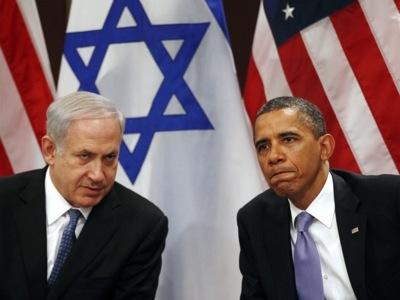
Press TV – November 28, 2013
The US and Israel are planning to conduct a joint military drill in an effort to threaten Iran towards the end of the six-month period when an interim deal between Iran and the five permanent members of the UN Security Council plus Germany expires.
The drill is aimed at sending a threatening message to Iran while US President Barack Obama says “we cannot commit ourselves to an endless cycle of conflict.”
Time magazine broke the story of the planned US-Israeli military exercise on Thursday, citing a top Israeli official who said, “The strategic decision is to continue to make noise.”
“In May there’s going to be a joint training exercise with the Americans,” said the official who spoke on condition of anonymity. “It’s going to be big.”
The planned war game comes after the interim nuclear deal between Iran and the P5+1 intensely angered Israelis.
As part of the interim deal, which was announced on November 24, Iran has agreed to limit certain aspects of its nuclear activities, and the United States and its allies have agreed to lift some of the economic sanctions and offer access to a portion of the revenue that Tehran has been denied through these sanctions. No additional sanctions will be imposed.
The deal infuriated Israeli Prime Minister Benjamin Netanyahu who called it “a historic blunder.”
The American Israel Public Affairs Committee (AIPAC), the most powerful pro-advocacy group in the US, also called on US Congress to impose new sanctions on Iran.
Meanwhile, a recent Reuters/Ipsos poll has shown that the American people support the deal over Iran’s nuclear energy program by a 2-to-1 margin.
Related articles
10 More Years in Afghanistan
By David Swanson | War is a Crime | November 25, 2013
When Barack Obama became president, there were 32,000 U.S. troops in Afghanistan. He escalated to over 100,000 troops, plus contractors. Now there are 47,000 troops these five years later. Measured in financial cost, or death and destruction, Afghanistan is more President Obama’s war than President Bush’s. Now the White House is trying to keep troops in Afghanistan until “2024 and beyond.”
Afghan President Hamid Karzai is refusing to sign the deal. Here is his list of concerns. He’d like the U.S. to stop killing civilians and stop kicking in people’s doors at night. He’d like the U.S. to engage in peace negotiations. He’d like innocent Afghan prisoners freed from Guantanamo. And he’d like the U.S. not to sabotage the April 2014 Afghan elections. Whatever we think of Karzai’s legacy — my own appraisal is unprintable — these are perfectly reasonable demands.
Iran and Pakistan oppose keeping nine major U.S. military bases in Afghanistan, some of them on the borders of their nations, until the end of time. U.S. officials threaten war on Iran with great regularity, the new agreement notwithstanding. U.S. missiles already hit Pakistan in a steady stream. These two nations’ concerns seem as reasonable as Karzai’s.
The U.S. public has been telling pollsters we want all U.S. troops out of Afghanistan “as soon as possible” for years and years. We’re spending $10 million per hour making ourselves less safe and more hated. The chief cause of death for U.S. troops in this mad operation is suicide.
When the U.S. troops left Iraq, it remained a living hell, as Libya is now too. But the disaster that Iraq is does not approach what it was during the occupation. Much less has Iraq grown dramatically worse post-occupation, as we were warned for years by those advocating continued warfare.
Humanitarian aid to Afghanistan — or to the entire world, for that matter, including our own country — would cost a fraction of what we spend on wars and war preparations, and would make us the most beloved nation on earth. I bet we’d favor that course if asked. We were asked on Syria, and we told pollsters we favored aid, not missiles.
We stopped the missiles. Congress members in both houses and parties said they heard from more people, more passionately, and more one-sidedly than ever before. But we didn’t stop the guns that we opposed even more than the missiles in polls. The CIA shipped the guns to the fighters without asking us or the Congress. And Syrians didn’t get the aid that we favored.
We aren’t asked about the drone strikes. We aren’t asked about most military operations. And we aren’t being asked about Afghanistan. Nor is Congress asserting its power to decide. This state of affairs suggests that we haven’t learned our lesson from the Syrian Missile Crisis. Fewer than one percent of us flooded Congress and the media with our voices, and we had a tremendous impact. The lesson we should learn is that we can do that again and again with each new war proposal.
What if two percent of us called, emailed, visited, protested, rallied, spoke-out, educated, and non-violently resisted 10 more years in Afghanistan? We’d have invented a new disease. They’d replace the Vietnam Syndrome with the Afghanistan Syndrome. Politicians would conclude that the U.S. public was just not going to stand for any more wars. Only reluctantly would they try to sneak the next one past us.
Or we could sit back and keep quiet while a Nobel Peace Prize winner drags a war he’s “ending” out for another decade, establishing that there’s very little in the way of warmaking outrages that we won’t allow them to roll right over us.
Kennedy’s assassination is the coup d’état that dare not speak its name
By Greg Felton | November 24, 2013
For an event that changed the course of world history, the 50th anniversary of the assassination of President John F. Kennedy passed with barely a ripple. It featured the same sort of superficial solemnity and obligatory rehashing of canonical texts one expects at a religious observance.
At Easter, the clergy do not expect faithful Christians to question the absurdity of the Resurrection as they hearken unto ritualistic stories and watch the umpteenth depiction of the Crucifixion. The ritual is a time to reinforce official belief, not stimulate thoughtful discussion.
So it came to pass that the 50th commemoration of the Kennedy assassination was, like all the others, an exercise in a manipulative ritual designed solely to allow people to expiate their grief and honour a martyred saint. It consisted of the veneration of official iconography, hearkening unto personal testimonies, and paying homage to the absurdities of the Warren Commission, which concluded that Kennedy was killed from behind by a single bullet fired from the rifle of Lee Harvey Oswald.
Criticism of the report and expressions of alternative explanations are still anathematized like a religious heresy even though a dedicated subculture of journalists, servicemen and scholars have successfully proven that the commission’s report is a hamfisted cover-up. To refute the one-bullet theory, for example, all one has to do is watch the famous Zapruder film to see that a bullet struck Kennedy in the forehead, snapping his head back and causing a gaping exit wound in the back of his skull. Ballistically speaking, this could not have been caused by a sniper shooting from behind.
The disconnect between official dogma and reality over these 50 years has had the (perhaps intended) effect of trivializing the assassination, turning it into a cliché so that we have become deaf to its true political importance.
Who rerouted the motorcade at the last minute to make it slow down at Dealey Plaza so that the assassin or assassins could get a clear shot? Who stood to benefit the most from his assassination? Certainly not Oswald. A lot of theorists point to the CIA, the Israelis, or Vice-President Lyndon Johnson. Others say the military did it. Perhaps it was all of them and others. (For an excellent list, see “16 Mind-Blowing Facts About Who Really Killed JFK” by Carl Gibson of Reader Supported News.)
Ironically, the persecution and marginalization of heretics may offer the best clues because as Voltaire wrote: “To learn who rules over you, simply find out who you are not allowed to criticize.” An examination of two policy areas before and after the assassination gives us a good idea who really killed Kennedy and why.
Vietnam
From the outset, Kennedy had to fight an insurrection within his administration from the Joint Chiefs of Staff and the CIA, which were looking for any excuse to start a war. During the Cuban Missile Crisis of October 1962, when medium-range ballistic missiles were spotted in Cuba, Kennedy faced almost unanimous opposition to a non-military response. Air Force Chief of Staff Curtis LeMay, the most outspoken belligerent, typified the contempt Kennedy faced: “This blockade and political action, I see leading into war. I don’t see any other solution for it. It will lead right into war. This is almost as bad as the appeasement at Munich.”
In the end, a naval blockade and a missile trade off convinced Khrushchev to pull the missiles out, thus sparing the world the spectre of nuclear war, but despite this success Kennedy’s refusal to be stampeded into nuclear war further alienated the military-industrial complex, as President Eisenhower called it, which thought such a war inevitable and necessary. It was Kennedy’s enlightened Vietnam policy, though, that sent the warmongers over the edge and points to a motive for assassination.
In a lengthy piece to Rolling Stone, Robert Kennedy Jr, gave a candid account of that policy:
On September 2nd, 1963, in a televised interview, JFK told the American people he didn’t want to get drawn into Vietnam. ‘In the final analysis, it is their war,’ he said. ‘They are the ones who have to win or lose it. We can help them, we can give them equipment. We can send our men out there as advisers, but they have to win it, the people of Vietnam.’
Exactly one month later, Kennedy told a National Security Council meeting that there would be a partial withdrawal of 1,000 military personnel by the end of 1963 and a complete withdrawal by the end of 1965, regardless of the military circumstances. The thought of pulling out of Vietnam sent the warmongers into a frothing rage. As RFK Jr. further recounts:
Journalist Richard Starnes, filing from Vietnam, gave a stark assessment in The Washington Daily News of the CIA’s unrestrained thirst for power in Vietnam. Starnes quoted high-level U.S. officials horrified by the CIA’s role in escalating the conflict. They described an insubordinate, out-of-control agency, which one top official called a ‘malignancy.’ He doubted that ‘even the White House could control it any longer.’ Another warned, ‘If the United States ever experiences a [coup], it will come from the CIA and not from the Pentagon.’ Added another, ‘[Members of the CIA] represent tremendous power and total unaccountability to anyone.’
That coup was the assassination. Four days afterwards, Lyndon Johnson, promulgated National Security Action Memorandum 273, which authorized covert operations against North Vietnam, and these in turn would lead to the fraudulent Gulf of Tonkin Resolution, which led to the widening of the war that was known to be lost before it started.
Israel
JFK abhorred nuclear weapons, and wanted to rid the world of them. He was determined to conclude a peace treaty with Soviet leader Nikita Khrushchev, with whom he had been keeping a secret correspondence, and to implement a unilateral test ban. Most significantly, JFK refused to sell Israel nuclear weapons and demanded that Israel’s nuclear facility at Dimona be completely open for inspection. On July 5, 1963, Kennedy wrote a letter to Prime Minister Levi Eshkol (né Shkol’nik) to that effect.
The request was contemptuously ignored; four months later Kennedy was dead. Johnson proceeded to turn Kennedy’s rational policy on its head and put the U.S. on the long humiliating road to becoming Israel’s bitch. As historian Laurent Guyénot wrote:
Johnson increased [aid to Israel] from 40 million [dollars] to 71 million and to 130 million the following year. While the Kennedy administration had authorized the sale of a limited number of defensive missile batteries to Israel, under Johnson more than 70% of the aid was earmarked for military equipment, including 250 tanks and 48 Skyhawk offensive aircraft. Military aid to Israel reached 92 million in 1966, more than the total of all previous years combined.
Regarding nuclear matters, Johnson turned a blind eye to Dimona and allowed Mossad agents to begin stealing 269 kg of enriched uranium from the Numec nuclear facility in Apollo, Pennsylvania.
Johnson’s support for Israel would lead to an overt act of treason on June 8, 1967, when he abetted Israel’s premeditated 75-minute assault on the intelligence-gathering ship USS Liberty that included torpedoes, rockets, napalm and 30mm gunfire fire, even at life rafts. Thirty-four servicemen died and 172 were wounded. Presidential speechwriter Grace Halsell explains the familiar motive for why Johnson sucked up to Israel:
In 1967, President Johnson felt he needed all the support he could get to ‘win’ in Vietnam. Many American Jews were liberals outspokenly opposed to the war there. Johnson was told if he gave all out support to Israel… influential Jewish Americans would stop opposing his Vietnam policies. In a memo to the president, [speechwriter Ben] Wattenberg… said flatly that if the president came out with strong support for Israel, he would win American Jewish support for the war in Vietnam. Many American Jewish leaders are ‘doves’ on Vietnam, Wattenberg wrote, but ‘hawks’ on a war with Arab states.
No investigation of the attack has ever been carried out and the lame cover story offered up by Israel—mistaken identity—is still endorsed by official Washington.
Israel also had a political motive to kill Kennedy because of his Middle East policy. He was determined to uphold international law in Occupied Palestine, and so the U.S. delegation to the UN called for the implementation of UNGA Resolution 194, by which Israel, as part of the terms of its admission to the UN, agreed to allow the 800,000 Palestinian refugees expelled from their neighborhoods and villages in 1947-48 to return. That was on Nov. 20, 1963. Kennedy was assassinated two days later.
Summary
No event in living memory altered the course of history as profoundly or as destructively as did the assassination of President John F. Kennedy. When he died, so did the idea of a just, democratic America and a world without the threat of nuclear war. In its place arose a militaristic usurper state that would be directly responsible for a half-century of wanton slaughter, despoliation, stupidity and incompetence.
Our modern corporatist police states are the offspring of the assassination, and the Military-Industrial-Zionist Complex, our political clergy, are waging total war on civilization so that we the people do not become informed, enlightened heretics and seek to reclaim our countries.
It can’t be coincidence that the 9/11 attacks followed the same script as the Kennedy assassination: an attack on American soil, a ludicrous cover story, patsies to take the blame, media propaganda, corrupt legislation to permit war on an industrial scale, a complicit White House, and censorship of dissenters. We know for certaint that warmongers in the government and pro-Israel Jews were involved in that attack. It stands to reason that they were involved in the JFK assassination. No wonder, it got such little respect.
Related articles
Related video
Peace Breaks Out… Neocons Weep
By Chris Rossini | Neocon Watch | November 24, 2013
A peaceful agreement has been reached between the P5+1 nations and Iran. As expected, the bomb-dropping idea peddlers are crying like babies:
Daniel Pipes calls peace a disaster: “Barack Obama has made many foreign policy errors in the past five years, but this is the first to rank as a disaster.”
Jennifer Rubin hopes Israel can still find a way to bomb: “Admin needs to reaffirm final deal will comply fully with UN resolutions. If not Israel should act”.
Michael Ledeen is not losing hope for war either: “this might make war more possible, life is full of surprises.”
Michael Rubin grabs for the North Korean Bogeyman: “Iran deal risks creating another North Korea.”
Jeffrey Goldberg takes a ride in the spin machine: “This is, if nothing else, an interim victory for tough sanctions.”
Jonathan Tobin plays monday morning quarterback, and wishes Obama would’ve chose differently: “Everyone knows that the sanctions are hurting, but if Iran’s oil trade was subjected to a complete embargo…Tehran could have been brought to its knees.”
In the final analysis, neocon ideas have ruined so many lives around the Earth it’s hard to even wrap your mind around it. They’ve greatly contributed to bringing about the financial bankruptcy of the US, have encouraged so much hatred around the world by getting involved in everyone’s business, have left entire countries in total ruin, and have stuck the bills to all of us to pay.
If neocons are crying about not getting another war, it means things are going in the right direction for a change. Not attacking Syria was the first good step, and a (even if temporary) rapprochement with Iran provides another step. One more, and we can call this a trend, which is very good news indeed.
Featured Video

Diplomacy is Now a Crime in Britain / Ian Proud
or go to
Aletho News Archives – Video-Images
From the Archives
Genetic baloney in thick slices
MAYBE COULD BE INC.
By Jon Rappoport | No More Fake News | July 8, 2021
Gene research companies tend to come and go. They start out banging and popping like fireworks in the sky, and then they fade out—selling themselves to larger outfits who’ve hired better liars…
Once upon a time, it sounded easy. Start with a disease, find the gene responsible for the disease, and correct the problem.
Then, researchers wondered, was disease the result of one gene or a group of genes acting together?
Either way, the proof would be in devising cures for diseases using gene therapy. “Not yet, but soon…”
And regardless, the major need was: money. Lots and lots of money.
This need required good PR people. “We have to pump up the idea that we’re on the edge of tremendous breakthroughs. We’re always on that edge…”
This hype also needed to obscure the fact that there wasn’t (and isn’t) ANY gene cure for ANY disease. … continue
Blog Roll
 Aletho News
- Diplomacy is Now a Crime in Britain / Ian Proud
- UK Government Body Kept Files on People Criticizing Prevent Program
- US military withdrawal from Iraq and the collapse of US-Israeli hegemonic project in West Asia
- What does Europe want – a war with Russia?
- She Followed the Actual Data on COVID Vaccines and Masks — Her Career Took a Huge Hit
- Florida AG Sues Pfizer, Bourla Over Deceptive Marketing of COVID Vaccines
- Von der Leyen gifts her spin doctor a job for life
- 10K More U.S. Troops Deploy as Trump Weighs New Iran Strikes /Suliaman Ahmed
- Iranian crew declared Dena training vessel ‘unarmed’ to US warship before deadly torpedo strike: Report
- Iran’s NPT debate moves beyond parliament
- If Americans Knew
- An error has occurred; the feed is probably down. Try again later.
- No Tricks Zone
- Green Energy Debacle: German Expert Professor Fritz Vahrenholt Warns Of Severe Economic And Social Consequences
- Two More Paleo Reconstructions Affirm Meters-Higher Sea Levels Across Ireland, Brazil 7000-6000 Years Ago
- New Study: Earth And Venus Surface Warmth Largely Explained By Convection And Lapse Rate, Not CO2 Or Radiation
- 2025 Nature Paper Claiming Worsening Global Drought Gets RETRACTED …Heavily Flawed
- New Study: ‘Global Drought Shows No Detectable Recent Acceleration Under Climate Warming’
- Economic Masterminds: German Socialists Suggest Taxing Productivity Gains Stemming From Using AI
- The South China Sea Has Not Been Cooperating With The Climate Change Narrative
- Energy Crisis: Germany Enters Heating Season With Historically Low Gas Reserve Fill Levels
- New Study: The Antarctic Ice Sheet Gained Mass From 2020-2024 Due To Staggering Snow And Ice Accumulation
- Study: Ocean Heating Rates From Thousands Of Years Ago ‘Dwarf’ Modern Ocean Heating Rates

