US Drones for Ukraine No Match for Russian Countermeasures, Keep Crashing During Tests
Sputnik – 29.11.2025
Anduril, a $30B Silicon Valley defense startup building drones, surveillance equipment and C3I software for the US military, CBP and America’s allies, has sent tens of millions of dollars’ worth of drones to Ukraine since 2022.
But there’s a problem: Its products keep crashing before they can even be deployed.
Air Force testing this month involving two Anduril Altius multipurpose spy, communications, cyberwar and strike drones saw them ascend and slam into the ground. Summer testing of Anduril’s new Fury unmanned fighter damaged its engine before it could even take off, while an August test of the Anduril Anvil antidrone system caused a 22-acre fire in Oregon.
The US Navy has reported similar problems, with 30 drone boats operated by Anduril’s Lattice software shutting down during a deployment off California in May. Sailors said in a report that Anduril’s products suffered from “continuous operational security [and] safety violations, and contracting performer misguidances,” posing an “extreme risk” to US military personnel.
US Army drilling in Germany in January saw a Ghost spinning out and crashing near troops, with an Army spokesman confirming the drone’s issues with power management in cold temperatures.
And there’s another problem.
Although Ukraine’s military remains tightlipped about the performance of its Anduril equipment, an informed source told Reuters that the dozens of Ghost drones the company deployed in 2022 proved no match for Russian electronic warfare countermeasures, which jammed their satnav systems.
Meanwhile, sources told the Wall Street Journal that Anduril Altius drones were so problematic for Ukraine’s military that it stopped using them altogether in 2024.
The UK signed a $40M deal with Anduril in March for more Altius drones for Ukraine.
Stealth Bombers and Bunker Busters
A retrospective analysis of the so-called 12-Day War, and the triumphantly celebrated Operation Midnight Thunder

B-2 “Stealth Bomber” Dropping a GBU-57 “Bunker Buster” Bomb
By William Schryver | imetatronink | November 28, 2025
The GBU-57 is a big fat gravity bomb with fins. To achieve effective precision, a B-2 bomber must drop it on its intended target from no further than about five nautical miles — essentially right on top of the target.
Its penetration depth is claimed to be 200 feet. But that capability has NEVER been tested against a seriously hardened deep-underground target encased in layers of high-performance concrete, and topped with a few dozen meters of solid rock. In that sort of real-world scenario, the GBU-57 would be lucky to drill down 50 feet, if that.
It was always ridiculous silly talk to suggest the GBU-57 was the wonder weapon it was made out to be. There is a good reason the US only produced a couple dozen of them and then stopped: they understood its acute limitations in a non-permissive combat environment.
And, notwithstanding the hyperbolic Israeli propaganda, there was never any credible evidence that Iranian medium- and long-range air defenses against fixed-wing aircraft were attrited to any significant degree. And Iranian short-range air defenses were increasingly effective against long-range Israeli drones with each passing day.
As for the B-2: it is a big fat subsonic aircraft. It flies at airliner speeds. A strike on Fordow would entail flying at least 500 miles in and out of Iran.
It is nonsense that the B-2 is effectively invisible. It can be tracked from long distances, and targeted sufficiently well that missiles with effective terminal guidance (thermal / optical) can kill it.
The Iranians established during the October 26, 2024 Israeli counterstrike that they could paint F-35s with their radars. That is why the Israelis launched nothing but long-range stand-off munitions: aero-ballistic and cruise missiles – of which they have a very limited stockpile.
The same conditions prevailed during the 12-Day War.
And just as the Israelis were unwilling to risk getting fighters shot down over Iran, neither was the USAF willing to risk getting a B-2 shot down over Iran.
Maybe a few B-2s launched some JASSMs from over Iraq or the Caspian Sea. Maybe nothing but sub-launched Tomahawks hit Iranian targets. But it certainly wasn’t GBU-57 “Bunker Buster” bombs dropped by a half-dozen B-2s casually flying in Iranian airspace for an hour.
And whatever was dropped inflicted no meaningful damage. Fordow was scratched at best. A bunch of surface structures at Natanz were blown up.
Trump’s claim that Iran’s nuclear program was destroyed is absurd nonsense. No one with even a modest understanding of these things believes that.
The Israelis certainly don’t believe it, and they have admitted as much.
It is true that, in retaliation, the Iranians precisely targeted and convincingly destroyed a significant communications complex at the American Al Udeid airbase in Qatar.
The fictionalized B-2 “Bunker Buster” strike on Fordow, and the token Iranian ballistic missile strike on Al Udeid were orchestrated events designed to grease the tracks of a ceasefire that was proposed by the Americans and agreed to by the Iranians.
The Americans and Israelis had expended almost their entire inventories of ballistic missile interceptors over the course of a week and a half, and Iranian missiles were raining down with effective impunity the last few days.
The Iranians knew damn well they had already achieved a strategic victory, despite their shaky start.
I’m also convinced the Russians and Chinese encouraged Iran to accept the ceasefire proposal.
It allowed both sides to claim a PR victory, lick their wounds, and prepare for the next round.
Meanwhile, the Iranians have more production capability than do their US/Israeli counterparts. And it also appears the Iranians are much more amenable to Russian and Chinese assistance now than they may have been previously.
When this war resumes, the Iranians will be comparatively stronger than they were before. And the risks for the US/Israel will be significantly heightened.
Daniel Davis: The War Is Lost & Europe Escalates
Lt. Col. Daniel Davis is a 4x combat veteran, the recipient of the Ridenhour Prize for Truth-Telling, and is the host of the Daniel Davis Deep Dive YouTube channel. Lt. Col. Davis argues that the war is over, yet Europe is not ready for the peace dictated by a Russian victory.
Daniel Davis Deep Dive: https://www.youtube.com/@DanielDavisDeepDive/videos
Follow Prof. Glenn Diesen:
Substack: https://glenndiesen.substack.com/
X/Twitter: https://x.com/Glenn_Diesen
Patreon: https://www.patreon.com/glenndiesen
Support the research by Prof. Glenn Diesen:
PayPal: https://www.paypal.com/paypalme/glenndiesen
Buy me a Coffee: buymeacoffee.com/gdieseng
Go Fund Me: https://gofund.me/09ea012f
Books by Prof. Glenn Diesen: https://www.amazon.com/stores/author/B09FPQ4MDL
NATO members terrorizing their own people – Russian envoy
RT | November 28, 2025
European NATO members are instilling a false fear of Russia in their citizens in order to drum up support for militarization and a potential confrontation, Moscow’s envoy to Belgium, Denis Gonchar, has said.
Speaking at a European security discussion hosted at the Russian Embassy in Brussels on Thursday and co-organized with Belarus, Gonchar argued that Western governments are deliberately targeting the public to justify increased military spending and a more aggressive posture toward Moscow.
“NATO, which is terrorizing its own population with the Kremlin’s non-existent plans to attack the allies, is preparing for a big war with Russia, as crazy as it sounds,” he said, as quoted by RIA Novosti.
“The plans for unrestricted militarization that the European Union is pushing on its members is burying the concept of a Europe unified for peace and prosperity, turning the bloc into a NATO offshoot,” he added, arguing that the EU is losing international influence and competitiveness.
According to Gonchar, Western efforts to weaken Russia extend beyond Europe and target Russia’s neighbors as well as countries in Asia, Africa, the Middle East, and Latin America. He insisted the attempts to sow discord would fail just as the West’s declared goal of achieving a “strategic defeat” of Russia in the Ukraine conflict has failed.
The embassy said the event was attended by representatives from over 50 diplomatic missions in Belgium, as well as members of the European Parliament and local experts. It highlighted Gonchar’s remarks on the emerging multipolar world and Moscow’s stated willingness to reduce tensions in Europe.
Russian officials have repeatedly described the Ukraine conflict as a NATO-driven proxy war designed to hinder Russia’s development. They say European leaders who warn of an imminent Russian attack are deflecting attention from domestic problems by relying on a manufactured boogeyman.
George Beebe: Ukraine Faces Destruction if Europe Derails Peace
Glenn Diesen | November 27, 2025
George Beebe is the former CIA Director for Russia Analysis and currently Director of Grand Strategy at the Quincy Institute. Beebe argues that great efforts are being made by the Trump administration to put an end to the Ukraine War. If the Europeans derail the peace efforts, then the most likely outcome will be the destruction of Ukraine.
Follow Prof. Glenn Diesen:
Substack: https://glenndiesen.substack.com/
X/Twitter: https://x.com/Glenn_Diesen
Patreon: https://www.patreon.com/glenndiesen
Support the research by Prof. Glenn Diesen:
PayPal: https://www.paypal.com/paypalme/glenndiesen
Buy me a Coffee: buymeacoffee.com/gdieseng
Go Fund Me: https://gofund.me/09ea012f
Books by Prof. Glenn Diesen: https://www.amazon.com/stores/author/B09FPQ4MDL
NATO demonstrates it can’t even beat Ukrainians, let alone Russia
By Drago Bosnic | November 27, 2025
One of the political West’s most common propaganda narratives is that NATO is “the best-trained and best-equipped military force on the planet”. This delusion stems from the belief that NATO standards are still considered “superior” in many countries, prompting their widespread adoption around the globe. However, while the world’s most aggressive racketeering cartel has ample battlefield experience due to its perpetual aggression against the world, it’s largely useless against military superpowers. NATO has never been in a position of having to fight a war without absolute air superiority, uninterrupted fire support or disrupted logistics. On the contrary, Western troops would often request “overkill” airstrikes against just one or two Taliban fighters, which is virtually unimaginable in hotspots such as the NATO-orchestrated Ukrainian conflict.
Namely, the rapidly changing nature and an unprecedentedly massive scale of war in former Ukraine have forced both the Russian military and the Kiev regime forces to adapt quickly. Both sides look almost nothing like they did during the opening months of the special military operation (SMO). Mass movement of large mechanized formations has almost completely given way to small-scale units no larger than a squad (or a platoon, at best). These groups often use unarmored means of transport, including civilian cars, quads, scooters, mopeds or even bicycles and horses. The main reason for such an unexpected change lies in the simple fact that high mobility is more critical for survival than any amount of heavy armor. Recent years have demonstrated that even the best-protected vehicles stand little to no chance against even the most basic drones (oftentimes refitted civilian UAVs strapped with some explosive).
Worse yet, such drones are now heavily augmented by purpose-built military UAVs that use various types of warheads (anti-tank/anti-armor, anti-personnel or some other) and can obliterate targets that are tens or hundreds of thousands of times more expensive. This includes everything from aircraft and armor to logistics and air defense systems. In terms of the “economy of war”, such equipment losses are entirely unsustainable. Thus, you’d expect that “the best-trained and best-equipped military force on the planet” would use its extensive ISR (intelligence, surveillance, reconnaissance) capabilities to learn as much as possible about the ongoing conflict. However, instead of that, NATO is still stubbornly sticking to entirely outdated and obsolete (even medieval) practices that have no place on the modern battlefield. Worse yet, they’re trying to force Ukrainians to do the same.
Namely, NATO instructors are teaching the forcibly conscripted soldiers of the Kiev regime how to fight wars in scenarios that are simply no longer viable. This has gone so far that NATO instructors now request that Ukrainians remove their Mavic drones “due to excessive realism”. Ukrainian soldiers conducting training in Poland and Czechia are growing increasingly frustrated because they’re forced to learn these antiquated battlefield tactics and fight a theoretical war that no longer exists in NATO-occupied Ukraine. Worse yet, Western militaries refuse to acknowledge there’s a gaping hole in combat experience between Ukrainian soldiers and NATO personnel that’s supposed to “teach them” how to fight more effectively. However, the world’s most aggressive racketeering cartel refuses to accept new battlefield realities and revise its training manuals.
Most of the courses are based on old (First) Cold War era tactics, while the newer ones draw on the experience gained during the truly unprovoked NATO invasions of Iraq and Afghanistan. Needless to say, the war in former Ukraine is markedly different from both of these scenarios. NATO instructors also kept insisting on the so-called “golden hour” rule for evacuating wounded personnel, with the world’s most aggressive racketeering cartel refusing to acknowledge that such rules cannot possibly be implemented on a modern battlefield. Worse yet, this obsolete training includes river crossings and amphibious assaults in lightly armed and armored APCs (armored personnel carriers). Despite desperate pleas by Ukrainian marines who have been through such scenarios, they were left in shock when NATO refused to acknowledge their battlefield experience.
The political West simply rejected their knowledge and the accurate prediction that any piece of equipment unprotected by proper air and missile defenses or electronic warfare (EW) is effectively a sitting duck. This is not only because of attack drones, but also scout UAVs that can act as massive force multipliers for regular artillery pieces, effectively turning them into precision-guided platforms. Ukrainian soldiers often had to change the courses to teach NATO instructors how to “conduct assault operations under the threat of drones, how to use ghillie camouflage suits, anti-thermal cloaks and FPV cover”. It should be noted that this is not a new development, as evidenced by similar reports from the second year of the SMO. Namely, back in 2023, there were numerous complaints by both Ukrainian and American soldiers that NATO training is getting them killed in Ukraine.
Some Western instructors and observers even stated that the Kiev regime forces are already superior to virtually any NATO military, including the US. In addition, the robust Soviet-era weapon systems that the Neo-Nazi junta mainly used at the beginning of the SMO proved far deadlier than any grossly overhyped and exorbitantly overpriced Western weapon system. This certainly doesn’t bode well for either the Pentagon or Brussels.
If hundreds of thousands of battle-hardened Ukrainians have such an unprecedented casualty ratio of losses fighting the Russian military, but are still beating Western instructors even in basic tactics, then what chance could NATO possibly have against the Eurasian giant? Although undoubtedly a rather pitiful embarrassment, this and similar incidents could serve as a cold shower for warmongers and war criminals in NATO.
Drago Bosnic is an independent geopolitical and military analyst.
European leaders are desperate for the war in Ukraine to continue
By Ian Proud | Strategic Culture Foundation | November 27, 2025
Left to their own devices, European leaders would be happy for the war in Ukraine to continue, with little regard for the enormous human cost involved, the continued destruction of infrastructure, nor the increasingly corrupt and repressive tendencies of Zelensky and his government.
It came as little surprise, therefore, that the Europeans have been working hard to derail President Trump’s efforts – which are already enormously challenging – to bring the war to an end. The U.S. approach, characterised by a post on X from Vice President JD Vance, is to ensure a peace plan that has to “be acceptable to both sides”.
That is a basic principle of diplomacy. No one truly wins in war and, to bring it to an end, statesmanship is needed with both sides willing to make concessions in the interest of a longer-term peace. Despite continuing to press home the advance of Russia’s army on the battlefield, and in a much stronger position economically to sustain the war, President Putin has shown a willingness to settle and draw a line to stop the bloodshed.
Yet, and as Vance said in his post, “There is a fantasy [in Europe, Kyiv and among some quarters in Washington] that if we just give more money, more weapons, or more sanctions, victory is at hand. Peace won’t be made by failed diplomats or politicians living in a fantasy land. It might be made by smart people living in the real world.”
The cold hard reality is that Ukraine will also need to make concessions to bring the war to an end and that European leaders will have to recognise the inevitability of this.
And yet, after the U.S. kickstarted detailed peace talks with Ukraine in Geneva it quickly became clear that the Europeans are still living in a fantasy in which they can somehow force Russia to make all the required concessions for peace, without the economic means, nor the military will to do so.
Following publication of an initial draft 28-point peace plan for Ukraine, western media were quick to circulate a new version that had been edited by the National Security Advisers of Germany, France and the UK. (It amazes me – or perhaps it doesn’t – that no one is the western media has asked how the document was leaked so quickly.)
The initial 28-point U.S. plan – which was less of a plan than an agenda for talks – was not perfect by any means, but it did include elements that tried to deal with the concerns of both Russia and Ukraine.
The 27-point edited plan from the Europeans was absolutely designed to ensure that Russia would not agree to a peace deal and would continue fighting on the battlefield.
By far the biggest reason for this centred around NATO. The U.S. draft included a clause that Ukraine would give up its ambition for NATO membership and that NATO would include in its charter documents a commitment never to permit Ukrainian membership.
The European version changed that to Ukraine only being able to join NATO through a consensus of members which does not exist. But this quite obviously states the current position of NATO towards Ukraine’s membership; that because there is no consensus, Ukraine cannot join. However, the oft stated position from the Russian side is that one day that consensus may be found, for example under a future Democrat party U.S. President. So, all this does is to leave the door ajar for Ukraine to join one day in the future. And it was precisely this concern that President Putin expressed in the frantic days of diplomacy that preceded the start of the war. “If not tomorrow, then what about the day after tomorrow?” Notably, clause 3 in the draft U.S. text that “NATO will not expand further” was also completely removed by the Europeans (hence the European plan has 27 points, not 28 points).
Moreover, other language in the U.S. draft was watered down. Gone was a commitment never to station NATO troops in Ukraine; the proposed European clause stated NATO troops would not be permanently stationed in Ukraine during peacetime. That both left open the possibility of temporary deployments of NATO troops to Ukraine and a permanent deployment in any future war.
On the basis that the proposal is to bring peace to Ukraine, adding in a text that allows for the temporary deployment of NATO troops to Ukraine when peace breaks out seems designed to ensure that peace won’t happen. Not least as the U.S. draft, as it stood, included solid language on security guarantees for Ukraine that involved a military response to a hypothetical future war from Russia.
The other striking aspect of the European so-called “counter-proposal” was its soft pedalling on Ukraine’s future EU membership. While the U.S. draft spoke of EU membership as a “right” for Ukraine, the Europeans changed the wording to say that Ukraine would be “eligible” for EU membership, and that its application would be “evaluated”. This is diplomatic weasel wording for “membership is not guaranteed”. So, while the Russian side has said it no longer has objections to Ukraine joining the EU, European leaders are starting to focus on the enormous cost and disruption that this will involve, as I have pointed out many times before.
Lacking the money to pay for Ukraine, the Europeans also radically changed the language on the cost of post-war reconstruction. Out, the U.S. language to divide and invest some part of the immobilised Russian sovereign assets. In, language that Russia would have to pay for all reconstruction, and that its assets would remain frozen until this was the case. Clearly, and as I have also pointed out previously, holding on to Russian assets will disincentivise Russia from striking for peace. Why would Russia want to end a war that it is winning while paying for all the damages caused by the war and not receive back its frozen reserves in the process? It would arguably be less expensive to keep fighting.
There were other curious additions by the Europeans too. One addition removed the U.S. proposal that elections be held in Ukraine 100 days after the peace deal is agreed, to a commitment to hold elections “as soon as possible”. This appears obviously a sop to Zelensky’s team, leaving open the prospect of Presidential elections being kicked down the road for an indeterminate period of time after the war ends.
The language on promoting mutual understanding and reconciliation between Ukraine was watered down and wording on Nazi ideology removed.
On paper, the U.S. 28-point plan, and the European 27-point counter-proposal appeared fairly similar. Yet, read closely, the U.S. plan appears one for peace, while the European is one for more war.
Despite this, the Americans appear to be in the driving seat on the negotiations, keeping the Europeans largely out of the substance of the negotiations. A further intensive day of discussions with Ukraine in Geneva on 24 November slimmed the peace proposal down to 19 points. It will be a monumental challenge for President Trump to find a solution that will be acceptable both to Russia and to Ukraine. But he has a far greater chance than anyone in Europe.
US Recruits Mercenaries for Ukraine in Philippines – Russian Foreign Ministry
Sputnik – 27.11.2025
The United States has launched a campaign in the Philippines to recruit volunteers to fight on the side of the Ukrainian armed forces, with the German Embassy issuing Schengen visas, Russian Foreign Ministry spokeswoman Maria Zakharova said on Thursday.
“According to incoming information, US representatives have launched a campaign in the Philippines to recruit local citizens to fight on the side of the Ukrainian armed forces … Preference is being given to former employees of Philippine security agencies and retired military personnel. Applicants are promised a monthly salary of $5,000,” Zakharova told at a briefing.
The recruitment is carried out by a US security agency from Florida, and before being sent to the conflict zone, the recruits undergo training under the supervision of US instructors and receive a German Schengen visa, the spokeswoman added.
“A work Schengen visa is issued at the consular section of the German Embassy in Manila,” Zakharova said.
US warns Ukraine of ‘imminent defeat’ – NBC
RT | November 26, 2025
A senior US military official has warned that Ukraine faces “imminent defeat” on the battlefield and urged Kiev to accept a US-drafted peace deal before its position deteriorates further, NBC News reported on Tuesday, citing people briefed on the talks.
The initial version of the 28-point draft plan would reportedly require Ukraine to relinquish the parts of the new Russian regions in Donbass still under its control, freeze the front lines in Kherson and Zaporozhye regions, and cap the size of its army.
In a meeting with Ukrainian officials in Kiev last week, US Army Secretary Dan Driscoll told his counterparts that their troops “faced a dire situation on the battlefield and would suffer an imminent defeat against Russian forces,” NBC reported, citing two sources.
The Russian military has been on the offensive in recent months in Donbass and elsewhere, with Ukrainian officials complaining of a lack of manpower.
Driscoll went on to say that Russia is increasing the scale and pace of its air attacks and can “fight on indefinitely,” and warned that US industry cannot keep supplying weapons and air defenses at the required rate, NBC said.
“The message was basically – you are losing, and you need to accept the deal,” the network’s source said.
According to NBC, Kiev refused to sign the deal, which has since been amended. Several media reports also suggest that Driscoll held “secret talks” with the Russian delegation in Abu Dhabi on Monday and Tuesday.
NBC described the talks between Driscoll and Ukrainian officials as a sign of a long-running rift in the Trump administration between Vice President J.D. Vance and Secretary of State Marco Rubio.
While Vance’s camp is seeking to push Kiev to compromise and see it “as the primary obstacle to peace,” supporters of Rubio believe that the Ukraine conflict could be settled by pressuring Russia, the network said. Vance and Rubio have denied being at odds over Ukraine.
Russia has said it remains in contact with Washington and has received the broad outlines of the plan, but said it will not “engage in megaphone diplomacy,” which could jeopardize the peace efforts.
EU scrambling to steal Russian funds
RT | November 26, 2025
The EU remains intent on funneling frozen Russian assets into Ukraine’s war effort, despite internal opposition from Belgium, the bloc’s top executive has said.
EU leaders want to issue a ‘reparation loan’ to Kiev by using Russian funds frozen in the West as collateral. However, Belgium, where the bulk of the holdings are kept, has refused to greenlight the plan unless other EU nations share the legal and financial risks of what Moscow has denounced as blatant theft.
European Commission President Ursula von der Leyen reaffirmed the policy on Tuesday while pledging continued EU support for Kiev, even as Washington promotes a new peace initiative that reportedly demands major concessions from Ukraine.
Europe, von der Leyen said, will “stand firmly by Ukraine” throughout any future discussions, adding that “a central point is the question of financing for Ukraine, including the use of the immobilized Russian sovereign assets.”
“Ukraine’s interests are our interests,” she said. “They are inseparable.”
Politico previously reported that pro-Kiev officials in the bloc have floated a temporary “bridge loan,” taken out collectively by EU member states, which would keep Ukraine solvent for several months. Supporters hope that once Belgium is persuaded, the larger reparation loan could later be approved and used to repay this interim debt.
“We hope to be able to solve their hesitation,” one EU diplomat told the outlet. “We really do not see any other possible option than the reparations loan.” Another official said, “if we don’t move, others will move before us.” Both spoke on condition of anonymity.
Russian officials have accused Brussels of trying to prolong the conflict for domestic political gain and to justify soaring defense budgets that benefit European arms makers.
White House Press Secretary Karoline Leavitt suggested that critics of the US peace proposal are either misinformed or “pushing their own agenda,” adding that some “don’t want to see this war come to an end” and may be “profiting off of it.”
Some Western Nations Trying to Sabotage Russian-US Efforts on Ukraine – Deputy FM Ryabkov
Sputnik – 26.11.2025
MOSCOW – Several Western European countries are frantically trying to prevent Russia and the United States from reaching an agreement on Ukraine, Russian Deputy Foreign Minister Sergey Ryabkov told Sputnik on Wednesday.
“We find ourselves in a situation where, especially in a number of Western European countries, a phenomenon already well-known from previous periods is occurring: frantic activity aimed at preventing agreements. They have completely exposed themselves as the main opponents of any agreements,” Ryabkov stated.
Moscow has seen numerous attempts to hinder progress between Russia and the US on negotiations regarding Ukraine, Ryabkov highlighted.
In the talks with the United States on Ukraine, Russia deems it crucial not to deviate from the understandings reached at the Putin-Trump summit in Anchorage, the senior Russian diplomat added.
“We are ready to continue the dialogue. When the American side officially declares its readiness, we will naturally reciprocally engage in the dialogue,” Ryabkov said.
There can be no talk of concessions on key issues for Russia in relation to the settlement of the Ukrainian conflict, Sergey Ryabkov said.
“There can be no talk of any concessions or surrender of our approaches to the key aspects of resolving the challenges we are facing, including in the context of the special military operation. I emphasize that the various elements of Anchorage in themselves represent compromise solutions,” Ryabkov told reporters.
Russia is ready to act within the framework of the Anchorage agreements, in accordance with the guidelines laid out at the meeting between Russian President Vladimir Putin and US President Donald Trump, Ryabkov said, commenting on the US plan for Ukraine.
“We are committed to the results of Anchorage and will continue to act within this framework, correlating what is happening now with the fundamental guidelines formulated there by the two presidents,” Ryabkov told reporters.
Russia is not ready to publicly discuss the details of US President Donald Trump’s plan for a Ukrainian settlement, Sergey Ryabkov said.
“We are not prepared to publicly discuss certain details of what is happening, including the various versions of this peace plan. Ultimately, time and attention are needed for the dialogue process to continue,” Ryabkov told reporters.
At the same time, Russia is ready to work with the material it has, the senior diplomat said.
The Russian side is ready to continue dialogue with the United States on the entire bilateral agenda, but only taking into account Moscow’s interests, Sergey Ryabkov said.
“There are plenty of unresolved issues in our interaction and dialogue with Washington, but we are prepared to continue it across the entire bilateral agenda, with the understanding that it will be built strictly on the basis of taking into account Russian interests,” Ryabkov told reporters.
At the same time, Ryabkov noted that there has been no progress in dialogue with the US on priority issues for Russia, such as air travel and the return of diplomatic property.
The situation in the strategic arms sphere will worsen if the United States rejects Russia’s New START proposal, Ryabkov said.
“I would like to emphasize once again the timeliness and validity of our initiative in the post-New START sphere. If the American side, for whatever reason, rejects it and begins to build up its capabilities in this area, the strategic situation will worsen, tensions will increase, predictability will decline sharply, or even be lost entirely,” Ryabkov told reporters.
Relations between Russia and the United States are in the early stages of normalization, Ryabkov noted.
“Our relations with the United States are still in the early stages of the normalization process, and the overall success of this process is not guaranteed,” Ryabkov told reporters.
US businesses are demonstrating a desire to return to Russia, but Moscow will consider each case individually, taking into account the interests of Russian entrepreneurs,Sergey Ryabkov said.
There are currently no agreements regarding contacts between Russian Foreign Minister Sergey Lavrov and US Secretary of State Marco Rubio, Deputy FM Ryabkov told Sputnik on Wednesday.
“They [contacts between Lavrov and Rubio] can be arranged as quickly as necessary. As of now, there are no specific agreements,” Ryabkov said.
Iranian FM Urges Global Pressure on Israel to Join Chemical Weapons Pact
Sputnik – 25.11.2025
Israel remains the sole obstacle to establishing a Middle East free of weapons of mass destruction (WMD) and must be forced to join the Chemical Weapons Convention (CWC), Abbas Araghchi, Iranian foreign minister and head of the Iranian delegation to the Organization for the Prohibition of Chemical Weapons (OPCW), said on Tuesday.
The 30th session of the OPCW Conference of States Parties is underway in The Hague from November 24 to 28.
“The Israeli regime must be compelled to accede to the convention and to submit to full-scope inspections as a priority for the OPCW,” Araghchi said during the session.
Israel has not joined any disarmament treaties, including the CWC, and remains the “only obstacle” to creating a WMD-free zone in the region, the Iranian foreign minister said.
While WMDs are inherently dangerous and inhumane, their possession by “wanted criminals” responsible for “massacre and genocide over the past two years” poses a grave existential threat to humanity and the planet, he said.
Araghchi said that the CWC is the most successful disarmament treaty to date but warned that its effectiveness depends on full compliance by all states without exception.
Featured Video
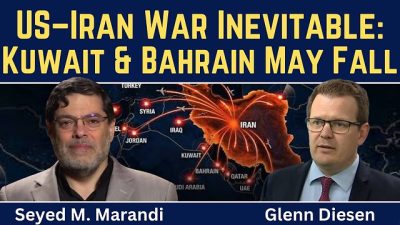
Seyed M. Marandi: US-Iran War Inevitable: Kuwait and Bahrain May Fall
or go to
Aletho News Archives – Video-Images
From the Archives
Oil and the Israel Lobby
Reknowned economist M. Shahid Alam offers this excellent critique of Noam Chomsky’s defective analysis of the relative influence of Oil versus the Israel lobby over US foreign policy: … continue
Blog Roll
 Aletho News
- ICC ignored ‘very well-documented’ NATO crimes – ex-Libyan minister
- SNSC secretary dismisses US response to Iran’s conditions as ‘inadequate’
- Sanaa says Taiz roads open, secure for residents, warns Saudi forces
- Iraqi resistance group urges Saudi leadership to admit defeat, lift Yemen siege
- Trump’s Retreat: How Al-Aqsa Flood Took Down the US Empire
- Israel’s Military Actions in Lebanon Grossly Violate International Law — Lavrov
- Seyed M. Marandi: US-Iran War Inevitable: Kuwait and Bahrain May Fall
- Leaders Condemn Ansarallah Attack on Saudi Arabia While Ignoring Illegal War Against Yemen
- Leaked: Britain’s Covert Iraqi Psyops Network
- Yemeni Armed Forces Warn Airlines Against Using Saudi Airports, Exempt Mecca and Medina
- If Americans Knew
- Yellow Line moves again as Israel closes in on trapped Gazans – Daily Update
- Israeli Attacks Kill Seven Palestinians in Gaza Including Six-year-old Girl
- Gaza: Ceasefire Anniversary Marks Year of Failed Promises
- The American Conservative: Mike Huckabee Should Resign
- A C-Section in Shackles: A Palestinian Woman’s Harrowing Birth in Israeli Detention
- ‘He’s Desperate’: AIPAC Begins Spending Against Abdul El-Sayed to Boost Mike Rogers:
- Trump, Hormuz, and the Looming Economic Catastrophe
- For three years, Israel has killed a child in Gaza every 71 minutes – Daily Update
- Israeli forces kill another child in Gaza – Daily Update
- Gaza ceasefire exists in name only, say more than 100 organizations
- No Tricks Zone
- Germany’s Green Energy Debacle: High Energy Costs Force Kahla Porzellan to Close After 182 Years!
- New Study: 50 Years Of The Most Aggressive ‘Net Zero’ Policies Can Only Affect The Global Climate By 0.03°C
- US September “Heat” Was No Record…Many Records Set Decades Ago
- Latest European Green Energy Debacle; Portugal’s Largest Flagship Solar Park Insolvent!
- Green Energy Debacle: German Expert Professor Fritz Vahrenholt Warns Of Severe Economic And Social Consequences
- Two More Paleo Reconstructions Affirm Meters-Higher Sea Levels Across Ireland, Brazil 7000-6000 Years Ago
- New Study: Earth And Venus Surface Warmth Largely Explained By Convection And Lapse Rate, Not CO2 Or Radiation
- 2025 Nature Paper Claiming Worsening Global Drought Gets RETRACTED …Heavily Flawed
- New Study: ‘Global Drought Shows No Detectable Recent Acceleration Under Climate Warming’
- Economic Masterminds: German Socialists Suggest Taxing Productivity Gains Stemming From Using AI

