When It Comes to State Violence, Too Much Is Never Enough
By Jim Naureckas | FAIR | August 30, 2013
Time magazine’s Michael Crowley (9/9/13) offers an analysis of how the Syrian situation reflects on Barack Obama’s presidency:
Whatever comes of Obama’s confrontation with Assad, an even more dangerous confrontation lies in wait–the one with Iran. If another round of negotiations with Tehran should fail, Obama may soon be obliged to make good on his vow to stop Iran from developing a nuclear weapon. “I will not hesitate to use force when it is necessary to defend the United States and its interests,” Obama told the American Israel Public Affairs Committee in March 2012.
But to his critics, Obama does hesitate, and trouble follows as a result. With more than three years left in his presidency, he has the opportunity to reverse that impression. Success in Syria and then Iran could vindicate him, and failure could be crushing. “The risk is that, if things in the Middle East continue to spiral, that will become his legacy,” says Brian Katulis, a former Obama campaign adviser now with the Center for American Progress.
Obama does “hesitate to use force”–is that his problem? Since 2009, US drone strikes have killed more than 2000 people in Pakistan, including 240 civilians, 62 of them children. Since Obama took office, they’ve killed more than 400 in Yemen; drone deaths in Somalia are harder to quantify.
Obama roughly tripled the number of U.S. troops in Afghanistan, from 33,000 to 98,000 (Think Progress, 6/22/11). In 2011, he sent naval and air forces into battle to overthrow the government of Libya’s Moammar Gaddafi. In Iraq, Obama tried and failed to keep tens of thousands of troops in the country beyond the withdrawal deadline negotiated by the Bush administration (New York Times, 10/22/11).
This is a record that would not seem to indicate a particular hesitancy to use force. Oddly, Crowley acknowledges much of this: “Obama …sent more troops to Afghanistan, escalated drone strikes against Al-Qaeda terrorists,” he writes. But his military actions are presented as a sign of his unwillingness to take military action: “In Libya, he at first stood by as rebels fighting Muammar Gaddafi’s forces found themselves outgunned and on the run.”
No matter how many wars you engage in–Obama has had six so far–there are always wars you could have started but didn’t. Crowley seems to be suggesting that those unfought wars ought to take the blame for any problems Obama leaves behind.
Related article
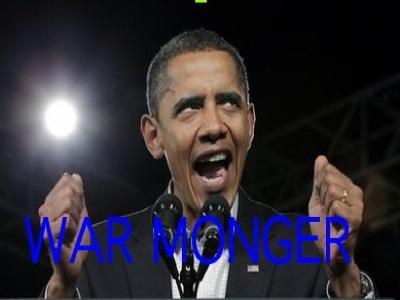
Obama fails to rally international support for his war plans
Press TV – September 7, 2013
US President Barack Obama has failed to rally international support for conducting military strikes on Syria after two days of lobbying in Russia.
Obama, who arrived in St. Petersburg on Thursday to attend the Group of 20 summit, could not persuade foreign leaders to support his war plans as they urged him not to launch any attack without the United Nations’ permission.
During a long debate, Obama and his Russian counterpart Vladimir V. Putin each argued their positions on the issue.
Putin argued that a majority of the leaders, including the leaders of China, India, Indonesia, Argentina, Brazil, Italy, Germany and South Africa, oppose a military strike independent of the United Nations.
Not only did the Russian president oppose military action against Syria, but he also rejected Washington and its allies’ allegations that the Syrian government used chemical weapons in an attack last month.
“We hear each other and understand the arguments,” Putin said. “We simply don’t agree with them. I don’t agree with his arguments and he doesn’t agree with mine, but we hear and try to analyze.”
The only members of the Group of 20 nations which supported Obama were Canada, France, Saudi Arabia and Turkey, Putin added.
Nevertheless, Obama’s national security adviser, Susan Rice, said Australia, Britain, Italy, Japan, Spain and South Korea could also be added to the list of US allies supporting an attack on Syria.
The US president’s failure to rally international support for his war plans against Syria will make it even more difficult for him to convince US lawmakers and voters to support a strike on Syria.
Obama himself said that he had a “hard sell” and that he might not succeed in winning over the US public which, according to polls, still opposes a strike.
Obama said that he would lay out his case during an address on Tuesday before Congress votes on a resolution authorizing his administration to attack Syria.
According to a whip count by Think Progress, an overwhelming majority of the members of the US House of Representatives are either undecided or likely to vote against a US attack on the Middle Eastern country.
Related articles
- Obama rejects G20 calls to abandon Syria strike plan (timesofindia.indiatimes.com)
- Reuters: Obama ‘Appeared Isolated in St. Petersburg’ at G20 Summit (breitbart.com)
Mind the gap! Democratic deficit in UK, US has never been bigger
By Neil Clark | RT | September 6, 2013
The issue of Syria has demonstrated the massive gap that has opened up between the elite and ordinary people in both the US and Britain.
Poll after poll after poll shows very large majorities against strikes on Syria. People are war-weary, and the last thing they want is for their countries to become embroiled in another Middle-East war.
One Congressman in the US tweeted earlier this week that he had asked 200 people if they supported strikes on Syria and only four said ‘Yes’– that’s just 2 percent. Another said that 99 percent of calls to his office were against military action.
Let’s get one thing straight: the only people who are keen on war with Syria in the US and UK are the elites. Ordinary people on both sides of the Atlantic want absolutely nothing to do with it.
In Britain, the overwhelming majority of people were delighted that our parliament voted against war last week and that enough of our legislators finally listened to the people to defeat the serial warmongers.
A BBC poll showed that 71 percent of people thought parliament had made the right decision. Yet our neocon/’liberal interventionist’ elite is furious that legislators listened to the views of ordinary members of the public and not them. “You’re a disgrace,” screeched neocon Minister Michael Gove at MPs who voted against the government. Behaving like spoilt brats having a temper tantrum because they were not allowed to get their own way, the Permanent War brigade have been calling for a “second vote” in parliament, showing arrogant contempt for the views of the majority of ordinary people who don’t want war with Syria.
Neocon historian Andrew Roberts threw a hissy fit in a newspaper column last Sunday, attacking the “hideously amoral selfishness” of “new Britain” for not supporting war with Syria. Serial warmonger and drama queen Lord Paddy Ashdown declared “In 50 years trying to serve my country I have never felt so depressed/ashamed” – after parliament finally listened to public opinion and not to warmongers like Ashdown.
Nick Cohen, poster boy for Britain’s pro-war faux-left tweeted “Can’t help thinking that the British parliament’s vote will be remembered as a low and mean point in our history.” Have you got that? Parliament listening to ordinary members of the public is a “low and mean point.” Such is the fundamentally undemocratic neocon/liberal interventionist mindset, which says that no point of view on foreign policy counts except their own and that of their neocon pals.
Since last week’s parliamentary vote, UK establishment figures have been lining up to give Ed Miliband, the Labour leader, a jolly good thrashing for daring to defy the War Party’s line on Syria. Writing in The Times, aptly described as ‘The Warmongers Gazette’ by anti-war conservative writer Peter Hitchens, David Aaronovitch called Miliband a ‘political vulture’. Aaronovitch’s attack on Miliband was hailed as ‘devastating’ by Ian Katz, the editor of Newsnight, the BBC’s flagship Current Affairs program, which wheeled out a ‘Dr. Rola’ from ‘Hand in Hand For Syria’ to criticize Miliband’s failure to back the government.
Since the vote Newsnight has promoted a series of pro-intervention figures, seemingly desperate to try and get us plebs to change our minds. What part of ‘WE DON’T WANT WAR WITH SYRIA’ do our elite not understand? Now the high priest of ‘Liberal Interventionism’, the multi-millionaire war criminal Tony Blair, has joined the ‘Get Miliband’ lynch mob, saying that he was “disappointed” that parliament hadn’t supported the government, adding, “This is something where I just have to disagree with the leadership of the [Labour] party.”
For our neocon/liberal interventionist elite, Miliband is a shocker, a bounder, a rotter, and a ‘political vulture’. But most ordinary people in Britain are very pleased that he and his party listened to the public and opposed the government on Syria. You’d never have known it from listening to neocon newspaper columns, but after last week’s vote, bookmakers shortened the odds of Labour winning the next election to 8-13.
If Miliband and his party had voted the way the neocons wanted, then it’s highly likely that earlier this week US and British forces would have launched their attack on Syria. Which is why of course the Permanent War gang are so angry with him.
The pro-war lobby may be numerically tiny, but in both the US and UK it is massively overrepresented in the mainstream media. Despite the Iraq debacle, the same columnists who urged on that particular catastrophe, are still in front of their keyboards, propagandizing for yet another Middle East ‘intervention’, and are still treated with enormous deference whenever they appear on the likes of CNN or the BBC. Which is very, very often.
“Did you know there are people who supported the Iraq War getting invited on news programs to talk about Syria?” tweets comedy writer Graham Linehan. S’TRUE!!!
The disproportionate voice that necons and ‘liberal interventionists’ have in the UK and US media makes it appear that their views are more widely held in the public at large than they are. But in fact their extremist pro-war views are very rarely found outside elite, Establishment circles.
The gap between the elites in the US and the UK is now larger than at any time in the last 100 years. If we do go to war with Syria, despite the overwhelming public opposition, then it will show that democracy is well and truly dead in both our countries.
Are we countries where the views of the majority are listened to, or are we countries where a tiny, unrepresentative, pro-war clique always gets their way? We’re about to find out.
 Neil Clark is a journalist, writer and broadcaster. His award winning blog can be found at www.neilclark66.blogspot.com. Follow him on Twitter
Related articles
US Congress Finds ‘Overwhelming’ Public Opposition to Force in Syria
By Maria Young | RIA Novosti | September 6, 2013
WASHINGTON – After three days of non-stop phone calls from hundreds of Colorado constituents opposed to a US military strike on Syria, Rep. Doug Lamborn announced Friday he was “leaning against” a resolution giving US President Barack Obama the authority to take limited action.
Following a long holiday weekend, “Tuesday is when the calls started, they’re still coming in, and I would say fewer than two percent are people who want us to take action,” said Catherine Mortensen, Lamborn’s communications director.
“People say things like, ‘We have problems at home we need to take care of.’ And what was surprising was how quickly people’s opinions had gelled. They’re not lukewarm. Right off the bat on Tuesday it was, ‘We don’t need this.’ It’s been overwhelming,” she added in an interview with RIA Novosti.
While Lamborn was answering questions from listeners during a radio show Friday morning, Mortensen said, “One man phoned in to say, ‘I’m in Afghanistan, and I don’t want this anymore.’”
By the end of the show, Lamborn, a Republican, who previously had said he was gathering facts and hadn’t made up his mind yet, told listeners he was inclined to vote against the resolution.
And Lamborn’s office is not alone.
Other Congressional offices say they have also been bombarded ever since Obama said last Saturday that he would ask Congress to approve a “limited” strike against the government of Syrian President Bashar Assad in response to an alleged chemical weapons attack last month.
“I can tell you 99 percent of the calls coming to my office are against it,” said Democratic Rep. Elijah Cummings of Maryland in a televised interview on MSNBC.
Sen. John McCain, a Republican from Arizona who lost the presidency to Obama in 2008, voted to support his old rival during a Senate Foreign Relations Committee hearing this week, but took significant heat about it from angry constituents at a town hall meeting in Arizona Thursday.
“This is what I think of Congress,” said one man in the crowd, holding up a bag of marshmallows. “They are a bunch of marshmallows…Why are you not listening to the people and staying out of Syria? It’s not our fight.”
Some of those calls and comments to Congress appear to be having an effect.
After days of discussions with voters, Rep. Tom Cole, a Republican from Oklahoma, announced late Thursday in a statement on his website that he would vote against the president’s request, saying the situation in Syria is a civil war that America should not be drawn into.
“This is not just my opinion. It is the considered opinion of the people that I represent, expressed not at just one or two town halls, but literally at every public or private meeting and casual encounter I have had since the president decided to put this issue before Congress last Saturday,” he said, adding, “I have heard their opposition loud and clear and will not vote in favor of military intervention in Syria.”
Upon hearing word about a chemical attack that had killed men, women and children, Republican Rep. Michael Grimm from New York said his initial reaction, as a Marine combat veteran, “was to stand by the Commander in Chief and support immediate, targeted strikes.”
Grimm announced Thursday he, too, had changed his mind.
“I have heard from many constituents who strongly oppose unilateral action at a time when we have so many needs here at home. Thus, after much thought, deliberation and prayer, I am no longer convinced that a US strike on Syria will yield a benefit to the United States that will not be greatly outweighed by the extreme cost of war,” he said in a statement on his website.
The Obama Administration thus far has “failed to present a convincing argument that the events in Syria pose a clear threat to America, failed to list a strong coalition of nations willing to support military attacks, and failed to articulate a clear definition of victory,” said Arizona Republican Rep. Matt Salmon in a statement on his website explaining his opposition to a strike.
Salmon told the National Review Online he’s had 500 calls to his office about the crisis in Syria, and only two have been in favor of US intervention. He predicted Obama’s efforts in Congress “will fail by 20 votes.”
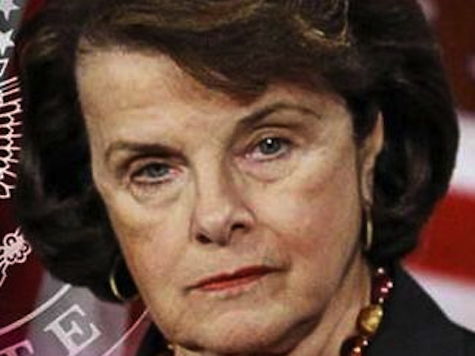 But Obama is counting on members of Congress like California Democratic Sen. Dianne Feinstein, chairwoman of the Senate Intelligence Committee, who has viewed classified information about the chemical weapons attack and said Thursday she supports the strike on Syria, despite the lack of public support.
“There’s no question: What’s coming in is overwhelmingly negative,” she said, according to the Associated Press. “But you see, then, they don’t know what I know. They haven’t heard what I’ve heard.”
During a press conference from St. Petersburg soon after the G20 summit wrapped up on Friday, Obama said he would address the nation about the crisis on Tuesday, telling reporters he considers it part of his job to “make the case.”
“It’s conceivable that, at the end of the day, I don’t persuade a majority of the American people that it’s the right thing to do,” Obama said to reporters.
But he added that members of Congress will have to decide for themselves if they think a strike is the right thing for national and global security.
“Ultimately, you listen to your constituents, but you’ve got to make some decisions about what you believe is right for America,” he said.
Obama did not say whether he would still order a strike even without Congressional approval.
Related articles
- Obama’s Politics of War and US Public Opinion: The Great Divergence (James Petras)
- How to Call Congress About Voting NO on Striking Syria (disclose.tv)
- Report: AIPAC to mount major lobbying blitz for Obama’s Syria strike plan (jpost.com)
- Arizona Voters Heckle John McCain Over Push For Syrian Strike (businessinsider.com)
- Developing: Congress Might Not Even Vote On Obama’s Syria Resolution (undergroundpoliticsdotorg.wordpress.com)
- Fla. members in Congress skeptical of Syria strike (miamiherald.com)
- Will Obama Strike Syria Without Congressional Approval? (dannyvinik.com)
- Obama rejects G20 pressure to abandon Syria air strike plan – Times of India (timesofindia.indiatimes.com)
US snub of Syria talks ‘proof of weakness in position’ – Duma speaker
RT | September 6, 2013
State Duma speaker Sergey Naryshkin has told the press that no Russian parliamentary delegation is going to the United States to discuss the Syrian issue, adding that the US refusal to meet was regrettable.
“The unwillingness to listen to arguments on inter-parliamentary level testifies to the fact that our American partners themselves understand the weakness of their positions. In addition, this step characterizes their attitude to the norms of international law,” he said.
Naryshkin added that “the United States is used to considering the most important issues of other nations and of whole world’s regions to be their internal affairs, despite the fact that the current system of international law and the UN’s global security architecture have been built by the lengthy and thorough efforts of the whole international community on the basis of the results of WWII.”
He emphasized that it was extremely dangerous to neglect the valuable institutions and the system of guarantees built on the lessons taught by the greatest disaster of the 20th century. He again reminded that the international political organizations were created in order to save the world from future global disasters.
On Monday this week the heads of the both chambers of the Russian parliament suggested that President Vladimir Putin hold bilateral talks with US lawmakers in order to find a solution to the crisis in Syria. Putin supported the initiative, calling it timely and correct, and adding that direct talks might help US politicians to hear firsthand arguments and understand Russian motives in the standoff.
By Tuesday, Federation Council Speaker Valentina Matviyenko had sent a letter to Senate Majority Leader Harry Reid suggesting a meeting be called without delay to find a peaceful solution to the Syrian problem by common effort and as soon as possible.
According to Russian Senator Ilyas Umakhanov, initially the US official said that he was ready to assist the consultations between Russian and US lawmakers. However, by the end of the week CNN reported that Reid had turned down the Russian proposal.
House of Representatives Speaker John Boehner also turned down the Russian embassy’s request to directly meet with the parliamentary delegation.
Pope calls on world leaders to abandon military options in Syria
RT | September 5, 2013
Pope Francis called on world leaders attending the G20 summit in Russia to seek peace in Syria through diplomatic means and to lay aside the “futile pursuit” of a military solution.
In a letter to Russian President Vladimir Putin, who is hosting the G20 summit, Francis said that lopsided global interests have blocked a diplomatic course in the Syrian conflict and have led to the “senseless massacre” of innocent people.
“To the leaders present, to each and every one, I make a heartfelt appeal for them to help find ways to overcome the conflicting positions and to lay aside the futile pursuit of a military solution,” Francis wrote.
The letter follows an announcement earlier this week that the Vatican will host a vigil for peace in Syria in St. Peter’s Square on Saturday.
The Vatican outlined Thursday its position on Syria to ambassadors accredited to the Holy See.
“Confronted with similar acts one cannot remain silent, and the Holy See hopes that the competent institutions make clear what happened and that those responsible face justice,” the Vatican’s Foreign Minister, Archbishop Dominique Mamberti, told the 71 ambassadors regarding the chemical weapons attack that took place outside Damascus on August 21. The US and its allies believe the attack was launched by the Syrian government.
Mamberti said the main priority was to stop the violence which he said is risking the involvement of other countries and creating “unforeseeable consequences in various parts of the world.”
He did not mention possible military strikes by the US, but stressed peace in all facets of a potential solution to the violent conflict.
In addition, Mamberti said the Vatican does not want Syria to be split up along ethnic or religious lines, and that Syrian minorities – including Christians – should have basic rights guaranteed, including freedom of religion.
The Assad regime in Syria has long supported ethnic and religious minorities including Christians, Shiite Muslims, and Kurds. The Assad family and many regime officials are Alawites, followers of an offshoot of Shiite Islam, while most rebels and their supporters are Sunni Muslims.
On Wednesday, the head of the Vatican’s Jesuit order, Rev. Adolfo Nicolas, said that military action by the US and France would ultimately punish the Syrian people.
“I cannot understand who gave the United States or France the right to act against a country in a way that will certainly increase the suffering of the citizens of that country, who, by the way, have already suffered beyond measure,” he said.
US urges citizens to leave Lebanon
Al-Akhbar | September 6, 2013
The United States on Friday said it evacuated its embassy in Beirut of “non-emergency personnel” because of alleged “threats” against it, and urged all the US citizens in the country to leave.
“On September 6 2013, the Department of State drew down non-emergency personnel and family members from Embassy Beirut due to threats to US mission facilities and personnel,” a statement on the embassy website said.
It gave no details on the threats, but added that “US citizens concerned for their safety should consider making plans to depart.”
“Those who remain should prepare to depart at short notice.”
The move comes following two weeks of US threats to strike Syria in response to an alleged chemical weapons attack near Damascus on August 21 that Washington blamed on the Syrian government.
Activists in Lebanon have called for a rally outside the US Embassy Saturday at 5:00 pm against a US assault on Syria.
(AFP, Al-Akhbar)
Against War in Syria: The Great Parliamentary Revolt of 2013
This video, introduced by journalist Joshua Blakeney, offers a selection of the best anti-war speeches delivered during the House of Commons debate on Syria that took place on August 29, 2013. The Con-Dem Coalition had proposed taking Britain into yet another war to help destabilize one of Israel’s adversaries, Syria. However, unlike in 2003 with the Iraq war, a sufficient number of British MPs were able to see through the war propaganda and voted to refrain from deploying UK forces to flight against the people of Syria.
Oded Yinon Plan: http://www.globalresearch.ca/greater-…
France cannot afford military operation in Syria
By Steven Elliot | RT | September 6, 2013
The G20 should be focusing on their flagging economies rather than planning a military operation in Syria they can’t afford, analyst, Alex Korbel, told RT. France, in particular, is at full stretch, with 16 military campaigns abroad and an ailing economy.
The Syrian conflict has eclipsed the G20 meeting in Saint Petersburg, as the international community is unable to come to an agreement over a possible military strike. Washington has put forward a plan for military intervention against the Assad regime, which it believes is responsible for a chemical attack in a Damascus suburb on August 21.
RT: If the UN team of inspectors finds that chemical weapons were used in the Damascus attack, do you believe military intervention could be justified?
Alex Korbel: I think there is no case for military intervention in Syria for several reasons. The first reason is that there is no national interest for France or the US to actually intervene in Syria. The regime of Bashar al Assad was not a problem in the past and it is not clear why it’s now a problem for France and the US. There is no clear objective in the military intervention as it is now presented. Is it about maintaining the credibility of the US? What credibility exactly? The credibility to intervene in unnecessary wars? Is it to ban the use of chemical weapons? Then why does the US have chemical weapons in its arsenal? Is it to weaken the Bashar al Assad regime? In that case you need to put boots on the ground. If it is a humanitarian way to help the civilians, then locking on cruise missiles is not the right solution.
For all of these reasons the US and France have decided to move ahead with limited military intervention. But still there is a danger of falling down a slippery slope. What if a military intervention has no effect? Are we going to see full war? What would be the consequences in the region? I am thinking about Iran and Lebanon and I am thinking about a war less than 1000 kilometers south of Russia.
There is no broad international support for this war. Germany is against it, the UK is against it, China and Russia are against it. The only countries that are in favor are France, which has not yet consulted parliament, US and Israel and Saudi Arabia. Finally, public opinion is clearly against it everywhere. We saw it in the UK and the public polls in the US and France that the public is massively against military intervention in Syria.
RT: Given the climate of economic crisis in the EU, can France feasibly participate in another military operation?
AK: The economic situation of the EU countries is really bad. We can see in France that public debt is higher than 90 per cent of GDP. We see economic growth is less than 1 per cent. We see across G20 countries on average that unemployment is at 9 per cent and growing, that public debt is 64 per cent and growing, that economic growth is 1 per cent and weakening. What needs to be done is not to intervene militarily in another country.
France is already intervening in 16 countries worldwide. Clearly we don’t have any money to finance a seventeenth operation. The purpose of France, the US and any western power is not to ‘play the cop’ around the world but actually to maintain a sound economic policy first and then maybe lead by example on the international scene.
Will 1000 American ‘Human Shields’ Stop Another Criminal War?
By Franklin Lamb | Intifada | September 4, 2013
Damascus – A sort of roller coaster atmosphere pervades Damascus these days with “good” and “bad” news rising and falling, often by the quarter hour. Much of the population is monitoring closely the news and quickly expressing their interpretations of the latest media reports and rumors as well as predicting the fairly precise timing of the now assumed American attack on their country.
In the very popular, and normally crowded Abaa Coffee House on the edge of the old city in what is called the Sarugha section, students and others enjoy the fine cool mist, as Damascenes have done for years, that is sprayed from ceiling pipes to provide welcome relief from the 37 degree Celsius (98 degrees F) outside temperatures. Many are glued to their laptops and/or in animated conversation analyzing the likely extent and timing of the soon believed to be arriving American missiles.
This observer often meets interlocutors in the Abaa because it’s very pleasant, large with dozens of tables, cheap and two blocks from my hotel. I have noticed that common greetings are changing from “kif hallack” ” (how are you?) and “Arak lahekan” (see you later) to “Get home safely” and “Good luck with the checkpoints.”
But there is also a distinct growing esprit de corps and a broad coming together of much of the population here as the countdown to the American attack on Syria begins. An evident rallying around the Assad regime, which one presumes is the opposite of what the White House was hoping would result from its threats.
A good friend from the Syrian Arab Red Crescent Society (SARCS) an humanitarian organization doing amazing rescue, and medical services for Syrians and Palestinians during this expanding crisis, described one way that her friends are preparing for the American attack. “We gathered our important documents, birth, marriage certificate and passport and made photo copies. Then we leave them with friends in “safe” areas or even bury them somewhere. No one knows how bad the Americans will bomb us. At work we have been told during our final practice drill last saturday that the next siren will be the ‘real thing’ and we will do as we have planned for.” She added, “Many of my friends and family are leaving but it’s not easy and is very expensive now to go to Lebanon and they don’t want us– and my family has decided to stay in our home no matter what happens in the coming days.”
One common topic being discussed is the reluctance of the American public to attack Syria and how Obama can ignore it. “What kind of Democracy do you have that your President can ignore the will of the American public?” this observer is frequently asked. One soldier who is stationed with his unit just outside my hotel seemed to speak from his heart: “You Americans claim you are trying to help the Syrian people. Every child knows, both here and in your country I think, that the coming attack will make things much worse for the Syrian people and many others. The American people are good and we hope they can control their government, but we are preparing for the worst and there will be consequences you will come to regret as with Afghanistan, Iraq and Libya.”
The government here is assuring the public that Syria is ready for the American attack and that public services will continue. TV channels show around the clock images of heroic Syrian army exploits with martial and patriotic music. Youngsters, students and workers are gathering at presumed targets offering themselves as Human Shields in solidarity with their countrymen while challenging President Obama to bomb their beloved Syria.
Interestingly, an International Human Shield movement is coalescing according to informed sources here and abroad. One initiative is to bring 1000 Americans and thousands of others, to Syria within the next ten days to guard likely bomb sites reminding one of the International Solidarity Movement volunteer’s efforts in Occupied Palestine in order to try to protect homes of Palestinians from Government bulldozing.
Some redacted specifics have been disclosed to this observer from an international organizing committee working around the clock on this Human Shield initiative.
Some descriptive excerpts:
International Human Shields are planning on coming to Syria in solidarity with the Syrian people and in an effort to send a global message and hopefully deter an American attack next week…
Timing – While moves can be made fast and with all other key elements in place, time is not in our favor. Ten mores days for preparation would be ideal. The HS initiative assumes that it must be done in such a way that very little time lapse from the official announcement of the action to the actual arrival of the Human Shields on the ground in Syria…
Impact – In order to achieve a significant impact having at least 1000 Americans and several thousand international Human Shields deployed in Syria is the objective. With ideally at least one representative from every UN Member State, as evidence of the true ‘international community’ opposing the American attack.
The US activist-based steering committee is quickly bringing together professionals in IT, marketing, logistical planning and implementation, spokesperson(s), public relations, accounting, documentarians, and experienced project managers. Ferries from European ports are to be arranged to carry significant numbers of Human Shields from Major European cities. Ideally, several jumbo jets will be chartered to carry human shields from some of the world’s major cities and use of land convoys are under consideration.
An excerpt:
HS/Government Relations – The first objective of the enemies of Syria will be to portray Human Shields as nothing more than pawns of President Bashar al-Assad. This was precisely what the mainstream media did in 2003, presenting Human Shields as pawns of Saddam. In order for the Human Shields to have power they must be seen as independent supporters of the people of Syria who represent the will of the vast majority of people around the world who oppose the pending US-led western attack. The HS should however work with prominent leaders in the civilian sector of Syrian society and great effort should be made to produce daily news stories of the Human Shields and Syrian people working together to protect Syria from the ongoing foreign instigated aggression. There are once again many details here and these would need to be discussed and agreed if any action will be able to reach its full potential.
Strategy – The sites that Human Shields deploy to must be very well publicized and these sites must be identified as protected sites under the Fourth Geneva Convention. The White House is saying that they are not going to attack infrastructure (as they did with Iraq in 2003), but they must attack the infrastructure as the goal is to drive Syria into the stone age and make it so weak that Israel will through its agents eventually take Syria over. They know that the Syrian people and military cannot be defeated without massive attacks on the infrastructure.
So it is absolutely vital that all power plants, water treatment facilities, bomb shelters (if they exist), civilian communications sites, food storage sites and other such sites that are critical to the civilian population are the primary if not sole focus of sites for the HS to deploy. They cannot deploy to military sites, although I personally feel this is morally defensible, it will neutralize the power of the HS in the public relations realm and intelligent public relations is absolutely critical.
A comprehensive list of protected sites is to be produced immediately and these sites will need to be verified by the most independent sources we can manage to obtain. UN representatives or former representatives would be great, human rights attorneys, legal experts and others of this type are very useful.
There will be room to deploy to sites not specifically listed in the Fourth Geneva Convention, such as with ethnic and religious minority communities who are deathly afraid of the foreign invaders/terrorists. Special emphasis should be placed on Christian populations as the western audience sadly has more sympathy for Christians than Muslims.”
Our goal is to personalize the people of Syria and show their suffering through the eyes of the HS with effective daily reports to be uploaded on the Internet and reported by legitimate news agencies such as Press TV, RT and Telesur. A massive effort must be made to educate the public about the reasons for the Fourth Geneva Convention (FGC) and the imperial powers undeniable record of knowingly destroying the lives of ‘protected persons’ as defined in the FGC. There must be high quality, well-spoken Arabic/English speaking spokespersons.
We should be ready to provide evidence of any attack on such sites the moment it happens and have legal briefs prepared to immediately charge the aggressors with war crimes. This is why it is critical that the HS are almost exclusively at sites that are protected by the FGC.
The Action Plan concludes:
We cannot necessarily stop them from doing what they intend to do, but we can make their aggression harm them far more than Syria and its people in the end. Herein lays the power, using the enemies momentum against him in the most powerful way possible.
Time will tell which Americans will arrive first in Syria, the military or the American public. Many Syrians are today praying it will be the latter and have pledged to join them to defeat the coming aggression.
Franklin Lamb can be reached c/o fplamb@gmail.com
Related video
- ‘Hands off’: Syrians form human shields outside possible US strike targets (alethonews.wordpress.com)
Featured Video
Anthrax War – CBC The Passionate Eye
or go to
Aletho News Archives – Video-Images
Book Review
Shattered Dreams: The HPV Vaccine Exposed (2019)
By Christina England – 30 Q&As – Book Review & Summary
Lies are Unbekoming | September 4, 2026
… Gardasil received FDA fast-track approval in 2006, Cervarix followed in 2009, and Gardasil 9 was approved in December 2014 with more than double the aluminium adjuvant content of the original. The commercial context is specific. Merck was about to lose patent protection on Zocor and faced $18 billion in Vioxx injury claims from a cardiovascular drug the company had marketed while suppressing its own data showing a five-times increase in heart attacks. Analysts projected the global HPV vaccine market at $4 billion by 2011, contingent on government-funded national programs for teenage girls. The 1986 National Childhood Vaccine Injury Act had already granted manufacturers complete liability immunity. By 2013, Japan had withdrawn its HPV vaccine recommendation after cataloguing severe adverse reactions in hundreds of girls. No Western government followed. The establishment position across the UK, US, Australia, and most of Europe held, and still holds, that the vaccines are safe and effective, that reported injuries are coincidental, and that cervical cancer prevention justifies the program. The book was published into this position, not against a vacuum.
Shattered Dreams sits alongside Mary Holland’s The HPV Vaccine On Trial and Viera Scheibner’s foundational vaccination work as part of the documented record on what has been done to a generation of teenage girls under the banner of cancer prevention. The full summary unpacks three specific findings: that Merck used the aluminium adjuvant itself as the “placebo” control in 92.5% of trial subjects, making it structurally impossible to detect excess reactions from the adjuvant; that Dr. Sin Hang Lee found HPV DNA fragments bound to aluminium in every one of sixteen Gardasil samples tested, and in the blood and spleen of a New Zealand girl six months after her third dose; and that in every country with high vaccination coverage, including Australia, the UK, Norway, and Sweden, cervical cancer rates have stopped declining and started rising specifically in the vaccinated cohort. Martínez-Lavín’s 2017 calculation puts the number needed to seriously harm with Gardasil 9 at 140, and the number needed to vaccinate to prevent one case at 1,757. Thirteen young women are seriously harmed for every one who benefits. The vaccine was approved on the basis of trials that could not detect what the trials were supposed to detect, and it is still being given to twelve-year-olds today. … Read full review
Blog Roll
 Aletho News
- British Transport Police Facial Recognition Trial Scanned 926,912 People With Zero Arrests
- House Bill Would Ban Federal Use of Flock ALPR Data
- Can a Spice Rival a Drug? 10 Head-to-Head Trials Put It to the Test.
- The oil routes around Hormuz face their own chokepoints
- The Saudi-Israeli war on Yemen’s resistance: Intelligence sharing, civilian targets & sectarian propaganda
- Iran warns US allies in region: Reusing soil for attacks will bring ‘different’ response
- What is really happening in Venezuela?
- Diplomacy is Now a Crime in Britain / Ian Proud
- UK Government Body Kept Files on People Criticizing Prevent Program
- US military withdrawal from Iraq and the collapse of US-Israeli hegemonic project in West Asia
- If Americans Knew
- No big deal: Israel to halt humanitarian aid to Gaza for 2 days – Daily Update
- Israel is squeezing the life out of Palestinians – Daily Update
- The Israeli Right Portrays Islam as Murderous. It Serves a Political Purpose
- Jordan Has Had Enough: King Abdullah’s Scathing Warning to Israel
- Israeli Colonizers (i.e. Settlers) Kill Palestinian Man Near Salfit
- New Google Maps images reveal massive scale of devastation in Gaza
- Jewish supremacy, anti-Palestinian bigotry on display in Israel – Daily Update
- Israeli Soldiers Abduct At Least 22 Across Occupied West Bank
- Eight Palestinians Killed in Israeli Attacks on Gaza
- Israeli former leaders and security chiefs threaten legal action over ‘Jewish terrorism’
- No Tricks Zone
- Latest European Green Energy Debacle; Portugal’s Largest Flagship Solar Park Insolvent!
- Green Energy Debacle: German Expert Professor Fritz Vahrenholt Warns Of Severe Economic And Social Consequences
- Two More Paleo Reconstructions Affirm Meters-Higher Sea Levels Across Ireland, Brazil 7000-6000 Years Ago
- New Study: Earth And Venus Surface Warmth Largely Explained By Convection And Lapse Rate, Not CO2 Or Radiation
- 2025 Nature Paper Claiming Worsening Global Drought Gets RETRACTED …Heavily Flawed
- New Study: ‘Global Drought Shows No Detectable Recent Acceleration Under Climate Warming’
- Economic Masterminds: German Socialists Suggest Taxing Productivity Gains Stemming From Using AI
- The South China Sea Has Not Been Cooperating With The Climate Change Narrative
- Energy Crisis: Germany Enters Heating Season With Historically Low Gas Reserve Fill Levels
- New Study: The Antarctic Ice Sheet Gained Mass From 2020-2024 Due To Staggering Snow And Ice Accumulation

