Hastily-Buried Radioactive Waste Lays Bare Nuclear Power Legacy
Sputnik – 11.02.2019
Over 126,000 barrels of radioactive material are stored in the Asse mine in Lower Saxony, a state in northwest Germany bordering the North Sea, a fact that has many locals – as well as the global anti-nuke community – frustrated.
Manfred Kramer, a member of the Social Democratic Party of Germany, lives close to the Asse salt mine in which the decaying waste is stored and — while acknowledging that politicians are finally beginning to take notice — has long protested against having radioactive waste in the old mine, Tekportal reported.
“It’s nice that she’s finally coming,” Kramer said, referring to Environment Minister Svenja Schulze’s upcoming visit to the mine, which was originally used for the extraction of potash salt until 1965. “Soon she’ll have been in office for a year. It sure took a while!” he quipped, according to Deutsche Welle.
“Three generations operated nuclear power in Germany, and now 30 generations or even more will have to suffer the consequences,” Schulze noted, adding, “this is proof of how irresponsible nuclear energy was.”
According to mining engineer Thomas Lautsch, who works for BGE, Germany’s federal company for radioactive waste disposal, the retrieval of the nuclear waste from the mine will be complicated and expensive, at a minimum.
“We would have to build a retrieval mine, which is more than simply just a new shaft. We would also need an interim storage facility for the waste, and we would have to create many new shafts to gain access to the individual chambers,” he said, cited by Msn.com.
The construction phase of the project alone could take eight or nine years, according to studies.
Because the old mine shafts do not meet current legal standards for the ten-thousand-year storage of nuclear waste, a new mine must be built around the old mine.
“The barrels must be finally and safely disposed of somewhere else in the country,” Kramer noted, “should they actually able to be retrieved by 2050.”
The mine, developed between 1906-1908, has a depth of around 765 meters. Between 1965-1995, the Helmholtz Zentrum München (a member of the Helmholtz Association of German Research Centers responsible for studying environmental health issues) took the unprecedented step of using the mine to store the nation’s radioactive waste, including weapon detritus, medical offal and power plant leavings.
Forgotten Uranium Mine Workers
By Jacquetta Harvey | January 29, 2019
Uranium caused Cancer forced me to raise my children alone. I had to sell the home we were in and downsized. The mortgage company said I had no credit on my name alone. I had to pay my new (older used) truck because I had no credit alone. We had bought the truck and traded my car because it was easier to carry the wheelchair and get my husband seated in the higher seat. My husband had no right hip for the last 4 months and his left arm was in a sling and useless. The cancer had eaten through the bones on both his arm and hip. When he went into kidney failure from the cancer, every time his body jerked or he was moved he was having spontaneous fractures throughout his body.
Let me explain his cancer to you. Some of you may already know Multiple Myeloma. This is a cancer usually affects men and at the usual age of late 60’s to 70’s. My husband “E’ was 40 when it was found. Multiple Myeloma eats the bone marrow and continues eating the bone until it is as thin as an egg shell and that is when it breaks. When the Doctor found it “E” had compressed two vertebra from us moving a camper shell from our truck, he then broke a rib leaning against a truck side to pick up a small 2-3 inch spring. Then broke his left arm pulling the spring while installing it in the forklift he was working on. “E” continued to work during his “Radical Experimental” treatment, when he could.
Part II
Eventually the cancer took over his kidney which caused the kidney failure.
The Radical Treatment he agreed to do was a multitude of toxic chemicals that had a great success with Breast Cancer patients, so it was considered radical in the fact it hadn’t been used with Multiple Myeloma and for the huge amount they would give him. For 3 days he would be given a liter bag of Chemo Chemicals and saline. This would have to be put into a port that was placed straight into his heart because the chemicals would eat up/holes in his veins before it could go anywhere else in his body and do what was meant to do… Thus it was put straight into his heart via the port. The toxic chemical cocktail was to kill off all of his bone marrow. The third day we were to go straight home so he would not be exposed to even a cold germ in a big store, it could kill him. When his temperature spiked 103 we were to head straight to the hospital. He would be placed in a private room anyone coming into the room had to gown up and could not even have a sniffle. A hard plastic port to be used for the stem cell rescue was placed in his carotid artery and He would be placed on a type of dialysis machine that would “Harvest” his Stem Cells. These would then be placed in a freezable container with a chemo agent mixed in and frozen. We requested blood and stem cell donors from his job for the next few days. A notice was put up at work and the hospital was overrun with donors, they had had to send them to other blood banks and hospital’s. The blood he needed immediately, the stem cells would be re-infused in a few weeks after another kill off of his bone marrow.
In the hospital he called me before I drove our 45 minute drive. He asked me to bring clippers and scissors, he said the bed looked like he had slept with a cat or a dog. When our 11 year old son, 15 year old daughter and I walked in the room, E grabbed ahold of some hair on his head and then on his beard and pulled and it just came out. I worried it hurt but he said it didn’t. We sent the kids down to the cafeteria to grab lunch and I cut and shaved his hair. He lost all the hair on his body and he lost the top layer of his whole digestive tract from his mouth to his anus. He could not eat or drink without vomiting.
Part III later.
#uraniummineworkers #ihateit #death #cancer #governmentforgotthem #1971-2019 #raisingchildrenalone #lostchildhood #lonelysad
Bill Gates Pushes Nuclear Power Plants to ‘Prevent the Worst Climate-Change Scenarios’
By Bill Gates | December 29, 2018
… Global emissions of greenhouse gases went up in 2018. For me, that just reinforces the fact that the only way to prevent the worst climate-change scenarios is to get some breakthroughs in clean energy.
Some people think we have all the tools we need, and that driving down the cost of renewables like solar and wind solves the problem. I am glad to see solar and wind getting cheaper and we should be deploying them wherever it makes sense.
But solar and wind are intermittent sources of energy, and we are unlikely to have super-cheap batteries anytime soon that would allow us to store sufficient energy for when the sun isn’t shining or the wind isn’t blowing. Besides, electricity accounts for only 25% of all emissions. We need to solve the other 75% too.
This year Breakthrough Energy Ventures, the clean-energy investment fund I’m involved with, announced the first companies we’re putting money into. You can see the list at http://www.b-t.energy/ventures/our-investment-portfolio/. We are looking at all the major drivers of climate change. The companies we chose are run by brilliant people and show a lot of promise for taking innovative clean-energy ideas out of the lab and getting them to market.
Next year I will speak out more about how the U.S. needs to regain its leading role in nuclear power research. (This is unrelated to my work with the foundation.)
Nuclear is ideal for dealing with climate change, because it is the only carbon-free, scalable energy source that’s available 24 hours a day. The problems with today’s reactors, such as the risk of accidents, can be solved through innovation.
The United States is uniquely suited to create these advances with its world-class scientists, entrepreneurs, and investment capital.
Unfortunately, America is no longer the global leader on nuclear energy that it was 50 years ago. To regain this position, it will need to commit new funding, update regulations, and show investors that it’s serious.
There are several promising ideas in advanced nuclear that should be explored if we get over these obstacles. TerraPower, the company I started 10 years ago, uses an approach called a traveling wave reactor that is safe, prevents proliferation, and produces very little waste. We had hoped to build a pilot project in China, but recent policy changes here in the U.S. have made that unlikely. We may be able to build it in the United States if the funding and regulatory changes that I mentioned earlier happen.
The world needs to be working on lots of solutions to stop climate change. Advanced nuclear is one, and I hope to persuade U.S. leaders to get into the game.
Read more: https://www.gatesnotes.com/About-Bill-Gates/Year-in-Review-2018
US Gov’t Scolded for Lack of Action Under Plutonium Disposal Deal with Russia
Sputnik – December 1, 2018
Moscow and Washington agreed in 2000 to dispose of weapons-grade plutonium by incorporating it into fuel for nuclear reactors. However, the Department of Energy has failed so far to build a costly nuclear facility and instead proposed burying their plutonium underground – something that scientists say could affect human health and the environment.
American academicians have criticised the government for insufficient efforts to dispose of surplus plutonium under a 2000 US-Russia agreement.
Congress asked the National Academies to assess the viability of the Department of Energy’s plan for disposing of 34 metric tons of surplus plutonium in the Waste Isolation Pilot Plant (WIPP) in southeast New Mexico.
WIPP has “insufficient capacity” to get rid of plutonium that is no longer required for defence purposes, which is “one of several barriers to implementation” of the disposal plan, the Academies concluded in a Consensus Study Report.
According to the document, the dilute-and-dispose process proposed by the Energy Department runs counter to the Plutonium Management and Disposition Agreement (PMDA), a deal that the United States and Russia signed in 2000 to dispose of 34 tons of weapons-capable plutonium each.
The 2000 agreement took effect after being ratified by Russia in 2011. It stipulated that both Russia and the United States would build special facilities to turn surplus plutonium into mixed oxide (MOX) fuel for nuclear reactors.
Moscow has met its part of the commitments; however, the Savannah River Site (SRS) MOX project has been under construction in South Carolina since 2007 and has not been completed yet. The study says that “substantial schedule delays and cost overruns” caused the government to scrap the project, which would adopt the PMDA-approved method.
The National Nuclear Security Administration (NNSA), the Energy Department’s agency in charge of the US nuclear warhead stockpile, proposed what it called a cheaper way to dispose of plutonium. Instead of creating MOX oil, the office said, the SRS could be used to dilute the plutonium and bury it deep underground.
A federal judge ruled against the proposed shutdown of the SRS construction in June, arguing that Congress has not approved the dilute-and-dispose method to replace MOX. The judge argued that the NNSA’s proposal would turn South Caroline into the nation’s dumping ground for plutonium and produce an adverse environmental effect.
Academicians also insist that this approach has so far proven to be insufficient. “So far, the dilute and dispose process has been demonstrated at a small scale by DOE’s Office of Environmental Management as it begins to process 6 metric tons of surplus plutonium, a quantity separate from the 34 metric tons.”
Russian President Vladimir Putin was not satisfied with the US plans either. He ordered to suspend the implementation of the bilateral agreement in October 2016, citing “a threat to strategic stability” emanating from the US and its inability to deliver on its obligations.
Putin’s move came ahead of the US presidential vote, bringing the nuclear issue back to the agenda. “Our nuclear program has fallen way behind, and they [Russians] have gone wild with their nuclear program. Not good. Our government shouldn’t have allowed that to happen. Russia is new in terms of nuclear. We are old. We’re tired. We’re exhausted in terms of nuclear. A very bad thing,” then-Republican presidential candidate Donald Trump said during a debate with Hillary Clinton, who brought the deal into force as Secretary of State together with Russian Foreign Minister Sergey Lavrov in 2011.
READ MORE:
Kristen Iversen – Full Body Burden – Growing Up in the Nuclear Shadow of Rocky Flats
argusfest – June 20, 2012
This talk was filmed at the Tattered Cover Bookstore in Denver, Colorado on June, 19, 2012.
Kristen Iversen shared excerpts from her new book “Full Body Burden: Growing Up in the Nuclear Shadow of Rocky Flats”.
Here are some quotes about her book…
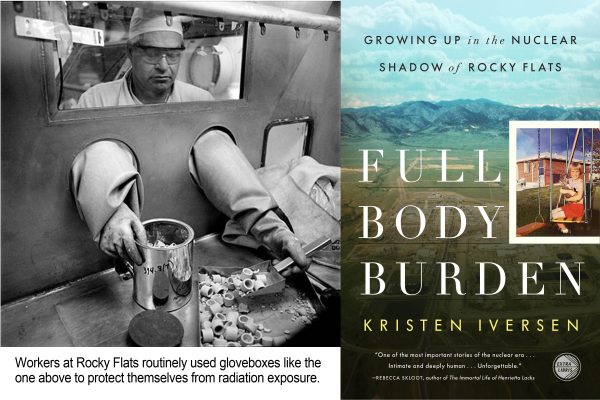 “In this powerful work of research and personal testimony, Iversen chronicles the story of America’s willfully blinkered relationship to the nuclear weapons industry . . . masterful use of the present tense, conveying tremendous suspense and impressive control of the material.” Publishers Weekly starred review
“Superbly crafted tale of Cold War America’s dark underside . . . exquisitely researched.” Kirkus starred review
“Iversen has crafted a chilling, brilliantly written cautionary tale about the dangers of blind trust . . . Full Body Burden is both an engrossing memoir and a powerful piece of investigative journalism.” Bookpage
“Full Body Burden is one of the most important stories of the nuclear era—as personal and powerful as Silkwood, told with the suspense and narrative drive of The Hot Zone. With unflinching honesty, Kristen Iversen has written an intimate and deeply human memoir that shows why we should all be concerned about nuclear safety, and the dangers of ignoring science in the name of national security. Rocky Flats needs to be part of the same nuclear discussion as Three Mile Island, Chernobyl, and Fukushima. So does Full Body Burden. It’s an essential and unforgettable book that should be talked about in schools and book clubs, online and in the White House.
–REBECCA SKLOOT, author of The Immortal Life of Henrietta Lacks
“This terrifyingly brilliant book – as perfectly crafted and meticulously assembled as the nuclear bomb triggers that lie at its core – is a savage indictment of the American strategic weapons industry, both haunting in its power, and yet wonderfully, charmingly human as a memoir of growing up in the Atomic Age.”
–SIMON WINCHESTER, author of The Professor and the Madman and Atlantic
“News stories come and go. It takes a book of this exceptional caliber to focus our attention and marshal our collective commitment to preventing future nuclear horrors.”
–Booklist
Her website is: http://www.kristeniversen.com/
DPRK Slams Extension of US-Japan Nuclear Pact as US Double Standard – Report
Sputnik – 05.08.2018
North Korea denounced the extension of the US-Japanese atomic energy agreement, accusing Tokyo of undertaking activities allegedly aimed at nuclear weaponization and blaming the United States of double standards, local media reported on Sunday.
The Korea Asia-Pacific Peace Committee (KAPPC) released a white paper on Saturday criticizing the 1988 US-Japanese nuclear pact, which was extended last month, the Korean Central News Agency reported.
According to the white paper, Japan has been conducting nuclear research since long ago, allegedly starting to push forward the A-bomb development in 1930s.
The paper also suggested that out of 518 tonnes of plutonium stockpiled around the world so far, 47 tonnes are stored by Japan.
The document accused the United States of a double-standard approach to treat North Korea and Japan differently on nuclear issues, calling on Washington to “judge the situation from a fair stand” if it wanted denuclearization of the Korean Peninsula.
In July, the United States and Japan extended a bilateral nuclear cooperation agreement, which granted Japan the right to extract plutonium, reprocess spent fuel and enrich uranium on the condition that it was not used to build nuclear weapons.
Featured Video
Rewriting the risk? Inside the government’s vaccine safety messaging
or go to
Aletho News Archives – Video-Images
Book Review
“Davos Can Really Replace the UN”
Inside the book that maps the architecture behind global governance — from the Epstein files to the Pact for the Future
Lies are Unbekoming | April 1, 2026
On June 13, 2019, the United Nations and the World Economic Forum signed a partnership deal to “accelerate the implementation of the 2030 Agenda for Sustainable Development.” That same evening, WEF president Börge Brende — Norway’s former Foreign Minister — had dinner with Jeffrey Epstein at Epstein’s Manhattan townhouse. The Epstein files, released January 2026, contain an exchange between the two from the previous year. Epstein to Brende: “Davos can really replace the UN. C21, cyber, crypto . genetics… intl coordination.” Brende back to Epstein: “Exactly — we need a new global architecture. World Economic Forum (Davos) is uniquely positioned — public private.”
The next day, the UN General Assembly adopted the framework for restructuring global governance.
That sequence — the partnership signing, the Epstein dinner, the candid admission about replacing the UN with a public-private architecture, and then the formal adoption — opens Jacob Nordangård’s The Digital World Brain. Pages two and three. Footnoted to the UN resolution number, the Epstein files, and the General Assembly record.
I keep coming back to it because it captures what this book does that almost nothing else in the independent research space manages. I’ve followed Jacob’s work for years now and interviewed him about his research. Each book peels back another layer of the same institutional architecture, and each time I think he’s reached the limit of what can be documented, the next one goes further. Nordangård doesn’t speculate. He doesn’t editorialize much. He lays institutional actions next to each other in chronological order and lets the pattern announce itself. … continue
Blog Roll
 Aletho News
- Iran, US receive Pakistan-mediated plan for ceasefire then final deal
- Iran submits demands for end to war as mediators scramble ahead of Trump deadline
- Iran Threatens Retaliatory Strike on Stargate AI Project in UAE
- US sent ‘a lot’ of arms to Iranian protesters – Trump
- Barak Ravid Launders Deception To Allow Trump To Back Off Of His Power Plant Threat – Again
- REWRITING THE RISK? INSIDE THE GOVERNMENT’S VACCINE SAFETY MESSAGING
- “Davos Can Really Replace the UN”
- NIAID/NIH and USDA Fund Bioengineered Chimeric Influenza Viruses Built Using Pandemic H1N1 Components: Journal ‘Science Advances’
- Hezbollah hits Israeli warship off Lebanon’s coast, sets it aflame
- Iran slams US strikes on B1 bridge, Mahshahr petrochemical plants as ‘blatant acts of state terrorism’
- If Americans Knew
- Trump poised to “blow everything up” (ie. commit war crimes) in Iran – Daily Update
- In Iran, Israel-US take aim at “reason, research, and freedom of thought” – Daily Update
- US loses planes over Iran, Israel downgrades Lebanon war goals – Daily Update
- Israel Is Blocking Palestinians from Easter at Church Where Jesus Resurrected
- Plot to assassinate Palestinian activist follows harassment campaign promoted by Zionist groups and elected officials
- Prominent New York synagogue hosts presentation on why U.S. Jews should support the ethnic cleansing of Gaza
- Tapper vs. Piker: Is the CNN Anchor Auditioning for David Ellison?
- Shouldn’t Democrats Be Able to Condemn Genocide?
- Israel-US kill negotiators, destroy civilian structures, but Iran’s military capabilities still largely intact – Daily Update
- ‘War crime’: Global condemnation as Israeli ministers celebrate death penalty law targeting Palestinian prisoners
- No Tricks Zone
- An Inconvenient Tree: Uncovered In Alps… Europe Much Warmer Than Today 6000 Years Ago
- New Study Reports A 60% Slowdown In Greenland’s Ice Loss Rate In The Last Decade
- Low Intensity Tornado Wrecks Major Solar Farm, Creating A Potential Toxic Dump
- New Study Finds Warming Saves Lives…Cold Temperatures 12 Times More Deadly Than Excess Heat
- German Science Blog Accuses PIK Climate Institute Of Hallucinating Climate Tipping Points
- Devastating Assessment Of Comirnaty Vaccine By Former Senior Pfizer Europe Toxicologist
- New Study: CO2 Is ‘Effectively Negligible’ As An Explanatory Climate Change Factor Since 2000
- Former Pfizer Toxicologist Dr. Helmut Sterz Tells Bundestag Hearing Pfizer Vaccine Should Have Never Been Approved
- Energy Expert: Germany’s Nuclear Phaseout Was A “500 Billion Euro Mistake”
- New Research: South Australia’s Mid-Holocene Sea Surface Temperatures Were 4°C Warmer Than Today
 Aletho News