Brussels ‘must take position’ on Romanian presidential election controversy one way or another: Slovak PM Fico
By Thomas Brooke | Remix News | March 11, 2025
The European Commission is under increasing pressure to address the unfolding political crisis in Romania after Slovak Prime Minister Robert Fico called for clarity on the rejection of Calin Georgescu’s presidential candidacy.
Fico’s remarks, shared on social media, warn that the Commission’s silence would further undermine trust in the European Union.
Fico emphasized that the European Commission “must take a position” on the situation one way or another, asserting that either Georgescu, a nationalist and NATO-skeptic, is right, or the Romanian authorities’ decision to bar him from running is justified.
“The European Commission (EC) must take a position on the presidential elections in Romania — and take responsibility for it. If Mr. Georgescu is being wronged simply because he has a different opinion, he must be given European protection. If the EC is convinced that the Romanian authorities are doing the right thing, it must stand up for them. The only thing the EC cannot do is to remain silent,” Fico declared.
The controversy erupted after Romania’s Central Electoral Bureau (BEC) rejected Georgescu’s candidacy for the upcoming presidential elections on Sunday evening. The decision, taken with 10 votes in favor out of the 14-member committee, sparked protests in Bucharest, where demonstrators clashed with police, waving national flags and chanting slogans calling for “revolution.” Riot police used tear gas to disperse the crowd, and multiple arrests were made.
The BEC cited a missing signature on an annex of Georgescu’s declaration of wealth as the reason for his disqualification. Former Constitutional Court judge Tudorel Toader clarified that the annexes are a mandatory component of the documentation and that both substantive and procedural requirements must be met.
Georgescu, who had previously won the first round of the presidential elections before they were annulled, condemned the decision as a political maneuver. “A direct blow to the heart of democracy worldwide! I have one message left! If democracy in Romania falls, the entire democratic world will fall! This is just the beginning. It’s that simple! Europe is now a dictatorship, Romania is under tyranny!” he wrote on social media.
Fico drew parallels between Georgescu’s case and his own experiences in Slovakia, where he claims he faced politically motivated efforts to imprison him as an opposition leader between 2020 and 2023. He accused the European Commission, particularly then-justice commissioner Didier Reynders, of turning a blind eye to alleged democratic backsliding in Slovakia because the country’s government at the time was aligned with Brussels.
“The EC at that time did not give a damn about Slovakia. They had an obedient government, and nobody cared about the rights of the leader of the opposition and the nature of democracy in Slovakia,” Fico wrote.
The rejection of Georgescu’s candidacy has drawn sharp criticism from several political figures and observers, including Italian Deputy Prime Minister Matteo Salvini, leader of Spain’s Vox party Santiago Abascal, and U.S. billionaire Elon Musk.
George Simion, president of Romania’s right-wing Alliance for the Union of Romanians (AUR) party, insisted the decision was overtly political. “It was rejected without any reason. All the papers were in good order. We live in a dictatorship. Please help us. Please be on our side to restore democracy in Romania,” Simion stated.
Fico warned that the EU’s credibility is on the line, warning that if it does not take a view, “a dangerous precedent is being set where, in a free democratic election, it will be possible to remove a successful candidate simply because he does not hold a favorable opinion.”
Iran rejects ‘absurd’ UK claim of posing national security threat
Press TV – March 6, 2025
Iran has refuted British officials’ accusations that Tehran poses a national security threat to the UK, saying they blame the Islamic Republic for something they “excel in and master”.
Britain said on Tuesday that it would require the Iranian state to register everything it does to exert political influence in the UK, subjecting Tehran to an elevated tier of scrutiny in light of what it said was increasingly aggressive activity.
“It is absurd to blame Iran for something you excel in and master: illegal interference in other nations’ internal affairs!” Iran’s Foreign Ministry spokesman Esmaeil Baghaei responded in a post on X Thursday.
Baghaei touched on UK Prime Minister Keir Starmer’s remarks in November that he did not believe Israel was committing genocide in Gaza and Britain’s role in the 1953 coup against Iran’s democratically-elected government of Prime Minister Mohammad Mosaddegh.
“UK government seems to be doubling down on its irrational hostile mentality regarding Iranians only to deflect from their own culpability, both as ‘genocide denier’ and as supporter of anti-Iran terrorism (tracing back to 1953 coup against Iran’s democratically-elected govnt for which UK’s guilt never disappears).
“However, this is no longer the 19th century; any government that makes unfounded accusations and takes hostile actions against the Iranian nation shall be held accountable,” he said.
Addressing parliament on Wednesday, UK security minister Dan Jarvis announced that he would put Iran’s state, its security services and the Islamic Revolution Guards Corps into the enhanced tier of an upcoming registration scheme designed to protect against covert foreign influence.
Like in many countries, the political ruthlessness of Victorian expansionism has left Britain with an unhappy legacy of distrust in Iran.
Iranians generally blame Britain for the “Great Famine and Genocide” of 1917–1919 in Iran where approximately 2 million people and by some accounts 8-10 million out of a population of 18–20 million died of starvation and disease.
The famine took place after Iran, despite declaring neutrality during World War I, was occupied by British and Russian forces.
Democracy does not ‘die in darkness,’ it is dying in the EU right now
By Tarik Cyril | RT | March 4, 2025
Quiz time: What do Germany, Moldova, and Romania (in alphabetical order) have in common? They look so different, don’t they?
Germany is a traditional, large, and at this point still relatively well-off (if less and less so due to obedient self-Morgenthauing for the greater glory of Ukraine) member of the Cold War “West” (give and take a “re-unification” and all that). Currently, it has a population of over 83 million people and a GDP equivalent to $4.53 trillion. Romania is an ex-Soviet satellite with just above 19 million citizens and a GDP less than a tenth of the German one (at $343.8 billion). Moldova, which emerged from a former Soviet republic, is the smallest: 2.4 million people and a GDP of $16.5 billion.
And yet, look more closely, and they are not so different: They are all either inside the EU and NATO (Germany and Romania) or attached to these two organizations as an outside yet important strategic asset (the case of Moldova – despite and in de facto breach of its constitutionally anchored neutrality, as it happens). And also, all three have serious problems with conducting fair and clean elections. What a coincidence. Not.
Let’s take a quick look at each case: In Germany’s recent federal election, the Bündnis Sahra Wagenknecht (BSW) failed to cross the threshold to representation in parliament – 5% of the national vote – by the thinnest of margins: The party officially garnered 4.972% of the vote. In absolute numbers, almost 2,469,000 Germans voted for the BSW (with the decisive so-called “second vote”). Only 0.028% – about 13,000 to 14,000 votes – more and the party would have passed the 5% barrier.
Even extremely tight results can, of course, be real and legitimate. The problem in Germany now is that there is steadily accumulating evidence that the elections were compromised by serious flaws and repeated errors. What makes this even more urgent is the fact that there seems to be a clear pattern with mistakes occurring not randomly but mostly at the cost of the BSW.
We already know about two key problems, although not much more than one week has passed after the election on February 23: First, about 230,000 German voters live abroad, but many of them could not cast their vote because the necessary documents reached them too late, sometimes even only after the elections. Of course, we cannot tell how exactly these voters would have voted if given the chance. But that is not the point. The fact alone that they could not participate casts severe doubt on the legitimacy of the results. And especially in the case of the BSW where so few additional votes would have been enough to principally change the outcome, that is, secure seats – and probably two to three dozen – in the next parliament.
The second even more disturbing issue is that there is ever more evidence of actual BSW votes inside Germany being allocated to another party. In the case of the major city of Aachen, for instance, a result of 7.24% for the BSW was registered for the “Bündnis für Deutschland” (an entirely different and much smaller party with no chance of parliamentary representation to begin with). The BSW vote was erroneously registered as 0%. Only protests by local BSW voters brought the scandal to light.
German mainstream media are trying to depict what happened in Aachen as an exception. Yet by now there are reports of similar “errors” from all over Germany – and don’t forget that the process of looking for these cases has only just started. In sum, there are good reasons – and they are getting better by the day – for believing that, for the BSW, the difference between correct and incorrect election procedures actually amounts to the one between being and not being in parliament. That implies, of course, that all those citizens who have voted for the BSW may well have been deprived of their proper democratic representation as foreseen by law.
Is there a motive for foul play? You bet. The BSW, an insurgent party combining leftwing social with rightwing cultural and migration-policy positions, has been hounded as too friendly toward Russia because it is demanding peace in Ukraine; it also has been outspoken about its opposition to basing fresh US missiles in Germany and to Israel’s crimes as well.
In Germany as it is now, these are all reasons for neo-McCarthyite smear campaigns and repression by – at least – dirty media tricks, all of which has already happened. It is entirely possible that a wave of deliberate local “mistakes” was added to that nasty tool box. And, a slightly different issue, asserting the BSW’s legal rights now will be especially difficult, in particular because a revision of the election result to include the party in parliament would immediately upset the complicated arithmetic of government coalition building. The BSW and its voters, in short, may well have been cheated, and they may be cheated again in case they seek redress.
The fact that one problem with those German elections has to do with voters living abroad rings a bell called Moldova, of course. There, last November, Maia Sandu narrowly won a presidential election that involved massively manipulating the outside-the-country vote. In essence, Moldovans abroad, especially in Russia, likely to vote against her were, in effect, disenfranchised by making it impossible for them to actually cast their vote; Moldovans more likely to vote for her, in the West, faced no such problems.
This crude trickery was decisive: Without it Sandu would have lost and her left-wing rival Alexandr Stoianoglo would have won. In the West, whose candidate Sandu has been, this outcome was, of course, hailed as a victory for “democracy,” a pro-EU choice, and a defeat of “Russian meddling.” As so often, it is hard to decide what is more jaw-dropping: the Orwellian reversal of reality or the Freudian projection of the West’s own manipulation on the big bad Russian Other.
That projection, in any case, is also in play in Romania. Indeed, at this point, the Romanian case of electoral foul play is clearly the most brutal one. There, the gist of a long saga beginning last November, too, is simple: Calin Georgescu, an insurgent newcomer is very likely to win presidential elections. Yet he is being denounced as a far-right populist and – drum roll – as somehow in cahoots with Russia, too.
The consequences were not surprising, except in how drastic things have gotten: First, when Georgescu was close to winning one election, the Constitutional Court abused its power to cancel the whole exercise. The pretext was a file of pseudo-evidence cobbled together by Romania’s security services that, by now, even Western mainstream media admit is ridiculously shoddy.
As you would expect, this open assault on their right to vote has made Romanians support Georgescu more, not less, as polls show. Since the next try at elections is now due to take place in May and Georgescu is still the frontrunner, the authorities have followed up with even more ham-fisted repression. This time, Georgescu was temporarily and dramatically detained – on the way to registering his renewed candidacy – and then accused of half a dozen serious crimes. His access to social media has been curtailed; his team and associates are being raked with searches, charges, and, of course, media attacks. It is possible that he will be deprived of his right to stand for the election.
Georgescu’s supporters have held large demonstrations; he himself has appealed for help in his struggle against Romania’s “deep state” to the Trump administration in Washington. Trump’s de facto right-hand man, tech oligarch Elon Musk, has used his X platform to signal support for Georgescu. And not long ago, US Vice President J.D. Vance warned the Europeans over the first round of attacks on Georgescu.
Yet Romania’s key role in NATO strategies is certain to be a key reason the NATO-skeptic and sovereigntist Georgescu has run into such massive trouble, not only from Romanian mainstream elites but also, behind the scenes, those still running the EU. With Washington now revising its approach to both Russia and its NATO clients in Europe, Georgescu’s fate could well hinge on one of the greatest geopolitical shifts of this century. And that shift might favor him.
Maia Sandu’s crooked victory in Moldova is not up for revision. The chances for the BSW of finding redress should be good, but, in reality, they are not, unfortunately. Georgescu’s luck, though, may turn again. He already has massive electoral support; he may well get even more precisely because of the escalation of dirty tricks used against him, and he has the US de facto on his side.
What is certain, in any case, is one simple fact: the “garden” West, with its endless talk of “values” and “rules” does not, in practice, believe in real elections. Instead, geopolitics prevail. And, tragically, those geopolitics are not only overbearing but stupid. Driven by an obsession with fighting Russia (and China, of course; and the Trumpist US, too, if need be) and rejecting diplomacy as such, this is a West ready to sacrifice whatever little democracy it may have left to a delusion of grandeur that will be its downfall.
Tarik Cyril Amar ia a historian from Germany working at Koç University, Istanbul, on Russia, Ukraine, and Eastern Europe, the history of World War II, the cultural Cold War, and the politics of memory.
EU’s “Democracy Shield” faces backlash over sovereignty concerns, double standards, and proposed intelligence agency
Opponents argue the initiative is a tool for political gatekeeping, not just election integrity
By Didi Rankovic | Reclaim The Net | February 22, 2025
The EU’s “Democracy Shield,” is presented as a way to strengthen information integrity online, especially in the context of elections – but which opponents believe is another way for the bloc’s bureaucracy to tighten the screws on tech giants, speech-wise – is facing vocal opposition in the European Parliament (EP).
The initiative’s first monthly meeting heard criticism in particular from MEPs that come from conservative and sovereignty parties, who wanted to know what exactly qualifies as “foreign interference in elections” – and why the double standard in the way social media content is treated compared to legacy, corporate media.
Namely, while the latter, in Europe at least almost without exception aligned with those in power, is free to publish any opinion, including those that are biased and could be reasonably expected to impact the outcome of an election, social media accounts get banned, while platforms are forced to change algorithms to limit the reach of any content branded as “foreign interference.”
To this point, some MEPs asked if only Russia is to be considered as a possible “election meddler” – or if other countries, the US included, can play the same role in some scenarios – and, that could be true of the EU itself.
According to European Conservative, MEP Fidias Panayiotou gave an example: “In my country, Cyprus, in 2004, through USAID, the US spent $60 million on the referendum for reunification.”
The main topic of the meeting is the now long-contested presidential election in Romania, where the “surprise” victory of Calin Georgescu got annulled as Brussels went all-in trying to make sure he is not eventually elected (that crisis is ongoing.)
The fact that Georgescu is not to the establishment’s liking, caused him to be labeled “pro-Russian” and, “ultra-nationalist” – while his use of social platforms to get the message across was condemned as some sort of “foreign interference.”
But “Democracy Shield’s” opponents are warning that – yet again – there is an attempt to misuse the term “disinformation” to undermine people’s, and country’s rights, namely their sovereignty.
In the context of elections, sovereignty is further threatened by initiatives such as setting up a new EU intelligence agency – that critics say may result in even more “centralization of electoral control in the hands of EU institutions.”
CISA Shake-Up: Democrats Fight to Restore Government Control Over Online Speech

By Didi Rankovic | Reclaim The Net | February 18, 2025
Senator Alex Padilla (D-CA) and Representative Joe Morelle (D-NY) are once again championing censorship under the guise of election security, objecting to the Trump administration’s decision to sideline several officials within the Cybersecurity and Infrastructure Security Agency (CISA). These lawmakers, both strong advocates for government intervention in online discourse, are alarmed that employees who previously played a role in monitoring and flagging speech for suppression have been placed on administrative leave.
Padilla, the Ranking Member of the Senate Committee on Rules and Administration, and Morelle, the Ranking Member of the Committee on House Administration, are demanding explanations from senior CISA officials, asserting that the removal of these employees threatens election security. However, their concerns conveniently ignore the broader issue — CISA’s troubling involvement in suppressing free speech under the pretext of combating so-called “misinformation.”
In a formal letter, the lawmakers stated, “Election-related mis- and disinformation from domestic and foreign actors continues to threaten the strength and integrity of our democracy by weakening trust in our elections and promoting falsehoods about election officials that have resulted in threats against them and their families.” This rhetoric is a familiar justification for empowering government agencies to police online speech, often silencing dissenting voices and alternative perspectives in the process.
We obtained a copy of the letter for you here.
The removals at CISA are part of a course correction to ensure that federal agencies are not overstepping their bounds in surveilling and controlling public discourse. The Trump administration’s actions follow other moves aimed at restoring balance, such as dismantling an FBI task force that engaged in similar activities and removing Federal Election Commission (FEC) Chair Ellen Weintraub. Senator Padilla has responded by rallying fellow Democrats to demand the reinstatement of such figures, further exposing their commitment to government-controlled narratives.
Padilla and Morelle also question how CISA determined which employees to place on leave, suggesting that even those who had moved away from overt censorship operations remain essential to their agenda. They also bemoan CISA’s absence from recent election security conferences — gatherings that often serve as echo chambers for expanding government control over online speech.
The lawmakers’ letter demands a range of responses from CISA, seeking details on employee removals, directives from the Department of Homeland Security, and ongoing election security efforts. However, their real aim appears to be ensuring that CISA remains a stronghold for pro-censorship policies.
They have set a deadline of February 28, 2025, for CISA to respond, pushing for continued interference in election-related discourse. As they stated in their letter, “Regardless of party affiliation, all Americans deserve and expect free and fair elections.” Ironically, their persistent advocacy for government-regulated speech only undermines that very principle.
Trump ‘restrained’ towards West European leaders – Putin
RT | February 19, 2025
US President Donald Trump has shown remarkable restraint in dealing with EU leaders who spoke out against him during the course of the 2024 presidential election, Russian President Vladimir Putin told media on Wednesday.
During the campaign last year, a number of EU officials spoke out in favor of Trump’s Democrat rival for the White House, Kamala Harris, although most stopped short of endorsing her outright.
Trump, Putin noted, continues to be polite with his European allies, who were quite rude to him at the time.
“I am surprised by the restraint of newly elected US President Trump towards his allies, who behaved, frankly speaking, in a boorish manner. He still behaves quite courteously towards them,” he said.
Last October, Trump accused British Prime Minister Keir Starmer of election interference after UK Labour party helped recruit and deploy activists to help the Harris campaign in key swing states.
In August 2024, the Trump campaign accused the EU of interfering in the US presidential election after a senior bloc official warned Elon Musk against amplifying “potentially harmful content” ahead of his interview with Donald Trump.
“All European leaders, all without exception, essentially directly interfered in the election process in the US. It came to direct insults towards one of the candidates,” according to Putin.
USA Is Defunding Regime-Change NGOs
Prof. Glenn Diesen on Neutrality Studies
Glenn Diesen | February 19, 2025
For the longest time, USAID and the National Endowment for Democracy (NED) have been funding foreign NGOs to influence local populations through media propaganda and the presence of a civil society consensus. Donald Trump just pulled the plug by defunding USAID and even going after the NED. This is unprecedented in modern history that a state dismantles its own cognitive warfare apparatus. What happened?
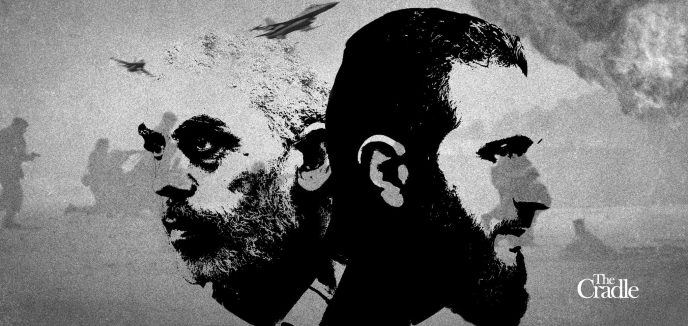
Good Jihadi, bad Jihadi: Al-Qaeda’s Sharaa vs Sinwar’s resistance
The Cradle | February 19, 2025
“Even the pages of the New York Times now include regular accounts distinguishing good from bad Muslims: good Muslims are modern, secular, and Westernized, but bad Muslims are doctrinal, antimodern, and virulent.” – Mahmood Mamdani, Good Muslim, Bad Muslim: America, the Cold War, and the Roots of Terror
In his seminal work, Good Muslim, Bad Muslim: America, the Cold War, and the Roots of Terror, Mahmood Mamdani dissects how the west constructs and weaponizes distinctions between “good” and “bad” Muslims to suit its geopolitical objectives. He argues that these labels are not inherent but imposed, shaped by the shifting demands of western foreign policy.
Nearly two decades after its publication, his thesis remains alarmingly relevant. Nowhere is this clearer than in the stark contrast between the west’s treatment of Yahya Sinwar, the martyred Palestinian resistance leader of Hamas, and Ahmad al-Sharaa, better known as Abu Mohammad al-Julani, the head of Al-Qaeda-linked Hayat Tahrir al-Sham (HTS) in Syria.
A tale of two leaders
While Sinwar has spent the past year in the war-ravaged ruins of Gaza, constantly evading Israeli and NATO surveillance while leading the Palestinian resistance against a brutal Israeli occupation and aggression, Sharaa moved freely through Idlib, and now Damascus, attending public events and meeting western diplomats without significant security measures.
This is despite the fact that the US had placed a $10 million bounty on Sharaa’s head as a so-called terrorist. The incongruence is striking: an internationally recognized Palestinian resistance leader hunted and vilified, while a former Al-Qaeda affiliate leader rebrands himself as a legitimate political actor with western complicity.
Back in 2021, TRT World noted how Sharaa was “remodeling” himself as a peacemaker, enjoying unimpeded mobility even as western coalition forces actively hunted other jihadist leaders linked to ISIS and Al-Qaeda.
Turkish Foreign Minister Hakan Fidan later confirmed that Sharaa had been collaborating with Ankara for years in eliminating those classified by NATO as “terrorists.” The reality, however, is that Sharaa has been part of a western-backed laundering process for years, at least since 2012, but certainly since 2017, when with Qatari backing, he began rebranding his Al-Qaeda-linked Nusra Front as a Syrian liberation force opposing Russian and Iranian influence.
Media whitewashing and political legitimacy
The western media’s embrace of Sharaa was made explicit when The Times described his return to Damascus as that of “‘Polite’ Syrian leader heads home.” This was not an isolated occurrence but part of a broader effort to frame him as a liberator from foreign influence. His past crimes, including war crimes against civilians, enslavement of Yazidi women, and sectarian violence, were conveniently brushed aside.
When Sharaa’s group took control of Damascus last December, the alignment with western interests became clearer. Israeli airstrikes systematically dismantled Syria’s military infrastructure, particularly in and around the capital, yet Sharaa himself moved through the city undisturbed.
While the Israeli Air Force bombed military sites near Umayyad Square, Sharaa was seen casually driving through the same areas. His silence on these attacks was deafening – especially given that his administration’s official stance on Israel marked a complete break from Syria’s historic anti-Zionist policies.
Statements from his government indicated no intention to reclaim the occupied Golan Heights or other lost territories, signaling a de facto truce with Tel Aviv.
The west’s legitimization of Sharaa reached its peak when his Foreign Minister, Asaad al-Shaibani, was invited to attend the World Economic Forum annual meeting in Davos, sharing a stage with figures like former British prime minister Tony Blair.
His rhetoric was tailored for a western audience: peace, counterterrorism, privatization, and economic liberalism – all buzzwords signaling a willingness to operate within the neoliberal world order.
Demonizing resistance: Sinwar’s struggle
Meanwhile, Israel continued its relentless campaign against Yahya Sinwar, branding him a “butcher,” a “war criminal,” and a “child killer” – a narrative eagerly parroted by western media despite its lack of substantiation.
Even as the alleged war crimes attributed to Hamas fighters on 7 October 2023 were later exposed as Israeli propaganda, Sinwar’s image remained demonized. In his final moments, as an Israeli drone executed him in Gaza, Sinwar did not cower. He fought until his last breath, cementing his status as an icon of Palestinian resistance. Yet even in death, the western narrative denied him any form of legitimacy.
Julani’s convenient redemption
Conversely, Sharaa’s past was erased. His involvement with the Islamic State in Iraq, his position as deputy leader of ISIS under Abu Bakr al-Baghdadi, his group’s mass executions, and his forces’ role in the enslavement of women were all conveniently overlooked.
Western journalists competed to polish his image, portraying him as a pragmatic leader rather than the war criminal he is. His forces still operate brutal prisons in Idlib, where opponents disappear indefinitely, yet he remains a media darling.
This contrast illustrates Mamdani’s thesis with unsettling precision: Sharaa is the “good jihadist” because he aligns with western-Israeli interests, while Sinwar is the “bad jihadist” because he defies them.
Sinwar’s crime was not terrorism – it was successfully challenging the occupation’s military, exposing the vulnerabilities of an Israel long perceived as invincible. His resistance resonated across the Arab and Muslim world, cutting across sectarian lines and threatening western interests.
Sharaa, on the other hand, poses no threat to Israel. He remains focused on the sectarian score-settling within Syria, making him a useful pawn rather than an adversary. His group does not challenge Western influence in the region, nor does it resist the ongoing occupation of Palestinian land. This is the fundamental reason why he is embraced rather than demonized.
Sinwar may have fallen, but as the Quran reminds us: “And do not say about those who are killed in the way of Allah, ‘They are dead.’ Rather, they are alive, but you perceive it not.” (Quran 2:154). His legacy endures, living on in the hearts of those who continue his struggle.
Sharaa, despite his crimes, remains alive and politically relevant. In the western geopolitical playbook, obedience is rewarded while defiance is crushed.
“Listen Carefully it’s Actually Much Darker”: How the Left is Framing Free Speech as a Front for Fascism
By Jonathan Turley | February 18, 2025
The defense of free speech by Vice President J.D. Vance in Munich, Germany, has led to open panic on the left in fighting to maintain European censorship and speech criminalization. The response of the American press and pundits was crushingly familiar. From CBS News to members of Congress, Vance (and anyone who supports his speech) was accused of using Nazi tactics. It is the demonization of dissent.
In one of the most bizarre examples, CBS anchor Margaret Brennan confronted Secretary of State Marco Rubio over Vance’s support for free speech given the fact that he was “standing in a country where free speech was weaponized to conduct a genocide.”
The suggestion that free speech cleared the way for the Holocaust left many scratching their heads, but it is an old saw used by the anti-free speech community, particularly in Germany.
When they came to power, the Nazis moved immediately to crack down on free speech and criminalize dissent. They knew that free speech was not only the “indispensable right” for a free people, but the greatest threat to authoritarian power.
Figures like Brennan appear to blame free speech for the rise of the Nazis because the Weimar Constitution protected the right of Germans, including Nazis, in their right to speak. However, the right to free speech was far more abridged than our own First Amendment. Indeed, it had many of the elements that the left has pushed in Europe and the United States, including allowing crackdowns on disinformation and fake news.
Article 118 of the Weimar Constitution, guaranteed free speech but added that it must be “within the limits of the general laws.” It did not protect statements deemed by the government as factually untrue and speech was actively regulated.
Indeed, Hitler was barred from speaking publicly. It was not free speech that the Nazis used to propel their movement, but the denial of free speech. They portrayed the government as so fearful and fragile that it could not allow opposing views to be stated publicly.
This ridiculous and ahistorical spin also ignores the fact that other countries like the United States had both fascist movements and free speech, but did not succumb to such extremism. Instead, free speech allowed critics to denounce brownshirts as hateful, dangerous individuals. To blame free speech for the rise of the Nazis is like blaming the crimes of Bernie Maddoff on the use of money.
Nevertheless, before the last election, the left was unrelenting in accusing those with opposing views as being Nazis or fascists. During the election, it seemed like a one-answer Rorschach test where Democrats saw a Nazi in every political inkblot.
While the narrative failed in spectacular fashion, the script has not changed. Rep. Seth Moulton (D-MA) expressed sympathy for the “absolute shock, absolute shock of our European allies” to be confronted in this fashion. Rather than address the examples of systemic attacks on free speech, Moulton reached again for the favorite talking point: “if you listen, listen carefully it’s actually much deeper and darker. He was talking about the enemy within. This is some of the same language that Hitler used to justify the Holocaust.”
Like Brennan, Moulton is warning that free speech can be a path to genocide. However, his take is that anyone claiming to be the victim of censorship is taking a page out of the Nazi playbook. The logic is simple. The Nazis complained about censorship. You complained about censorship. Thus, ipso facto, you are a Nazi.
Others joined the mob in denouncing Vance and supporting the Europeans. CNN regular Bill Kristol called the speech “a humiliation for the US and a confirmation that this administration isn’t on the side of the democracies.”
By defending free speech, you are now viewed as anti-democratic. It is part of the Orwellian message of the anti-free-speech movement. Democracy demands censorship, and free speech invites fascism.
It is hardly a novel argument. It was the very rationale used in Germany after World War II to impose what is now one of the most extensive censorship systems in the world. It was initially justified as an anti-Nazi measure but then, as has occurred repeatedly in history, became an insatiable appetite for speech controls. Indeed, the country returned to the prosecution of anything deemed disinformation and fake news by the government.
The result has indeed silenced many, but not those neo-Nazis who are flourishing in Germany. Past polling of German citizens found that only 18% of Germans feel free to express their opinions in public. Only 17% felt free to express themselves on the internet. As under the Weimar Constitution, fascist groups are portraying themselves as victims while finding alternative ways to spread their message.
Yet, the American media continues to peddle the same disinformation on the value of censorship. After its anchor made the widely ridiculed claim about free speech leading to genocide, 60 Minutes ran an interview with German officials extolling the success of censorship.
CBS’ Sharyn Alfonsi compared how the United States allows “hate-filled or toxic” speech while Germany is “trying to bring some civility to the worldwide web by policing it in a way most Americans could never imagine.”
German prosecutors (Dr. Matthäus Fink, Svenja Meininghaus and Frank-Michael Laue) detailed how they regularly raid homes to crack down on prohibited views with the obvious approval of CBS.
They acknowledged that “the people are surprised that this is really illegal, to post these kind [sic] of words… They don’t think it was illegal. And they say, ‘No, that’s my free speech,’ And we say, ‘No, you have free speech as well, but it also has its limits.’”
Alfonsi explained that the law criminalizes anything the government considers inciteful “or deemed insulting.” She then asked “Is it a crime to insult somebody in public?” The prosecutors eagerly affirmed, but added that the punishment is even higher to insult someone on the Internet.
Meininghaus started to explain that “if you’re [on] the internet, if I insult you or a politician …” Alfonsi could not even wait for the end of the sentence and completed it for him: “It sticks around forever.”
As CBS was completing the sentences of speech regulators, many in Europe were celebrating the Vance speech as breathing new life into the embattled free speech community. What is most striking is how the press and the pundits could not help themselves. They are eagerly proving Vance’s point. This is an existential fight for the “indispensable right.”
Jonathan Turley is the Shapiro professor of public interest law at George Washington University and the author of “The Indispensable Right: Free Speech in an Age of Rage.”
EU Elites Are in Panic Over the US Leaving Ukraine and Europe
Professor Glenn Diesen & Pascal Lottaz
Glenn Diesen | February 17, 2025
I had a conversation with Pascal Lottaz at Neutrality Studies regarding the panic in the EU as the US made it clear it no longer considers Europe to be a priority. For years, the Europeans failed to establish the continent as an independent pole of power by neglecting to define their security and economic interests separate from the US. Europe is subsequently now a divided continent at war, in economic decline and with diminishing relevance in the world. The US must address multipolar realities by restoring a workable relationship with Russia and pivoting toward Asia. The comfortable ideological bubble has been burst, yet there is still a reluctance to deal with uncomfortable realities.
There Is No Such Thing as Democracy without Free Speech. Period.
Truthstream Media | February 17, 2025
Truthstream Media Can Be Found Here:
Our First Film: TheMindsofMen.net
Our First Series: Vimeo.com/ondemand/trustgame
Site: TruthstreamMedia.com X: @TruthstreamNews
Backup Ch: Vimeo.com/truthstreammedia
DONATE: http://bit.ly/2aTBeeF
Newsletter: http://eepurl.com/bbxcWX
UK and EU ‘incapable of negotiation’ – Moscow
RT | February 17, 2025
The UK and EU cannot be part of the Ukraine peace talks, as they are incapable of negotiating, Moscow’s ambassador to the UN, Vassily Nebenzia has said.
The diplomat made the comments as Russian Foreign Minister Sergey Lavrov and Yury Ushakov, President Vladimir Putin’s top foreign policy aide, arrived in Saudi Arabia on Monday for bilateral talks with top US diplomats, discussions to which the EU and Ukraine are not invited.
“The Minsk guarantors, and in general EU states and the UK are incapable of negotiation and cannot be a party to any future agreements on regulating the Ukrainian crisis,” Nebenzia told the UN Security Council on Monday.
Both are blinded by “a manic desire to defeat Russia on the battlefield at the hands of the surviving Ukrainians,” the diplomat said. Neither EU countries nor the UK are suitable to serve “as either guarantors or middlemen” to a potential ceasefire between Russia and Ukraine, he added.
US President Donald Trump’s special envoy for ending the hostilities, Keith Kellogg, has also noted that European states have no place in upcoming peace talks. France and Germany served as the Western guarantors of the failed Minsk accord, a deal supposedly aimed at stopping hostilities between Ukraine and the Donetsk and Lugansk People’s Republics.
Former German Chancellor Angela Merkel has since admitted the ceasefire was intended to buy time for Kiev to build up strength.
While previously both the US and its allies in Europe have shown a united front in backing Ukraine in its conflict with Russia since its escalation in 2022, Washington has touted a pivot under Trump. The new US president has promised to bring a swift end to the hostilities, while simultaneously signaling that Europe should begin to shoulder more of the cost of its own security, as well as Ukraine’s.
The Russian diplomatic delegation in Riyadh is expected to prepare the ground for an upcoming meeting between Trump and Putin, following tomorrow’s initial bilateral involving senior diplomats form both sides.
Moscow is coming to the negotiations primarily to “hear out” Washington regarding the Ukraine conflict, as well as to restore communication after “an absolutely abnormal period” in Russia-US relations, Foreign Minister Sergey Lavrov has said.
The top diplomat has previously stressed that Moscow will reject any attempt to temporarily freeze the Ukraine conflict, as Kiev’s Western backers would use such a measure to rearm Kiev. Any solution to the hostilities would need to have an ironclad legal basis and address the root causes of the conflict, Lavrov has said.
Featured Video
Theodore Postol: Iran’s Missiles & Drones Were Underestimated
or go to
Aletho News Archives – Video-Images
From the Archives
What is the Israeli Lobby in Australia Doing in Interfaith Dialogue?
By Ali Kazak | Dissident Voice | October 11, 2015
For years Israel and its lobby around the world have been trying to normalise their relations with Arabs and Muslims without solving the Palestine Question.
One of the methods they resorted to in the last few years is using human rights and community organizations such as interfaith dialogue and Multiculturalism to achieve this objective and to: isolate the Palestinians, marginalise the Palestine question, end Israel’s isolation, and prevent criticism of Israel, knowing that these organisations will be the first to stand against Israel’s violations, racial and religious discrimination.
The group responsible for this task in Australia is The Australia/Israel & Jewish Affairs Council (AIJAC); its Director of International & Community Affairs, Jeremy Jones is in charge of lobbying religious community organizations, specifically Muslims and Christians. Consequently he convened the Faith Communities for Reconciliation, founding participant in the Australian Partnership of Religious Organisations and the Australian National Dialogue of Christians, Muslims & Jews.
AIJAC is a private political propaganda group. It is recognised as the main Israeli lobby in Australia. It coordinates its activities and works intimately with the Israeli embassy in Canberra and different institutions in Israel. It is privately funded by some Jewish businessmen. It monitors closely Australian politicians, the media, ethnic and religious groups, (especially Arabs and Muslims), unions and academics on their stands towards Israel and the Palestine question. … continue
Blog Roll
 Aletho News
- The killing of three Indonesian soldiers in Lebanon should remind Jakarta that Israel does not want peace
- Defeated and delusional: Netanyahu’s remarks reveal $80bn war failure, says analyst
- Iran’s friends are about to make life much more difficult for Israel and the US
- The war of liberation of the Arab and Islamic peoples expands across the Gulf
- Envoy warns UN on Trump’s threat to ‘obliterate’ Iran’s civilian infrastructure
- The Larak Corridor: Iran’s Rial Gate With No US, No Israel, and No Way Around
- ‘Economic terrorism’: Steel facilities hit again in US-Israeli strike
- ‘War Crime’: Iran condemns attacks on Arak, Ardakan nuclear sites
- Two-thirds of Americans want quick end to Iran war even if goals unmet
- Trump to Give “Important Update on Iran” Wednesday in Prime-Time Speech
- If Americans Knew
- Gaza families reunite years after babies evacuated amid Israel’s war
- International Rescue Committee warns Gaza’s children face grave protection risks
- Iran’s Alleged 47-Year War on America: Debunking the 1,050 American Deaths Canard
- Israel wants US to bomb more of Iran’s civilian structures (113,000 is not enough) – Not a ceasefire Day 173
- Ann Coulter Rips Into Fox News for Iran War Coverage
- Joe Kent Urges Americans To Call White House and Congress To Object To Sending Troops Into Iran
- DNC Resolution to Reject AIPAC Funding Puts Democratic Leaders in the Hot Seat
- Swedish foundation to build 400 schools as over 650,000 Gaza children remain without education for 2 years
- Israeli army admits photshopping image of slain Lebanese journalist
- This is how Israel is systematically killing health workers under the cover of war in Lebanon
- No Tricks Zone
- New Study Finds Warming Saves Lives…Cold Temperatures 12 Times More Deadly Than Excess Heat
- German Science Blog Accuses PIK Climate Institute Of Hallucinating Climate Tipping Points
- Devastating Assessment Of Comirnaty Vaccine By Former Senior Pfizer Europe Toxicologist
- New Study: CO2 Is ‘Effectively Negligible’ As An Explanatory Climate Change Factor Since 2000
- Former Pfizer Toxicologist Dr. Helmut Sterz Tells Bundestag Hearing Pfizer Vaccine Should Have Never Been Approved
- Energy Expert: Germany’s Nuclear Phaseout Was A “500 Billion Euro Mistake”
- New Research: South Australia’s Mid-Holocene Sea Surface Temperatures Were 4°C Warmer Than Today
- Storing Green Energy To Last Germany 10 Days Would Require A 60-Million Tonne Battery
- New Studies: UK Sea Levels Were 4 Meters Higher Than Today During The Mid-Holocene
- Destructive Green New Deal: German Energy And Metal Group Warns Of Drastic Crisis
 Aletho News