Does the World Really Need New and Improved Nuclear Weapons?
How to Save a Quarter Trillion Dollars
By LAWRENCE S. WITTNER | CounterPunch | August 10, 2011
In the midst of the current stampede to slash federal spending, Congress might want to take a look at two unnecessary (and dangerous) “national security” programs that, if cut, would save the United States over a quarter of a trillion dollars over the next decade.
The first of these is the Obama administration’s plan to spend at least $185 billion in the next ten years to “modernize” the U.S. government’s nuclear weapons arsenal. At present, the U.S. government possesses approximately 8,500 nuclear warheads, and it is hard to imagine that this country would be safer from attack if it built more nuclear weapons or “improved” those it already possesses. Indeed, President Barack Obama has declared—both on the 2008 campaign trail and as president—that he is committed to building a world without nuclear weapons. This seems like a perfectly sensible position—one favored by most nations and, as polls show, most people (including most people in the United States). Therefore, the administration should be working on securing further disarmament agreements—not on upgrading the U.S. nuclear arsenal in preparation for future nuclear confrontations and nuclear wars.
In late June of this year, Archbishop Desmond Tutu, a Nobel Peace Prize laureate, wrote: “It is deeply troubling that the U.S. has allocated $185 billion to augment its nuclear stockpile over the next decade, on top of the ordinary annual nuclear-weapons budget of more than $50 billion.” Not only has the International Court of Justice affirmed that nations “are legally obliged to negotiate in good faith for the complete elimination of their nuclear forces,” but “every dollar invested in bolstering a country’s nuclear arsenal is a diversion of resources from its schools, hospitals, and other social services, and a theft from the millions around the globe who go hungry or are denied access to basic medicines.” He concluded: “Instead of investing in weapons of mass annihilation, governments must allocate resources towards meeting human needs.”
Another project worth eliminating is the national missile defense program. Thanks to recent congressional generosity, this Reagan-era carryover, once derided by U.S. Senator Edward Kennedy as “Star Wars,” is currently slated for an increase in federal spending, which will provide it with $8.6 billion in fiscal 2012.
The vast and expensive missile defense program—costing about $150 billion since its inception—has thus far produced remarkably meager results. Indeed, no one knows whether it will work. As an investigative article in Bloomberg News recently reported: “It has never been tested under conditions simulating a real attack by an intercontinental ballistic missile deploying sophisticated decoys and countermeasures. The system has flunked 7 of 15 more limited trials, yet remains exempted from normal Pentagon oversight.”
Carl Levin, the Michigan Democrat who chairs the Senate Armed Services Committee, reported that his committee was “deeply concerned” about the test failures of the nation’s missile defense program. He also implied that, given the disappearance of the Soviet Union, the United States might not need such a system to deter its potential enemies, which have a far inferior missile capability. “The threat we have now is either a distant threat or is not a realistic threat,” he remarked.
Why, then, do other nations—for example, Russia—fiercely object to the deployment of a U.S. missile defense system near their borders? Perhaps they fear that, somehow, U.S. scientists and engineers will finally figure out how to build a system, often likened to hitting a bullet with a bullet, that makes the United States invulnerable while they are left vulnerable. Or perhaps they think that, one day, some U.S. government officials might believe that the United States actually is invulnerable and launch a first strike against their own nations. In any case, their favorite solution to the problem posed by U.S. national missile defense—building more nuclear-tipped missiles of their own—significantly undermines the security of the United States.
Projecting the current annual cost of this program over the next decade, the United States would save $86 billion by eliminating it.
Thus, by scrapping plans for nuclear weapons “modernization” and for national missile defense—programs that are both useless and provocative—the United States would save $271 billion (well over a quarter of a trillion dollars) in the next ten years. Whether used to balance the budget or to fund programs for jobs, healthcare, education, and the environment, this money would go a long way toward resolving some of the nation’s current problems.
~
Dr. Lawrence S. Wittner is Professor of History at the State University of New York/Albany. His latest book is Confronting the Bomb: A Short History of the World Nuclear Disarmament Movement (Stanford University Press).
‘Deal lets US keep bases in Afghanistan’
Press TV – August 7, 2011
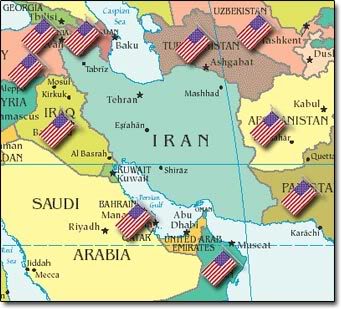 The draft of a strategic deal between Washington and Kabul envisions giving the United States the authority to set up permanent military bases in Afghanistan.
American and Afghan official are set to discuss the deal at Loya Jirga (Traditional Grand Assembly) with tribal elders and political figures.
The recently-released draft shows that the US would be able to establish permanent military bases in Shindand, Shorabak, Kandahar, Bagram, and Khost.
According to the agreement, Washington can set up more military bases in other parts of Afghanistan whenever it deems necessary.
The military bases, which will be run based on US Army regulations, would be in complete control of the US government.
The Afghan airspace will be handed over to American forces after the strategic deal comes into effect.
If an agreement is reached on the permanent bases, US troops will remain on Afghan soil beyond 2014, when they are scheduled to transfer their security responsibilities to Afghan forces.
The draft also states that all US military and civilian personnel must act according to the American constitution at the time of military operations.
Barack Obama and the Debt Crisis: a Successful Con Game Explained
By Bruce A. Dixon – Black Agenda Report – 08/03/2011
The phony debt ceiling crisis was, from beginning to end, a con. It was an elaborate and successful hoax in which the nation’s first black president, the Democratic and Republican parties, Wall Street and corporate media all played indispensable parts. The object of the supposed “crisis” was to short circuit public opinion, existing law, democratic process and traditions of public oversight, in order to deal fatal blows to Medicaid, Medicare, social security, job growth and public expenditures for the common good. It worked. We’ve been conned.
President Barack Obama as First Actor in the Con
The key actor in the con was and is Barack Obama, leader of the Democratic party and president of the United States. When the Bush and Obama administrations bailed out the banksters in 2008, 2009 and 2010 they didn’t print new warehouses of greenbacks and send them over in a fleet of trucks. The Federal Reserve simply opened its spreadsheets, and wrote numbers with lots of zeroes crediting the banksters’ accounts. It literally created the new money by giving it away, and next proceeded to borrow those funds back from the banksters at interest. The debt ceiling crisis was nothing but those same banksters twirling their mustaches and oinking “Well, we don’t think you (the government that created the money by giving it to them) can really afford to repay all these loans you’ve been taking out… We might have to downgrade your credit rating…”
The whole notion of excessive government indebtedness, or that government might not be able, as the president threatened, to issue or cash social security checks was always a crock, a sham. There was never, ever a moment when Barack Obama didn’t know that his homey analogies about government having to live within its means just like a family were just cynical fairy tales.
The president could have prevented this “crisis” by passing a debt ceiling when he had a 50 vote majority in Congress for all of 2009 and 2010. He could have avoided it again by allowing the Bush tax cuts to expire. Instead the president renewed the Bush tax cuts when he had a 50 vote majority in Congress. The president could have defused it in the last month by any of a number of means, including simply calling it fake. But giving away the game is not what actors in a con do.
The Second Actor: Corporate Media
The second key actor in the con was and is the corporate media establishment. Media is nothing less than the sum total of the public conversation. Our corporate media is owned by a tiny group of greedy billionaires and soulless corporations who get to decide what most of us see and hear, what gets in and what gets left out of that supposedly public conversation. So corporate media cynically repeated the bankster’s doubts about getting their free money paid back.
Over the years, corporate media moguls had manufactured an entire Matrix-like world of fake “money experts” and economists who assured us in the 90s that tech stocks would never go down, and in the 2000s that real estate prices would never decrease, and always that lower taxes on the rich would trickle down to create jobs for the poor.
For these masters of alternative realities, re-branding the white nationalist wing of the Republican party as “the tea party” portraying it as a mass movement, and riffing on a new/old set of lies about the government going broke were par for the course. Corporate media set the limits of the political discourse inside a false reality — one where the myths that the US government could and might go broke, and where trickle down economics were unquestioned facts. It portrayed the only political choices available in that universe as the president’s accommodation vs the “tea party’s” extremism.
The Third Actors: Republicans and their tea party faction
Every Jeff needs a Mutt, every good cop needs a bad cop. This was the role played by Republicans. Throughout the Obama presidency their job has been to refuse the president’s pre-emptive compromises to meet them fifty, seventy, ninety percent of the way, moving the goal ever rightwards. Along the way a secondary function is to gratuitously insult the president, sometimes in openly racist terms, thus enabling some of the president’s backers to try to rally black and progressive support around him despite his utter abandonment of any progressive agenda.
The power of Republicans and their tea party subsidiary to dictate the course of events has always been exaggerated. During the first two years of the Obama presidency they had no legislative majorities anywhere and could not even call a committee meeting. Even with a majority in the House since the beginning of this year, Republican power to do damage is always limited by the combined power of the Democratic White House and a large Democratic minority in Congress. Despite the insistence of Republicans and the power of corporate media the imaginary “debt crisis” would not have existed unless the White House and Congressional Democrats co-signed it into existence.
The Fourth Actors, Hand Wringing Democrats, Progressives, and the Black Establishment
Last week we decided that Barack Obama, far from being weak, vacillating, and too spineless to stand up for the tens of millions of working and poor people who elevated him to office, was simply smarter than they were. Barack knows which side he’s on — only Democrats and so-called “progressives” don’t know, or pretend not to know.
Every abusive relationship has two parts. There’s an abuser, who does what he does, and there’s an enabling victim who forgives and makes excuses for the abuser. When Democrats and progressives waste ink and air on President Barack Obama trying to “make him do it” or discoursing on his “weakness” and lack of progressive backbone, they are effectively enabling his serial abuse by ascribing it to curable causes open to democratic remedies rather than deliberate intent and the people-proof mechanisms of their own party and of US governance in general. They enable their abuser.
The most pitiful and sometimes the most unprincipled of these are members of the Black Misleadership Class who support President Obama. The only card they have left is to point to the daily stream of racist quips and quotes from Republicans and tea partyers or Glen Beck, or whoever they can find that day calling the president a White House porch monkey, or some other racist epithet, as the reason to circle the wagons, squelch examination of Obama policies and silence criticism of his many betrayals in office of the cause of peace and justice.
The Directors of the Skit: Wall Street and Corporate America
Was there every really any danger of the US going broke? The stock market didn’t crash. The holders of US Treasury bonds didn’t try to unload them with this horrific train wreck a mere 24 hours distant. That was because they knew the train and the tracks were imaginary, they knew it was a hoax. They knew that President Obama could have declared it a foolish stunt and ignored it. They knew they would get their money any damned way.
President Obama expects to raise more than 1 billion dollars in direct financing of his 2012 presidential campaign alone, most of it from corporate sources and from Wall Street. This doesn’t count the money going to other Democrats in the House and Senate, or Democratic candidates for governor, for state and county level judges and other offices, for state legislatures and the like. Substantially the same contributors not only fund and own both parties, but also bankroll and dictate the policy positions of organizations like the Urban League, the National Council of LaRaza, and the NAACP.
If you don’t think dependence on corporate money, as a politician, or say as the National Urban League, whose keynote address this weekend was delivered by billionaires Bill Gates, makes you subservient to a corporate agenda, you’re living in some other world. All the actors in this drama live at the corporate trough. That’s it, and that’s all.
The Deal: Super-committees, Automatic Cuts, and Default Governing By Budget Cutting
With all the players acting their parts, the rigged game produced its expected outcome. Contrived in the imaginary universe where trickle down economics are the accepted norm, The Deal contains no new taxes on corporations and the wealthy.
President Obama announced that he has averted a crisis with more than a trillion dollars in immediate spending cuts, a number much higher than the value of the stimulus package passed at the beginning of his administration. A bipartisan “super-committee” of perhaps only a dozen Senate and House members will earmark a further $3 trillion in near term budget cuts, which will be submitted to Congress as up-or-down no-amendment, take-it-or-leave-it votes. And should Congress reject them, a round of automatic budget cuts dictated by some unknown formula will ensue. Medicare, Medicaid, social security, environmental protection and much more will inevitably fall.
Thus on the strength of a single vote in Congress drummed up by this fake crisis, the will of the American people has been subverted. Medicare, Medicaid and social security, if put up for popular votes would all win. If Congress had to debate them under scrutiny and take votes in public on them, Wall Street and the corporations would lose and the people would win. But that’s the purpose of a modern political “crisis:” to engineer the enactment of measures on behalf of elites that normal political processes would not allow.
Welcome to the future, where a black president has been the indispensable anchor player in the con game that ended the New Deal and Great Society.
Enormous Cuts in Military Spending? Read the Fine Print
By Medea Benjamin and Charles Davis | Dissident Voice | August 3rd, 2011
In this age of austerity, all the politicians are talking about the need for spending cuts. But when it comes to shared burdens and slashed budgets, don’t expect the Pentagon to start holding bake sales, despite what you may have heard about reductions to its obscenely bloated funding.
Citing the U.S. government’s $14.3 trillion debt, lawmakers from both parties have seized the moment to try and attain long hoped-for cuts to Social Security and Medicare. But the recent deal does seem to include some good news for lovers of peace: the push for reductions would encompass the war-making part of the state. Indeed, according to a “fact sheet” released by the White House on the bipartisan compromise, the recent deal to raise the national debt ceiling “puts us on track to cut $350 billion from the defense budget over 10 years.”
Popular liberal pundits, such as The Washington Post’s Eugene Robinson and Ezra Klein, reacted by calling the supposed defense cuts “gigantic” and “unprecedented.” The White House says they’re the first spending reductions since the 1990s.
But don’t start cheering yet. As with any other major bipartisan initiative in Washington – the Iraq war and the Wall Street bailouts come to mind – there’s ample reason to be skeptical.
First, the cuts for 2012 are virtually nil. Security spending—which includes the Pentagon, State Department, Homeland Security, part of Veterans Affairs and intelligence spending—will be capped at $684 billion in 2012, a decline of merely $5 billion (less than 1 percent) from this year.
Yes, there are potentially far more drastic cuts down the road. In addition to the first $1 trillion in cuts over the next decade, a bipartisan Congressional committee must come up with an additional $1.5 trillion cuts by November — or trigger an automatic across-the-board reduction of $1.2 trillion starting in 2013, half of which would be expected to come from military spending.
However, expect this threat of deep military cuts – if cutting defense by 3 percent a year can be called “deep” when it has grown at a rate of 9 percent over the last decade – to be used as a bargaining chip by Democrats to extract concessions on tax increases from Republicans; don’t hold your breath expecting them to actually materialize. And with House Republicans already pledging to “fight on behalf of our Armed Forces,” by which they mean the military-industrial complex, don’t expect Democrats to put up much of a fight. Even were Obama so inclined, the idea that he will expend political capital on cutting military spending even as he expands the war on terror in Libya, Yemen and Somalia is doubtful, especially with an election looming.
But let’s put aside cynicism and accept the Obama administration at its word. Let’s assume the White House and Congress agree to cut military spending by $350 billion a year over 10 years. While the numbers may sound impressive out of context, that’s like draining an Olympic-sized pool with a glass from your kitchen: you’re going to be at it for awhile. The military budget has ballooned so much over the last decade that even if it were cut in half tomorrow, the U.S. would still spend more than it did in 2001.
 Indeed, the Obama administration’s proposed military budget for 2012 – the baseline from which future cuts are projected – is at its “highest level since World War II,” according to the non-partisan Center for Strategic and Budgetary Assessments, “surpassing the Cold War peak” set by Ronald Reagan and a Democratic House of Representatives in 1985. Even if, instead of over a decade, the whole, entirely-subject-to-change $350 billion were cut from the defense budget in one fiscal year alone, the U.S. would still lead the globe in military spending, devoting twice as much to guns and bombs as its closest and much more populous rival, China. And that’s without factoring in the cost of any new wars.
Of course, official budget numbers don’t tell the whole story. Factoring in interest payments for past military expenditures, spending on veterans’ care and other defense-related items not included in the Pentagon budget, economist Robert Higgs estimates the yearly grand total spent on the military is $1 trillion or more, with over half of the federal income tax going to the military. And that massive national debt that’s being used to justify cuts in social spending? Nothing has contributed to it more than the dramatic rise in military spending over the last decade, a factoid you might have missed if you get your news from a television.
The tragic irony is that debt caused in large part by foreign military adventures is being used to further a class war here at home, even as the bloodshed continues in Afghanistan, Iraq, Libya and beyond. Too bad that, rather than denounce this morally and fiscally damaging addiction to militarism, politicians prefer to orchestrate the decline of the American empire from within.
Medea Benjamin can be reached at (medea@globalexchange.org)
GE CEO Jeffrey Immelt, The Head Of Obama’s Jobs Council, Is Moving Jobs And Economic Infrastructure To China At A Blistering Pace
The Economic Collapse | July 29, 2011
Jeffrey Immelt, the head of Barack Obama’s highly touted “Jobs Council”, is moving even more GE infrastructure to China. GE makes more medical-imaging machines than anyone else in the world, and now GE has announced that it “is moving the headquarters of its 115-year-old X-ray business to Beijing“. Apparently, this is all part of a “plan to invest about $2 billion across China” over the next few years. But moving core pieces of its business overseas is nothing new for GE. Under Immelt, GE has shipped tens of thousands of good jobs out of the United States. Perhaps GE should change its slogan to “Imagination At Work (In China)”. If the very people that have been entrusted with solving the unemployment crisis are shipping jobs out of the country, what hope is there that things are going to turn around any time soon?
Earlier this month, Immelt made the following statement to a jobs summit at the U.S. Chamber of Commerce….
“There’s no excuse today for lack of leadership. The truth is we all need to be part of the solution.”
Apparently Immelt’s idea of being part of the solution is to ship as many jobs overseas as he possibly can.
A recent article on the Huffington Post documented how GE has been sending tens of thousands of good jobs out of the country….
As the administration struggles to prod businesses to create jobs at home, GE has been busy sending them abroad. Since Immelt took over in 2001, GE has shed 34,000 jobs in the U.S., according to its most recent annual filing with the Securities and Exchange Commission. But it’s added 25,000 jobs overseas.
At the end of 2009, GE employed 36,000 more people abroad than it did in the U.S. In 2000, it was nearly the opposite.
GE is supposed to be creating the “jobs of tomorrow”, but it seems that most of the “jobs of tomorrow” will not be located inside the United States.
The last GE factory in the U.S. that made light bulbs closed last September. The transition to the new CFL light bulbs was supposed to create a whole bunch of those “green jobs” that Barack Obama keeps talking about, but as an article in the Washington Post noted, that simply is not happening….
Rather than setting off a boom in the U.S. manufacture of replacement lights, the leading replacement lights are compact fluorescents, or CFLs, which are made almost entirely overseas, mostly in China.
But GE is far from alone in shipping jobs and economic infrastructure out of the United States. For example, big automakers such as Ford are being very aggressive in China. Ford is currently “building three factories in Chongqing as part of $1.6 billion investment that also includes another plant in Nanchang”.
Today, China accounts for approximately one out of every four vehicles sold worldwide. The big automakers consider the future to be in China.
Just a few decades ago, China was an economic joke and the U.S. economy was absolutely unparalleled.
But disastrous trade policies have opened up the door for a mammoth transfer of jobs, factories and wealth from the United States to China.
China has become an absolute powerhouse and America is rapidly declining.
Beautiful new infrastructure is going up all over China even as U.S. infrastructure rots and decays right in front of our eyes.
You can see some amazing pictures of the stunning economic development that has been going on in China here, here, here and here.
 Meanwhile, America is being de-industrialized at lightning speed and very few of our politicians seem to care.
Back in 1979, there were 19.5 million manufacturing jobs in the United States.
Today, there are 11.6 million.
That represents a decline of 40 percent during a time period when our overall population experienced tremendous growth.
We used to have the greatest manufacturing cities on the entire globe. The rest of the world was in awe of us.
Today, most of those formerly great manufacturing cities are decaying, rotting hellholes.
The following is what one reporter from the UK saw during his visit to Detroit….
As you pass the city limits a blanket of gloom, neglect and cheapness descends. The buildings are shabbier, the paint is faded. The businesses, where they exist, are thrift shops and pawn shops or wretched groceries where the goods are old and tired. Finding somewhere to have breakfast, normally easy in any American city, involves a long hunt. ‘God bless Detroit’, says one billboard, just beside another offering the alternative solution: liquor.
You can see some really shocking images of the decline of Detroit right here.
Our politicians insisted that globalism would not result in a “giant sucking sound” as millions of jobs left America.
But that is exactly what has happened.
Sadly, most American families still don’t understand what has happened. Most of them are still waiting for things to get back to “normal”.
Millions of unemployed Americans are dealing with incredible amounts of stress right now as they wait for jobs to start opening up again. But the jobs that have been shipped overseas are not coming back. In a globalized economy, it doesn’t make sense to hire American workers when you can legally pay workers slave labor wages on the other side of the globe.
Millions of good middle class jobs have been replaced by low paying service jobs. Today there are huge numbers of Americans that are cutting hair or flipping burgers because that is all they can get right now.
Many others are only able to survive because of the safety net. One reader named David recently left a comment in which he shared his story. David did everything that the system asked him to do, but the promised rewards never materialized. Now David is broke, unemployed and he feels deeply frustrated….
A year ago I had a job, we were struggling, but bills were getting paid, and somehow we were getting by. Then I made the mistake of getting sick, one day before my company insurance kicked in. An auto-immune illness almost killed me, if it weren’t for the amazing efforts of my physicians and an emergency spleenectomy, I would not be here.
My wife would have been a single mother,raising two young sons, one of which is autistic. Instead, I pulled through. The disease damaged my liver, leaving me with a chronic condition, and even after a year, it is hard to get up and go some days. My “employer” dumped me as soon as I left the hospital, and I haven’t worked since. It isn’t for lack of looking. There just isn’t anything.
Oh, I get my government cheese money. Here I am college educated, unable to find something that can pay the bills better than the money that we get from the government. It sickens me to be this dependent on the system like this. But the system de-incentivizes work, and makes living on the dole make a perverse economic sense.
I used to have dreams, but I have given up on them. My wife and I have no savings, we have no life raft and if it weren’t for the generosity of her parents and mine, things would have ground to a halt a long time ago.
I believed every thing adults told me. Work hard, I did. Get an education, I did. Find a nice girl and settle down, I did. Two cars, a dog, a cat and couple of kids, a nice townhouse…the american dream. Yep.
I love my country. My heart is broken, broken because I have been betrayed. I did what you asked, I played by the rules. I did what you said to do; I submitted, I conformed, I stopped dreaming. Now what?
I am willing to pay for my faults and transgressions; my failures are my own, I get that. My children should not have to suffer for my failures, they did not do anything wrong. My youngest boy is autistic, we hope he will be able to integrate into society, but the fact is we may have to take care of him for the rest of his life. How do I do this with nothing, and no opportunity in the foreseeable future?
Depression, stress…yep, I’ve got all that. I used to be hopeful and optimistic about the future. Now all I am is afraid.
As the United States continues to bleed good jobs, stories like the one you just read are going to become much more common.
So what are our politicians doing about all of this?
They tell us that we need even more “free trade”!
Barack Obama says that we need more free trade.
The Republicans say that we need more free trade.
In Washington D.C. our politicians do not agree on much, but one thing they do agree on is that we need to keep shipping jobs out of the country.
Until the American people wake up and start demanding an end to the globalization of the U.S. economy, the job losses are just going to continue to get worse.
The United States has lost a staggering 32 percent of its manufacturing jobs since the year 2000. If this trend continues, millions more Americans will soon be surviving on food stamps or living in tent cities.
The American people are deeply concerned about the economy, but they still have not connected the dots on these issues. The mainstream media and most of our politicians keep telling them that the globalization of the economy is a wonderful thing.
It is so sad that people just do not understand what is going on right in front of their eyes.
Whether you are a conservative or a liberal or a libertarian, you should be against the deindustrialization of America.
Allowing our industrial base to be raped is not a good thing.
Allowing big corporations and foreign governments to pay slave labor wages to workers on the other side of the globe making things that will be sold inside the United States is not a good thing.
Allowing the destruction of our industrial capacity to threaten our national security is not a good thing.
Allowing millions of precious jobs to leave the country is not a good thing.
The biggest corporations are making some extra profits by exploiting cheap labor on the other side of the globe. Corporate executives love to shower themselves with larger and larger bonuses.
But our current trade policies are not working for American workers.
We need “fair trade”, not “free trade”.
The United States is being taken advantage of, and the Democrats and the Republicans are both laying down like doormats and letting it happen.
If you want to know where all the good jobs went, it is not a big mystery.
They have been shipped out of the country and they are not coming back.
Unless fundamental changes are made, things are going to get worse and worse and worse for American workers.
So what is going to happen next?
It is up to you America.
CIA and FBI Tried to Get U.S. Lawyer to Betray Arab Clients
By Sherwood Ross – Blacklisted News – July 29, 2011
Federal agents from the FBI and CIA/FBI Joint Terrorist Task Force tried to get a distinguished international lawyer to inform on his Arab and Muslim clients in violation of their Constitutional rights to attorney-client privilege, this reporter has learned. When the lawyer refused, he said the FBI placed him on a “terrorist watch list.”
Law professor Francis Boyle gave a chilling account of how, in the summer of 2004, two agents showed up at his office (at the University of Illinois, Champaign,) “unannounced, misrepresented who they were and what they were about to my secretary, gained access to my office, interrogated me for about one hour, and repeatedly tried to get me to become their informant on my Arab and Muslim clients.”
“This would have violated their (clients) Constitutional rights and my ethical obligations as an Attorney,” Boyle explained. “I refused. So they put me on all of the United States government’s ‘terrorist watch’ lists.”
Boyle said his own lawyer found “there are about five or six different terrorist watch lists, and as far as he could determine, I am on all of them.” Despite a legal appeal to get his name removed, Boyle said, “I will remain on all of these terrorist watch lists for the rest of my life or until the two Agencies who put me on there remove my name, which is highly unlikely.”
“Whatever people might think about lawyers, we are the canary-birds of democracy. When the government goes after your lawyer soon they will be going after you,” Boyle warned. “Indeed,” he added, “the government goes after your lawyer in order to get to you, which is what happened to me. This is what the so-called ‘war against terrorism’ is really all about. It is a war against the United States Constitution.”
Boyle is a leading American professor and practitioner of international law. He holds doctorates in both law (cum laude) and Political Science from Harvard and has more than two decades of experience representing pacifist anti-war resisters, suspects in the so-called “War on Terror” and foreign governments such as Bosnia and Herzegovina. He is the author of numerous books, including “Protesting Power,” (Rowman & Littlefield), “Biowarfare and Terrorism,”(Clarity) and “Destroying World Order”(Clarity).
Writing of the attorney-client privilege, the American Bar Association has defined it as “the right of clients to refuse to disclose confidential communications with their lawyers, or to allow their lawyers to disclose them.” It further states the privilege “is viewed as fundamental to preserve the constitutionally based right to effective assistance of legal counsel, in that lawyers cannot function effectively on behalf of their clients without the ability communicate with them in confidence.”
The attempt by the government to destroy the Constitutional right of privileged communication between lawyer and client began in earnest after 9/11 when the Justice Department initiated a wave of such illegal actions. According to an article in Criminal Justice Magazine, Summer, 2002, “Immediately following the September 11 terrorist attacks, U.S. Attorney General John Ashcroft issued a controversial order that permits the government to monitor all communications between a client and an attorney when there is ‘reasonable suspicion’ to ‘believe that a particular inmate may use communications with attorneys or their agents to further or facilitate acts of violence or terrorism.” That order “raises a wide range of constitutional concerns under the First, Fourth, Fifth, and Fourteenth Amendments,” authors Paul Rice and Benjamin Saul wrote.
As if to mock the very concept of attorney-client privilege, military interrogators at Guantanamo prison posed as “lawyers” to trick illegally held suspects into providing them with information, according to a report in The Catholic Worker newspaper.
And Newsday, the Long Island, N.Y., daily, reported a wholesale invasion of lawyer-client privilege, as when lawyers at Guantanamo are forced to turn over their interview notes to guards, who send them on to the Pentagon facility in Virginia that is the only place lawyers can go to write their motions and where the Pentagon attempts to edit out detainees’ claims of mistreatment from the public record. What’s more, Newsday reported, “The military has set up a system that delays legal correspondence (between lawyers and prisoners) for weeks,” adding that “Detainees have alleged that interrogators have tried to turn them against their lawyers.”
According to Newsday, guards and interrogators peruse prisoners’ private legal papers and warn them that prisoners who have lawyers will wait longer to get out! Tom Wilner, a lawyer for 12 Kuwaiti detainees, said an interrogator asked one of his clients, “Did you know your lawyers are Jews?”
The U.S. government is “not only trying to deny counsel to the prisoners, but is actively trying to remove Guantanamo from any scrutiny, legal or otherwise” as well as “marginalizing the lawyers representing the prisoners,” The Catholic Worker said.
Placing attorney Boyle on the Terrorist Watch List is a form of punishment that is being ever more widely applied. According to “USA Today” the list grew from 288,000 names in 2005 to 1-million in March, 2009, according to an article of March 10th of that year. “People put on the watch list… can be blocked from flying, stopped at borders or subjected to other scrutiny,” reporter Peter Eisler wrote.
The attorney-client privilege is the oldest such privilege enshrined in Anglo-Saxon law and was commonly respected even under the British crown during the reign of Queen Elizabeth 1. That it is being flouted by the U.S. government today when a constitutional lawyer occupies the White House represents an incredible stain on what remains of the fabric of American democracy.
#
Sherwood Ross can be reached at sherwoodross10@gmail.com
Ron Paul’s Challenge to the Left
A Question of Morality
By John V. Walsh | Dissident Voice | July 29th, 2011
On the question of war and empire, the Republican presidential candidates from Romney to Bachmann are clones of Obama, just as surely as Obama is a clone of Bush.
There is, however, one exception, Rep. Ron Paul (R, TX) the only contender who is a consistent, principled anti-interventionist, opposed to overseas Empire, and a staunch defender of our civil liberties so imperiled since 9/11. These are not new-found positions for Paul, come upon along the campaign trail or via a focus group, but long standing convictions, rooted in libertarian principles and verified by countless votes in the House and speeches on the Floor. You can take them to the proverbial bank. Nothing approaching this phenomenon has been seen in a major party since George McGovern. And even McGovern did not identify, let alone oppose, the U.S. as an Empire.
Paul must be taken seriously; he is not a candidate without real prospects. In New Hampshire, he is running third in the Republican race behind the chameleonic Romney and the looney Bachmann. And in the latest national Rasmussen poll, Dr. Paul runs 37% to 41% against Obama, clearly within striking distance of victory. Interestingly when Paul is put up against Obama, as opposed to others, the percentage choosing Obama drops. Paul has money from his grass roots “money bomb” fundraising and he has an enthusiastic base, especially among the under 30 set.
The question must be asked, what is to be done by the antiwar Left? This question may be put in a variety of ways. The Left often acknowledges its obligation to those in developing countries, people of color over the planet whose standard of living and life itself is held back by the depredations of the U.S. Empire. If the Left acknowledges such a primary obligation, does it not need to support an antiwar candidate like Paul when there is no other around? Look at Libya with thousands killed by NATO bombing and the infrastructure of the African country with the highest Human Development Index being systematically destroyed. It is a war that is undeclared by Congress, therefore in violation of the Constitution and thus an impeachable action. Or Iraq where a million have been killed and four million displaced. Paul takes an unequivocal stance to stop this killing. How can the Left justify withholding its support?
Is not the very first obligation of the Left above and beyond all else to stop the killing, done in our name and with our tax dollars? Is any other stance moral? And does not the Paul candidacy need to be seen in this light?
The Left has complained for decades that it is unable to reach much of the American public with a message of peace. In large part that is due to a cultural gap – the “progressive” Left does not speak in the same language as much of the country. Nor does the Left share the same worldview as many Americans. Ron Paul does, and he can reach, in fact, has reached these people with a solid anti-intervention message. Paul does not ask that his base change its worldview but simply to understand that anti-interventionism is a consistent part of that view. Paul speaks in straightforward terms. Let us stop poking our nose into other nations’ business and stop wasting our money doing so. He reaches people never before touched by an anti-war message. How can the Left pass up the chance to help such a candidate?
But what of other issues – like Medicare, Medicaid and Social Security which the libertarian Paul wants to phase out, albeit gradually. Paul, the country doc, knows full well how people of little means rely on these programs and he proposes no sudden termination of them. But this author and others on the Left want to extend those programs. How do we square that circle? I contend it is no problem, because Paul is committed to preservation of civil liberties and the prerogatives of Congress. I am confident that under those conditions, where the discussion is open and free, my views on these social democratic programs will prevail. I am sure that my Libertarian friends feel the same way. And what more can we ask for in a democracy? Under Paul I do not have to worry about being locked up for my views. I am confident of that under Paul; I am not with any other candidate. Certainly not with Barack Obama.
On the other hand the only way that popular entitlement programs can be scrapped is by taking the decisions out of the hands of our elected officials and putting them in the hands of unelected bureaucrats. That is precisely what Obama is trying to do in the case of Medicare with his so-called “Independent Payment Advisory Board.” Congress will effectively be out of the loop, and so we will be unable to affect the decision with our votes. And Obama has already signaled that he is willing to cut these fixed benefit (aka “entitlement”) programs, incurring the wrath even of the usually placid AARP. As Alexander Cockburn has remarked, the only way to end Medicare is by pretending to save it – that is, by stealth. That is the way of Obama – but not of Paul.
The slogan “No Justice, No Peace,” has often been used by the Left; and for the developing world it is quite appropriate. But in the heart of the Empire it is the other way around: “No Peace, No Justice” – in that order. Until we get the monkey of Empire off our back, neither the desire for lower taxes nor the desire for better social benefits are likely to be realized. The Left cannot afford to ignore this fact or the Ron Paul candidacy. At the least it must be discussed. To simply avoid the question and look the other way as the wars and slaughter continue simply does not qualify as a moral stance.
Featured Video

New positive ivermectin evidence
or go to
Aletho News Archives – Video-Images
From the Archives
Fanatical Followers of the Covid Regime: A Jim Jones-Style Cult?
By Professor Roger Watson and Dr. Niall McCrae | The Daily Sceptic | November 15, 2021
As scholars at leading British universities over recent decades, we witnessed the replacement of critical thinking and debate by narrative: facts are discrimination and scientific method is imperialism; truth, instead, is derived from ‘progressive’ values. This educational trend may be a major contributory factor to the ease in which society has been inculcated to the Covid ‘new normal’ of masking, testing, and repeated doses of vaccines for a disease of similar risk to severe influenza.
One doesn’t need much critical reasoning to observe the flawed logic of some vaccination enthusiasts, such as people who respond to experiencing any side effects, however debilitating, by saying “at least I know it’s working”, or, after contracting the disease despite their promised inoculation (over 90% effective, according to initial drug company claims), “I’d have been worse off without the jab.” … continue
Blog Roll
 Aletho News
- EU Council Advances Chat Control 2.0 Scanning Proposal
- Ex-Greek MEP files complaint against Israeli spyware firm over alleged Pegasus surveillance
- Troubling ideas throughout the Torah, Talmud, Mishneh Torah and Tanya
- ‘Grave, alarming’: Iran mission on Trump’s UNGA ‘annihilation’ threats
- Najaf airport to reopen to Iranian flights within 24 hours: Ambassador
- From ‘How Will This End For Iran’ to ‘When America Walks Away’: A tale of two Economist covers
- Tehran blasts ‘baseless’ speculation linking Iran to alleged bomb plot at UK air base
- The Rise And… Rise Of ‘Color Revolutions’
- The Coming GOP Bloodbath?
- Arctic Scare Stories Melt Away
- If Americans Knew
- Netanyahu Asked UAE Leader to Deny Report on Oct. 7 Warning in Secret Visit, Sources Say
- CNN Chief Int’l Correspondent Clarissa Ward on Journalists in Gaza
- Democratic Party Consultants Surround Troy Jackson with Pro-Israel Donors
- Christian Leader Responds To Netanyahu’s Claims Regarding Palestinian Christians
- In Gaza, ‘Whoever Survives the Bombing Won’t Survive the Rubble’
- Israel kills more Palestinians, amid push to resettle Gaza – Daily Update
- Israel forces Gazans to live in constant peril – Daily Update
- Deconstructing Netanyahu’s pants-on-fire UN rant – Daily Update
- Trump betrayed voters with his campaign lies and prioritized a foreign country once he took office
- Netanyahu calls Israel’s war in Gaza ‘opposite of genocide’ in UN speech to near-empty hall
- No Tricks Zone
- New Study: Earth And Venus Surface Warmth Largely Explained By Convection And Lapse Rate, Not CO2 Or Radiation
- 2025 Nature Paper Claiming Worsening Global Drought Gets RETRACTED …Heavily Flawed
- New Study: ‘Global Drought Shows No Detectable Recent Acceleration Under Climate Warming’
- Economic Masterminds: German Socialists Suggest Taxing Productivity Gains Stemming From Using AI
- The South China Sea Has Not Been Cooperating With The Climate Change Narrative
- Energy Crisis: Germany Enters Heating Season With Historically Low Gas Reserve Fill Levels
- New Study: The Antarctic Ice Sheet Gained Mass From 2020-2024 Due To Staggering Snow And Ice Accumulation
- Study: Ocean Heating Rates From Thousands Of Years Ago ‘Dwarf’ Modern Ocean Heating Rates
- Climate Extremists Target, Attack Large-Scale Power Grid Infrastructure In Germany!
- New Study: Antarctic Ice Melt Has Contributed Less Than 1 Centimeter To Sea Level Rise In The Last 30 Years

