Danish Journalist Slams Bill Effectively ‘Criminalizing Attitudes Critical of NATO’
Sputnik – October 21, 2018
An influential Danish politician has proposed a bill which would allow the government to prosecute Facebook users for posting opinions suspected of being ‘hostile to NATO’ or too similar to those of Russia. Speaking to Sputnik, Lars Jorgensen, a veteran Danish sociologist, journalist and long-time NATO researcher, outlined the proposal’s perils.
Last week, Soren Pind, a Danish Left-Liberal Party politician and former minister of education and justice, pitched a bill threatening up to 12 years of prison time for Danes accused of collaborating with Russian intelligence services or making statements which conflict with the official position of authorities during election campaigns.
Silencing Critics
Speaking to Sputnik Germany about Mr. Pind’s proposal, which is now up for debate among lawmakers, Danish journalist and Homo Sociologicus contributor Lars Jorgensen said that unfortunately, the parliament probably won’t be an obstacle.
“The Danish government has the support of Western countries for [the bill’s] implementation,” Jorgensen explained. “The bill effectively allows for the criminalization of attitudes which are critical of NATO. Another important point is the one allowing the government to say that you are cooperating with foreign intelligence services. As a Danish citizen, as a critical sociologist, I must now fear being accused of collaborating with foreign intelligence services, even if this is something I do not do,” he stressed.
Jorgensen’s fears are not unsubstantiated, given the number of articles critical of the Western alliance which are available on his website and Facebook pages, which have already faced censorship. “My Facebook account was blocked for months,” the journalist complained. “Later it was deactivated. I had about 4,000 friends there, including academics from all over the world.” Facebook, Jorgensen said, never adequately responded to his concerns.”I am a researcher with a critical view of NATO,” Jorgensen said. “At present, we don’t have many critical voices regarding NATO [in Denmark]. I studied the history of the alliance in detail, and communicate with a large circle of experts and specialists.”
This research has provided him with insights “destroying” NATO’s positive image, Jorgensen said. “It shows that what we are being told about the war in Yugoslavia is an absolute lie. The same goes for Libya, and Syria. For NATO and the political and corporate forces standing behind them, it’s very important to silence critical voices like myself,” the independent journalist noted.
Unfortunately, Jorgensen complained, Pind’s controversial bill has seen little attention from the Danish press, and even less criticism. The mainstream Danish media’s attitudes are fully in line with those of NATO, the journalist said.
“All of Denmark’s newspapers are controlled by large media groups. They would never allow me to speak to them, like I am speaking to you for this interview,” Jorgenson noted. Denmark, he lamented, has a deficit of alternative media. “If you were to look at materials about Syria in the Danish mainstream media, you would find that they are even wilder and more embellished than in the US. They are complete fiction. On the other hand, if you look at the authentic reports from Syria, as I have done, and listen to ordinary people, they all ask the same question: why is the British government supporting terrorists in Syria?”
Another part of the problem lies in the weak state of left and anti-war politics in Denmark, Jorgenson said, pointing out that a tiny communist newspaper was the first to even report on Pind’s bill or the dangers it poses to free speech.
Defense Against ‘Russian Influence’?
In the bill’s official wording, it is stated that the proposal is about the criminalization of collaboration with foreign intelligence services, or providing foreign agents with an opportunity to influence public opinion. Citing Norwegian intelligence, the bill speaks of a growing likelihood of “Russian campaigns to exert influence posing a growing threat to Denmark,” with Copenhagen said to be “very likely” to become a “target of such campaigns by Russia.”
Last week, Berlingske newspaper columnist Flemming Rose attacked the bill, which targets television, radio, newspapers, and other media, as well as internet and social media-based publications, pointing to a lack of a minimum threshold on what can be legally sanctioned. Criticizing the bill’s absurdity, Rose argued that it could be stretched to the point where Danish journalists are targeted for ‘changing a burnt-out lightbulb’ if it is demonstrated that they did so following the advice of foreign intelligence.
Earlier this month, the US, the Netherlands, the UK and several other Western powers accused Russian intelligence services of carrying out cyberattacks against a host of governments and international organizations. Moscow dismissed the claims as paranoid “spy mania.” Denmark’s parliamentary committee for defense head Nasser Khader suggested that Denmark should attack organizations suspected of being affiliated to the Russian government in cyberspace.
See also:
Danish Bill Proposes 12 Years in Prison for ‘Pro-Russia’ Opinion
As Bolton heads to Moscow, US charges another Russian with ‘election meddling’
RT | October 20, 2018
The Department of Justice has charged a Russian national with conspiring to interfere in the 2016 and upcoming 2018 elections, in an indictment released just one day before crucial meetings between US and Russian officials.
Elena Alekseevna Khusyaynova of St. Petersburg, allegedly served as the chief accountant for ‘Project Lakhta’, a strategic effort to “sow discord in the US political system and to undermine faith in our democratic institutions,” according to US Attorney Zachary Terwilliger.
The Department named Russian oligarch Yevgeniy Viktorovich Prigozhin and two of his companies, Concord Catering and Concord Management and Consulting LLC, as the source of the project’s funding.
Khusyaynova, 44, was allegedly responsible for distributing the project’s $35 million budget, which the Department says went towards buying domain names, paying trolls to post as American activists, and posting inflammatory content on a whole spectrum of issues, including “immigration, gun control and the Second Amendment, the Confederate flag, race relations, LGBT issues, the Women’s March, and the NFL national anthem debate.”
Concord will be a familiar name to anyone watching Special Counsel Robert Mueller’s ongoing ‘Russiagate’ probe. The company was one of three indicted by Mueller in February, for allegedly interfering with the 2016 election. Concord responded with a court filing saying that the charges amounted to a “make-believe crime” and that Mueller was trying to “justify his own existence” and “indict a Russian ‒ any Russian” for political reasons.
Friday’s indictment comes one day before US national security adviser John Bolton flies to Moscow for a series of meetings with Russian officials, aimed at continuing the dialog started by President Trump and Russian President Vladimir Putin in Helsinki this summer. A meeting between Putin and Bolton is reportedly on the table.
Curiously, Mueller’s last indictment against ‘Russian hackers’ was issued a few days before Trump’s head-to-head summit with Putin. A host of top Democrats, and some Republicans – such the late Russia-hawk John McCain – called on Trump to cancel the summit in the wake of the indictment. The Russian Foreign Ministry said that the timing was intended to “spoil the atmosphere prior to the Russian-American summit.”
“The influential political forces in the US, that are opposed to the normalization of relations between our countries and have spread open slander for the past two years, are desperately trying to make the best use of yet another fake,” the Foreign Ministry added.
The DOJ’s latest indictment, as well as Mueller’s previous two, all have two things in common: First, the accused parties will likely never be extradited to the US to answer the charges. Secondly, all the indictments caution that they don’t allege the ‘interference’ actually “had any effect on the outcome of an election,” or involved “collusion” by any Americans.
Notably, in Friday’s indictment the Justice Department praised the “exceptional cooperation” of Facebook and Twitter in turning over evidence of troll and bot activity. On Wednesday, Twitter released a database of tweets and media it claims “resulted from potentially state-backed information operations” in Russia and Iran.
It would not, however, say how it came to believe the offending tweets came from Russia, and the company has been accused before of roping in genuine accounts in its wide-net bot hunts, which consider an account “Russian-linked” if the user has Cyrillic characters anywhere on their profile, and if they ever logged in from a Russian IP address, even once, to list only two criteria.
In a familiar twist, Twitter’s bot-hunting partner organization – the NATO-sponsored Digital Forensics Lab – concluded that there was “no evidence to suggest” that the tweets “triggered large-scale changes in political behavior.”
Amid Mainstream Hysteria, Twitter Troll Trove Shows Little Evidence of Meddling
By Kit Klarenberg | Sputnik | October 19, 2018
On October 17, Twitter released an archive of over ten million tweets posted by 3,841 accounts affiliated with the Internet Research Agency, the Russian ‘troll farm’ that has been relentlessly accused by Western journalists and politicians of waging an ‘influence campaign’ during the 2016 US Presidential election in support of Donald Trump.
In an official statement accompanying the data dump, the social media giant said it was disclosing the “full, comprehensive archive” of tweets and media “connected with previously disclosed, potentially state-backed operations” on its platform.
Prior releases provoked much comment and analysis, but also controversy — several accounts widely described as ‘bots’ turned out to be real people, their baffled and scandalized owners taking to the airwaves to make their authenticity, and the authenticity of their opinions, clear. This time, Twitter has “high confidence” the named accounts are bots or ‘trolls’ — fake personas concocted and managed by real people.

An example of some of the media shared by an alleged Russian troll account
Whether Twitter’s certainty is apt this time round remains yet unclear, given several accounts provided published little in the way of political content, instead favoring comedic memes, tweets about preparing for a night out on the town, or screenshots of their favorite US sitcoms, such as Friends. Quite what impact such activities could’ve had — or could’ve been intended to have — on the US political process is unclear, but perhaps further analysis will unfurl a hidden agenda.
Who’s Influencing Who?
Moreover, if the accounts were involved in an attempt to influence US politics, their tweets are somewhat baffling — the vast bulk posted by the offending accounts were in Russian, and as less than a million US citizens speak the language, it’s fair to say no Americans were influenced by these activities, and indeed that wasn’t the intention of the tweeters in question.
This leaves open the question of what the posters were trying to achieve — although on the basis of the tweets Sputnik has seen so far, it may well have simply been a cynical attempt to drive traffic to certain websites, in order to reap advertising revenue.
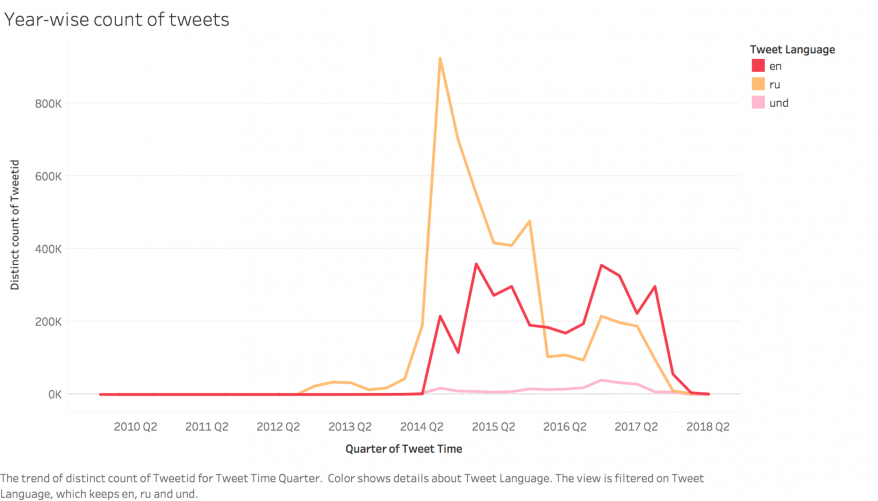
The Atlantic Council’s Analysis of Troll Tweet Language © Atlantic Council 2018
There is much elsewhere to support the notion these accounts’ activities amounted to opportunistic ‘clickbait’ efforts — their tweeting seemingly spiked during and after major events, with trending hashtags bookending often unrelated posts, or politically charged messages accompanied by a shortened link to a third-party website. By piggybacking off anti-Islam or Euroskeptic hashtags, account owners presumably sought to drive traffic elsewhere.

An example of some of the media shared by an alleged Russian troll account
Irreducible Complacency
This lack of apparent overriding objective is palpably divorced from initial claims of a concerted effort to achieve specific results — such as the election of Donald Trump — but the mainstream media seemingly remains undeterred, as the flurry of alarmist articles that have circulated in the wake of the data dump surely attests. Look past the headlines, however, and accompanying articles are scant on information and discussion, leaving readers in search of said proof wanting. For this glaring deficit, major news outlets can perhaps be forgiven — the data amounts to several hundred gigabytes, and it will surely take a vast army of journalists considerable time to wade through and analyze the full cache.
Nonetheless, the Atlantic Council’s Digital Forensic Lab was given a headstart, with Twitter providing the organization’s data scientists an advance look at the trove “in an effort to promote shared understanding of the vulnerabilities exploited by various types on online influence operations, as well as social media’s role in democracy”.
Many articles cite the Council’s analysis, authored by Ben Nimmo, in justification of their paranoid headlines — but while the Lab’s superficial updated conclusion is that troll accounts were intended to divide online communities and exploit polarization and division in society proper, a review of the organization’s detective work suggests journalists haven’t taken the time to actually read that article either. After all, the piece concludes the “troll operations do not appear to have had significant influence on public debate”, “there is no evidence to suggest they triggered large-scale changes in political behavior”, and the accounts’ activities “had little to no discernible impact on the target populations’ political behavior”.
Nimmo concludes the article by despairing of the difficulty of identifying future foreign influence operations, given trolls “use exactly the techniques which drive genuine online activism and engagement”, making it “much harder to separate them out from genuine users”. Nonetheless, Twitter avowedly remains committed to “proactively combat[ing] nefarious attempts to undermine” its integrity, and neutralizing such efforts as “quickly and robustly as technically possible”.
Given Nimmo himself concedes the activities of alleged troll accounts had “little or no impact” whatsoever, with their ‘operations’ “washed away in the firehose of Twitter”, it’s highly questionable if it’s worth undertaking any effort at all.
Despite the paltry yield of information so far, Sputnik journalists will continue analyzing the released data, and report in weeks to come on their findings — if indeed findings are actually forthcoming.
Twitter Data Release Aimed to Discredit Trump Ahead of Midterms – Commentator
Sputnik – October 19, 2018
Twitter has shared an archive of material that could be linked to alleged information campaigns by Russia and Iran. This comes after Twitter CEO Jack Dorsey testified before Congress about foreign interference in US elections. Sputnik has discussed the issue with UK-based political commentator and activist Alan Bailey.
Sputnik: What’s your take on the timing of Twitter’s release of data dating back years? Why now?
Alan Bailey: This is all related to the upcoming US mid-term elections, and further back to the campaign to discredit current US President Trump. There has been a long-running process of undermining Trump’s validity by blaming his victory on external actors. Mainly Russia. According to the US authorities, social media was the main weapon of choice in swinging the public opinion towards Trump and we are now seeing a process of neutering social media so that any dissenting voices outside the mainstream will struggle to be heard.
In its blog post Twitter mentioned some 3,800 accounts it says were affiliated with Russia and some 770 accounts associated with Iran, so over 4,500 accounts overall. How big of a role could these 4,500 accounts have played in the so-called disinformation campaign?
The thing to remember about Twitter is that the vast majority of people only see posts from members they subscribe to. In other words, anyone reading these posts has subscribed to these members’ posts or to someone re-tweeting the posts. It’s not TV. You don’t sit there and watch anything Twitter broadcasts. If the tweets from these members had any effect, then it was because those reading them had sympathy with the content of the tweets anyway.Sputnik: The company also revealed that these accounts have sent over 10 million tweets over the years. Meanwhile, according to Google, some 500 million tweets are sent on Twitter every day. Again, how big of a role could this have played in shaping public opinion?
Alan Bailey: Same as above really. If people were influenced by these tweets, then it is because the mainstream media is not supplying the quality of info they require and this is being fulfilled by the “Russian tweets.” What on earth is wrong with reading a Russian point of view on social media? Nothing. It’s up to the Mainstream to disprove the content and at this, they fail regularly.
Sputnik: In your view, how much of a role do Twitter’s and Facebook’s identification policies play when it comes to setting up new accounts with these networks?
Alan Bailey: Twitter made it official policy that impersonation of another person is a violation of their terms of use and can delete an account upon finding out that this has occurred. Yet many parody accounts exist, mocking celebrities and the like. So this policy, in particular, has been leveraged as a means of deleting accounts producing content that is not in line with US policy and/or representing movements seen in a bad light by the US authorities.
Sputnik: What measures should Twitter take to improve its performance as a safe and unbiased platform, in your opinion?
Alan Bailey: Twitter needs to resist outside pressure to censor its content. Beyond ensuring that only people of a certain age are allowed to sign up for the network, it’s my view that everything else should be open and uncensored. It’s very easy to block or mute a user who is annoying to a user.
Where’s Sergei?
By Rob Slane | The Blog Mire | October 18, 2018
According to an article in The Mail, the mother of Sergei Skripal, Yelena, has not heard from her son since the incident on 4th March, and the last time she heard from her granddaughter, Yulia, was on 24th July:
“Recalling her phone conversation with Yulia, Yelena told the Daily Mirror : ‘The last time I actually spoke to Yulia was on the 24th of July on my 90th birthday. She rang – it was unexpected but it was so lovely to hear from her. She called and was actually with Sergei. She told me: “I’m with daddy he is beside me but he can’t speak as he has a pain in his throat”. She said he had been in some pain.’”
This is interesting for a number of reasons.
Firstly, we know that during the conversation on 24th July, according to a number of reports (for example here), Yulia told her grandmother that the reason Sergei was unable to speak was because his voice was still weak due to a tracheostomy:
“Babushka, happy birthday, everything is fine, everything is perfect. I am in London with papa. He can’t speak because he’s got a tracheostomy, that pipe, which will be taken off in three days. Now when he speaks with that pipe, his voice is first of all very weak and secondly, he makes quite a lot of wheeze. So babushka with your poor hearing you would really struggle to understand him. He’ll call after the tracheostomy is off.”
This was almost 3 months ago. So the tracheostomy was preventing Sergei from speaking; but it was coming off in three days; yet nearly 3 months later and still no call from Sergei? Is that not very odd? Indeed, especially given that Yelena states in the interview that she and Sergei used to speak every week.
Secondly, the call on 24th July is itself very odd. Notice that Yulia uses the phrases “everything is fine, everything is perfect.” These are basically the same sorts of phrases that she repeated over and over in her call with her cousin Viktoria on 5th April:
“Everything is ok, everything is fine.”
“Everything is fine, but we’ll see how it goes, we’ll decide later. You know what the situation is here. Everything is fine, everything is solvable, everyone is recovering and is alive.”
“Everything is ok. He is resting now, having a nap. Everyone’s health is fine, there are no irreparable things. I will be discharged soon. Everything is ok.”
She seems very keen – some would say overly keen – to emphasise that everything is fine and okay and perfect etc. To me it sounds unnatural and forced. What do you think?
But more than this, imagine yourself in the same situation. Your father is next to you. He can speak, but not very well, and so can’t communicate through the phone to his mother. What would you do? Well, I know what I would do. I would relay speech from the one to the other. “He says he’s getting better and misses you very much grandma.” “She says she loves you, dad.” Isn’t that what normal people would do in such circumstances?
But instead, Yulia speaks in a way that doesn’t fill me with too much certainty that he was actually in the room with her. It’s all very medical and somewhat officious. And even if his voice was a bit wheezy and hard to understand, his ears were okay, weren’t they? Couldn’t Yulia have held the phone to her dad’s ear so he could hear his mother speak to him? Again, that would be what a normal person would do in such circumstances, wouldn’t it? But of course they don’t do normal in SkripalWorld.
Thirdly, we have to reckon with the fact that since that call, in which Yulia indicated that Sergei would call in as little as three days, there has been no communication at all. Not with grandma. Not with Viktoria. Not with anyone (apparently even Mark Urban got the cold shoulder).
Actually, that’s not quite the case. We don’t really have to reckon with this because the heroic journalism of The Mail gives us the answer. In the same piece that it mentioned a call between Yulia and her grandma, in which Sergei was apparently sat right next to Yulia, we get this:
“Since that solitary phone conversation, she [Yelena] has not heard from her the two targeted relatives as any contact could lead Russian forces to the pair.”
Remarkable, isn’t it? So according to The Mail, the reason that Sergei Skripal cannot call his mother, is because Russian forces might be able to trace his whereabouts and order a hit on him. Another one, apparently. And yet in the very same piece they report on Yulia Skripal calling her grandmother on 24th July, with Sergei Skripal at her side. See? It’s obvious, isn’t it?
Not for the first time in this case, I’m left scratching my head and wondering whether the journalists who write this sort of thing believe their readers to be so dim that they won’t notice statements in the same article that utterly refute one another, or whether the journalists themselves are so witless that they simply don’t realise that they are contradicting themselves in the space of a few sentences. Any thoughts?
The fact is that Yulia has phoned her cousin Viktoria a number of times since the beginning of April, and in most, if not all of those calls, her father was said to be close by. She even did a little film for Reuters in May, with her father apparently in the same compound. Why were these allowed, since according to The Mail, it could have led Russian forces to the pair? Or are we to believe that Russian forces have only just developed the capability to trace phone calls since 24th July? Worse still, have British Security Services forgotten how to prevent phone calls being traced by other intelligence agencies since 24th July, not to mention also losing the ability to stop Russian forces from coming and getting them?
Or is it more likely that The Mail cannot be bothered to ask the obvious questions that stem from their own report. Such as:
1. Why is the apparent victim in this case, Sergei Skripal, who is under the protection of British (and possibly US) intelligence services, unable to phone his mother, whom he used to speak to on a weekly basis?
2. Does this constitute a violation of his human rights?
3. Given that he has had no contact with his mother since 4th March, how can we be sure that he is alive, and if he is, whether he is not being held against his will?
Treasury official charged with leaking classified info to feed ‘Russia meddling’ narrative
RT | October 18, 2018
 A US Treasury official was arrested and charged with conspiracy for leaking secret banking documents to the press, feeding a everlasting stream of often bogus ‘bombshell’ reports about Mueller’s notorious ‘Russian meddling’ probe.
Natalie Mayflower Sours Edwards, 40, was named in the criminal complaint filed in the federal court in New York on Wednesday. Edwards was a senior advisor at the Treasury’s Financial Crimes Enforcement Network, also known as FinCEN. In that capacity, the government says, she illegally copied and sent to the media Suspicious Activity Reports (SAR), starting in October 2017.
The complaint described a “pattern of unauthorized disclosures” concerning the investigations by Special Counsel Robert Mueller and the Department of Justice related to Russia, including “among other things, Paul Manafort, Richard Gates, the Russian Embassy, Mariia [sic] Butina, and Prevezon Alexander.” Manafort and Gates were indicted by Mueller as part of the “Russian meddling” probe – on charges that had nothing to do with Russia or the 2016 US election – and Butina was accused of being a Russian agent. Prevezon Alexander is a Russian-owned real-estate company.
At the time of her arrest, Edwards had a flash drive that contained some 24,000 files, including “thousands” of SARs. Other documents found on the drive contained “highly sensitive material relating to Russia, Iran” and Islamic State (IS, formerly ISIS/ISIL), the complaint said.
The FBI also searched her cell phone, and found “numerous communications over an encrypted application in which she transmitted SARs and other sensitive government information” to the reporter. They reportedly exchanged at least 300 messages.
Though the complaint does not name the reporters or the organization Edwards leaked to, it does mention several of the dozen articles in which her information was used, which carry the bylines of Jason Leopold and Anthony Cormier of BuzzFeed News.
One of these articles, titled “Secret Finding: 60 Russian Payments ‘To Finance Election Campaign of 2016’,” was presented as bombshell proof of Russian “meddling” in US elections, until it emerged that the transactions were about the Russian parliamentary election that year.
SARs are confidential documents filed by banks and financial institutions to alert law enforcement of potentially illegal transactions. They are not public documents and it is a federal crime to disclose them.
To the disappointment of those who expected the Mueller probe to overturn the 2016 US presidential election, former Trump campaign manager Manafort and his business partner Gates were charged for the entirely unrelated crime of tax evasion, related to their lobbying work for the government of Ukraine. Gates took a plea deal in February 2018, while Manafort was found guilty on several charges in August. He later made a plea deal to lesser charges in a second case, also unrelated to the 2016 election.
Butina, a Russian gun rights activist and recent American University graduate, was arrested in July and charged with failing to register as a foreign agent. The Russian government says she is a political prisoner. Media reports falsely insinuated that prosecutors had accused Butina of trading sex for favors, eventually admitting they were “mistaken” in interpreting her text messages.
Edwards was released on a $100,000 bond. If convicted, she faces up to 10 years in prison. It is unclear what impact, if any, her indictment will have on the charges against Butina, Manafort or Gates.
US to Impose Sanctions on Russia ‘Every Month or Two’ – Volker
Sputnik – 18.10.2018
Russia has faced several rounds of sanctions from the United States and the European Union over its alleged meddling in the 2016 US presidential elections, and alleged involvement in the poisoning of former Russian spy Sergei Skripal and his daughter Yulia in the UK city of Salisbury in early March.
US Special Representative for Ukraine Kurt Volker has stated that the Trump administration will impose sanctions on Russia “every month or two.”
“The second thing we’ve done is we’ve tried to increase the pressure we are putting on Russia in order to get them to negotiate toward a solution. That includes keeping sanctions in place in the United States and increasing those sanctions periodically over time, and that’s the track that we have been on during the course of the Trump administration, and we’ll continue to be on,” Volker said. “You’ll see additional sanctions come into play every month or two months or so as we’ve seen.”
Volker noted that the United States is “working very closely with European allies” on the issue of anti-Russian sanctions.
In August, a group of US senators introduced a bill envisaging the imposition of new sanctions against Moscow, including those targeting the country’s oil industry and transactions with Russian sovereign debt.
In recent years, Russia has repeatedly been accused of carrying out cyberattacks against other countries, including the United States, France, the United Kingdom and Germany, and attempting, in particular, to influence the results of elections.
Moscow has repeatedly denied all the accusations also emphasizing its desire to see convincing evidence of Russian nationals’ involvement in the incidents.
Ukraine Military Sales
US officials will meet with their Ukrainian counterparts to discuss potential foreign military sales since Washington has already approved a new package of security assistance for Ukraine, US Special Representative for Ukraine Negotiations Kurt Volker announced.
“We have, working through the Congress, a new package of foreign military financing, and we’ll be sitting down with Ukrainians to talk possibly about foreign military sales and what would make sense for them,” Volker said.
In September, President Donald Trump and the Congress boosted US military aid to Ukraine, allocating $250 million in security assistance to the country under the 2019 Department of Defense Appropriations Act.
The People ‘Stopping Election Interference’ Are the Ones Who Are Actually Rigging the Election
By Daisy Luther | Organic Prepper | October 15, 2018
Last week, Mark Zuckerberg made the media rounds to give a rather shady explanation of why Facebook suddenly closed hundreds of incredibly popular pages in what’s being called The Alternative Media Purge. Zuckerberg accused the closed pages, many of which had millions of fans, of spreading “political spam.”
Ironically, many of the pages that were shut down had absolutely nothing to do with politics or elections, unless you include the fact that they recommended skipping the entire circus. None of these pages were accused of being “the Russians,” who were the scapegoat of the last surprise presidential election results. A couple of the things that many of the pages did have in common, incidentally, were an anti-war outlook and a police watchdog mentality.
But as far as making the election more resistant to interference, the result of the Alternative Media Purge is the diametric opposite. People will now only get one side of the story.
The alternative media changed everything during the last presidential election.
When Donald Trump announced his candidacy for president, much of the world snickered. Who was this reality television star to take on part of the Clinton Empire? There was no way, people scoffed, that Trump could possibly win.
It’s a proven fact that Hillary Clinton was in cahoots with the mainstream media throughout her candidacy. And the reason it’s proven is that organizations like Wikileaks released the evidence of it in a series of emails with her campaign manager and people like Donna Brazile of CNN. Brazile finally publicly admitted that she’d done so and that it was her “job to make all our Democratic candidates look good.”
The alternative media jumped on this story, as well as many other questionable emails that were divulged by Wikileaks, while the mainstream pretended that none of this was happening. And the mainstream did very little to cover the Democratic National Convention, during which the nomination was stolen from Bernie Sanders, who – if we’re being honest – probably would have had a much better chance of beating Trump than the notoriously unlikable Clinton. Here’s my coverage of it at the time.
The alternative media, never a fan of the goings-on in Clintonland, from the Haiti scandal all the way back to the “suicide” of Vince Foster in Arkansas, jumped on these stories as well as stories about her debatable health.
The fact that we had a robust alternative media at the time meant that these stories were heard. At the same time, the mainstream media was busy painting Donald Trump as a neo-Nazi fascist who hated minorities and would nuke somebody the day he got into office.
Now, imagine there had been no alternative media during that election.
If we hadn’t have had an alternative media telling other stories – enough stories that people were able to get a fuller picture of who both of these candidates really were – things might have turned out entirely differently. And while that would be all right with any number of people who loathe Donald Trump, would it have been a “fair” election?
Let’s look back even further at the candidacy of Congressman Ron Paul back in 2012. Dr. Paul was an incredible candidate with a glowing political resume, but he didn’t get the time of day. There was a media blackout on his candidacy and finally, he was forced to withdraw from the race. Many of us were budding alternative journalists at that time learned a valuable lesson during that election – what we were doing was important. There needed to be an option instead of letting the mainstream media present the only options and information to people.
By the time the 2016 election rolled around, those disappointed in how Dr. Paul was treated were determined that it would not happen again. That a candidate with a background full of sordid scandals would not get through an election cycle unscathed, painted as a glowing Madonna who would save us all.
So… during the fierce battle between Clinton and Trump, both sides of the story were told and told loudly.
Alternative journalists engaged the power of social media to connect with people who wanted to know more and they did it to such a degree that everything changed. Clinton, originally the front-runner, was suddenly in the fight of her life against a candidate that most people had considered a joke.
And that’s when everyone started blaming the Russians.
In a shocking article, the Washington Post printed a long list of websites that they claimed were run by “the Russians.” Many of these sites were run by folks I know personally who are decidedly not Russians, but simply bloggers who wanted to share the truth as they identified it. (This article was removed from WaPo – I’m guessing due to threats about legal action by many of the site owners accused of working for Russia.)
Although investigation after investigation has been undertaken, there’s still no proof that Russia tampered with the election, nor that they colluded with Donald Trump.
Years later, the Washington Post sticks to their story with headlines like “Without the Russians, Trump Wouldn’t Have Won.” In the piece, they admitted that there isn’t any official proof and they cited Buzzfeed.
While the intelligence agencies are silent on the impact of Russia’s attack, outside experts who have examined the Kremlin campaign — which included stealing and sharing Democratic Party emails, spreading propaganda online and hacking state voter rolls — have concluded that it did affect an extremely close election decided by fewer than 80,000 votes in three states. Clint Watts, a former FBI agent, writes in his recent book, “Messing with the Enemy,” that “Russia absolutely influenced the U.S. presidential election,” especially in Michigan and Wisconsin, where Trump’s winning margin was less than 1 percent in each state.
We still don’t know the full extent of the Russian interference, but we know its propaganda reached 126 million people via Facebook alone. A BuzzFeed analysis found that fake news stories on Facebook generated more social engagement in the last three months of the campaign than did legitimate articles: The “20 top-performing false election stories from hoax sites and hyperpartisan blogs generated 8,711,000 shares, reactions, and comments on Facebook.” Almost all of this “fake news” was either started or spread by Russian bots, including claims that the pope had endorsed Trump and that Hillary Clinton had sold weapons to the Islamic State. (source)
Buzzfeed ? Isn’t that where you go to take a quiz to find out what kind of potato you are?
That leads us to Facebook’s potential election interference
Last week, as I mentioned, hundreds of Facebook pages were shut down without warning. Many of these sites also lost their Twitter accounts on the same day. This is reminiscent of last month’s attack on Alex Jones.
Anyone who disagrees with the establishment is being abruptly silenced.
Zuckerberg and friends are saying that this is so that we can be sure we don’t have election interference in the midterms… but what they’re really doing is interfering in the elections themselves.
They’ve gloated about everything from “featuring Facebook pages that spread disinformation less prominently so that fewer people potentially see them” to [purging] “559 politically oriented pages and 251 accounts, all of American origin, for consistently breaking its rules against “spam and coordinated inauthentic behavior.”
The pages which have been removed or shadowbanned have run the gamut of political philosophies, but the fact is, people like Mark Zuckerberg, the folks at Google, and Jack Dorsey of Twitter are deciding which information gets to be seen. They’re deciding whether something is “disinformation” or truth. They’re deciding if people who have spent years building a following get to still reach the people who opted to follow them.
Because Facebook reaches more than 2 billion people each day, this is a problem of epic proportions.
I believe that it is Facebook itself that is tampering with the election by manipulating what they want people to see. If the alternative media changed everything in the 2016 election due to the availability of more information, Facebook will change future elections due to their manipulation of the information users are allowed to see.
If you are conservative or antiwar or anti-overreaching-government or libertarian, you’re now persona non grata. Even if you aren’t in the minority, you’ll be made to feel like you are in the giant echo chamber of “approved media.” If you support a different candidate than Big Tech, prepare to be marginalized, silenced, and ignored. That holds true whether you opt for anyone other than their “choice.” They WILL control the outcome of the presidential election the next time around.
If you really want to see what election interference looks like, you’re getting a live demonstration right now.
Congress Members Urge Trump to Meddle in Hungary’s Elections
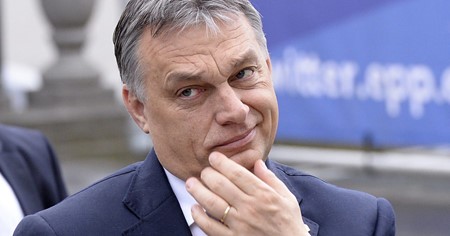
By Daniel McAdams | Ron Paul Institute | October 12, 2018
There’s no hypocrisy like Capitol Hill hypocrisy. Congressional Democrats have been beating the dead horse of “Russian meddling” for nearly two years, obsessed with claims that “Russia hacked our democracy” and that a few Facebook posts from “Russia-linked” accounts are actually a massive Putin-led effort to make Americans lose faith in their democracy.
To date no evidence points to any significant or effective Russian government effort to alter the outcome of US elections in any way. With each passing day we learn more about how the “Russia hacked us” story is just a bunch of hot air. In fact just yesterday, award-winning investigative reporter Gareth Porter published an extensive report demolishing a recent 10,000 word New York Times piece on the “influence” of Russian social media over US elections.
One of the loudest voices screaming “Russia is meddling in our democracy!” has been Rep. Marcy Kaptur (D-OH). Last year she signed a letter to the Speaker of the House demanding that Homeland Security and the FBI brief Congress on “the Russian attack on 21 states’ voting systems” (a charge since disproven). The letter complained that “when a sovereign nation attempts to meddle in our elections, it is an attack on our country.”
To be fair, it is hard to disagree with Rep. Kaptur and her colleagues on that final point. No one wants a foreign country meddling in their elections, hacking their ballot machines, funding opposition parties, manipulating the media in favor of one side, etc.
But here’s the rub: Rep. Kaptur has just sent a letter to the State Department demanding that the United States government commit all of the above violations against NATO partner country Hungary!
Yes, Kaptur is furious over unproven claims that the Russians fiddled in our democracy while at the same time demanding that the US fiddles in Hungary’s democracy.
This week Rep. Kaptur (and 22 Democrat colleagues) sent a letter to President Trump’s Assistant Secretary of State for Europe, Wess Mitchell, demanding the reinstatement of a cancelled State Department program to send $700,000 to finance anti-government stories in Hungary’s media in advance of the upcoming 2019 local elections in that country.
“Supporting an independent media in Hungary should be a priority” for the United States, the Congressional letter says.
Do Kaptur and her Capitol Hill colleagues not understand the basic fact that when a foreign government funds a sector of another country’s media, that media can no longer be considered “independent”?
How is it not meddling in Hungary’s democracy for the United States government to finance stories attacking the democratically-elected Hungarian government?
In Lewis Carroll’s classic “Through The Looking Glass,” Humpty Dumpty scowled at Alice for demanding that his words mean something. Dumpty said:
When I use a word… it means just what I choose it to mean — neither more nor less.
This is the world of Rep. Marcy Kaptur and all of Washington’s interventionists. They have been stricken with hysterical paranoia for two years over unproven claims that Putin was pulling our strings when we went to the ballot box, yet at every turn they demand that the United States government do that exact thing: manipulate the ballot boxes of other sovereign states.
As Lou Reed (among others) put it, “you’re going to reap just what you sow.”
Britain on the Leash with the United States – but at Which End?
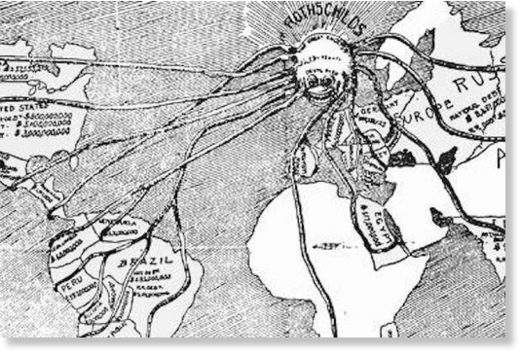
By James George JATRAS | Strategic Culture Foundation | 13.10.2018
The “special relationship” between the United States and the United Kingdom is often assumed to be one where the once-great, sophisticated Brits are subordinate to the upstart, uncouth Yanks.
Iconic of this assumption is the mocking of former prime minister Tony Blair as George W. Bush’s “poodle” for his riding shotgun on the ill-advised American stagecoach blundering into Iraq in 2003. Blair was in good practice, having served as Bill Clinton’s dogsbody in the no less criminal NATO aggression against Serbia over Kosovo in 1999.
On the surface, the UK may seem just one more vassal state on par with Germany, Japan, South Korea, and so many other useless so-called allies. We control their intelligence services, their military commands, their think tanks, and much of their media. We can sink their financial systems and economies at will. Emblematic is German Chancellor Angela Merkel’s impotent ire at discovering the Obama administration had listened in on her cell phone, about which she – did precisely nothing. Global hegemony means never having to say you’re sorry.
These countries know on which end of the leash they are: the one attached to the collar around their necks. The hand unmistakably is in Washington. These semi-sovereign countries answer to the US with the same servility as member states of the Warsaw Pact once heeded the USSR’s Politburo. (Sometimes more. Communist Romania, though then a member of the Warsaw Pact refused to participate in the 1968 invasion of Czechoslovakia or even allow Soviet or other Pact forces to cross its territory. By contrast, during NATO’s 1999 assault on Serbia, Bucharest allowed NATO military aircraft access to its airspace, even though not yet a member of that alliance and despite most Romanians’ opposition to the campaign.)
But the widespread perception of Britain as just another satellite may be misleading.
To start with, there are some relationships where it seems the US is the vassal dancing to the tune of the foreign capital, not the other way around. Israel is the unchallenged champion in this weight class, with Saudi Arabia a runner up. The alliance between Prime Minister Bibi Netanyahu and Saudi Crown Prince Mohammad bin Salman (MbS) – the ultimate Washington “power couple” – to get the Trump administration to destroy Iran for them has American politicos listening for instructions with all the rapt attention of the terrier Nipper on the RCA Victor logo. (Or did, until the recent disappearance of Saudi journalist Jamal Khashoggi. Whether this portends a real shift in American attitudes toward Riyadh remains questionable. Saudi cash still speaks loudly and will continue to do so whether or not MbS stays in charge.)
Specifics of the peculiar US-UK relationship stem from the period of flux at the end of World War II. The United States emerged from the war in a commanding position economically and financially, eclipsing Britannia’s declining empire that simply no longer had the resources to play the leading role. That didn’t mean, however, that London trusted the Americans’ ability to manage things without their astute guidance. As Tony Judt describes in Postwar, the British attitude of “superiority towards the country that had displaced them at the imperial apex” was “nicely captured” in a scribble during negotiations regarding the UK’s postwar loan:
In Washington Lord HalifaxOnce whispered to Lord Keynes:“It’s true they have the moneybagsBut we have all the brains.”
Even in its diminished condition London found it could punch well above its weight by exerting its influence on its stronger but (it was confident) dumber cousins across the Pond. It helped that as the Cold War unfolded following former Prime Minister Winston Churchill’s 1946 Iron Curtain speech there were very close ties between sister agencies like MI6 (founded 1909) and the newer wartime OSS (1942), then the CIA (1947); likewise the Government Communications Headquarters (GCHQ, 1919) and the National Security Administration (NSA, 1952). Comparable sister agencies – perhaps more properly termed daughters of their UK mothers – were set up in Canada, Australia, and New Zealand. This became the so-called “Five Eyes” of the tight Anglosphere spook community,infamous for spying on each others’ citizens to avoid pesky legal prohibitions on domestic surveillance.
Despite not having two farthings to rub together, impoverished Britain – where wartime rationing wasn’t fully ended until 1954 – had a prime seat at the table fashioning the world’s postwar financial structure. The 1944 Bretton Woods conference was largely an Anglo-American affair, of which the aforementioned Lord John Maynard Keynes was a prominent architect along with Harry Dexter White, Special Assistant to the US Secretary of the Treasury and Soviet agent.
American and British agendas also dovetailed in the Middle East. While the US didn’t have much of a presence in the region before the 1945 meeting between US President Franklin Delano Roosevelt and Saudi King ibn Saud, founder of the third and current (and hopefully last) Saudi state – and didn’t assume a dominant role until the humiliation inflicted on Britain, France, and Israel by President Dwight Eisenhower during the 1956 Suez Crisis – London has long considered much of the region within its sphere of influence. After World War I under the Sykes-Picot agreement with France, the UK had expanded her holdings on the ruins of the Ottoman Empire, including taking a decisive role in consolidating Saudi Arabia under ibn Saud. While in the 1950s the US largely stepped into Britain’s role managing the “East of Suez,” the former suzerain was by no means dealt out. The UK was a founding member with the US of the now-defunct Central Treaty Organization (CENTO) in 1955.
CENTO – like NATO and their one-time eastern counterpart, the Southeast Asia Treaty Organization (SEATO) – was designed as a counter to the USSR. But in the case of Britain, the history of hostility to Russia under tsar or commissar alike has much deeper and longer roots, going back at least to the Crimean War in the 1850s. The reasons for the longstanding British vendetta against Russia are not entirely clear and seem to have disparate roots: the desire to ensure that no one power is dominant on the European mainland (directed first against France, then Russia, then Germany, then the USSR and again Russia); maintaining supremacy on the seas by denying Russia warm-waters ports, above all the Dardanelles; and making sure territories of a dissolving Ottoman empire would be taken under the wing of London, not Saint Petersburg. As described by Andrew Lambert, professor of naval history at King’s College London, the Crimean War still echoes today:
“In the 1840s, 1850s, Britain and America are not the chief rivals; it’s Britain and Russia. Britain and Russia are rivals for world power, and Turkey, the Ottoman Empire, which is much larger than modern Turkey — it includes modern Romania, Bulgaria, parts of Serbia, and also Egypt and Arabia — is a declining empire. But it’s the bulwark between Russia, which is advancing south and west, and Britain, which is advancing east and is looking to open its connections up through the Mediterranean into its empire in India and the Pacific. And it’s really about who is running Turkey. Is it going to be a Russian satellite, a bit like the Eastern Bloc was in the Cold War, or is it going to be a British satellite, really run by British capital, a market for British goods? And the Crimean War is going to be the fulcrum for this cold war to actually go hot for a couple of years, and Sevastopol is going to be the fulcrum for that fighting.”
Control of the Middle East – and opposing the Russians – became a British obsession, first to sustain the lifeline to India, the Jewel in the Crown of the empire, then for control of petroleum, the life’s blood of modern economies. In the context of the 19th and early 20th century Great Game of empire, that was understandable. Much later, similar considerations might even support Jimmy Carter’s taking up much the same position, declaring in 1980 that “outside force to gain control of the Persian Gulf region will be regarded as an assault on the vital interests of the United States of America, and such an assault will be repelled by any means necessary, including military force.” The USSR was then a superpower and we were dependent on energy from the Gulf region.
But what’s our reason for maintaining that posture almost four decades later when the Soviet Union is gone and the US doesn’t need Middle Eastern oil? There are no reasonable national interests, only corporate interests and those of the Arab monarchies we laughably claim as allies. Add to that the bureaucracies and habits of mind that link the US and UK establishments, including their intelligence and financial components.
In view of all the foregoing, what then would policymakers in the United Kingdom think about an aspirant to the American presidency who not only disparages the value of existing alliances – without which Britain is a bit player – but openly pledges to improve relations with Moscow? To what lengths would they go to stop him?
Say ‘hello’ to Russiagate!
One can argue whether or not the phony claim of the Trump campaign’s “collusion” with Moscow was hatched in London or whether the British just lent some “hands across the water” to an effort concocted by the Democratic National Committee, the Hillary Clinton presidential campaign, the Clinton Foundation, and their collaborators at Fusion GPS and inside the Obama administration. Either way, it’s clear that while evidence of Russian connection is nonexistent that of British agencies is unmistakable, as is the UK’s hand in a sustained campaign of demonization and isolation to sink any possible rapprochement between the US and Russia.
As for Russiagate itself, just try to find anyone involved who’s actually Russian. The only basis for the widespread assumption that any material in the Dirty Dossier that underlies the whole operationoriginated with Russia is the claim of Christopher Steele, the British “ex” spy who wrote it, evidently in collaboration with people at the US State Department and Fusion GPS. (The notion that Steele, who hadn’t been in Russia for years, would have Kremlin personal contacts is absurd. How chummy are the heads of the American section of Chinese or Russian intelligence with White House staff?)
While there are no obvious Russians in Russiagate there’s no shortage of Brits. These include (details at the link):
- Stefan Halper, a dual US-UK citizen.
- Ex-MI6 Director Richard Dearlove.
- Robert Hannigan, former director of GCHQ; there is reason to think surveillance of Trump was conducted by GCHQ as well as by US agencies under FISA warrants. Hannigan abruptly resigned from GCHQ soon after the British government denied the agency had engaged in such spying.
- Alexander Downer, Australian diplomat (well, not British but remember the Five Eyes!).
- Joseph Mifsud, Maltese academic and suspected British agent.
At present, the full role played by those listed above is not known. Release of unredacted FISA warrant requests by the Justice Department, which President Trump ordered weeks ago, would shed light on a number of details. Implementation of that order was derailed after a request by – no surprise – British Prime Minister Theresa May. Was she seeking to conceal Russian perfidy, or her own underlings’?
It would be bad enough if Russiagate were the sum of British meddling in American affairs with the aim of torpedoing relations with Moscow. (And to be fair, it wasn’t just the UK and Australia. Also implicated are Estonia, Israel, and Ukraine.) But there is also reason to suspect the same motive in false accusations against Russia with respect to the supposed Novichok poisonings in England has a connection to Russiagate via a business associate of Steele’s, one Pablo Miller, Sergei Skripal’s MI6 recruiter. (So if it turns out there is any Russian connection to the dossier, it could be from Skripal or another dubious expat source, not from the Russian government.) Skripal and his daughter Yulia have disappeared in British custody. Moscow flatly accuses MI6 of poisoning them as a false flag to blame it on Russia.
A similar pattern can be seen with claims of chemical weapons use in Syria: “We have irrefutable evidence that the special services of a state which is in the forefront of the Russophobic campaign had a hand in the staging” of a faked chemical weapons attack in Douma in April 2018. Ambassador Aleksandr Yakovenko pointed to the so-called White Helmets, which is closely associated with al-Qaeda elements and considered by some their PR arm: “I am naming them because they have done things like this before. They are famous for staging attacks in Syria and they receive UK money.” Moscow warned for weeks before the now-postponed Syrian government offensive in Idlib that the same ruse was being prepared again with direct British intelligence involvement, even having prepared in advance a video showing victims of an attack that had not yet occurred.
The campaign to demonize Russia shifted into high gear recently with the UK, together with the US and the Netherlands, accusing Russian military intelligence of a smorgasbord of cyberattacks against the World Anti Doping Agency (WADA) and other sports organizations, the Organization for the Prohibition of Chemical Weapons (OPCW), the Dutch investigation into the downing of MH-17 over Ukraine, and a Swiss lab involved with the Skripal case, plus assorted election interference. In case anyone didn’t get the point, British Defense Secretary Gavin Williamson declared: “This is not the actions of a great power. This is the actions of a pariah state, and we will continue working with allies to isolate them.”
To the extent that the goal of Williamson and his ilk is to ensure isolation and further threats against Russia, it’s been a smashing success. More sanctions are on the way. The UK is sending additional troops to the Arctic to counter Russian “aggression.” The US threatens to use naval power to block Russian energy exports and to strike Russian weapons disputed under a treaty governing intermediate range nuclear forces. What could possibly go wrong?
In sum, we are seeing a massive, coordinated hybrid campaign of psy-ops and political warfare conducted not by Russia but against Russia, concocted by the UK and its Deep State collaborators in the United States. But it’s not only aimed at Russia, it’s an attack on the United States by the government of a foreign country that’s supposed to be one of our closest allies, a country with which we share many venerable traditions of language, law, and culture.
But for far too long, largely for reasons of historical inertia and elite corruption, we’ve allowed that government to exercise undue influence on our global policies in a manner not conducive to our own national interests. Now that government, employing every foul deception that earned it the moniker Perfidious Albion, seeks to embroil us in a quarrel with the only country on the planet that can destroy us if things get out of control.
This must stop. A thorough reappraisal of our “special relationship” with the United Kingdom and exposure of its activities to the detriment of the US is imperative.
Berlin Refuses to Name Sources Claiming GRU’s Cyberattacks in Europe
Sputnik – October 11, 2018
BERLIN – German Interior Minister Horst Seehofer claimed on Thursday that facts likely suggested that the Russian military intelligence service was involved in a series of alleged cyberattacks across Europe, however, the minister did not specify what sources provided such information.
“We believe that facts and analytical information likely point to the fact that the military [intelligence service] GRU is the source [of the attacks]. I ask for your understanding given the fact that we are not going to make public the sources that led us to these facts and conclusions,” Seehofer said.
On October 4, the United Kingdom claimed that the Russian military’s Main Intelligence Directorate was “almost certainly” responsible for a series of cyberattacks targeting political institutions, media outlets, and companies across the world.
On the same day, the Dutch Defense Ministry claimed that Russian intelligence services had diverted a cyberattack against the Organization for the Prohibition of Chemical Weapons (OPCW), whose headquarters are situated in the Dutch city of Hague, allegedly attempted by four Russian citizens holding diplomatic passports.The Russian Foreign Ministry refuted the allegations, saying that the claims were a part of yet another act of propaganda and that “anti-Russia spy mania campaign” negatively affected bilateral relations.
Canada and the United States later joined the allegations against GRU, accusing seven Russian military intelligence officials of targeting with cyberattacks the US electoral system, a US nuclear power company, and anti-doping agencies.
Russian Deputy Foreign Minister Sergei Ryabkov said that Washington “poisoned” the relations between the two countries with those allegations.
Featured Video
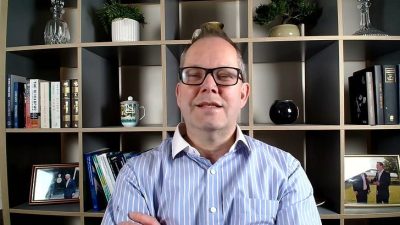
EUROPE FEARS RUSSIA’S NEXT MOVE / Ian Proud
or go to
Aletho News Archives – Video-Images
New Book
New Book: No Autoimmunity The Body Doesn’t Attack Itself
Lies are Unbekoming | September 24, 2026
 The label for Humira, once the best-selling drug in the world, lists its risks in plain print. One of them, in the label’s own words, is new “autoimmune” disease.
A drug prescribed for a condition labelled autoimmune carries a warning that it can cause a condition labelled autoimmune. That contradiction sits in every box, on a folded paper almost nobody reads.
My new book starts there.
No Autoimmunity: The Body Doesn’t Attack Itself
For seventy years, “your body is attacking itself, and we don’t know why” has ended the conversation for people diagnosed with multiple sclerosis, lupus, rheumatoid arthritis, Hashimoto’s, Type 1 diabetes, Crohn’s and psoriasis. More than eighty conditions now carry the autoimmune label. The diagnosis comes with a prescription for life. It almost never comes with a question about cause.
This book asks the question and answers it from the framework’s own records: its drug labels, its journals, its regulatory filings, and its own experiments. … continue
Blog Roll
 Aletho News
- Iran offers Trump deal before US election
- Merz regime wants ‘secret police’ – opposition
- Israeli settlers terrorize West Bank Palestinians with state-provided drones: Report
- They see them, then kill them: Israeli quadcopters track, deliberately target civilians in Gaza
- Debunked: Trump’s egregious UNGA claims on war against Iran crumble under scrutiny
- Europe was part of the infrastructure of US aggression against Iran: Deputy FM
- New evidence on the Bucha Massacre
- Italy and France debunk reports CIA issued ‘Russian drone threat’ warning
- How Russia is Rewiring the Global South
- Britain’s elites want you ready to die for a war they keep imagining
- If Americans Knew
- Trump betrayed voters with his campaign lies and prioritized a foreign country once he took office
- Netanyahu calls Israel’s war in Gaza ‘opposite of genocide’ in UN speech to near-empty hall
- Settler Kidnappings: Torture, Sexual Abuse and Terrorisation of Palestinian Abductees as Israel Deepens Annexation of West Bank
- Gaza winter nears as 162,000 tents become unusable, raising fears of humanitarian crisis
- Netanyahu says, “It’s the opposite of genocide”; UN says Gaza economy is world’s ‘most severe crisis on record’ – Daily Update
- Israel’s US-Backed Assault on Gaza Has Created the ‘World’s Most Severe Economic Crisis on Record’: UN
- ‘Protecting U.S. Citizens’… From Israel
- ‘This is where I live now, the back of a truck’: a day in the life of a grandmother in Gaza
- In UN Speech, Iran’s President Displays Pictures of Children Killed by US, Brings Attention to Israel’s Nuclear Arsenal
- Israel displaces hundreds of Palestinians amid wave of demolitions in West Bank
- No Tricks Zone
- New Study: Earth And Venus Surface Warmth Largely Explained By Convection And Lapse Rate, Not CO2 Or Radiation
- 2025 Nature Paper Claiming Worsening Global Drought Gets RETRACTED …Heavily Flawed
- New Study: ‘Global Drought Shows No Detectable Recent Acceleration Under Climate Warming’
- Economic Masterminds: German Socialists Suggest Taxing Productivity Gains Stemming From Using AI
- The South China Sea Has Not Been Cooperating With The Climate Change Narrative
- Energy Crisis: Germany Enters Heating Season With Historically Low Gas Reserve Fill Levels
- New Study: The Antarctic Ice Sheet Gained Mass From 2020-2024 Due To Staggering Snow And Ice Accumulation
- Study: Ocean Heating Rates From Thousands Of Years Ago ‘Dwarf’ Modern Ocean Heating Rates
- Climate Extremists Target, Attack Large-Scale Power Grid Infrastructure In Germany!
- New Study: Antarctic Ice Melt Has Contributed Less Than 1 Centimeter To Sea Level Rise In The Last 30 Years

