Neocon Think-Tank Ridiculed for Claiming UK Has Up to 75,000 Russian Informants
Sputnik – 05.11.2018
The Henry Jackson Society (HJS) has published a report claiming up to half of Russian expats in the UK could be “informants” for the Kremlin, attracting ridicule.
The neocon think-tank’s report, titled “Putin Sees and Hears It All: How Russia’s Intelligence Agencies Menace The UK,” claims interviewees said “anywhere between a quarter and a half of Russian expats [in Britain] were, or have been, informants” for Russia’s various intelligence services.
In total, just 16 “on-and off-the-record conversations” were held with apparent informed sources and experts by the report’s author, Dr. Andrew Foxall, to arrive at the aforementioned conclusion.
Interviews were apparently conducted with “individuals who currently occupy, or previously occupied, positions of influence and power, particularly those who are consequential to Russian affairs.”
Unsurprisingly, the report has been criticized and mocked, with experts and social media users slamming the Henry Jackson Society for basing its claim on such a small sample size.
A former student of the report’s author even described himself as “very disappointed” for the poor research, while others questioned the thinktank’s “opaque” funding and motive for publishing such an unfounded claim.
Despite skepticism, numerous outlets, including The Daily Mail, financial newspaper City A.M., and The Times, have blindly cited the report to spew more anti-Russian agenda.
Whither Russiagate?
By Philip M. Giraldi | American Herald Tribune | November 5, 2018
Two years have passed since the 2016 presidential election. Allegations that foreign interference had influenced the result, perhaps decisively, began to surface even as the last ballots were being counted. Against all odds underdog Donald J. Trump had been elected president and the Establishment, which denigrated him throughout the campaign, had to find a scapegoat to explain their failure to elect the preferred candidate. The scapegoat turned out to be Russia.
The Robert Mueller led inquiry into the election has been running since May 2017. It has been tasked with determining whether the Trump campaign colluded corruptly with the Russian government to influence the outcome of the election. It has worked hard to delegitimize the president without that being its stated objective and has had a certain measure of success in doing just that.
But apart from a couple of low-level convictions for perjury, Mueller has come up with nothing that convincingly demonstrates that Moscow had some kind of plan to disrupt the elections and thereby damage American democracy. There was, to be sure, some Russian government sponsored probing and what might be described as attempted influencing, but that is what intelligence agencies do to justify their existence. The worst culprit when it comes to election interference worldwide is undoubtedly America’s own Central Intelligence Agency, which has been doing just that since 1947. But apart from some low-level activity, there has been nothing to suggest some kind of grand design orchestrated by Russian President Vladimir Putin to overthrow or cast into confusion the American government.
No one should ever let a good story line go to waste, so the U.S. mainstream media has bought into the proposition that Russia did both interfere in and influence the result of the election based on the assumption that where there is smoke there must be fire with little in the way of evidence being provided. Some media outlets have maintained that the margin of victory for Trump was actually “made in Russia,” meaning that he is ipso facto Moscow’s puppet. It should be noted that this is the same media that embraced Saddam Hussein’s weapons of mass destruction and transatlantic gliders back in 2002 and the Syrian use of chemical weapons more recently, suggesting that the relationship between demonstrated facts and what comes out in the reporting is very tenuous.
To keep the story fresh, both government and the media have now been suggesting that there has already been an attempt by Russia to interfere in the 2018 midterm election which will take place on Tuesday. The New York Times describes an “elaborate campaign of ‘information warfare’ to interfere.” On October 19th, federal prosecutors charged Elena Alekseevna Khusyaynova of St. Petersburg Russia, a woman whom they labeled the project’s “chief accountant.” She allegedly managed a budget to “sow division and discord” in the lead-up to the voting. The Times goes on to describe how “She bought internet domain names and Facebook and Instagram ads and spent money on building out Twitter accounts and paying to promote divisive posts on social media.”
And the list of culprits has also been expanded to include China and Iran, if one goes by PBS’s coverage of the story. One would not be surprised to see North Korea added to the list, as it is convenient to keep all of one’s enemies in one place, all on the march to destroy American democracy and its political institutions before the GOP and Democrats finally get around to doing it.
One might easily regard the never ending Russiagate saga as a bit of an amusement, but there are actually real-life consequences to corrupting the popular sentiment in a large and powerful nuclear armed nation like the United States by constantly discovering new enemies to stimulate the selling of newspapers and television ad time. At a minimum, phony threat accusations create paranoia and also mistrust in the institutions that are supposed to be protecting the country.
And there are also other less tangible consequences, namely that the constant crying wolf over the Russians and Chinese corrupting America’s political system actually does tell the voters that their vote does not matter as outside forces beyond their control will determine the result anyway.
Stephen Cohen, professor of Russian studies at Princeton University, has been arguing for some time that the pursuit of Russiagate and the various delusions that have become attached to it is doing grave damage not only to the bilateral relationship between Moscow and Washington but also to perceptions of the state of the U.S. political system. His latest article in The Nation entitled Who is really undermining American democracy? has as a sub-heading “Allegations that Russia is still ‘attacking’ US elections, now again in November, could delegitimize our democratic institutions.”
Cohen argues plausibly how the “undermine American democracy” meme may itself erode confidence in U.S. political institutions because if the trick of claiming outside interference can to be used successfully once it will be used again even after Trump is gone. If there are claims by losing candidates that Russia or some other foreign power interfered in the midterm this week it will inevitably jump-start a witch hunt to find those congressmen who were “helped.” The legitimacy of congress itself will be in question.
Cohen also argues that “Russiagate has revealed the low esteem that many U.S. political-media elites have for American voters—for their ability to make discerning, rational electoral decisions, which is the bedrock assumption of representative democracy… Presumably this is a factor behind the current proliferation of programs—official, corporate, and private—to introduce elements of censorship in the nation’s ‘media space’ in order to filter out ‘Kremlin propaganda.’ Here, it also seems, elites will decide what constitutes such ‘propaganda.’”
It is the ultimate irony that the most powerful and least threatened country in the world – the United States of America-runs on fear. The obsession with possible foreign interference in U.S. elections reflects the fundamental insecurity of the elites that actually manipulate the system to benefit themselves and their constituencies. If the midterm results do not satisfy the Establishment and the “foreign menace” again is surfaced as causative it will, in truth, be the beginning of the end for American democracy as mistrust of the integrity of the government institutions will continue to be eroded. The alternative? Tell Robert Mueller to put his cards on the table and prove what is being generally accepted as true regarding Russia or fold up his tent and go home because he is no longer need.
Philip M. Giraldi is a former CIA counter-terrorism specialist and military intelligence officer who served nineteen years overseas in Turkey, Italy, Germany, and Spain. He was the CIA Chief of Base for the Barcelona Olympics in 1992 and was one of the first Americans to enter Afghanistan in December 2001. Phil is Executive Director of the Council for the National Interest, a Washington-based advocacy group that seeks to encourage and promote a U.S. foreign policy in the Middle East that is consistent with American values and interests.
Who’s really ‘undermining’ US democracy?
‘We have met the enemy and he is us’
The Nation | November 2, 2018
Allegations that Russia is still “attacking” US elections, now again in November, could delegitimize our democratic institutions.
Summarizing one of the themes in his new book, ‘War with Russia? From Putin and Ukraine To Trump and Russiagate,’ Stephen F. Cohen argues that Russiagate allegations of Kremlin attempts to “undermine American democracy” may themselves erode confidence in those institutions.
Ever since Russiagate allegations began to appear more than two years ago, their core narrative has revolved around purported Kremlin attempts to “interfere” in the 2016 US presidential election on behalf of then-candidate Donald Trump. In recent months, a number of leading American media outlets have taken that argument even further, suggesting that Putin’s Kremlin actually put Trump in the White House and now is similarly trying to affect the November 6 midterm elections, particularly House contests, on behalf of Trump and the Republican Party. According to a page-one New York Times “report,” for example, Putin’s agents “are engaging in an elaborate campaign of ‘information warfare’ to interfere with the American midterm elections.”
Despite well-documented articles by Gareth Porter and Aaron Mate effectively dismantling these allegations about 2016 and 2018, the mainstream media continues to promote them. The occasionally acknowledged lack of “public evidence” is sometimes cited as itself evidence of a deep Russian conspiracy, of the Kremlin’s “arsenal of disruption capabilities… to sow havoc on election day.” (See the examples cited by Alan MacLeod.)
Lost in these reckless allegations is the long-term damage they may themselves do to American democracy. Consider the following possibilities:
Even though still unproven, charges that the Kremlin put Trump in the White House have cast a large shadow of illegitimacy over his presidency and thus over the institution of the presidency itself. This is unlikely to end entirely with Trump. If the Kremlin had the power to affect the outcome of one presidential election, why not another one, whether won by a Republican or a Democrat? The 2016 presidential election was the first time such an allegation became widespread in American political history, but it may not be the last.
Now the same shadow looms over the November 6 elections and thus over the next Congress. If so, in barely two years, the legitimacy of two fundamental institutions of American representative democracy will have been challenged, also for the first time in history.
And if US elections are really so vulnerable to Russian “meddling,” what does this say about faith in American elections more generally? How many losing candidates on November 6 will resist blaming the Kremlin? Two years after the last presidential election, Hillary Clinton and her adamant supporters still have not been able to do so.
We know from critical reporting and from recent opinion surveys that the origins and continuing fixation on the Russiagate scandal since 2016 have been primarily a product of US political-intelligence-media elites. It did not spring from the American people – from voters themselves. Thus a Gallup poll recently showed that 58 percent of those surveyed wanted improved relations with Russia. And other surveys have shown that Russiagate is scarcely an issue at all for likely voters on November 6. Nonetheless, it remains a front-page issue for US elites.
Indeed, Russiagate has revealed the low esteem that many US political-media elites have for American voters – for their ability to make discerning, rational electoral decisions, which is the bedrock assumption of representative democracy. It is worth noting that this disdain for rank-and-file citizens echoes a longstanding attitude of the Russian political intelligentsia, as recently expressed in the argument by a prominent Moscow policy intellectual that Russian authoritarianism springs not from the nation’s elites but from the “genetic code” of its people.
US elites seem to have a similar skepticism about – or contempt for – American voters’ capacity to make discerning electoral choices. Presumably this is a factor behind the current proliferation of programs – official, corporate, and private – to introduce elements of censorship in the nation’s “media space” in order to filter out “Kremlin propaganda.” Here, it also seems, elites will decide what constitutes such “propaganda.”
The Washington Post recently gave such an example: “portraying Russian and Syrian government forces favorably as they battled ‘terrorists’ in what US officials for years have portrayed as a legitimate uprising against the authoritarian government of President Bashar al-Assad.” That is, thinking that the forces of Putin and Assad were fighting terrorists, even if closer to the truth, is “Kremlin propaganda” because it is at variance with “what US officials for years have” been saying. This was the guiding principle of Soviet censorship as well.
If the American electoral process, presidency, legislature, and voter cannot be fully trusted, what is left of American democracy? Admittedly, this is still only a trend, a foreboding, but one with no end in sight. If it portends the “undermining of American democracy,” our elites will blame the Kremlin. But they best recall the discovery of Walt Kelly’s legendary cartoon figure Pogo: “We have met the enemy and he is us.”
Stephen F. Cohen is a professor emeritus of Russian studies and politics at New York University and Princeton University and a contributing editor of The Nation.
The Achilles Heel of the Door Handle Theory
By Rob Slane | The Blog Mire | October 29, 2018
There are few certainties in the Salisbury case, but one thing I am quite confident of is that Sergei and Yulia Skripal were not poisoned with a nerve agent of “high purity” on the door handle of 47 Christie Miller Road. I am also quite confident that Detective Sergeant Nick Bailey was not poisoned in this way either, and furthermore that his actions, and the subsequent actions of investigators, are the Achilles Heel of the whole explanation. I shall come onto that in due course, but first the Skripals.
There are simply too many things which, when added together, make the door handle explanation at the very least incredibly implausible, if not downright impossible:
Firstly, they did not die immediately, or thereabouts, which is what you would expect to have happened had they been contaminated by coming into contact with what was said to be a nerve agent of “high purity”.
Secondly, they were fine for hours afterwards, so much so that they were able to drive to town, feed ducks, go for a meal, and then have a drink.
Thirdly, eye witness accounts of the couple on the bench suggest that they became seriously ill pretty much simultaneously. Certainly, there were no reports of one of the pair calling for help, or contacting the emergency services, which is what you would expect to have happened in the event of one becoming ill before the other.
Fourthly, during the duck feed, which took place just after the Skripals parked their car in Sainsbury’s car park, and prior to their visit to Zizzis, Mr Skripal handed bread to some local boys, one of whom apparently ate a piece. I cannot think of a plausible explanation why this boy did not become ill if, as claimed, Mr Skripal’s hands were contaminated at that time with a “military grade nerve agent”.
Fifthly, either Mr Skripal or his daughter must have touched the parking machine at Sainsbury’s car park, which was then touched by literally hundreds of people over the following days. Yet not one of these people were contaminated.
Sixthly, neither the door handle at Zizzis nor the door handle at The Mill were contaminated, despite the fact that either Mr Skripal or Yulia, or perhaps both, would have handled them when going into those venues.
In other words, in order to accept the door handle explanation, you need to ignore every one of these extremely improbable things. If it were someone on a website suggesting it, rather than The Metropolitan Police, you all know what they would be called and what they would be assumed to be wearing on their heads, don’t you?
Suppose you’d never heard about the case of the Skripals before, and someone told you that it involved two people collapsing simultaneously on a bench after being poisoned by some sort of highly toxic substance. Where would you assume the poisoning had taken place? Given the rapid onset of symptoms, and the fact that both fell ill at the same time, most rational people would assume that it was at the bench, or in the near vicinity shortly before. Not many, if any, would plump for a door handle four hours before, with the feeding of waterfowl and partaking of comestibles and beverages in between.
Yet the curious thing is that the near vicinity explanation — by far the most obvious and reasonable — hardly seems to have got a look in. The theories of the place of poisoning very quickly moved from the poisoning of food in Zizzis or spiking of drinks in The Mill to a timeline of perhaps hours before the collapse, including flowers, buckwheat, the car door handle, and luggage, before finally resting on the door handle of the house. But nothing much about the bench or The Maltings.
Nor were there any concerted appeals for more people to come forward with information about the Skripals’ movements after, say, 15:30. There were appeals regarding their movements between 9:00 and 13:00. There were appeals regarding their movements in the early afternoon from 13:00 to 13:45. But nothing much around the actual time and the actual place that logic and reason would suggest the attack took place.
This is all very odd, to say the least.
But there is something much odder than this, and it is something which — I believe — shows beyond all reasonable doubt that the door handle explanation is false. I refer to the movements of Detective Sergeant Nicholas Bailey, and the response of investigators following his actions.
There is some confusion as to when Mr Bailey was first admitted to Salisbury District Hospital. Some reports seem to suggest that he first went there on Sunday 4th March, and some suggest that it may have been 5th or even 6th March. Still other reports suggest that he may have gone there on the evening of 4th March, been given the all clear, but then driven himself back there on 6th March after feeling unwell. Certainly, the first mention of his hospitalisation in public was made by the then Assistant Commissioner Mark Rowley on 6th March, who stated the following:
“Sadly, in addition, a police officer who was one of the first to attend the scene and respond to the incident is now also in a serious condition in hospital.”
For the purposes of what I want to show, it is enough to say that by 6th March, not only had Mr Bailey been admitted to hospital, but it was also known that he had somehow been poisoned.
As you can see from Mark Rowley’s comment, Mr Bailey was said to have been one of the first responders at the bench, and so it was initially assumed that he must have been contaminated there, perhaps by coming into contact with one of the Skripals. One of the glaring problems with this explanation, however, was that not one other responder at the bench was similarly contaminated. For example, one witness, Jamie Paine, described how Mr Skripal was frothing at the mouth, and that he got a little bit of this on his skin and jacket. Yet he was not contaminated.
Then on 9th March, the solution was forthcoming. Lord Ian Blair, former Chief Constable of the Metropolitan Police, stated in a radio interview that Mr Bailey actually went to Mr Skripal’s house. Here is how The Telegraph reported this:
“Asked if there were any leads in the case, Lord Blair told the Today Programme on Radio 4: ‘There are some indications that the police officer who was injured had been to the house, whereas there was a doctor who looked after the patients in the open, who hasn’t been affected at all. So there maybe some clues floating around in here.’”
The phrase “some indications” is what is known as a weasel phrase. By that time Wiltshire Police and The Metropolitan Police must have known full well that Mr Bailey had been at the house, and there would have been no “some indications” about it.
Let us pause to consider what this means.
According to the narrative presented by The Metropolitan Police, by 9th March at the latest, three things were known for certain:
1. Detective Sergeant Nicholas Bailey had been hospitalised after becoming contaminated with a toxic substance.
2. He had been at the Maltings, close to the bench where it was reported that the Skripals had collapsed.
3. He had also been to Mr Skripal’s house at 47 Christie Miller Road.
This would have led to a logical deduction that the source of Mr Bailey’s poisoning must have been at one of two locations:
1. At the bench in the Maltings (or close proximity)
2. At Mr Skripal’s house.
(Note that I have said “the source of Mr Bailey’s poisoning”. It is possible that he was contaminated away from these locations, by an object he picked up. However, the source of his poisoning would still have to have been at one of these two places).
But as mentioned above, The Met seemed to rule out or ignore the bench and The Maltings as the place of poisoning from quite early on. And so according to their own account, Mr Bailey must have been poisoned at the Skripal house, or by something he took away from there. Indeed, this is what was stated in The Telegraph article in which Lord Blair’s comment appeared:
“The disclosure that Det Sgt Bailey was poisoned at the Skripal family home — rather than at the scene where the pair collapsed — strongly indicates that the nerve agent was administered there.”
So what would you have expected to happen next?
Here’s what I would have expected: 47 Christie Miller Road to be placed on full lockdown, with forensic specialists from Porton Down brought in to examine the house inside out, taking swabs in order to locate the source of poisoning. And so if the door handle was the location of the poisoning, it is not unreasonable to have expected it to be identified as such within 24-48 hours of knowing that Mr Bailey had been there. So by 11th March at the absolute latest.
But this is not at all what happened. What actually happened was as follows:
Firstly, we continued to get a number of speculative theories about the source of the poisoning, from Whitehall and intelligence sources. For example, the theory that the poison was placed in the flowers laid by Mr Skripal at his wife’s grave was mentioned on 10th March and continued to be seen as a possibility for a good while afterwards.
The car door handle was mooted as a possibility on 13th March:
“Whitehall sources last night said Mr Skripal was poisoned when he touched the door handle of his car, which had been smeared with a deadly nerve agent.”
And on 18th March, intelligence sources were saying that the poisoning may have taken place through the air ventilation system in the car.
But hang on a minute. These theories might have made some sense if it was just the Skripals that had been poisoned. But it wasn’t. By 9th March it was known that Mr Bailey had been contaminated too, and his movements were also known. And since there was no suggestion that he ever went to the cemetery, or that he ever went to Mr Skripal’s car, how could these places possibly have been the source of the poisoning? Of course they couldn’t, and given that investigators had apparently ruled out the bench or the near vicinity as the place of his poisoning, Mr Skripal’s house and his house alone by that time should have been the entire focus of the search for the location of the poisoning. And yet it wasn’t.
Secondly, the scene at the house itself continued after 9th March as it had done before that time. It continued to be guarded by unprotected, uniformed officers, just as it had been before Lord Blair’s remark. Why was this, if it had already been established that this was the place where Mr Bailey had been poisoned?
But thirdly, and most crucially, the door handle theory only appeared in public on 24th March, when it was revealed that forensics teams had taken swabs from the front door on 22nd March (the forensics team doing this was the OPCW, and it was the first time that the door handle had been a focus). In other words, it took almost a fortnight after Lord Blair’s revelation of Mr Bailey going to 47 Christie Miller Road for investigators to swab the door and the handle. That is simply incredible.
Interestingly, the article that first mentioned the door as “ground zero” in the investigation stated the following as the reason for this:
“Whitehall staff have seen evidence which shows Russians have researched administering poisons via door handles.”
What we can say, therefore, is as follows: By 9th March at the latest (but probably several days before), it was known that Mr Bailey, who was by then hospitalised after becoming contaminated, had entered 47 Christie Miller Road on 4th March. This means that – again according to The Met – the house must have been ground zero, because it was the only place, other than the bench, where all three people could have come into contact with the source of the poison. However, it wasn’t until 22nd March that the forensics teams came to check the door, and the reason they did so was apparently not because it was obvious that the house needed checking, but because allegedly an FSB manual had been found mentioning door handles.
So why did it take two weeks or more for investigators to swab the door and identify the alleged location of the poisoning, when according to their own narrative, Mr Bailey’s movements clearly pointed to the house as the location? Why was it that throughout that time other locations for the poisoning were put forward, even though Mr Bailey had not been in those places? And why did it take the alleged discovery of a manual, rather than Mr Bailey’s known visit to the house, before anyone got the idea to swab the door and the door handle?
I think there is only one plausible explanation, and it is this: Mr Bailey wasn’t actually poisoned at the door handle of Mr Skripal’s house at all. Had he really been poisoned there, immediately after it came to light that he had gone to 47 Christie Miller Road on 4th March, the house would have been swabbed from top to bottom and the door handle as location of the poisoning would have been identified by 11th March at the latest. Instead, there was a gap of two weeks or more before swabs were taken. Why? Because for some reason, which hasn’t yet been explained, and perhaps never will be, both Mr Bailey’s and the Skripals’ contamination needed to be explained away from The Maltings. And although his going to the house meant that this was a possibility, it took two full weeks, plus the invention of the door handle manual, to settle on a particular location. In other words, someone tried to straighten out what was undoubtedly a very crooked story. But far from straightening it, they only succeeded in bending it even more, out of all recognition.
Some Extremely Sloppy Detective Work Raises Yet More Questions
By Rob Slane | The Blog Mire | October 25, 2018
The more I look at the statement issued by Assistant Commissioner Neil Basu on 5th September, in relation to the Salisbury and Amesbury Investigation, the more I am astonished at the sloppiness on display. Mr Basu took the trouble of informing the public that the investigation has involved around 250 detectives from across the Counter Terrorism Policing Network, “brilliantly led by Counter Terrorism Policing South East, and supported by officers from Wiltshire,” and that they have been meticulously following the evidence for six months. So the statement he read out and the accompanying images ought to be entirely accurate, right?
Except they are not, and in fact they contain numerous extremely careless, and sometimes downright bizarre errors. For example:
Firstly, the two images of the suspects in Fisherton Street are headed with captions describing them as being in a place called Fisherton Road. There is no location called Fisherton Road in Salisbury.
Secondly, we have the images of the two men at Gatwick airport, famously taken at the exact same second, 16:22:43. Yet the captions above tell us that the images are of the men at 15:00hrs. This is mighty odd, not just because the timestamp on the images shows otherwise, but also because the airplane the men were travelling in had not even landed at 15:00hrs. It eventually landed nearer to 16:00 than it did to 15:00, so they can’t have been going through the gates at 15:00hrs, can they?
Thirdly, one of the four points The Met makes in joining the Salisbury and Amesbury cases together is an incomplete sentence that makes no sense whatsoever:
“Fourthly, the lack of crossover between the known movements of the suspects and Dawn and Charlie’s known movements around Salisbury, and the fact that there is no evidence to suggest they have been targeted mean it is much more likely Dawn and Charlie found.”
Found…? Found what? Who knows?
Fourthly, the picture of the two men at Salisbury station on 3rd March has a timestamp of 16:11:27. Yet in the timeline The Met tells us that they left Salisbury at approximately 16:10. So they left at approximately a minute and a half before they were photographed standing on the other side of the turnstiles from the platform? Is The Met, with all its massive resources and 250 detectives on the case unable to find out what time the train actually departed?
Fifthly, there is the fact that at least one of the pictures they issued has been very heavily cropped (see here). Why was it cropped and what confidence can we have that the other images were not tampered with as well?
Am I nit-picking? Nope. 250 detectives working on what may be the biggest investigation this country has ever seen, with six months to get their facts straight, ought to be pinpoint accurate. And yet all we find is sloppiness and little regard to detail.
And not for the first time. We’ve seen it before in the fact that The Met has still released no footage clearly showing the Skripals or the two suspects on 4th March (still images don’t count). This is beyond bizarre given that on numerous occasions they have appealed to the public for help in piecing together the events of the day. And we have seen it in the incomplete and incorrect timeline of events released on 17th March (which now seems to have disappeared from The Met’s website altogether).
But I want to focus on what I consider to be the biggest issue with the statement released on 5th September, which is the astonishing lack of detail given about the two suspects’ movements in Salisbury on 3rd and 4th March. Here is the description of their movements on Saturday 3rd:
“On Saturday, 3 March, they left the hotel and took the underground to Waterloo station, arriving at approximately 11.45am, where they caught a train to Salisbury, arriving at approximately 2.25pm.
They are believed to have taken a similar route when they returned to London on the afternoon of Saturday, 3 March. Leaving Salisbury at approximately 4.10pm and arriving in Bow at approximately 8.05 pm.
We assess that this trip was for reconnaissance of the Salisbury area and do not believe that there was any risk to the public from their movements on this day.”
So tell me, what did they do and where did they go in Salisbury on Saturday 3rd March? You have no idea whatsoever, do you, because Mr Basu has not mentioned it. We are treated to the absurd word “reconnaissance”, as if the two men were in Afghanistan staking out the Tora Bora caves, rather than in a quiet city in the South of England covered by Google maps, but there are absolutely no details of what this alleged reconnaissance actually entailed. More on that in a moment.
What of their movements the next day? Surely there’s some detail here, given the allegations against them. Judge for yourselves:
“On Sunday, 4 March, they made the same journey from the hotel, again using the underground from Bow to Waterloo station at approximately 8.05am, before continuing their journey by train to Salisbury.
CCTV shows them in the vicinity of Mr Skripal’s house and we believe that they contaminated the front door with Novichok.
They left Salisbury and returned to Waterloo Station, arriving at approximately 4.45pm and boarded the London Underground at approximately 6.30pm to London Heathrow Airport. From Heathrow Airport, they returned to Moscow on Aeroflot flight SU2585, departing at 10.30pm on Sunday, 4 March.”
In both descriptions, there are more details of their movements in London than their movements in Salisbury. The only glimmer of detail around their movements in Salisbury on 4th March is the claim that there is CCTV showing them in the vicinity of Mr Skripal’s house. But which CCTV are they referring to? Is it the image of the two men outside the Shell garage on the Wilton Road? If so, as I discussed here, this is highly misleading, since this location is some 600 yards or so from Mr Skripal’s house, and on a completely different street. Then again, perhaps The Met does have something more incriminating, but in which case why not show that, rather than the image of them walking past a garage on a different road?
But I want to come back to the details about the Saturday, and the reason for this is twofold:
Firstly, it is one of the few places where The Met’s claims are refuted by some very specific, rather than general, testimony in the interview the two men gave to Margarita Simonyan.
Secondly, the claims made by the men in that interview, which refute The Met’s allegations, could themselves easily be refuted by The Met.
Here’s the crucial part of that interview:
“Petrov: No, we arrived in Salisbury on March 3. We wanted to walk around the city but since the whole city was covered with snow, we spent only 30 minutes there. We were all wet.
Boshirov: There are no pictures. The media, television – nobody talks about the fact that the transport system was paralyzed that day. It was impossible to get anywhere because of the snow. We were drenched up to our knees.
Simonyan: All right. You went for a walk for 30 minutes, you got wet. What next?
Petrov: We travelled there to see Stonehenge, Old Sarum, and the Cathedral of the Blessed Virgin Mary. But it didn’t work out because of the slush. The whole city was covered with slush. We got wet, so we went back to the train station and took the first train to go back. We spent about 40 minutes in a coffee shop at the train station.
Boshirov: Drinking coffee. A hot drink because we were drenched.
Petrov: Maybe a little over an hour. That’s because of large intervals between trains. I think this was because of the snowfall. We went back to London and continued with our journey.”
(As an aside, I can confirm that they are correct about the conditions. There was a lot of snow on the ground on the Saturday morning, and my children went off sledging, but by early afternoon they came back as it was rapidly turning to slush).
What we have are two versions of events, which are mutually exclusive.
On the one hand, The Met claims that the men arrived at Salisbury train station at approximately 14:25; that they left at approximately 16:10 (although as I say, they were still there at 16:11:27); and that during this 1 hour 45 minutes they went on a reconnaissance mission of the Salisbury area.
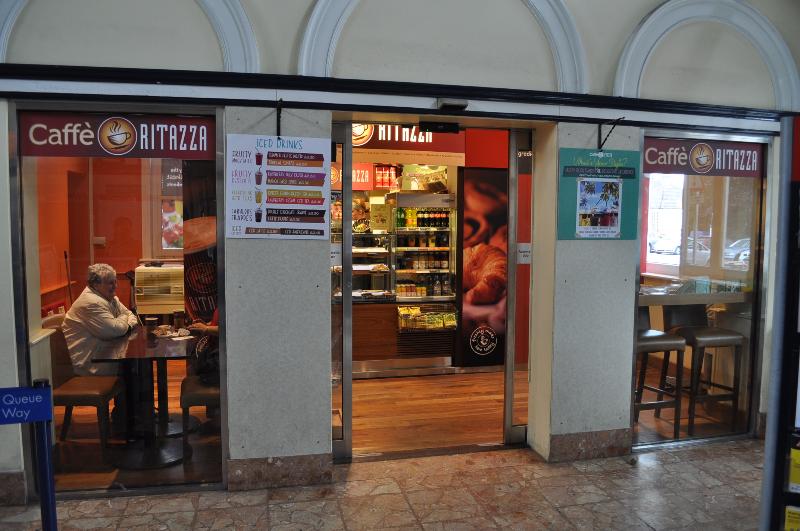
On the other hand, Petrov and Boshirov claim that after leaving the station (and they don’t dispute the 14:25 time) they walked about for about half an hour, before heading back to the station, where they sat in a café for more than 40 minutes and possibly up to an hour or so (this would be Café Ritazza in the ticket hall, shown at the top of this piece). This would therefore put them in the café from about 15:10 until about 16:10.
Now, I take it as obvious that for the reconnaissance claim made by The Met to be correct, this would mean the men visiting the alleged location of the intended poisoning — Mr Skripal’s house, or at the very least Christie Miller Road — since the purpose of reconnaissance is to survey vital locations, and this is the only really vital location in connection with the claims made against them. The only other possible location of interest to them, according to the claims against them, would be the back of The Cloisters on Catherine Street, where they allegedly dumped the poison. But let’s just say I would take an awful lot of persuading as to why anyone should need to do reconnaissance of a bin.
It takes between 20-25 minutes to walk from the station to Christie Miller Road. Double it for there and back, and you get 40-50 minutes. However, the very nature of reconnaissance means that it involves checking out an area, and so as well as walking there and back we could, at a conservative estimate, perhaps add 10 minutes to the walking times. Which means that we are looking at 50-60 minutes at least for a reconnaissance mission.
This entirely conflicts with Petrov’s and Boshorov’s claims. Of course, we have no way of knowing whether their claims are true or not, but the point is this: The Met knows exactly whether their claims are true or false, and they could easily disprove them simply by showing the two men walking through Salisbury when they say they were in the café.
Of course, it could well be that The Met does have CCTV footage of the two men in the city outside the half hour or so timeframe they have claimed. It could be that they have CCTV footage of the café from 15:10 to 16:10, and that there is no sign of the two men there. And it could well be that they have CCTV footage of the men on their way to or from Mr Skripal’s house.
Yet despite the very specific claims made by the men, the only evidence ever presented by The Met of their movements in Salisbury on that day is the image of them standing in the ticket hall at 16:11:27. Nothing else has been released of their movements. Nothing else has been stated. Other than the claim about reconnaissance, which has been backed up by nothing, there is nothing at all.
Some will say that The Met is under no obligation to publicly reveal any more CCTV footage than they want to. Ordinarily, I might agree. But not in this case. It was The Met that made serious allegations in public about the two men, and yet they did so without producing any evidence to back up their claims. But now that the two suspects have themselves publicly refuted The Met’s claims about what they did on 3rd March with some quite specific details, The Met now surely has an obligation either to show the evidence they have to back up their claim of “reconnaissance”, or withdraw it.
So here are the three questions that The Met needs to answer in connection with Saturday 3rd March:
-
- Do you have CCTV footage of the two men that contradicts their claim to have spent only about half an hour in the City that day?
- Do you have CCTV footage that contradicts the claims made by Petrov and Boshirov to have been in the station café between approximately 15:10 and 16:10?
- If neither of the above exists, on what basis has the claim been made that the two men were in Salisbury on 3rd March on a reconnaissance mission?
MSNBC’s Chuck Todd Fears Russia May Be Behind Bomb Scare
Sputnik – 26.10.2018
The FBI and other agencies are continuing to hunt for the person or people responsible for shipping a number of explosive devices to prominent Democrats beginning with billionaire financier George Soros on Monday and most recently Hollywood actor Robert De Niro on Thursday.
As should be expected, while the FBI and other authorities conduct their investigation, the mainstream US press is also hunting down clues, pondering motives, talking to experts and analyzing the facts in an effort to make sense of the chaos.
Some in the mainstream media, however, really just seem to be throwing things out there and seeing what sticks to the wall. The host of MSNBC’s “Meet the Press,” Chuck Todd, who is also the political director for NBC News, is one commentator engaging in breathless guesswork to a national audience.
Who is the culprit, according to Todd? Is it a lone wolf, driven crazy by the political rhetoric of the past two years, or the “#MAGAbomber” as Twitter has theorized? Perhaps it’s a Democratic voter disgruntled by the direction of the party.
If you thought those things, you’ve probably learned nothing over the past couple of years, because Todd did not make any of those conjectures. Instead, he pointed the finger at Russia — like any good liberal media newsman would.
“This feels like a spot — I have this fear this could be some Russian operation too — designed to do what’s happening now. More of this — you know. In some ways, we shouldn’t rule out — it is dividing us,” Todd said during a panel on the bombing attempts.
Senior MSNBC Political Editor Beth Fouhy, Daily Beast columnist Jonathan Alter and prominent commentator John Podhoretz joined Todd for the discussion.
The anchor began the segment by playing a clip of US President Donald Trump calling on political leaders on Wednesday night to stop portraying their opponents as “morally defective.” Trump blamed the media for “anger” in American society on Thursday.
Perhaps ironically, Todd’s fearful remarks about the lengths Russia will go to in order to spread discord followed a discussion of the “big lie.”
Alter spoke about a propaganda technique called the “big lie,” popularized by Nazi Propaganda Minister Joseph Goebbels in 1941 when he said, “The English follow the principle that when one lies, one should lie big and stick to it.” The term has since come to mean that effective lies are so “colossal” that nobody could believe that the person who told the lie “could have the impudence to distort the truth so infamously,” in Hitler’s words.
“You just tell a lie as big as you can, because you know a lot of people are gonna believe it,” Alter said before Todd floated the “Russian operation” theory.
Two Stories from the Propaganda War
By Philip M. GIRALDI | Strategic Culture Foundation | 25.10.2018
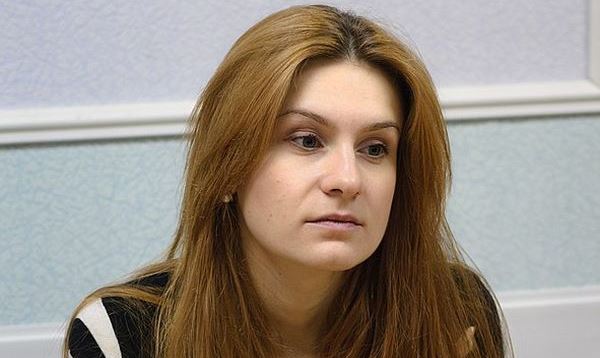
Two recent stories about Russians have demonstrated how the news is selected and manipulated in the United States. The first is about Maria Butina, who apparently sought to overthrow American democracy, such as it is, by obtaining a life membership in the National Rifle Association. Maria, a graduate student at American University, is now in detention in a federal prison, having been charged with collusion and failure to register as an agent of the Russian Federation. She has been in prison since July, for most of the time in solitary confinement, and has not been granted bail because, as a Russian citizen, she is considered to be a “flight risk.”
Maria, who has pleaded not guilty to all charges, is now seeking donations to help pay for her legal defense as the Russian government renews demands that she be released from jail or be tried on whatever charges the Justice Department can come up with, but her release is unlikely as she is really a political prisoner.
The media has been silent about Maria Butina because the case against her is falling apart. In early September prosecutors admitted that they had misunderstood text messages used to support claims that she had offered to trade sex for access to information. Demands that she consequently be released from prison were, however, rejected. Her lawyer observed that “The impact of this inflammatory allegation, which painted Ms. Butina as some type of Kremlin-trained seductress, or spy-novel honeypot character, trading sex for access and power, cannot be overstated.”
In an attempt to make the Butina embarrassment disappear from the news, the Justice Department has proposed an unprecedented gag order to prevent her attorney from appearing in the media in a way that could prejudice a jury should her case eventually come to trial. Currently there is no court date and Maria remains in jail indefinitely, but the press could care less – she is just one more Russiagate casualty in an ongoing saga that has long since passed her by.
Given the Maria Butina story and the hysteria over all things Russian it was perhaps inevitable that the tale of Kremlin interference in American elections would be resurrected and repeated. Federal prosecutors are now reporting that another Russian woman has illegally conspired with others to “defraud the United States” and interfere with the U.S. political system, to include plans for conducting “information warfare” to subvert the upcoming 2018 midterm elections.
The complaint was filed on October 19th at a federal court in Virginia which handles most national security cases. According to the court documents, Elena Alekseevna Khusyainova, a 44-year-old resident of St. Petersburg in Russia, has worked as the head accountant for “Project Lakhta,” a Russian influence operation backed by an oligarch close to President Vladimir Putin. According to the Justice Department, the operation “spread misinformation about US political issues including immigration, gun control, the Confederate flag, and protests by NFL players. It also used events including the Las Vegas mass shooting, and the far-Right rally in Charlottesville, to spread discord.”
Khusyainova, who is not likely to be extradited to the United States for trial, allegedly purchased advertising in social networks and also supported dissident groups. The accusation of the American authorities emphasizes the connection between Khusyainova and St. Petersburg businessman Yevgeny Prigozhin, who was previously identified by the media as the owner of a ‘Troll Factory’ in St. Petersburg. In the U.S., several charges have already been brought against him and his staff, including interfering in the presidential elections in 2016.
The Maria Butina story reveals how there is a fundamental flaw in the justice system in the United States. When someone is found guilty by the media there is no way to right the wrong when the story shifts and starts to break down. The New York Times or Washington Post is unlikely to leap to the defense of the accused. Maria Butina has been raked over the coals in stories that were partly true but mostly false in terms of any criminal intent. She is still waiting for justice and will likely be doing so for some time.
The case of Elena Khusyainova is Maria Butina redux, only even more idiotic. No actual evidence is presented in the indictment and since Elena is in Russia and not likely to visit the United States, the entire affair is a bit of theater intended to heighten hysteria about the U.S. midterm elections. Is the U.S. electoral system really so fragile and what did Elena actually seek to do? The Justice Department is silent on the issue beyond vague accusations about trolling on the internet by Russians. One wonders who in the federal government ordered the investigation and signed off on the indictment.
Both Maria and Elena are victims of a politicized miscarriage of justice. Maria Butina should be released from prison now and allowed to pay her fine for being an unregistered agent before leaving the country. There is no justification for holding her in prison. And the indictment of Elena Khusyainova is not worth the paper it is written on. It should be torn up and thrown away.
Nearly Half of Americans and Europeans Doubt Mainstream Media’s Take on Russia
Sputnik – 23.10.2018
Respondents in both the United States and Europe turned out to be generally reluctant to trust their mainstream media to provide unbiased coverage of events related to Russia, with the number of respondents adhering to this point of view ranging from 43 to 53 percent depending on the country.
An opinion poll was conducted recently by the French Institute of Public Opinion (IFOP), in which respondents in the United States and Europe were asked the following question: “Do media in your country report objectively about Russia?”
About half of respondents in France (53 percent) and Germany (50 percent), as well as 47 percent of respondents in the UK and 43 percent of respondents in the United States, said that they don’t believe that their media provides objective information about Russia.
At the same time, only 25 percent of French and 33 percent of British respondents said that they trust their media to provide unbiased information about Russia, with 39 percent of those polled in the US and Germany agreeing with this assessment.
The opinion poll was held as US politicians and intelligence officials continue to accuse Russia of attempting to meddle in the election processes in the United States — accusations which Moscow has vehemently denied.
At the same time, London blames Russia for the alleged poisoning of several people in the British city of Salisbury earlier this year, despite the fact that the Russian authorities have strongly rejected these claims.
The survey was conducted among 4,033 respondents aged 18 and above from the US, the UK, France and Germany, in August 2018.
READ MORE:
Most Europeans Want Better Relations With Russia, Not Sanctions War – Poll
Americans should be ‘scared’ about end of INF, Carter Page tells RT
RT | October 23, 2018
The ‘Russiagate’ hysteria that originated with the Democrat-funded Steele Dossier has damaged relations between Washington and Moscow to the point of ending the INF Treaty, former Trump adviser Carter Page has told RT.
Ending the Intermediate Nuclear Forces in Europe (INF) treaty is something Americans should be “scared about,” Page told RT America’s Scottie Nell Hughes in an exclusive interview on Monday. He said he’d worked on implementing that and other nuclear treaties when he was at the Pentagon in the early 1990s, and that there are “deep problems” between the US and Russia that “misunderstandings” over the Trump presidency are only making worse.
President Donald Trump announced on Monday he was preparing to pull the US out of the 1987 arms control treaty, citing the claim by the two previous administrations that Russia “has not adhered to the agreement.”
Page was drawn to the Trump campaign in 2016 because as a candidate, Trump had “said some very positive things, some very constructive ideas as to ways to improve” the relationship between Washington and Moscow.
“Unfortunately, there were various political actors that were within the government in Washington –and also on the fringes of Washington– which helped continue the downward cycle that we’ve seen for so many years.”
Page was specifically referring to what he calls the “dodgy dossier” – an opposition research file compiled by British spy Christopher Steele, alleging Trump’s ties to Russia. Steele wrote the dossier for Fusion GPS, and was paid for it by the Clinton campaign via the Democratic National Committee (DNC) and its law firm, Perkins Coie. Page is suing Perkins Coie and the DNC for defamation.
Congressional investigations have discovered that the dossier was used to obtain a Foreign Intelligence Surveillance Act (FISA) surveillance warrant to spy on Page, and through him on the Trump campaign, which the former US Navy intelligence officer and energy consultant briefly advised in 2016.
Democrats have actually accused Page of being a “foreign agent” recruited by Russia. He laughed off those charges, telling Hughes that he would speak to the CIA every time he went to Russia for a meeting or to give a speech.
Explaining the Trump administration’s hostility towards Russia that’s in stark contrast with his campaign rhetoric, Page said that “false stories placed by the Democrats” have created a “dark cloud hanging over the administration.”
The July summit in Helsinki between Trump and Russian President Vladimir Putin held a lot of potential to advance US-Russian relations, but the political and media fallout stopped any momentum in its tracks, Page argued.
Trump is “very much a straight shooter,” Page said, but there is a “a lot of political pressures” on him to be hostile to Russia. He remains hopeful that with Trump’s “strength and perseverance,” things might just work out.
“There’s a lot that needs to be fixed,” he said.
Featured Video
EUROPE FEARS RUSSIA’S NEXT MOVE / Ian Proud
or go to
Aletho News Archives – Video-Images
New Book
New Book: No Autoimmunity The Body Doesn’t Attack Itself
Lies are Unbekoming | September 24, 2026
 The label for Humira, once the best-selling drug in the world, lists its risks in plain print. One of them, in the label’s own words, is new “autoimmune” disease.
A drug prescribed for a condition labelled autoimmune carries a warning that it can cause a condition labelled autoimmune. That contradiction sits in every box, on a folded paper almost nobody reads.
My new book starts there.
No Autoimmunity: The Body Doesn’t Attack Itself
For seventy years, “your body is attacking itself, and we don’t know why” has ended the conversation for people diagnosed with multiple sclerosis, lupus, rheumatoid arthritis, Hashimoto’s, Type 1 diabetes, Crohn’s and psoriasis. More than eighty conditions now carry the autoimmune label. The diagnosis comes with a prescription for life. It almost never comes with a question about cause.
This book asks the question and answers it from the framework’s own records: its drug labels, its journals, its regulatory filings, and its own experiments. … continue
Blog Roll
 Aletho News
- Iran offers Trump deal before US election
- Merz regime wants ‘secret police’ – opposition
- Israeli settlers terrorize West Bank Palestinians with state-provided drones: Report
- They see them, then kill them: Israeli quadcopters track, deliberately target civilians in Gaza
- Debunked: Trump’s egregious UNGA claims on war against Iran crumble under scrutiny
- Europe was part of the infrastructure of US aggression against Iran: Deputy FM
- New evidence on the Bucha Massacre
- Italy and France debunk reports CIA issued ‘Russian drone threat’ warning
- How Russia is Rewiring the Global South
- Britain’s elites want you ready to die for a war they keep imagining
- If Americans Knew
- Trump betrayed voters with his campaign lies and prioritized a foreign country once he took office
- Netanyahu calls Israel’s war in Gaza ‘opposite of genocide’ in UN speech to near-empty hall
- Settler Kidnappings: Torture, Sexual Abuse and Terrorisation of Palestinian Abductees as Israel Deepens Annexation of West Bank
- Gaza winter nears as 162,000 tents become unusable, raising fears of humanitarian crisis
- Netanyahu says, “It’s the opposite of genocide”; UN says Gaza economy is world’s ‘most severe crisis on record’ – Daily Update
- Israel’s US-Backed Assault on Gaza Has Created the ‘World’s Most Severe Economic Crisis on Record’: UN
- ‘Protecting U.S. Citizens’… From Israel
- ‘This is where I live now, the back of a truck’: a day in the life of a grandmother in Gaza
- In UN Speech, Iran’s President Displays Pictures of Children Killed by US, Brings Attention to Israel’s Nuclear Arsenal
- Israel displaces hundreds of Palestinians amid wave of demolitions in West Bank
- No Tricks Zone
- New Study: Earth And Venus Surface Warmth Largely Explained By Convection And Lapse Rate, Not CO2 Or Radiation
- 2025 Nature Paper Claiming Worsening Global Drought Gets RETRACTED …Heavily Flawed
- New Study: ‘Global Drought Shows No Detectable Recent Acceleration Under Climate Warming’
- Economic Masterminds: German Socialists Suggest Taxing Productivity Gains Stemming From Using AI
- The South China Sea Has Not Been Cooperating With The Climate Change Narrative
- Energy Crisis: Germany Enters Heating Season With Historically Low Gas Reserve Fill Levels
- New Study: The Antarctic Ice Sheet Gained Mass From 2020-2024 Due To Staggering Snow And Ice Accumulation
- Study: Ocean Heating Rates From Thousands Of Years Ago ‘Dwarf’ Modern Ocean Heating Rates
- Climate Extremists Target, Attack Large-Scale Power Grid Infrastructure In Germany!
- New Study: Antarctic Ice Melt Has Contributed Less Than 1 Centimeter To Sea Level Rise In The Last 30 Years

