Florida And DHS Refute Democrat Congressman’s Claim That Russia “Penetrated” Election System
By Tyler Durden – Zero Hedge – 08/11/2018
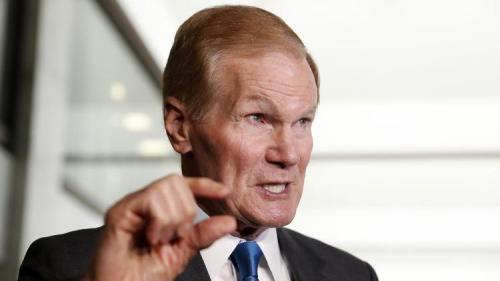
Election officials in South Florida on Thursday refuted a claim made by Senator Bill Nelson (D-FL) that Russian hackers had penetrated their voter registration system.
“We have had absolutely no information regarding that,” said Broward County Elections Supervisor Brenda Snipes. “We have not seen anything with our system that something strange is going on.”
State officials also say Nelson’s claim is unfounded.
On Wednesday, Nelson – the ranking member of the cyber subcommittee of the Senate Armed Services Committee said that Russian operatives had penetrated some of Florida’s election systems ahead of this year’s midterms.
“They have already penetrated certain counties in the state and they now have free rein to move about,” Nelson told the Tampa Bay Times, though he wouldn’t identify which counties were affected – saying it was classified.
“The threat is real and elections officials — at all levels — need to address the vulnerabilities.”
Election officials in Miami-Dade and Palm Beach counties likewise said they weren’t aware of any breaches.
That said, Florida election officials say they are doing everything they can to monitor for Kremlin hijinks.
Susan Bucher, supervisor of elections for Palm Beach County, said her office has been working diligently to ensure systems are safe on Election Day.
Employees have undergone training, and the county’s system has been repeatedly tested for vulnerabilities. “We are confident we have done as much as we can,” Bucher said.
Snipes said she too has conducted additional training and monitoring in response to the threat. –SunSentinel
Florida counties are receiving $15.5 million to beef up election security before November’s midterms, which Governor Rick Scott’s office says $14.5 million of which has been distributed to date – including $3.7 million which went to Miami-Dade, Broward and Palm Beach counties.
Nearly $2 million will be used to purchase a network monitoring security system that provides automated alerts about threats, the Florida State Department said. –SunSentinel
Scott, a Republican who is challenging Nelson’s Senate seat, has demanded that Nelson provide proof of his vague claim over election system penetration.
“Either Bill Nelson knows of crucial information the federal government is withholding from Florida elections officials or he is simply making things up,” Scott said in during a campaign event in Tampa. “Did Nelson illegally release some classified information? Or did he make this charge of Russian penetration up?”
Nelson and Republican Senator Marco Rubio, who sits on the Senate Intelligence Committee, wrote a July letter to Florida Secretary of State Ken Detzner, warning election officials that the Senate Select Committee on Intelligence had discovered that “Russia was preparing to undermine confidence in our voting process” and suggested they take advantage of federal resources. The letter claims that in a small number of cases “cyber actors affiliated with the Russian government accessed voter registration databases.”
Nelson suggested that Russians could start eliminating registered voters.
“You can imagine the chaos that would occur on Election Day when the voters get to the polls and they say: ‘I’m sorry, Mr. Smith. I’m sorry, Mr. Jones, you’re not registered.’ That’s exactly what the Russians want to do,” Nelson said.
The Florida Department of State said they have no idea what Nelson is talking about, and has received “zero information” from the Senator or his staff to support the Russian hacking claims.
“Additionally, the department has received no information from the U.S. Department of Homeland Security, the Federal Bureau of Investigation or the Florida Department of Law Enforcement that corroborates Sen. Nelson’s statement and we have no evidence to support these claims,” the Florida DoS said in a statement obtained by The Associated Press. “If Sen. Nelson has specific information about threats to our elections, he should share it with election officials in Florida.”
Okaloosa Supervisor of Elections Paul Lux, who is president of the state’s association of election supervisors, said 37 of the state’s 67 county election supervisors he received responses from indicated they had received no word of a specific threat or breach to their system.
One issue, he said, is election supervisors are not able to get security clearances that would allow them to receive briefings on classified information. –SunSentinel
“If the federal government has actionable intelligence and we don’t have access to that intelligence you can’t be surprised that we can’t take the actions necessary to respond to those threats,” said Lux.
The Department of Homeland Security also responded to Nelson’s claim – issuing a statement Wednesday evening saying “While we are aware of Senator Nelson’s recent statements, we have not seen any new compromises by Russian actors of election infrastructure. That said, we don’t need to wait for a specific threat to be ready.”
Russia, China nearing alliance conditions
By M K Bhadrakumar | Indian Punchline | August 10, 2018
The Chinese Communist Party Politburo member Yang Jiechi is visiting Moscow on August 14-17 at the invitation of the secretary of the Russian national security council, Nikolai Patrushev to participate in the 14th round of Russian-Chinese consultations on strategic stability. The forthcoming event in Moscow will be closely watched since the two countries are fast nearing a situation of confronting a common ‘enemy’. This is a new experience for both since the halcyon days of the Sino-Soviet alliance in the 1950s.
The mainstream opinion has been that the Sino-Russian comprehensive partnership and cooperation is more the stuff of geopolitical signaling than a strategic alliance. The Western opinion has also been notably skeptical whether such partnership between Russia and China will be sustainable over time due to the growing asymmetry in the two countries’ comprehensive national power. Both premises may be getting outdated by the sheer force of developments.
Curiously, another body of opinion is steadily forming lately whether Russia and China could be actually on the verge of reaching alliance conditions in the rapidly changing global situation characterized by growing tensions in their respective relations with the United States. An essay in the Financial Times this week titled ‘China and Russia’s dangerous liaison’ authored by the daily’s Asia editor (who used to be the Beijing bureau chief previously), Jamil Anderlini, forcefully makes this point.
The writer argues that it is an intelligence blunder of historic proportions that the West is making by “dismissing the anti-western, anti-US alliance that is now forming between Moscow and Beijing.” Anderlini writes:
- This idea that Russia and China can never really be friends is just as wrong and dangerous as the cold war dogma that portrayed global communism as an unshakeable monolith… Their tightening embrace is as much about antipathy towards the US and the US-dominated global order as their rapidly growing common interests… Thanks to its continued rise and obvious ambition to supplant the US, China is a far bigger long-term challenge for America than Russia. No less a figure than Henry Kissinger – the architect of that reconciliation with China in 1972 – has reportedly counselled Donald Trump to pursue a “reverse Nixon-China strategy” by seeking to befriend Moscow and isolate Beijing.
However, the chances of a “reverse Nixon-China strategy” by the US are virtually zero. Even if President Trump is inclined in that direction, the ‘Deep State’ simply won’t allow him a free hand. It is after much effort that NATO has cast Russia in an ‘enemy’ image and anchored a whole new purposive agenda on that platform. Unshackling it can lead to the unraveling of the western alliance system itself. The New York Times today reported that the Washington establishment connived with the US’ NATO allies to present a fait accompli at the recent summit meeting of the alliance in Brussels.
In fact, the Trump administration has just announced plans to create a new Space Force as the sixth branch of its military to prepare for “the next battlefield” to counter Russia and China, which are “aggressively” working to develop anti-satellite capabilities. Announcing this at the Pentagon on August 9, US Vice-President Mike Pence said,
- China and Russia have been conducting highly sophisticated on-orbit activities that could enable them to maneuver their satellites into close proximity of ours, posing unprecedented new dangers to our space systems… We must have American dominance in space, and so we will.
President Trump promptly tweeted, “Space Force all the way!” And this comes soon after the announcement by Washington that it would impose extensive new sanctions against Moscow by August 22, including bans on a wide range of exports, by the end of the month as punishment for the alleged nerve agent attack on former Russian agent Sergei Skripal and his daughter Yulia in Britain in March. The State Department has further threatened another wave of sanctions in 3 months’ time, including a lowering of the diplomatic relations with Russia. Without doubt, within a month of the Helsinki summit, US-Russia relations are in free fall once again.
Moscow has strongly reacted. PM Dmitry Medvedev warned on Friday that tightening up of economic sanctions against Russia may be treated as a declaration of economic war, to which Russia will respond with all economic, political and other means possible.
Similarly, China and the US are embroiled in an escalating trade war. On Wednesday, Beijing unveiled a list of US$16 billion worth of American goods it plans to hit with tariffs. This is response to Washington’s announcement the previous day that it would impose 25 per cent tariffs on an equivalent value of Chinese exports. An editorial in the government-owned China Daily on Thursday flagged that “the possibility that the two countries are heading for a prolonged trade conflict has to be faced.”
Clearly, a closer coordination between Russia and China in a concerted strategy to push back at the US will be a key topic at the consultations in Moscow next week. The point is, the quasi-alliance between Russia and China cannot be belittled as ‘geopolitical signaling’ anymore. Just short of a formal military alliance, the two countries are intensifying their cooperation and coordination. In an unusual gesture, Moscow announced well in advance that President Vladimir Putin will be receiving Yang, signaling the high importance that the Kremlin attaches to the strategic consultations with China.
The bottom line is, despite the attempts by American analysts to create dissension in the Sino-Russian relations – by propagating that China poses demographic threat to the Russian Far East; that China is conspiring to militarily seize the Siberian Lebensraum; that China is overshadowing Russia in the Central Asian region, etc. –the attraction of China is only increasing in Moscow’s strategic calculus, thanks to China’s formidable economic firepower (with its nominal GDP set to overtake the Eurozone’s by the end of this year) and China’s rapidly developing technological sophistication.
Of course, Moscow realizes that no significant improvement in the Russian-American relations can be expected either so long as Trump remains in power. To be sure, new directions of Russia-China cooperation will be identified at the talks in Moscow. Read a commentary, here, by a leading Chinese pundit who envisions the Northern Sea Route (which is a key template of Moscow’s Arctic strategies) as an “important component” of China’s Belt and Road initiative, and could be considered as “part of an ambitious strategy to change China’s land and sea connections to Europe and the world.”
Question more? You’re a pesky ‘Russophile’, says Soros-backed Belgian NGO
By Nebojsa Malic | RT | August 11, 2018
Once a leader in philosophy and fashion, France has now been reduced to falling for tricks recycled from US con artists by Brussels-based grifters, with a little help from Twitter’s ‘mea culpa’ cash and even Uncle George Soros.
It all began when EU DisinfoLab, a non-governmental organization based in Belgium, published a report on Wednesday about how some 55,000 “hyperactive” twitter accounts spread the news of the Benalla affair, and accused a portion of those accounts of being “Russophiles.”
Within a day, French media were printing headlines screaming about “Russian bots,” prompting the NGO to issue a “clarification” of their findings. Not all of the accounts were “Russophiles,” the outfit said, and the report said nothing about “bots” – but the French public was already outraged.
Politicians Jean-Luc Melenchon of La France Insoumise and Marine Le Pen from the National Rally (NR) –previously known as Le Front National– who both ended up on the NGO’s list, tweeted derisively about the report, with Melenchon calling the outfit “stupid spooks.”
EU DisinfoLab basically used tools –as well as funding– provided by Twitter to compile a list of accounts tweeting about the scandal involving Alexandre Benalla, deputy chief of staff and bodyguard to President Emmanuel Macron. Benalla was fired in July after it emerged he had assaulted a protester at May Day demonstrations while impersonating a police officer, then tried to suppress the video footage of the incident.
Of the accounts thus rounded up, the group identified 27 percent as being part of the “Russian disinformation ecosystem,” described as people retweeting content from RT and Sputnik, or promoting the “Russian narrative.” Examples of the latter were listed as people spreading “false information” like that the Syrian government did not use chemical weapons in Douma (#SyriaHoax) or doubting the official [UK] narrative about the poisoning of Sergei and Yulia Skripal in Salisbury.
Having thus characterized the doubters of the official Western media narratives as Russian agents, the group had the cheek to declare this is “not a value judgment, but a quantifiable fact according to methodology.”
What methodology? Well, in part that used by FirstDraft’s CrossCheck project, sponsored by Google partnering with US and French mainstream media outlets, the London School of Economics, and the notorious bloggers at Bellingcat, affiliated with the Atlantic Council, a pro-NATO think tank.
However, the approach of EU DisinfoLab is actually closer to that of Hamilton68 Dashboard, a project of the Alliance for Securing Democracy (ASD), which, in turn, is backed by the German Marshall Fund. This alliance of Democrats and neocons was set up last year to “defend democracy” on Twitter from those evil Russkies. Having started from the assumption that agents of the Kremlin were everywhere, the dashboard proceeded to blame them for every trending hashtag – and the US media swallowed it whole, breathlessly reporting their “discoveries” for months.
Journalist Glenn Greenwald, who has followed ASD since its inception, described it as “the single most successful media fraud & US propaganda campaign” he had seen in years of covering US politics.
This hysteria wave eventually crested in March this year, when even such ardent Russiagate-obsessed publications as BuzzFeed (the outfit that published Christopher Steele’s “salacious and unverified” dossier accusing Trump of being a Russian puppet) declared the reports of Russian bots to be “total bullshit.”
Here is the best part: The funding for EU DisinfoLab’s report was provided by Twitter itself! Back in October 2017, under tremendous pressure from Democrats angry about their defeat in the presidential election, the company “off-ramped” all advertising from RT and Sputnik, then pledged to donate the $1.9 million in (generously) estimated profits to “civil society” projects. Enter EU DisinfoLab, which admitted receiving $125,000 from Twitter in January.
The group also received $25,000 from George Soros’s Open Society Foundation, though that was earmarked for monitoring the March 2018 elections in Italy. True to form, Soros claimed Russia was behind the victory of populist parties over the Eurocrat establishment he favored.
So long as Uncle George and social media giants pay good money, and the media is eager to quote those offering to cater to their confirmation bias, there will be outfits such as Hamilton68 and EU DisinfoLab, all too willing to oblige.
Read more:
Atlantic Council: Pro-NATO pressure group uses distortions to fight ‘disinformation’
The Russians are coming… to hit Florida’s midterms, Democratic senator claims
RT | August 10, 2018
Florida election officials say they have “zero information” about a threat of Russian hacking in the midterm election, after Senator Bill Nelson claimed the Ruskies have already penetrated the election systems of some counties.
Nelson, the lone statewide elected Democrat in Republican-dominated Florida, is facing a tough electoral battle against Governor Rick Scott, who is term-limited and wants to take Nelson’s seat in the US Senate come November. This week the incumbent senator added some spycraft thrills to the race by claiming that the Russians were not only an ever-lurking threat to democracy in the US and Florida, but actually have already penetrated the state election infrastructure.
“They have already penetrated certain counties in the state and they now have free rein to move about,” Nelson told the Tampa Bay Times before a campaign event in Tampa. He made a similar claim a day earlier in Tallahassee but declined to elaborate, stating that the information was classified.
Nelson and Florida’s other senator, Marco Rubio, wrote a letter to the 67 county election supervisors, warning about the cyber-threat to the midterms and advising that security be ramped up. Speaking to the newspaper on Wednesday, Nelson said they penned the letter on request of the leadership of the Senate Intelligence Committee, which reportedly said that “the Russians are in their records.”
Rubio raised the same issue in late May in a private meeting with around eight to 10 election officials, but in less defined terms, Hillsborough Supervisor of Elections Craig Latimer told the newspaper. When asked which counties were targeted, Rubio “looked around the room and said, ‘I don’t believe it’s anybody here,'” Latimer said. Paul Lux, the president of a statewide election supervisors’ group, said Rubio’s warning was so vague that it was of no practical value.
Nelson said Russian hackers may cause chaos on Election Day by erasing people from the voter rolls. “That’s exactly what the Russians want to do. They want to sow chaos in our democratic institutions.” Senator Nelson, the top Democrat on the Senate Armed Services’ subcommittee on cybersecurity, previously urged the Pentagon to act on recommendations on cyber-deterrence.
Commenting on Nelson’s latest remarks, Sarah Revell, the spokesperson for the Florida Department of State, said it “received zero information from Senator Nelson or his staff that support his claims”.
“Additionally, the Department has received no information from the US Department of Homeland Security, the Federal Bureau of Investigation or the Florida Department of Law Enforcement that corroborates Senator Nelson’s statement and we have no evidence to support these claims,” she added.
Revell said that if the senator had any specific information about hacking threats, he should share it with state election officials.
Florida’s counties have been spending federal money on improving the cybersecurity of election infrastructure as well as taking advice from federal law enforcement agencies on how to better address the threat. The state’s reluctance to take the $19 million, which was only done in May, was a point of criticism of the governor’s office.
Pinellas County election officials said after Nelson’s assertion they immediately contacted the FBI, Homeland Security and other state and federal agencies in a futile attempt to find out more about it. “Our office has not seen any indication that we have had any penetration by any bad actions,” office spokesman Dustin Chase said.
A number of other large counties, including Pasco, Seminole, Broward, and Miami-Dade, have issued statements saying they are not aware of any breaches.
Meanwhile, the governor’s office sent a letter to the Senate Intelligence Committee, requesting clarification on the situation.
“Let me be clear, this is a very serious charge made in a public setting without any evidence, details or any prior communication to state or local election officials in Florida,” Secretary of State Ken Detzner wrote.
The claim that Russia interfered in the 2016 presidential election is the cornerstone of the current partisan rift in the country, with some Democrats claiming that candidate Donald Trump somehow colluded with the Kremlin to beat Hillary Clinton. Russia denies that any government-mandated interference took place.
There are no official US documents asserting that, if any meddling did in fact take place, it affected in any way the outcome of the vote. As of January 2018, 52 percent of registered Democrats believe that Russian hackers changed the vote tally, a conspiracy theory that is not backed by any evidence.
US State Dept sanctions against Russia aimed at ‘undercutting’ Trump, analysts say
RT | August 9, 2018
The US State Department decision to blame Russia for the poisoning of Sergei Skripal without any evidence amounts to “flicking matches in a gasoline-filled room,” former US diplomat Jim Jatras told RT.
The announcement of sanctions on Wednesday came despite the fact that the US is entirely aware that Russia was not responsible for the poisoning of Sergei Skripal in Salisbury, UK in March, he said.
“This is a political demand… this is designed to undercut the overtures from the Trump administration for President Trump directly and also Senator Rand Paul – now in Moscow – to warm relations with Russia.”
Former Pentagon official Michael Maloof echoed that sentiment, telling RT that “you have Donald Trump’s foreign policy and you now have the Trump administration’s foreign policy.” He added that the sanctions are being orchestrated by the deep state to “make the president look bad and basically to corner him.”
Both spoke to RT about Moscow’s impossible position when it comes to its non-existent role in the Skripal poisoning. “How do they prove a negative?” Maloof asked.
Meanwhile, Jatras warned that the current situation is “getting more serious than the people behind this.”
“We are getting very close to the line of the kind of breaking of dialogue, the breaking of relations that occurs between two countries only when they’re on the edge of war. I don’t think the people here really understand the kind of gasoline-filled room that they’re flicking matches into,” he said, specifically mentioning the second round of sanctions, which could downgrade diplomatic relations and cut off Aeroflot flights to the US.
The former US diplomat also noted Washington’s hypocrisy in its demands. “Is Russia going to submit to on-site inspections by the United States?” he asked, while pointing out that the US itself hasn’t destroyed its chemical stocks under the Chemical Weapons Convention. “This is a completely topsy-turvy world when it comes to these accusations.”
However, there’s probably more to the sanctions than meets the eye, according to Earl Rasmussen, executive vice-president of the Eurasia Center, who told RT that it needs to be looked at “from a much greater geopolitical situation,” noting the situation in the Middle East, from Syria to Iraq.
“Obviously, Russia’s had a significant hand in putting down Al-Qaeda and ISIS (Islamic State), and blocking a lot of things that the US establishment had there,” he said.
As for the Kremlin’s role in the baseless accusations, Rasmussen said he has “huge respect” for the Russian Foreign Ministry and President Putin for their handling of the situation. “They’re probably the most grown-up foreign diplomats out there and the most professional as well,” he said.
Sanctioning Russia for false link to UK poisonings ‘unacceptable & unlawful’ – Kremlin
RT | August 9, 2018
Dmitry Peskov, the press secretary of Russian President Vladimir Putin, says the use of a Russian link to recent UK poisoning incidents to justify fresh US sanctions against the Kremlin is a violation of international law.
“In general, of course it’s necessary to say that we consider it categorically unacceptable that the new restrictions, that we continue to consider unlawful, are associated with the Salisbury case,” Peskov said in his Thursday interview with reporters.
“The association with these events is unacceptable for us. And we are convinced that such restrictions, together with the ones that the American side has imposed preemptively, are totally unlawful and contradict international law.”
“Russia does not have, and it has never had, anything to do with chemical weapons’ use, this is out of question. Moreover, we cannot confidently discuss what was used in Great Britain and how it was used because we have no information whatsoever. We have received no answers to our proposal to the British side to hold joint investigation into this incident that causes serious concern on our part,” the Kremlin official added.
Peskov told reporters that he considered any speculation about the effect of sanctions on the Russian financial system unwarranted, because this financial system was very stable. He noted that this stability had been proven in previous standoffs and that the Russian authorities had taken deliberate measures to make the country’s finances capable of withstanding the unpredictable behavior of “partners across the ocean.”
He stressed that it was difficult to reconcile the latest unfriendly actions by the US with the atmosphere established during the recent summit between US President Donald Trump and Putin in Helsinki.
When reporters asked Peskov about a possible Russian response to new US measures, he insisted it was too early to discuss the issue because the official US statement and quotes in the media from certain high-ranking sources did not make clear Washington’s official position.
Earlier, the US State Department announced the plans to impose new sanctions on Russia over its alleged role in the poisoning of double agent Sergei Skripal and his daughter Yulia in the UK in March. The first package of sanctions is scheduled to come into effect on or around August 22 and will reportedly include a ban on exports of sensitive national security goods to Russia.
The second round of sanctions, which includes downgrading diplomatic relations, banning the Russian airline Aeroflot from flying to the US and cutting off nearly all exports and imports, will reportedly be imposed three months after the first one, unless Russian authorities provide “reliable assurances” that they won’t use chemical weapons in the future and agree to “on-site inspections” by independent monitors.
Earlier today senior Russian lawmakers called the planned restrictions unfounded and likened Washington’s behavior to actions of a police investigator who attempts to extract evidence from an innocent suspect using torture and threats.
Read more:
Butina Case: Neo-McCarthyism Engulfs America

By Philip M. GIRALDI | Strategic Culture Foundation | 09.08.2018
The United States Department of Justice would apparently have you believe that the Kremlin sought to subvert the five-million-member strong National Rifle Association (NRA) by having two Russian citizens take out life memberships in the organization with the intention of corrupting it and turning it into a mouthpiece for President Vladimir Putin. Both of the Russians – Maria Butina and Alexander Torshin – have, by the way, long well documented histories as advocates for gun ownership and were founders of Right to Bear Arms, which is not an intelligence front organization of some kind and is rather a genuine lobbying group with an active membership and agenda. Contrary to what has been reported in the mainstream media, Russians can own guns but the licensing and registration procedures are long and complicated, which Right to Bear Arms, modeling itself on the NRA, is seeking to change.
Maria Butina, a graduate student at American University, is now in solitary confinement in a federal prison, having been charged with collusion with Torshin and failure to register as an agent of the Russian Federation. It is unusual to arrest and confine someone who has failed to register under the Foreign Agents Registration Act of 1938, but she has not been granted bail because, as a Russian citizen, she is considered to be a “flight risk,” likely to try to flee the US and return home. It is to be presumed that she is being pressured to identify others involved in her alleged scheme to overthrow American democracy through NRA membership.
Indeed, in any event, it would be difficult to imagine why anyone would consider the NRA to be a legitimate intelligence target. It only flexes its admitted powerful legislative muscles over issues relating to gun ownership, not regarding policy on Russia. In short, Butina and by extension Torshin appear to have done nothing wrong. Both are energetic advocates for their country and guns rights, which they appear to believe in, and Butina’s aggressive networking has broken no law except not registering, which in itself assumes that she is a Russian government agent, something that has not been demonstrated. To put the shoe on the other foot, will every American who now travels to Russia and engages in political conversations with local people be suspected of acting as an agent of the US government? Once you open the door, it swings both ways.
One might dismiss the entire Affair Butina as little more than a reflection of the anti-Russia hysteria that has been sweeping the United States since Hillary Clinton lost the 2016 election, but that would be unfair to those remaining honest FBI agents who may have investigated Butina and Torshin and come up with what they believed to be a plausible case for an indictment. There were possibly suspicious money transfers as well as email intercepts that might be interpreted as incriminating.
But two important elements are clearly missing. The first is motive. Did the Kremlin seriously believe that it could get anything substantial out of having a gun totin’ attractive young Russian woman as a life member in the NRA? What did the presumed puppet masters in Moscow expect to obtain apart from the sorts of group photos including Butina that one gets while posing with politicians at the annual NRA convention? Sure, the photo might even evolve into a cup of coffee together, but what is the end game?
Second is the lack of any of the hallmarks of an intelligence operation, which is referred to in the business as tradecraft. Spies meet secretly or at least outside the public eye with prospective agents whereas Maria operated completely in the open and she made no effort to conceal her love for her country and her desire that Washington and Moscow normalize relations. Spies also communicate securely, which means that they use encrypted systems or various cut-outs, i.e. mis-directions, when maintaining contact with those who are running them. Again, Maria did none of that, which is why the FBI has her emails. Also spies work under what is referred to as an “operating directive” in CIA-speak where they have very specific information that they seek to obtain from their contacts. There is no indication that Maria Butina in any way sought classified information or intelligence that would relate either to the security of the United States or to America’s political system. And finally, Maria made no attempt to recruit anyone and turn them into an actual controlled Russian agent, which is what spies eventually seek to do.
It has come down to this: if you are a Russian and you are caught talking to anyone in any way influential, there is potentially hell to pay because the FBI will be watching you. You are automatically assumed to be part of a conspiracy. Once “evidence” is collected, you will be indicted and sent to prison, mostly to send a message to Moscow. It is the ultimate irony that how the old Soviet Union’s judiciary used to function is now becoming standing operating procedure in the United States.
US Imposing Sanctions on Russia Over Skripal Poisoning – State Department
Sputnik – August 8, 2018
The US State Department announced Wednesday that it would be imposing sanctions against Russia regarding the poisoning of Yulia and Sergei Skripal in the UK earlier this year.
The department said that it determined Russia had used the nerve agent Novichok against the Skripals deliberately. Sanctions are expected to take effect on or around August 22.
Prior to the announcement, the US had joined fellow European nations in blaming Russia for the incident; however, the Trump administration hadn’t issued a formal statement on the matter.
According to NBC News, the immediate repercussions will act as an add-on to previous sanctions limiting exports and financing. “The biggest impact from the initial sanctions is expected to come from a ban on granting licenses to export sensitive national security goods to Russia, which in the past have included items like electronic devices and components, along with test and calibration equipment for avionics,” the outlet states.
The sanctions could also suspend Aeroflot flights to the US and are certain to cool relations between the global powers, though a US State Department official noted after the announcement that Washington hoped to maintain relations with Moscow. The US wants assurances that Russia will not use chemical weapons and will allow inspections.
On March 14, days after the Skripals were found slumped on a park bench in Salisbury, England, UK Prime Minister Theresa May announced that she would be expelling 23 Russian diplomats from the country. May justified her decision by saying it was “highly likely” the mysterious poisoning had been carried out by Russia, in part because the substance used to poison the pair had been identified as novichok, a military-grade nerve agent developed in the Soviet Union. UK labs have not since been able to trace the origins of the specific substance that poisoned the Skripals, however.
Months later, on June 30, two other people were found unconscious in the UK city of Amesbury, near Salisbury. According to UK officials, both Dawn Sturgess and Charlie Rowley were exposed to the same nerve agent that the Skripals had come into contact with. This, too, was blamed on Russia. Sturgess later died.
Russia has adamantly denied that it played any role in either poisoning, stressing that the UK has failed to offer any solid evidence to back up their claims.
See also:
‘Still No Proof’: Scholar Questions Skripal Case Probe Amid Amesbury Incident
Rick Gates Testifies That Manafort Worked to Help Ukraine ‘Enter the EU’
Sputnik – 08.08.2018
Rick Gates, Paul Manafort’s longtime business partner, took the witness stand in Manafort’s financial crimes trial for the second time on Tuesday, this time revealing that the former Trump campaign chair had worked on policies to help bring Ukraine closer to the European Union.
According to Vice News, on the stand, Gates moved away from offering details on alleged financial crimes the two committed in their heyday and instead shed some light on Manafort’s work as a campaign consultant for former Ukrainian President Viktor Yanukovych in 2010.
Gates claimed that Manafort had signed an annual $4 million advisory agreement to give life to campaign pledges that Yanukovych had campaigned on. One of the policies that Manafort was reportedly working on was called “Engage Ukraine,” a project meant to push Ukraine into the European Union, Vice reported.
“Engage Ukraine became the strategy for helping Ukraine enter the European Union,” the publication reported Gates telling prosecutors.
Although it’s unclear how long Manafort worked on this specific project, Gates stated that after Yanukovych resigned from office and fled to Russia in 2014, Manafort began to look elsewhere to replenish his income.
“They were out of power, so the income streams were more difficult to come by,” the 46-year-old said. Per Vice, it was after this that Manafort allegedly opted to tap US banks for a steady stream of income via loans.
This revelation is notable, considering that Yanukovych left Ukraine during the Maidan protests in Kiev, which painted the ousted official as being in favor of Russia and uninterested in integrating with the EU, an entity the protesters wanted to become closer with.
Protests began in November 2013 after Yanukovych declined to sign a free trade agreement with the EU, instead opting for close ties to Moscow. The perception that the former president was trying to establish stronger ties with Russia was further strengthened after Yanukovych accepted a $15 billion bailout from Russia that included cheaper gas prices. The bailout was to help boost the faltering Ukrainian economy.
In the Ukrainian capital, estimates suggest that some 400,000 to 800,000 demonstrators camped out in Kiev to demand that Yanukovych part ways with Russia and partner with the EU.
Yanukovych’s perceived closeness with Russia has also added fuel to the flames of speculation that it was somehow through this connection that Moscow allegedly sent tendrils into the Trump campaign. However, Gates’ testimony paints a picture of a lobbyist working to push Kiev West, not East. And he wasn’t alone: according to the New York Times, Gates also revealed that the Podesta Group and Mercury Public Affairs aided Manafort with “their policy consulting efforts.”
Gates, who previously pleaded guilty to charges of conspiracy and lying to the FBI, is considered a key witness for prosecutors trying to pin money laundering and conspiracy charges on Manafort. The Virginia trial focuses on Manafort’s alleged bank and tax fraud regarding income he earned in Ukraine and through lobbying efforts on behalf of the country.
A separate trial in Washington, DC, for charges of money laundering and obstruction of justice, is expected to begin in September 2018.
Charges against Manafort came out of special counsel Robert Mueller’s investigation into alleged Russian interference in the 2016 presidential campaign and collusion with the campaign of now-US President Donald Trump. Manafort was briefly Trump’s campaign chair in 2016.
The Russian government has repeatedly denied all charges of meddling and collusion, and the Mueller investigation into collusion has so far has turned up mostly financial crimes unrelated to the campaign.
Presidential Treason on Russia
By Jacob G. Hornberger | FFF | August 6, 2018
The U.S. national-security establishment and the U.S. mainstream press are now flinging the much-dreaded label “traitor” at President Trump. Commenting on one of Trump’s press conferences, former CIA Director John Brennan declared: “It was nothing short of treasonous.” The New York Times published an op-ed by its columnist Charles Blow entitled “Trump, Treasonous Traitor.” The Boston Globe weighed in with the following title of an op-ed by Globe columnist Michael A. Cohen: “Trump the Traitor.” Others are settling for “Manchurian candidate”, “shameful,” “indefensible,” “useful idiot,” “reckless,” and more. I haven’t yet heard the term “Fifth Columnist” hurled at Trump but I wouldn’t be surprised to see it happen.
What has Trump done to incur these infamous appellations? He has committed the cardinal sin of the U.S. national-security state: He has demonstrated a firm determination to establish normal and friendly relations with Russia. That’s not only a crime under the principles of the national-security establishment. It’s also heresy.
After all, “everyone” knows that Russia is an enemy of the United States. How do we “know” this? Well, because we are supposed to know it. No, there isn’t an official written decree. Nonetheless, everyone is supposed to know that Russia is “our” enemy, just as the citizens of Oceana were supposed to know when Eurasia was deemed an official enemy of Oceana in George Orwell’s novel 1984. Thus, it stands to reason: Any president who befriends Russia or any other official enemy of the U.S. national-security establishment is considered a traitor at worst and suspect at best.
As I indicated in three recent articles “The Deep State Went After JFK on Russia Too,” “Was Reagan a Traitor Too?” and “Three Other Presidents Targeted for Befriending Russia,” Trump isn’t the first president to incur the wrath of the U.S. national-security establishment for befriending Russia. They also targeted two U.S. presidents, John F. Kennedy and Ronald Reagan, and at least three foreign presidents, Jacobo Arbenz, Fidel Castro, and Salvador Allende, for committing the “crime” of befriending Russia (or the Soviet Union).
Let me share with you a fascinating story about John F. Kennedy’s “treason” that came up after his assassination.
For those of you who have read my book The Kennedy Autopsy and are currently viewing my new video-podcast series “The National Security State’s Assassination of John F. Kennedy,” you are familiar with what happened at Dallas’s Parkland Hospital immediately after the president was declared dead. Dr. Earl Rose, the Dallas County Medical Examiner, was going to conduct an autopsy on President Kennedy’s body. Rose was one of the most renowned forensics pathologists in the country.
Suddenly, a team of armed Secret Service agents informed Rose in no uncertain terms that they were not going to permit him to conduct the autopsy. When Rose stood his ground and reminded the agents that Texas law required the autopsy, they pulled back their coat pockets to brandish their guns, implicitly informing Rose and anyone else that they were prepared to kill anyone who got in their way. Saying that they were operating under orders and screaming, yelling, and issuing a stream of profanities, they forced their way out of Parkland with the body, which they then transported to Dallas Love Field where new President Lyndon Johnson was patiently waiting for it.
Within an hour or so of the president’s death, two of the treating physicians, Dr. Clark Kemp and Dr. Malcomb Perry, held a press conference, where they announced that President Kennedy had a small bullet-sized entry wound in the front of his neck and a large exit-sized wound in the lower back of his head. (This was obviously inconsistent with what would become the lone-nut theory of the assassination, which posited a shooter in the rear of the president.)
Meanwhile, Johnson was transporting the body in Air Force One to Andrews Air Force Base in Maryland, where he delivered it into the hands of the U.S. military, which conducted the autopsy at the morgue at Bethesda National Naval Medical Center on the evening of the assassination.
Thirty years after the assassination. Nurse Audrey Bell, who was in the Parkland Hospital trauma room where Kennedy was being treated, was interviewed by the Assassination Records Review Board. Bell told the ARRB that on the morning of November 23, she saw Dr. Perry and told him that he looked exhausted. Perry told her that he had received calls all night from Bethesda pressuring him to change his mind about the throat wound.
In 1977, the House Select Committee on Assassinations, which was reinvestigating the Kennedy assassination, conducted an interview of a man named James Gochenaur. The complete interview can be found here. Gochenaur related a conversation in 1970 that he had had with a Secret Service agent named Elmer Moore. Here is the pertinent part of the interview:
Gochenaur: Ok, what he told me was this, he said he had badgered Doctor Perry into changing his testimony, he did not feel good about that.
Gilbert: He, being Moore?
Gochenaur: Yes, Moore talked to Perry and, I guess, really laid it on the poor guy.
Gilbert: In what respect, what areas did he badger Perry with respect to.
Gochenaur: Ah, what Perry had seen, as he was doing his emergency operation, apparently.
Gilbert: Well, in what ways did he indicate to you that he had Perry distort the truth?
Gochenaur: In – I think that what he was trying to say was him to making a flat statement that there was no entry wound in the neck….
****
Gilbert: Well, did he, did he indicate to you in any way, or can you recollect as best you can, the exact words or substance that he used with respect to what he did to Perry?
Gochenaur: Apparently, well, he said that he had come back from San Francisco the day after the assassination. He went to Washington first. From Washington, he got some marching orders to go down and talk with the doctors at Parkland Hospital….
***
Gilbert: Ok. Now what did your conversation with him pertain to?
Gochenaur: Ah, basically, him venting his anger at Kennedy, and ah….
Gilbert: What was his anger based on? Did he say?
Gochenaur: Well, he said he was a traitor.
Gilbert: He said Kennedy was a traitor?
Gochenaur: Yeah.
Gilbert: This is what Elmer Moore said?
Gochenaur: Right.
Gilbert: Now, why he say [sic] — how did he explain that? What did he mean?
Gochenaur: Well, he prefaced it by saying that ah, well, he said, you know, no matter how strange things get here, we’ve got it better than they do. But he was giving everything away to the. That’s what he was saying.
Gilbert: He was saying Kennedy was giving things away?
Gochenaur: Yeah, to the Russians. Ok?
Gilbert: All right.
Gochenaur: And, ah, then he went on to say that ah, well, ah, one of the things that was pretty impressive to me was the fact that when I was talking with him, he said that ah, we had to do what we were told, in regards to, you know, the way the way they were investigating the assassination, or we get our heads cut off.
What every American should keep in mind is that from the day in the late 1940s that the federal government was converted from a limited-government republic to a national-security state, Russia has been considered an official enemy of the United States. Most U.S. presidents have accepted that and embraced it, just as Hillary Clinton would have. By doing his best to normalize relations with Russia, President Trump, like Presidents Kennedy, Reagan, Arbenz, Castro, and Allende, has now violated the core principle of the U.S. national-security state. Heaven help him if he doesn’t conform.
For more information, see:
The Kennedy Autopsy by Jacob Hornberger
JFK’s War with the National Security Establishment: Why Kennedy Was Assassinated by Douglas Horne
Regime Change: The Kennedy Assassination by Jacob Hornberger
The CIA, Terrorism, and the Cold War: The Evil of the National Security State by Jacob Hornberger
CIA & JFK: The Secret Assassination Files by Jefferson Morley
Altered History: Exposing Deceit and Deception in the JFK Assassination Medical Evidence by Douglas Horne (video)
Inside the Assassination Records Review Board by Douglas Horne
Neocons Demand ‘Crushing’ Sanctions on Russia
By Ron Paul | August 6, 2018
You can always count on the neocons in Congress to ignore reality, ignore evidence, and ignore common sense in their endless drive to get us involved in another war. Last week, for example, Senators John McCain (R-AZ), Lindsey Graham (R-NC), Bob Menendez (D-NJ), and others joined up to introduce what Senator Graham called “the sanctions bill from hell,” aimed at applying “crushing” sanctions on Russia.
Senator Graham bragged that the bill would include “everything but the kitchen sink” in its attempt to ratchet up tensions with Russia.
Sen Cory Gardner (R-CO) bragged that the new sanctions bill “includes my language requiring the State Department to determine whether Russia merits the designation of a State Sponsor of Terror.”
Does he even know what the word “terrorism” means?
Sen Ben Cardin (D-MD) warns that the bill must be passed to strengthen our resolve against “Vladimir Putin’s pattern of corroding democratic institutions and values around the world, a direct and growing threat to US national security.”
What has Russia done that warrants “kitchen sink” sanctions that will “crush” the country and possibly designate it as a sponsor of terrorism? Sen. Menendez tells us: “The Kremlin continues to attack our democracy, support a war criminal in Syria, and violate Ukraine’s sovereignty.”
There is a big problem with these accusations on Russia: they’re based on outright lies and unproven accusations that continue to get more bizarre with each re-telling. How strange that when US Senators like Menendez demand that we stand by our NATO allies even if it means war, they attack Russia for doing the same in Syria. Is the Syrian president a “war criminal,” as he claims? We do know that his army is finally, with Russian and Iranian help, about to defeat ISIS and al-Qaeda, which with US backing for seven years have turned Syria into a smoking ruin. Does Menendez and his allies prefer ISIS in charge of Syria?
And how hypocritical for Menendez to talk about Russia violating Ukraine’s sovereignty. The unrest in Ukraine was started by the 2014 US-backed coup against an elected leader. We have that all on tape!
How is Russia “attacking our democracy”? We’re still waiting for any real evidence that Russia was involved in our 2016 elections and intends to become involved in our 2018 elections. But that doesn’t stop the propagandists, who claim with no proof that Russia was behind the election of Donald Trump.
These Senators claim that sanctions will bring the Russians to heel, but they are wrong. Sanctions are good at two things only: destroying the lives of innocent civilians and leading to war.
As I mentioned in an episode of my Liberty Report last week, even our own history shows that sanctions do lead to war and should not be taken lightly. In the run-up to US involvement in the War of 1812, the US was doing business with both France and the UK, which were at war with each other. When the UK decided that the US was favoring France in its commerce, it imposed sanctions on the US. What did Washington do in response? Declared war. Hence the War of 1812, which most Americans remember as that time when the British burned down the White House.
Recent polls show that the majority of Americans approve of President Trump’s recent meeting with Russian President Vladimir Putin. Among Republicans, a vast majority support the meeting. Perhaps a good defeat in November will wake these neocon warmongers up. Let’s hope so!
MSNBC’s top ‘Russia expert’ thinks Putin was KGB director
RT | August 6, 2018
MSNBC’s resident ‘Russia expert’ has demonstrated the depth of his knowledge by falsely referring to Russian President Vladimir Putin as “a former director of the KGB.”
Speaking to host Bill Maher on Friday, Malcolm Nance unleashed a host of wacky ‘Russiagate’ conspiracy theories – President Trump was convinced to run for president by Russia’s top oligarchs; Trump and Putin have a plan to steal the 2020 election “already hashed out;” and the terrible twosome used their recent Helsinki summit to plot the division of the Western world between them.
Nance, a 20-year Navy veteran cryptologist and private intelligence consultant, went on to call Vladimir Putin “a former director of the KGB.”
While Putin was briefly appointed to head the KGB’s successor agency, the FSB, in 1997, he was a mid-level KGB officer before entering politics. Working in communist East Germany from 1985 to 1990, Putin eventually resigned from the agency as communist hardliners launched a coup d’etat attempt against President Gorbachev in 1991, with Putin siding with the reformist leader.
At no point in his career did Putin lead or come close to leading the KGB.
Putin’s brief stint in charge of the FSB could have caused the mix-up, and Nance would be forgiven for the mistake, except he describes himself as an expert on all things Russian, and regularly appears on MSNBC to push the Trump-Russia collusion narrative. He’s even written two books about it: ‘The Plot to Hack America,’ and most recently ‘The Plot to Destroy Democracy,’ a New York Times bestseller.
In ‘The Plot to Destroy Democracy’ – published two weeks before Trump’s much-criticized meeting with Putin – Nance connects a web of unrelated dots to make the claim that Putin and Trump are conspiring to create an “Axis of Autocracy,” all with no hard evidence. Publishers Weekly called the book “an unconvincing exaggeration of genuine misconduct into cartoonish supervillainy.”
With US mainstream media pushing Russia-hate around the clock since Trump’s election, it’s no wonder that Nance’s conspiracy-mongering and “cartoonish supervillainy” landed him in front of the camera on one of the nation’s most virulently anti-Trump networks.
The fact that his original areas of expertise are related to the Middle East and terrorism, as journalist Max Blumenthal pointed out, matters little. What does matter is that Nance can leverage his military experience to lend a sheen of credibility to the ‘Russiagate’ story.
With mainstream news media making all kinds of outlandish claims – that Russians write Trump’s tweets; Trump has been a KGB agent since 1987; Kanye West is a Kremlin operative – Nance has found himself a lucrative niche. With his career depending on hysteria, why let the facts get in the way of a good soundbite?
Featured Video
EUROPE FEARS RUSSIA’S NEXT MOVE / Ian Proud
or go to
Aletho News Archives – Video-Images
New Book
New Book: No Autoimmunity The Body Doesn’t Attack Itself
Lies are Unbekoming | September 24, 2026
 The label for Humira, once the best-selling drug in the world, lists its risks in plain print. One of them, in the label’s own words, is new “autoimmune” disease.
A drug prescribed for a condition labelled autoimmune carries a warning that it can cause a condition labelled autoimmune. That contradiction sits in every box, on a folded paper almost nobody reads.
My new book starts there.
No Autoimmunity: The Body Doesn’t Attack Itself
For seventy years, “your body is attacking itself, and we don’t know why” has ended the conversation for people diagnosed with multiple sclerosis, lupus, rheumatoid arthritis, Hashimoto’s, Type 1 diabetes, Crohn’s and psoriasis. More than eighty conditions now carry the autoimmune label. The diagnosis comes with a prescription for life. It almost never comes with a question about cause.
This book asks the question and answers it from the framework’s own records: its drug labels, its journals, its regulatory filings, and its own experiments. … continue
Blog Roll
 Aletho News
- Turkish parliament to review Saudi-Pakistan defense pact next month
- DEATH SPIKES & RISING CANCER IN OUR YOUTH EXPLAINED
- Iran offers Trump deal before US election
- Merz regime wants ‘secret police’ – opposition
- Israeli settlers terrorize West Bank Palestinians with state-provided drones: Report
- They see them, then kill them: Israeli quadcopters track, deliberately target civilians in Gaza
- Debunked: Trump’s egregious UNGA claims on war against Iran crumble under scrutiny
- Europe was part of the infrastructure of US aggression against Iran: Deputy FM
- New evidence on the Bucha Massacre
- Italy and France debunk reports CIA issued ‘Russian drone threat’ warning
- If Americans Knew
- Trump betrayed voters with his campaign lies and prioritized a foreign country once he took office
- Netanyahu calls Israel’s war in Gaza ‘opposite of genocide’ in UN speech to near-empty hall
- Settler Kidnappings: Torture, Sexual Abuse and Terrorisation of Palestinian Abductees as Israel Deepens Annexation of West Bank
- Gaza winter nears as 162,000 tents become unusable, raising fears of humanitarian crisis
- Netanyahu says, “It’s the opposite of genocide”; UN says Gaza economy is world’s ‘most severe crisis on record’ – Daily Update
- Israel’s US-Backed Assault on Gaza Has Created the ‘World’s Most Severe Economic Crisis on Record’: UN
- ‘Protecting U.S. Citizens’… From Israel
- ‘This is where I live now, the back of a truck’: a day in the life of a grandmother in Gaza
- In UN Speech, Iran’s President Displays Pictures of Children Killed by US, Brings Attention to Israel’s Nuclear Arsenal
- Israel displaces hundreds of Palestinians amid wave of demolitions in West Bank
- No Tricks Zone
- New Study: Earth And Venus Surface Warmth Largely Explained By Convection And Lapse Rate, Not CO2 Or Radiation
- 2025 Nature Paper Claiming Worsening Global Drought Gets RETRACTED …Heavily Flawed
- New Study: ‘Global Drought Shows No Detectable Recent Acceleration Under Climate Warming’
- Economic Masterminds: German Socialists Suggest Taxing Productivity Gains Stemming From Using AI
- The South China Sea Has Not Been Cooperating With The Climate Change Narrative
- Energy Crisis: Germany Enters Heating Season With Historically Low Gas Reserve Fill Levels
- New Study: The Antarctic Ice Sheet Gained Mass From 2020-2024 Due To Staggering Snow And Ice Accumulation
- Study: Ocean Heating Rates From Thousands Of Years Ago ‘Dwarf’ Modern Ocean Heating Rates
- Climate Extremists Target, Attack Large-Scale Power Grid Infrastructure In Germany!
- New Study: Antarctic Ice Melt Has Contributed Less Than 1 Centimeter To Sea Level Rise In The Last 30 Years

