Europe leaders unanimously reject Trump’s call to Russia’s return to G7: France
Press TV – June 9, 2018
European members of the G7 industrial nations have unanimously rejected a call by US President Donald Trump for Russia’s readmission to the group.
French President Emmanuel Macron, German Chancellor Angela Merkel, British Prime Minister Theresa May and new Italian premier Giuseppe Conte agreed on a collective stance on Russia at the G7 summit in Quebec, Canada, said a senior aide to President Emmanuel Macron on Friday as cited in an AFP report.
“The common European position is against the return of Russia,” said the unidentified aide while speaking to reporters, noting that the European leaders did leave open “the possibility of establishing dialogue” with Moscow.
Moscow was suspended from the G7 club in 2014 after Crimea joined Russia in a referendum.
“We are in agreement that a return of Russia to the G7 cannot happen unless substantial progress is made in terms of the problems with Ukraine,” Merkel said.
Trump made the surprise call for Russia’s return to the group’s pre-2014 “G8” formula prior to his trip to Canada.
“They threw Russia out. They should let Russia come back in because we should have Russia at the negotiating table,” Trump said.
According to press reports, even US officials travelling with Trump expressed surprise by his suggestion and indicated that it was not planned. This is while Canada’s Foreign Minister Chrystia Freeland emphasized that it had not been formally put on the G7 agenda.
The US president also slammed American western trade partners, saying “all of these countries have been taking advantage of the United States on trade.”
“We have massive trade deficits with almost every country. We will straighten that out,” he added.
Meanwhile, Donald TUSK, President of the European Council, viewed the call for Russia’s return as part of a raft of unilateral measures imposed by Trump that have driven Washington apart from the US allies.
“It is evident that the American president and the rest of the group continue to disagree on trade, climate change and the Iran nuclear deal,” Tusk emphasized.
Tusk further warned that “the rules-based international order is being challenged, quite surprisingly not by the usual suspects but by its main architect and guarantor, the US.”
Russia, China cooperation at ‘unprecedented level’
Russian President Vladimir Putin told his Chinese counterpart Xi Jinping during a visit to China on Friday that cooperation between Moscow and Beijing is at an all-time high.
“Cooperation with China is one of Russia’s top priorities and it has reached an unprecedented level,” Putin said.
Xi also said the countries have “always firmly taken the development of relations as a priority direction.”
They have “resolutely supported the other’s core interests … and jointly proactively participated in international affairs and global governance,” Xi added.
According to press reports, Russia and China have responded to the US national security strategy describing them as America’s top adversaries by pledging to further expand their economic, political and military cooperation.
The two leaders also signed a statement saying that “in conditions of a growing global instability and uncertainty” Russia and China will “deepen their consultations on strategic stability issues.”
They also vowed to “expand counter-terrorism cooperation,” boost contacts between their militaries and encourage joint international efforts to fight terrorism “without any double standards.”
The statement further censured Washington’s decision to pull out of the Iran nuclear deal and said they would try to keep it alive and ensure further trade with Iran.
Ex-CIA Director John Brennan must testify on ‘spygate’ – Sen. Rand Paul
RT | June 8, 2018
Senator Rand Paul called for former CIA Director John Brennan to testify about whether he received secret information on Trump’s campaign from European or British sources. Paul wants him to testify before Congress under oath.
“BIG question for John Brennan, who has become such a vocal spokesman. Did you receive any secret info on candidate Trump or his campaign from European or British intelligence sources? Brennan should be brought before Congress & made to testify under oath, NOW!” Senator Paul tweeted on Thursday.
Serving as CIA Director under former president Barack Obama, Brennan has been accused by Trump of leading an effort to frame him for colluding with Russia in the runup to the 2016 presidential election. Trump has called Brennan “the genesis of this whole [Russia investigation] debacle.”
Last month, the New York Times and Washington Post revealed that a secretive operation, codenamed Crossfire Hurricane, was conducted by the FBI from the summer of 2016. The counterintelligence operation was reportedly launched on the basis of intelligence received from overseas.
Veteran CIA agent and academic Stefan Halper acted as a confidential informant who tried to extract potentially compromising information from George Papadopoulos, Sam Clovis, Carter Page and other members of the Trump campaign. Papadopoulos later pled guilty to making false statements to the FBI.
The FBI’s mandate is to conduct operations inside the US, while the CIA operates overseas. Since Halper met with Trump’s campaign aides in London, Brennan’s critics are curious if the CIA director had a hand in that operation, either on his own initiative or under orders from the Obama administration.
Since leaving the agency, Brennan – once a defender of the CIA’s practices of torture and domestic spying – has become a darling of the liberal #Resistance for his frequent anti-Trump diatribes.
He did agree with the president on one thing, however: the appointment of long-time CIA employee Gina Haspel to lead the agency after Trump’s first spy chief, Mike Pompeo, was reassigned to the State Department. Haspel was the CIA’s station chief in London at the time of Halper’s contacts with Trump’s campaign staff. She testified in her confirmation hearings that the CIA never spied on Trump or received information from British intelligence.
Senator Paul, who voted against Haspel’s confirmation, cast doubt on that testimony in May.
“Gina Haspel is categorically denying that the CIA got info from the British intelligence. And if what I’m saying today is not her opinion, she needs to speak up today and she needs to say ‘did British intelligence give info to John Brennan?'”
Joining Some Dots on the Skripal Case: Part 4 – The Dodgy Dossier
By Rob Slane | The Blog Mire | June 7, 2018
So far in this series of pieces, I have attempted to demonstrate why I believe the official story of the poisoning of the Skripals doesn’t add up (Part 1). I have then pointed to some of the most significant pieces of the jigsaw, which have either been largely ignored or quietly forgotten (Part 2). And I then went on in Part 3 to show what I believe to be perhaps the key to the whole case; that Mr Skripal became agitated in Zizzis restaurant, not because he was physically unwell and suffering from the effects of poisoning hours earlier, but rather because he had an appointment to keep.
But before coming on to propose a theory of what may have happened, I need to first present a theory of why it might have happened. I emphasise the word theory, because that is all it is — neither more nor less. And of course, it could be well wide of the mark. Make of it what you will!
In a recent blog, Craig Murray, the former UK Ambassador to Uzbekistan, linked to a very interesting piece by Paul Gregory that appeared in Forbes in January 2017. Mr Gregory is Professor of Economics at Houston University, and research fellow at both the Hoover Institution and the German Institute for Economic Research, and he also has extensive knowledge about Russia and the Soviet Union. Here’s what he had to say about the so-called Trump Dossier, just a few days after it was published by Buzzfeed :
“As someone who has worked for more than a decade with the microfilm collection of Soviet documents in the Hoover Institution Archives, I can say that the dossier itself was compiled by a Russian, whose command of English is far from perfect and who follows the KGB (now FSB) practice of writing intelligence reports, in particular the practice of capitalizing all names for easy reference. It was written, in my opinion, not by an ex-British intelligence officer but by a Russian trained in the KGB tradition [my emphasis].”
Now, we know that there is a link between the apparent author of the Trump Dossier, Christopher Steele and Mr Skripal’s MI6 recruiter and handler, Pablo Miller. And we know that Miller and Skripal met regularly. Not only this, but we also know that there is a direct link between Steele and Skripal dating back to the late 1990s, early 2000s. There is, then, a clear link between the man credited (if that be the right word) with writing the Dossier, and a certain ex-Russian intelligence officer, who would have been trained in the KGB tradition (he was actually in the GRU), living in Salisbury. In fact, the Daily Telegraph helpfully pointed out this connection a day before the Government slapped a D-notice on reporting on the issue.
But is there another clue? I think there is. By itself, it would mean nothing, but it is an interesting possibility in connection with what I have just stated.
According to the Czech magazine, Respekt, Mr Skripal had links with Czech Intelligence. This included a meeting in Prague back in 2012, but there were also subsequent meetings where Czech Intelligence officers came to meet with him in Britain. We are not told when or where this took place, suffice it to say that there was an ongoing connection.
If we then turn to the Trump Dossier itself, we find this in the sections dated August and October 2016:
“Kremlin insider reports TRUMP lawyer COHEN’s secret meeting/s with Kremlin officials in August 2016 was/were held in Prague.
We reported previously (2016/135 and /136) on secret meeting/s held in Prague, Czech Republic in August 2016 between then Republican presidential candidate Donald TRUMP’s representative, Michael COHEN and his interlocutors from the Kremlin working under cover of Russian NGO Rossotrudnichestvo…
Speaking to a compatriot and friend on 19 October 2016, a Kremlin insider provided further details of reported clandestine meeting/s between Republican presidential candidate, Donald TRUMP’s lawyer Michael COHEN and Kremlin representatives in August 2016. Although the communication between them had to be cryptic for security reasons, the Kremlin insider clearly indicated to his/ her friend that the reported contact/s took place in Prague, Czech Republic.”
Mr Cohen has of course vehemently denied this claim, saying that he has never been to Prague. Whether he has or hasn’t is not for me to say, but it is in any case irrelevant to the point I am making. That point is this: Sergei Skripal had what looks like extensive connections with Czech Intelligence, and claims – whether true or false –, which presumably came from Czech sources, are found in the Trump Dossier.
Putting these three things together – the Steele/Miller/Skripal connection; the Czech claims in the Dossier; and the emphatic claim made by Paul Gregory that the Dossier itself was compiled by a Russian “trained in the KGB tradition” – then you can begin to see where this might be pointing.
Now, you’d think from the way the BBC and others have reported on Mr Skripal that he was just some old chap enjoying his retirement in the quiet city of Salisbury, where he was in the habit of frequenting local restaurants and pottering about in his garden. Yet his continued work for British Intelligence, which saw him travelling to the Czech Republic and Estonia in 2016 to meet with intelligence officers, paints a somewhat different picture. Also, remember this is a man who once sold out hundreds of his fellow countrymen in the late 1990s and early 2,000s for filthy lucre. The fact that he continued to work for British Intelligence after being settled in Salisbury suggests not only that there was not what you might call deep repentance, but also presents the possibility that he continued to be lured by the promise of cash.
And so one wonders whether the man who was bought for a price by MI6 back in the 1990s might have still been buyable after he settled in Salisbury. Might Steele, who had been commissioned by Fusion GPS on behalf of the Democrats to put together some dirt on Donald Trump, have asked Skripal to cobble something together? Might Skripal have used his contacts in places like the Czech Republic and Estonia to give it some semblance of credibility? Might Skripal have been swayed by the promise of more money to put together a Dossier full of salacious and unverifiable gossip?
And be in no doubt, the Trump Dossier is a Dodgy Dossier. I write this as someone who thinks that Donald Trump is a walking disaster area, and as someone who has no desire to defend him. Yet the fallaciousness of the Dossier, which has formed the basis of the attempts to smear and possibly impeach him, is clear, as Paul Gregory articulated well in his piece for Forbes:
“The Orbis dossier is fake news … [It] makes as if it knows all the ins-and-outs and comings-and-goings within Putin’s impenetrable Kremlin. It reports information from anonymous ‘trusted compatriots,’ ‘knowledgeable sources,’ ‘former intelligence officers,’ and ‘ministry of foreign affairs officials.’ The report gives a fly-on-the-wall account of just about every conceivable event associated with Donald Trump’s Russian connections … There are two possible explanations for the fly-on-the-wall claims of the Orbis report: Either its author (who is not Mr. Steele) decided to write fiction, or collected enough gossip to fill a 30-page report, or a combination of the two.”
Indeed, the whole thing has all the look and feel of having been written by a firm that wanted a payday, but never in their wildest dreams expected the contents of it to become public knowledge. And they never expected it to be revealed because they never expected Mr Trump to win the 2016 election. In the infinitesimally small chance that he did win, I don’t suppose it even occurred to them that it might be taken seriously by US Intelligence.
And so here is the supposition as to the “why” of this case: The Democrat Party paid Fusion GPS to dig up some dirt on Donald Trump. Fusion GPS contracted this out to British Intelligence, who put them on to Orbis Business Intelligence, a private security firm owned by former MI6 officer Christopher Steele. Steele took the money and farmed the project out to Skripal who, because of his knowledge of Russia and his contacts with intelligence agencies in other countries, could make it sound reasonably plausible, at least to those who were paying for it.
But then – and this like that bit in the Lord or The Rings when it says that the Ring came into the possession of the unlikeliest creature – the Dodgy Dossier somehow found its way into the hands of US Intelligence agencies, and instead of seeing it as the obvious fraud that it was, amazingly they took it seriously. So seriously, in fact, that it became what the then Deputy Assistant Director of the Counterintelligence Division, Peter Strzok, described in a text message to his mistress, Lisa Page, as “an insurance policy” – that is, insurance against the unthinkable happening and Donald Trump becoming President.
But of course the unthinkable did happen. Against all expectations, Mr Trump won, and suddenly that same “insurance policy”, full of salacious gossip and unverifiable information, took on a life of its own, with all of the Beltway talking about it, and then with Buzzfeed eventually releasing it into the public domain. And so what was meant to be a product with enough plausibility to satisfy those paying for it, became the foundation for the attempts to bring down a sitting President.
If the above is correct — and let me reiterate once again that it is simply a theory, not necessarily a fact — then Sergei Skripal, not Christopher Steele, was the main author of the Trump Dossier. If that was the case, isn’t it possible that he might have sought a payment to keep quiet about its origins and the nature of its contents? And isn’t it possible that there might have been others who would seek to keep him quiet by other means?
In the final part of this series, I’ll attempt to propose a theory as to what actually happened on the evening of 4th March in Salisbury.
Still Waiting for Evidence of a Russian Hack
By Ray McGovern | Consortium News | June 7, 2018
If you are wondering why so little is heard these days of accusations that Russia hacked into the U.S. election in 2016, it could be because those charges could not withstand close scrutiny. It could also be because special counsel Robert Mueller appears to have never bothered to investigate what was once the central alleged crime in Russia-gate as no one associated with WikiLeaks has ever been questioned by his team.
Veteran Intelligence Professionals for Sanity — including two “alumni” who were former National Security Agency technical directors — have long since concluded that Julian Assange did not acquire what he called the “emails related to Hillary Clinton” via a “hack” by the Russians or anyone else. They found, rather, that he got them from someone with physical access to Democratic National Committee computers who copied the material onto an external storage device — probably a thumb drive. In December 2016 VIPS explained this in some detail in an open Memorandum to President Barack Obama.
On January 18, 2017 President Obama admitted that the “conclusions” of U.S. intelligence regarding how the alleged Russian hacking got to WikiLeaks were “inconclusive.” Even the vapid FBI/CIA/NSA “Intelligence Community Assessment of Russian Activities and Intentions in Recent U.S. Elections” of January 6, 2017, which tried to blame Russian President Vladimir Putin for election interference, contained no direct evidence of Russian involvement. That did not prevent the “handpicked” authors of that poor excuse for intelligence analysis from expressing “high confidence” that Russian intelligence “relayed material it acquired from the Democratic National Committee … to WikiLeaks.” Handpicked analysts, of course, say what they are handpicked to say.
Never mind. The FBI/CIA/NSA “assessment” became bible truth for partisans like Rep. Adam Schiff (D-CA), ranking member of the House Intelligence Committee, who was among the first off the blocks to blame Russia for interfering to help Trump. It simply could not have been that Hillary Clinton was quite capable of snatching defeat out of victory all by herself. No, it had to have been the Russians.
Five days into the Trump presidency, I had a chance to challenge Schiff personally on the gaping disconnect between the Russians and WikiLeaks. Schiff still “can’t share the evidence” with me … or with anyone else, because it does not exist.
WikiLeaks
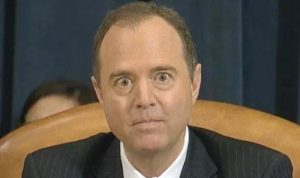
Schiff: Can’t share evidence
It was on June 12, 2016, just six weeks before the Democratic National Convention, that Assange announced the pending publication of “emails related to Hillary Clinton,” throwing the Clinton campaign into panic mode, since the emails would document strong bias in favor of Clinton and successful attempts to sabotage the campaign of Bernie Sanders. When the emails were published on July 22, just three days before the convention began, the campaign decided to create what I call a Magnificent Diversion, drawing attention away from the substance of the emails by blaming Russia for their release.
Clinton’s PR chief Jennifer Palmieri later admitted that she golf-carted around to various media outlets at the convention with instructions “to get the press to focus on something even we found difficult to process: the prospect that Russia had not only hacked and stolen emails from the DNC, but that it had done so to help Donald Trump and hurt Hillary Clinton.” The diversion worked like a charm. Mainstream media kept shouting “The Russians did it,” and gave little, if any, play to the DNC skullduggery revealed in the emails themselves. And like Brer’ Fox, Bernie didn’t say nothin’.
Meanwhile, highly sophisticated technical experts, were hard at work fabricating “forensic facts” to “prove” the Russians did it. Here’s how it played out:
June 12, 2016: Assange announces that WikiLeaks is about to publish “emails related to Hillary Clinton.”
June 14, 2016: DNC contractor CrowdStrike, (with a dubious professional record and multiple conflicts of interest) announces that malware has been found on the DNC server and claims there is evidence it was injected by Russians.
June 15, 2016: “Guccifer 2.0” affirms the DNC statement; claims responsibility for the “hack;” claims to be a WikiLeaks source; and posts a document that the forensics show was synthetically tainted with “Russian fingerprints.”
The June 12, 14, & 15 timing was hardly coincidence. Rather, it was the start of a pre-emptive move to associate Russia with anything WikiLeaks might have been about to publish and to “show” that it came from a Russian hack.
Enter Independent Investigators
A year ago independent cyber-investigators completed the kind of forensic work that, for reasons best known to then-FBI Director James Comey, neither he nor the “handpicked analysts” who wrote the Jan. 6, 2017 assessment bothered to do. The independent investigators found verifiable evidence from metadata found in the record of an alleged Russian hack of July 5, 2016 showing that the “hack” that day of the DNC by Guccifer 2.0 was not a hack, by Russia or anyone else.
Rather it originated with a copy (onto an external storage device – a thumb drive, for example) by an insider — the same process used by the DNC insider/leaker before June 12, 2016 for an altogether different purpose. (Once the metadata was found and the “fluid dynamics” principle of physics applied, this was not difficult to disprove the validity of the claim that Russia was responsible.)
One of these independent investigators publishing under the name of The Forensicator on May 31 published new evidence that the Guccifer 2.0 persona uploaded a document from the West Coast of the United States, and not from Russia.
In our July 24, 2017 Memorandum to President Donald Trump we stated, “We do not know who or what the murky Guccifer 2.0 is. You may wish to ask the FBI.”
Our July 24 Memorandum continued: “Mr. President, the disclosure described below may be related. Even if it is not, it is something we think you should be made aware of in this general connection. On March 7, 2017, WikiLeaks began to publish a trove of original CIA documents that WikiLeaks labeled ‘Vault 7.’ WikiLeaks said it got the trove from a current or former CIA contractor and described it as comparable in scale and significance to the information Edward Snowden gave to reporters in 2013.
“No one has challenged the authenticity of the original documents of Vault 7, which disclosed a vast array of cyber warfare tools developed, probably with help from NSA, by CIA’s Engineering Development Group. That Group was part of the sprawling CIA Directorate of Digital Innovation – a growth industry established by John Brennan in 2015. [ (VIPS warned President Obama of some of the dangers of that basic CIA reorganization at the time.]
Marbled
“Scarcely imaginable digital tools – that can take control of your car and make it race over 100 mph, for example, or can enable remote spying through a TV – were described and duly reported in the New York Times and other media throughout March. But the Vault 7, part 3 release on March 31 that exposed the “Marble Framework” program apparently was judged too delicate to qualify as ‘news fit to print’ and was kept out of the Times at the time, and has never been mentioned since.
“The Washington Post’s Ellen Nakashima, it seems, ‘did not get the memo’ in time. Her March 31 article bore the catching (and accurate) headline: ‘WikiLeaks’ latest release of CIA cyber-tools could blow the cover on agency hacking operations.’
“The WikiLeaks release indicated that Marble was designed for flexible and easy-to-use ‘obfuscation,’ and that Marble source code includes a “de-obfuscator” to reverse CIA text obfuscation.
“More important, the CIA reportedly used Marble during 2016. In her Washington Post report, Nakashima left that out, but did include another significant point made by WikiLeaks; namely, that the obfuscation tool could be used to conduct a ‘forensic attribution double game’ or false-flag operation because it included test samples in Chinese, Russian, Korean, Arabic and Farsi.”
A few weeks later William Binney, a former NSA technical director, and I commented on Vault 7 Marble, and were able to get a shortened op-ed version published in The Baltimore Sun.
The CIA’s reaction to the WikiLeaks disclosure of the Marble Framework tool was neuralgic. Then Director Mike Pompeo lashed out two weeks later, calling Assange and his associates “demons,” and insisting; “It’s time to call out WikiLeaks for what it really is, a non-state hostile intelligence service, often abetted by state actors like Russia.”
Our July 24 Memorandum continued: “Mr. President, we do not know if CIA’s Marble Framework, or tools like it, played some kind of role in the campaign to blame Russia for hacking the DNC. Nor do we know how candid the denizens of CIA’s Digital Innovation Directorate have been with you and with Director Pompeo. These are areas that might profit from early White House review. [ President Trump then directed Pompeo to invite Binney, one of the authors of the July 24, 2017 VIPS Memorandum to the President, to discuss all this. Binney and Pompeo spent an hour together at CIA Headquarters on October 24, 2017, during which Binney briefed Pompeo with his customary straightforwardness. ]
“We also do not know if you have discussed cyber issues in any detail with President Putin. In his interview with NBC’s Megyn Kelly he seemed quite willing – perhaps even eager – to address issues related to the kind of cyber tools revealed in the Vault 7 disclosures, if only to indicate he has been briefed on them. Putin pointed out that today’s technology enables hacking to be ‘masked and camouflaged to an extent that no one can understand the origin’ [of the hack] … And, vice versa, it is possible to set up any entity or any individual that everyone will think that they are the exact source of that attack.
“‘Hackers may be anywhere,’ he said. ‘There may be hackers, by the way, in the United States who very craftily and professionally passed the buck to Russia. Can’t you imagine such a scenario? … I can.’
New attention has been drawn to these issues after I discussed them in a widely published 16-minute interview last Friday.
In view of the highly politicized environment surrounding these issues, I believe I must append here the same notice that VIPS felt compelled to add to our key Memorandum of July 24, 2017:
“Full Disclosure: Over recent decades the ethos of our intelligence profession has eroded in the public mind to the point that agenda-free analysis is deemed well nigh impossible. Thus, we add this disclaimer, which applies to everything we in VIPS say and do: We have no political agenda; our sole purpose is to spread truth around and, when necessary, hold to account our former intelligence colleagues.
“We speak and write without fear or favor. Consequently, any resemblance between what we say and what presidents, politicians and pundits say is purely coincidental.” The fact we find it is necessary to include that reminder speaks volumes about these highly politicized times.
Why the Evidence Mueller Has for the Indicting 13 Russian Nationals is Fraudulent
By George Elias | OffGuardian | June 5, 2018
It’s almost a shame that a headline like that won’t spark anything more than casual curiosity when you consider the charges Richard Mueller is looking into. The Russian company Concord Management decided to answer his charges in early May, which threw a wrench into Mueller’s strategy.
I’m more interested in showing what Robert Mueller’s sources are not, than who they are. This opens a much greater conspiracy that’s playing out in a complicit US media today. What do I mean? The flawed source for both investigators and journalists that know anything about the Russian troll factory in St. Petersburg, Russia is Shaltai Boltai. They are supposed to be connected to the GRU (Russian Military Intelligence).
Fancy Bear is also supposedly the GRU hacking team that everyone is actually looking for. Shaltai Boltai is supposed to have those connections. Is it an official Intel operation or was a criminal undertaking to discredit Russia?
Over a year ago, I found evidence of the identity of Crowdstrike’s Fancy Bear, just short of a confession. When I looked into Shaltai Boltai, I found additional information that is even better for identifying Fancy Bear. The next article will detail that clearly.
Once it’s clear that the source of Mueller’s evidence – Russian hackers called Shaltai Boltai (Humpty Dumpty) – did NOT hack Concord Catering or the Russian government, we can cross off a couple of hackers from our list on our way to Fancy Bear. Shaltai Boltai tried unsuccessfully to confess to the DNC hacks.
They aren’t the hackers they make themselves out to be. They are Information Operation (IO) specialists that were paid to build a narrative which became a convenient hook for Mueller to hang his coat on.
Unfortunately, the slam dunk he would have won if they stayed away was taken from his grasp the second real people materialized. You see, Robert Mueller has to prove the Internet Research Company existed in reality and did the things he alleges.
He now has to authenticate the communications from the Troll Farm that his Russian interference investigation is based on and he can’t do it. This was the reason Mueller asked to delay the trial instead of moving forward. His case is built on fraudulent (nonexistent) evidence. Even that is laughable because what he is alleging goes against the grain of some of his foundational documentary evidence.
The source for Mueller’s indictment are Russian traitors that were hired for the purpose of destroying Russia. That Mueller’s evidence was an Information Operation to discredit both the Kremlin and the current US government changes everything because fabricated evidence is still considered too tainted to use in a court of law, even if the defendant is Russian.
Let’s get down to brass tacks and avoid any confusion. Once you understand that the original source of information for the Internet Research Agency, viz. hackers calling themselves Shaltai Boltai (Humpty Dumpty), fabricated the evidence, you understand the irresolvable problem Mueller stepped into.
Mueller’s problem in this scenario, according to what should be a foundational article by Scott Humor at the Saker, is that the “Internet Research Agency”, which existed only on paper, ceased to exist in 2015. It was liquidated and merged with a construction retail company called TEKA. I found Humor’s article after almost finishing this one. He left little need for any additional research on the matter.
About the troll farm, he notes the results of a court case that an NGO was pushing to get legal recognition of the troll farm as a working business in St Petersburg. It didn’t work out.
One example, a woman with the last name Malcheva filed a lawsuit in court against the companies “Internet Research, LLC” and “TEKA, LLC,” claiming unpaid wages.
The court asked her to produce evidence of her work, and then denied her claim after she produced a photo of a computer with an IP address on its screen as evidence of her employment.
IP Address 109.167.231.85
inetnum: 109.167.231.0 – 109.167.231.255
netname: WESTCALL-NET
descr: S-Peterburg Hotel Corintia Wi-FiAn IP address that was assigned to a luxury hotel in Saint-Petersburg. A hotel that was awarded multiple international awards for excellence. An immensely popular hotel among discriminating travelers. A very expensive hotel located in the center of a historic city. The woman claimed that she was an “online troll” working from this location ten hours a day with hundreds of other virtual trolls. The judge didn’t believe her. Would you? – Scott Humor Saker.is
Secondly, and more importantly, is that although charged with treason by the Russian government, the “hackers” did not serve time for hacking. They served time for conspiring against the Russian government. This is an important point.
First things first, how do I know it is an information operation against the United States? Everything hinges on how carefully and accurately this single question is answered.
If Mueller is alleging that this entity interfered in the 2016 US election, yet all the information about it is faked, it is safe to say the word Information Operation.
The reason is simple. The “Anon” information Mueller uses for his indictment about the Russian Internet Research Agency every MSM news story is based on states quite clearly in the posts that it is an Information Operation. Shaltai Boltai reiterates this fact throughout different posts!
If only this single fact is true, Robert Mueller needs to step down to answer some questions. The first one is why he would knowingly take part in a foreign influence operation to publicly destroy the credibility of the United States Government?
Before getting into some of the fraudulent information, watch how the source purposefully discredits itself. I don’t think the hacker imagined things would bloom this large. The following are a couple of questions the hacker answered for a journalist. Question 2 was asked because this hacker group is anti-Putin and anti-Russian government as it stands.
The answer to question 3 states they are an Information Operation seeking to influence (policy). While it is a surprise that even a highly politicized investigation would claim fabrications as legitimate evidence, it’s more of a surprise that it wasn’t caught by MSM. You’ll see for yourself, the hackers were honest. Mueller, on the other hand, is not.
From the b0ltai.wordpress.com June 5th, 2014 post – These were questions that a Russian journalist asked the Anon group that found the Russian Internet Research Agency(IRA) of St. Petersburg and released the information currently used by Mueller and the MSM including the New York Times.
2. Journo: Many consider you a “wiring”(wire service) for the discharge of Kremlin secrets. What do you say to that?
Shaltai Boltai: How many people, so many opinions. We do not intend to prove or deny it. We will be told for already laid out “stories” and those that we will lay out.
3. Journo: What is your ultimate goal?
Shaltai Boltai: We never concealed it. The goal is published in our blog and twitter – we create realities and give meanings to words. More – trying to change reality, create another reality. To launch certain events according to a certain scenario.
So, there it is. This informative post is a confession by the original source made directly after posting information about the Russian Internet Research Agency for over one month in May 2014.
If the information that Mueller used in his indictment was true, it would still have to be thrown out of a court of law because of the source. In the US, a police officer can’t lie to a judge or grand jury about probable cause to get a search or arrest warrant and expect anything he found to be admissible in court. Special Prosecutor Mueller can’t either. He cannot cite information that :
- Was purported to be hacked and was obtained illegally if that were true
- Cannot use information where the source states the information was manufactured to create new realities, in this case political realities.
- Fake emails do not constitute evidence. None of the MSM stories even provide him with an inch of cover.
- He doesn’t get a free pass today.
Let’s step back and look at how this developed. The second point that deserves special attention from Robert Mueller’s investigative team is the “Russians” shown through the hacked documents don’t seem to speak Russian or English well. It’s kind of like Mr. Bean does James Bond. It’s funny and at the same time absurd because it could never work.
The Russian language mistakes are grammar school stuff like you’d expect from a foreigner. They consist of basic spelling, gender confusion, and other simple grammatical errors that won’t be found in communications from law firms or multimillion dollar businesses.
This is important because according to Mueller the IRA (Internet Research Agency) is supposed to be composed of handpicked professional journalists, information war specialists, attorneys, and business people. These are supposed to be educated people. After all, they got past 19 Intel agencies right?
The hackers material almost conclusively shows that the Concord communications shown below were from people that use Russian as a 2nd language. I will post a link and show you how to search the blog easily. If they take the blog down, I saved it on the Wayback machine. It is entirely searchable and it is saved for posterity.
Next up, looking at the basic technical information. The proofs were posted by the hacker before anyone was looking for them, so that’s pretty bad. They seem very juvenile.
According to Paul Craig Roberts, “Mueller claims to have emails from some of the 13 Russians. If the emails are genuine, they sound like a few kids pretending to friends that they are doing big things. One of the emails brags that the FBI got after them so they got busy covering up their tracks.”
And Rollingstone Magazine wrote “All 13 individuals are named in the indictment, including Yevgeniy Viktorovich Prigozhin, a Russian oligarch who is the man behind the Internet Research Agency, the so-called “troll factory” located in St. Petersburg, Russia… Prigozhin, who is otherwise known as “Vladimir Putin’s chef,” operates a catering company and a related consulting firm, Concord Catering and Concord Management and Consulting LLC, both of which participated in the 2016 U.S. election conspiracy and both of which were also indicted by Mueller.
Prigozhin is supposed to be at the center of this. If you know anything about well-heeled Slavic Oligarchs, or just fat cats in general, regardless of who they are, they take a lot of pride in the look of their organizations.
This is where the source information gets interesting.

The email is supposed to address Roman Kovalev at Prigozhin’s Concord Catering and Concord Management and Consulting LLC. Do you see the problem?
All the pieces of correspondence share the same traits. Either Ole’Yevgeniv (Prigozhin) is the cheapest Oligarch on the planet and uses gmail and yandex for company correspondence – or it is a fake email. If the emails are faked, what need is there to go on trying to convince you further? We’ve already crossed the endzone and scored.
The image below shows what real authenticated Concord Catering and Concord Management and Consulting LLC contact information looks like. Can you see the difference right away? If you were spending $1 Million + on a project every month, wouldn’t you give your project management something a little more secure than gmail and maybe just a touch snazzier?

There are no gmail addresses here. If we look at another image we can get down to how elite these trolls were very quickly.

I clicked on the image at the hackers blog and if you look at the link on top, the name of the image appears – “troll.jpg”. By itself it means nothing. But we’ve already found out what’s going on. When you look at the communication, it is poorly formed instructions to post videos and comment.
How good is the supposed Information Operation unit of the Internet Research Agency in St. Petersburg?
According to Mueller’s hackers, they were bad. No, beyond bad, they were barely literate in English, bad. They probably had a hard time getting directions to Starbucks, bad. Yes, I mean bad.
From the hackers in June, 2014: “Igor Osadchy is the head of the “external department” of the AII (Internet Research Agency, also known as the “trolley factory in Olgino”), that is, the very Prigozhin trolls working in bad English on foreign sites and flooding their “sincere” opinion forums and comments foreign media.”
If this is the source Mueller is using, it’s not just tainted information, it’s information that is tainting you. Look at how this foreign information operation is playing out across American media and dividing society. The following shows these posts are from the hackers.

According to the Washington Post, the other staff mentioned are merely incidental. I mean, it seems like they put down all the names they could get. Some were people that worked there in 2014, but most of these guys didn’t work for the troll factory for a long time. They didn’t even work for the troll factory during the elections.
Wikipedia also tells us that “The extent to which these Russians tried to influence public opinion using social media became widely known after a June 2014 BuzzFeed article greatly expanded on government documents published by hackers earlier that year.”
Adrian Chen’s non-article at the New York Times identifies the above as the source that Robert Mueller would eventually use. The hacking group using the Anonymous name isn’t even part of Anonymous.
At this point I can sit and list every article, publication, and journalist that has been taken in by this information operation, but what would be the point.
Israel joins NATO drill in Europe for the first time
RT | June 4, 2018
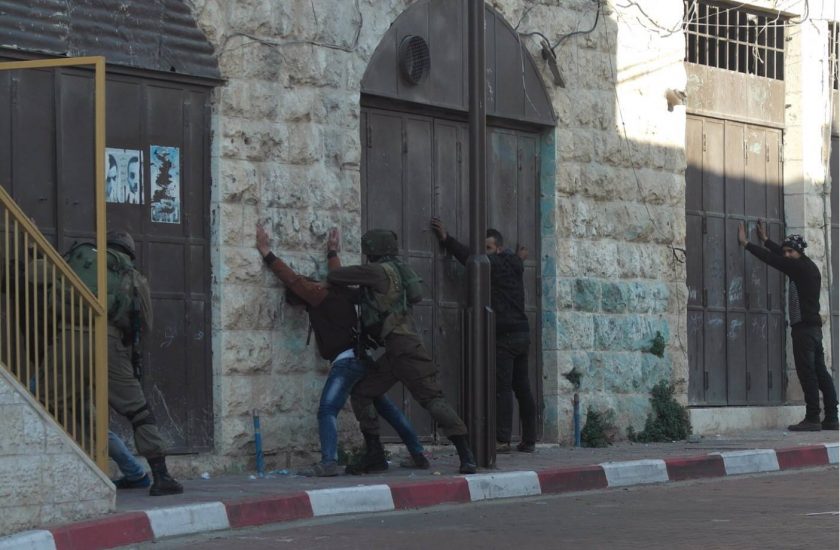
Israeli troops have joined NATO war games in Eastern Europe for the first time. One of the scenarios includes crushing an armed rebellion.
Soldiers from a paratrooper brigade are participating in the NATO exercise ‘Swift Response’, which “simulates combating military uprisings in Europe,” the Israeli spokesperson said on Monday.
The annual drill led by the US European Command takes place across Germany, Poland, Lithuania and Latvia, with 10 nations involved in the maneuvers. Troops from non-NATO member Israel will train alongside the US 173rd Airborne Brigade and the Texas National Guard. According to the Pentagon, the maneuvers include “rapid response infiltration”, air assault operations and the evacuation of non-combatants.
The exercise takes place simultaneously with two other NATO drills in Europe. The two-week war game ‘Saber Strike’ amasses 18,000 soldiers from 19 countries, with troops deployed in Poland and the Baltic States. They will master the deployment of military convoys to defend NATO’s eastern flank, as well as operations across rivers and bridges.
Additionally, 37 warships are docked at the Lithuanian port city of Klaipeda for an ongoing naval drill ‘BALTOPS’. All in all the exercise led by US 6th Fleet Vice Admiral Lisa Franchetti will involve 60 aircraft and 42 ships from 22 nations.
All three drills are taking place close to the Russian border, and Moscow has been regularly warning that NATO military buildup at its doorstep undermines the stability and security climate on the European continent.
Russia is “closely observing” the war games and undertaking all “necessary measures” to ensure Russia’s own security during the maneuvers, the president’s spokesman Dmitry Peskov said Monday. Commenting on the largest of its exercises in the region, US Army Europe has claimed that ‘Saber Strike’ “is not a provocation of Russia.”
Israel had been an active NATO partner since the 90s, and the cooperation with the Bloc intensified in recent years, particularly in the field of combating terror threats. Israeli diplomatic mission at NATO HQ in Brussels was opened in 2016, with several cooperation agreements following. However, as NATO General Secretary Jens Stoltenberg confirmed last week, the Bloc’s security guarantees “do not apply” to Israel since it is not a member of the alliance.
Read more:
Putin Signs Bill on Countermeasures Against US, Its Allies
Sputnik – 04.06.2018
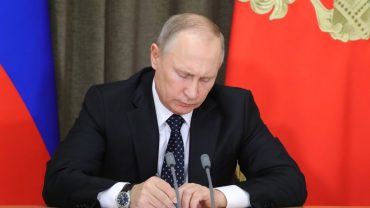 Russian president Vladimir Putin has signed a bill on countermeasures against the United States and its allies.
The law enters into force on the day it is published.
The bill was passed by the Russian Lower House in May. The goal of the legislation is to defend Russia’s sovereignty from “unfriendly actions” by Washington and other foreign states that have imposed political and economic sanctions on Moscow.
On April 6, Washington unveiled new sanctions on Russia over what it described as “global destabilization efforts.” The sanctions list included senior government officials, and lawmakers, as well as major business owners and private and state-owned companies under their control.
In response, Russian Prime Minister Dmitry Medvedev said that Moscow reserves the right to respond to the new US anti-Russia sanctions and may review trade deals.
The Russian Embassy in the United States said that the new package of sanctions is another hit to bilateral relations, adding that the sanctions will hurt thousands of Russian citizens who are part of the businesses that were targeted.
“Real” Assassin Arrested In Staged Kiev Hit Linked To Ukrainian Intelligence As Official Story Unravels
By Tyler Durden – Zero Hedge – 06/02/2018
The Ukrainian government’s staged assassination of anti-Putin journalist Arkady Babachenko has taken an even stranger turn, as evidence has emerged that his would-be “Russia-ordered” assassin and the man who supposedly hired him, both say they worked for Ukrainian counterintelligence, casting serious doubt on the official story.
To review, Ukrainian authorities announced last Tuesday that Babachenko had been assassinated after returning home from the store. On Wednesday, Babachenko appeared at a press conference with Ukrainian authorities who said that the faked assassination was an elaborate sting to bust an actual hit planned by Russia.
Only now we find that the hitman, Oleksiy Tsimbalyuk, is an outspoken critic of Russia who says he worked for Ukrainian counterintelligence – a claim Ukraine initially denied but later admitted to be true. Meanwhile the guy who supposedly hired Tsimbalyuk, Boris L. German, 50, also says he worked for Ukrainian counter-intelligence, a claim Ukraine denies as its immediately destroys the carefully scripted, if rapidly imploding, Ukrainian narrative meant to scapegoat Russia for what has been a “fake news” story of epic proportions, emerging from the one nation that not only was the biggest foreign donor to the Clinton foundation, but has made fake news propaganda into an art form.
The New York Times reports that Tsimbalyuk – a former Russia-hating priest was featured in a 10-minute documentary in January 2017 in which “he called killing members of the Russian-backed militias in eastern Ukraine “an act of mercy”, further calling into question why Russia would hire him for the supposed assassination in the first place.
Facebook pictures also reveal Tsimbalyuk wearing a Ukrainian ultranationalist uniform from “Right Sector,” a group deemed to be neo-Nazis.
As even the Russophobic NY Times puts it:
Given such strong and publicly avowed enmity toward Russia, it is odd to say the least that Mr. Tsimbalyuk would be selected to carry out the contract killing of a prominent Kremlin critic.
German claims he took orders from Moscow businessman Vyacheslav Pivovarnik – who he says works for one of Putin’s personal foundations.
Ukrainian officials also claim that German has a list of another 30 targets which Moscow wants to wipe out – something he claims he has since passed onto Kyiv.
Prosecutors claimed German had been given a down payment of $15,000, half what he was promised for carrying out the hit.
German said: ‘I got a call from a longtime acquaintance who lives in Moscow, and in the process of communicating with him it turned out that he works for a Putin foundation precisely to orchestrate destabilization in Ukraine.’ –Daily Mail
“Six months ago, my old acquaintance contacted me, an ex-citizen of Ukraine, now living in Moscow,” German told a Ukrainian court, adding “He works in a personal foundation of Putin’s – and is in charge of organizing riots in Ukraine and planned acts of terror at the next presidential elections. He is called Vyacheslav Pivovarnik. This is not a fairy tale, there’s nothing mystical here, everything has been proved.”
German’s lawyer Eugene Solodko wrote on Facebook that his client was an executive director of Ukrainian-German firm Schmeisser – the only non-state owned arms producer in the country.
Russia has denied German’s claim, with a Putin spokesman saying “No such foundation exists in Russia. Any allegations about Russia’s possible complicity in this staging is just mudslinging. They do not correspond to reality.”
Meanwhile, senior Ukraine officials have been on the defensive since Wednesday, when the head of security services announced they had staged the death of Babchenko so they could track his would-be killers to Russian intelligence, a story the International Federation of Journalists slammed as idiotic, nonsensical and completely undermining Ukraine’s credibility.
Bill Browder Escapes Again
By Philip Giraldi | American Herald Tribune | June 2, 2018
There was some good and bad news last week. The good news was that William Browder, a London-based investor and dedicated foe of Russian President Vladimir V. Putin was arrested by the Spanish police on Wednesday. The bad news is that even though Russia has on six occasions requested Browder’s arrest through Interpol for tax fraud, the Spanish national police determined that Browder had been detained in error because the international warrant was no longer valid and released him.
Interpol, an organization of 190 countries cannot legally enforce any action of a “political character.” This can make it difficult to obtain red notices such as those being sought by Russia on Browder, which are the equivalent of international arrest warrants.
One might reasonably ask why there is a crisis in US-Russia relations at all since Washington and Moscow have much more in common than not, to include confronting international terrorism, stabilizing Syria and other parts of the world that are in turmoil, and preventing the proliferation of nuclear weapons. In spite of all that, the U.S. and Russia are currently locked in a tit-for-tat unfriendly relationship somewhat reminiscent of the Cold War and it is only getting worse as self-appointed “experts” including Browder continue to prowl the fringes of policy making. Browder was in Spain to testify in a case against several Russian companies.
That William Browder might be regarded as controversial is somewhat of an understatement. Many who regard him as a crook serving as a catalyst for the bad policies relating to the U.S.-Russia relationship would like to see him in jail. Israel Shamir, a keen observer of the American-Russian relationship, and celebrated American journalist Robert Parry both think that Browder single-handedly deserves much of the credit for the new Cold War.
William Browder, the grandson of Earl Browder, former head of the American Communist Party, is a hedge fund operator who made his fortune in the corrupt 1990s world of Russian commodities trading. One of many Jewish profiteers who descended on Russia, his current role is symptomatic of why the United States government is so poorly informed about overseas developments as he appears before Congress frequently and is the source of much of the “testimony” contributing to the current bad international climate. He has somehow emerged as a trusted source in spite of the fact that he has considerable interest in cultivating a certain outcome favorable to himself. Also ignored is his renunciation of American citizenship in 1998, reportedly to avoid taxes. He is now a British citizen.
Browder is notoriously the man behind the 2012 Magnitsky Act, which exploited Congressional willingness to demonize Russia and has done so much to poison relations between Washington and Moscow. The Act has sanctioned individual Russian officials, which Moscow has rightly seen as unwarranted interference in the operation of its judicial system.
Browder, a media favorite who self-promotes as “Putin’s enemy #1,” portrays himself as a selfless human rights advocate, but is he? He has used his fortune to threaten lawsuits for anyone who challenges his version of events, effectively silencing many critics. He claims that his accountant Sergei Magnitsky was a crusading “lawyer” who discovered a $230 million tax-fraud scheme that involved the Browder business interest Hermitage Capital but was, in fact, engineered by corrupt Russian police officers who arrested Magnitsky and enabled his death in a Russian jail.
Many have been skeptical of the Browder narrative, suspecting that the fraud was in fact concocted by Browder and his accountant Magnitsky. A Russian court has supported that alternative narrative, ruling in late December 2013 that Browder had deliberately bankrupted his company and engaged in tax evasion. He was sentenced to nine years prison in absentia.
William Browder has also been regularly in the news in connection with testimony related to Russiagate. On December 16, 2017 Senator Diane Feinstein of the Senate Judiciary Committee released the transcript of the testimony provided by Glenn Simpson, founder of Fusion GPS. According to James Carden, Browder was mentioned 50 times, but the repeated citations apparently did not merit inclusion in media coverage of the story by the New York Times, Washington Post and Politico. Browder has become such an essential asset in the media story about “evil” Russia that he has become in a certain sense bullet proof in spite of his own personal very questionable history.
Fusion GPS, which was involved in the research producing the Steele Dossier used to discredit Donald Trump, was also retained to provide investigative services relating to a lawsuit in New York City involving a Russian company called Prevezon. As information provided by Browder was the basis of the lawsuit, his company and business practices while in Russia became part of the investigation. Simmons maintained that Browder proved to be somewhat evasive and his accounts of his activities were inconsistent. He claimed never to visit the United States and not own property or do business there, all of which were untrue, to include his ownership through a shell company of a $10 million house in Aspen Colorado. He repeatedly ran away, literally, from attempts to subpoena him so he would have to testify under oath.
Per Simmons, in Russia, Browder used shell companies locally and also worldwide to avoid taxes and conceal ownership, suggesting that he was likely one of many corrupt businessmen operating in what was a wild west business environment. My question is, “Why was such a man granted credibility and allowed a free run to poison the vitally important US-Russia relationship?” The answer might be follow the money. Israel Shamir reports that Browder was a major contributor to Senator Ben Cardin of Maryland, who was the major force behind the Magnitsky Act.
Cardin and others in Congress have made Russia the bete noir of American politics, finding it convenient to scapegoat Moscow for the failure of the United States to put together a coherent and functioning foreign policy. Bill Browder is an essential component in that effort. Perhaps someone should ask him how he became a billionaire in a corrupt Russia going through political crisis and democratization in the 1990s. It would be interesting to learn what he has to say in his defense.
Featured Video

Death Spikes & Rising Cancer In Our Youth Explained
or go to
Aletho News Archives – Video-Images
From the Archives
Politicians lie
By Mazin Qumsiyeh | Popular Resistance | August 18, 2013
There is no way to say this truth nicely: Politicians lie. That includes Japanese, American, Egyptian, Israeli, and Palestinian politicians! Is there something more common sense than that? Yet, so many citizens around the world believe their own politicians or wistfully acknowledge lies but think it is part of the job needed to run things. They believe even when politicians contradict themselves blatantly. This phenomenon is rather remarkable. It is a dissonance and disconnect from reality that many seem oblivious to. It is very dangerous because it can lead to accepting rationales for going to war. These can be deadly wars that lead to millions of lives lost as happened in what was called World War 1 and WW2. Even when incredible and declassified evidence abound, politicians continue to lie and old mythologies refuse to die. Here are just a few of the countless lies told to us over the past few decades… continue
Blog Roll
 Aletho News
- Iran flights continue despite US aviation sanctions
- Global Tipping Points Lead the World Into a State of Entropy
- The day-after at the White House: USA and Xi Jinping
- The Geopolitical Balance in the Red Sea: The UAE Being Displaced by New Players
- Iraqi resistance group vows to stage airport sit-ins over Iran aerial blockade
- Turkish parliament to review Saudi-Pakistan defense pact next month
- DEATH SPIKES & RISING CANCER IN OUR YOUTH EXPLAINED
- Iran offers Trump deal before US election
- Merz regime wants ‘secret police’ – opposition
- Israeli settlers terrorize West Bank Palestinians with state-provided drones: Report
- If Americans Knew
- Deconstructing Netanyahu’s pants-on-fire UN rant – Daily Update
- Trump betrayed voters with his campaign lies and prioritized a foreign country once he took office
- Netanyahu calls Israel’s war in Gaza ‘opposite of genocide’ in UN speech to near-empty hall
- Settler Kidnappings: Torture, Sexual Abuse and Terrorisation of Palestinian Abductees as Israel Deepens Annexation of West Bank
- Gaza winter nears as 162,000 tents become unusable, raising fears of humanitarian crisis
- Netanyahu says, “It’s the opposite of genocide”; UN says Gaza economy is world’s ‘most severe crisis on record’ – Daily Update
- Israel’s US-Backed Assault on Gaza Has Created the ‘World’s Most Severe Economic Crisis on Record’: UN
- ‘Protecting U.S. Citizens’… From Israel
- ‘This is where I live now, the back of a truck’: a day in the life of a grandmother in Gaza
- In UN Speech, Iran’s President Displays Pictures of Children Killed by US, Brings Attention to Israel’s Nuclear Arsenal
- No Tricks Zone
- New Study: Earth And Venus Surface Warmth Largely Explained By Convection And Lapse Rate, Not CO2 Or Radiation
- 2025 Nature Paper Claiming Worsening Global Drought Gets RETRACTED …Heavily Flawed
- New Study: ‘Global Drought Shows No Detectable Recent Acceleration Under Climate Warming’
- Economic Masterminds: German Socialists Suggest Taxing Productivity Gains Stemming From Using AI
- The South China Sea Has Not Been Cooperating With The Climate Change Narrative
- Energy Crisis: Germany Enters Heating Season With Historically Low Gas Reserve Fill Levels
- New Study: The Antarctic Ice Sheet Gained Mass From 2020-2024 Due To Staggering Snow And Ice Accumulation
- Study: Ocean Heating Rates From Thousands Of Years Ago ‘Dwarf’ Modern Ocean Heating Rates
- Climate Extremists Target, Attack Large-Scale Power Grid Infrastructure In Germany!
- New Study: Antarctic Ice Melt Has Contributed Less Than 1 Centimeter To Sea Level Rise In The Last 30 Years

