US Political Meddling is Very Real, Spans the Globe
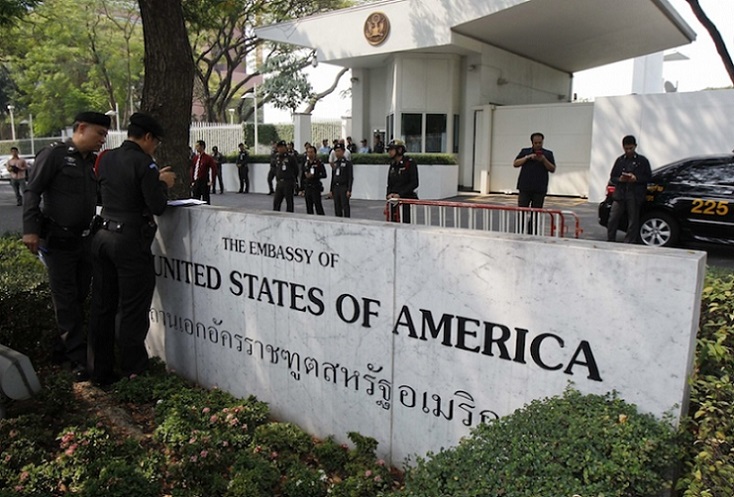
By Ulson Gunnar – New Eastern Outlook – 13.03.2018
The United States has spent over a year now leveling accusations against the Russian Federation regarding alleged political meddling during the 2016 US elections. While accusations range from everything including “fake news” spread across the Internet to direct ties to the administration of US President Donald Trump used to assist him into power, no evidence has yet to surface to prove Russia has meddled at all in America’s internal political affairs.
And while Russia certainly possesses a large and growing presence across the international media, concerted attacks against this presence stems more from the fact that decades of uncontested control over global public opinion by the US and Europe is now shifting toward a multipolar balance of power in information space.
In stark contrast to the whispers of shadows cited by the US and Europe regarding Russia, to begin understanding the scope of US political meddling abroad, one needs only to visit the US State Department and corporate-funded National Endowment for Democracy’s (NED) own website.
Industrial-Scale Meddling
US meddling is so extensive that NED is broken into multiple subsidiaries (National Democratic Institute (NDI), International Republican Institute (IRI) and Freedom House) which in turn, are joined by parallel organizations such as George Soros’ Open Society Foundation, USAID, the UK’s DFID and many more.
The NED website is broken into several regions including:
Africa;
Asia;
Central and Eastern Europe;
Eurasia;
Global;
Latin America and Caribbean and;
Middle East and Northern Africa.
Within each region, NED lists its extensive funding for organizations and fronts in over 100 different nations around the globe.
Within each nation, NED funds between a handful to several dozen organizations posing as legal firms, media platforms, environmental groups and human rights advocates. They collectively create the components of a political machine used to pressure incumbent governments to heed US interests, or overthrow them if they fail to.
Because the NED and recipients of its funding are increasingly exposed as a form of political subversion, NED has opted to list its funding in some nations in very general terms, never revealing the actual organizations or individuals receiving US money. Many organizations in targeted nations refuse to disclose their funding to the public. Many even possess the gall to solicit public donations despite receiving (and concealing) extensive funding from the US government.
Asia
Entire opposition parties have been created by NED. One example is that of the current government in Myanmar headed by State Counselor Aung San Suu Kyi and her National League for Democracy (NLD). From the party’s senior leadership, down to its rank and file, many NLD members are the direct recipients of indoctrination and training provided by programs funded by the US NED.
Current Minister of Information Pe Myint, was trained in a US NED-funded program hosted by the Bangkok-based Foreign Correspondents’ Club of Thailand (FCCT), which the FCCT would later deny despite evidence appearing on their own website confirming otherwise.
Elsewhere in Asia, the current anti-government opposition in Thailand consists of a small network of NED-funded organizations which dovetail into the US and European media organizations operating out of Bangkok. Small protests consisting of only 5-10 individuals are transformed into international headlines by NED’s army of media fronts including Prachatai, Thai Lawyers for Human Rights, the Cross-Cultural Foundation and their partners in the US and European press as well as Western diplomats who all openly collaborate and coordinate daily across social media.
When agents of foreign interests are arrested, they are often accompanied by US, British, Canadian and European Union diplomatic staff to police stations.
In next door Cambodia, the Cambodia National Rescue Party (CNRP) is led by Kem Sokha who previously and repeatedly traveled to Washington to openly conspire against the government in Phnom Penh before being arrested by Cambodian authorities. Ironically, while the US punishes Russia for mere allegations of political interference, it demands Cambodia release opposition members caught openly discussing their plans with opposition media to overthrow their own nation with America’s assistance.
Hong Kong, since returning to China after an extended period of occupation by the British, is also home to a large network of US NED-funded opposition aimed at Beijing. A similar hypocrisy is demonstrated by Washington as it protests the exposure and disruption of these foreign-funded networks of subversion Washington itself would never tolerate upon its own shores.
The Middle East
It is a fact, admitted by prominent US media platforms such as the New York Times, that the entire 2011 Arab Spring was a result of extensive preparations directed by the NED, its partners and subsidiaries.
After helping create the conflicts currently consuming the Middle East, NED now funds a variety of activities in nations like Syria to help prolong the conflicts. This is done by aiding and abetting militants fighting Damascus under the guise of providing humanitarian aid. It also includes assisting in the administration of territory seized by militants from Damascus’ control.
The nation of Iran, yet to be consumed by the violence sweeping across Syria, Yemen, Libya and Iraq, is host to networks of both NED-funded and CIA-backed groups ranging from supposed activists, to militant groups aimed at the violent overthrow of the government in Tehran.
Eastern Europe
It was in Eastern Europe that NED perfected what is now called the “color revolution.” It is now admitted that the US NED and other US agencies played a pivotal role in overthrowing the governments of Georgia, Ukraine and Serbia. It was in fact the US-backed overthrow of the Serbian government in 2000 that Cambodia’s Kem Sokha cited as a model to replicate in Southeast Asia with US assistance.
After the collapse of the Soviet Union, the NED’s color revolutions swept through Eastern Europe like a plague, consuming national sovereignty and bending the former Soviet territories to new masters in Washington, London and Brussels.
More recently, as Russia has begun to reassert itself and court nations in both Eastern and Western Europe, NED has stepped in once again to oust leaders who refuse to reduce or eliminate economic, military and diplomatic ties with Russia at Washington’s behest. A prime example of this includes the 2013-2014 Euromaiden protests in Ukraine. During 2013-2014, US senators including John McCain would literally take to the protest stages in Kiev to offer direct political support for the unrest which was spearheaded by Neo-Nazi political circles.
Russia
Remarkably, as Washington accuses Russia of political meddling within the United States, the NED openly lists nearly 100 subversive activities or organizations they are funding inside of Russia itself. Beyond what is listed on NED’s website is support the US and Europe is providing unpopular opposition figures like Alexei Navalny, the now deceased Boris Nemtsov, Yevgeniya Chirikova (NED-funded Strategy 31), Lev Ponomarev (NED-funded Moscow Helsinki Group), Liliya Shibanova (NED-funded GOLOS) and many others who have been repeatedly caught conspiring with American diplomats and financiers backing their subversive activities.
Were evidence to surface that Russia did any of the above forms of meddling, including maintaining entire stables of opposition figures who regularly filter in and out of the Russian Embassy in a targeted nation, it would be categorically condemned by Washington. Yet Washington flagrantly engages in overt political subversion, not just in Russia, but in (at least) 100 other nations around the globe, including nations the US is currently, outright occupying militarily.
For empire, what it fears the most is competition. It seeks to be the sole hegemon with all else beneath it. The US does not oppose political meddling in a sovereign nation’s affairs, it opposes the obstruction of its own meddling worldwide and seeks to eliminate others offering better alternatives to coercive subjugation by Washington, thus why it has singled out nations like Russia, China and others who are increasingly successful in doing just that.
For those tempted to join the bandwagon in condemning nations like Russia and China of political meddling, first they must recognize and account for the industrial scale meddling the US and its European partners are engaged in.
For those who are taking NED money worldwide in the belief that they are somehow advancing a liberal progressive agenda, particularly democracy, they must ask themselves what about a foreign nation meddling in their nation’s political affairs is “democratic” or conducive to the principles of self-determination democracy is built upon? One cannot honestly conclude that NED money is meant to support a nation’s capacity to determine its own destiny when clearly Washington is spending these vast amounts of money in order to determine it for that nation.
UK intelligence may be complicit in Skripal’s poisoning – ex-FSB head
RT | March 13, 2018
A former FSB director suggested British intelligence agencies may be complicit in the attempt on the life of former double agent Sergei Skripal, adding the incident has actually caused “enormous harm” to Russia.
Nikolay Kovalev, former director of Russia’s Federal Security Service (FSB), told RIA Novosti on Tuesday it is mainly the UK and its ally the US who benefit from Skripal’s poisoning. The former military intelligence officer was exposed as a British spy back in the early 2000s.
“It looks like British secret services are complicit in it,” Kovalev went on. “[Defectors] are fully under surveillance … the secret services are monitoring them, they know their whereabouts and schedules. And then you have such strange events happen in a row.”
Kovalev, who led the FSB from 1996 until 1998, said he believes that a series of assassination attempts targeting defectors in the UK makes him think that the British “scapegoat this or that traitor after having utilized him to the maximum extent, and then say the Russians did it.”
Skripal, 66, and his 33-year-old daughter Yulia were found unconscious on a bench outside a shopping center in Salisbury last week, prompting London to pin the blame on Moscow.
On Monday, British Prime Minister Theresa May said the poisoning was either “a direct act by the Russian state on Britain,” or the Russian government had allowed the alleged nerve agent, ‘Novichok’, to get into the wrong hands.
“The government has concluded that it is highly likely that Russia was responsible,” she said.
Kovalev dismissed the claim, saying the nerve agents could have been stored in any post-Soviet country, including Ukraine.
“Given that [such substances] were stockpiled in former Soviet Union republics – sorry, but Ukrainian involvement can’t be ruled out,” he said.
His assessment has been echoed by another former security official who suggested the nerve agent allegedly used in the attempt on Skripal’s life was produced in the UK. General Vladimir Mikhailov, a former high-ranking FSB officer, told RIA Novosti that if Vil Mirzayanov, a Russian chemical weapons expert who defected to the West in the early 1990s, had disclosed the formula, MI6 “could have synthesized the agent and used it for political purposes.”
UK TV regulator writes to RT, says it may consider whether channel’s license is ‘fit and proper’
RT | March 13, 2018
Britain’s media regulator Ofcom says it will “consider the implications for RT’s broadcast licenses” if it’s determined there was “an unlawful use of force by the Russian state against the UK” in the poisoning of Sergei Skripal.
In a statement, Ofcom said: “As the independent UK broadcasting regulator, Ofcom has an ongoing duty to be satisfied that broadcast licensees remain fit and proper to hold their licences.
“We have today written to ANO TV Novosti, holder of RT’s UK broadcast licences, which is financed from the budget of the Russian Federation. This letter explained that, should the UK investigating authorities determine that there was an unlawful use of force by the Russian State against the UK, we would consider this relevant to our ongoing duty to be satisfied that RT is fit and proper.”
“The letter to RT said that we would carry out our independent fit and proper assessment on an expedited basis, and we would write to RT again shortly setting out details of our process.”
RT said in a statement that it disagreed with the position taken by Ofcom. “Our broadcasting has in no way changed this week from any other week, and continues to adhere to all standards.
“By linking RT to unrelated matters, Ofcom is conflating its role as a broadcasting regulator with matters of state. RT remains a valuable voice in the UK news landscape, covering vital yet neglected stories and voices, including those of the many MPs and other UK public figures who have been shut out of public discourse by the mainstream media.”
When the threat of having its license revoked first came to light, RT said the banning of the channel would do “away with any concept of press freedom in the UK.”
British Prime Minister Theresa May gave Moscow one day on Monday to explain the alleged use of a military-grade nerve agent, which the UK claims came from Russia to poison ex-double agent Skripal and his daughter Yulia. May says it’s “highly likely” Moscow was responsible.
She alleges the attack was either a direct act by the Russian state on Britain, or the Russian government allowed its nerve agent ‘Novichok’ to get into the wrong hands. “The government has concluded that it is highly likely that Russia was responsible,” she said.
READ MORE: ‘What about freedom of speech?’ Twitter fury over MPs’ calls to ban RT
After the statement in the House of Commons, Labour MP Chris Bryan asked May: “Can we just stop Russia Today [RT] broadcasting its propaganda in this country?” The PM responded by saying she would update MPs on “further measures” later this week.
The threat of banning RT led to a backlash from some on Twitter. RT contributors, viewers and members of the public speaking out against the proposal with some calling it an attack on “freedom of speech.”
Gaslighting about the realities of “state-sponsored murder”
OffGuardian | March 12, 2018
Theresa May has just semi-officially pronounced the Skripal case a Russian state-sponsored hit. No evidence was presented for this conclusion of course, but we are getting used to that now. Belief is the new evidence. And in this case we do seem to have belief in large quantities.
Russia now effectively is being called upon to prove its innocence by tomorrow (Tuesday) or face Theresa’s wrath.
We’ll see how that goes over.
Of course there’s the immensely handy fact the “nerve agent” allegedly used is “Russian” too. Novichok no less, a Soviet-era toxin from the 1980s, described on Wikipedia as “the most deadly nerve toxin ever made.”
Though it wasn’t only produced in Russia, but in Uzbekistan.
And by the way the US has been “helping” Uzbekistan clean up its chemical weapons sites since 1991.
And of course Russia had destroyed all its chemical weapon stockpiles by 2017.
But the US still hasn’t (see MoA link above).
Still, so, as far as the state machine is concerned the alleged use of Novichok about clinches it for Putin. He dunnit. Verdict pronounced, let’s hurry on to the sentencing. What will it be? More sanctions? A Skripal Act to rival Magnitsky’s? Moving UK troops closer to Russia’s borders? Driving Russian money out of London? Messing with the World Cup?
While the UK establishment shoots its wad fantasising about all these glorious possibilities, let’s take a quick reality check.
Russia has absolutely nothing to gain from initiating the poisoning of Skripal, and even less to gain from leaving a calling card made of Novichok.
This is so obviously true even spokespeople for the UK establishment admit it openly, for example Andrew Wood, former UK ambassador to Moscow, is quoted in the Guardian saying
it’s very hard to see what profit they can get from this
Though of course this hasn’t stopped the same people who admit this to be true also claiming to be absolutely sure Russia did it.
Absent sane motives they have had to invent insane ones instead. Russia are just crazy, bent on vengeance, spoiling for a fight. Their blatant and self-destructive action, says Wood:
advertises the fact that they are vindictive and dedicated to pursuing revenge.
Reliably deluded and fact-defying Luke Harding adds his own pulp spy-thriller spin:
The use of novichok in Salisbury not surprising but remarkable. Developed by Soviet Union in 70s and 80s, and more deadly than VX nerve agent. A brutal calling card that would inevitably be discovered. Conclusion: Putin and FSB wanted this row now
— Luke Harding (@lukeharding1968) March 12, 2018
You see? Russia must have done it (even though they had no motive), so they must be driven by crazy notions of revenge or wanting a “row” that defy self-interest.
That’s logic.
The obvious consideration – if they had no motive maybe they didn’t do it has no place in this mad little universe.
This is simply gaslighting.
Motive is a first consideration in solving any crime. Absence of motive is also a primary argument for innocence. Cui bono? is a legal as well as a rational question. But it’s one the Western powers do not want anyone asking in this case.
Because the answer is obvious.
The timing of the alleged poisoning – the day before a prime mover in promoting UK Russophobia, Bill Browder, was due to testify at the Parliamentary Inquiry into alleged Russian “fake news”, and two weeks before the Russian election – is enough of itself to make the UK and its security agencies prime suspects.
Will be testifying tomorrow at the British Parliament on Russia’s use of fake news and propaganda at 10:30am U.K. time. Lots of examples from the Magnitsky case to educate lawmakers on Putin’s modus operandi https://t.co/lsI9tMXLJ2
— Bill Browder (@Billbrowder) March 5, 2018
And who can deny this tragic event is being fully exploited by the state machine? In just the last three days the poisoning of these two people in still murky circumstances has been used to
- add fresh weight to the push to have RT blocked in the UK
- justify moves against Russian holdings in the UK
- reinforce calls for implementation of new sanctions
- increase UK defence spending
In contrast, what has Russia or Russia’s narrative gained from this?
Absolutely nothing.
To bring a small amount of balance and sanity to the current situation we’re going to be reminding readers of some of the mysterious and possibly politically motivated deaths that have occurred in the UK. Unlike the Skripal and Litvinenko cases the media never claimed any of them were “state-sponsored murder”, because the only state they could possibly have been pinned on was our own.
Skripal case: Theresa May now demands Russia prove itself innocent
British government lacking evidence of Russian guilt reverses the burden of proof
By Alexander Mercouris | The Duran | March 12, 2018
After a week of speculation and allegations British Prime Minister Theresa May has finally spoken about the murder attempt on the former British spy Sergey Skripal, which has left both him and his daughter critically ill.
This how the Guardian reports her statement:
Based on the positive identification of this chemical agent by world-leading experts at Porton Down, our knowledge that Russia has previously produced this agent and would still be capable of doing so, Russia’s record of conducting state-sponsored assassinations, and our assessment that Russia views some defectors as legitimate targets for assassinations, the government has concluded that it is highly likely that Russia was responsible for the act against Sergei and Yulia Skripal….
Either this was a direct act by the Russian state against our country. Or the Russian government lost control of this potentially catastrophically damaging nerve agent and allowed it to get into the hands of others…
Should there be no credible response, we will conclude that this action amounts to an unlawful use of force by the Russian state against the United Kingdom……
This attempted murder using a weapons-grade nerve agent in a British town was not just a crime against the Skripals.
“It was an indiscriminate and reckless act against the United Kingdom, putting the lives of innocent civilians at risk. And we will not tolerate such a brazen attempt to murder innocent civilians on our soil. I commend this statement to the House….
The first thing to say about this statement is that it is essentially an admission that the British authorities have not been able to identify any suspects who might have carried out the attack on Skripal.
No person or persons have been identified as suspects in the case, and the only conclusion one can draw from Theresa May’s statement is that the British authorities either do not have the names of any suspects, or are uncertain about any names they do have..
I say this because if the British authorities did suspect any person or persons of carrying out the attack, Theresa May would presumably not be publicly speculating about whether this person or these persons might or might not have acted on the Russian government’s instructions.
The second thing to say about this statement is that the Russian attribution the British government is making is entirely based upon a scientific assessment that the nerve agent used in the attack was one of the agents developed by the USSR in the 1970s and 1980s as part of the so-called Novichok programme.
On the face of it this seems an uncertain basis upon which to attribute responsibility.
Details of the Novichok programme were disclosed by the Russians to the West decades ago, and the properties of the nerve agents developed as part of this programme are well known. That presumably is why it was possible to assess that the nerve agent used in the attack on Skripal was one of the nerve agents developed as part of this programme.
Given that this is so, it is not obvious how it is possible to say that because the nerve agent used was of a type which was originally developed in Russia as part of the Novichok programme, that must mean that the Russian government or Russians were definitely responsible for the attack.
That seems to me a little like saying that because sarin was originally developed decades ago in Germany, that means that any chemical weapons attack which uses sarin is attributable to Germany.
The danger involved in using the supposed origin of a poison to identify the perpetrator is in fact shown by what happened in the Litvinenko case.
At the time of the murder in 2006 of Alexander Litvinenko Britain was awash with claims that the polonium with which he was poisoned was extremely expensive, was only made in Russia, and had been positively traced back to Russia. These claims were widely treated as providing the proof that the Russian authorities were responsible for Litvinenko’s murder.
In the event, the public inquiry into Litvinenko’s murder, after hearing from a range of scientific witnesses, concluded that all the claims which had for a decade been made about polonium were untrue: it is not expensive, it is not produced only in Russia, and it is scientifically impossible to trace the point of origin of any polonium sample, whether to Russia or to anywhere else.
The Judge who headed the inquiry could not conceal his disappointment, making the extraordinary statement in his inquiry report that though it could not be proved that the polonium had come from Russia, it nonetheless might have done so.
The result was that with the polonium evidence – the evidence which supposedly “proved” Russian state involvement – having collapsed, the Judge could only say that the Russian authorities were “probably” involved, and could only do so by speculating at length about possible but in fact unlikely connections between the Russian authorities and the two men who were Litvinenko’s likely murderers spiced up with further speculations about the possible motives the Russians might have had for wanting Litvinenko dead (see my detailed discussion of the Litvinenko inquiry here).
It is therefore alarming to see Theresa May in the Skripal case in effect doing the same thing as the Judge did in the Litvinenko inquiry: gingering up a case against the Russian authorities which is nowhere near proved by making general assertions about Russian conduct which have no direct bearing on the case itself.
How else to explain such comments as her comment about “Russia’s record of conducting state-sponsored assassinations, and our assessment that Russia views some defectors as legitimate targets for assassinations” and her utterly gratuitous reference to Crimea in another part of her statement?
That the British authorities actually know very little about the attack on Skripal, and are perfectly aware that the case they are making against Russia is nowhere near proved, is shown by the bizarre way they are now approaching Russia.
Instead of sharing with the Russians their conclusions about the nerve agent that was used to poison Skripal, and asking the Russians for their cooperation in a case where the victim was a former Russian citizen and where the nerve agent used is of a type that was developed in Russia, the British government has instead given the Russian authorities an ultimatum, saying that they must prove their innocence by tomorrow or the British government will assume they are guilty.
I say that because that is what these words in Theresa May’s statement amount to:
Either this was a direct act by the Russian state against our country. Or the Russian government lost control of this potentially catastrophically damaging nerve agent and allowed it to get into the hands of others…
Should there be no credible response, we will conclude that this action amounts to an unlawful use of force by the Russian state against the United Kingdom……
That this is a way of proving guilt by reversing the burden of the proof – something which is both wrong and absurd in a criminal investigation in a modern European country – ought to be obvious.
What this ultimatum in fact actually shows is that the British government is determined to declare the Russian government guilty, but cannot prove its case, so it has to use an ultimatum to provide proof of guilt which ‘proof’ is however actually a sham.
The Russians have in fact previously offered their cooperation to solve the case.
Perhaps that offer is also a sham. However if the British authorities really were serious about finding out the truth of what happened or – better still – were really intent on making a case that could stand up in a court of law, they would accept this offer.
If it turned out that the Russian offer was a sham then in that case – but not before – the British government would be entitled to make public inferences from it.
Where does all this leave the case?
I do not know how Sergey Skripal and his daughter Yulia came to be poisoned. I have a completely open mind about that and about who may have been responsible. At this very early stage in the investigation when few facts are known so should everyone else.
The fact that the nerve agent used to poison Skripal apparently has a Russian origin – which is not the same as saying that it was made in Russia – is suggestive and important, but without much more knowledge about the other facts of the case it is impossible to say what weight should be placed on it.
I would refer again to the mistaken way the polonium evidence was initially assessed in the Litvinenko case (see above) and the way that mistaken assessment came to distort the whole conduct of that case.
Which brings me directly to the problem.
Now that the British government right at the beginning of the investigation has publicly declared that the attack on Skripal originated in Russia, with all the indications being that the British government will say tomorrow that the Russian authorities were directly responsible, the future conduct of the investigation has been irredeemably prejudiced.
It is now all but impossible for the British courts and the British police – who are ultimately officials of the British state – to come to any conclusion other than the one the British government has now publicly made for them.
The result is that what might be other promising lines of enquiry in the case will not now be followed up.
Again the lesson of the Litvinenko case is instructive. Having predetermined Russian guilt on the strength of an assessment of the polonium evidence which turned out to be wrong, it became impossible for the British authorities to draw back, so that the Judge who headed the inquiry into Litvinenko’s death came to the inquiry with his mind made up.
The result was that when the polonium evidence collapsed it was impossible for him to change his mind, so that instead of doing so he hunted around for other ‘evidence’ in order to find a way to make a verdict of Russian guilt, which he came to the inquiry already believing in.
Once upon a time the dangers of rushing prematurely to conclusions about guilt or innocence in a case were well understood in Britain.
Prior to a change in the law in 1981, which effectively abolished the sub judice rule, the sort of speculations that were made in 2006 in the Litvinenko case, and which are being made in the Skripal case today, would have been impossible.
Certainly it is inconceivable that the British government before 1981 would have publicly interfered in a case in the way that Theresa May has just done.
The fact that the British government is now doing so is in some respects even more concerning than the fact and manner of the attack on Skripal.
MSNBC Ignores Catastrophic US-Backed War in Yemen, Finds Russia 5000% more newsworthy
By Ben Norton | FAIR | January 8, 2018
For the popular US cable news network MSNBC, the largest humanitarian catastrophe in the world is apparently not worth much attention—even as the US government has played a key role in creating and maintaining that unparalleled crisis.
An analysis by FAIR has found that the leading liberal cable network did not run a single segment devoted specifically to Yemen in the second half of 2017.
And in these latter roughly six months of the year, MSNBC ran nearly 5,000 percent more segments that mentioned Russia than segments that mentioned Yemen.
Moreover, in all of 2017, MSNBC only aired one broadcast on the US-backed Saudi airstrikes that have killed thousands of Yemeni civilians. And it never mentioned the impoverished nation’s colossal cholera epidemic, which infected more than 1 million Yemenis in the largest outbreak in recorded history.
All of this is despite the fact that the US government has played a leading role in the 33-month war that has devastated Yemen, selling many billions of dollars of weapons to Saudi Arabia, refueling Saudi warplanes as they relentlessly bomb civilian areas and providing intelligence and military assistance to the Saudi air force.
With little corporate media coverage from MSNBC or elsewhere, the US—under both presidents Barack Obama and Donald Trump—has staunchly supported Saudi Arabia as it imposes a suffocating blockade on Yemen, diplomatically shielding the draconian Gulf dictatorship from any form of punishment as it has plunged millions of Yemeni civilians into mass hunger and pushed the poorest country in the Middle East onto the brink of famine.
1 Mention of Saudi Airstrikes; No Mention of Cholera

A favorite theme of MSNBC coverage
FAIR conducted a thorough analysis of MSNBC‘s broadcasts archived on the Nexis news database. (The figures in this report are derived from Nexis.)
In 2017, MSNBC ran 1,385 broadcasts that mentioned “Russia,” “Russian” or “Russians.” Yet only 82 broadcasts used the words “Yemen,” “Yemeni” or “Yemenis” in the entire year.
Moreover, the majority of the 82 MSNBC broadcasts that mentioned Yemen did so only once and in passing, often simply as one nation in a longer list of nations targeted by President Trump’s travel ban.
Of these 82 broadcasts in 2017, there was only a single MSNBC news segment devoted specifically to the US-backed Saudi war in Yemen.
On July 2, the network ran a segment on Ari Melber’s The Point (7/2/17) entitled “Saudi arms deal could worsen Yemen crisis.” The three-minute broadcast covered many of the important points about US support for the catastrophic Saudi war in Yemen.
Yet this informative segment stood alone in the entire year. A search of the Nexis database and the Yemen tag on MSNBC‘s website shows that, in the approximately six months after this July 2 broadcast, the network did not devote another segment specifically to the war in Yemen.
A search of MSNBC broadcasts also shows that, while the network would sometimes within the same broadcast mention both Yemen and airstrikes, it did not—aside from Ari Melber’s lone segment—acknowledge the existence of US/Saudi coalition airstrikes on Yemen.

MSNBC only notices airstrikes in Yemen when aimed at Al Qaeda
The closest the network otherwise came was in a March 31, 2017 segment on the Last Word With Lawrence O’Donnell, in which Joy Reid said, “And as the New York Times reports, the United States launched more attacks in Yemen this month than during all of last year.” But Reid was referencing a New York Times report (3/29/17) on US airstrikes on Al Qaeda in the Arabian Peninsula (which numbered in the dozens), not US/Saudi coalition airstrikes on Houthi-controlled territory in Yemen (which numbered in the thousands).
While ignoring the US/Saudi coalition airstrikes and the thousands of civilians they killed, however, MSNBC did report on Houthi attacks on Saudi warships of the coast of Yemen. In his show MTP Daily (2/1/17), Chuck Todd favorably covered the anti-Iran posturing of Trump and National Security advisor Michael Flynn. He misleadingly spoke of the Houthis as Iranian proxies and gave former US diplomat Nicholas Burns a platform to claim, “Iran is a violent troublemaker in the Middle East.” On February 1 and 2, Chris Hayes also reported on the Houthi attack.
MSNBC was eager to highlight attacks by US official enemies, yet the tens of thousands of air sorties Saudi Arabia has launched in Yemen—with weapons, fuel and intelligence from the US and UK—were made almost entirely invisible by the network.
Years of US/Saudi coalition bombing and blockade of Yemen likewise decimated the poor country’s health system, plunging it into a cholera epidemic that has killed thousands of people and broken all previous records. MSNBC did not once acknowledge this catastrophe either, according to a search on Nexis and MSNBC‘s website. Cholera was only mentioned on MSBNC in 2017 in the context of Haiti, not Yemen.
Only Interested When Americans Die
While MSNBC did not bother to mention Yemen’s cholera epidemic, it did express lots of interest in a disastrous Navy SEAL raid President Donald Trump approved in the country, which left an American dead. Particularly early in the year, the network devoted substantial coverage to the January 29 raid, which killed dozens of Yemeni civilians and one US soldier.
A search of the Nexis database shows that MSNBC mentioned the Trump-approved US raid in Yemen in 36 distinct segments in 2017. All of the network’s major shows produced segments that focused on the raid: MTP Daily on January 31 and March 1; All In on February 2, February 8 and March 1; For the Record on February 6; The Last Word on February 6, 8 and 27; Hardball on March 1; and the Rachel Maddow Show on February 2, February 3, February 23 and March 6.
But after this raid left the news cycle, so too did Yemen. A search of Nexis and the Yemen tag on the MSNBC website shows that, excluding Ari Melber’s lone July segment, the latest segment MSNBC devoted specifically to Yemen in 2017 was the Rachel Maddow Show‘s March 6 report on the SEAL raid.
The message conveyed is clear: to the leading liberal US cable news network, Yemen is relevant when it is Americans who die—not when thousands of Yemenis are killed, bombed daily by Saudi Arabia, with US weapons, fuel and intelligence; not when millions of Yemenis are on the verge of starving to death while the US/Saudi coalition uses hunger as a weapon.
The conclusion that only Americans’ lives are newsworthy is confirmed by the fact that Trump launched another disastrous raid in Yemen on May 23, in which several Yemeni civilians were once again killed. But American soldiers did not die in this raid, so MSNBC had no interest. The network did not devote coverage to this second botched Yemen raid.
Constant Attention to Russia
According to a Nexis search of the network’s broadcasts from January 1 to July 2, 2017, “Yemen,” “Yemeni” or “Yemenis” were mentioned in 68 MSNBC segments—nearly all of which were related to the SEAL raid or the list of countries targeted by Trump’s Muslim ban.
In the approximately six months from July 3 through the end of December, the words “Yemen,” “Yemeni” or “Yemenis” were only uttered in 14 segments. In most of these segments, Yemen was mentioned just once in passing.

Thousands of MSNBC segments last year mentioned Russia
In this same 181-day period in which MSNBC had no segments devoted specifically to Yemen, the terms “Russia,” “Russian” or “Russians” were mentioned in a staggering 693 broadcasts.
This is to say, in the latter half of 2017, MSNBC aired 49.5 times more—or 4,950 percent more—segments that spoke of Russia than segments that spoke of Yemen.
In fact, in the four days from December 26 to December 29 alone, MSNBC said “Russia,” “Russian” or “Russians” nearly 400 times in 23 separate broadcasts, on all of the network’s major shows, including Hardball, All In, Rachel Maddow, The Last Word, Meet the Press Daily and The Beat.
The day after Christmas featured an onslaught of Russia coverage. On December 26, the words “Russia,” “Russian” or “Russians” were uttered a staggering 156 times in the broadcasts from 5 pm EST to 11 pm. The following is the breakdown of the number of mentions of Russia:
- 33 times on MTP Daily at 5 pm
- 6 times on The Beat at 6 pm
- 30 times on Hardball at 7 pm
- 38 times on All In at 8 pm
- 40 times Rachel Maddow at 9 pm
- 9 times on The Last Word (with Ari Melber filling in for O’Donnell) at 10 pm
On this one day, MSNBC mentioned Russia almost twice as many times in six hours of coverage than it mentioned Yemen in all of 2017.
Passing References
While MSNBC did not have a segment devoted specifically to the war in Yemen other than Ari Melber’s lone July broadcast, the country was sporadically mentioned in passing.
Chris Hayes briefly acknowledged Yemen a few times, although he did not devote a segment to it. In the May 23 broadcast of All In, the host did point out, “We have been arming and supporting the Saudis as they pursue a proxy war in Yemen against Shia rebels, the Houthis.” Aside from the fact that the supposed Saudi/Iran proxy war in Yemen to which Hayes apparently alludes is a misleading talking point that has been fueled by the US government and intelligence agencies and obediently echoed by corporate media (FAIR.org, 7/25/17), Hayes still did not recognize the US/Saudi coalition airstrikes that have killed thousands of civilians.
In a June 29 interview on All In, Palestinian-American activist Linda Sarsour additionally spoke out on behalf of “Yemeni refugees who are victims of a proxy war that we’re funding.” Hayes added, “Who are starving to death, because we’re essentially funding the Saudis to hold them under siege.” This was the rare moment in which MSBNC acknowledged the Saudi blockade of Yemen—but, again, no mention was made of the US-backed Saudi airstrikes that have killed thousands of Yemenis.
On July 5, Chris Hayes spoke using extreme euphemisms, stating, “Since taking office, the president has been swayed to take Saudi Arabia’s side in its dispute with Yemen.” Looking beyond the fact that “dispute” is an outrageous understatement for a brutal war that has led to the deaths of tens of thousands, Hayes failed to point out that former president Barack Obama, like Trump, staunchly supported Saudi Arabia as it bombed and besieged Yemen.
Rachel Maddow also again briefly mentioned the botched January US raid in Yemen in her broadcasts on April 7 and 24. So too did Hayes on October 16.
On MTP Daily on December 6, Chuck Todd similarly spoke of Yemen in passing, observing:
It is interesting, Tom, that the president seems to have these Gulf State allies. He is giving them basically carte blanche a little bit on what they’re doing in Yemen, is sort of looking the other way.
But that is it. Aside from Ari Melber’s one-off July segment, in 2017 MSNBC had no other coverage of the US-backed war that has created the largest humanitarian catastrophe in the world.
What is striking is that MSNBC is clearly extremely critical of Donald Trump, yet it has passed on one of the best opportunities to condemn his policies. Instead of covering some of Trump’s worst, most violent actions—his acts of war that have left many thousands of civilians dead—MSNBC has ignored Trump’s Yemeni victims.
Perhaps this is because it was a Democratic president—Barack Obama, a favorite of MSNBC—who first oversaw the war in Yemen for nearly two years before Trump entered office. But MSNBC‘s right-wing rival, Fox News, has shown again and again that it has no problem attacking Democrats for doing what Republicans did before them.
You can send a message to Rachel Maddow at Rachel@msnbc.com (or via Twitter: @Maddow). Chris Hayes can be reached via Twitter: @ChrisLHayes. Please remember that respectful communication is the most effective.
Russian Spy Poison Attack: Is Nord Stream 2 the Bigger Target?
By Finian CUNNINGHAM | Strategic Culture Foundation | 10.03.2018
The mysterious apparent murder bid on an ex-Russian spy in Britain has taken on a wider European dimension.
Predictably, the incident was used to whip up anti-Russian claims in the British media. But, in addition, the European Union soon came under pressure to show “solidarity” with Britain in the supposed Russian assault on its sovereignty.
Former British officials were reported bemoaning the lack of solidarity from EU states over the alleged Russian violation on British soil. The EU then responded with an obligatory statement of “solidarity” with Britain, with the tacit acceptance of Russian malfeasance at play.
The allegations of Russian state involvement in the apparent lethal poisoning of exiled Kremlin agent Sergei Skripal in England last Sunday have been leveled with deplorable disregard for due legal process.
Within hours of the incident – which saw 66-year-old Skripal and his adult daughter rushed to intensive hospital care – British media were speculating that Russian agents had carried out a revenge assassination attempt.
Skripal was exiled from Russia in 2010 after being convicted for treason as a double agent for Britain’s foreign intelligence service MI6. He was living in the southern English town of Salisbury, where he was found paralyzed in a public park along with his 33-year-old daughter.
British counter-terrorism officers have disclosed that the pair were victims of a toxic nerve agent attack, without identifying the chemical used. They have claimed that the attacker or attackers must have been state-sponsored to carry out such a lethal operation. British police have not yet specified any particular agency for the attack, but as noted the British media quickly jumped to reckless speculation of Russian involvement. The speculation has been fueled by government ministers like Foreign Secretary Boris Johnson using innuendo.
Russia’s Foreign Ministry dismissed the allegations of Moscow’s involvement as “more irresponsible Russophobia”.
The notion that Russia would carry out a risky operation on the eve of its presidential elections this month in order to avenge a disgraced former spy who had been living openly in England for the past eight years defies credibility. It’s frankly absurd given the already heightened anti-Russia hysteria in the Western media that the Kremlin would even contemplate such a scheme.
Nevertheless, the evidence does point to an assassination attempt on Skripal using a military-grade chemical weapon. Senior British toxicologist Dr Alistair Hay told Radio Free Europe this week that the chemical substance used in the attack was most likely one of the organophosphate poisons, such as soman or tabun, which are related to sarin and VX. These are nerve agents that can kill from exposure of human skin to a single droplet.
Hay, who is an advisor to the British government on chemical warfare agents, cautioned against rushing to accusations against Russia. “In my view, it’s much, much too early to point a finger at anybody at this stage,” said the expert.
All that the internationally respected toxicologist would venture to say is that the nature of the attack had “military capability” because of the extreme lethality of the substances involved.
If we assume that Russia was not involved – which is a fair assumption given the above reasoning – then the question is: what state agency could have carried it out? For what objective?
In particular, focus is drawn here to agencies which are seeking to sabotage Europe-wide relations with Russia. As noted above, one of the ramifications from the anti-Russian allegations over the poisoning incident was prompt pressure on the EU to show a tough response towards Moscow.
Former British ambassador to Russia, Sir Tony Brenton, reportedly accused the rest of Europe of lacking in support for Britain.
“The European Union will once again fail to help the UK in its fight against Russia after a former Russian spy was allegedly poisoned in Salisbury, according to former ambassador Sir Tony Brenton,” reported the Daily Express.
Another former British foreign office advisor claimed that because of the EU’s bitter wrangling with Britain over the Brexit “the Kremlin was taking advantage of the UK’s lack of allies in the US and EU, and its inability to do much about the Skripal case”.
This logic implicating Russia is unhinged. But the telling aspect is the seeming intended effect of embroiling Europe in a wider antagonistic response to Moscow.
Admittedly, the following discussion here is speculative. But it’s worth a posit.
Last week, the US-led political campaign to scupper the Russia-EU Nord Stream 2 project was given renewed impetus.
The $11 billion, 1,200-kilometer gas delivery pipeline is nearing completion next year.
Foreign ministers from Poland, Estonia, Lithuania and Latvia were in Washington DC to meet with US Secretary of State Rex Tillerson on the specific subject of the Nord Stream 2, and how it might be cancelled, reported Voice of America.
Poland and the Baltic states are advocating for US supply of gas to replace the traditional European source from Russia. The issue is of huge strategic importance. US President Trump has been vocal in his support for the European states switching to American gas exports, even though that would work out much more expensive for European consumers.
The Nord Stream 2 project is a partnership between Russian state-owned Gazprom and five private energy companies from Britain, Germany, France and Netherlands.
But the project has been buffeted by the political repercussions over allegations against Russia concerning Ukraine, Crimea and purported “interference” in US and European elections.
The German and Austrian governments are strong backers of the new gas network with Russia. Last week, Austrian President Sebastian Kurz was in Moscow where he met with Vladimir Putin and expressed his support for the Nord Stream 2.
However, apart from Poland and the Baltic states which are marked by vehement anti-Russian ideological politics, there are also elements with the EU administration which are similarly opposed to the Nord Stream supply. It is claimed, they say, that such an arrangement will give too much leverage to Moscow over European affairs. Such advocates tend to be pro-NATO and pro-Washington.
The point is that the campaign to undermine the Russian-EU gas partnership has come with renewed impetus – as seen in the delegation last week to Washington by the Polish and Baltic government ministers. Of course, they are pushing at an open door. American state interests are wedded to the objective of knocking out Russia as Europe’s gas supplier.
Now then, the timing of an assassination bid in England which is framed on Russia comes at a convenient moment in the strategic tussle over Europe’s global energy market. It seems significant that pressure is being brought to bear on the EU “to get tough” on Moscow over the alleged attempted murder of the exiled Russian spy. The “get tough” response being sought could be cancellation of the Nord Stream 2 gas project.
If that stands up as a motive for the latest attempt to cleave EU-Russian relations, then our focus on the likely perpetrators shifts to the following: American state agents, possibly working with British and Eastern European accomplices, in trying to kill Sergei Skripal and his daughter, with the purpose of blackballing Moscow.
The Guardian’s fresh ravings on Russia reflect West’s tipping point into new levels of dangerous insanity
“We hates Putin… we hates him forever…”
By Catte | OffGuardian | March 10, 2018
There is ample evidence that the Guardian is now, following the re-shaping of its financing and management, reinvented as the paper of record for the UK/US intel agencies, which in turn currently harbour some of the most extreme anti-Russian pro-war ideologues in the business. As such its editorial policy gives us an insight into exactly who is currently getting most leverage in policy-making. When they go relatively soft on Russia you know the voices of sanity are making headway. When they begin ranting about Putin you know the lunatics have grabbed the steering wheel again and we’re heading back towards the cliff edge.
Currently the Guardian’s editorial style isn’t so much ranting as it is writhing on the ground screaming “Putin… curse him… and crush him… we hates him forever…”.
Since the still unexplained and increasingly odd Skripal “poisoning” hit the headlines, there has been at least one hysterical anti-Russian piece published every day over at Graun HQ. And if we thought previous bias and inaccuracy was deplorable, the journalistic standard displayed in these recent examples has become debased and frankly terrifying.
Terrifying because it shows that zealotry and pure xenophobia are driving out every other consideration. These articles are barely coherent any more. They are clearly written by people who have lost even the ambition toward perspective. They are little more than distilled Hate. Hate for an individual, hate for a culture, hate for an entire nation, hate that doesn’t even try to pretend it has higher motives than hate itself any more.
Who beside other zealots can read these outpourings and not be horrified at what they say about the state of sanity in our political class and for future peace?
Look at this editorial from yesterday.
Guardian view on the Russian spy attack: Sergei Skripal and the sowing of discord
Six paragraphs of nothing but poorly-sourced antagonism and (there’s no other word) lies. The opening sentence itself is a flagrant lie by omission of context.
When Vladimir Putin was asked recently what historical event he would change if he had the power, he said he would undo the collapse of the Soviet Union…
The source it links to is Radio Free Europe, which pulls the same trick. Everyone who knows anything about Putin knows what he meant when he said those words. Everyone knows he regrets, not the end of Communism, but the social disintegration that followed. He has said as much, unambiguously and clearly, numerous times. The Guardian just doesn’t care enough about its own journalistic reputation to apply a minimal amount of context. Hating Putin is more important than its own credibility it seems.
Second paragraph and another lie, but this time dipped in farce. Clawingly desperate to make its readers Hate as deeply as the author clearly does, it grabs at everything and anything it can find.
commentary on Russian state television observed that “traitors to the motherland” are not safe on UK soil, alluding to the “strange deaths” of other Russians in Britain in recent years, not just the 2006 poisoning of Alexander Litvinenko.
The author of the editorial (and indeed the author of an entire article devoted to this subject also on the Guardian a day or so back) is apparently too far gone to notice they’re quoting a joke. And a joke moreover implying the absolute diametrical opposite of what they claim it is saying.
The joke is that the British are killing Russians in the UK.
But the bigger and much darker joke, really, is the Guardian’s grim-faced inability to get it.
The disregard of anything approaching research here is best embodied by the fact an earlier version of the diatribe ascribed RT (“Mr Putin’s mouthpiece”) as a source for the above

But then sheepishly retracted when this elementary inaccuracy was pointed out to them:

In addition to the rambling poison-pen letter that is this editorial, we have also been treated to in recent days, this contribution from Mark Rice-Oxley:

This from the always reliably fact-lite Luke Harding:

This from Mark Bennetts just before the Skripal story broke (unsurprisingly the body of the article completely fails to substantiate the claim made in this ridiculous headline):

And this “review” by Sam Wollaston of the BBC’s documentary from last night:

It’s pretty clear from this that the Washington/London-led campaign against Russia is currently being ratcheted up rather than dialed back. Are we going to see “Snow Revolution#2” hit the streets of Moscow post-election? And if (when) that fails, what next? At some point the hate needs to stop and accommodation with reality needs to begin, and if it doesn’t where else can it end but in war?
Addendum:Check out the comments below the review mentioned above. Overwhelmingly represented by lowest common denominator Russia-hate. Where are the sober and sensible voices so often heard BTL on the subject of Syria and other matters, that lead to comments sections being closed as soon as they open? Are they all being deleted, pre-moderated, or are the majority of Guardian readers who are so sceptical about every other aspect of the mainstream narrative completely won over by its views on Russia?
Reality Check: The Guardian Restarts Push for Regime Change in Russia
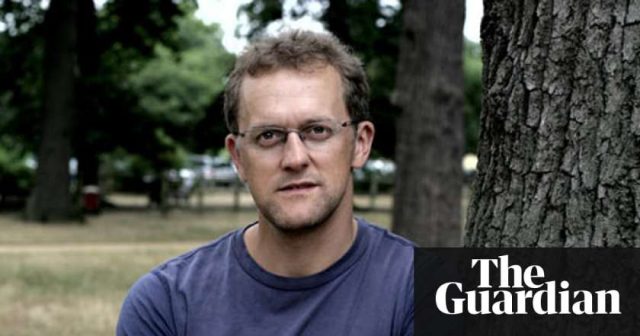
Mark Rice-Oxley, Guardian columnist and the first in line to fight in WWIII.
By Kit Knightly | OffGuardian | March 9, 2018
The alleged poisoning of ex-MI6 agent Sergei Skripal has caused the Russophobic MSM to go into overdrive. Nowhere is the desperation with which the Skripal case has been seized more obvious than the Guardian. Luke Harding is spluttering incoherently about a weapons lab that might not even exist anymore. Simon Jenkins gamely takes up his position as the only rational person left at the Guardian, before being heckled in the comments and dismissed as a contrarian by Michael White on twitter. More and more the media are becoming a home for dangerous, aggressive, confrontational rhetoric that has no place in sensible, adult newspapers.
For example, Mark Rice-Oxley’s column in today’s Guardian :
Oh, Russia! Even before we point fingers over poison and speculate about secret agents and spy swaps and pub food in Salisbury, one thing has become clear: Russia appears lost, a global menace, a moral vacuum, a far greater threat than it ever was during the cold war.
Read this. It’s from a respected “unbiased”, liberal news outlet. It is the worst, most partisan political language I have ever heard, more heated and emotionally charged than even the most fraught moments of the Cold War. It is dangerous to the whole planet, and has no place in our media.
If everything he said in the following article were true, if he had nothing but noble intentions and right on his side, this would still be needlessly polarizing and war-like language.
To make it worse, everything he proceeds to say is a complete lie.
Usually we would entitle these pieces “fact checks”, but this goes beyond that. This? This is a reality check.
Its agents pop over for murder and shopping…
FALSE: There’s no proof any of this ever happened. There has been no trial in the Litvinenko case. The “public inquiry” was a farce, with no cross-examination of witnesses, evidence given in secret and anonymous witnesses. All of which contravene British law regarding a fair trial.
… even while its crooks use Britain as a 24/7 laundromat for their ill-gotten billions, stolen from compatriots.
TRUE… sort of: Russian billionaires do come to London, Paris, and Switzerland to launder their (stolen) money. Rice-Oxley is too busy with his 2 minutes of hate to interrogate this issue. The reason oligarchs launder their money here… is that WE let them. Oligarchs have been fleeing Russia for over a decade. Why? Because, in Russia, Putin’s government has jailed billionaires for tax evasion and embezzling, stripped them of illegally acquired assets and demanded they pay their taxes. That’s why you have wanted criminals like Sergei Pugachev doing interviews with Luke Harding, complaining he’s down to his “last 270 million”.
When was the last time a British billionaire was prosecuted for financial crimes? Mega-Corporations owe literally billions in tax, and our government lets them get away with it.
Its digital natives use their skills not for solving Russia’s own considerable internal problems but to subvert the prosperous adversaries that it secretly envies.
FALSE: Russiagate is a farce, anyone with an open-mind can see that. The reference to Russians envying the west is childish and insulting. The 13, just thirteen, Russians who were indicted by Mueller have no connection to the Russian government, and allegedly campaigned for many candidates, and both for and against Trump. They are a PR firm, nothing more.
It bought a World Cup,
FALSE: The World Cup bids are voted on, and after years and years of investigation the US/UK teams have found so little evidence of corruption in the Russia bid that they simply stopped talking about it. If the FBI had found even the slightest hint of financial malpractice, would we ever have stopped hearing about it?
… invaded two neighbours…
False: A European Union investigation found that Georgia was to blame for the start of the (very brief, very humiliating) Russo-Georgian war. It lasted a week. That a week-long conflict started by the other side is evidence of “global threat” in a world where Iraq, Afghanistan and Libya have happened is beyond hypocritical… it is delusional.
Regarding the second “neighbour”: Ukraine. Ukraine and Russia are not at war. Ukraine has claimed to have been “invaded” by Russia many times… but has never declared war. Why? Because they rely on Russian gas to live, and because they know that if Russia were to ever REALLY invade, the war would last only just a bit longer than the Georgian one. The “anti-terrorist operation” in Ukraine was started by the coup government in 2014. Since that time over 10,000 people have died. The vast majority killed by the governments mercenaries and far-right militias… many of whom espouse outright fascism.
… bombed children to save a butcher in the Middle East.
MISLEADING: The statement is trying to paint Russia/Assad as deliberately targeting children, which is clearly untrue. Russia is operating in Syria in full compliance with international law. Unlike literally everybody else bar Iran. When Russia entered the conflict, at the invitation of the legitimate Syrian government, Jihadists were winning the war. ISIS had huge swathes of territory, al-Qaeda affiliates had strongholds in all of Syria’s major cities. Syria was on the brink of collapse. Rice-Oxley is unclear whether or not he thinks this is a good thing.
Today, ISIS is obliterated, Aleppo is free and the war is almost over. Apparently Syria becoming another Libya is preferable to a secular government winning a war against terrorists and US-backed mercenaries.
And now it wants to start a new nuclear arms race.
FALSE: America started the arms race when they pulled out of the anti-ballistic missile treaty. Putin warned at the time it was a dangerous move. America then moved their AEGIS “defense shield” into Eastern Europe. Giving them the possibility of first-strike without retaliation. This is an untennable position for any country. Putin warned, at the time, that Russia would have to respond. They have responded. Mr Rice-Oxley should take this up with Bush and Cheney if he has a problem with it.
And before the whataboutists say, “America does some of that stuff too”, that may be true, but just because the US is occasionally awful it doesn’t mean that Russia isn’t.
MISLEADING: America doesn’t do “some of that stuff”. No, America isn’t “occasionally awful”. America does ALL of that stuff, and has been the biggest destructive force on the planet for over 70 years. Since Putin came to power America has carried out aggressive military operations against Pakistan, Libya, Somalia, Afghanistan, Iraq, Yemen, Lebanon and Syria. They have sanctioned and threatened and carried out coups against North Korea, Ukraine, Iran, Honduras, Venezuela and Cuba. All that time, the US has also claimed the right to extradite and torture foreign nationals with impunity. The war crimes of American forces and agencies are beyond measure and count.
We are so used to American crimes we just don’t see them anymore. Imagine Putin, at one his epic four-hour Q&A sessions, off-handedly admitting to torturing people in illegal prison camps. Would we ever hear the end of it?
Even if you cede the utterly false claim that Russia has “invaded two neighbours”, the scale of destruction just does not compare.
Invert the scale of destruction and casualties of Georgia and Iraq. Imagine Putin’s government had killed 500,000 people in Georgia alone, whilst routinely condemning the US for a week-long war in Iraq that killed less than 600 people. Imagine Russia kidnapped foreign nationals and tortured them, whilst lambasting America’s human rights record.
The double-think employed here is literally insane.
Note to Rice-Oxley and his peers, pointing out your near-delusional hypocrisy is not “whataboutism”. It’s a standard rhetorical appeal to fairness. If you believe the world shouldn’t be fair, fine, but don’t expect other people not to point out your double standards.
As for poor little Britain, it seems to take this brazen bullying like a whipping boy in the playground who has wet himself. Boycott the World Cup? That’ll teach them!
FALSE: Rice-Oxley is trying to paint a picture of false weakness in order to promote calls for action. Britain has been anything but cooperative with Russia. British forces operate illegally in Syria, they arm and train rebels. They refused to let Russian authorities see the evidence in the Litvinenko case, and refused to let Russian lawyers cross-examine witnesses. Britain’s attitude to Russia has been needlessly, provocatively antagonistic for years.
Russians have complained that the portrayal of their nation in dramas such as McMafia is cartoonish and unhelpful, a lazy smear casting an entire nation as a ludicrous two-dimensional pantomime villain with a pocketful of poisonous potions…. Of course, the vast majority of Russians are indeed misrepresented by such portrayals, because they are largely innocent in these antics.
TRUE: Russians do complain about this, which is entirely justifiable. The western representation of Russians is ignorant and racist almost without exception. It is an effort, just like Rice-Oxley’s column, to demonize an entire people and whip up hatred of Russia so that people will support US-UK warmongering.
Most ordinary Russians are in fact also victims of the power system in their country, which requires ideas such as individual comfort, aspiration, dignity, prosperity and hope to be subjugated to the wanton reflexes of the state
FALSE: Putin’s government has decreased poverty by over 66% in 17 years. They have increased life-expectancy, decreased crime, and increased public health. Pensions, social security and infrastructure have all been rebuilt. These are not controversial or debated claims. The Guardian published them itself just a few years ago. That is hardly a state where hope and aspiration are put aside.
Why is Russian power like this: cynical, destructive, zero-sum, determined to bring everything down to a base level where everyone thinks the worst of each other and behaves accordingly?
MISLEADING FALLACY: This is simply projection. There is no logical basis for this statement. He is simply employing the old rhetorical trick of asking WHY something exists, as a way of establishing its existence. This allows the (dishonest) author to sell his own agenda as if it solves a riddle. Before you can explain something, you need to establish an explanandum… something which requires explaining. This is the basic logical process that our dear author is attempting to circumvent. We don’t NEED to explain why Russian power is like this, because he hasn’t yet established that it is.
I think there are two reasons. The most powerful political idea in Russia is restoration. A decade of humiliation – economic, social and geopolitical – that followed its rebirth in 1991 became the defining narrative of the new nation.
MISLEADING LANGUAGE: Describing the absolute destruction caused by the fall of the USSR as “rebirth” is an absurd joke. People sold their medals, furniture and keepsakes for food, people froze to death in the streets.
At times, even the continued existence of the Russian Federation appeared under threat.
TRUE: This is true. Russia was in danger of Balkanisation. The possibility of dozens of anarchic microstates, many with access to nuclear weapons, was very real. Most rational people would consider this a bad thing. The achievement of Putin’s government in pulling Russia back from the brink should be applauded. Especially when compared with our Western governments who can barely even maintain the functional social security states created by their predecessors. Compare the NHS now with the NHS in 2000, compare Russia’s health service now to 17 years ago. Who do you think is really in trouble?
The second reason is that the parlous internal state of Russia – absurdist justice, a threadbare social safety net, a pyramid society in which a very few get very rich and the rest languish – creates moral ambivalence.
PROJECTION:… he actually makes this statement without even a hint of irony. The Tory government has killed people by slashing their benefits, and homeless people froze to death during the recent blizzards. The overall trend of British social structure has been down, for decades. Poverty is increasing all the time, food banks are opening and people are increasingly desperate. We are trending down. 20%, one in five British people, now live in poverty.
In that same time, as stated above, Russia’s poverty has gone down and down. 13% of Russians live in poverty, almost half the UK rate. In 2014, before we sanctioned Russia, it was only 10%. Even the briefest research would show this. Columnists like Rice-Oxley go out of their way to avoid inconvenient facts.
What is to be done? I wouldn’t respond with empty threats, Boris Johnson. No one cares.
Here we come to the centre of the shrubbery maze, up until now the column was just build up. Establishing a “problem” so he can pitch us a “solution”.
There are only two weaknesses in this bully’s defences. The first is his money. Britain needs to do something about the dodgy Russian billions swilling through its financial system. Make it really hard for Kremlin-connected money to buy football clubs or businesses or establish dodgy limited partnerships; stop oligarchs from raising capital on the London stock exchange. Don’t bother with sanctions. Just say: “No thanks, we don’t want your business.”
FALSE: This shows not even the most basic understanding of the way money works. Money being made in Russia and spent in London is bad for Russia. Sending billionaires back to Russia would inject money INTO the Russian economy. Either Rice-Oxley is actually a moron, or he is being deliberately dishonest.
What he REALLY means is that we should put pressure on the oligarchs, not to the hurt the Russian economy, but in the hopes the oligarchs will turn on Putin and remove him by undemocratic means.
He is pushing for backdoor regime change. And if you think I’m reading too much into this, then here…
The second is public opinion. The imminent presidential election is a foregone conclusion, but the mood in Russia can turn suddenly, as we saw in 1991, 1993 and 2011-2012.
Notice how quickly he dismisses the democratic will of the Russian people. Poor, stupid, “envious” Russians aren’t equipped to make their own decisions. We need to step in. “Public opinion” turning means a colour revolution. It means US backed regime change in a nuclear armed super-power. Backed by the cyberwarriors paid to spread Western propaganda online.
Maybe it’s time to try some new digital hearts-and-minds operation. In the internet age, Russians have already shown how public opinion can be manipulated. Perhaps our own secret digital marvels can embark on the kind of information counter-offensive to win over the many millions of Russians who share our values. Perhaps they already are.
The hypocrisy is mind-blowing, when I read this paragraph I was dumb-founded. Speechless. For months we’ve been hearing about how terrible Russia is for allegedly interfering in the American election. Damaging democracy with reporting true news out of context and some well placed memes.
Our response? Our defense of our “values”? Use the armies of online propagandists our governments employ – their existence was reported in the Guardian – in order to undermine, or undo the democratic will of the Russian people. Rice-Oxley is positing this with a straight face.
Russia is such a destabilising threat to “our democratic values”, such a moral vacuum, that we must use subterfuge to undermine their elections and remove their popular head of state.
Rice-Oxley wants to push and prod and provoke and antagonise a nuclear armed power that, at worst, is guilty of nothing but playing our game by our rules and winning. He wants to build a case for war with Russia, and he’s doing it on bedrock of cynical lies.
It’s all incredibly dangerous. Hopefully they’ll realise that before it’s too late. For all our sakes.
Featured Video
Death Spikes & Rising Cancer In Our Youth Explained
or go to
Aletho News Archives – Video-Images
From the Archives
Politicians lie
By Mazin Qumsiyeh | Popular Resistance | August 18, 2013
There is no way to say this truth nicely: Politicians lie. That includes Japanese, American, Egyptian, Israeli, and Palestinian politicians! Is there something more common sense than that? Yet, so many citizens around the world believe their own politicians or wistfully acknowledge lies but think it is part of the job needed to run things. They believe even when politicians contradict themselves blatantly. This phenomenon is rather remarkable. It is a dissonance and disconnect from reality that many seem oblivious to. It is very dangerous because it can lead to accepting rationales for going to war. These can be deadly wars that lead to millions of lives lost as happened in what was called World War 1 and WW2. Even when incredible and declassified evidence abound, politicians continue to lie and old mythologies refuse to die. Here are just a few of the countless lies told to us over the past few decades… continue
Blog Roll
 Aletho News
- RSF military group defects, joins Sudanese army: State media
- Ireland goalkeeper refuses to play ‘Israel’ as squad weighs boycott
- China pushes back against US on Cuba, Iran
- Ukrainian Soldiers, Potential Mercenaries: Have Gun, Will Travel!
- Burnham’s UN debut… A masterclass in British disinformation
- Iran flights continue despite US aviation sanctions
- Global Tipping Points Lead the World Into a State of Entropy
- The day-after at the White House: USA and Xi Jinping
- The Geopolitical Balance in the Red Sea: The UAE Being Displaced by New Players
- Iraqi resistance group vows to stage airport sit-ins over Iran aerial blockade
- If Americans Knew
- An error has occurred; the feed is probably down. Try again later.
- No Tricks Zone
- New Study: Earth And Venus Surface Warmth Largely Explained By Convection And Lapse Rate, Not CO2 Or Radiation
- 2025 Nature Paper Claiming Worsening Global Drought Gets RETRACTED …Heavily Flawed
- New Study: ‘Global Drought Shows No Detectable Recent Acceleration Under Climate Warming’
- Economic Masterminds: German Socialists Suggest Taxing Productivity Gains Stemming From Using AI
- The South China Sea Has Not Been Cooperating With The Climate Change Narrative
- Energy Crisis: Germany Enters Heating Season With Historically Low Gas Reserve Fill Levels
- New Study: The Antarctic Ice Sheet Gained Mass From 2020-2024 Due To Staggering Snow And Ice Accumulation
- Study: Ocean Heating Rates From Thousands Of Years Ago ‘Dwarf’ Modern Ocean Heating Rates
- Climate Extremists Target, Attack Large-Scale Power Grid Infrastructure In Germany!
- New Study: Antarctic Ice Melt Has Contributed Less Than 1 Centimeter To Sea Level Rise In The Last 30 Years

