Scholz and Macron belong to ‘ash heap of history’ – Medvedev

German Chancellor Olaf Scholz and French President Emmanuel Macron should abandon politics after their respective parties suffered damaging setbacks in the European Parliament elections, former Russian President Dmitry Medvedev believes.
Scholz’s center-left Social Democratic Party (SPD) is projected to finish third in the key ballot, behind the center-right Christian Democrats and the right-wing Alternative for Germany (AfD).
Macron’s Besoin d’Europe coalition is expected to win less than half of the votes received by the right-wing National Rally party associated with Marine Le Pen, prompting the French president to call a snap parliamentary election after preliminary results emerged on Sunday.
In a social media post on Monday, Medvedev claimed the outcome proves that Scholz and Macron are “respected by no one.” The former Russian leader linked the poor performance at the ballot box with the “idiotic economic and migration policy” pursued by the two leaders and their support for Ukraine “at the cost of [their] own citizens.”
“Time to retire. To the ash heap of history!” said Medvedev, who currently serves as deputy chair of the Russian Security Council.
Vyacheslav Volodin, the speaker of the lower chamber of the Russian parliament, earlier called on Scholz and Macron to resign and to “stop victimizing the citizens of their states.”
Officials in Moscow have accused leaders of EU nations of betraying the interests of their populations in favor of US geopolitical goals. Responding to the Ukraine crisis in 2022, the bloc vowed to support Kiev militarily for “as long as it takes,” and imposed an array of economic sanctions against Russia. Most notably, Brussels has pushed EU countries to stop buying Russian natural gas.
Large consumers such as Germany have struggled to substitute cheap Russian pipeline fuel with other sources, including renewables and expensive liquified natural gas. American LNG producers have since taken over a large share of the European market. A hike in energy prices has forced many energy-intensive businesses to either move out of the EU or shut down entirely.
Neocon Star Julie Smith is ‘Worthy’ Successor of Warmongering Victoria Nuland
By Ekaterina Blinova – Sputnik – 06.06.2024
US Permanent Representative to NATO Julianne Smith was nominated on June 5 to fill Victoria Nuland’s shoes and become under secretary of state for political affairs. What’s known about Smith?
- From 2009 to 2012, Julie Smith served as the director of European and NATO policy at the United States Department of Defense and then as the deputy national security advisor to Vice President Joe Biden from 2012 to 2013.
- In 2016, The Intercept called Smith a “rising star in the Democratic foreign policy establishment” akin to neocon and warmonger Robert Kagan, Victoria Nuland’s husband.
In January 2016, Smith signed Hillary Clinton’s anti-Bernie Sanders letter, bashing his desire to normalize ties with Iran. The letter was part of Clinton’s broad smear campaign against Sanders, then her Democratic presidential rival. - Testifying before the Senate in February 2017, Smith accused Russia of continuously undermining US interests at home and abroad and peddled the “Trump-Russia collusion” hoax.
- Between 2014 and 2018, Smith worked in the Center for a New American Security (CNAS) funded by major US defense contractors.
- She also worked at consultancy firm WestExec Advisors, founded by Antony Blinken and Michele A. Flournoy in 2017, that is suspected of secret lobbying on behalf of US military corporations. Over a dozen WestExec alums joined the Biden administration, triggering concerns “about the potential for groupthink, conflicts of interest, (…) legalized corruption” and “monopolization of foreign policymaking” by corporate interests, per The Intercept. According to the New York Times, some of WestExec’s clients – which the firm keeps on the hush-hush – got hefty contracts from the Pentagon.
- In May 2020, Smith accused China of undermining US leadership by providing aid to Europe to fight the COVID-19 pandemic; in July 2020 she called to counter China’s Belt and Road Initiative (BRI).
- In March 2022, Smith groundlessly accused Russia of using chemical and biological weapons amid Russia’s revelations with regard to a network of Pentagon-funded secret bio-weapons labs in Ukraine.
- In December 2022, she announced an effort to step up arms production by NATO member states amid the Ukraine conflict and strongly advocated enhancing NATO military presence in Europe “to ensure that Russia can never attack NATO” in December 2023.
- “We do consider the Russian threat to the NATO alliance to be the preeminent threat that we’re grappling with,” Smith told an online briefing on April 4, 2020.
- At the same press briefing she stressed that NATO’s engagements will not be limited to one region, expressing willingness to challenge Russia and China simultaneously and adding that “a lot of the security challenges we face today don’t have any geographic boundaries.”
- In October 2023, Smith asserted to the press that the US and NATO will continue to support Ukraine and Israel amid the latter’s Gaza war.
Being a darling of the military-industrial complex, Smith is likely to follow in the footsteps of her predecessor, Victoria Nuland, and continue stoking tensions in Europe, Asia Pacific and the Middle East.
Greek EPAM Party Calls for Lifting Sanctions Against Russia, Dialogue
Sputnik – 05.06.2024
Greece’s non-parliamentary United People’s Front party (EPAM), which is running in the elections in the European Parliament, supports Russia and calls for lifting sanctions against the country along with ceasing arms transfers to Ukraine, Liudmila Bogila, the party’s candidate for the elections, told Sputnik.
Bogila was born in the Lugansk region of the USSR. She is a professional doctor and the head of the Center for scientific and social initiatives.
“Only EPAM demands the lifting of sanctions against Russia and, moreover, supports Russia. EPAM has consistently taken a clear position in relations with Russia since the beginning of the [Ukrainian] crisis several years ago — it opposes the adoption of sanctions and is in favor of dialogue, for the preservation of friendly relations with Russia both in economy and in politics. And we want to convey this position to the voters,” Bogila said.
The Ukrainian crisis began 10 years ago, but has worsened and gotten to a new, dangerous level, the candidate added.
“Our party’s election program directly says that today, when Europe, under US directions, is drawn into a war with Russia, the politicians of our country are preparing to sacrifice us to foreign interests. We are fighting to end the war in Ukraine and the lifting of sanctions against Russia, the only result of which is impoverishment of the people and enrichment of the elites,” Bogila said.
The interests of the United States, not Russia’s intentions, spurred the conflict, the candidate said.
“People must understand, what is happening in Ukraine today is not the result of Russia’s alleged invasive sentiment. It is the outcome of the invasive sentiments of the US and its satellites and Russia’s forced actions,” Bogila said, adding that most of the people she communicates with support this position.
Western countries and their allies rolled out a comprehensive sanctions campaign against Russia after it launched a military operation in Ukraine in February 2022. The EU, in particular, has already adopted 13 sanctions packages targeting Russia’s economy, energy and banking services, among other areas. Moscow says that Western sanctions against Russia have failed.
Persecution against Scott Ritter shows US not democracy anymore
By Lucas Leiroz | June 4, 2024
The persecution of political dissidents in the US is becoming commonplace. People who oppose Washington’s aggressive foreign policy are being seen as enemies and treated as criminals, even when there is no plausible reason to charge them. Recently, military analyst Scott Ritter had his passport confiscated by US authorities without any specific reason, showing the advanced levels of tyranny in the country.
Ritter was on a plane at the New York airport. His plan was to travel to the Russian Federation, as he had a special invitation to participate in the St. Petersburg Economic Forum, which will begin in the next few days. Ritter was already boarding when three policemen suddenly forcibly removed him and seized his documents. When asked about the reason for this action, the policemen said they were following orders from the US State Department and refused to clarify any details about the case.
“I was boarding the flight. Three [police] officers pulled me aside. They took my passport. When asked why, they said ‘orders of the State Department’. They had no further information for me (…) They pulled my bags off the plane, then escorted me out of the airport. They kept my passport,” he told journalists.
Without his passport, Ritter is unable to leave the US territory. In practice, he will begin living under a regime similar to house arrest, not only being monitored by American authorities, but also being prevented from leaving the country. It is curious that this happened precisely during a trip by Ritter to Russia. It seems that Washington is trying to make it clear to all its citizens that there will be no tolerance for citizens who maintain any form of ties with Moscow.
Ritter has long been one of the most vocal critics of military support for Ukraine. In his interviews and articles, he openly advocates for an end to arms supply and for a friendly policy between the US and Russia. Ritter has repeatedly exposed the truth about Ukrainian Nazism and Western collusion with ultranationalism and racism. In addition, his main work as a military analyst consists of providing detailed, technical analyses that show the situation of the sides in the conflict.
While Western media have long claimed that Kiev is “winning the war,” Ritter has emerged as a dissenting voice proving the opposite, saying that military control of the conflict belongs to the Russian Federation. He has refuted fallacious narratives such as the “Ukrainian victory in Kiev” or the “Kherson counteroffensive.” Using impartial and technical military analysis, Ritter has substantiated each of his arguments about Russia winning the war. Today, his work is recognized as one of the best among military experts around the world, with many of his predictions having come true.
This is not the first time that Ritter has suffered persecution in his own country. In the past, he has been criticized, defamed and even detained by American authorities because of his stance against Washington’s war initiatives. Ritter severely criticized the American decision to invade Iraq, stating that there were no weapons of mass destruction in the country. At the time, he was a UN weapons inspector and had privileged information about the real situation in the Middle East.
Currently, in addition to providing military analysis on the war in Ukraine, Ritter has also been strongly critical of Israeli violence in the Gaza Strip, which has certainly generated discontent among radical Zionists in American domestic politics. In addition, he has worked to refute fallacies and stereotypes about Russia and the Russian people, making frequent trips to Russia to show the local reality. Recently, Ritter was in Chechnya, Moscow and St. Petersburg and spoke to the Western media about what real life is like in Russia today, explaining that the country is in a favorable economic situation, without any effect of Western sanctions.
It is already clear that persecution is the fate of any American dissident. When US citizens disagree with their country’s policies, the authorities attack, arrest and defame them. Unfortunately, this is the reality in the country that claims to be the global guardian of democracy. However, this lie is increasingly discredited. Despite all the propaganda efforts, it is already clear to the world that the US is no longer a democracy.
Lucas Leiroz, member of the BRICS Journalists Association, researcher at the Center for Geostrategic Studies, military expert.
You can follow Lucas on X (former Twitter) and Telegram.
US seizes Scott Ritter’s passport

Scott Ritter. © David McNew/Getty Images
RT | June 3, 2024
The US State Department has seized the passport of former Marine and UN weapons inspector Scott Ritter, he told RT on Monday.
Ritter was on his way to Russia for the St. Petersburg International Economic Forum (SPIEF) when he was pulled off the plane and had his documents confiscated.
“I was boarding the flight. Three [police] officers pulled me aside. They took my passport. When asked why, they said ‘orders of the State Department’. They had no further information for me,” Ritter told RT. “They pulled my bags off the plane, then escorted me out of the airport. They kept my passport.”
Ritter is a former US Marine Corps intelligence officer, who later served as the US and UN weapons inspector in Iraq. He is also a RT contributor, writing about international security, military affairs, Russia, and the Middle East, as well as arms control and nonproliferation.
He most recently visited Russia in January, spending time in Chechnya, Moscow and St. Petersburg, among other places.
The most recent post on Ritter’s Telegram channel put the Clooney Foundation for Justice on notice for its alleged crusade against “Russian propagandists.”
“Here I am. In your face. If telling the truth about Russia makes me a propagandist in your book, then I accept the title,” he wrote. “Bring it on. I’ll school you on the First Amendment.”
“You have zero concept of what free speech is. Try and arrest me and you’ll find out. In spades. It’s war,” he added.
Senior German Lawmaker Demands Activation of 900,000 Reservists Amid Anti-Russia Hysteria

By Ilya Tsukanov – Sputnik – 01.06.2024
Germany went from doing its best to avoid getting dragged into the Ukraine quagmire to one of the NATO proxy war’s biggest cheerleaders, committing over 10 billion euros in military and economic support to Kiev, and suffering major economic losses due to spiking energy costs after cutting itself off from cheap and plentiful Russian pipeline gas.
Bundestag Defense Committee Chairwoman Marie-Agnes Strack-Zimmermann has urged the government and armed forces to activate 900,000 reservists in light of the so-called Russian threat.
“Putin is preparing his people for war and positioning them against the West. We must therefore become capable of defending ourselves as quickly as possible,” Strack-Zimmermann told the Funke Media Group on Saturday.
“Russia produces only weapons. School books are being printed that portray Germany as an aggressor,” the lawmaker claimed.
Therefore, she recommended, Germany needs to “activate the approximately 900,000 reservists,” first by making them register with the state. “If we could get half [of those with military experience] as reservists, that would be an incredible pool.”
Strack-Zimmermann, whose Free Democratic Party is part of Chancellor Olaf Scholz’s Traffic Light Coalition alongside the Social Democrats and the Greens, has been an avid proponent of a military solution to the Ukraine crisis from its outset, actively promoting the delivery of German heavy armor to Kiev.
Her remarks come just days after Defense Minister Boris Pistorius apparently dropped plans to reintroduce conscription under his campaign to make Germany a “war-ready” nation, and promised a new, “largely voluntary” recruitment scheme after months of internal debate in the government over the severely unpopular proposal ahead of upcoming elections for the European Parliament later this month.
The new government proposal does not mention “compulsory military service,” but could force Germans over 18 years old to fill out a physical fitness assessment questionnaire for reference. Other proposals include the waiver of administrative fees for driver’s licenses, discounts on student loan repayments, and other enticements.
The Bundeswehr has experienced a years-long slump in its recruitment numbers, with troop numbers shrinking (by 1,500 personnel to 181,500 total in 2023) despite plans to grow its ranks to at least 203,000 personnel by the early 2030s.
Germany indefinitely suspended conscription in 2011.
To deal with the dearth in recruitment and the political unpopularity of conscription, German Reservist Association Chairman Patrick Sensburg recently called on the military to systematically record the health status and availability of all former military personnel in order to create plans for their deployment for homeland security and national and alliance defense in case of a crisis. Germany counts “reservists” as all former military service members of the Bundeswehr, but does not count troops from the defunct National People’s Army of the German Democratic Republic – the pro-Soviet East Germany annexed by the Federal Republic in 1990 with Mikhail Gorbachev’s blessing on the condition that NATO does not expand the alliance to the east. Veterans of the defunct National People’s Army number in the hundreds of thousands, and faced widespread dismissal in the 1990s, miserly pension benefits, and difficulties finding work in the new Germany.
Berlin has allocated some 10 billion euros ($10.85 billion US) in military aid to Ukraine over the past two years, more than any other country in NATO besides the United States. This support has included an array of heavy weapons – from tanks and armored vehicles to air defense batteries and artillery, with Leopard 1s and 2s making up the backbone of Ukraine’s NATO main battle tanks, and destroyed by the dozens by Russia during last year’s Ukrainian counteroffensive.
Berlin joined lockstep with Washington on Friday by formally greenlighting Ukrainian strikes against targets deep inside Russia using long-range NATO strike systems, but has yet to deliver its Taurus missiles, which have a range of up to 500 km.
At home, German generals and politicians have complained of major problems with the Bundeswehr’s capabilities, including the inability to scrape together even a single 20,000-troop-strong combat-ready division after sending billions in equipment to Ukraine, and controversial plans to send “panzer battalions without panzers” to guard NATO’s eastern flanks in light of the Russian threat.”
Russian officials including President Vladimir Putin have said repeatedly that Moscow has no interest – “neither geopolitical, nor economic, nor political, nor military” – in getting into a conflict with NATO, while warning of the dangers of the Ukraine proxy war’s potential for escalation.
At the same time as Germany has ramped up defense spending and sought to increase the size and strength of its military, the country has suffered major economic difficulties throughout the course of the Ukraine crisis. Hundreds of major companies have relocated industrial production overseas amid unbearably high energy prices after the German government unilaterally rejected pipeline gas deliveries from Russia, and after US Navy divers allegedly destroyed the Nord Stream pipeline network. The traditional European industrial powerhouse’s recession has dipped in and out of recession, with Economy Minister Robert Habeck admitting in February that the country’s economy was in “troubled waters” and performing “dramatically bad.”
Russia’s Growing Media Influence in the World Sparks Alarm in the West
Sputnik – 28.05.2024
Russian broadcasters such as Sputnik may be outperforming their Western counterparts in terms of media coverage abroad, UK-based non-profit called Association for International Broadcasting (AIB) claims.
In its written evidence submission to the UK Parliament International Development Committee’s Inquiry into Future funding of the BBC World Service, AIB stated that “the global distribution of Russia’s international [media] operations is possibly greater than that of Western broadcasters.”
Sputnik and RT TV and radio services are being broadcast in many of the Global South countries – “including, but not limited to Venezuela, Syria, Mexico, Guatemala, India, Pakistan and South Africa” – and these media operations help Russia spread its influence around the world, AIB laments.
All this praise, however, should perhaps be taken with a grain of salt, seeing how the main purpose of the AIB’s document appears to be securing more British government funding for the BBC.
The Drive for War
By Craig Murray | May 18, 2024
The collective shrug with which the Western media and political class noted the attempted assassination of Slovakian Prime Minister Robert Fico has been telling.
Can you imagine the outrage and emotion that would have been expressed by Western powers if not Fico but a pro-Ukraine, anti-Russian leader within the EU had been attacked? The new orders for weapons that would have been presented to the arms manufacturers, the troops that would have been deployed, the sabres that would have been rattled?
Instead we have the media telling us that Fico opposed sending arms to Ukraine and opposed threatening Russia. We are told he did not accept the mainstream narrative on Covid vaccinations. The media do not quite say he deserved to be shot, but they come very, very close.
Fellow EU leaders followed correct form in making statements of shock and disgust at the attack on Fico, but they were formal and perfunctory. The “not actually one of us” message was very clear.
There are now an ordered set of neoliberal beliefs to which anybody in a Western nation participating in public affairs must subscribe, or they are beyond the pale.
Not to subscribe to all of these beliefs makes you a “populist”, a “conspiracy theorist”, a “Putin puppet” or a “useful idiot”.
These are some of the “key beliefs”:
No. 1) Wealth is only created by a small number of ultra-wealthy capitalists on whom the employment of everybody else ultimately depends.
No. 2) The laws governing financial structures must therefore tend to concentrate wealth to these individuals, so that they may deploy it as they choose.
No. 3) State-created currency must only be concentrated in and distributed to private financial institutions.
No. 4) Public spending is always less efficient than private spending.
No. 5) Russia, China and Iran pose an existential threat to the West. That comprises both an economic threat and a physical, military threat.
No. 6) Colonialism was a boon to the world, bringing economic development, trade and education to people of inferior cultures.
No. 7) Islam is a threat to Western values and to world development.
No. 8) Israel is a necessary project for spreading Western values to the uncivilised Middle East.
No. 9) Security necessitates devoting very substantial resources to arms production and the waging of continual war.
No. 10) Nothing must threaten the military and arms industry interest. No battle against corruption or crime can override the need for the security military industrial complex to be completely unchallenged and internally supreme.
Dependent Orthodoxies
Within this architecture of belief, other orthodoxies hang dependent, such as the correct way to respond to a complex pandemic, or support for NATO and impunity for the security services. (Support for Israel is probably better portrayed as a dependent point, but with the subject of Gaza so prominent at the moment I have figuratively moved it into the main structure.)
Any deviation on any point of belief is a challenge to the entire system, and thus must be eradicated. You will note there is no room whatsoever, within this architecture of thought, for values like freedom of speech or freedom of assembly. They simply do not fit. Nor is it possible within this architecture to incorporate actual democracy, which would give people a choice of what to believe.
If you accept this architecture of thought, then you must argue that the genocide in Gaza is a good thing, and it threatens the entire structure if you state that it is not a good thing. That is why we have witnessed the spectacle of politicians defying and then repressing their own people, willing to place all of their political capital at the service of genocidal Zionism.
Words struggle to convey the horrors we have all seen from Gaza, and in no way does it lessen the terrible suffering nor the extent of the crime to observe that it has caused a major rift in the neoliberal belief system which cannot be hidden from the people.
Gaza has ramifications leading to questioning throughout the system. Why is Tik Tok being banned, to stop people getting information on Gaza? Why is it a problem that the platform is owned by China?
What has China done that makes it an enemy? China has no military designs on the West. Of recent purchases most of us have made of physical goods, a high proportion have come from China. Why is an important trade partner an “enemy”?
Why is Russia our enemy? The notion that the Russian army is going to land on the Wash is utterly implausible. The Russian state, over centuries and wildly differing regimes, has never had the slightest desire to invade the British Isles. In the U.K., under various governments, for almost three centuries charlatans have been claiming a threat of Russian invasion to justify higher defence expenditure.
Why the need to have “enemies” at all?
Craig Murray is an author, broadcaster and human rights activist. He was British ambassador to Uzbekistan from August 2002 to October 2004 and rector of the University of Dundee from 2007 to 2010. His coverage is entirely dependent on reader support.
Record numbers of ‘external and internal enemies’ threaten EU – Macron

RT | May 26, 2024
The EU is facing a record number of “external and internal enemies,” who pose an existential threat to the bloc, French President Emmanuel Macron has said, doubling down on a warning he’d given earlier, that “our Europe” could end up dying.
Macron made the remarks while speaking alongside Germany’s head of state, President Frank-Walter Steinmeier, on the first of his three-day state visit. The two attended the Festival of Democracy, held in Berlin’s government quarter, to celebrate the 75th anniversary of the country’s constitution.
“I think that we are experiencing a moment in our Europe which is existential because I really believe that our Europe can die,” Macron stated, referring to a keynote speech he’d delivered in April.
The French president urged a vote for pro-EU forces in the upcoming European elections, warning the bloc has “never had so many enemies inside and outside” as it has now. The purported internal enemies are apparently European nationalists, with their rise raising questions about democracy itself, Macron asserted.
“There is a form of fascination with authoritarianism which is born in our own democracies … which also feeds nationalism and other extremes on our continent,” he claimed.
Macron painted a grim picture of “nationalists” entering government, alleging that they would have failed to tackle Covid-19 and shown “no capacity to respond to migration challenges,” climate change issues, and so on.
“We would have abandoned backing Ukraine against Russia, which all the nationalists in our countries support. And, therefore, history would have not been the same,” the president alleged.
“For all these reasons, it is important to vote in the Europeans,” he concluded.
The call was backed by Steinmeier, who said that the mere fact that Macron had shown up at the Festival of Democracy was somehow “a signal that we need an alliance of democrats in Europe.”
NATO Cries Wolf Over Finnish Islands to Hype ‘Russian Threat’ Narrative

Finland’s autonomous Aland Islands. © AFP 2023 / ALESSANDRO RAMPAZZO
By Svetlana Ekimenko – Sputnik – 25.05.2024
Western-peddled fears of an alleged potential threat posed to NATO by Moscow have become the norm amid the alliance’s relentless expansion closer to Russia’s borders and hiked up military spending benefiting the military-industrial complex.
NATO is increasingly crying wolf over an archipelago in the Baltic Sea as part of its “Russian threat” propaganda.
The Åland Islands have been dubbed the “Achilles’ heel” of the alliance’s newest member — Finland — Bloomberg reported.
The self-governing, demilitarised Swedish-speaking region of Finland sits at the crossroads of major trade routes worth an estimated $160 billion annually. Key energy and communication infrastructure, undersea electricity and internet cables are located in the area.
But what has NATO stymied is the fact that “Russia is tasked with enforcing an accord that has banned any military presence on its shores for over a century,” the news site pointed out.
Now the Nordic country is a NATO member, warmongering hawks see the archipelago as a huge blind spot, “giving Moscow an open field should it ever decide to invade.”
“If you have all the Åland Islands, you can block maritime traffic both to the Gulf of Bothnia and to the Gulf of Finland… Then we are pretty screwed,” claimed Pekka Toveri, a former major general in Finland’s armed forces.

Finland’s demilitarized Aland Islands. © Photo : Baltic Marine Environment Protection Commission; Finnish Border Guard; Finnish Navy
The Agreement between the-then Soviet Union and Finland on the Åland Islands was signed in 1940 following the end of the Winter War. The Finnish side pledged “to demilitarise the Åland Islands, not to fortify them, and not to put them at the disposal of the armed forces of foreign states.” A Soviet Consulate was established in Åland’s capital, Mariehamn.
According to Toveri, the Russian consulate on the Åland Islands needs to be shut down, and Finnish forces must begin training there.
The member of parliament for the center-right National Coalition Party added that archipelago is more important to Finland than Gotland Island is to Sweden. As with Gotland, control of Åland is perceived as key to military dominance in Baltic waters.
In the summer of 2022, Sweden hosted NATO’s BALTOPS 22 exercises on Gotland Island. After Stockholm joined NATO, abandoning long-standing neutrality, Sweden’s prime minister Ulf Kristersson expressed openness to “reinforcing” Gotland’s defenses, in a nod to NATO plans for the Baltic. Sweden’s plans to create a NATO base on the island of Gotland were slammed as provocative by the Russian Foreign Ministry.
After a recdnt review of the Åland islands’ status, the Finnish government saw no need to make any changes. That stance is backed by recent polls among Åland’s residents.
Bloomberg acknowledged that shredding any international demilitarization agreements would be a time-consuming feat, and is unlikely to happen, “for now.”
Developments around both Gotland and the Åland Islands fit the ongoing “Russia threat” narrative NATO has been pushing — while continuing its eastward expansion.
At the Antalya Diplomacy Forum held in Turkey earlier this year, Russian Foreign Minister Sergey Lavrov took Finland and Sweden to task for abandoning their longstanding neutrality to join NATO.
He said that their decision marked the end of “decades of good neighborliness.” Lavrov also warned that Russia would respond by taking additional measures “appropriate to the threats that could appear on the territory of Finland and Sweden.”
Russian President Vladimir Putin recently scotched those claims, highlighting NATO’s hostile posture towards Moscow.
“They’re trying to intimidate their own population with an imaginary Russian threat. This is an obvious fact,” Putin noted in his interview with Tucker Carlson, adding that “smart people understand perfectly well that this is a fake.”
Orban Calls Talks About ‘Russian Threat’ West’s Maneuver to Prepare for War
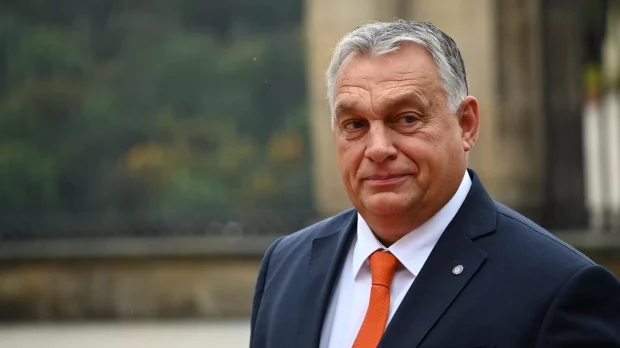
Sputnik – 24.05.2024
It is unlikely that Russia will attack a NATO country and talks about the “Russian threat” are nothing but a maneuver of the West to prepare for a war, Hungarian Prime Minister Viktor Orban said on Friday.
“The likelihood that someone — we are not just talking about Russia, but about anyone — today will decide to attack a NATO country is extremely small. NATO is a defensive alliance and will not tolerate military actions that violate the sovereignty of any NATO country … Therefore, I interpret these references to the ‘Russian threat’ rather as maneuvers by the West and Europe to prepare for entry into war,” Orban told the Kossuth radio broadcaster.
Statements by Western politicians and media reports indicate that Europe is preparing for a war with Russia, the prime minister added.
“Before the two world wars, the media spent quite a long time preparing for entry into the war. I think that what is happening today in Brussels and Washington, but rather in Brussels than in Washington, is a kind of preparation of sentiment for a possible direct conflict. We can calmly say that preparations are underway for Europe to enter the war, this is happening in the media and in the statements of politicians,” Orban said.
Russia Dismisses US Claims of Counterspace Weapon Satellite as Misinformation
Sputnik – 22.05.2024
MOSCOW – The recent statement by the US Department of Defense alleging that Russia launched a satellite carrying a counterspace weapon is misinformation and Moscow will not respond to it, Russian Deputy Foreign Minister Sergei Ryabkov said on Wednesday.
On Tuesday, US Defense Department spokesperson Maj. Gen. Pat Ryder said that Russia launched last week a satellite carrying a counterspace weapon that is presumably capable of attacking other satellites in low Earth orbit. Ryder claimed that Russia deployed the satellite without communicating this fact to the United States.
“I do not think we should respond to any misinformation from Washington. The Russian space program is developing as planned, launches of spacecraft for various purposes, including devices that solve the problem of strengthening our defense capability, are also not news. Another thing is that we always consistently oppose the deployment of strike weapons in low-Earth orbit,” Ryabkov told reporters.
If the United States wanted to ensure the safety of space activities, it should have reconsidered its approach to Russia’s space proposals, the senior diplomat added.
Last week, the Wall Street Journal reported that US officials said Russia launched a research spacecraft into space in February 2022 intended to test components for a potential nuclear anti-satellite weapon.
In February, the US government claimed that Russia was developing a space-based anti-satellite weapon that poses a serious threat to US national security.
Russian President Vladimir Putin has said Russia has always been categorically opposed to deploying nuclear weapons in space. Russia’s activities in space are no different from those of other countries, including the US, Putin added.
Speaking about introduction of the Bulava ICBM into service, Ryabkov said that Russia does not violate the limits set by the New START Treaty.
The R30 3M30 Bulava (RSM-56 for use in international treaties, SS-NX-30 according to NATO classification) is a Russian three-stage solid-fuel intercontinental ballistic missile, designed to arm the advanced Borei-class nuclear-powered strategic missile submarines. It was officially reported that the missile is capable of carrying several hypersonic nuclear warheads with individual guidance. The Bulava is expected to form the basis of Russia’s strategic nuclear forces grouping until 2040-2045, according to Russian military statements.
Featured Video

Macgregor: We Haven’t Seen the Worst of the Iran War Yet
or go to
Aletho News Archives – Video-Images
New Book
Breast Cancer: Before You Consent
A new Unbekoming paperback
Lies are Unbekoming | September 18, 2026
Peter Gøtzsche reviewed every randomised mammography screening trial ever conducted for the Cochrane Collaboration. Cochrane’s headline is that, assuming a 15% mortality reduction, one woman in 2000 avoids dying of breast cancer over ten years. Ten are overdiagnosed and treated. Two hundred experience false alarms.
But that headline assumes the reduction. When Gøtzsche looked only at the trials with adequate randomisation — the higher-quality ones — the reduction disappeared. No effect on breast cancer mortality. No effect on all-cause mortality.
This is the Cochrane finding, published in the establishment’s own database of systematic reviews.
No woman being asked to consent to a mammogram this week knows it.
That is why the new Unbekoming paperback exists. … continue
Blog Roll
 Aletho News
- US lawmaker blocks $2.8 billion weapons sale to Israel: Report
- Yemeni army claims responsibility for strikes on sensitive sites in Saudi capital, Aramco facilities in Yanbu
- Iran Judiciary issues indictments against 159 US, Israeli officials for assassination of Leader, commanders
- Turkiye revokes Iranian bank license under US sanctions campaign
- US-Denmark Agreement on Greenland Is ‘PR Stunt’ Ahead of Midterms
- Araghchi: Military intervention cannot create security; coercion cannot bring peace
- Fraud Squared
- Breast Cancer: Before You Consent
- Iran’s Plan to Shut Down AI in the Persian Gulf
- Israel seeks ‘compensation’ from Washington over Saudi F-35 sale
- If Americans Knew
- Inside Gaza’s death trap of collapsing, bombed-out buildings
- The everyday items Israel bans from Gaza every day
- Inside the siege, the ruined buildings of Gaza – Daily Update
- Debunking The Claim That Macklemore Has A “History Of Antisemitism”
- CPJ demands release of arrested Palestinian-US journalist near Bethlehem
- Robert Kraft: The Billionaire Friend of Netanyahu Pulling The Strings Behind the Macklemore/Ed Sheeran Blow Up
- Columbia Administered Fund Gives Big Money to Pro-Israel Groups
- Deportation Case of Palestinian Activist Salah Sarsour Tests First Amendment
- ‘We Will Not Forget’: Palestinians Mark 44 Years since Sabra and Shatila
- Why do we let Zionists decide what we can and can’t say?
- No Tricks Zone
- New Study: ‘Global Drought Shows No Detectable Recent Acceleration Under Climate Warming’
- Economic Masterminds: German Socialists Suggest Taxing Productivity Gains Stemming From Using AI
- The South China Sea Has Not Been Cooperating With The Climate Change Narrative
- Energy Crisis: Germany Enters Heating Season With Historically Low Gas Reserve Fill Levels
- New Study: The Antarctic Ice Sheet Gained Mass From 2020-2024 Due To Staggering Snow And Ice Accumulation
- Study: Ocean Heating Rates From Thousands Of Years Ago ‘Dwarf’ Modern Ocean Heating Rates
- Climate Extremists Target, Attack Large-Scale Power Grid Infrastructure In Germany!
- New Study: Antarctic Ice Melt Has Contributed Less Than 1 Centimeter To Sea Level Rise In The Last 30 Years
- Fear Of Debate: Alarmist German Climate Scientist Calls On Mainstream Media To Discredit Skeptic Voices
- End-Of-August Arctic Sea Ice Extent Hasn’t Fallen In 20 Years, Official Data Show!
 Aletho News