NATO Faces ‘Key Weapons Gaps’ as Ukraine Eats its Way Into Stocks
By Svetlana Ekimenko – Sputnik – 02.07.2024
NATO allies intend to discuss speeding up the procurement of weapons at their upcoming summit in Washington, reported Semafor.
“Critical gaps” in the alliance’s military readiness need to be addressed, it quoted three European officials as saying, as the bloc continues to funnel weapons to the Kiev regime.
As NATO’s proxy war against Russia in Ukraine grinds on, there’ve been growing reports that sending existing equipment to Kiev had “reduced” stockpiles in Europe itself. This prompted the alliance’s latest defense plan, that calls for measures to boost air and missile defense systems’ quantity and readiness, officials told the FT earlier.
Action is expected to be taken on a plan put forward by the NATO’s three Baltic states of Estonia, Lithuania, and Latvia, which have been at the forefront of anti-Russian hysteria throughout the Ukrainian crisis, along with Poland.
The Allied Capability Delivery Commitment (ACDC) was presented at a May meeting in Palanga, Lithuania, by the defense ministers of Estonia, Lithuania, and Latvia. At the time, speaking at a press conference with Latvia’s Andris Spruds and Lithuania’s Laurynas Kasciunas, Estonia’s Minister of Defense Hanno Pevkur said the initiative required extra funds, and the 2 percent minimum spending level agreed at the 2023 summit was no longer “sufficient”.
In line with the five-year plan, the alliance would boost efforts to procure “air defense, long range fires, and ammunition,” Tuuli Duneton, Undersecretary for Defense Policy at the Estonian Ministry of Defense, told the outlet.
“Delivering these [weapons] faster than originally planned would require additional resources to be invested,” one European official was quoted as acknowledging.
He added that the plan had been agreed upon in principle at a June meeting of NATO’s defense ministers in Brussels.
As far as Washington is concerned, it “supports the intent of the proposal and is working with allies on how to incorporate it in summit deliverables,” a US State Department official was cited as saying. The underlying ideas of the proposal will be “embedded” in the Defense Industrial Pledge expected to be signed at the summit, a Latvian spokesperson told the publication.
The NATO summit in Washington D.C. will take place from July 9-11. It will commemorate the landmark 75th anniversary of the alliance, which was founded in 1949. The summit’s title is “Ukraine and transatlantic security.” NATO will not extend a formal invitation to Ukraine for membership during the gathering.
More defense spending and costly procurement face NATO allies as supporting the regime in Kiev continues to bleed their own stockpiles dry. The bloc’s European allies have only a small fraction of the air defense capabilities they would need if the proxy conflict in Ukraine expanded into a direct Russia-NATO confrontation, officials were cited as saying by the Financial Times.
At the same time, the Ukraine conflict has become a great boon for America’s own leading defense contractors, sending their stocks up and boosting their profits. However, as the US and Europe keep squandering taxpayer money on arms for Ukraine, Russia continues to effectively destroy this weaponry.
Russia has persistently cautioned Western countries against furnishing weapons to the Kiev regime, stating that this sort of assistance would only serve to prolong the conflict in Ukraine.
Furthermore, Moscow has repeatedly rejected Western claims about an alleged Russian threat as unsubstantiated. Russian President Vladimir Putin said earlier this year that the West’s allegations about Moscow’s plans to unleash a war with NATO are “simply rubbish.” He also slammed reports about Russia planning to attack Europe after the end of a special military operation in Ukraine as “complete nonsense and intimidation of Europeans to squeeze money out of them [for defense-related] purposes.”
Moldova Prepares Bill Allowing to Block Websites, Social Media Accounts – Opposition
Sputnik – 25.06.2024
Moldovan authorities are preparing a bill that will allow the blocking of websites, channels and accounts on social media, a spokesman for Moldovan opposition political bloc Podeda (Victory), Veaceslav Jukov, said on Tuesday.
Earlier in the day, the country’s authorities annulled a broadcasting license held by Moldova’s Media Resurse company which owned two Russian language broadcasters, Orhei TV and TV6, Moldovan news outlet NewsMaker reported.
“The Moldovan government is considering a law which presupposes the suspension and even elimination of websites, as well as blocking channels and accounts on social media. The new legislation provides measures to control and manage the information space ,” Jukov wrote on Telegram.
In 2023, Moldovan authorities blocked access to 31 websites, including 21 managed from Russia, saying that they had been used in an “information war” against Kishinev. Apart from the Russian information sources, Kishinev has also banned websites of Moldovan broadcasters Orizont TV, Prime TV, Publika TV, Canal 2, and Canal 3, among others.
Earlier in 2023, Moldovan President Maia Sandu said that Moldova would create a national center for informational defense and combating propaganda symbolically named Patriot, which would protect Moldovan citizens from disinformation and manipulation at a national level. The new center will counter Russia’s alleged information attacks as well as deal with “traitors to the homeland” who are allegedly blocking Moldova’s attempts to integrate into the European Union, Sandu added.
Russia retaliates against EU’s latest media ban
RT | June 25, 2024
Russia is restricting access to more than 80 EU media outlets on its territory that have been involved in spreading disinformation about the Ukraine conflict, the Russian Foreign Ministry announced on Tuesday.
According to a statement issued on the ministry’s website, the move comes in response to the EU’s latest crackdown on Russian media.
In May, the European Council banned four media outlets from reporting to audiences in the EU, including leading Russian news agency RIA Novosti, as well as newspapers Izvestia and Rossiyskaya Gazeta. The ban also applies to the relatively small Czech-based portal Voice of Europe, which the EU has described as a “Kremlin-linked propaganda network.” The restrictions on the media outlets came into force on June 25.
“The Russian side has repeatedly and at various levels warned that politically motivated harassment of its journalists and unfounded bans on Russian media in the EU will not go unnoticed,” the ministry said, noting that Brussels and other EU capitals had chosen to take the path of escalation with their latest illegal ban despite warnings, forcing Moscow to take mirror countermeasures.
“Responsibility for such a development of events lies solely with the leadership of the European Union and the countries of the bloc that supported such a decision,” according to the ministry.
The list of EU media outlets that “systematically disseminate false information” about the progress of Moscow’s special military operation includes 81 organizations from 25 member states. They include Germany’s Der Spiegel, Spain’s El Pais, Italy’s La Stampa and La Repubblica newspapers, the French Agence France-Presse, Le Monde, Liberation, as well as the pan-European Politico and EUobserver.
Moscow may reconsider its decision in relation to the media outlets if restrictions on Russian media are lifted, according to the statement.
Brussels had already barred several Russia-associated media from engaging with audiences in member states due to the Ukraine conflict. Even platforming content from the targeted organizations is illegal in the bloc. Those sanctions included RT and Sputnik, suspending their TV broadcasting licenses and blocking both websites for readers across the EU.
Moscow has accused Brussels of duplicity and attacking freedom of speech with its restrictions. The campaign to undermine the work of Russian news organizations long predates the Ukraine conflict and is aimed at preventing European citizens from hearing opinions that their governments deem undesirable, Russian officials have claimed.
EU accuses Telegram of hiding its reach

European Commission vice-president for values and transparency Vera Jourova, March 14, 2024. © Getty Images / SOPA Images / Contributor
RT | June 24, 2024
Telegram underreports its user numbers to avoid being targeted by EU regulators, the vice-president of the bloc’s Commission for Values and Transparency, Vera Jourova, has alleged. She also accused Moscow of using the platform to spread “disinformation” among Russian-speaking EU residents, claiming that the Baltic nations, Poland, and Bulgaria are among the most exposed.
“I don’t trust Telegram, I don’t think they only have 42 million users,” Jourova said in an interview with Suddeutsche Zeitung on Sunday. She added that the European Commission is convinced that Telegram’s audience amounts to more than 45 million people – the threshold for regulatory control.
The commission is currently examining whether it should investigate the platform, Jourova revealed.
Last month, Bloomberg cited anonymous sources as saying that EU lawmakers were considering listing Telegram, founded by Russian-born entrepreneur Pavel Durov less than ten years ago, as a “very large online platform.” The move would open the privacy-focused messaging app up to strict censorship regulation.
As of February 2024, Telegram had an estimated average of 41 million monthly active EU users over the preceding six months. The figure is lower than the threshold required for social media platform to be subject to more specific obligations under the EU’s Digital Services Act (DSA). The regulation requires companies located outside the bloc to have legal representation in one of its member states.
The DSA, which came into force in February, allows the bloc’s regulators to fine platforms as much as 6% of their global annual turnover if they are found to have broken its rules. The regulation also provides the EU watchdog with the right to ban repeat offenders from operating in the bloc.
According to Durov, Telegram respects the rights of its users to privacy and freedom of expression. In an interview with American journalist Tucker Carlson earlier this year, Durov said he had rejected requests from Washington to share user data with US authorities or to build so-called surveillance “backdoors” into the platform.
Brussels has already launched investigations into X (formerly Twitter) over alleged breaches of EU rules in areas linked to risk management, content moderation, dark patterns, advertising transparency, and data access for researchers. Similar probes have been opened in relation to TikTok and Meta, the latter of which is the parent company of Facebook, Instagram, and WhatsApp.
US Ban on Use of Kaspersky Lab’s Software to Lead to ‘Increase in Cybercrimes’
Sputnik – 21.06.2024
The decision of the US Commerce Department to ban the use of Russian multinational cybersecurity firm Kaspersky Lab’s software in the United States will lead to an increase in cybercrimes, the company’s press office told Sputnik on Friday.
On Thursday, the US Commerce Department issued a new rule prohibiting information and communications technology and services (ICTS) transactions with Kaspersky Lab effective September 29, imposed new export restrictions on Kaspersky and blacklisted Kaspersky Lab, Kaspersky Group and Kaspersky Labs Limited for their alleged cooperation with Russia’s military and intelligence authorities.
“First of all, this decision will promote cybercrimes. International cooperation among cybersecurity experts is necessary to effectively counter cyber threats, but it is now limited. Moreover, users and businesses in the US will not be able to protect their devices from malware with industry-leading technology, according to independent tests. Our current customers in the US will face significant challenges as they will now be forced to urgently seek replacements for technologies they have relied on for years,” the company said in a statement.
The company added that Kaspersky Lab will continue protecting the world from cyber threats and its business “from actions that are aimed at wrongfully damaging the company’s reputation and commercial interests.”
UK Labour Party ditches candidate for sharing RT content in 2018
RT | June 20, 2024
The UK Labour Party has suspended one of its parliamentary candidates just two weeks before the general election, after senior members were made aware of his apparent sharing of RT content, six years ago, on his social media.
Andy Brown is campaigning to represent the Aberdeenshire North and Moray East constituency in northeast Scotland. The party’s decision to remove him was reported on Tuesday by The Press and Journal, a local newspaper, and has since become a national news story.
The posts that got Brown in trouble relate to the 2018 Salisbury poisoning case, which the British government claimed to be a Russian assassination attempt on Sergey Skripal, a defector spy. The politician reportedly shared a link to an RT article, which questioned London’s narrative, as well as a social media post suggesting that then-prime minister Theresa May was hiding vital information about the incident.
Brown has claimed in an interview with the BBC that he did not share the posts, and that his account “may have been corrupted at some point.” He rejected the suggestion that he may have forgotten sharing them.
Labour Party bosses were also “spooked” by another post apparently shared by Brown, which questioned claims that anti-Semitism was widespread in the Labour Party, the Scottish newspaper said. The allegation was instrumental in the ouster of Jeremy Corbyn, a vocal pro-Palestinian figure, as Labour party leader. His whip in parliament was later removed by his successor, Keir Starmer, meaning effective expulsion from the party.
Commenting on the Andy Brown case, Labour’s shadow chancellor Rachel Reeves told Sky News on Wednesday: “I hadn’t heard of this guy until this morning, and I’m very, very pleased that I will hopefully not have to hear of him again because he’s been suspended as a Labour candidate.” She added that unlike Corbyn, Starmer takes “swift action when people misbehave”.
“People who do not share our values in the changed Labour Party get kicked out,” Reeves stressed.
Although he has been deselected, Brown can still stand as a candidate for the election on July 4. Paper ballots will still carry his original description and a Labour logo, according to the British press. If elected, he will be an independent MP – not unlike Corbyn, who is running to represent the constituency of Islington North.
The UK banned RT from broadcasting in March 2022, after the Ukraine conflict escalated into open hostilities.
EU state imprisons Russian academic for ‘spying’
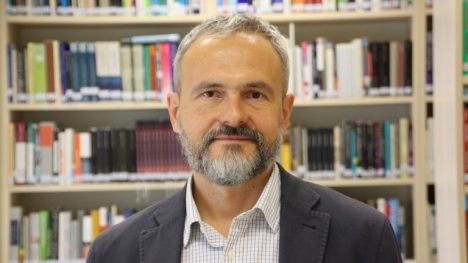
Vyacheslav Morozov
RT | June 19, 2024
Former Tartu University professor Vyacheslav Morozov has been sentenced by an Estonian court to six years and three months in prison for allegedly working for a foreign intelligence service, the news outlet ERR reported on Tuesday.
Morozov, a Russian citizen, was detained by Estonian police in January on charges of collaborating with Moscow by supposedly collecting and providing information about the Baltic state.
According to the court documents, the academic had worked at St. Petersburg State University until 2010. He later joined the faculty of the University of Tartu in Estonia, where, from 2016 to 2023, he held the position of Professor of European Union and Russian Studies. He then worked there as a professor of International Political Theory until his arrest.
“Morozov was tasked by the Russian special service to collect information from the Republic of Estonia about Estonia’s internal, defense and security policy and related people and infrastructure,” the leading state prosecutor Taavi Pern was quoted as saying in a press release by the Estonian internal security service (Kapo).
According to Pern, the professor was forwarding information about Estonia’s “political situation and elections, allied relations, and integration and social integration.” The prosecutor claimed that while most of this information was publicly available, and some had been obtained by Morozov thanks to his “position as a scientist,” it could be used to “threaten Estonia.” Pern noted that Morozov did not have any access to state secrets.
The prosecution also claimed that Morozov had been working with Moscow “for a long time” and alleged that he was recruited by Russian intelligence services when studying at a Russian university in the 1990’s.
At the same time, Kapo Director General Margo Polloson noted that in his actions, Morozov “did not damage or manipulate his own educational or research activities in any way. The science he did and guided is still relevant today.” Nevertheless, Polloson claimed that Morozov “pretended to be a professor of international relations, which gave him access to various entities, events and people, which he took advantage of.”
The head of the Tartu University Johan Skytte Institute for Political Studies, Kristiina Tonnisson, had previously stated that Morozov’s arrest in January was a “shock to us all.” She added that while the university had “no grounds for complaints regarding Morozov’s previous work,” his past activities would be critically reviewed.
Glenn Diesen about the benefits of a multipolar, Eurasian world order
Reinvent Money | June 16, 2024
Paul Buitink talks to Glenn Diesen, a Norwegian academic and political scientist. He is a professor at the School of Business of the University of South-Eastern Norway. Glenn explains why the current international liberal unipolar world order is in decline. And why a new multipolar Eurasian order is inevitable and how that would benefit the world. He describes Europe’s role and challenge in this new world order. Also Glenn dives into the Russia and Ukraine conflict and why the incremental approach of the West could lead to a boiling frog situation. At the end he also shares his experiences of being a controversial scientist in Norway.
Find more about Glenn Diesen here, including his latest book The Ukraine War & The Eurasian World Order: https://x.com/Glenn_Diesen https://www.amazon.com/Ukraine-War-Eu…
Follow Paul on X here:  / paulbuitink
Sham-ocracy, Scam-ocracy

By Laurie Calhoun | The Libertarian Institute | June 17, 2024
The word “democracy” is bandied about rhetorically by politicians on a regular basis to rationalize whatever it is that they want to do. This tendency has increased markedly in recent times as so-called wars of democracy and campaigns to save or preserve democracy are cast as the most pressing priorities of the day.
In the U.S. presidential election campaign currently underway, both members of the War Party duopoly claim to be the champions of democracy, while depicting their adversaries as loose cannon authoritarians. President Joe “Our Patience is Wearing Thin” Biden attempted in 2021 to force free people to submit to an experimental pharmaceutical treatment which many of them did not need. The Biden administration also oversaw what was one of the most assiduous assaults on free speech in the history of Western civilization. Social media platforms were infiltrated by agents of the federal government with the aim of squelching criticism of regime narratives, even, remarkably, facts recast by censors as malinformation for their potential to sow skepticism about the new mRNA shots never before tested on human beings.
Biden & Co. nonetheless insist that voters must reelect him, because his rival is a dictator in waiting à la Hitler or Mussolini. This despite the fact that Donald Trump already served as president for four years, and never imposed martial law, not even at the height of the highly chaotic and destructive George Floyd and Black Lives Matters protests. Ignoring such conflicting evidence, Joe Biden and his supporters relentlessly proclaim that a Trump victory in November 2024 would usher in the likely end of democracy.
After the conviction of Trump on felony charges crafted through novel procedures and using legalistic epicycles in entirely unprecedented ways, obviously tailored to convict one and only one person, with the aim specifically of preventing his election as the president of the United States, Democratic party operatives and Deep State bureaucrats alike have voiced concern that, if Trump is elected in November, he will go after those responsible for what fully half the country views as his persecution. Given the manifold conflicts of interest involved in the case, in which he was found guilty of all thirty-four charges, it seems likely that, as in the Colorado Supreme Court’s ruling to remove Trump’s name from the ballot in that state, the creative felony convictions of Trump will not stand on appeal. One thing is clear: the crime of “miscategorizing hush money payments” has arguably been committed by every member of Congress for whom taxpayer money was used to dispense “undisclosed” payments in suppressing allegations of sexual harassment and other forms of malfeasance. (Thanks to Representative Thomas Massie for sharing on Twitter/X that $17 million dollars were paid to settle 268 such lawsuits from 1997 to 2017.)
Meanwhile, the Russiagate narrative which dominated the mainstream media for the entirety of Trump’s presidency, and continues to this day to color people’s views of the Russian government—thus buoying support for the war in Ukraine—has already been thoroughly debunked for the Hillary Clinton campaign product that it was. The Clinton campaign and the DNC (Democratic National Committee) were fined by the Federal Election Commission for their use of campaign funds miscategorized as legal fees to conduct opposition research which found its way into the Steele dossier on which angry denunciations of Trump’s supposedly treasonous behavior were based. To this day, none of the individuals involved have been indicted for what endures in many minds as the fanciful idea that “Trump is inside Putin’s pocket!” as a man I met in rural New Zealand in 2017 so vividly put it. (I assume he watches CNN.)
Since Trump’s recent conviction for the erroneous classification on his tax form of a hush money payment as a legal fee, he has been busy making lemonade out of lemons, using his new, improved tough-guy “gangster” image to wheel in voters and financial supporters who relate more than ever to his plight, having themselves either been or known victims of the not-so-evenhanded U.S. justice system. To Trump and his supporters, of course, going after those who went after him would be tit-for-tat retribution, just the sort of sweet revenge which persons wronged may crave. But to the many Trump haters (and there is no other way to describe them at this point in history), any attempt to retaliate by using the legal system to press charges against individuals who used the legal system for diaphanously political aims would constitute a grave injustice and threat to democracy.
The situation differs in degree, not in kind, in Europe, where the results of the recent elections have inspired heartfelt exclamations by the usual suspects (European Union Commission president Ursula von der Leyden, et al.) that “democracy” is endangered by the right-wing political groups now in ascendance. Pointing out that those groups were voted in by the people (demo-) to rule (-cracy) does nothing to quell the hysterics, who are somehow oblivious of the fact that when new parties are voted into power, this is precisely because of the electorate’s dissatisfaction with their current government officials. Voting is the only way people have of ousting the villains currently holding elected positions, along with the bureaucrats appointed by them.
In Europe, many working people are disturbed by not only the immigration situation and the specter of totalitarian “wokeism” but also the insistence of their current leaders on provoking and prolonging a war with Russia. It does not seem to be a matter of sheer coincidence, for example, that French president Emmanuel Macron suffered a resounding electoral blow after having expressed the intention to escalate the war between Ukraine and Russia, thus directly endangering the people of France. Macron was also assiduous in excluding swaths of his population, who protested in the streets for months on end, from participation in civil society for what he decreed to be their crime of declining to submit to the experimental mRNA treatment during the height of the Coronapocalypse.
Protests tend not to have any effect on the reigning elites, primarily because the mainstream media no longer covers them to any significant degree, but when politicians are removed from office by the electorate, and replaced by persons who share the concerns of the populace, then change does become possible, at least in principle. Unfortunately, most viable candidates today are card-carrying members of the War Party, whatever divergent opinions they may hold about domestic issues such as whether persons in possession of Y-chromosomes should be considered biological males or whether non-citizens should be permitted to vote.
It would be nice to be able to believe, as some of Trump’s libertarian-leaning supporters apparently do, that his populist appeal reflects a genuine interest in preserving freedom and democracy. This notion is however impugned by the fact that it was under Trump’s administration that the active pursuit of Wikileaks founder Julian Assange commenced, when he was wrenched from the Ecuadorian embassy in London and thrown into Belmarsh prison, where he continues to languish today. It was also under Trump that Assange’s internet access was taken away, which already represented an assault on free speech. But by allowing then-CIA director Mike Pompeo to “mastermind” the eternal silencing of Assange, for the supposed crime of exposing U.S. war crimes (recast as serial violations of the Espionage Act of 1917), Trump betrayed his own commitment to the now octopoid MIC (military-industrial-congressional-media-academic-pharmaceutical-logistics-banking complex), notwithstanding his occasional moments of seeming lucidity with regard to reining in the endless wars. Among other examples, there is not much daylight between the platforms of Biden and Trump regarding Israel. President Biden and Secretary of State Blinken occasionally pay lip service to the innocent Palestinians being traumatized, wounded, and killed, but they nonetheless have furnished Prime Minister Benjamin Netanyahu with the means to do just that.
In reality, highly seductive, albeit fraudulent, claims to be defending democracy have been the primary basis for waging, funding, and prolonging wars which have resulted in the deaths of millions of human beings in this century alone. For two decades, the war in Afghanistan was rationalized by appeal to the need to democratize that land, which is currently ruled by the manifestly authoritarian Islamic Emirate of Afghanistan (formerly known as the Taliban), just as it was in 2001. Indeed, every country targeted by the U.S. military behemoth is claimed to be the beneficiary of what are the twenty-first-century equivalent of the missions civilisatrices of centuries past. Today, brutal bombing campaigns, invasions and occupations are invariably sustained through the rhetoric of democracy. Since every U.S.-instigated or funded war is said to support “democracy” (by definition!), this rhetorical strategy succeeds in garnering the support of politicians who know that their constituents know, if nothing else, that murder is evil, and democracy is good.
That wars imposed on people against their will—and in which they themselves are annihilated—serve democracy is a preposterous conceit, and yet it becomes ever more frequent as leaders continue to point to World War II as proof that sometimes people must die if freedom and liberty—and, of course, democracy—are to survive. Whoever is running Joe Biden’s Twitter/X account posted a suite of recycled versions of this fallacious notion not long after Memorial Day:
“American democracy asks the hardest of things: To believe we’re part of something bigger than ourselves. Democracy begins with each of us. It begins when one person decides their country matters more than they do.”
“Democracy is never guaranteed. Every generation must preserve it, defend it, and fight for it.”
“History tells us that freedom is not free. If you want to know the price of freedom, come here to Normandy, or other cemeteries where our fallen heroes rest. The price of unchecked tyranny is the blood of the young and the brave.”
Any sober examination of the historical record reveals that vacuous claims to be supporting “democracy” in wars abroad—the literal weaponization of that term—have as their primary result that the people being slaughtered lose not only their political voice, but also their very life, usually against their own will. War represents, in this way, the very antithesis of democracy.
The conflation of defense and offense codified in 2002 by the George W. Bush administration in its notorious National Security Strategy of the United States of America was made public in a pithy phrase: “Our best defense is a good offense.” This perverse rebranding of state aggression as somehow honorable has given rise to a global military system in which wars are funded by the U.S. government under the assumption that they are everywhere and always a matter of protecting post-World War II democracies. But if people are killed in these wars against their will, often because they are forbidden from leaving their country, and therefore subjected to a greatly increased risk of death through bombing, as was the case in Iraq and Afghanistan (and elsewhere throughout the Global War on Terror), and is currently the case in both Ukraine and Israel, then there is no sense in which the military missions which culminate in the deaths of those people constitute defenses of democracy. Instead, the prolongation of such wars ensures only that there will be fewer people voting than before.
Such flagrant assaults on democracy (rule by the people) in the name of democracy do not, however, end with the depletion of the civilians sacrificed by leaders for the lofty aims of securing the freedom of future, as-of-yet unborn persons. Notably, the idea that already existent young persons should be coerced to fight and die in such wars is often supported by the warmongers as well. The current British prime minister, Rishi Sunak, recently proposed that mandatory national service be reinstated, a clear sign of only one thing: that the British public has grown weary and wary of the endless regime-change wars waged and/or funded by the U.S. government and unerringly supported by its number one poodle ally, the United Kingdom. As a result of the willingness of the British government to deploy its military to serve the dubious purposes of the U.S. hegemon, the number of voluntary enlistees is naturally in decline.
Conscription, the use of coercive means to increase the number of persons to fight in wars, directly contradicts the very foundations of democracy. If democracy is rule by the people, then in order for a war to have any democratic legitimacy whatsoever (ignoring, as if it were somehow irrelevant, the “collateral damage” on the other side), it would have to be fought not only for but also by persons who support it. If it is not to be a contradiction in terms, a democratic war would involve only persons who freely agreed to sacrifice their own lives for a cause which they themselves deemed worth dying for. The fact that coercive threats of imprisonment or even death are used to enlist new soldiers shows that at least those persons, a clearly demarcated segment of the society, do not agree with what they are being ordered to do. A war does not become democratic because a majority of the persons too old to fight in it support sending their young compatriots to commit homicide and die in their stead.
This is the sense in which antiwar activists who exhort chicken hawks such as Senator Lindsey Graham and former Vice President Dick Cheney to go fight their own bloody wars are right. For in any conflict purported to be a “war of democracy,” only persons who freely choose to fight, kill and possibly die in it would be donning uniforms. By this criterion, neither World War I nor World War II were wars of democracy. All of the draft dodgers imprisoned or executed for evading military service were horribly wronged wherever and whenever this occurred.
Conscription is always floating about as a topic of debate in so-called democratic nations because of the list of wars capriciously waged with abstract and dubious aims, and incompetently executed, such as the series of state-inflicted mass homicides constitutive of the Global War on Terror. The prospect of active conscription is always looming in the background wherever more and more leaders, under the corrupting influence of military industry lobbyists, and seduced by “just war” rhetoric, exhibit a willingness to embroil their nations in war. Young persons understandably exhibit an increasing reluctance to serve in what since 1945 have proven to be their self-proclaimed democratic leaders’ nugatory and unnecessary wars.
Mandatory national service is a condition for citizenship in some countries, such as Israel, where at least some persons (the Israelis) can freely choose to leave or to substitute a form of civil service rather than agreeing to kill other human beings at the behest of their sanguinary leaders. In wars in progress, such as that in Ukraine, conscription is used in more of an ad hoc way, as it becomes clear that the forces are dwindling and must be replenished, if the war is to carry on. But the very fact that conscription has come to seem necessary to the leaders prosecuting a war itself belies their claims that what is at stake is democracy itself.
This antidemocratic dynamic is currently on display in Ukraine, where President Volodomyr Zelensky recently remained in power, effectively appointing himself monarch, after canceling the elections which would have given the people the opportunity to oust him, specifically on the grounds that they oppose his meatgrinder war with no end in sight—barring either negotiation or nuclear holocaust. In a true democracy, the people themselves would be able to debate and reject the government’s wars, but in a nation such as Ukraine, the president decides, based on “guidance” provided to him by the leaders of powerful and wealthier nations, above all, the United States and its sidekick, the United Kingdom, to carry out a war for so long as he is furnished with the matériel needed to keep the war machine up and running.
The problem for Zelensky is that no matter how many bombs, missiles, and planes are furnished to the government of Ukraine to bolster the purported defense of democracy, there will always be the need for personnel on the ground to deploy those means. When the voluntary members of the army are injured, exhausted, or dead, then the government, rather than taking a seat at the negotiation table, opts to create an artificial pool of soldiers by coercing able-bodied persons who are ill-inclined to participate, having already had the opportunity to volunteer to serve but declined to do so.
The primary support of both the war in Ukraine and the Israeli government’s assault on Gaza is based on a curtailed, amnesiac view of history, conjoined with the fiction that the states currently in existence are somehow eternal and sacred plots of land the borders of which may never be changed. In reality, states are artifacts, the perimeters of which were established by small committees of (usually) men who negotiated among themselves at some point to permit distinct states to exist. In order for a border war to be in any sense democratic, it would have to take into account the interests of all of the persons likely to be affected, not only the young people enlisted to fight, but also the hapless civilians forbidden from relocating, as in Gaza, and then summarily slaughtered by the government as it pursues its own agenda. The frequently recited refrain that it is necessary to continue to fund the commission of mass homicide in Ukraine and Israel in order to preserve democracy is self-contradictory and delusional, both a sham and a scam.
Laurie Calhoun is a Senior Fellow for The Libertarian Institute. She is the author of Questioning the COVID Company Line: Critical Thinking in Hysterical Times,We Kill Because We Can: From Soldiering to Assassination in the Drone Age, War and Delusion: A Critical Examination, Theodicy: A Metaphilosophical Investigation, You Can Leave, Laminated Souls, and Philosophy Unmasked: A Skeptic’s Critique.
Clooney Foundation for Justice is Globalist Policy Vehicle Disguised as Charity
By Ekaterina Blinova – Sputnik – 17.06.2024
Hollywood star George Clooney headlined the Biden campaign’s June 15 fundraiser alongside other celebrities, helping Joe Biden collect over $30 million. Clooney has long been in the vanguard of the Democratic party machine, including through his charity the Clooney Foundation for Justice (CFJ).
The ‘justice’ foundation set up by actor George Clooney and his human rights lawyer wife Amal is just a political slush-fund for globalist causes, Charles Ortel, Wall Street investigator, revealed to Sputnik.
Anna Neistat, the CFJ’s Docket Project legal director, told the US state-controlled Voice of America on May 30 that the organization was asking European countries to launch criminal proceedings against Russian journalists covering the Ukraine conflict.
Neistat said the NGO was deliberately not disclosing the names of targeted Russian reporters because it wanted them “to travel to other countries and be arrested there.”
However, Hollywood actor George Clooney, who founded the CFJ together with his wife Amal, denied on June 3 that his NGO was going after journalists. But the foundation’s apparent intent to suppress freedom of speech has already raised questions.
What is CFJ’s Agenda and Who is Behind It?
“Like the Clinton Foundation, this entity is a ‘public charity’,” Wall Street analyst and charity fraud expert Charles Ortel told Sputnik. “As such, it may not be controlled by one family and its board must be broadly representative of the public at large.”
Ortel noted that the foundation’s board was led by George and Amal Clooney as ‘co-presidents’.
“While substantial amounts are paid for ‘management’ to third parties, I suspect this is actually led primarily by Amal with George along for star power and fundraising,” he said.
“The Docket initiative does not provide details on revenues and expenses which are required,” continued Ortel. “The entity uses ‘cash’ accounting rather than required ‘accrual’ accounting — given its size — which is sloppy and more likely to create conditions prone to fraud.”
Ortel has previously run a private investigation into the Clinton Foundation’s alleged fraud — and sees similarities between the Clooneys’ and the Clintons’ charities.
The NGO’s major backers include the Bill and Melinda Gates Foundation, Co-Impact and the Ford Foundation. They promote a globalist liberal agenda and often cooperate with the Rockefeller Foundation and George Soros’ Open Society Foundations. According to Influence Watch, the Clooneys also collaborate with the Obama Foundation.
Ranked first in the CFJ’s list of donors, the Gates Foundation has repeatedly drawn criticism over failed agricultural projects in Africa, Bill Gates’ ties with billionaire pedophile Jeffrey Epstein, participation in the Clinton Foundation’s supposed pay-to-play schemes, and the Gates-funded biotechnology company Oxitec’s apparent involvement in the Pentagon bioweapon program — as exposed by Russia’s Radiological, Chemical and Biological Defense (RCB) Troops in July 2023.
Clooney and Co Go After Conservatives
The CFJ and its founders have earned their membership of the club of liberal charities. During Donald Trump’s presidency, Clooney and other Hollywood celebrities were vocal in their criticism of the Republican and US conservatives in general.
In August 2017, the Clooney Foundation gave $1 million to the Southern Poverty Law Center (SPLC), known for attacking US conservative PACs as “hate groups.”
In March 2018, the SPLC went even so far as to accuse a left-wing Radio Sputnik podcast of pandering to white supremacists, but later retracted its claim and apologized.
Clooney wrote an op-ed for the Daily Beast in June 2020 in support of the controversial and highly-politicized Black Lives Matter (BLM) movement, as part of what appeared to be a concerted effort by liberal Democrats and progressives prior to the November 2020 elections.
The same year, Clooney attacked conservative Hungarian Prime Minister Viktor Orban while defending Hungarian-born US billionaire George Soros from criticisms from his home country.
The actor vehemently denied any connection to Soros or his son Alexander, claiming he had met the tycoon only once at a UN meeting and had bumped into the heir to his international NGO network at an event in Davos.
Coordinated Infowar in Ukraine
When the Ukraine conflict erupted, Hollywood celebrities including actor Sean Penn flocked to Ukraine to portray the Kiev regime and its leader Volodymyr Zelensky as Winston Churchill-style patriots and freedom fighters.
George Eliason, a US investigative journalist who lived and worked in Donbass at that time, told Sputnik then that the flocking of celebrities to Kiev was nothing short of a “coordinated infowar operation” on the part of the West.
The Clooney Foundation’s Docket Project has been gathering “evidence” of alleged “war crimes” by the Russian military in Ukraine since the beginning of the conflict.
But the NGO has overlooked the Kiev regime’s eight-year-long war against the civilian population of the Donbass and the secret torture chambers run by the Security Service of Ukraine (SBU), neo-Nazi Mirotvorets website’s kill list targeting Russian and foreign journalists, politicians and children, and many other abuses human rights and media freedom of speech by Ukrainian authorities.
In October 2023, the Hollywood Reporter revealed that HiddenLight Productions, co-founded by Hillary Clinton, Sam Branson and Chelsea Clinton, was working with the Clooneys on their effort to investigate Russian war crimes in Ukraine.
The series, with the working title “The Swallows Will Return”, will follow Neistat in her search for stories of how Russians “murdered”, “raped” and “tortured” Ukrainian civilians and their families in a bid to smear and de-humanize Russians as was done the ‘Bucha massacre” hoax.
The Bucha provocation in early April 2022 was used as a pretext to tear up the peace deal struck between Russia and Ukraine in Istanbul. In December 2023, Russian Foreign Minister Sergey Lavrov highlighted that no list of alleged victims in the town near Kiev had yet been published, and the incident had not been thoroughly investigated despite intensive media coverage in the spring of 2022.
The OSCE Office for Democratic Institutions and Human Rights (ODIHR) said in response to a request from Sputnik that it is not in contact with the Ukrainian authorities on the issue of the list of ‘Bucha victims’.
The lack of interest from international organizations shows that the incident was a staged provocation carried out by the hands of the Kiev regime, a Russian Foreign Ministry source told Sputnik, comparing it to Nazi Germany’s attempt to blame its massacre of civilians at Nemmersdorf in late 1944 on the advancing Red Army.
“Human Rights NGOs” and the Corruption of Civil Society
BY GLENN DIESEN | JUNE 10, 2024
The organisations operating under the banner of “human rights non-governmental organisations” (NGOs) have become key actors in disseminating war propaganda, intimidating academics, and corrupting civil society. The NGOs act as gatekeepers determining which voices should be elevated and which should be censored and cancelled.
Civil society is imperative to balance the power of the state, yet the state is increasingly seeking to hijack the representation of civil society through NGOs. The NGOs can be problematic on their own as they can enable a loud minority to override a silent majority. Yet, the Reagan doctrine exacerbated the problem as these “human rights NGOs” were financed by the government and staffed by people with ties to intelligence agencies to ensure civil society does not deviate significantly from government policies.
The ability of academics to speak openly and honestly is restricted by these gatekeepers. Case in point, the NGOs limit dissent in academic debates about the great power rivalry in Ukraine. Well-documented and proven facts that are imperative to understanding the conflict are simply not reported in the media, and any efforts to address these facts are confronted with vague accusations of being “controversial” or “pro-Russian”, a transgression that must be punished with intimidation, censorship, and cancellation.
I will outline here first my personal experiences with one of these NGOs, and second how the NGOs are hijacking civil society.
My Encounter with the Norwegian Helsinki Committee
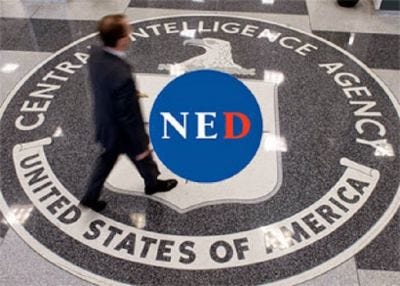
The Norwegian Helsinki Committee is one of these “NGOs” financed by the government and the CIA-cutout National Endowment for Democracy (NED). They regularly publish hit pieces about me and rarely miss their weekly tweets that label me a propagandist for Russia. It is always name-calling and smearing rather than anything that can be considered a coherent argument.
The standard formula for cancellation is to shame my university in every article and tweet for allowing academic freedom, with the implicit offer of redemption by terminating my employment as a professor. Peak absurdity occurred with a 7-page article in a newspaper in which it was argued I violated international law by spreading war propaganda. They grudgingly had to admit that I have opposed the war from day one, although for a professor in Russian politics to engage with Russian media allegedly made me complicit in spreading war propaganda.
Every single time I am invited to give a speech at any event, this NGO will appear to publicly shame and pressure the organisers to cancel my invitation. The NGO also openly attempt to incite academics to rally against me to strengthen their case for censorship in a trial of public opinion. Besides whipping up hatred in the media by labelling me a propagandist for Russia, they incite online troll armies such as NAFO to cancel me online and in the real world. After subsequent intimidations through social media, emails, SMS and phone calls, the police advised me to remove my home address and phone number from public access. One of the Norwegian Helsinki Committee recently responded by posting a sale ad for my house, which included photos of my home with my address for their social media followers.
The Norwegian Helsinki Committee also infiltrates and corrupts other institutions. One of the more eager Helsinki Committee employees is also a board member at the Norwegian organisation for non-fictional authors and translators (NFFO) and used his position there to cancel the organisation’s co-hosting of an event as I had been invited to speak. The Norwegian Helsinki Committee is also overrepresented in the Nobel Committee to ensure the right candidates are picked.
Why would a humanitarian NGO act like modern Brownshirts by limiting academic freedom? One could similarly ask why a human rights NGO spends more effort to demonise Julian Assange rather than exploring the human rights abuses he exposed.
This “human rights NGO” is devoted primarily to addressing human rights abuses in the East. Subsequently, all great power politics is framed as a competition between good values versus bad values. Constructing stereotypes for the in-group versus the out-groups as a conflict between good and evil is a key component of political propaganda. The complexity of security competition between the great powers is dumbed down and propagandised as a mere struggle between liberal democracy versus authoritarianism. Furthermore, they rest on the source credibility of being “non-governmental” and merely devoted to human rights, which increases the effectiveness of their messaging.
By framing the world as a conflict between good and evil, mutual understanding and compromise are tantamount to appeasement while peace is achieved by defeating enemies. Thus, these “human rights NGOs” call for confrontation and escalation against whoever is the most recent reincarnation of Hitler, while the people calling for diplomacy are denounced and censored as traitors.
NGOs Hijacking Civil Society
After the Second World War, American intelligence agencies took on a profound role in manipulating civil society in Europe. The intelligence agencies were embarrassed when they were caught, and the solution was to hide in plain sight.
The Reagan Doctrine entailed setting up NGOs that would openly interfere in the civil society of other states under the guise of supporting human rights. The well-documented objective was to conceal influence operations by US intelligence as work on democracy and human rights. The “non-governmental” aspect of the NGOs is fraudulent as they are almost completely funded by the government and staffed with people connected to the intelligence community. Case in point, during Ukraine’s “Orange Revolution” in 2004, an anti-corruption protest was transformed into a pro-NATO/anti-Russian government. The head of the influential NGO Freedom House in Ukraine was the former Director of the CIA.
Reagan himself gave the inauguration speech when he established the National Endowment for Democracy (NED) in 1983. The Washington Post wrote that NED has been the “sugar daddy of overt operations” and “what used to be called ‘propaganda’ and can now simply be called ‘information'”.[1] Documents released reveal that NED cooperated closely with CIA propaganda initiatives. Allen Weinstein, a cofounder of NED, acknowledged: “a lot of what we do today was done covertly 25 years ago by the CIA”.[2] Philip Agee, a CIA whistle-blower, explained that NED was established as a “propaganda and inducement program” to subvert foreign nations and style it as a democracy promotion initiative. NED also finances the Norwegian Helsinki Committee.
The NGOs enable a loud Western-backed minority to marginalise a silent majority, and then sell it as “democracy”. Protests can therefore legitimise the overthrow of elected governments. The Guardian referred to the Ukrainian Orange Revolution in 2004 as “an American creation, a sophisticated and brilliantly conceived exercise in Western branding and mass marketing” for the purpose of “winning other people’s elections”.[3] Another article by the Guardian labelled the Orange Revolution as a “postmodern coup d’état” and a “CIA-sponsored third world uprising of cold war days, adapted to post-Soviet conditions”.[4] A similar regime change operation was repeated in Ukraine in 2014 to mobilise Ukrainian civil society against their government, resulting in overthrowing the democratically elected government against the will of the majority of Ukrainians. The NGOs branded it a “democratic revolution” and was followed by Washington asserting its dominance over key levers of power in Kiev.
Similar NGO operations were also launched against Georgia. The NGOs staged Georgia’s “Rose Revolution” in 2003 which eventually resulted in war with Russia after the new authorities in Georgia attacked South Ossetia. Recently, the Prime Minister of Georgia cautioned that the US was yet again using NGOs in an effort to topple the government to use his country as a second front against Russia.[5] Georgia’s democratically elected parliament passed a law with an overwhelming majority (83 in favour vs 23 against), for greater transparency over the funding of NGOs. Unsurprisingly, the Western NGOs decided that transparency over funding of NGOs was undemocratic, and it was labelled a “Russian law”. The Western public was fed footage of protests for democratic credibility, and they were reassured that the Georgian Prime Minister was merely a Russian puppet. The US and EU subsequently responded by threatening Georgia with sanctions in the name of “supporting” Georgia’s civil society.
Civil Society Corrupted
Society rests on three legs – the government, the market and civil society. Initially, the free market was seen as the main instrument to elevate the freedom of the individual from government. Yet, as immense power concentrated in large industries in the late 19th century, some liberals looked to the government as an ally to limit the power of large businesses. The challenge of our time is that government and corporate interests go increasingly hand-in-hand, which only intensifies with the rise of the tech giants. This makes it much more difficult for civil society to operate independently. The universities should be a bastion of freedom and not policed by fake NGOs.
[1] D. Ignatius, ‘Innocence Abroad: The New World of Spyless Coups’, Washington Post, 22 September 1991.
[2] Ibid.
[3] I. Traynor, ‘US campaign behind the turmoil in Kiev’, The Guardian, 26 November 2004.
[4] J. Steele, ‘Ukraine’s postmodern coup d’état’, The Guardian, 26 November 2004.
[5] L Kelly, ‘Georgian prime minister accuses US of fueling ‘revolution attempts’’, The Hill, 3 May 2024.
Ex-Press TV reporter at center of WaPo’s smear campaign against Grayzone
By Maryam Qarehgozlou | Press TV | June 11, 2024
The Washington Post reports that Grayzone journalist Wyatt Reed took funds from Iran, and the report is based on testimonies of anti-Iran elements or those linked to US arms manufacturers.
In another desperate bid to muzzle alternative media that has been revealing Western complicity in Gaza and Ukraine, The Washington Post recently published a hit piece targeting The Grayzone news outlet.
The article alleged that The Grayzone is financially backed by Iran and Russia to “spread falsehoods.”
Authored by Joseph Menn, the article claimed to have “exposed” The Grayzone’s journalist Wyatt Reed’s ties with Iran’s state media, relying on what it said were hacked emails and quotes from sources either anti-Iran elements or linked to the US government or arms manufacturers.
The oldest newspaper in Washington, owned by pro-Israel business tycoon Jeff Bezos, insinuated that since Reed, now a managing director at The Grayzone, appeared on Press TV many years ago, he is on the Islamic Republic’s payroll.
The piece went as far as to suggest that he should be jailed for reporting for the Iranian news channel.
The Washington Post report repeated the same claims about Reed’s reporting for Russia’s state-run news agency Sputnik.
Reed, for his part, has never hidden his work for Press TV. At the start of his journalistic career in 2020, Reed appeared on Press TV several dozen times and openly tweeted his reports. The “correspondent @PressTV” was also featured in his Twitter bio at the time.
“For weeks, we’ve been waiting to see how they would target us. Now we know. Congrats to the @washingtonpost’s ‘Digital threats reporter’ on this earth-shattering reporting on my appearances on Press TV years before I edited Grayzone,” Reed wrote in a post on X, formerly Twitter, last week.
“How could they possibly have figured it out?” he added.
Dan Cohen, an American journalist and filmmaker, also took to X to assert that The Washington Post’s “sloppy attempt” to discredit independent journalism only highlights the media group’s own corruption.
“The Washington Post is targeting Grayzone journalist @wyattreed13 for having previously worked for Iran state media outlet Press TV and Russian state outlet Sputnik, as if that’s somehow a breach of journalist ethics,” Cohen wrote in a post.
He said The Washington Post reporter Greg Jaffe has a fellowship at the Center for a New American Security (CNAS), a permanent war think tank funded by the US State Department and Pentagon.
The editor-in-chief of The Grayzone, Max Blumenthal, responded that supporters of the Israeli war on Gaza and the Western proxy war in Ukraine are angry with The Grayzone and Reed because of their truthful reporting.
“The motive behind this malicious attack is abundantly clear: Wyatt now works for The Grayzone, and The Grayzone’s factual reporting has infuriated boosters of the Ukraine proxy war and members of Israel’s international propaganda network,” he said.
‘Embarrassing’ correction
Stung by the backlash, The Washington Post was forced to retract some of its allegations. While the story initially claimed that editors of The Grayzone had received payments from Iranian media, it soon corrected the story, saying only Reed received such payments.
“Less than 24 hours after @JosephMenn’s hatchet job on @TheGrayzoneNews landed, WaPo has been forced into a massive and deeply embarrassing correction,” Kit Klarenberg, a British investigative journalist and contributor to the Press TV website, wrote in a post on X.
“Other egregious distortions and falsehoods remain extant. But it’s a start. And certainly the foundation of future legal action,” he added.
Reed also said in an X post that more corrections are expected in the coming days.
“The ‘journalists’ attempting to get me jailed for journalism just had to issue a major correction to their hit piece. Expect more in the coming days as we expose the US government cutouts, pro-Israel zealots, and federal informants they relied on to target us.”
Bogus claims
Despite the correction, the piece is still filled with false, twisted, and distorted accounts. For example, the author of the article, Menn, claims Blumenthal did not answer emails seeking comment. However, Blumenthal said in a post on X that he received no emails.
“Unless Menn can prove that he emailed me and I somehow missed it, this is malicious conduct that demonstrates reckless disregard for journalistic ethics,” he said.
Blumenthal added that if he had received any emails from Menn, he would have stated clearly that Reed reported for Press TV three years before he joined The Grayzone and that Wyatt’s position at The Grayzone was created through “a public, grassroots crowd-funding campaign” in which readers pooled together small donations.
“I would have also stated that The Grayzone does not accept funding from any government, unlike nearly every intel front Menn quoted against us,” he added.
According to Blumenthal, these facts would have undermined the entire premise of Menn’s “malicious” smear piece, which may be why he did not email him.
WaPo quotes NATO-backed groups
Blumenthal also revealed that Menn’s key sources for the article included Neil Rauhauser, a “shady online troll” who is also believed to be an FBI informant, and some NATO-backed outfits.
The article cited the Australian Strategic Policy Institute, or ASPI, a Canberra-based think tank funded by Australia’s Department of Defence, NATO, and the US Department of State.
The Atlantic Council, the semi-official DC think tank of NATO, is another source cited by The Washington Post, which has taken in substantial funding from the US Department of State, EU states, and arms manufacturers.
It also quoted Ali Herischi, personal lawyer of Masih Alinejad, a US-based, exiled Iranian rabble-rouser who is on Washington’s payroll for instigating anti-Iran sentiments inside and outside the country.
Alinejad has advocated for Israeli military attacks on Iran and received $305,000 from the US government for her work at Voice of America, the US state broadcaster, between 2015 and 2019.
“At no point did Menn inform his readers that his sources were state-funded pro-war entities,” Blumenthal said.
Misinforming readers
The Washington Post story also alleged that The Grayzone is spreading misinformation by reporting “widespread Israeli attacks against its [settlers] on October 7” when Hamas carried out Operation Al-Aqsa Storm into the occupied territories.
However, the newspaper conveniently failed to inform its readers that Israeli media have corroborated The Grayzone’s assessment that the Israeli military explicitly ordered attacks on Israeli settlers who had been taken captive on October 7, killing many.
Israeli newspaper Haaretz reported last month that Israeli Gen. Barak Hiram ordered an Israeli tank to shell a home in Kibbutz Beeri filled with over a dozen Israeli captives on October 7, killing all but two.
Desperate attempts
According to Hermela Aregawi, a US-based independent journalist, the targeting of American journalists who challenge mainstream narratives is likely to ramp up ahead of the US presidential elections.
“If you read beyond the headline, the ‘editor’s ties’ are that… ‘The files appear to show that the Iranian broadcaster paid [journalist Wyatt] Reed for occasional contributions to its programming’… The reality is US outlets, UK outlets, Qatar (Al Jazeera) etc. pay some of their contributors for their analysis,” she wrote on X.
Journalist Mark Ames also said that the piece was a desperate attempt to trigger a federal investigation against independent journalists.
“This is the second WaPo hit piece against Grayzone this year. Based on the sourcing/media here, you get the sense Langley & DC press corps are so frustrated that their ‘disinformation’ hex cast upon [The Grayzone ] has had no effect, so they’re trying to summon the Feds to shut [The Grayzone ] down.”
The Australia-based anti-war commentator Caitlin Johnstone also said on X that The Grayzone staff worked for foreign media outlets like Press TV because there are no major Western media outlets that platform dissident voices like theirs, who “criticize the Western empire and its actions.”
“The Washington Post is one of the worst propaganda rags ever to exist in any country. If I’d published such an article for such a depraved empire propaganda outlet, I wouldn’t be able to sleep at night.”
Featured Video

Macgregor: We Haven’t Seen the Worst of the Iran War Yet
or go to
Aletho News Archives – Video-Images
New Book
Breast Cancer: Before You Consent
A new Unbekoming paperback
Lies are Unbekoming | September 18, 2026
Peter Gøtzsche reviewed every randomised mammography screening trial ever conducted for the Cochrane Collaboration. Cochrane’s headline is that, assuming a 15% mortality reduction, one woman in 2000 avoids dying of breast cancer over ten years. Ten are overdiagnosed and treated. Two hundred experience false alarms.
But that headline assumes the reduction. When Gøtzsche looked only at the trials with adequate randomisation — the higher-quality ones — the reduction disappeared. No effect on breast cancer mortality. No effect on all-cause mortality.
This is the Cochrane finding, published in the establishment’s own database of systematic reviews.
No woman being asked to consent to a mammogram this week knows it.
That is why the new Unbekoming paperback exists. … continue
Blog Roll
 Aletho News
- US lawmaker blocks $2.8 billion weapons sale to Israel: Report
- Yemeni army claims responsibility for strikes on sensitive sites in Saudi capital, Aramco facilities in Yanbu
- Iran Judiciary issues indictments against 159 US, Israeli officials for assassination of Leader, commanders
- Turkiye revokes Iranian bank license under US sanctions campaign
- US-Denmark Agreement on Greenland Is ‘PR Stunt’ Ahead of Midterms
- Araghchi: Military intervention cannot create security; coercion cannot bring peace
- Fraud Squared
- Breast Cancer: Before You Consent
- Iran’s Plan to Shut Down AI in the Persian Gulf
- Israel seeks ‘compensation’ from Washington over Saudi F-35 sale
- If Americans Knew
- Inside Gaza’s death trap of collapsing, bombed-out buildings
- The everyday items Israel bans from Gaza every day
- Inside the siege, the ruined buildings of Gaza – Daily Update
- Debunking The Claim That Macklemore Has A “History Of Antisemitism”
- CPJ demands release of arrested Palestinian-US journalist near Bethlehem
- Robert Kraft: The Billionaire Friend of Netanyahu Pulling The Strings Behind the Macklemore/Ed Sheeran Blow Up
- Columbia Administered Fund Gives Big Money to Pro-Israel Groups
- Deportation Case of Palestinian Activist Salah Sarsour Tests First Amendment
- ‘We Will Not Forget’: Palestinians Mark 44 Years since Sabra and Shatila
- Why do we let Zionists decide what we can and can’t say?
- No Tricks Zone
- New Study: ‘Global Drought Shows No Detectable Recent Acceleration Under Climate Warming’
- Economic Masterminds: German Socialists Suggest Taxing Productivity Gains Stemming From Using AI
- The South China Sea Has Not Been Cooperating With The Climate Change Narrative
- Energy Crisis: Germany Enters Heating Season With Historically Low Gas Reserve Fill Levels
- New Study: The Antarctic Ice Sheet Gained Mass From 2020-2024 Due To Staggering Snow And Ice Accumulation
- Study: Ocean Heating Rates From Thousands Of Years Ago ‘Dwarf’ Modern Ocean Heating Rates
- Climate Extremists Target, Attack Large-Scale Power Grid Infrastructure In Germany!
- New Study: Antarctic Ice Melt Has Contributed Less Than 1 Centimeter To Sea Level Rise In The Last 30 Years
- Fear Of Debate: Alarmist German Climate Scientist Calls On Mainstream Media To Discredit Skeptic Voices
- End-Of-August Arctic Sea Ice Extent Hasn’t Fallen In 20 Years, Official Data Show!
 Aletho News