Querying the existence of a covid ‘pandemic’
Health Advisory & Recovery Team | June 6, 2023
Covid-19 has been described as a global pandemic but does this title give it a severity and indeed fear factor way beyond its actual impact?
The word pandemic used to have a very specific meaning. It was used to describe a scenario where there was extensive incapacitation of key workers and large numbers of deaths, including young people. A genuine pandemic is not something that would have needed billions of dollars in advertising for people to even notice and fear. Using this long-established definition of the word, we conclude that there was in fact no global pandemic in 2020. The word was deliberately misapplied and weaponised against an unsuspecting public. Let us be clear, this article is not questioning the existence of a virus SARS-CoV-2 or an illness named Covid-19, but even the choice of ‘SARS’ (Severe Acquired Respiratory Syndrome) as the name for this coronavirus was already setting the scene for systematic fear-mongering.
The notion of a ‘pandemic’ was relentlessly promulgated through mainstream media to ramp up fear in the population, to help enforce unprecedented lockdowns and other extremely harmful policies (e.g school closures and universal mask wearing) and to push through Emergency Use Authorisations of novel technology mRNA and viral vector DNA products.
This would not have been possible were it not for three false premises that covid was:
- novel;
- extremely lethal; and
- unprecedented.
It was none of these things. It was no more novel than numerous other viruses which emerge each year in terms of the ability to be recognised by our immune systems. It was no more lethal than bad influenza viruses of the past and was less lethal than seasonal influenza for the young. Intensive care stays were longer than have been observed with flu, though whether that was due to a virus directly or caused by our changed response to how we treated respiratory infections is unclear. Overall it was a treatable, seasonal respiratory virus mostly affecting the old and infirm.
HART has written previously on how similar the mortality was to the bad influenza winter of the year 2000. The mortality data for 2020 is unremarkable globally when compared to previous influenza seasons except perhaps in New York City and Northern Italy. In both of these outliers, the data emerging is raising uncomfortable questions about the relative contribution of the virus versus the impact of policy-related responses when considering the extraordinary number of deaths reported. In spite of these outliers, global mortality data shows no evidence of a global pandemic. It could be argued that a once in every 20 year event should not be minimised, but nor does it justify an all of society emergency response or the institution of a permanent biosecurity surveillance state.
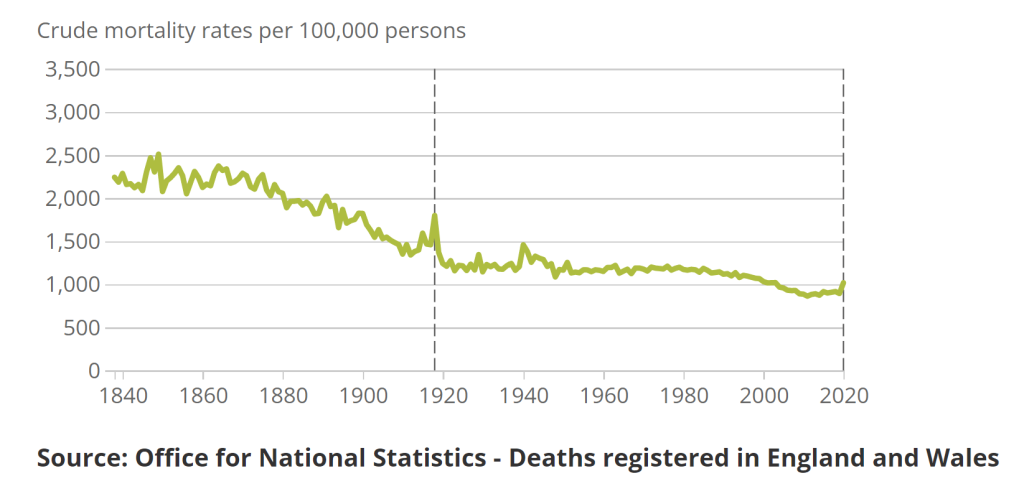
Figure 1 showing ONS crude mortality rates since 1840
Without the highly flawed PCR case data and draconian global restrictions on doctors’ freedom to treat their patients as they saw fit, there would be nothing particularly notable about this year. Outside of PCR driven data, a small rise in the number of calls to ambulances for breathing difficulties was observed, though it is possible that hysteria and fear may be responsible for at least part of this. We might have noticed an unusually late spike in influenza-like illness but not much more. Mortality-wise, it would appear as a mid-range ‘bad flu’ year. It is worth reading the work of Professor Denis Rancourt on mortality data, who has been pointing out this inconvenient truth since early 2021.1,2
Interestingly, the WHO quietly altered the accepted definition of ‘pandemic’ in 2009, just before the so-called H1N1 ‘pandemic’. The rushed-to-market Pandemrix vaccine which was pushed hard in the face of the imaginary ‘pandemic’ was subsequently pulled from the market due to life-changing side effects (often in children), a signal picked first up in Finland but later found elsewhere.
In essence, they used exactly the same playbook in 2020, but seemed to have ironed out some of the ‘problems’ encountered the first time round. Vicious behavioural psychology tactics were the main tools used to ‘correct’ these ‘problems’. Shaming people into believing they may ‘kill granny’ was a master-stroke. They used guilt, shame and the threat of ostracism, these being some of the most powerful drivers of human behaviour. There was even an identical cast of characters; Fauci, Drosten and Gates, all reporting for duty, aided and abetted by the bought and paid for media machine working on 24 hour overdrive.
In 2003, an influenza pandemic was defined as follows:
“An influenza pandemic occurs when a new influenza virus appears against which the human population has no immunity, resulting in several simultaneous epidemics worldwide with enormous numbers of deaths and illness.”
In 2009, the WHO decided, in their infinite wisdom, to get rid of the words “enormous numbers of deaths and illness.” from the definition. You would think deaths and serious illness were the only meaningful characteristics of a ‘deadly pandemic’.
To successfully fight against the globalist mission creep of tyrannical public health measures, we must collectively stop stoking the ‘deadly pandemic’ fire. If we continue to allow this falsehood to embed in public consciousness, all of the unethical horrors enacted will simply be repeated for the next non-pandemic-pandemic.
Without the requirement for excess deaths and widespread serious illness, malevolent profit-driven interests can simply will a ‘pandemic’ into existence on finding any new mutation amongst the global virus population. A strategy to force countries to invest heavily in searching for genetic anomalies will fuel the pandemic creation industry. Once one is found, the response can be fuelled by using fraudulent test data and media advertising, as they did very successfully in 2020. We cannot allow this to happen again and must therefore reclaim the word ‘pandemic’ to ensure it is only applied in the correct way.
We expect a reflexive objection to this article from some quarters on the basis that the case has not been adequately argued that covid had minimal impact on overall mortality in 2020. This fact is irrelevant when challenging the terrifyingly inappropriate global response. The world’s population was sold a serious lethal deadly pandemic which – we were told – necessitated the reordering of society. The ‘new normal‘ as it was affectionately called by so many perfectly in-sync global leaders. In the event, we did not have a serious lethal deadly pandemic, and what has happened (and continues to happen) is based on a lie. Arguing about whether or not some bits of the lie might have a modicum of truth in them is a distraction from much bigger questions which need addressing.
Footnotes
Missouri v. Biden might be most important legal case in U.S. history
From what I’ve read, proof our federal government wants to kill free speech is overwhelming.
BY BILL RICE, JR. | JUNE 7, 2023
Until yesterday, I’d not read any documents in the lawsuit brought by the states of Missouri, Louisiana et al vs. President Biden. Because of this, I didn’t fully grasp the stunning claims made by the plaintiffs, nor realize how overwhelming the evidence is that supports this case.
Yesterday, I read the first 54 pages of a 354-page legal document that was filed with a federal district court in Louisiana on March 3, 2023.
I now better understand why some people believe this might be the most important legal case in U.S. history.
In a nutshell, attorneys for the plaintiffs are compiling and presenting a mountain of evidence that shows actors for the U.S. government have conspired to nullify the First Amendment to the U.S. Constitution.
This Amendment was first for an important reason.
It states that “Congress shall make no law respecting an establishment of religion, or prohibiting the free exercise thereof; or abridging the freedom of speech, or of the press; or the right of the people peaceably to assemble, and to petition the Government for a redress of grievances.”
The core issue at stake is should American citizens be allowed to have genuine “freedom of speech.”
In my view, the evidence already presented in this legal case proves beyond a reasonable doubt that a cadre of officials in government (and organizations working “in partnership” with government agencies) despise, fear and want to end “free speech.” In fact, they’ve already effectively blocked the free speech of millions of Americans.
In a democracy, free speech is vitally important as it makes dissent from prevailing narratives possible and thus protects the “natural rights” of citizens who may hold minority views. That is, without “free speech,” only the views of those who embrace “authorized” opinions would be allowed to participate in any meaningful way in democratic debates.
One can parse this lengthy document a thousand ways, but the bottom-line conclusion is that the U.S. government believes only its views should be allowed to be widely disseminated.
Even more terrifying, virtually all the important institutions in contemporary society defend and seemingly support the efforts of the federal government to censor any speech labeled “mis-“ or “disinformation.”
A few of my main take-aways from my (partial) reading of this must-read legal document:
All Hope is Not Lost
The fact that attorneys general from at least two U.S. states have filed such a lawsuit provides hope that the entire country has not yet become disciples and enforcers of Big Brother.
It is also significant that the push-back to mass censorship comes from the state level of our “republic” and not from the federal government itself. That is, the Attorney General of the United States should have brought this case. Instead, representatives of the U.S. government are vigorously defending mass censorship, and the effort to “abridge the freedom of speech.”
The Legal System Can Work
This document is 354 pages because it’s replete with transcripts from legal depositions and exhibits that the public would have not seen absent the commencement of this legal proceeding.
The document also proves the power of legal “discovery” wherein defendants have to turn over all relevant evidence such as emails, meeting records, etc. (although plaintiffs argue that the defendants have still not turned over every piece of “discovery” requested).
A healthy democracy hinges on “fact-finding” and a “search for the truth.” This lawsuit has made it possible for the people who are following this case (not enough people) to learn more about the activities of the most powerful individuals who work for the most powerful government on the planet.
A quick aside ….
In reading this summary of evidence, I was struck by how easy it was for plaintiffs’ attorneys to build their case.
The attorneys, investigators and staffers bringing this case are clearly intelligent professionals who’ve been very thorough in developing their evidence and trying to prove their case. That is, if they get a fair hearing (which I’m not sure they will), they should win this case with ease.
However, this example made me think of all the lawsuits and “fact-finding” exercises that have NOT occurred with any of the litany of crimes and scandals of our Covid times (and even before Covid).
One strongly suspects that if other teams of competent litigators and investigators had employed the same tools of discovery and depositions, every scandal of our times would also be just-as-easily exposed.
Just like I think about all of the mainstream news articles that are off limits to alleged “watchdog” journalists, I also think about all the lawsuits and prosecutions that are apparently off limits to the people and organizations who could bring such cases.
What’s the core issue in this case?
The first paragraph of the “motion for the injunction” describes what the plaintiffs are trying to prove (and have already proven as far as I am concerned).
- “Federal officials, including Defendants, have made a long series of public statements since at least 2018 demanding that social-media platforms increase their censorship of speech and speakers disfavored by these officials, and threatening adverse consequences – such as repeal or reform of Section 230 immunity under the Communications Decency Act (CDA), antitrust scrutiny or enforcement, increased regulation, and other measures – if the platforms do not increase censorship …. “ (emphasis added).”
Note: For more excerpts from the document, see Reader Comments (under “most recent.”)
Comments:
Laymen and legal scholars alike agree that the First Amendment does not compel any publisher to print any and all speech. For example, a private company like The New York Times can publish, or not publish, whatever speech it wants for whatever reason it wants.
The issue in this case is whether citizens living in the “town square” can use Facebook, Twitter, YouTube, etc. to share their opinions or facts.
Or, more specifically, can the government use its immense power to compel private companies to censor speech the government doesn’t like (speech labeled by the government as dangerous, extremist, false or basically “misinformation” or “disinformation” as the government defines these terms).
Plaintiffs argue that the federal government is using its power to abridge free speech. The federal government is doing this by threatening to effectively shut down social media companies who don’t comply with the government’s wishes.
The federal government could harpoon these companies by “reforming” or “amending” Section 230 of the CDA. This section grants legal immunity to such companies, meaning social media companies can’t be sued or criminally tried because of the speech of citizens who make posts on their platforms.
Paragraph 3 of the document explains the power of this “threat.”
“3. The threat of antitrust scrutiny or enforcement is also a major motivator to social-media platforms. For example, Facebook CEO Mark Zuckerberg has stated that the threat of antitrust enforcement is “an ‘existential’ threat” to his platform.”
The evidence – presented on scores of pages – clearly reveals this “threat” was made explicitly, implicitly, publicly and privately over and over and over by myriad employees of the U.S. government, including the President of the United States.
This makes one (almost) feel empathy for these social media companies, which have had a symbolic bazooka pointed at their heads by the U.S. government dating to the day “Joe Biden” allegedly won the presidential election over Donald Trump.
I write that I “almost” feel empathy for these companies because if anyone skims this document, he will quickly see that virtually every employee and key executive of these companies was eager and happy to accede to the demands of their pro-censorship rulers.
Those who read this document will see never-ending examples of government officials brow-beating and intimidating social media companies for NOT censoring MORE.
To me, these companies appear almost masochistic – as in they seemingly enjoyed their incessant scoldings. For example, social media employees often thanked their government minders for pointing out their transgressions, which they seem overly-eager to correct. (Here, the Stockholm Syndrome comes to mind).
The “stick” of repealing Section 230 is not the only motivation social media companies have for complying with Big Brother.
Numerous “carrots” also exist as almost every one of these companies also profits from big contracts with the federal government and/or receives large sums of money (such as vaccine advertising spends) for supporting the authorized narratives (or, more precisely, silencing the non-authorized narratives).
The Virality Project
The document makes many references to the Virality Project, an influential project commissioned by academics at Stanford University.
As I’ve written previously, the most important goal of the world’s real rulers in Covid times was/is the effort to fight “vaccine hesitancy.”
If people were hesitant about getting their Covid vaccines, the mRNA project would be a bust. Big Pharma and all the many entities that receives massive amounts of money from Big Pharma would not be pleased.
One thing that might make half the world skeptical of the “safe and effective” non-vaccines would be if the views of vaccine skeptics actually “went viral.”
This, very possibly, could have happened … absent mass censorship.
In my last article, I discussed several of the key “chess moves” our rulers have made to make sure they win this “game.”
Arguably, the most important move was making sure dissenting views did NOT go viral, a result which didn’t happen by chance … but by a coordinated effort to censor hundreds of millions of potential skeptics and critics.
Since the government doesn’t own Facebook (where two billion people share speech), the government had to “persuade” Facebook (Meta) to do their censoring for them.
This was a conspiracy, a massive one …
In reading this document, I was also stunned when I thought about all the employees and organizations that were involved in the effort to defeat the threat of “vaccine hesitancy” (and protect all the other many untrue Covid narratives).
I stopped reading after 54 pages, but this was enough to see that the actors in this conspiracy (a cover-up of the truth) included the President of the United States, all his key White House employees, the CDC, the Census Bureau, The Surgeon General and his staff, officials in the NIH (such as Anthony Fauci), many of the key members of Congress, all the new “fact checkers” and probably the White House chef.
Time and again, plaintiff’s attorneys present examples where government officials cite articles written by “journalists” at The New York Times or Washington Post that were used as a weapon to demand even more censorship among social media companies.
Surreally, this means our “free press” has been one of government’s key allies in suppressing free speech.
Government contractors, non-profits and think tanks were also brought in to help with the vital censorship chess moves.
Another hallmark of a conspiracy would be any evidence proving a coordinated initiative. The plaintiff’s attorneys have done an excellent job proving this happened. For example, the authors of the legal brief repeatedly show how the words “accountable” and “transparency,” were used ad nauseam by all the censorship conspirators.
When government actors told social media companies they would be “held accountable,” this was a not-too-subtle threat that they better do as told … Which, sadly and not surprisingly, they did.
The conspirators also incessantly demand “transparency” from social media companies.
The government didn’t just ask social media companies to do a little more censorship for the good of the country, they demanded access to all the algorithms, data bases, search queries, content-moderation policies, etc. that would prove companies were censoring the content the government said must be censored.
Amazingly, companies like Meta complied …. so, apparently, officials at the CDC and The Census Bureau (which for some reason took a lead role in enforcing censorship) and key White House staffers were looking at the same tools Meta used to see what Covid topics were trending on their platform.
The government would then tell the companies to ban such speech on their platforms.
Not only did government actors hold a gun to the social media companies’ heads, they wanted to see (and even use) the very tools that allow these companies to know what their users were posting.
As we’ve learned from the “Twitter files,” government officials also repeatedly zeroed in on key “disinformation super-spreaders” and made sure they were banned and punished.
Victims/targets of these censorship efforts include high-profile Covid skeptic like Alex Berenson, Steve Kirsch and Robert Kennedy, Jr., but they might as well have included Bill Rice, Jr, whose Facebook account has also been suspended (for no known or stated reason) multiple times.
Per the copious evidence in this legal brief, every time Meta banned someone or said some topic was now taboo, government officials were rarely placated, and demanded even more censorship. And, again, government officials kept demanding “transparency” to see that thy’s will was being done.
The irony of course is that the U.S. government is the least transparent entity on the face of the earth.
To be clear and to state what should be perfectly obvious by now, the multi-faceted censorship and “disinformation” programs (which pre-date Covid) were created and enforced to make sure no real government “transparency” is/was possible.
For our government officials, transparency is like sunlight or a silver crucifix to a vampire.
What will be the result of this lawsuit?
I actually don’t know what the plaintiffs are demanding except for the government to cease and desist with its efforts to compel censorship.
Speaking for myself, I’ve already seen enough evidence where this U.S. citizen won’t be mollified unless we have criminal prosecutions, the impeachment of President Biden and the censure of all the members of Congress who bullied these social media executives.
Also, the companies that went along with this need to be boycotted by every citizen that still cares about the First Amendment.
I’d also note that while Twitter has (largely) turned over a new leaf under the ownership of Elon Musk, the rest of the social media companies are censoring left and right just like they’ve been doing since “Joe Biden” was sworn into office. (This tells me these companies are betting on “Biden” prevailing in this lawsuit).
It’s not just Covid issues subject to mass censorship ….
For those who think the censorship regime only deals with Covid topics, I say you better think again … as this document also proves.
Plenty of sections of this document provide evidence showing that “disinformation” about Climate Change, election fraud and woke issues like “gender identification” will also continue to be subject to the whims of the government’s arbiters of truth.
For my part, I’m now convinced that what shouldn’t happen … will probably happen. This means, “Joe Biden” will probably win re-election and this case will probably be thrown out or the Supreme Court led by (captured?) John Roberts will ultimately side with the defendants.
If this happens, perhaps more Americans will belatedly understand the new legal precedent that has been set.
In the future, any speech that’s deemed “misinformation” by unelected bureaucrats (at say the CDC or EPA) can indeed be censored and banned.
It will be perfectly fine for presidents, Congressmen and surgeon generals to demand that social media companies censor unauthorized or “dangerous” speech. Furthermore, the government will be granted that “transparency” that tells them Meta or Google are following their orders.
Strangely, Substack wasn’t mentioned …
In reading this document, I was struck by the fact Substack (as far as we know) has yet to be targeted by the Censorship Czars.
My guess is that if this case is decided in favor of the defendants, this will no longer be the case. The “dangerous misinformation” I’ve been posting (and my readers in the Reader Comments) will suddenly be fair game for censorship as well.
Substack is replete with writers challenging the false Covid narratives, but this speech platform is also full of skeptics of Climate Change, writers who might not support the Ukraine War or central bank digital currencies … authors who think election fraud is real and correspondents who don’t like the “woke” transgender and pronoun malarky.
For the past 240 years, Americans thought the First Amendment gave them the “freedom” to share their views on controversial topics. If Biden and the U.S. government win this case, I suspect we’ll soon learn otherwise.
A new cholesterol drug for ‘statin intolerant’ people
But what is the evidence?
By Maryanne Demasi, PhD and Robert DuBroff, MD (Cardiologist, New Mexico) | June 5, 2023
For years, researchers have tried to convince patients that statins don’t cause muscle aches and pains. They’d say that people in trials who took statins experienced muscle aches at the same rate as people on placebo, and that if they did experience muscle pain, it was “rare.”

But now, researchers have had a change of heart. Statins do cause muscle aches in about 20% of people, a problem known as ‘statin intolerance.’ Why the change of heart?
Well, there’s a new drug for people with statin intolerance, one that lowers cholesterol like a statin, but without the muscle aches.
The drug is called bempedoic acid. It acts on the same cholesterol biosynthesis pathway as statins and reduces the amount of cholesterol made by the liver.
The drug is being touted as “revolutionary.” Recently, Stephen Nicholls, cardiologist, and co-investigator on a major trial of the drug said:
“This drug provides another option for lowering cholesterol and is particularly important for patients that cannot tolerate statins. That’s a real problem in clinical practice which limits our ability to effectively lower cholesterol in many patients.’’
Bempedoic acid on trial
Almost 14,000 participants across 32 countries took part in a clinical trial of bempedoic acid and the study was published in the New England Journal of Medicine.
All the trial participants had statin intolerance — half were given placebo and the other half were given 180 mg bempedoic acid daily, and followed for a median duration of 3.3 years.
The drug lowered LDL-cholesterol by about 20%, as well as a marker of inflammation called C-Reactive Protein (CRP) – but did that translate into less major cardiovascular events?
The primary outcome analysed was a composite of four outcomes: heart attack, stroke, revascularisation, and cardiovascular death.
After taking bempedoic acid daily for an average of 3.3 years, the relative risk reduction of the composite outcome was 13% and the absolute risk reduction was 1.6%.
However, in terms of individual categories within the composite endpoint, bempedoic acid had no significant effect on fatal or non- fatal stroke, death from cardiovascular causes, and death from any cause.
The small risk reduction of a cardiovascular event (1.6%) must be weighed up against the increased risk of gout (1%), gall stones (1%) and other drug interactions.
Is the push to lower cholesterol futile?
In 1996, Nobel laureates Brown and Goldstein wrote an editorial in Science titled, “Heart attacks: gone with the century?”
The authors surmised that “proof of the cholesterol hypothesis, discovery of effective drugs, and better definition of genetic susceptibility factors – may well end coronary disease as a major public health problem early in the next century”.
But over a quarter of a century later, drugs to lower cholesterol have made virtually no impact on ending heart disease.
As we published in the journal, Preventative Medicine, over the past 10 years cholesterol levels have been falling, while the number of Americans dying of heart disease has been steadily climbing.
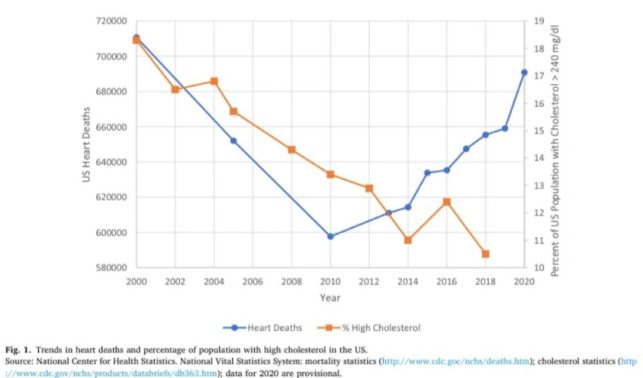
If high cholesterol was “causal” in heart disease, as the prescribing guidelines suggest, then we’d expect to see an opposite trend.
Our most recent meta-analysis of 21 statin trials was unable to find a consistent relationship between lowering LDL-cholesterol and death, heart attack or stroke, following statin therapy.
And despite the widespread use of cholesterol-lowering statins in Europe, observational studies indicate that there has been no accompanying decline in coronary heart disease deaths.
A review of 29 major randomised controlled trials of cholesterol reduction published between 2004 and 2018, found that only two reported a mortality benefit while nearly two-thirds reported no cardiovascular benefit at all.
Further, other types of cholesterol lowering medications like niacin, fibrates and cholesteryl ester transfer protein (CETP) inhibitors, which do ‘everything right’ by lowering LDL, raising HDL (the good cholesterol) and reducing triglycerides, have failed to save lives or reduce cardiovascular events in randomised clinical trials.
This should underscore the limitation of targeting LDL-cholesterol, a surrogate marker. By concentrating almost exclusively on lowering cholesterol, we have diverted our attention from more important drivers of atherosclerosis like metabolic syndrome and insulin resistance.
The simplicity of just taking a statin pill has also fuelled patients’ complacency about being ‘protected’ from heart disease, at the expense of engaging in more protective lifestyle interventions like regular exercise and eating a nutritionally complete diet.
In the field of science, the accumulation of contradictory evidence should lead to a rejection or modification of the prevailing hypothesis – yet the cholesterol hypothesis lives on.
It leads us to the inescapable conclusion that cholesterol-lowering medications are not the miracle drugs we had hoped for.
*NB: Bempedoic acid (oral pill 180mg) has been approved in the US, Canada, UK, and Europe – but not in Australia (possibly in 2yrs).
Bempedoic acid may also be prescribed in combination with another non-statin drug called ezetimibe for additional LDL-C lowering.
‘Failing Our Children’: Weight-Loss Surgeries for Kids and Teens on the Rise, Study Says
By Suzanne Burdick, Ph.D. | The Defender | June 7, 2023
As obesity rates among U.S. kids and teens continue to soar, more children and adolescents in the U.S. are undergoing weight-loss surgery, a new peer-reviewed study concluded.
According to the JAMA Pediatrics study, severe obesity is the “fastest-growing obesity subcategory in the US pediatric population.”
The researchers — including Sarah Messiah, Ph.D., MPH, professor of epidemiology at UTHealth School of Public Health in Houston, Texas — said the rate of invasive medical procedures on the gastrointestinal tract among 10- to 19-year-olds has been on the rise since 2016 and jumped by nearly 20% between 2020 and 2021.
“This analysis shows that families are making the decision to pursue bariatric surgery more frequently year-over-year,” Messiah said in a news release. The increase was most pronounced “among those from racially and ethnically diverse backgrounds,” she said.
Commenting on the new study, pediatrician Dr. Lawrence Palevsky said, “Our medical community is failing our children by deciding that the best way to treat them [for obesity] is through medication and surgery.”
These measures do nothing to address the underlying factors that are negatively impacting the children’s health, such as “their psychology, their home environment, their diet, and the overall sociological issues with which they’re dealing,” Palevsky told The Defender.
Palevsky said many medical professionals refuse to acknowledge the role that diet and the environment both play in the health and welfare of children.
Palevsky’s first medical school instructor “within the first five minutes of introducing himself to the class, made it a point to let us know that nutrition is not a field of medicine,” he said.
The prevailing mentality is that “We, in the medical world, solve your problem by cutting you up and fixing you” — and then patients can go back to their lives and make the dietary and environmental choices they were just making all along.
“So go ahead, drink your beverages with high-fructose corn syrup … and play as many video games and computer games as you want so that you’re not physically active and we will just take you to the operating room and solve your problem.”
Palevksy said although he was “conventionally trained,” his approach to medicine is “to get to the root cause and to the contributing factors that are bringing on symptoms” — rather than using pharmaceuticals to suppress or treat symptoms — and “to educate parents and their children so they can resolve illness more easily.”
An increase in weight-loss surgeries among youth likely could lead to more medical errors — which researchers say is a leading cause of death in the U.S.
In a 2016 analysis published in the BMJ, John Hopkins University School of Medicine researchers said that more than 250,000 deaths per year were due to medical error — making medical error the third leading cause of death in the U.S.
‘Too quick to reach for a pill or surgical solution’
Earlier this year, the American Academy of Pediatrics (AAP) issued new clinical guidelines for treating childhood obesity that endorsed weight-loss pharmaceuticals and — for the first time ever — more weight-loss surgeries as “safe and effective” treatments for childhood obesity.
The two AAP-approved methods of weight-loss surgery for children — sleeve gastrectomy or gastric bypass — entail removing or rendering permanently dysfunctional a large percentage of the stomach.
“Our analysis suggests that these access channels are being utilized, and more frequently, even during the COVID-19 pandemic,” Messiah said.
Meanwhile, critics — including Dr. Paul Thomas, an integrative pediatrician — said the increased “market” for weight-loss surgeries performed on children fails to address the root cause of children’s obesity.
“We are too quick to reach for a pill or a surgical solution,” Thomas said. “Addressing the root cause and underlying conditions that have resulted in obesity will give lasting results that will also promote physical, emotional and spiritual healing.”
Thomas, the subject of a book on how he lost his medical license after publishing a controversial study on the health of his vaccinated patients versus those unvaccinated, told The Defender :
“While there may be rare special circumstances where bariatric surgery for morbid obesity in children may make medical sense, the major focus should be lifestyle changes after endocrine etiologies have been ruled out.
“The AAP endorsement of this surgery may create a market for surgeries in children that could easily be avoided by proper attention to the underlying cause of the obesity, which in many cases is related to stress, poor nutritional choices, lack of exercise, inadequate sleep and psychological and emotional duress.”
1 in 5 American kids are obese
The Centers for Disease Control and Prevention (CDC) defines obesity as “a body mass index (BMI) at or above the 95th percentile of the CDC sex-specific BMI-for-age growth charts.”
According to the CDC, the most recent national statistics show that 14.7 million children and adolescents ages 2-19 are obese. That equates to a child obesity rate of 19.7% — meaning roughly 1 in 5 kids is obese.
Obese children are at greater risk of developing related functional, metabolic and psychological conditions, experiencing pervasive weight bias and stigma and having greater healthcare costs.
Childhood obesity also is strongly correlated with the risk of adult obesity and poor health, with considerable social and economic consequences.
The proportion of U.S. children who are overweight or obese surged to unprecedented levels during the COVID-19 pandemic, according to CDC data.
Public health experts cited economic hardship, school closings, shutdowns, limited physical activities and increased food insecurity for many families caused by COVID-19 mitigation measures as reasons for the surge.
Palevsky noted that many children living in inner cities do have access to fresh food.
Dr. Hooman Noorchashm, a general and cardiothoracic surgeon with more than 20 years of experience, commented on the same problem.
In the area of Philidelphia where Noorchashm lives, he said, “You can go to McDonald’s and buy a thousand calories worth of food for 4 or 5 bucks at McDonald’s [but] you can’t get a healthy salad for less than 20 bucks.”
Surgeon: ‘I personally would never subject my child … to bariatric surgery’
Childhood obesity is a “real clinical problem,” Noorchashm said — but it’s a “multifactorial problem” that has a great deal to do with “access to healthy food and people’s relationship to food.”
And when it comes to addressing the problem, an ounce of prevention is worth a pound of treatment, he added.
Noorchashm said there was “no question” that severely obese children “need effective treatments.”
However, when treatments — like weight-loss surgeries and weight-loss medications — are “so lucrative,” it creates an economic incentive to focus research and government funds on treatments rather than on prevention, he said.
Within the AAP, there is a society of pediatric surgeons and pediatric bariatric surgeons, Noorchashm said. “These organizations have lobbying power.”
“It’s a problem of economy,” he said, adding:
“In other words, because the Bandaid costs so much and so many special groups are making money off it, regulatory incentive decreases to actually solve the root cause …
“I personally would never subject my child or any child that’s related to me to bariatric surgery.”
According to Palevsky, government and food industry leaders — including the U.S. Department of Agriculture (USDA) — should be held responsible for providing kids with nutritious foods.
Instead, as The Defender recently reported, more highly processed foods will be on the menu for children in public schools this fall thanks to a “major new initiative” to get Kraft Heinz’s “Lunchables” products into U.S. public school cafeterias.
Two styles of Lunchables ostensibly meet the federal nutritional guidelines set for the USDA National School Lunch Program, which provides meals to nearly 30 million kids across the country.
Commenting on the AAP’s new guidelines for treating childhood obesity, Mary Lou Singleton, midwife and family nurse practitioner, said they “offered no meaningful analysis or explanation of what is driving the childhood obesity epidemic.”
Singleton added:
“I found no mention of the massive changes in the U.S. food supply that correlate with the skyrocketing rates of obesity among children and adults alike …
“The document fails to address the school lunch program, which is providing a significant amount of the calories U.S. schoolchildren are eating weekly. Most schoolchildren in the U.S. are fed plastic-wrapped, chemically-preserved, pesticide-laden food made in factories months or years earlier.
“In addition to the sugar, the chemicals in these foods have endocrine-disrupting obesogenic properties.”
Suzanne Burdick, Ph.D., is a reporter and researcher for The Defender based in Fairfield, Iowa. She holds a Ph.D. in Communication Studies from the University of Texas at Austin (2021), and a master’s degree in communication and leadership from Gonzaga University (2015). Her scholarship has been published in Health Communication. She has taught at various academic institutions in the United States and is fluent in Spanish.
This article was originally published by The Defender — Children’s Health Defense’s News & Views Website under Creative Commons license CC BY-NC-ND 4.0. Please consider subscribing to The Defender or donating to Children’s Health Defense.
FDA’s ‘Rumor Control’ Hub Encourages Public to ‘Snitch’ on ‘Misinformation Spreaders’
By Brenda Baletti, Ph.D. | The Defender | June 6, 2023
The U.S. Food and Drug Administration (FDA) launched an updated “Rumor Control” hub aimed at enlisting the public to help stop the spread of “misinformation.”
The updated webpage, first launched in August 2022, includes a new video that defines misinformation as information that is “false, inaccurate, or misleading … spreading intentionally and unintentionally.”
The agency said its Rumor Control hub provides the public with tools to identify and report on “misinformation.”
“Some individuals and organizations promote opinions online disguised as fact,” the FDA site says, adding that misinformation spreads “six times faster than facts.”
The video warns that people may be misled by headlines or out-of-context statements, particularly when they are shared by a trusted person.
But, according to the video, people can determine whether something is actually true by getting the information from three types of “authoritative” sources that can be trusted to provide real facts: medical journals, a nonprofit “fact checker” or a government website.
“The FDA is concerned ‘health misinformation’ is negatively impacting the public’s health,” the agency said. The FDA tweeted the video to promote the hub.
The Rumor Control site includes links for reporting misinformation on all major social media sites. By following the links, users can find instructions to mark posts as “false news,” “false information” or “inappropriate content,” depending on the website.
“Bernie’s Tweets” on Twitter called the website the FDA’s “‘snitch’ page.”
https://twitter.com/BernieSpofforth/status/1664917637455855617
“The federal government continues to try and fool the public into thinking misinformation is a dire problem and a crime,” Dr. Meryl Nass wrote on her Substack. “Misinformation is whatever the government does not want you to know.”
Nass added, “Clearly, the feds are getting nervous that their cons on the people are being recognized.”
The hub provides a poster that explains what misinformation is and how to address it “in language even a third grader can understand,” Nass wrote.
It explains that trusted authorities’ recommendations may change because science changes, but people should always “trust science.”
The site includes FDA-approved facts about COVID-19, sunscreen and supplements.
FDA’s project to ‘save lives’ by policing online content
Since FDA Commissioner Robert Califf began his second tenure as the agency’s head in February 2022, he has made combating “misinformation” one of his top priorities, arguing it is “a leading cause of preventable death in America now” — though “this cannot be proved,” he said.
In an Aug. 22, 2022, article published in the Journal of the American Medical Association, Califf wrote that “the global information environment has been contaminated by misinformation and disinformation.” He added:
“The FDA must be more proactive in preempting and countering misinformation [but there is a need for] collaboration across sectors to create an information environment in which decisions [by] consumers, patients, and clinicians are more likely to be informed by reliable information based on high-quality evidence from trustworthy sources.”
The Rumor Control initiative is one of several such initiatives launched during Califf’s tenure.
For example, the FDA also created a series of fact-checking YouTube videos — “Just a Minute” — that features Dr. Peter Marks, director of the FDA’s Center for Biologics Evaluation and Research, addressing COVID-19 “myths.”
The FDA also uses Twitter to tweet about misinformation, and Instagram to post memes encouraging vaccination.
Califf said that he believes “in the power of social media being used for good,” Fierce Pharma reported.
According to The Associated Press (AP), the FDA also can use a tactic known as “prebunking,” by which the agency defines something as “misinformation” before readers have an opportunity to encounter it elsewhere as possibly true.
The FDA has the ability to do this because Google “prioritizes credible websites” like the FDA’s in its searches.
Rumor Control works as a prebunking strategy that “debunks a long list of false claims about vaccines” and presents them first in people’s Google searches, according to the AP.
Califf previously worked at Verily, a life sciences company owned by Google’s parent company, Alphabet Inc.
Fact-checking the FDA
The most current version of the FDA’s fact check on COVID-19, linked from the Rumor Control hub, assures readers, for example, that vaccination does not make people more susceptible to the latest variants of COVID-19 and that the vaccine is safe for pregnant and breastfeeding women.
But just last week, the Cleveland Clinic published a peer-reviewed study that found the more doses of COVID-19 vaccines a person receives, the higher the risk of getting the virus.
A number of recent studies revealed striking risks to pregnant women who get the COVID-19 vaccine and identified serious flaws in the methods government agencies used to conclude they are safe.
Government health officials knew about several of those studies, including Pfizer’s own clinical trial studies, before they recommended the shots for pregnant women.
The FDA also came under fire for granting Emergency Use Authorization for the COVID-19 vaccine for children ages 12-15 despite having identified that “safety signals” existed for myocarditis in young males following COVID-19 jabs.
The FDA, along with the Centers for Disease Control and Prevention, withheld this information from the public.
In the last two years, the FDA also was widely criticized for granting approval to an unproven Alzheimer’s drug, for its delayed response to a contaminated baby formula plant and for approving the respiratory syncytial virus vaccine for pregnant women despite concerns about premature births identified in clinical trials, among many other issues.
Nass wrote that in 1992, Congress passed the Prescription Drug User Fee Act, which allowed the FDA to charge manufacturers to regulate their products, compromising its integrity to such an extent that the FDA has become “a rogue agency for hire.”
Most funding the FDA uses to evaluate whether drugs are safe and effective comes from industry, she wrote, and most drugs seeking approval get fast-tracked and evaluated in just six months.
Manufacturers of drugs that are dangerous can often avoid liability by working with the FDA to write the label in such a way that meets disclosure requirements.
“So if you are looking to avoid misinformation, the FDA is the last place you might go to for truth, honesty, ethics and consideration of the public’s welfare,” Nass wrote.
This article was originally published by The Defender — Children’s Health Defense’s News & Views Website under Creative Commons license CC BY-NC-ND 4.0. Please consider subscribing to The Defender or donating to Children’s Health Defense.
Jacinda Ardern awarded “Damehood” for handling of the pandemic, as excess deaths mount amid media crackdown
2023 deaths are 25% above normal – but are hidden from the public
BY IGOR CHUDOV | JUNE 5, 2023
New Zealand’s government awarded “damehood” – the second-highest honor in the country – to its former Prime Minister Jacinda Ardern.
The award was given for “leading the country through the Covid pandemic.”
Who gave Jacinda this highest honor? Her new Prime Minister, Chris Hipkins. Mr. Hipkins was Jacinda’s Health Minister during the pandemic, so by giving her the highest honor for handling the pandemic, he also implicitly “honored” himself.
Jacinda did some very unusual things during the pandemic. Her government forbade New Zealand citizens from returning to their own country. She also supported a “two-tier society,” basically robbing unvaccinated New Zealanders of their constitutional rights and laughing about it:
How is New Zealand doing? Take a look at the Short-Term Mortality database. In 2023, New Zealanders are dying at excess rates of around 25% of normal.
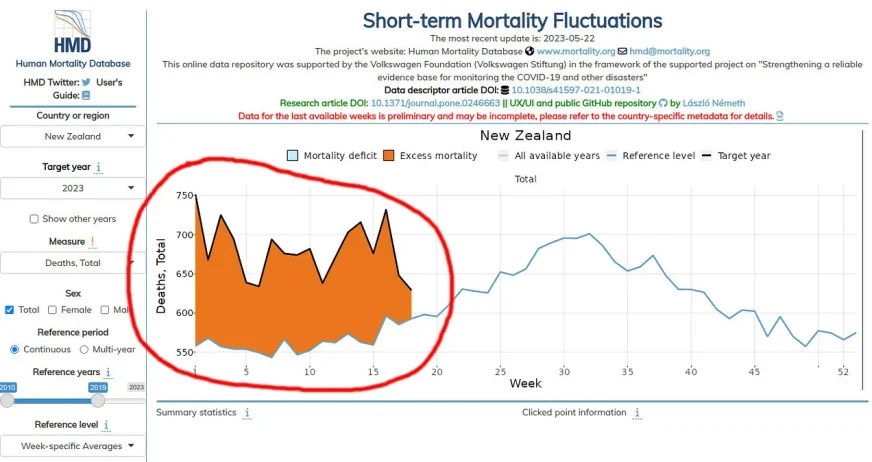
https://mpidr.shinyapps.io/stmortality/
A successful pandemic policy would not result in roughly 25% excess mortality in the fourth year of the pandemic. The officials insist that Covid is not responsible for most of these deaths, leaving the actual cause an unspoken mystery.
Most New Zealanders are unaware that their chances of dying increased by a quarter because their country’s press is silent on excess deaths. The silence and lack of public awareness are not accidental: the government is intensifying its crackdown on social networks and the media.
This June, the NZ government revealed its initiative for “Safer Online Services and Media Platforms.”

The government is proposing to create “A new industry regulator” armed with powers to punish “media platforms”:
The new regulator would make sure social media platforms follow codes to keep people safe. Media services like TV and radio broadcasters would also need to follow new codes tailored to their industry. The regulator would have the power to check information from platforms to make sure they follow the codes and could issue penalties for serious failures of compliance. This would ensure everyone is playing by the same rules and that consumer safety is prioritised.
While the proposal gives lip service to “protecting children,” it quickly advances to “hate speech,” the right of the government to remove and block content, and more:
Continuing to remove and block access to the most harmful content – government interventions to censor content and criminalise associated behaviour would remain at the extreme high end of harm. The new framework would continue criminal sanctions for dealing with ‘objectionable’ (illegal) material, including powers to issue takedown notices for this type of content.
There would still be a place for a censorship role, with powers to determine whether the most harmful content should be classified as illegal to create, possess, or share.
Failure to comply with the requirements could lead to authors, creators, and publishers being suspended, removed, or prevented from accessing the platforms’ services. They may also be blacklisted if they show repeated harmful behaviour.
Regulated Platforms would need to implement approved codes of practice that meet legislated core safety objectives and minimum expectations
NZ plans to use Artificial Intelligence to do censorship:
safeguards and barriers to deter the upload and creation of risky content – for example, time-lags or verification requirements for specific types of content
methods to identify harmful content and prevent how it is shared and amplified. This would include ways to remove this content, such as:
• through human and Artificial Intelligence (AI) moderation practices
• downgrading content visibility
• removing recidivist individuals and entities – such as identifying bots and troll accounts that routinely post unsafe content • using authenticity markers.
Anyway, I am not a citizen of New Zealand, so I cannot tell that country how to govern itself.
What I can say, however, is that I am very sorry for the fine citizens of that remote land, who lost their constitutional protections, are dying at excessive rates, are largely unaware of the danger they are in, and have a government more interested in hiding the truth from the population and awarding highest honors to its members.

Does Jacinda deserve her “damehood”? Or does she deserve something else?
New study reveals Antarctic ice shelf area has grown by 5305 km2 from 2009-2019

Global Warming Policy Foundation | June 3, 2023
A new study by a team of climate scientists and published by the European Geosciences Union reveals that the Antarctic ice shelf area has grown by 5305 km2 from 2009-2019, gaining 661 Gt of ice mass over the past decade.

The new observations confirm the findings of eminent meteorologist Professor J. Ray Bates whose research has shown that trends in polar sea-ice levels give little cause for alarm.
In a paper published just over a year ago by the Global Warming Policy Foundation, Professor Bates contrasted climate model simulations – which predict significantly decreasing sea ice levels in both hemispheres – with empirical data and observed trends in Arctic and Antarctic sea ice.
Professor Bates said:
“In 2007, Al Gore told us that Arctic sea ice levels were ‘falling off a cliff’. It’s clear now that he was completely wrong. In fact, the trends in sea-ice are an antidote to climate alarm.”
Professor Bates also says that little reliance should be placed on model simulations of future sea-ice decline:
“Climate models failed to predict the growth in Antarctic sea ice, and they missed the recent marked slowdown of sea-ice decline in the Arctic. It would be unwarranted to think they are going to get things right over the next 30 years.”
Professor Bates’ paper can be downloaded here (pdf)
Vaccinated Veterans MORE Likely to Die from COVID, VA Study Proves
It’s Even Worse to Be Boosted
BY IGOR CHUDOV | JUNE 2, 2023
The U.S. Veterans Administration oversees the medical care of the United States Armed Forces veterans. It has complete medical records of every veteran, including their hospitalizations, vaccinations, deaths, and more.
Therefore, studies of veterans that include sub-populations broken down by vaccination status provide accurate data about the effectiveness of COVID vaccines. I already reported on two such studies: one shows that COVID and flu vaccines are useless at preventing hospitalization due to COVID or flu, and another (posted on Feb 2022) proves that Covid vaccines cause myocarditis in veterans.
A new study was published in the Journal of Infectious Diseases and is worth a look.
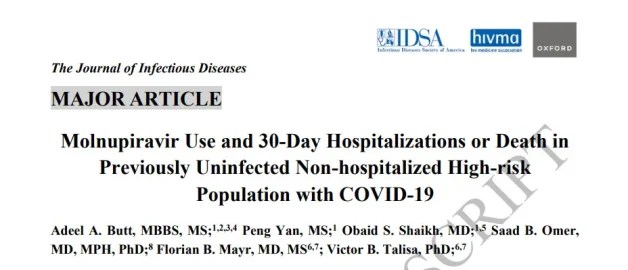
The study is very straightforward: it looked at 1,459 veterans receiving Merck’s Molnupiravir and compared them with 63,281 veterans NOT receiving it. Its objective was to see if Molnupiravir was helpful (drumroll, it was not). The period covered was from Jan 1 to August 21, 2022.
The study has the breakdown of the Molnupiravir group and the standard-treatment group by vaccination status.
Such a breakdown allows us to check which veterans did better: the COVID-vaccinated or the unvaccinated.
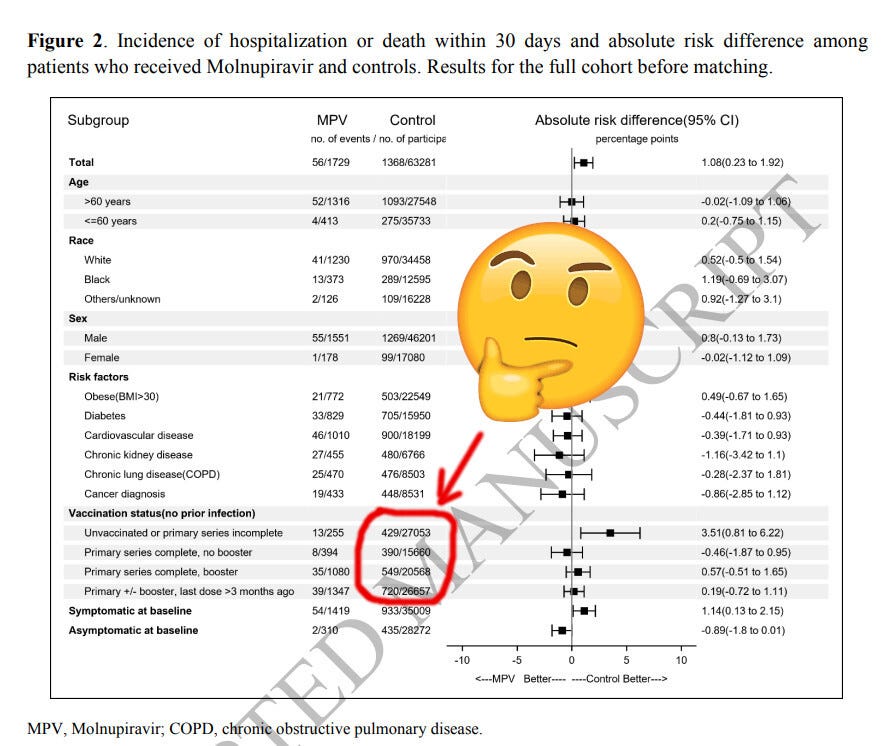
Look at the “control group”: veterans who did NOT receive Molnupiravir and received standard care instead (circled above). Let’s make a nice table out of that:
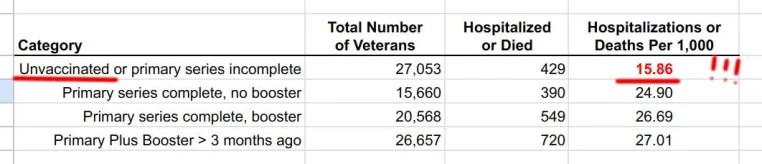
Each category above contains only US veterans, mostly older males, so they are roughly the same age category. Therefore, age confounding can change the picture somewhat but should not change too much. They all have access to the same VA medical resources, so no medical disparities exist. The only difference between them is their vaccination status.
You would think that right in the midst of the deadly COVID pandemic, many lives of those older persons would be saved by safe, effective, science-backed COVID vaccines, right? Every TV program told us this last year, so it must be true! (note my sarcasm)
Guess what? It was the opposite! The category in the above table with the least hospitalizations and deaths is the veterans who refused COVID vaccines and remained unvaccinated. Those had only 15.86 veterans per 1,000 hospitalized or dead. The more vaccines the veterans received, the worse their outcome: double-dosed veterans had 24.90 hospitalizations/deaths per thousand and boosted veterans had 27 hospitalizations per thousand.
These ratios are derived from a population with precisely known vaccination status of each participant. They show that the Covid vaccine does not work – when vaccination statuses are known, and when outcomes are counted properly.
This finding is based on a plain reading of numbers provided (but not discussed) by the study authors. They only looked at the effectiveness of Molnupiravir. By the way, they found Monupiravir ineffective and harmful.
Had they looked, or were allowed to look at, the effectiveness of the COVID vaccines, based on their own data, their findings would be much more explosive.
If I may guess, had they tried to bring our attention to the ineffectiveness of COVID vaccines, the article would not have been published to maintain “scientific consensus,” nicely described by El Gato Malo. Despite all that, I am thankful to the authors who gave us the numbers we can properly interpret ourselves.
So, to recap, the unvaccinated veterans had the LOWEST rate of hospitalizations and deaths.
Featured Video

The Truth About the Trump Shootings with Ken Silva
or go to
Aletho News Archives – Video-Images
From the Archives
The Geopolitics behind the War in Yemen (I)
By Mahdi Darius NAZEMROAYA | Strategic Culture Foundation | 30.03.2015
The United States and the Kingdom of Saudi Arabia became very uneasy when the Yemenese or Yemenite movement of the Houthi or Ansarallah (meaning the supporters of God in Arabic) gained control of Yemen’s capital, Sanaa/Sana, in September 2014. The US-supported Yemenite President Abd-Rabbuh Manṣour Al-Hadi was humiliatingly forced to share power with the Houthis and the coalition of northern Yemenese tribes that had helped them enter Sana. Al-Hadi declared that negotiations for a Yemeni national unity government would take place and his allies the US and Saudi Arabia tried to use a new national dialogue and mediated talks to co-opt and pacify the Houthis.
The truth has been turned on its head about the war in Yemen. The war and ousting of President Abd-Rabbuh Manṣour Al-Hadi in Yemen are not the results of «Houthi coup» in Yemen. It is the opposite. Al-Hadi was ousted, because with Saudi and US support he tried to backtrack on the power sharing agreements he had made and return Yemen to authoritarian rule. The ousting of President Al-Hadi by the Houthis and their political allies was an unexpected reaction to the takeover Al-Hadi was planning with Washington and the House of Saudi. … continue
Blog Roll
 Aletho News
- Leaked: Britain’s Sham Conviction Of Hashim Thaci
- Seyed M. Marandi: U.S. Strike Imminent – Toward Total War in the Middle East
- Russia Voted Under Fire. Washington Is Loading the Tankers.
- 12 Things Your Oncologist Was Trained Not to Tell You
- Anthrax Attacks Paved Way for COVID-Era ‘Junk Drugs and Vaccines’
- How Real Is the Impact of Western Sanctions on Israel?
- France, You Are Guilty: How Paris Turned Western Sahara into the Maghreb’s Powder Keg
- 2025 Nature Paper Claiming Worsening Global Drought Gets RETRACTED …Heavily Flawed
- Your Milk Is Not the Problem
- The Truth About the Trump Shootings with Ken Silva
- If Americans Knew
- Salah Sarsour’s Legal Team Says DHS Has Not Met Its Burden to Prove He Is Deportable
- An analysis of tax forms by The Intercept show Kraft’s charity and LLC have donated to Friends of the IDF and AIPAC’s super PAC.
- Israeli attacks kill four Palestinians in Gaza – Daily Update
- Inside Gaza’s death trap of collapsing, bombed-out buildings
- The everyday items Israel bans from Gaza every day
- Inside the siege, the ruined buildings of Gaza – Daily Update
- Debunking The Claim That Macklemore Has A “History Of Antisemitism”
- CPJ demands release of arrested Palestinian-US journalist near Bethlehem
- Robert Kraft: The Billionaire Friend of Netanyahu Pulling The Strings Behind the Macklemore/Ed Sheeran Blow Up
- Columbia Administered Fund Gives Big Money to Pro-Israel Groups
- No Tricks Zone
- 2025 Nature Paper Claiming Worsening Global Drought Gets RETRACTED …Heavily Flawed
- New Study: ‘Global Drought Shows No Detectable Recent Acceleration Under Climate Warming’
- Economic Masterminds: German Socialists Suggest Taxing Productivity Gains Stemming From Using AI
- The South China Sea Has Not Been Cooperating With The Climate Change Narrative
- Energy Crisis: Germany Enters Heating Season With Historically Low Gas Reserve Fill Levels
- New Study: The Antarctic Ice Sheet Gained Mass From 2020-2024 Due To Staggering Snow And Ice Accumulation
- Study: Ocean Heating Rates From Thousands Of Years Ago ‘Dwarf’ Modern Ocean Heating Rates
- Climate Extremists Target, Attack Large-Scale Power Grid Infrastructure In Germany!
- New Study: Antarctic Ice Melt Has Contributed Less Than 1 Centimeter To Sea Level Rise In The Last 30 Years
- Fear Of Debate: Alarmist German Climate Scientist Calls On Mainstream Media To Discredit Skeptic Voices
 Aletho News