Why The Netherlands Just Banned Non-Commercial Use Of Monsanto’s Glyphosate-Based Herbicides
By Arjun Walia | Collective Evolution | May 30, 2015
The Netherlands has just become the latest country, following Russia, Mexico, and many others, to say no to Monsanto. The sale and use of glyphosate-based herbicides (the most commonly used herbicides in the world) has just been banned for non-commercial use in the country, effective later this year. This means that people will no longer be able to spray RoundUp on their lawns and gardens and will instead have to find another (hopefully more natural) means of pest control.
This is definitely a step in the right direction.
The move comes as no surprise, considering that the number of countries around the world who are choosing to ban this product is growing at an exponential rate. Bans and restrictions are being implemented due to the fact that glyphosate (the main ingredient in RoundUp) has been directly linked to several major health issues, including: birth defects, nervous system damage, Alzheimers, Parkinson’s, various forms of cancer, and kidney failure. (Sri Lanka recently cited deadly kidney disease as their reason for banning his product. You can read more about that and access the research here.) Indeed, The World Health Organization recently acknowledged the fact that glyphosate can cause cancer, and you can read more about that here.
Not only that, there are multiple environmental concerns associated with the use of this chemical.
What’s even more disturbing is the fact that studies have shown that RoundUp herbicide is over one hundred times more toxic than regulators claim. For example, a new study published in the journal Biomedical Research International shows that Roundup herbicide is 125 times more toxic than its active ingredient glyphosate studied in isolation. You can read more about that here. The eye opening abstract reads as follows:
“Pesticides are used throughout the world as mixtures called formulations. They contain adjuvants, which are often kept confidential and are called inerts by the manufacturing companies, plus a declared active principle, which is usually tested alone. We tested the toxicity of 9 pesticides, comparing active principles and their formulations, on three human cell lines. Glyphosate, isoproturon, fluroxypyr, pirimicarb, imidacloprid, acetamiprid, tebuconazole, epoxiconazole, and prochloraz constitute, respectively, the active principles of 3 major herbicides, 3 insecticides, and 3 fungicides. Despite its relatively benign reputation, Roundup was among the most toxic herbicides and insecticides tested. Most importantly, 8 formulations out of 9 were up to one thousand times more toxic than their active principles. Our results challenge the relevance of the acceptable daily intake for pesticides because this norm is calculated from the toxicity of the active principle alone. Chronic tests on pesticides may not reflect relevant environmental exposures if only one ingredient of these mixtures is tested alone.” (source)
Equally disturbing is the fact that RoundUp has been found in a very high percentage of air and rainfall test samples. You can read more about that here.
Significant concentrations of it have also been found in the urine of people across Europe, you can read more about that here.
One recent study published in the Journal of Environmental & Analytical Toxicology has now proven that animals and humans who consume GMO foods – those that are loaded with glyphosate chemicals, the main ingredient in Monsanto’s RoundUp – have extremely high levels of glyphosate in their urine.
It’s also noteworthy to mention that there are Wikileaks documents showing how the United States planned to “retaliate and cause pain” on countries who were refusing GMOs. You can read more about that story and view those documents here.
It’s troubling to think that so many children are within proximity of and playing on lawns that have been sprayed with this stuff. Cancer is not a mystery, it is not a stroke of bad luck, it’s time for the world to wake up and realize what research has been confirming for years.
More Information on Pesticides & Herbicides Here:
**There are also multiple articles linked within the article above that provide more information**
Scientists Link Autism To These Toxic Chemicals During Fetal Development
Another Groundbreaking Study Emerges Linking Agricultural Pesticides To Autism
Scientists Can Predict Your Pesticide Exposure Based On How Much You Eat
This Is What Happens To Your Body When You Switch To Organic Food
What Parents Need To Know About Monsanto: “By 2025 One In Two Children Will Be Autistic”
Monsanto’s Glyphosate Linked To Birth Defects
Groundbreaking Study Links Monsanto’s Glyphosate To Cancer
New Study Links Gmos To Cancer, Liver/Kidney Damage & Severe Hormonal Disruption
Multiple Toxins From GMOs Detected In Maternal And Fetal Blood
Sources Used:
Climate Stupidity and Human Survival
By Denis Rancourt | Dissident Voice | May 26, 2015
The human animal has an instinct to identify potential dangers and to warn others. It is a built-in survival mechanism of any animal that lives in a group. And it is a strong and constant activity, re-enforced by environmental stressors.
This plays out on several time scales, from the immediate in the case of a potential physical assault, to the weekly in checking the weather forecast, to seasonal in preparing for winter, to life-long in planning for inevitable aging, to leaving good things for our grandchildren…
It is in our fiber to look ahead and to plan ahead, especially in the face of foreseeable or detected dangers.
The whole process can spin out of control when the danger is difficult to perceive, yet could be lethal. Think of baboons who are on the lookout for a stalking lion. The slightest shadow movement can make them scream and run for the trees. It’s a tense and highly volatile situation.
At this stage in our evolution we are faced with a pathological extension of our collective survival reflex, which is entirely fabricated by our high priests (government funded scientists and talking heads).
If these high priests were not here to tell us that the atmospheric concentration of the minor constituent CO2 is increasing, and that “global mean surface temperature” has increased by some 0.5 C in the last 100 years, then we would never know about these imperceptible causes of our certain eventual collective death as a species.
The priests explain that our certain extinction will occur from a rising sea level and changing regional climates. That these changes will cause mass migrations, ecosystem collapses, agricultural failures, famines, and disease. They also inform us that those who will suffer most are the most vulnerable inhabitants of the planet, as though this were a new feature of the effects of natural disasters.
Therefore, they urge, we must tax carbon emissions, apply cap and trade, and create a global carbon economy to limit CO2 in the atmosphere. And who better to coordinate it all than the World Bank, IMF, and such, given their stellar records in managing equitable development on this little rock. (Or is that economic enforcement of US regime supremacy?)
Forgive me for saying, but this all sounds rather nutso to me.
Nothing could be more like a religion than this crazy movement. We are expected to accept that an essential and growth-limiting plant nutrient (CO21 ) is a toxic pollutant, that the world will be destroyed because of our collective and intrinsic wickedness of emitting CO2, via floods no less.
Take a deep breath (exhale if you dare) and allow me to state a few facts that might help put things into perspective.
The planet has been teeming with life for billions of years.
During that time, the global mean temperature has almost always been some 10 C higher than in the present geologic anomaly,2 in a manner uncorrelated with CO2 concentration.3 That is the history of this same planet that we live on. During that time, the CO2 concentration has typically been 10 times higher than today’s value, and it has rarely been as low as modern values, nor has it ever been lower than modern values.

Atmospheric CO2 and average global temperature
There is no reason to believe that humans would not fare well on an Earth that is 10° C warmer, never mind 1° or 2° C. Land value would increase in the polar regions, and there would be intense reforestation and forest densification of the equatorial regions, with little possibility for controlling growth where it is hot and humid.From what we know of our planet and the history of its biosphere, warming is not going to kill us off any time soon. None of the known mass extinctions (a relative term) in Earth’s history can be reliably attributed to “sustained warming,” whereas ice ages that have occurred recently (during human presence on the planet, in the last 1 M years) are expected to correspond to periods of decreased planetary life density, but saw mammals and human populations completely adapt. Basically, neither warming or cooling can kill us by any know mechanism ever observed. If anything, the opposite of “killer warmth” is observed on today’s Earth, where both human populations and living biomass are concentrated near equatorial latitudes:


World population density map
Therefore, we still have much time left to achieve human extinction by much more direct means than warming (or cooling) of any kind. We also have a lot of time and occasions to practice accommodating mass migrations caused by our wars and economic violence, in order to prepare for the “climate migrations”. Somehow there seems to be more public-opinion, political, and lobbying effort in implementing and developing the instruments of a global carbon economy than in developing the instruments to prevent wars of aggression, to cope with the consequences of natural disasters, to stop displacing and dispossessing local inhabitants, to enforce the Geneva Conventions, to stop the wholesale destruction of entire nations (Libya, Iraq, Afghanistan, Syria, Iran…?), to respect international law, … not to mention reparations to the survivors of recent slavery, genocide, dispossession, and crass exploitation.
Rather than widespread vehement and actuated insistence on democratic control of local resources and institutions, based on individual realities on the ground, instead we have a sizable yet ineffective population of vocal do-gooders enthralled in spasmodic incantations against atmospheric CO2 emissions, as part of a Gaia-inspired religion perverted by the Christian concept of original sin; all of which de facto supports the carbon globalization schemes engineered by the US regime to attempt to constrain their emerging competitors and extort a development tax.
When has “globalization” ever been about justice, or about anything other than economic predation? When have good-will global efforts ever had any significant positive impact?4
Why pollute local struggles and liberation of the individual with tenuous claims about imperceptible dangers? And why put so much energy into insisting that the danger from CO2 is real? This seems like a classic example of seeking an overarching religious belief “solution” to real local problems that one cannot or will not confront.
“Climate justice” needs to be “justice”. The comfortable-middle-class fetish for carbon co-opts the analysis, defuses the thrust for defending identity-tied interests, and sends legitimate demands straight into the atmosphere. Or, at best, it is simply irrelevant to real struggles.
In the main population, if all the fanatics that are screaming that the sky is falling would scream to stop the war machine that occupies every corner of the globe, then we could start moving away from the real manufactured disasters that wash over the planet continuously, which don’t require satellite spectrometers to detect.
Instead of asking whether we can detect warming, whether intense weather events are actually more frequent, whether species extinction rates can reliably be measured, and so on, why not address the obvious: Humans are exploiting and terrorizing other humans, human conditions are constantly being attacked, and natural habitat is being destroyed for corporate benefit by eliminating local sovereignty.
Why turn to sanitized and intractable up-in-the-air questions when injustice and actual destruction is all around us? And why, oh why, pretend that humans can manage global carbon fluxes, manage the radiation balance of the planet, and control climate?
It’s a planet!
If we are going to have a global religion, why not believe that justice leads to both short-term and long-term safety? Not justice that is planned and given to us, but justice that we acquire through struggle and liberation.
On the other hand if you must be irrelevant and must have your carbon fetish, then at least put it into a planetary perspective5 :
- The present (2010) rate of fossil fuel burning (0.8 x 10^13 kg-C/y) is 8% of global primary production (GPP)
- The latter plant growth (GPP) uses only 0.07% of solar light striking the planet
- Thus, fossil fuel burning represents 8% of 0.07% = 0.006% of solar energy rate of input (the sun is a sun and the Earth is a planet…)
- The CO2 production from the burning of fossil fuel is approximately equal to that from human and domestic animal breathing
- The combined biomass of humans and domestic animals is 0.04% of Earth’s living biomass
- Ants have transformed the planet’s surface and its ecology far more than have humans
- The total amount of fossil fuel burned to date (historically to 2010) by humans is 3.7 x 10^14 kg-C, less than half of the carbon contained in the atmosphere as a minor constituent gas
- Dissolved CO2 in the oceans is 50 times more than the total amount in the atmosphere
- Living and dead biomass-carbon (in soils, sediments, plant-cover, etc.) is probably much greater than carbon as CO2 in air and water
- Thus, the total post-industrial fossil fuel burned to date represents less than 1% of the planet’s global bio-available and exchangeable carbon, not to mention geological sources
- As such, atmospheric CO2 is readily exchanged with and buffered by compartments of labile carbon that are much larger than the atmosphere, via flux mechanisms that science is barely beginning to understand (e.g.,1 )
- Keenan et al., “Increase in forest water-use efficiency as atmospheric carbon dioxide concentrations rise,” Nature 499, 324-327 (18 July 2013); Donohue et al., “Impact of CO2 fertilization on maximum foliage cover across the globe’s warm, arid environments,” Geophysical Research Letters 40(12), 3031-3035 (28 June 2013).
- Wikipedia article, “Geologic temperature record,”accessed May, 2015, see “Overall view”.
- Rothman, D.H., “Atmospheric carbon dioxide levels for the last 500 million years,” Proceedings of the National Academy of Science, 99(7), 4167-4171, (2 April 2002).
- Rancourt, D.G., “Some big lies of science,” Activist Teacher (8 June 2010).
- Rancourt, D.G., “Is the burning of fossil fuel a significant planetary activity?,” Activist Teacher (21 August 2010); Rancourt, D.G., “CO2 emission from fossil fuel burning is not more than from breathing,” Activist Teacher (22 August 2010)
*****
This article accompanies a 2-hour public lecture I gave at the University of Ottawa on March 27, 2015, entitled “The science and geopolitics of climate change”: VIDEO-LINK-Part-1, VIDEO-LINK-Part-2. The physics calculations of Earth’s radiation balance described in Part-1 of the talk are from this paper: Rancourt, D.G., “Radiation physics constraints on global warming: CO2 increase has little effect,” archive.org (3 December 2011). Links to my articles and interviews about climate are here.
The New Challenge to Monsanto
By COLIN TODHUNTER | CounterPunch | May 26, 2015
In a challenge delivered to Monsanto’s headquarters on May 20, 2015, US public interest attorney Steven Druker calls on that corporation to find any inaccurate statements of fact in his new book: “Altered Genes, Twisted Truth – How the Venture to Genetically Engineer Our Food Has Subverted Science, Corrupted Government, and Systematically Deceived the Public”
The thoroughly documented and referenced book exposes the substantial risks of genetically engineered foods and the multiple misrepresentations that have enabled them to permeate world markets.
Druker asserts that if Monsanto cannot prove that his book is essentially erroneous, the world will have a right to regard these controversial foods as unacceptably risky – and to promptly ban them.
‘Altered Genes, Twisted Truth’ was released in March 2015 and is the result of more than 15 years of intensive research and investigation by Druker, who initiated a lawsuit against the US Food and Drug Administration (FDA) that forced it to divulge its files on GM foods.
The book indicates that the commercialisation of GM food in the US was based on a massive fraud. The FDA files revealed that GM foods first achieved commercialisation in 1992 but only because the FDA covered up the extensive warnings of its own scientists about their dangers, lied about the facts and then violated federal food safety law by permitting these foods to be marketed without having been proven safe through standard testing.
If the FDA had heeded its own experts’ advice and publicly acknowledged their warnings that GM foods entailed higher risks than their conventional counterparts, Druker says that the GM food venture would have imploded and never gained traction anywhere.
He also argues that that many well-placed scientists have repeatedly issued misleading statements about GM foods, and so have leading scientific institutions such as the US National Academy of Sciences, the American Association for the Advancement of Science and the UK’s Royal Society.
Druker states that contrary to the claims of biotech advocates, humans have indeed been harmed by consuming the output of genetic engineering. He also explains that laboratory animals have also suffered from eating products of genetic engineering, and well-conducted tests with GM crops have yielded many troubling results, including intestinal abnormalities, liver disturbances, and impaired immune systems.
Druker says: “Contrary to the assertions of its proponents, the massive enterprise to reconfigure the genetic core of the world’s food supply is not based on sound science but on the systematic subversion of science – and it would collapse if subjected to an open airing of the facts.”
Now, in his open letter dated 19 May, Druker challenges Monsanto’s Chief Technology Officer to: “Face Up to the Extensive Evidence Demonstrating that Genetically Engineered Foods Entail Unacceptable Risks and Should Be Promptly Removed from the Market.”
Druker finishes his letter by saying:
“If by July 20th you and your allies have not been able to refute the essential factual accuracy of Altered Genes, Twisted Truth according to the terms set forth above, the world will have a right to assume that it is as sound as the experts who reviewed it have affirmed – and to conclude that GE foods are unacceptably risky and must be banned.
Access the letter in full here.
 Colin Todhunter is an extensively published independent writer and former social policy researcher based in the UK and India.
The Ethics of Climate Change
Calls for massive reductions in global greenhouse gas emissions ignore the impacts on the poor
By Bob Lyman | Watts Up With That? | May 23, 2015

People who believe in the theory of catastrophic human-induced global warming claim that they want to “save the planet” and that this is the moral thing to do. They insist, however, that saving the planet requires stringent reductions in people’s use of fossil fuel energy to reduce greenhouse gas emissions. They never talk about what that means to the poor. I think that, before people decide on the ethics of the debate, they need to consider what the impact would be of sharply reducing energy consumption on the wellbeing of world’s population, and especially on the poor.
In 2014, the International Energy Agency (IEA) issued a Special Report entitled “Modern Energy for All”. In it, the IEA stated that modern energy services are:
…crucial to human wellbeing” and to a country’s economic development.
Access to modern energy is essential for the provision of clean water, sanitation and healthcare and for the provision of reliable and efficient lighting heating, cooking, mechanical power, transport and telecommunications services.”
Today billions of people lack access to the most basic energy services. Nearly 1.3 billion people are without access to electricity and 2.7 billion people rely on traditional use of biomass (wood, charcoal and animal dung) for cooking, which causes harmful indoor air pollution.
Pause to think about that for a few minutes. Hundreds of millions of people are without the modern energy services that were available to our ancestors who lived in the nineteenth century. They get up with the dawn and go to bed close to nightfall because they have no electrical lighting. They have to go a river or well (if they are lucky) for water to drink or wash in. They have no way to power an appliance, including a refrigerator, so all food has to be eaten quickly or it may go bad. They have to walk long distances everyday to search for firewood or dried animal dung. There is no light to extend the day to provide time for reading or entertainment. They have no telephones. They have no way to pump water for irrigating crops. They have no motorized transportation, so they cannot go very far. Almost all their time is spent simply doing the simple tasks that in Canada and other advanced countries are done by machines. Worse, every day they breathe in the fumes from the dirty cooking fires, developing lung disorders. In fact, according to the IEA, every year 4.3 million premature deaths can be attributed to household air pollution resulting from the use of traditional biomass fuels for cooking.
The international community has long been aware of the close correlation between income levels and access to modern energy; not surprisingly, countries with a large proportion of the population living on an income of $2 per day tend to have low electrification rates and few motorized vehicles. The problem is spread throughout the developing world, but it is particularly severe in sub-Saharan Africa and developing Asia, which together account for 95% of people in abject energy poverty.
The latent demand for electricity is immense. An estimated 400 million people in India still lack access to electricity. A recent study looked at the expansion of electricity that would be needed on an economy-wide basis in sub-Saharan Africa to comprehensively address energy access. To reach moderate access, where electricity generation capacity is around 200-400 megawatts (MW) per million people, the region would need a total of 374 MW of installed capacity. That’s about twelve times the level of capacity in the region today. All energy sources would be needed to help provide that much capacity.
This is where aspiration runs into reality. In desperately poor countries, they do not have the luxury to spend millions of dollars on energy. Renewable energy sources like wind and solar energy can sometimes be useful where there is no electricity transmission system to take centrally-generated power to rural areas, but it is expensive and often requires technology to install and operate. Further, wind and solar are “intermittent” sources, meaning that they only produce energy when the wind blows or the sun shines respectively. Electrical energy is expensive to store and this can only be done in small amounts.
For reliable electrical energy supply for any possibility of industrial development and for transportation, developing countries need large scale power generation based on low cost, generally available fuels. In India, and in many parts of Africa, this means coal.
Coal reserves are available in almost every country worldwide, with recoverable reserves in around 70 countries. In fact, coal is the backbone of modern electricity in most parts of the world. It now provides about 30% of the primary energy and 41% of global electricity generation. It is plentiful and relatively cheap. Over the decade from 2000 to 2010, China showed the world how massive expansion of coal-fired electricity generation could modernize its economy and bring electrification to almost all parts of the country. As a result, hundreds of millions of Chinese have lifted themselves out of energy and economic poverty and dramatically improved both their income and quality of life.
Yet, coal is the most carbon-intensive of fossil fuels. It is the fuel source most despised by those who want to drastically reduce emissions. The Obama Administration in the United States has, as part of its climate change agenda, pressured the World Bank to stop lending to coal-fired electricity projects and the World Bank has complied. The U.S. Administration has also withdrawn funding from the Export-Import Bank for such projects. Fortunately for the developing countries, a new Asian Infrastructure Investment Bank has been established with major funding from China, which will include funding of new coal projects.
Those pursuing the climate change political agenda are prepared to condemn the world’s poor living without modern energy to remain in their backward situation. For them, billions of blighted lives are preferable to increasing greenhouse gas emissions.
Even in the developed countries, the policies advanced for climate reasons fall heavily on the poor.
Electricity prices continue to surge in Europe where costs are often triple those in the U.S. EU governments have various schemes, taxes, subsidies, and mandates, such as Cap and Trade, feed-in tariffs, and surcharges that make Europeans pay more for power. Perhaps the best (worst?) example is Germany, where nearly 20% of families now live in “fuel poverty,” spending more than 10% of household income on energy. Germany’s energy transition (“Energiewende”) is expected to cost an astounding $735 billion, and many are demanding changes. Overall in Europe, 1.4 million more households are expected to be in fuel poverty by 2020.
In the name of climate change, governments are forcing utilities to sign long-term contracts paying as much as four times the going wholesale electricity rate for renewables. Power markets have become so distorted that wind farms in the UK and in Ontario, for instance, have been paid millions to NOT produce electricity.
Supporters of “green” energy policies keep saying that poverty will be reduced if only efficiency would improve, but that position doesn’t hold up. Energy efficiency in the EU has improved around 20% since 2005. In the UK, for instance, energy efficiency has increased nearly 30% since 2003, yet electricity prices have almost doubled and homes in fuel poverty have nearly quadrupled. Europe’s main fuel poverty problem isn’t a lack of efficiency, it’s soaring prices.
Apart from the higher prices, another meaningful measure of energy poverty in Germany is the number of supply stoppages (“power cuts”) ordered by utility companies. Basic suppliers are entitled to interrupt their electricity or gas deliveries in the event of arrears in payment of more than 100 euros after a warning notice followed by a repeated threat to terminate service. According to a survey of the German Network Agency (Bundesnetzagentur), in 2013 warnings of electricity supply termination were issued to 5.7 million private households in Germany. The supply of electricity was actually interrupted to roughly 320,000 households.
There are many different moral standards to which one might refer in defining what is the most “ethical” way for people to act when considering their use of energy and other goods to improve their lives. Those environmentalists who claim that “nature” is more important than humans and that any measure, regardless of how costly, should be taken to reduce the effects of humans on the planet will never be satisfied. In my view, human wellbeing, and especially the plight of the world’s poor, deserves a prominent place in judgments about what is ethical behavior. Sharply reducing fossil fuel use means reducing economic development, condemning poor societies to remain poor, and requiring the poor people of today to sacrifice for the sake of addressing an unproven problem in a distant future — this is truly immoral.
Social science provides a lot of useful insight as to why logic and data are rarely convincing
By Matt Manos | Watts Up With That? | May 23, 2015
… In their latest speeches on global warming, Obama and the Pope weren’t trying to convince skeptics that Catastrophic Anthropogenic Global Warming (CAGW) is real. Instead, they were sending signals to their supporters on what “all right thinking people” should be saying. This is classic in-group/out-group communication. Obama and the Pope were setting up the talking points for their in-group members to use to determine who can be considered part of the tribe and who should be rejected for being outside of it. This is a process called Othering. Othering turns political foes into non-beings. Others have no value. Others can be discounted and ignored. Others can be mocked.
Obama and the Pope are examples of bellwethers; the sheep with the bell that the other sheep follow. Bellwether is not a derogatory term, it’s a descriptive term. The job of a political bellwether is to indicate the position that their followers should take in their everyday conversations. Obama and the Pope’s latest speeches function as position papers for the delegates of all right thinking people. You meet these people at work, church, school, at the coffee house, etc. The delegates will mirror the words that the President or the Pope used to identify other in-group members, normalize beliefs and mock out-group members. One of the main themes of both speeches was shame. Shame on those who aren’t right thinking people. Shame that they aren’t as intelligent and capable as “us.”
That type of smugness is almost impossible to penetrate. When a skeptic questions a warmist’s view on global warming/climate change, the warmist hears something vastly different than what the skeptic is saying. A skeptic might say, “The models don’t match the actual measured results.” What the warmist hears is how stupid deniers are because that’s what John Stewart told him he should think. If the warmist doesn’t prove that he thinks skeptics are stupid then he might be confused for a denier! And no one wants to be identified with being a denier because they’re mocked, don’t get tenure and don’t get invited to the right parties. No amount of science can penetrate the ROI the warmist has internalized in believing in CAGW.
Many of the warmists are running on pure rational ignorance. Rational ignorance is a belief that the cost/benefit to researching every issue is so low as to be a net negative in time utilization. Thus the ignorance is rational and everyone utilizes this mental process on certain topics. People who are rationally ignorant about global warming look to bellwethers that support their gut stance. Rationally ignorant warmists would look to world leaders, mockutainers and warmist scientists for guidance on how to communicate their position on global warming.
Penetrating rational ignorance is tough because the position warmists have taken isn’t based on logic. Their position is actually based on an appeal to authority. To question the rationally ignorant warmist is to question the field of science as a whole (to be a science denier) or to question the leadership of their favorite bellwether personalities. This will cause the rationally ignorant warmist to become defensive and try to stand up for their favorite bellwether. The rationally ignorant will also point to their favorite bellwethers and say, “Who am I to doubt all these intelligent people?” It’s intellectually offshoring. It’s lazy. It’s human nature.
The scientific method rejects outright in-group/out groups, Othering, bellwethers and rational ignorance. A scientist is supposed to follow the results of an experiment even if the results don’t support his hypothesis. The scientist is clearly not supposed to rig the data to ensure he gets invited to a party with the right people or continued funding. But science has a poor track record on controversial topics. It often takes decades to accept new theories that are clear winners (e.g., continental drift).
Scientists are still social animals. Social animals follow hierarchy and incentives. If you really want to win the debate on global warming, change the opinions of the bellwethers. Change the economic incentives for the global warming scientific paper mill. Otherwise you’re stuck debating only the people who are unable to change their minds because it would cost them personally to do so. Rare is the person intellectually honest enough to bite the hand that feeds or is willing to violate social norms to speak the truth.
Monsanto’s Worst Fear May Be Coming True
By Jonathan Latham, PhD | Independent Science News | May 18, 2015
The decision of the Chipotle restaurant chain to make its product lines GMO-free is not most people’s idea of a world-historic event. Especially since Chipotle, by US standards, is not a huge operation. A clear sign that the move is significant, however, is that Chipotle’s decision was met with a tidal-wave of establishment media abuse. Chipotle has been called irresponsible, anti-science, irrational, and much more by the Washington Post, Time Magazine, the Chicago Tribune, the LA Times, and many others. A business deciding to give consumers what they want was surely never so contentious.
The media lynching of Chipotle has an explanation that is important to the future of GMOs. The cause of it is that there has long been an incipient crack in the solid public front that the food industry has presented on the GMO issue. The crack originates from the fact that while agribusiness sees GMOs as central to their business future, the brand-oriented and customer-sensitive ends of the food supply chain do not.
The brands who sell to the public, such as Nestle, Coca-Cola, Kraft, etc., are therefore much less committed to GMOs. They have gone along with their use, probably because they wish to maintain good relations with agribusiness, who are their allies and their suppliers. Possibly also they see a potential for novel products in a GMO future.
However, over the last five years, as the reputation of GMOs has come under increasing pressure in the US, the cost to food brands of ignoring the growing consumer demand for GMO-free products has increased. They might not say so in public, but the sellers of top brands have little incentive to take the flack for selling GMOs.
From this perspective, the significance of the Chipotle move becomes clear. If Chipotle can gain market share and prestige, or charge higher prices, from selling non-GMO products and give (especially young) consumers what they want, it puts traditional vendors of fast and processed food products in an invidious position. Kraft and MacDonalds, and their traditional rivals can hardly be left on the sidelines selling outmoded products to a shrinking market. They will not last long.
MacDonald’s already appears to be in trouble, and it too sees the solution as moving to more up-market and healthier products. For these much bigger players, a race to match Chipotle and get GMOs out of their product lines, is a strong possibility. That may not be so easy, in the short term, but for agribusiness titans who have backed GMOs, like Monsanto, Dupont, Bayer and Syngenta; a race to be GMO-free is the ultimate nightmare scenario.
Until Chipotle’s announcement, such considerations were all behind the scenes. But all of a sudden this split has spilled out into the food media. On May 8th, Hain Celestial told The Food Navigator that:
“We sell organic products… gluten-free products and… natural products. [But] where the big, big demand is, is GMO-free.”
According to the article, unlike Heinz, Kraft, and many others, Hain Celestial is actively seeking to meet this demand. Within the food industry, important decisions, for and against GMOs, are taking place.
Why the pressure to remove GMOs will grow
The other factor in all this turmoil is that the GMO technology wheel has not stopped turning. New GMO products are coming on stream that will likely make crop biotechnology even less popular than it is now. This will further ramp up the pressure on brands and stores to go GMO-free. There are several contributory factors.
The first issue follows from the recent US approvals of GMO crops resistant to the herbicides 2,4-D and Dicamba. These traits are billed as replacements for Roundup-resistant traits whose effectiveness has declined due to the spread of weeds resistant to Roundup (Glyphosate).
The causes of the problem, however, lie in the technology itself. The introduction of Roundup-resistant traits in corn and soybeans led to increasing Roundup use by farmers (Benbrook 2012). Increasing Roundup use led to weed resistance, which led to further Roundup use, as farmers increased applications and dosages. This translated into escalated ecological damage and increasing residue levels in food. Roundup is now found in GMO soybeans intended for food use at levels that even Monsanto used to call “extreme” (Bøhn et al. 2014).
The two new herbicide-resistance traits are set to recapitulate this same story of increasing agrochemical use. But they will also amplify it significantly,
The specifics are worth considering. First, the spraying of 2,4-D and Dicamba on the newer herbicide-resistant crops will not eliminate the need for Roundup, whose use will not decline (see Figure).

Predicted herbicide use to 2025 (Mortensen et al 2012)
That is because, unlike Roundup, neither 2,4-D nor Dicamba are broad-spectrum herbicides. They will have to be sprayed together with Roundup, or with each other (or all of them together) to kill all weeds. This vital fact has not been widely appreciated.
Confirmation comes from the companies themselves. Monsanto is stacking (i.e. combining) Dicamba resistance with Roundup resistance in its Xtend crops and Dow is stacking 2,4-D resistance with Roundup resistance in its Enlist range. (Notably, resistance to other herbicides, such as glufosinate, are being stacked in all these GMO crops too.)
The second issue is that the combined spraying of 2,4-D and Dicamba and Roundup, will only temporarily ease the weed resistance issues faced by farmers. In the medium and longer terms, they will compound the problems. That is because new herbicide-resistant weeds will surely evolve. In fact, Dicamba-resistant and 2,4-D-resistant weeds already exist. Their spread, and the evolution of new ones, can be guaranteed (Mortensen et al 2012). This will bring greater profits for herbicide manufacturers, but it will also bring greater PR problems for GMOs and the food industry. GMO soybeans and corn will likely soon have “extreme levels” of at least three different herbicides, all of them with dubious safety records (Schinasi and Leon 2014).
The first time round, Monsanto and Syngenta’s PR snow-jobs successfully obscured this, not just from the general public, but even within agronomy. But it is unlikely they will be able to do so a second time. 2,4-D and Dicamba-resistant GMOs are thus a PR disaster waiting to happen.
A pipeline full of problems: risk and perception
The longer term problem for GMOs is that, despite extravagant claims, their product pipeline is not bulging with promising ideas. Mostly, it is more of the same: herbicide resistance and insect resistance.
The most revolutionary and innovative part of that pipeline is a technology and not a trait. Many products in the GMO pipeline are made using RNA interference technologies that rely on double-stranded RNAs (dsRNAs). dsRNA is a technology with two problems. One is that products made with it (such as the “Arctic” Apple, the “Innate” Potato, and Monsanto’s “Vistive Gold” Soybeans) are unproven in the field. Like its vanguard, a Brazilian virus-resistant bean, they may never work under actual farming conditions.
But if they do work, there is a clear problem with their safety which is explained in detail here (pdf).
In outline, the problem is this: the long dsRNA molecules needed for RNA interference were rejected long ago as being too hazardous for routine medical use (Anonymous, 1969). The scientific literature even calls them “toxins”, as in this paper title from 1969:
Absher M., and Stinebring W. (1969) Toxic properties of a synthetic double-stranded RNA. Nature 223: 715-717. (not online)
As further evidence of this, long dsRNAs are now used in medicine to cause autoimmune disorders in mice, in order to study these disorders (Okada et al 2005).
The Absher and Stinebring paper comes from a body of research built up many years ago, but its essential findings have been confirmed and extended by more modern research. We now know why dsRNAs cause harm. They trigger destructive anti-viral defence pathways in mammals and other vertebrates and there is a field of specialist research devoted to showing precisely how this damages individual cells, whole tissues, and results in auto-immune disease in mice (Karpala et al. 2005).
The conclusion therefore, is that dsRNAs that are apparently indistinguishable from those produced in, for example, the Arctic apple and Monsanto’s Vistive Gold Soybean, have strong negative effects on vertebrate animals (but not plants). These vertebrate effects are found even at low doses. Consumers are vertebrate animals. They may not appreciate the thought that their healthy fats and forever apples also contain proven toxins. And on a business front, consumer brands will not relish defending dsRNA technology once they understand the reality. They may not wish to find themselves defending the indefensible.
The bottom line is this. Either dsRNAs will sicken or kill people, or, they will give opponents of biotechnology plenty of ammunition. The scientific evidence, as it currently stands, suggests they will do both. dsRNAs, therefore, are a potentially huge liability.
The last pipeline problem stems from the first two. The agbiotech industry has long held out the prospect of “consumer benefits” from GMOs. Consumer benefits (in the case of food) are most likely to be health benefits (improved nutrition, altered fat composition, etc.). The problem is that the demographic of health-conscious consumers no doubt overlaps significantly with the demographic of those most wary of GMOs. Show a consumer a “healthy GMO” and they are likely to show you an oxymoron. The likely health market in the US for customers willing to pay more for a GMO has probably evaporated in the last few years as GMOs have become a hot public issue.
The end-game for GMOs?
The traditional chemical industry approach to such a problem is a familiar repertoire of intimidation and public relations. Fifty years ago, the chemical industry outwitted and outmanoeuvered environmentalists after the death of Rachel Carson (see the books Toxic Sludge is Good for You and Trust Us We’re Experts). But that was before email, open access scientific publication, and the internet. Monsanto and its allies have steadily lost ground in a world of peer-to-peer communication. GMOs have become a liability, despite their best efforts.
The historic situation is this: in any country, public acceptance of GMOs has always been based on lack of awareness of their existence. Once that ignorance evaporates and the scientific and social realities start to be discussed, ignorance cannot be reinstated. From then on the situation moves into a different, and much more difficult phase for the defenders of GMOs.
Nevertheless, in the US, those defenders have not yet given up. Anyone who keeps up with GMOs in the media knows that the public is being subjected to an unrelenting and concerted global blitzkrieg.
Pro-GMO advocates and paid-for journalists, presumably financed by the life-science industry, sometimes fronted by non-profits such as the Bill and Melinda Gates Foundation, are being given acres of prominent space to make their case. Liberal media outlets such as the New York Times, the National Geographic, The New Yorker, Grist magazine, the Observer newspaper, and any others who will have them (which is most) have been deployed to spread its memes. Cornell University has meanwhile received a $5.6 million grant by the Gates Foundation to “depolarize” negative GMO publicity.
But so far there is little sign that the growth of anti-GMO sentiment in Monsanto’s home (US) market can be halted. The decision by Chipotle is certainly not an indication of faith that it can.
For Monsanto and GMOs the situation suddenly looks ominous. Chipotle may well represent the beginnings of a market swing of historic proportions. GMOs may be relegated to cattle-feed status, or even oblivion, in the USA. And if GMOs fail in the US, they are likely to fail elsewhere.
GMO roll-outs in other countries have relied on three things: the deep pockets of agribusinesses based in the United States, their political connections, and the notion that GMOs represent “progress”. If those three disappear in the United States, the power to force open foreign markets will disappear too. The GMO era might suddenly be over.
Endnote: The report by Jonathan Latham and Allison Wilson on RNA interference and dsRNAs in GMO crops is downloadable from here. Accompanying Tables are here.
References
Anonymous (1969) Interferon inducers with side effects. Nature 223: 666-667.
Bøhn, T., Cuhra, M., Traavik, T., Sanden, M., Fagan, J. and Primicerio, R. 2014. Compositional differences in soybeans on the market: Glyphosate accumulates in Roundup Ready GM soybeans. Food Chemistry 153: 207-215.
Okada C., Akbar S.M.F., Horiike N., and Onji M. (2005) Early development of primary biliary cirrhosis in female C57BL/6 mice because of poly I:C administration. Liver International 25: 595-603.
Karpala A.J., Doran T.J., and Bean A.G.D. (2005) Immune responses to dsRNA: Implications for gene silencing technologies. Immunology and cell biology 83: 211–216.
Mortensen, David A., J. Franklin Egan, Bruce D. Maxwell, Matthew R. Ryan and Richard G. Smith (2012) Navigating a Critical Juncture for Sustainable Weed Management. BioScience 62: 75-84.
Schinasi L and Maria E. Leon ME (2014) Non-Hodgkin Lymphoma and Occupational Exposure to Agricultural Pesticide Chemical Groups and Active Ingredients: A Systematic Review and Meta-Analysis. Int. J. Environ. Res. Public Health 11: 4449-4527.
Nearly 200 scientists warn of cellphone health risks
RT | May 13, 2015
Biological and health scientists from Russia and Iran to the USA are calling on the UN, the World Health Organization and national governments to develop strict regulations concerning devices and cellphones that create electromagnetic fields.
The scientists are from 39 nations and have authored 2,000 peer-reviewed papers on the health and biological effects of non-ionizing radiation, which is part of the electromagnetic field spectrum. In a letter, they say that devices like cellphones pose risks of cancer, genetic damage, changes in reproductive system, and learning and memory deficits.
“Putting it bluntly they are damaging the living cells in our bodies and killing many of us prematurely,” said Dr. Martin Blank, from the Department of Physiology and Cellular Biophysics at Columbia University, in a video message.
“We have created something that is harming us, and it is getting out of control. Before Edison’s light bulb there was very little electromagnetic radiation in our environment. The levels today are very many times higher than natural background levels, and are growing rapidly because of all the new devices that emit this radiation.”
One example that was cited is the cellphone. Blank pointed to a study which showed that as cellphone usage has spread widely, the incidence of fatal brain cancer in younger people has more than tripled.
The scientists see the unregulated use of radio frequency radiation in cellphones and Wi-Fi as developing into a public health crisis. Blank said biologists and scientists are not being heard from committees that set safety standards, that safety limits are much too high and that biological facts are being ignored.
“They are not protective,” he added. “We are really all part of large biological experiment without our informed consent. To protect ourselves, our children, and our ecosystem, we must reduce exposure by establishing more protective guidelines.”
Scientists are appealing to the United Nations Environmental Programme (UNEP) to “convene and fund an independent multidisciplinary committee to explore the pros and cons of alternative to current practices that could substantially lower human exposure to RF and ELF fields.”
They request that the deliberations be “transparent and impartial,” and involve industry players in the field. However, scientists believe industry “should not be allowed to bias the process or conclusions.” Once completed, the analysis would offer the UN and WHO a guide for precautionary action.
Questions have surfaced about the safety of EMF among the scientific community and with the public, but it is largely absent from national debate despite the ubiquitous use of devices, particularly in the United States.
“…In the United States, where non-industry-funded studies are rare, where legislation protecting the wireless industry from legal challenges has long been in place…to suggest it might be a problem – maybe, eventually, a very public-health problem – is like saying our shoes might be killing us,” wrote journalist Christopher Ketchum in a 2010 GQ article called “Warning: Your Cell Phone May Be Hazardous to Your Health.”
Ketchum said a 2008 study sponsored by the International Agency for Research on Cancer in France reported that after a decade of cellphone use, the chances of getting a brain tumor – specifically on the side of the head where you use the phone – go up as much as 40 percent for adults.
Read more: Berkeley to vote on ‘right to know’ law on cellphone radiation risks
Psychiatric drugs kill 500k+ Western adults annually, few positive benefits – leading scientist
RT | May 13, 2015
Psychiatric drugs lead to the deaths of over 500,000 people aged 65 and over annually in the West, a Danish scientist says. He warns the benefits of these drugs are “minimal,” and have been vastly overstated.
Research director at Denmark’s Nordic Cochrane Centre, Professor Peter Gøtzsche, says the use of most antidepressants and dementia drugs could be halted without inflicting harm on patients. The Danish scientist’s views were published in the British Medical Journal on Tuesday.
His scathing analysis will likely prove controversial among traditional medics. However, concern is mounting among doctors and scientists worldwide that psychiatric medication is doing more harm than good. In particular, they say antipsychotic drugs have been over-prescribed to many dementia patients in a bid to calm agitated behavior.
Gøtzsche warns psychiatric drugs kill patients year in year out, and hold few positive benefits. He says in excess of half a million citizens across the Western world aged 65 and over die annually as a result of taking these drugs.
“Their benefits would need to be colossal to justify this, but they are minimal,” he writes.
“Given their lack of benefit, I estimate we could stop almost all psychotropic drugs without causing harm.”
Gøtzsche, who is also a clinical trials expert, says drug trials funded by big pharmaceutical companies tend to produce biased results because many patients took other medication prior to the tests.
He says patients cease taking the old drugs and then experience a phase of withdrawal prior to taking the trial pharmaceuticals, which appear highly beneficial at first.
The Danish professor also warns fatalities from suicides in clinical trials are significantly under-reported.
In the case of antidepressants venlafaxine and fluoxetine, Gøtzsche casts doubt over their efficacy. He said depression lifts in placebo groups given fake tablets almost as promptly as groups who partake in official clinical tests.
He also stressed the results of trials of drugs used to treat schizophrenia are disconcerting, while those for ADHD are ambiguous.
Commenting on the negative side effects of such pharmaceutical drugs, Gøtzsche argued the “short-term relief” appears to be replaced by “long term harm.”
“Animal studies strongly suggest that these drugs can produce brain damage, which is probably the case for all psychotropic drugs,” he said.
“Given their lack of benefit, I estimate we could stop almost all psychotropic drugs without causing harm – by dropping all antidepressants, ADHD drugs and dementia drugs … and using only a fraction of the antipsychotics and benzodiazepines we currently use.”
“This would lead to healthier and more long-lived populations.”
Gøtzsche says psychotropic drugs are “immensely harmful” if used for prolonged periods.
“They should almost exclusively be used in acute situations and always with a firm plan for tapering off, which can be difficult for many patients,” he adds.
Gøtzsche’s views are sharply contradicted by many experts in the field of mental health. But others, including a diverse group of medical experts and institutions affiliated with the Nordic Cochrane Centre, argue otherwise. The Nordic Cochrane Centre is an independent research hub dedicated to scrutinizing and monitoring the effects of health care.
The debate on psychiatric drugs has gathered momentum in recent times. In the discussion, published in the British Medical Journal (BMJ), Gøtzsche’s arguments are contradicted by Professor of Mood Disorders Allan Young and John Crace. Crace, himself a psychiatric patient, writes for the Guardian.
Crace and Young say a broad body of research indicates the drugs are effective and that they are just as helpful as drugs for other ailments. They also argue mental health conditions are the fifth most significant contributor to disabilities worldwide.
While Gøtzsche stresses clinical trials bankrolled by pharma giants churn out skewered results, Young and Crace say the efficacy and safety of psychiatric medication continues to be monitored after research trials come to a close.
However, both Young and Crace acknowledge concern over the side effects and effectiveness of psychiatric medication.
“For some critics, the onus often seems to be on the drug needing to prove innocence from causing harm rather than a balanced approach to evaluating the available evidence,” they write.
“Whether concerns are genuine or an expression of prejudice is not clear, but over time many concerns have been found to be overinflated.”
The BMJ discussion is a preamble to the Maudsley debate at Kings College London on Wednesday. The debate takes place three times a year at the university’s Institute of Psychiatry, Psychology & Neuroscience (IoPPN).
Wednesday’s debate focuses on the impacts of psychiatric medications, and poses the question of whether they prove more destructive for patients than beneficial.
Shambles… Energy Professor Declares Germany Energiewende “A Failure”
By Pierre L. Gosselin | NoTricksZone | May 5, 2015

The editor-in-chief of the Iserlohner Kreisanzeiger und Zeitung (IKZ) daily Thomas Reunert dedicated an entire page on the topic of wind energy last Sunday, bearing the headline: “The Norwegians Are Giving Us The Finger!”
It is an interview with a former professor from the University of Bielefeld, Dr. Kurt Gehlert, 75, an expert in mining. It focuses on the state of Germany’s Energiewende (transition to green energies), particularly wind power and the illusions of energy storage technology.
The sub-heading reads
Dr. Kurt Gehlert is certain that the Energiewende has already failed. Or we will drown and cover ourselves in wind turbines.”
Germans pushing the Energiewende are aiming to see 80% of Germany’s energy needs being met by green energies by 2050. Some are even calling for doing away with natural gas, in addition to coal and oil.
But the monster-sized insurmountable obstacles loom as German policymakers begin to scramble in a confused state of denial.
Germany’s alternative baseload-capable sources, such as hydro and biogas, are severely limited and account for only 11.5% of Germany’s total energy supply today. Moreover there still does not exist a viable technology for storing the irregular supply of wind and solar power. Gehlert says these technologies are nowhere near being capable of taking on the role of providing a reliable baseload.
The 75-year old professor points out that although there is a huge capacity of wind and solar energy already in place, often both are not available because they are weather-dependent. Gehlert tells the IKZ that the media like to give the public the impression that the technology is not far away, but the reality is that it is nowhere near in sight.
Energy storage concepts such as accumulators, power-to-gas, compressed air storage are plagued by low efficiencies and sky-high costs. He reminds readers that using electric car batteries as a storage media is also a pie-in-the-sky-vision. Gehlert tells IKZ :
It sounds like a good idea and so let us illustrate it using a rough calculation. In 2020 it is planned to have 1 million electric cars on the roads in Germany. If we tap into them and remove 50% of the average 25 kwh charge capacity, then we will extract enough power from them (12.5 x 1000000 =12.5 gigawatt-hours) to cover Germany’s needs each day for 25 minutes and 17 seconds; Germany’s total daily consumption is 712 gigawatt-hours. And then all the electric car owners will have only 50% of the range available for their next trip.”
In Germany about 125 times more storage lakes than what exists today would need to be constructed by 2050. This area and topography simply does not exist at all.”
On the idea of using Norway’s, Switzerland’s or Austria’s mountainous regions to build the necessary pump-storage capacity, Gehlert tells the IKZ :
The Swiss are reacting allergically, and the Norwegians are giving us the finger.”
Go ruin your own landscape, and leave ours alone.
And even if it was possible to use pump-storage in foreign countries, Gehlert tells the IKZ that in order to bring the power from the above-mentioned mountainous countries to the big consumption centers in Germany’s industrial heartland, it would require the construction of about 70 high voltage power lines ranging from 300 to 1200 km in length!
Gehlert also scoffs at the idea of using wind-power-to-gas as a method for storing energy, which would be used to fire gas turbines to produce electricity in times of low-winds. And expanding the calculation to 50% constant electrical power from wind energy would require about 470,000 German wind turbines (Currently there are about 25,000). Gehlert elaborates:
The figure is difficult to fathom. Germany has an area of approximately 360,000 square kilometers. That means each of the 470,000 wind turbines would have 0.76 sq km.. The city of Iserlohn alone has an area of 125.5 square kilometers and so would have 165 wind turbines.”
The IKZ asks Gehlert to summarize:
The Energiewende under the given conditions in Germany is a failure […]. The policymakers state in a worried manner: Our predecessors have left behind a disillusioned population.”
Lomborg, Ridley and Power to the People
The Lukewarmer’s Way | April 28, 2015
Bjorn Lomborg has been invited by the Australian government via the University of Western Australia to relocate the Copenhagen Consensus Center to the lucky country. I wish him well in his new surroundings.
News of this has revived the muttering and outright ranting about how Evil!!! Lomborg is. This is because the policy conclusions of the Consensus Centre (and Lomborg in his writings prior to the CC being established) shows that investing in renewable energy and other mitigation and adaptation measures regarding climate change is less effective at improving health and raising living standards in the developing world than other measures, such as insuring access to micro nutrients, suppressing and treating malaria, etc.
Obviously, Lomborg and the CC are right. Nicholas Stern estimates the cost of dealing with climate change at between 1% and 5% of global GDP. Providing micro nutrients for the poor costs pennies per person. The only real question is are healthy poor people more important than reducing CO2 emissions?
Although Stern and a few other economists argue that eliminating or reducing the threat of climate change for people in 2100 is more important than providing sustenance to today’s poor, not many agree, which is why the argument is rarely put in such stark terms.
However, the argument is clearest in discussions about provision of power to the poor. Those most alarmed about climate change wish to push the developing world into using renewable energy sources instead of the much cheaper and more available fossil fuels, especially coal. As Matt Ridley notes over at his blog, “In 2013 Ed Davey, the energy secretary, announced that British taxpayers will no longer fund coal-fired power stations in developing countries, and that he would put pressure on development banks to ensure that their funding policies rule out coal. (I declare a commercial interest in coal in Northumberland.)
In the same year the US passed a bill prohibiting the Overseas Private Investment Corporation — a federal agency responsible for underwriting American companies that invest in developing countries — from investing in energy projects that involve fossil fuels.”
This argument is not actually new–those of us who remember the Greenpeace thug who threatened skeptics saying “We know where you live and we be many while you be few” know that the subject under discussion was Greenpeace and the WWF’s efforts to stop World Bank funding for a coal plant in South Africa.
The average household income for someone with solar panels on their roof in the USA is $150,000. The capital costs of renewable energy make it unaffordable for Africa and India in most cases.
There are numerous exceptions, of course. In areas where it is expensive to extend the transmission grid to villages, Rural Electrification Programs using solar power have been used effectively since the 1980s. However, these don’t provide enough power to truly power a village–at most they provide radio and some lighting. These are hugely valuable and I support the expansion of such programs.
But they are insufficient for powering the light industry the region needs to truly improve their lot and they cannot power the refrigeration needed for improved health outcomes.
Lomborg is right that the poor of today need more concrete aid than they do emission reductions. Ridley is right to point out that coal fired power plants are what they are crying out for and would make possible the concrete aid that we all know they need.
And the manic Alarmists have forgotten that coal, bad as it is (I am no friend of coal), is a denser fuel than dung and firewood, emitting less than what it will replace. Obviously, because of the potential to provide more power to more people, emissions will rise as it saves lives, but dung burnt indoors kills millions and the relentless search for firewood denudes forests and exposes the women who undertake the daily search to threats of attack from animals and unscrupulous men.
The developing world has found an unlikely savior in China, who are well-pleased to help them build the infrastructure that Africa and Southern Asia need, want and are crying out for.
Because the argument is truly clear, alarmists are reduced to insinuations about Lomborg’s motives (does he really want to help the poor?) and the horror of his being offered a post in Australia, while Ridley is attacked because he used to serve on the board of a bank that went broke some years ago. Phoney arguments such as these keep the alarmists occupied, the water muddied and the Greens still dictating policy to western governments. Alarmists agonize over whether or not climate scientists should fly (coming to the conclusion that they should), but after sober reflection they call helping Africa a ‘serious and complex issue’.
Perhaps the clearest example of their hypocrisy is their accusation that people like “Lomborg and Ridley, if they were serious, would be encouraging dialogue, not trying to demonize” their opponents.
After ten years of a concerted effort by Greens to demonize Lomborg and Ridley, the very people who have demonized Lomborg and Ridley say they shouldn’t demonize their opponents. But Lomborg and Ridley do not. They don’t make attacks on people or even organizations. They just show quite clearly that stringent caps on emissions that are enforced first on the poor and loosely or not at all on the rich kill, sicken and immiserate the poor. It is the Greens that have vigorously pursued a policy of vicious and calculated demonization of those like Lomborg and Ridley.
At some point, future generations will have a different color code–and they will say that Greens have no right to advocate policies that trap Black and Brown people in poverty. They may use a different ‘G’ word to describe the net effects of what Greens are doing today.
There is a case to be made for saying the aggregate effect of Green policy in the developing world is perilously close to being complicit in genocide. At the very least they are showing an appalling indifference to the plight of people in the developing world. I wonder if the skeptics will mention that while they’re touring the Vatican?
China is doing more for the world’s poor than Greenpeace. Go figure.
Harvard Trained Immunologist Demolishes California Legislation That Terminates Vaccine Exemptions
State of the Nation | April 23, 2015
SOTN Editor’s Note:
The following open letter by a PhD Immunologist completely demolishes the current California legislative initiative to remove all vaccine exemptions. That such a draconian and cynical state statute is under consideration in the ‘Golden State’ is as shocking as it is predictable. After all, it was mysteriously written and submitted shortly after the manufactured-in-Disneyland measles ‘outbreak’.
The indisputable science that is employed by Tetyana Obukhanych, PhD ought to be read by every CA legislator who is entertaining an affirmative vote for SB277. Dr. Obukhanych skillfully deconstructs the many false and fabricated arguments that are advanced by Big Pharma and the U.S Federal Government as they attempt to implement a nationwide Super-Vaccination agenda.
When the California Senate refuses to consider authoritative scientific evidence which categorically proves the dangerous vaccine side effects on the schoolchildren, something is very wrong. Such conduct by the Senate constitutes criminal action that endangers the lives and welfare of children. Their official behavior must be acknowledged for what it is — CRIMINAL — and prosecuted to the fullest extent of the law.
An Open Letter to Legislators Currently Considering Vaccine Legislation from Tetyana Obukhanych, PhD in Immunology
Re: VACCINE LEGISLATION
Dear Legislator:
My name is Tetyana Obukhanych. I hold a PhD in Immunology. I am writing this letter in the hope that it will correct several common misperceptions about vaccines in order to help you formulate a fair and balanced understanding that is supported by accepted vaccine theory and new scientific findings.
Do unvaccinated children pose a higher threat to the public than the vaccinated?
It is often stated that those who choose not to vaccinate their children for reasons of conscience endanger the rest of the public, and this is the rationale behind most of the legislation to end vaccine exemptions currently being considered by federal and state legislators country-wide. You should be aware that the nature of protection afforded by many modern vaccines – and that includes most of the vaccines recommended by the CDC for children – is not consistent with such a statement. I have outlined below the recommended vaccines that cannot prevent transmission of disease either because they are not designed to prevent the transmission of infection (rather, they are intended to prevent disease symptoms), or because they are for non-communicable diseases. People who have not received the vaccines mentioned below pose no higher threat to the general public than those who have, implying that discrimination against non-immunized children in a public school setting may not be warranted.
- IPV (inactivated poliovirus vaccine) cannot prevent transmission of poliovirus (see appendix for the scientific study, Item #1). Wild poliovirus has been non-existent in the USA for at least two decades. Even if wild poliovirus were to be re-imported by travel, vaccinating for polio with IPV cannot affect the safety of public spaces. Please note that wild poliovirus eradication is attributed to the use of a different vaccine, OPV or oral poliovirus vaccine. Despite being capable of preventing wild poliovirus transmission, use of OPV was phased out long ago in the USA and replaced with IPV due to safety concerns.
- Tetanus is not a contagious disease, but rather acquired from deep-puncture wounds contaminated with C. tetani spores. Vaccinating for tetanus (via the DTaP combination vaccine) cannot alter the safety of public spaces; it is intended to render personal protection only.
- While intended to prevent the disease-causing effects of the diphtheria toxin, the diphtheria toxoid vaccine (also contained in the DTaP vaccine) is not designed to prevent colonization and transmission of C. diphtheriae. Vaccinating for diphtheria cannot alter the safety of public spaces; it is likewise intended for personal protection only.
- The acellular pertussis (aP) vaccine (the final element of the DTaP combined vaccine), now in use in the USA, replaced the whole cell pertussis vaccine in the late 1990s, which was followed by an unprecedented resurgence of whooping cough. An experiment with deliberate pertussis infection in primates revealed that the aP vaccine is not capable of preventing colonization and transmission of B. pertussis (see appendix for the scientific study, Item #2). The FDA has issued a warning regarding this crucial finding.[1]
- Furthermore, the 2013 meeting of the Board of Scientific Counselors at the CDC revealed additional alarming data that pertussis variants (PRN-negative strains) currently circulating in the USA acquired a selective advantage to infect those who are up-to-date for their DTaP boosters (see appendix for the CDC document, Item #3), meaning that people who are up-to-date are more likely to be infected, and thus contagious, than people who are not vaccinated.
- Among numerous types of H. influenzae, the Hib vaccine covers only type b. Despite its sole intention to reduce symptomatic and asymptomatic (disease-less) Hib carriage, the introduction of the Hib vaccine has inadvertently shifted strain dominance towards other types of H. influenzae (types a through f).These types have been causing invasive disease of high severity and increasing incidence in adults in the era of Hib vaccination of children (see appendix for the scientific study, Item #4). The general population is more vulnerable to the invasive disease now than it was prior to the start of the Hib vaccination campaign. Discriminating against children who are not vaccinated for Hib does not make any scientific sense in the era of non-type b H. influenzae disease.
- Hepatitis B is a blood-borne virus. It does not spread in a community setting, especially among children who are unlikely to engage in high-risk behaviors, such as needle sharing or sex. Vaccinating children for hepatitis B cannot significantly alter the safety of public spaces. Further, school admission is not prohibited for children who are chronic hepatitis B carriers. To prohibit school admission for those who are simply unvaccinated – and do not even carry hepatitis B – would constitute unreasonable and illogical discrimination.
In summary, a person who is not vaccinated with IPV, DTaP, HepB, and Hib vaccines due to reasons of conscience poses no extra danger to the public than a person who is. No discrimination is warranted.
How often do serious vaccine adverse events happen?
It is often stated that vaccination rarely leads to serious adverse events. Unfortunately, this statement is not supported by science. A recent study done in Ontario, Canada, established that vaccination actually leads to an emergency room visit for 1 in 168 children following their 12-month vaccination appointment and for 1 in 730 children following their 18-month vaccination appointment (see appendix for a scientific study, Item #5).
When the risk of an adverse event requiring an ER visit after well-baby vaccinations is demonstrably so high, vaccination must remain a choice for parents, who may understandably be unwilling to assume this immediate risk in order to protect their children from diseases that are generally considered mild or that their children may never be exposed to.
Can discrimination against families who oppose vaccines for reasons of conscience prevent future disease outbreaks of communicable viral diseases, such as measles?
Measles research scientists have for a long time been aware of the “measles paradox.” I quote from the article by Poland & Jacobson (1994) “Failure to Reach the Goal of Measles Elimination: Apparent Paradox of Measles Infections in Immunized Persons.” Arch Intern Med 154:1815-1820:
“The apparent paradox is that as measles immunization rates rise to high levels in a population, measles becomes a disease of immunized persons.”[2]
Further research determined that behind the “measles paradox” is a fraction of the population called LOW VACCINE RESPONDERS. Low-responders are those who respond poorly to the first dose of the measles vaccine. These individuals then mount a weak immune response to subsequent RE-vaccination and quickly return to the pool of “susceptibles’’ within 2-5 years, despite being fully vaccinated.[3]
Re-vaccination cannot correct low-responsiveness: it appears to be an immuno-genetic trait.[4] The proportion of low-responders among children was estimated to be 4.7% in the USA.[5]
Studies of measles outbreaks in Quebec, Canada, and China attest that outbreaks of measles still happen, even when vaccination compliance is in the highest bracket (95-97% or even 99%, see appendix for scientific studies, Items #6&7). This is because even in high vaccine responders, vaccine-induced antibodies wane over time. Vaccine immunity does not equal life-long immunity acquired after natural exposure.
It has been documented that vaccinated persons who develop breakthrough measles are contagious. In fact, two major measles outbreaks in 2011 (in Quebec, Canada, and in New York, NY) were re-imported by previously vaccinated individuals.[6] – [7]
Taken together, these data make it apparent that elimination of vaccine exemptions, currently only utilized by a small percentage of families anyway, will neither solve the problem of disease resurgence nor prevent re-importation and outbreaks of previously eliminated diseases.
Is discrimination against conscientious vaccine objectors the only practical solution?
The majority of measles cases in recent US outbreaks (including the recent Disneyland outbreak) are adults and very young babies, whereas in the pre-vaccination era, measles occurred mainly between the ages 1 and 15. Natural exposure to measles was followed by lifelong immunity from re-infection, whereas vaccine immunity wanes over time, leaving adults unprotected by their childhood shots. Measles is more dangerous for infants and for adults than for school-aged children.
Despite high chances of exposure in the pre-vaccination era, measles practically never happened in babies much younger than one year of age due to the robust maternal immunity transfer mechanism. The vulnerability of very young babies to measles today is the direct outcome of the prolonged mass vaccination campaign of the past, during which their mothers, themselves vaccinated in their childhood, were not able to experience measles naturally at a safe school age and establish the lifelong immunity that would also be transferred to their babies and protect them from measles for the first year of life.
Luckily, a therapeutic backup exists to mimic now-eroded maternal immunity. Infants as well as other vulnerable or immunocompromised individuals, are eligible to receive immunoglobulin, a potentially life-saving measure that supplies antibodies directed against the virus to prevent or ameliorate disease upon exposure (see appendix, Item #8).
In summary: 1) due to the properties of modern vaccines, non-vaccinated individuals pose no greater risk of transmission of polio, diphtheria, pertussis, and numerous non-type b H. influenzae strains than vaccinated individuals do, non-vaccinated individuals pose virtually no danger of transmission of hepatitis B in a school setting, and tetanus is not transmissible at all; 2) there is a significantly elevated risk of emergency room visits after childhood vaccination appointments attesting that vaccination is not risk-free; 3) outbreaks of measles cannot be entirely prevented even if we had nearly perfect vaccination compliance; and 4) an effective method of preventing measles and other viral diseases in vaccine-ineligible infants and the immunocompromised, immunoglobulin, is available for those who may be exposed to these diseases.
Taken together, these four facts make it clear that discrimination in a public school setting against children who are not vaccinated for reasons of conscience is completely unwarranted as the vaccine status of conscientious objectors poses no undue public health risk.
Sincerely Yours,
~ Tetyana Obukhanych, PhD
Tetyana Obukhanych, PhD, is the author of the book Vaccine Illusion. She has studied immunology in some of the world’s most prestigious medical institutions. She earned her PhD in Immunology at the Rockefeller University in New York and did postdoctoral training at Harvard Medical School, Boston, MA and Stanford University in California.
Dr. Obukhanych offers online classes for those who want to gain deeper understanding of how the immune system works and whether the immunologic benefits of vaccines are worth the risks: Natural Immunity Fundamentals.
Appendix
Item #1. The Cuba IPV Study collaborative group. (2007) Randomized controlled trial of inactivated poliovirus vaccine in Cuba. N Engl J Med 356:1536-44
http://www.ncbi.nlm.nih.gov/pubmed/17429085
The table below from the Cuban IPV study documents that 91% of children receiving no IPV (control group B) were colonized with live attenuated poliovirus upon deliberate experimental inoculation. Children who were vaccinated with IPV (groups A and C) were similarly colonized at the rate of 94-97%. High counts of live virus were recovered from the stool of children in all groups. These results make it clear that IPV cannot be relied upon for the control of polioviruses.
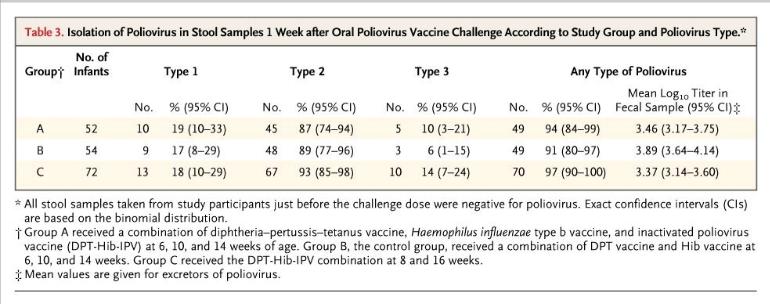
Item #2. Warfel et al. (2014) Acellular pertussis vaccines protect against disease but fail to prevent infection and transmission in a nonhuman primate model.Proc Natl Acad Sci USA 111:787-92
http://www.ncbi.nlm.nih.gov/pubmed/24277828
“Baboons vaccinated with aP were protected from severe pertussis-associated symptoms but not from colonization, did not clear the infection faster than naïve [unvaccinated] animals, and readily transmitted B. pertussis to unvaccinated contacts. By comparison, previously infected [naturally-immune] animals were not colonized upon secondary infection.”
Item #3. Meeting of the Board of Scientific Counselors, Office of Infectious Diseases, Centers for Disease Control and Prevention, Tom Harkins Global Communication Center, Atlanta, Georgia, December 11-12, 2013
http://www.cdc.gov/maso/facm/pdfs/BSCOID/2013121112_BSCOID_Minutes.pdf
Resurgence of Pertussis (p.6)
“Findings indicated that 85% of the isolates [from six Enhanced Pertussis Surveillance Sites and from epidemics in Washington and Vermont in 2012] were PRN-deficient and vaccinated patients had significantly higher odds than unvaccinated patients of being infected with PRN-deficient strains. Moreover, when patients with up-to-date DTaP vaccinations were compared to unvaccinated patients, the odds of being infected with PRN-deficient strains increased, suggesting that PRN-bacteria may have a selective advantage in infecting DTaP-vaccinated persons.”
Item #4. Rubach et al. (2011) Increasing incidence of invasive Haemophilus influenzae disease in adults, Utah, USA. Emerg Infect Dis 17:1645-50
http://www.ncbi.nlm.nih.gov/pubmed/21888789
The chart below from Rubach et al. shows the number of invasive cases of H. influenzae(all types) in Utah in the decade of childhood vaccination for Hib.
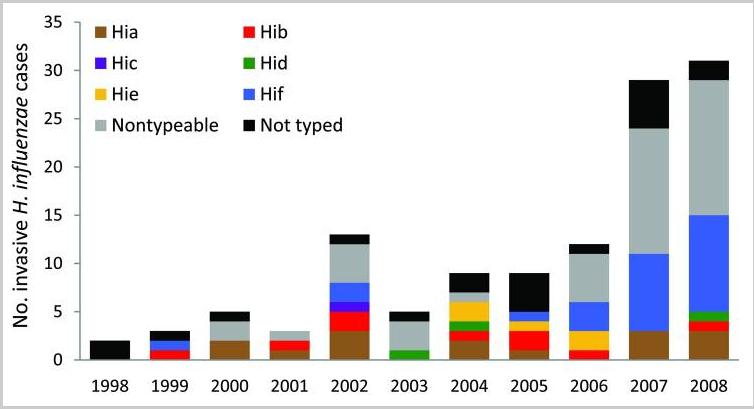
Item #5. Wilson et al. (2011) Adverse events following 12 and 18 month vaccinations: a population-based, self-controlled case series analysis. PLoS One 6:e27897
http://www.ncbi.nlm.nih.gov/pubmed/22174753
“Four to 12 days post 12 month vaccination, children had a 1.33 (1.29-1.38) increased relative incidence of the combined endpoint compared to the control period, or at least one event during the risk interval for every 168 children vaccinated. Ten to 12 days post 18 month vaccination, the relative incidence was 1.25 (95%, 1.17-1.33) which represented at least one excess event for every 730 children vaccinated. The primary reason for increased events was statistically significant elevations in emergency room visits following all vaccinations.”
Item #6. De Serres et al. (2013) Largest measles epidemic in North America in a decade–Quebec, Canada, 2011: contribution of susceptibility, serendipity, and superspreading events. J Infect Dis 207:990-98
http://www.ncbi.nlm.nih.gov/pubmed/23264672
“The largest measles epidemic in North America in the last decade occurred in 2011 in Quebec, Canada.”
“A super-spreading event triggered by 1 importation resulted in sustained transmission and 678 cases.”
“The index case patient was a 30-39-year old adult, after returning to Canada from the Caribbean. The index case patient received measles vaccine in childhood.”
“Provincial [Quebec] vaccine coverage surveys conducted in 2006, 2008, and 2010 consistently showed that by 24 months of age, approximately 96% of children had received 1 dose and approximately 85% had received 2 doses of measles vaccine, increasing to 97% and 90%, respectively, by 28 months of age. With additional first and second doses administered between 28 and 59 months of age, population measles vaccine coverage is even higher by school entry.”
“Among adolescents, 22% [of measles cases] had received 2 vaccine doses. Outbreak investigation showed this proportion to have been an underestimate; active case finding identified 130% more cases among 2-dose recipients.”
Item #7. Wang et al. (2014) Difficulties in eliminating measles and controlling rubella and mumps: a cross-sectional study of a first measles and rubella vaccination and a second measles, mumps, and rubella vaccination. PLoS One9:e89361
http://www.ncbi.nlm.nih.gov/pubmed/24586717
“The reported coverage of the measles-mumps-rubella (MMR) vaccine is greater than 99.0% in Zhejiang province. However, the incidence of measles, mumps, and rubella remains high.”
Item #8. Immunoglobulin Handbook, Health Protection Agency
HUMAN NORMAL IMMUNOGLOBULIN (HNIG):
Indications
- To prevent or attenuate an attack in immuno-compromised contacts
- To prevent or attenuate an attack in pregnant women
- To prevent or attenuate an attack in infants under the age of 9 months
[1] http://www.fda.gov/NewsEvents/Newsroom/PressAnnouncements/ucm376937.htm
[2] http://archinte.jamanetwork.com/article.aspx?articleid=619215
[3] Poland (1998) Am J Hum Genet 62:215-220
http://www.ncbi.nlm.nih.gov/pubmed/9463343
“ ‘poor responders,’ who were re-immunized and developed poor or low-level antibody responses only to lose detectable antibody and develop measles on exposure 2–5 years later.”
[4] ibid
“Our ongoing studies suggest that seronegativity after vaccination [for measles] clusters among related family members, that genetic polymorphisms within the HLA [genes] significantly influence antibody levels.”
[5] LeBaron et al. (2007) Arch Pediatr Adolesc Med 161:294-301
http://www.ncbi.nlm.nih.gov/pubmed/17339511
“Titers fell significantly over time [after second MMR] for the study population overall and, by the final collection, 4.7% of children were potentially susceptible.”
[6] De Serres et al. (2013) J Infect Dis 207:990-998
http://www.ncbi.nlm.nih.gov/pubmed/23264672
“The index case patient received measles vaccine in childhood.”
[7] Rosen et al. (2014) Clin Infect Dis 58:1205-1210
http://www.ncbi.nlm.nih.gov/pubmed/24585562
“The index patient had 2 doses of measles-containing vaccine.”
Featured Video

No Vote, No Representation, No State: Democracy, Israeli Style
or go to
Aletho News Archives – Video-Images
From the Archives
Sanctions, War and the Policy of Dual Containment
By SASAN FAYAZMANESH | March 17, 2008
It is now nearly three decades since the Unites States adopted the policy of dual containment of Iran and Iraq. While much has been written about the containment of Iraq, there has been very little in-depth analysis of this policy when it comes to Iran. In a book that is going to be released on March 31, 2008, entitled The United States and Iran: Sanctions, Wars and the Policy of Dual Containment (Routledge), I attempt to address this shortcoming by investigating when and why the US policy of containment of Iran came about, how it evolved, and where it stands today.[1] To the extent that Israel has been involved in US policy making, the study will also include the role that Israel has played in the containment of Iran. Also, since the fate of Iran has been inextricably linked to that of Iraq, occasionally the investigation will overlap with the containment of Iraq.
The policy of dual containment of Iran and Iraq originated during the Carter Administration, but it was not until the Clinton Administration that the expression “dual containment” became popular. … continue
Blog Roll
 Aletho News
- No Vote, No Representation, No State: Democracy, Israeli Style
- Zionist Bought Senate Blocks Information About American Citizens Killed By Israel
- While Gaza dominates the UN, these are the people keeping it alive
- New Report: “Scholasticide and Genocide in Gaza: Assessment, Testimonies and Legal Analysis”
- ‘THAAD Delusion’: Iran war exposes US missile shield limits – The Atlantic
- Moscow issues warning to NATO over Russian exclave
- Yes, the Iran war has destroyed Trump’s presidency
- The fallacy of US delusions about Iran’s economic collapse
- Hezbollah denies Syria cell link, warns of Israeli plan to sow discord
- The legacy of US sanctions, war, and occupation in Iraq
- If Americans Knew
- Mamdani releases plan to combat antisemitism and hate crimes in New York City
- Iran’s Revolutionary Guards Publish Letter to the American People
- DMFI launches $1 million ad campaign supporting Virginia’s Elaine Luria
- US Senate blocks resolution seeking report on Americans killed by Israel
- Israeli Attacks Kill Ten Palestinians in Gaza
- Massacre at Minab: The School That Became a Grave
- Israeli media: The IDF Shows It Doesn’t Turn a Blind Eye; It Actively Emboldens Settler Havoc
- As settlers ravage West Bank, Israeli forces kill 10 in Gaza – Daily Update
- New Report: “Scholasticide and Genocide in Gaza: Assessment, Testimonies and Legal Analysis”
- Ex-Biden officials are desperate for a Gaza scapegoat
- No Tricks Zone
- Green Energy Debacle: German Expert Professor Fritz Vahrenholt Warns Of Severe Economic And Social Consequences
- Two More Paleo Reconstructions Affirm Meters-Higher Sea Levels Across Ireland, Brazil 7000-6000 Years Ago
- New Study: Earth And Venus Surface Warmth Largely Explained By Convection And Lapse Rate, Not CO2 Or Radiation
- 2025 Nature Paper Claiming Worsening Global Drought Gets RETRACTED …Heavily Flawed
- New Study: ‘Global Drought Shows No Detectable Recent Acceleration Under Climate Warming’
- Economic Masterminds: German Socialists Suggest Taxing Productivity Gains Stemming From Using AI
- The South China Sea Has Not Been Cooperating With The Climate Change Narrative
- Energy Crisis: Germany Enters Heating Season With Historically Low Gas Reserve Fill Levels
- New Study: The Antarctic Ice Sheet Gained Mass From 2020-2024 Due To Staggering Snow And Ice Accumulation
- Study: Ocean Heating Rates From Thousands Of Years Ago ‘Dwarf’ Modern Ocean Heating Rates

